
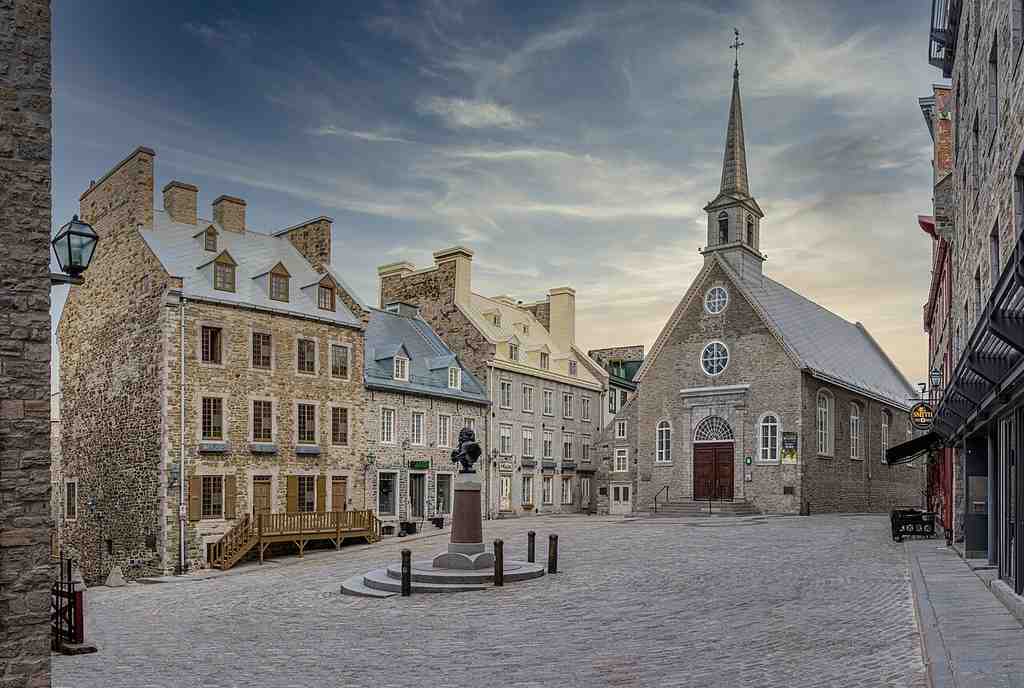
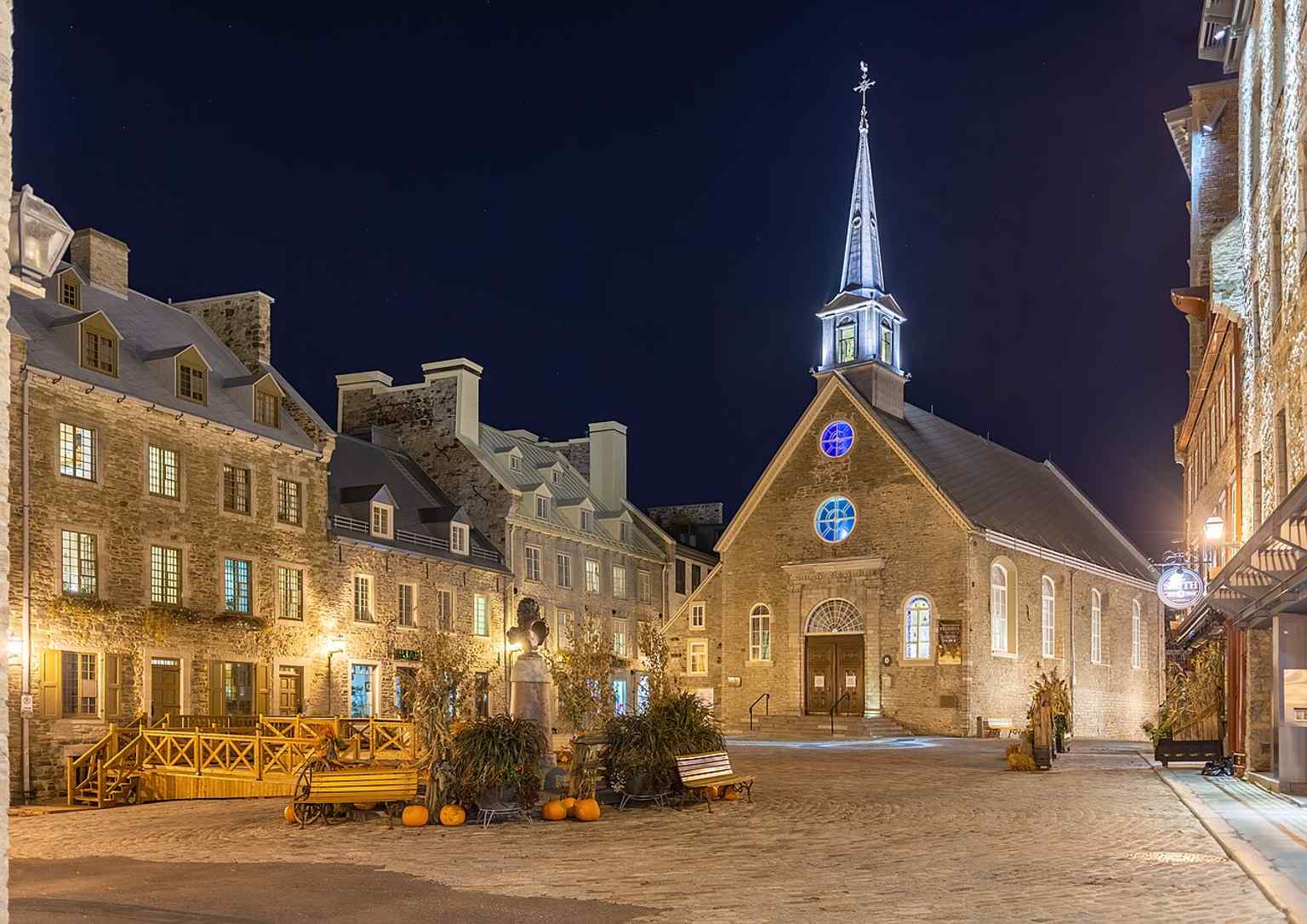
On your right, look for a cobbled stone square framed by steep-roofed stone houses, with the small stone church of Notre-Dame-des-Victoires closing the far end and a royal bust at the center.
This is Place Royale... the city’s layered birthplace. People often call it the cradle of French America, and that is true as far as colonial history goes. But the ground under your feet tells a longer story: archaeologists found objects here reaching back about three thousand years, proof that Indigenous people used this point of land long before Samuel de Champlain arrived with founding plans and a talent for making history look tidy.
In sixteen oh eight, Champlain began building his fortified trading post here, the first permanent French settlement in North America. Fur trade goods moved through this little space, and so did people, languages, bargains, and ambitions. If cities had baby pictures, this square would be one of Quebec’s... though, like most baby pictures, it leaves out a lot of what happened just before the camera clicked.
After a fire in sixteen eighty-two, builders remade the square with stone firewalls, which gave the place its sturdy character. It became a market square, then a royal square after Intendant Champigny raised a bust of Louis the Fourteenth here in sixteen eighty-six. The bronze bust you see now came from France in nineteen twenty-eight, a copy of a marble original by Bernini at Versailles. Because of course even a frontier colony wanted a little royal theater.
The church ahead, Notre-Dame-des-Victoires, began in sixteen eighty-eight on the site of the old King’s storehouse. It remains one of the oldest surviving stone churches in North America north of Mexico. During the siege of seventeen fifty-nine, British forces under James Wolfe battered this area into ruins, and the church fell too. People rebuilt it anyway, because to them it meant more than masonry. It held on to memory when politics had shifted.
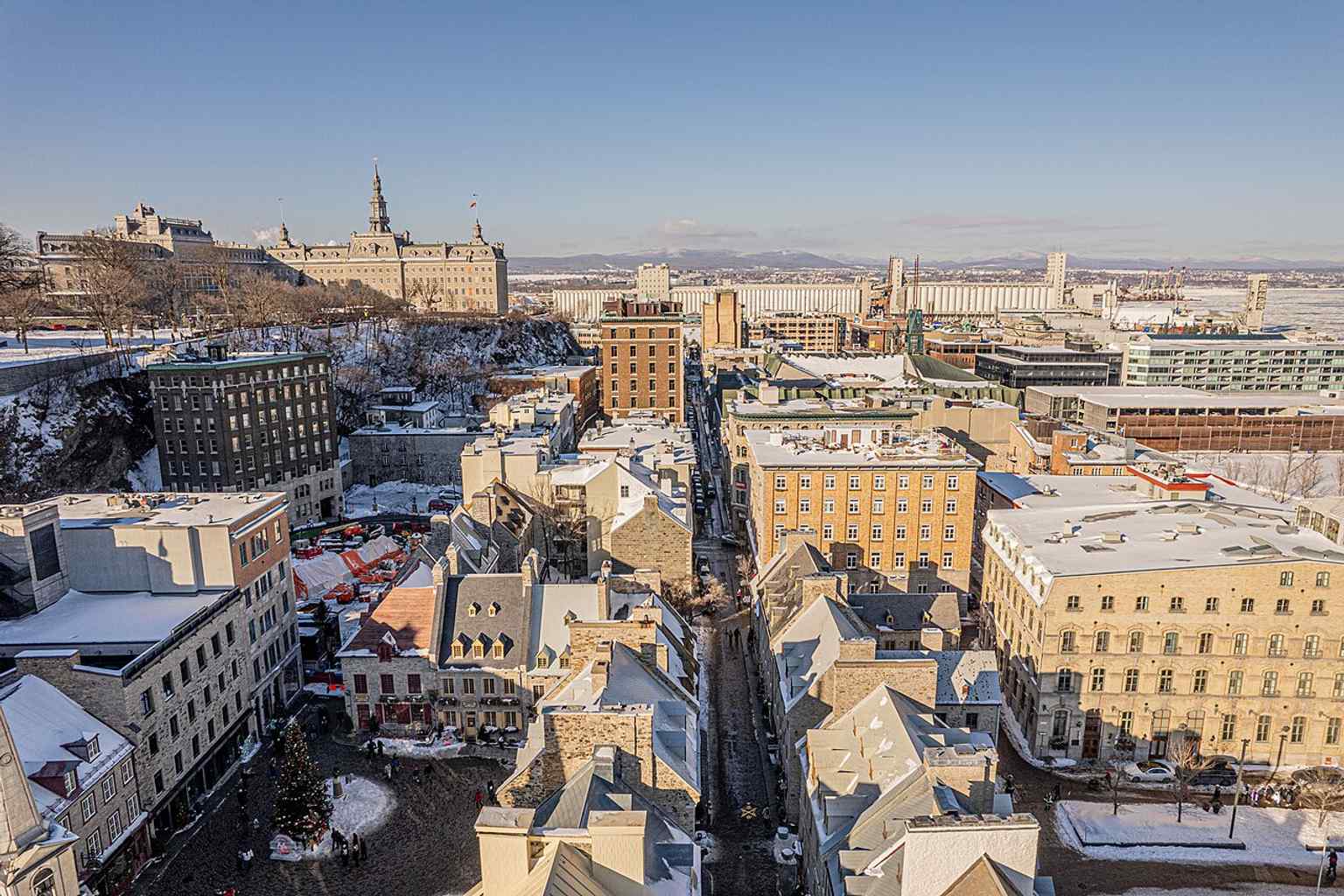
If you check the app, the aerial image shows how tightly the old streets still gather around this square, like the city never quite let go of its first footprint.
And then came another rebuilding. By the twentieth century, trade had moved on and the district decayed. Starting in the nineteen sixties, Quebec restored, reconstructed, and sometimes controversially reimagined these buildings. So this square is not just old; it is also a careful argument about what deserves to survive.
Here’s the question this place leaves hanging: when we call somewhere a city’s birthplace, whose beginning are we honoring... and whose earlier presence slips into the background?
That question follows us to the final stop, the Musée de la civilisation, about a five-minute walk from here, where the city gathers these layers and asks how its story should be told now. And fittingly, Place Royale never really closes; it is open all day, every day.





.jpg)

