
New York Audio Tour: Fifth Avenue Icons
Beneath the sleek steel of midtown skyscrapers lies a graveyard of secrets where the city elite once gambled away their empires. Manhattan never sleeps because its ghosts refuse to stay buried. Uncover the truth with this immersive self guided audio tour. Navigate the corridors of power and the shadows of the Stork Club to find the historical pulse that most tourists completely miss. Why did a high society scandal at the altar of Saint Thomas Church trigger a brutal political betrayal? What hidden symbols are carved into the walls of the Museum of Modern Art to guard a forgotten fortune? Which peculiar object was discovered hidden inside a marble floor during a renovation in the dead of winter? Trace the arc of past rebellions and scandalous nights through these restless streets. Experience the electric rush of a city that constantly reinvents itself. Start your journey and uncover the scars of Manhattan now.
Tour preview
About this tour
- scheduleDuration 80–100 minsGo at your own pace
- straighten2.4 km walking routeFollow the guided path
- location_onLocationNew York, United States
- wifi_offWorks offlineDownload once, use anywhere
- all_inclusiveLifetime accessReplay anytime, forever
- location_onStarts at Paley Park
Stops on this tour
lock_open 3 free previews · 13 unlock with purchase
Look for the narrow opening in the street wall: a raised rectangle of rough granite paving framed by ivy-clad side walls, with a tall sheet of water sealing the far end. Paley…Read moreShow less
Open dedicated page →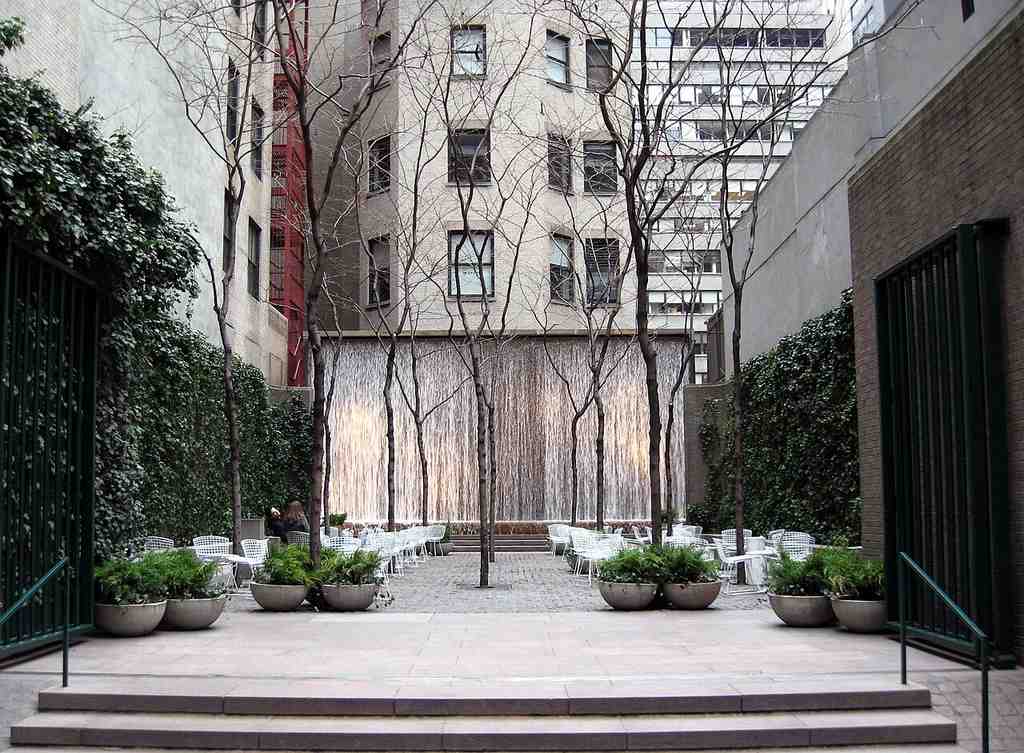
Paley ParkPhoto: Jim.henderson, Wikimedia Commons, Public domain. Cropped & resized. Look for the narrow opening in the street wall: a raised rectangle of rough granite paving framed by ivy-clad side walls, with a tall sheet of water sealing the far end.
Paley Park is tiny by New York standards... about four thousand two hundred square feet... and yet it changed how cities think. When landscape architect Robert Zion proposed the “pocket park” in nineteen sixty-three, he argued that one modest fifty-by-one-hundred-foot lot could offer real relief in Midtown. That sounded almost suspiciously reasonable, which in New York can count as radical.
This little refuge opened on the twenty-third of May, nineteen sixty-seven. Zion’s firm, Zion Breen Richardson Associates, shaped it as a deliberate retreat: open to the street, but slightly raised above the sidewalk, with steps and ramps pulling you in; rough granite underfoot; ivy climbing the side walls like what Zion called “vertical lawns”; and a waterfall at the back, twenty feet high, pouring at roughly one thousand eight hundred gallons a minute. It is loud on purpose. At about eighty-seven decibels, the water masks traffic just enough to make the space feel improbably separate from Midtown. That trick helped make this one of the most admired urban spaces in the country.
And this is where the story gets more personal. William S. Paley, the broadcasting titan behind C-B-S, did not just finance the park through the William S. Paley Foundation and move on to more glamorous concerns. He named it for his father, Samuel Paley, and treated the place with the attention some people reserve for yachts or racehorses. He checked on it himself. He cared about the refreshment stand so much that he personally tasted hot dogs and insisted they stay both good and affordable. A media baron fussing over snack quality is not the most obvious form of civic virtue... but I’ll take it.
Most tourists never catch the part locals love: Paley sometimes came by and picked up litter himself. That detail tells you nearly everything. This was elite patronage with its sleeves rolled up.
If you want a quick sense of how little and how lasting this place is, take a peek at the before-and-after image in the app.
There’s another quiet revolution here too. The white wire chairs, designed by Harry Bertoia, and the marble tables by Eero Saarinen were here from the beginning. Because the chairs move, people can choose their own distance, angle, and little scrap of territory. Urban observer William H. Whyte loved that. He said movable seating gives people a kind of personal sovereignty... a rare courtesy in Manhattan.
And now for the delicious contrast: before this sanctuary, this address belonged to the Stork Club, one of the most famous celebrity nightspots in New York. It glittered, it gossiped, it excluded. After years of labor conflict, it declined fast, shut in nineteen sixty-five, and Paley bought the building, tore it down in nineteen sixty-six, and replaced a symbol of velvet-rope privilege with a public place anyone could enter. That swap says plenty about this neighborhood’s power structure: sometimes the grand gesture is not building higher, but making room.
As you head to the next stop, give a thought to the ghosts of the Stork Club lingering behind that curtain of water... because the next stop is the Stork Club itself, and you’re already standing on its former stage. The park generally opens daily from eight in the morning to eight in the evening.
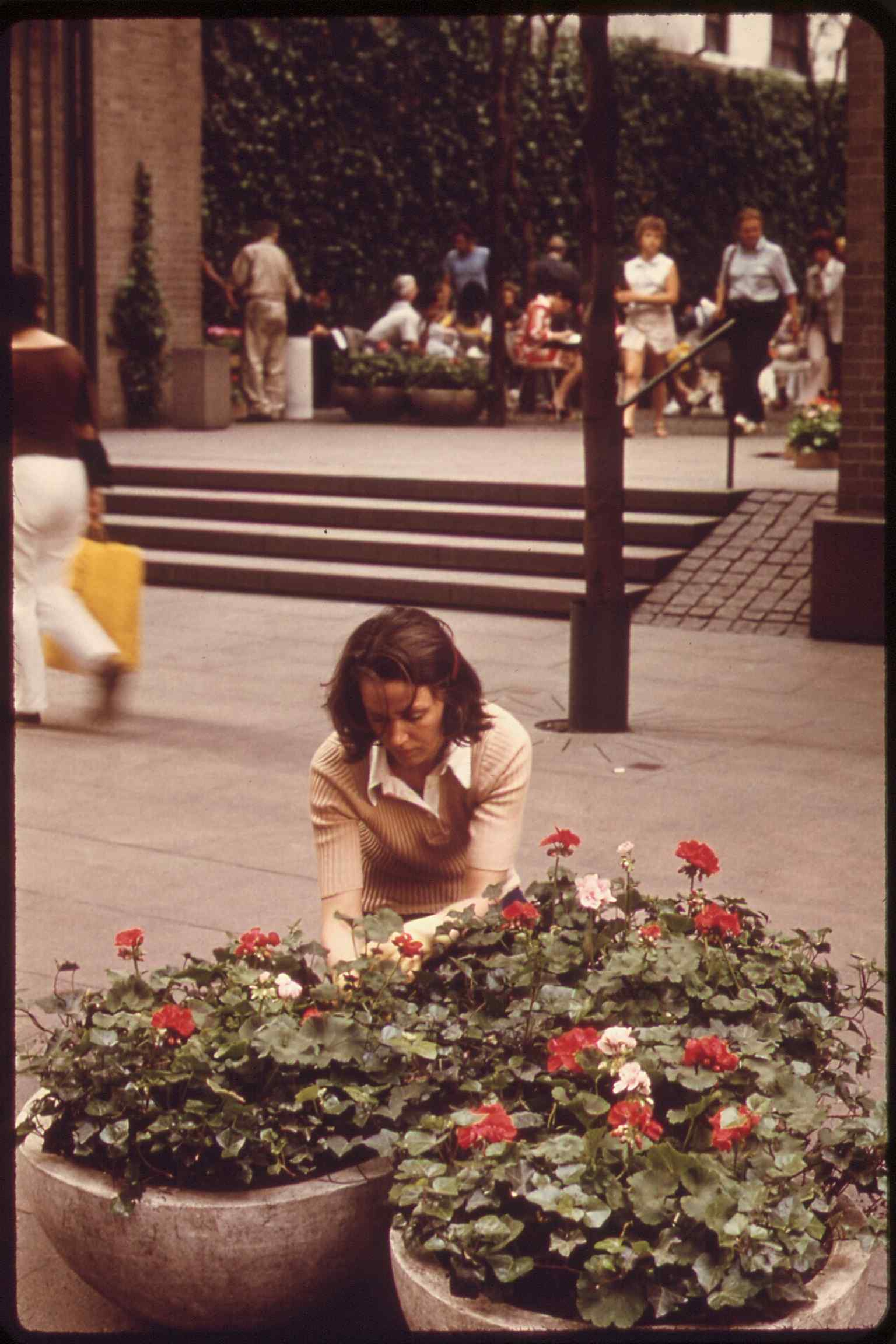
A 1973 planting scene at the park entrance, showing Paley Park as a gift to Midtown Manhattan and its early civic life.Photo: Suzanne Szasz, Wikimedia Commons, Public domain. Cropped & resized. 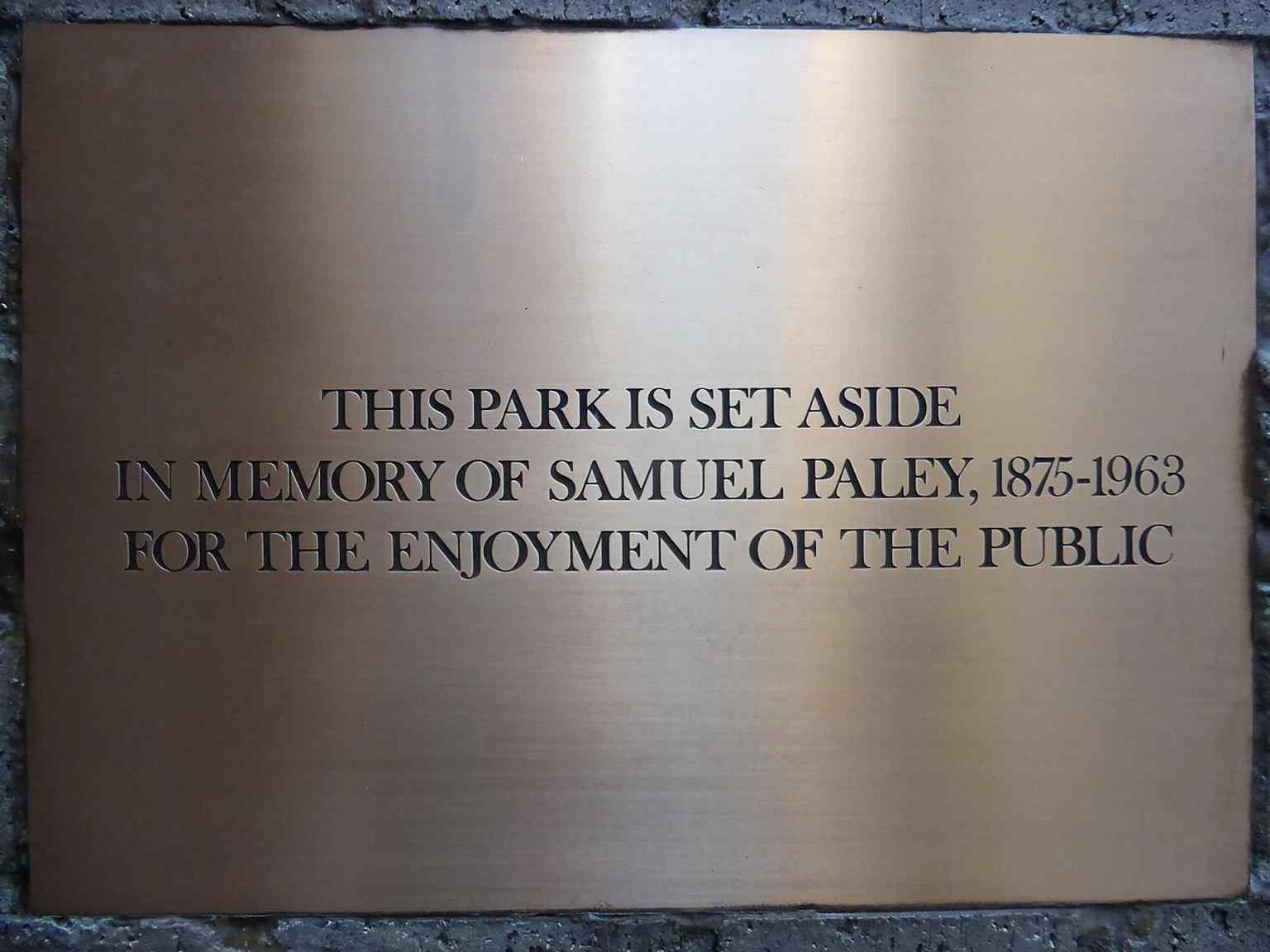
The dedication plaque that memorializes Samuel Paley and marks the park as a privately owned public space.Photo: Michael Bednarek, Wikimedia Commons, CC BY-SA 4.0. Cropped & resized. 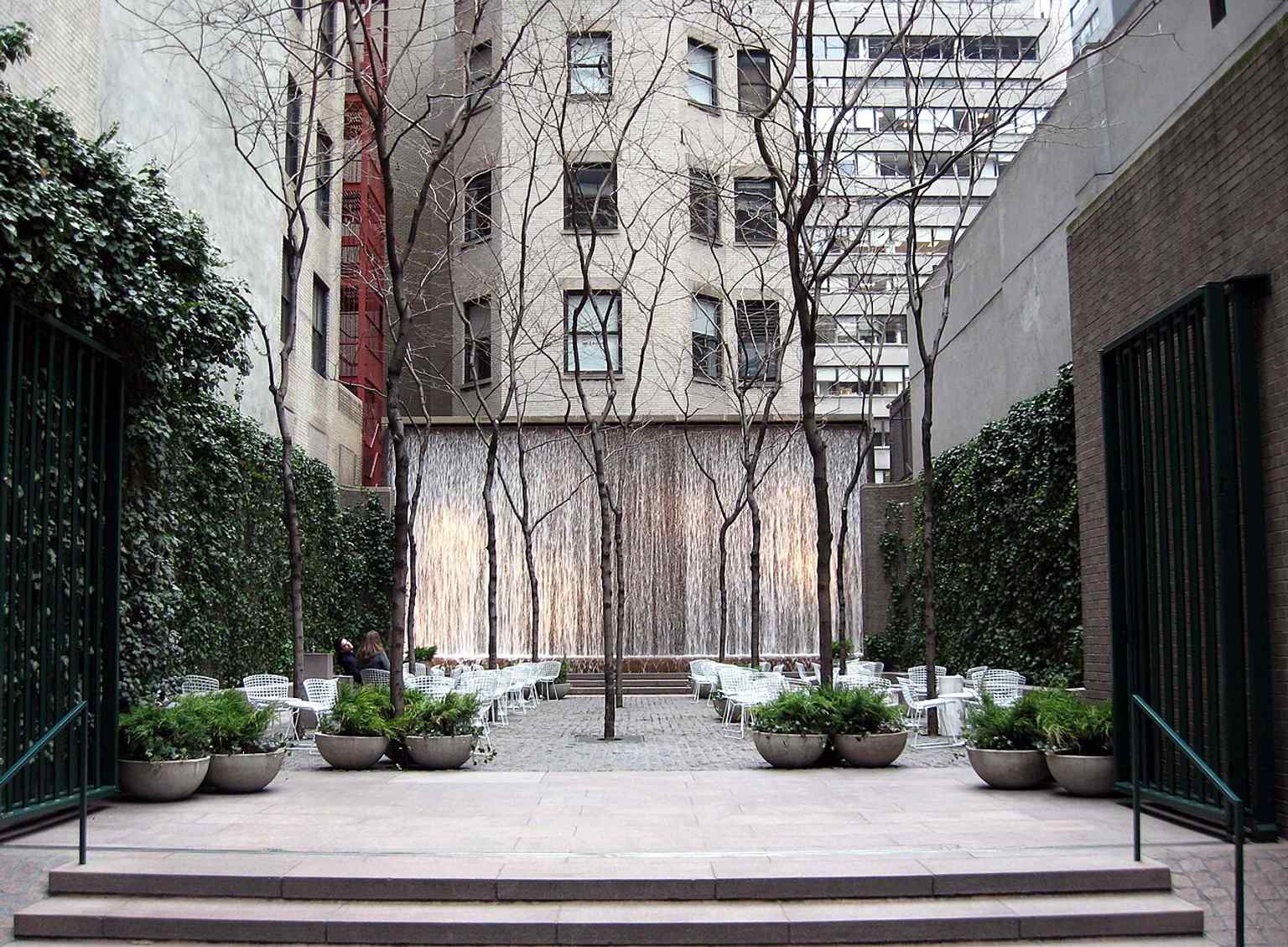
A winter view of the pocket park’s tiny footprint, tucked between Midtown towers as a quiet urban retreat.Photo: Jim.henderson at en.wikipedia, Wikimedia Commons, Public domain. Cropped & resized. 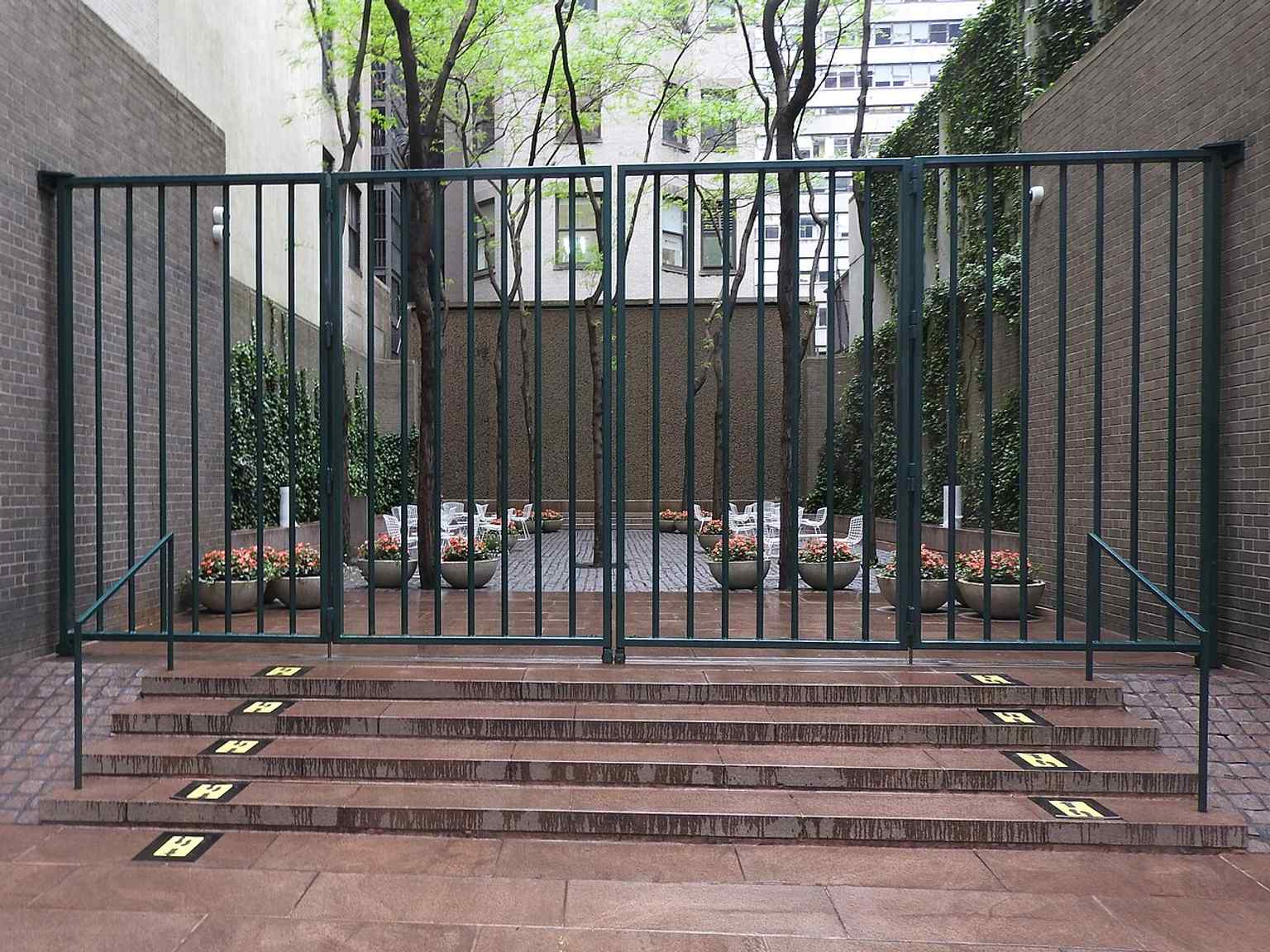
The park closed in 2021, with its street-facing entrance showing how this small plaza opens directly to 53rd Street.Photo: Jim.henderson, Wikimedia Commons, CC BY 4.0. Cropped & resized. 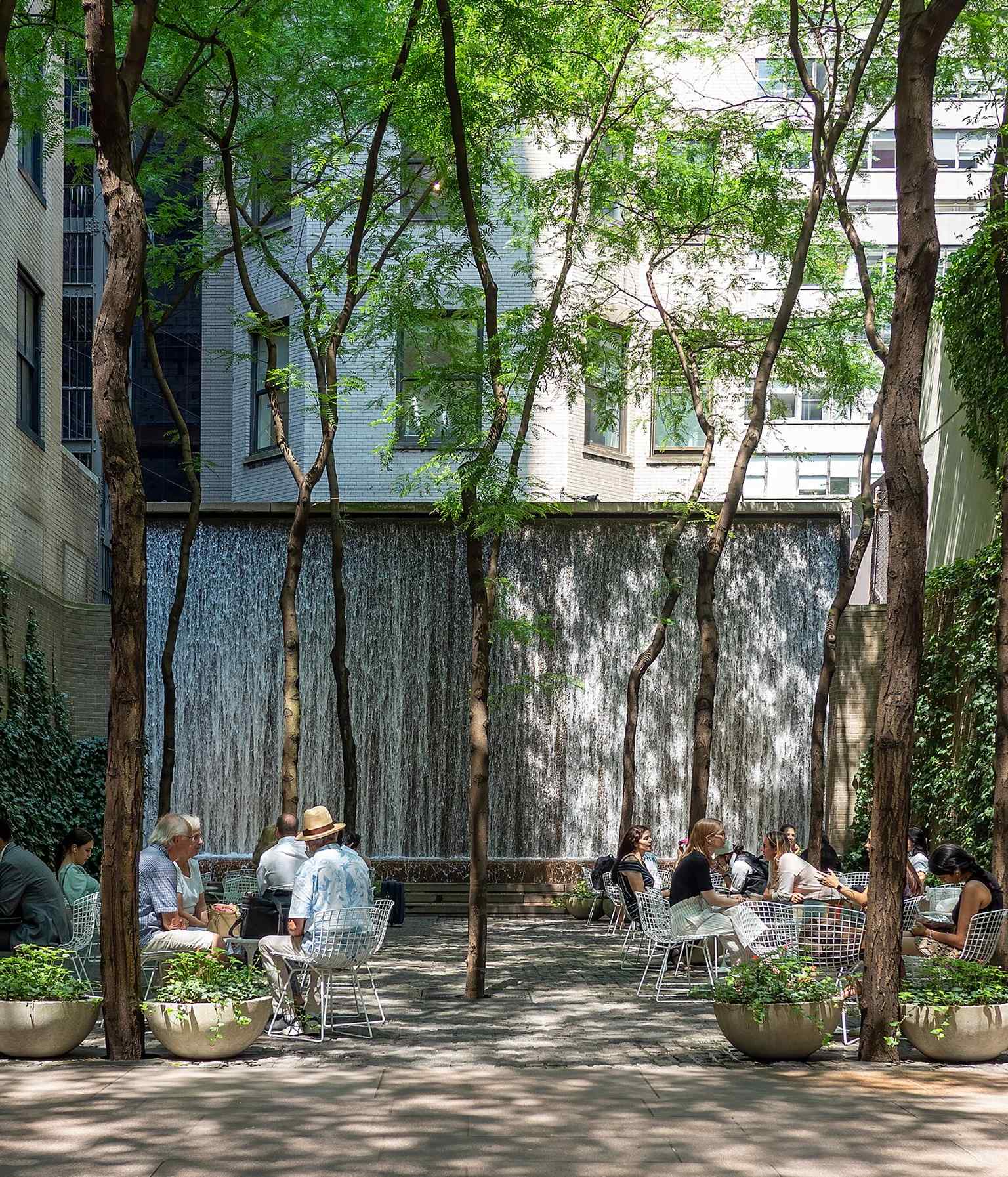
A broad view of the park’s lush interior, where trees and ivy make a rare green refuge in dense Midtown.Photo: Rhododendrites, Wikimedia Commons, CC BY-SA 4.0. Cropped & resized. 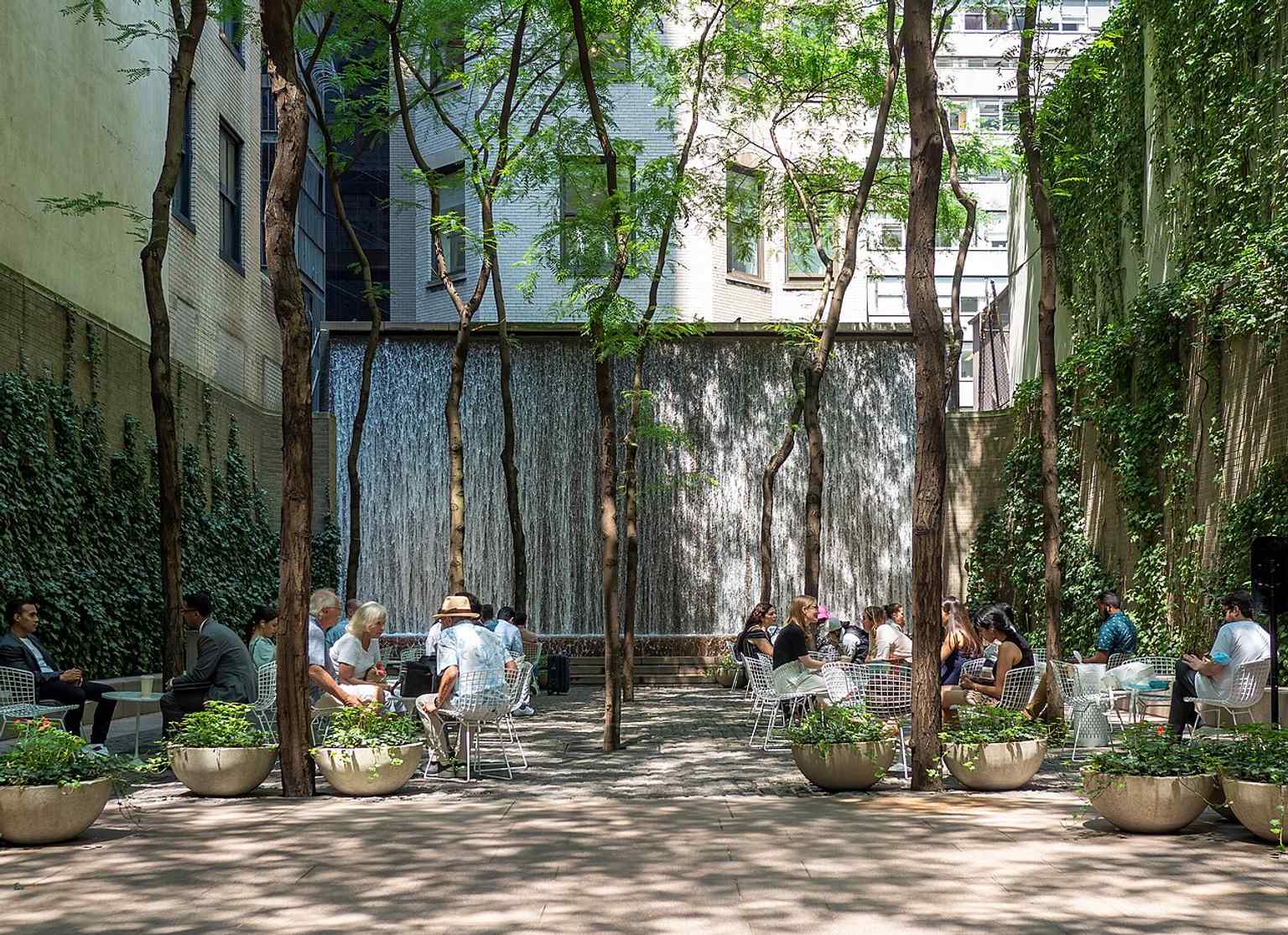
Another view of Paley Park’s compact layout, highlighting the narrow lot that helped define the pocket-park idea.Photo: Rhododendrites, Wikimedia Commons, CC BY-SA 4.0. Cropped & resized. 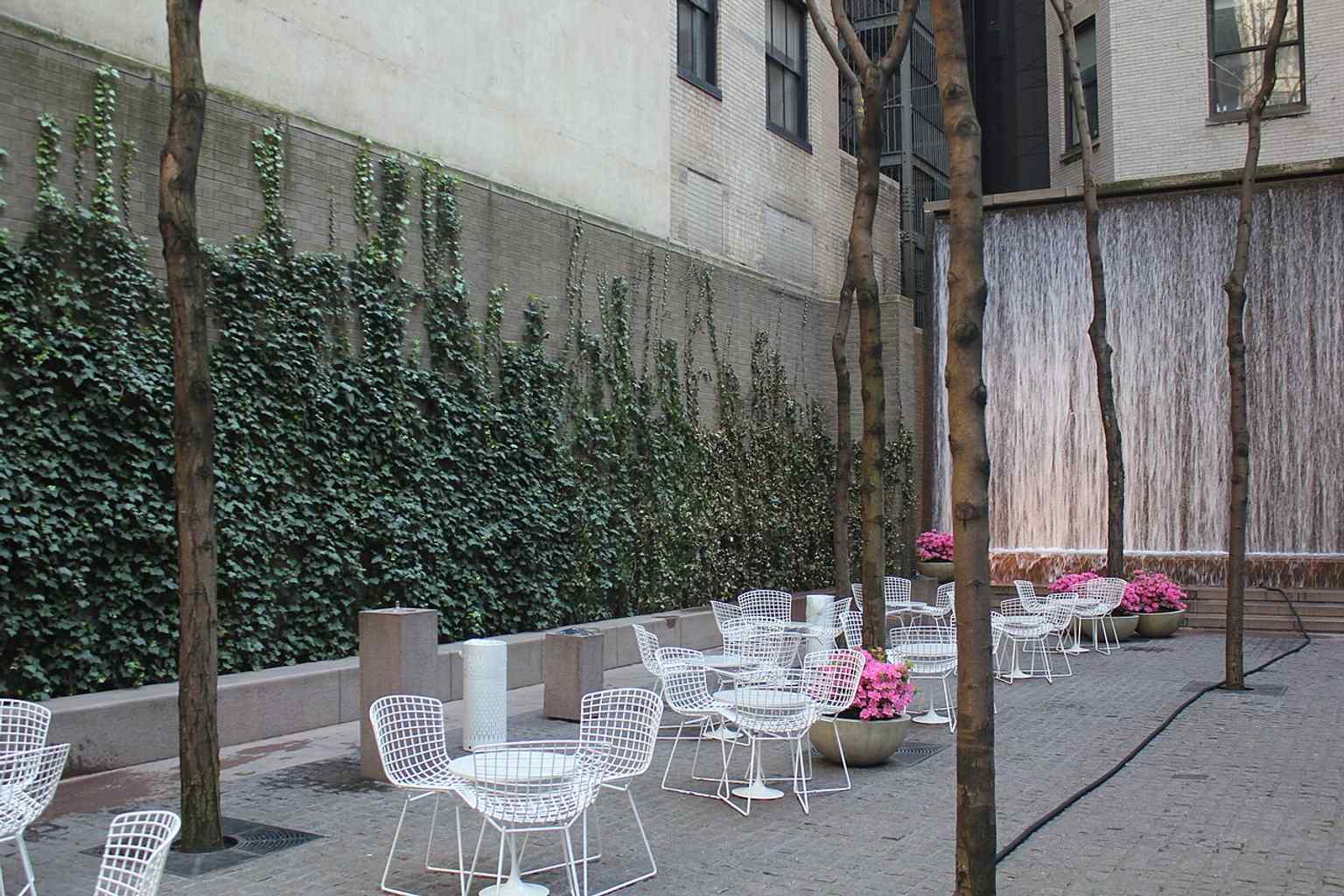
A clear street-side view of the park in 2022, illustrating the ‘discovery effect’ as greenery appears between office towers.Photo: Epicgenius, Wikimedia Commons, CC BY-SA 4.0. Cropped & resized. 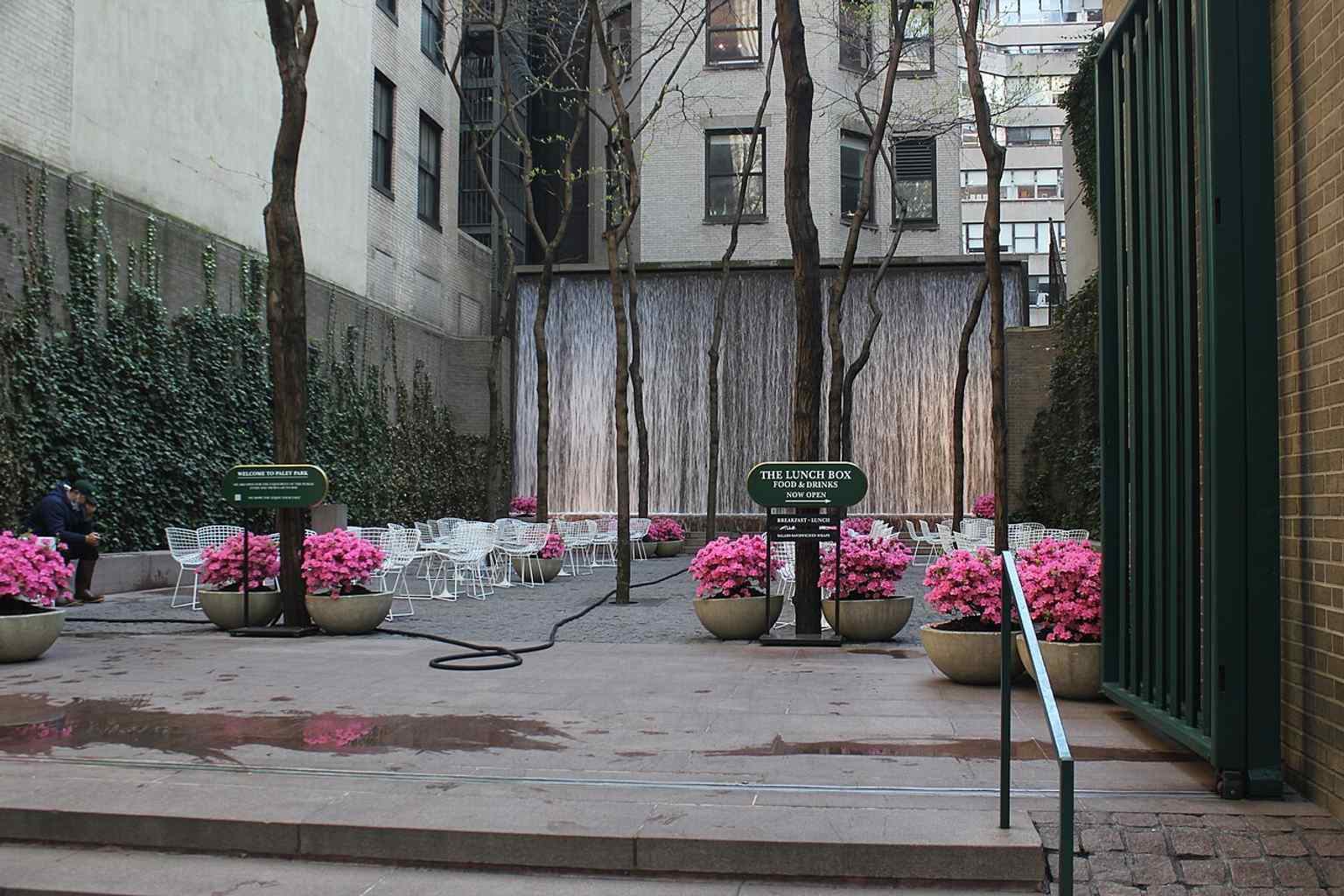
A closer look at the park’s textures and materials, from granite paving to the light, movable furniture that shaped how people use the space.Photo: Epicgenius, Wikimedia Commons, CC BY-SA 4.0. Cropped & resized. 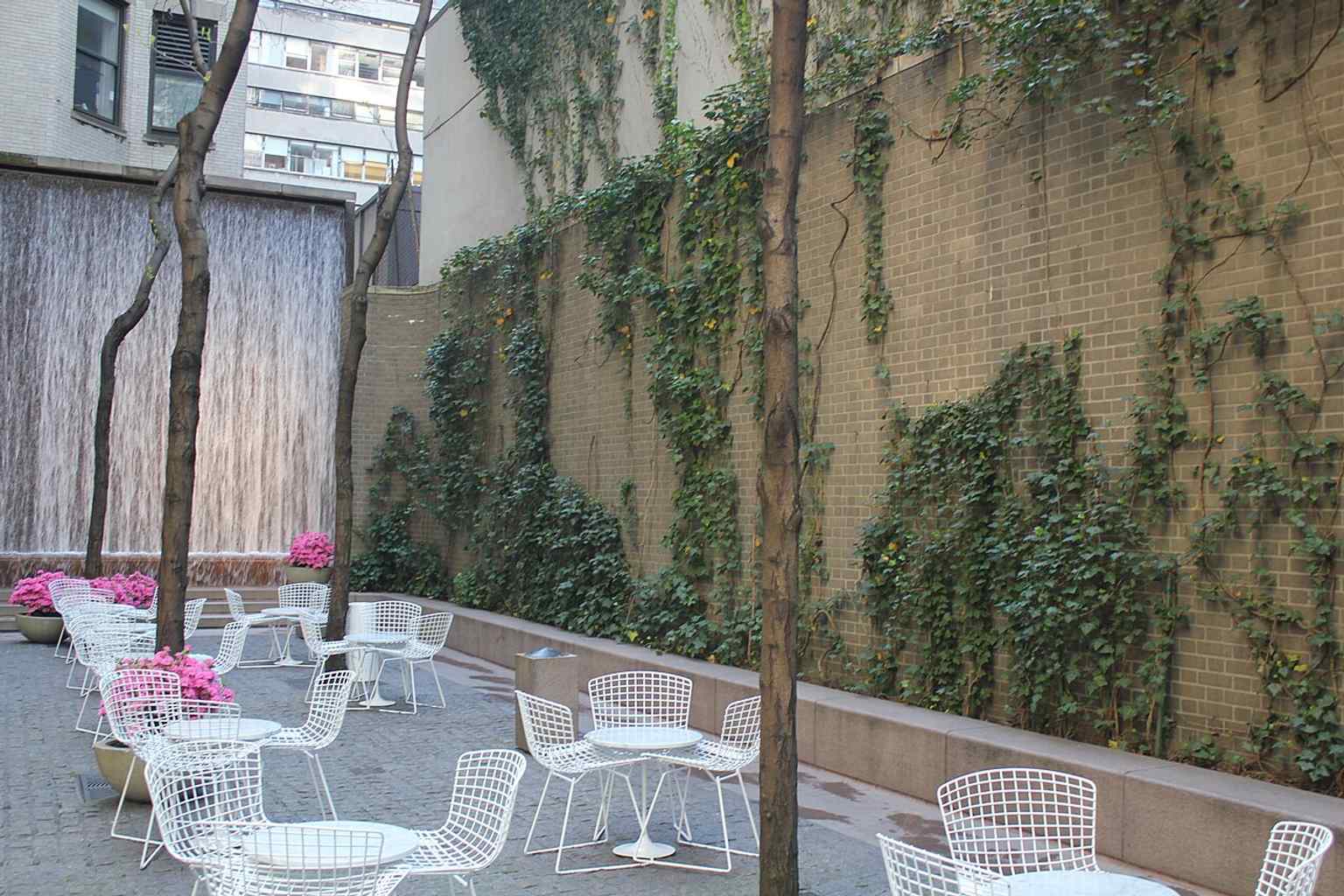
An interior view that helps show how Paley Park creates a secluded atmosphere despite being just steps from Midtown traffic.Photo: Epicgenius, Wikimedia Commons, CC BY-SA 4.0. Cropped & resized. 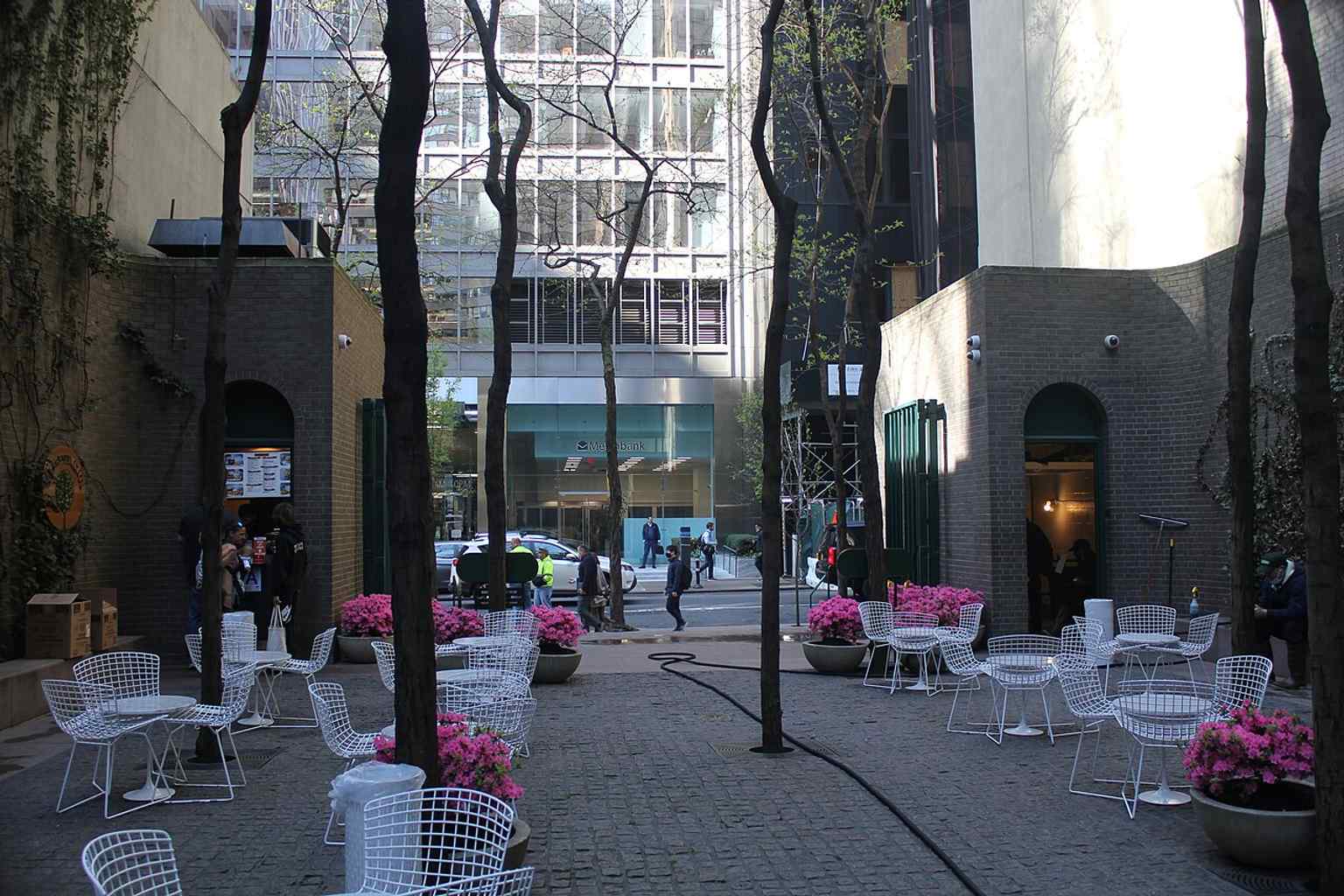
A detail view that complements the park’s social design, where movable chairs let visitors choose sun, shade, and distance from others.Photo: Epicgenius, Wikimedia Commons, CC BY-SA 4.0. Cropped & resized. 
An autumn view of the park, with seasonal color reinforcing the idea of a small but carefully designed urban oasis.Photo: Kidfly182, Wikimedia Commons, CC BY-SA 4.0. Cropped & resized. 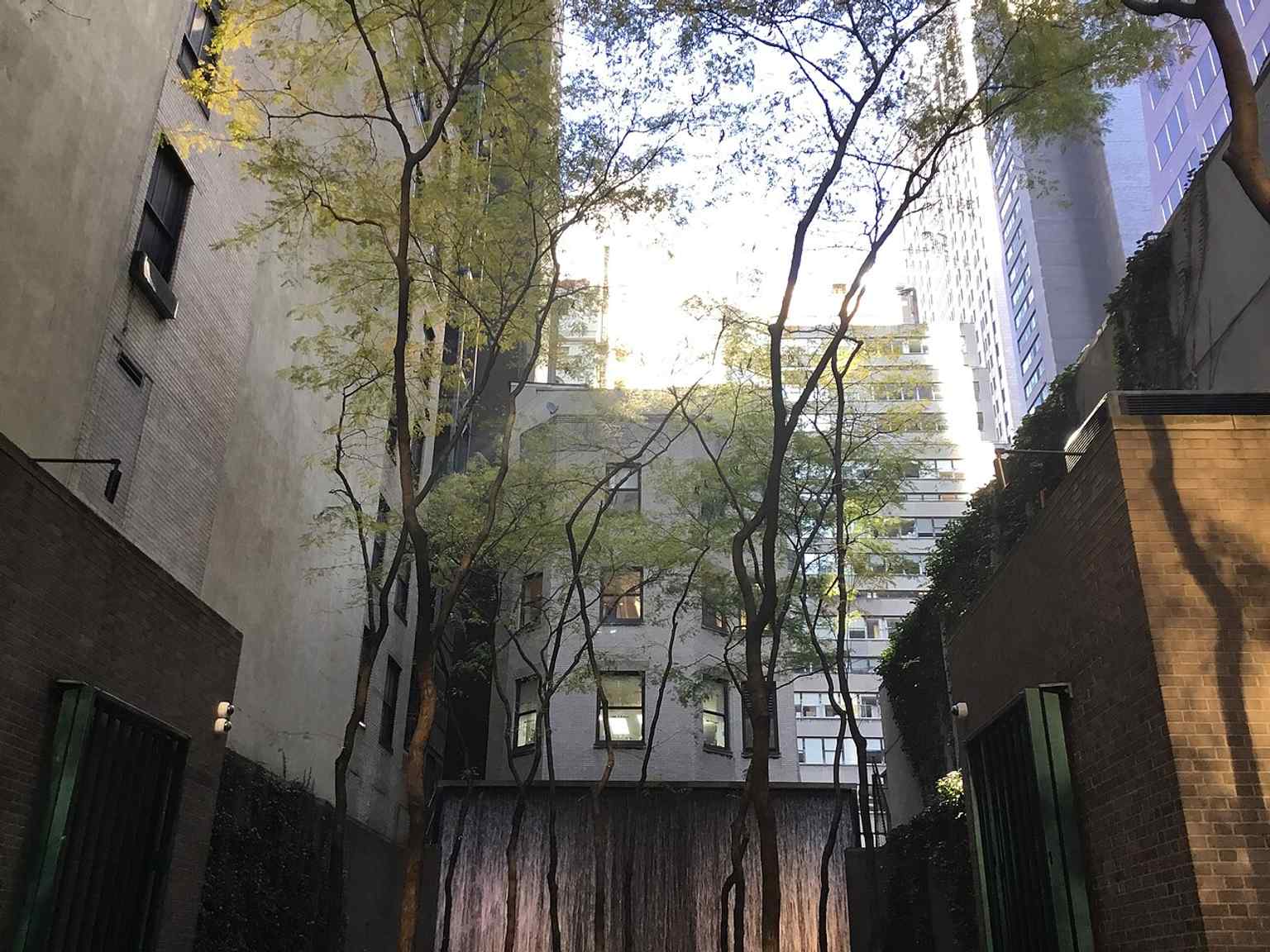
Another 2022 exterior showing Paley Park’s open front and street presence, a key part of its inviting pocket-park design.Photo: Kidfly182, Wikimedia Commons, CC BY-SA 4.0. Cropped & resized. On your right, the Museum of Modern Art shows up as a crisp stack of glass and dark metal planes, with broad rectangular walls and the unmistakable modern frontage along West…Read moreShow less
Open dedicated page →On your right, the Museum of Modern Art shows up as a crisp stack of glass and dark metal planes, with broad rectangular walls and the unmistakable modern frontage along West Fifty-third Street.
This place carries the weight of a global institution now... but its origin story is wonderfully unruly. In nineteen twenty-eight, three women sat down to lunch and decided New York needed a museum devoted entirely to modern art. Abby Aldrich Rockefeller, Lillie P. Bliss, and Mary Quinn Sullivan were later nicknamed the adamantine ladies, which sounds a little like a law firm and a little like a superhero team. Their target was the Metropolitan Museum of Art, which at the time treated contemporary art like an awkward dinner guest.
So they started their own museum. John D. Rockefeller Junior did not exactly cheer from the sidelines, but Abby and her allies pushed ahead anyway. The Museum of Modern Art, or MoMA, opened on the seventh of November, nineteen twenty-nine, in rented rooms on the twelfth floor of the Heckscher Building... just nine days after the Wall Street Crash. Excellent timing, if your hobby is defying common sense.
And yet it worked, largely because elite patronage here was not just glamorous, it was survival gear. Lillie P. Bliss proved that. When she died in nineteen thirty-one, she left the museum a major collection of works by Cezanne, Seurat, and Degas, but with a condition: the museum had to raise an endowment to care for them. That gift stabilized the institution and gave it the freedom to sell some works to buy others, which eventually helped MoMA acquire Van Gogh’s The Starry Night. If you want to glance at your screen, there it is... one of the paintings her gamble made possible.
What most people miss is how completely the scale changed. Today MoMA stands behind a board with dozens of trustees, a life trustee, layers of directors, curators, donors, committees... the full machinery of cultural power. Out front, the public face changed too, from a modest streetside museum in nineteen thirty-seven to this sleek Midtown presence with its glossy retail edge. You can compare that in the app if you like.
And here’s the little insider wrinkle tucked inside all that polish. The Founders Wall, created during the two thousand and four expansion, includes the original founders and later figures who gave on a similar scale. One of the names added in twenty twelve was Ileana Sonnabend. Her heirs had been hit with a twenty-nine point two million dollar tax bill from the I-R-S over Robert Rauschenberg’s Canyon. The painting included a stuffed bald eagle, which federal law made impossible to sell, so the work was somehow valued at sixty-five million dollars and worthless on the open market at the same time... a very New York art-world headache. The family donated it to MoMA, the tax claim disappeared, and Sonnabend joined the wall at founder level.
Before you head on, let your eye shift from this modern facade toward the stone drama waiting nearby. Next up is Saint Thomas Church, where Gothic grandeur answers MoMA’s cool control from just a three-minute walk away. If you want to come back inside later, MoMA usually opens at ten thirty every day and stays open later on Fridays.
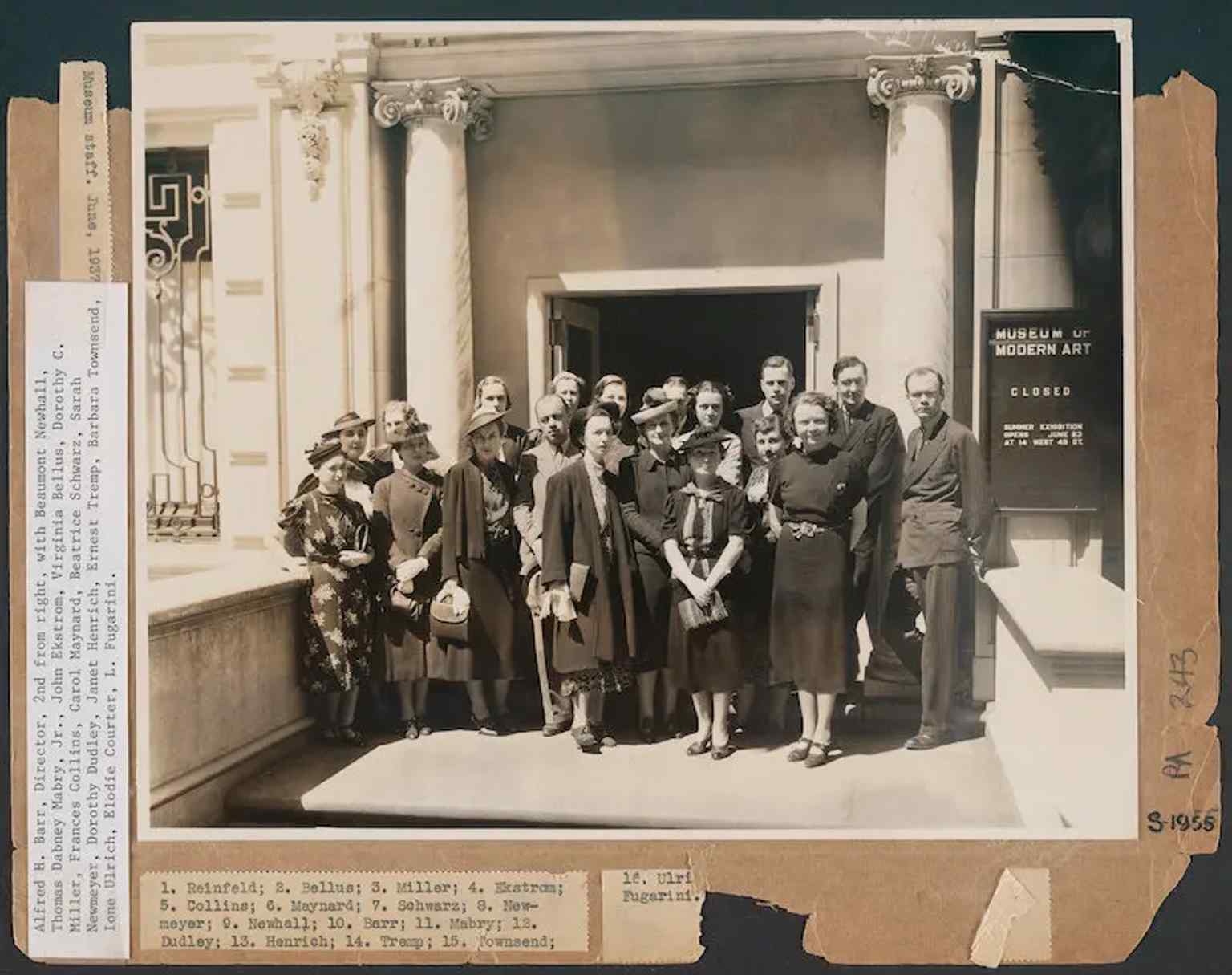
MoMA staff outside the museum in 1937, from the institution’s early years after the 1929 founding by Abby Rockefeller, Lillie Bliss, and Mary Quinn Sullivan.Photo: Creator:Soichi Sunami, Wikimedia Commons, Public domain. Cropped & resized. 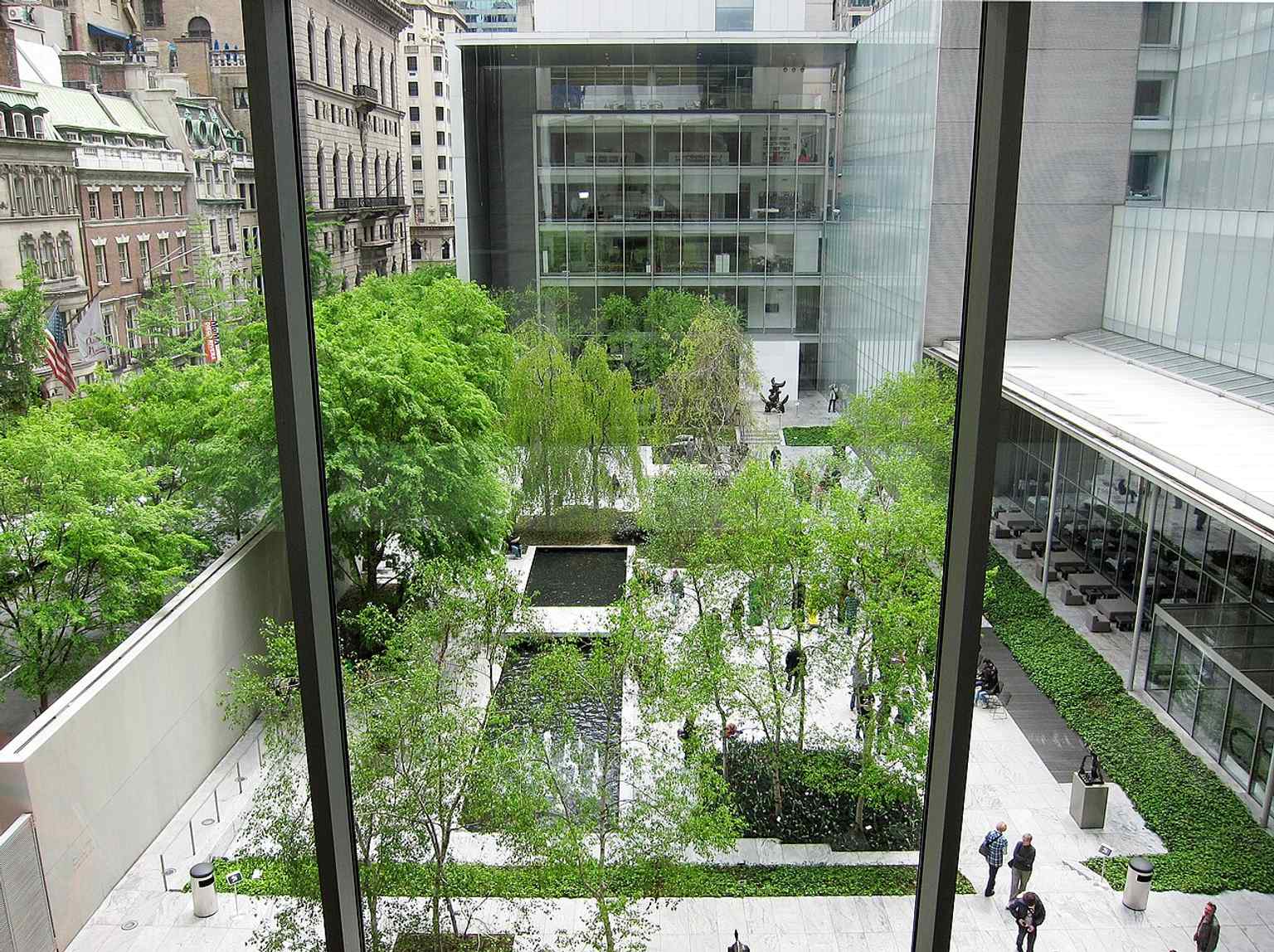
The Abby Aldrich Rockefeller Sculpture Garden, named for one of MoMA’s founders and a key part of the 2004 expansion.Photo: Velvet, Wikimedia Commons, CC BY-SA 3.0. Cropped & resized. 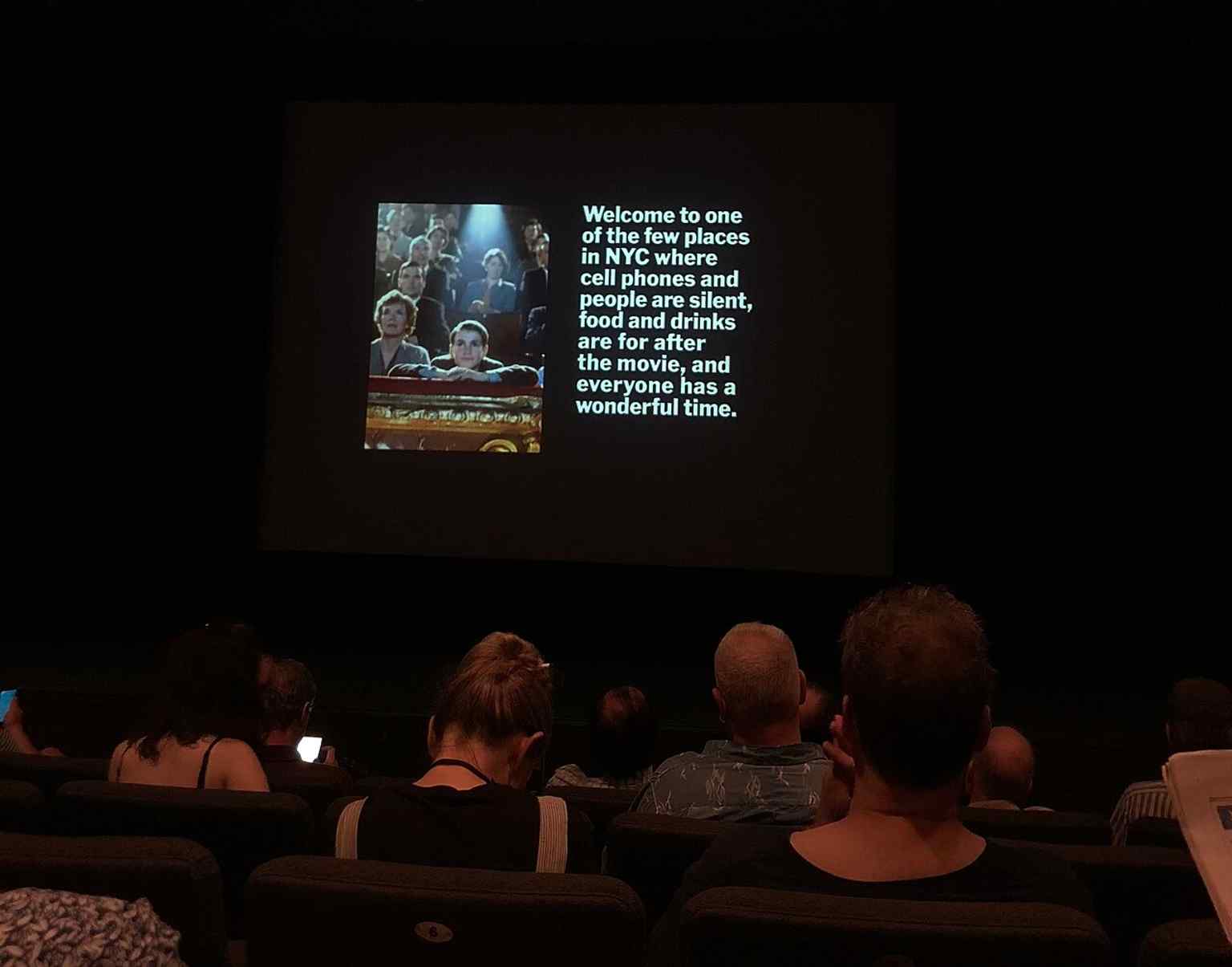
Inside MoMA’s film theater, a reminder that the museum’s curators include a long-running film department alongside painting and sculpture.Photo: Shane Fleming, Wikimedia Commons, CC BY-SA 4.0. Cropped & resized. 
An immersive contemporary installation at MoMA, showing how the museum presents experimental work that can surround the viewer.Photo: Gordon Leggett, Wikimedia Commons, CC BY-SA 4.0. Cropped & resized. 
A high-tech immersive artwork, echoing MoMA PS1’s experimental spirit after the 2000 merger brought a laboratory for contemporary art into the MoMA orbit.Photo: Refik Anadol, Wikimedia Commons, CC BY-SA 4.0. Cropped & resized.
Show 13 more stopsShow fewer stopsexpand_moreexpand_less
On your left rises a pale limestone church with a great round rose window, a square corner tower, and a façade crowded with carved saints. Saint Thomas has stood on this Fifth…Read moreShow less
Open dedicated page →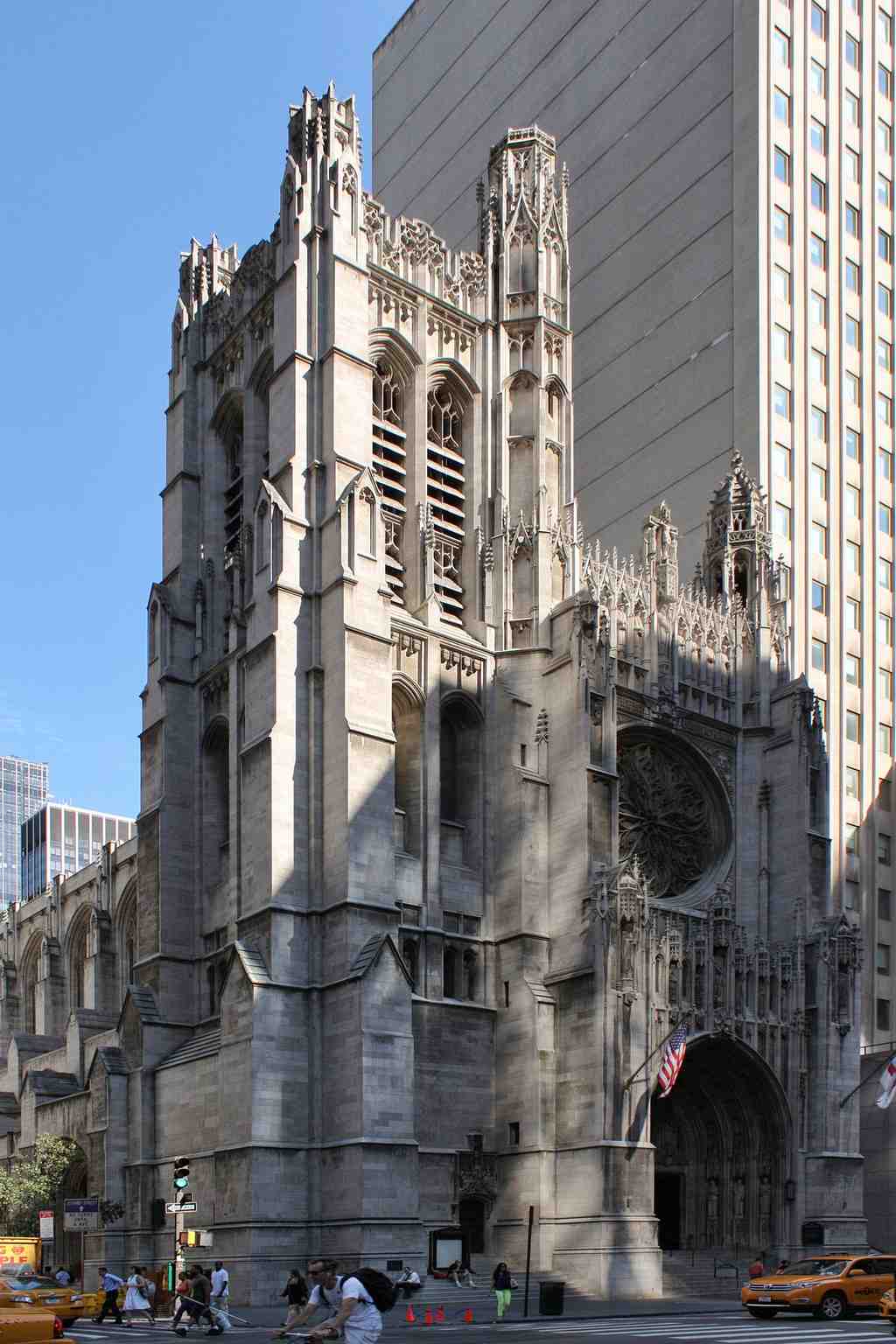
Saint Thomas ChurchPhoto: Yarl, Wikimedia Commons, CC BY-SA 3.0. Cropped & resized. On your left rises a pale limestone church with a great round rose window, a square corner tower, and a façade crowded with carved saints.
Saint Thomas has stood on this Fifth Avenue corner as a kind of stubborn act of faith. The parish began in the eighteen twenties downtown on Broadway and Houston, moved here in the age of mansions, lost an earlier church to a devastating fire in nineteen hundred and five, and then chose to remain when many wealthy congregations drifted farther uptown. The rector, Ernest Stires, insisted this corner still mattered. That decision gave Fifth Avenue a church with the scale of a cathedral and the discipline of a parish.
What you see now opened in nineteen thirteen, the fourth home of the congregation, designed by Ralph Adams Cram and Bertram Grosvenor Goodhue in French High Gothic Revival, meaning they borrowed the soaring language of medieval cathedrals... pointed arches, sculpted portals, and that commanding rose window. In fact, Saint Thomas became the last and most fully unified work of Cram and Goodhue before their partnership broke apart. Even great architects, it turns out, can sing in harmony only so long.
There is a quieter rescue story behind all this grandeur. When the old church burned, the first alarm came from the rectory housekeeper, Mrs. Sandsbach, who ran into the street screaming for help. A nearby policeman, Thomas Hewitt, pulled the alarm. By morning, stones had shattered and crashed onto neighboring houses, but the altar cross survived the fire and the flood of hoses. That cross still rests on the altar inside, a small survivor in a very large room.
And music is the room’s living heartbeat. In nineteen thirteen, the church invited the English organist T. Tertius Noble from York Minster to come to New York. Noble agreed on one condition: create a residential choir school for the boys, or no deal. A modest little request. The vestry said yes, and in nineteen nineteen Saint Thomas Choir School was born. It remains the only church-affiliated residential choir school in the United States, and one of the very few places left in the world where this Anglican tradition survives intact. The choir of men and boys sings most Sundays, tours internationally, and has performed for Queen Elizabeth the Second and President Gerald Ford, premiered Andrew Lloyd Webber’s Requiem, and even turned up on Carly Simon’s “Let the River Run.” Not bad for an institution built around scales, prayer books, and very early rehearsals.
This church also adapted without surrendering its character. Acoustics expert Wallace Sabine helped shape the interior so sermons would sound clear in a Gothic space that might otherwise blur every word into holy fog. More recently, a gift in twenty twenty funded a system of rotating cameras, allowing Saint Thomas to stream its worship around the world. During Advent and Christmas in twenty twenty-two, online participation reached thirty-eight thousand. Ancient ritual, modern lens... Fifth Avenue does love a good upgrade. If you want, check the before-and-after image in the app; the avenue keeps changing, but Saint Thomas hardly blinks.
If you glance at the image on your screen, the rose window gives you a good sense of how the church turns stone into theater.
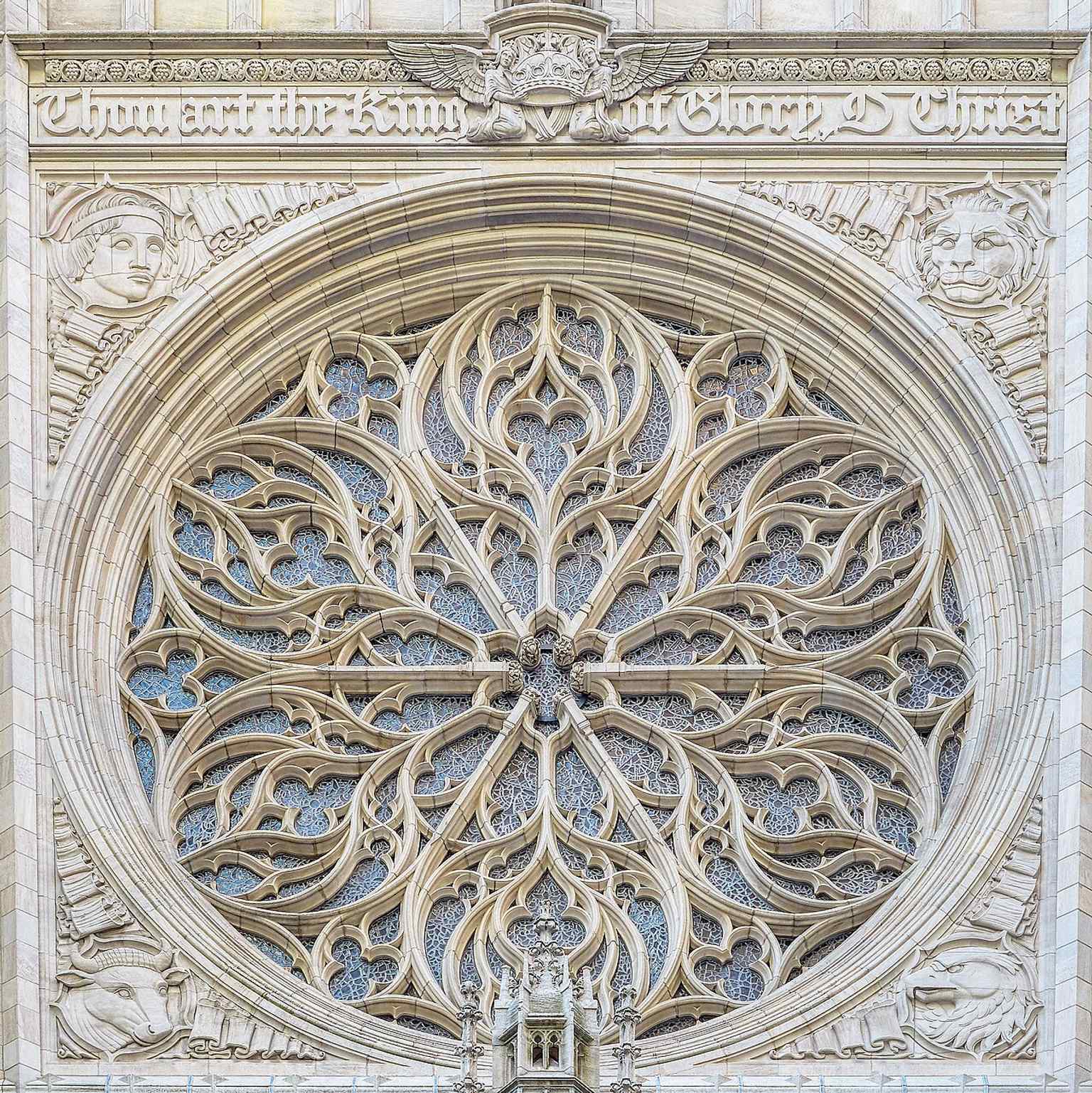
The rose window above the main entrance, a hallmark of the 1913 church’s French High Gothic design.Photo: Axel Tschentscher, Wikimedia Commons, CC BY-SA 4.0. Cropped & resized. When you’re ready, continue north along Fifth Avenue toward the pinnacle of Gilded Age hospitality, the St. Regis New York. If you want to return, the church is open every day, generally from eight-thirty to six, from ten to six on Saturdays, and from eight to seven on Sundays.
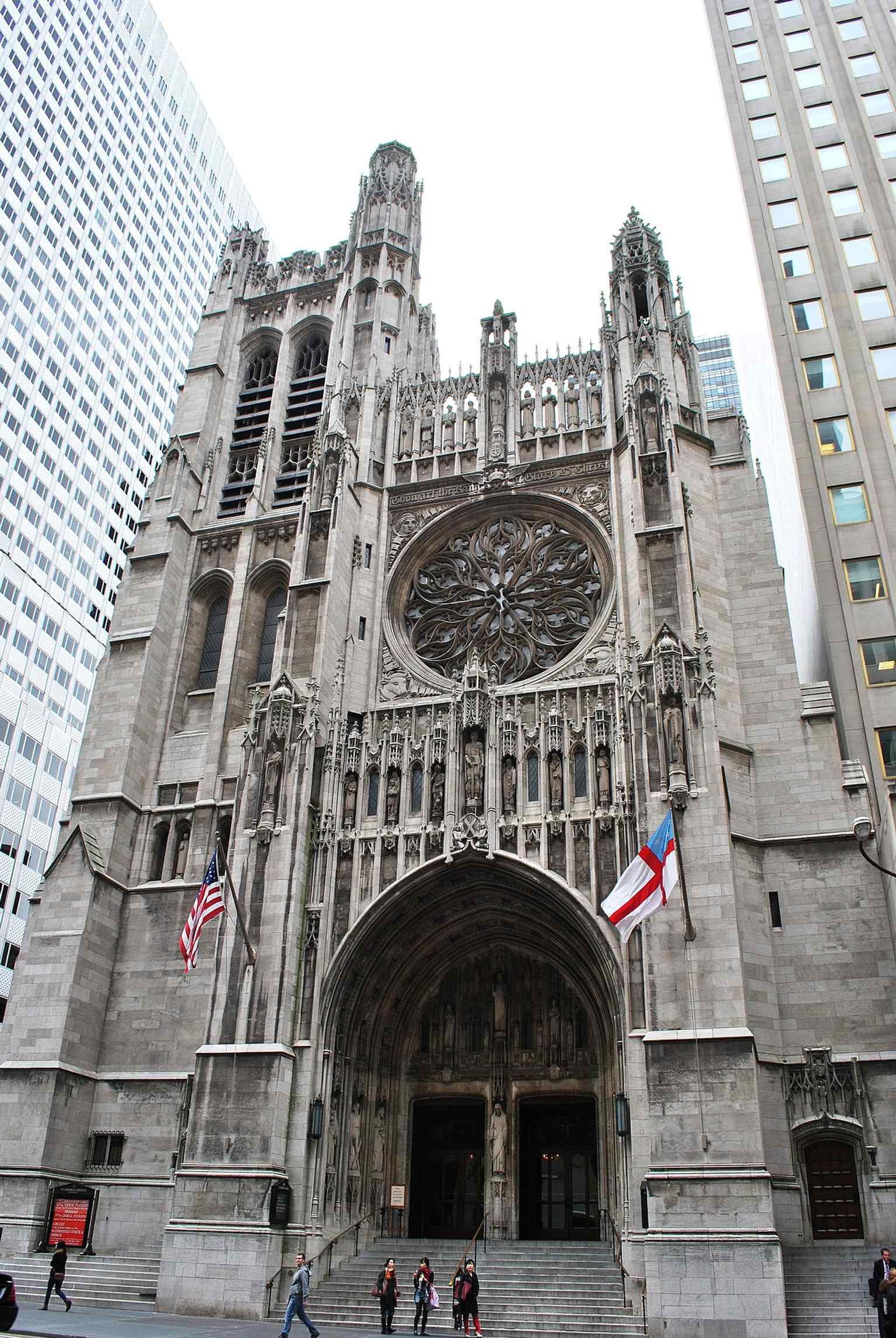
The full church and parish house on Fifth Avenue, showing the neo-Gothic complex that replaced the earlier buildings after the 1905 fire.Photo: Elisa Rolle, Wikimedia Commons, CC BY-SA 3.0. Cropped & resized. 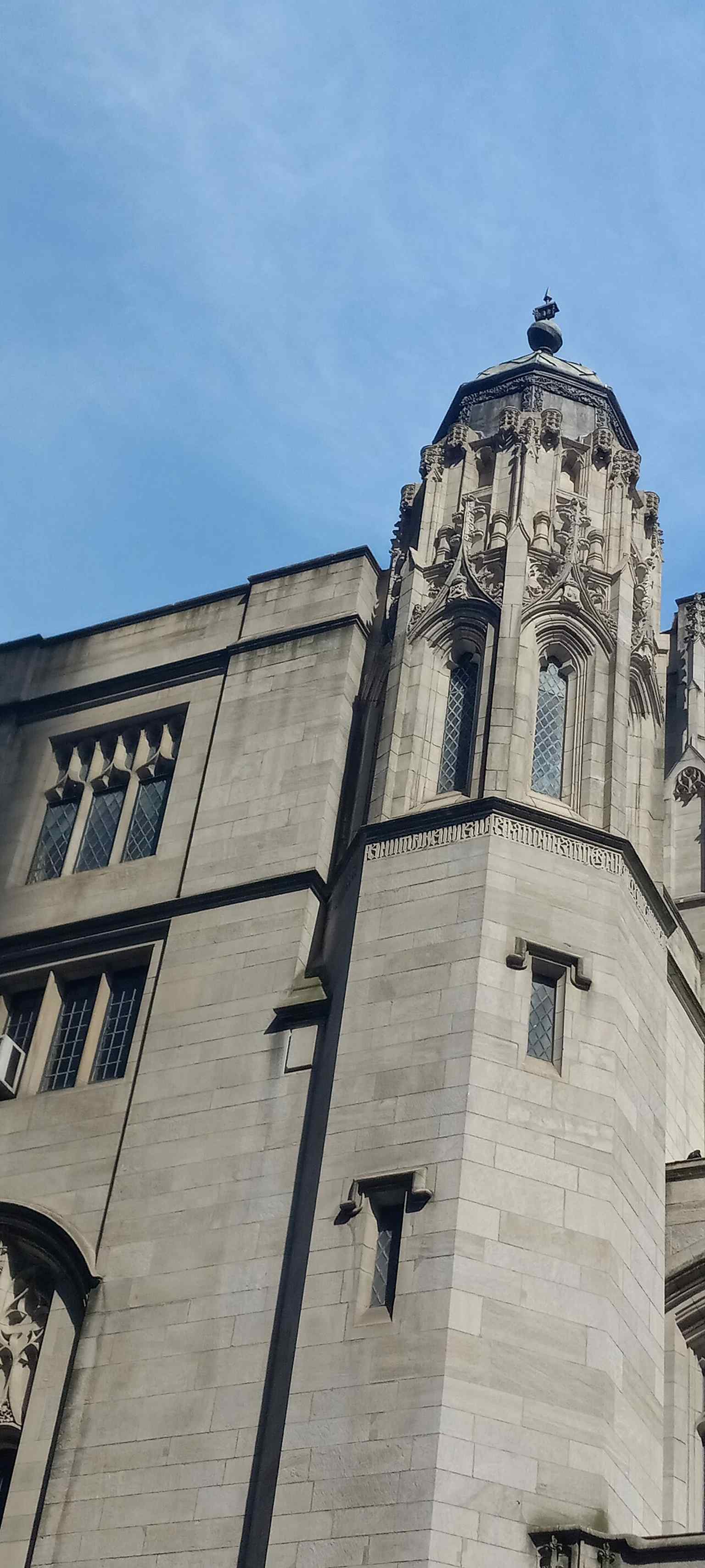
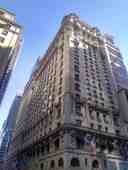
A recent view of Saint Thomas Church in Midtown Manhattan, anchoring the parish at 53rd Street and Fifth Avenue today.Photo: Kidfly182, Wikimedia Commons, CC BY 4.0. Cropped & resized. On your right, the St. Regis rises in pale limestone with a rounded corner, tall rows of arched windows, and a dark mansard roof that gives the whole thing a distinctly Parisian…Read moreShow less
Open dedicated page →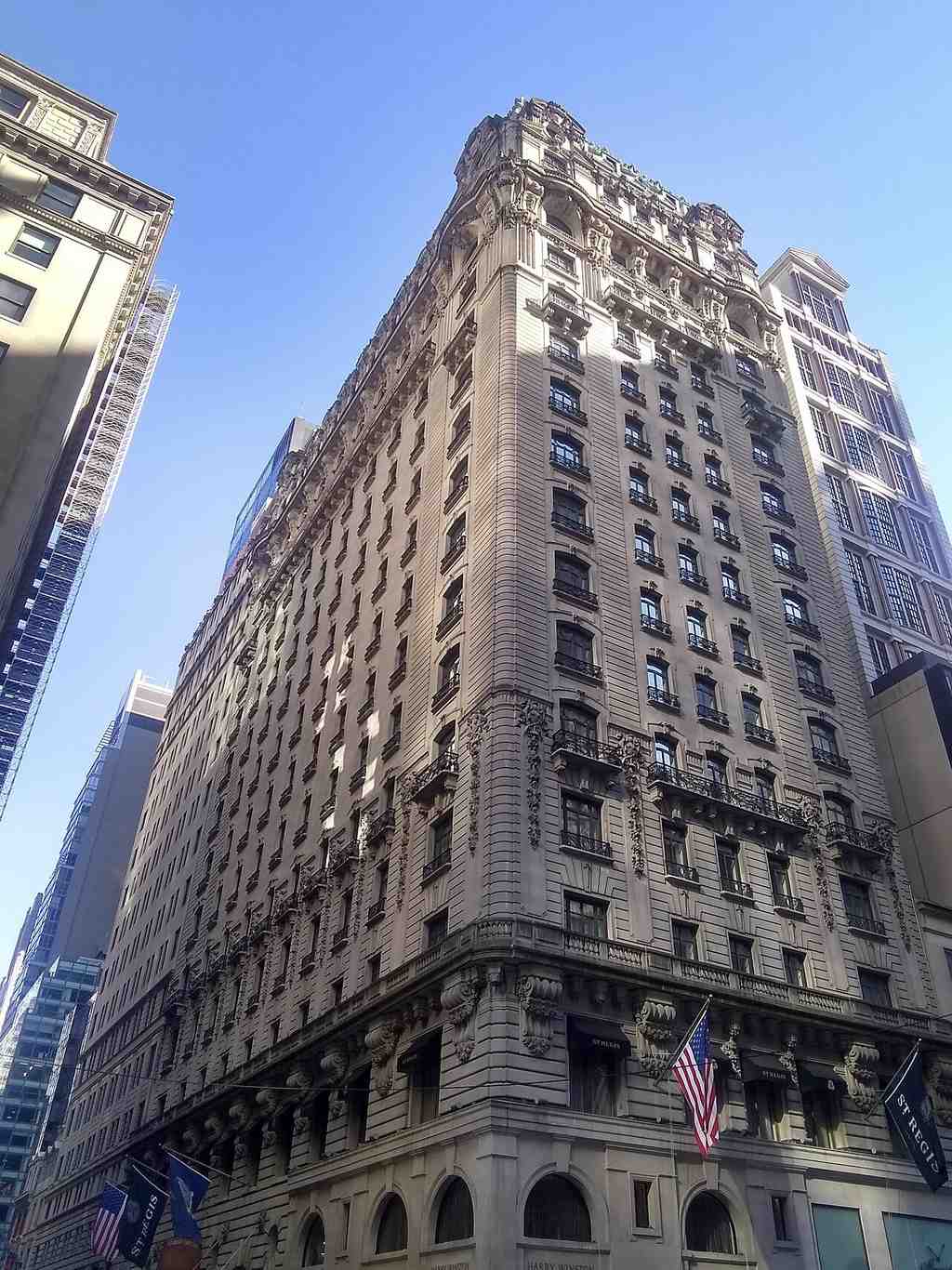
St. Regis New YorkPhoto: Epicgenius, Wikimedia Commons, CC BY-SA 4.0. Cropped & resized. On your right, the St. Regis rises in pale limestone with a rounded corner, tall rows of arched windows, and a dark mansard roof that gives the whole thing a distinctly Parisian crown.
This is Astor's Ambition in stone. John Jacob Astor the Fourth could have built himself another mansion here, but around nineteen hundred he saw Fifth Avenue changing from a row of private houses into a corridor of money on display, and he decided to do something more aggressive: build the most refined hotel in New York... and, not coincidentally, outshine his cousin’s Waldorf-Astoria.
He hired Trowbridge and Livingston, who gave him an eighteen-story palace in the Beaux-Arts style - a French-inspired way of designing that loves symmetry, carved ornament, and a little theatrical swagger. Look at how the facade behaves like a classical column: a heavy base below, a long middle shaft, and then a richly dressed top under that roof. Astor wanted elegance, yes, but he also wanted modern power hidden inside it. Beneath your feet, the hotel sank down through three basement levels packed with machinery. When it opened in nineteen hundred and four, it had filtered fresh air, individual thermostats in every room, synchronized clocks, and even a central vacuum system. Dust, apparently, was not invited.
The whole thing cost about five and a half million dollars to create, roughly the equivalent of around two hundred million today. Astor spent lavishly on marble, bronze, oak paneling, chandeliers, and a first floor full of public rooms: restaurant, café, palm court, and hotel office. Upstairs came the banquet hall, ballroom, library, and private dining rooms. It was luxury engineered like a machine.
Not everyone applauded. The neighbors were horrified. During excavation, workers blasted down to bedrock for deep foundations, and nearby residents complained that china fell from shelves, plaster cracked, sewage pipes burst, and one marble block even smashed through a neighbor’s roof. William Rockefeller bought nearby property partly to block expansion. Critics called the hotel a “social crime,” which is a wonderfully New York way of saying, “We object to strangers with luggage.”
Then came the liquor-license fight. Because a church stood nearby, local opposition threatened the bar before the first cocktail had a chance. So Rudolph Haan, the hotel’s operator, pulled a neat bit of urban chess: he moved the main entrance from Fifth Avenue over to Fifty-fifth Street, just far enough away to satisfy the law. If you open the app image of the Fifty-fifth Street facade, you’re looking at an entrance born from that fight.
And that may be the most revealing thing about the St. Regis: all this limestone grace rests on competition, legal maneuvering, and immense private wealth turned into public splendor. If you peek at the comparison in the app, you can watch this corner hold its pose while the rest of Manhattan reinvents itself around it.
In about one minute, we’ll head to Fifth Avenue Presbyterian Church - the church that helped force this hotel to turn its face toward Fifty-fifth Street, and a place where New York’s arguments over wealth, morality, and care for strangers became much more public.
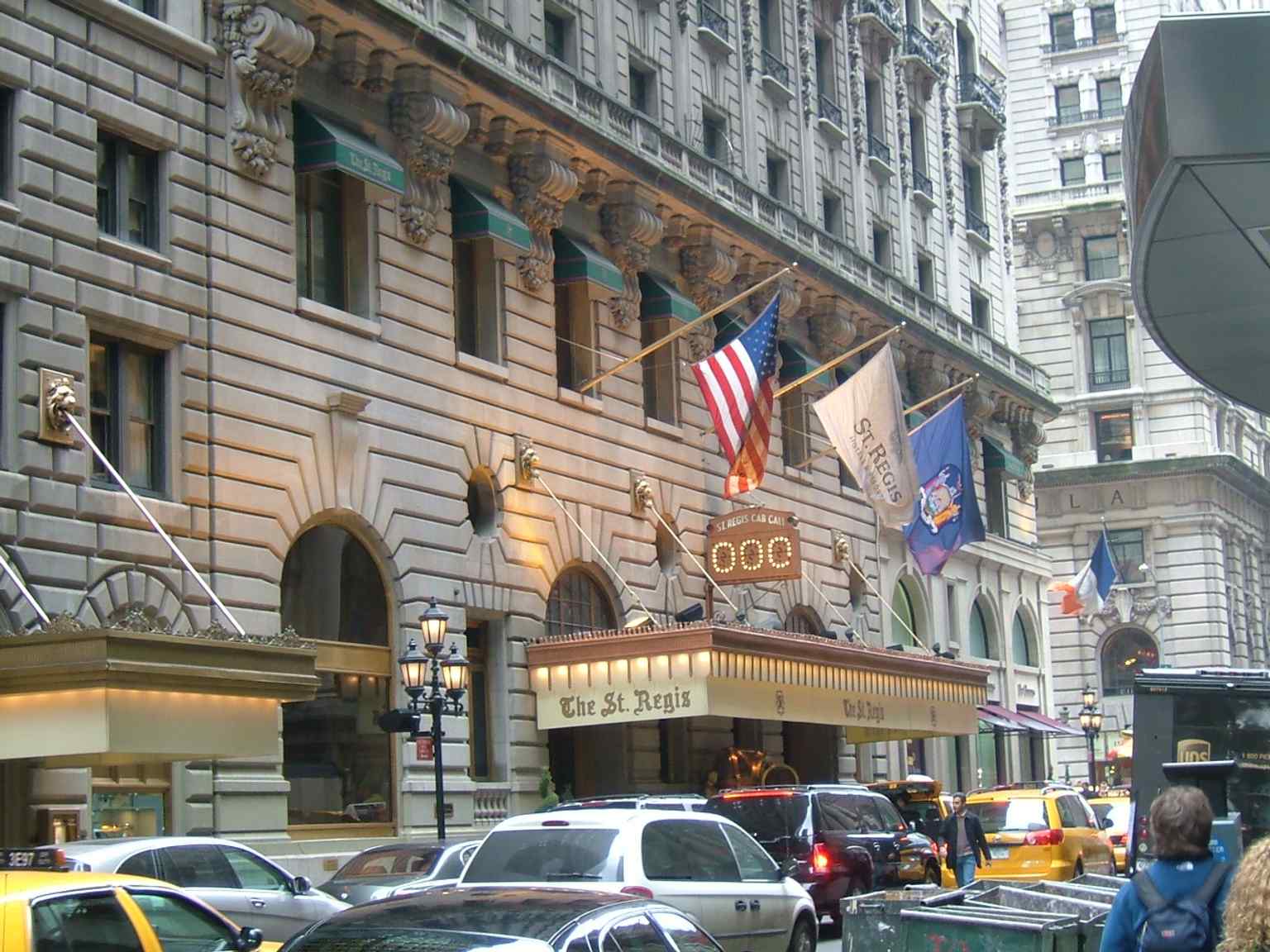
A clear modern exterior view of the St. Regis New York, useful for showing the landmark as it appears today.Photo: User: (WT-shared) Onyo at wts wikivoyage, Wikimedia Commons, CC BY-SA 4.0. Cropped & resized. 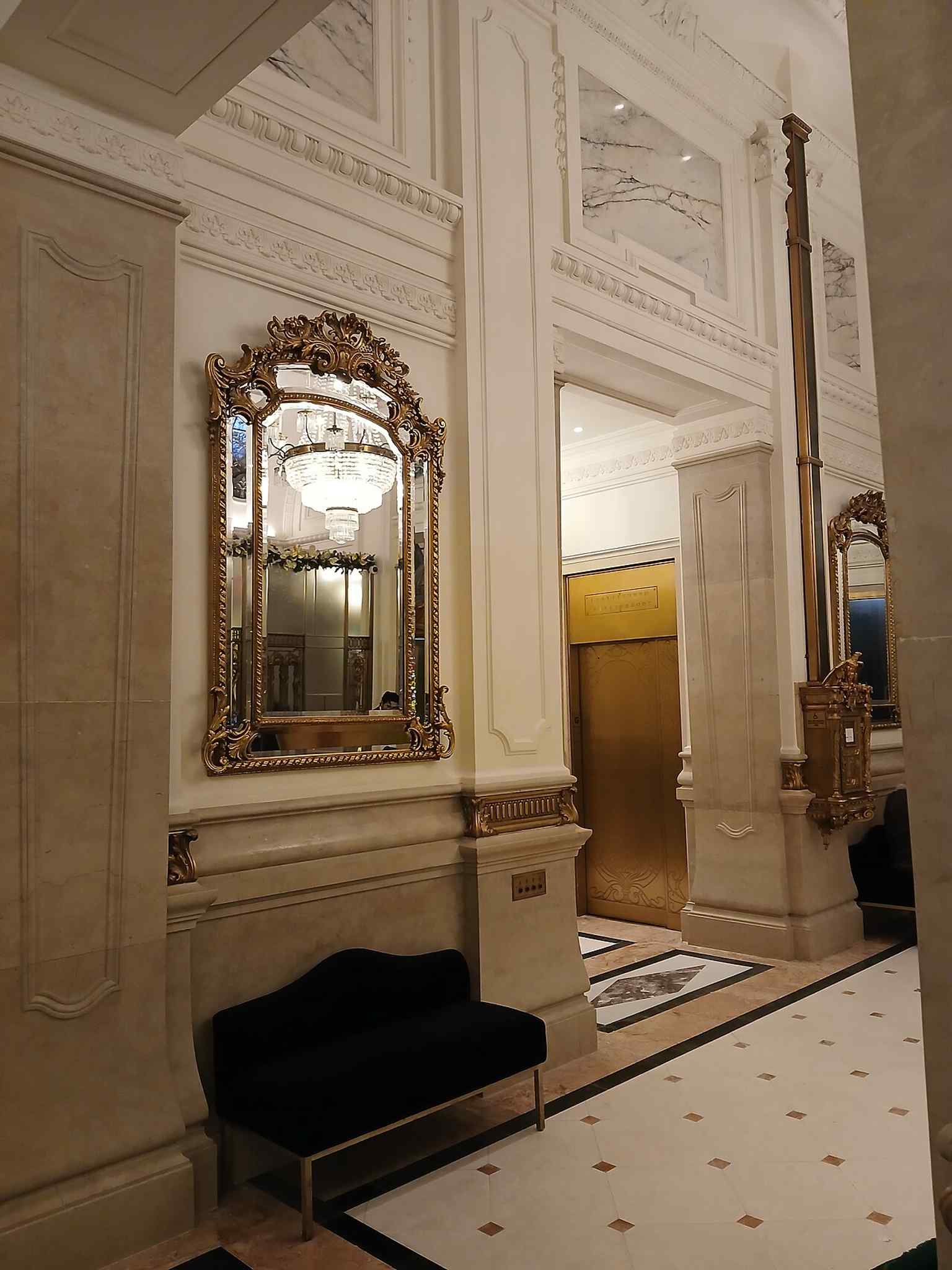
The first-floor hall reflects the marble-lined public rooms that made the St. Regis feel like a grand private club.Photo: Epicgenius, Wikimedia Commons, CC BY-SA 4.0. Cropped & resized. 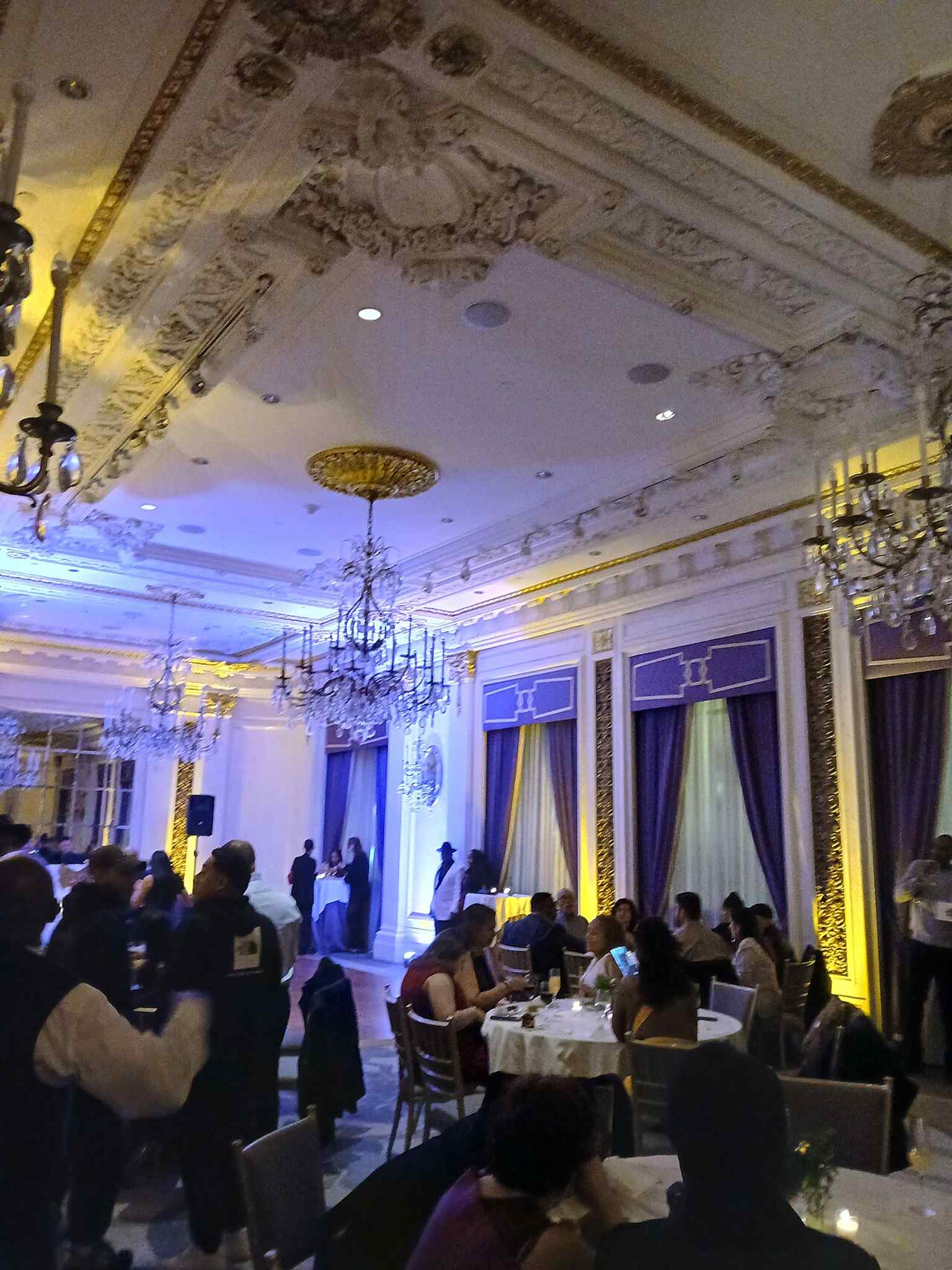
The second-floor ballroom recalls the hotel’s long tradition of banquets, dances, and high-society events.Photo: Epicgenius, Wikimedia Commons, CC BY-SA 4.0. Cropped & resized. 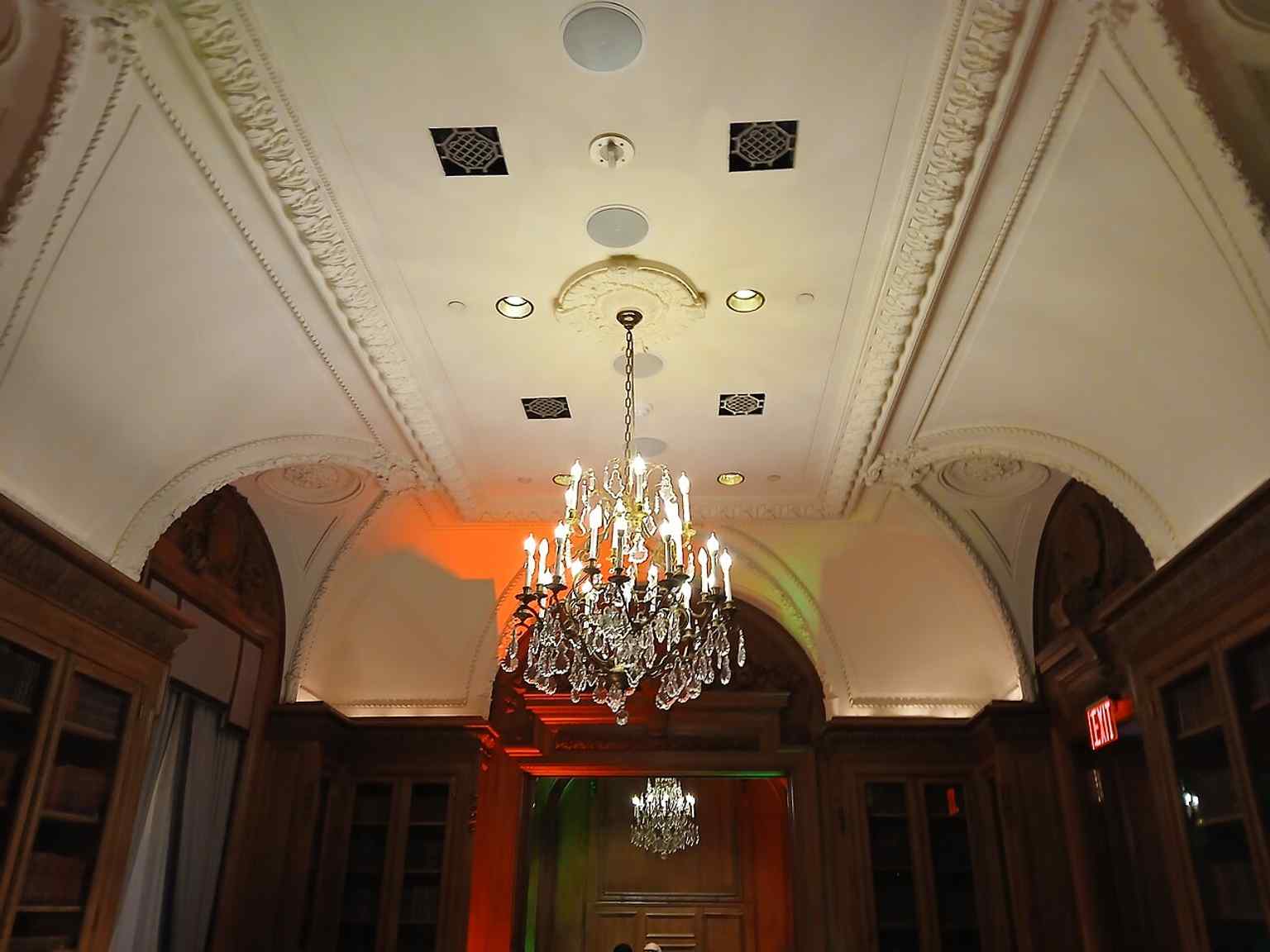
The second-floor library ties to the St. Regis’s literary side, where guests once browsed a carefully curated book collection.Photo: Epicgenius, Wikimedia Commons, CC BY-SA 4.0. Cropped & resized. 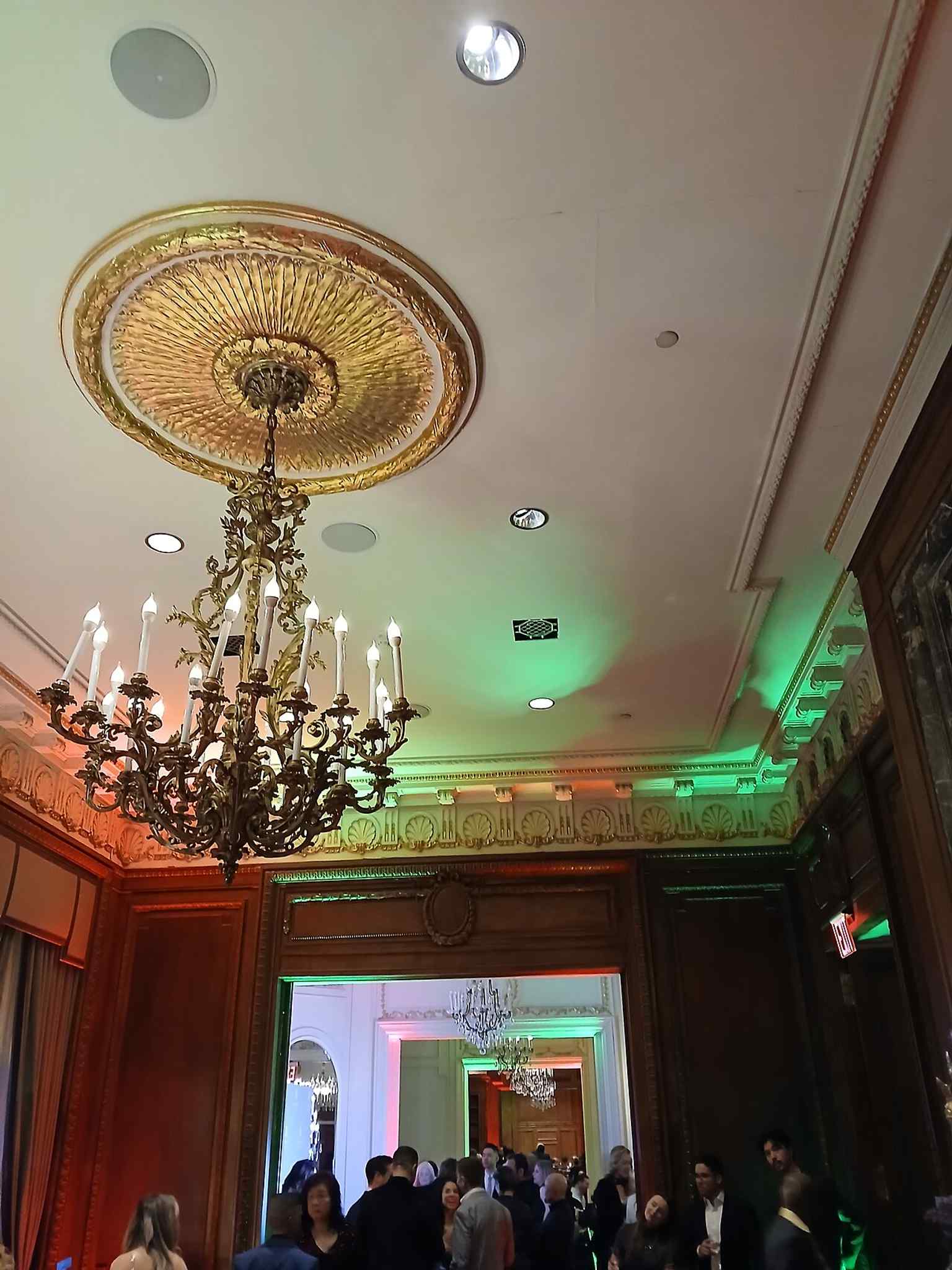
A second-floor reception room shows the elegant suite of public rooms that once included ballroom, banquet hall, and private dining spaces.Photo: Epicgenius, Wikimedia Commons, CC BY-SA 4.0. Cropped & resized. On your left, look for the red sandstone Gothic church with its pointed-arch entrance, tall clock tower, and steep spire rising above the avenue. This is Fifth Avenue…Read moreShow less
Open dedicated page →On your left, look for the red sandstone Gothic church with its pointed-arch entrance, tall clock tower, and steep spire rising above the avenue.
This is Fifth Avenue Presbyterian Church, and it has stood on this corner since eighteen seventy-five, after following Manhattan’s wealth northward in stages from Cedar Street to Duane Street to Nineteenth Street, and finally here. The congregation paid three hundred fifty thousand dollars for the site, roughly nine million in today’s money, then spent about one million dollars more to build the church... something like thirty million today. They chose this stretch because they thought Central Park would keep commerce from ever marching farther uptown. New York, as usual, had other ideas.
From the street, you see a stern rectangle of stone. Inside, Carl Pfeiffer designed something much stranger and smarter: a sanctuary tucked within the outer shell, separated by air so city noise stayed outside. The result is an oval, ship-like room with a sloping floor and pews that fan outward, all built to favor the spoken word. If you glance at the interior image on your screen, you can see how the whole room pulls attention toward the pulpit rather than toward ornament.
That priority shaped the church’s public life too. In eighteen eighty-four, this sanctuary held the joint funerals of Theodore Roosevelt’s mother and his first wife, Alice, who died on the same day. In nineteen ten, Theodore Roosevelt Junior married here, with the former president in attendance and about five hundred Rough Riders filling the scene with a distinctly American blend of piety, politics, and spectacle.
But the story that gives this place its sharpest edge came much later, out here on the steps. In late two thousand one, New York police began waking homeless people sleeping here and threatening arrests. The church sued, arguing that sheltering people on its steps was part of its religious mission, protected by the First Amendment and by the Religious Land Use and Institutionalized Persons Act, a federal law meant to shield religious practice from government interference.
If you had been the judge, where would you draw that line... between a city’s duty to control public space and a church’s duty to offer refuge?
In two thousand two, the court split the difference. The city could keep the public sidewalks clear, but it could not interfere with people sleeping on the elevated church steps and landings, because those counted as the church’s own space for ministry. In other words, sanctuary here was not just a sermon topic. It became a federal case.
That tension fits the building. Fifth Avenue prestige on one hand, radical hospitality on the other. The same church that hosted Roosevelts also defended the right of homeless New Yorkers to rest at its door. That is a serious claim in this neighborhood, where the instinct to exclude usually dresses better.
And look up at the tower: the clock still runs on its original eighteen seventy-five mechanism and staff still wind it by hand each week. No bells, though. The builders skipped them so patients across the street at St. Luke’s Hospital would not be disturbed. Even this lofty tower learned restraint.
If you want a quick sense of how wildly the surroundings changed, tap the before-and-after image in the app. The church went from mansion district to Midtown canyon and simply stayed put.
If you want to return, it is generally open from nine to six on weekdays, a bit later on Wednesday, and for shorter hours on weekends. As you head on, let your eyes shift from this red sandstone mass to the polished commercial facades beside it... the Coty Building is right next door.
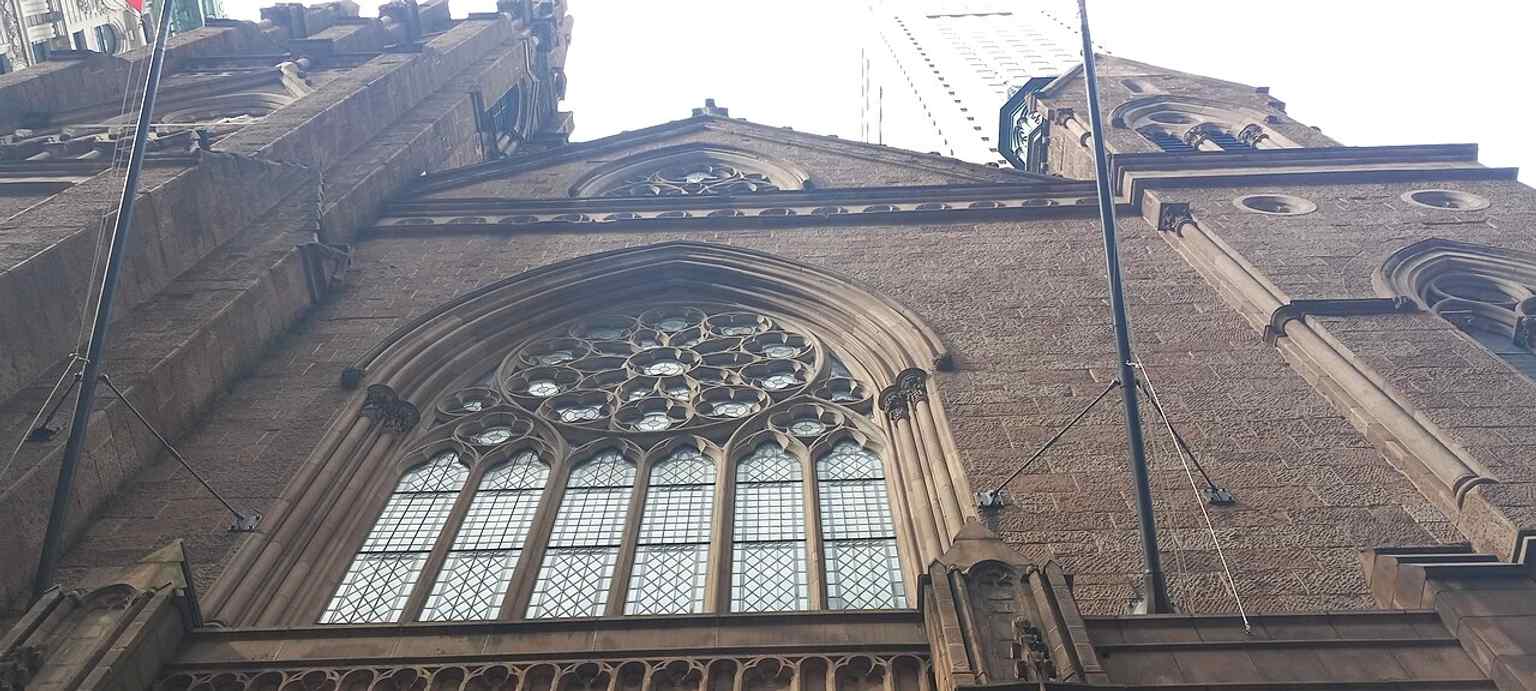
The church’s soaring Fifth Avenue facade and clock tower, home to one of New York’s rare manually wound tower clocks.Photo: Kidfly182, Wikimedia Commons, CC BY 4.0. Cropped & resized. Look for the slim limestone-framed facade with a broad wall of pale glass across the middle floors and a dark mansard roof punctured by small arched dormers. This little survivor…Read moreShow less
Open dedicated page →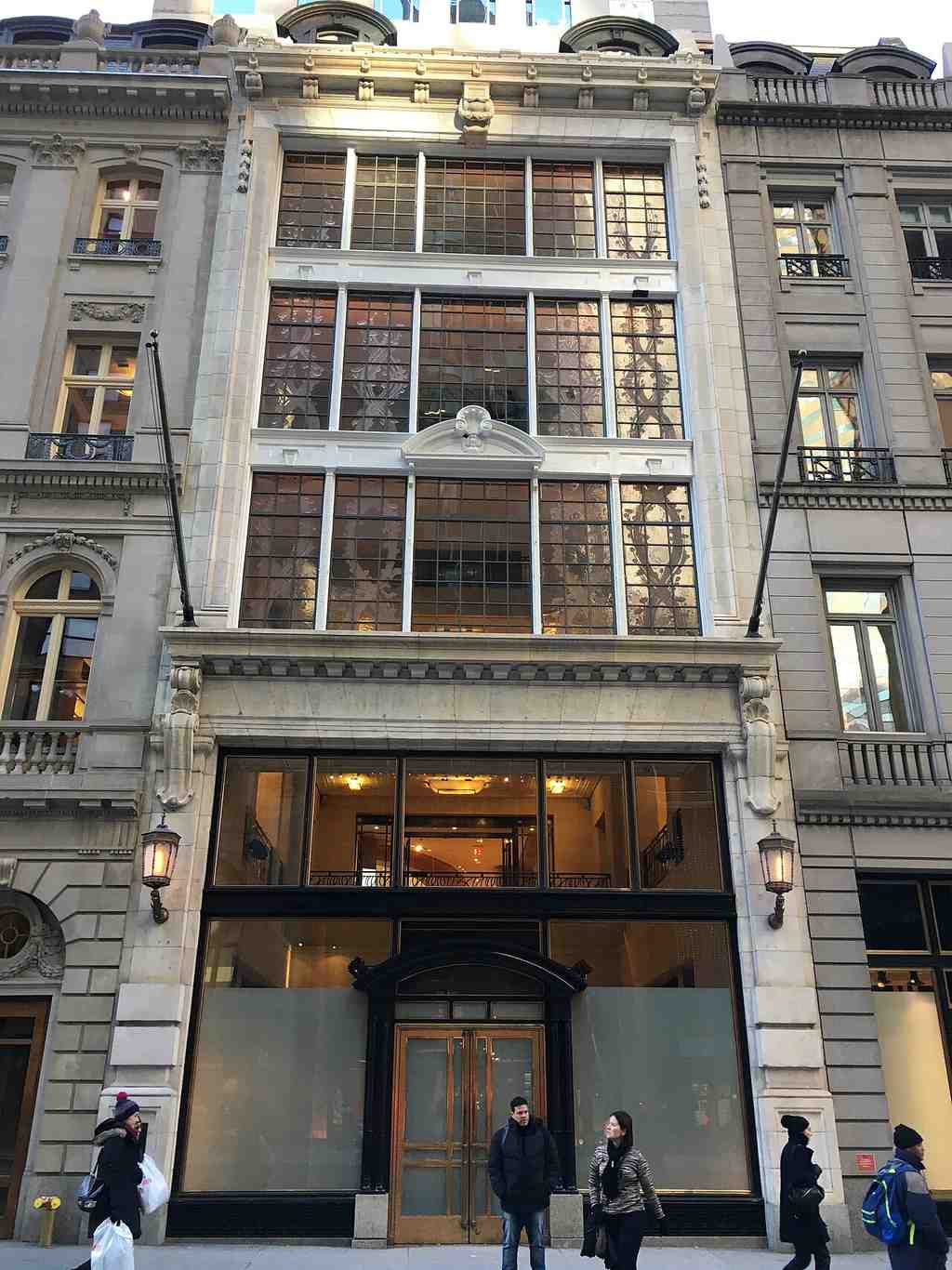
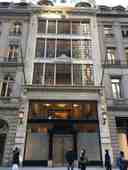
Coty BuildingPhoto: DDupard, Wikimedia Commons, CC BY-SA 4.0. Cropped & resized. Look for the slim limestone-framed facade with a broad wall of pale glass across the middle floors and a dark mansard roof punctured by small arched dormers.
This little survivor at seven fourteen Fifth Avenue started life in eighteen seventy-one as a brownstone rowhouse. Then Charles A. Gould, a manufacturer from Buffalo who had actually lived here, noticed what was happening on Fifth Avenue: parlors were losing ground to showrooms, and private addresses were turning into public seductions. Call it transparent commercialism. In nineteen oh seven, Gould hired architect Woodruff Leeming to strip away the old brownstone face and replace it with something far more candid... a glass wall that let commerce announce itself right on the avenue.
That was a bold move. Fifth Avenue had long preferred the manners of a drawing room. Gould chose display instead. He kept a French flavor, with limestone framing and a mansard roof, but the center became a vertical advertisement for modern luxury. If you check the wider image in the app, you can see the strange result today: the historic facade survives like a refined mask, while the later tower rises behind it.
In nineteen ten, perfumer François Coty leased the building for his American headquarters, and that changed everything. Coty understood that scent is invisible, so the storefront had to do some of the flirting. He commissioned René Lalique, the great French jeweler and glass artist, to create the windows on the third through fifth floors. There are two hundred seventy-six panes in all, with curling vines and flowers, probably tulips, pressed into the glass. They are the only documented architectural work by Lalique anywhere in the United States. Not bad for a perfume shop front.
Coty had a gift for spectacle. Industry legend says he first broke through in Paris after accidentally smashing a bottle of perfume in a department store; the fragrance spread, shoppers crowded in, and he sold out. Here, he turned that instinct into architecture: a visual fragrance, really, rising above the sidewalk in pale glass. On your screen, the closer exterior image helps those Lalique panels read more clearly, especially the way the floral patterns thicken toward the edges.
The building kept evolving. It hosted a tuberculosis awareness exhibition, then a wartime charity benefit, then shops and offices for women with so-called “smart feet,” portrait photographers for the social set, and bespoke tailors for businessmen who liked their vanity professionally managed. Fifth Avenue had completed its conversion from residential row to commercial theater.
Then came the near-death moment. In the early nineteen eighties, developers wanted to demolish this building for a new skyscraper. Architectural historian Andrew Dolkart noticed the grimy glass, realized it might be Lalique, and tracked down a former Coty executive from France to confirm it. Once landmark status arrived in nineteen eighty-five, the city even stationed police here around the clock because people feared a midnight demolition. New York, ever the picture of calm restraint.
The compromise was classic Manhattan: save the facade, remove the interior, and build the tower behind it. That practice is called facadism, meaning the face remains while the body changes. Imperfect? Sure. But without it, this glass-fronted experiment in luxury selling would be gone.
Next, head about a minute north to Tiffany and Company, where the art of making desire visible reached a whole new level. Practical note: this address generally keeps weekday hours from nine in the morning to four in the afternoon, and it is closed on weekends.
On your left, look for a polished stone corner building with tall rectangular window bays and the green-patinated Atlas figure above the entrance. This house of diamonds began…Read moreShow less
Open dedicated page →On your left, look for a polished stone corner building with tall rectangular window bays and the green-patinated Atlas figure above the entrance.
This house of diamonds began with a much humbler ambition. In eighteen thirty-seven, Charles Lewis Tiffany and John B. Young opened a downtown shop selling stationery and what they called fancy goods. The detail locals love is almost ridiculous: on day one, total sales came to four dollars and ninety-eight cents. From there, Charles Tiffany did something oddly modern for the time... he posted fixed prices and demanded cash, no haggling, no credit, no exceptions. Even Abraham Lincoln, according to company lore, couldn’t get a discount.
By eighteen fifty-three, Tiffany steered the business hard toward jewelry. He bought rare stones, snapped up pieces from the French Crown Jewels, and earned the nickname “the King of Diamonds,” which is exactly the sort of title Fifth Avenue never dislikes. In eighteen eighty-six, the company introduced the Tiffany Setting, the six-prong engagement ring mount that lifts a diamond up into the light. If that design feels familiar, it’s because half the jewelry world spent the next century borrowing it.
This particular flagship moved here in nineteen forty, into a building designed by Cross and Cross. It wasn’t just elegant; it was engineered to seduce people into lingering. It became New York’s first retail building with central air conditioning, which sounds practical, but in luxury retail it’s also strategy. Keep shoppers comfortable, and they may suddenly need a bracelet.
Look up at Atlas above the door. Most people assume he belongs to this corner alone, but he has actually traveled with Tiffany across several Manhattan addresses, a small stubborn survivor from the company’s earlier lives.
If you want a quick visual of the recent makeover, check the comparison in the app; this corner went from renovation cocoon to gleaming flagship again after the overhaul finished in twenty twenty-three.
Of course, Tiffany did not stay a New York jeweler with a nice window display. By twenty eighteen, it had more than three hundred stores worldwide. Then, in twenty twenty-one, the French luxury giant L-V-M-H, Moët Hennessy Louis Vuitton, bought Tiffany for fifteen point eight billion dollars and folded it into a much larger empire. Same blue box, bigger patron.
And yes, this is the Tiffany from Breakfast at Tiffany’s. For Audrey Hepburn’s opening scene, the store even broke its no-Sunday-opening rule. Some myths require accommodations.
When you’re ready, continue up the avenue toward the Squibb Building’s tall, clean wall of stone and glass; in about two minutes, you’ll be at seven forty-five Fifth Avenue. If you’re tempted to pop inside later, the store keeps long daily hours, though the prices remain heroically expensive.
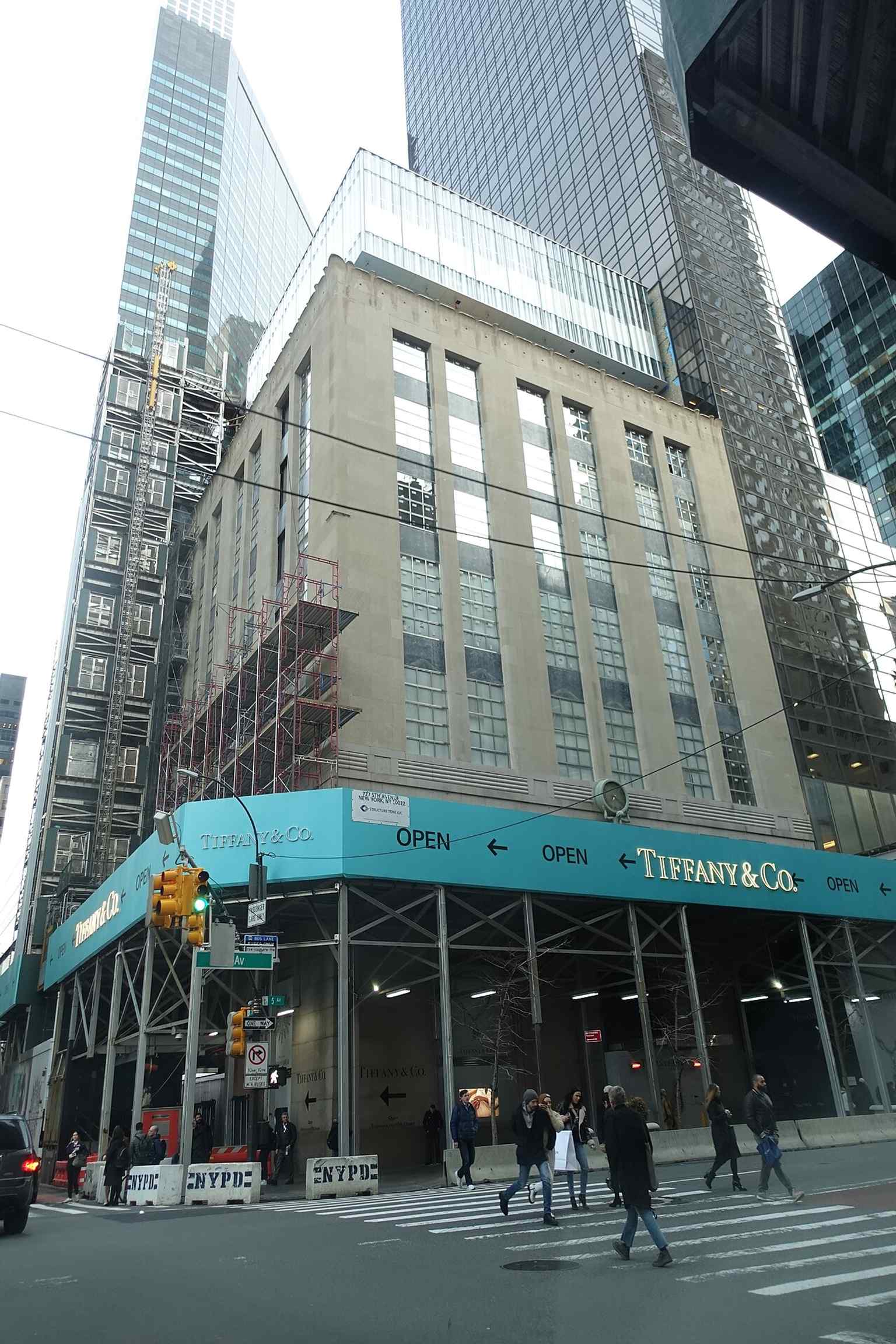
The Fifth Avenue flagship with its historic facade revealed — this is Tiffany’s iconic New York home, moved here in 1940 and long associated with the brand’s luxury image.Photo: Tdorante10, Wikimedia Commons, CC BY-SA 4.0. Cropped & resized. 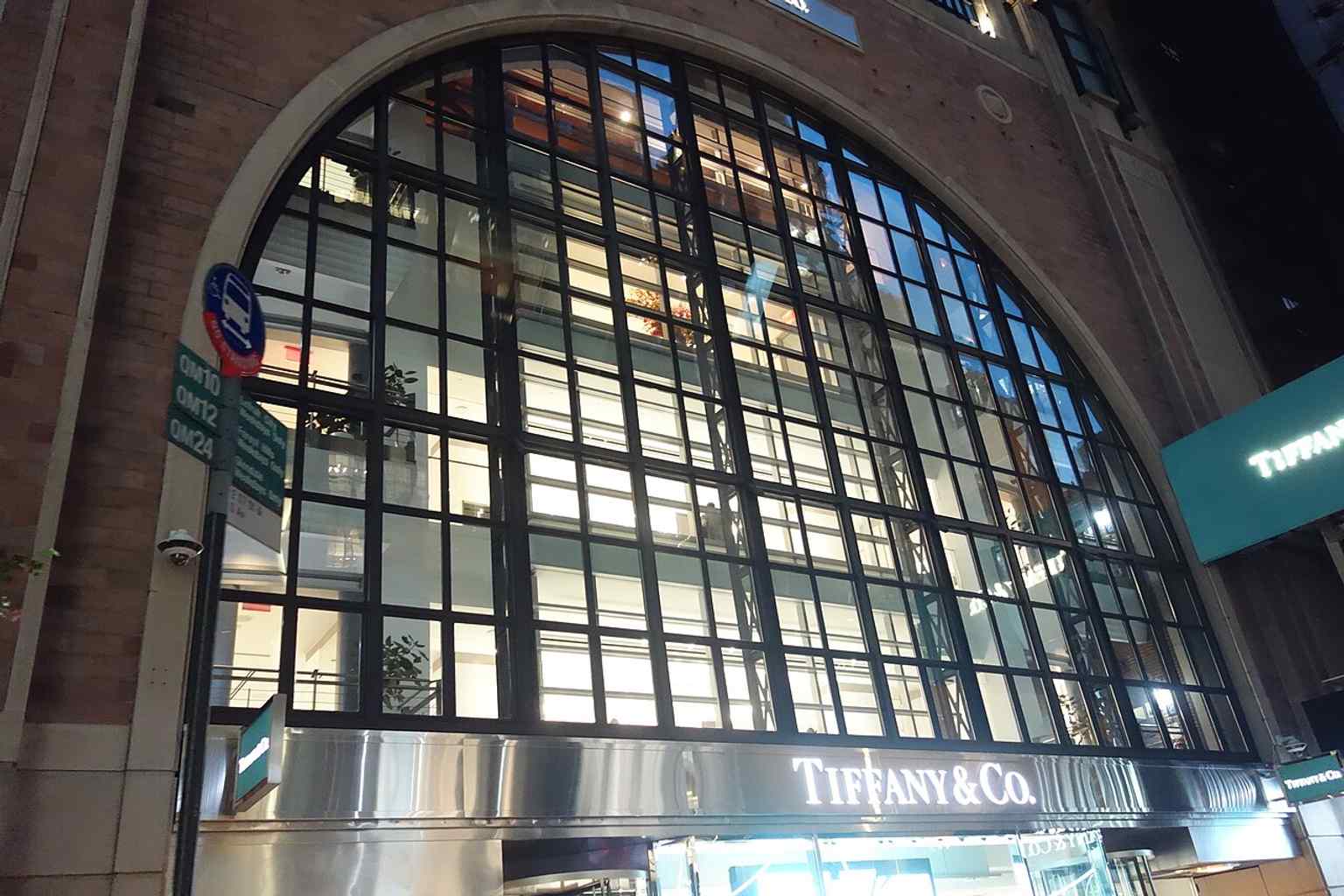
A street-level view of the Tiffany & Co. corner building at 57th Street and Fifth Avenue, showing the neighboring storefronts around the flagship.Photo: Tdorante10, Wikimedia Commons, CC BY-SA 4.0. Cropped & resized. 
A pearl sautoir from around 1900, reflecting Tiffany’s early-20th-century jewelry style and its refined use of pearls.Photo: Tiffany & Co., Wikimedia Commons, Public domain. Cropped & resized. Look for a formal stone plaza split by the street, with a gilded bronze horseman on a granite pedestal to the north and a tiered fountain crowned by a bronze goddess to the…Read moreShow less
Open dedicated page →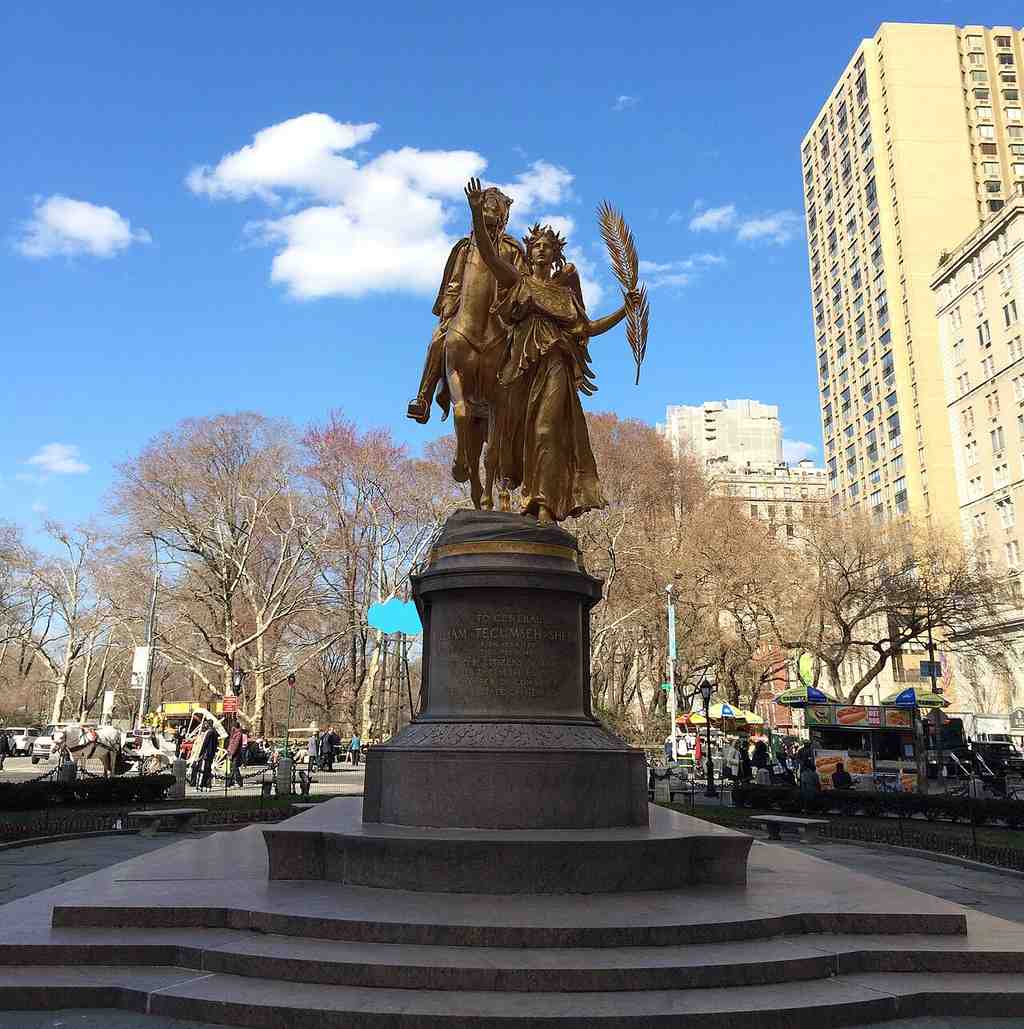
Grand Army PlazaPhoto: Paulo JC Nogueira, Wikimedia Commons, CC BY-SA 3.0. Cropped & resized. Look for a formal stone plaza split by the street, with a gilded bronze horseman on a granite pedestal to the north and a tiered fountain crowned by a bronze goddess to the south.
Grand Army Plaza is one of those New York spaces that seems to have always known it was important. Carrere and Hastings gave it this dignified layout in nineteen sixteen, turning a messy traffic space at the corner of Central Park into a proper civic stage. The street cuts it in two, almost rudely, but the design still reads clearly: military glory on one side, cultivated abundance on the other. New York does enjoy a contrast.
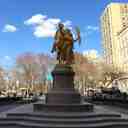
Now... take a careful look at the woman leading General Sherman. Most people clock the gold horse and the famous name, then keep moving. But the figure who gives this monument its lift and motion carries one of the plaza’s most revealing stories. If you want a closer view, the image on your screen helps isolate her beautifully.
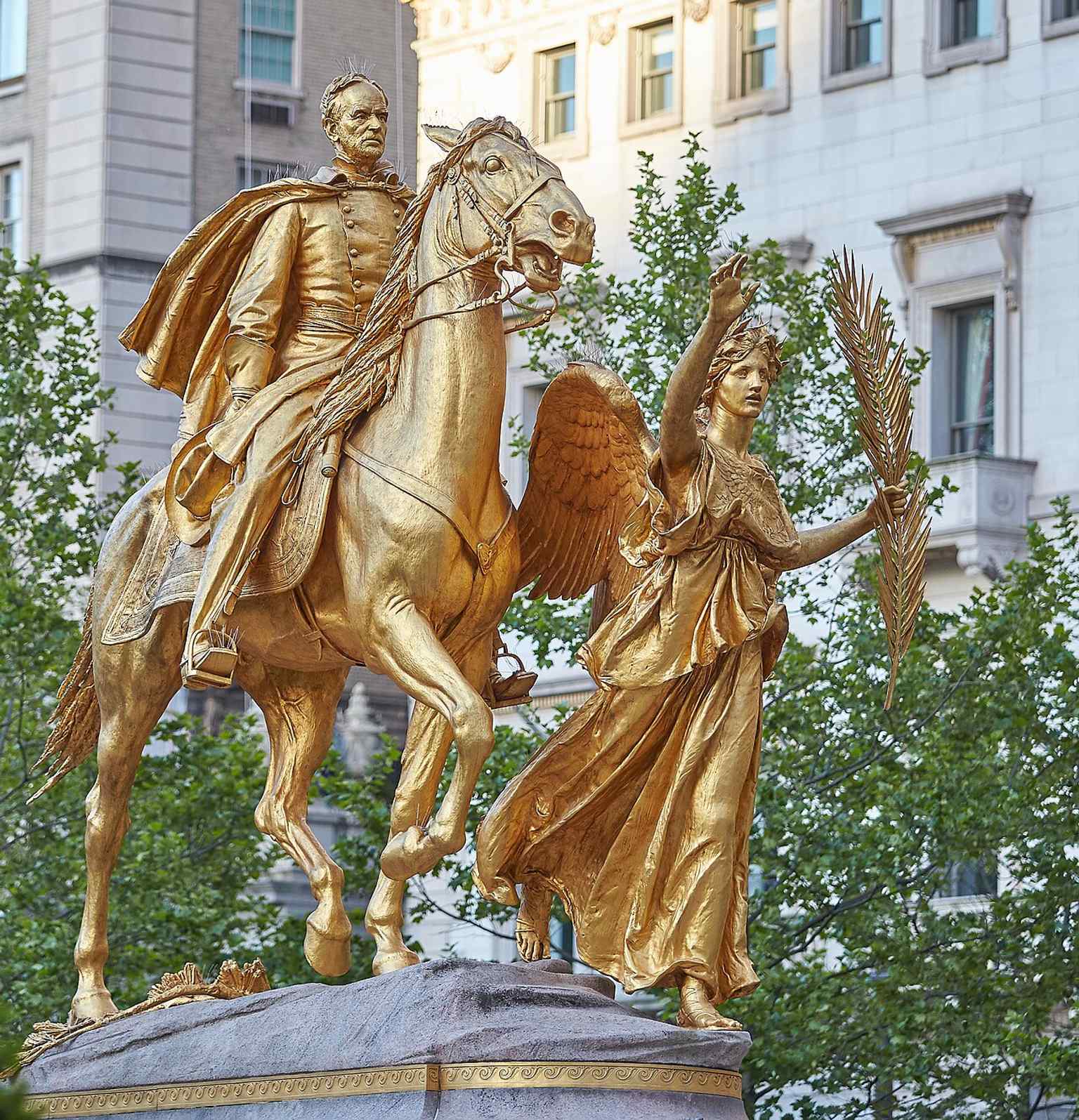
The gilded Sherman equestrian monument with Victory beside him — the plaza’s best-known centerpiece and a major 1903 Saint-Gaudens landmark.Photo: Axel Tschentscher, Wikimedia Commons, Public domain. Cropped & resized. That woman is Victory, modeled on Hettie Anderson, an African-American professional model from South Carolina. Augustus Saint-Gaudens, the sculptor, called her the handsomest model he had ever seen. And yet for decades, her role nearly vanished from the official record. Saint-Gaudens’ son Homer removed Anderson’s name and even her bust from his father’s catalog, in what later historians linked to racial prejudice and discomfort with acknowledging a paid model’s contribution. So here, in one of the richest corners of Manhattan, a woman long pushed to the margins quite literally leads the general forward. That feels fitting.
Sherman himself arrived here in nineteen oh three, and the monument still glows with gilding. During the subway construction underneath the plaza, workers temporarily moved the statue into the park in nineteen fourteen. A Brooklyn paper joked that it was the first time General Sherman ever retreated. New York has always hired part-time comedians as headline writers.
Now let your attention drop to the southern half, to the Pulitzer Fountain. Joseph Pulitzer left fifty thousand dollars for a memorial fountain after his death in nineteen eleven, roughly one and a half million in today’s money, and Karl Bitter’s Pomona, the Roman goddess of abundance, crowns it. If you want to see her up close, there’s a rare detail image in the app.
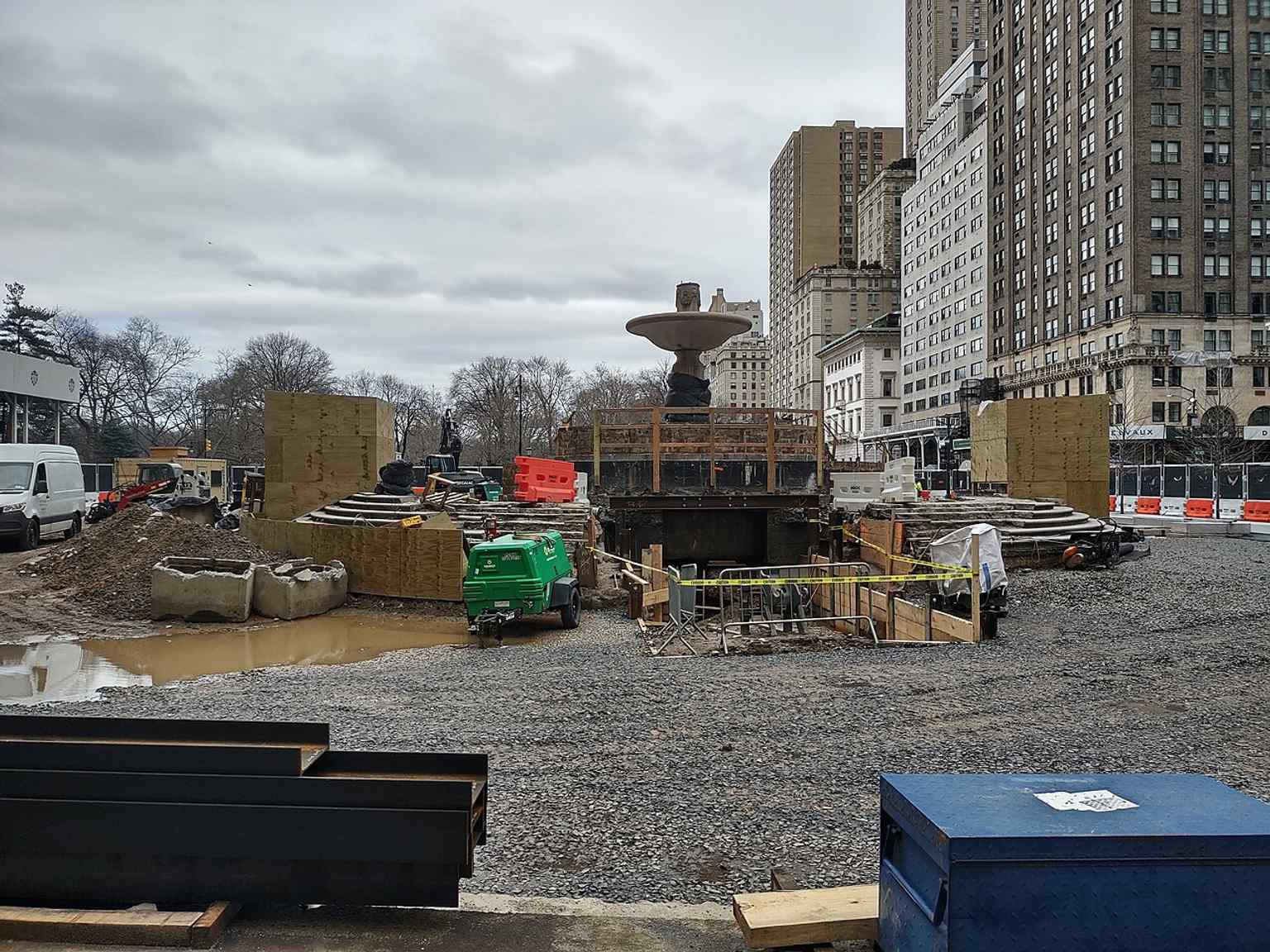
The Pulitzer Fountain’s Pomona statue after removal from its pedestal in 2025 — a rare close look at one of the plaza’s signature monuments.Photo: Jim.henderson, Wikimedia Commons, CC BY-SA 4.0. Cropped & resized. Pomona also starred in one of Fifth Avenue’s great high-society embarrassments. Alice Vanderbilt lived in the enormous mansion that once stood just south of here, where Bergdorf Goodman stands now. According to legend, she was so scandalized by the nude goddess’s backside facing her bedroom window that she moved her bedroom to the other side of the house. The Gilded Age could survive monopolies, labor battles, and spectacular excess... but apparently not an inconvenient view of classical sculpture.
So this plaza is not just about generals and grandeur. It is also about the people hidden behind polished bronze and social ceremony: Hettie Anderson, almost erased; Doris Doscher, the model for Pomona; even Alice Vanderbilt, revealing just how fragile elite dignity could be.
And framing it all, just to your west, is the grande dame that turned this square into an international drawing room: the Plaza Hotel. Head that way, and we’ll meet it next.
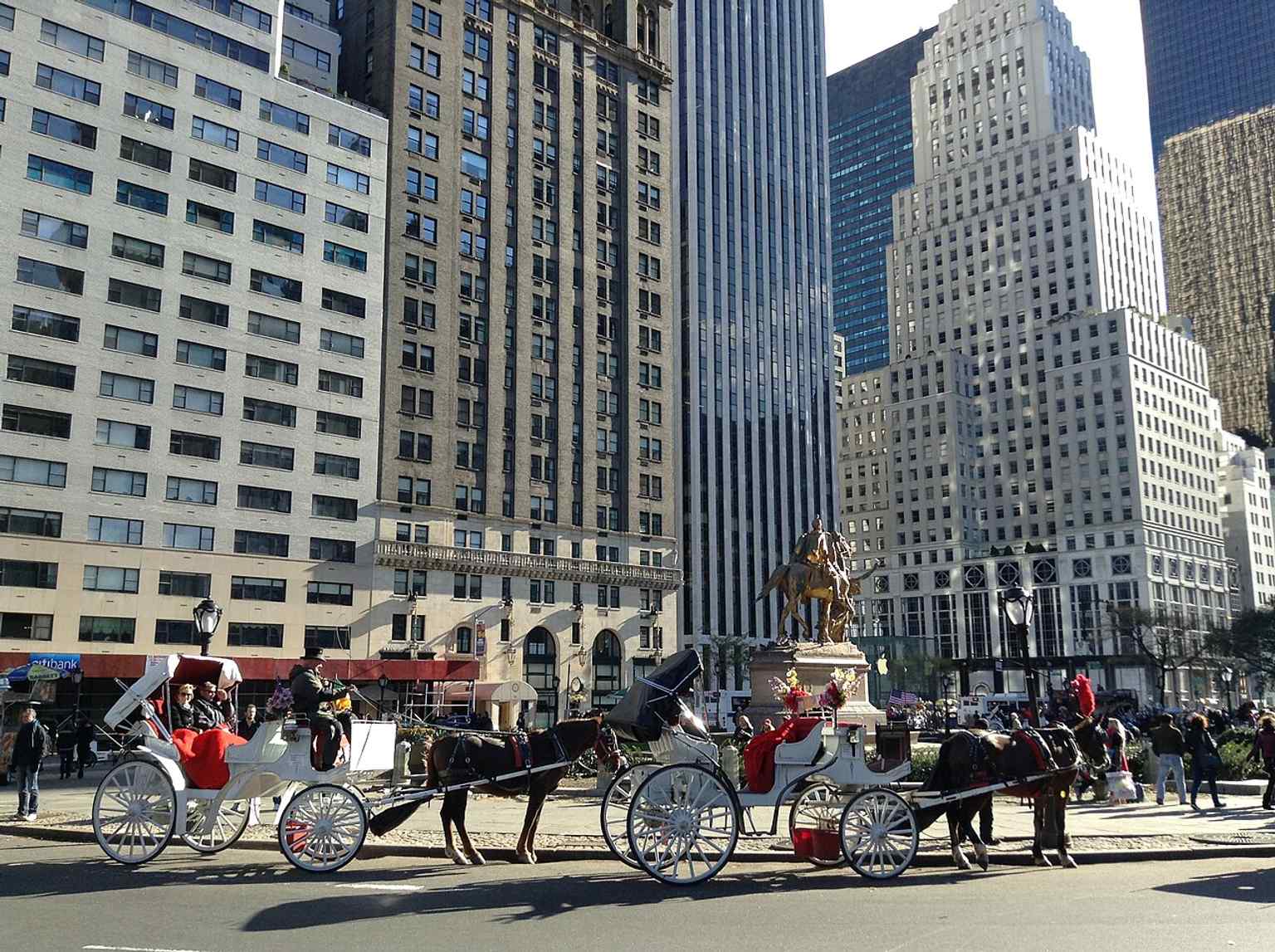
A closer look at the Sherman statue, highlighting the gilded bronze figure that anchors the plaza’s north half.Photo: Daniel Dimitrov, Wikimedia Commons, CC BY-SA 4.0. Cropped & resized. On your left, the Plaza doesn’t simply sit at the edge of Grand Army Plaza... it presides. New York has never been especially interested in modesty, and this building has always…Read moreShow less
Open dedicated page →On your left, the Plaza doesn’t simply sit at the edge of Grand Army Plaza... it presides. New York has never been especially interested in modesty, and this building has always understood the assignment.
Henry Janeway Hardenbergh designed it in a French Renaissance château style, which is a fancy way of saying he gave Manhattan something that looks a bit like a Loire Valley palace and taught it to behave like real estate. The base wears rusticated marble, cut in heavy blocks to look solid and aristocratic. Above that, white brick climbs toward a green mansard roof - that steep, elegant roofline with dormer windows poking through - and the rounded corner turrets wear little domes like crowns. If the St. Regis, which we visited earlier, feels like Astor’s polished private mansion, the Plaza feels like the city’s public coronation.
The current hotel opened in nineteen oh seven after developers tore down an earlier Plaza from the eighteen nineties. They spent about twelve and a half million dollars on the new one - well over four hundred million in today’s money - and they meant every cent to show. At opening, it had about eight hundred rooms, ten passenger elevators, marble staircases, pneumatic tubes for mail and room-service orders, and a basement plant that could make fifteen tons of ice every day. Glamour, in other words, rested on a small industrial civilization humming out of sight.
And then came the audience. The Palm Court became such a social magnet that crowds packed in just to watch other people have tea. In nineteen oh eight, thousands gathered to stare at heiress Gladys Vanderbilt and her fiancé as if afternoon tea were grand opera. The hotel’s Champagne Porch, on this plaza side, catered to the very rich with meals that could run from fifty to five hundred dollars - a startling sum then, and still enough to make your eyebrows rise now. In nineteen twenty-one, management removed that porch and installed the grander entrance you see today, with six Tuscan columns holding up a balcony. Even the doorway got promoted.
If you want a quick comparison on your screen, the Plaza barely changes while the street below completely reinvents itself.
Inside, the performance continued. If you glance at the lobby photo on your screen, you’ll catch the mood: French marble, bronze detailing, mosaic floors, and a crystal chandelier delivering the message that ordinary life should wait outside.
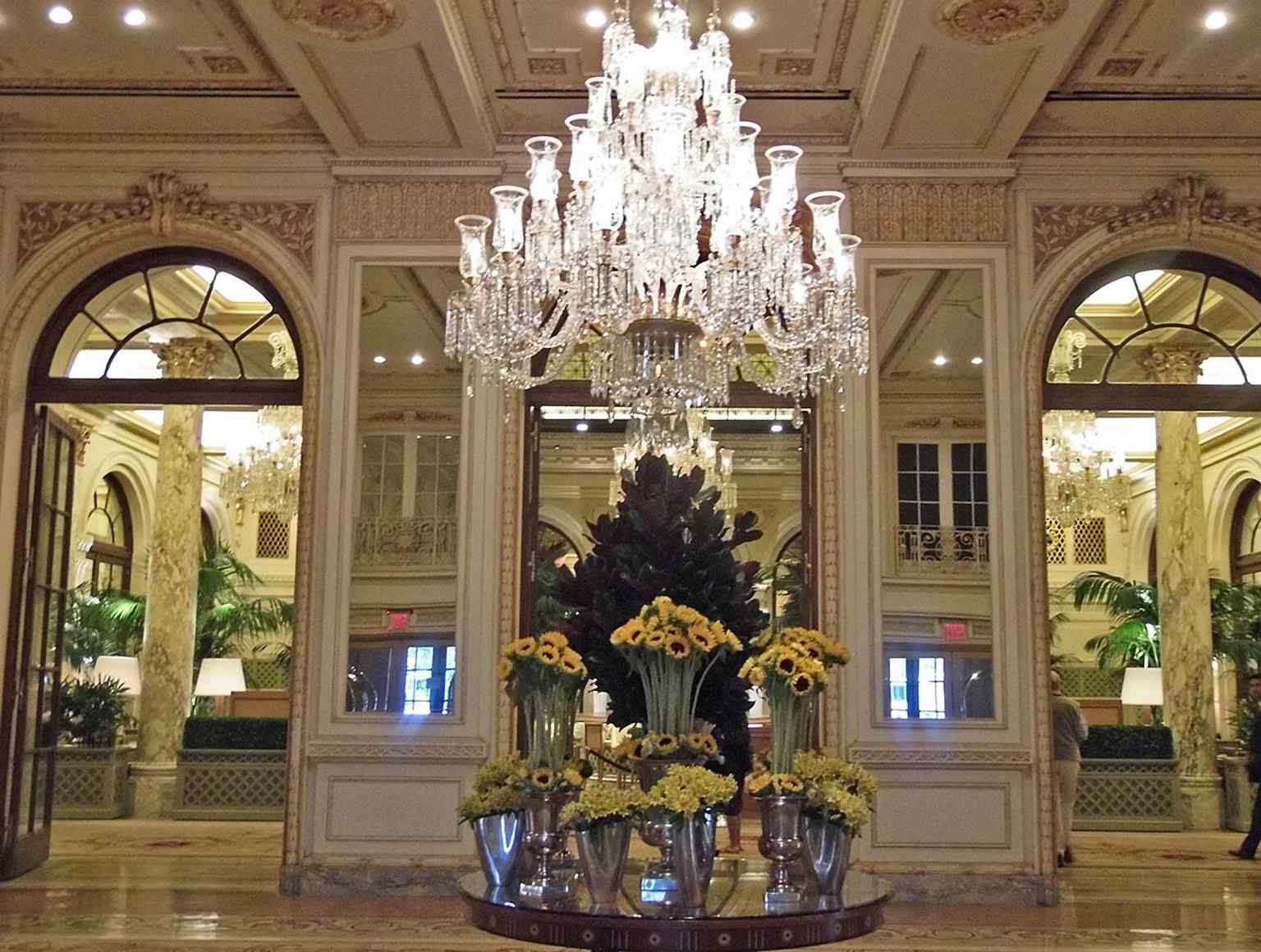
The main entrance lobby, one of the Plaza’s landmark interiors, designed to impress guests with marble, bronze, and a crystal chandelier.Photo: Zinetv1, Wikimedia Commons, CC BY-SA 3.0. Cropped & resized. The guest list turned the hotel into folklore. F. Scott and Zelda Fitzgerald haunted it; legend says they took a midnight swim in the Pulitzer Fountain outside. The Beatles stayed here in nineteen sixty-four after the manager reversed himself - thanks, apparently, to his daughter’s furious protest - and police on horseback held back screaming fans. Truman Capote staged his nineteen sixty-six Black and White Ball here, inviting five hundred forty people and, with exquisite efficiency, offending thousands more.
That’s the Plaza’s real talent. It has always been more than lodging. It’s a machine for status, a stage where money, manners, ambition, and spectacle all learned their cues.
When you’re ready, head south along Fifth Avenue, away from the park, toward Fifty-seventh Street. In about four minutes, we’ll reach the Crown Building, where commercial ambition puts on an even shinier suit.
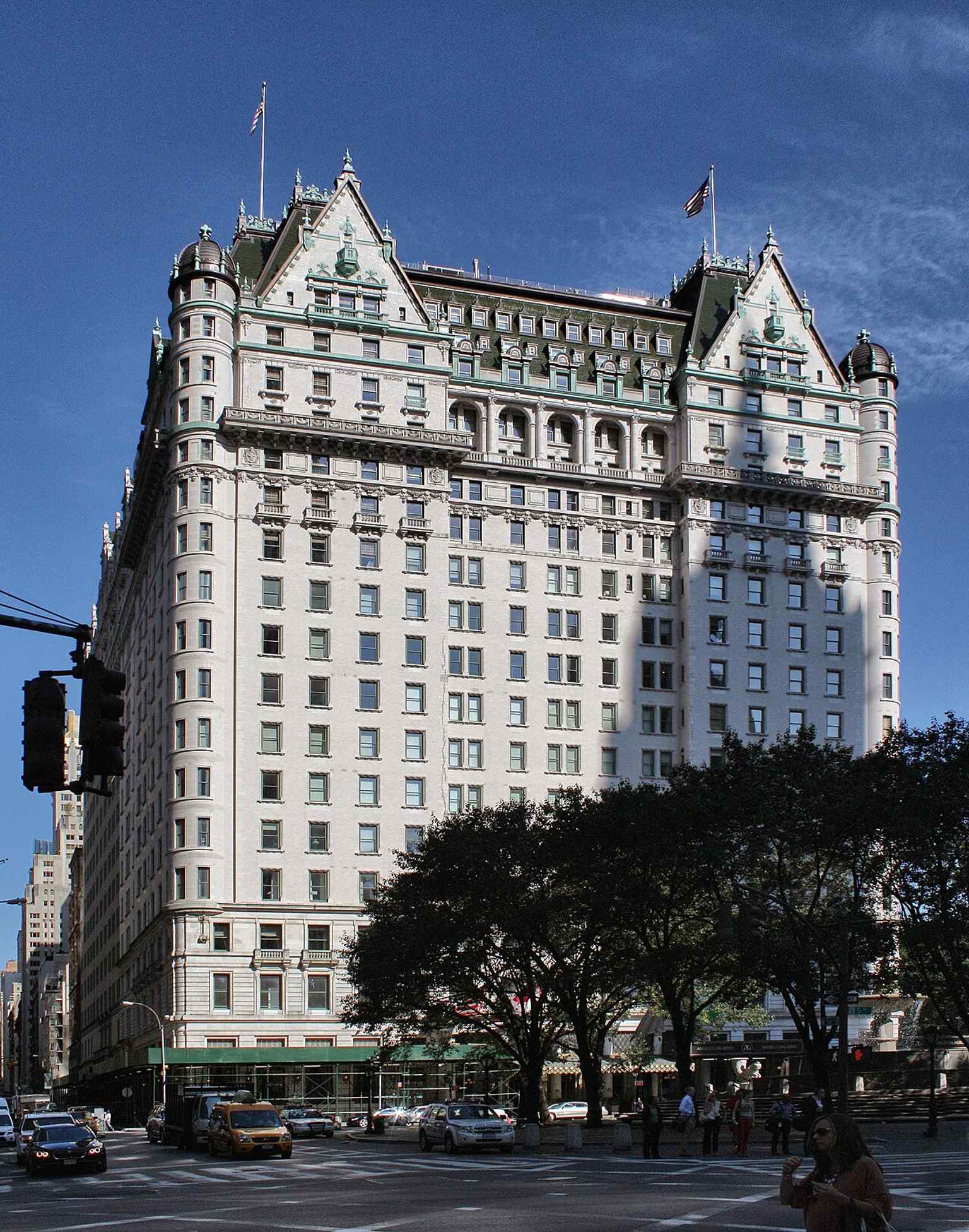
A classic full-height view of the Plaza’s Fifth Avenue side, showing the château-style façade that made the hotel an early-20th-century icon of luxury.Photo: Yarl, Wikimedia Commons, CC BY-SA 3.0. Cropped & resized. 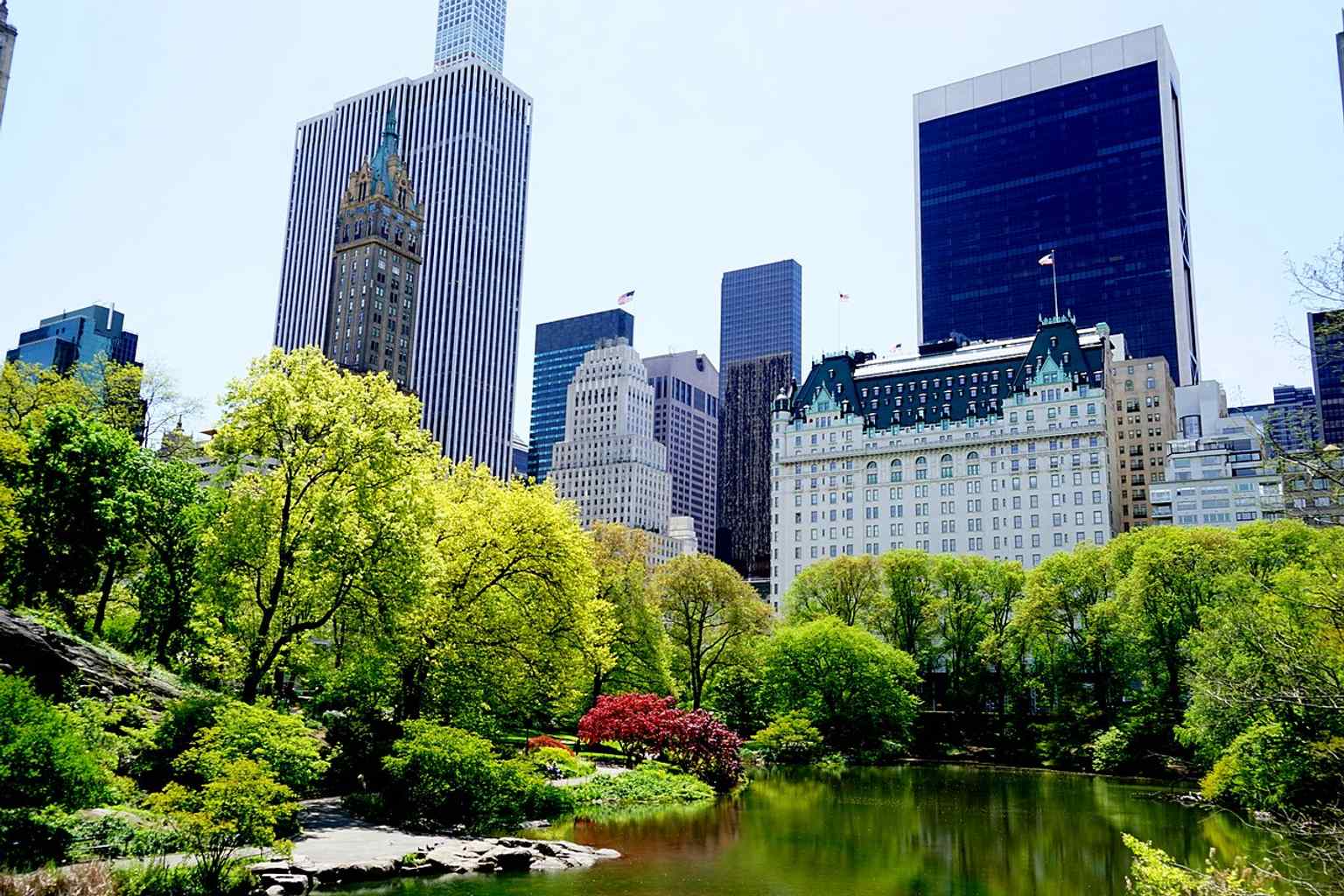
Seen from Central Park, this view captures the Plaza’s famous setting beside the Pond and the park edge that helped define its prestige.Photo: Cheburashka007, Wikimedia Commons, CC BY-SA 4.0. Cropped & resized. 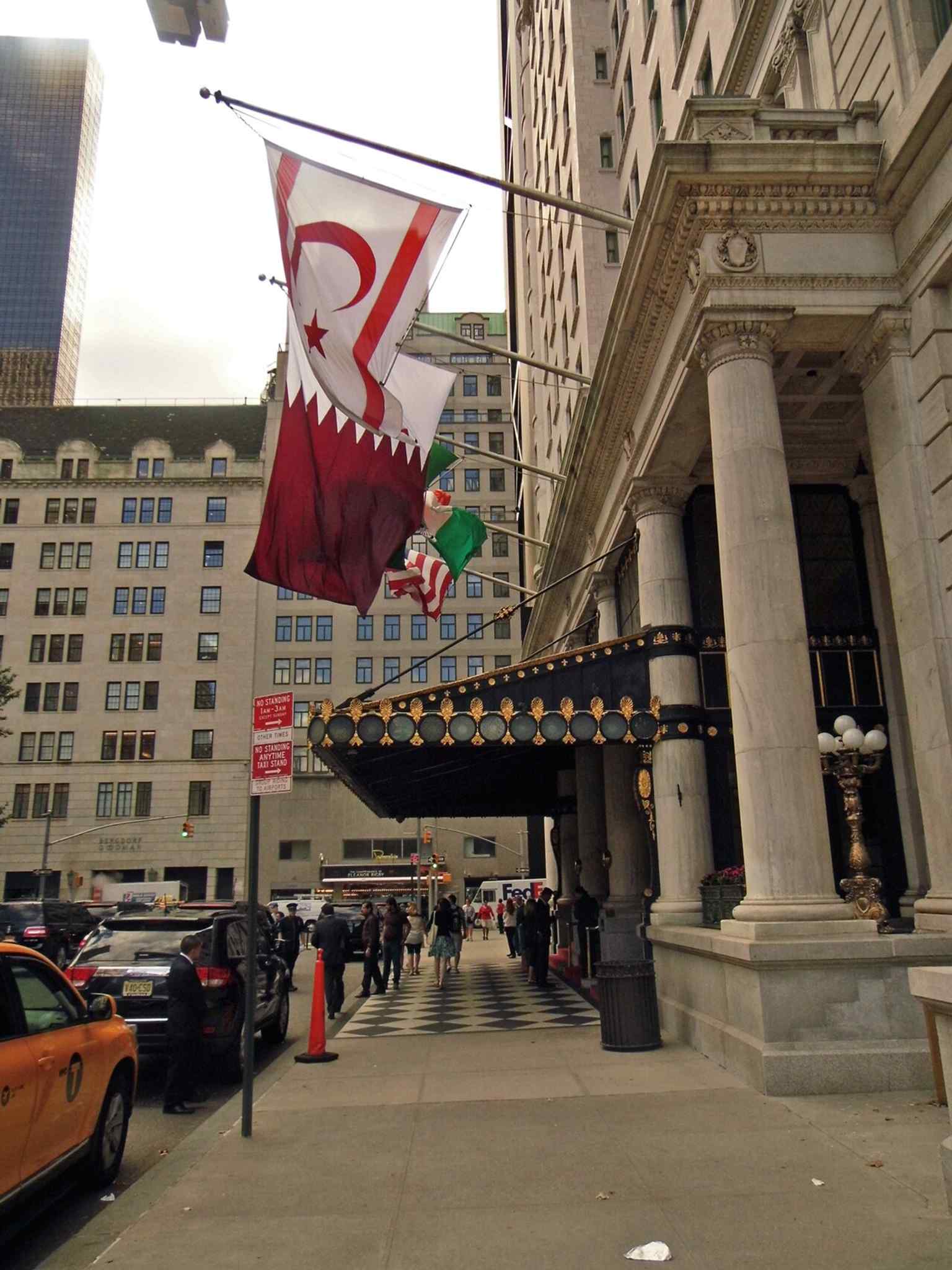
The main entrance on Central Park South, where the hotel’s grand arrival sequence begins just steps from Grand Army Plaza and the Pulitzer Fountain.Photo: Zinetv1, Wikimedia Commons, CC BY-SA 3.0. Cropped & resized. 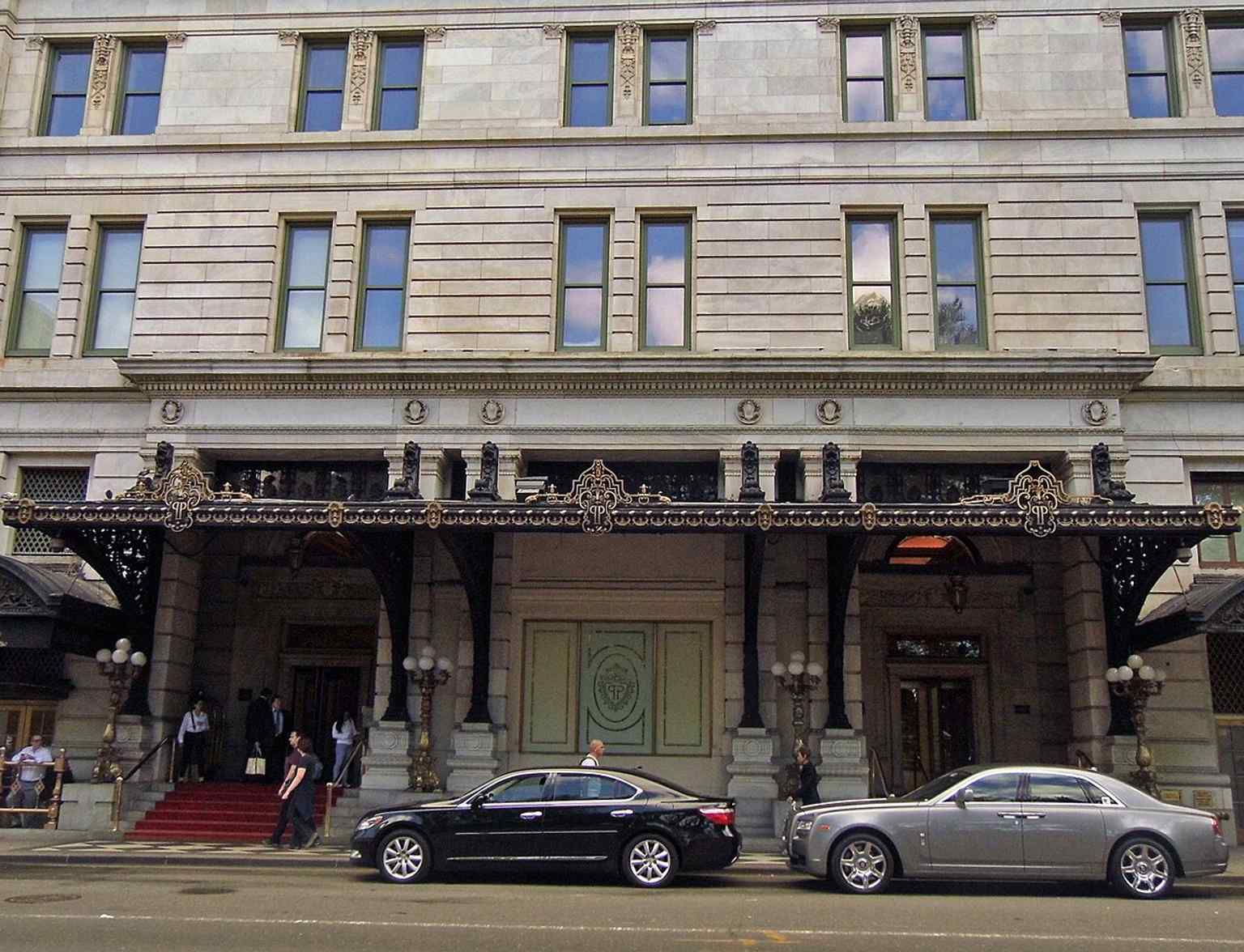
The West 59th Street entrance, a side doorway tied to the Plaza’s long residential history and later familiar from film scenes.Photo: Zinetv1, Wikimedia Commons, CC BY-SA 3.0. Cropped & resized. 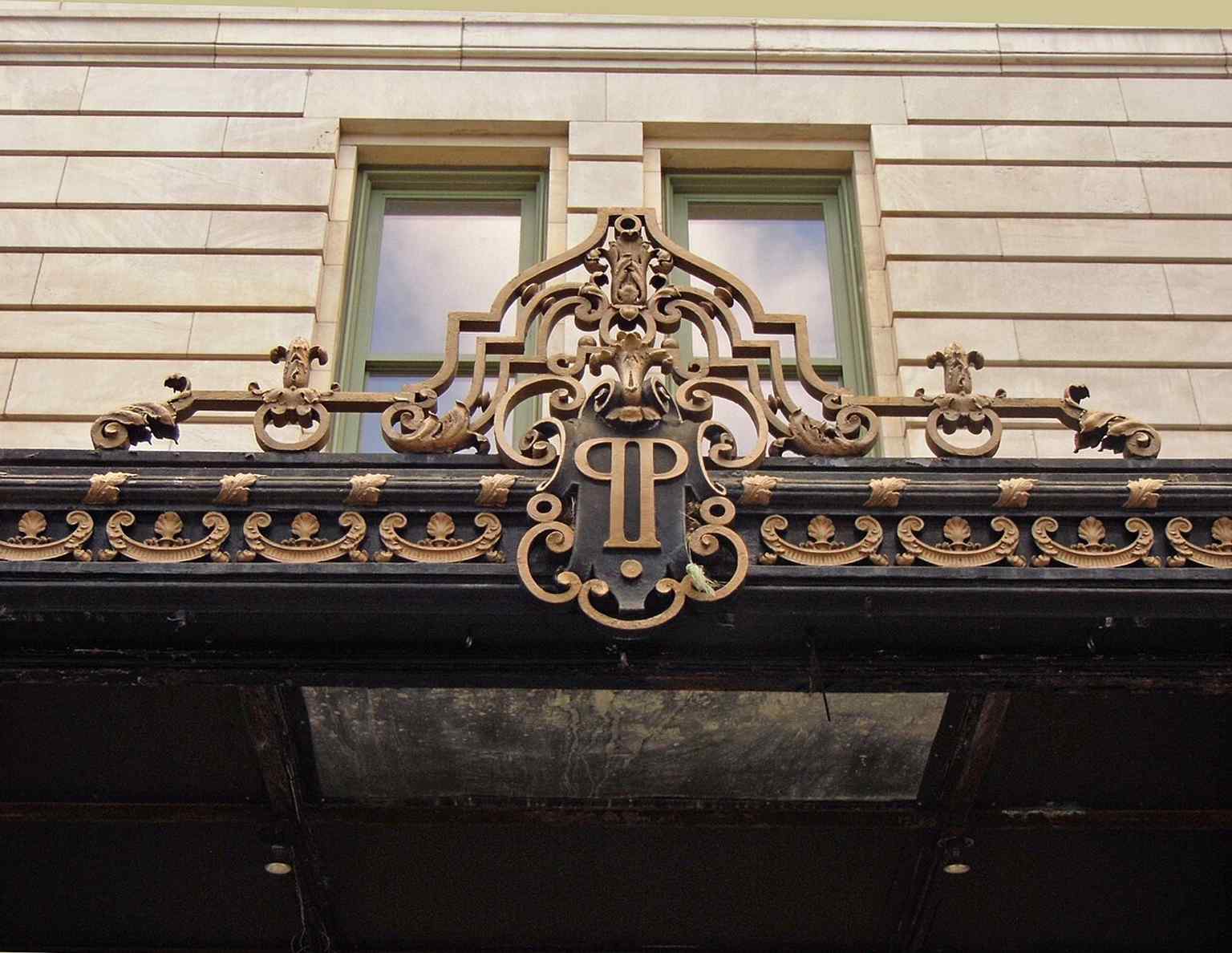
A close-up of the Plaza logo canopy at the 59th Street entrance—an unmistakable detail of the hotel’s branded, upscale identity.Photo: Zinetv1, Wikimedia Commons, CC BY-SA 3.0. Cropped & resized. On your left stands a pale limestone tower that rises in stacked setbacks to a green octagonal roof, with gilded panels and a crown-like top that make it easy to pick out. This…Read moreShow less
Open dedicated page →On your left stands a pale limestone tower that rises in stacked setbacks to a green octagonal roof, with gilded panels and a crown-like top that make it easy to pick out.
This building is one of New York’s best lessons in how a dry city law can accidentally produce poetry. In nineteen sixteen, the city passed the Zoning Resolution, a rule meant to protect light and air on the street. In plain English: if a building got too tall, it had to step back as it rose, instead of climbing straight up like a cliff. Charles Wetmore, the architect here, turned that rule into what I’d call zoning gymnastics. Because Fifth Avenue, Fifty-seventh Street, and Fifty-sixth Street all had different widths, he had to give the Crown Building four different faces, each stepping back at different points. So the tower never reads as one simple block... it shifts as you look at it.
August Heckscher, a mining magnate and philanthropist, pushed this project forward between nineteen twenty and nineteen twenty-two, right as this stretch of Fifth Avenue was changing from mansion country into a polished machine for luxury commerce. Heckscher called it the ultimate place for exclusive shopping. Subtle man. Others called it a “tower of trade” and even a “cathedral of commerce,” which tells you just how openly New York had started worshiping money in stone.
Look at how the building announces that ambition. The first nine stories wear Indiana limestone like formal dress. Above that, the shaft shifts to buff brick and cream terracotta. Then the whole thing climbs into that remarkable pyramidal roof. The details are French Renaissance in spirit, with carved ornament, salamander motifs, and gilded spandrels between the windows. In the nineteen eighties, later owners added one thousand three hundred sixty-three ounces of twenty-three karat gold leaf to the facade, partly to compete with Trump Tower across the street. Fifth Avenue occasionally settles arguments the way peacocks do.
If you want a closer look at the roofline, check the image on your screen. The crown really does earn the building’s later name.
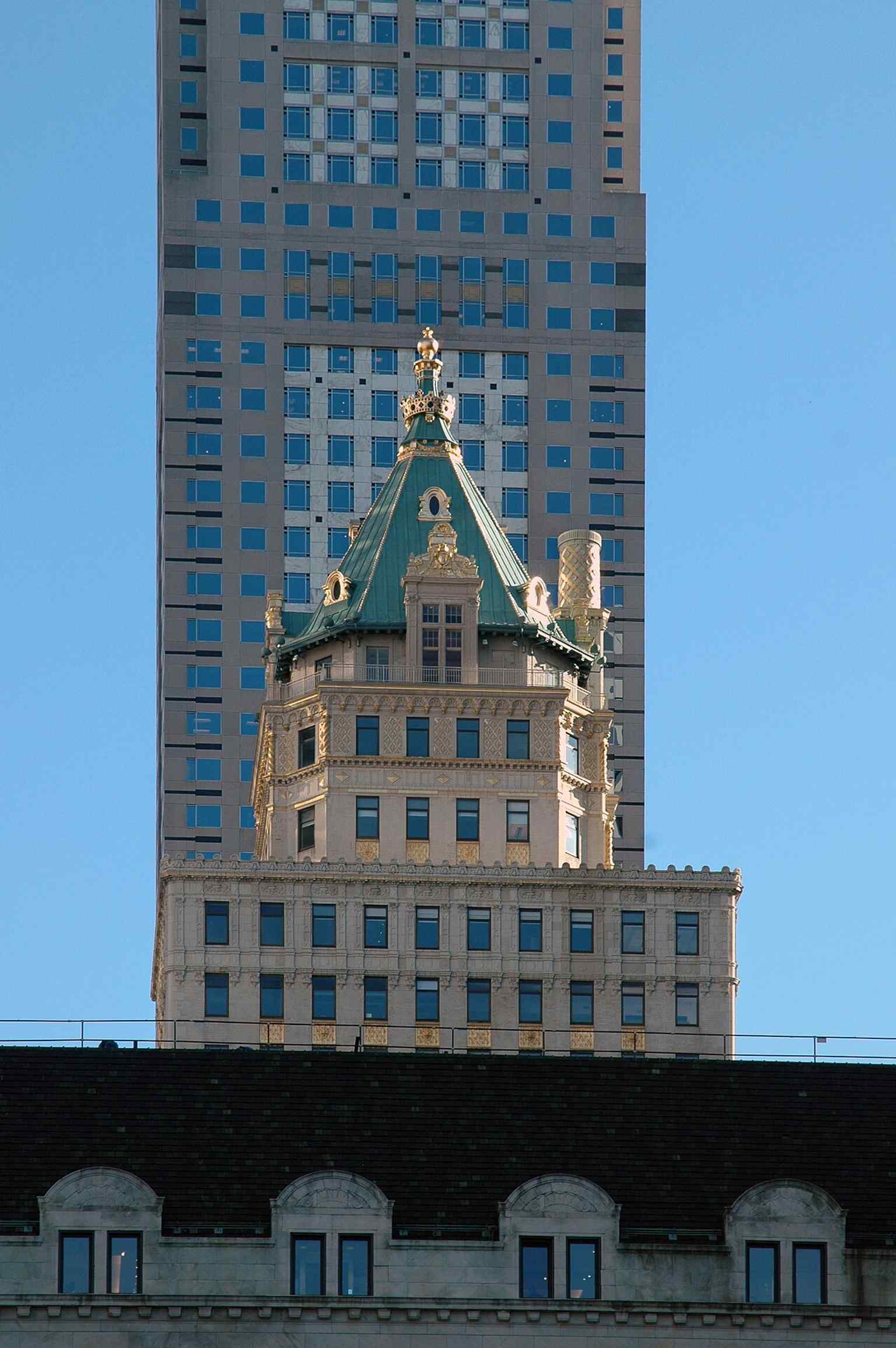
The Crown Building’s gilded crown rising above Fifth Avenue — the roofline made it a standout on the Midtown skyline before the Aman conversion.Photo: DimiTalen, Wikimedia Commons, CC0. Cropped & resized. There’s another delicious irony here. Before the Museum of Modern Art moved into its own home, it opened on the twelfth floor of this building in nineteen twenty-nine. One of its most influential exhibitions introduced the “International Style” - clean, stripped-down modern architecture. So inside this ornate, setback-heavy Beaux-Arts tower, curators helped popularize the very aesthetic that would soon make buildings like this seem old-fashioned. That’s New York for you: one era quietly financing the next.
Today, the lower floors still trade in luxury, while the upper stories have turned into the Aman hotel and residences - commerce below, seclusion above. Transparent selling evolved into carefully guarded privilege.
Before you leave, tilt your gaze upward and around this intersection. You can see the city’s skyline argument in one glance: layered, gilded, expressive towers giving way to cooler, more severe heights. In a few minutes, we’ll head to perhaps the purest version of that later idea... Four hundred thirty-two Park Avenue.
On your right rises a pale white-concrete square shaft, punched with a strict grid of square openings and interrupted by dark double-height gaps that make it look like a colossal…Read moreShow less
Open dedicated page →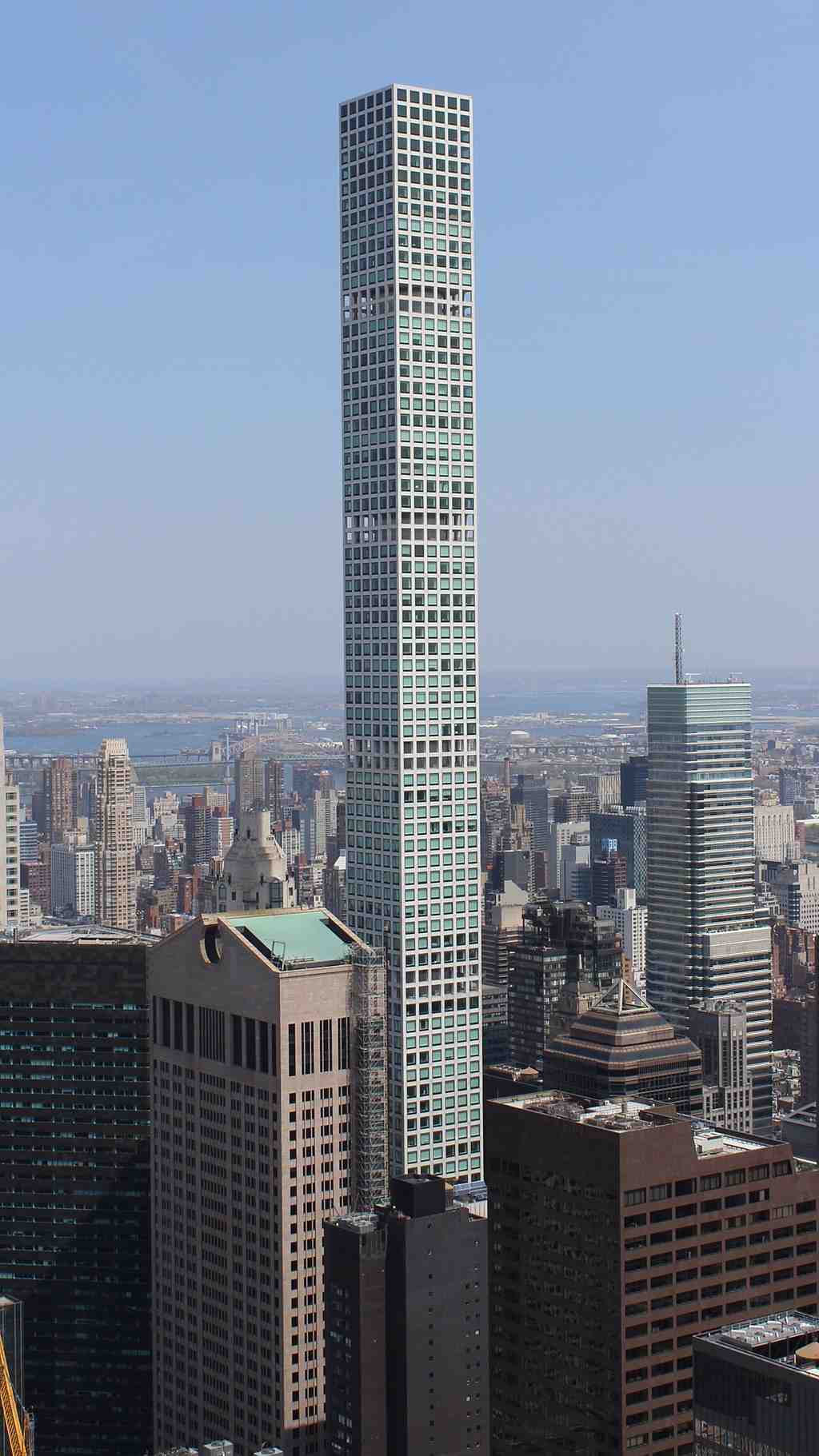
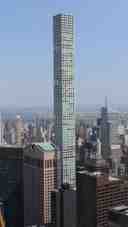
432 Park AvenuePhoto: Percival Kestreltail, Wikimedia Commons, CC BY-SA 4.0. Cropped & resized. On your right rises a pale white-concrete square shaft, punched with a strict grid of square openings and interrupted by dark double-height gaps that make it look like a colossal sheet of graph paper.
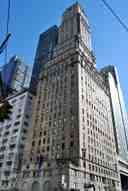
This is four hundred thirty-two Park Avenue, Rafael Viñoly’s nearly absurdly slender residential tower, climbing to one thousand three hundred ninety-six feet. Its height-to-width ratio is about fifteen to one, which places it among the most slender towers on earth. New Yorkers call buildings like this pencil towers... a tidy nickname for something that took a rather untidy amount of money and engineering to pull off.
Viñoly and developer Harry Macklowe wanted a form so pure it would read almost as geometry rather than decoration: a square plan, ninety-three feet on each side, repeated again and again into the sky. The exterior is not curtain-wall glass but poured-in-place concrete made with white Portland cement, laid out as a rigid lattice. Each face has a regular pattern of ten-foot openings, and every twelve floors the building breaks into open mechanical levels - service floors for equipment, left partly open so wind can pass through instead of pushing the whole tower harder. If those gaps are tricky to read from down here, the diagram in the app makes them very clear.
The engineering below the elegance is serious business. Roughly sixty rock anchors reach down into bedrock to steady the foundation. Near the top sit tuned mass dampers - giant counterweights that move against the sway, like a building quietly correcting its own balance. Engineers even built a model of Midtown to test how wind would hit this razor-thin form. When the tower topped out in twenty fourteen and opened in twenty fifteen, it became the tallest residential building in the world.
If you want a quick sense of how abruptly this thing changed the skyline, check the comparison in the app.
But purity on paper and life in a real building are not the same thing. The site once held the Drake Hotel, a lively old Manhattan address where Led Zeppelin lost two hundred three thousand dollars in a still-unsolved theft in nineteen seventy-three, and where the basement club Shepheard’s handed out instructions for dances like the Frug and the Watusi. In place of that social swirl came a vertical fortress of wealth: one hundred twenty-five condominiums, fifteen-foot ceilings, a private restaurant, pool, library, and units selling from roughly ten and a half million dollars to as high as ninety million.
Then reality arrived with a toolbox. Residents later complained about leaks, stuck elevators, loud creaking, whistling wind, and mechanical failures. One lawsuit claimed more than one thousand five hundred defects. Even the all-white facade became part of the problem: the developers rejected a darker, stronger concrete mix because it would spoil the desired whiteness, and the finished concrete later showed cracking. Turns out building a minimalist shrine for billionaires is still subject to gravity, water, wind, and lawyers.
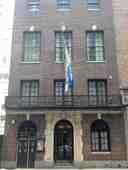
The building is active around the clock, though access is naturally a bit selective. When you’re ready, continue to the Consulate General of Sweden, about a three-minute walk away - a far quieter building, and one with a genuinely heroic past.
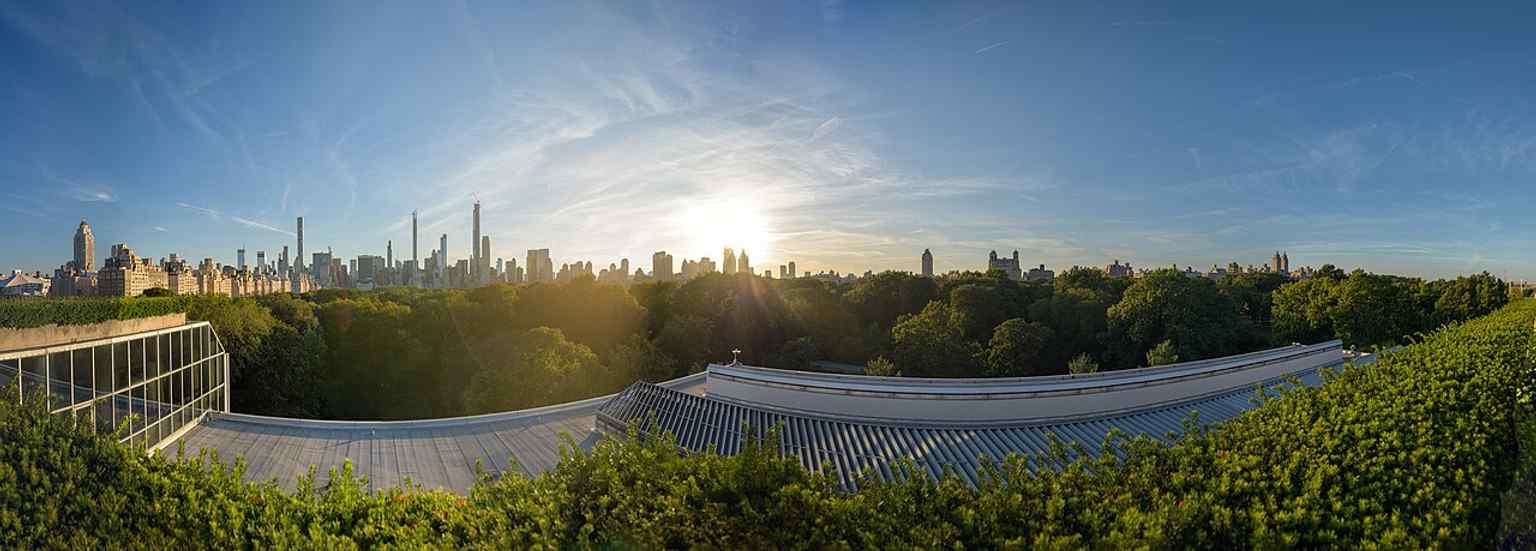
432 Park Avenue in the Central Park skyline, showing how its needle-like profile stands out among Billionaires’ Row towers.Photo: G. Scott Segler, Wikimedia Commons, CC BY-SA 4.0. Cropped & resized. 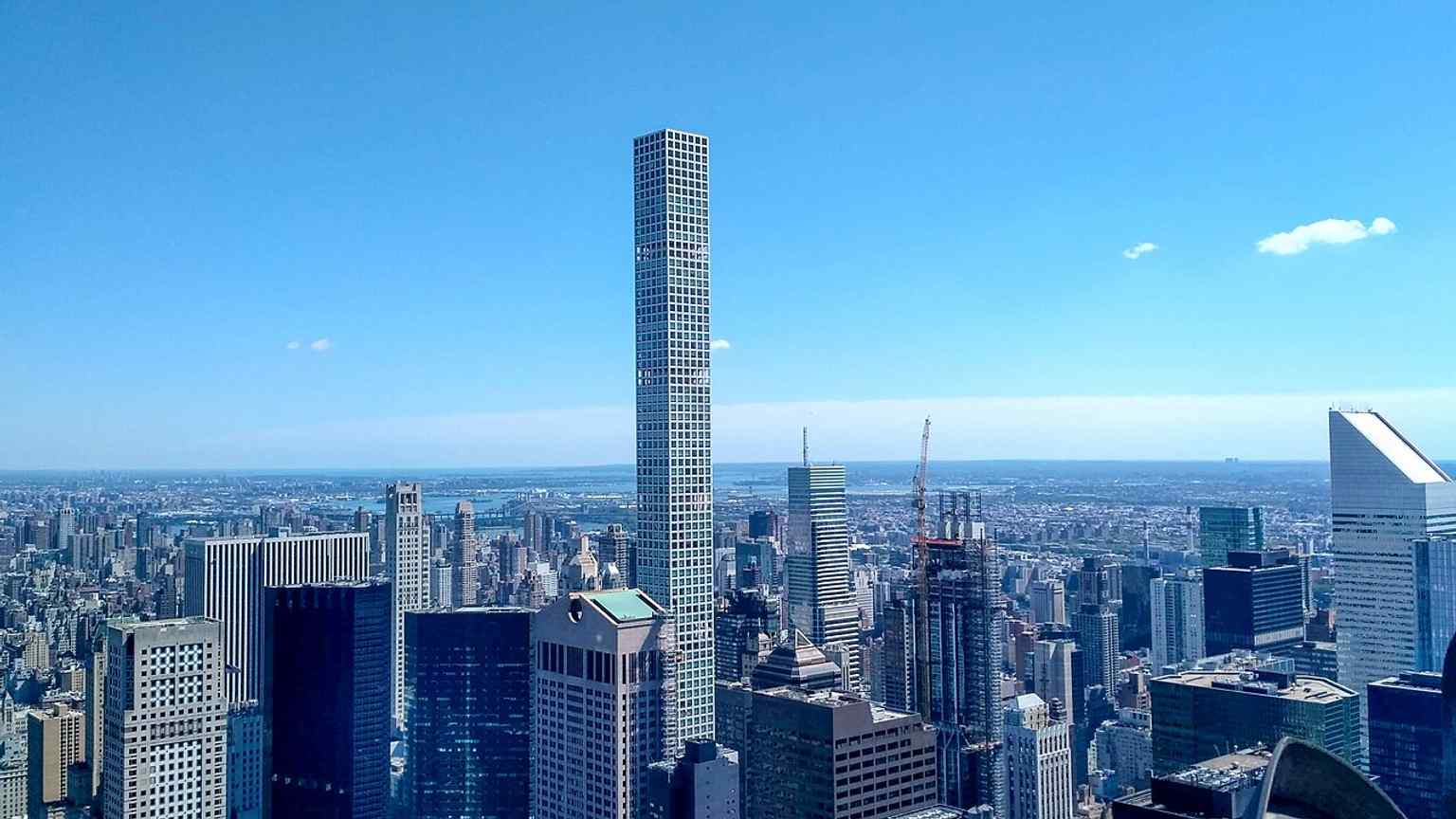
Seen from Top of the Rock, this view places 432 Park Avenue in the Midtown skyline where it became one of New York’s new supertalls.Photo: Sebastiandoe5, Wikimedia Commons, CC BY-SA 4.0. Cropped & resized. 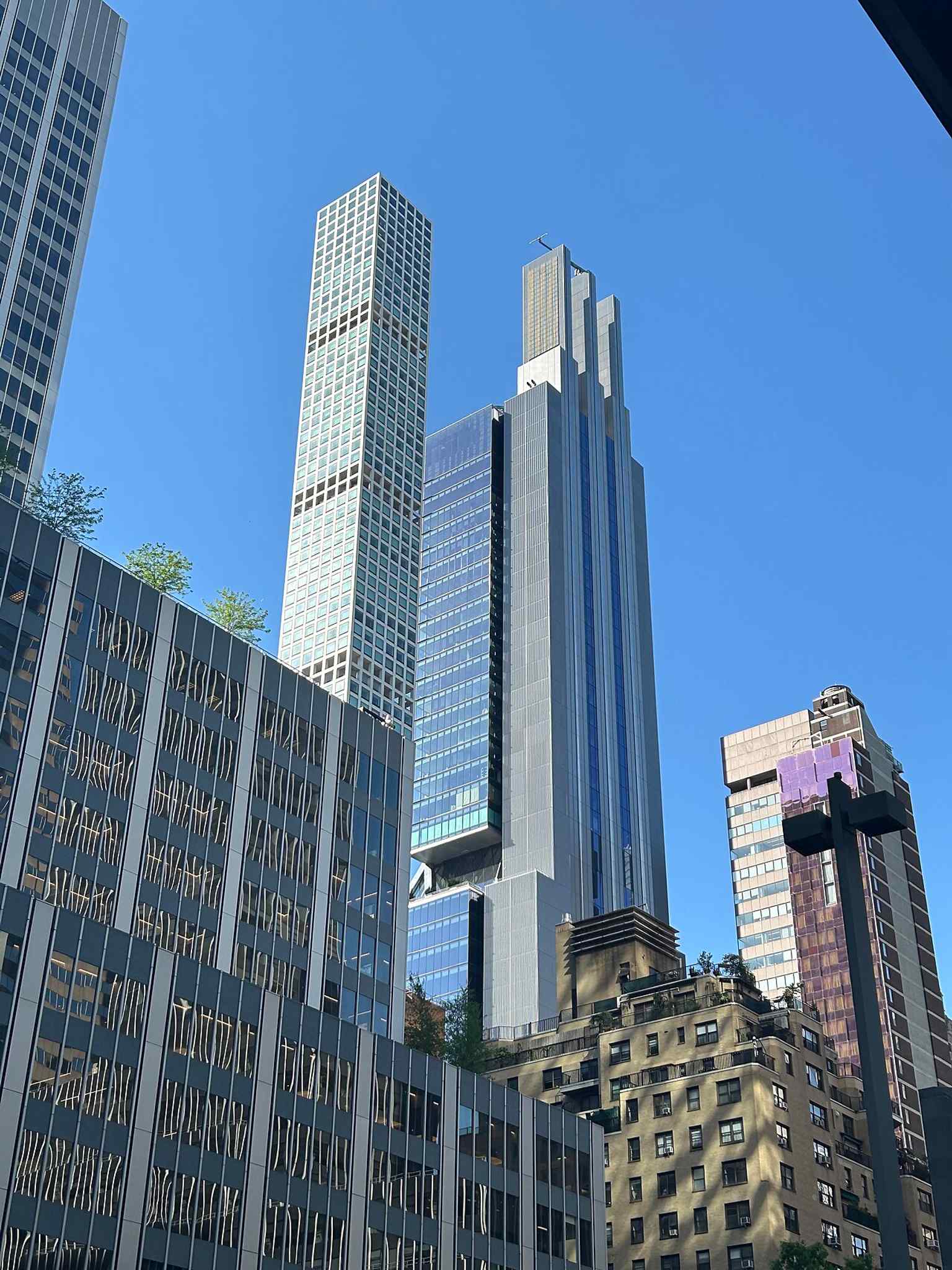
A low street-level angle that emphasizes the building’s extreme slenderness and its dramatic rise over Park Avenue.Photo: Sir MemeGod, Wikimedia Commons, CC0. Cropped & resized. 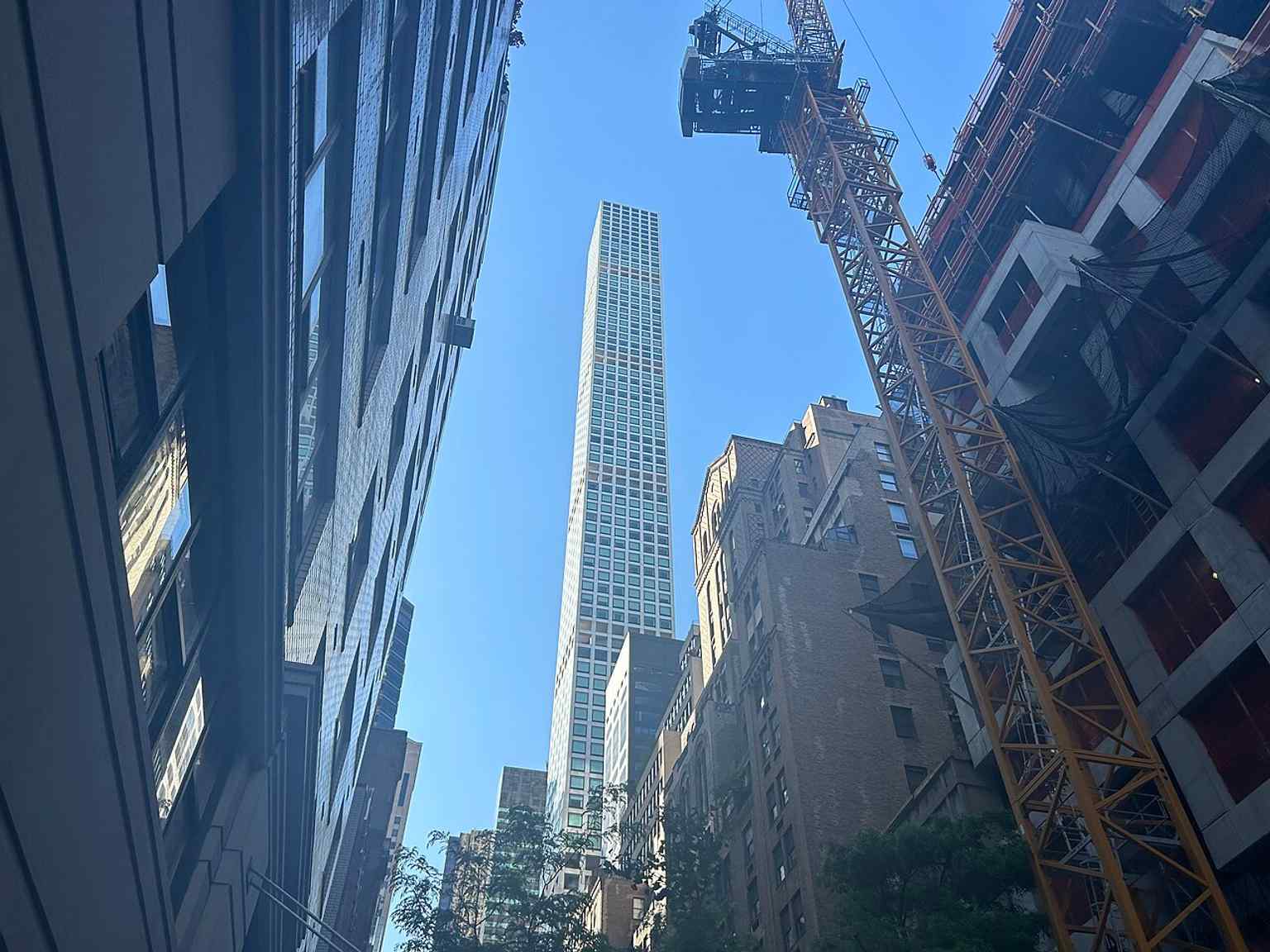
From the base on Park Avenue, highlighting the limestone-clad podium and the main street presence of the tower.Photo: Sir MemeGod, Wikimedia Commons, CC0. Cropped & resized. 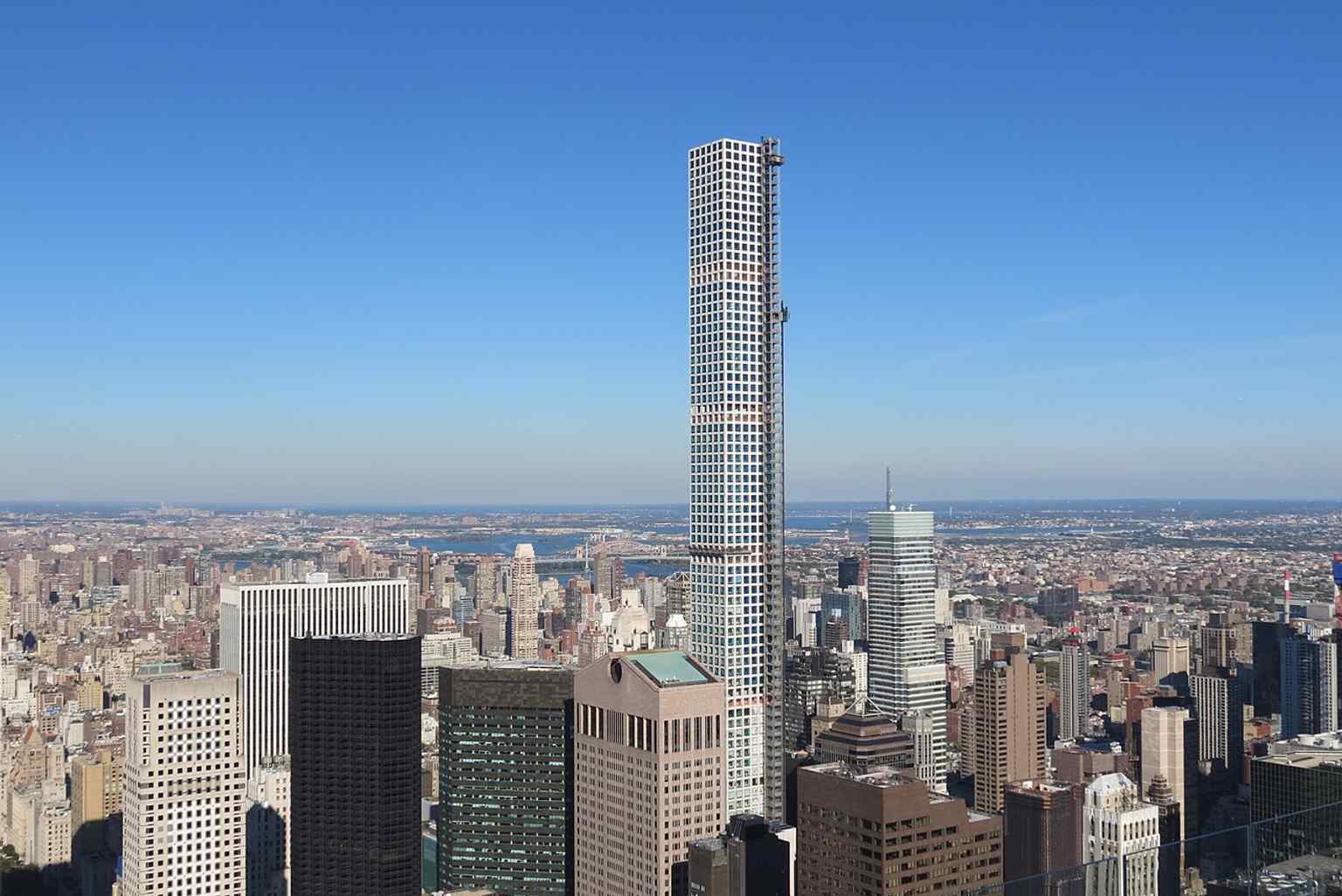
432 Park Avenue under construction in 2015, when the tower was nearing completion after topping out the year before.Photo: Sikander Iqbal, Wikimedia Commons, CC BY-SA 4.0. Cropped & resized. On your right, look for a tan-brick tower stepping back in narrow tiers above a rusticated limestone base, capped by a small pyramidal roof and a sharp obelisk. This is the Ritz…Read moreShow less
Open dedicated page →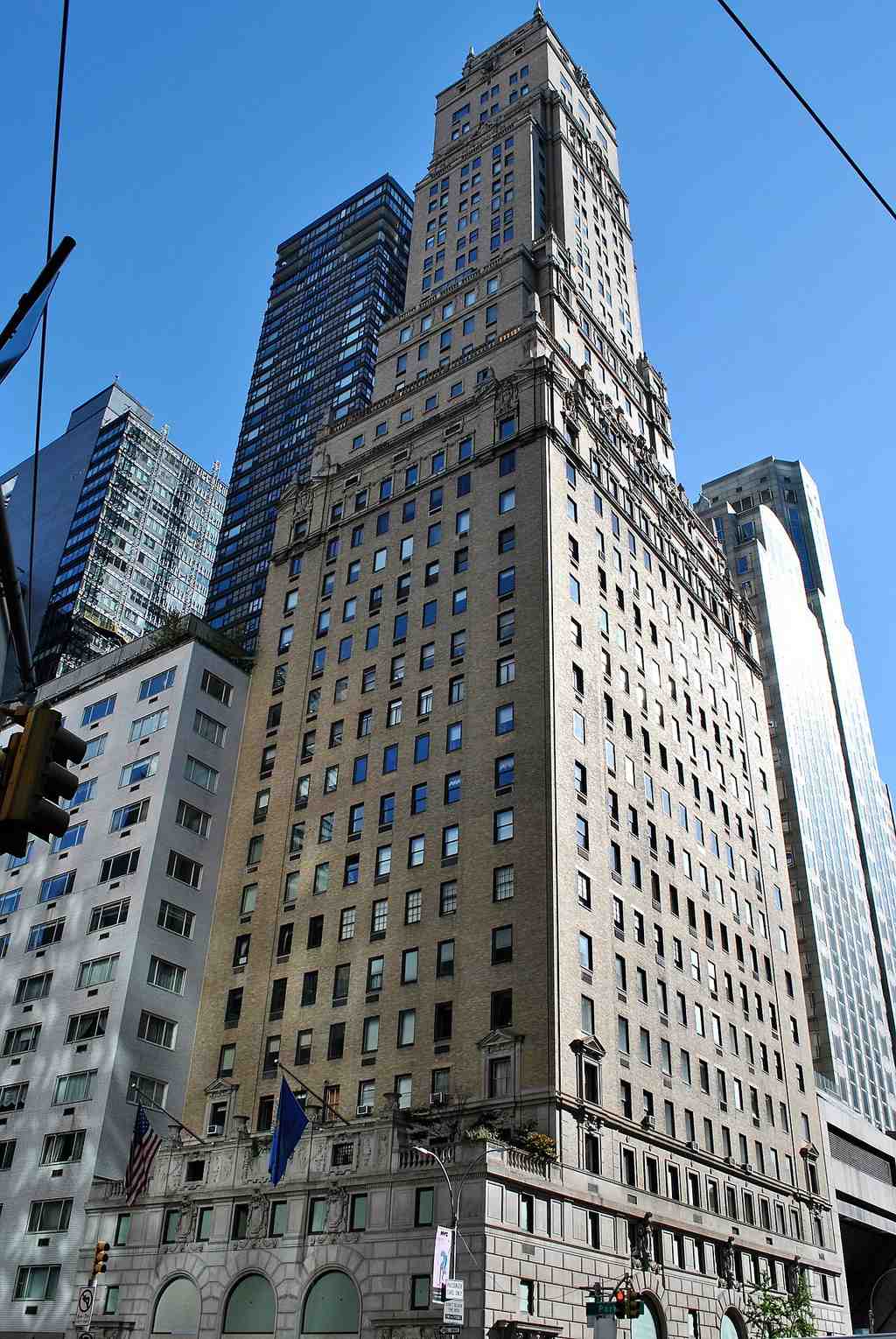
Ritz TowerPhoto: Elisa.rolle, Wikimedia Commons, CC BY-SA 4.0. Cropped & resized. On your right, look for a tan-brick tower stepping back in narrow tiers above a rusticated limestone base, capped by a small pyramidal roof and a sharp obelisk.
This is the Ritz Tower at four sixty-five Park Avenue, and when Arthur Brisbane opened it in nineteen twenty-six, he meant it to be the most desirable apartment hotel in New York - a long-term residence run with hotel service, for people who liked luxury but preferred someone else to handle the dinner tray. Emery Roth shaped the tower first, and Thomas Hastings helped give it that polished classical air: limestone arches at the base, balustrades along the setbacks, windows framed with pilasters and pediments, and little sculpted putti - cherub-like figures - mixed in with urns. It is dressed like a Renaissance palazzo that suddenly decided to become a skyscraper.
And a very tall one. At about five hundred forty-one feet, it became the tallest residential building in the city when it opened. If you check the image on your screen, you can see how boldly it once ruled this corner of Park Avenue.
Now for the trick. This tower climbed so high because it was not officially an apartment house. New York’s rules limited the height of new apartment buildings, so Brisbane classified this as a hotel. That meant no full private kitchens in the roughly four hundred units. Residents got pantries, sinks, refrigerators, and service from five heated dumbwaiters - tiny service elevators for meals - but not proper kitchens. Luxury, in other words, with a legal loophole doing some heavy lifting.
There is another excellent little wrinkle at the corner. Brisbane never managed to buy the Park Avenue corner lot from the Roome family. They refused to sell, so he leased it for fifteen thousand dollars a year - roughly two hundred seventy thousand today. The tower had to accommodate their stubbornness. In fact, the section over that corner was engineered so it could be detached if the family ever reclaimed the land, complete with provision for its own staircase and elevator. On a block full of wealth and influence, one holdout family quietly bent the architecture.
None of this came cheap. Brisbane financed construction with four million dollars in mortgage bonds - roughly seventy million today - and the final cost rose to around five to six million dollars before furnishings. Inside, he piled on parquet floors, wood paneling, a grand hallway styled as a Roman promenade, and a tea room meant to feel like Pompeii with better service. It was splendid. It was praised. It was also financially brutal. Brisbane soon buckled under the debt and sold the tower to William Randolph Hearst, the media baron who had been both colleague and friend.
Hearst and Marion Davies lived here. Greta Garbo later found refuge here. Neil Simon eventually did too. But the cautionary note never really left the building. In nineteen thirty-two, a basement fire triggered a violent backdraft explosion that killed eight firefighters - one of the darkest chapters in this glamorous address.
Even here, elegance came with a bill, and not everyone paying it had signed the lease.
The city finally designated the Ritz Tower a landmark in two thousand two, preserving this slightly eccentric monument to ambition, patronage, and expensive taste.
From here, continue to the Grolier Club, a place devoted entirely to books and the people who love them. If you want to go inside there, it’s generally open Monday through Friday from nine to five, and closed on weekends.
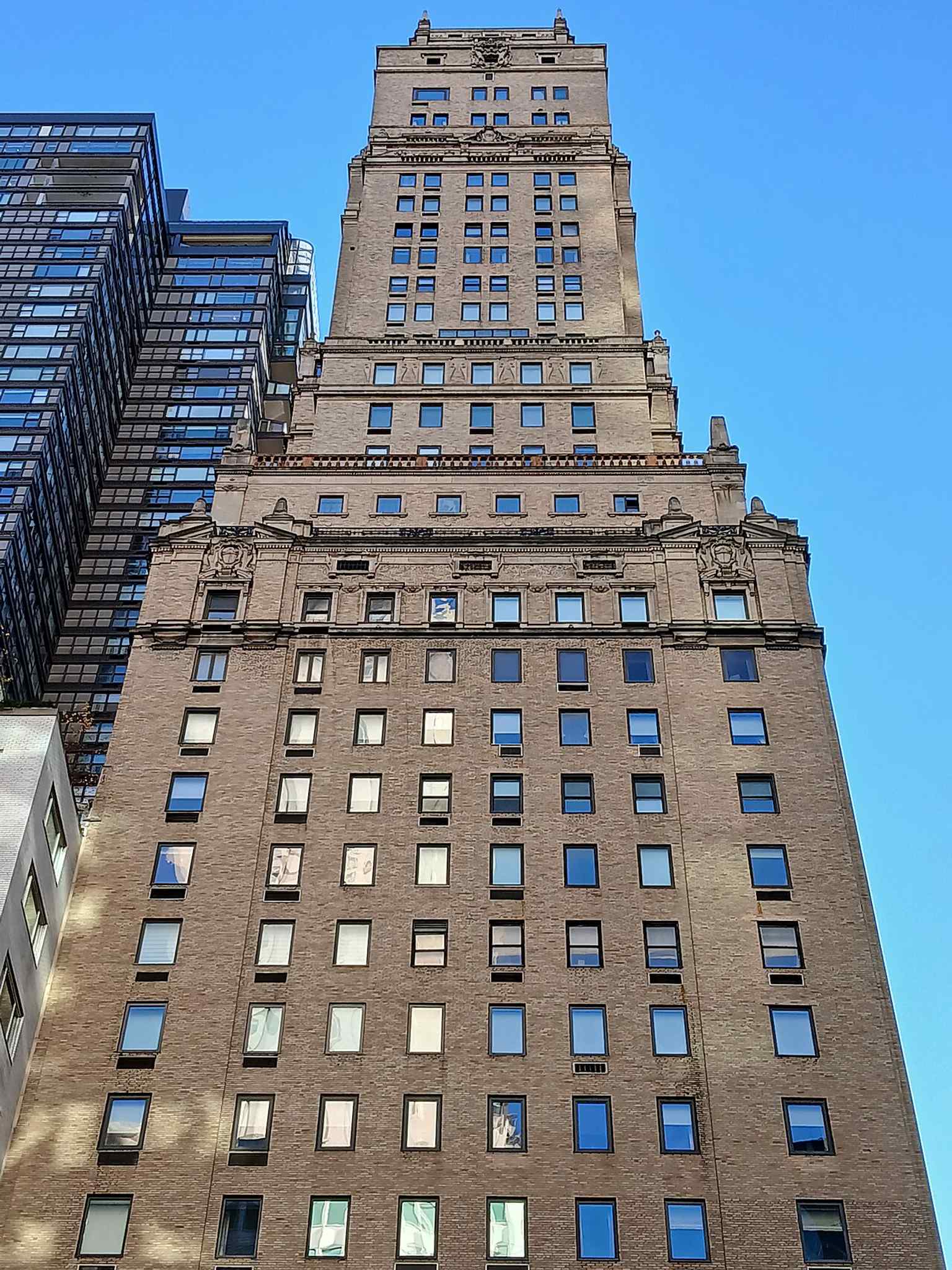
The Ritz Tower seen from Midtown Manhattan in 2025, with nearby towers showing how the once-dominant apartment hotel now sits amid a denser skyline.Photo: Epicgenius, Wikimedia Commons, CC BY-SA 4.0. Cropped & resized. 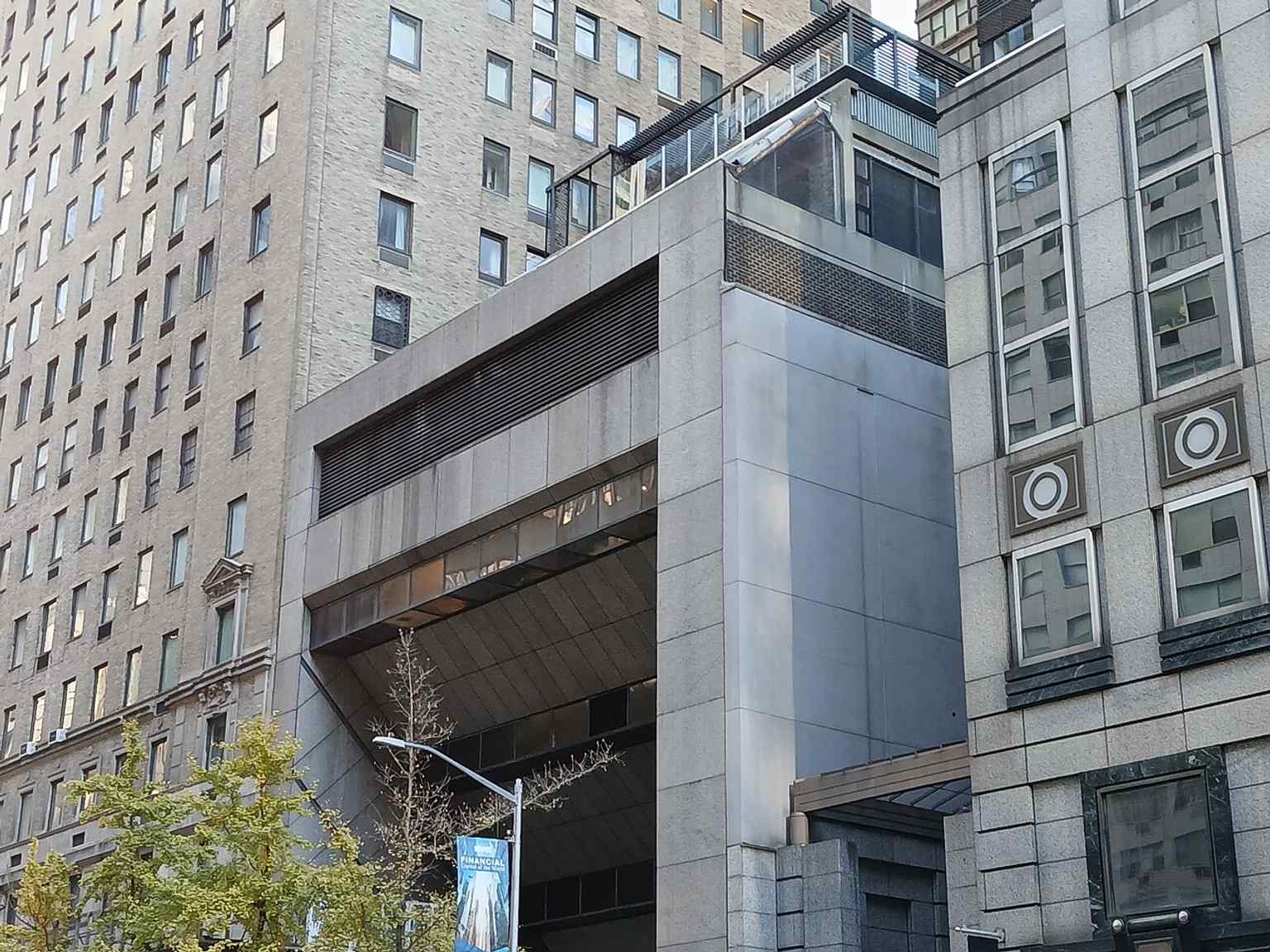
A wider streetscape view including the Ritz Tower and neighboring buildings, useful for placing the landmark in its Park Avenue setting.Photo: Epicgenius, Wikimedia Commons, CC BY-SA 4.0. Cropped & resized. 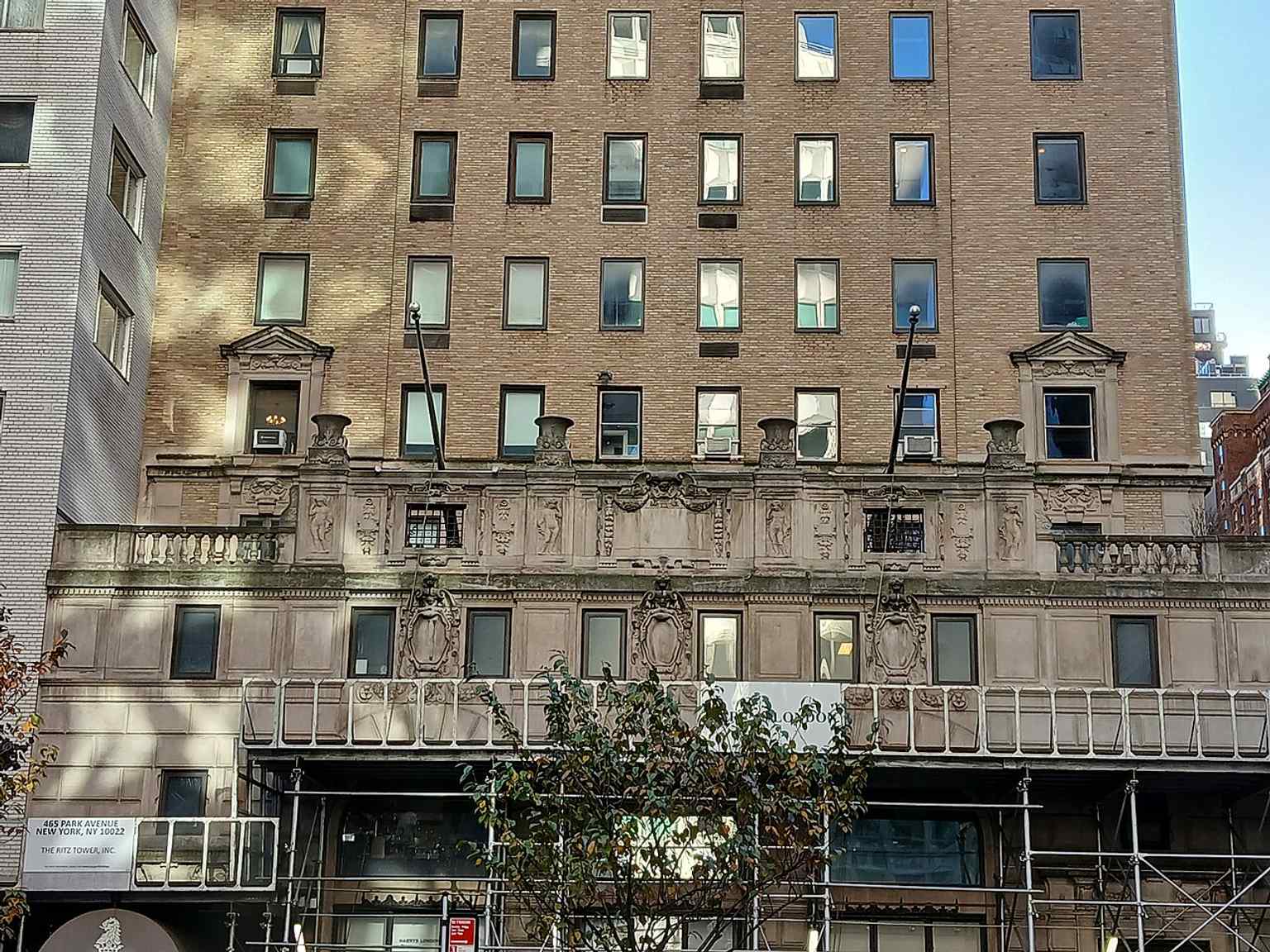
A direct 2025 view of the Ritz Tower, highlighting the building’s narrow vertical massing and stepped upper stories.Photo: Epicgenius, Wikimedia Commons, CC BY-SA 4.0. Cropped & resized. 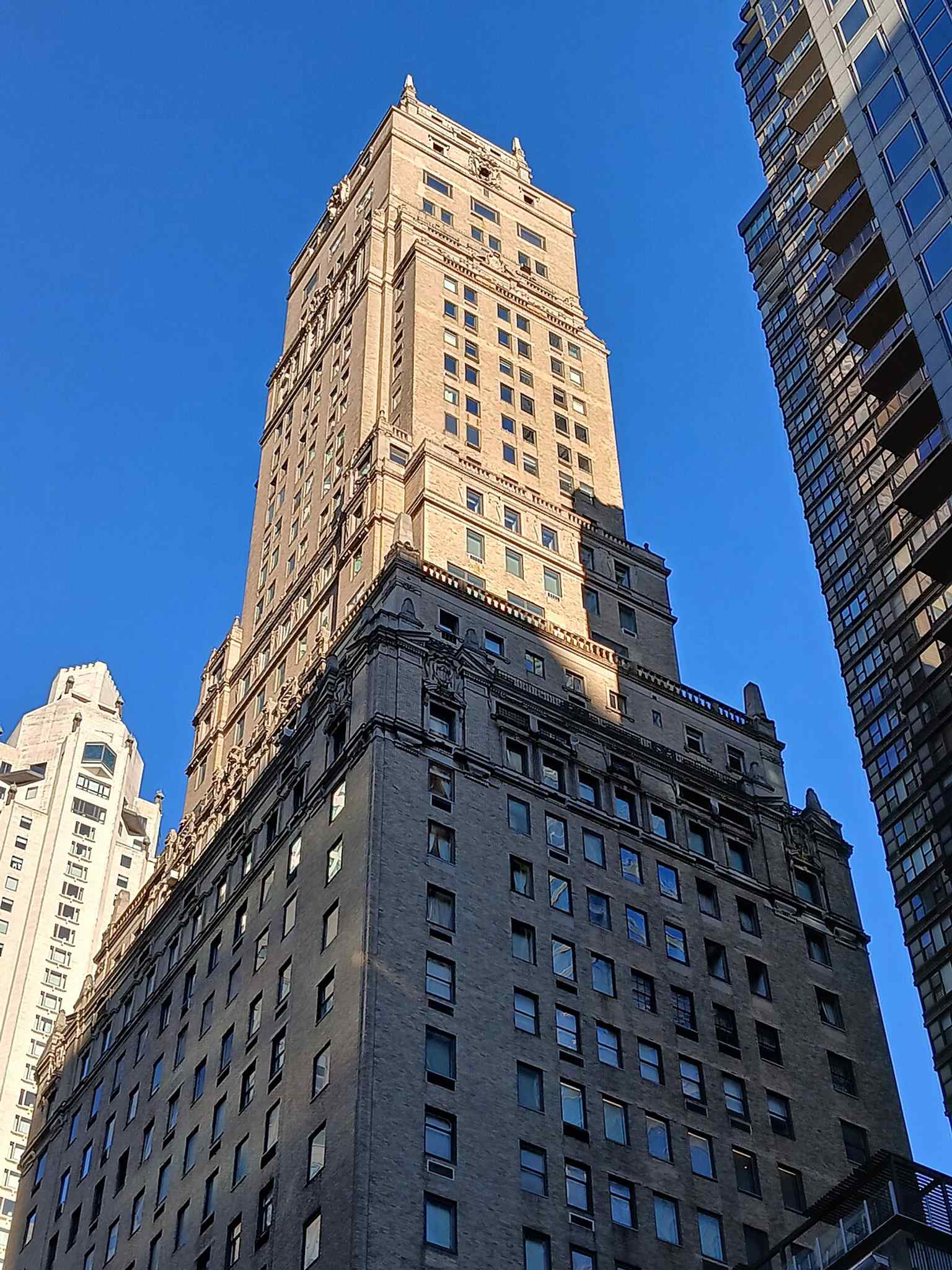
The tower from a slightly different angle, with the neighboring Galleria framing the Ritz Tower’s historic Park Avenue frontage.Photo: Epicgenius, Wikimedia Commons, CC BY-SA 4.0. Cropped & resized. 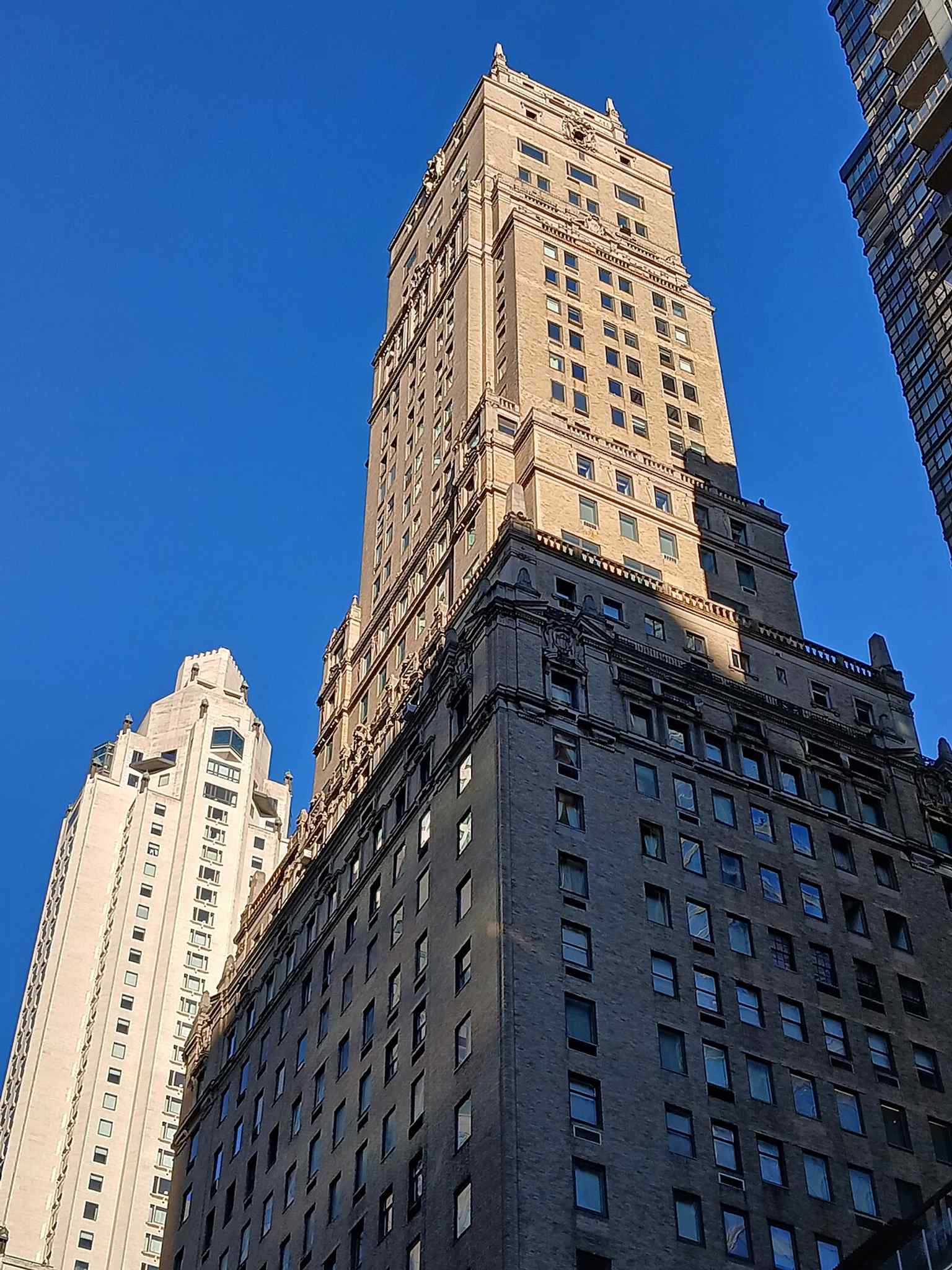
Another unobstructed 2025 facade view of the Ritz Tower, a good look at the building that once topped out as New York’s tallest residential structure.Photo: Epicgenius, Wikimedia Commons, CC BY-SA 4.0. Cropped & resized. 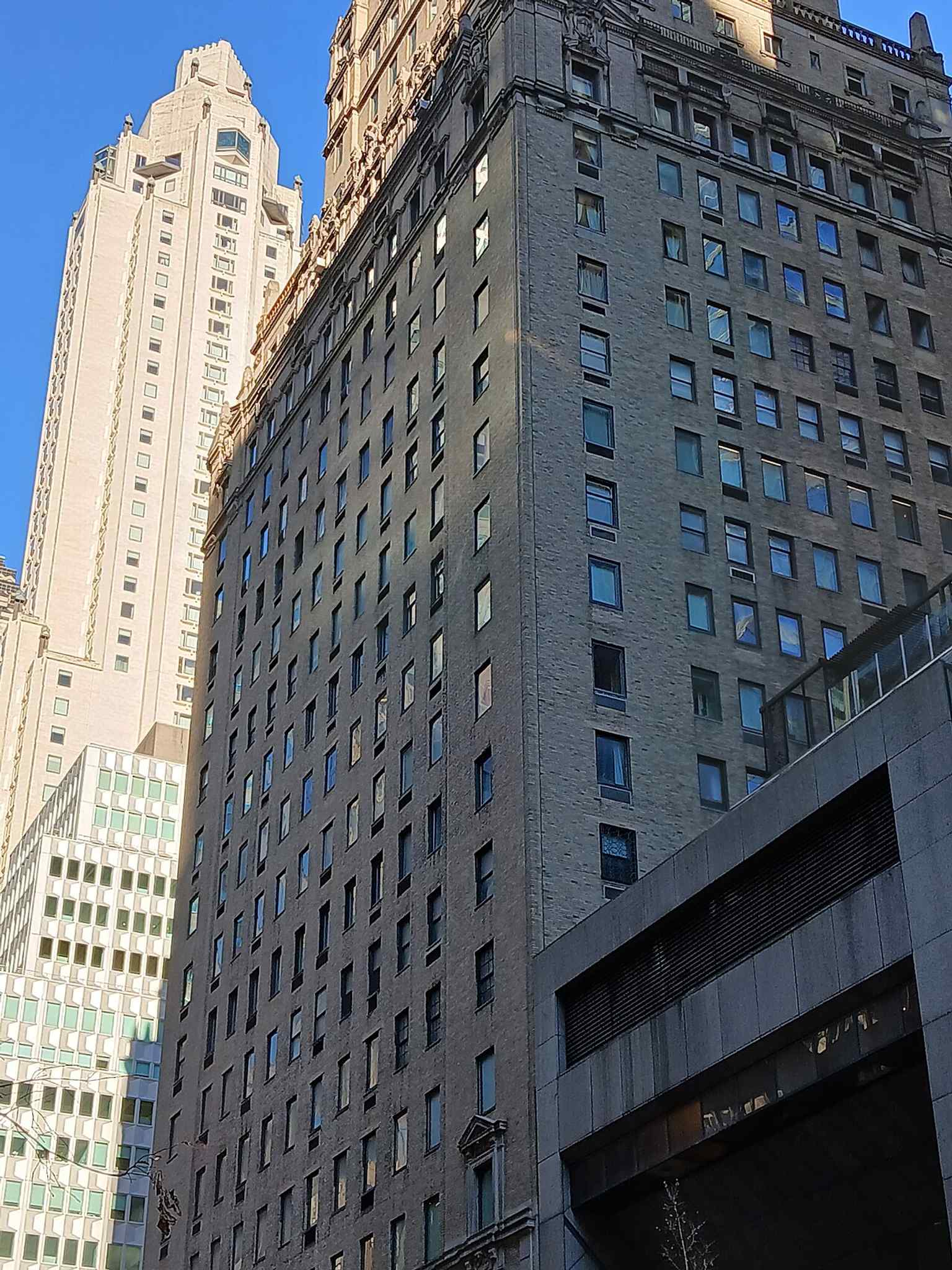
The Ritz Tower beside the Galleria, showing how the landmark’s 1920s luxury design now shares the avenue with later high-rise neighbors.Photo: Epicgenius, Wikimedia Commons, CC BY-SA 4.0. Cropped & resized. 
A closer 2025 street view of the Ritz Tower, emphasizing its classic prewar profile and landmark presence on Park Avenue.Photo: Epicgenius, Wikimedia Commons, CC BY-SA 4.0. Cropped & resized. 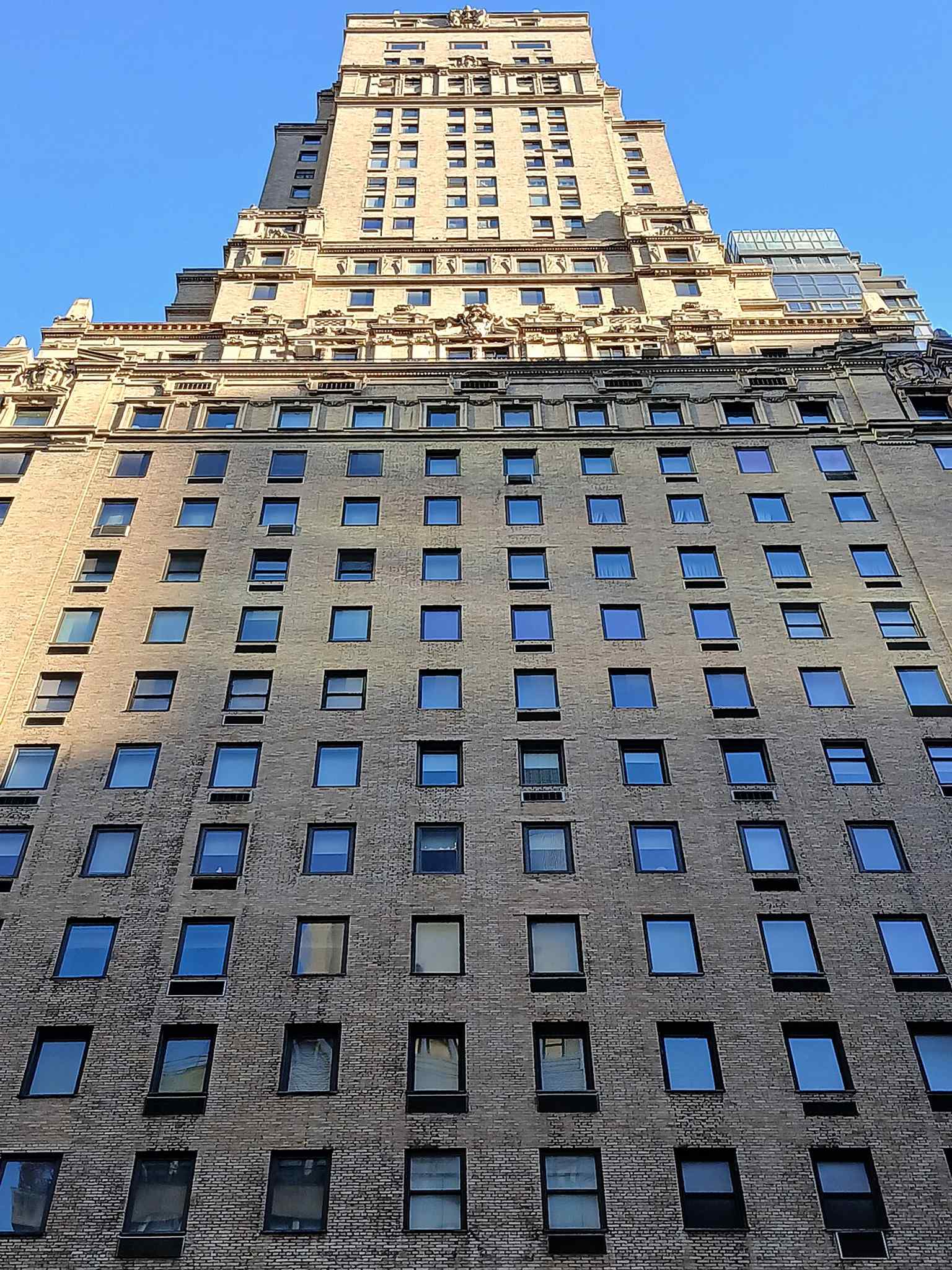
A contemporary view of the Ritz Tower in Midtown, useful for showing the building’s surviving prewar character in a modern context.Photo: Epicgenius, Wikimedia Commons, CC BY-SA 4.0. Cropped & resized. 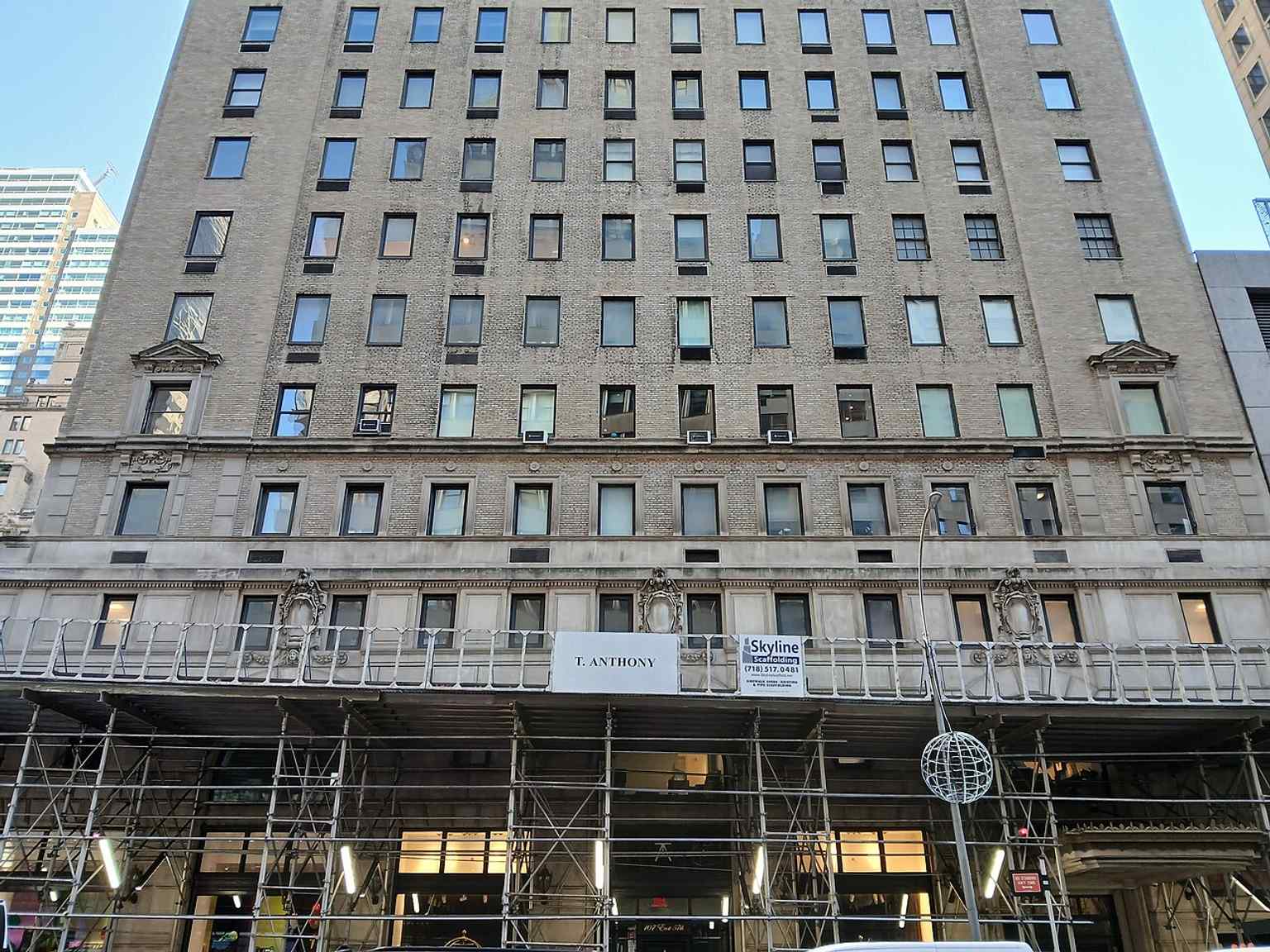
The Ritz Tower rising above Midtown in 2025, its tall brick shaft and setback crown still recognizable from afar.Photo: Epicgenius, Wikimedia Commons, CC BY-SA 4.0. Cropped & resized. 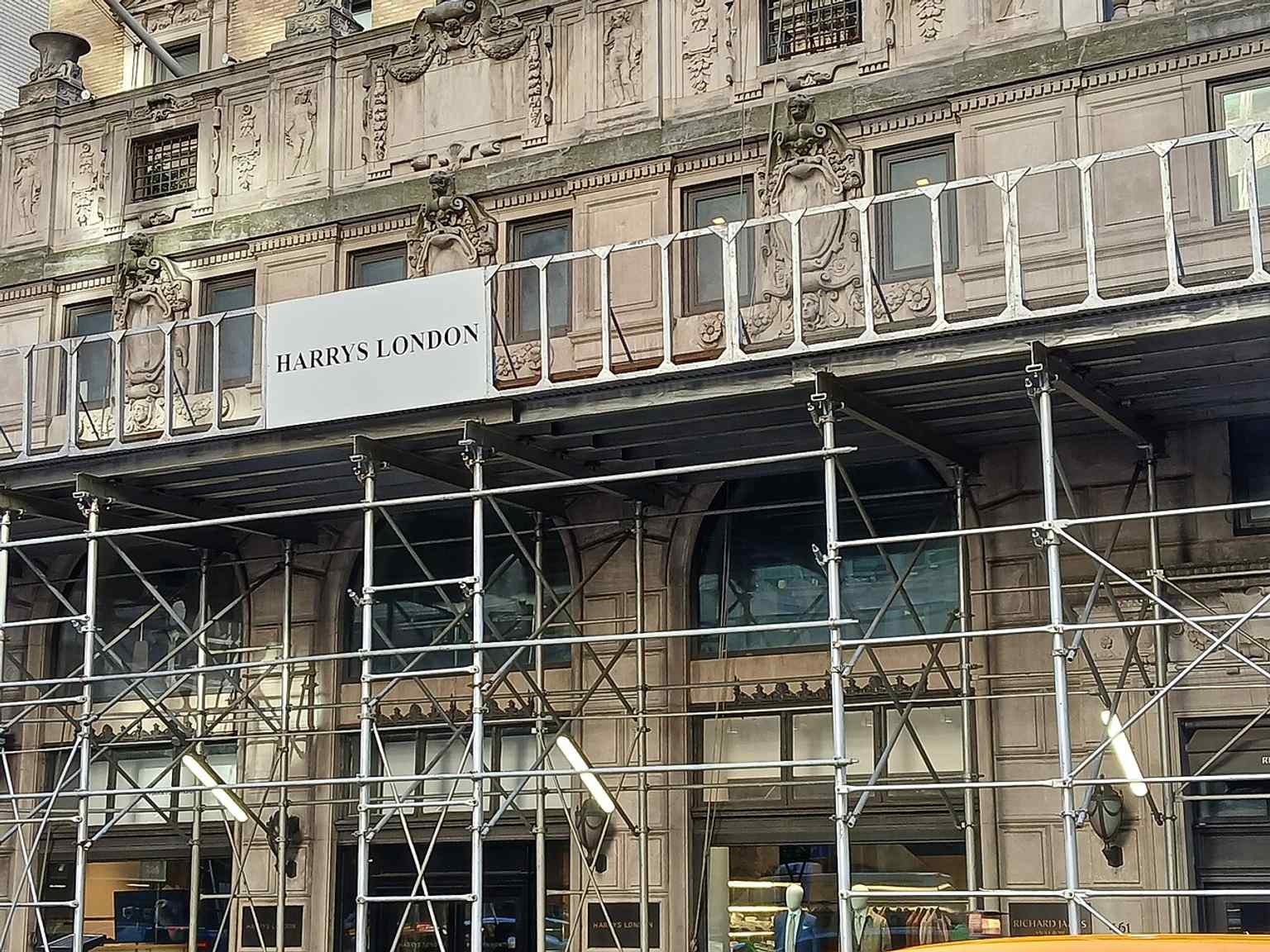
A straight-on 2025 view of the Ritz Tower, ideal for illustrating the building’s restrained upper massing and ornate crown.Photo: Epicgenius, Wikimedia Commons, CC BY-SA 4.0. Cropped & resized. 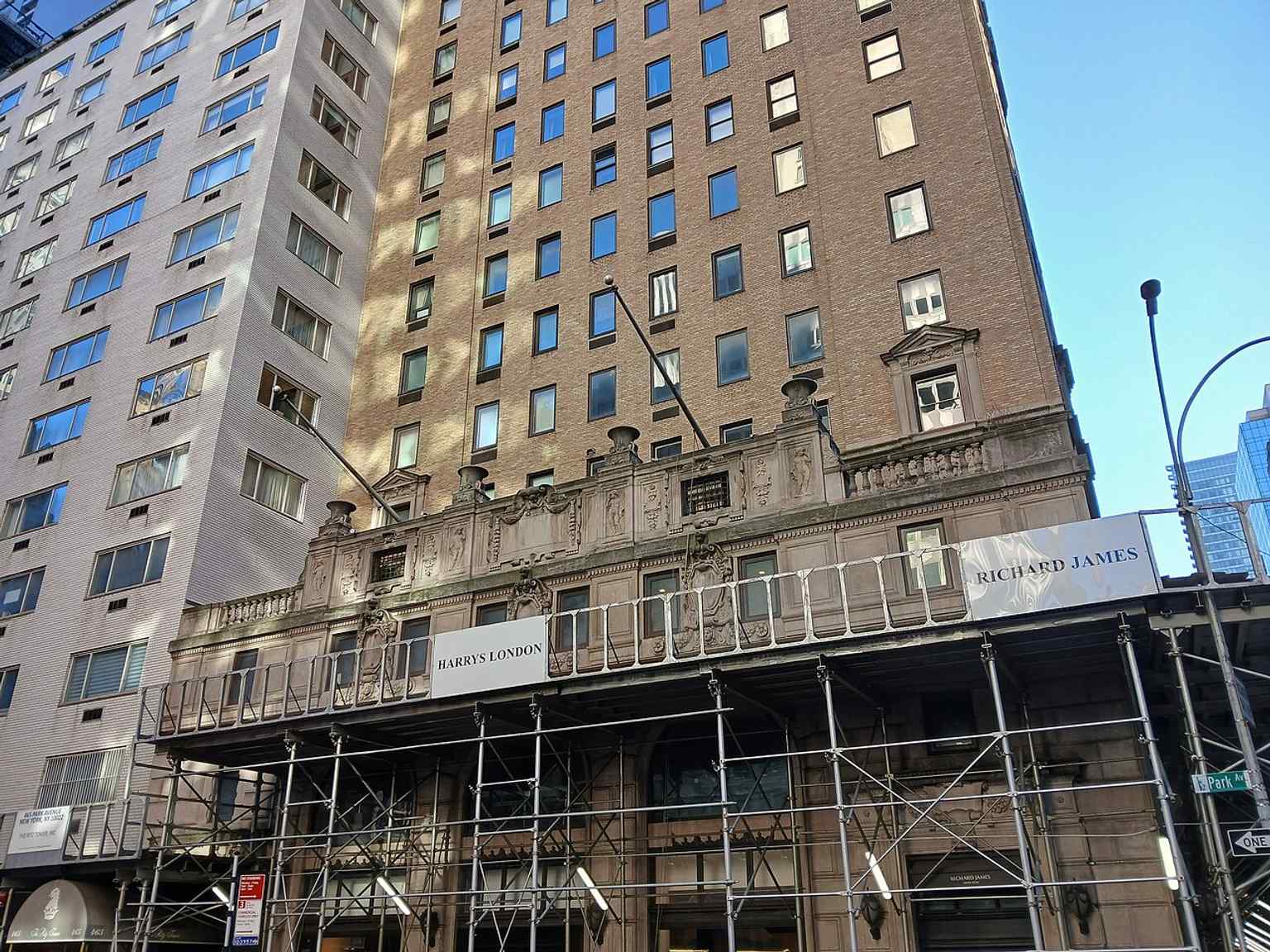
Another current view of the Ritz Tower from street level, showing the landmark’s Park Avenue corner in today’s cityscape.Photo: Epicgenius, Wikimedia Commons, CC BY-SA 4.0. Cropped & resized. On your right is a restrained pale-stone facade, rising like a narrow townhouse with tall rectangular windows and the name Grolier Club set above the entrance. This is one of…Read moreShow less
Open dedicated page →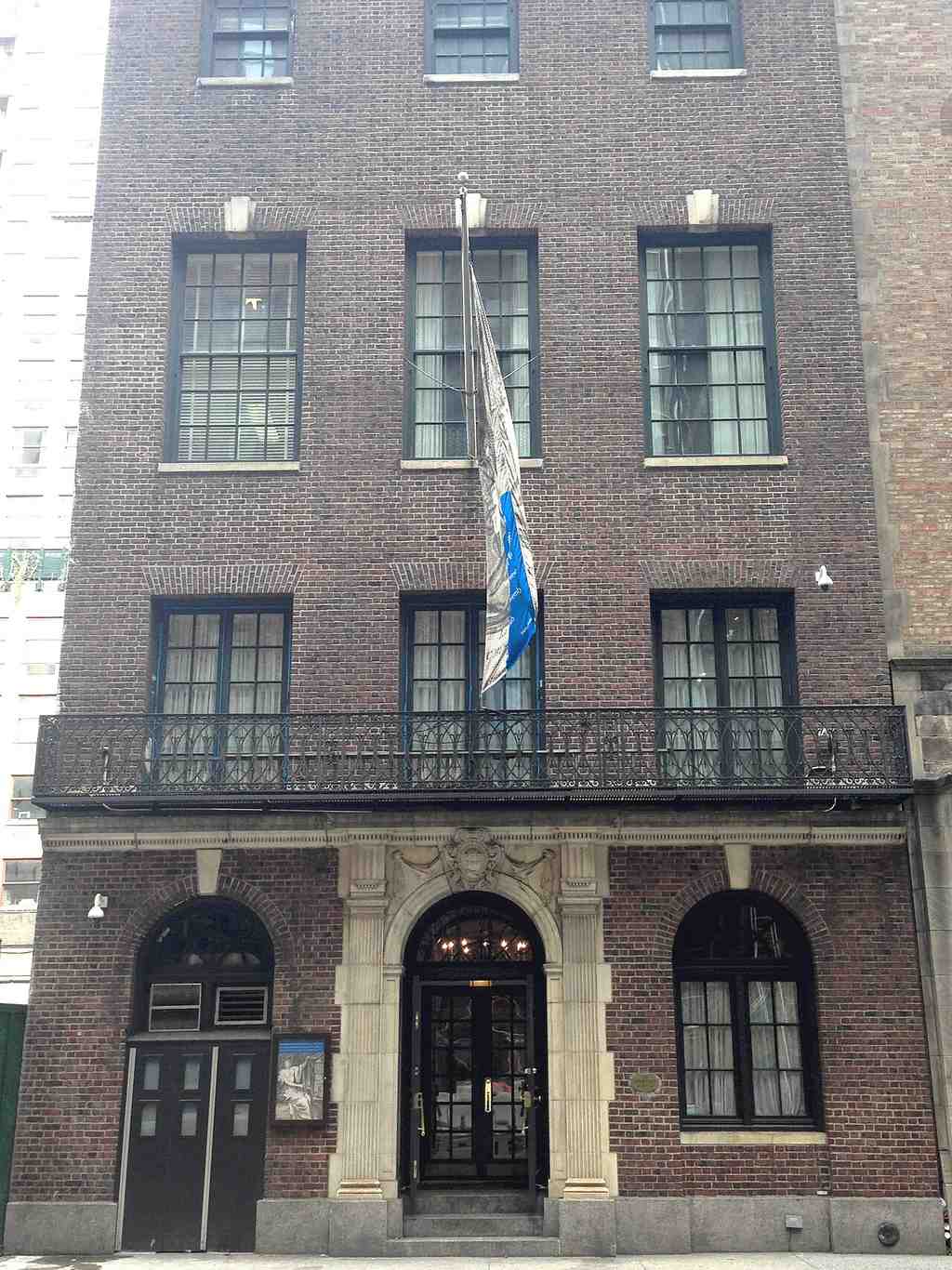
Grolier ClubPhoto: W. C. Minor, Wikimedia Commons, CC BY-SA 3.0. Cropped & resized. On your right is a restrained pale-stone facade, rising like a narrow townhouse with tall rectangular windows and the name Grolier Club set above the entrance.
This is one of Manhattan’s quietest strongholds of devotion: a club, library, and museum for people who love books so much they organized themselves around paper, type, binding, and ink. The Grolier Club began in January of eighteen eighty-four, when nine men gathered in secret at the home of printer Robert Hoe the Third. They were fed up with what they called the degraded state of American bookmaking, blaming mechanized presses and machine-made paper for turning books into cheap objects. A newspaper observer noted, with a little justified mischief, that these men talked of books and nothing but books... enough to send an outsider gently to sleep.
They named the club for Jean Grolier, a French collector famous not just for owning beautiful books, but for sharing them. His spirit fit the place: serious scholarship, yes, but not hoarding for hoarding’s sake. This current home opened in nineteen seventeen, designed by Bertram Grosvenor Goodhue. If you glance at the image in the app, you can see how understated the exterior is, almost as if the building is trying not to brag about the treasures inside.
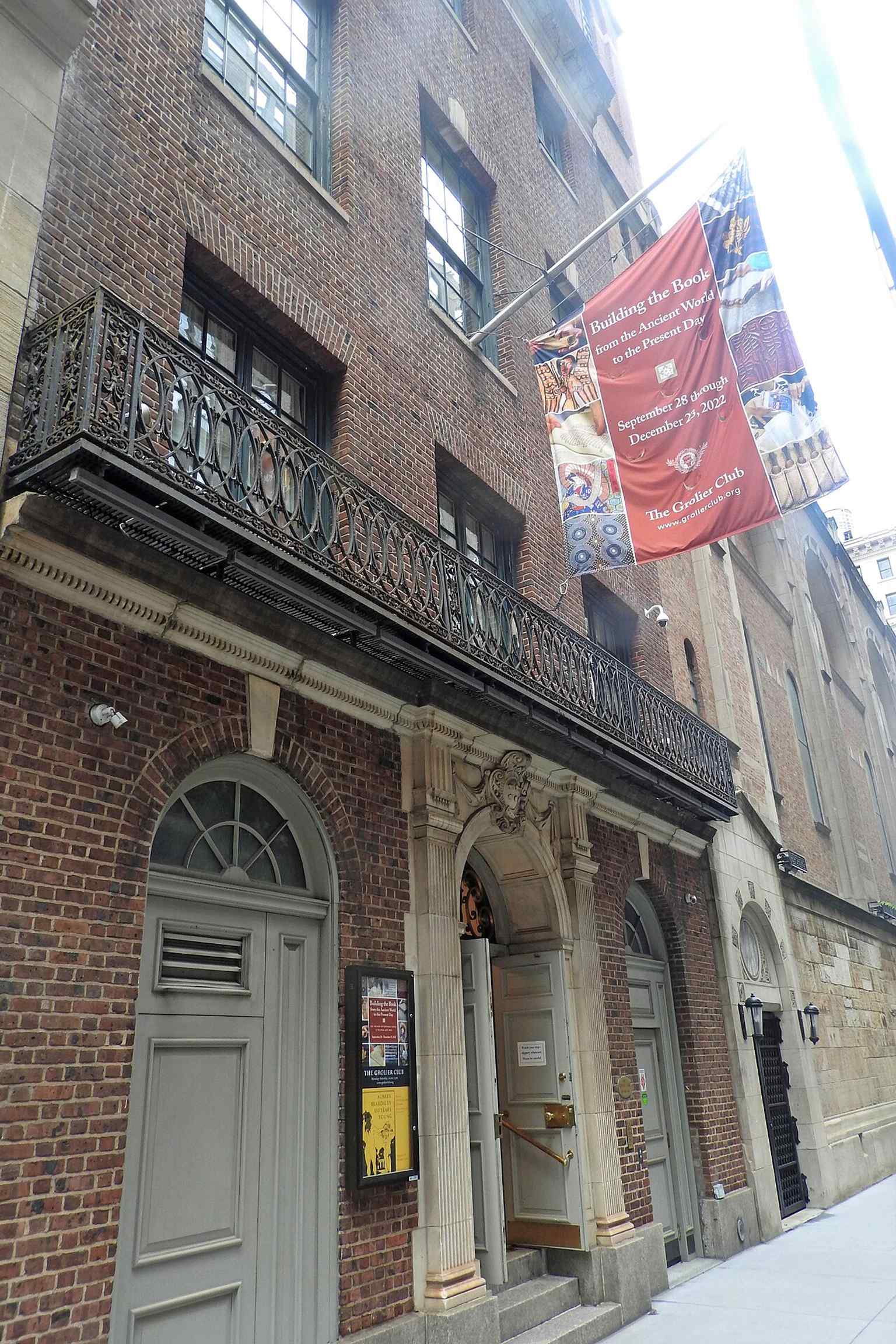
The Upper East Side facade of the Grolier Club, the current home of North America’s oldest bibliophilic club.Photo: Jim.henderson, Wikimedia Commons, CC BY 4.0. Cropped & resized. And there are treasures. The club treats books and prints as worthy of display alongside painting and sculpture. Its exhibitions have ranged from Walt Whitman to American menus to imaginary books. On your screen, the gallery image gives you a feel for that idea: books not as background objects, but as art in their own right.
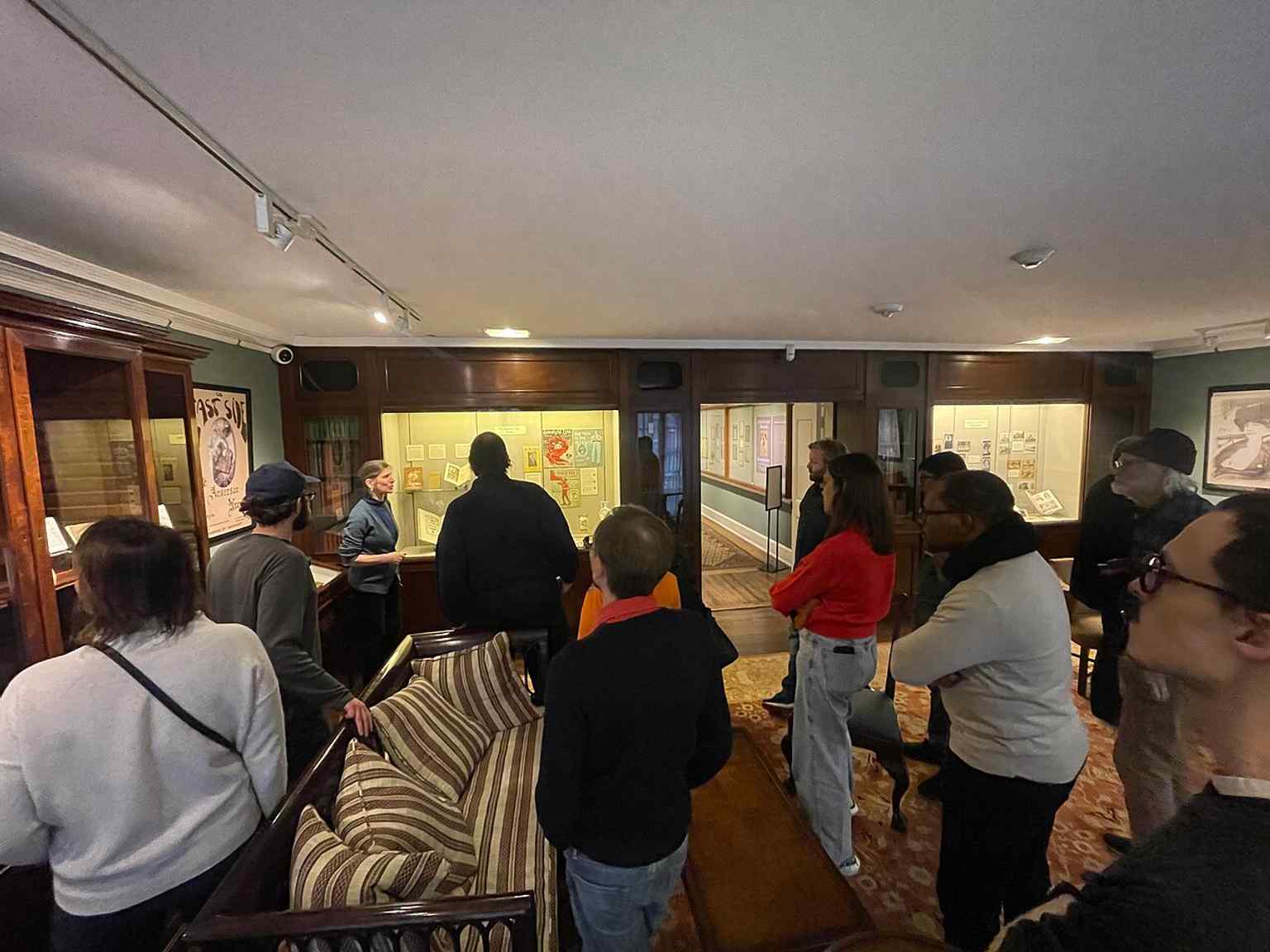
A second-floor gallery view during an exhibition, reflecting the club’s long tradition of showing books and prints as display-worthy works of art.Photo: Wil540 art, Wikimedia Commons, CC BY-SA 4.0. Cropped & resized. What I like most are the quieter stories. Staff recently rehoused a miniature-book collection of roughly six hundred tiny volumes that had long been stored, in their own words, higgledy-piggledy. Researchers had to squint at spine labels and rummage through boxes like detectives in a dollhouse. In another archival mystery, a curator matched a detached brass-colored case to an Oriental manuscript on vellum by noticing a strangely jointed spine and the same accession number. After decades apart, the case and manuscript fit together perfectly.
The club has preserved memory, but it has also had to revise itself. Women were barred from membership for ninety-two years before the club finally admitted them in nineteen seventy-six. Now its archives include the Hroswitha Club, a group of women book collectors. Even sanctuaries of learning, it turns out, need editing.
After all these towers, fortunes, and guarded rooms, we end with pages. In a city that worships the next new thing, what does it mean to build an institution around saving what can still speak from centuries ago? Hold onto that thought... the tour is nearly ready to say goodbye.
If you want to return, the Grolier Club is generally open Monday through Saturday from ten to five, and closed on Sunday.
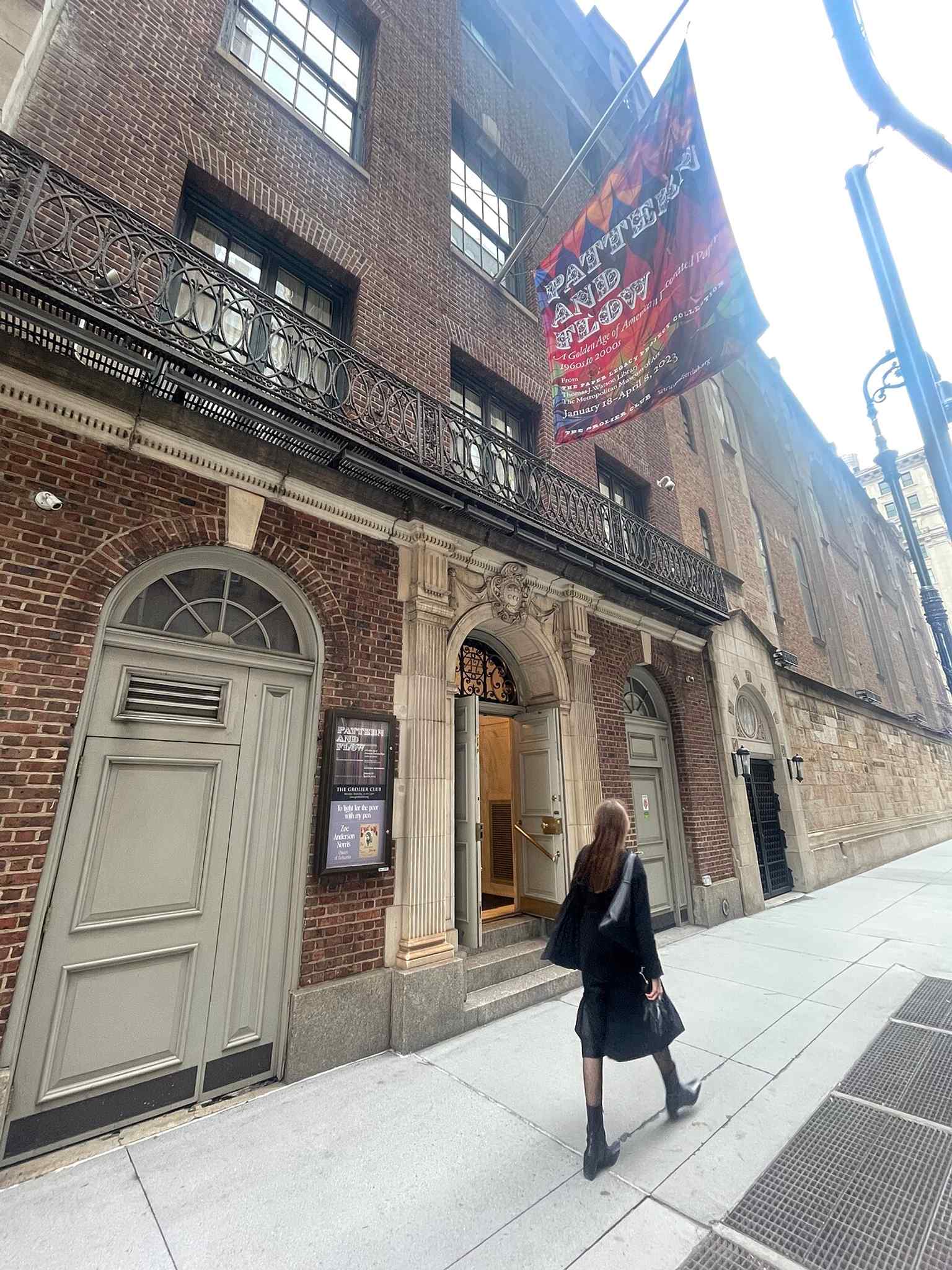
A street-level view outside the Grolier Club on 60th Street, where the club’s building has been part of New York’s book history since 1917.Photo: Wil540 art, Wikimedia Commons, CC BY-SA 4.0. Cropped & resized.
Frequently asked questions
How do I start the tour?
After purchase, download the AudaTours app and enter your redemption code. The tour will be ready to start immediately - just tap play and follow the GPS-guided route.
Do I need internet during the tour?
No! Download the tour before you start and enjoy it fully offline. Only the chat feature requires internet. We recommend downloading on WiFi to save mobile data.
Is this a guided group tour?
No - this is a self-guided audio tour. You explore independently at your own pace, with audio narration playing through your phone. No tour guide, no group, no schedule.
How long does the tour take?
Most tours take 60–90 minutes to complete, but you control the pace entirely. Pause, skip stops, or take breaks whenever you want.
What if I can't finish the tour today?
No problem! Tours have lifetime access. Pause and resume whenever you like - tomorrow, next week, or next year. Your progress is saved.
What languages are available?
All tours are available in 50+ languages. Select your preferred language when redeeming your code. Note: language cannot be changed after tour generation.
Where do I access the tour after purchase?
Download the free AudaTours app from the App Store or Google Play. Enter your redemption code (sent via email) and the tour will appear in your library, ready to download and start.
If you don't enjoy the tour, we'll refund your purchase. Contact us at [email protected]
Checkout securely with 






.jpg)
.jpg)


%2008%20-%20Tiffany%20%26%20Co.%20(727%20Fifth%20Avenue).jpg)
%2005%20-%20Tiffany%20%26%20Co.%20(PS%206453).jpg)


