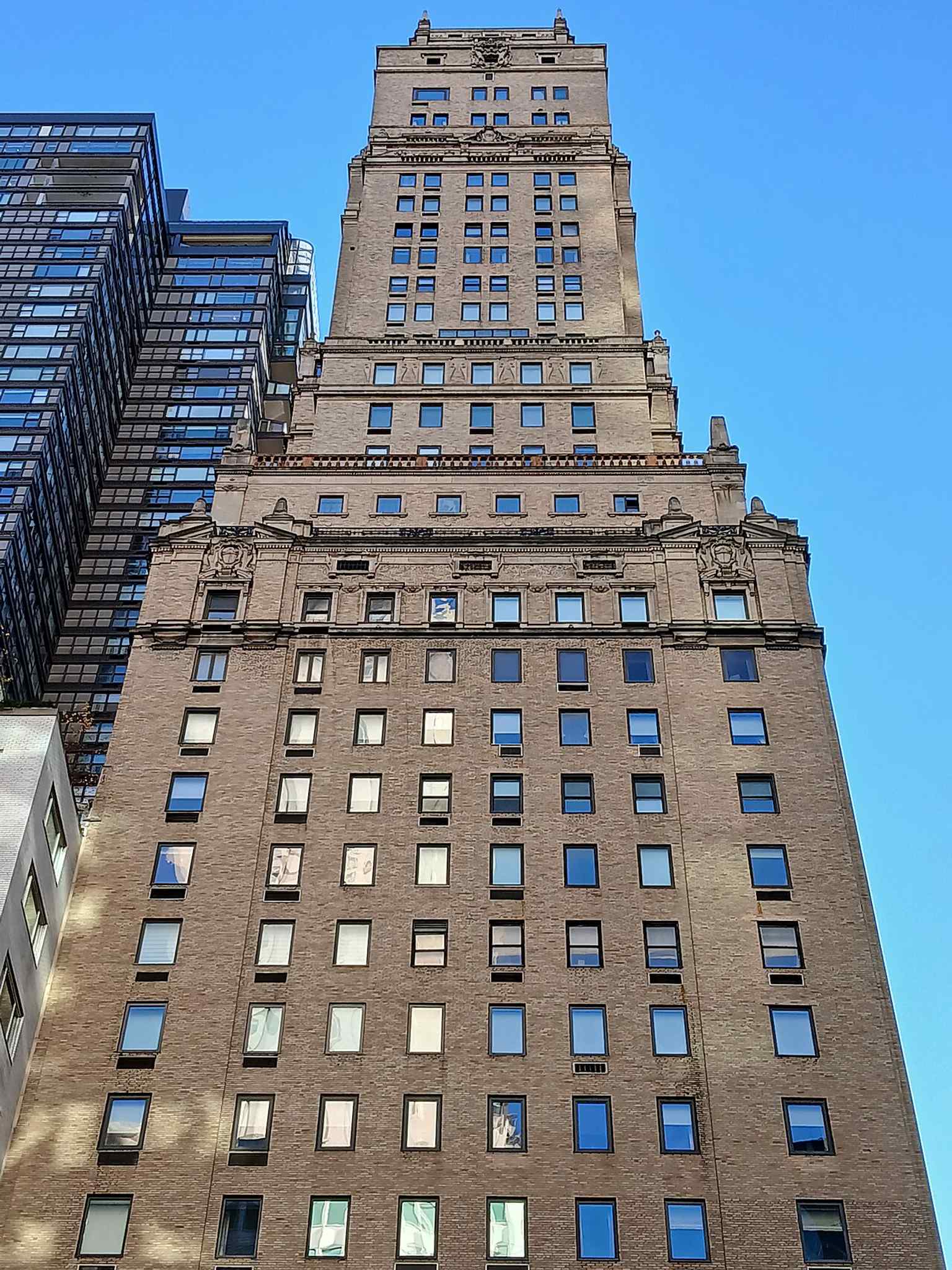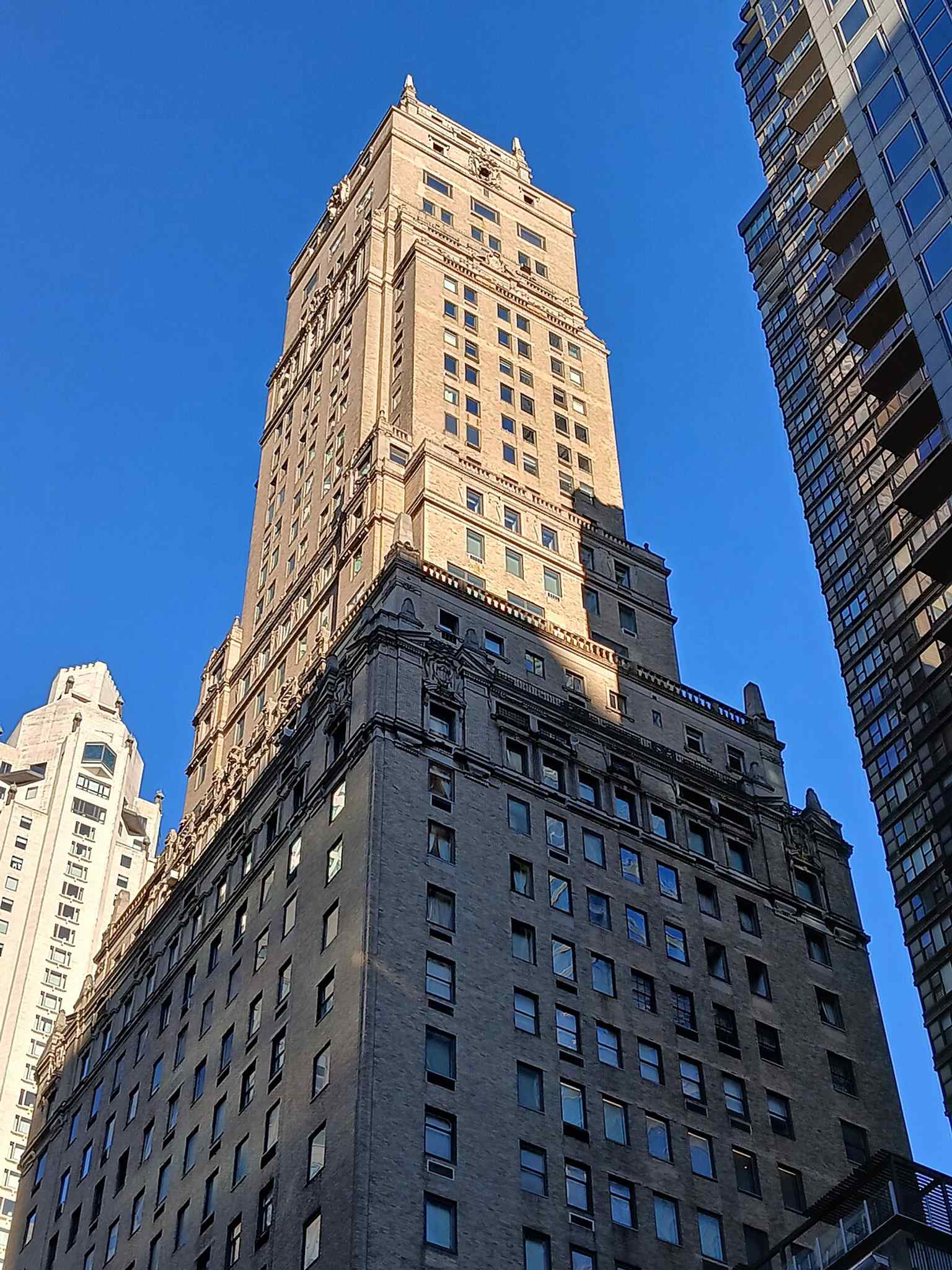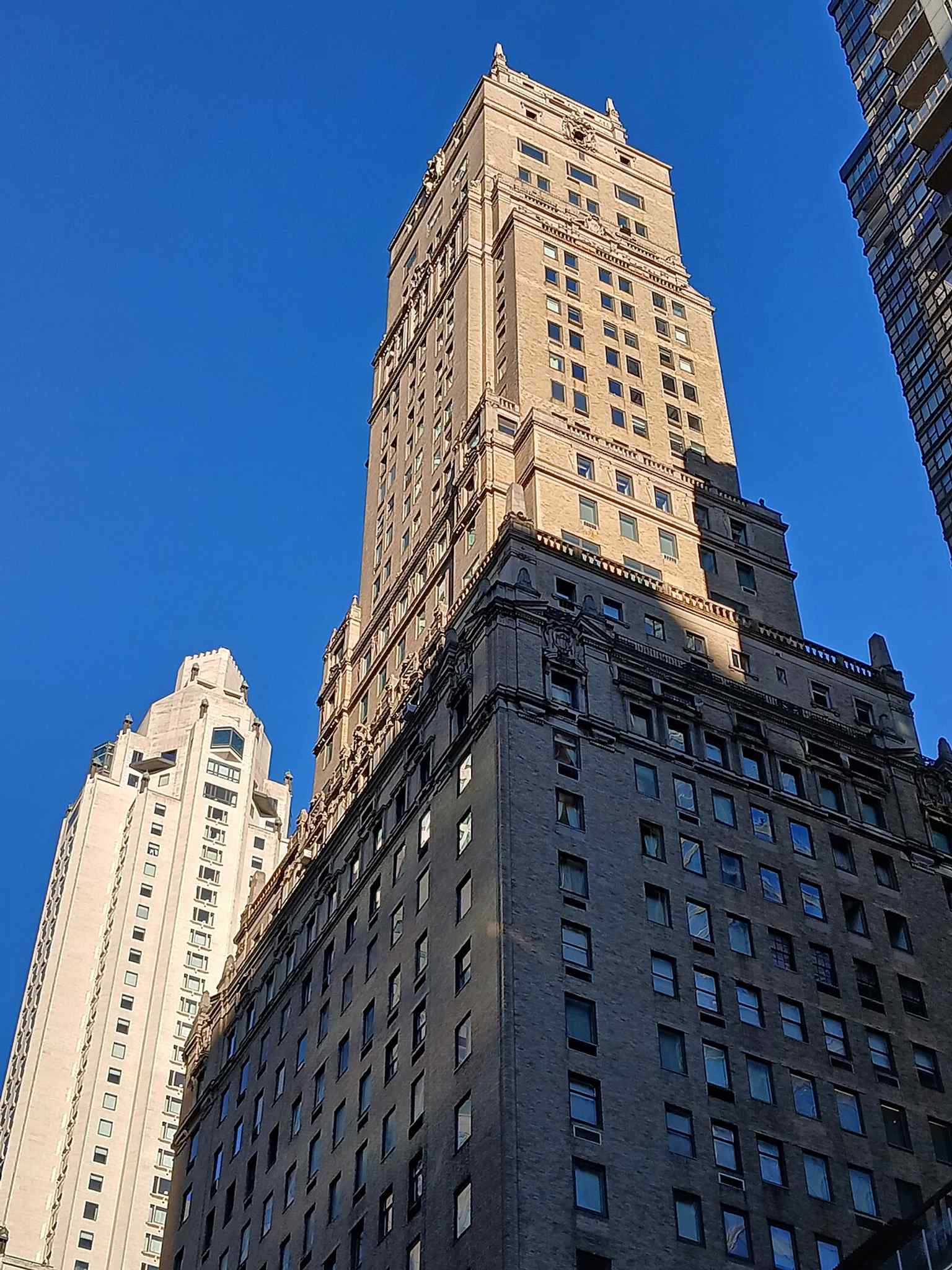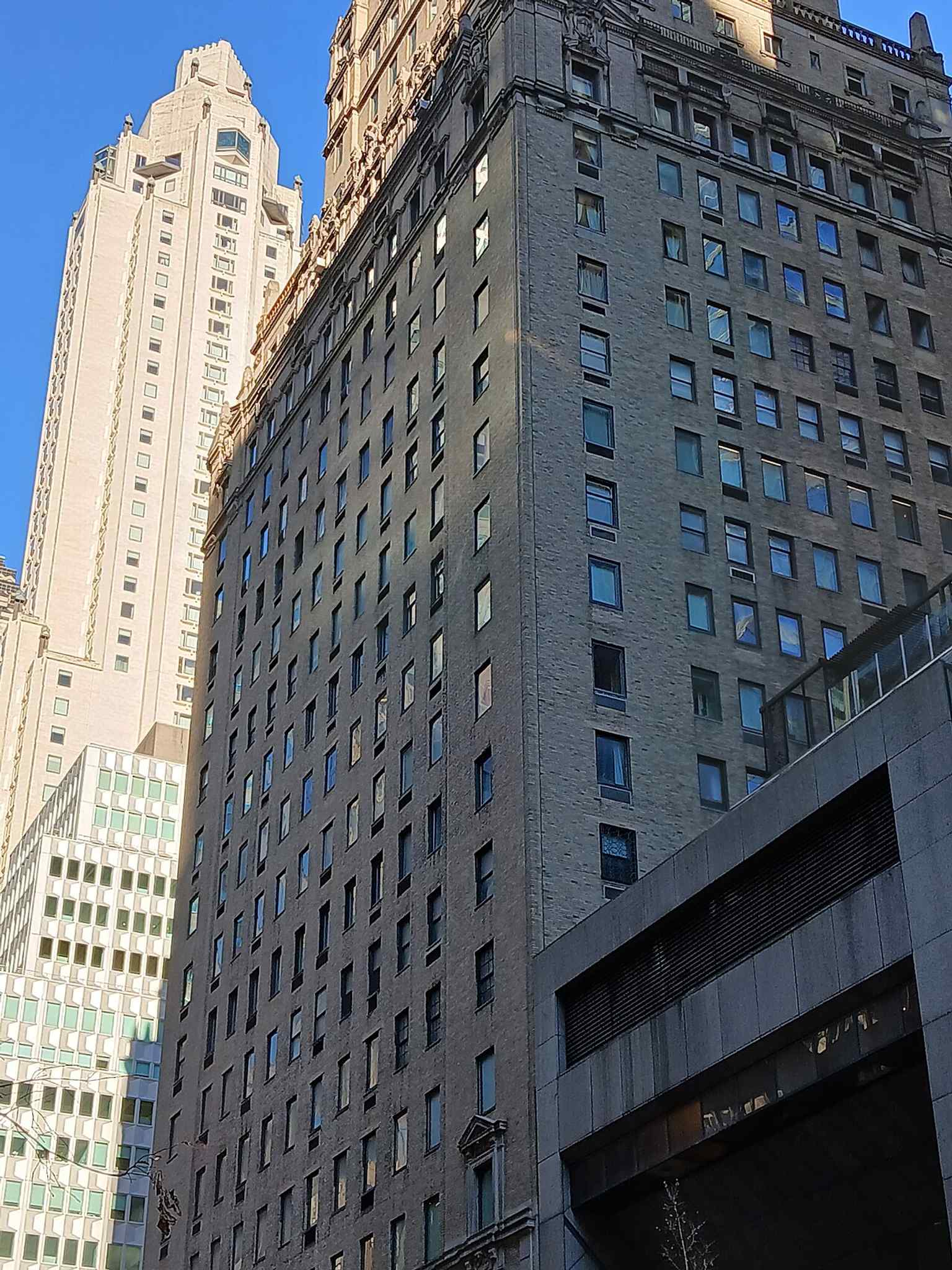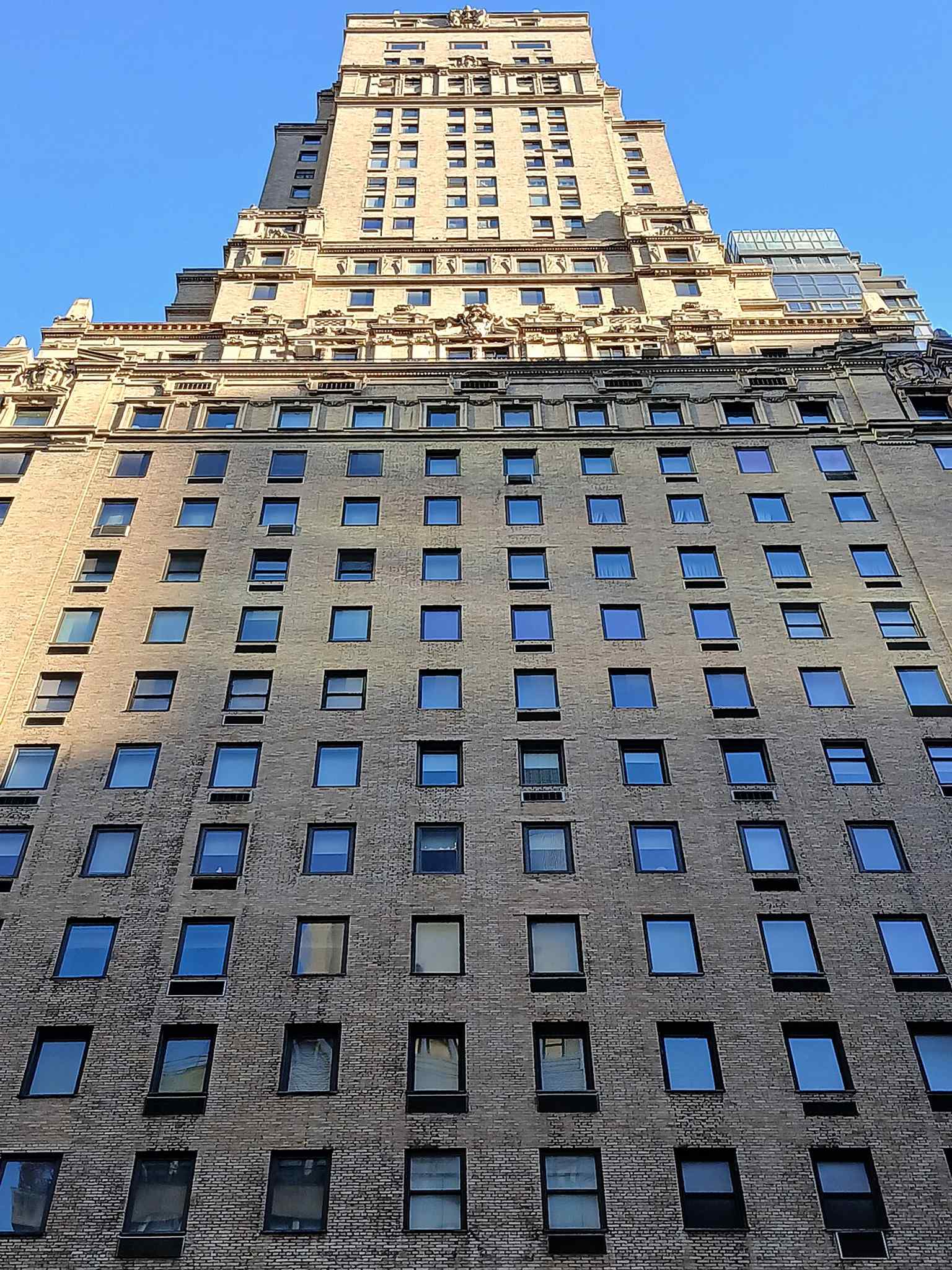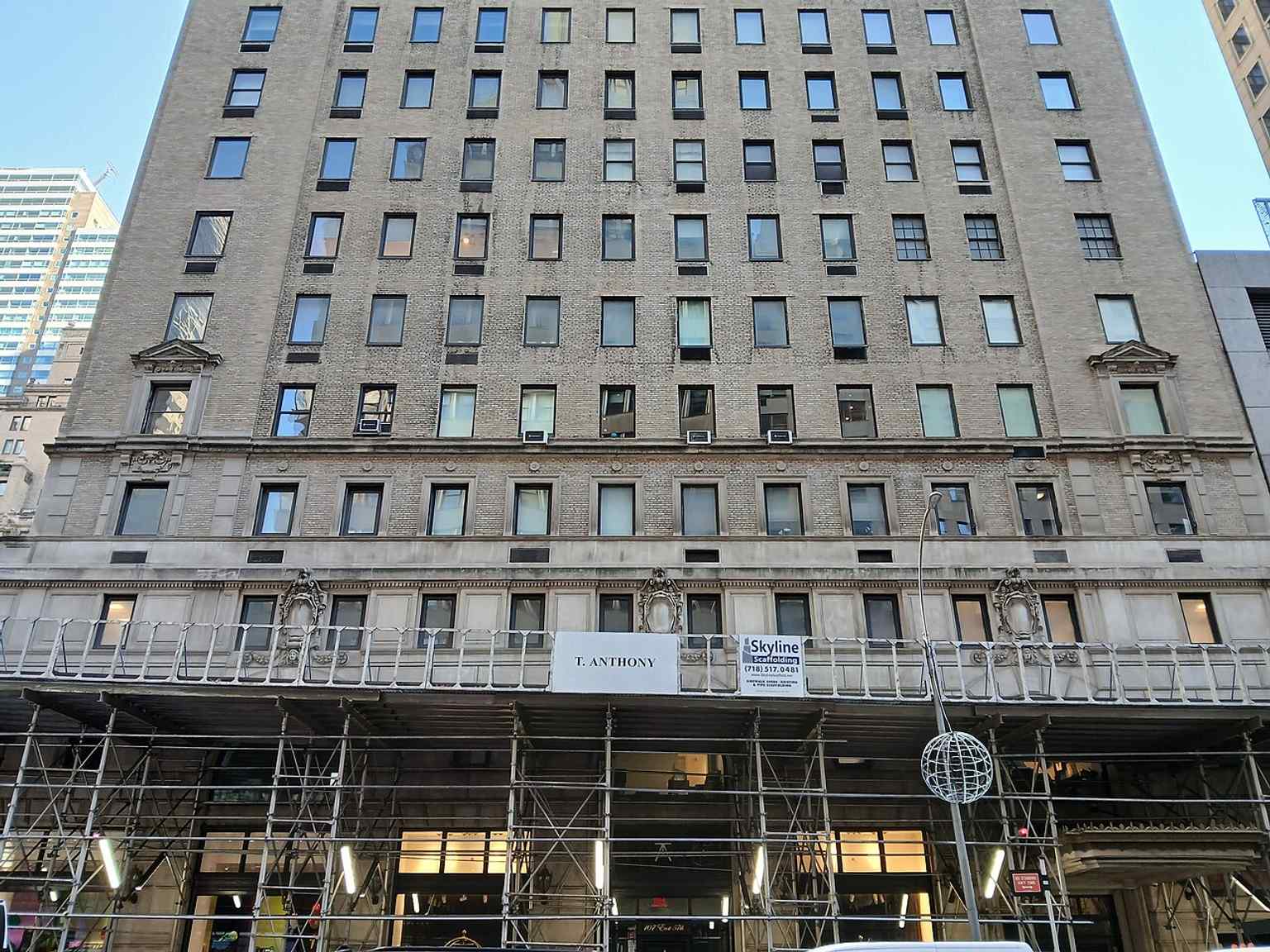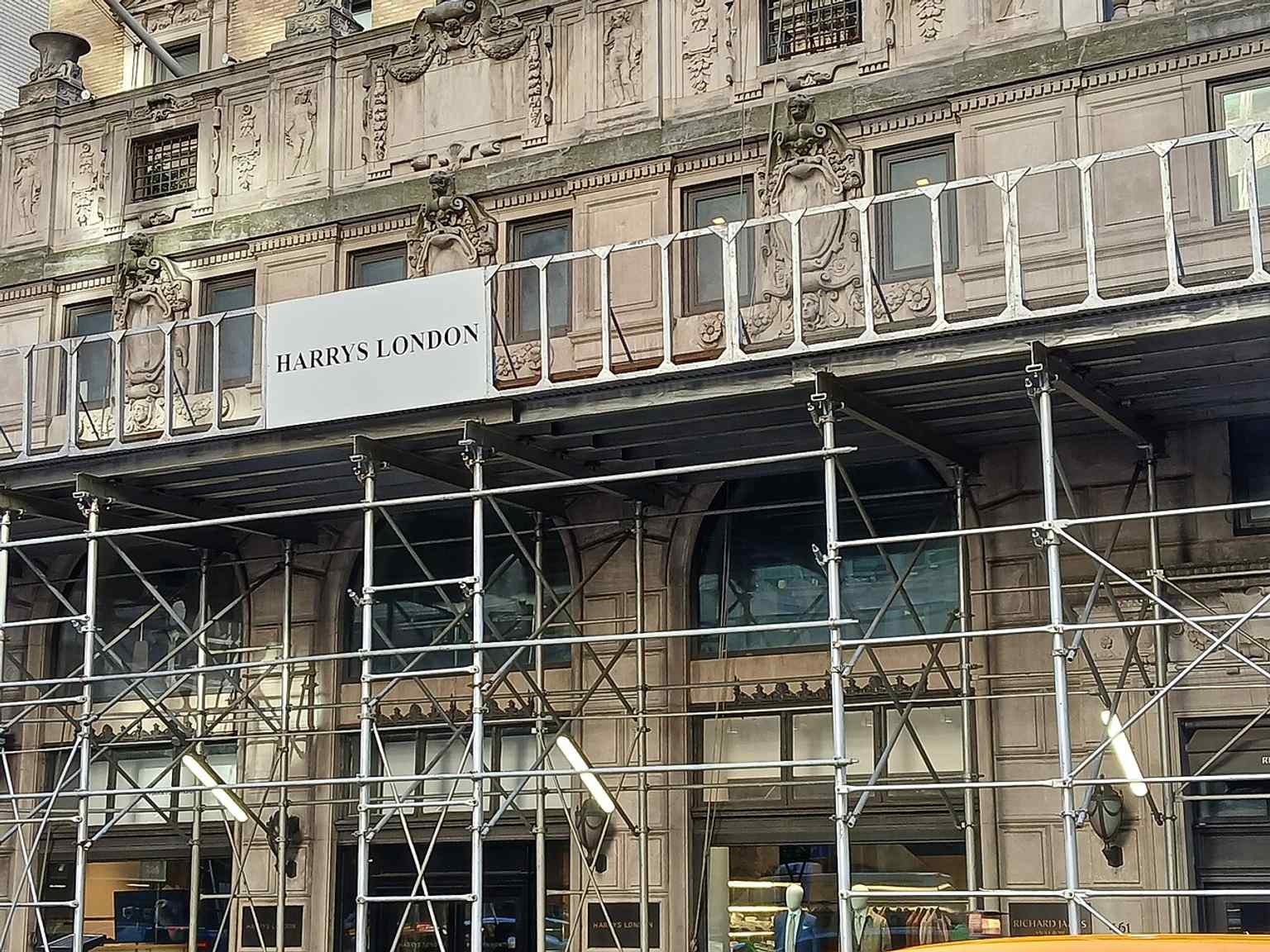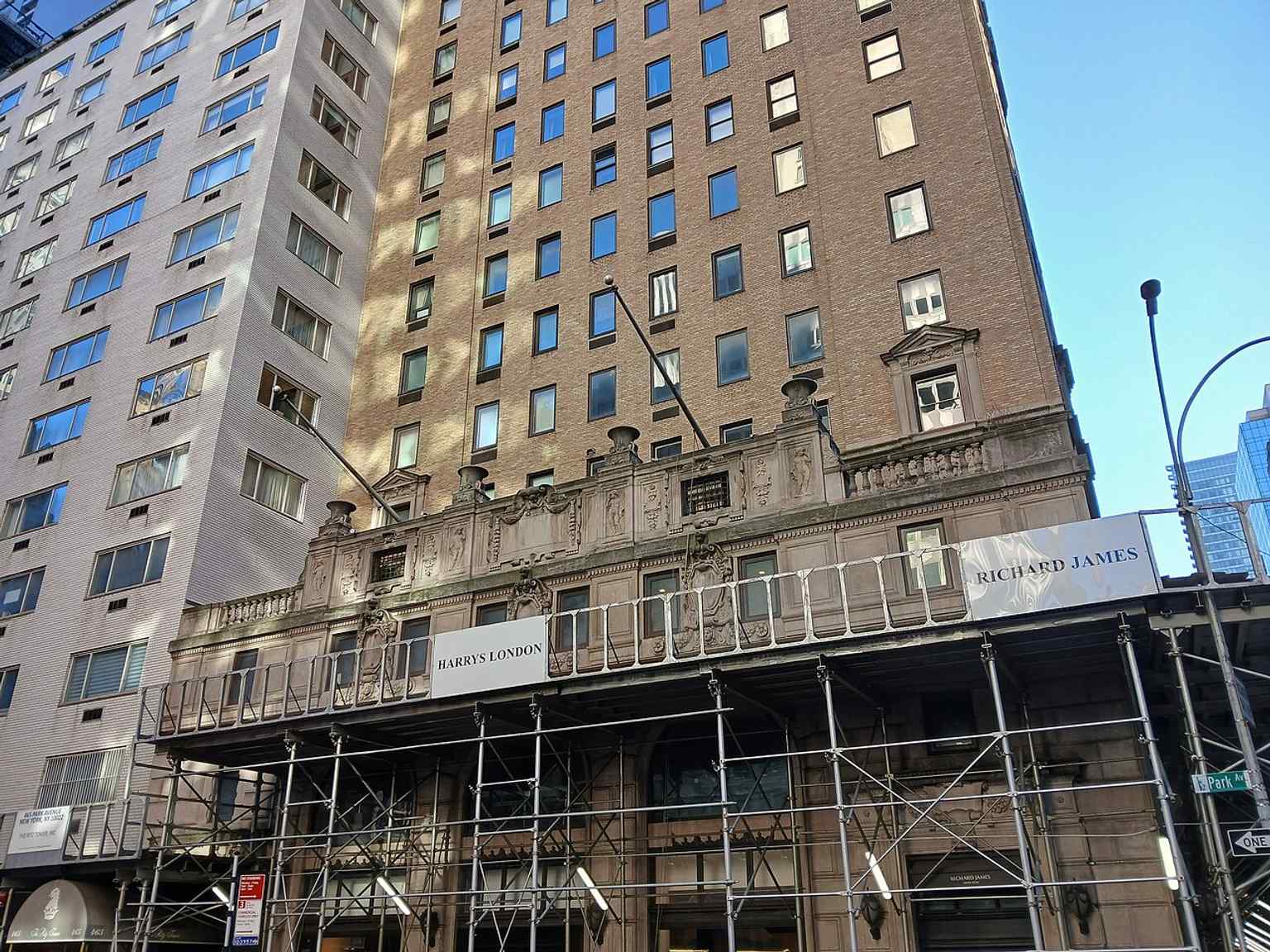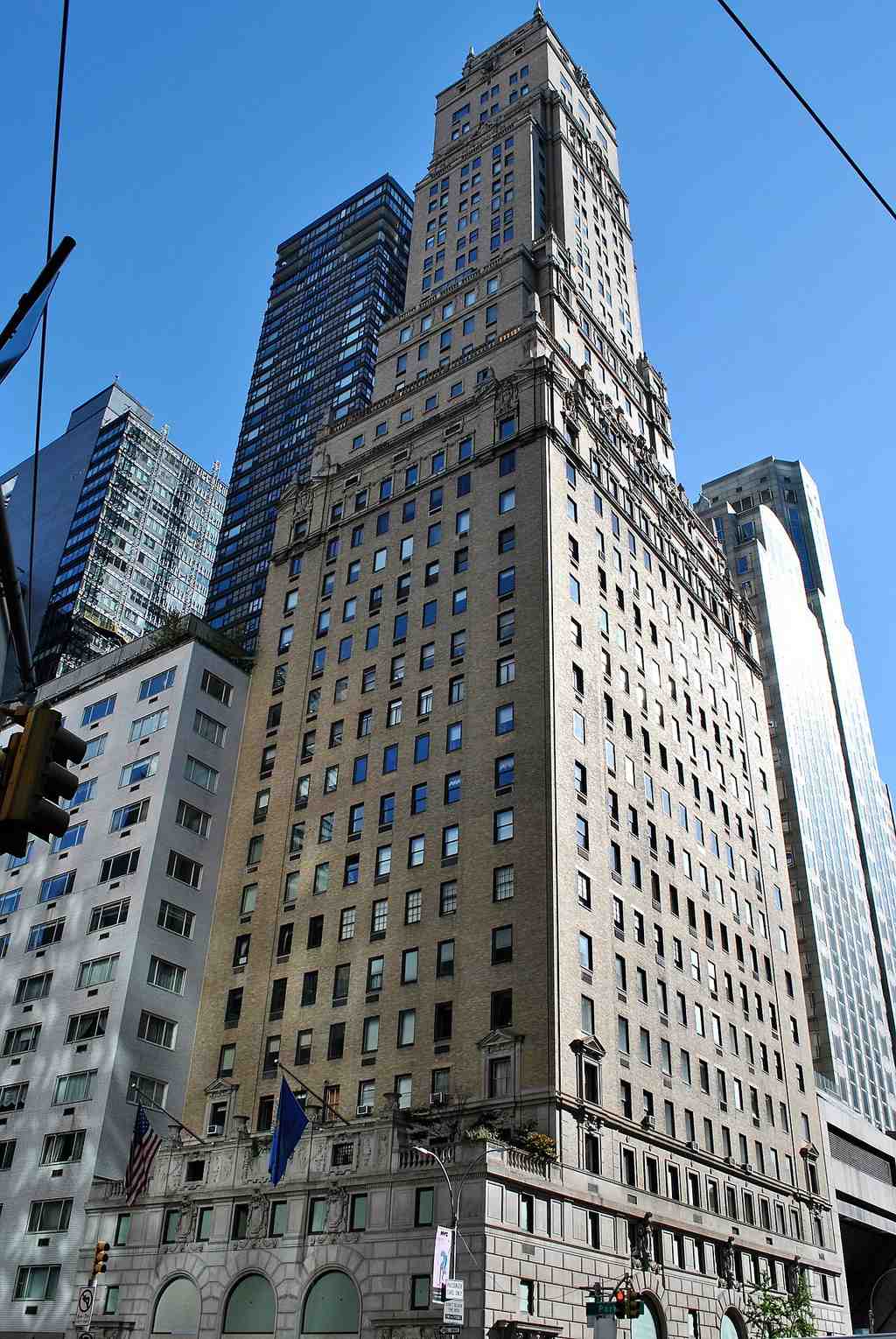
On your right, look for a tan-brick tower stepping back in narrow tiers above a rusticated limestone base, capped by a small pyramidal roof and a sharp obelisk.
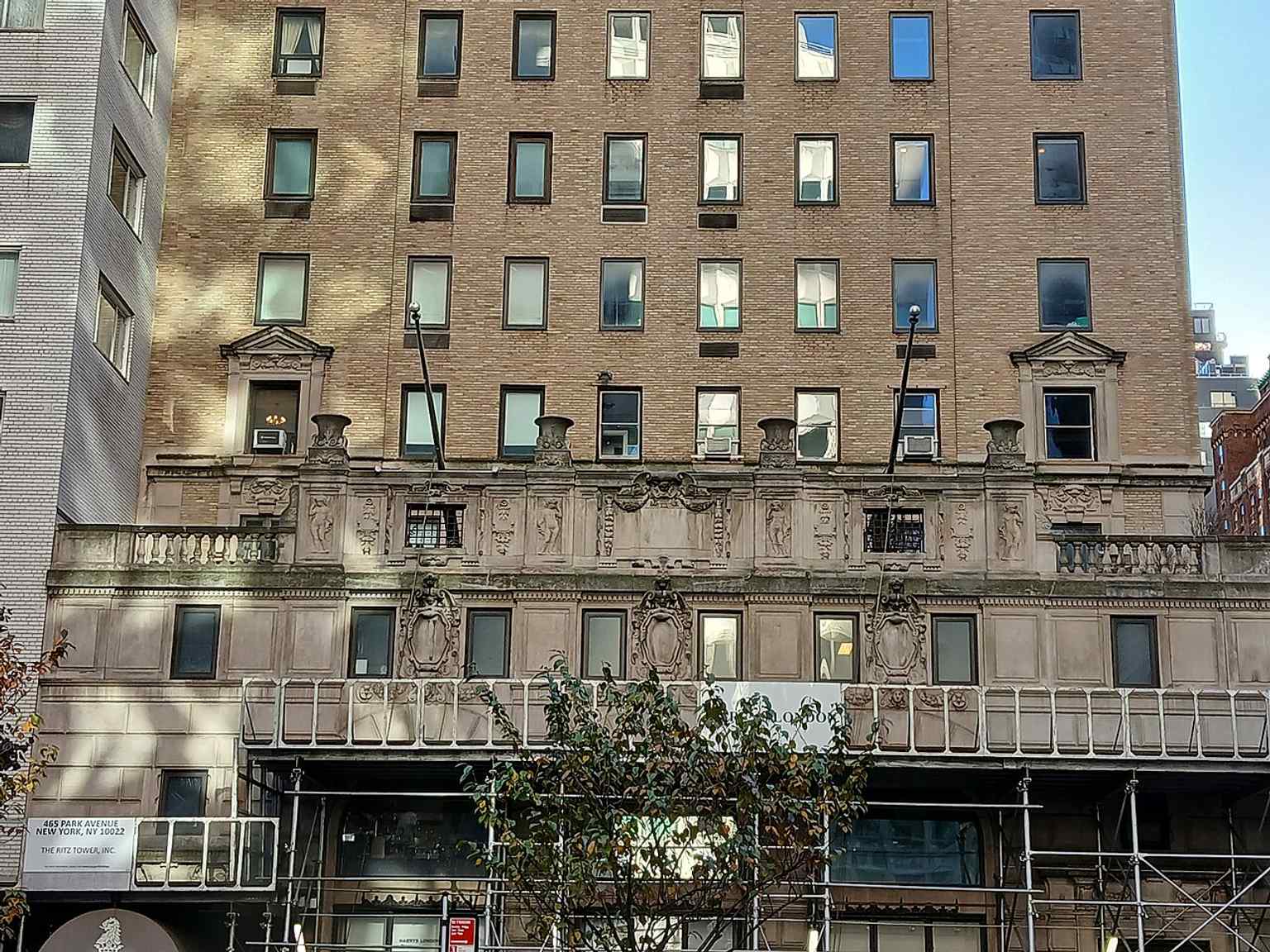
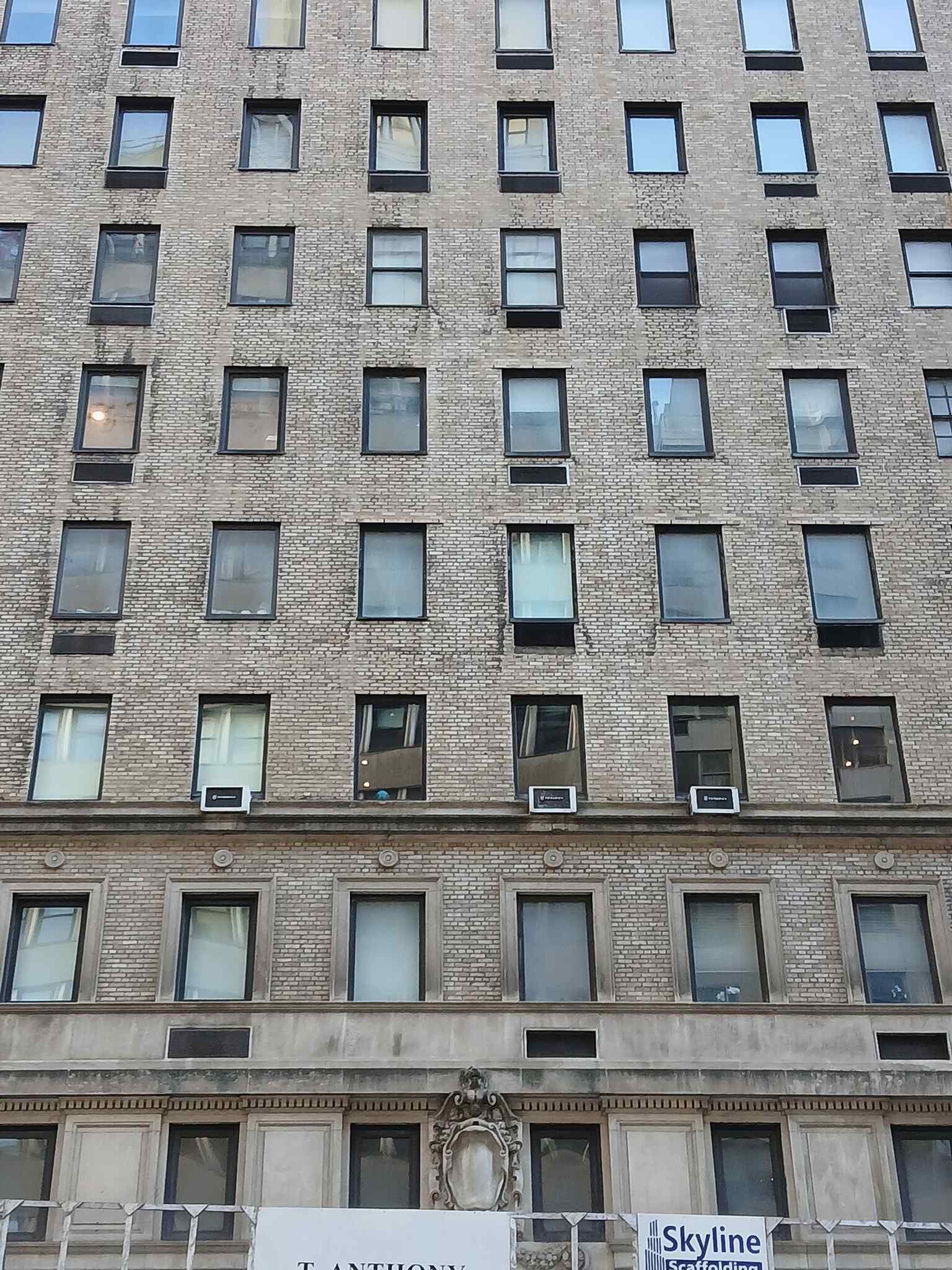
This is the Ritz Tower at four sixty-five Park Avenue, and when Arthur Brisbane opened it in nineteen twenty-six, he meant it to be the most desirable apartment hotel in New York - a long-term residence run with hotel service, for people who liked luxury but preferred someone else to handle the dinner tray. Emery Roth shaped the tower first, and Thomas Hastings helped give it that polished classical air: limestone arches at the base, balustrades along the setbacks, windows framed with pilasters and pediments, and little sculpted putti - cherub-like figures - mixed in with urns. It is dressed like a Renaissance palazzo that suddenly decided to become a skyscraper.
And a very tall one. At about five hundred forty-one feet, it became the tallest residential building in the city when it opened. If you check the image on your screen, you can see how boldly it once ruled this corner of Park Avenue.
Now for the trick. This tower climbed so high because it was not officially an apartment house. New York’s rules limited the height of new apartment buildings, so Brisbane classified this as a hotel. That meant no full private kitchens in the roughly four hundred units. Residents got pantries, sinks, refrigerators, and service from five heated dumbwaiters - tiny service elevators for meals - but not proper kitchens. Luxury, in other words, with a legal loophole doing some heavy lifting.
There is another excellent little wrinkle at the corner. Brisbane never managed to buy the Park Avenue corner lot from the Roome family. They refused to sell, so he leased it for fifteen thousand dollars a year - roughly two hundred seventy thousand today. The tower had to accommodate their stubbornness. In fact, the section over that corner was engineered so it could be detached if the family ever reclaimed the land, complete with provision for its own staircase and elevator. On a block full of wealth and influence, one holdout family quietly bent the architecture.
None of this came cheap. Brisbane financed construction with four million dollars in mortgage bonds - roughly seventy million today - and the final cost rose to around five to six million dollars before furnishings. Inside, he piled on parquet floors, wood paneling, a grand hallway styled as a Roman promenade, and a tea room meant to feel like Pompeii with better service. It was splendid. It was praised. It was also financially brutal. Brisbane soon buckled under the debt and sold the tower to William Randolph Hearst, the media baron who had been both colleague and friend.
Hearst and Marion Davies lived here. Greta Garbo later found refuge here. Neil Simon eventually did too. But the cautionary note never really left the building. In nineteen thirty-two, a basement fire triggered a violent backdraft explosion that killed eight firefighters - one of the darkest chapters in this glamorous address.
Even here, elegance came with a bill, and not everyone paying it had signed the lease.
The city finally designated the Ritz Tower a landmark in two thousand two, preserving this slightly eccentric monument to ambition, patronage, and expensive taste.
From here, continue to the Grolier Club, a place devoted entirely to books and the people who love them. If you want to go inside there, it’s generally open Monday through Friday from nine to five, and closed on weekends.