
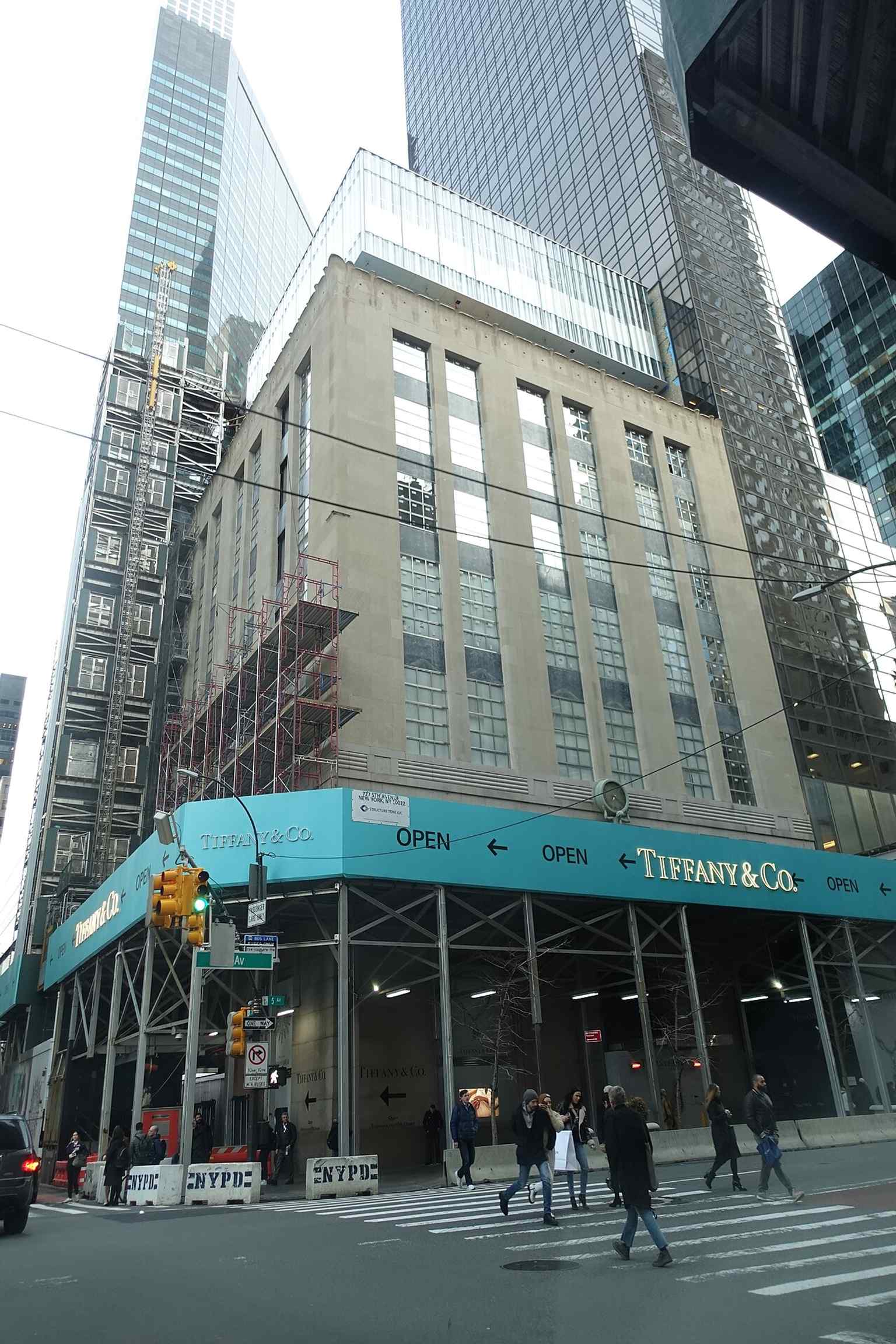
On your left, look for a polished stone corner building with tall rectangular window bays and the green-patinated Atlas figure above the entrance.
This house of diamonds began with a much humbler ambition. In eighteen thirty-seven, Charles Lewis Tiffany and John B. Young opened a downtown shop selling stationery and what they called fancy goods. The detail locals love is almost ridiculous: on day one, total sales came to four dollars and ninety-eight cents. From there, Charles Tiffany did something oddly modern for the time... he posted fixed prices and demanded cash, no haggling, no credit, no exceptions. Even Abraham Lincoln, according to company lore, couldn’t get a discount.
By eighteen fifty-three, Tiffany steered the business hard toward jewelry. He bought rare stones, snapped up pieces from the French Crown Jewels, and earned the nickname “the King of Diamonds,” which is exactly the sort of title Fifth Avenue never dislikes. In eighteen eighty-six, the company introduced the Tiffany Setting, the six-prong engagement ring mount that lifts a diamond up into the light. If that design feels familiar, it’s because half the jewelry world spent the next century borrowing it.
This particular flagship moved here in nineteen forty, into a building designed by Cross and Cross. It wasn’t just elegant; it was engineered to seduce people into lingering. It became New York’s first retail building with central air conditioning, which sounds practical, but in luxury retail it’s also strategy. Keep shoppers comfortable, and they may suddenly need a bracelet.
Look up at Atlas above the door. Most people assume he belongs to this corner alone, but he has actually traveled with Tiffany across several Manhattan addresses, a small stubborn survivor from the company’s earlier lives.
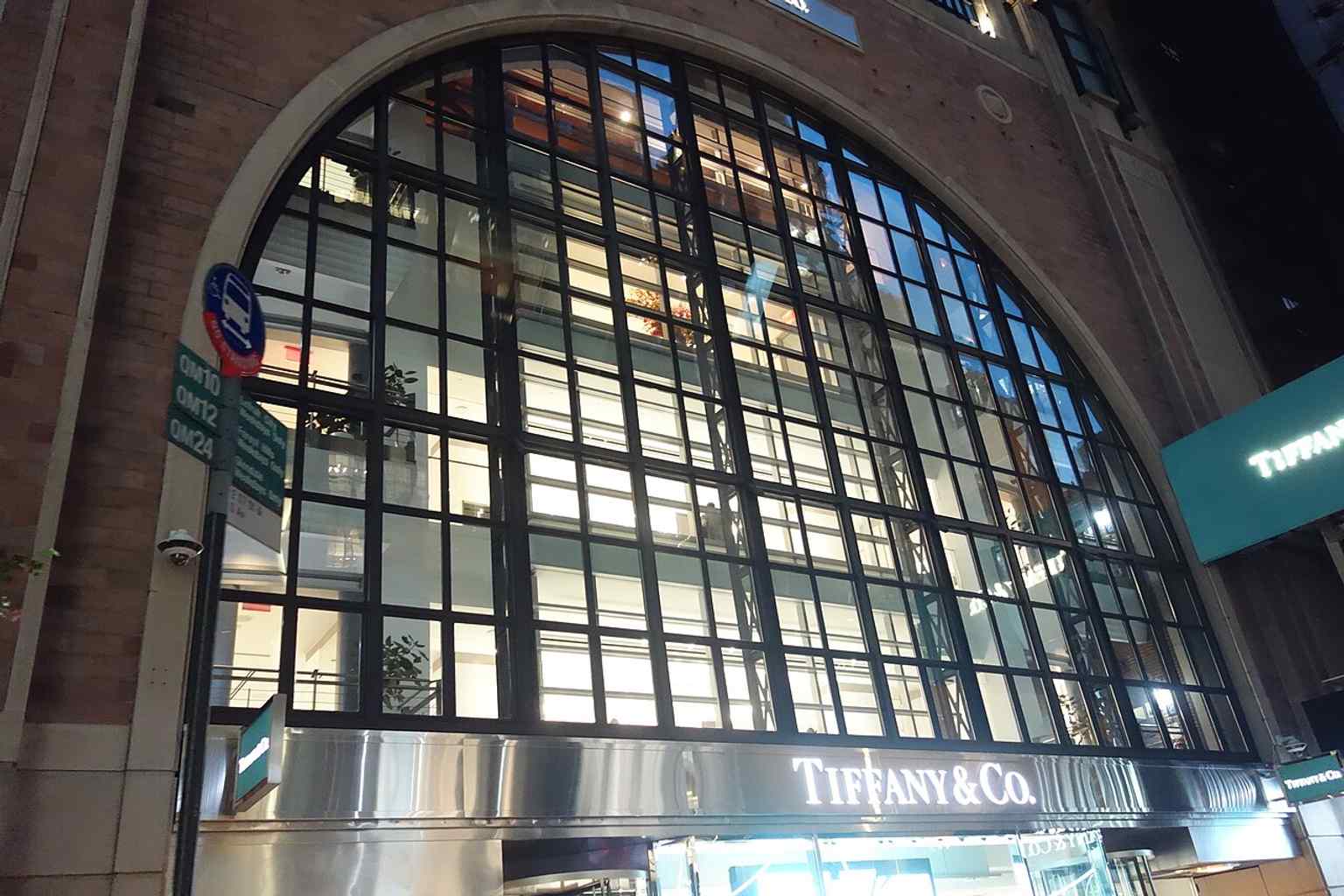
If you want a quick visual of the recent makeover, check the comparison in the app; this corner went from renovation cocoon to gleaming flagship again after the overhaul finished in twenty twenty-three.
Of course, Tiffany did not stay a New York jeweler with a nice window display. By twenty eighteen, it had more than three hundred stores worldwide. Then, in twenty twenty-one, the French luxury giant L-V-M-H, Moët Hennessy Louis Vuitton, bought Tiffany for fifteen point eight billion dollars and folded it into a much larger empire. Same blue box, bigger patron.
And yes, this is the Tiffany from Breakfast at Tiffany’s. For Audrey Hepburn’s opening scene, the store even broke its no-Sunday-opening rule. Some myths require accommodations.
When you’re ready, continue up the avenue toward the Squibb Building’s tall, clean wall of stone and glass; in about two minutes, you’ll be at seven forty-five Fifth Avenue. If you’re tempted to pop inside later, the store keeps long daily hours, though the prices remain heroically expensive.






%2008%20-%20Tiffany%20%26%20Co.%20(727%20Fifth%20Avenue).jpg)
%2005%20-%20Tiffany%20%26%20Co.%20(PS%206453).jpg)
