
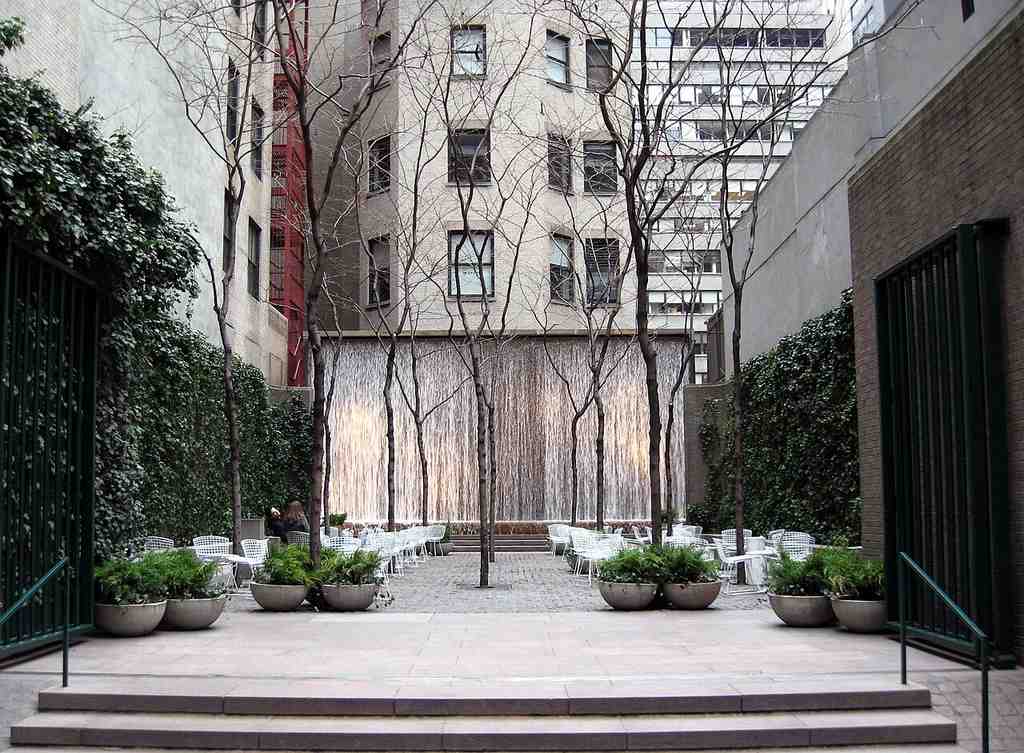
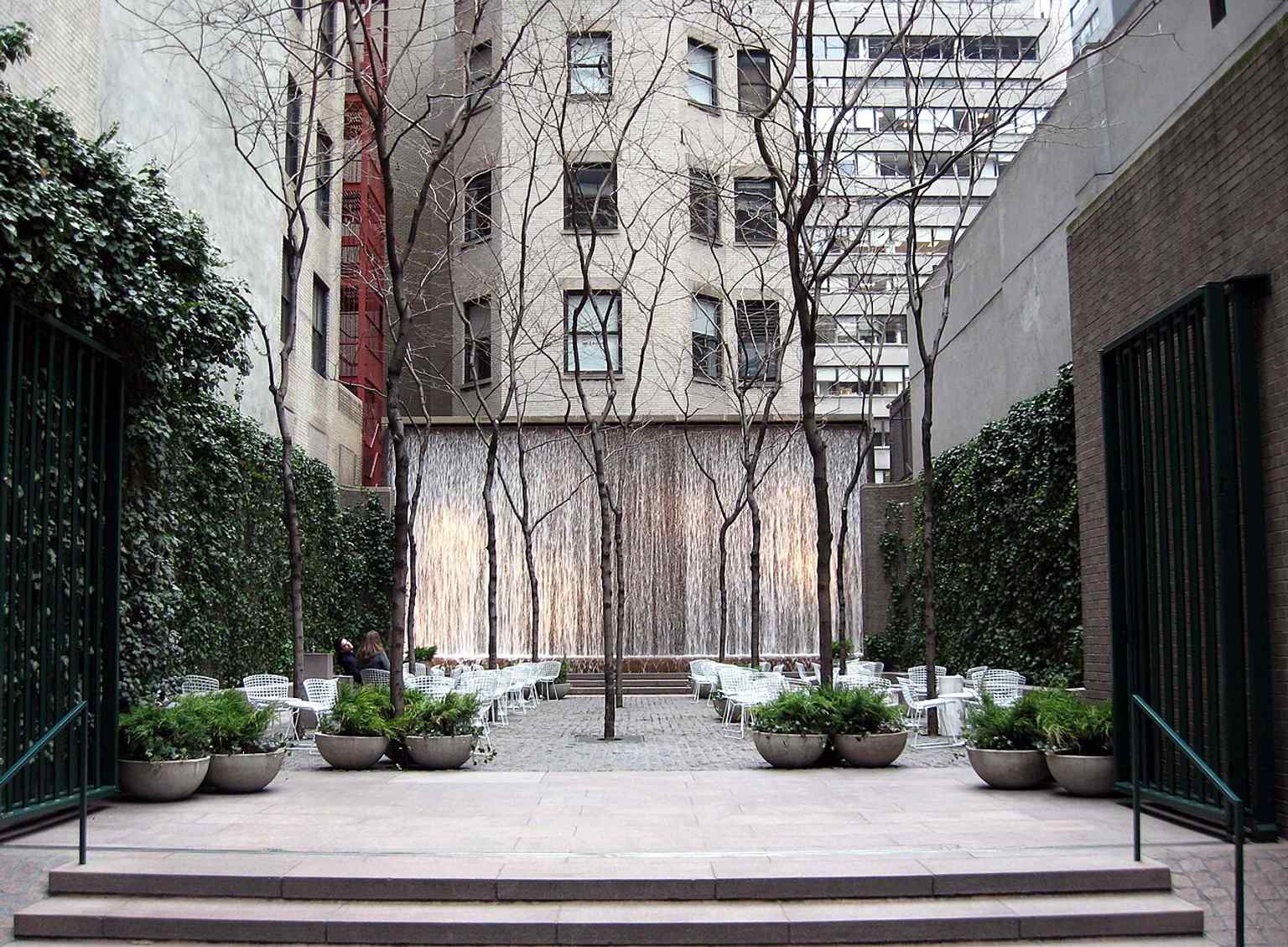
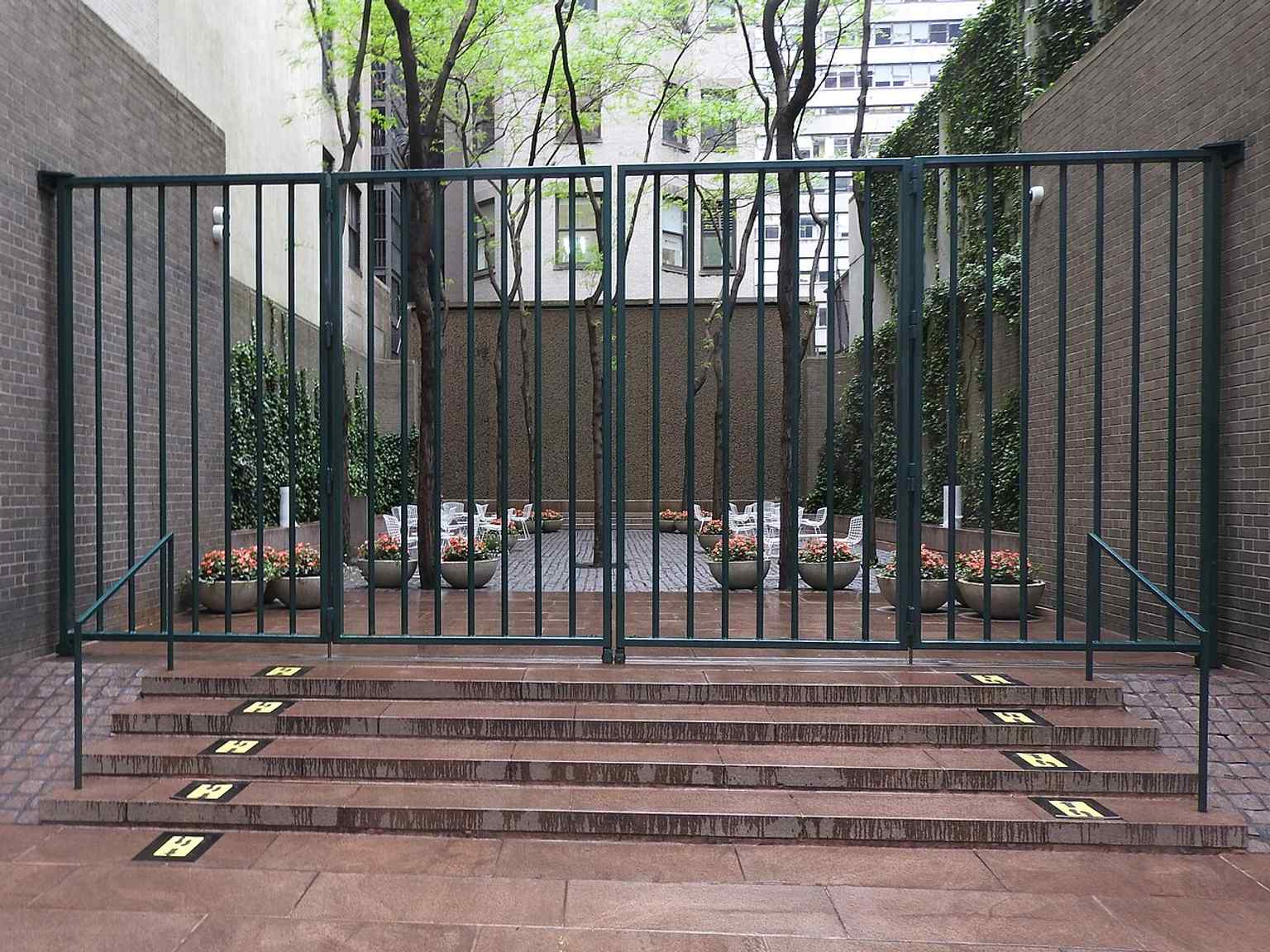
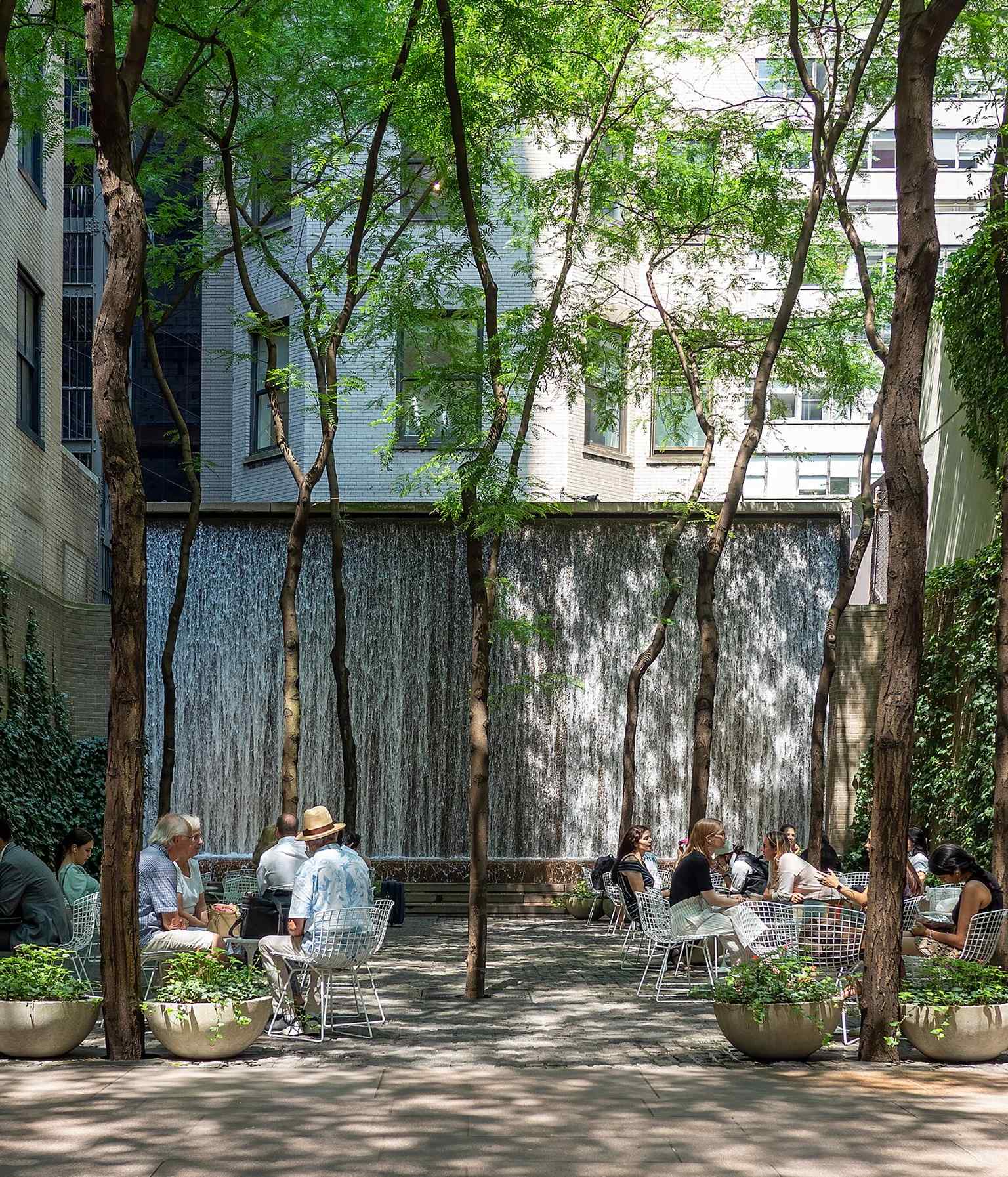
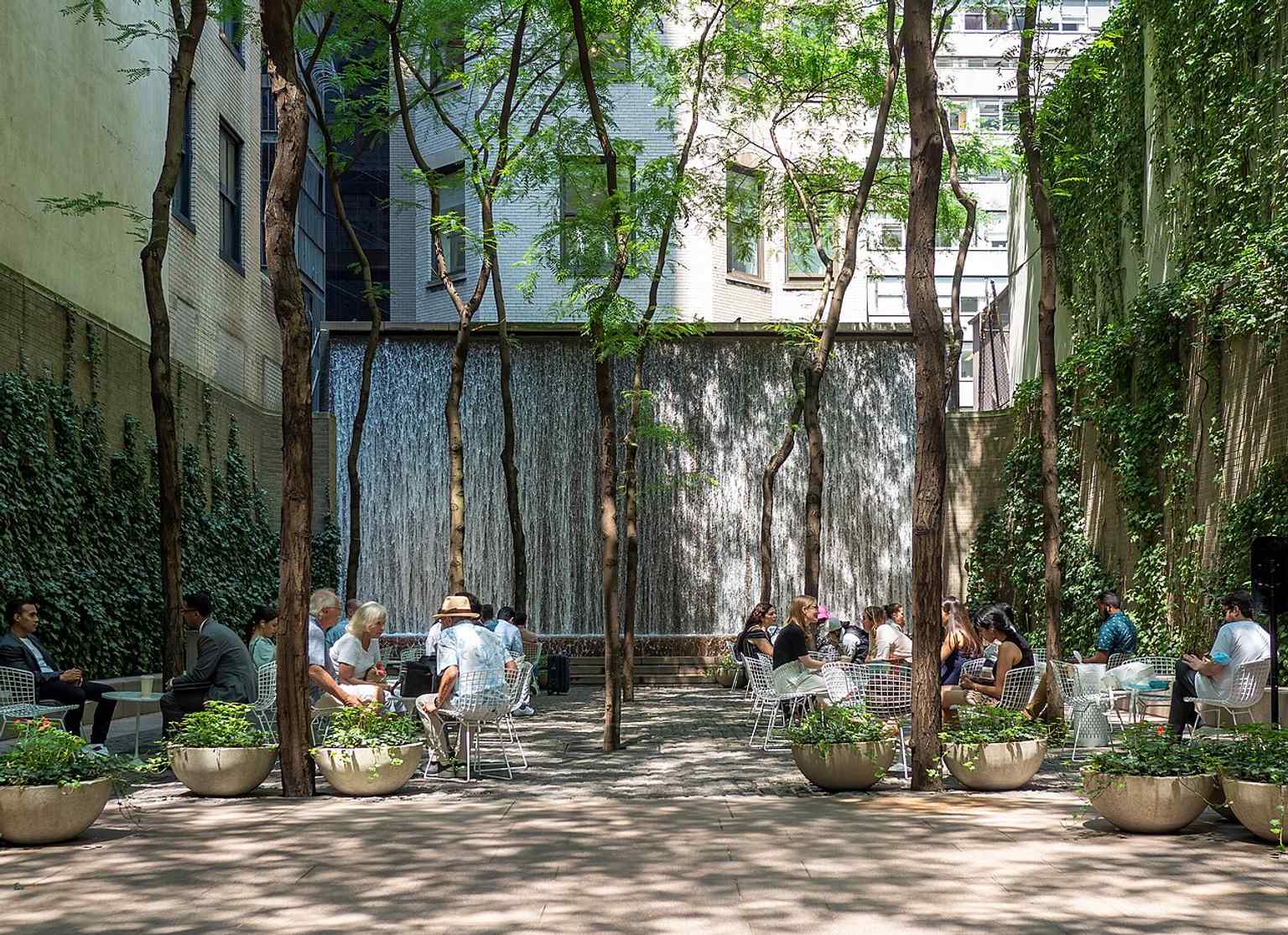
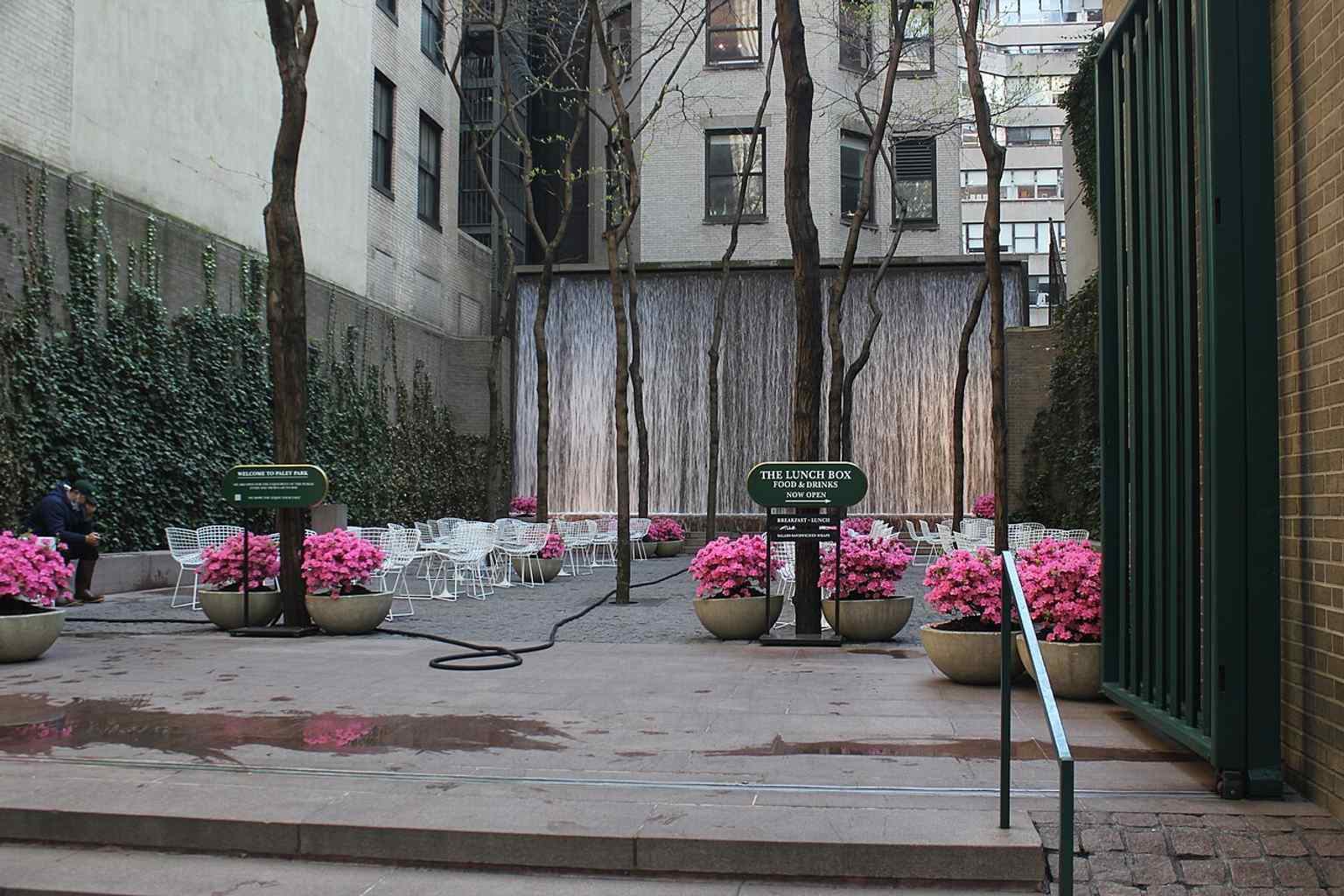
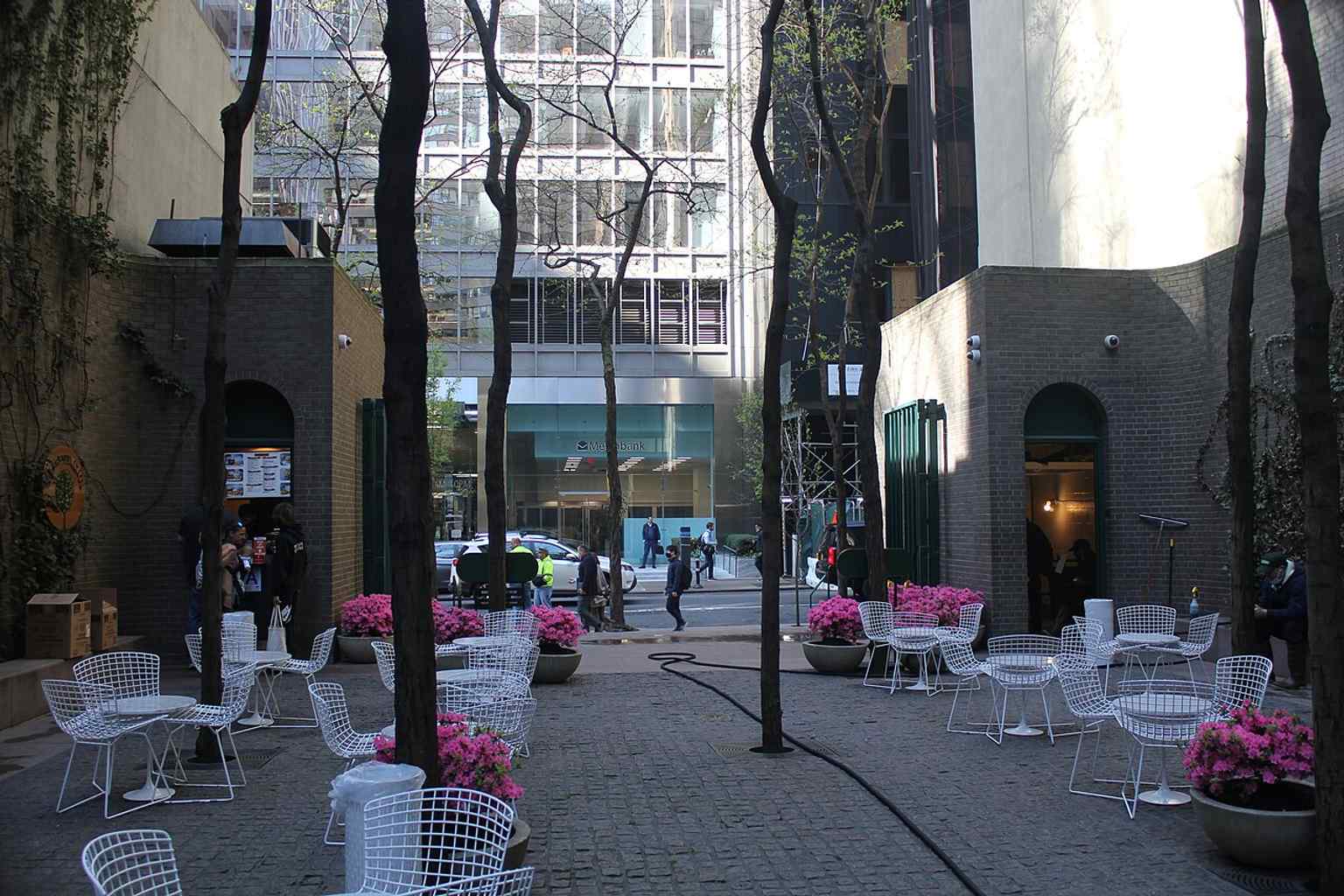
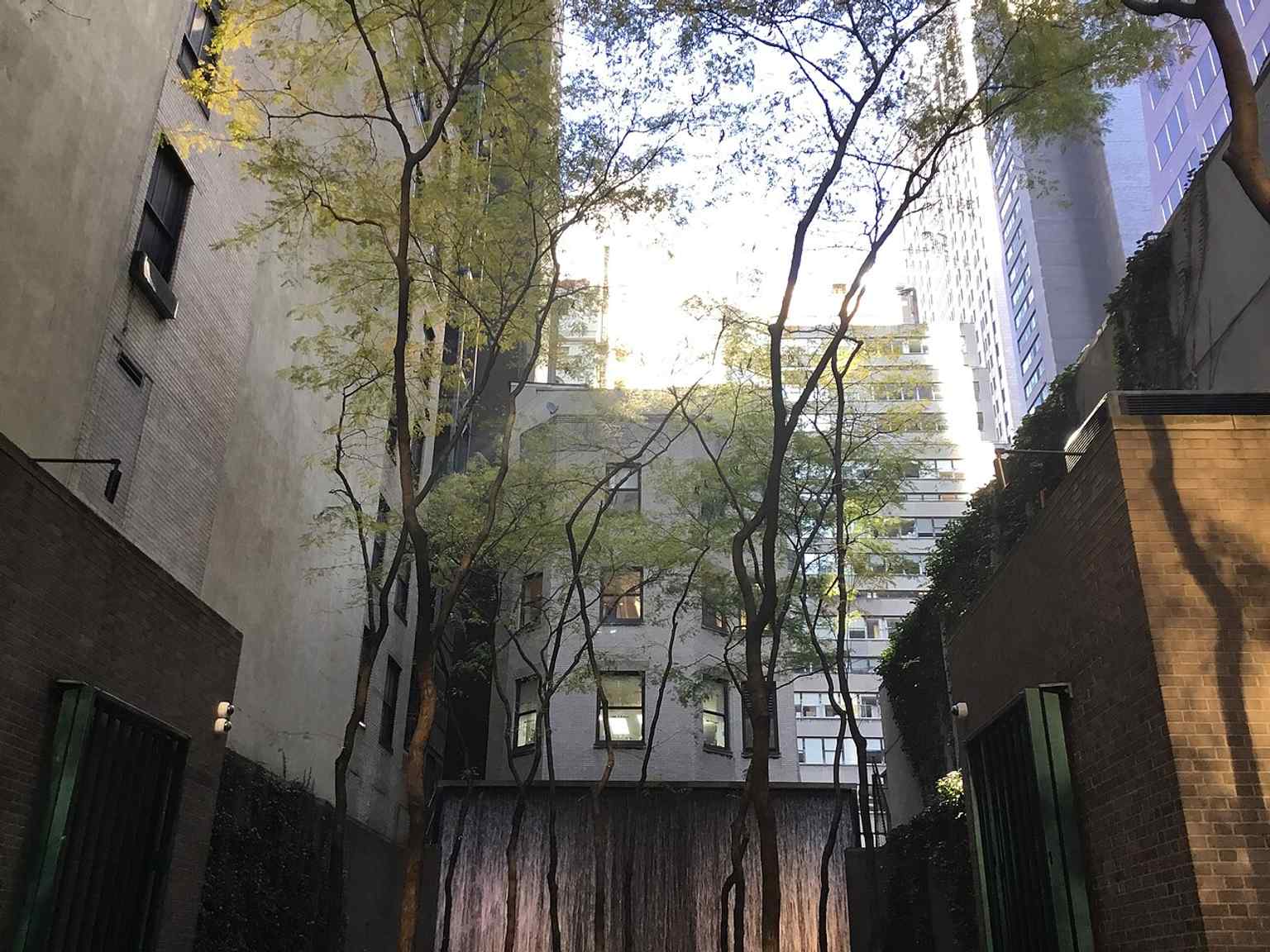
Look for the narrow opening in the street wall: a raised rectangle of rough granite paving framed by ivy-clad side walls, with a tall sheet of water sealing the far end.
Paley Park is tiny by New York standards... about four thousand two hundred square feet... and yet it changed how cities think. When landscape architect Robert Zion proposed the “pocket park” in nineteen sixty-three, he argued that one modest fifty-by-one-hundred-foot lot could offer real relief in Midtown. That sounded almost suspiciously reasonable, which in New York can count as radical.
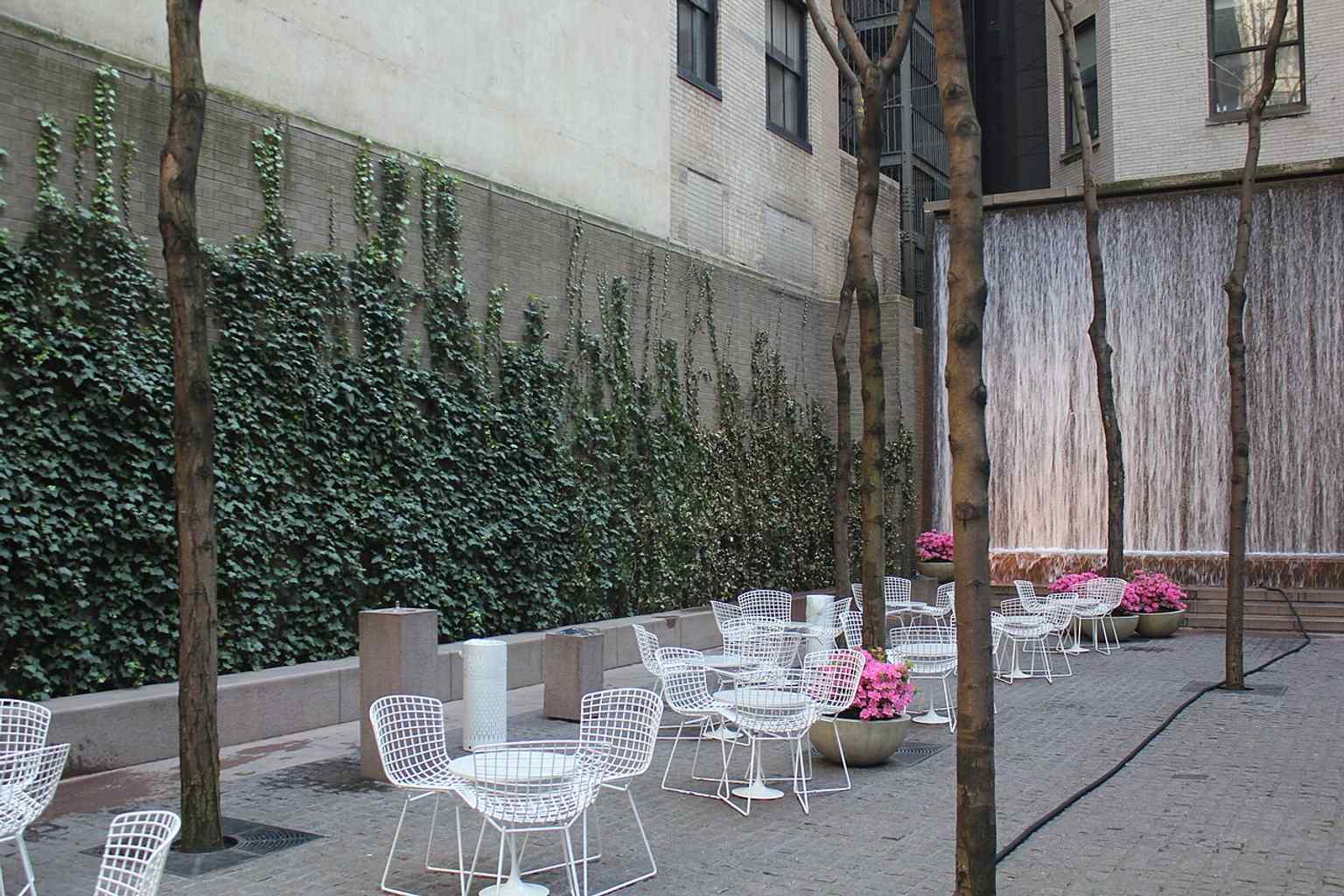
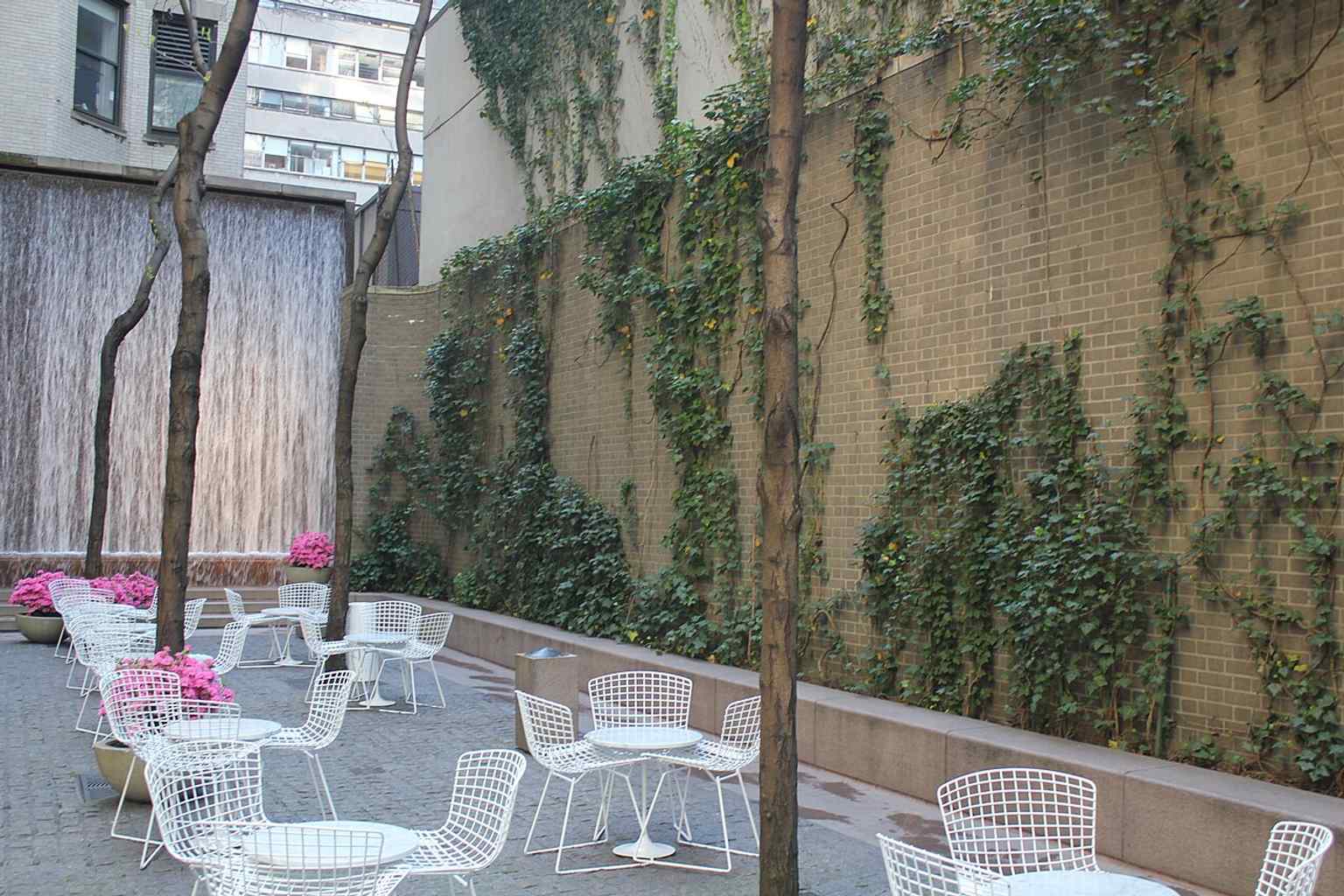
This little refuge opened on the twenty-third of May, nineteen sixty-seven. Zion’s firm, Zion Breen Richardson Associates, shaped it as a deliberate retreat: open to the street, but slightly raised above the sidewalk, with steps and ramps pulling you in; rough granite underfoot; ivy climbing the side walls like what Zion called “vertical lawns”; and a waterfall at the back, twenty feet high, pouring at roughly one thousand eight hundred gallons a minute. It is loud on purpose. At about eighty-seven decibels, the water masks traffic just enough to make the space feel improbably separate from Midtown. That trick helped make this one of the most admired urban spaces in the country.
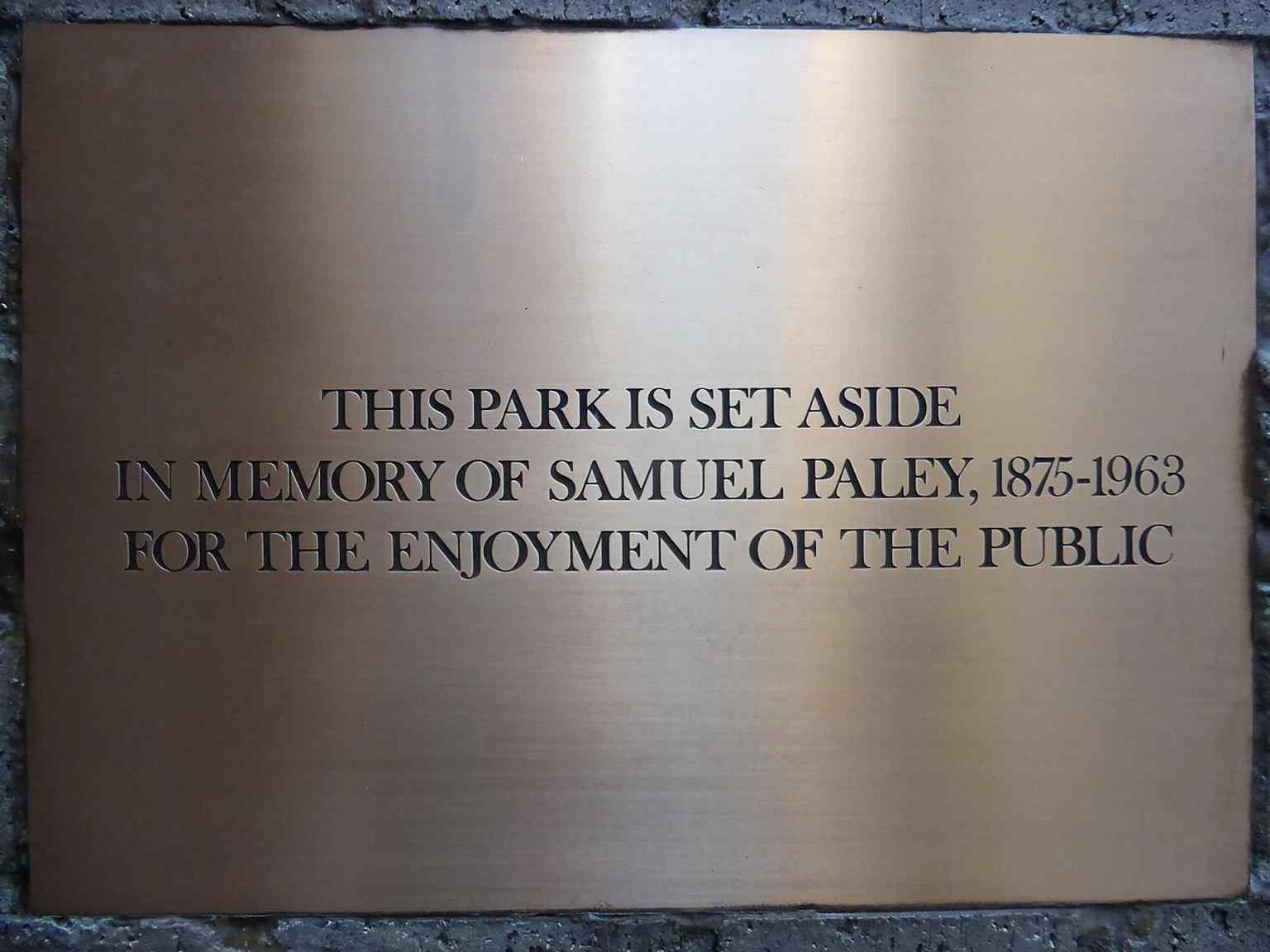
And this is where the story gets more personal. William S. Paley, the broadcasting titan behind C-B-S, did not just finance the park through the William S. Paley Foundation and move on to more glamorous concerns. He named it for his father, Samuel Paley, and treated the place with the attention some people reserve for yachts or racehorses. He checked on it himself. He cared about the refreshment stand so much that he personally tasted hot dogs and insisted they stay both good and affordable. A media baron fussing over snack quality is not the most obvious form of civic virtue... but I’ll take it.
Most tourists never catch the part locals love: Paley sometimes came by and picked up litter himself. That detail tells you nearly everything. This was elite patronage with its sleeves rolled up.
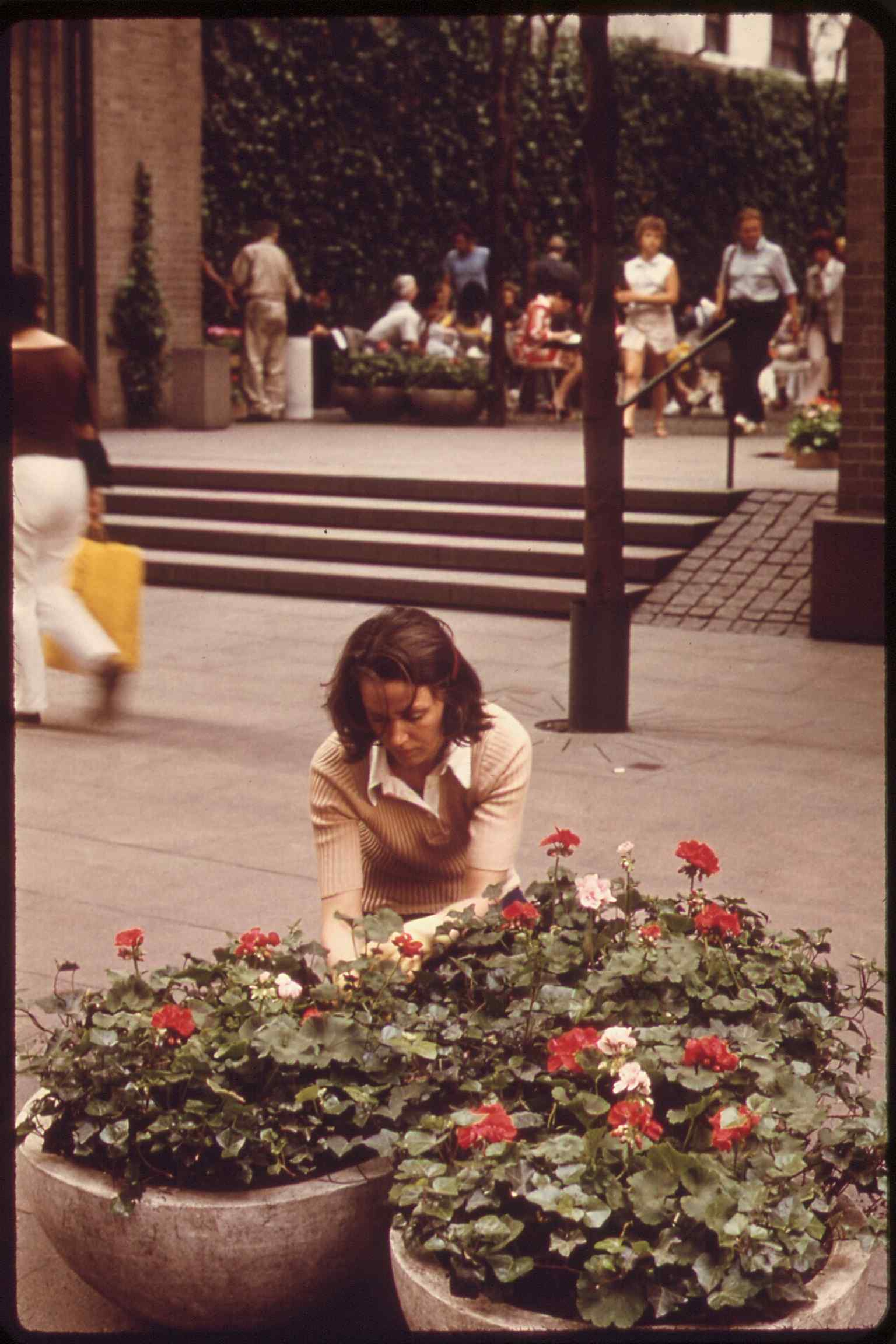
If you want a quick sense of how little and how lasting this place is, take a peek at the before-and-after image in the app.
There’s another quiet revolution here too. The white wire chairs, designed by Harry Bertoia, and the marble tables by Eero Saarinen were here from the beginning. Because the chairs move, people can choose their own distance, angle, and little scrap of territory. Urban observer William H. Whyte loved that. He said movable seating gives people a kind of personal sovereignty... a rare courtesy in Manhattan.
And now for the delicious contrast: before this sanctuary, this address belonged to the Stork Club, one of the most famous celebrity nightspots in New York. It glittered, it gossiped, it excluded. After years of labor conflict, it declined fast, shut in nineteen sixty-five, and Paley bought the building, tore it down in nineteen sixty-six, and replaced a symbol of velvet-rope privilege with a public place anyone could enter. That swap says plenty about this neighborhood’s power structure: sometimes the grand gesture is not building higher, but making room.
As you head to the next stop, give a thought to the ghosts of the Stork Club lingering behind that curtain of water... because the next stop is the Stork Club itself, and you’re already standing on its former stage. The park generally opens daily from eight in the morning to eight in the evening.







.jpg)
.jpg)


