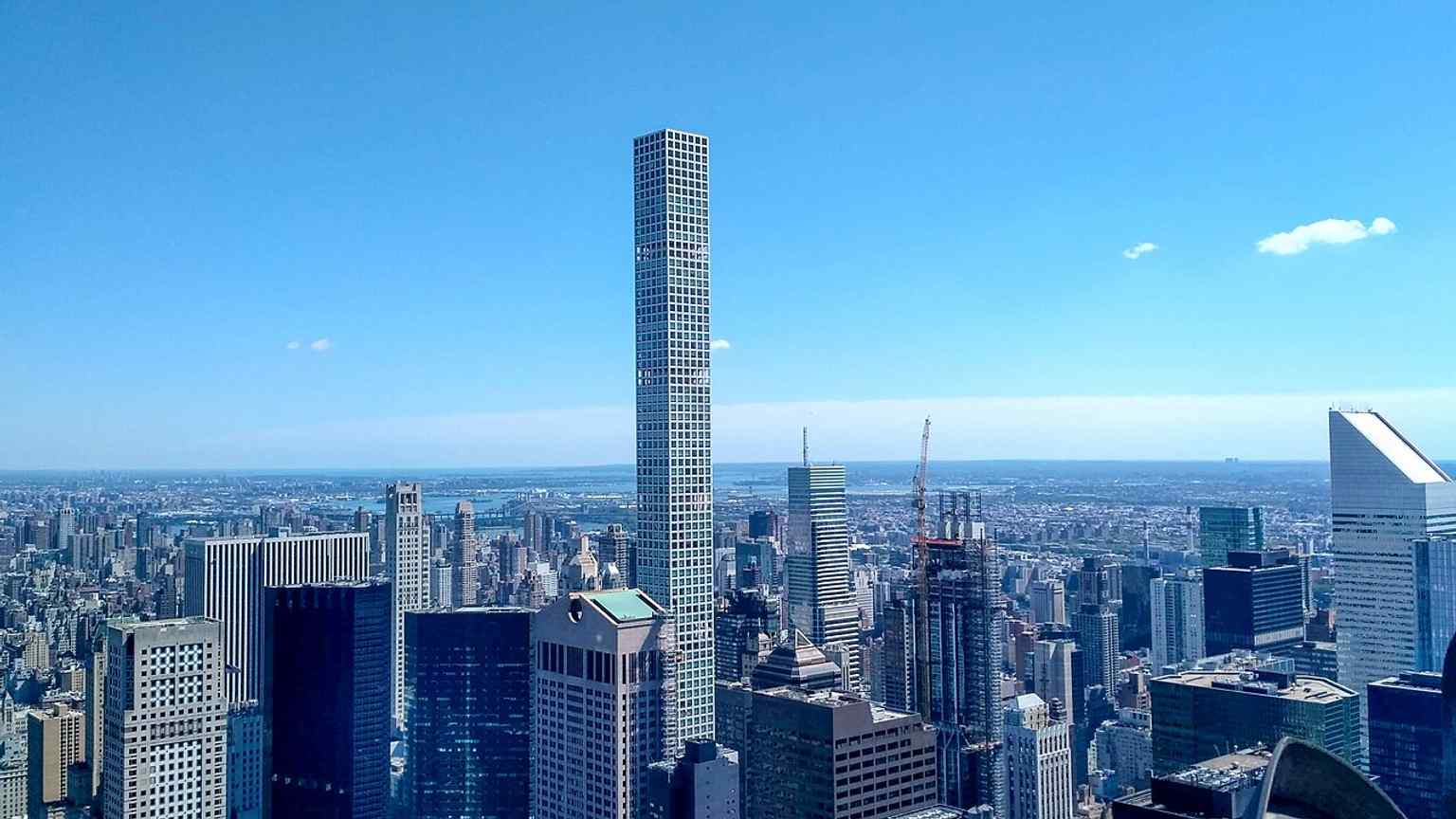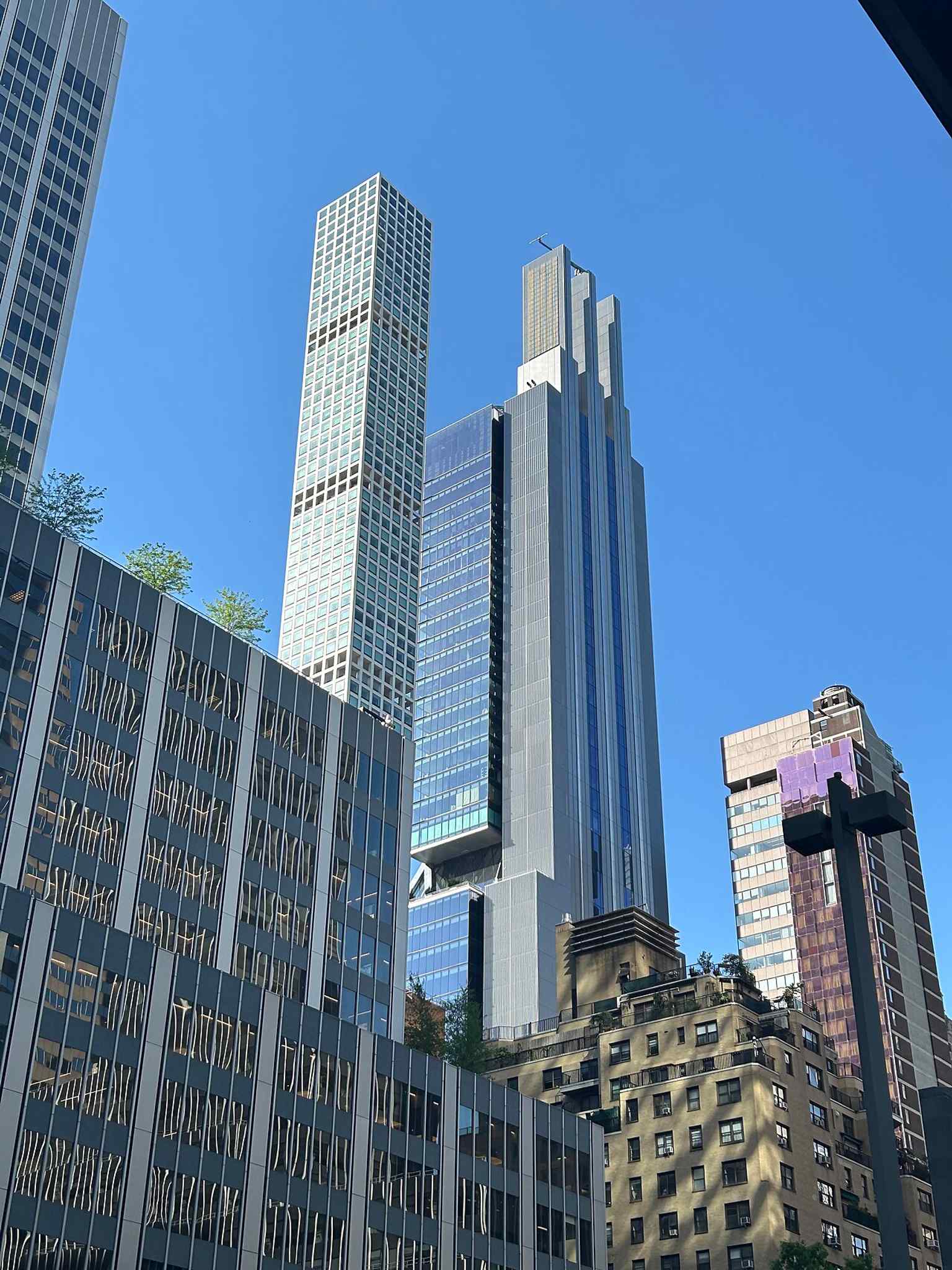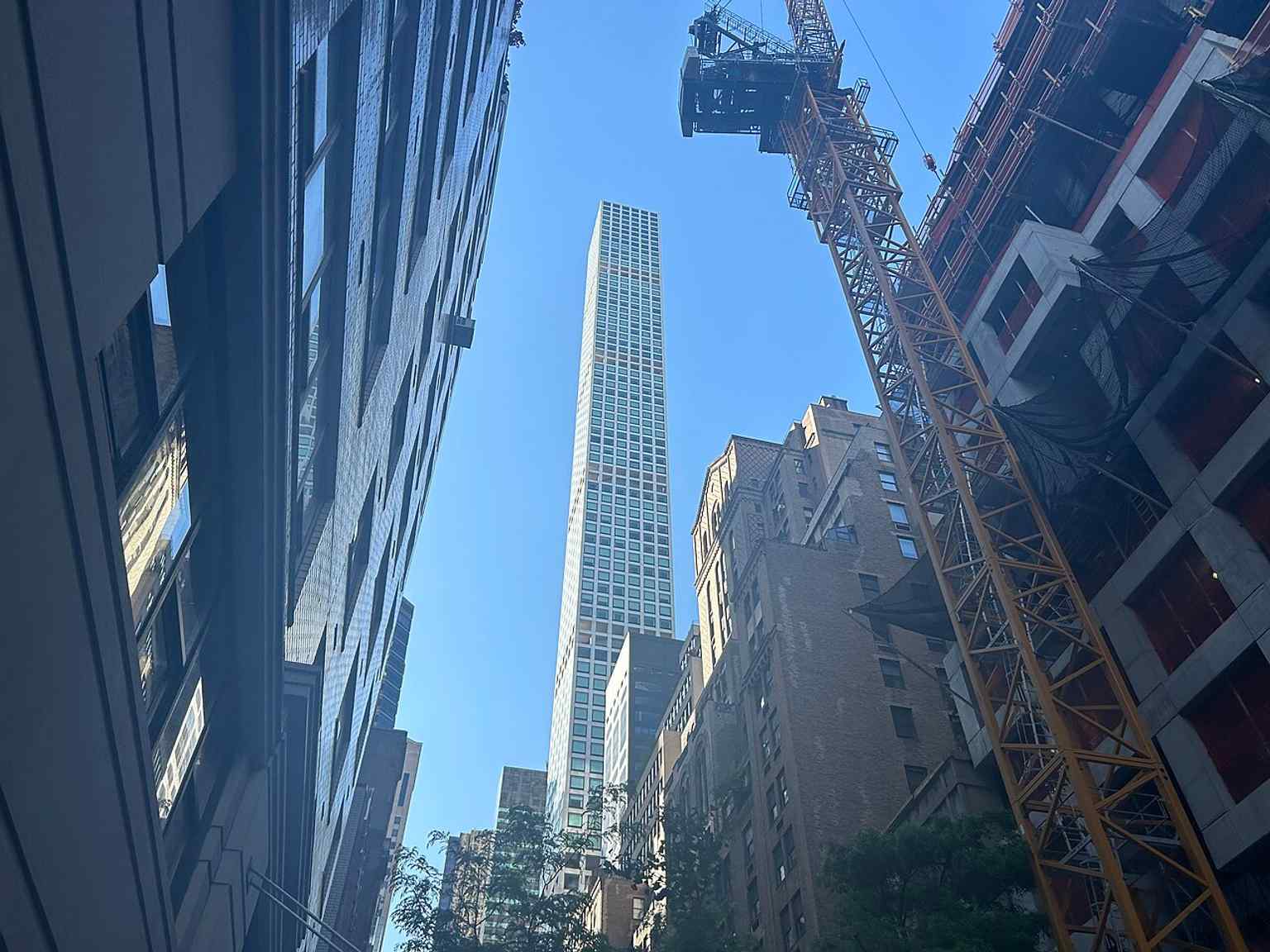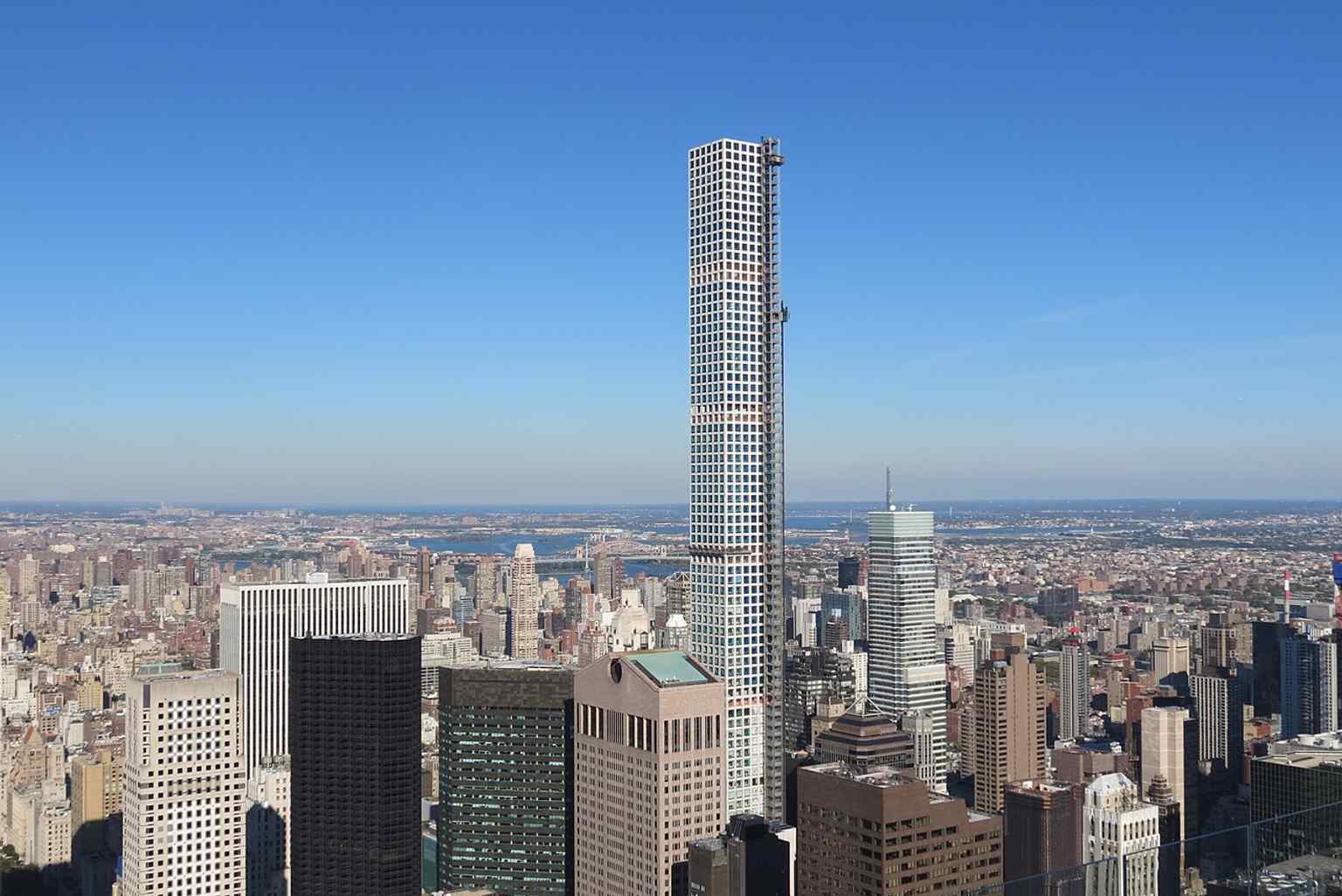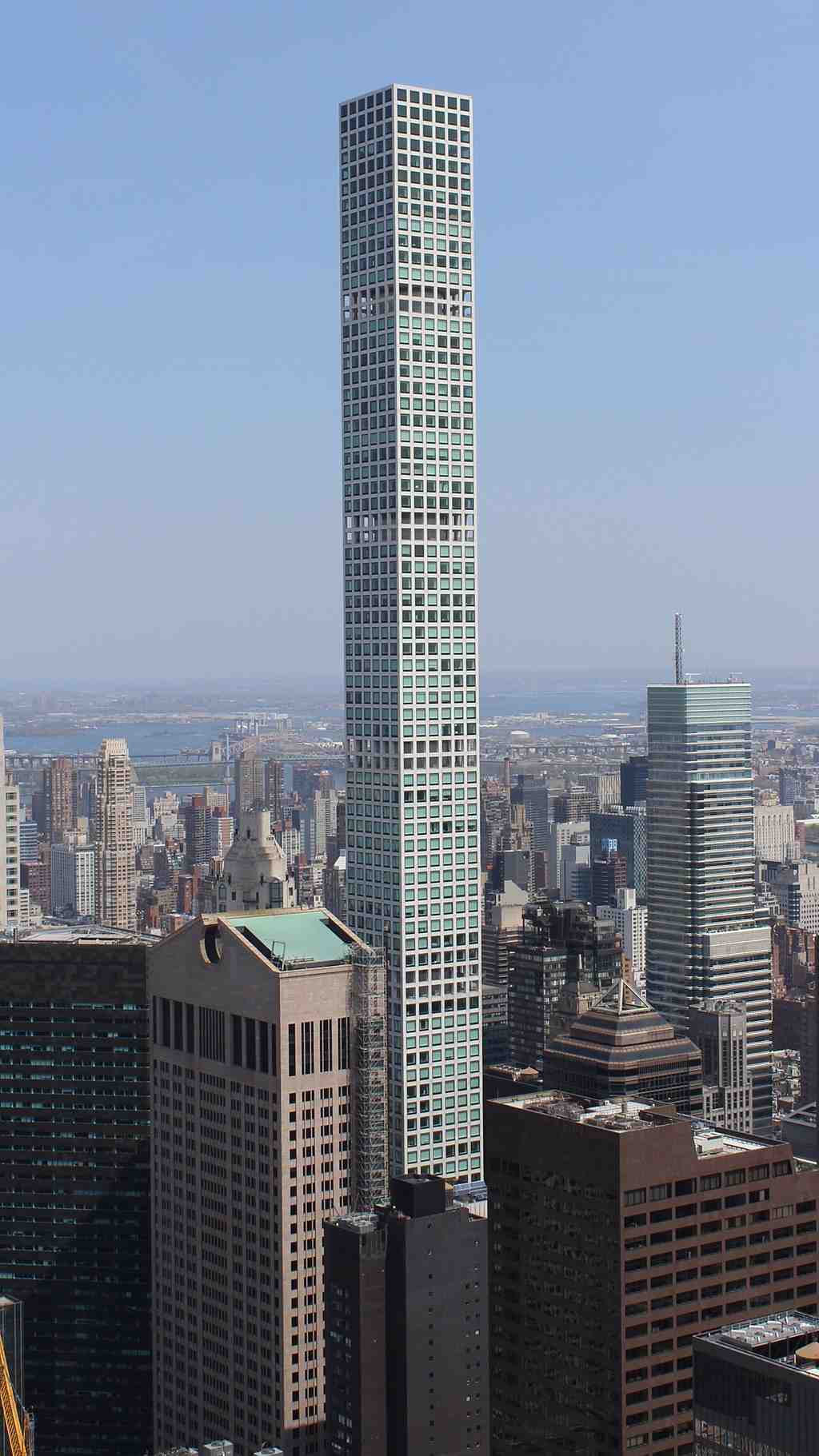
On your right rises a pale white-concrete square shaft, punched with a strict grid of square openings and interrupted by dark double-height gaps that make it look like a colossal sheet of graph paper.
This is four hundred thirty-two Park Avenue, Rafael Viñoly’s nearly absurdly slender residential tower, climbing to one thousand three hundred ninety-six feet. Its height-to-width ratio is about fifteen to one, which places it among the most slender towers on earth. New Yorkers call buildings like this pencil towers... a tidy nickname for something that took a rather untidy amount of money and engineering to pull off.
Viñoly and developer Harry Macklowe wanted a form so pure it would read almost as geometry rather than decoration: a square plan, ninety-three feet on each side, repeated again and again into the sky. The exterior is not curtain-wall glass but poured-in-place concrete made with white Portland cement, laid out as a rigid lattice. Each face has a regular pattern of ten-foot openings, and every twelve floors the building breaks into open mechanical levels - service floors for equipment, left partly open so wind can pass through instead of pushing the whole tower harder. If those gaps are tricky to read from down here, the diagram in the app makes them very clear.
The engineering below the elegance is serious business. Roughly sixty rock anchors reach down into bedrock to steady the foundation. Near the top sit tuned mass dampers - giant counterweights that move against the sway, like a building quietly correcting its own balance. Engineers even built a model of Midtown to test how wind would hit this razor-thin form. When the tower topped out in twenty fourteen and opened in twenty fifteen, it became the tallest residential building in the world.
If you want a quick sense of how abruptly this thing changed the skyline, check the comparison in the app.
But purity on paper and life in a real building are not the same thing. The site once held the Drake Hotel, a lively old Manhattan address where Led Zeppelin lost two hundred three thousand dollars in a still-unsolved theft in nineteen seventy-three, and where the basement club Shepheard’s handed out instructions for dances like the Frug and the Watusi. In place of that social swirl came a vertical fortress of wealth: one hundred twenty-five condominiums, fifteen-foot ceilings, a private restaurant, pool, library, and units selling from roughly ten and a half million dollars to as high as ninety million.
Then reality arrived with a toolbox. Residents later complained about leaks, stuck elevators, loud creaking, whistling wind, and mechanical failures. One lawsuit claimed more than one thousand five hundred defects. Even the all-white facade became part of the problem: the developers rejected a darker, stronger concrete mix because it would spoil the desired whiteness, and the finished concrete later showed cracking. Turns out building a minimalist shrine for billionaires is still subject to gravity, water, wind, and lawyers.
The building is active around the clock, though access is naturally a bit selective. When you’re ready, continue to the Consulate General of Sweden, about a three-minute walk away - a far quieter building, and one with a genuinely heroic past.