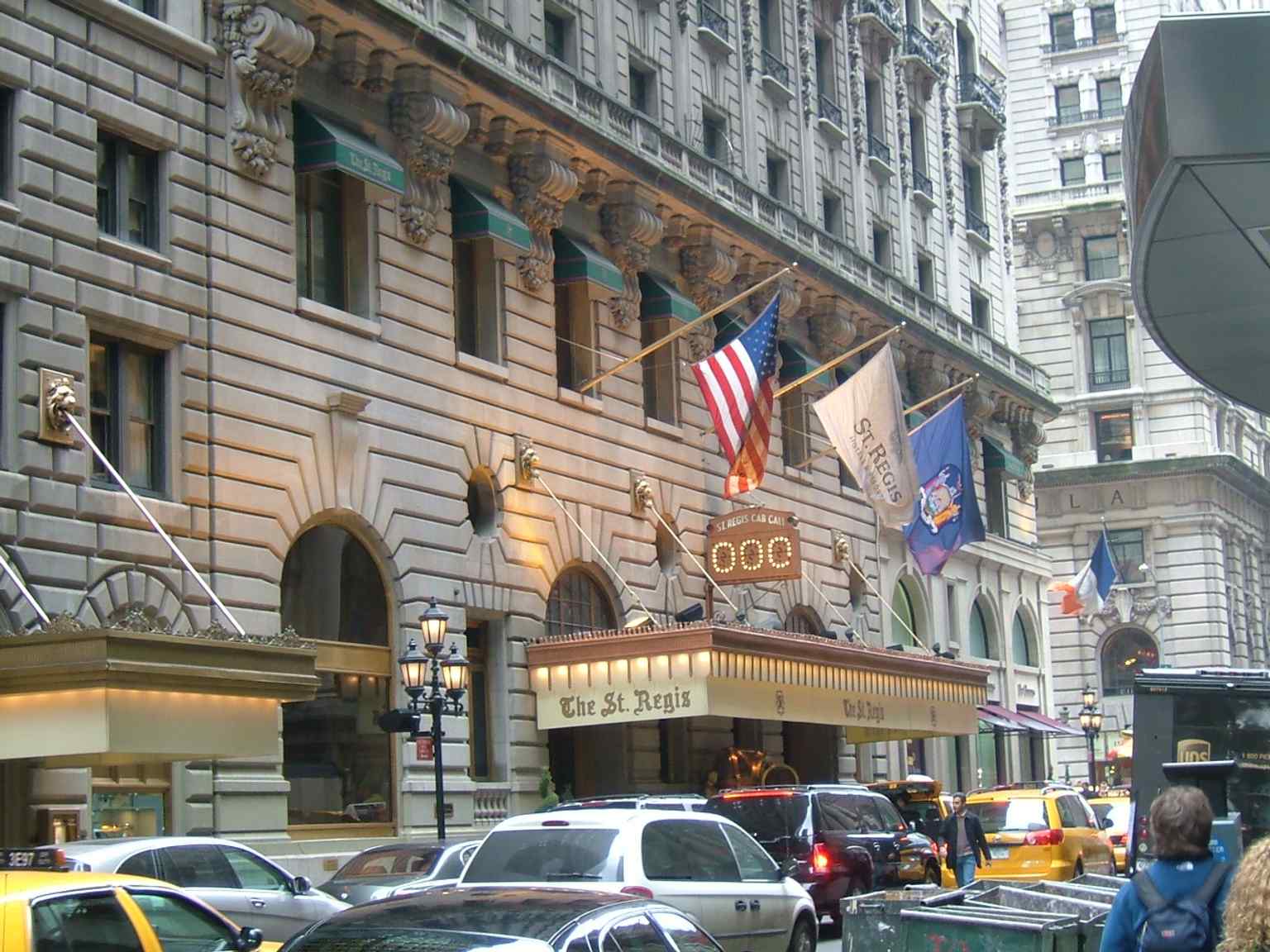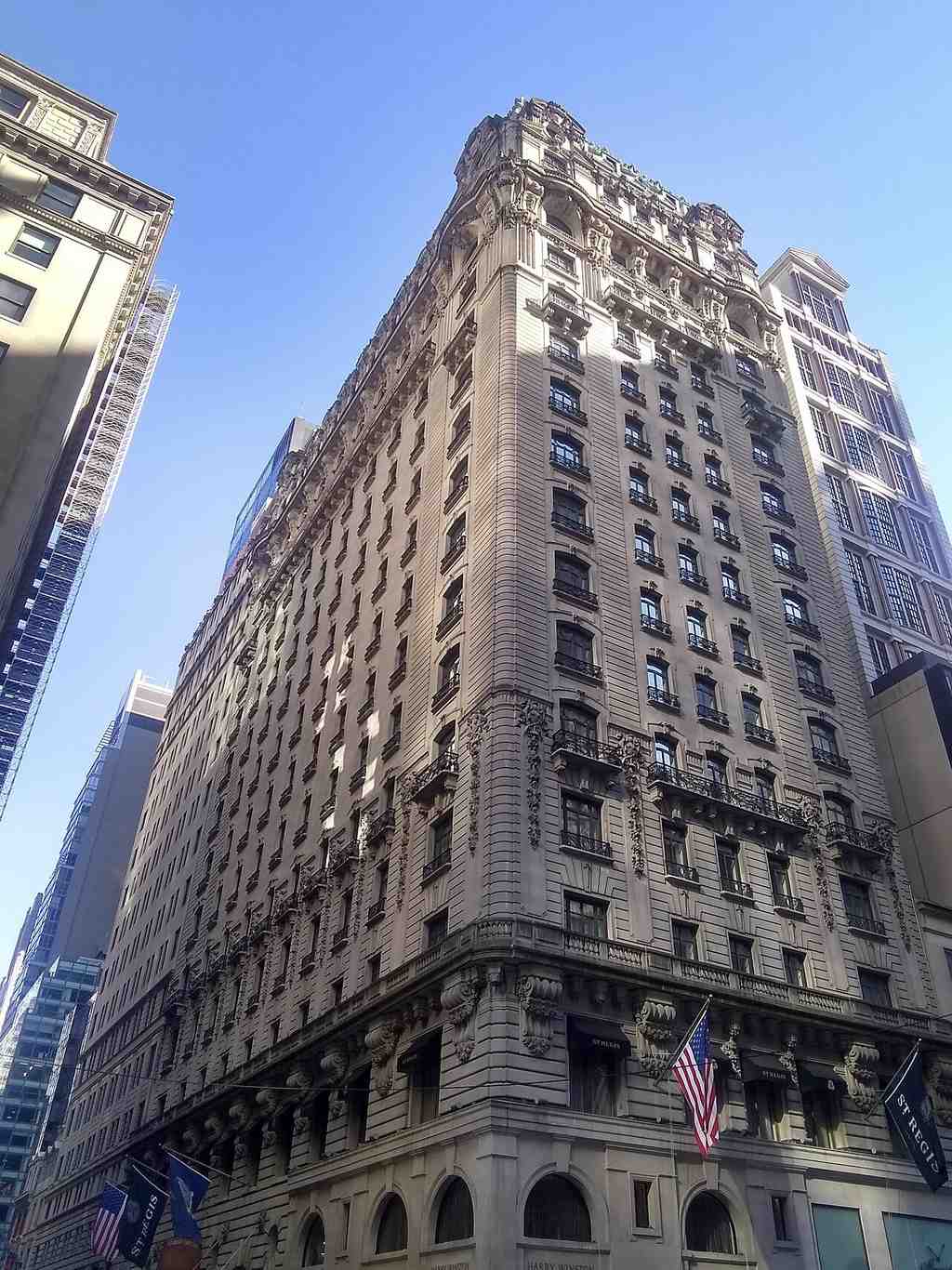
On your right, the St. Regis rises in pale limestone with a rounded corner, tall rows of arched windows, and a dark mansard roof that gives the whole thing a distinctly Parisian crown.
This is Astor's Ambition in stone. John Jacob Astor the Fourth could have built himself another mansion here, but around nineteen hundred he saw Fifth Avenue changing from a row of private houses into a corridor of money on display, and he decided to do something more aggressive: build the most refined hotel in New York... and, not coincidentally, outshine his cousin’s Waldorf-Astoria.
He hired Trowbridge and Livingston, who gave him an eighteen-story palace in the Beaux-Arts style - a French-inspired way of designing that loves symmetry, carved ornament, and a little theatrical swagger. Look at how the facade behaves like a classical column: a heavy base below, a long middle shaft, and then a richly dressed top under that roof. Astor wanted elegance, yes, but he also wanted modern power hidden inside it. Beneath your feet, the hotel sank down through three basement levels packed with machinery. When it opened in nineteen hundred and four, it had filtered fresh air, individual thermostats in every room, synchronized clocks, and even a central vacuum system. Dust, apparently, was not invited.
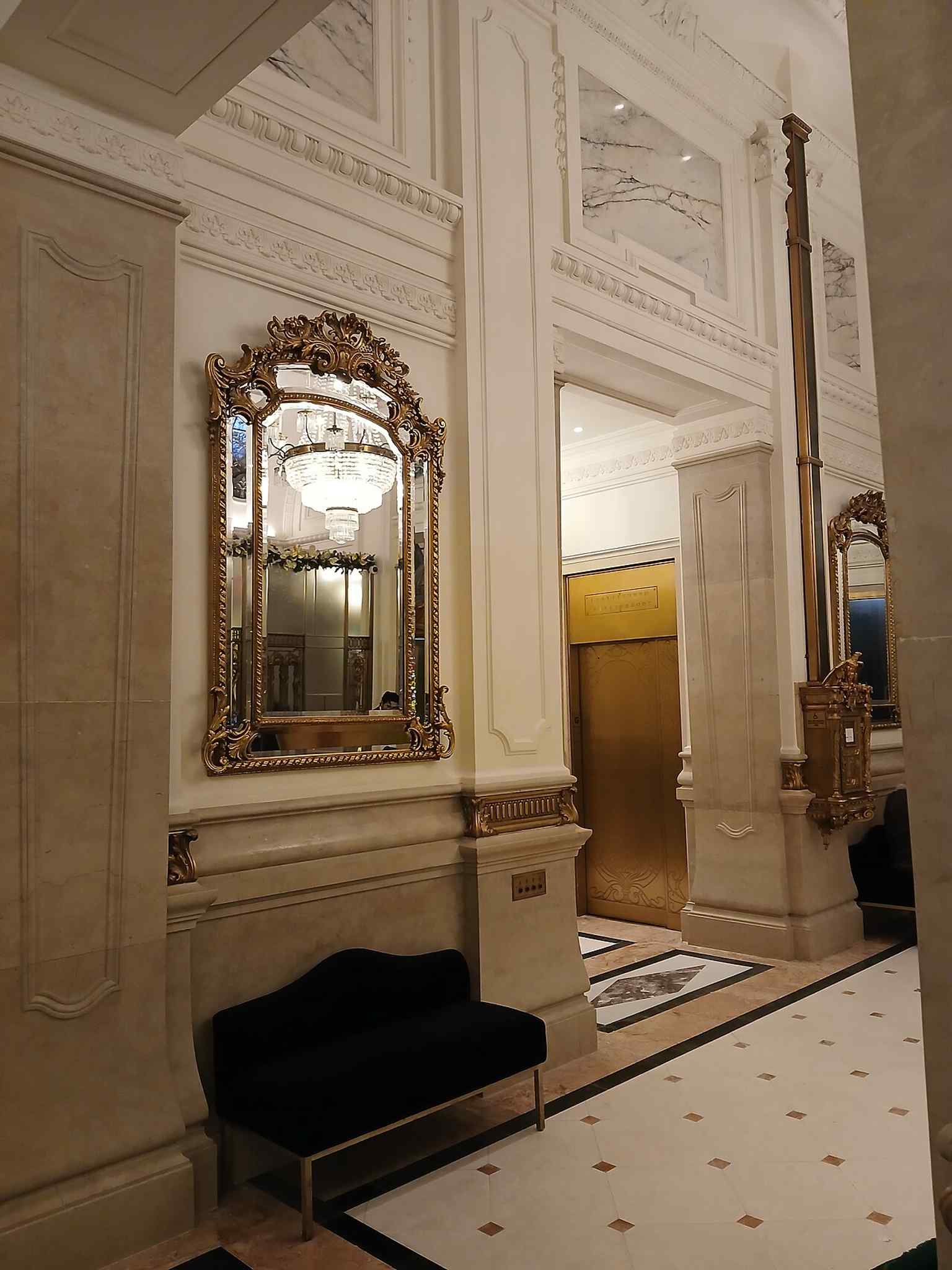
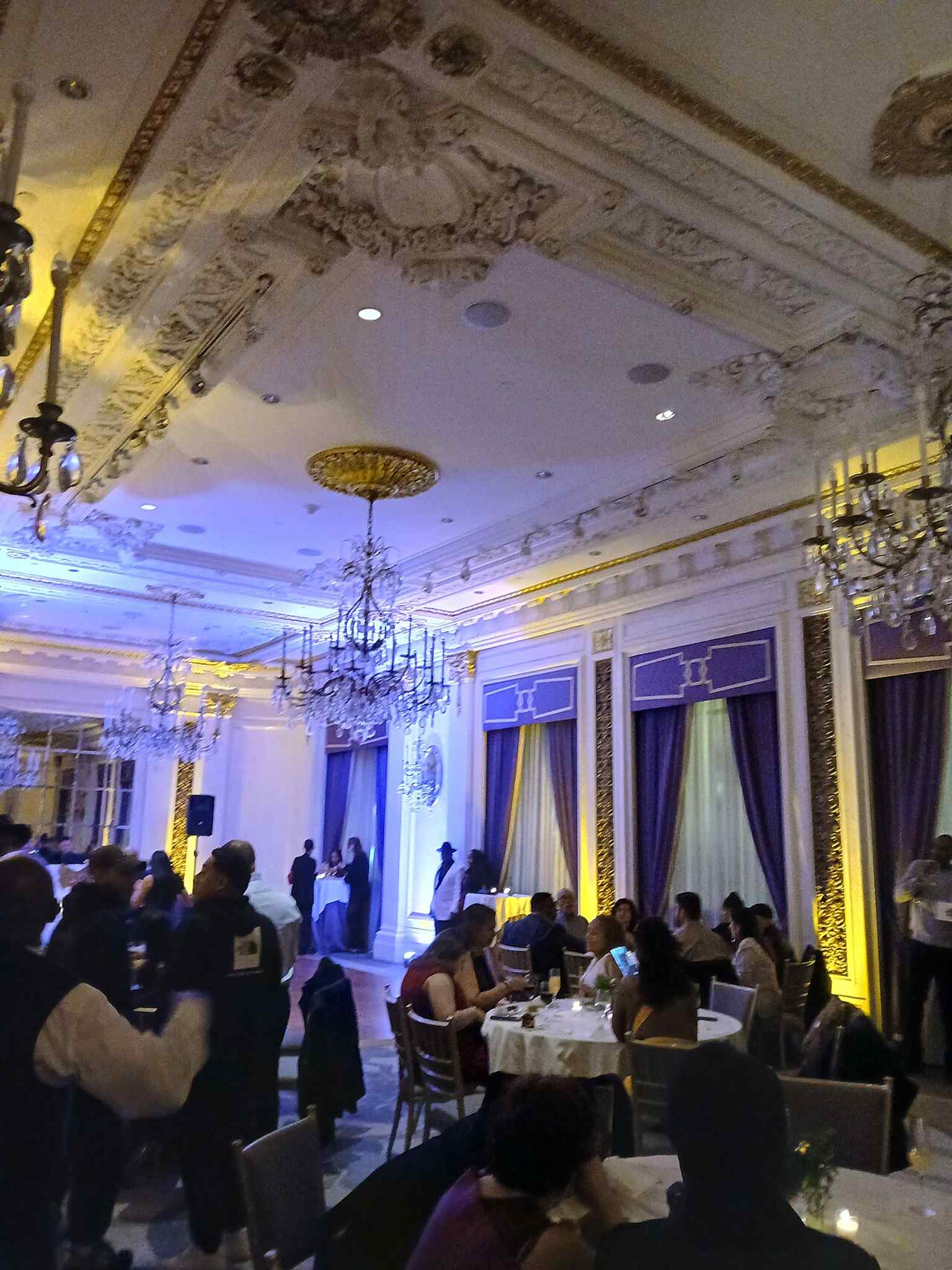
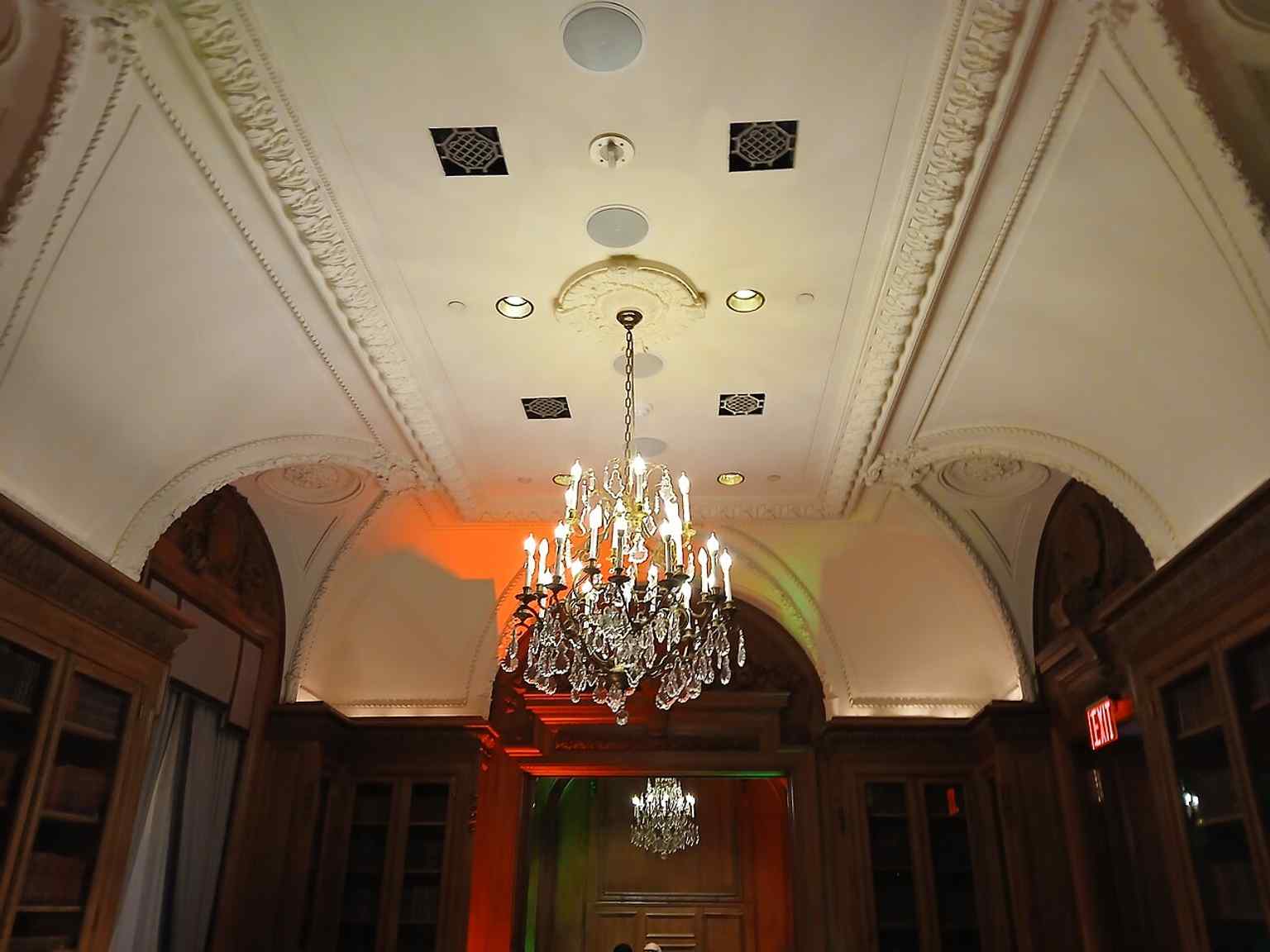
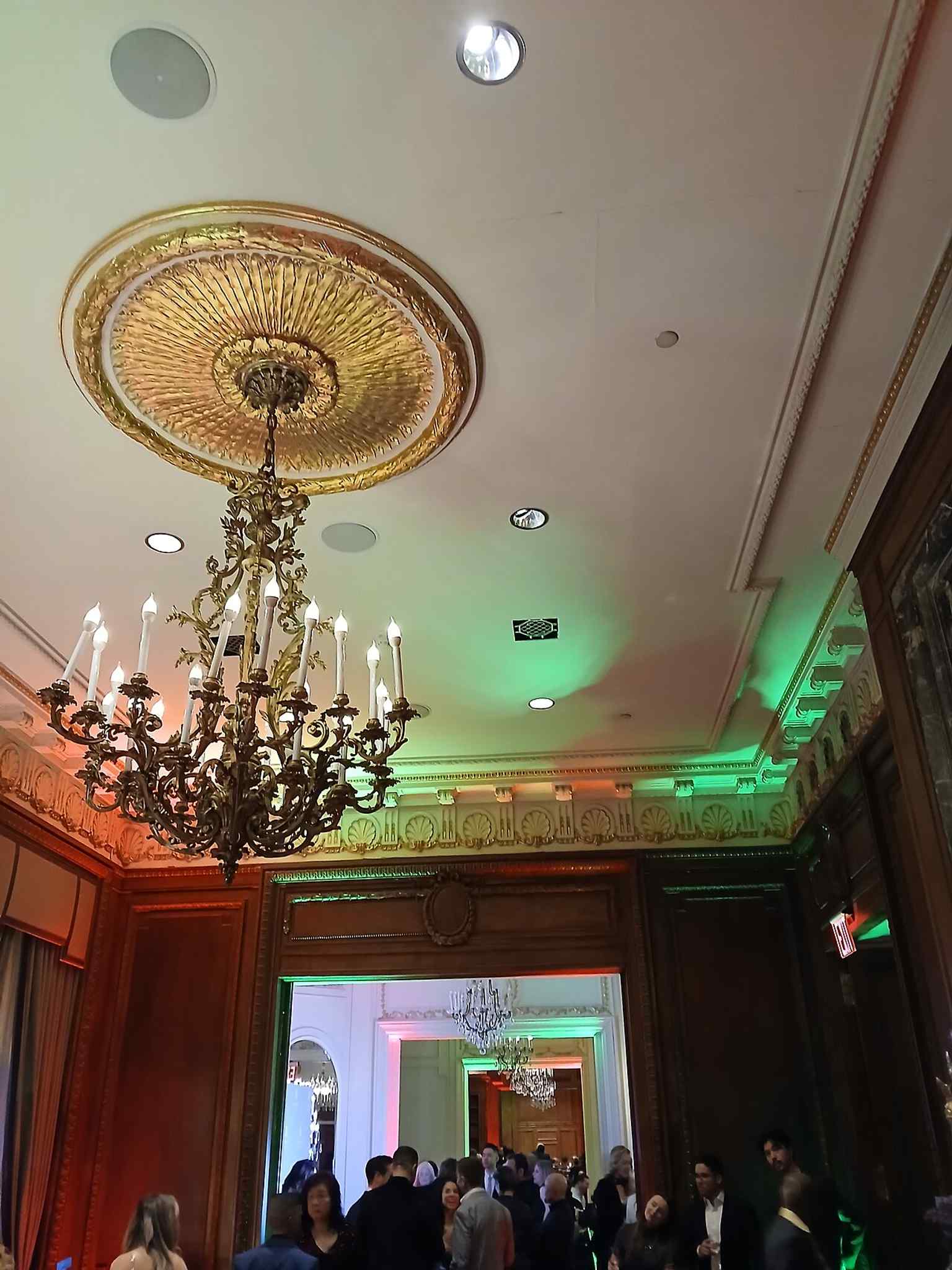
The whole thing cost about five and a half million dollars to create, roughly the equivalent of around two hundred million today. Astor spent lavishly on marble, bronze, oak paneling, chandeliers, and a first floor full of public rooms: restaurant, café, palm court, and hotel office. Upstairs came the banquet hall, ballroom, library, and private dining rooms. It was luxury engineered like a machine.
Not everyone applauded. The neighbors were horrified. During excavation, workers blasted down to bedrock for deep foundations, and nearby residents complained that china fell from shelves, plaster cracked, sewage pipes burst, and one marble block even smashed through a neighbor’s roof. William Rockefeller bought nearby property partly to block expansion. Critics called the hotel a “social crime,” which is a wonderfully New York way of saying, “We object to strangers with luggage.”
Then came the liquor-license fight. Because a church stood nearby, local opposition threatened the bar before the first cocktail had a chance. So Rudolph Haan, the hotel’s operator, pulled a neat bit of urban chess: he moved the main entrance from Fifth Avenue over to Fifty-fifth Street, just far enough away to satisfy the law. If you open the app image of the Fifty-fifth Street facade, you’re looking at an entrance born from that fight.
And that may be the most revealing thing about the St. Regis: all this limestone grace rests on competition, legal maneuvering, and immense private wealth turned into public splendor. If you peek at the comparison in the app, you can watch this corner hold its pose while the rest of Manhattan reinvents itself around it.
In about one minute, we’ll head to Fifth Avenue Presbyterian Church - the church that helped force this hotel to turn its face toward Fifty-fifth Street, and a place where New York’s arguments over wealth, morality, and care for strangers became much more public.