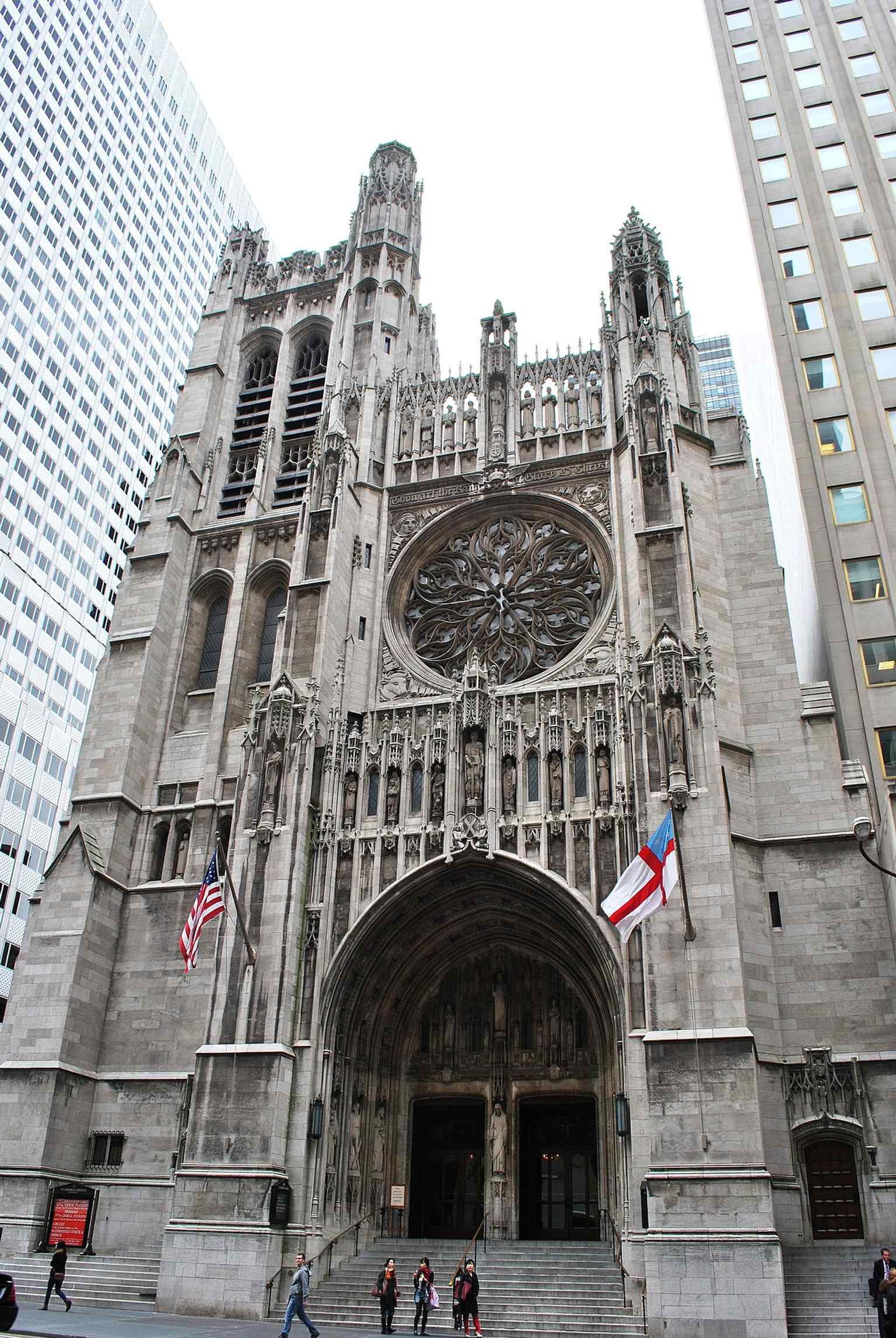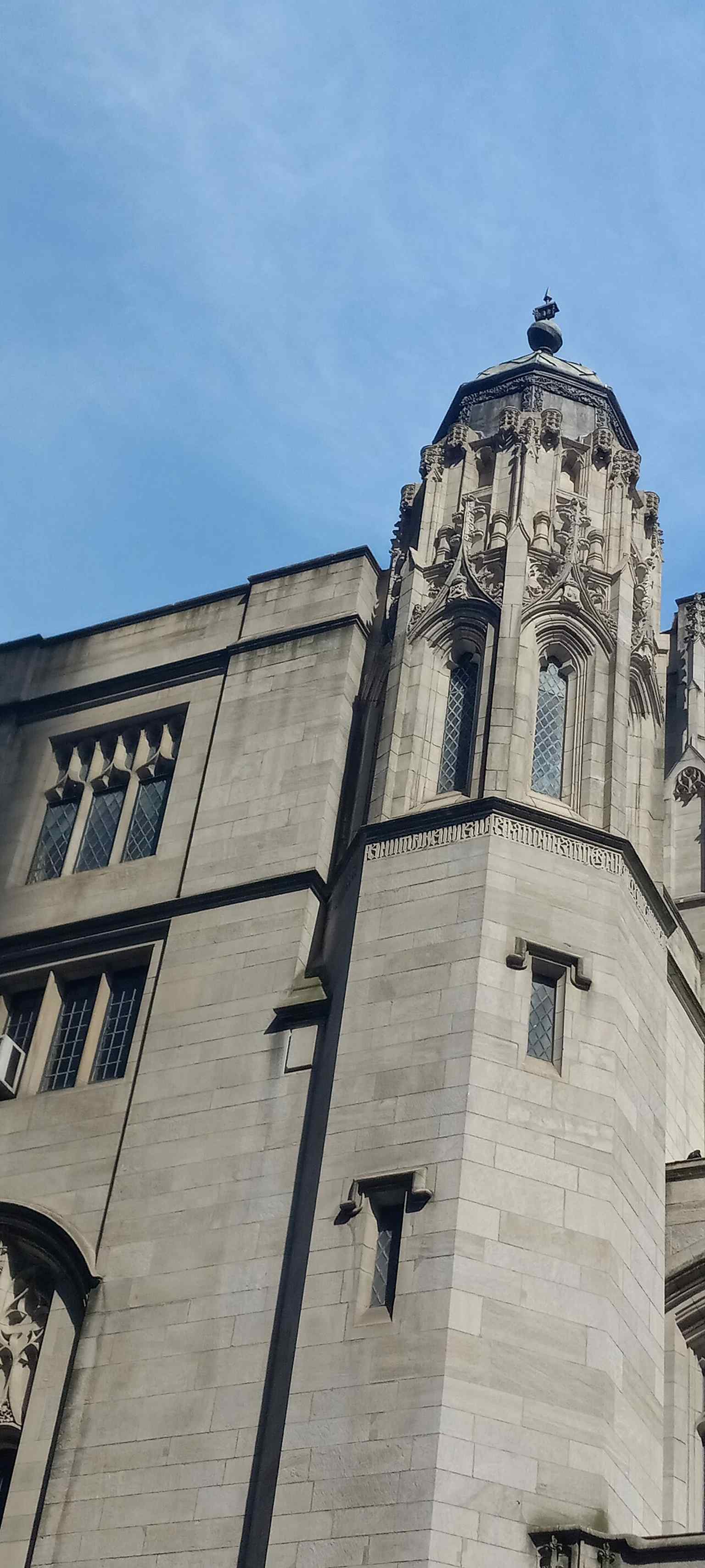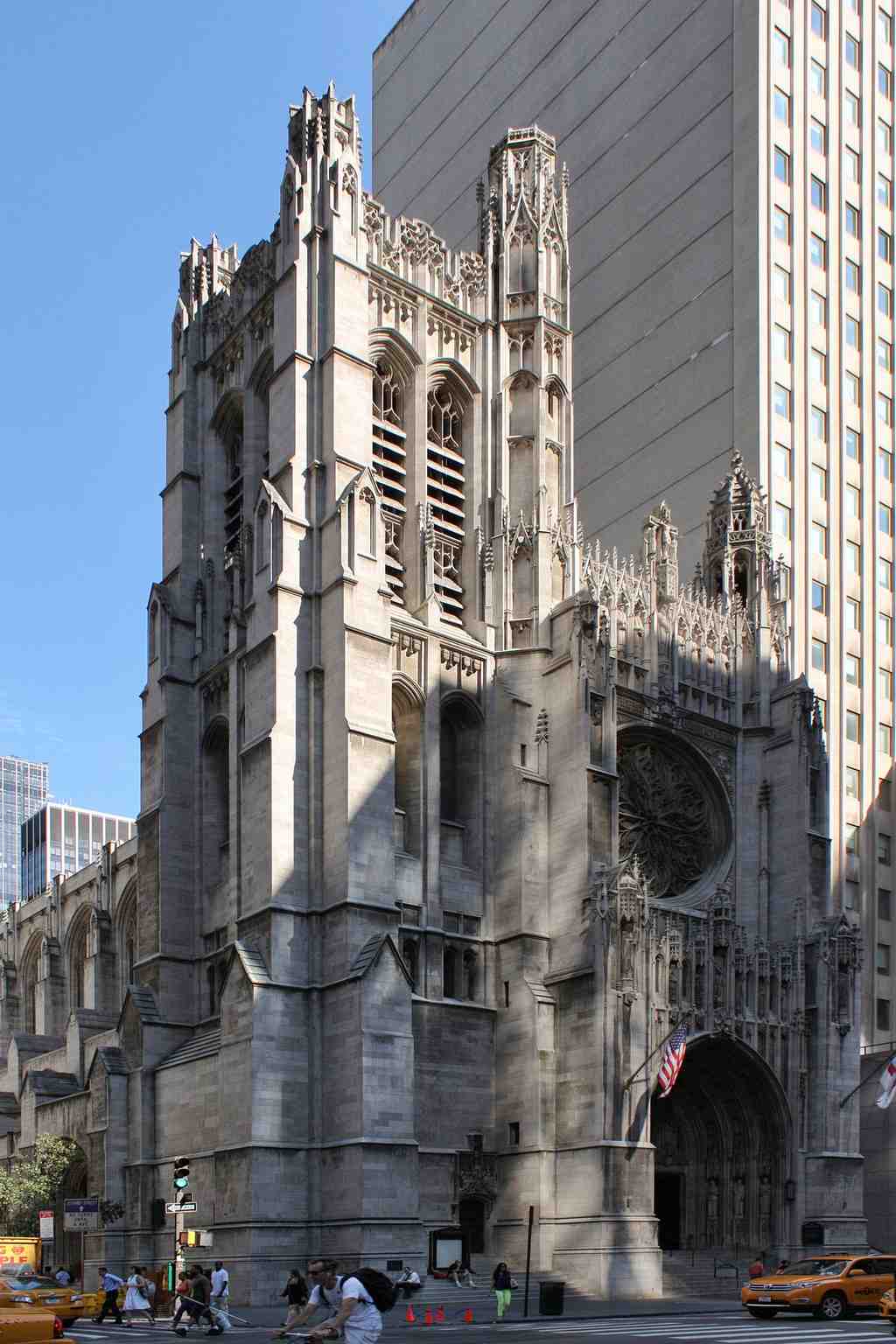
On your left rises a pale limestone church with a great round rose window, a square corner tower, and a façade crowded with carved saints.
Saint Thomas has stood on this Fifth Avenue corner as a kind of stubborn act of faith. The parish began in the eighteen twenties downtown on Broadway and Houston, moved here in the age of mansions, lost an earlier church to a devastating fire in nineteen hundred and five, and then chose to remain when many wealthy congregations drifted farther uptown. The rector, Ernest Stires, insisted this corner still mattered. That decision gave Fifth Avenue a church with the scale of a cathedral and the discipline of a parish.
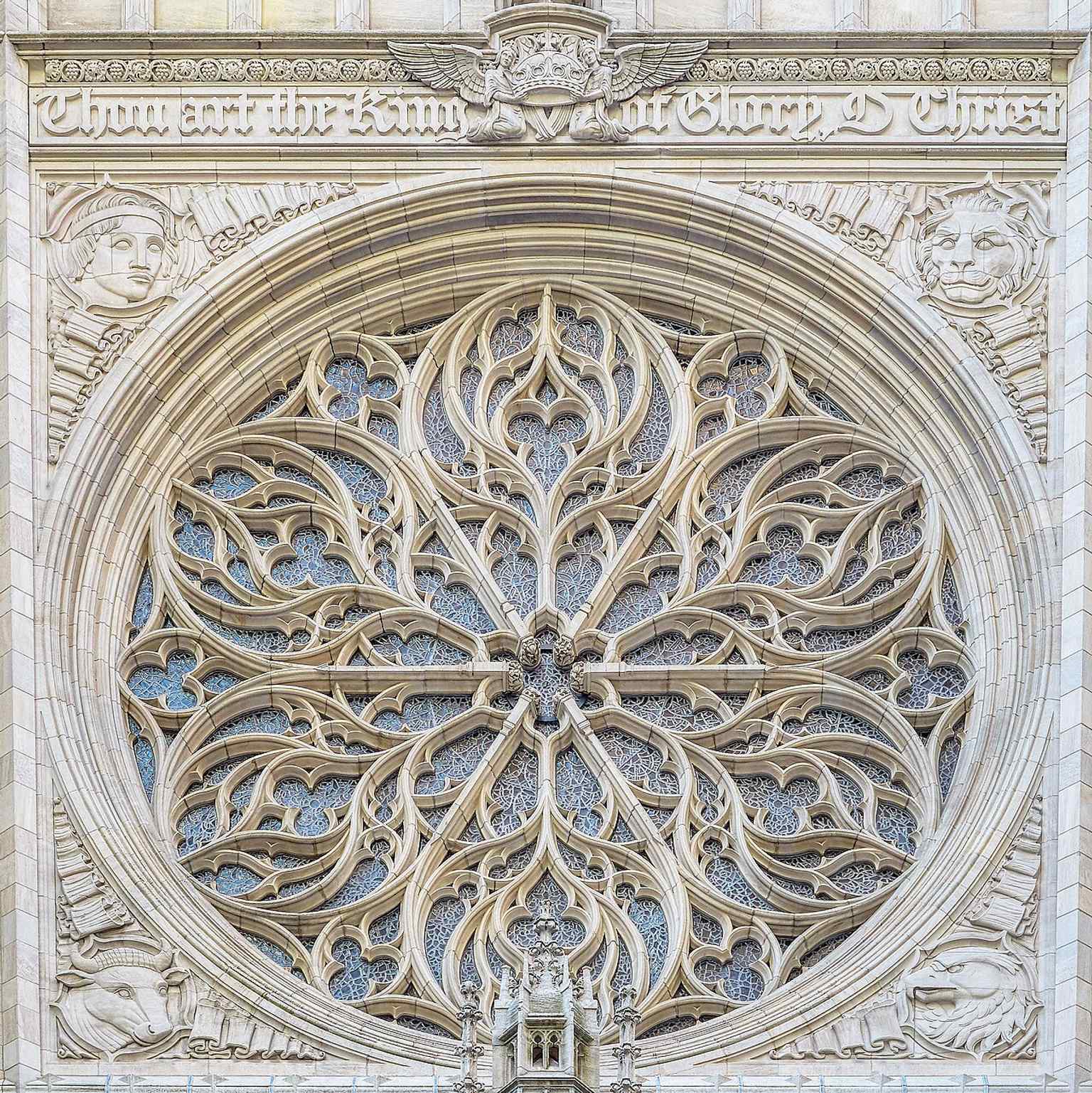
What you see now opened in nineteen thirteen, the fourth home of the congregation, designed by Ralph Adams Cram and Bertram Grosvenor Goodhue in French High Gothic Revival, meaning they borrowed the soaring language of medieval cathedrals... pointed arches, sculpted portals, and that commanding rose window. In fact, Saint Thomas became the last and most fully unified work of Cram and Goodhue before their partnership broke apart. Even great architects, it turns out, can sing in harmony only so long.
There is a quieter rescue story behind all this grandeur. When the old church burned, the first alarm came from the rectory housekeeper, Mrs. Sandsbach, who ran into the street screaming for help. A nearby policeman, Thomas Hewitt, pulled the alarm. By morning, stones had shattered and crashed onto neighboring houses, but the altar cross survived the fire and the flood of hoses. That cross still rests on the altar inside, a small survivor in a very large room.
And music is the room’s living heartbeat. In nineteen thirteen, the church invited the English organist T. Tertius Noble from York Minster to come to New York. Noble agreed on one condition: create a residential choir school for the boys, or no deal. A modest little request. The vestry said yes, and in nineteen nineteen Saint Thomas Choir School was born. It remains the only church-affiliated residential choir school in the United States, and one of the very few places left in the world where this Anglican tradition survives intact. The choir of men and boys sings most Sundays, tours internationally, and has performed for Queen Elizabeth the Second and President Gerald Ford, premiered Andrew Lloyd Webber’s Requiem, and even turned up on Carly Simon’s “Let the River Run.” Not bad for an institution built around scales, prayer books, and very early rehearsals.
This church also adapted without surrendering its character. Acoustics expert Wallace Sabine helped shape the interior so sermons would sound clear in a Gothic space that might otherwise blur every word into holy fog. More recently, a gift in twenty twenty funded a system of rotating cameras, allowing Saint Thomas to stream its worship around the world. During Advent and Christmas in twenty twenty-two, online participation reached thirty-eight thousand. Ancient ritual, modern lens... Fifth Avenue does love a good upgrade. If you want, check the before-and-after image in the app; the avenue keeps changing, but Saint Thomas hardly blinks.
If you glance at the image on your screen, the rose window gives you a good sense of how the church turns stone into theater.
When you’re ready, continue north along Fifth Avenue toward the pinnacle of Gilded Age hospitality, the St. Regis New York. If you want to return, the church is open every day, generally from eight-thirty to six, from ten to six on Saturdays, and from eight to seven on Sundays.