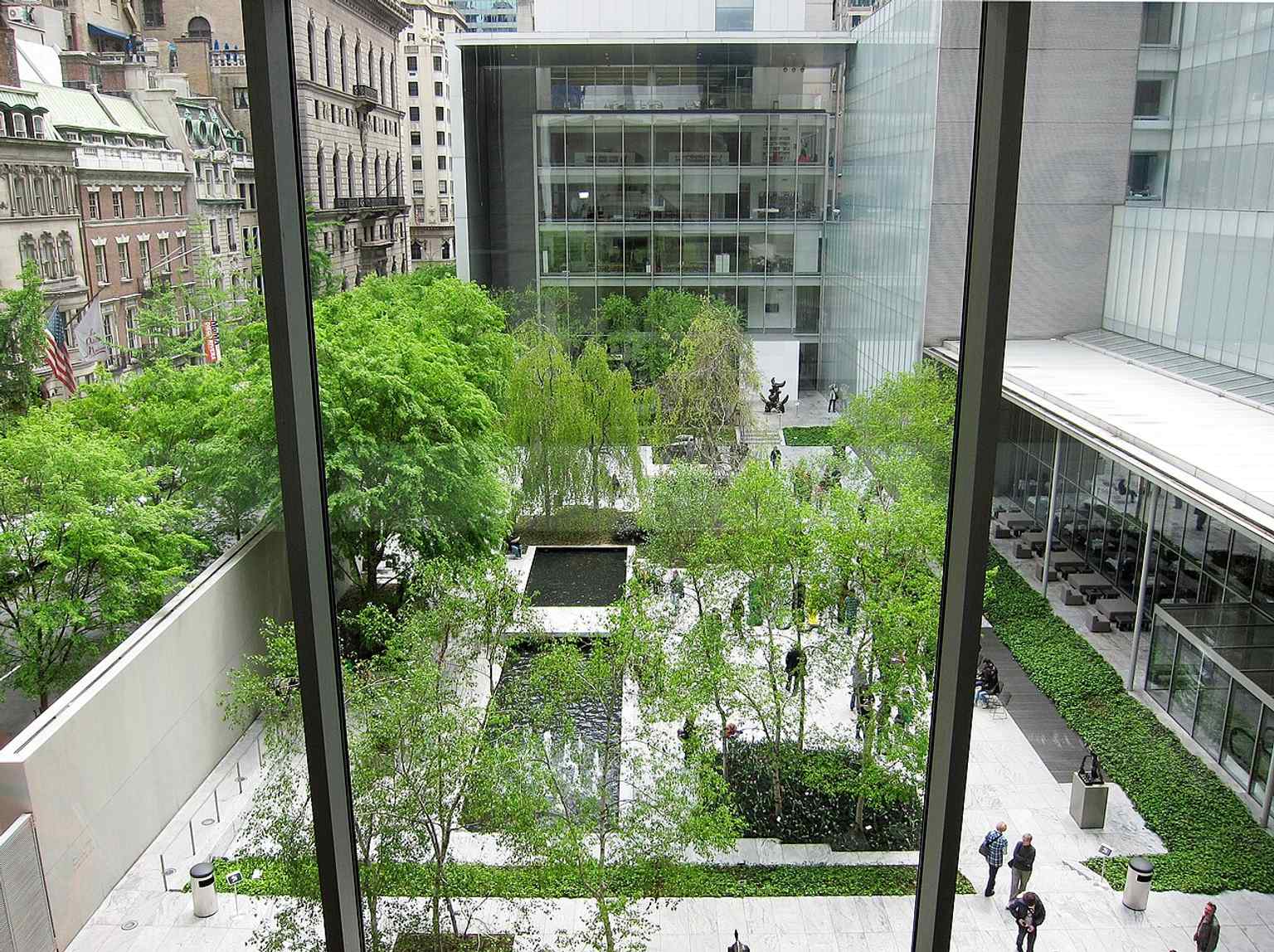
On your right, the Museum of Modern Art shows up as a crisp stack of glass and dark metal planes, with broad rectangular walls and the unmistakable modern frontage along West Fifty-third Street.
This place carries the weight of a global institution now... but its origin story is wonderfully unruly. In nineteen twenty-eight, three women sat down to lunch and decided New York needed a museum devoted entirely to modern art. Abby Aldrich Rockefeller, Lillie P. Bliss, and Mary Quinn Sullivan were later nicknamed the adamantine ladies, which sounds a little like a law firm and a little like a superhero team. Their target was the Metropolitan Museum of Art, which at the time treated contemporary art like an awkward dinner guest.
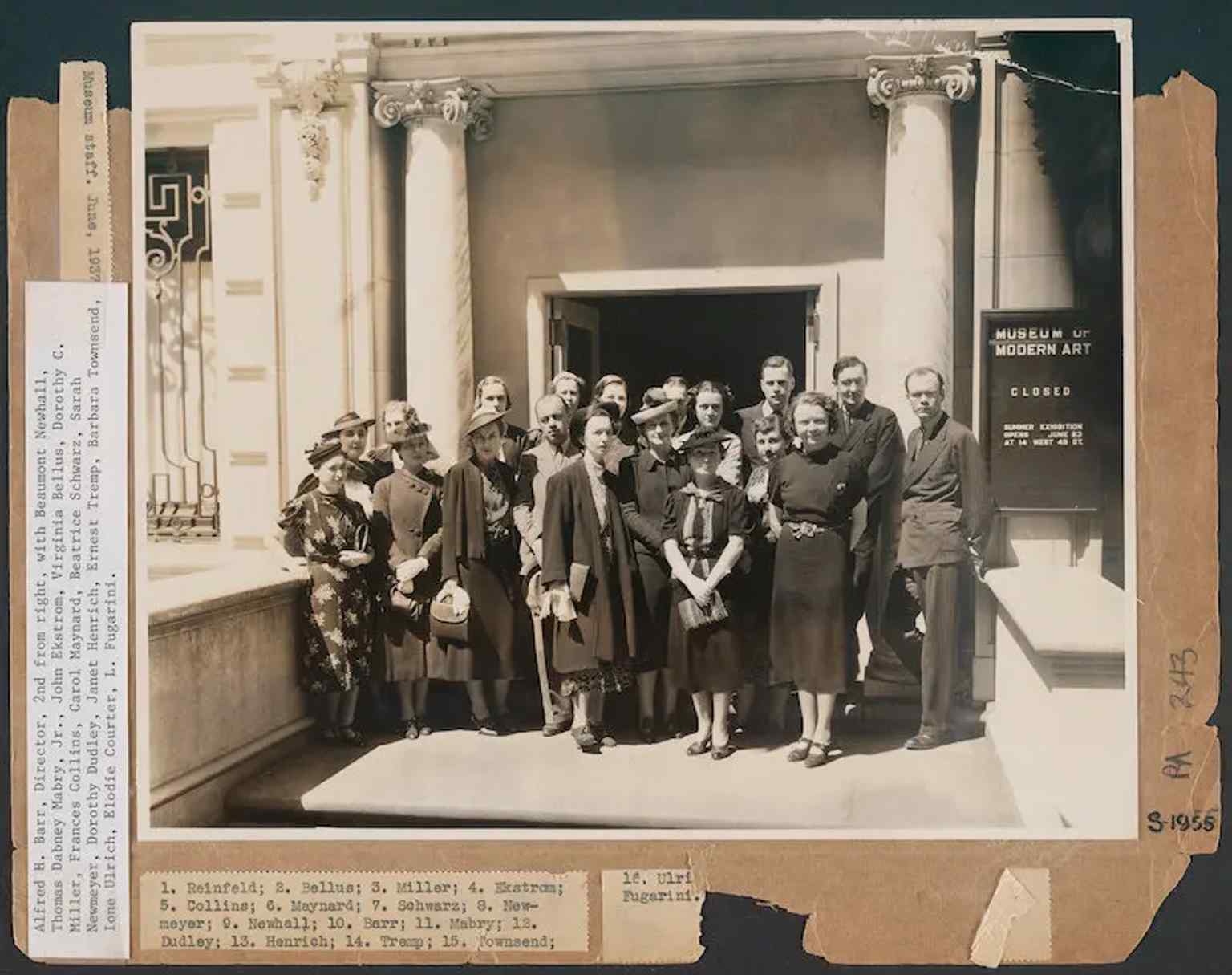
So they started their own museum. John D. Rockefeller Junior did not exactly cheer from the sidelines, but Abby and her allies pushed ahead anyway. The Museum of Modern Art, or MoMA, opened on the seventh of November, nineteen twenty-nine, in rented rooms on the twelfth floor of the Heckscher Building... just nine days after the Wall Street Crash. Excellent timing, if your hobby is defying common sense.
And yet it worked, largely because elite patronage here was not just glamorous, it was survival gear. Lillie P. Bliss proved that. When she died in nineteen thirty-one, she left the museum a major collection of works by Cezanne, Seurat, and Degas, but with a condition: the museum had to raise an endowment to care for them. That gift stabilized the institution and gave it the freedom to sell some works to buy others, which eventually helped MoMA acquire Van Gogh’s The Starry Night. If you want to glance at your screen, there it is... one of the paintings her gamble made possible.
What most people miss is how completely the scale changed. Today MoMA stands behind a board with dozens of trustees, a life trustee, layers of directors, curators, donors, committees... the full machinery of cultural power. Out front, the public face changed too, from a modest streetside museum in nineteen thirty-seven to this sleek Midtown presence with its glossy retail edge. You can compare that in the app if you like.
And here’s the little insider wrinkle tucked inside all that polish. The Founders Wall, created during the two thousand and four expansion, includes the original founders and later figures who gave on a similar scale. One of the names added in twenty twelve was Ileana Sonnabend. Her heirs had been hit with a twenty-nine point two million dollar tax bill from the I-R-S over Robert Rauschenberg’s Canyon. The painting included a stuffed bald eagle, which federal law made impossible to sell, so the work was somehow valued at sixty-five million dollars and worthless on the open market at the same time... a very New York art-world headache. The family donated it to MoMA, the tax claim disappeared, and Sonnabend joined the wall at founder level.
Before you head on, let your eye shift from this modern facade toward the stone drama waiting nearby. Next up is Saint Thomas Church, where Gothic grandeur answers MoMA’s cool control from just a three-minute walk away. If you want to come back inside later, MoMA usually opens at ten thirty every day and stays open later on Fridays.