
Santiago de Compostela Highlights Audio Tour: Sacred Paths and Stone Treasures
Behind every stone in Santiago de Compostela lies a secret forged in rebellion and blood. While crowds chase pilgrims toward the cathedral, the true pulse of the city thumps in the shadows of forgotten alleys and defiant monuments. Unlock this self-guided audio tour to peel back the layers of history that guidebooks ignore. Navigate through scandals and hidden uprisings as you trace the footsteps of those who shaped this sacred stone maze. Why did the Two Marys become symbols of a city’s silent defiance against a brutal regime? What dark, otherworldly pact is whispered within the walls of the Chapel of Souls? How did a single afternoon at the Cabildo House spark a political firestorm that nearly toppled local power? Walk the ancient pavement, ignite your curiosity, and see the city anew. Your journey through the shadows begins now.
Tour preview
About this tour
- scheduleDuration 80–100 minsGo at your own pace
- straighten2.6 km walking routeFollow the guided path
- location_onLocationSantiago de Compostela, Spain
- wifi_offWorks offlineDownload once, use anywhere
- all_inclusiveLifetime accessReplay anytime, forever
- location_onStarts at Alameda de Santiago de Compostela
Stops on this tour
lock_open 3 free previews · 12 unlock with purchase
You are standing in a vast, paved plaza anchored by a monumental stone cathedral with ornate baroque spires dominating the eastern skyline, flanked by sweeping administrative…Read moreShow less
Open dedicated page →You are standing in a vast, paved plaza anchored by a monumental stone cathedral with ornate baroque spires dominating the eastern skyline, flanked by sweeping administrative buildings with long arched colonnades.
Millions of travelers have ended their long spiritual journeys right here on these stones. But creating a gateway to the divine requires an awful lot of earthly sweat. For much of its history, this polished ceremonial center was not a quiet place of reflection. It was a chaotic, deafening construction site filled with choking dust, echoing hammers, and towering piles of raw stone. The square actually gets its name, Obradoiro, from the open-air workshops of the stonemasons, the obrairos, who lived and toiled right where you are standing to shape the granite skin of the cathedral.
Much like the Two Marys we learned about earlier, these anonymous builders left a permanent, somewhat defiant signature on the city. Let me tip you off to a little detail most visitors completely miss. If you take a look at the cathedral's magnificent facade on your screen, you can see the intricate stonework that leads into the famous Portico de la Gloria. According to local history, those cheeky masons carved the prophet Daniel with a rather mischievous smile, positioning him so he was gazing directly at the ample chest of Queen Esther. The local clergy were utterly scandalized by the impropriety and ordered stoneworkers to aggressively reduce the stone queen's curves. In a brilliantly petty act of rebellion, the people of Galicia began producing a conical local cheese meant to perfectly replicate the shape the clergy had chipped away. They still sell it today.
As the cathedral neared completion in the eighteenth century, the square transformed from a dusty workshop into an orderly stage representing the city's four pillars of power. To the north sits the royal hospital, to the south the university, to the east the church, and to the west, government. But earthly ambition always finds a way to cause trouble.
An ambitious archbishop proposed the massive neoclassical building closing off the western side of the square. The moment he started building, a bitter legal feud erupted. The neighboring hospital administrators sued, arguing the giant palace would block the vital light and air needed to heal sick pilgrims. The dispute raged until seventeen sixty-seven, when the royal courts issued a compromise. The archbishop got his grand building, but the courts forced him to share it with a seminary, the city hall, and a jail.
Before we head over there, look toward the cathedral's north tower. Imagine a massive, harsh rattling sound echoing across this space. During Holy Week, the bells go silent in mourning, and a giant wooden rattle up in that tower takes over, filling the plaza with a heavy, clattering solemnity. Now, direct your attention fully to that grand neoclassical building the archbishop fought so hard for, as we take the one-minute walk over to Rajoy's Palace.
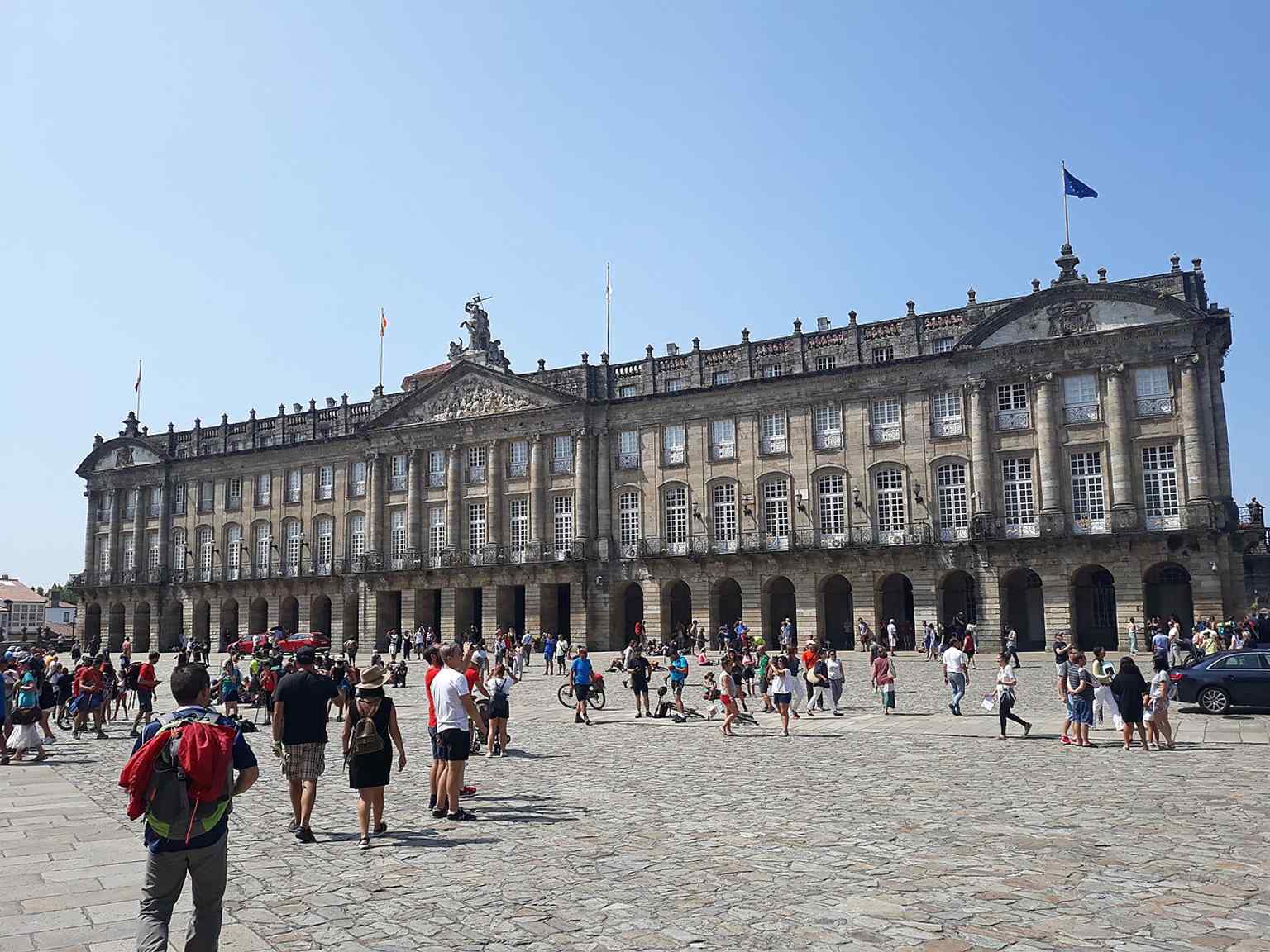
The neoclassical Pazo de Raxoi, once a seminary, city hall, and jail, faced a legal battle over 'light and air' during its 18th-century construction.Photo: Simon Burchell, Wikimedia Commons, CC BY-SA 4.0. Cropped & resized.
Show 12 more stopsShow fewer stopsexpand_moreexpand_less
Look to your left at the massive rectangular stone building spanning nearly ninety meters, anchored by a long ground-floor arcade and topped with a prominent triangular pediment…Read moreShow less
Open dedicated page →Look to your left at the massive rectangular stone building spanning nearly ninety meters, anchored by a long ground-floor arcade and topped with a prominent triangular pediment crowned by an equestrian statue. This is Rajoy's Palace. It was ordered by Archbishop Bartolome Raxoi, a pragmatic modernizer who spared absolutely no expense when it came to leaving his mark on the city. Back in seventeen sixty-six, the Archbishop poured nearly seventeen million reales into his various architectural and social projects, a staggering fortune aimed at elevating both his flock and his own monumental legacy.
To execute his vision, he hired Carlos Lemaur, a French military engineer. If you check your app, you can get a closer view of Lemaur's towering neoclassical facade, complete with a dramatic stone relief of the Battle of Clavijo. Notice the grand statue of Saint James at the very top. The church leadership desperately wanted the absolute height of architectural luxury, so they actually had that local stone painted stark white to perfectly imitate expensive imported marble. They built a clean, immense monument to rival the soaring cathedral across the square, using a bit of earthly deception to project absolute divine grandeur.
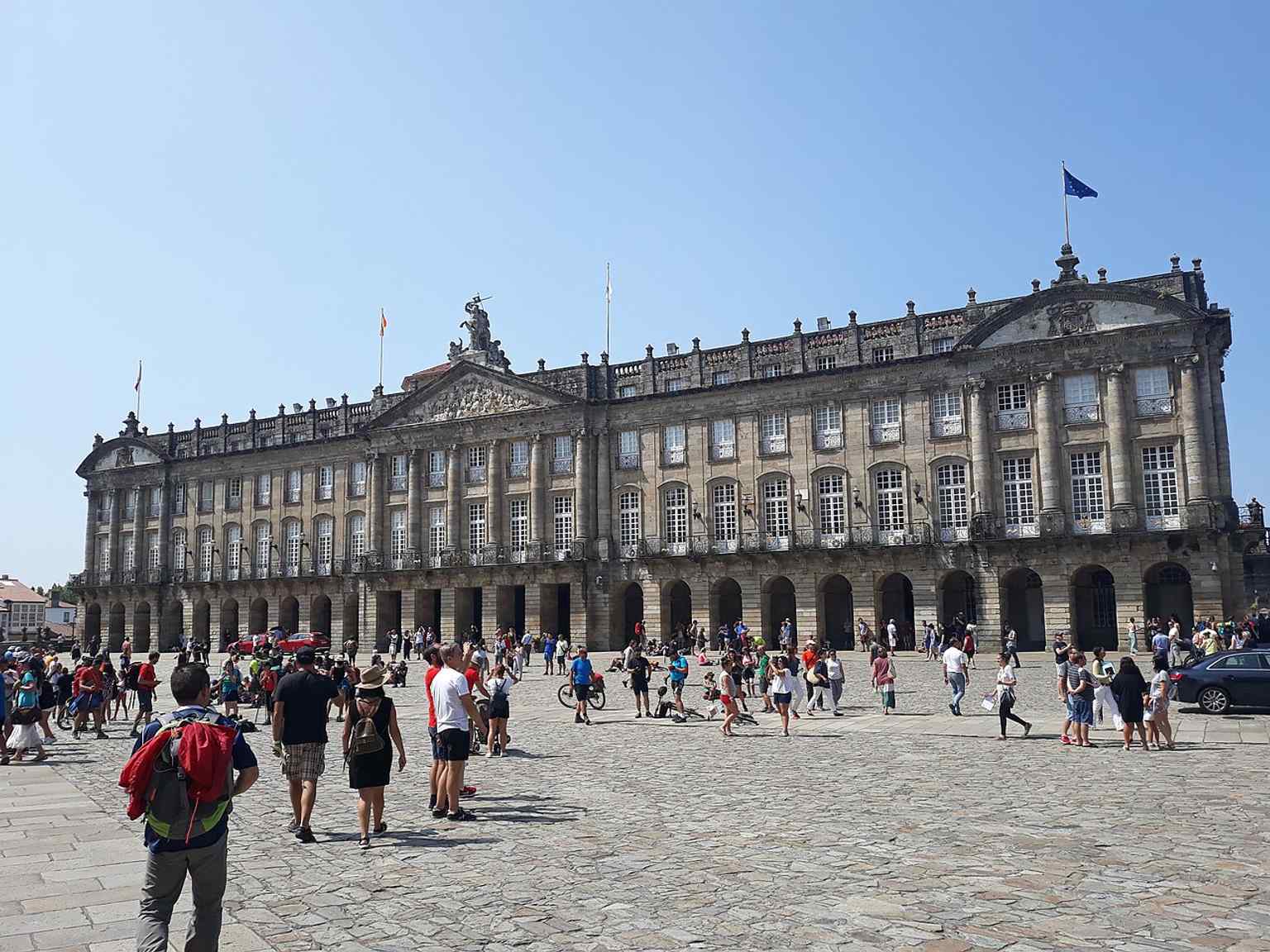
Admire the palace's neoclassical facade, designed by engineer Carlos Lemaur, featuring a relief of the Battle of Clavijo and a sculpture of Saint James atop its central pediment.Photo: Simon Burchell, Wikimedia Commons, CC BY-SA 4.0. Cropped & resized. But planting a palace of this scale sparked one of the biggest urban scandals of the eighteenth century. The royal hospital right next door fiercely opposed the construction. As we heard in the square, that bitter fight over light and air forced the Royal Chamber to step in.
The resulting compromise forced a wildly unusual coexistence under one roof. Up on the sunlit top floors, you had young choirboys, known as seises, living under strict religious instruction. You also had multilingual priests called lenguajeros, who were specifically trained to hear the confessions of foreign pilgrims pouring into the city. The upper galleries constantly echoed with sacred music and whispered prayers.
Meanwhile, deep in the damp, sunless basements, locked away in a notorious jail known as A Falcona, the city's criminals served their time. Holy salvation above, and harsh earthly punishment below. The architects actually had to design entirely separate entrances just so the devout priests wouldn't cross paths with the condemned prisoners. Years later, during the military uprising of nineteen thirty-six, that same basement prison became a place of genuine terror, holding the city's mayor and notable artists before their executions.
Today, the palace serves as the seat of the City Council and the presidency of the regional government, with public areas open from ten AM to two PM, and four thirty to eight thirty PM, Monday through Saturday.
Now, speaking of that hospital next door that threw such a fit over this building's construction... let us go see what all their fuss was about. The Hospital of the Catholic Monarchs is just a one-minute walk away.
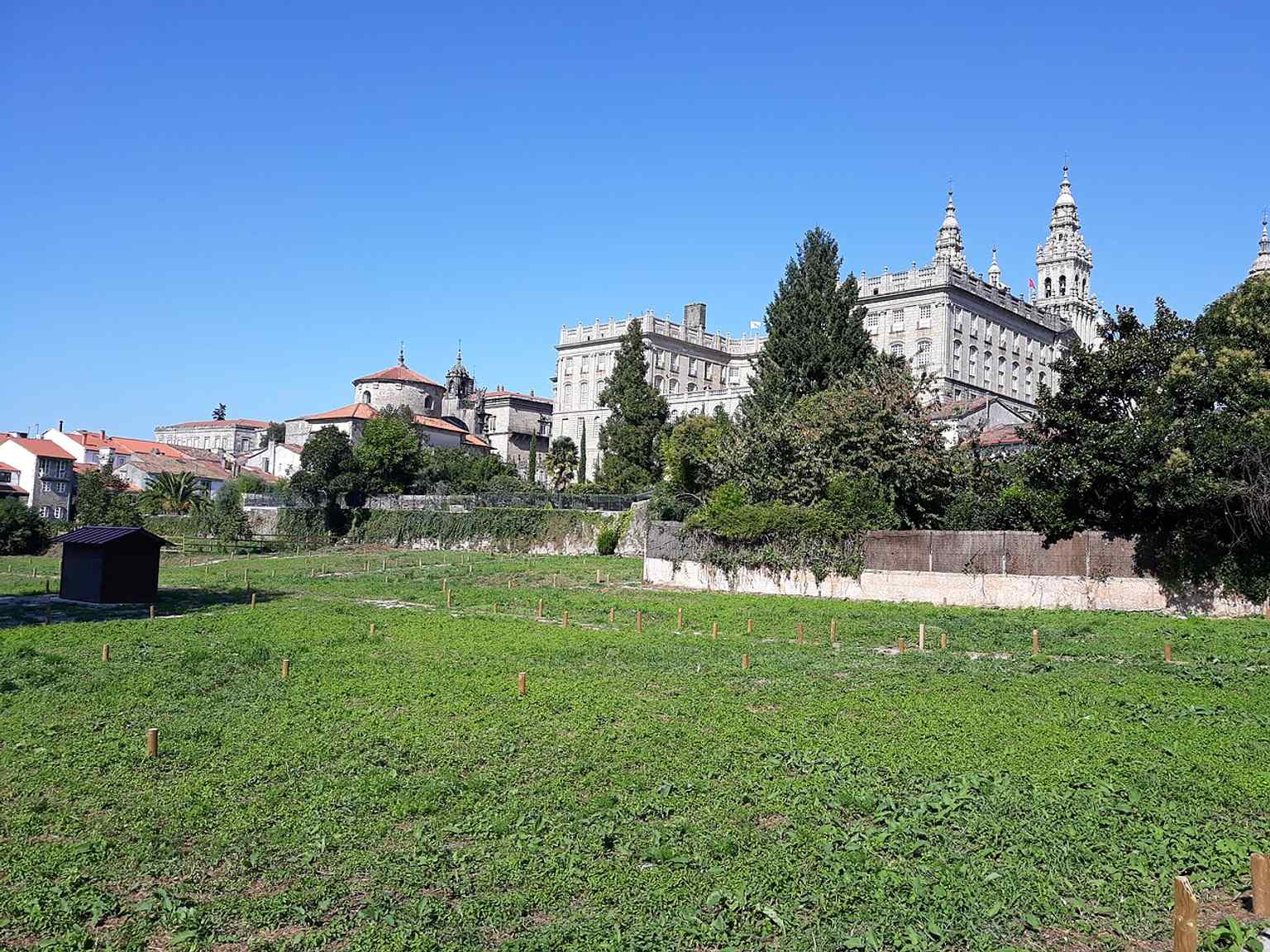
Located on the western side of the Plaza del Obradoiro, the palace stands directly opposite the famous Santiago de Compostela Cathedral.Photo: Simon Burchell, Wikimedia Commons, CC BY-SA 4.0. Cropped & resized. 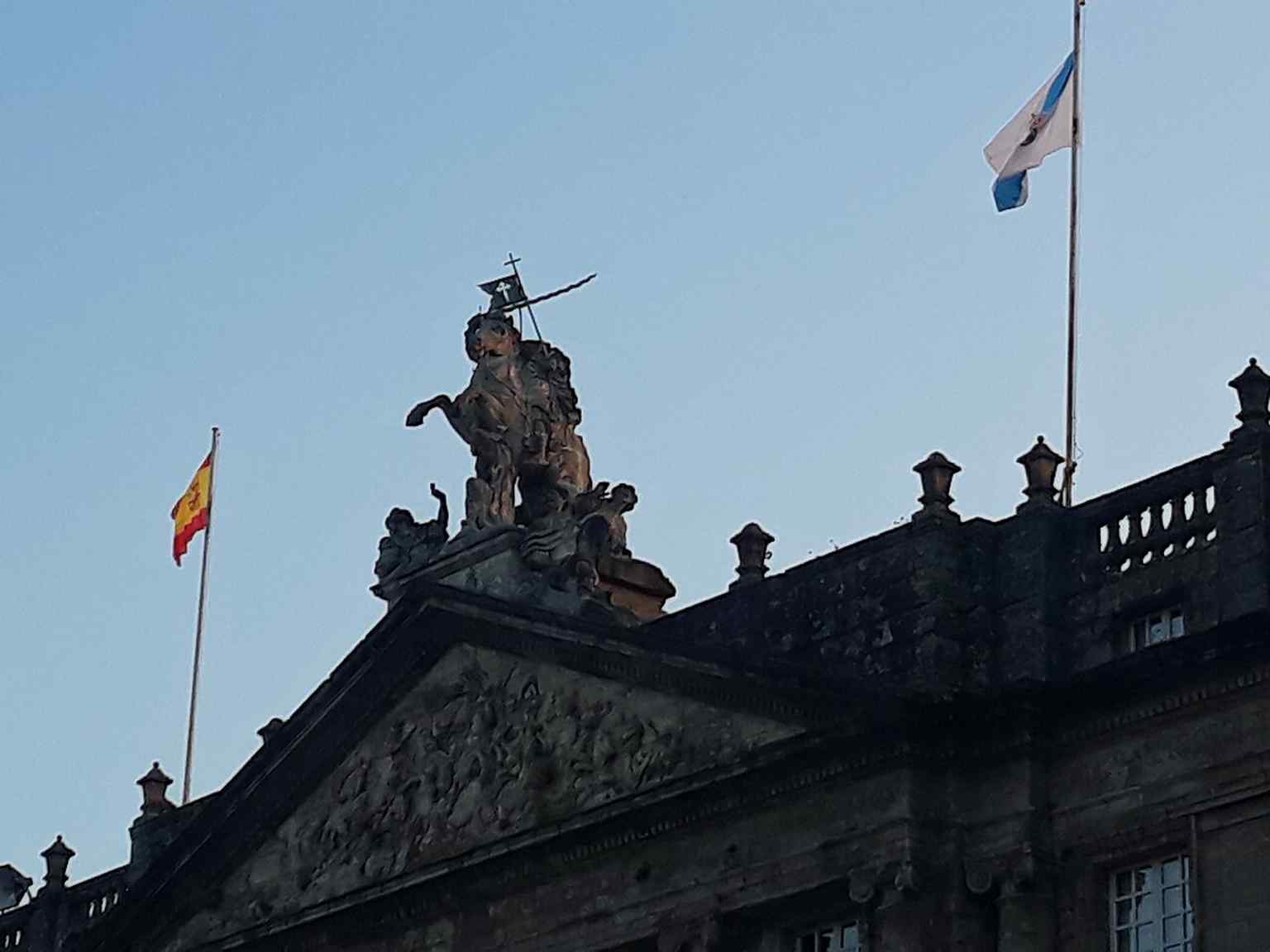
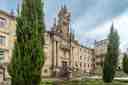
This palace serves as the seat of the Santiago de Compostela City Council and the Presidency of the Xunta de Galicia, functions reflected by the flags flown here.Photo: Simon Burchell, Wikimedia Commons, CC BY-SA 4.0. Cropped & resized. Directly in front of you is a massive rectangular stone building defined by its intricately carved central doorway, long iron balconies, and a front courtyard marked off by stone…Read moreShow less
Open dedicated page →Directly in front of you is a massive rectangular stone building defined by its intricately carved central doorway, long iron balconies, and a front courtyard marked off by stone pillars linked with heavy iron chains.
For centuries, completing the pilgrimage meant arriving exhausted, often sick, and in desperate need of basic human charity. Today, however, that same arrival can be celebrated with a five-star stay in a historic suite. What began as a vital network of charitable medical care for weary travelers has steadily evolved into an experience of high-end luxury. A royal hospital that is now a luxury hotel perfectly captures the duality between a sacred mission and royal prestige.
Back in fourteen eighty-six, the Catholic Monarchs visited Santiago and saw pilgrims sleeping on the cathedral floors. They decided to build a grand hospital to care for them, but they funded it using the financial spoils from their military conquest of Granada in fourteen ninety-two. It was divine charity, bankrolled by earthly triumph.
Look closely at that ornate central doorway. On the right side, you will find figures of Adam and Eve. Take a look at the image on your screen to see the detail. Unlike most religious art of the era, they are covering themselves in shame, a stark reminder of the flawed humanity that arrived at these doors seeking both physical and spiritual healing.
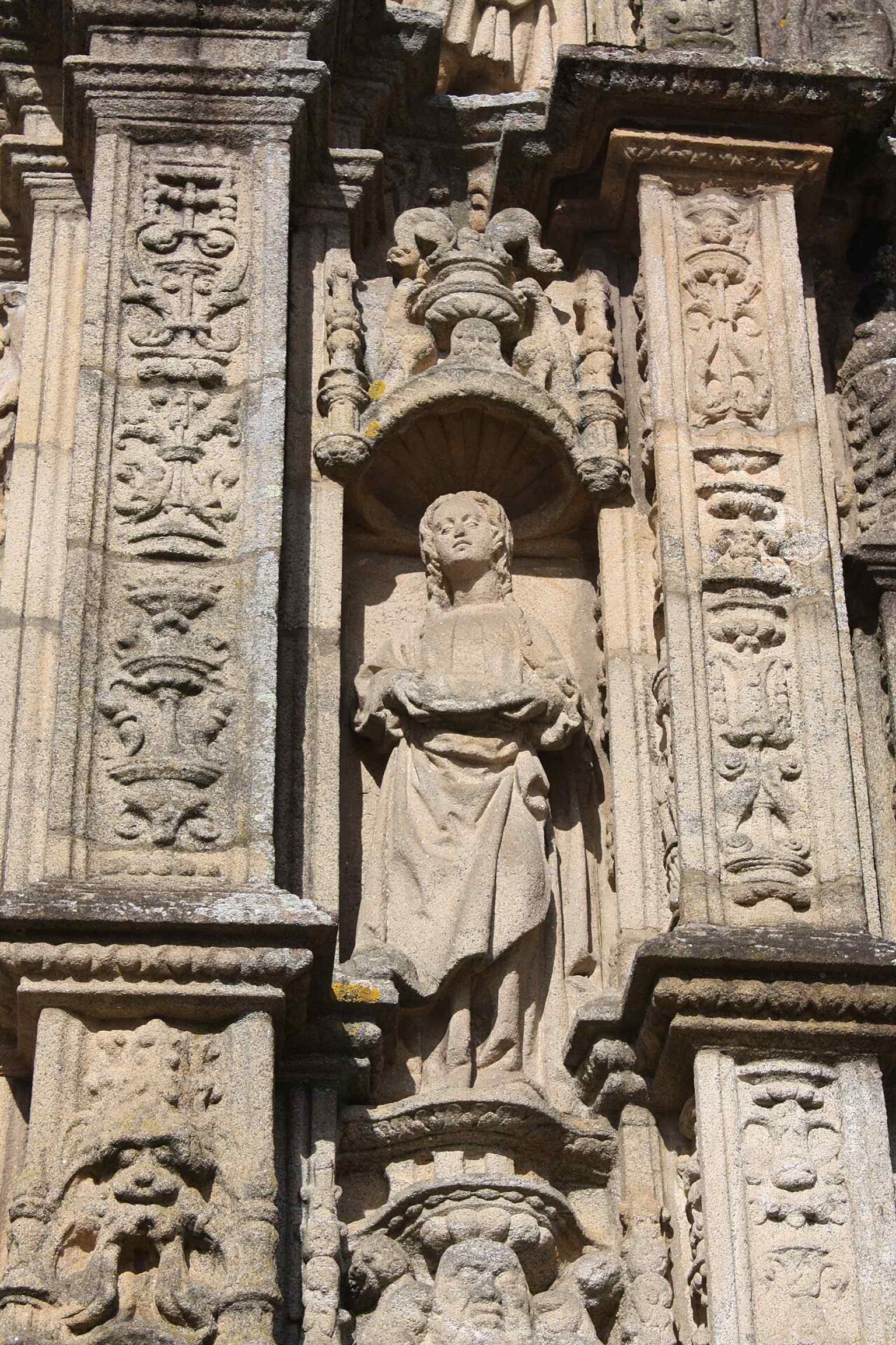
This statue of Santa Lucía is one of the many figures adorning the Plateresque façade, appearing on the right side from bottom to top, alongside Eva and María Magdalena.Photo: Lameiro, Wikimedia Commons, CC BY-SA 4.0. Cropped & resized. And those heavy chains out front? They were not just for crowd control. They marked a strict legal boundary of royal jurisdiction. If you were a fugitive running from the local city authorities and you managed to leap over those chains, you were officially under the protection of the Crown. It was a sacred asylum, which caused endless political headaches for the city council.
Inside, the hospital was incredibly advanced for the sixteenth century, separating patients by illness and offering three free days of food, wine, and medicine. But it was far more than a hospital. Check your app for a glimpse of the Patio de San Juan, one of the original Renaissance courtyards. This specific space housed the main kitchen, but paradoxically, it also contained a jail for unruly patients, and an orphanage. The hospital had a rotating wooden door where desperate parents could anonymously leave babies, who were often brought from across the region in wicker baskets. That practice actually gave rise to a local Galician phrase, living like a king in a basket, which is still used today to describe a life of absolute comfort.
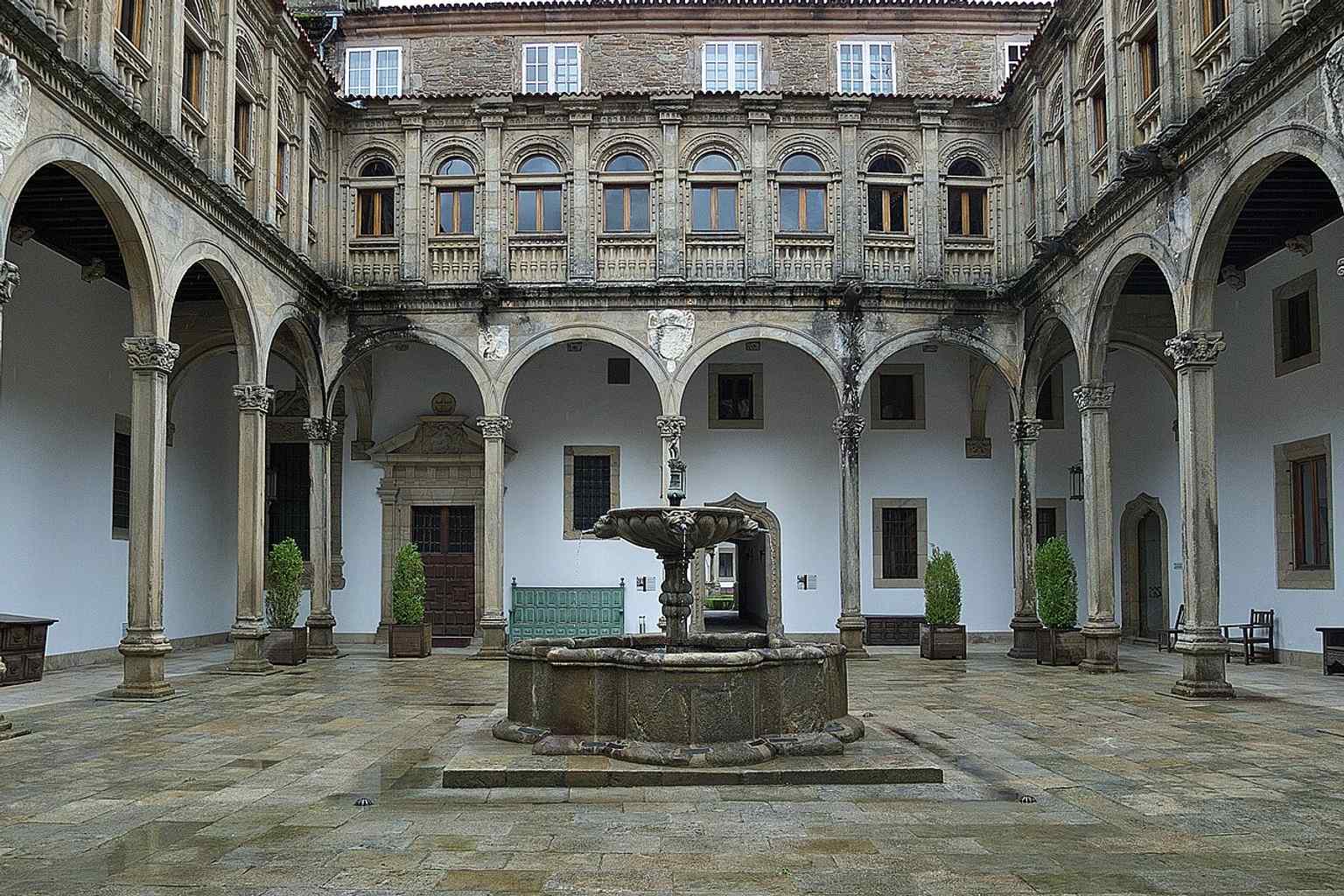
The Patio de San Juan, one of the original Renaissance courtyards, once housed the main kitchen, the orphanage for abandoned babies, and even the hospital jail.Photo: José Luis Filpo Cabana, Wikimedia Commons, CC BY 3.0. Cropped & resized. Of course, comfort is relative. By seventeen forty-three, an Italian traveler named Nicola Albani complained bitterly about the terrible service and wretched beds. The hospital's glory faded until nineteen fifty-four, when the building was rapidly transformed into a luxury hotel in just nine months. Yet, they still honor their charitable roots. To this day, the first ten pilgrims to show their completion certificates at the pilgrim office get a free breakfast here.
The building is open twenty-four hours a day if you want to peek into the grand lobby. Whenever you are ready, let us head out of the square and walk towards the Convent of San Francisco, which is about a five-minute stroll away.
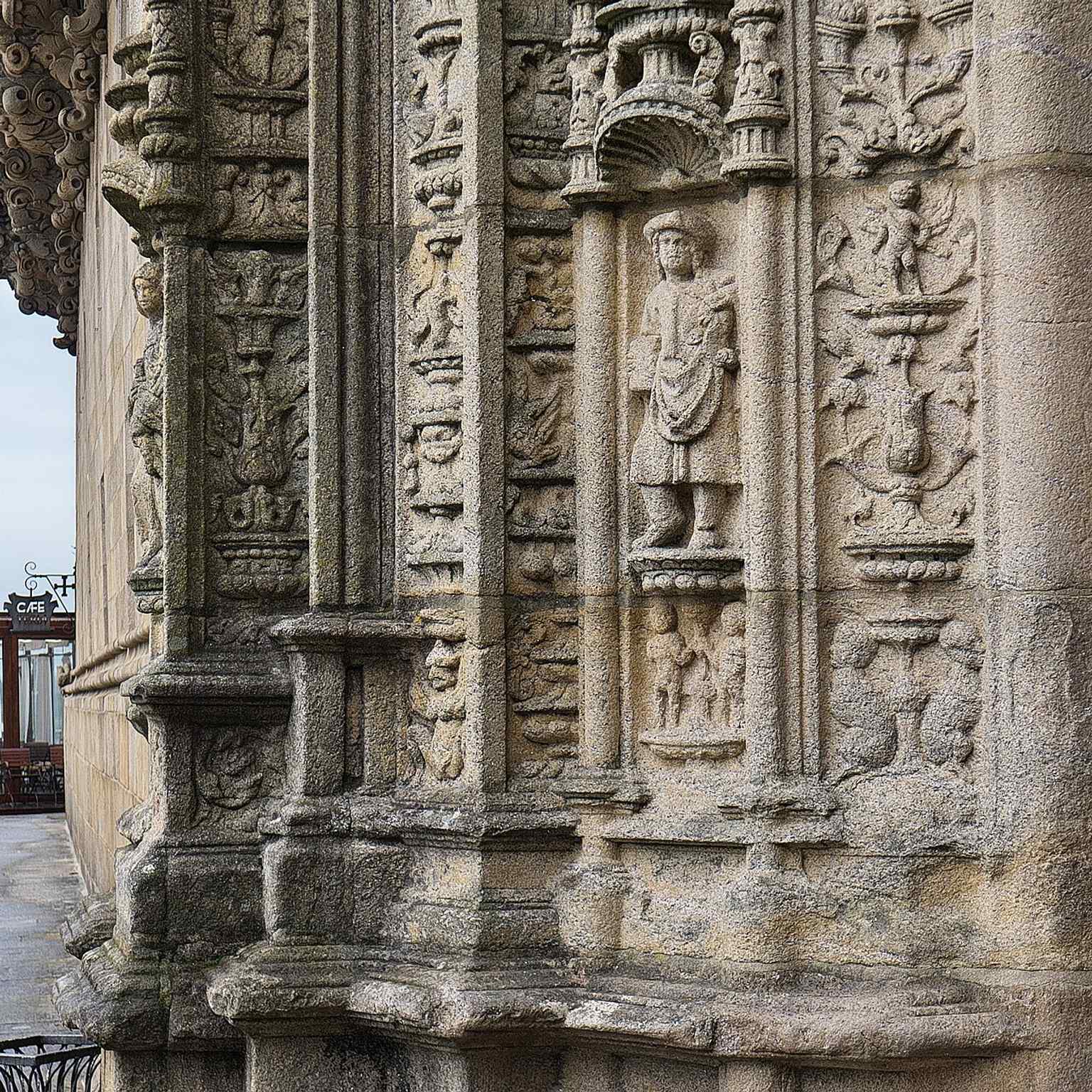
This detail on the Plateresque façade, carved in 1519 by Martín de Blas and Guillén Colás, represents a doctor, acknowledging the hospital's original role of providing medical care to pilgrims.Photo: José Luis Filpo Cabana, Wikimedia Commons, CC BY 3.0. Cropped & resized. 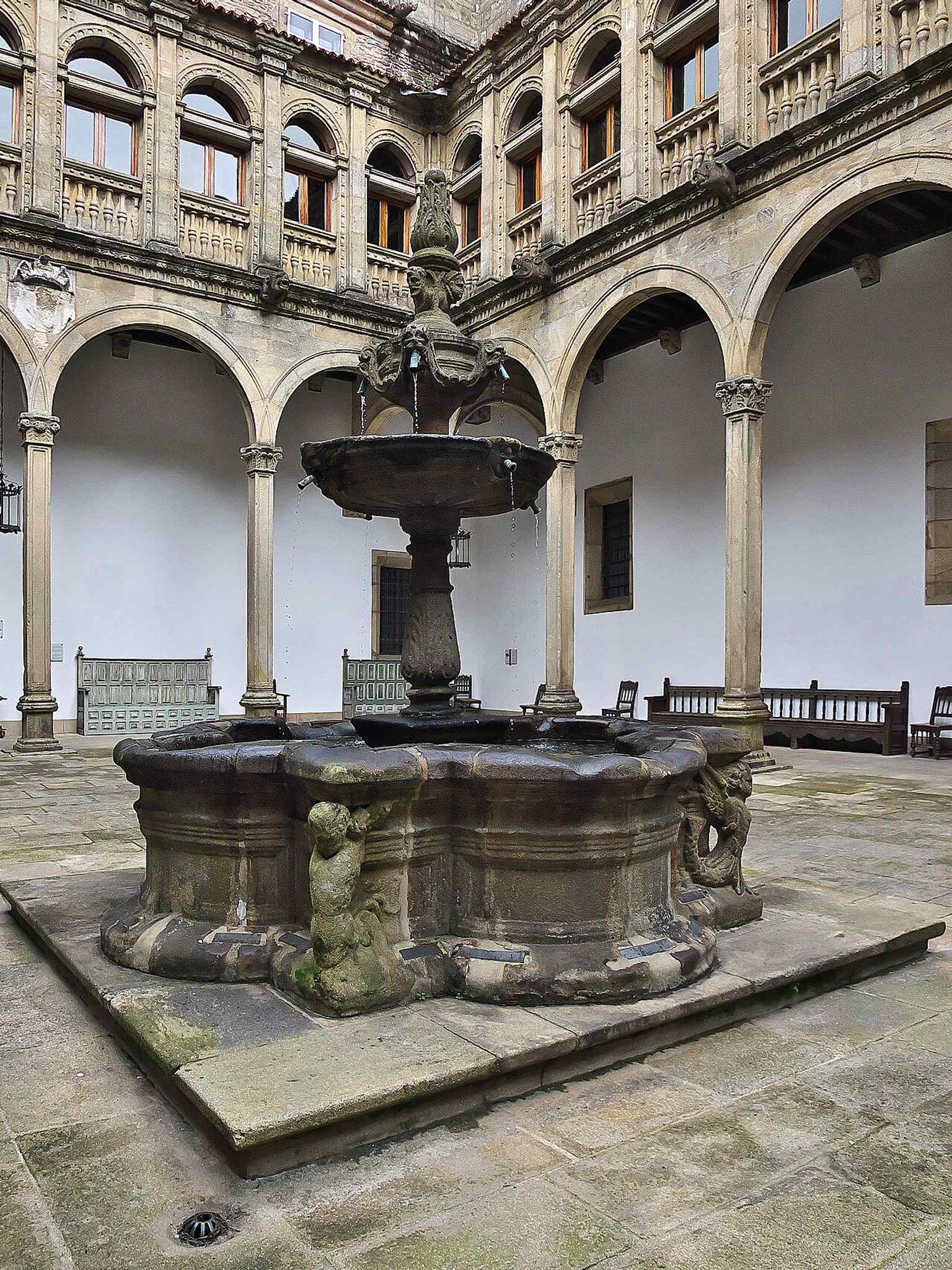
This Gothic fountain, designed by the original architect Enrique Egas, is found in the Patio de San Marcos, one of the two original Renaissance courtyards.Photo: José Luis Filpo Cabana, Wikimedia Commons, CC BY 3.0. Cropped & resized. 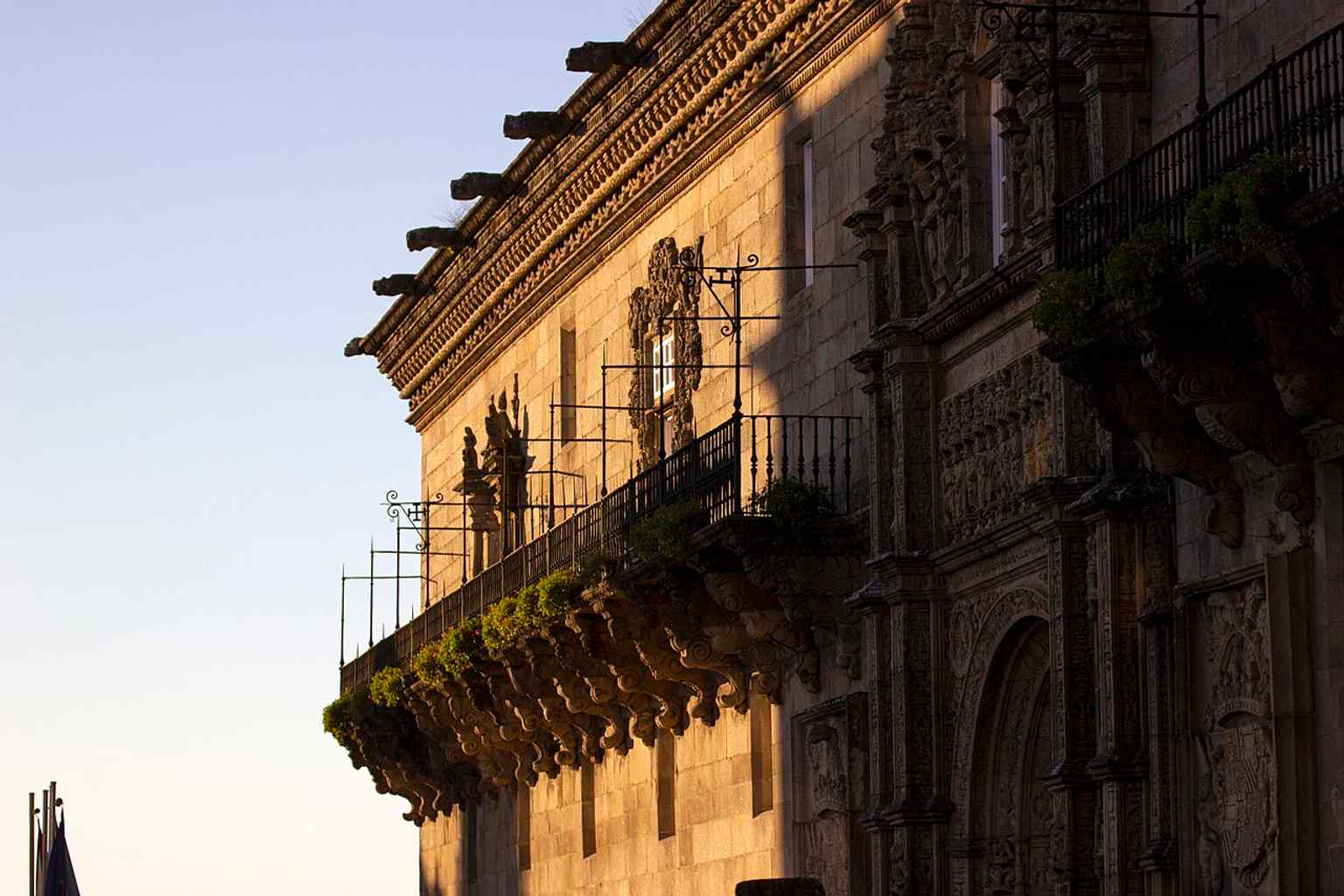
This ornate Baroque balcony was added to the Plateresque façade in 1678 by Frei Tomás Alonso, featuring exuberant vegetal decoration on its large corbels.Photo: Bene Riobó, Wikimedia Commons, CC BY-SA 4.0. Cropped & resized. 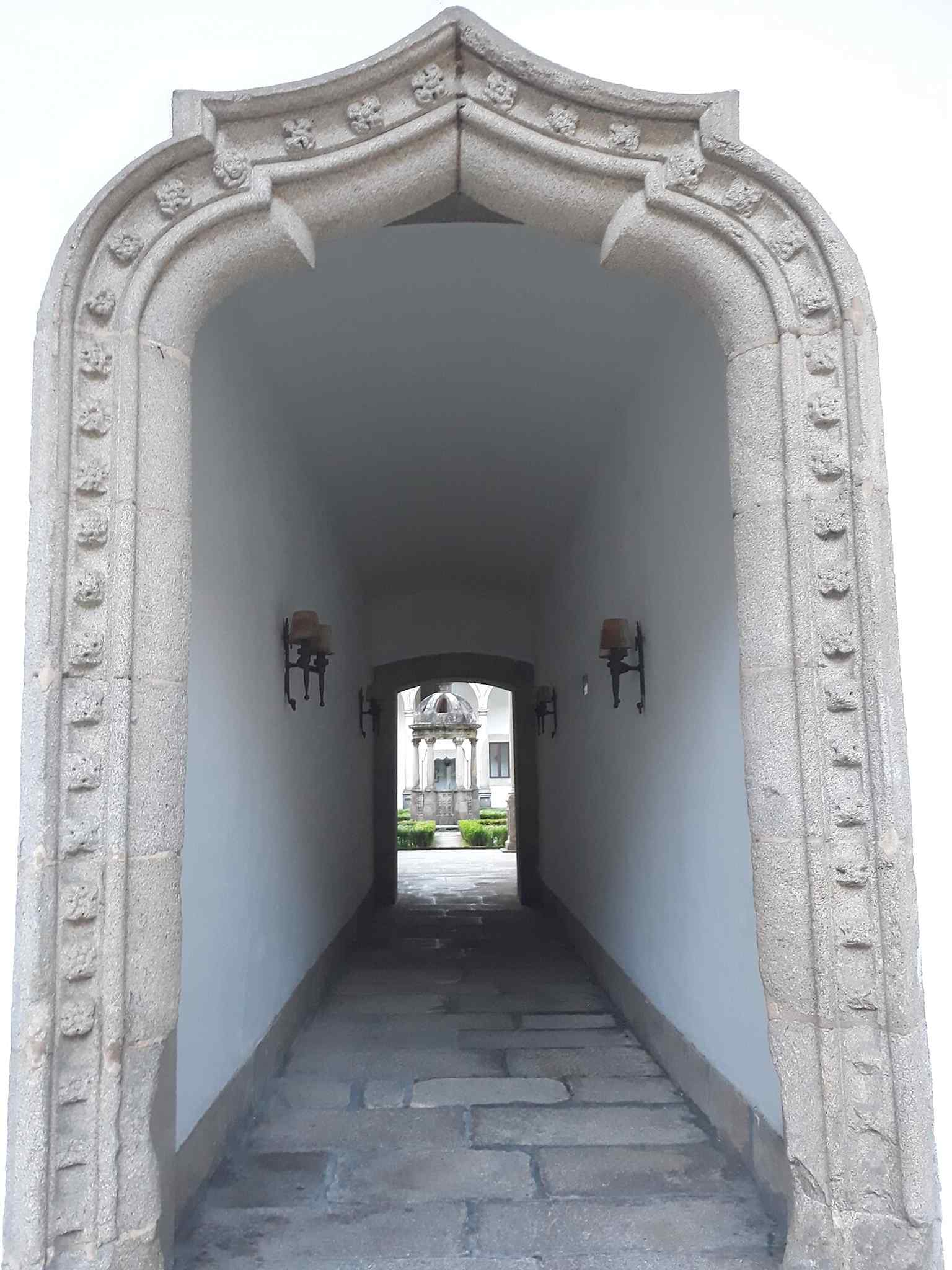
Transformed into a luxury hotel in 1954, the Hospital de los Reyes Católicos now features grand interiors, part of an ambitious art collection commissioned for its reopening.Photo: Simon Burchell, Wikimedia Commons, CC BY-SA 4.0. Cropped & resized. 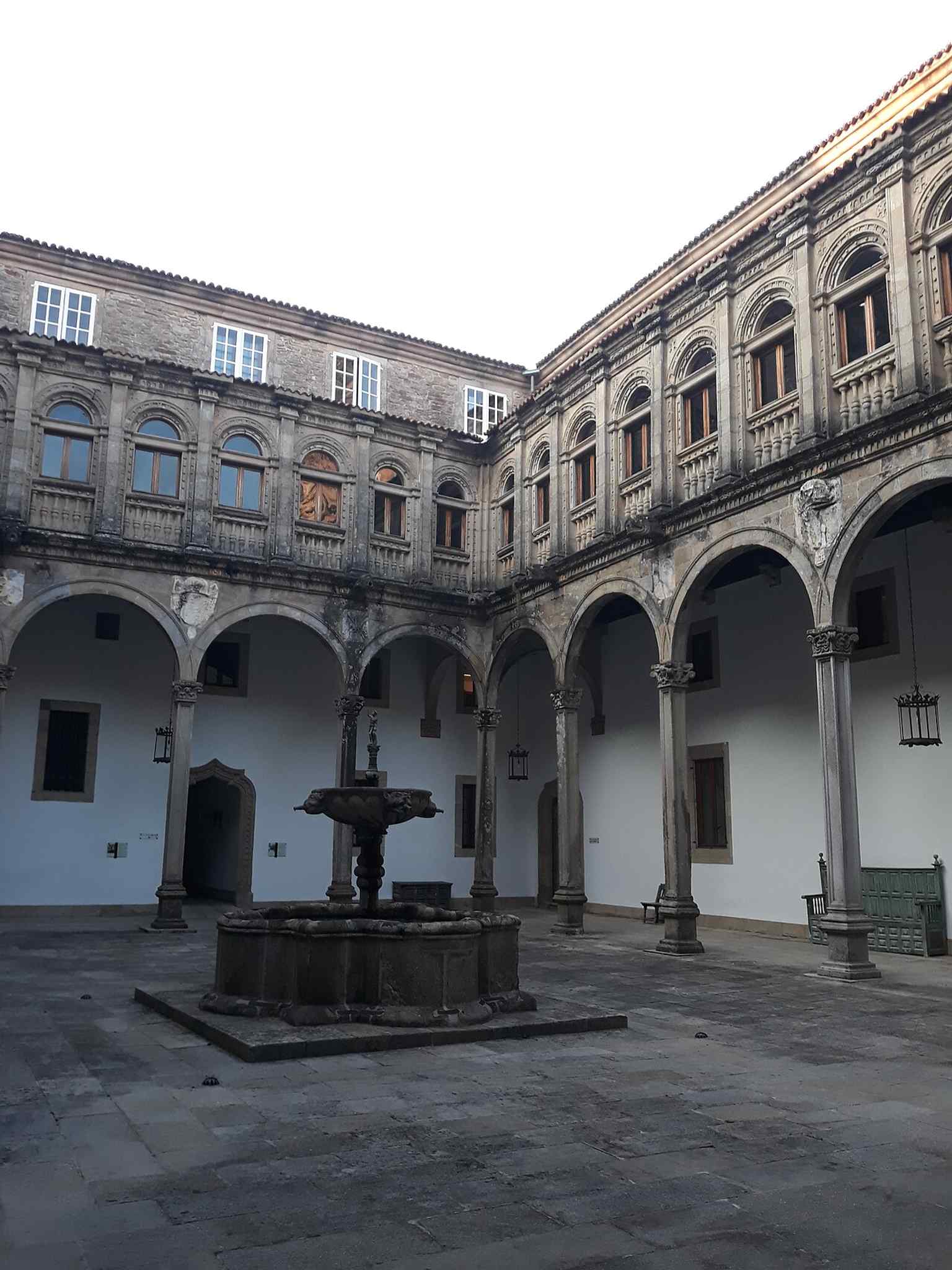
Experience the luxurious ambiance of the current Parador Museo Santiago, a space transformed from a historical hospital into a renowned hotel.Photo: Simon Burchell, Wikimedia Commons, CC BY-SA 4.0. Cropped & resized. 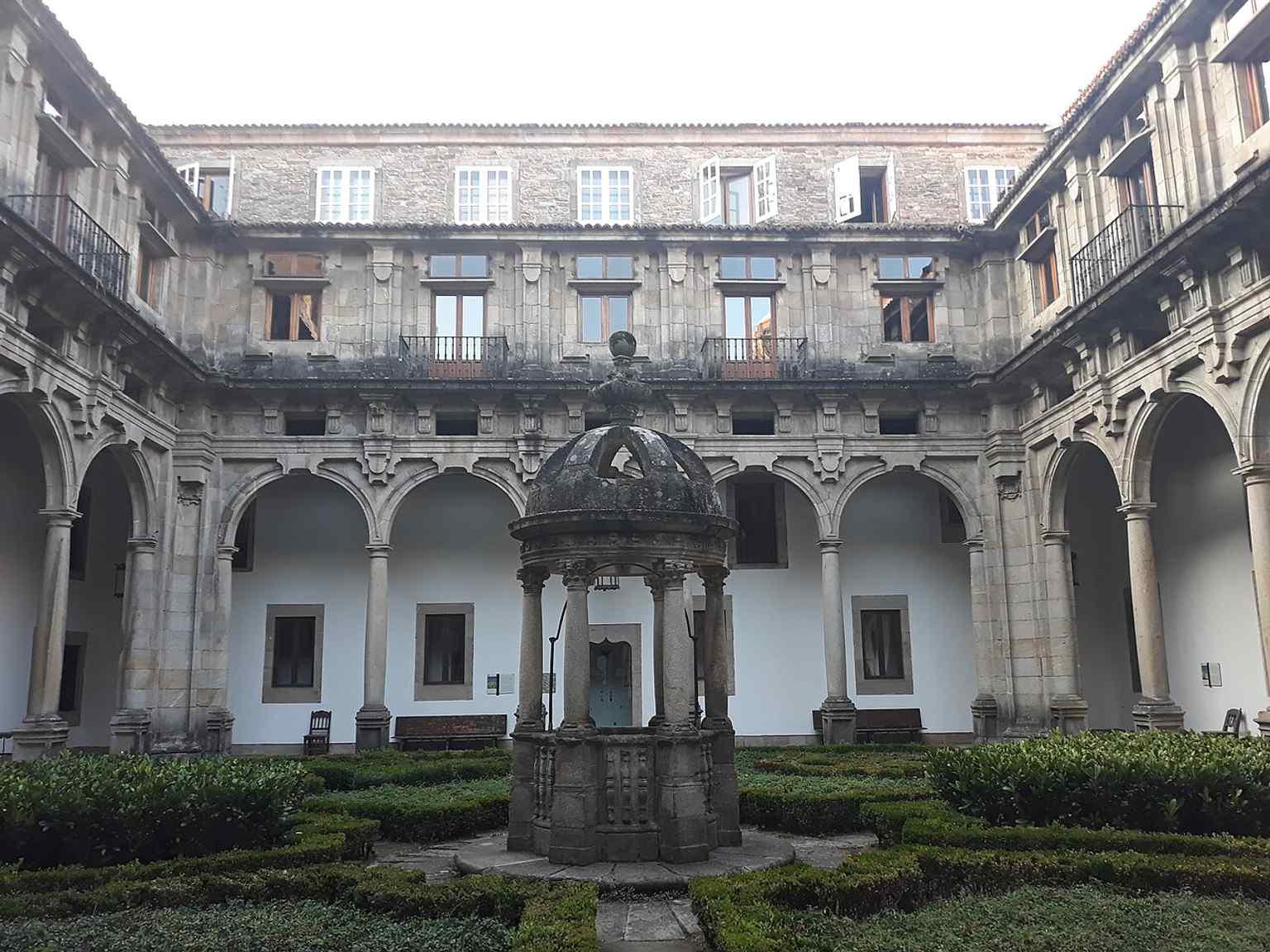
The imposing staircases reflect the architectural grandeur of the building, which has served various functions from a royal hospital to a luxury hotel.Photo: Simon Burchell, Wikimedia Commons, CC BY-SA 4.0. Cropped & resized. 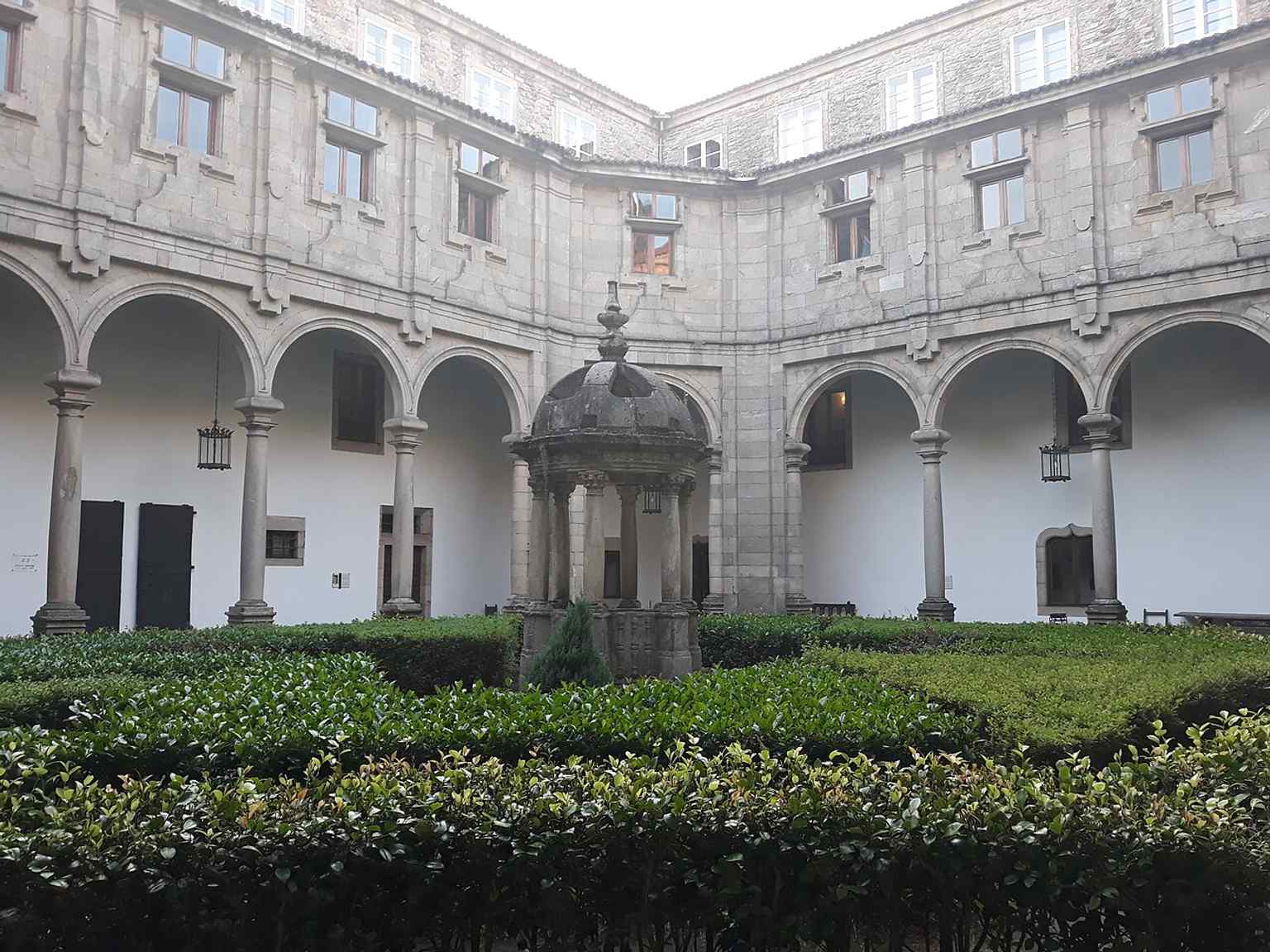
Admire the refined architectural details, such as this elegant archway, highlighting the building's rich history and plateresque influences.Photo: Simon Burchell, Wikimedia Commons, CC BY-SA 4.0. Cropped & resized. 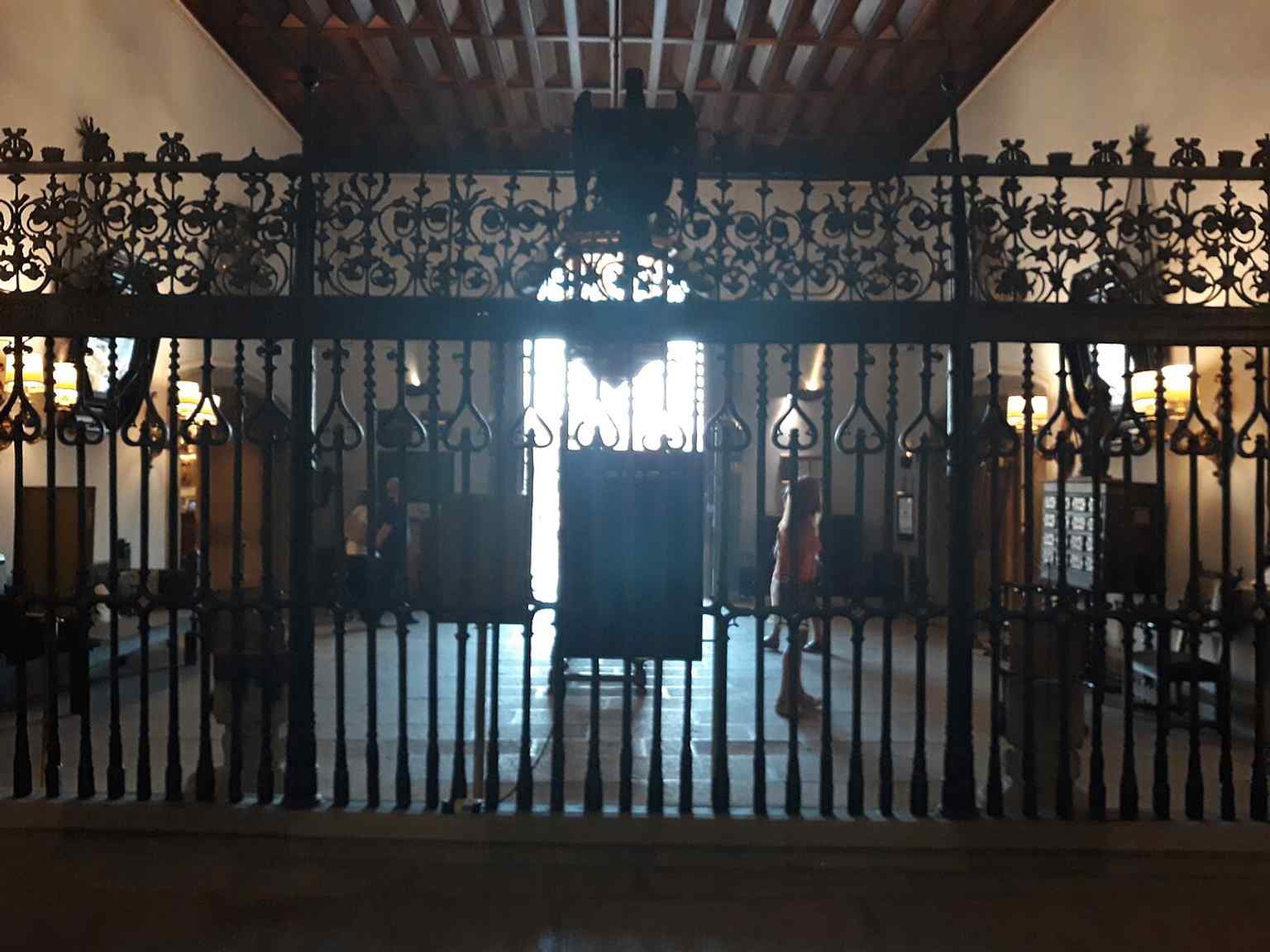
Gaze up at the intricate vaulted ceilings, showcasing the exceptional craftsmanship from the hospital's original construction in the early 16th century.Photo: Simon Burchell, Wikimedia Commons, CC BY-SA 4.0. Cropped & resized. 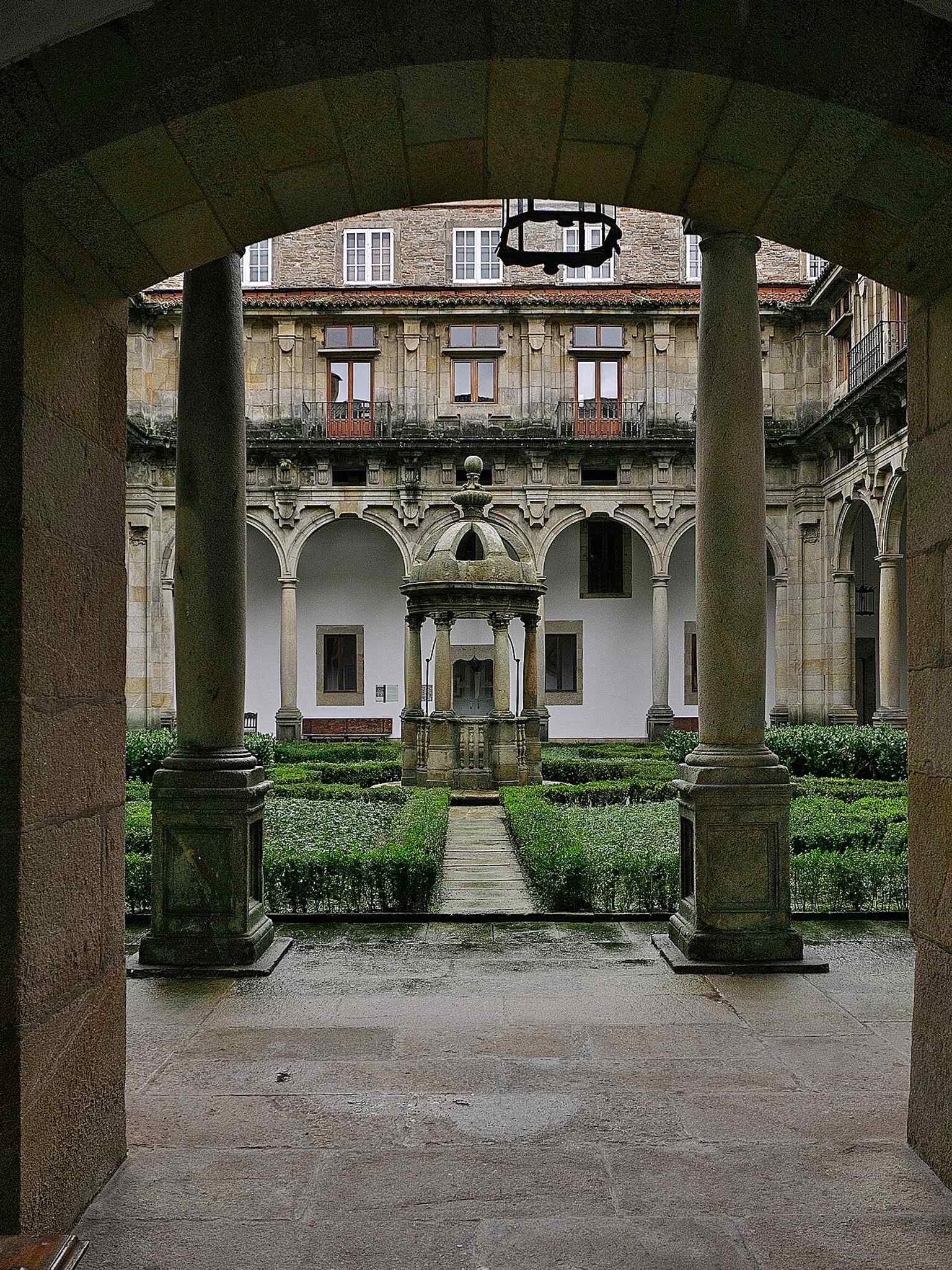
This entrance leads to the Patio de San Mateo, one of the two Baroque courtyards added later, completing the building's Greek cross layout.Photo: Jl FilpoC, Wikimedia Commons, CC BY-SA 4.0. Cropped & resized. On your left is a massive grey stone structure defined by its two square bell towers and a grand central niche sheltering a solitary statue. Most folks walking past just see…Read moreShow less
Open dedicated page →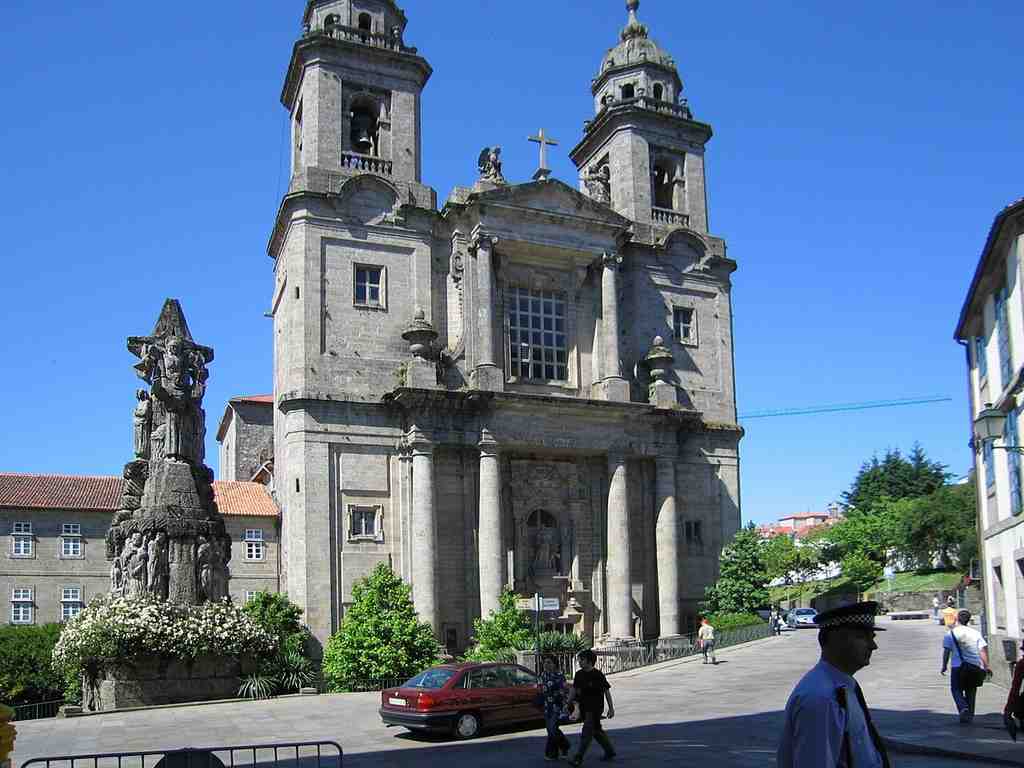
Convent of San Francisco (Santiago de Compostela)Photo: w:gl:usuario:Xosé, Wikimedia Commons, Public domain. Cropped & resized. On your left is a massive grey stone structure defined by its two square bell towers and a grand central niche sheltering a solitary statue.
Most folks walking past just see another grand historic monument, but I will let you in on a little local secret. Centuries ago, people completely avoided this specific patch of land. They actually called it the Valley of Hell because the terrain was so incredibly rugged, shadowy, and inhospitable.
That all changed around the year twelve fourteen. According to local lore, Saint Francis of Assisi walked the pilgrimage route to Santiago and was taken in by a humble charcoal burner named Cotolai. Francis told his host to build a monastery right here. When Cotolai pointed out that he was entirely broke, Francis miraculously led him to a buried treasure. With the funds secured and the monastery established, the harsh Valley of Hell was spiritually cleansed and officially renamed the Valley of God.
Of course, history usually involves a bit more paperwork than miracles. Historical records show Cotolai was actually a wealthy thirteenth-century city councilor, not a poor woodsman. And securing this holy real estate required a very earthly transaction. The neighboring Benedictine monks owned the land and agreed to lease it to the Franciscans. The rent was not paid in gold, but in fish. Specifically, a ceremonial basket of trout, handed over every single year for over five centuries.
This tension between holy purpose and earthly politics is built right into the walls. In April fifteen twenty, the emperor, Carlos the Fifth, convened a high-stakes political summit inside the convent. He desperately needed to squeeze funds out of the local cities to finance his crowning as Holy Roman Emperor in Germany. The local representatives pushed back hard against his demands right here in the chapter house, kicking off a bitter dispute that helped ignite a full-scale revolt shortly after.
By seventeen forty-two, the original medieval structure was practically crumbling, so the Franciscans began a massive rebuild. If you pull up the first photo on your screen, you can see the imposing scale of the eighteenth-century facade. But you might also notice the roofline looks surprisingly stunted. That is because the grand redesign caused a bitter turf war. The Benedictines next door filed a lawsuit, arguing this towering new Franciscan church would violate their rights. The courts sided with the Benedictines, forcing the Franciscans to chop down the height of their architectural masterpiece.
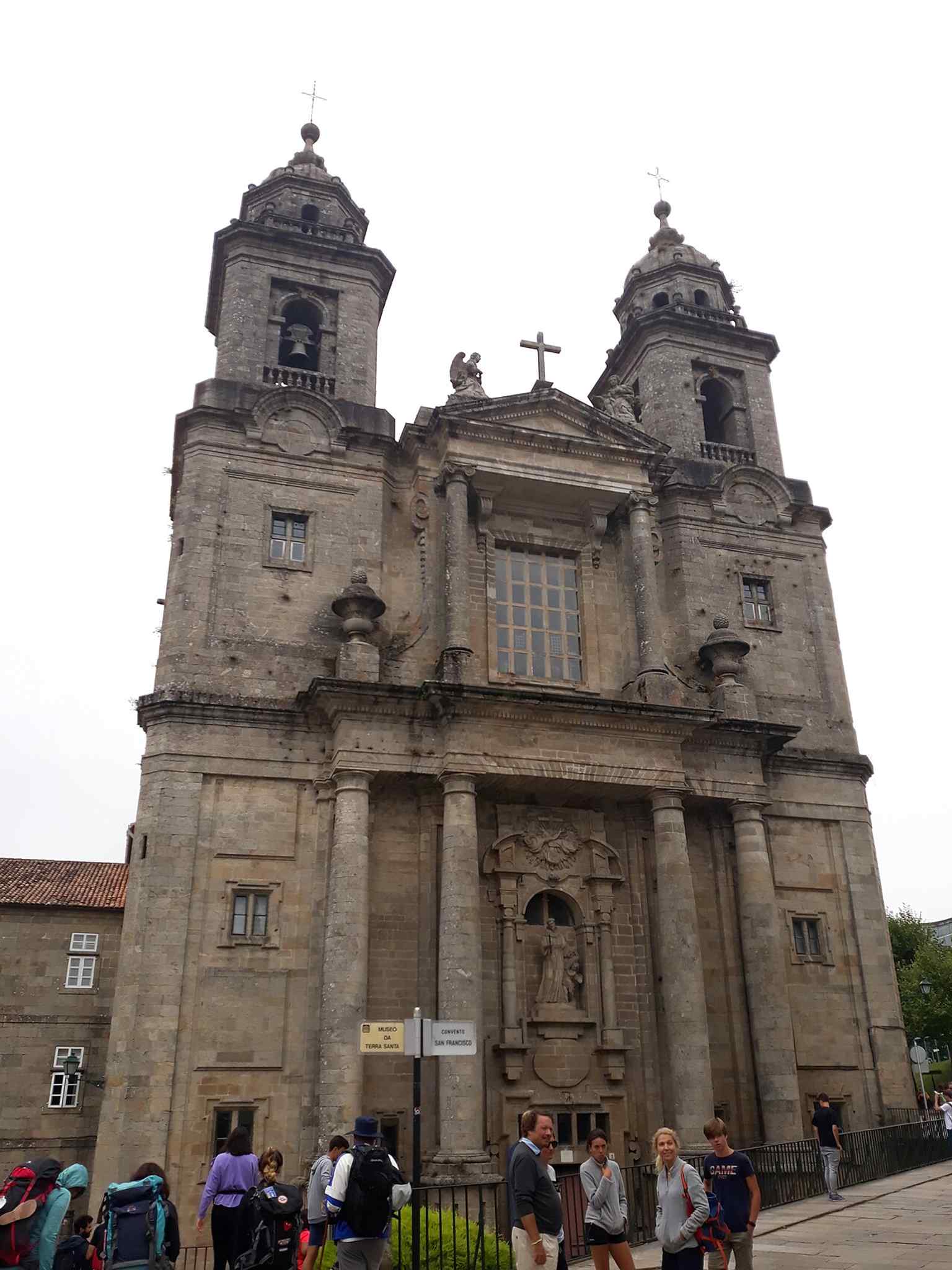
This view captures the impressive scale of the convent's 18th-century facade, which was significantly rebuilt after a dispute forced its height to be lowered.Photo: Simon Burchell, Wikimedia Commons, CC BY-SA 4.0. Cropped & resized. Check the second picture in your app for a closer look. You will see the statue of Saint Francis himself, carved by José Antonio Mauro Ferreiro Suárez, standing quietly between heavy Doric columns, forever mediating the space between the heavens and the city below.
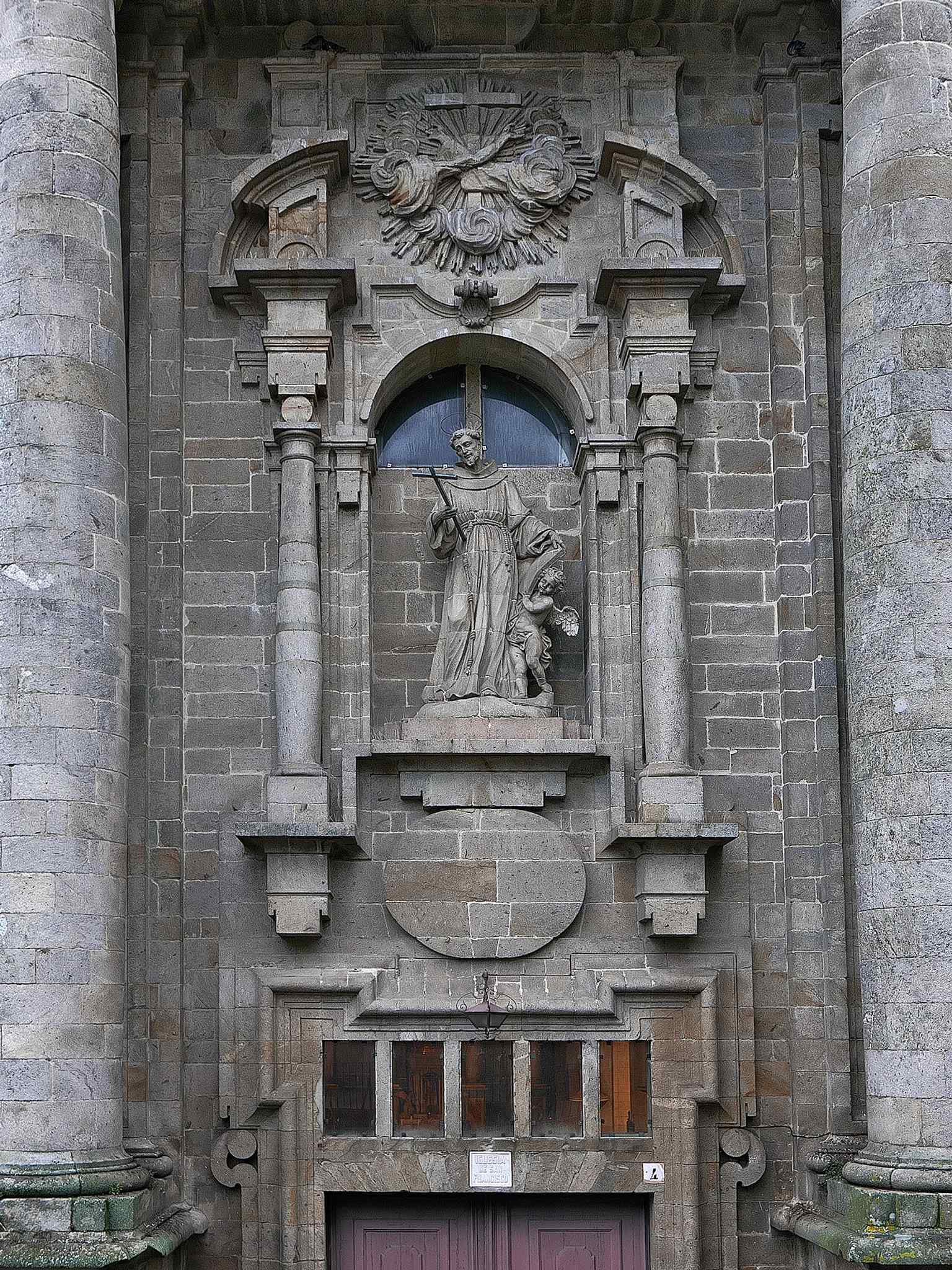
A closer look at the central figure on the facade, depicting San Francisco sculpted by José Antonio Mauro Ferreiro Suárez, flanked by Doric columns.Photo: Jl FilpoC, Wikimedia Commons, CC BY-SA 4.0. Cropped & resized. The convent grounds remain open twenty-four hours a day, keeping that ancient spirit of welcome alive. But our journey continues. Let us dive back into the dense historic streets. We are heading to the Cabildo House, which is an eight-minute walk away.
On your left, you will spot a stout, blocky building constructed of rough-hewn stone, featuring a striking double-arched wooden door and an elegant two-light Gothic window on its…Read moreShow less
Open dedicated page →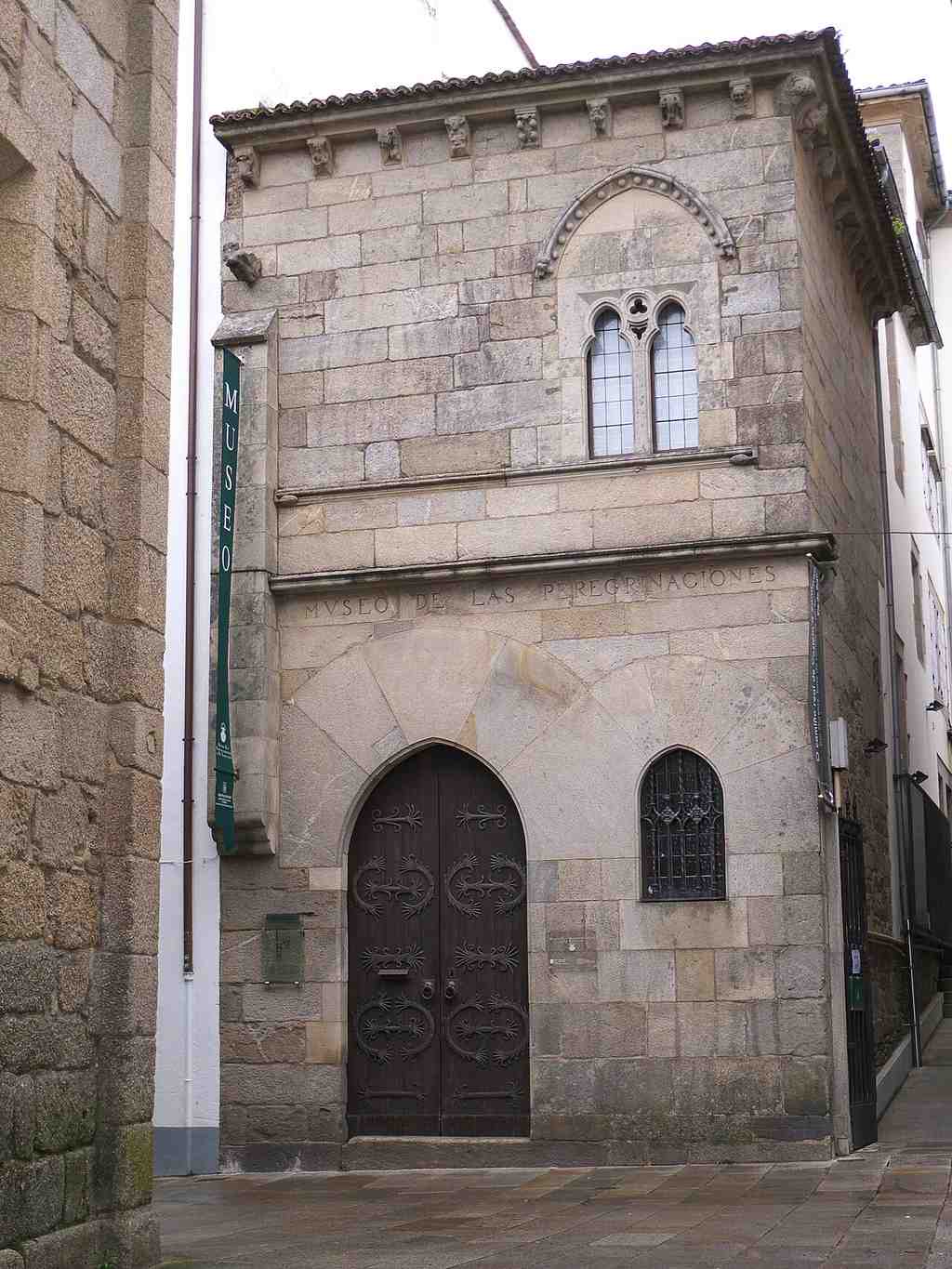
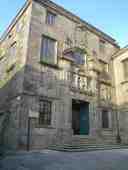
Museum of Pilgrimages and SantiagoPhoto: José Luis Filpo Cabana, Wikimedia Commons, CC BY 3.0. Cropped & resized. On your left, you will spot a stout, blocky building constructed of rough-hewn stone, featuring a striking double-arched wooden door and an elegant two-light Gothic window on its upper level. This is the historic Gothic House, one of the sites making up the Museum of Pilgrimages and Santiago.
The story of this museum really begins with a man named Manuel Chamoso Lamas. He arrived in the city in nineteen forty-four, not to found an institution, but to mediate a bitter, fierce conflict over whether to tear out the cathedral's baroque choir to restore its original Romanesque purity. He ended up staying to unearth the literal foundations of the city's history.
Chamoso Lamas approved the removal, which gave him the perfect excuse to lead archaeological digs right beneath the basilica. It was a brilliant maneuver. In nineteen fifty-five, his excavations struck gold, or rather, stone. He discovered the burial slab of Bishop Teodomiro, the ninth-century figure credited with originally finding the tomb of Saint James. Suddenly, the ancient legends were backed by hard, archaeological proof.
To house these massive discoveries, this museum was formally created in nineteen fifty-one. But for decades, it lived a sort of phantom existence. Grand heavenly aspirations often run headfirst into tight earthly budgets. For nearly forty-five years, the museum existed mostly on official government paperwork, only briefly opening its doors during special holy years before quietly shutting again.
Thankfully, modern efforts to preserve this profound history eventually won out. Today, the museum spans several restored buildings across the city center, meticulously capturing what it meant to walk the Camino across the centuries. Inside, they go far beyond displaying old stones. Experts actually studied the medieval stone sculptures of musicians in the cathedral, and used those carvings to build fully functional, wooden replicas of fiddles and harps. They brought silent stone back to life, allowing modern visitors to hear the exact music that echoed through the nave, the grand central aisle of the church, during the Middle Ages.
You can look at your phone to see some of the far-reaching artifacts they have gathered, like a nineteenth-century Peruvian painting showing a rather dramatic vision of Saint James. The collection also includes deeply personal items of devotion, if you swipe to see the ornate silver casing holding relics of Saint Lucy.
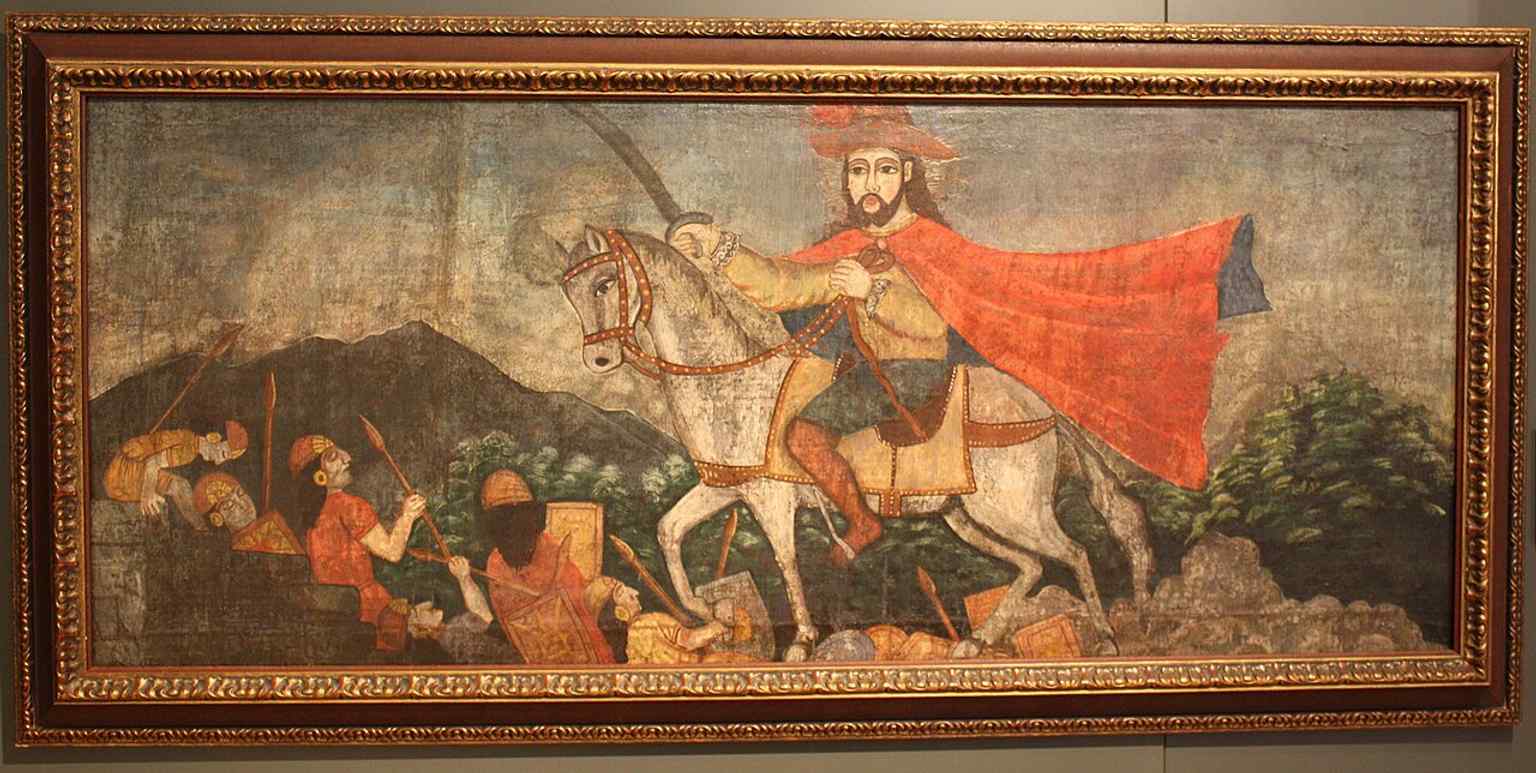
This 19th-century Peruvian painting depicts Saint James "Moor-slayer," showcasing the varied iconography of Saint James that forms part of the museum's collection.Photo: Lameiro, Wikimedia Commons, CC BY-SA 4.0. Cropped & resized. Perhaps their most incredible piece is a sprawling twenty-square-meter model of thirteenth-century Santiago. Built originally for a world exposition, it maps out the city exactly as medieval pilgrims would have seen it, complete with the bustling workshops of silversmiths eager to sell their wares to weary travelers. It perfectly captures a city built on profound belief, fueled by the everyday hustle of human enterprise.
We are heading to the absolute center of that very enterprise next. The Cathedral of Santiago de Compostela is just a one-minute walk away. Oh, and if you want to explore the museum's collection yourself, they are open every day except Monday, usually from nine thirty in the morning until eight thirty at night.
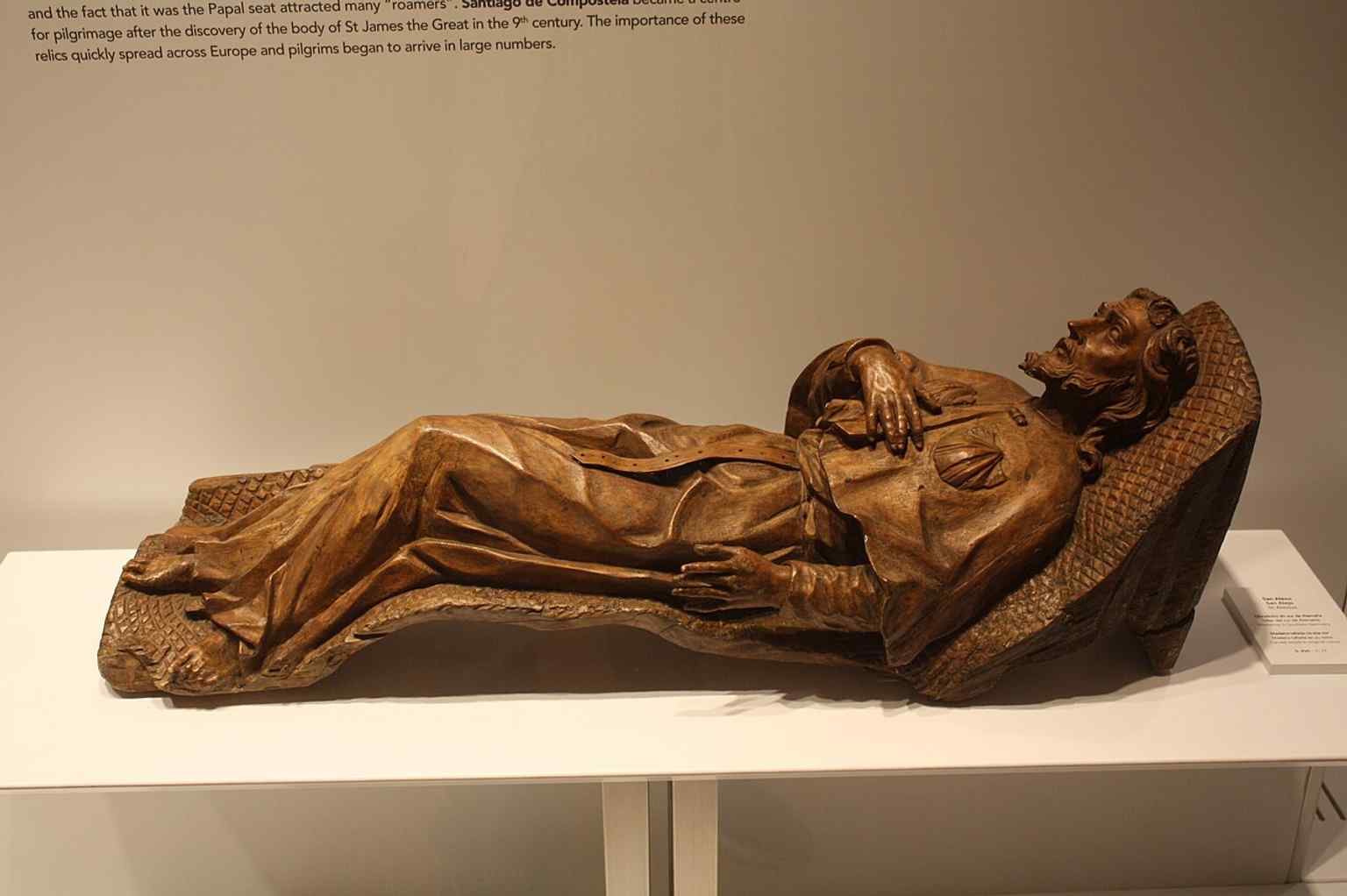
This 17th-century sculpture of Saint Alexius of Rome, crafted in a South German workshop, is part of the museum's diverse collection of art related to pilgrimage and religious history.Photo: Lameiro, Wikimedia Commons, CC BY-SA 4.0. Cropped & resized. 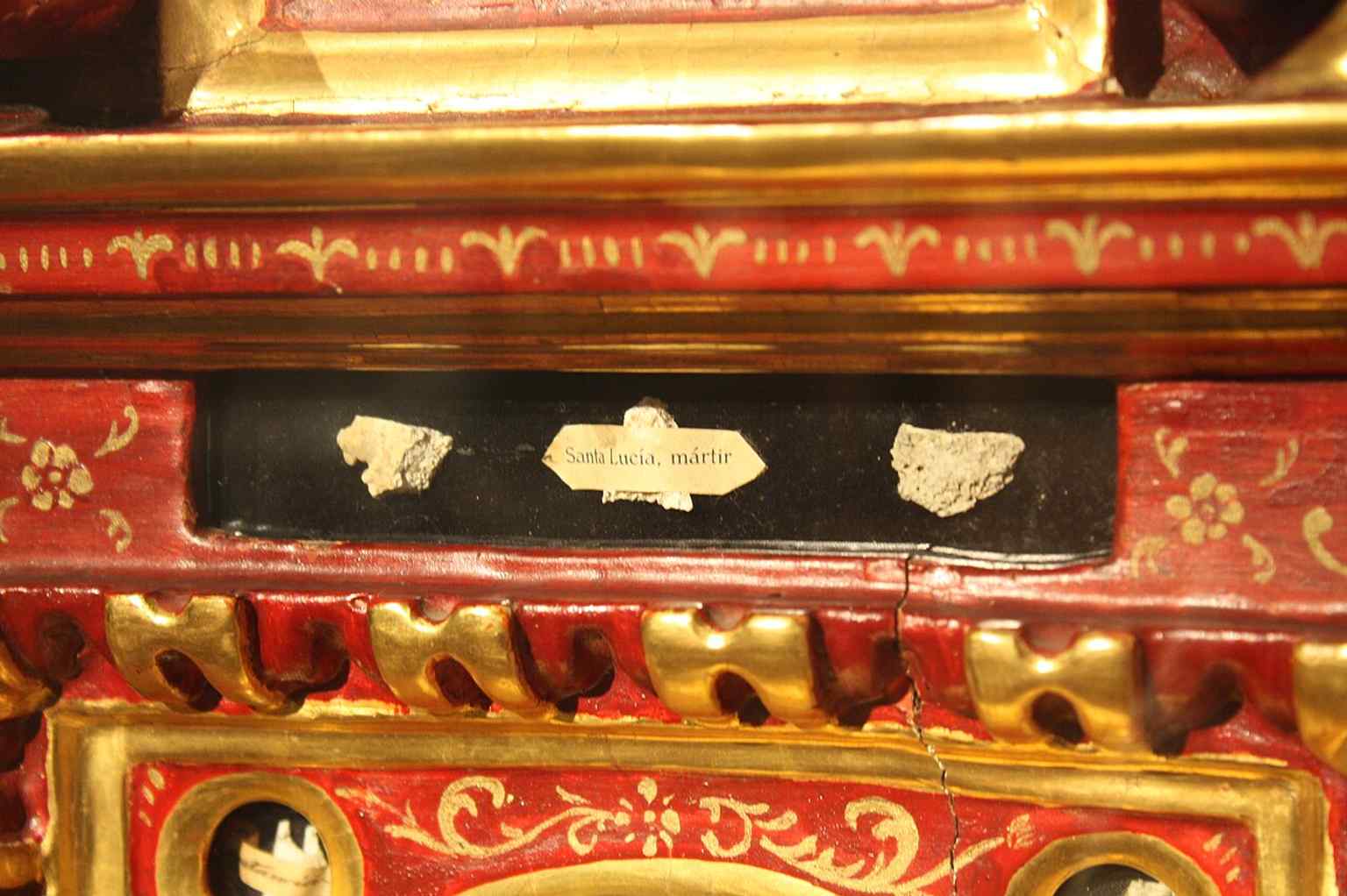
Displayed within the museum, these relics of Saint Lucy exemplify the broader religious artifacts and cultural items related to pilgrimage that the institution collects.Photo: Lameiro, Wikimedia Commons, CC BY-SA 4.0. Cropped & resized. To your left rises a towering granite masterpiece, featuring a central triangular gable flanked by two incredibly detailed twin spires and fronted by a sweeping diamond-shaped…Read moreShow less
Open dedicated page →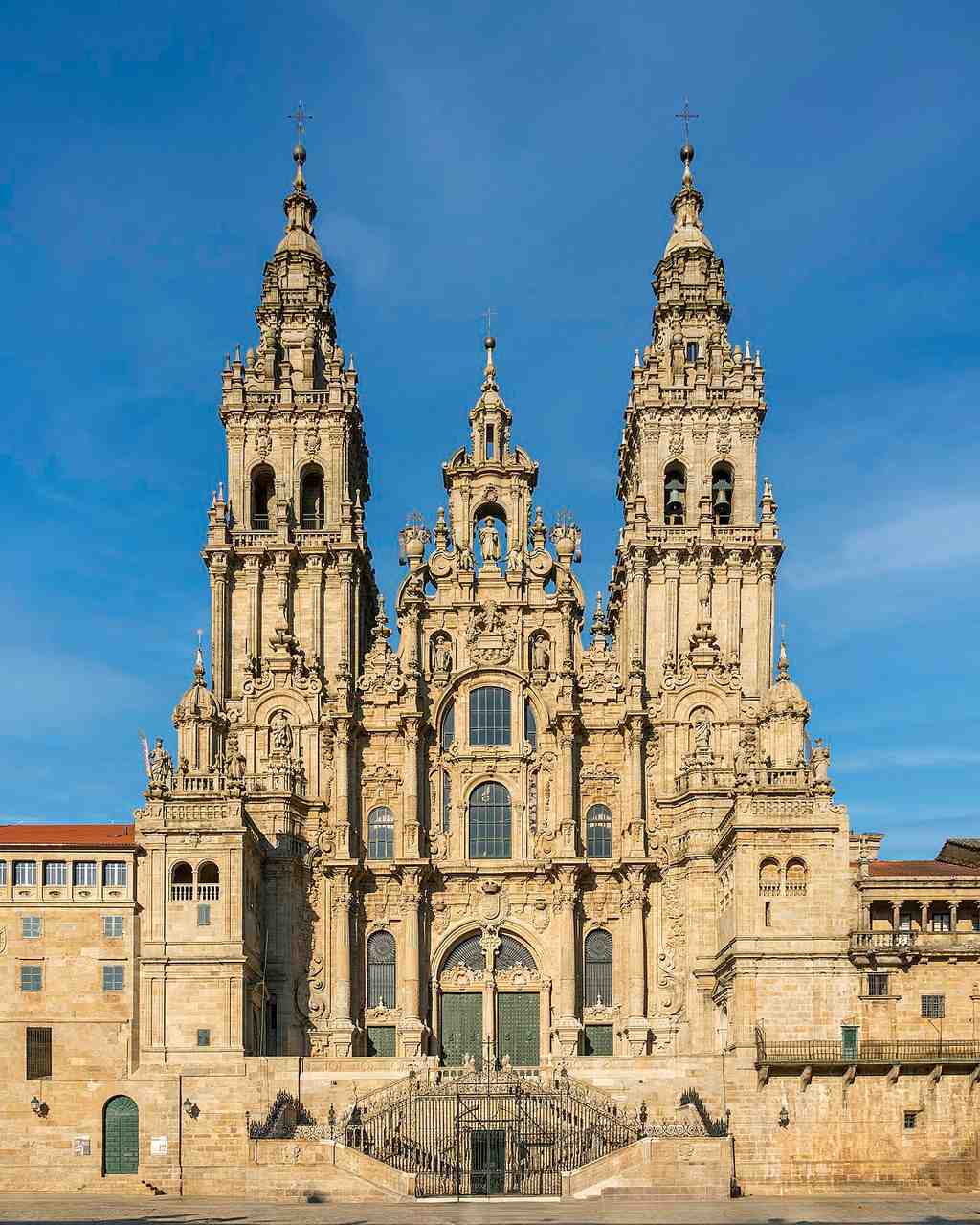
Cathedral of Santiago de CompostelaPhoto: Fernando, Wikimedia Commons, CC BY-SA 4.0. Cropped & resized. To your left rises a towering granite masterpiece, featuring a central triangular gable flanked by two incredibly detailed twin spires and fronted by a sweeping diamond-shaped double staircase. Over the past decade, a meticulous restoration stripped away centuries of moss and grime to reveal the original bright tone of this stone, and you can tap your screen to see what it looked like before the cleanup.
This awe-inspiring monument did not start with grand architects or wealthy kings, but with a humble boat of stone, two devoted disciples, and a very stubborn pagan monarch. According to legend, after the Apostle Saint James was martyred in Jerusalem in the year forty-four, his followers, Atanasio and Teodoro, brought his body back to the Iberian peninsula. They needed a sacred resting place, so they approached the local pagan ruler, Queen Lupa.
She was not exactly thrilled to host the remains of a foreign Christian martyr.
In a classic clash of worldly control and divine intent, Lupa tried to stop the burial through a rather theatrical deception. Most visitors walking these steps never realize that she sent the disciples to a nearby mountain, promising they would find gentle oxen to transport the heavy stone tomb. But the mountain was actually a deadly trap. It was populated by a dragon and fierce, wild bulls that the queen fully expected would tear the men apart. It was a brutal test to see whose authority would ultimately claim this territory.
The legend says the disciples simply made the sign of the cross, and the savage beasts were instantly tamed, quietly yoking themselves to the cart. Seeing her cunning plot defeated by pure faith, Queen Lupa was completely astounded. She surrendered her political schemes, converted to the new religion on the spot, and granted the land for the tomb.
What began as a tense battle of wills over a simple plot of dirt eventually sparked an international phenomenon. That solitary grave drew millions of people across the continent, transforming a forgotten corner of the world into the massive global movement of the Camino de Santiago. It is staggering to think that this sprawling architectural wonder, whose intricate main facade you can admire up close on your screen, grew from such a wild origin story.
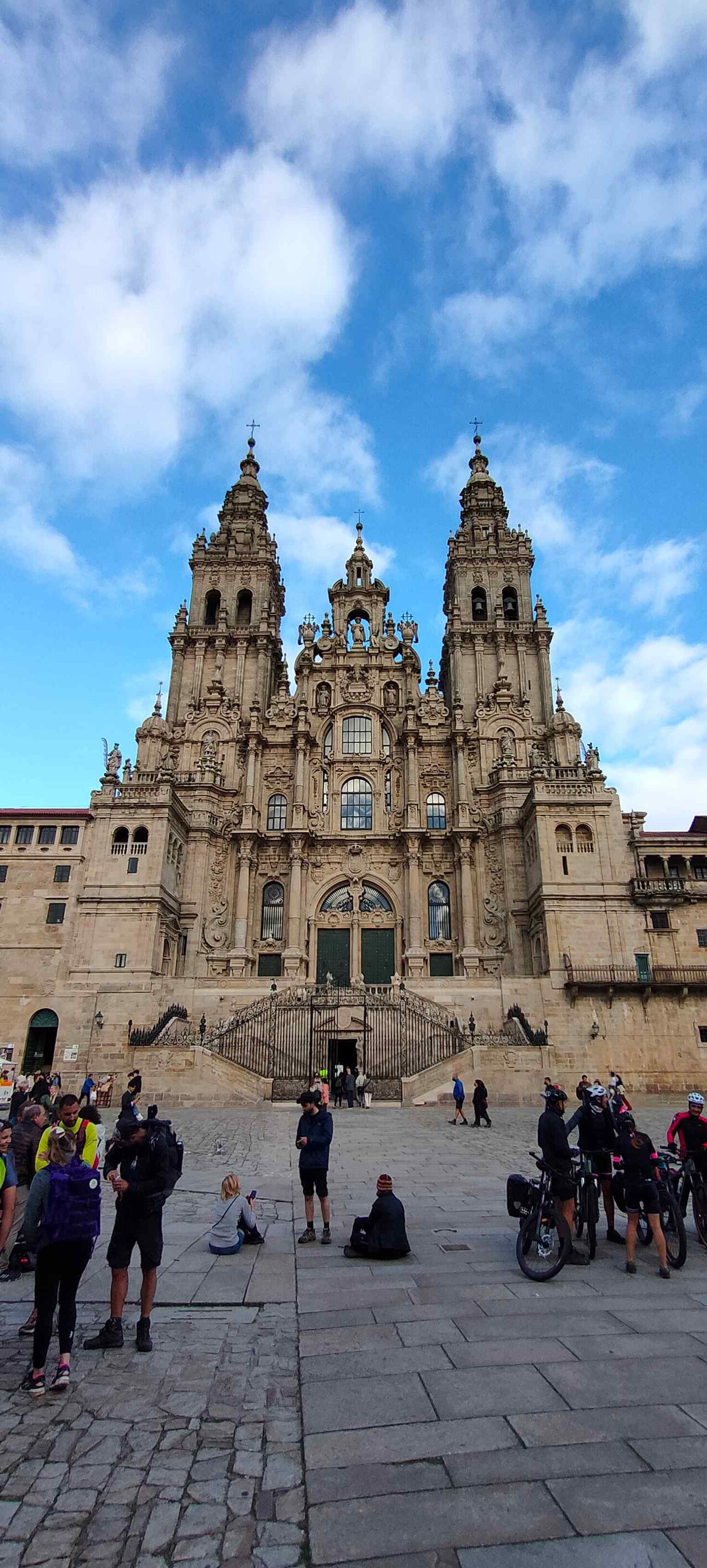
A closer view of the intricate Obradoiro facade, named after the 'obradoiro' (workshop) of stonemasons who worked in the square during the cathedral's construction.Photo: Triplecaña, Wikimedia Commons, CC BY-SA 4.0. Cropped & resized. The cathedral is open daily from seven A-M to nine P-M if you want to explore the grand interior and its soaring central hall later. For now, let us walk around the building to the magnificent back square of the complex, as our next stop, Quintana Square, is just steps away.
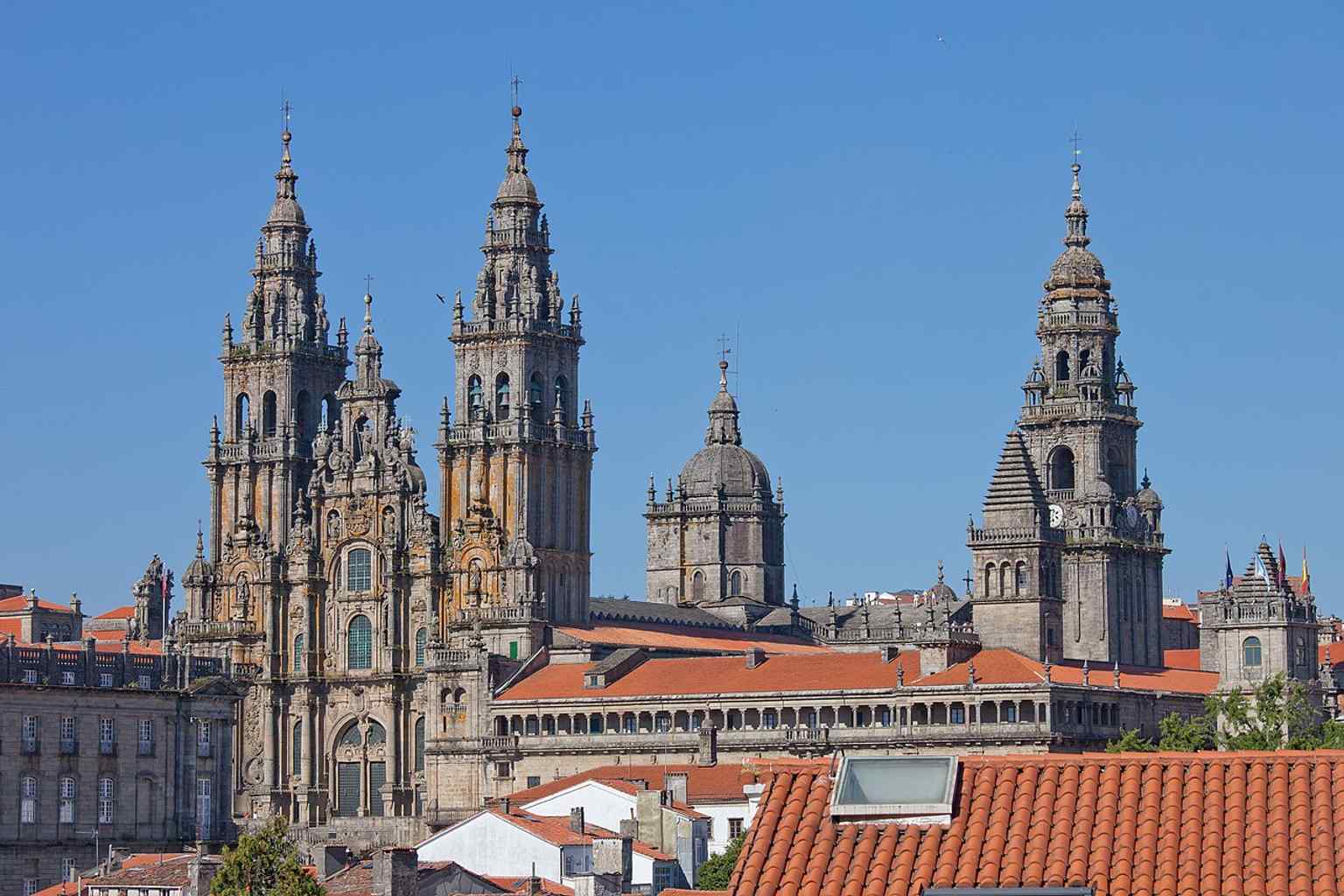
The iconic Baroque Obradoiro facade, designed by Fernando de Casas Novoa, stands as a symbol of Santiago de Compostela and is featured on Spanish Euro coins.Photo: Luis Miguel Bugallo Sánchez, Wikimedia Commons, CC BY-SA 3.0. Cropped & resized. 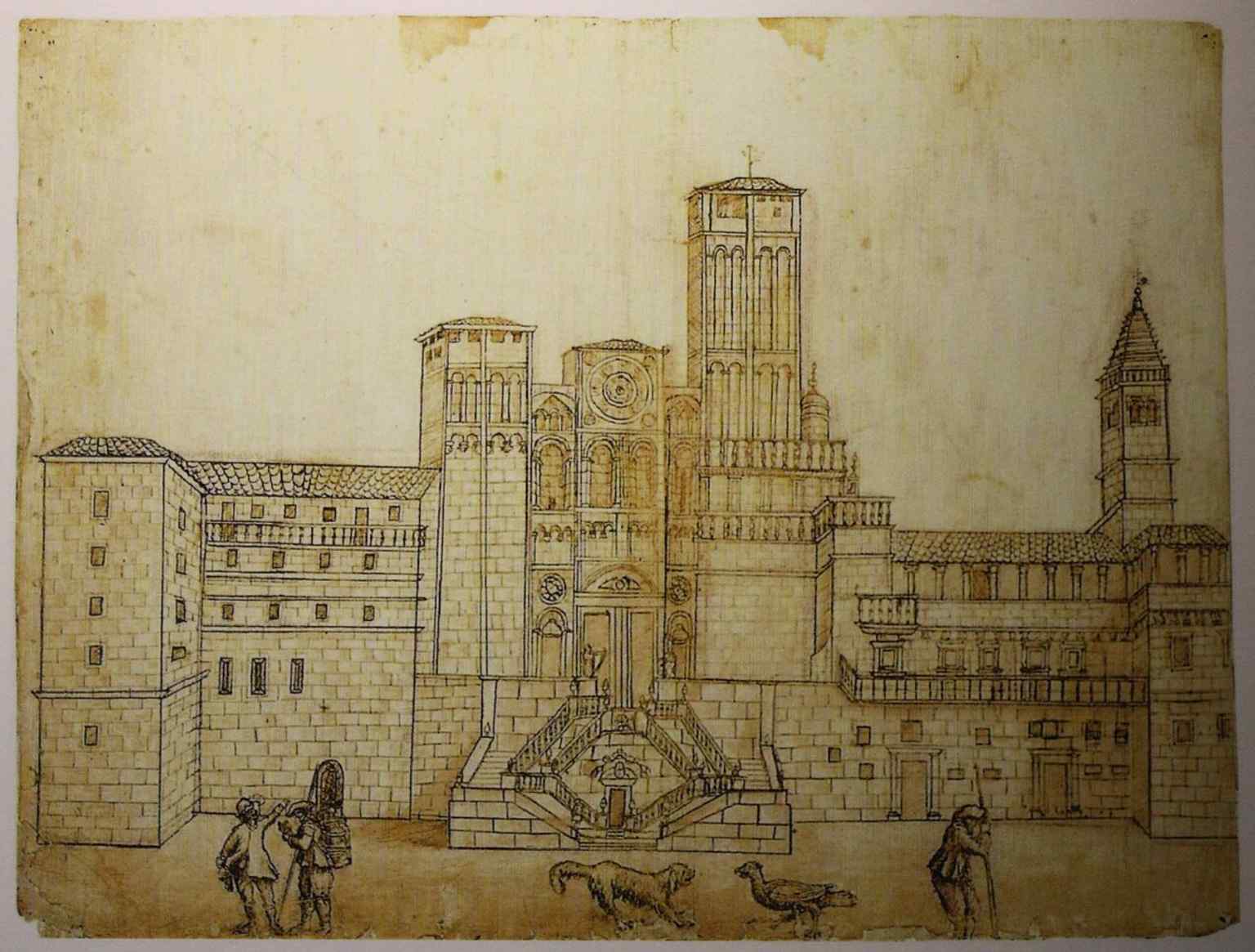
This 1657 drawing by José Vega y Verdugo depicts the original Romanesque western facade, which was later replaced by the current Baroque Obradoiro facade.Photo: José Vega y Verdugo (1623-1696), Wikimedia Commons, Public domain. Cropped & resized. 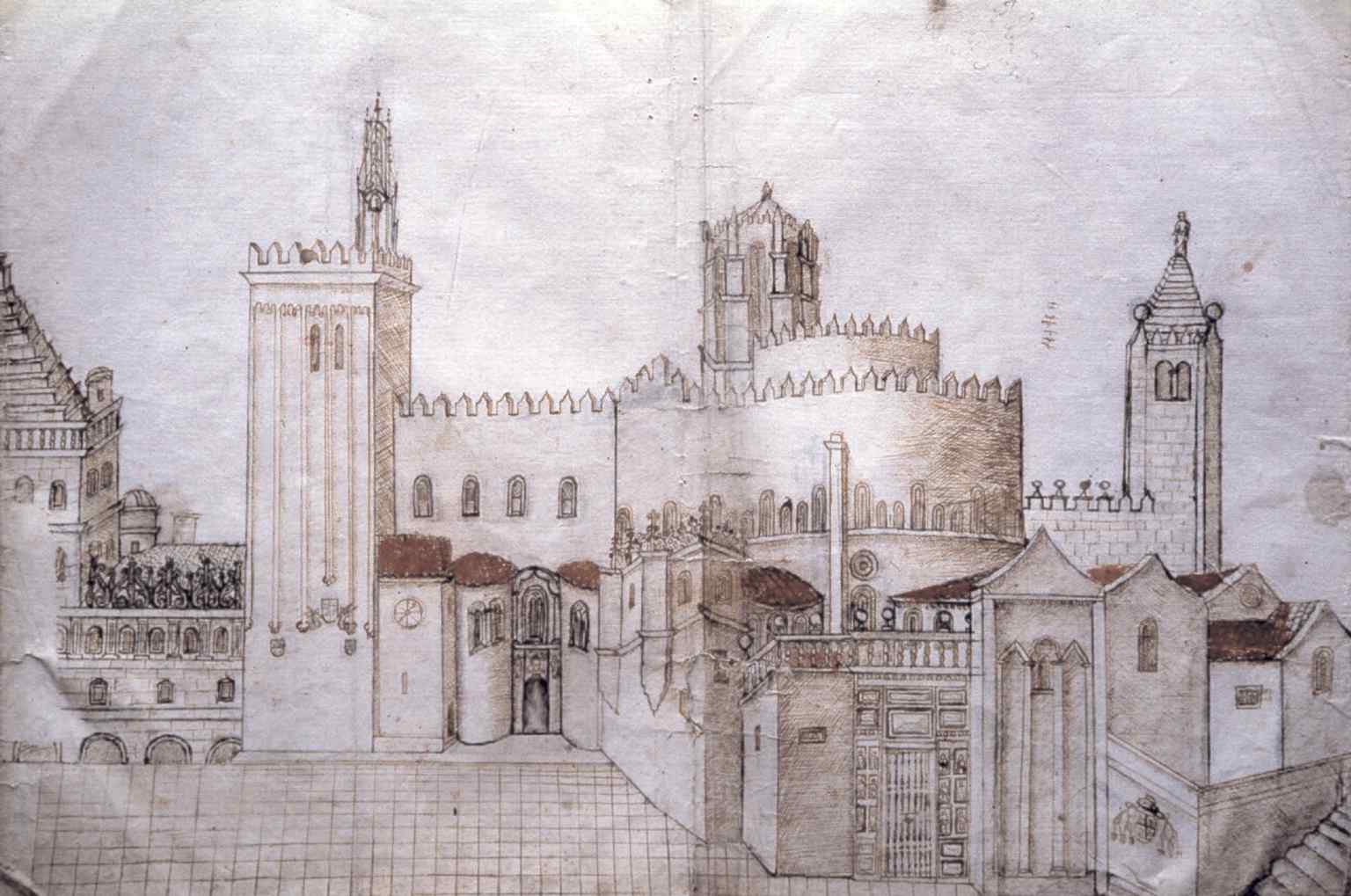
An etching from 1657 by José Vega y Verdugo, showing the cathedral from Quintana Square, where the Holy Door (Puerta Santa) opens only during Jubilee Years.Photo: José de Vega y Verdugo, Wikimedia Commons, Public domain. Cropped & resized. 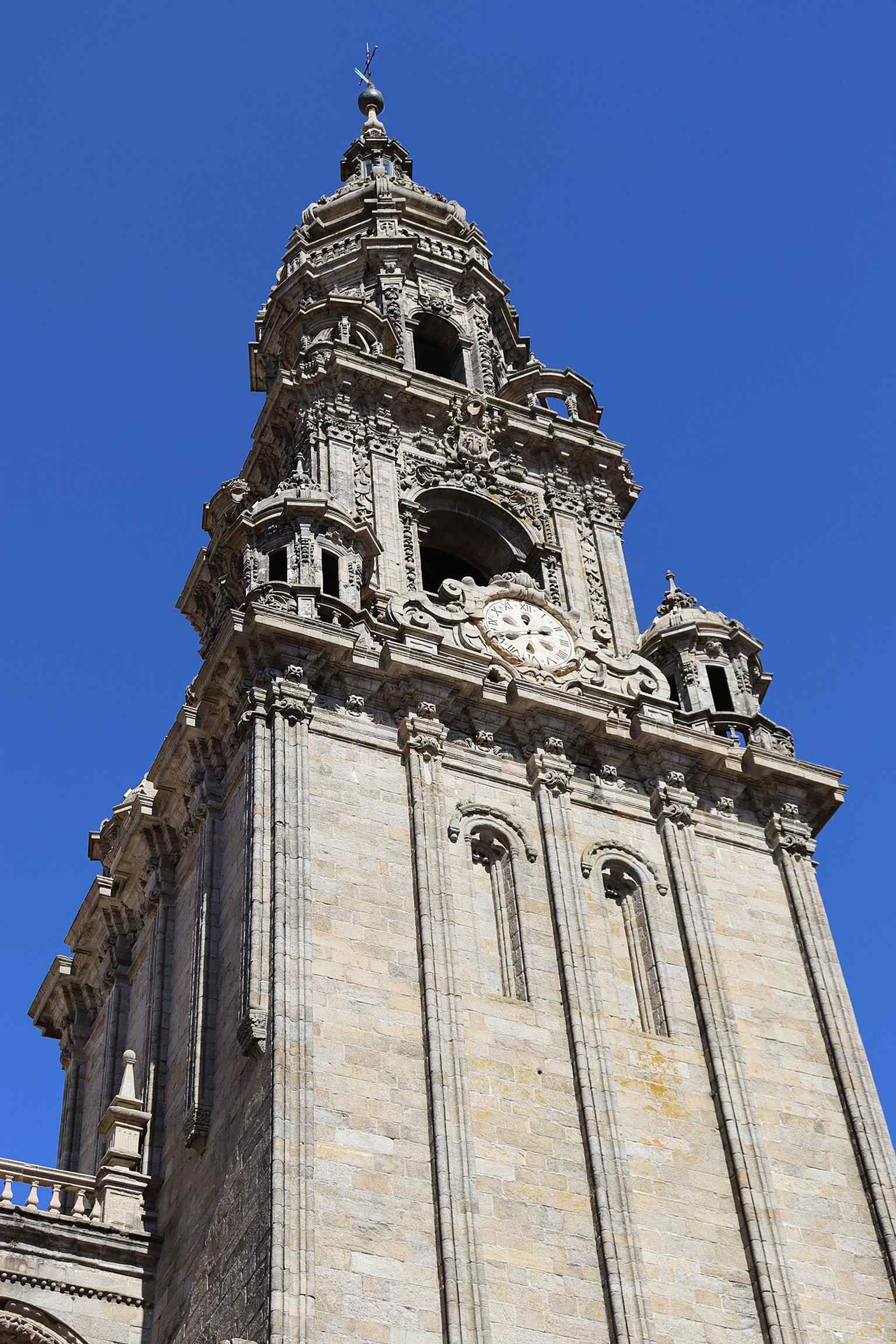
The impressive Torre del Reloj, also known as Berenguela, was elevated to its current Baroque height by Domingo de Andrade between 1676 and 1680, reaching 75 meters.Photo: Fernando Losada Rodríguez, Wikimedia Commons, CC BY-SA 4.0. Cropped & resized. 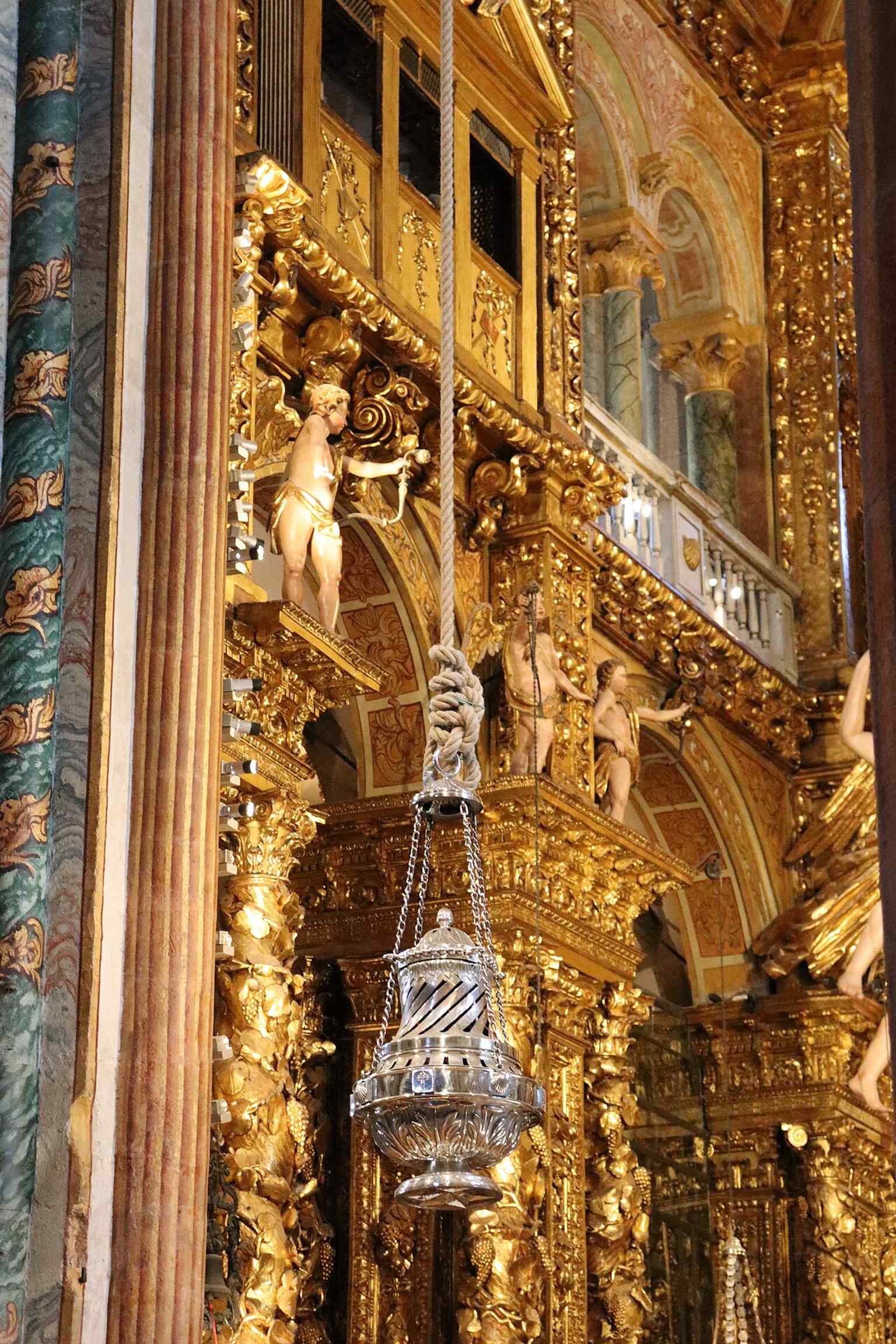
The iconic Botafumeiro, a massive censer weighing over 100 kg when full, swings up to 68 km/h across the transept, traditionally used to purify the air from weary pilgrims.Photo: Fernando Losada Rodríguez, Wikimedia Commons, CC BY-SA 4.0. Cropped & resized. 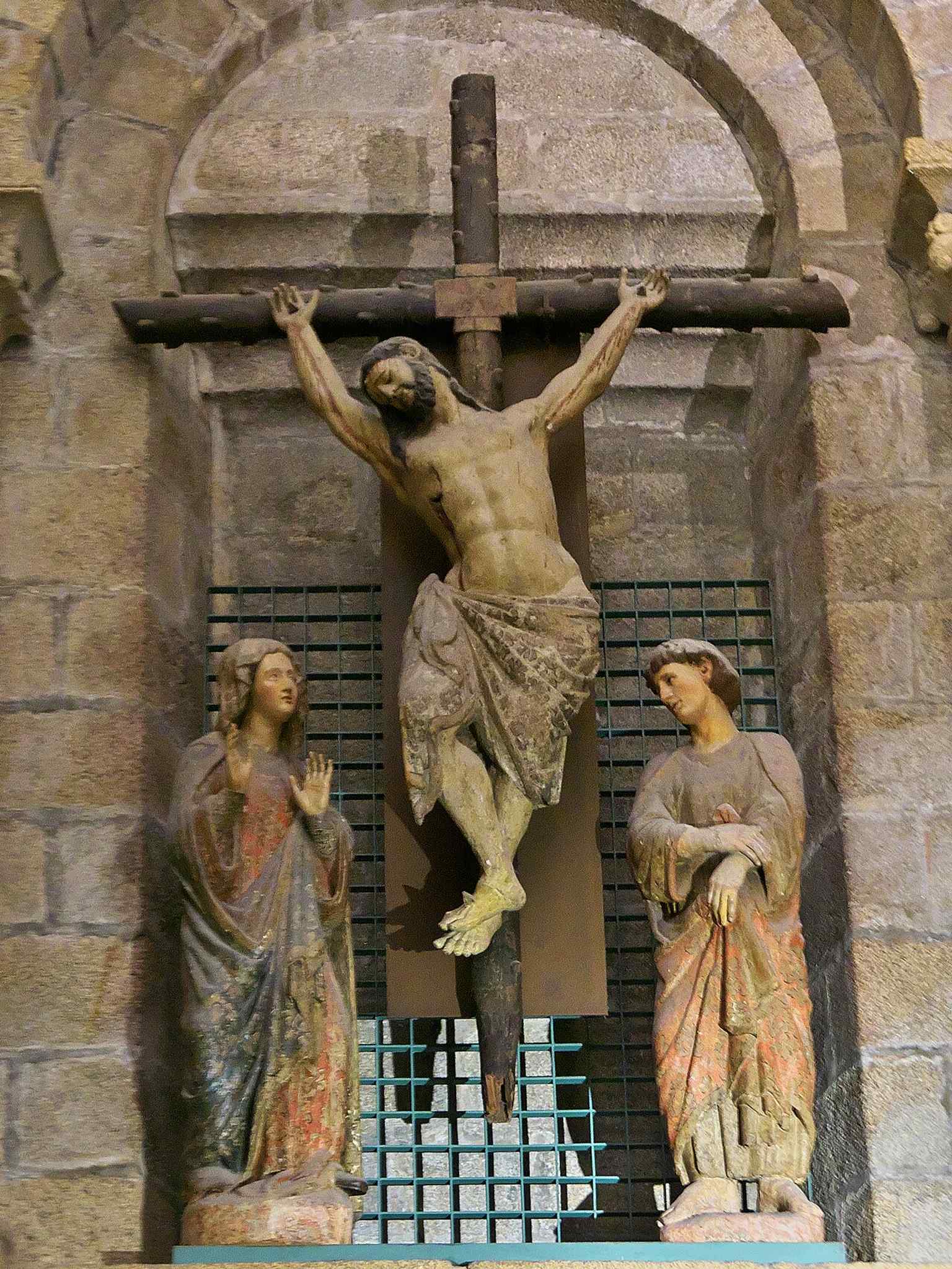
This 14th-century Gothic Calvary, situated in the Cathedral's baptistery, highlights the sacrament of baptism, symbolizing Christ's purification in the Jordan River.Photo: Jl FilpoC, Wikimedia Commons, CC BY-SA 4.0. Cropped & resized. 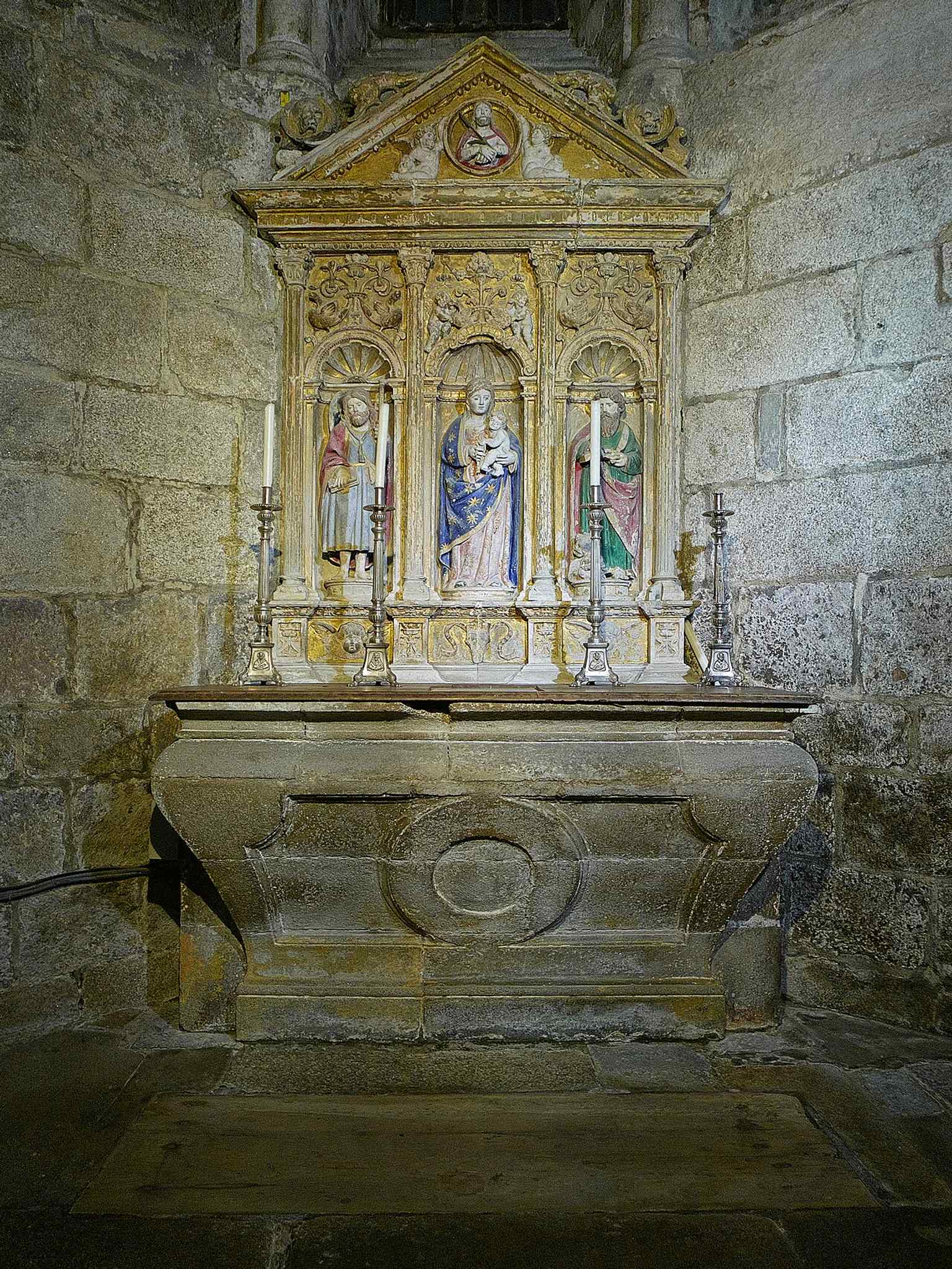
The altar of the Chapel of San Bartolomé features the Virgin of Good Counsel, within a chapel that also houses the Renaissance sepulchre of Diego de Castilla, great-grandson of King Pedro I.Photo: Jl FilpoC, Wikimedia Commons, CC BY-SA 4.0. Cropped & resized. 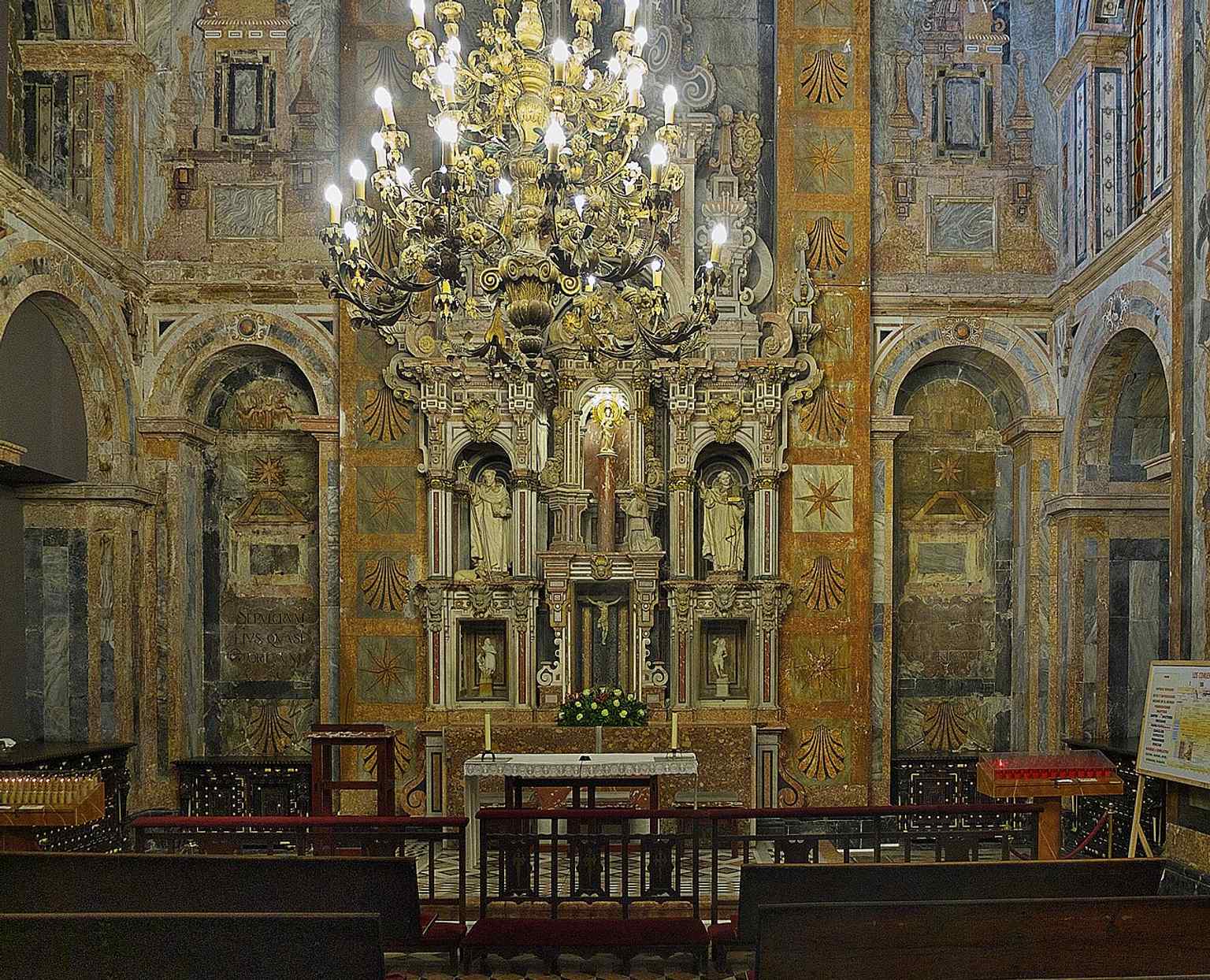
The Chapel of Pilar, constructed in the early 18th century, contains a painting depicting the Apparition of the Virgin of Pilar to St. James, commemorating his mission to evangelize the Iberian Peninsula.Photo: Jl FilpoC, Wikimedia Commons, CC BY-SA 4.0. Cropped & resized. 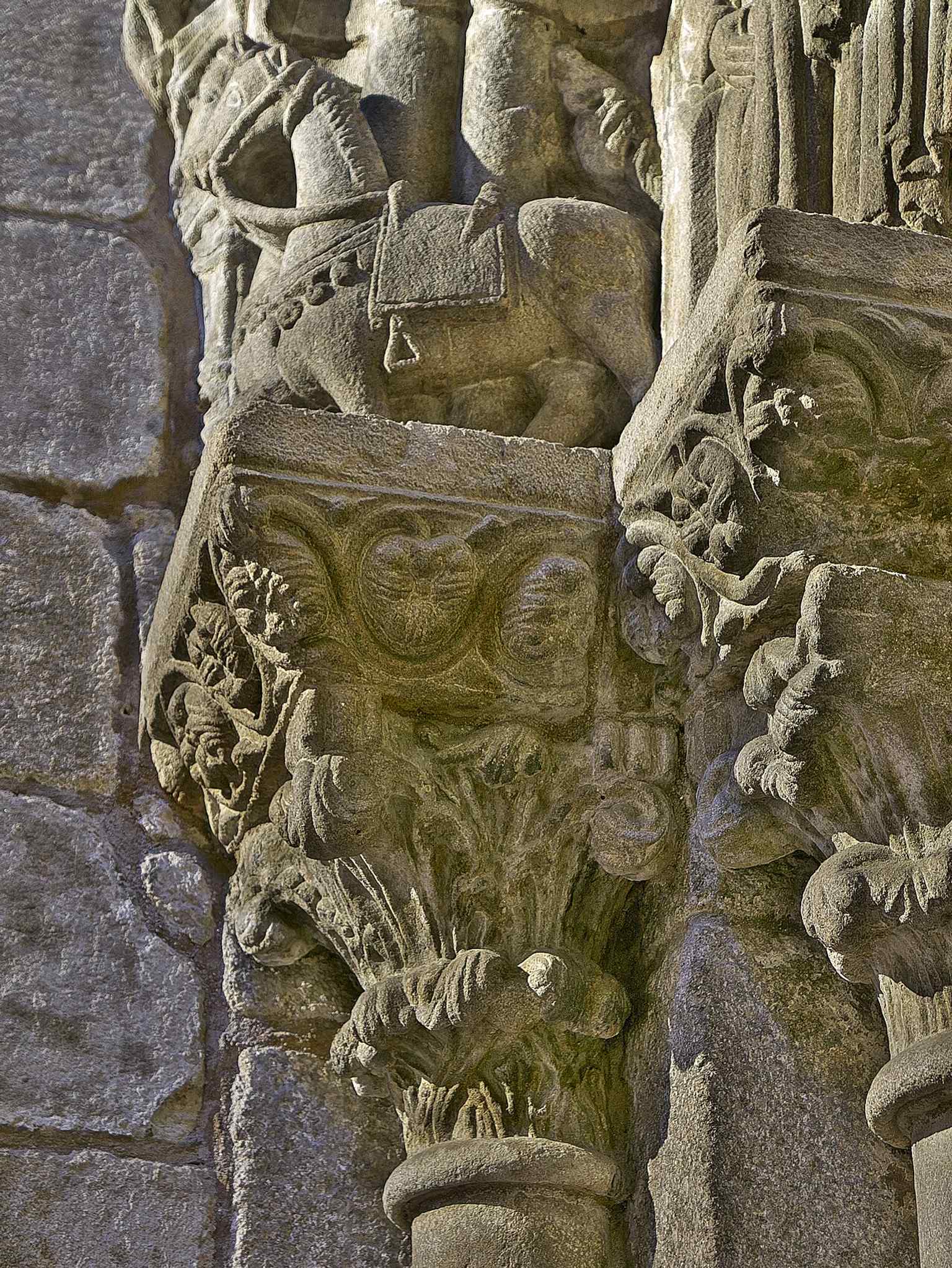
A detail from the Chapel of Corticela's Romanesque door, showing the horses of the Magi, part of the tympanum's Adoration of the Magi scene.Photo: Jl FilpoC, Wikimedia Commons, CC BY-SA 4.0. Cropped & resized. 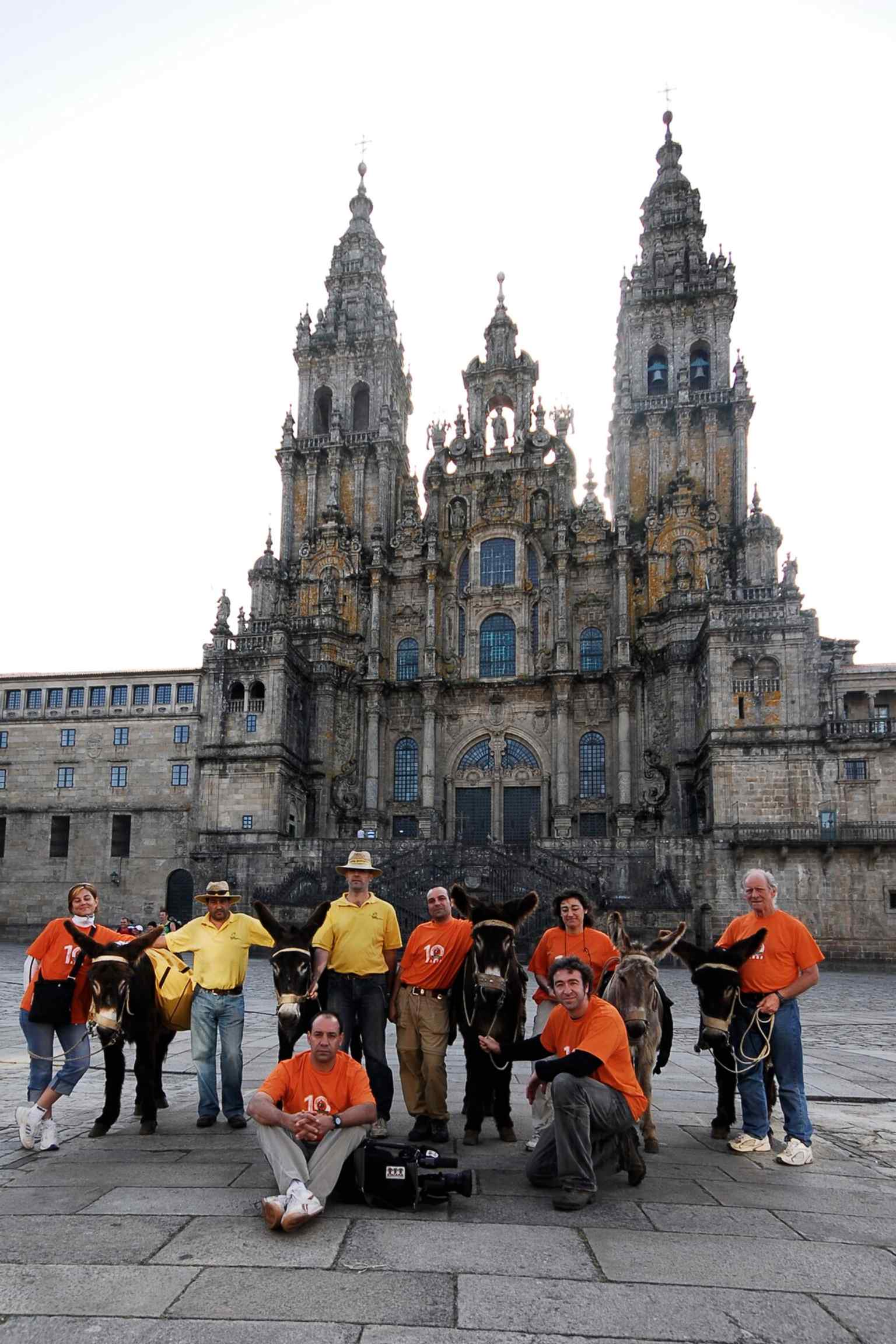
Pilgrims, some arriving on donkeys as in medieval times, gather in front of the Cathedral, culminating their spiritual journey on the historic Camino de Santiago.Photo: Enrique Amigo, Wikimedia Commons, CC BY-SA 4.0. Cropped & resized. 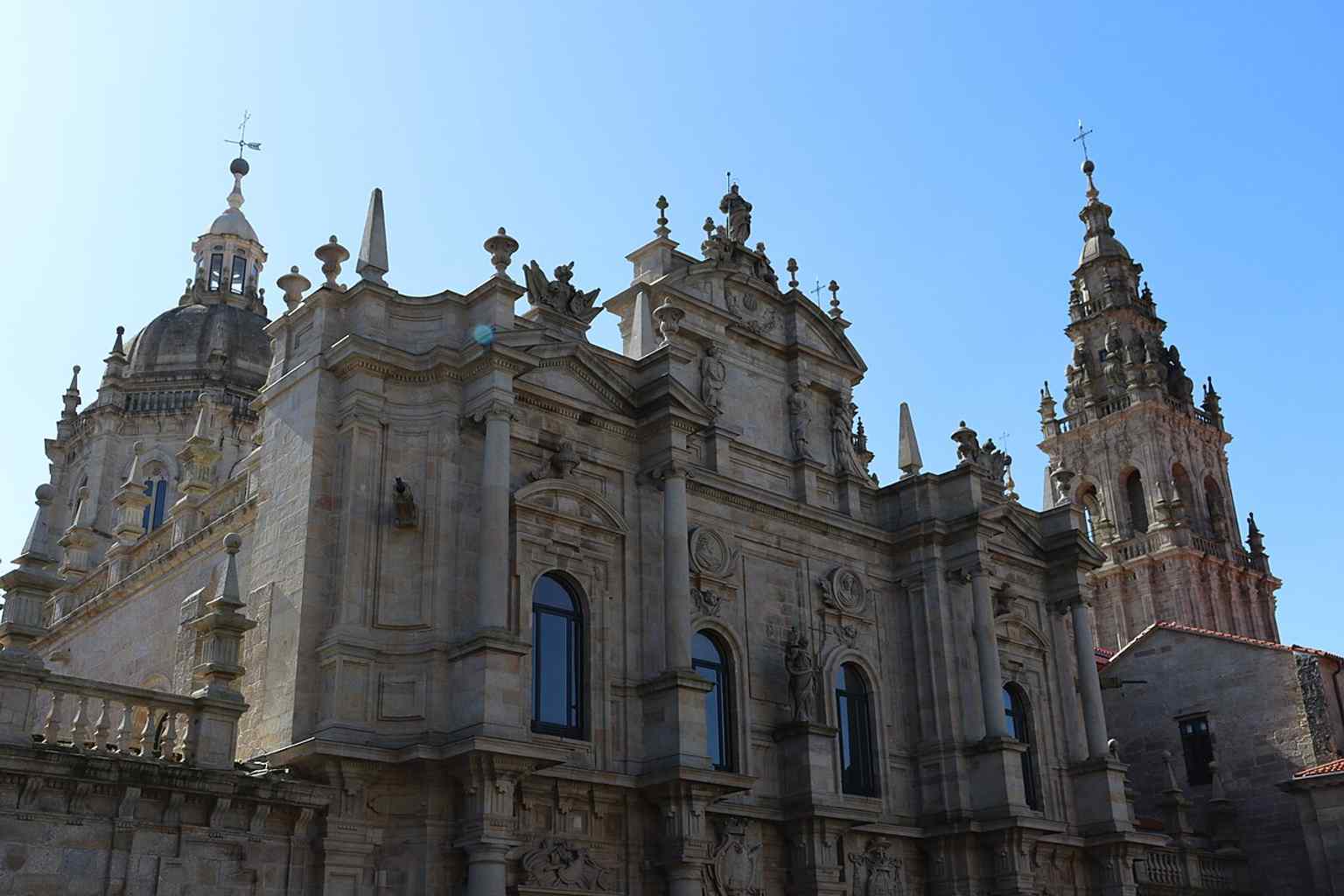
A comprehensive view of the Cathedral complex, a granite masterpiece declared a UNESCO World Heritage site in 1985, as the old city of Santiago de Compostela concentrates around it.Photo: Fernando Losada Rodríguez, Wikimedia Commons, CC BY-SA 4.0. Cropped & resized. Today, it feels like a grand public stage. But step back a few centuries, and this lower level was the Quintana de Mortos, the cemetery of the dead. By seventeen eighty, city…Read moreShow less
Open dedicated page →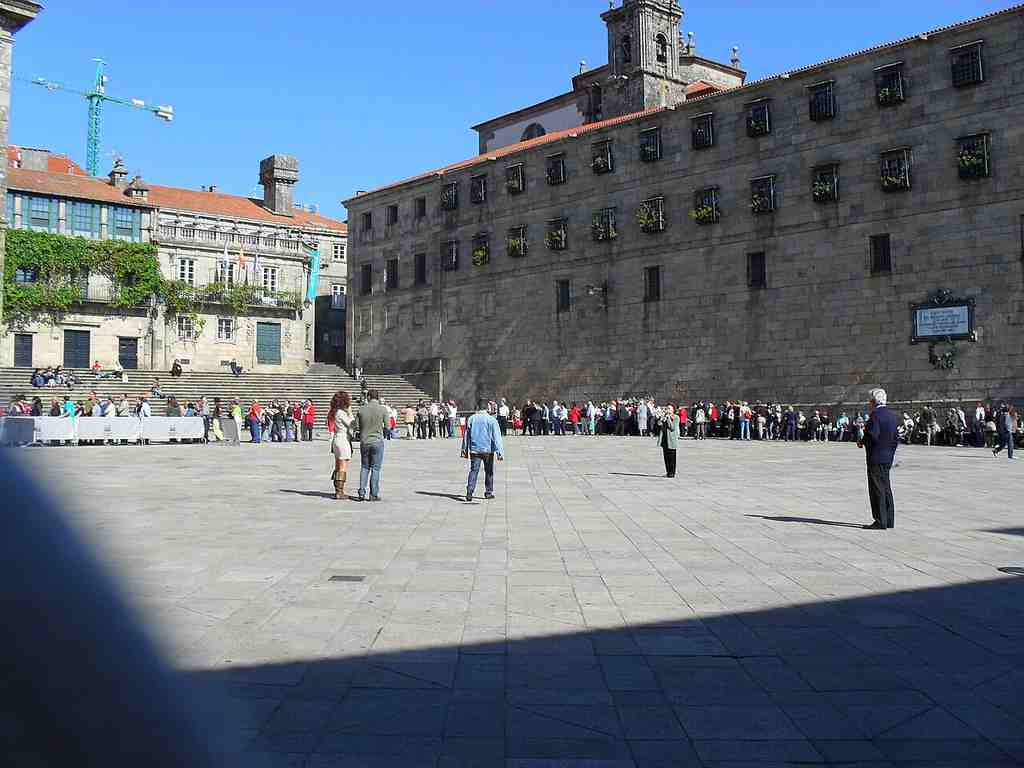
Quintana SquarePhoto: Gerardo nuñez, Wikimedia Commons, CC BY 3.0. Cropped & resized. Welcome to Quintana Square, a vast expanse of grey granite paving divided by a wide, monumental staircase and bordered by an immense, windowless stone wall.
Today, it feels like a grand public stage. But step back a few centuries, and this lower level was the Quintana de Mortos, the cemetery of the dead. By seventeen eighty, city officials realized that having a crowded graveyard right next to the most important church in Spain was less than ideal. Fear of disease spreading from foul air caused them to dig up the remains and move them far away.
Standing here in this sweeping open space, imagine what it feels like knowing you are walking over an ancient cemetery.
Even the architecture surrounding you hides a few secrets. Look at the long, uniform stone curtain forming the eastern facade of the cathedral. That was the grand vision of Canon José Vega y Verdugo in the seventeenth century. Much like the cathedral exterior we discussed earlier, he looked at a chaotic medieval jumble of mismatched chapels and decided to simply build a massive wall to hide it all. It was a brilliant piece of architectural theater, designed to project the absolute, unshakeable power of the church hierarchy. To get it done smoothly, builders even buried discarded fragments of a priceless medieval stone choir right under the newly paved floor.
If you glance at your screen, you can see a shot of how the staircase distinctly splits the upper tier, the square of the living, from the lower tier, the square of the dead.
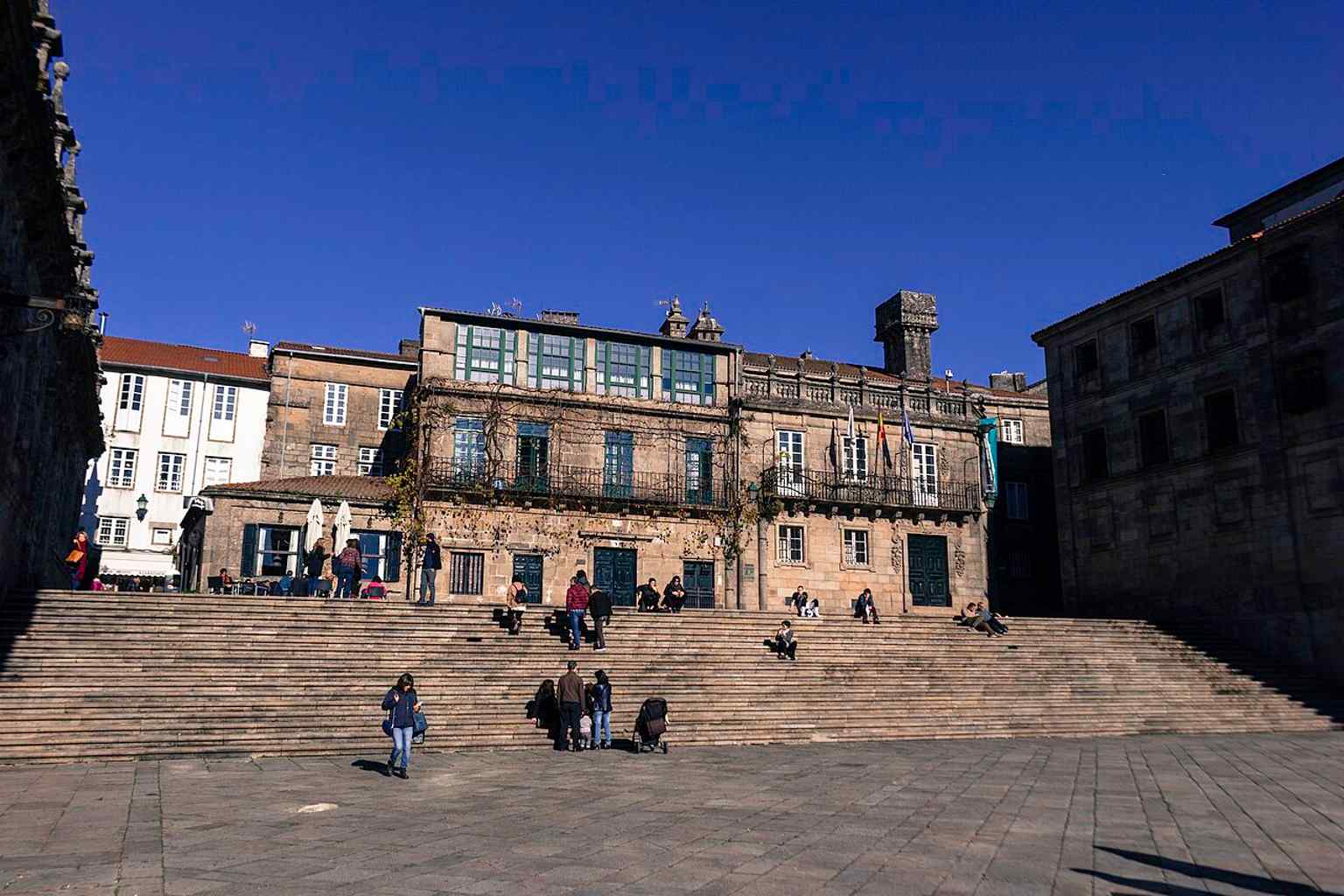
Quintana Square is historically divided by a monumental staircase into the 'Quintana de Vivos' (upper level) and the 'Quintana de Mortos' (lower level), which was once a medieval cemetery.Photo: Bene Riobó, Wikimedia Commons, CC BY-SA 4.0. Cropped & resized. And speaking of the dead... if you look toward the deep corner beneath the clock tower, you might find something mysterious at nightfall. Take a look at your app to see the Berenguela Tower where this happens. Due to the lighting of a granite pillar, a silhouette appears on the stone. Locals call it the Shadow of the Pilgrim. Science calls it an optical illusion, but the folklore is far better. The most famous legend claims a cathedral priest fell in love with a cloistered nun from the neighboring convent. They planned to elope, and he dressed in a pilgrim's wide-brimmed hat and staff to hide his identity. He waited for her in the square, but she never appeared. Now, his spirit returns to that exact spot every night, forever waiting for his lost love.
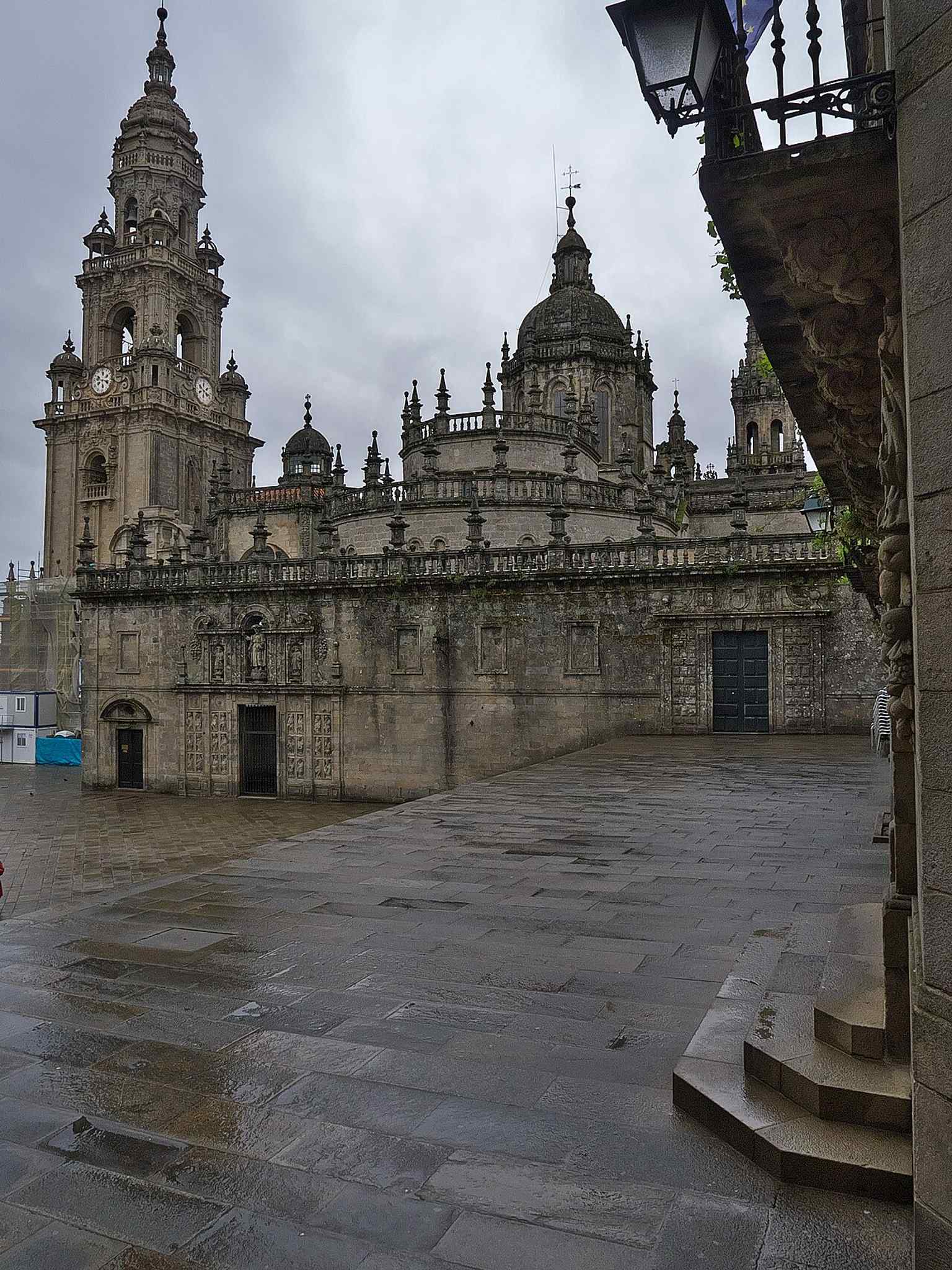
The impressive Berenguela Tower, also known as the Clock Tower, is where the 'Shadow of the Pilgrim' is said to appear at night, an optical illusion that inspires various local legends.Photo: José Luis Filpo Cabana, Wikimedia Commons, CC BY 3.0. Cropped & resized. This plaza has witnessed more than just ghostly romance. In eighteen oh eight, local university students gathered here to form the Literary Battalion to fight invading foreign troops. Despite having zero military training, they fought with such fierce distinction that the few survivors were promoted to officers in the regular army.
Now, let us turn our attention back to that massive, austere granite wall bordering the eastern edge of the square. It belongs to the very convent where that legendary nun was supposedly cloistered. We are going to head there now. It is a short three minute walk to our next stop, the Monastery of San Pelayo de Antealtares.
Look at the immense, austere stone wall stretching across the square, defined by its rhythm of simple rectangular windows and practically no decoration. This is the Royal…Read moreShow less
Open dedicated page →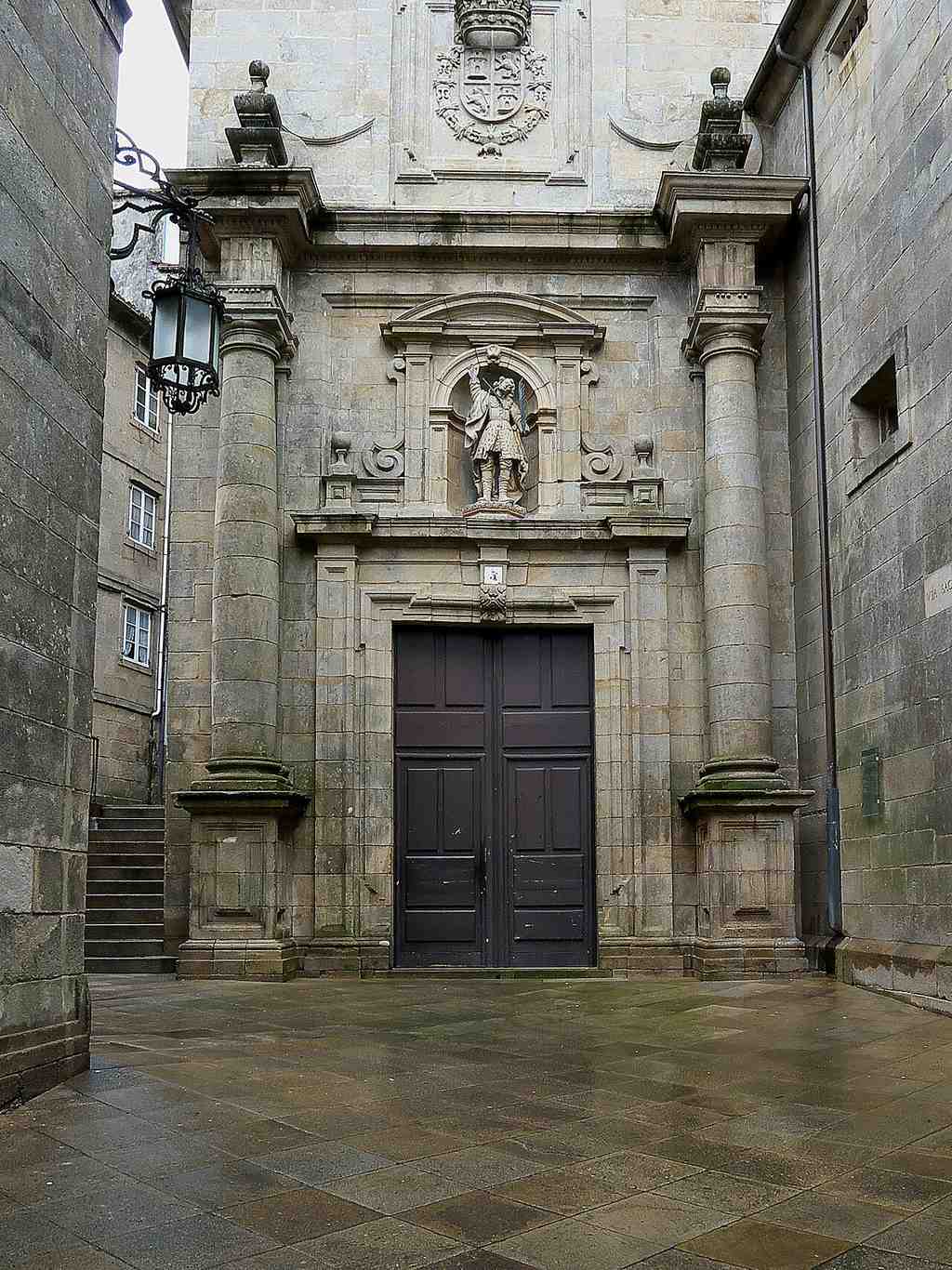
Monastery of San Pelayo de AntealtaresPhoto: José Luis Filpo Cabana, Wikimedia Commons, CC BY 3.0. Cropped & resized. Look at the immense, austere stone wall stretching across the square, defined by its rhythm of simple rectangular windows and practically no decoration. This is the Royal Monastery of San Pelayo de Antealtares.
Its seventeenth-century architect, Fernández Lechuga, deliberately designed this massive facade to be plain, knowing better than to compete with the flashy Cathedral next door. But the history behind these walls is anything but quiet.
Back in the year ten seventy-seven, a major real estate problem struck Santiago. Bishop Diego Peláez wanted to expand the grand, heavy-stone Romanesque cathedral, but he had run out of room. The land he needed belonged to this monastery. What followed was a masterclass in negotiation, a historic legal agreement recorded as the Concordia de Antealtares. Much like earlier legends of yielded land, the monks here made a massive concession. Abbot Fagildo signed over the soil so the cathedral could grow eastward. But he did not do it for free. In exchange, the monastery secured total independence and vast institutional power. It was a neat piece of earthly deal-making to serve a divine purpose.
The monks also walked away with the Ara de San Pelayo, a humble piece of marble that happens to be the original first-century altar placed over Saint James's tomb by his disciples. When the cathedral upgraded its altar, the monks gladly took the original, making it the symbolic heart of their own holy site.
But a few centuries later, the tranquility here shattered. In fourteen ninety-nine, the Catholic Monarchs decided to forcefully reorganize local religious life. They ordered this monastery to become an enclosed convent exclusively for women, living under a strict, isolated rule. They sent a Castilian noblewoman named Beatriz de Acuña to act as the new abbess, the community leader, and enforce the harsh discipline. The local Galician nuns did not take kindly to this. In an unprecedented rebellion, almost every single nun escaped into the night, fleeing back to their old convents. Beatriz spent years trying to pacify the situation, eventually having to pay off the deposed leaders with handsome stipends to keep the peace.
Once the dust settled, the convent became the most prestigious in Galicia. During the seventeenth and eighteenth centuries, daughters of the high nobility, known locally as the Señoras, moved in. They brought astronomical dowries with them. If you check your screen, you can see the results of that aristocratic wealth. The monastery church boasts a breathtaking, highly dramatic Baroque interior, entirely funded by those noble fortunes. A master craftsman named Francisco de Castro Canseco carved the stunning main altarpiece you see here in seventeen fourteen.
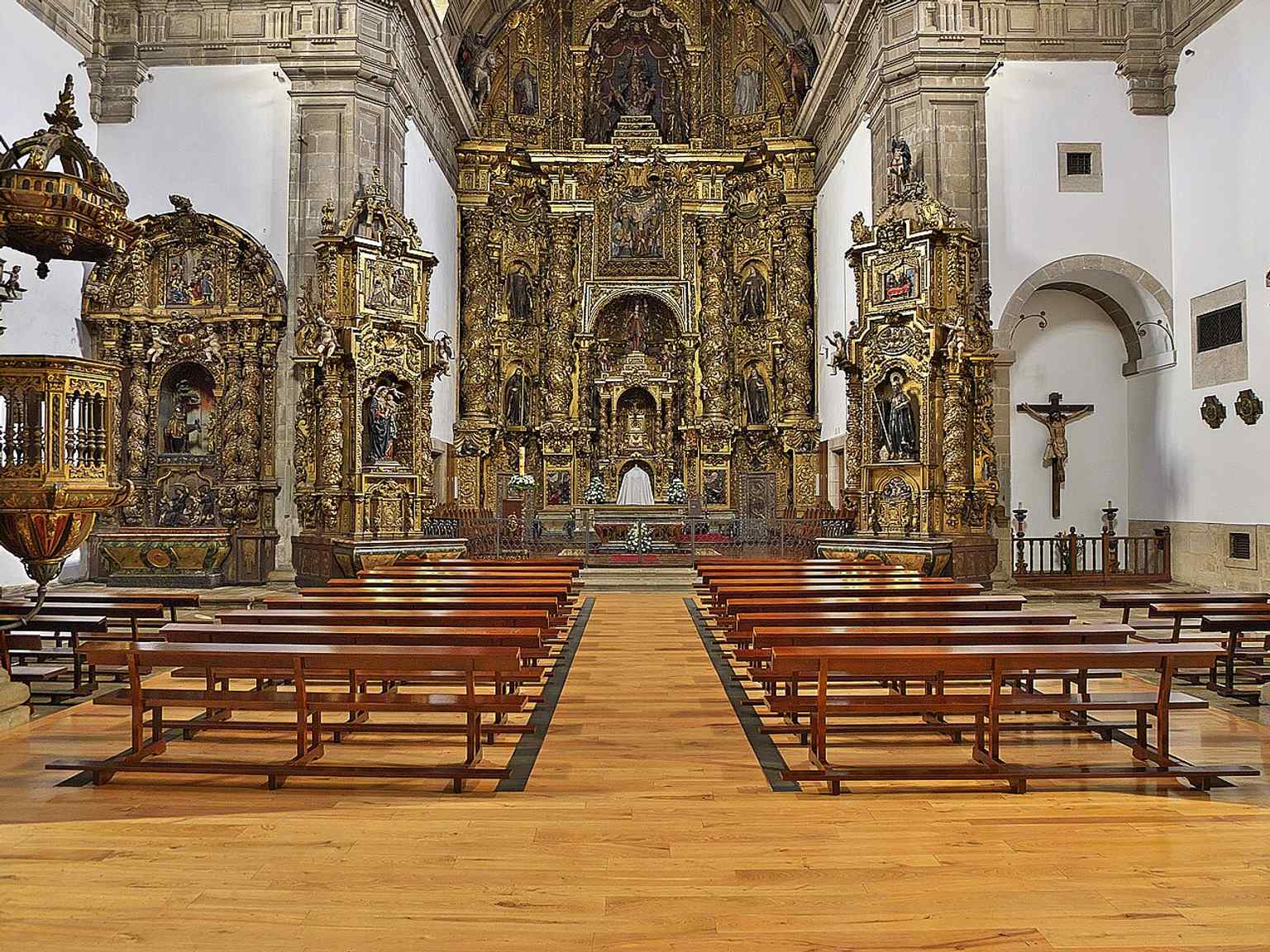
Admire the Baroque splendor of the monastery church's interior, designed by Fray Gabriel de Casas and completed in the early 18th century, a testament to the wealth brought by aristocratic nuns.Photo: José Luis Filpo Cabana, Wikimedia Commons, CC BY 3.0. Cropped & resized. Today, an order of Benedictine nuns still lives inside, maintaining their vows of strict enclosure. But they still manage a little earthly commerce. They bake some of the most famous almond cakes in the city, selling them through a torno, a rotating wooden turnstile built into the wall that lets you buy their sweets without ever seeing the baker's face. If you want to step inside, the church is typically open daily from nine AM to two PM, and again from three to six thirty PM.
Our next stop involves an even larger monastic powerhouse. Follow your map toward the massive complex of San Martiño Pinario, just a three-minute walk away.
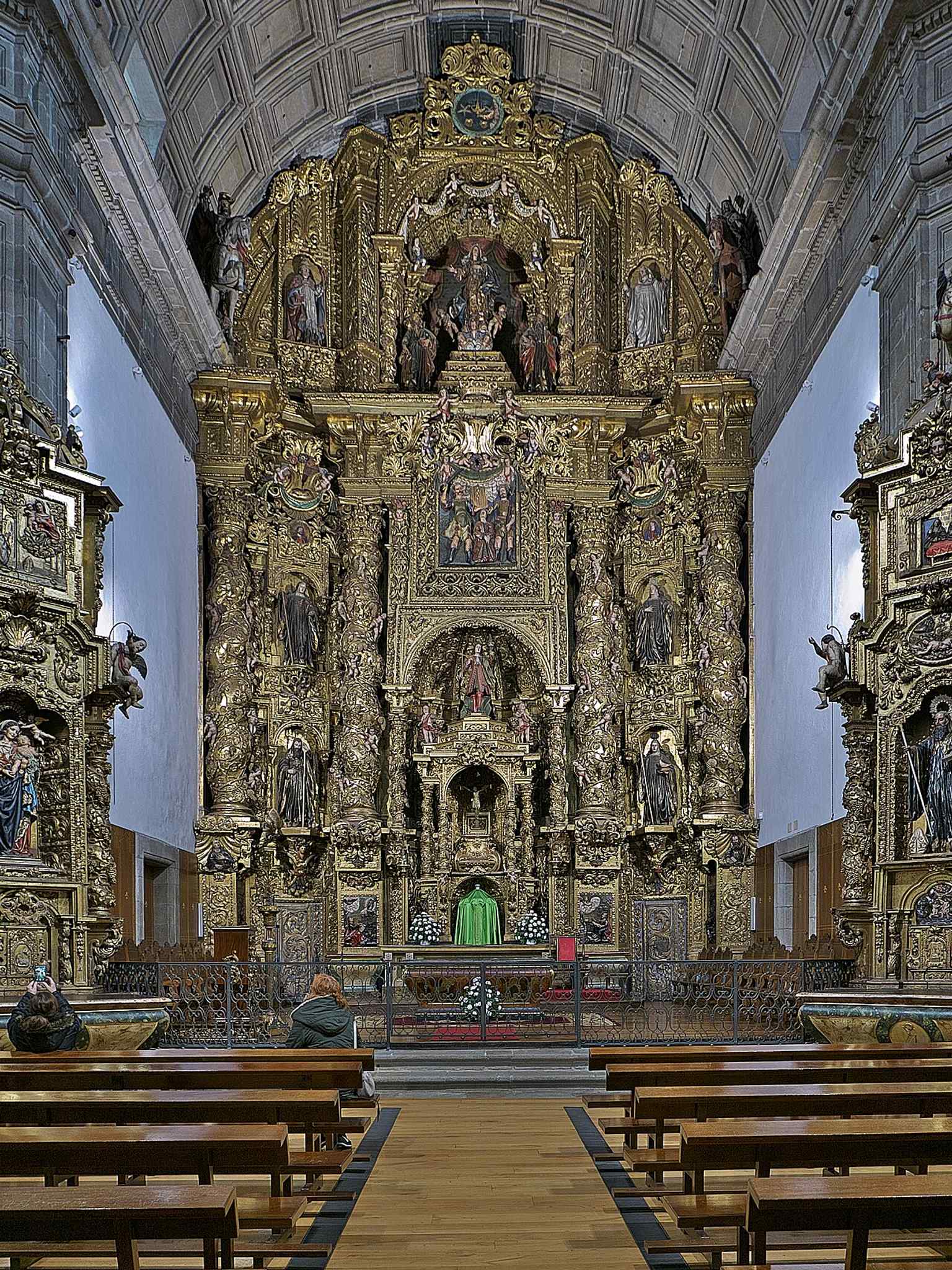
This magnificent main altarpiece, crafted by Francisco de Castro Canseco in 1714, is a highlight of the monastery's lavish 18th-century Baroque reforms.Photo: Jl FilpoC, Wikimedia Commons, CC BY-SA 4.0. Cropped & resized. 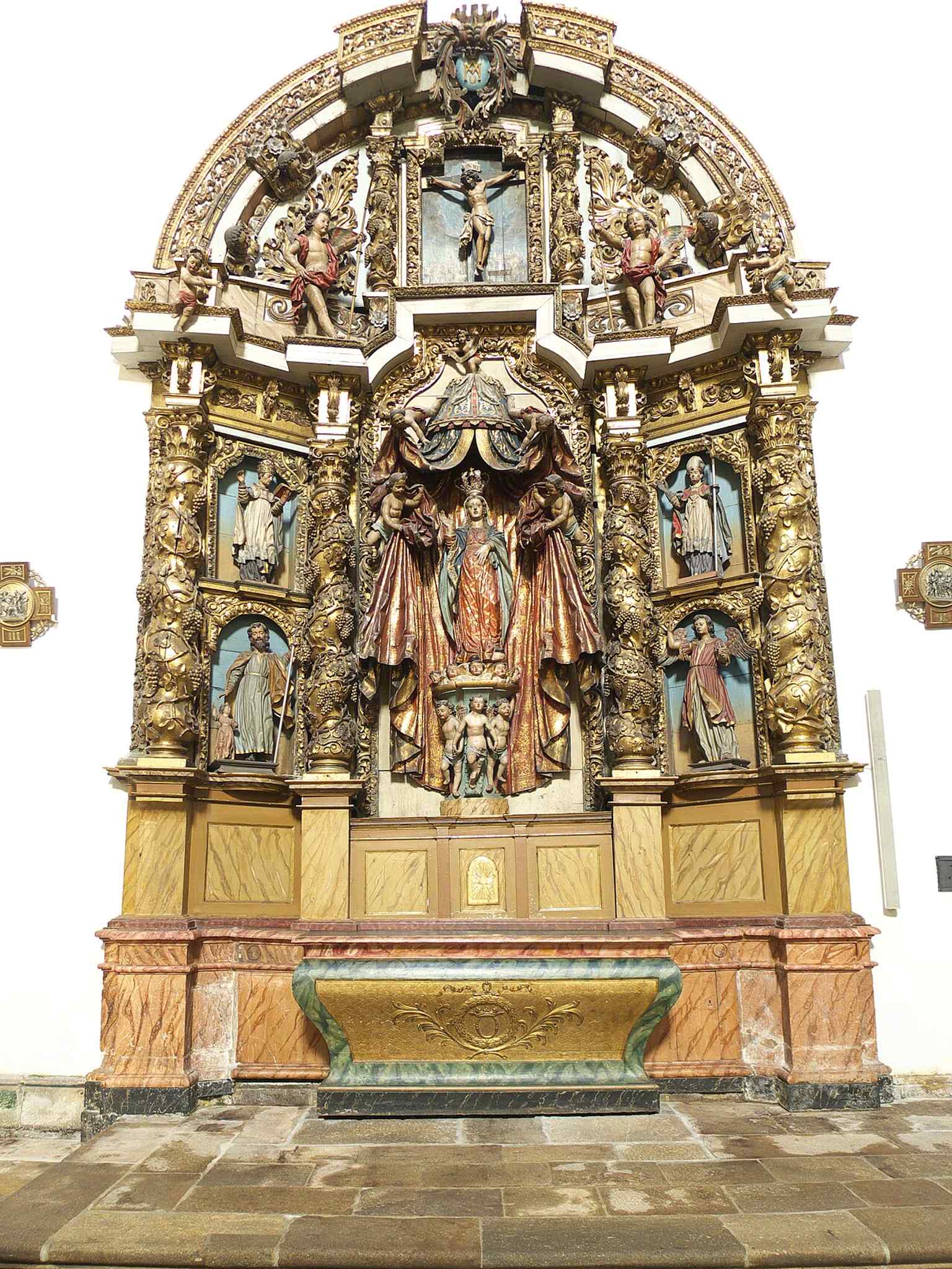
Discover the 'Virgen de la O', an early 17th-century Baroque sculpture from the Cofradía de los Sastres, representing the rich artistic heritage within the monastery.Photo: José Luis Filpo Cabana, Wikimedia Commons, CC BY 3.0. Cropped & resized. Look for the massive stone facade on your left, anchored by four towering columns and topped with a highly ornate, towering stone crest. This is the Monastery of San Martiño…Read moreShow less
Open dedicated page →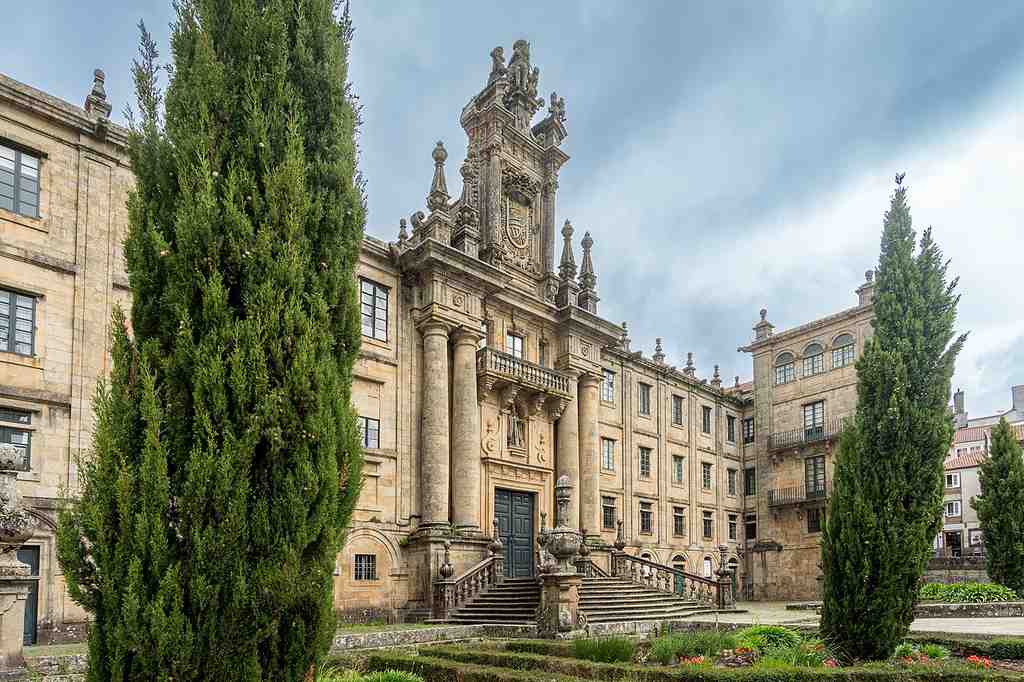
Monastery of San Martiño PinarioPhoto: Fernando, Wikimedia Commons, CC BY-SA 4.0. Cropped & resized. Look for the massive stone facade on your left, anchored by four towering columns and topped with a highly ornate, towering stone crest. This is the Monastery of San Martiño Pinario. Long ago, this area underwent a dramatic transformation, shifting from a wild, dense pine forest into a sprawling religious empire. The very name Pinario is a nod to those lost pines.
By the sixteenth century, this Benedictine monastery had grown into a powerhouse. It was the second largest monastery in Spain, home to nearly a thousand monks at its peak. The community amassed so much wealth and political influence that the neighboring Cathedral clergy grew deeply paranoid. The Cathedral leaders actually forced the monastery's architects to cap their towers at the roofline, ensuring the monks could never literally or metaphorically look down upon the Cathedral.
It is fascinating how a place dedicated to heavenly pursuits can become so deeply entangled in earthly rivalries.
But all that hoarded wealth and power could not protect the monastery from the harsh realities of war. In the early nineteenth century, Napoleonic Soldiers marched into Santiago de Compostela. The occupying French troops seized this immense, sacred complex and turned it into their military barracks. The centuries of quiet, prayerful devotion were instantly erased, replaced by the chaotic clamor of a foreign army. The soldiers did not care about the spiritual or historical wealth surrounding them. They raided the monastery's renowned library, tearing priceless, centuries old manuscripts from the shelves and throwing them into roaring fires just to stay warm.
The indignities did not end there. Decades later, during a local rebellion in eighteen forty-six, rebel troops decided to turn the upper floors into a fortified battery. They dragged massive, heavy iron cannons right up the monastery's grand stone staircases. The sheer, crushing weight of the artillery cracked the ancient steps and caused the stone landings to sag so severely that modern restoration teams had to use hydraulic jacks just to push the building back into place.
Today, the monks are gone, their nine hundred year run ended by government eviction decrees in eighteen thirty-five. But the stones remain, bearing the invisible scars of both holy men and soldiers.
If you want to look inside, the museum and church are open Monday through Saturday from ten AM to two PM, and again from four to six PM, though it is closed on Sundays.
Now, let us leave behind the grand monuments of powerful archbishops and armies. We are going to visit a space built by the common folk of the city, so we will head to the Chapel of Souls, which is just a three minute walk away.
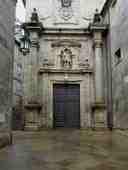
On your left is a tall, rectangular stone building fronted by four massive cylindrical columns that support a classical triangular roofline, with a distinct, brightly colored…Read moreShow less
Open dedicated page →On your left is a tall, rectangular stone building fronted by four massive cylindrical columns that support a classical triangular roofline, with a distinct, brightly colored sculpture inset right above the wooden doors. Take a glance at the first image on your screen. You can see how this grand facade was actually added later, right at the turn of the nineteenth century, after the local religious brotherhood purchased and tore down a whole block of houses just to make sure their new church could be seen from the street.
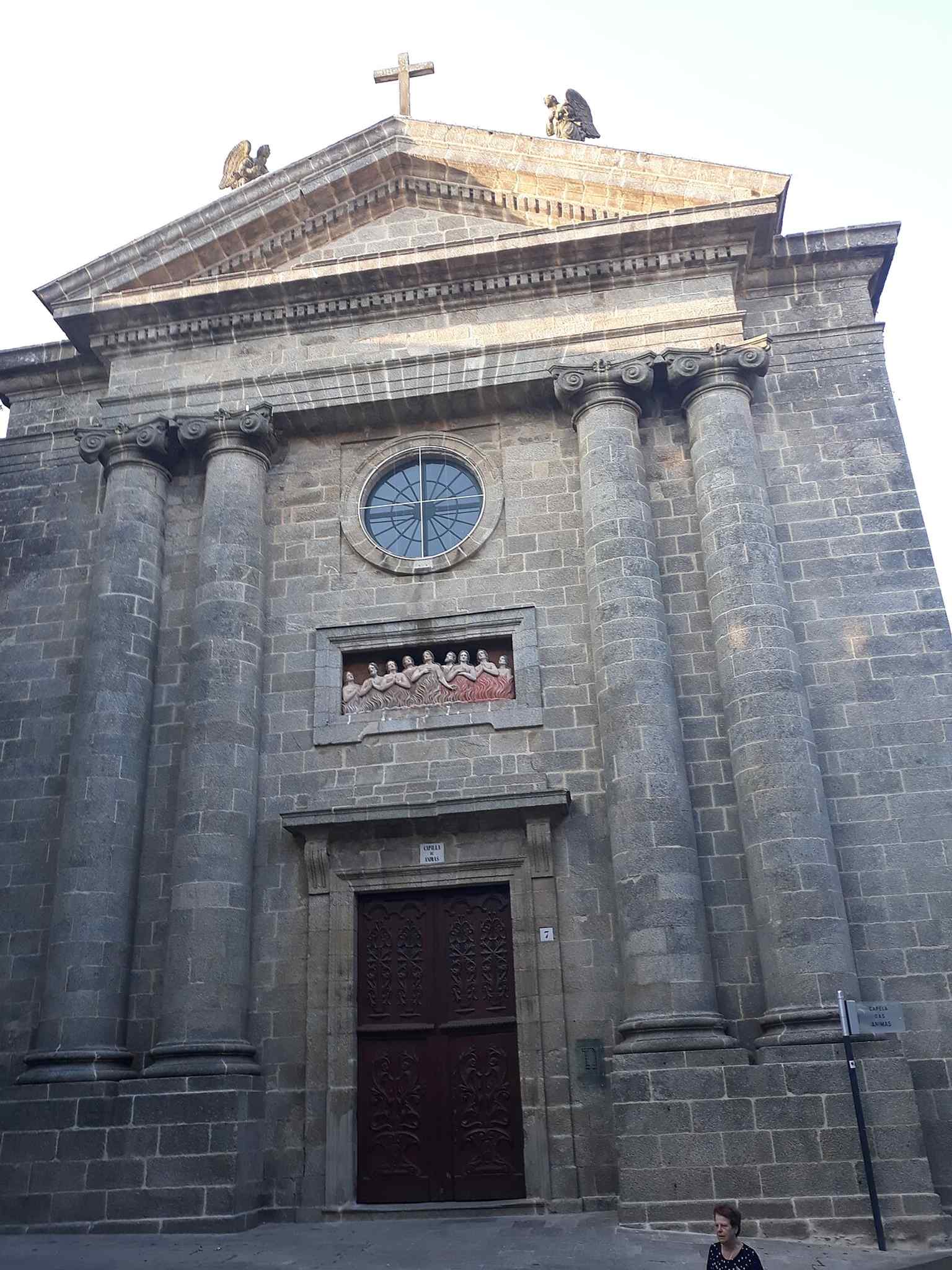
This exterior view showcases the Chapel of Souls, whose facade was constructed later after the Cofradía purchased and demolished a block of houses to improve its visibility.Photo: Simon Burchell, Wikimedia Commons, CC BY-SA 4.0. Cropped & resized. This is the Chapel of Souls, and its story is wonderfully different from the great cathedrals and royal hospitals we have explored so far. This site was not bankrolled by wealthy bishops or powerful monarchs. It was funded entirely by the pocket change of the working class. The citizens of Santiago pooled their modest resources, dropping coins into donation boxes, to build a place dedicated to praying for souls in Purgatory. It stands today as a true monument to the everyday devotion of the unsung locals.
But where there is a noble cause, human ego is rarely far behind. Construction kicked off in seventeen eighty-four, and almost immediately, an intense professional rivalry flared up. The project was initially led by a traditional master builder named Miguel Ferro Caaveiro. Enter his former student, Melchor de Prado Mariño. Melchor had gone off to Madrid, studied at the prestigious Royal Academy, and returned with a shiny new academic title. He actually tried to prove in court that his old teacher lacked the scientific training to lead such a massive project. In the end, the old master’s structural design won out, but the ambitious young student managed to secure the design for this very facade and the interior art.
Melchor brought in his brother, Manuel, to sculpt the interior and exterior artwork. Take a look at the space just above the main door, or pull up the second image on your app. That dramatic carving shows souls burning in the purifying fires of Purgatory. Now, there is a very persistent local legend about this specific carving. Supposedly, the brotherhood running the chapel refused to pay Manuel the full amount they owed him. So, Manuel decided on an immortal revenge. He modeled the faces of the condemned, burning souls using the exact likenesses of the most greedy and stingy administrators who shortchanged him. Talk about getting the last word.
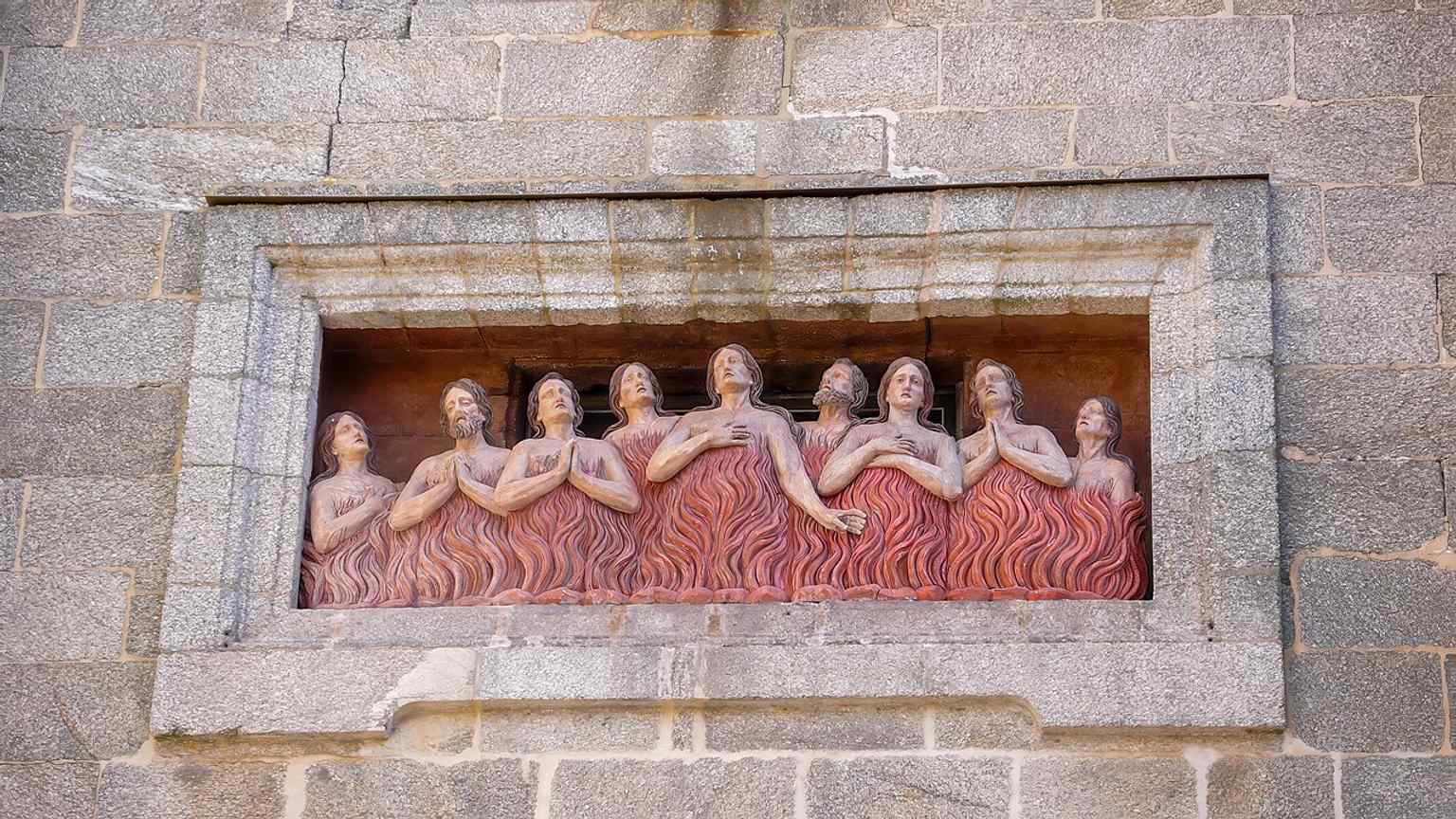
This dramatic relief above the main door depicts souls in flames, inspiring a local legend that the sculptor Manuel de Prado immortalized the faces of greedy cofrades among the condemned.Photo: Antoni Picornell, Wikimedia Commons, CC BY 4.0. Cropped & resized. Inside, instead of traditional wooden altars, the brothers created incredibly realistic, life-sized scenes of the Passion of Christ using brightly painted Venetian stucco, which is a specialized mixture of plaster and marble dust. Manuel even used everyday parishioners as models, bringing a raw, gritty reality to the scenes that shocked the pilgrims of the time. The chapel is generally open from seven thirty in the morning until five thirty in the evening most days, though weekend hours vary slightly, if you want to take a look inside.
Now, we are going to leave the centuries of stone and spirited rivalries behind us. We are transitioning from classical architecture to a striking modern intervention, as we make our way toward the Galician Centre of Contemporary Art, which is just about a four minute walk from here.
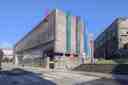
On your right, you will see a striking, sharp-angled block of solid granite featuring a deeply recessed glass entrance and a distinct red circular emblem near its upper corner.…Read moreShow less
Open dedicated page →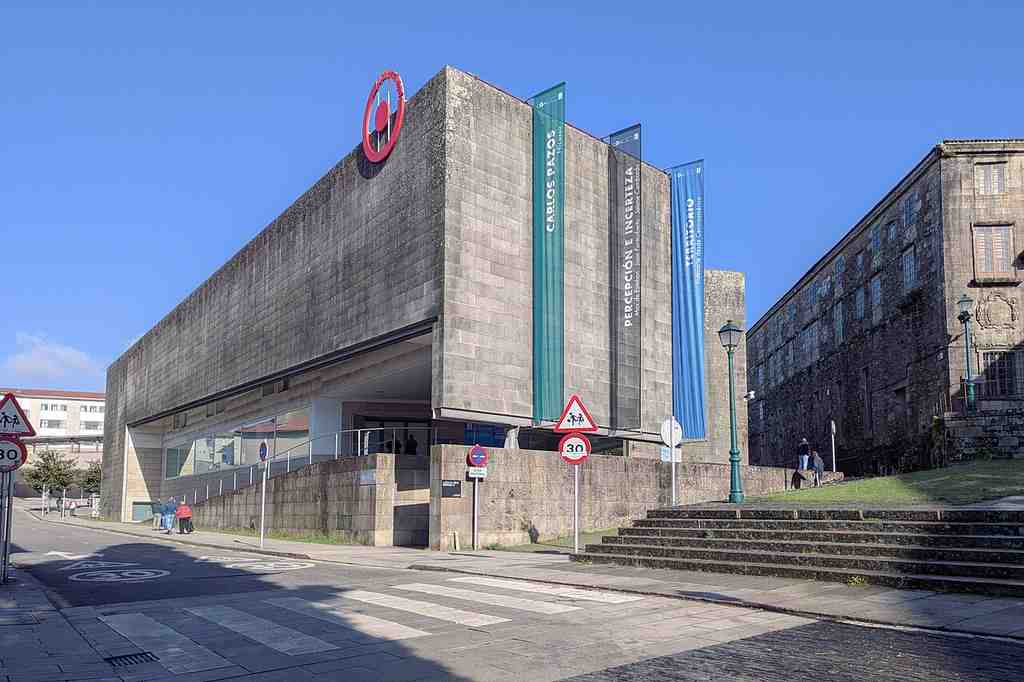
Galician Centre of Contemporary ArtPhoto: MarcosEire, Wikimedia Commons, CC BY 4.0. Cropped & resized. On your right, you will see a striking, sharp-angled block of solid granite featuring a deeply recessed glass entrance and a distinct red circular emblem near its upper corner. This is the Galician Centre of Contemporary Art, or C-G-A-C, designed by the renowned Portuguese architect Álvaro Siza and completed in nineteen ninety-three.
Siza was tasked with an incredibly delicate balancing act. He was building on the edge of the historic city, right beside an ancient convent. If you look at the museum's layout, the zigzagging ramps and terraces actually mimic the stepped agricultural gardens once cultivated by the devoted monks next door. It is a brilliant architectural nod, bridging the quiet dedication of the past with the bold, earthly visions of the modern age.
Siza envisioned a modern temple of art, using massive slabs of local stone that he hoped would look eternal. But nature had other plans. Barely two years after the doors opened, the pristine granite began to darken, breaking out in black spots. Santiago's relentless humidity was taking its toll. The regional government panicked, pouring funds into special biocides and chemical washes to scrub the stone back to its original perfection. Take a glance at your screen to see a close-up of this infamous granite sickness on the facade. Ironically, scientists later discovered that this biological darkening might actually act as a natural protective layer against erosion. If you check out the before and after photos on your app, you can see how the museum's sharp lines have beautifully weathered into its surroundings over the past couple of decades.
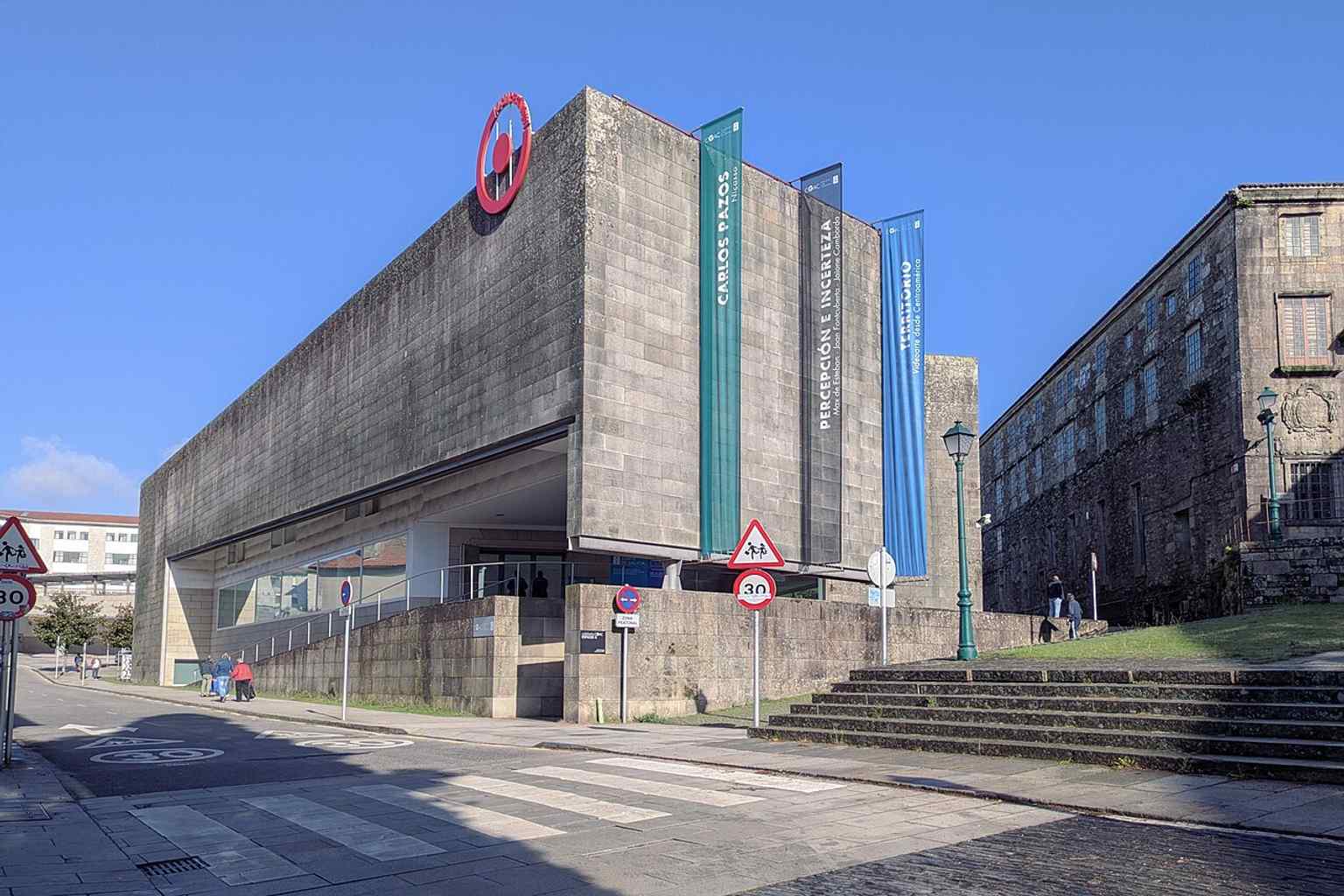
A view of the CGAC's granite facade, which famously suffered from 'granite sickness' just two years after its 1993 inauguration, causing the stone to darken and develop black spots due to Santiago's extreme humidity.Photo: MarcosEire, Wikimedia Commons, CC BY 4.0. Cropped & resized. But the most intense storms here were entirely human. After the heavy oppression of the mid-twentieth century, Spain was hungry for a cultural awakening. Unlike foreign soldiers who simply destroyed the heritage they didn't understand, this modern institution aimed to challenge the public through creation. And challenge them it did. In nineteen ninety-eight, the regional government abruptly fired the visionary artistic director, Gloria Moure. Bureaucrats claimed she lacked administrative control, but the art world immediately called it a political purge designed to rein in her highly cosmopolitan, radically open exhibitions. The clash between bureaucratic authority and artistic freedom escalated so fast that riot police actually charged at protesting artists right outside these very doors.
That friction between political control and creative independence still crackles today. In twenty twenty-four, new administrative rules decreed that only career civil servants could direct the museum, effectively locking out independent international curators. Over a thousand art professionals signed a manifesto warning that the museum was losing its soul. It is a thoroughly modern controversy, yet strangely echoing the centuries of power struggles between archbishops, kings, and city planners that built the old city behind you.
If you are feeling inspired to brave the contemporary art world yourself, the museum is open Tuesday through Sunday from eleven AM to eight PM. Now, let us walk right next door to our fifteenth and final stop, the Museum of the Galician People, which is just a one-minute stroll away.
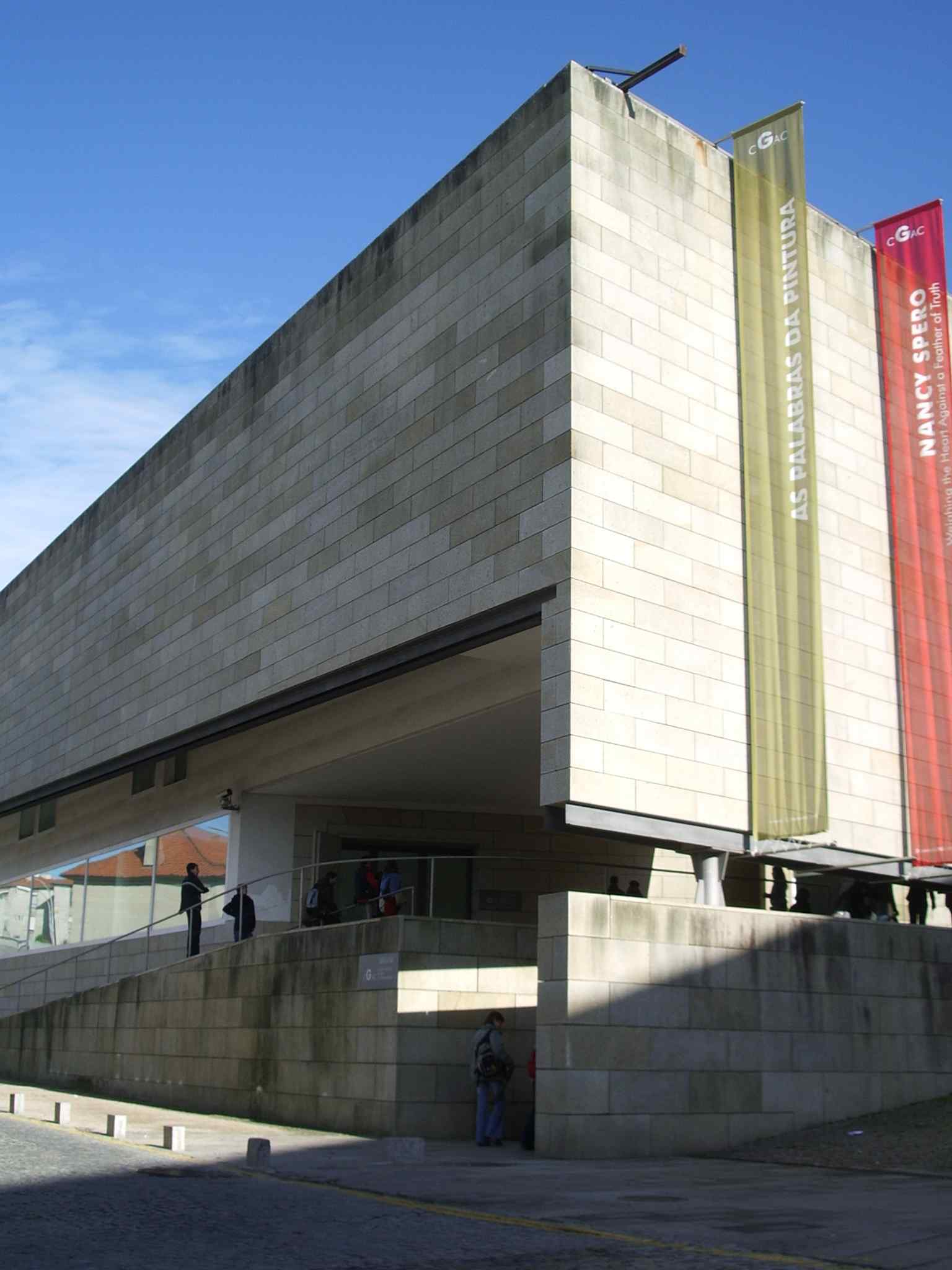
The Galician Centre of Contemporary Art, designed by Portuguese architect Álvaro Siza, who carefully integrated the building with Santiago's historic surroundings and the terraced garden of the adjacent convent.Photo: No machine-readable author provided. Josugoni assumed (based on copyright claims)., Wikimedia Commons, Public domain. Cropped & resized. Right in front of you is a sturdy granite building, with thick stone walls flanking a wide arched doorway and a row of rectangular windows on the upper level. The former convent…Read moreShow less
Open dedicated page →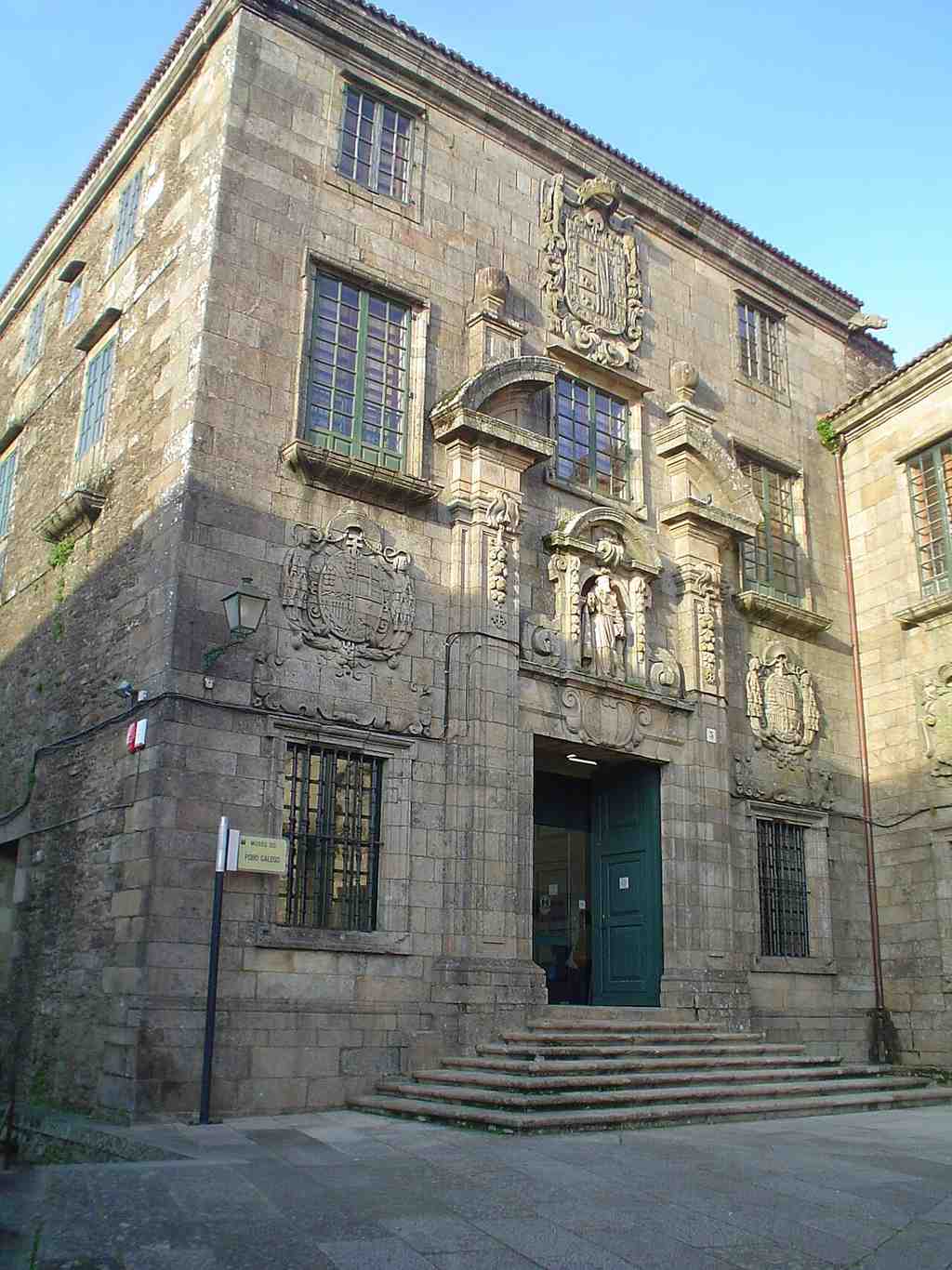
Museum of the Galician PeoplePhoto: Lansbricae, Wikimedia Commons, CC BY-SA 3.0. Cropped & resized. Right in front of you is a sturdy granite building, with thick stone walls flanking a wide arched doorway and a row of rectangular windows on the upper level. The former convent of Santo Domingo de Bonaval hosts the Museum of the Galician People.
Most visitors do not realize where that name, Bonaval, comes from. It is actually a mashup of a medieval cry, Ven e valme, which means, come and help me. Back in thirteen thirty, a local blacksmith named Juan Tuorum shouted this as a prayer when guards unjustly dragged him to the gallows for standing up to an ambitious archbishop. His prayer worked, the authorities halted the execution, and the name stuck.
That clash between high-reaching authority and the grounded faith of the locals is baked right into the stones here. Look at your app for a moment to see what sits hidden inside these walls. Domingo de Andrade designed that triple helical stone staircase as a masterpiece of the highly ornate baroque style. Each of the three granite ramps spirals upward without a central column, allowing monks to access different floors without ever crossing paths. Andrade built it to symbolize a pure, spiritual ascent toward the Holy Trinity, completely detached from earthly distractions. Though today, modern engineers are battling a very earthly problem to save it, as underground moisture slowly creeps up through the porous granite.
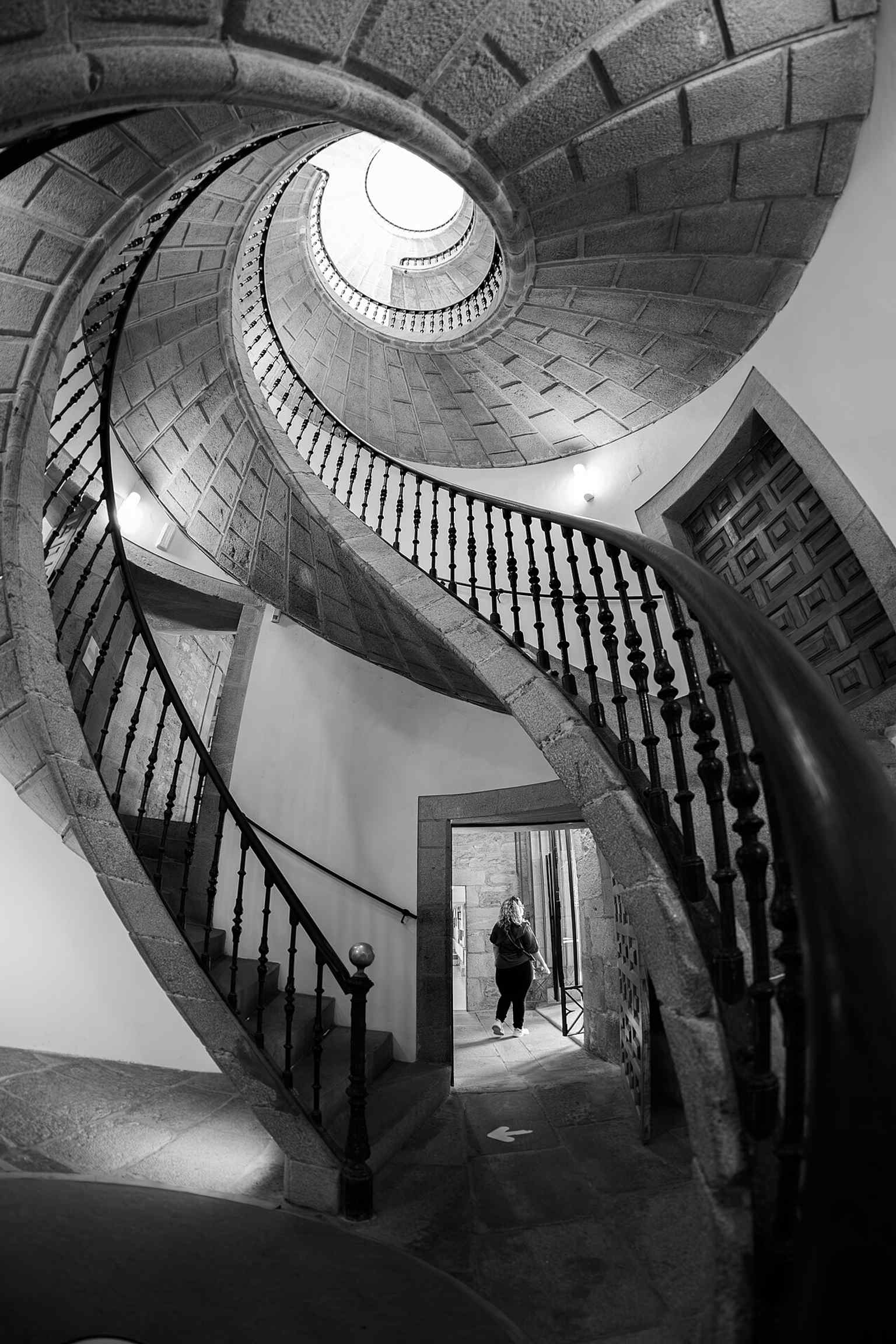
The museum features a unique triple helical stone staircase, a Baroque engineering masterpiece by Domingo de Andrade, designed so monks could access different floors without crossing paths.Photo: Afsalgado, Wikimedia Commons, CC BY-SA 4.0. Cropped & resized. The religious order has long since departed, and today, this space serves a different kind of devotion. For our entire journey, we have explored grand cathedrals and powerful rulers, but this museum is dedicated entirely to the everyday lives we have been uncovering.
During the nineteen seventies, this convent sat in near ruin. After decades of cultural suppression under the regime of Francisco Franco, local champions like Antonio Fraguas decided to reclaim their heritage. Franco's government had purged Fraguas from his teaching post after the Spanish Civil War, but Fraguas believed that every peasant's wooden clog or tambourine was an open book about survival. He and his colleagues worked without funding to rescue forgotten traditions.
You can check your screen again to see some of what they saved. This is traditional pottery from the village of Bonxe. A man named Luciano García Alén and his wife spent years driving out to remote villages, rescuing these beautiful, practical ceramics just as modern factories began to replace them.
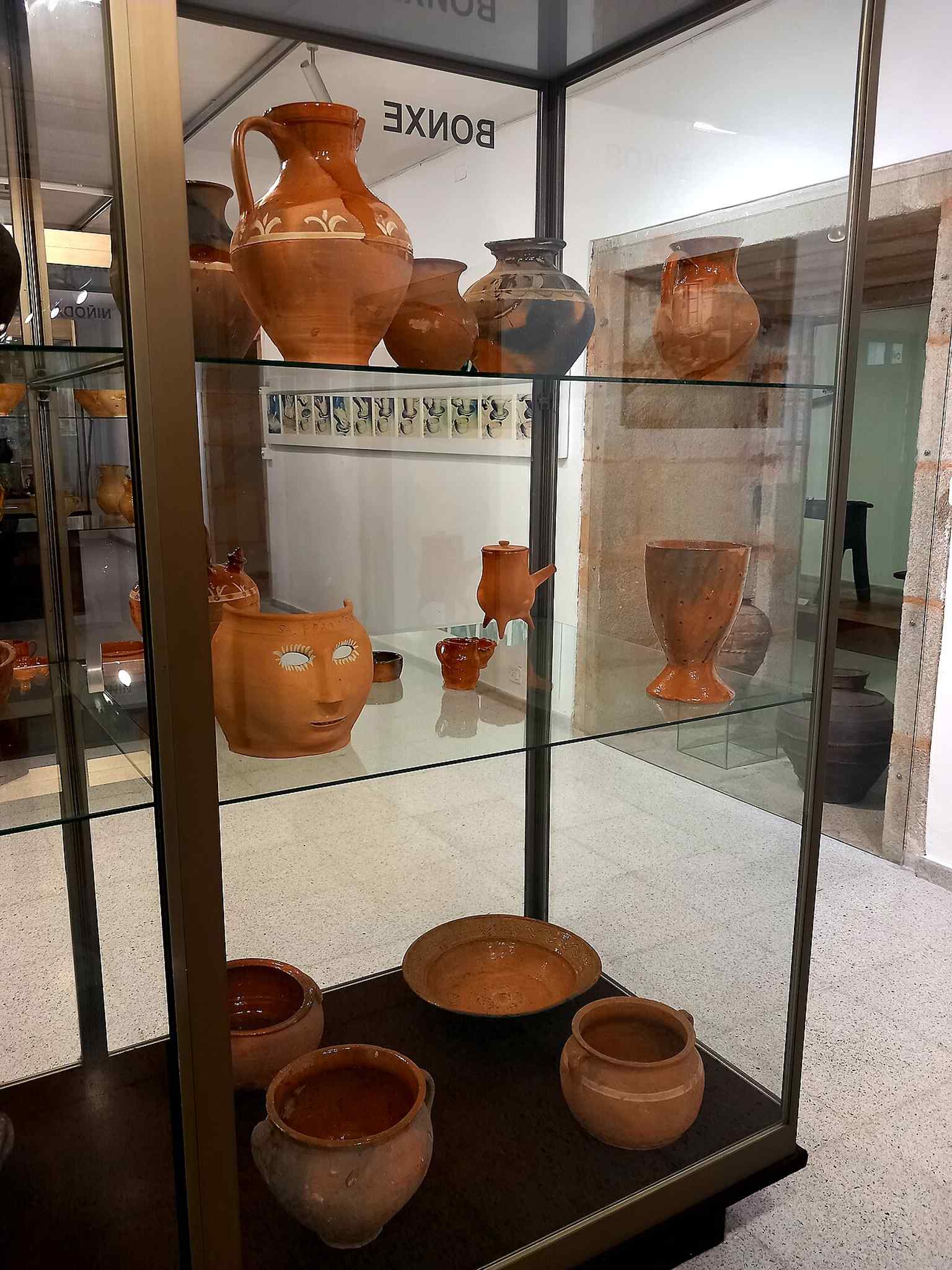
An exhibit of traditional pottery from Bonxe, part of the museum's 'Sala de la Olería,' which houses collections assembled by dedicated individuals like Luciano García Alén and his wife.Photo: Irimz, Wikimedia Commons, CC0. Cropped & resized. The museum also houses the Pantheon of Illustrious Galicians. It serves as a sanctuary for the poets, leaders, and mapmakers who forged the region's identity. In nineteen eighty-four, the return of the exiled nationalist leader Castelao from Buenos Aires sparked massive protests right at these doors. Locals fought the police to ensure politicians did not manipulate his legacy.
It is a fitting end to our tour. The grand architecture of Santiago is breathtaking, but the true treasure of Galicia is its people. Their quiet resilience and vibrant culture outlast every empire and every ambitious archbishop. If you want to explore the collections, the museum opens from eleven in the morning to six in the evening Tuesday through Saturday, and eleven to two on Sundays. Thank you for walking with me, and enjoy the rest of your time in this incredible city.
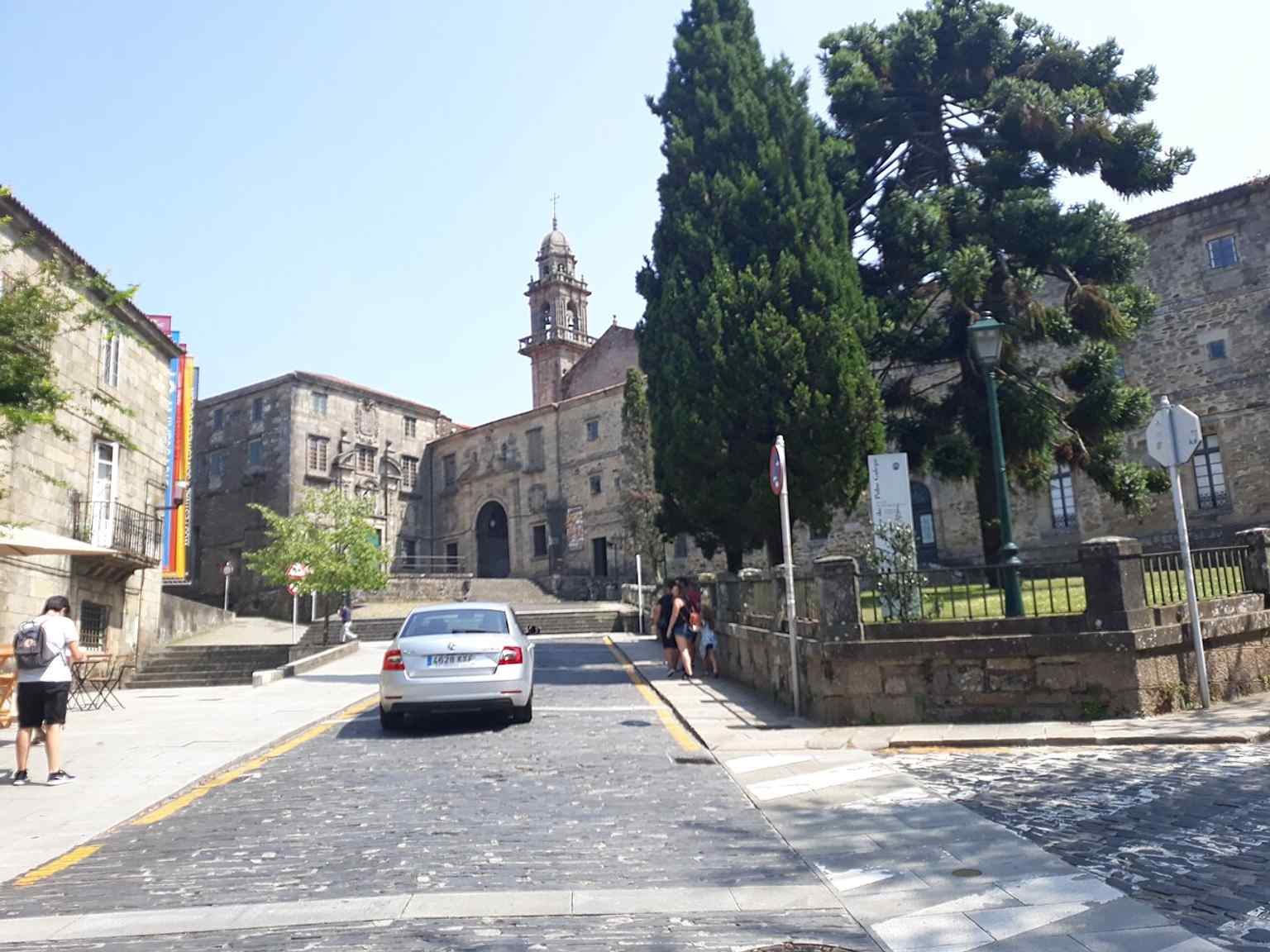
The Museum of the Galician People opened its doors in 1976 within the ancient convent of Santo Domingo de Bonaval, located in Santiago de Compostela.Photo: Simon Burchell, Wikimedia Commons, CC BY-SA 4.0. Cropped & resized. 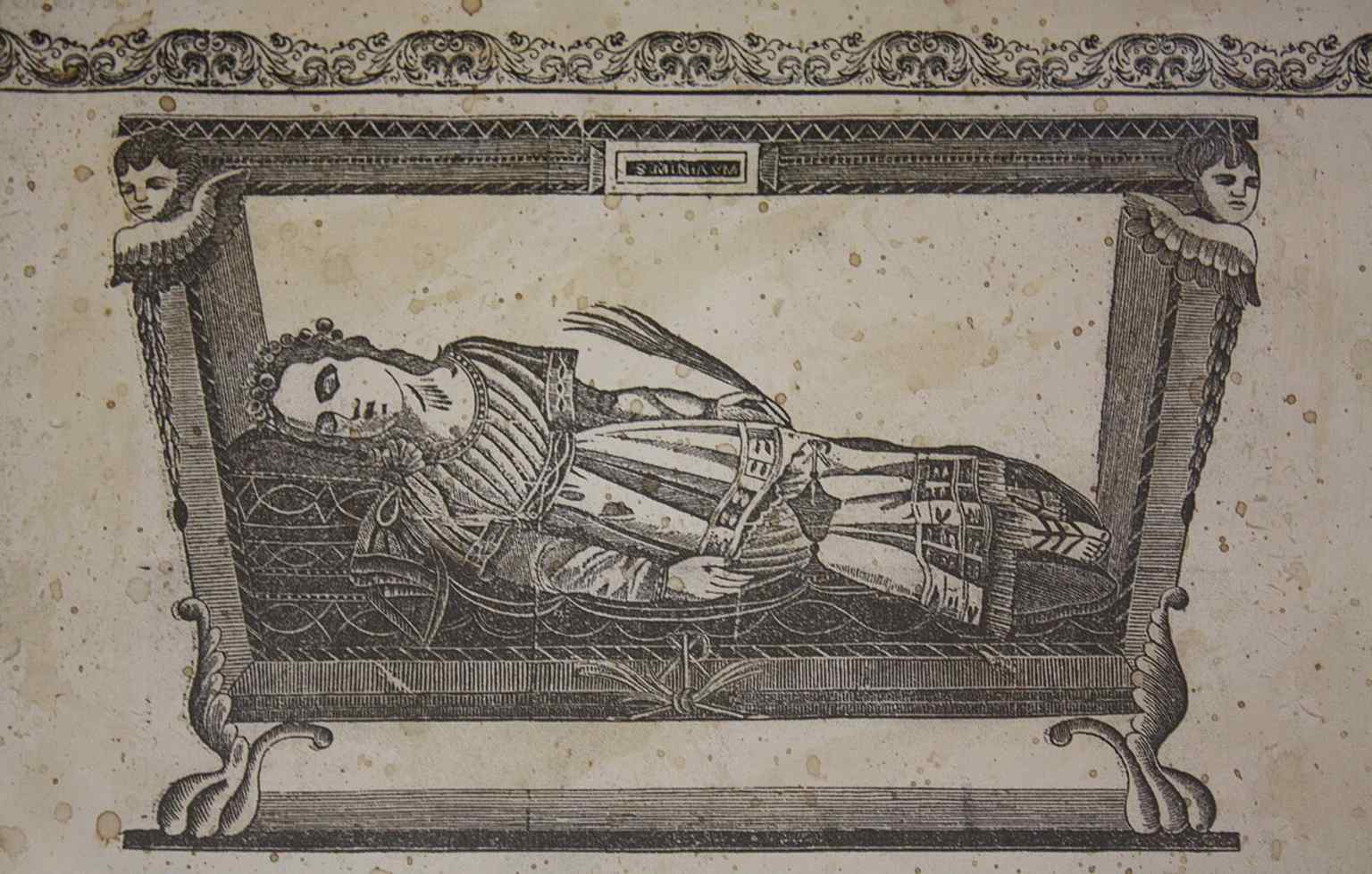
This 1875 engraving of Saint Minia is part of the museum's collection, reflecting the institution's commitment to safeguarding Galician traditions and historical memory.Photo: Lameiro, Wikimedia Commons, CC BY-SA 4.0. Cropped & resized.
Frequently asked questions
How do I start the tour?
After purchase, download the AudaTours app and enter your redemption code. The tour will be ready to start immediately - just tap play and follow the GPS-guided route.
Do I need internet during the tour?
No! Download the tour before you start and enjoy it fully offline. Only the chat feature requires internet. We recommend downloading on WiFi to save mobile data.
Is this a guided group tour?
No - this is a self-guided audio tour. You explore independently at your own pace, with audio narration playing through your phone. No tour guide, no group, no schedule.
How long does the tour take?
Most tours take 60–90 minutes to complete, but you control the pace entirely. Pause, skip stops, or take breaks whenever you want.
What if I can't finish the tour today?
No problem! Tours have lifetime access. Pause and resume whenever you like - tomorrow, next week, or next year. Your progress is saved.
What languages are available?
All tours are available in 50+ languages. Select your preferred language when redeeming your code. Note: language cannot be changed after tour generation.
Where do I access the tour after purchase?
Download the free AudaTours app from the App Store or Google Play. Enter your redemption code (sent via email) and the tour will appear in your library, ready to download and start.
If you don't enjoy the tour, we'll refund your purchase. Contact us at [email protected]
Checkout securely with 






.%20Fuente.jpg)


%203.jpg)

.jpg)


.jpg)


