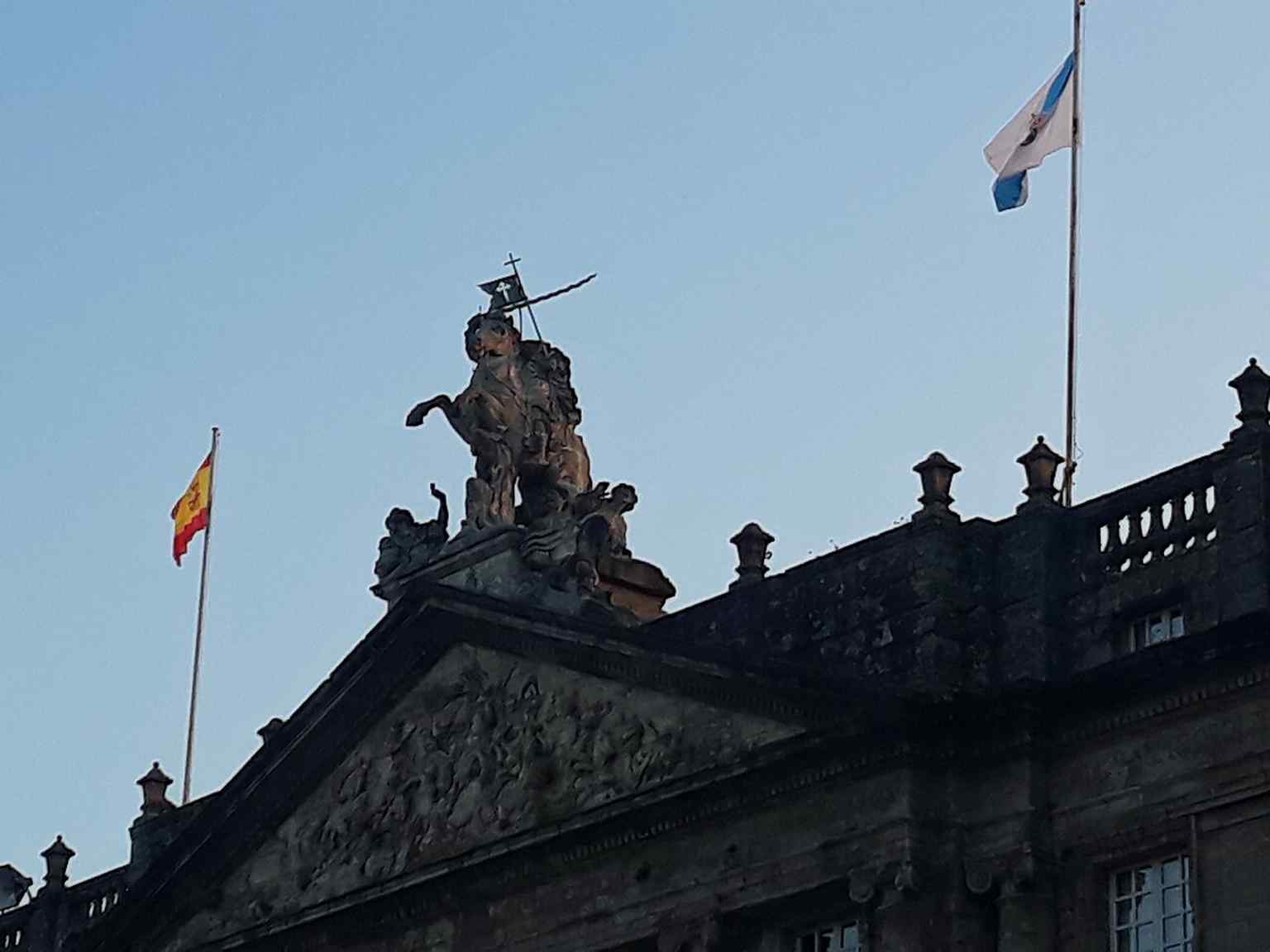
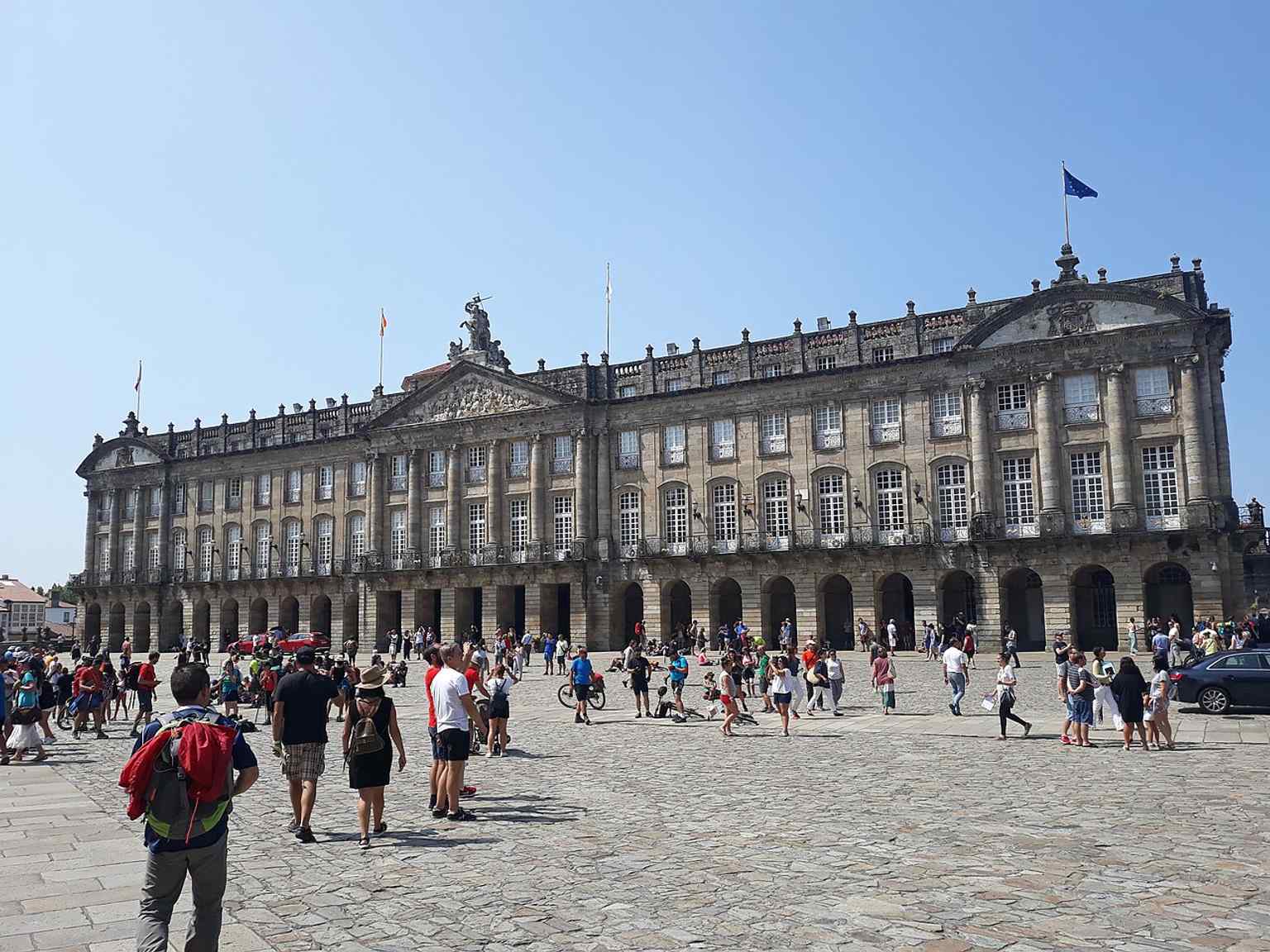
Look to your left at the massive rectangular stone building spanning nearly ninety meters, anchored by a long ground-floor arcade and topped with a prominent triangular pediment crowned by an equestrian statue. This is Rajoy's Palace. It was ordered by Archbishop Bartolome Raxoi, a pragmatic modernizer who spared absolutely no expense when it came to leaving his mark on the city. Back in seventeen sixty-six, the Archbishop poured nearly seventeen million reales into his various architectural and social projects, a staggering fortune aimed at elevating both his flock and his own monumental legacy.
To execute his vision, he hired Carlos Lemaur, a French military engineer. If you check your app, you can get a closer view of Lemaur's towering neoclassical facade, complete with a dramatic stone relief of the Battle of Clavijo. Notice the grand statue of Saint James at the very top. The church leadership desperately wanted the absolute height of architectural luxury, so they actually had that local stone painted stark white to perfectly imitate expensive imported marble. They built a clean, immense monument to rival the soaring cathedral across the square, using a bit of earthly deception to project absolute divine grandeur.
But planting a palace of this scale sparked one of the biggest urban scandals of the eighteenth century. The royal hospital right next door fiercely opposed the construction. As we heard in the square, that bitter fight over light and air forced the Royal Chamber to step in.
The resulting compromise forced a wildly unusual coexistence under one roof. Up on the sunlit top floors, you had young choirboys, known as seises, living under strict religious instruction. You also had multilingual priests called lenguajeros, who were specifically trained to hear the confessions of foreign pilgrims pouring into the city. The upper galleries constantly echoed with sacred music and whispered prayers.
Meanwhile, deep in the damp, sunless basements, locked away in a notorious jail known as A Falcona, the city's criminals served their time. Holy salvation above, and harsh earthly punishment below. The architects actually had to design entirely separate entrances just so the devout priests wouldn't cross paths with the condemned prisoners. Years later, during the military uprising of nineteen thirty-six, that same basement prison became a place of genuine terror, holding the city's mayor and notable artists before their executions.
Today, the palace serves as the seat of the City Council and the presidency of the regional government, with public areas open from ten AM to two PM, and four thirty to eight thirty PM, Monday through Saturday.
Now, speaking of that hospital next door that threw such a fit over this building's construction... let us go see what all their fuss was about. The Hospital of the Catholic Monarchs is just a one-minute walk away.