
On your left is a tall, rectangular stone building fronted by four massive cylindrical columns that support a classical triangular roofline, with a distinct, brightly colored sculpture inset right above the wooden doors. Take a glance at the first image on your screen. You can see how this grand facade was actually added later, right at the turn of the nineteenth century, after the local religious brotherhood purchased and tore down a whole block of houses just to make sure their new church could be seen from the street.
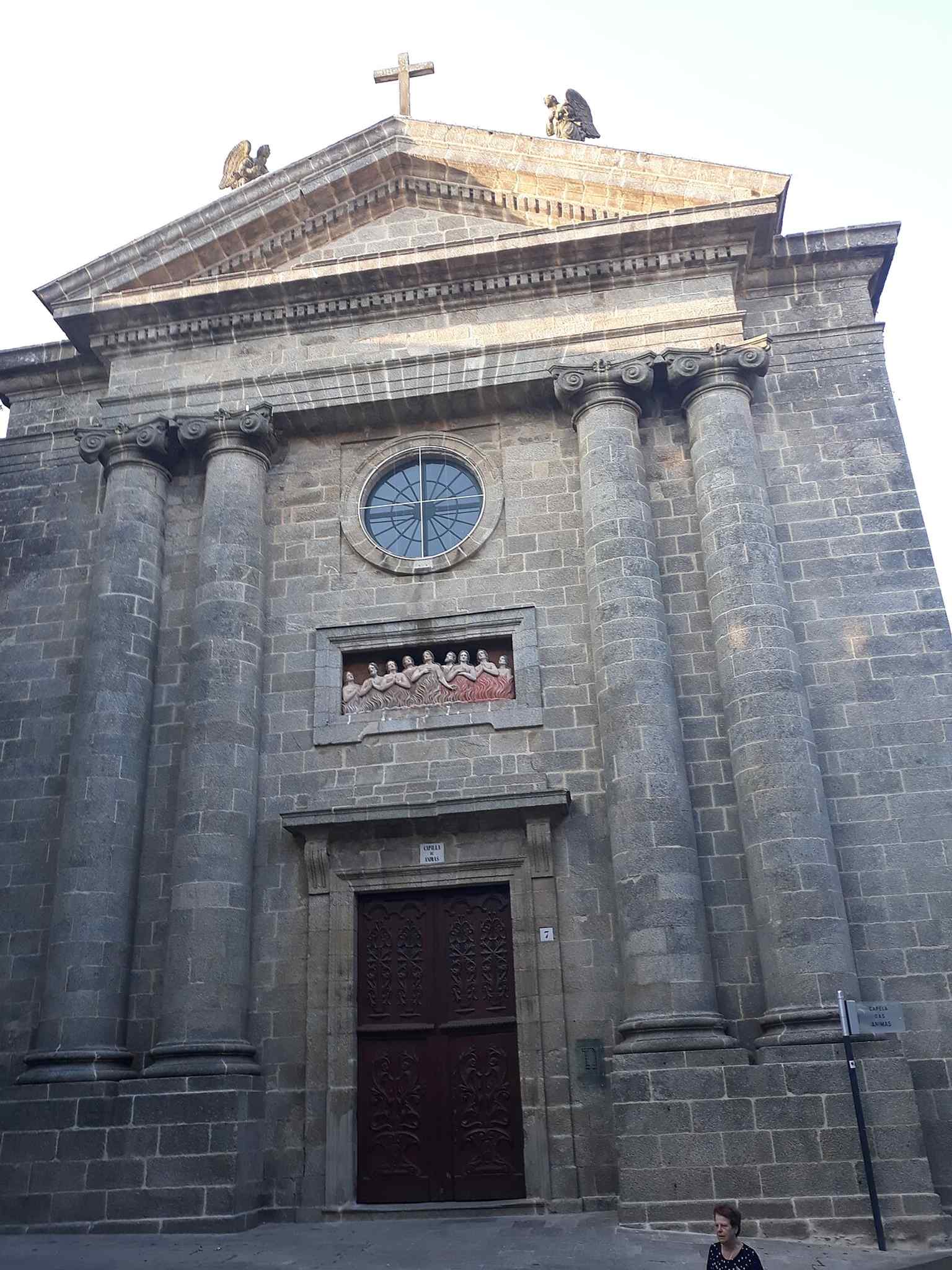
This is the Chapel of Souls, and its story is wonderfully different from the great cathedrals and royal hospitals we have explored so far. This site was not bankrolled by wealthy bishops or powerful monarchs. It was funded entirely by the pocket change of the working class. The citizens of Santiago pooled their modest resources, dropping coins into donation boxes, to build a place dedicated to praying for souls in Purgatory. It stands today as a true monument to the everyday devotion of the unsung locals.
But where there is a noble cause, human ego is rarely far behind. Construction kicked off in seventeen eighty-four, and almost immediately, an intense professional rivalry flared up. The project was initially led by a traditional master builder named Miguel Ferro Caaveiro. Enter his former student, Melchor de Prado Mariño. Melchor had gone off to Madrid, studied at the prestigious Royal Academy, and returned with a shiny new academic title. He actually tried to prove in court that his old teacher lacked the scientific training to lead such a massive project. In the end, the old master’s structural design won out, but the ambitious young student managed to secure the design for this very facade and the interior art.
Melchor brought in his brother, Manuel, to sculpt the interior and exterior artwork. Take a look at the space just above the main door, or pull up the second image on your app. That dramatic carving shows souls burning in the purifying fires of Purgatory. Now, there is a very persistent local legend about this specific carving. Supposedly, the brotherhood running the chapel refused to pay Manuel the full amount they owed him. So, Manuel decided on an immortal revenge. He modeled the faces of the condemned, burning souls using the exact likenesses of the most greedy and stingy administrators who shortchanged him. Talk about getting the last word.
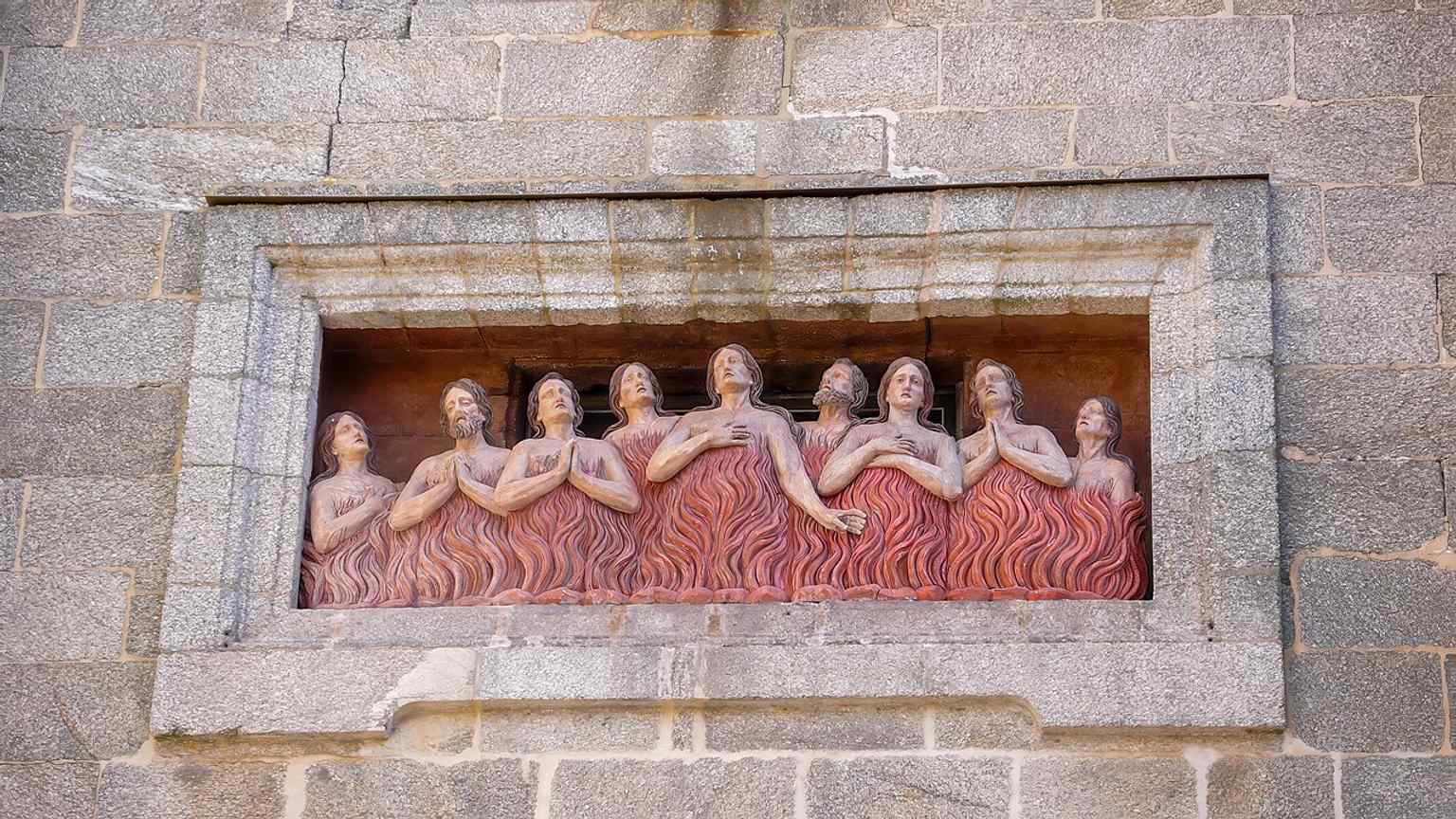
Inside, instead of traditional wooden altars, the brothers created incredibly realistic, life-sized scenes of the Passion of Christ using brightly painted Venetian stucco, which is a specialized mixture of plaster and marble dust. Manuel even used everyday parishioners as models, bringing a raw, gritty reality to the scenes that shocked the pilgrims of the time. The chapel is generally open from seven thirty in the morning until five thirty in the evening most days, though weekend hours vary slightly, if you want to take a look inside.
Now, we are going to leave the centuries of stone and spirited rivalries behind us. We are transitioning from classical architecture to a striking modern intervention, as we make our way toward the Galician Centre of Contemporary Art, which is just about a four minute walk from here.






