
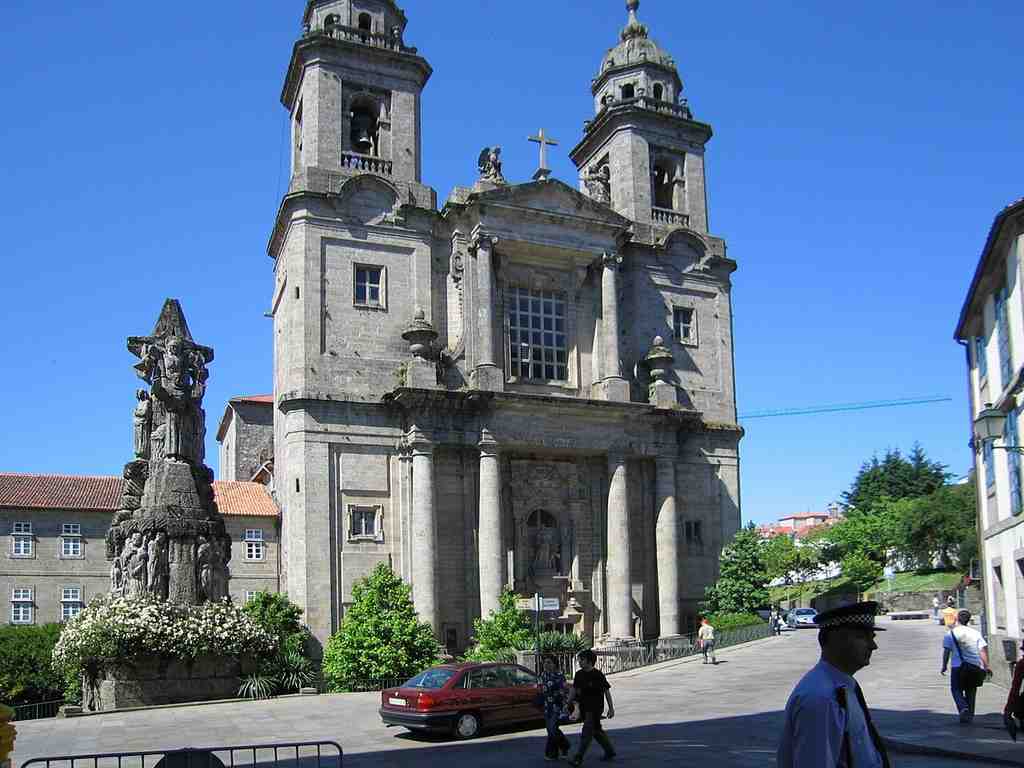
On your left is a massive grey stone structure defined by its two square bell towers and a grand central niche sheltering a solitary statue.
Most folks walking past just see another grand historic monument, but I will let you in on a little local secret. Centuries ago, people completely avoided this specific patch of land. They actually called it the Valley of Hell because the terrain was so incredibly rugged, shadowy, and inhospitable.
That all changed around the year twelve fourteen. According to local lore, Saint Francis of Assisi walked the pilgrimage route to Santiago and was taken in by a humble charcoal burner named Cotolai. Francis told his host to build a monastery right here. When Cotolai pointed out that he was entirely broke, Francis miraculously led him to a buried treasure. With the funds secured and the monastery established, the harsh Valley of Hell was spiritually cleansed and officially renamed the Valley of God.
Of course, history usually involves a bit more paperwork than miracles. Historical records show Cotolai was actually a wealthy thirteenth-century city councilor, not a poor woodsman. And securing this holy real estate required a very earthly transaction. The neighboring Benedictine monks owned the land and agreed to lease it to the Franciscans. The rent was not paid in gold, but in fish. Specifically, a ceremonial basket of trout, handed over every single year for over five centuries.
This tension between holy purpose and earthly politics is built right into the walls. In April fifteen twenty, the emperor, Carlos the Fifth, convened a high-stakes political summit inside the convent. He desperately needed to squeeze funds out of the local cities to finance his crowning as Holy Roman Emperor in Germany. The local representatives pushed back hard against his demands right here in the chapter house, kicking off a bitter dispute that helped ignite a full-scale revolt shortly after.
By seventeen forty-two, the original medieval structure was practically crumbling, so the Franciscans began a massive rebuild. If you pull up the first photo on your screen, you can see the imposing scale of the eighteenth-century facade. But you might also notice the roofline looks surprisingly stunted. That is because the grand redesign caused a bitter turf war. The Benedictines next door filed a lawsuit, arguing this towering new Franciscan church would violate their rights. The courts sided with the Benedictines, forcing the Franciscans to chop down the height of their architectural masterpiece.
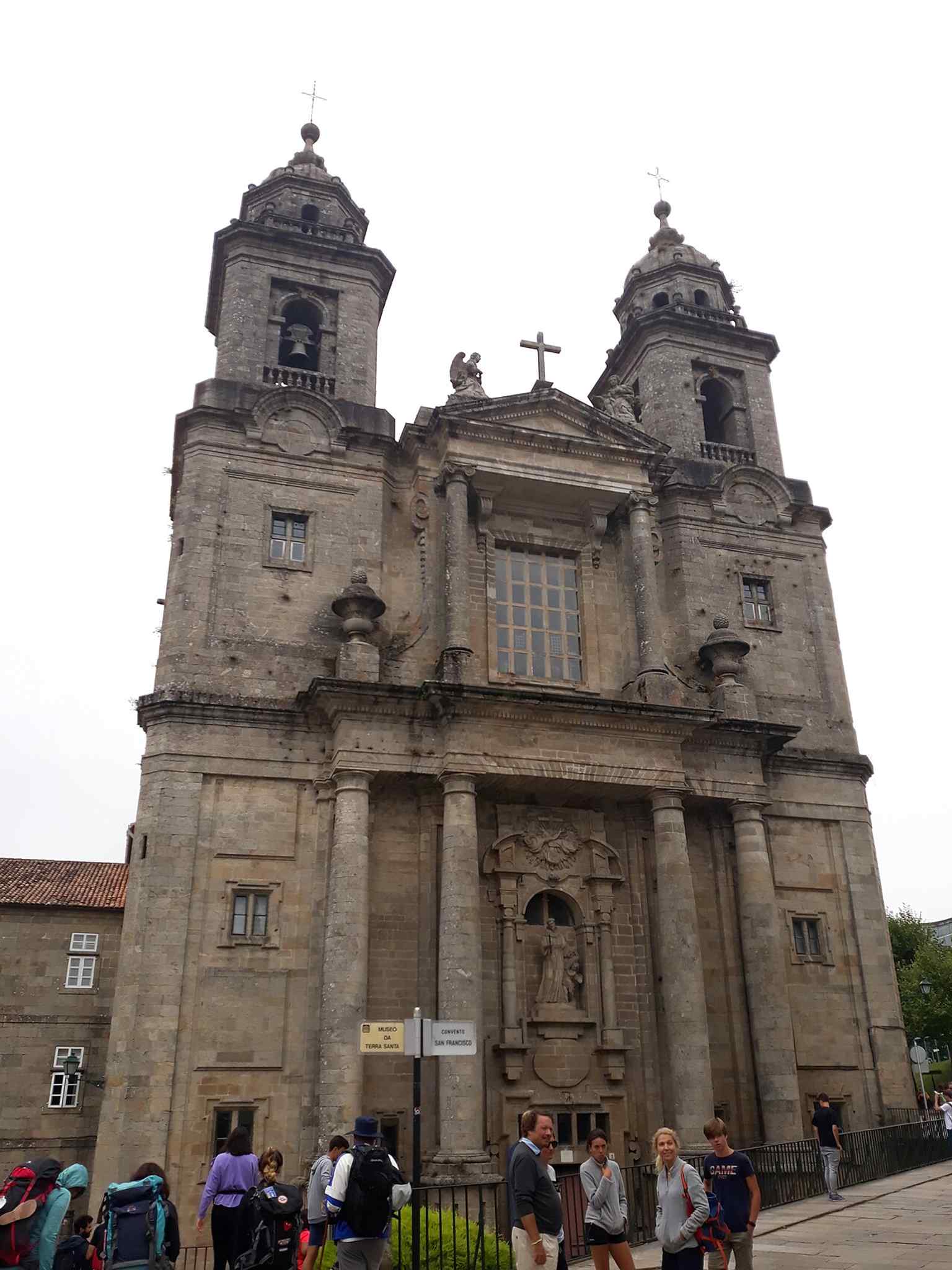
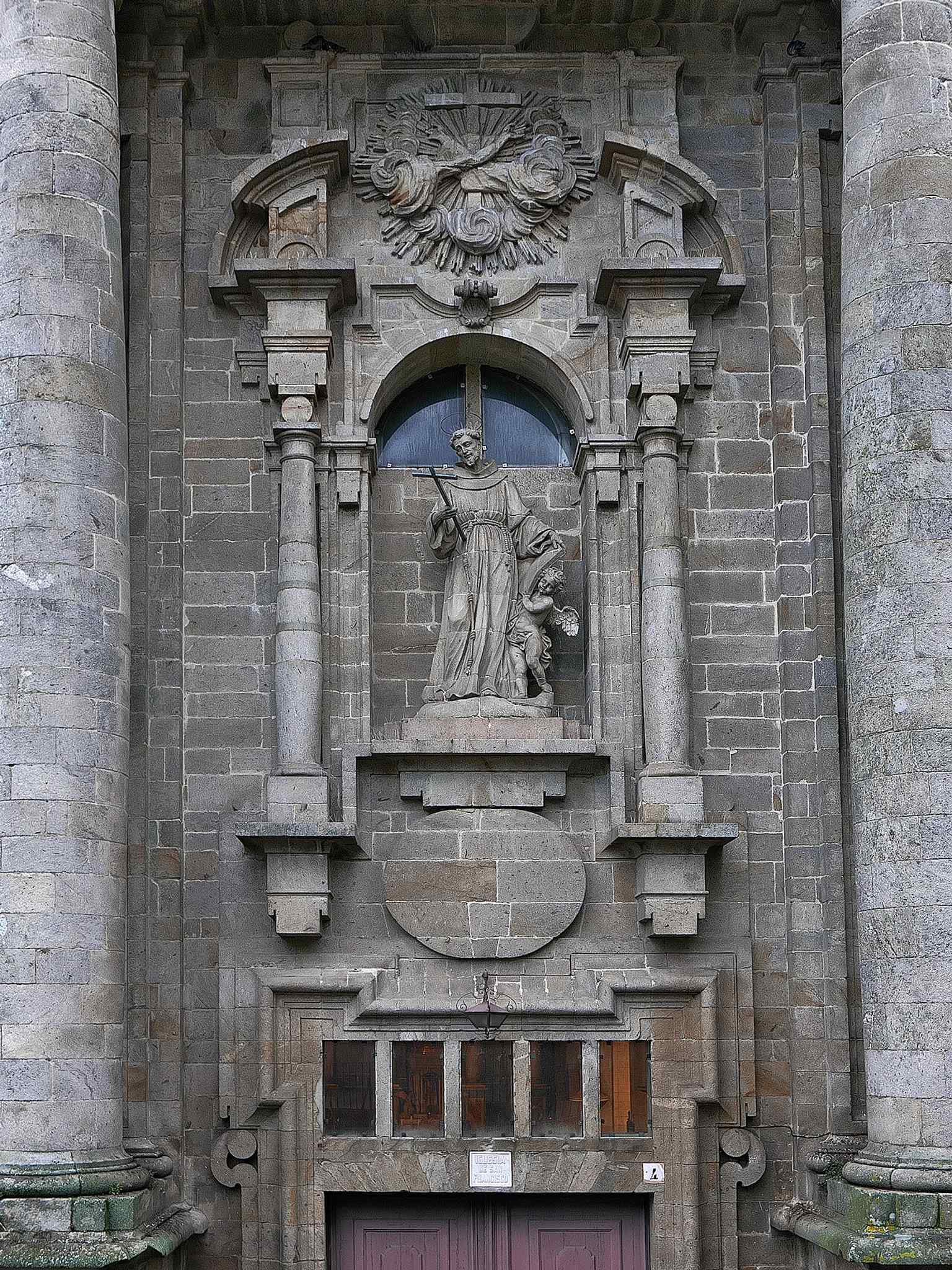
Check the second picture in your app for a closer look. You will see the statue of Saint Francis himself, carved by José Antonio Mauro Ferreiro Suárez, standing quietly between heavy Doric columns, forever mediating the space between the heavens and the city below.
The convent grounds remain open twenty-four hours a day, keeping that ancient spirit of welcome alive. But our journey continues. Let us dive back into the dense historic streets. We are heading to the Cabildo House, which is an eight-minute walk away.






