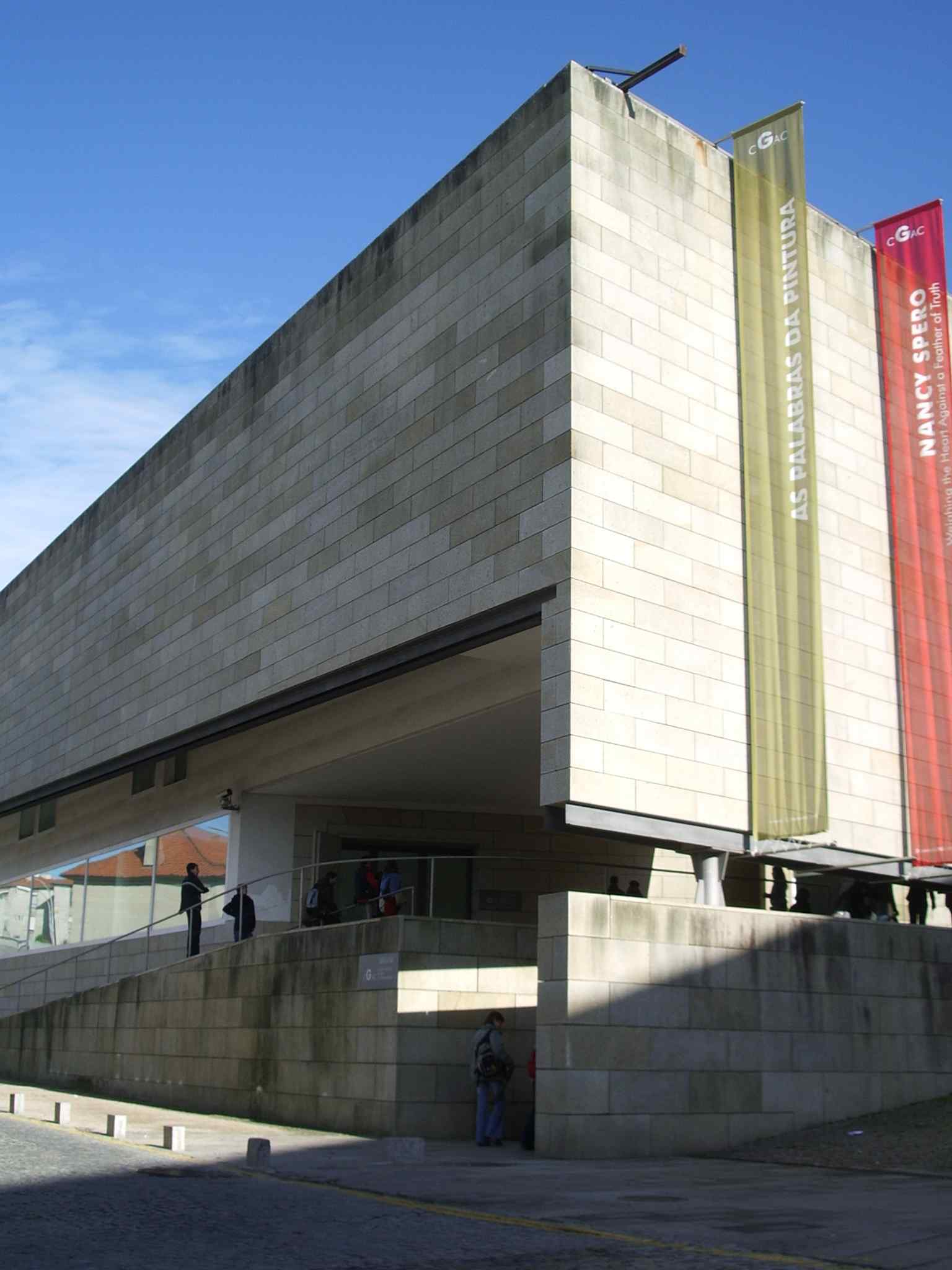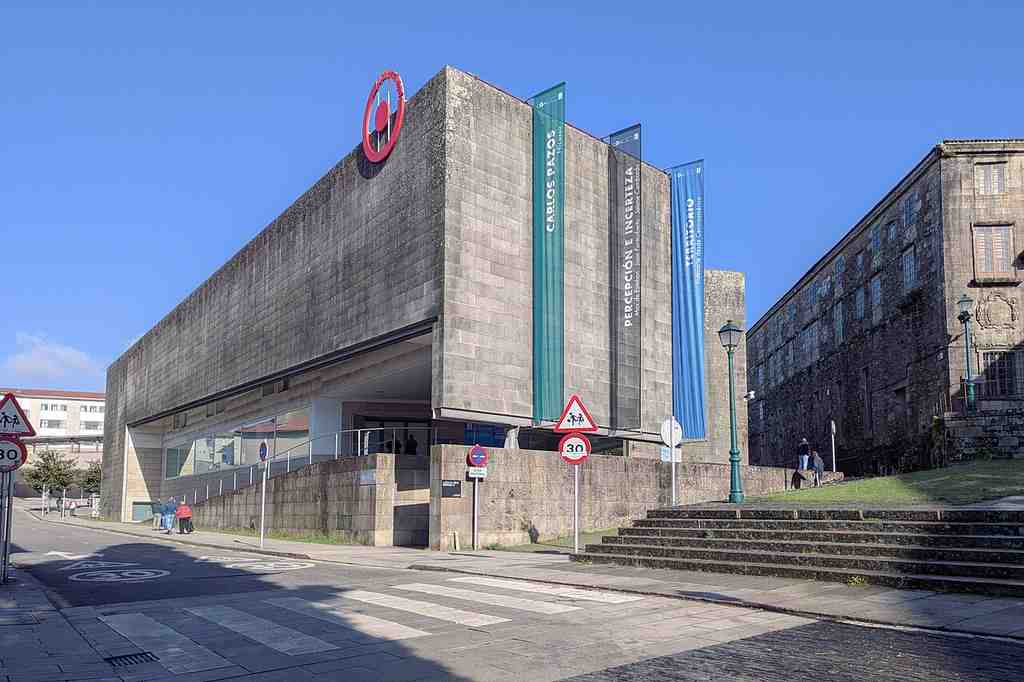
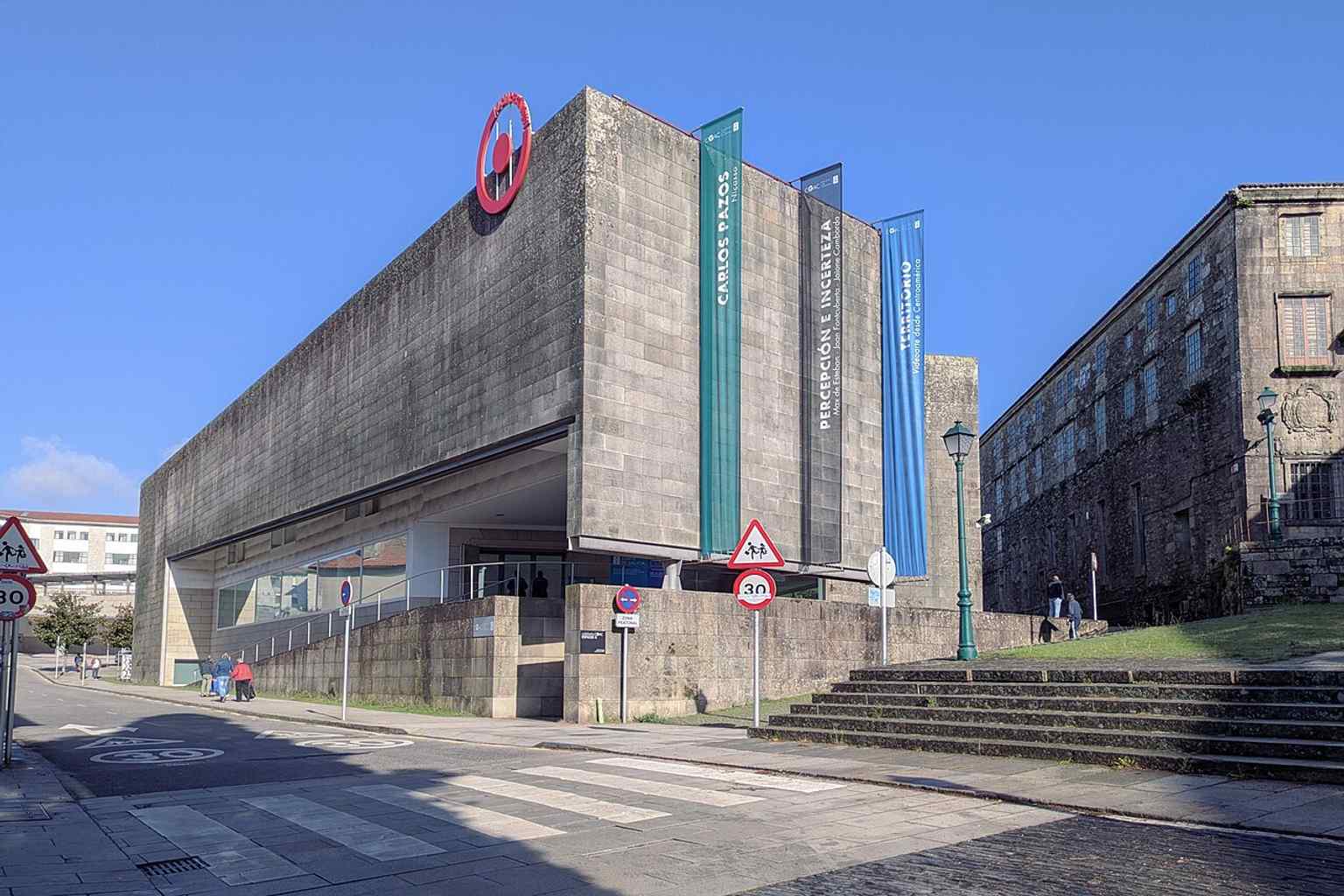
On your right, you will see a striking, sharp-angled block of solid granite featuring a deeply recessed glass entrance and a distinct red circular emblem near its upper corner. This is the Galician Centre of Contemporary Art, or C-G-A-C, designed by the renowned Portuguese architect Álvaro Siza and completed in nineteen ninety-three.
Siza was tasked with an incredibly delicate balancing act. He was building on the edge of the historic city, right beside an ancient convent. If you look at the museum's layout, the zigzagging ramps and terraces actually mimic the stepped agricultural gardens once cultivated by the devoted monks next door. It is a brilliant architectural nod, bridging the quiet dedication of the past with the bold, earthly visions of the modern age.
Siza envisioned a modern temple of art, using massive slabs of local stone that he hoped would look eternal. But nature had other plans. Barely two years after the doors opened, the pristine granite began to darken, breaking out in black spots. Santiago's relentless humidity was taking its toll. The regional government panicked, pouring funds into special biocides and chemical washes to scrub the stone back to its original perfection. Take a glance at your screen to see a close-up of this infamous granite sickness on the facade. Ironically, scientists later discovered that this biological darkening might actually act as a natural protective layer against erosion. If you check out the before and after photos on your app, you can see how the museum's sharp lines have beautifully weathered into its surroundings over the past couple of decades.
But the most intense storms here were entirely human. After the heavy oppression of the mid-twentieth century, Spain was hungry for a cultural awakening. Unlike foreign soldiers who simply destroyed the heritage they didn't understand, this modern institution aimed to challenge the public through creation. And challenge them it did. In nineteen ninety-eight, the regional government abruptly fired the visionary artistic director, Gloria Moure. Bureaucrats claimed she lacked administrative control, but the art world immediately called it a political purge designed to rein in her highly cosmopolitan, radically open exhibitions. The clash between bureaucratic authority and artistic freedom escalated so fast that riot police actually charged at protesting artists right outside these very doors.
That friction between political control and creative independence still crackles today. In twenty twenty-four, new administrative rules decreed that only career civil servants could direct the museum, effectively locking out independent international curators. Over a thousand art professionals signed a manifesto warning that the museum was losing its soul. It is a thoroughly modern controversy, yet strangely echoing the centuries of power struggles between archbishops, kings, and city planners that built the old city behind you.
If you are feeling inspired to brave the contemporary art world yourself, the museum is open Tuesday through Sunday from eleven AM to eight PM. Now, let us walk right next door to our fifteenth and final stop, the Museum of the Galician People, which is just a one-minute stroll away.