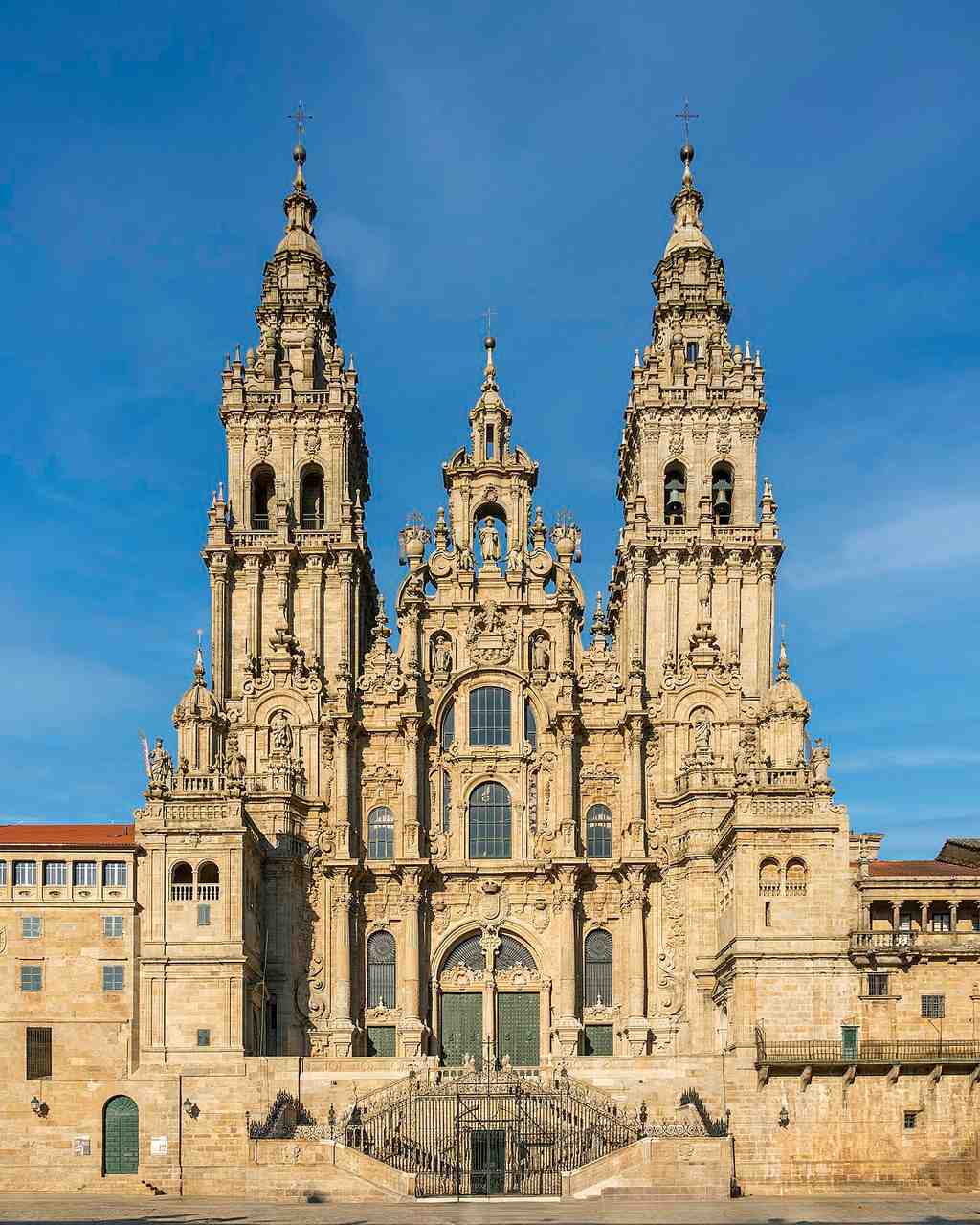
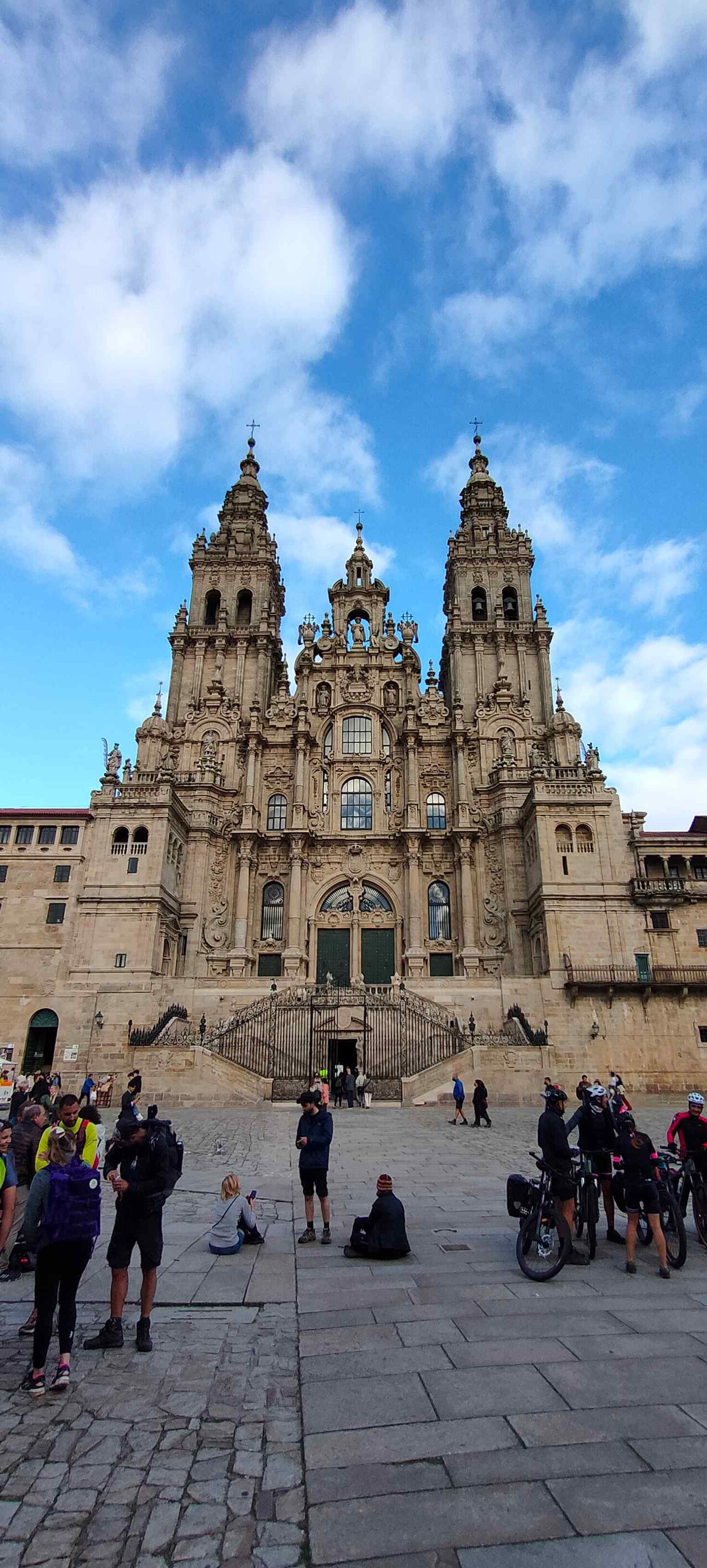
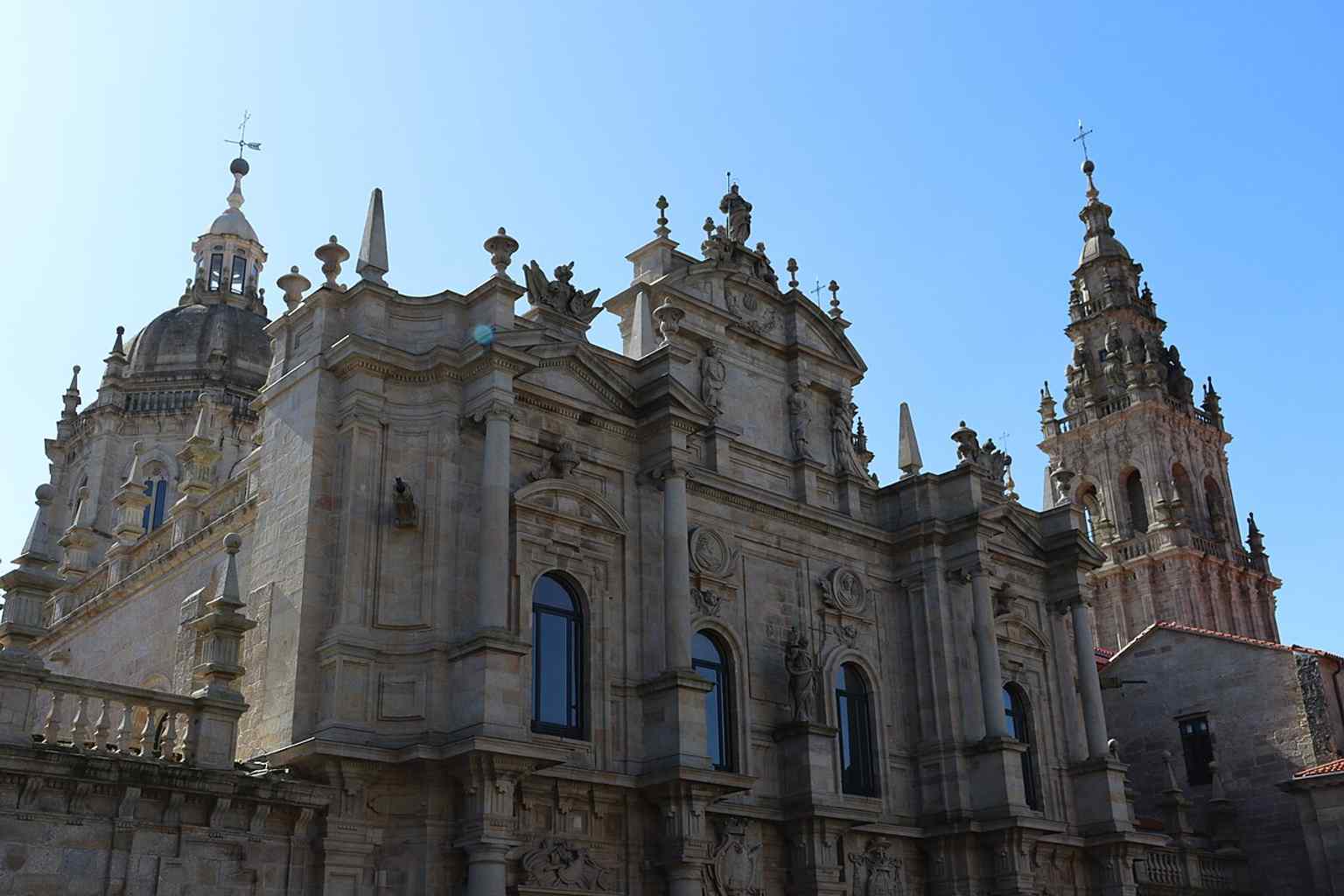
To your left rises a towering granite masterpiece, featuring a central triangular gable flanked by two incredibly detailed twin spires and fronted by a sweeping diamond-shaped double staircase. Over the past decade, a meticulous restoration stripped away centuries of moss and grime to reveal the original bright tone of this stone, and you can tap your screen to see what it looked like before the cleanup.
This awe-inspiring monument did not start with grand architects or wealthy kings, but with a humble boat of stone, two devoted disciples, and a very stubborn pagan monarch. According to legend, after the Apostle Saint James was martyred in Jerusalem in the year forty-four, his followers, Atanasio and Teodoro, brought his body back to the Iberian peninsula. They needed a sacred resting place, so they approached the local pagan ruler, Queen Lupa.
She was not exactly thrilled to host the remains of a foreign Christian martyr.
In a classic clash of worldly control and divine intent, Lupa tried to stop the burial through a rather theatrical deception. Most visitors walking these steps never realize that she sent the disciples to a nearby mountain, promising they would find gentle oxen to transport the heavy stone tomb. But the mountain was actually a deadly trap. It was populated by a dragon and fierce, wild bulls that the queen fully expected would tear the men apart. It was a brutal test to see whose authority would ultimately claim this territory.
The legend says the disciples simply made the sign of the cross, and the savage beasts were instantly tamed, quietly yoking themselves to the cart. Seeing her cunning plot defeated by pure faith, Queen Lupa was completely astounded. She surrendered her political schemes, converted to the new religion on the spot, and granted the land for the tomb.
What began as a tense battle of wills over a simple plot of dirt eventually sparked an international phenomenon. That solitary grave drew millions of people across the continent, transforming a forgotten corner of the world into the massive global movement of the Camino de Santiago. It is staggering to think that this sprawling architectural wonder, whose intricate main facade you can admire up close on your screen, grew from such a wild origin story.
A closer view of the intricate Obradoiro facade, named after the 'obradoiro' (workshop) of stonemasons who worked in the square during the cathedral's construction.Photo: Triplecaña, Wikimedia Commons, CC BY-SA 4.0. Cropped & resized.
The cathedral is open daily from seven A-M to nine P-M if you want to explore the grand interior and its soaring central hall later. For now, let us walk around the building to the magnificent back square of the complex, as our next stop, Quintana Square, is just steps away.
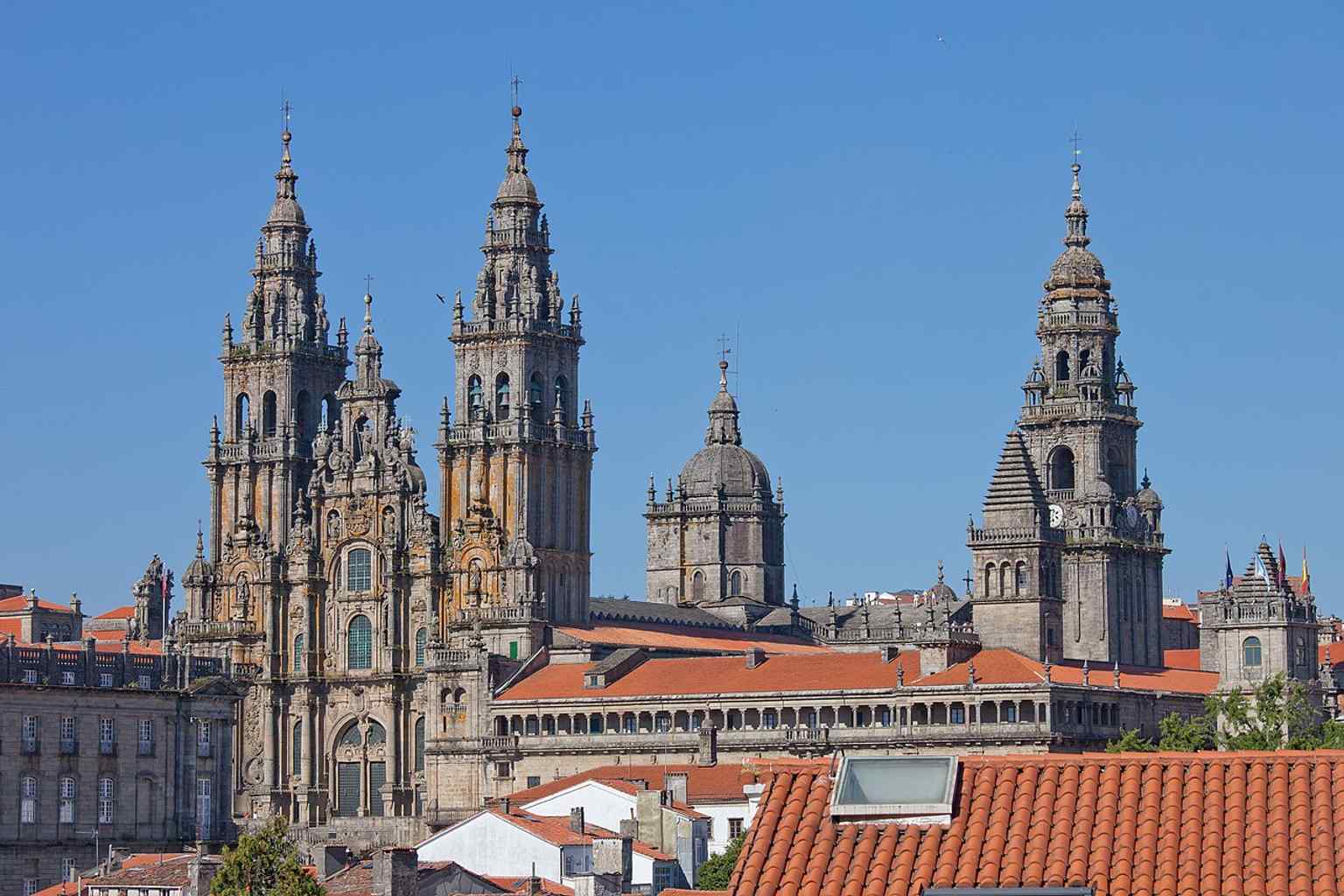
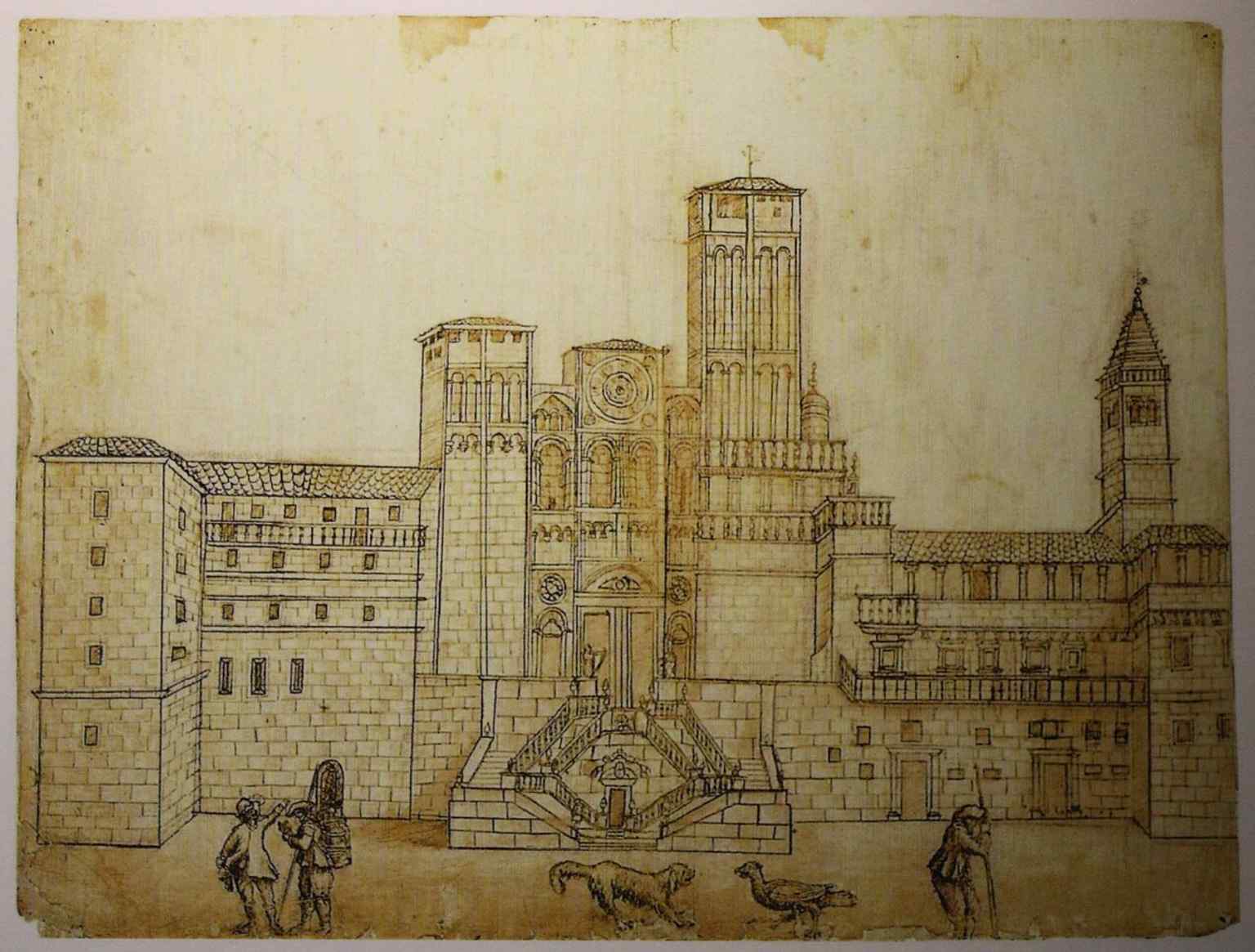
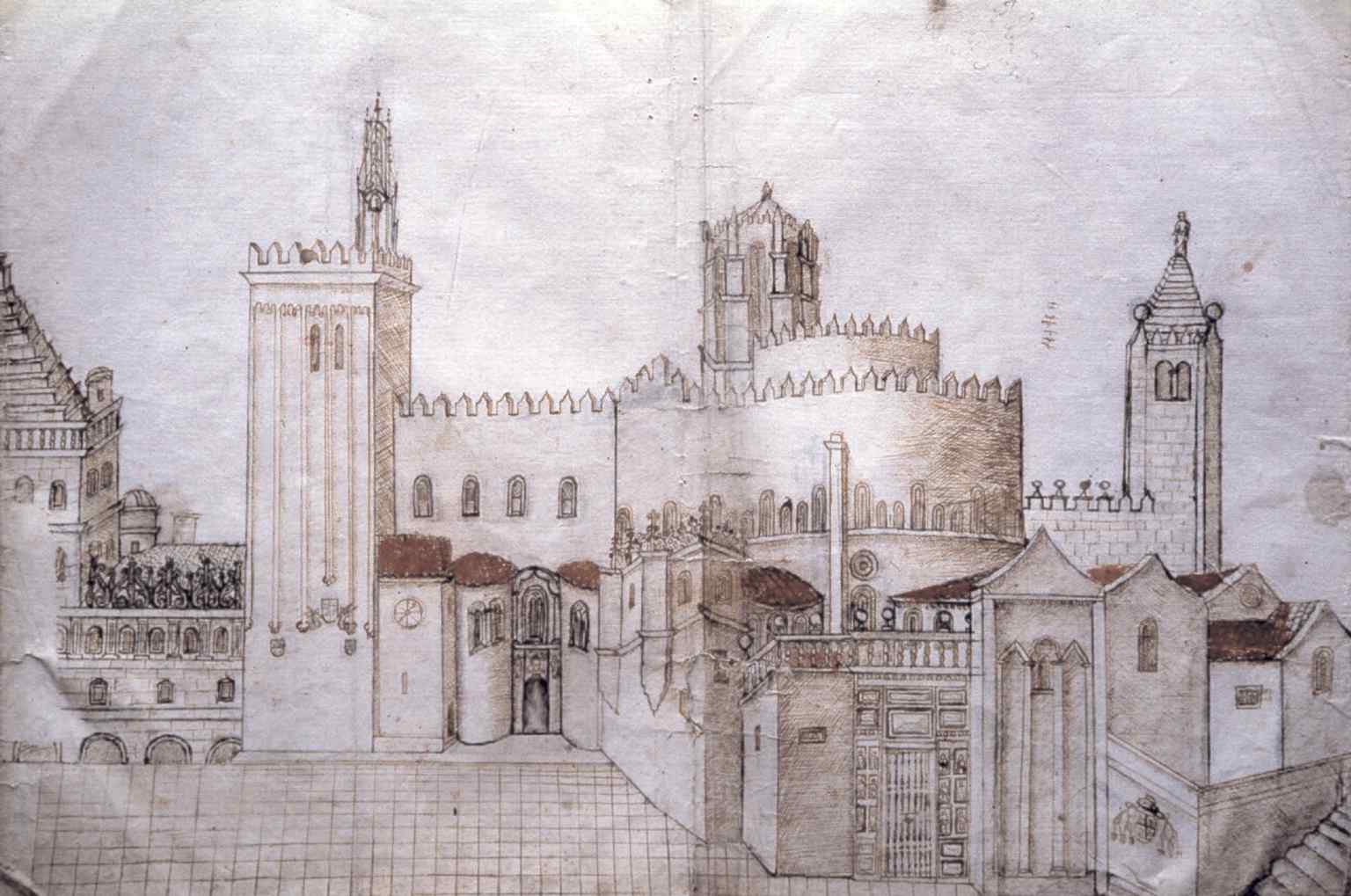
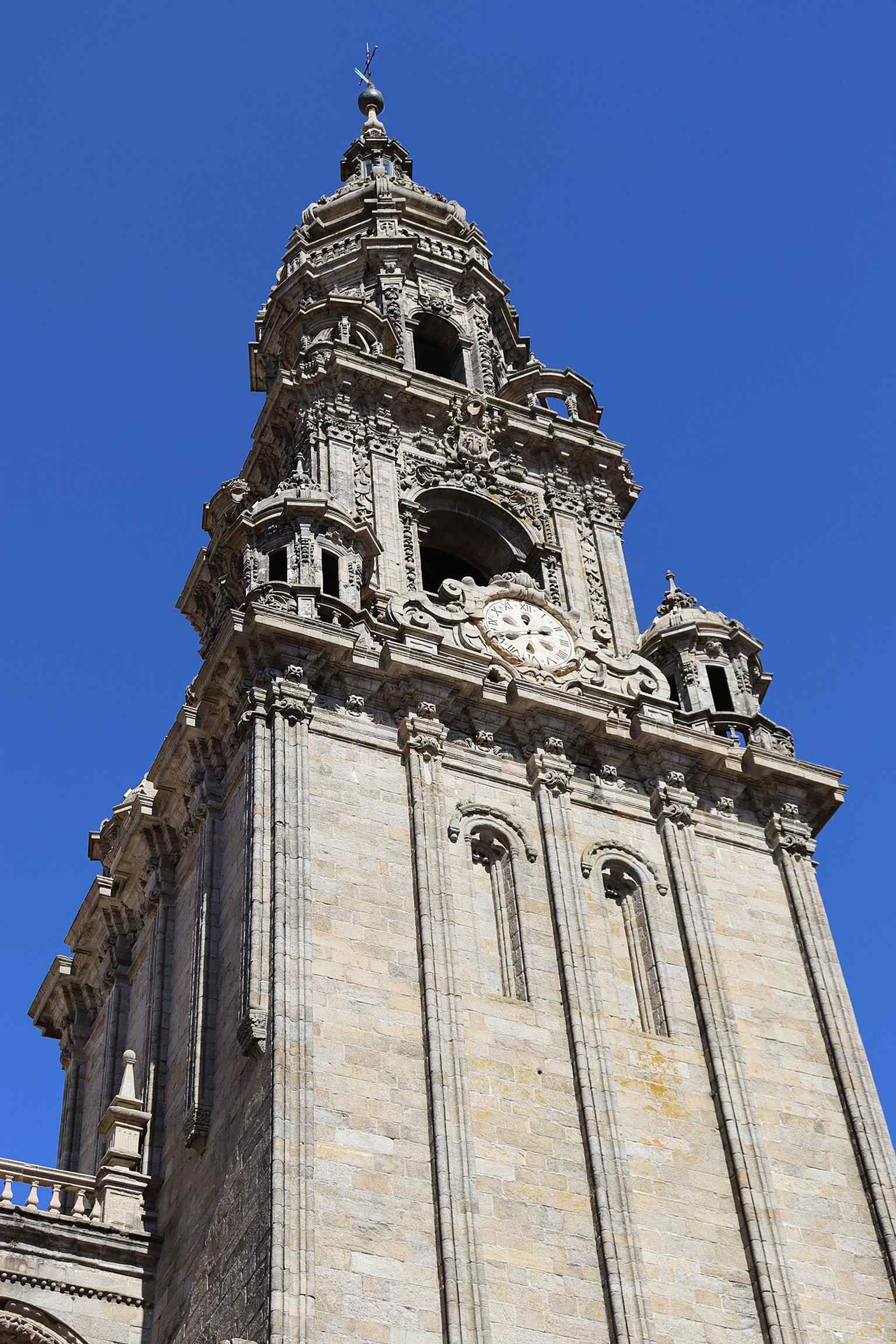
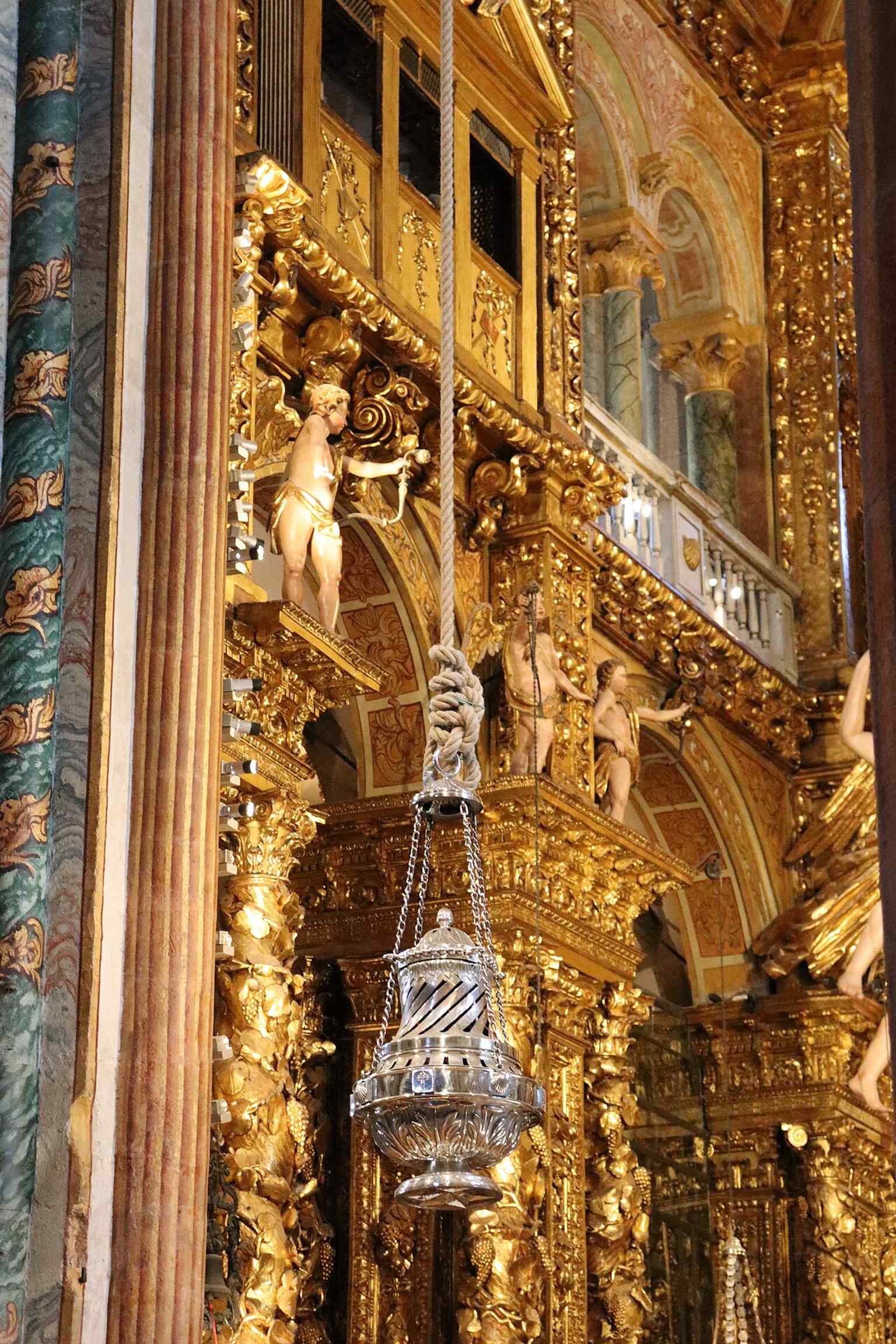
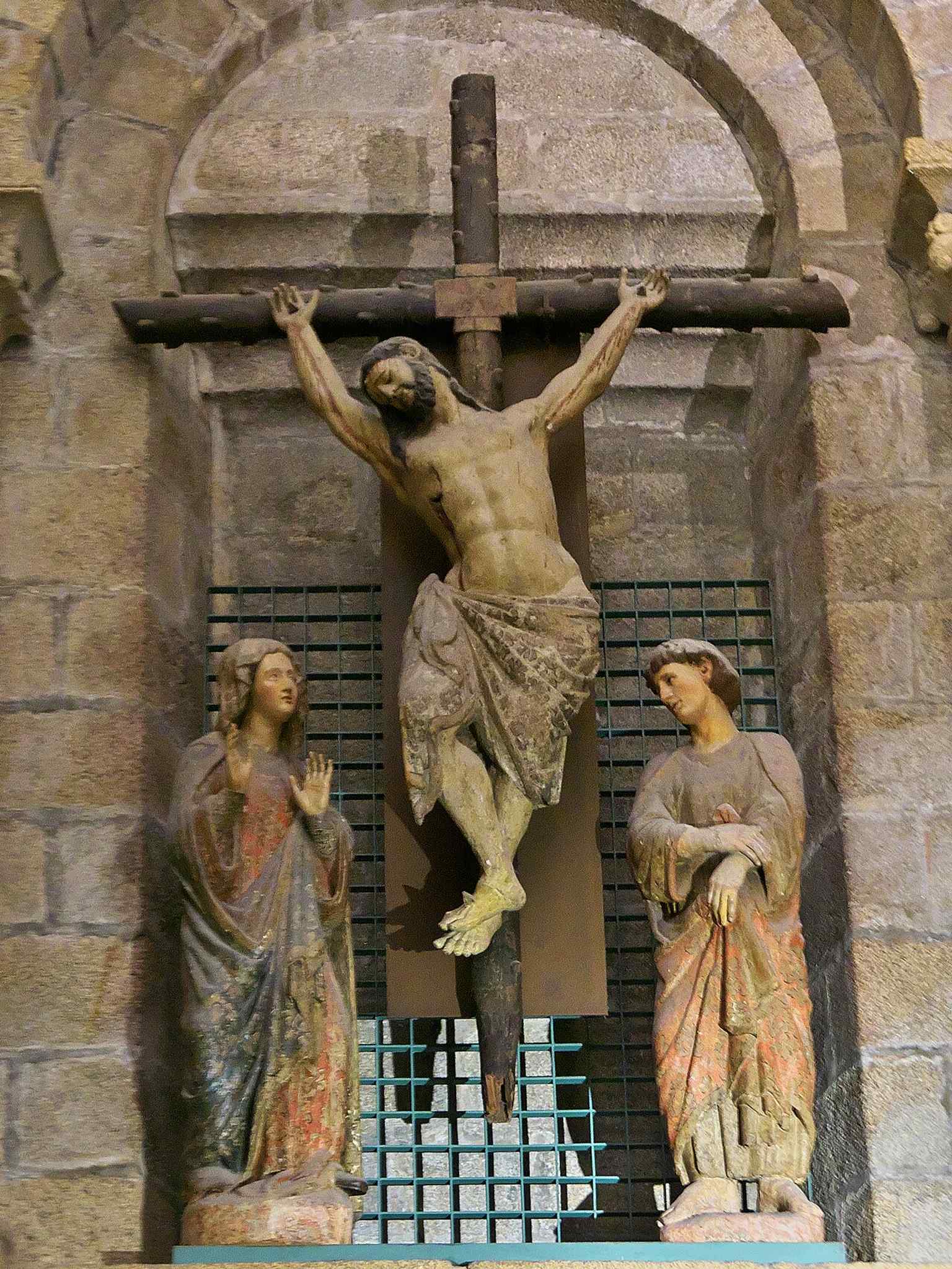
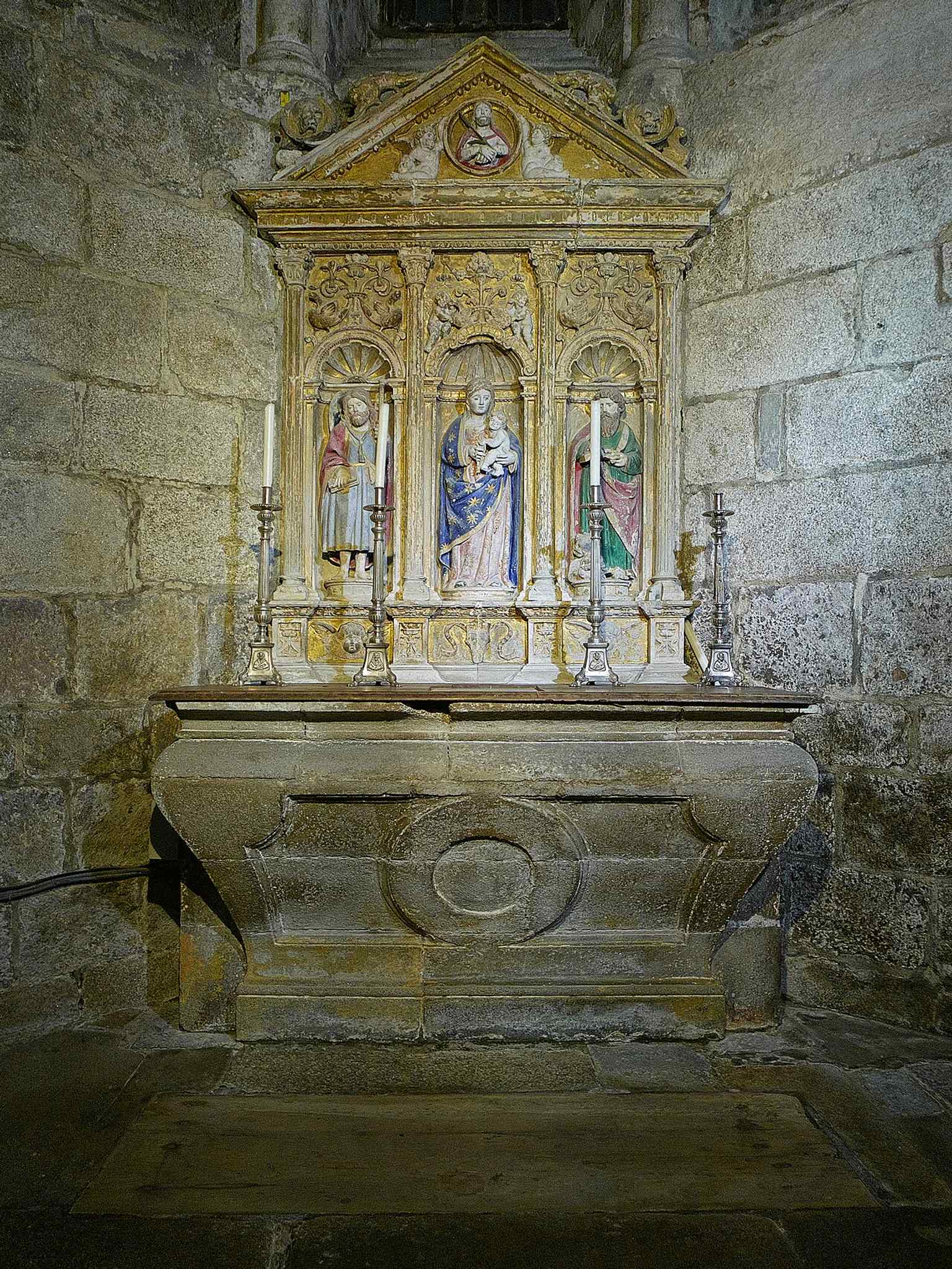
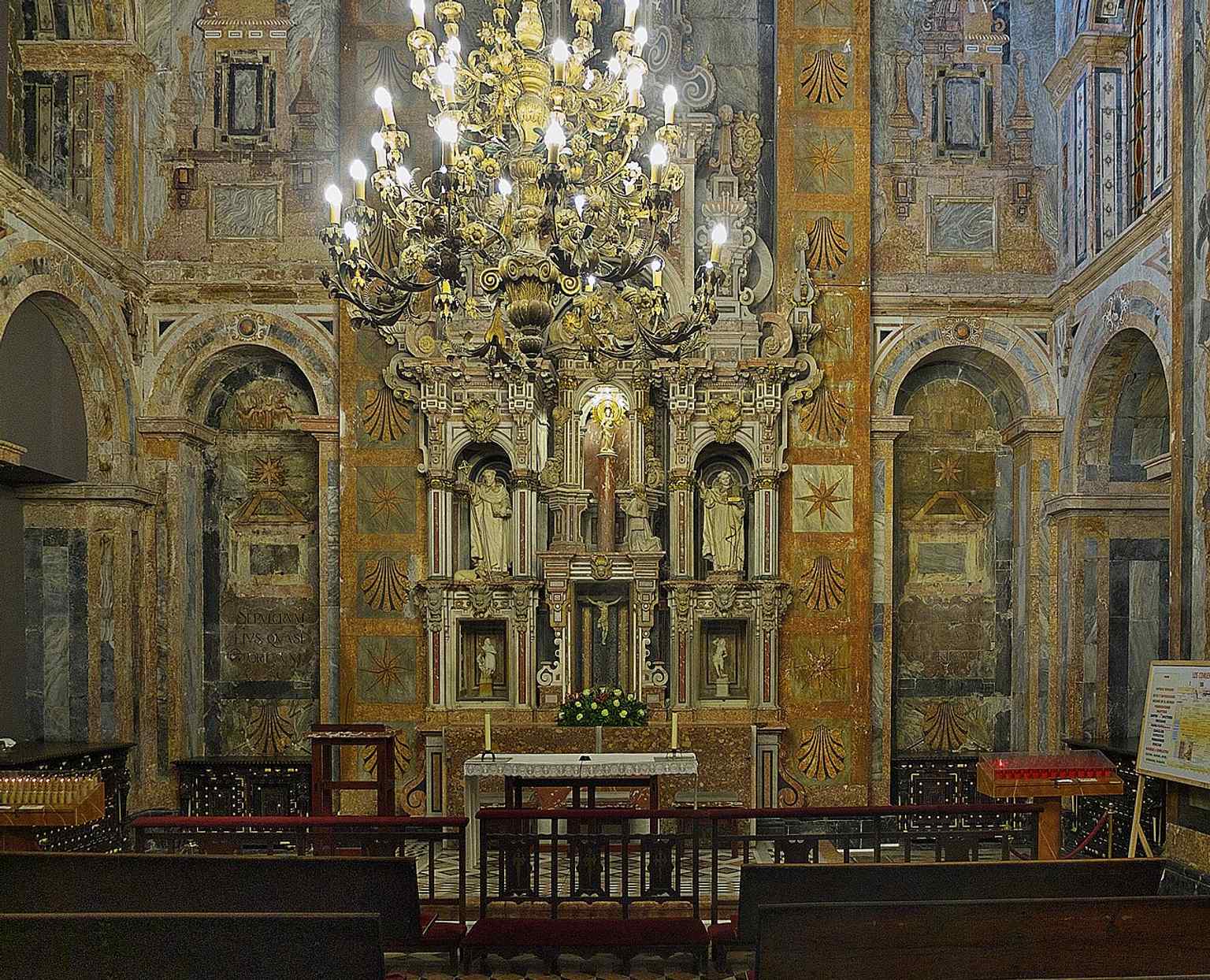
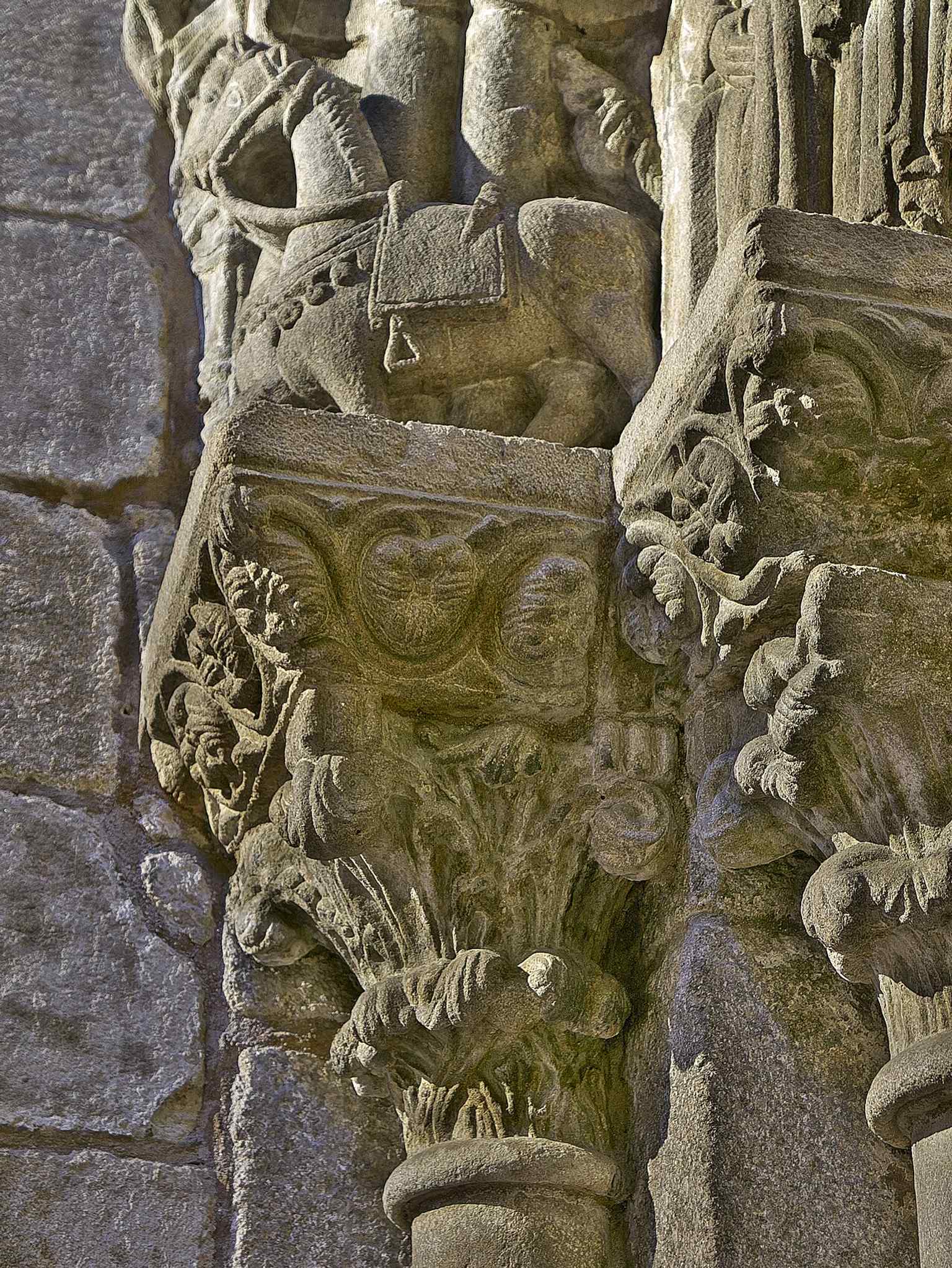
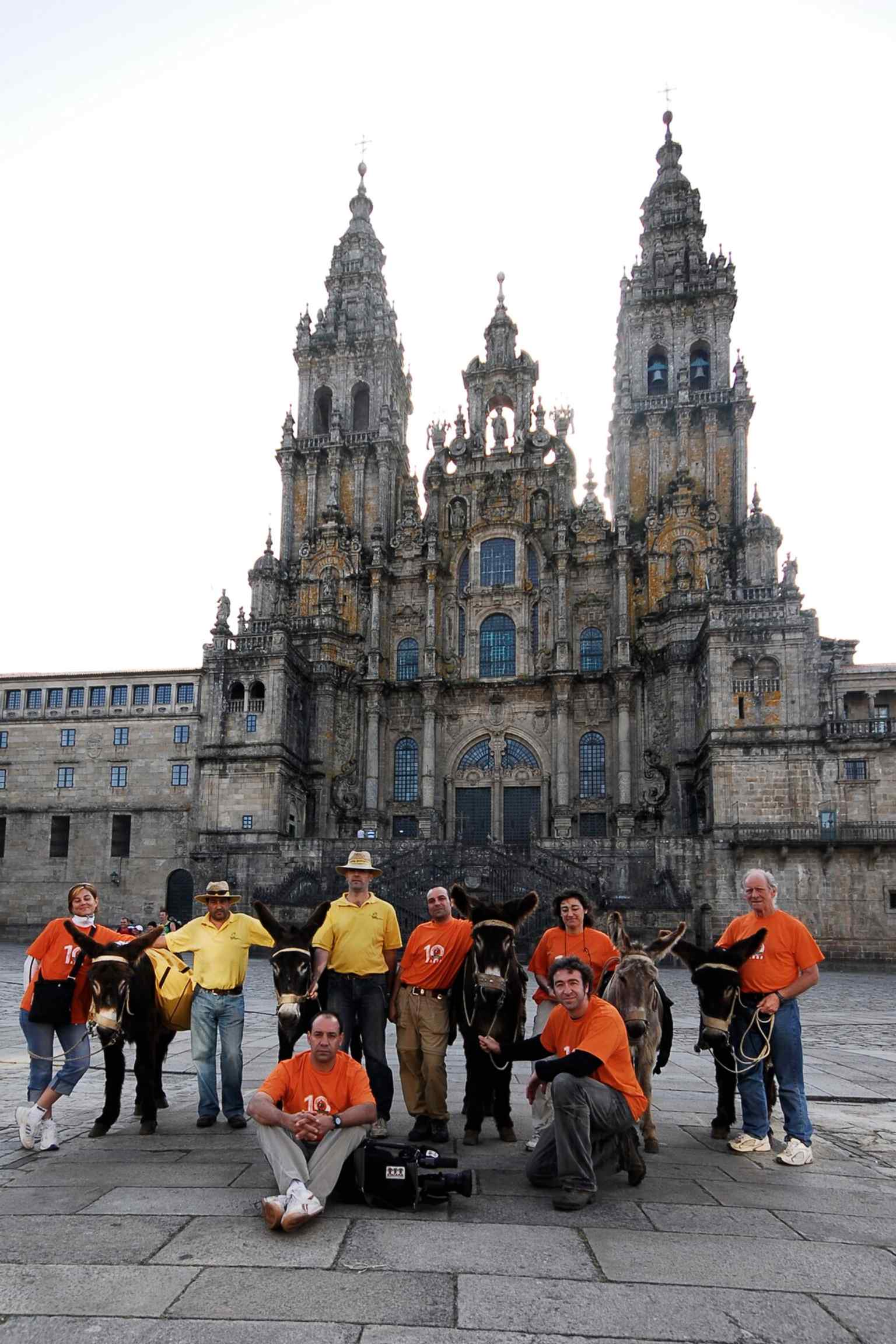
The iconic Baroque Obradoiro facade, designed by Fernando de Casas Novoa, stands as a symbol of Santiago de Compostela and is featured on Spanish Euro coins.Photo: Luis Miguel Bugallo Sánchez, Wikimedia Commons, CC BY-SA 3.0. Cropped & resized.This 1657 drawing by José Vega y Verdugo depicts the original Romanesque western facade, which was later replaced by the current Baroque Obradoiro facade.Photo: José Vega y Verdugo (1623-1696), Wikimedia Commons, Public domain. Cropped & resized.An etching from 1657 by José Vega y Verdugo, showing the cathedral from Quintana Square, where the Holy Door (Puerta Santa) opens only during Jubilee Years.Photo: José de Vega y Verdugo, Wikimedia Commons, Public domain. Cropped & resized.The impressive Torre del Reloj, also known as Berenguela, was elevated to its current Baroque height by Domingo de Andrade between 1676 and 1680, reaching 75 meters.Photo: Fernando Losada Rodríguez, Wikimedia Commons, CC BY-SA 4.0. Cropped & resized.The iconic Botafumeiro, a massive censer weighing over 100 kg when full, swings up to 68 km/h across the transept, traditionally used to purify the air from weary pilgrims.Photo: Fernando Losada Rodríguez, Wikimedia Commons, CC BY-SA 4.0. Cropped & resized.This 14th-century Gothic Calvary, situated in the Cathedral's baptistery, highlights the sacrament of baptism, symbolizing Christ's purification in the Jordan River.Photo: Jl FilpoC, Wikimedia Commons, CC BY-SA 4.0. Cropped & resized.The altar of the Chapel of San Bartolomé features the Virgin of Good Counsel, within a chapel that also houses the Renaissance sepulchre of Diego de Castilla, great-grandson of King Pedro I.Photo: Jl FilpoC, Wikimedia Commons, CC BY-SA 4.0. Cropped & resized.The Chapel of Pilar, constructed in the early 18th century, contains a painting depicting the Apparition of the Virgin of Pilar to St. James, commemorating his mission to evangelize the Iberian Peninsula.Photo: Jl FilpoC, Wikimedia Commons, CC BY-SA 4.0. Cropped & resized.A detail from the Chapel of Corticela's Romanesque door, showing the horses of the Magi, part of the tympanum's Adoration of the Magi scene.Photo: Jl FilpoC, Wikimedia Commons, CC BY-SA 4.0. Cropped & resized.Pilgrims, some arriving on donkeys as in medieval times, gather in front of the Cathedral, culminating their spiritual journey on the historic Camino de Santiago.Photo: Enrique Amigo, Wikimedia Commons, CC BY-SA 4.0. Cropped & resized.A comprehensive view of the Cathedral complex, a granite masterpiece declared a UNESCO World Heritage site in 1985, as the old city of Santiago de Compostela concentrates around it.Photo: Fernando Losada Rodríguez, Wikimedia Commons, CC BY-SA 4.0. Cropped & resized.arrow_back Back to Santiago de Compostela Highlights Audio Tour: Sacred Paths and Stone Treasures
Loved by travellers
Thousands of tours started. Plenty of opinions.
4.8 across the App Store and Google Play. Here's a few we keep coming back to.
starstarstarstarstar
This tour was such a great way to see the city. The stories were interesting without feeling too scripted, and I loved being able to explore at my own pace.
Started this tour with a croissant in one hand and zero expectations. The app just vibes with you, no pressure, just you, your headphones, and some cool stories.







%203.jpg)

.jpg)


.jpg)

