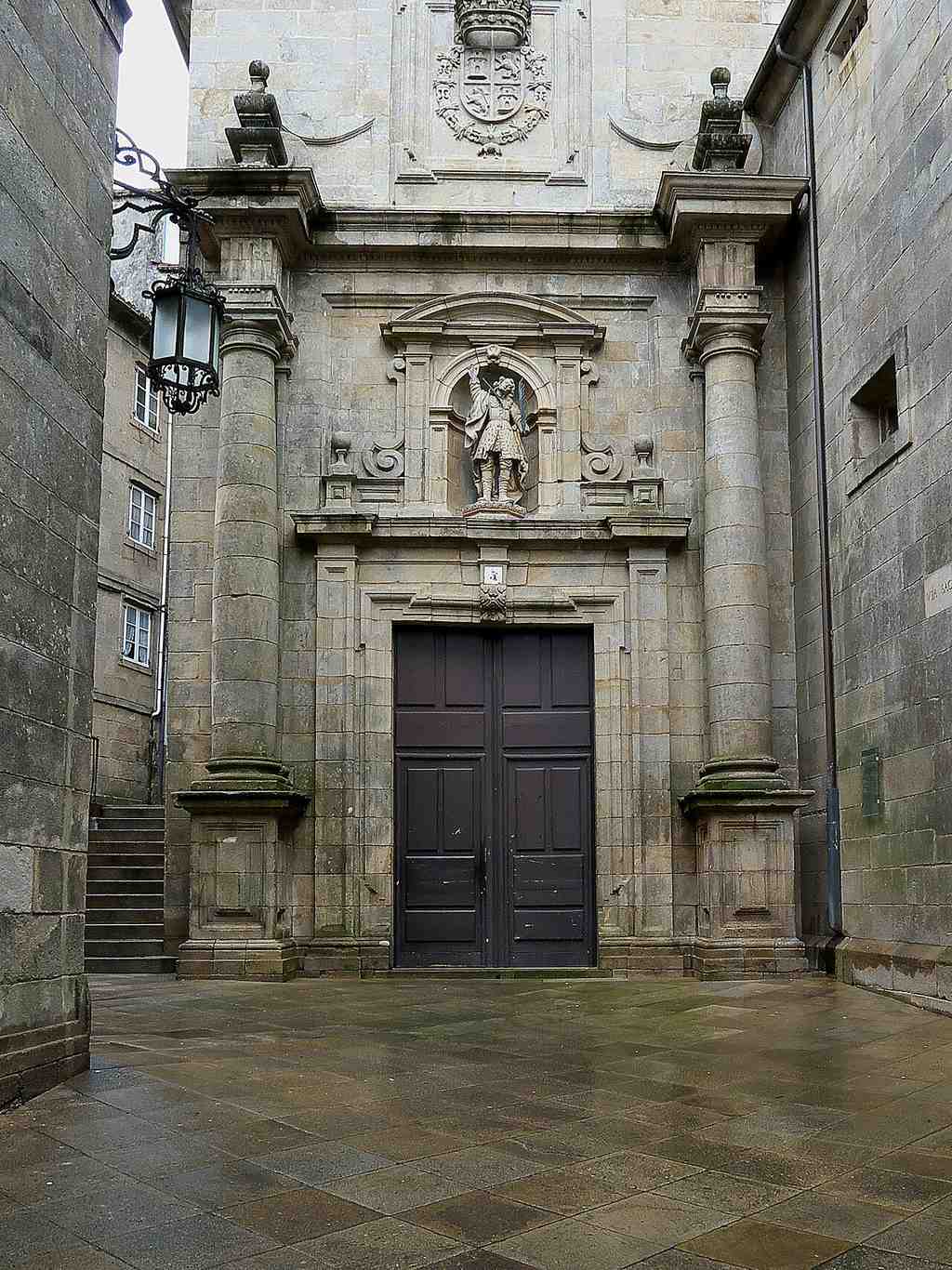
Look at the immense, austere stone wall stretching across the square, defined by its rhythm of simple rectangular windows and practically no decoration. This is the Royal Monastery of San Pelayo de Antealtares.
Its seventeenth-century architect, Fernández Lechuga, deliberately designed this massive facade to be plain, knowing better than to compete with the flashy Cathedral next door. But the history behind these walls is anything but quiet.
Back in the year ten seventy-seven, a major real estate problem struck Santiago. Bishop Diego Peláez wanted to expand the grand, heavy-stone Romanesque cathedral, but he had run out of room. The land he needed belonged to this monastery. What followed was a masterclass in negotiation, a historic legal agreement recorded as the Concordia de Antealtares. Much like earlier legends of yielded land, the monks here made a massive concession. Abbot Fagildo signed over the soil so the cathedral could grow eastward. But he did not do it for free. In exchange, the monastery secured total independence and vast institutional power. It was a neat piece of earthly deal-making to serve a divine purpose.
The monks also walked away with the Ara de San Pelayo, a humble piece of marble that happens to be the original first-century altar placed over Saint James's tomb by his disciples. When the cathedral upgraded its altar, the monks gladly took the original, making it the symbolic heart of their own holy site.
But a few centuries later, the tranquility here shattered. In fourteen ninety-nine, the Catholic Monarchs decided to forcefully reorganize local religious life. They ordered this monastery to become an enclosed convent exclusively for women, living under a strict, isolated rule. They sent a Castilian noblewoman named Beatriz de Acuña to act as the new abbess, the community leader, and enforce the harsh discipline. The local Galician nuns did not take kindly to this. In an unprecedented rebellion, almost every single nun escaped into the night, fleeing back to their old convents. Beatriz spent years trying to pacify the situation, eventually having to pay off the deposed leaders with handsome stipends to keep the peace.
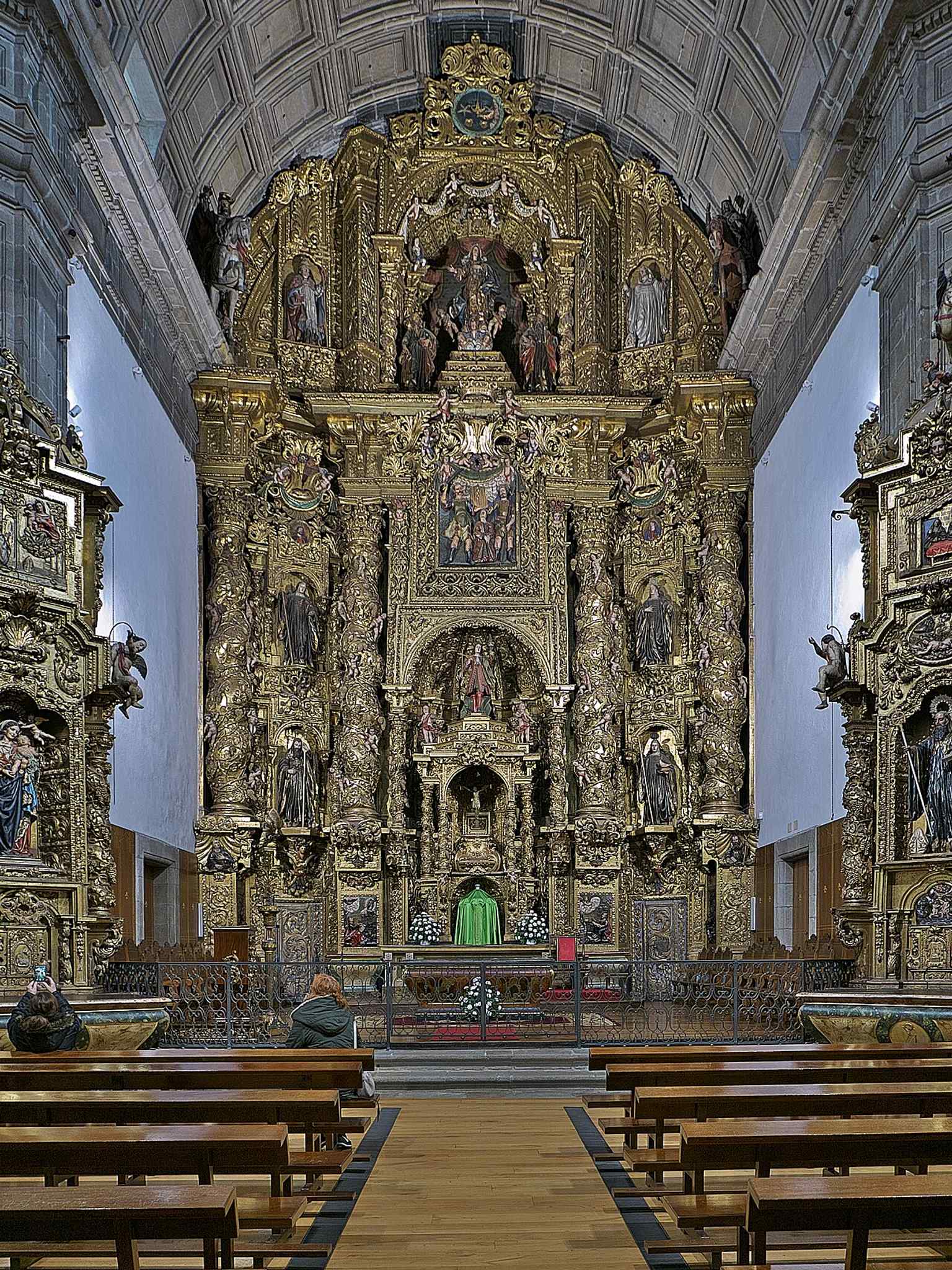
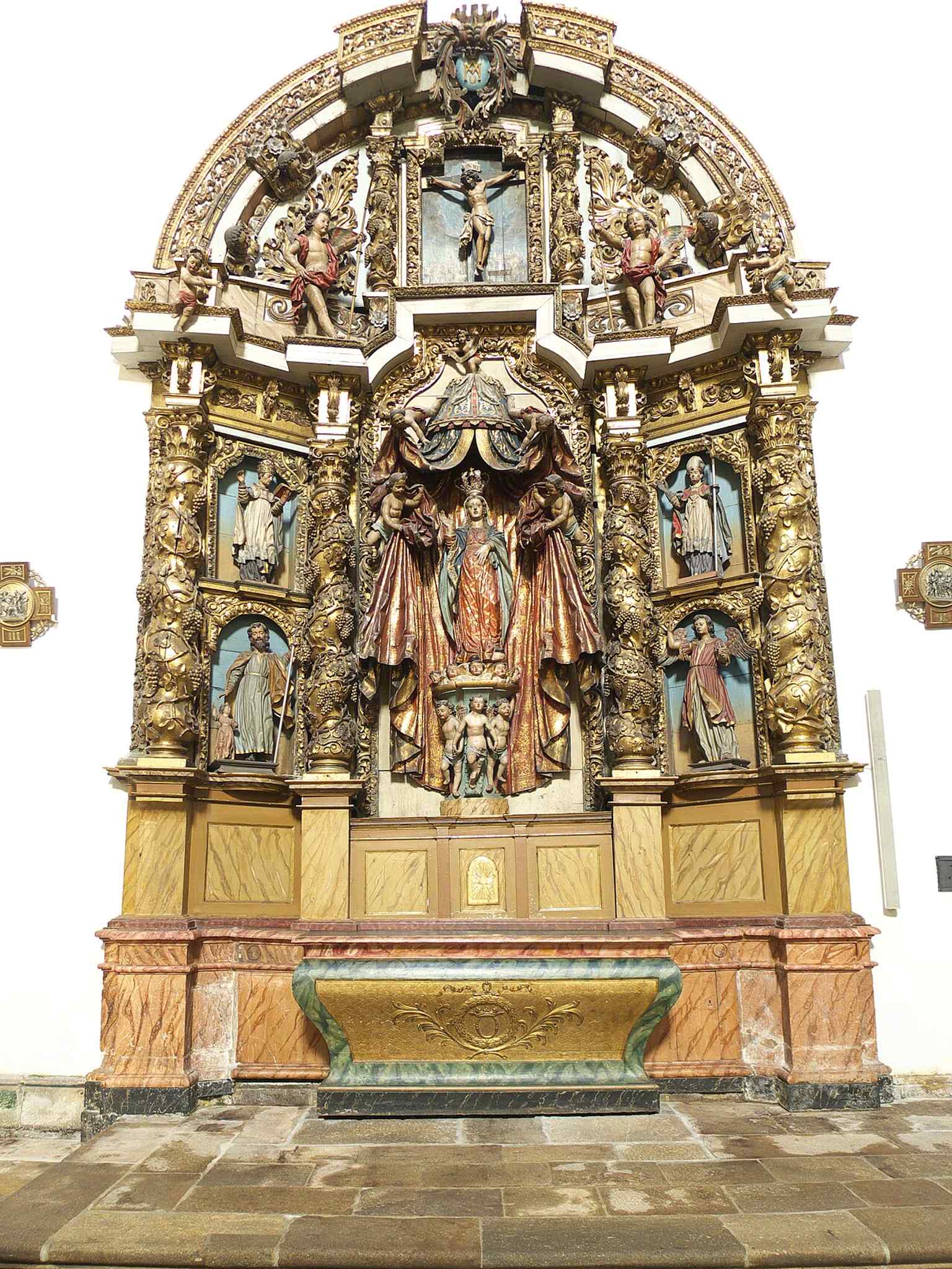
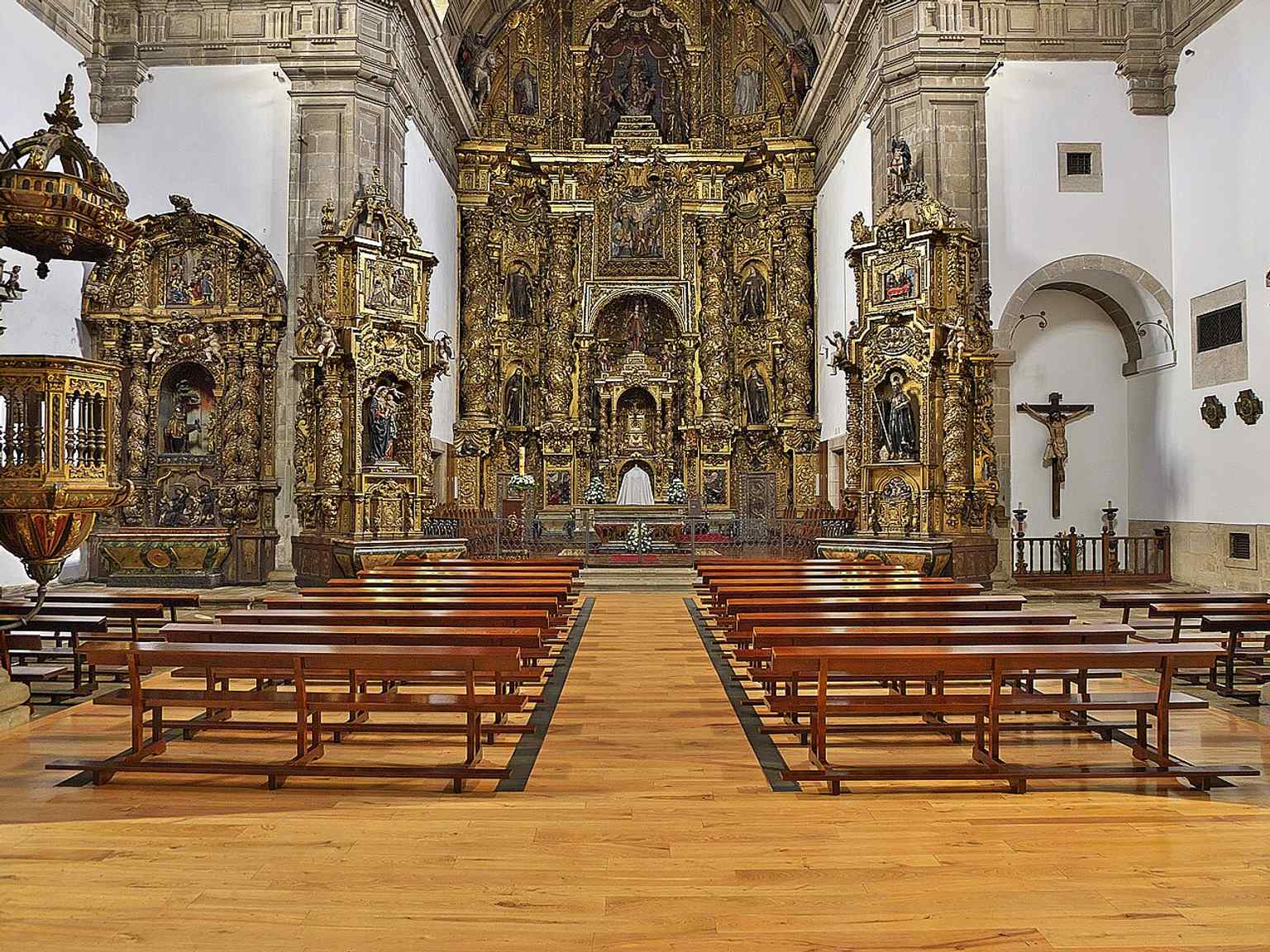
Once the dust settled, the convent became the most prestigious in Galicia. During the seventeenth and eighteenth centuries, daughters of the high nobility, known locally as the Señoras, moved in. They brought astronomical dowries with them. If you check your screen, you can see the results of that aristocratic wealth. The monastery church boasts a breathtaking, highly dramatic Baroque interior, entirely funded by those noble fortunes. A master craftsman named Francisco de Castro Canseco carved the stunning main altarpiece you see here in seventeen fourteen.
Today, an order of Benedictine nuns still lives inside, maintaining their vows of strict enclosure. But they still manage a little earthly commerce. They bake some of the most famous almond cakes in the city, selling them through a torno, a rotating wooden turnstile built into the wall that lets you buy their sweets without ever seeing the baker's face. If you want to step inside, the church is typically open daily from nine AM to two PM, and again from three to six thirty PM.
Our next stop involves an even larger monastic powerhouse. Follow your map toward the massive complex of San Martiño Pinario, just a three-minute walk away.