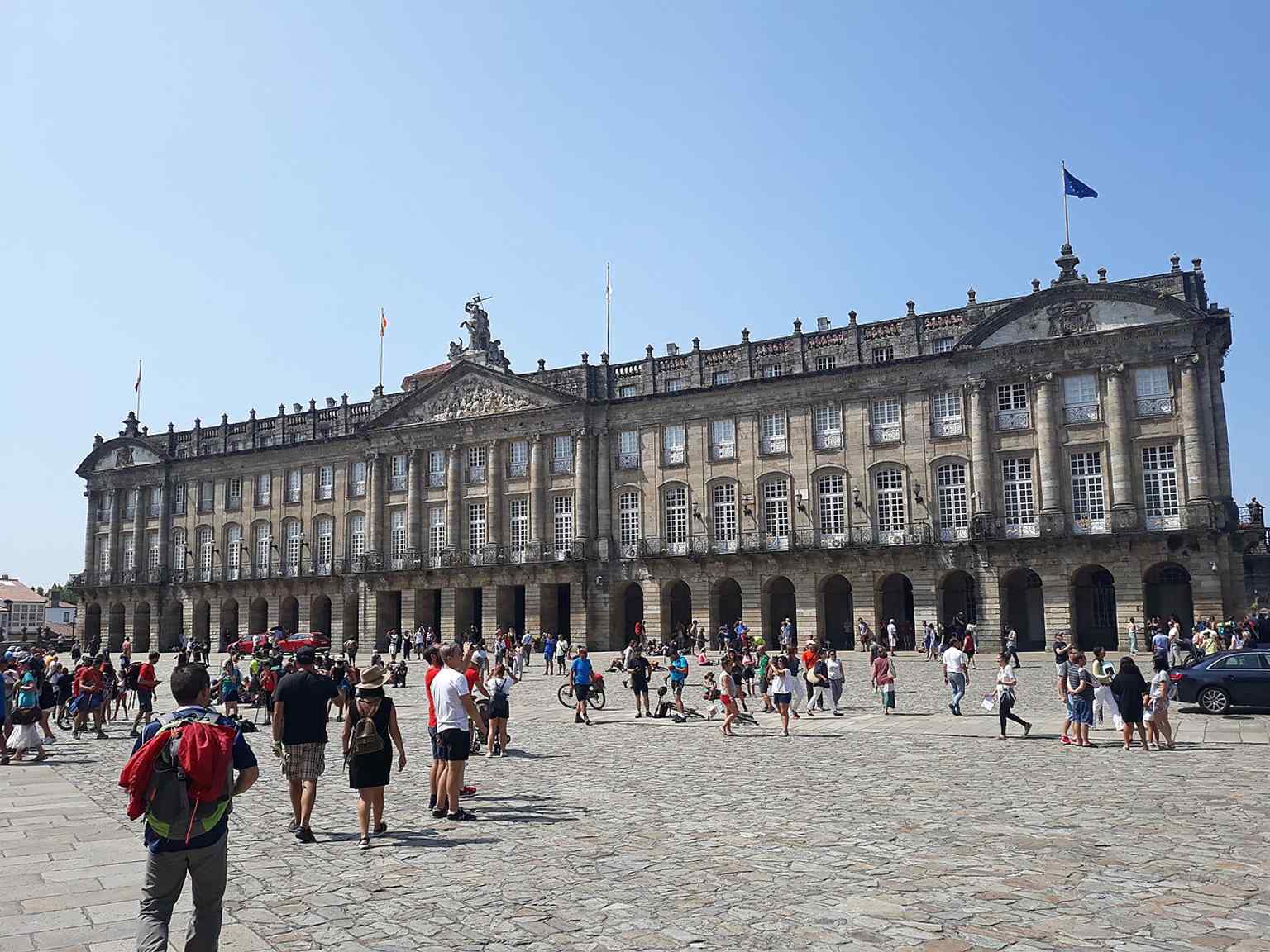
You are standing in a vast, paved plaza anchored by a monumental stone cathedral with ornate baroque spires dominating the eastern skyline, flanked by sweeping administrative buildings with long arched colonnades.
Millions of travelers have ended their long spiritual journeys right here on these stones. But creating a gateway to the divine requires an awful lot of earthly sweat. For much of its history, this polished ceremonial center was not a quiet place of reflection. It was a chaotic, deafening construction site filled with choking dust, echoing hammers, and towering piles of raw stone. The square actually gets its name, Obradoiro, from the open-air workshops of the stonemasons, the obrairos, who lived and toiled right where you are standing to shape the granite skin of the cathedral.
Much like the Two Marys we learned about earlier, these anonymous builders left a permanent, somewhat defiant signature on the city. Let me tip you off to a little detail most visitors completely miss. If you take a look at the cathedral's magnificent facade on your screen, you can see the intricate stonework that leads into the famous Portico de la Gloria. According to local history, those cheeky masons carved the prophet Daniel with a rather mischievous smile, positioning him so he was gazing directly at the ample chest of Queen Esther. The local clergy were utterly scandalized by the impropriety and ordered stoneworkers to aggressively reduce the stone queen's curves. In a brilliantly petty act of rebellion, the people of Galicia began producing a conical local cheese meant to perfectly replicate the shape the clergy had chipped away. They still sell it today.
As the cathedral neared completion in the eighteenth century, the square transformed from a dusty workshop into an orderly stage representing the city's four pillars of power. To the north sits the royal hospital, to the south the university, to the east the church, and to the west, government. But earthly ambition always finds a way to cause trouble.
An ambitious archbishop proposed the massive neoclassical building closing off the western side of the square. The moment he started building, a bitter legal feud erupted. The neighboring hospital administrators sued, arguing the giant palace would block the vital light and air needed to heal sick pilgrims. The dispute raged until seventeen sixty-seven, when the royal courts issued a compromise. The archbishop got his grand building, but the courts forced him to share it with a seminary, the city hall, and a jail.
Before we head over there, look toward the cathedral's north tower. Imagine a massive, harsh rattling sound echoing across this space. During Holy Week, the bells go silent in mourning, and a giant wooden rattle up in that tower takes over, filling the plaza with a heavy, clattering solemnity. Now, direct your attention fully to that grand neoclassical building the archbishop fought so hard for, as we take the one-minute walk over to Rajoy's Palace.