
Helsinki Audio Tour: Historic City Center
A sea nymph rises from Market Square, gleaming in bronze, while domes and spires watch over Helsinki like quiet witnesses to trouble. This self guided audio tour threads through the city from Havis Amanda to Uspenski Cathedral and Helsinki Cathedral, unlocking stories and corners most visitors rush past. Hear the politics, scandals, rebellions, and forgotten moments hiding in plain sight. What happened when tensions in the streets turned into a political battle that rattled the steps of Helsinki Cathedral? Which secret loyalties and shadowed mysteries linger beneath the red brick walls of Uspenski Cathedral? Why did a single statue at Havis Amanda become the oddly specific flashpoint for outrage, celebration, and late night mischief? Move from waterfront bustle to granite calm, climbing, circling, and slipping into backstories that reframe every postcard view. Expect drama, discovery, and sudden shifts in perspective. Press play and meet the nymph again, this time with the city speaking back.
Tour preview
About this tour
- scheduleDuration 140–160 minsGo at your own pace
- straighten6.6 km walking routeFollow the guided path
- location_on
- wifi_offWorks offlineDownload once, use anywhere
- all_inclusiveLifetime accessReplay anytime, forever
- location_onStarts at Ateneum Art Museum
Stops on this tour
lock_open 3 free previews · 12 unlock with purchase
In front of you is a broad stone neo-Renaissance façade, symmetrical and formal, with tall arched windows and a sculpted pediment topped by gold Latin lettering. Welcome to a…Read moreShow less
Open dedicated page →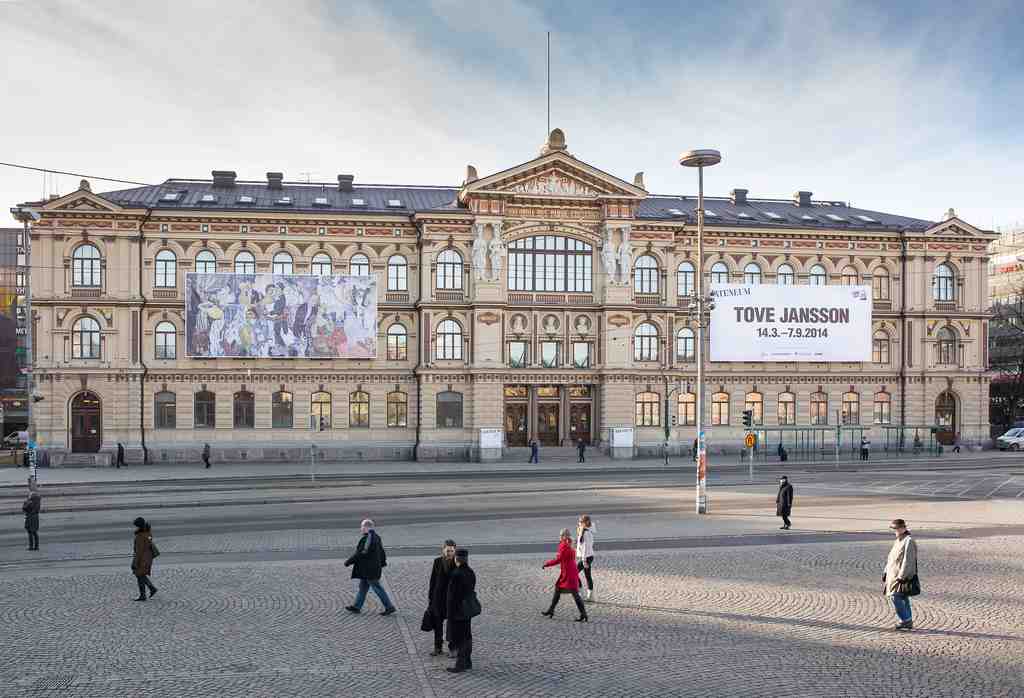
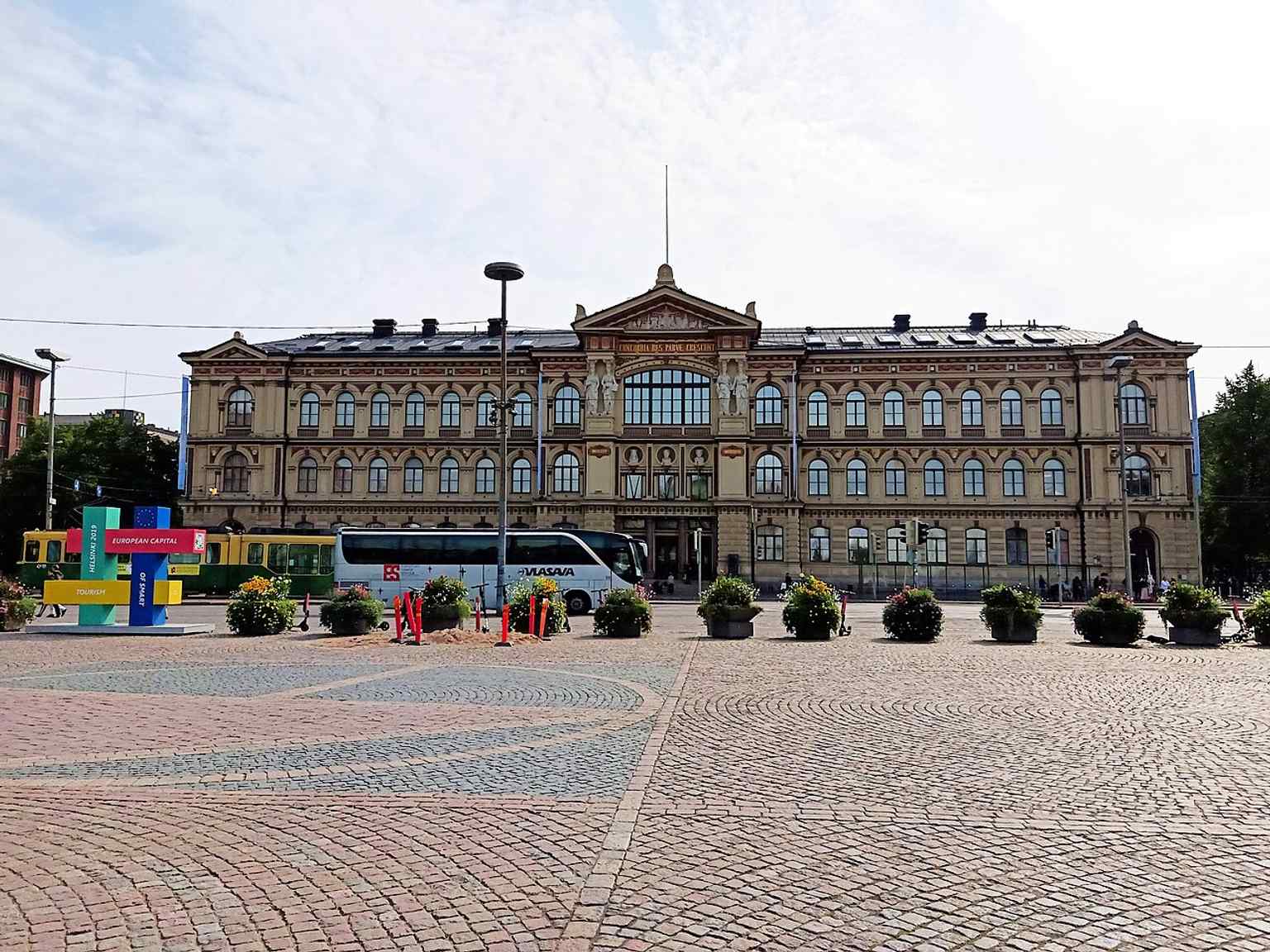
Ateneum Art MuseumPhoto: Finnish National Gallery, Wikimedia Commons, CC BY-SA 4.0. Cropped & resized. In front of you is a broad stone neo-Renaissance façade, symmetrical and formal, with tall arched windows and a sculpted pediment topped by gold Latin lettering.
Welcome to a building that helped Finland learn how to picture itself. Before nations feel solid, somebody has to choose the images, train the artists, hang the paintings, and quietly declare, “Yes... this is us.” Ateneum did exactly that, right beside the city’s central station square, where private ambition stepped into public view.
Its name reaches back to Athena, the Greek goddess of wisdom. In the eighteen seventies, professor Carl Gustaf Estlander imagined a modern temple of learning here, a palace for the arts. He wanted painting and design under one roof, and even dreamed of adding music and literature too. Helsinki, being Helsinki, argued first. Language politics, money, even the question of whether the whole thing was necessary turned into a long civic quarrel. Estlander answered with the gold motto up in the pediment: Concordia res parvae crescunt... “In harmony, small things grow.” A polite inscription, and also a fairly pointed nudge.
Take a moment and look up at the façade. What kind of city puts a palace of art right on its front doorstep? Above the doors, you can spot sculpted portraits of Raphael, Bramante, and Phidias, and higher still, four female support figures representing architecture, geometry, painting, and sculpture. Not subtle, this place. Confident.
Architect Theodor Höijer finished the building in eighteen eighty-seven, and most visitors miss what locals know: this was never just a museum. It also housed Finland’s drawing school and, later, art-and-design education for decades, so the whole building worked like an art ecosystem... classroom, studio, archive, stage, and gallery all tangled together.
Tove Jansson studied here in the nineteen thirties. The world remembers the Moomins; she insisted she was first and foremost a painter. That tension feels very Ateneum somehow: serious training giving birth to popular imagination. Young Akseli Gallen-Kallela studied here too, apparently so obsessed that he painted late into the night and sometimes slept in the building.
If you want a glimpse of the kind of national mythmaking this place championed, have a look at the Aino Triptych in the app.
Akseli Gallen-Kallela’s Aino Triptych, one of the celebrated works connected to the Ateneum’s collection and Finnish art history.Photo: Jaakko.kulta, Wikimedia Commons, CC BY-SA 4.0. Cropped & resized. Ateneum even survived war. In February nineteen forty-four, bombing blast waves shattered hundreds of windows and damaged the roof, but the building escaped total destruction. If you check the before-and-after image, you’ll see how the street changed around it while this façade kept its composure.
And that’s the larger question this tour keeps circling: when a nation presents its face in public, who chooses the portrait? From here, walk about eight minutes to the equestrian statue of Marshal Mannerheim, where that question takes a more muscular form. If you want to come back inside later, Ateneum is open every day except Monday, with later hours on Wednesday and Thursday.
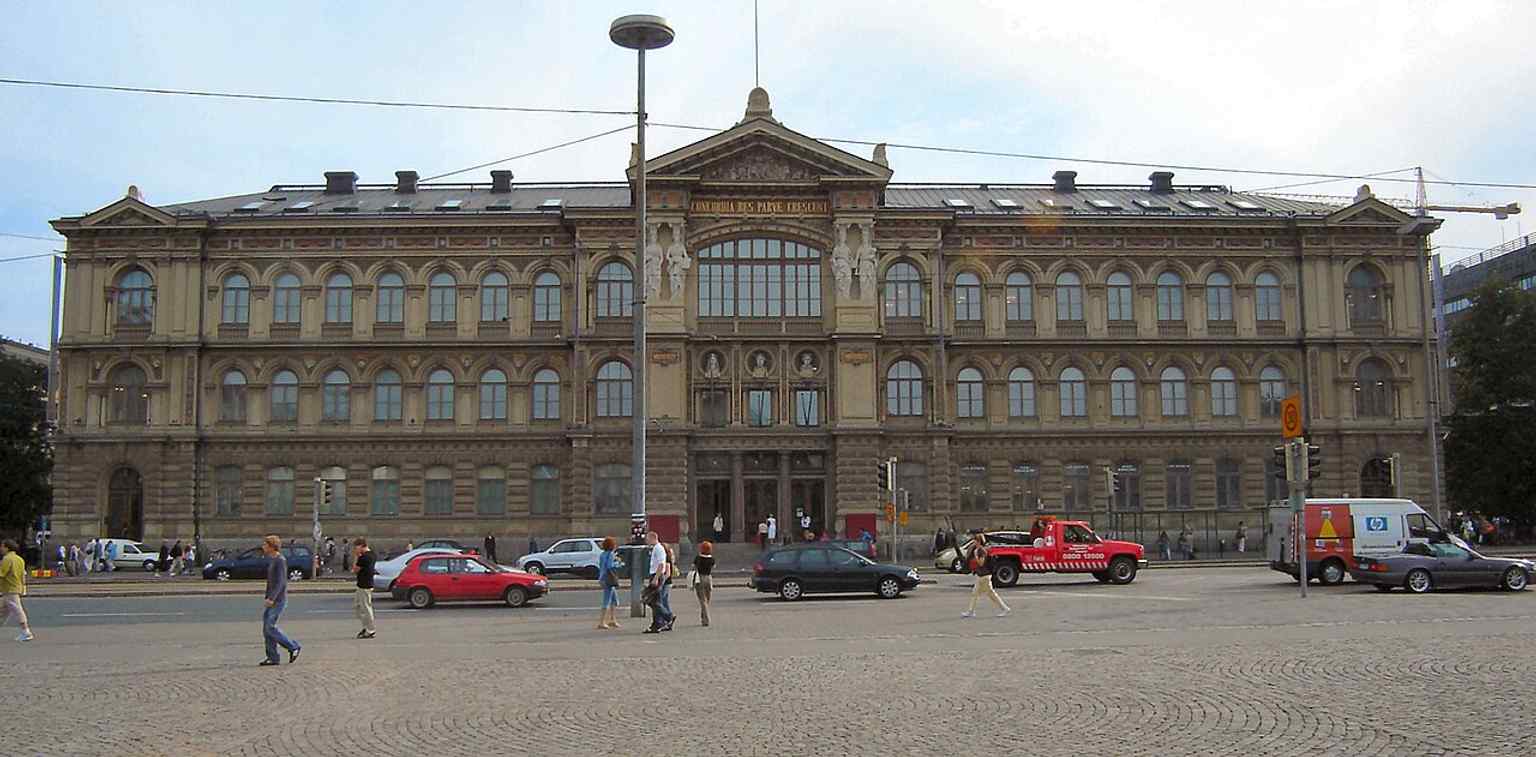
The Ateneum’s classic 1887 façade by Theodor Höijer, matching the museum’s neo-Renaissance home in central Helsinki.Photo: BishkekRocks, Wikimedia Commons, CC BY-SA 3.0. Cropped & resized. 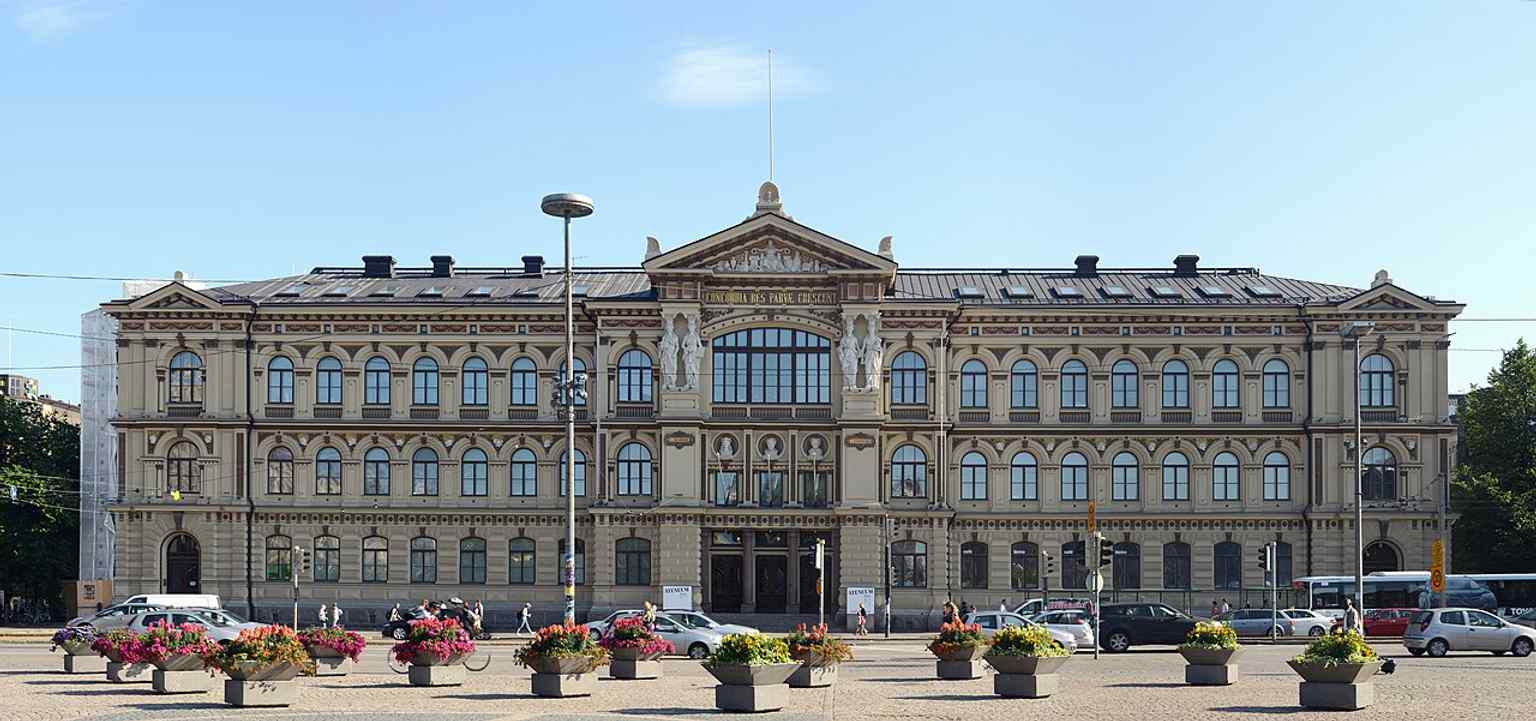
A wide, high-resolution view of the museum on a summer day — perfect for showing Ateneum as a landmark at Helsinki’s Rautatientori.Photo: Alvesgaspar, Wikimedia Commons, CC BY-SA 3.0. Cropped & resized. 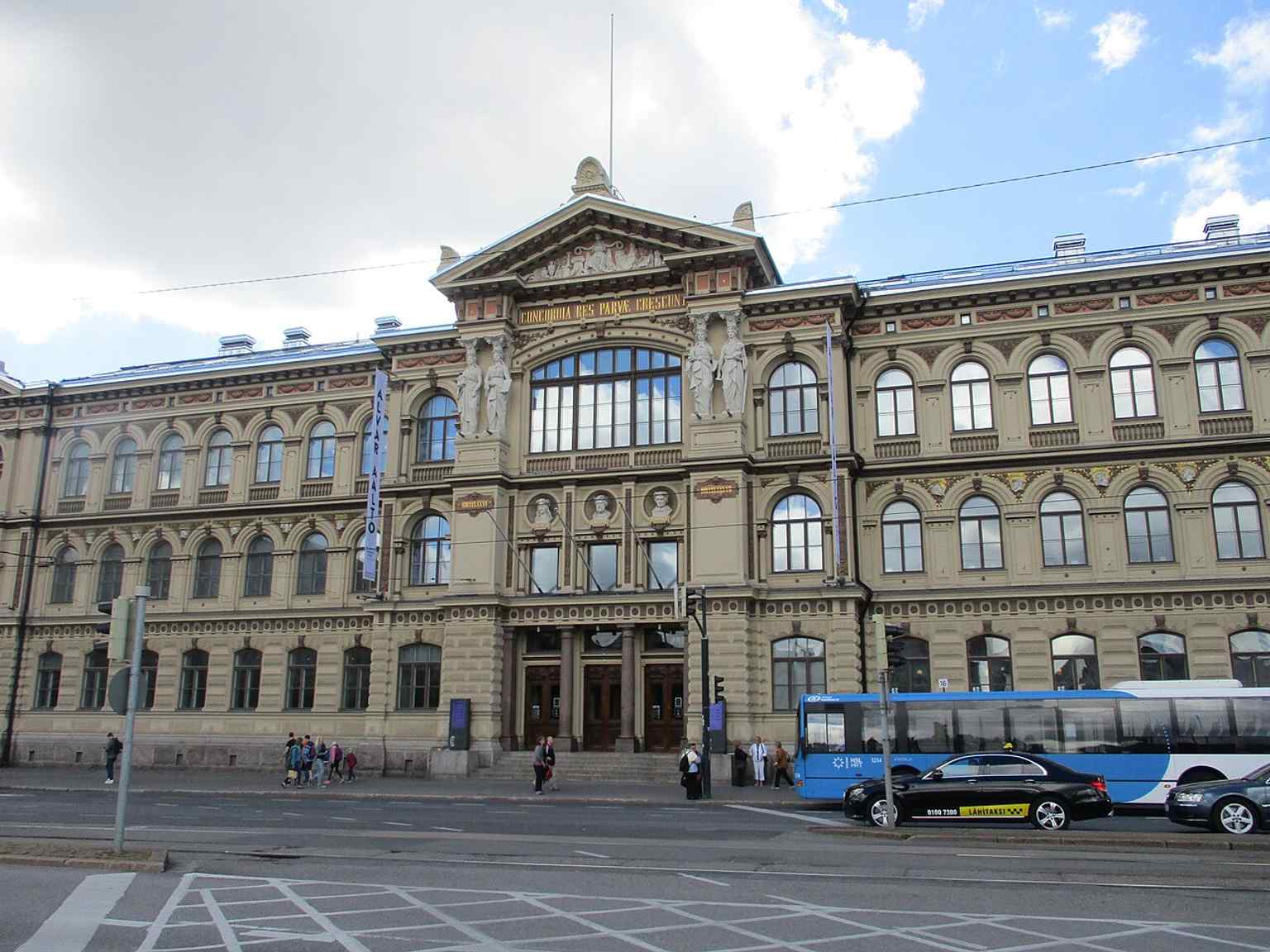
The museum exterior seen from street level, useful for identifying the Ateneum building that houses Finland’s National Gallery collections.Photo: Mikkoau, Wikimedia Commons, CC BY-SA 4.0. Cropped & resized. 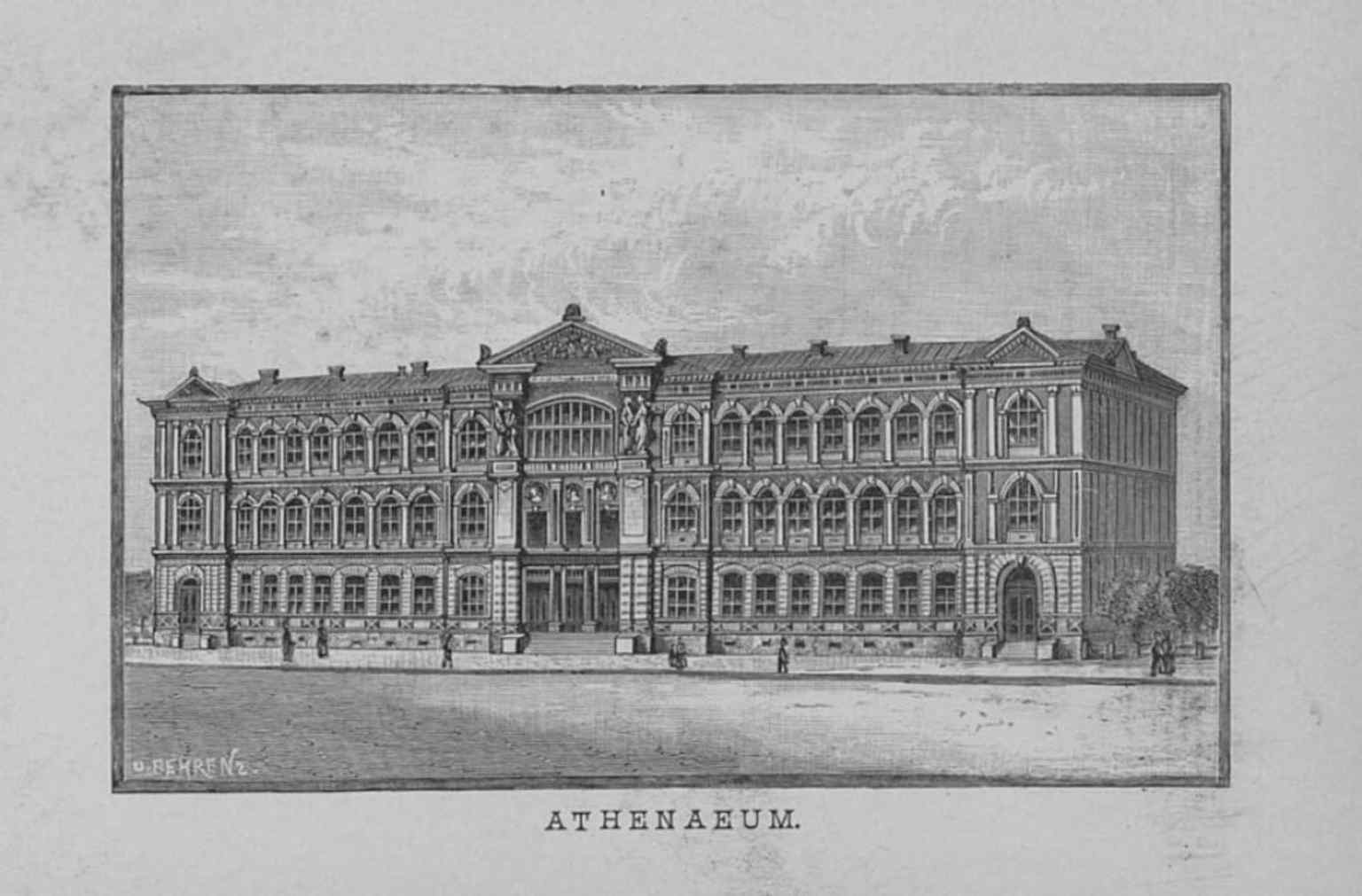
An 1887 illustration of the Athenaeum, offering a period view from the year the building was completed.Photo: Frans Otto Behrens (1850-1939), Wikimedia Commons, Public domain. Cropped & resized. 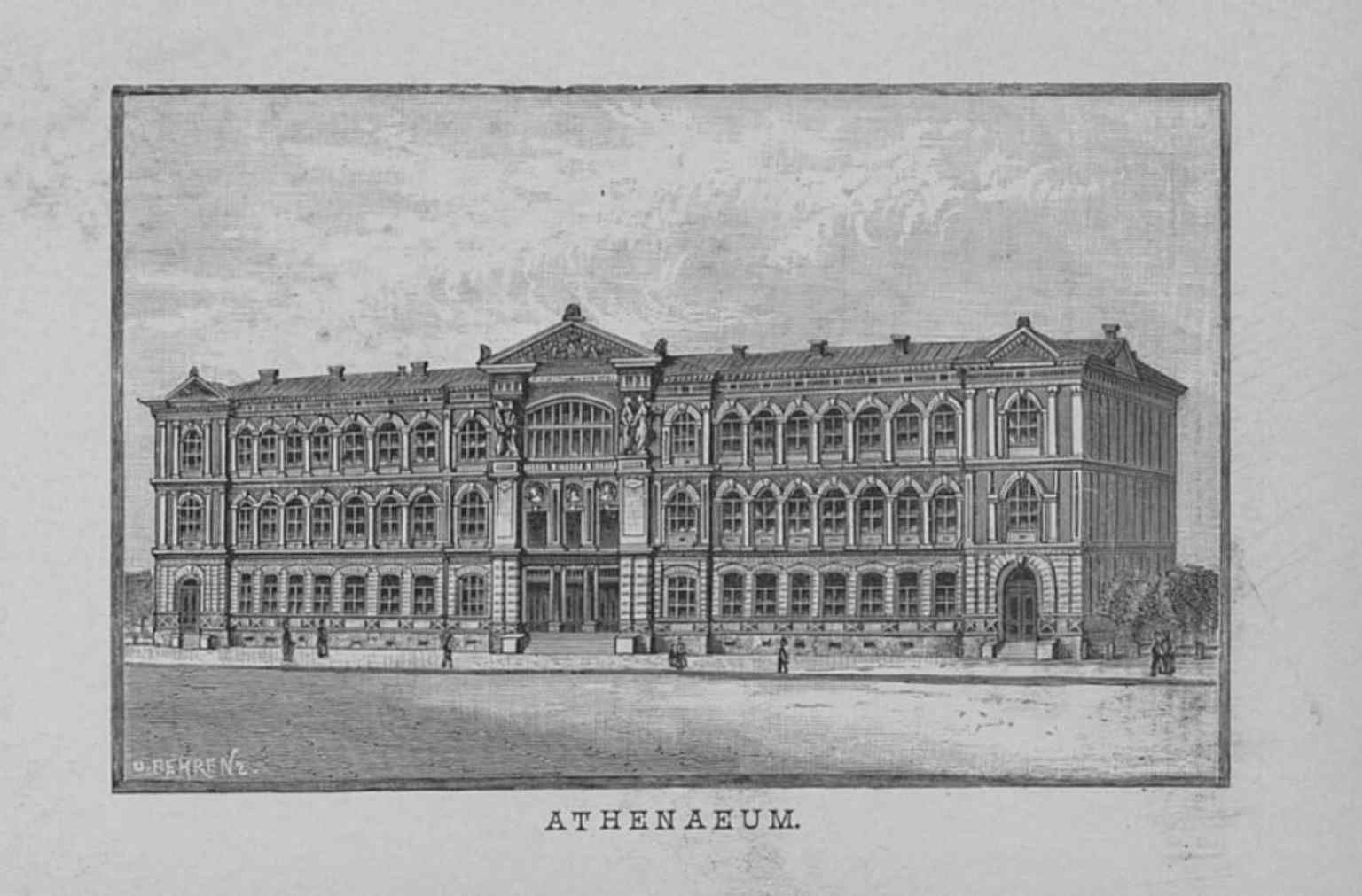
The Ateneum staircase interior, giving a glimpse inside the museum building where exhibitions and cultural events take place.Photo: Marit Henriksson, Wikimedia Commons, CC BY-SA 4.0. Cropped & resized. Look for a dark bronze horse and rider in a calm forward walk, lifted high on a massive red granite pedestal marked simply with the name Mannerheim. Helsinki is a compact capital…Read moreShow less
Open dedicated page →Look for a dark bronze horse and rider in a calm forward walk, lifted high on a massive red granite pedestal marked simply with the name Mannerheim.
Helsinki is a compact capital where whole chapters of national life sit within walking distance... art, government, trade, belief, memory. This monument is one of the clearest early examples of power made public. Instead of hiding authority behind doors, the city sets it out here in shared space, large enough that nobody can pretend not to notice it.
The man up there is Carl Gustaf Emil Mannerheim, or C. G. E. Mannerheim: military leader, later president, and one of the most argued-over figures in Finnish history. Bronze simplifies a person. Here, history gets compressed into posture, uniform, horse, and height.
An equestrian statue simply means a statue of a rider on horseback, but in Europe it carries heavy baggage: rulers, commanders, men expected to look inevitable. Finland had almost none before this. So when sculptor Aimo Tukiainen created this one, unveiled on the fourth of June, nineteen sixty, on Mannerheim’s birthday, he was not just honoring a man. He was helping Finland decide what national authority should look like in public.
If you check the image on your screen, you can see how the whole square gives the statue breathing room in the middle of the city. That was deliberate. Officials considered several sites, even near Parliament and the National Museum, before choosing this plaza in front of the Post Office in nineteen fifty-six. The boulevard beside you became part of the story too: the Mannerheimintie corridor, a kind of civic spine where museums, state buildings, and public memory line up in plain view.
Tukiainen obsessed over accuracy. He studied photographs and film, and the committee even examined horse movement in slow motion to make sure the gait looked believable. Most visitors hear that this horse is Käthy, Mannerheim’s last mount. Locals will tell you that too. It is only half true. Käthy inspired the sculpture, but Tukiainen did not intend a strict portrait of one specific horse. What he chose instead was a free walk, not the usual heroic gallop. It gives the whole monument a strange authority: controlled, unspectacular, very Finnish.
There is a human story buried in that discipline. Tukiainen’s son, Heikki, remembered his father leaving home around six or seven in the morning and working until late, under intense public scrutiny. Everyone had opinions... on the horse’s legs, the medals, the uniform, the politics, naturally. Nations are generous with advice when someone else is doing the hard part.
The statue itself stands about five and a half meters high, and the red granite pedestal adds another six point three. Inside that pedestal sits something most people never notice: microfilm containing the names of the hundreds of thousands who donated to the project. In nineteen fifty-two alone, seven hundred thirty-seven thousand five hundred three donors gave seventy-eight million marks, roughly two point three million euros today. So this towering figure also rests, literally, on mass participation.
The monument drew criticism from the left, from modernist critics, from people who thought hero statues belonged to another age. That argument never really vanished. But that is exactly why this place matters: it shows how a city turns memory into stone and bronze, then leaves the public to keep debating it.
Farther up the boulevard, the story widens from one commanding figure to the institutions that explain the nation around him... and the National Museum is about an eight-minute walk away. This stop is always accessible, twenty-four hours a day.
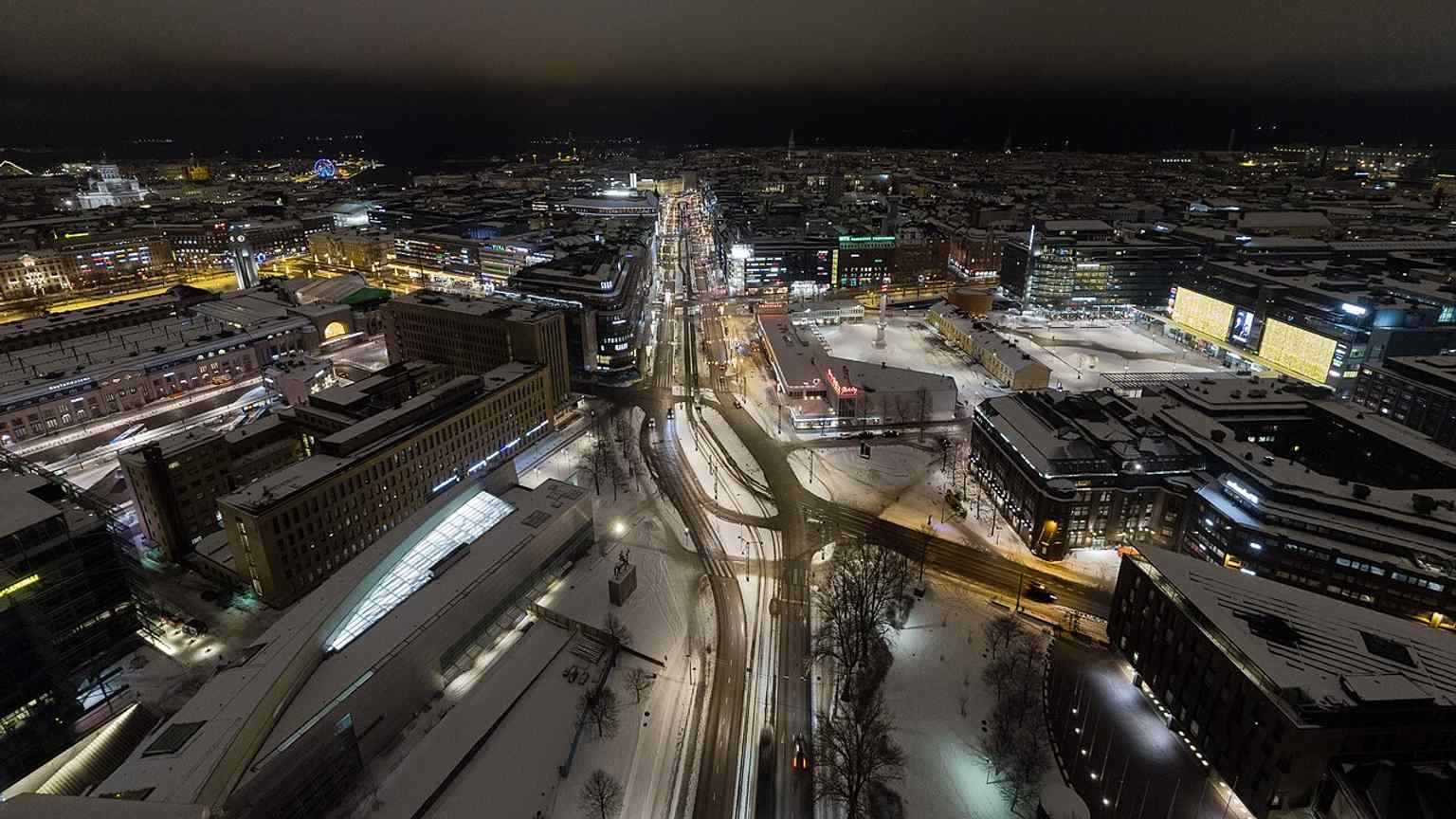
A night aerial view over Mannerheiminaukio, the square where Mannerheim’s equestrian statue stands in front of the city center.Photo: Joneikifi, Wikimedia Commons, CC BY-SA 4.0. Cropped & resized. On your left is a heavy gray-granite building with a tall square tower, a steep roofline, and a stone bear by the main entrance. This is the National Museum of Finland, and it…Read moreShow less
Open dedicated page →On your left is a heavy gray-granite building with a tall square tower, a steep roofline, and a stone bear by the main entrance.
This is the National Museum of Finland, and it looks exactly like the idea it was meant to serve: old, solid, and not especially interested in arguing. Nations, it turns out, need storage.
And not just storage... selection. Institutions like museums and archives do more than keep old things safe. They decide what a country chooses to remember, what it calls important, and what it places under glass as evidence of itself. This one grew out of that exact impulse. In the late eighteen eighties, collections scattered across Helsinki, at the university, in student groups, and in antiquarian circles, slowly came together. By eighteen ninety-three, the state had taken charge of them. So the museum did not spring into life on one glorious founding day; it emerged from years of gathering, sorting, and official wrangling.
The building took its own long road. Early plans pointed elsewhere, but when the final site was chosen here in Töölö, the area still felt almost rural, more villa district than city center. Then, in nineteen oh-one, a competition finally gave the job to three young architects: Herman Gesellius, Armas Lindgren, and Eliel Saarinen. They did not design a neutral container. They built a story in stone. Medieval Finnish churches and castles shaped the silhouette, while art nouveau, or Jugend style, softened the interior with more flowing decoration. They used gray granite from Uusikaupunki, including stone quarried from Lepäinen Island, to make the whole place feel as if it had always belonged to the bedrock.
If you want, take a quick look at the before-and-after image in the app; it shows the museum wrapped in scaffolding in nineteen oh-eight and again during repair works more than a century later.
That second scaffolding was no small cosmetic fuss. In twenty seventeen, conservators found cracks in the tower’s soapstone cladding. They photographed, numbered, and removed every stone one by one, then returned each block to its exact original place after adding heating cables and ventilation. Even the tower gets cataloged here.
Inside, when the museum is open, the entrance hall ceiling offers one of its great flourishes: Kalevala frescoes that Akseli Gallen-Kallela painted in nineteen twenty-eight, reworking themes he had first used for Finland’s pavilion at the Paris World’s Fair in nineteen hundred. If you want a glimpse, have a look at the fresco image on your screen.
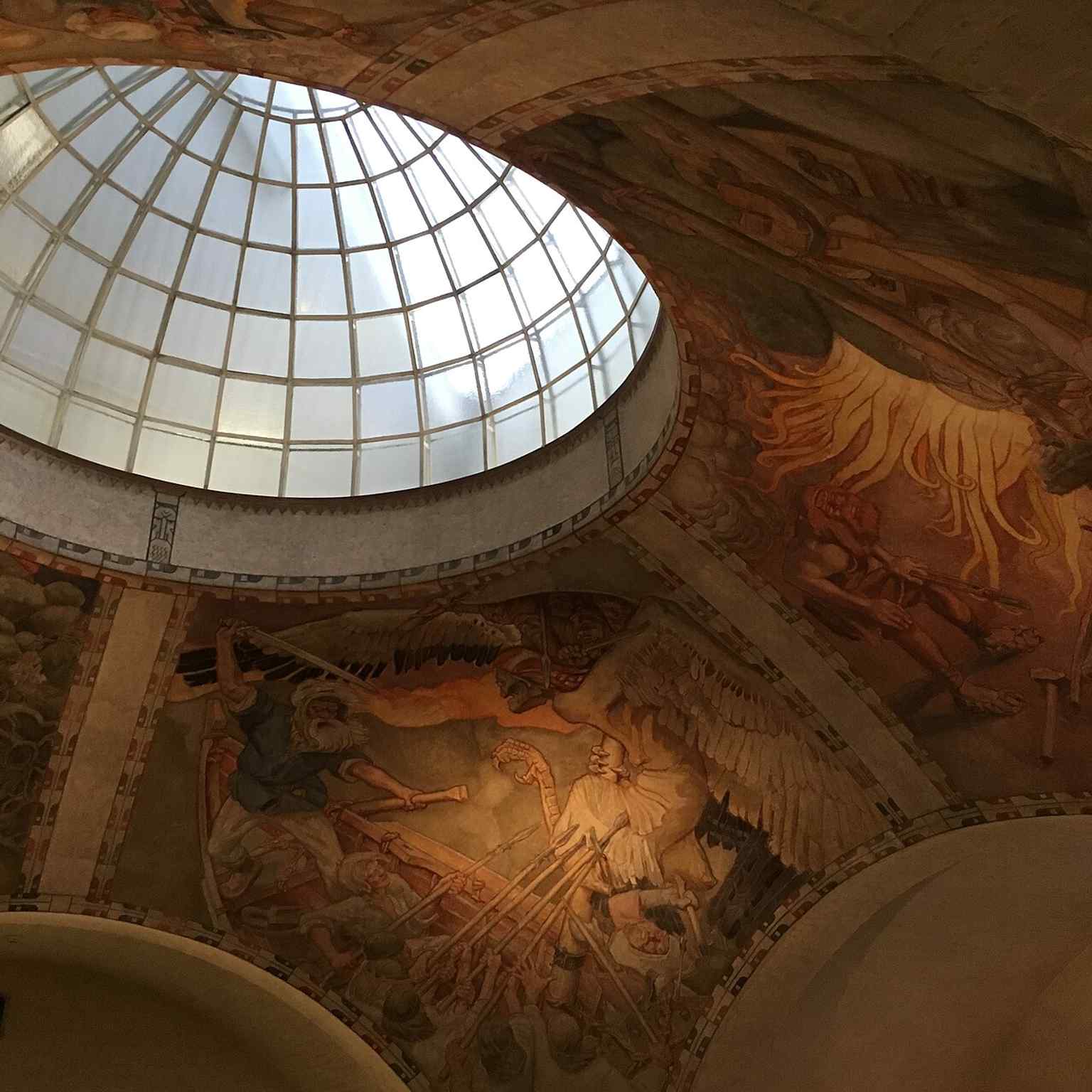
Gallen-Kallela’s Kalevala ceiling frescoes in the entrance hall, painted in 1928 from motifs first used at the Paris World’s Fair.Photo: Eteil, Wikimedia Commons, CC BY-SA 4.0. Cropped & resized. The museum holds around half a million objects and tells Finland’s history from the Stone Age to the present through material culture, meaning the actual things people used, wore, traded, buried, treasured, and left behind. A hammer axe, a spearhead, coins, costumes, thrones... not one grand symbol, but thousands of witnesses.
So here’s the question to carry with you: what tells a country more truth... one heroic monument, or countless ordinary objects that someone decided were worth saving?
That is the weight of this place: half a million pieces of a nation trying to remember itself whole. From here, Temppeliaukio Church is about a twelve-minute walk.
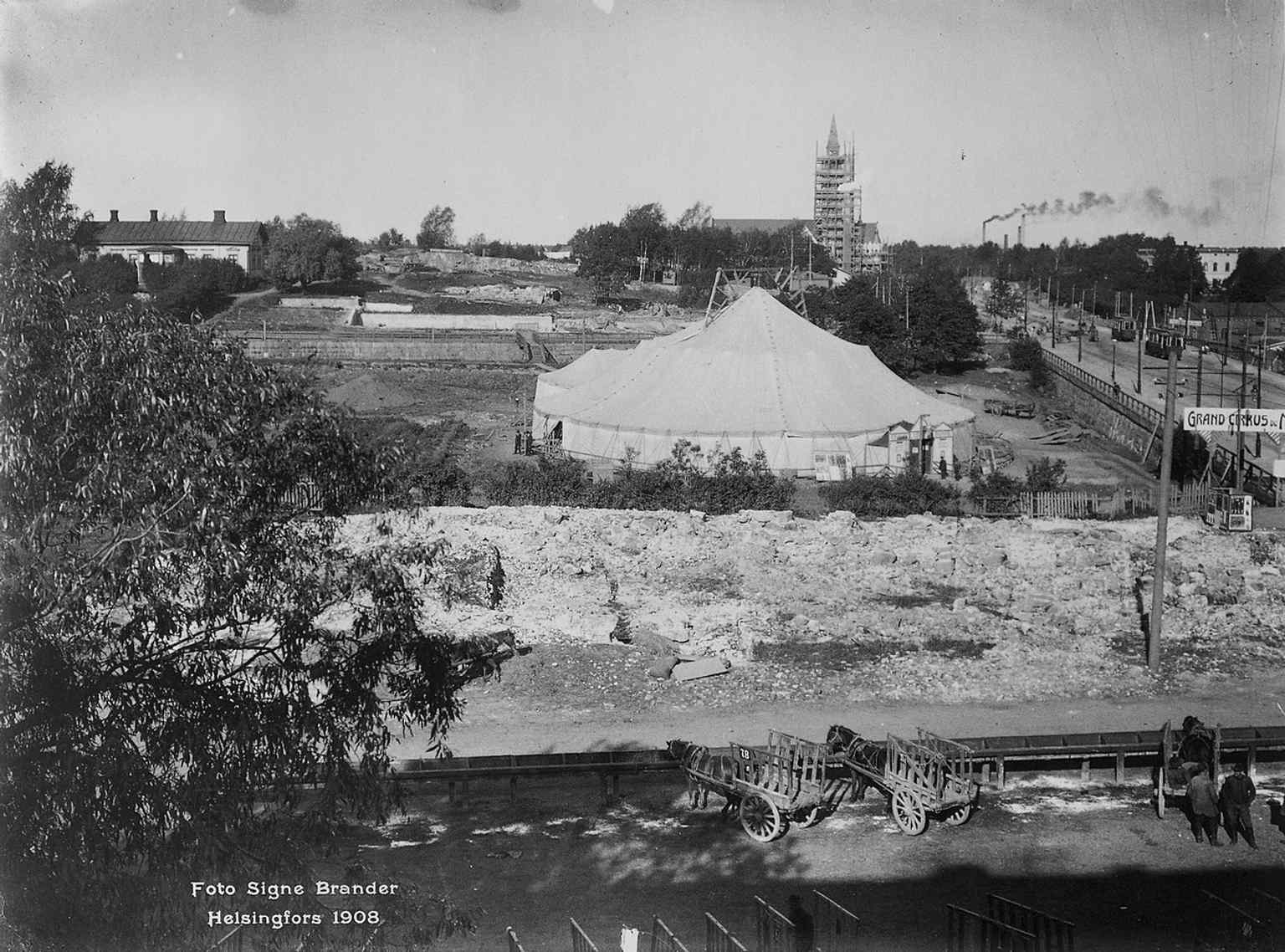
The museum under construction in 1908, when Töölö was still a villa district rather than the city center it is today.Photo: Signe Brander, Wikimedia Commons, Public domain. Cropped & resized. 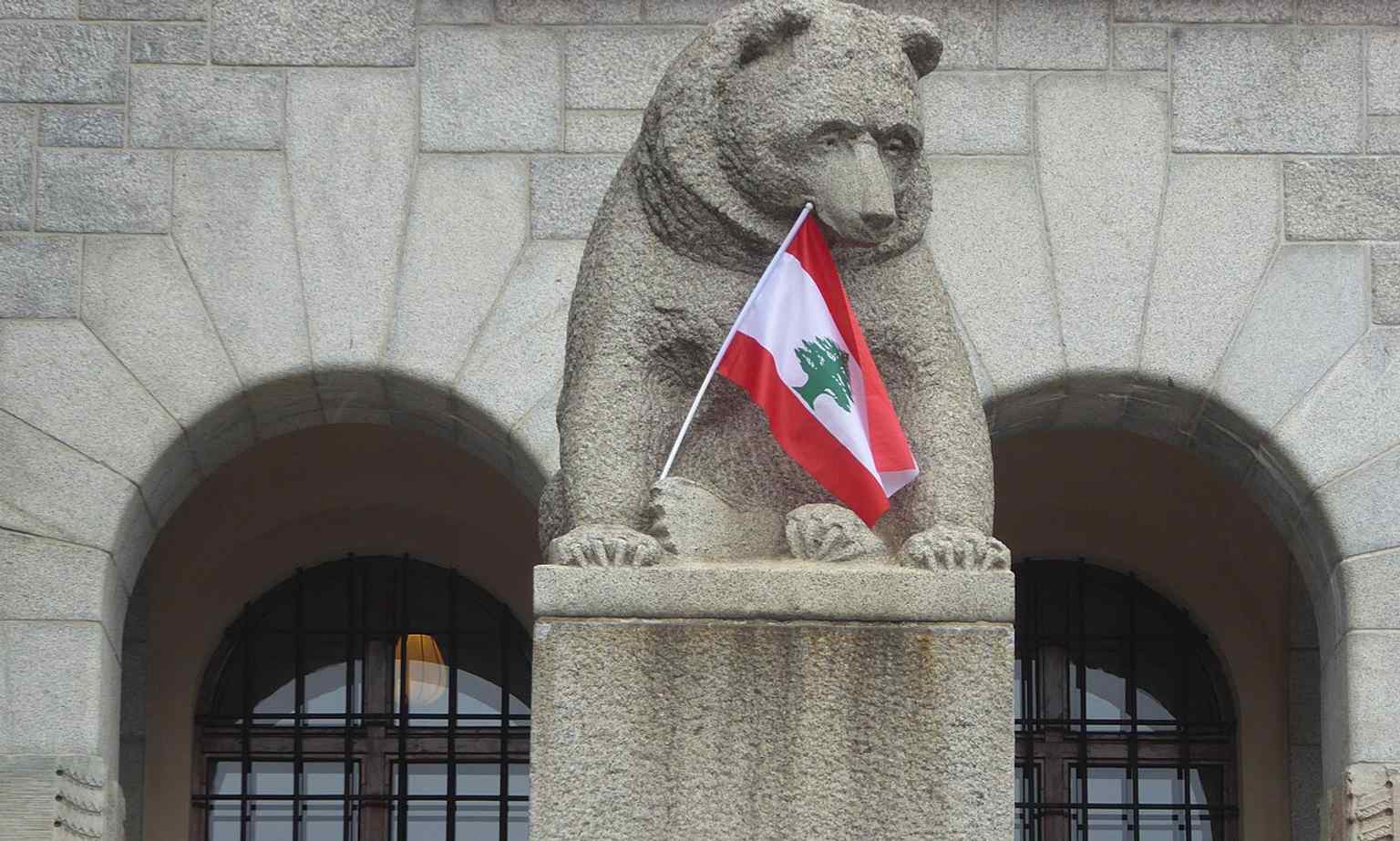
A modern street-level view of the museum building, showing its granite massing and castle-like silhouette opposite Finlandia Hall.Photo: Nemo bis, Wikimedia Commons, CC BY-SA 4.0. Cropped & resized. 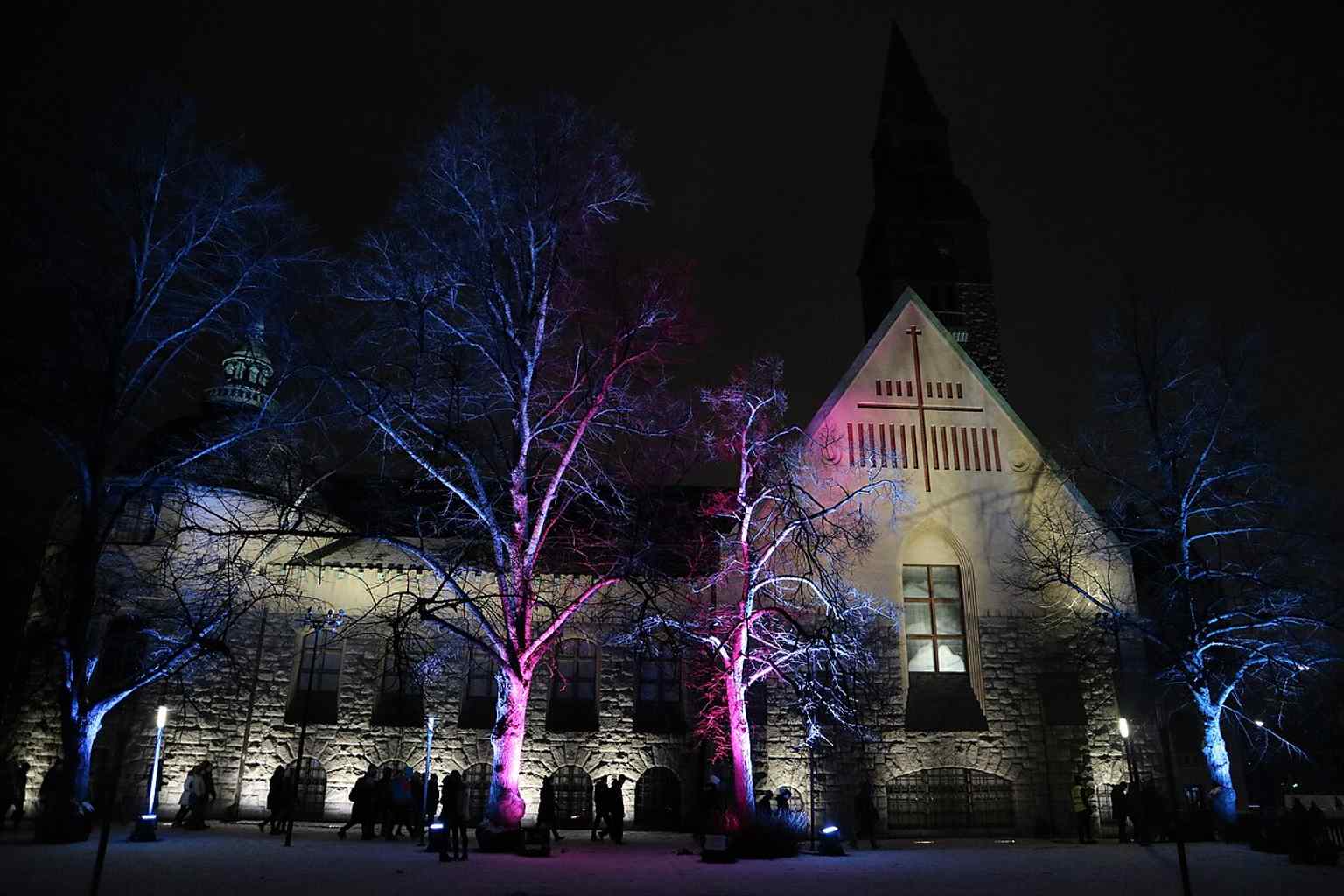
The museum glowing during Lux Helsinki — a striking nighttime view that shows the building as a city landmark.Photo: Mikkoau, Wikimedia Commons, CC BY-SA 4.0. Cropped & resized. 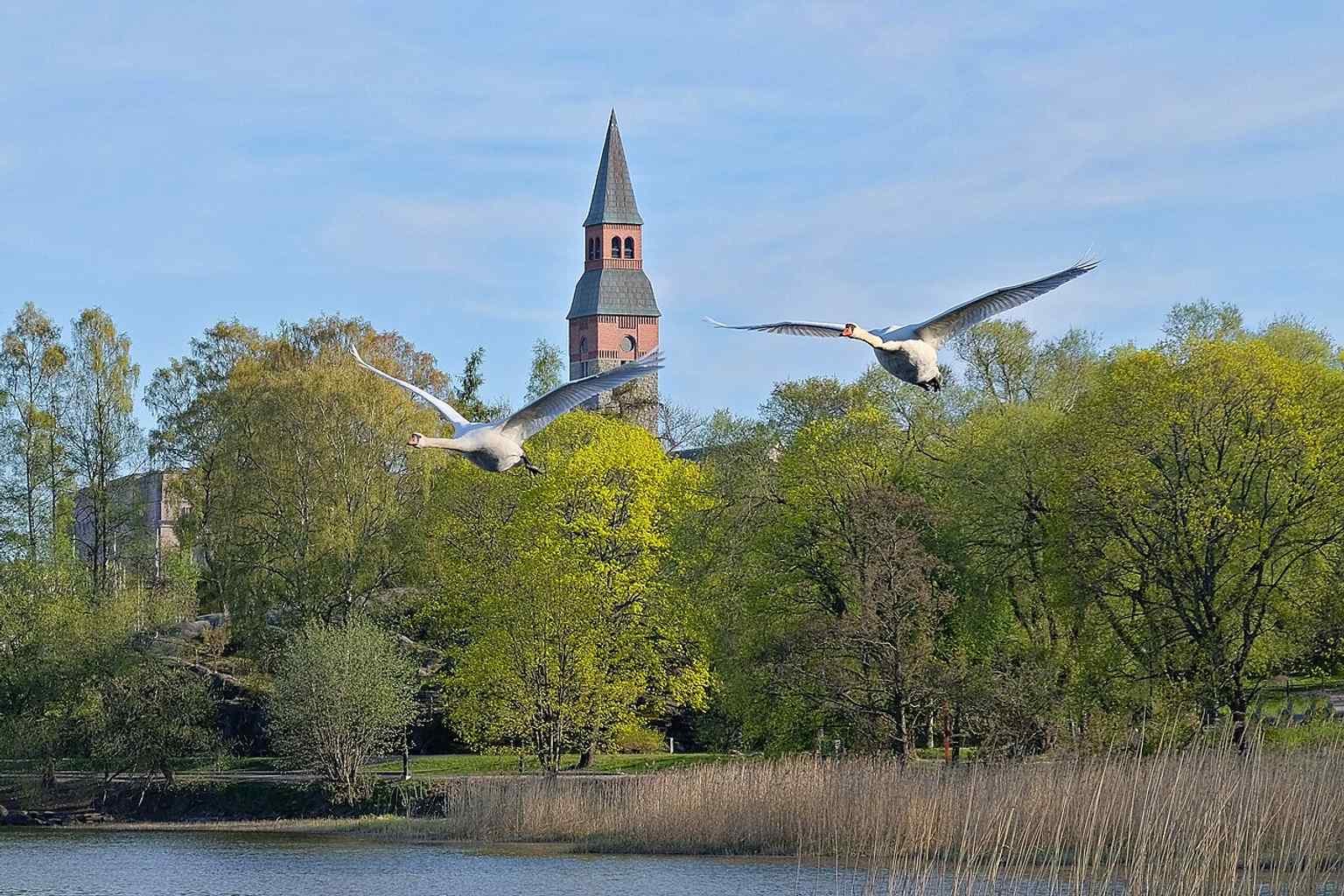
The tower with two flying swans, a poetic exterior moment that underscores the museum’s symbolic national character.Photo: Игорь Гордеев, Wikimedia Commons, CC BY-SA 4.0. Cropped & resized.
Show 12 more stopsShow fewer stopsexpand_moreexpand_less
Look to your right for a low circle of rough granite and concrete cut into the bedrock, capped by a broad copper dome and marked by a narrow ring of glass near the…Read moreShow less
Open dedicated page →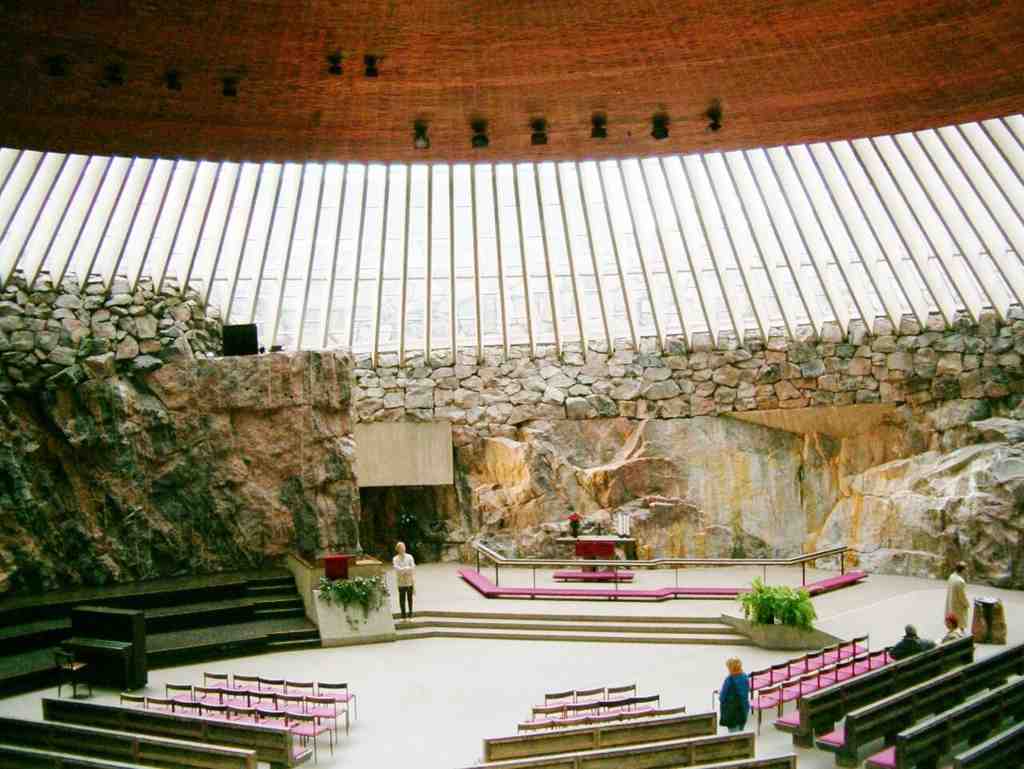
Temppeliaukio ChurchPhoto: Pertsaboy, Wikimedia Commons, CC BY-SA 3.0. Cropped & resized. Look to your right for a low circle of rough granite and concrete cut into the bedrock, capped by a broad copper dome and marked by a narrow ring of glass near the roofline.
Helsinki often introduces itself in stone first. Here, raw rock is not scenery; it is the architecture, and light does not arrive in stained-glass drama but in a controlled glowing band. That pairing of hard granite and filtered light tells you something important about this city: it likes materials that feel honest, and it trusts atmosphere to do quiet work.
This church took a very long time to become itself. The city set aside this rocky plot back in nineteen oh six, and then argued over it for decades. Architects entered competition after competition in the nineteen thirties, mostly with more traditional long churches and towers. Nobody quite convinced anyone. Then excavation finally started in nineteen thirty-nine... and the Winter War stopped it after three days. That is a brutal way to pause a building.
By the late nineteen fifties, the old cathedral-like plan by J. S. Siren felt too expensive and out of date, so Helsinki tried again. In the third open competition, Timo and Tuomo Suomalainen won with a proposal called Kivikirkko, or Stone Church. Instead of placing a church on the rock, they turned the rock itself into the church. No bell tower waving for attention, no grand facade trying to dominate the neighborhood. Very unshowy for a landmark that became world famous.
Timo Suomalainen later said the idea drew strength from his childhood memories of bare island rock on Suursaari. That is the human thread here: one architect carrying a landscape in his head for years, then finally finding the place where memory, geology, and public purpose could agree.
Take a moment and study what is visible from where you stand. Notice how little of the building rises above the rock, as if the hill decided to keep most of the church for itself. If you glance at the interior image on your screen, the effect becomes clear: the sanctuary feels less constructed than uncovered.
A broad interior view of the sanctuary, where rough stone walls and copper-clad surfaces create the acoustics that made the church a concert venue.Photo: Jouni Jurmu, Wikimedia Commons, CC BY-SA 4.0. Cropped & resized. Inside, the hall opens in a free oval carved into the bedrock. Rough rock walls stay exposed, and above them a copper-clad dome seems to hover. A ring skylight runs between rock and roof, and at the altar that light grows strongest, so the most important point in the room receives the clearest illumination. On your screen, you can see the roof structure doing its quiet engineering magic: one hundred and eighty radial beams supporting that luminous circle.
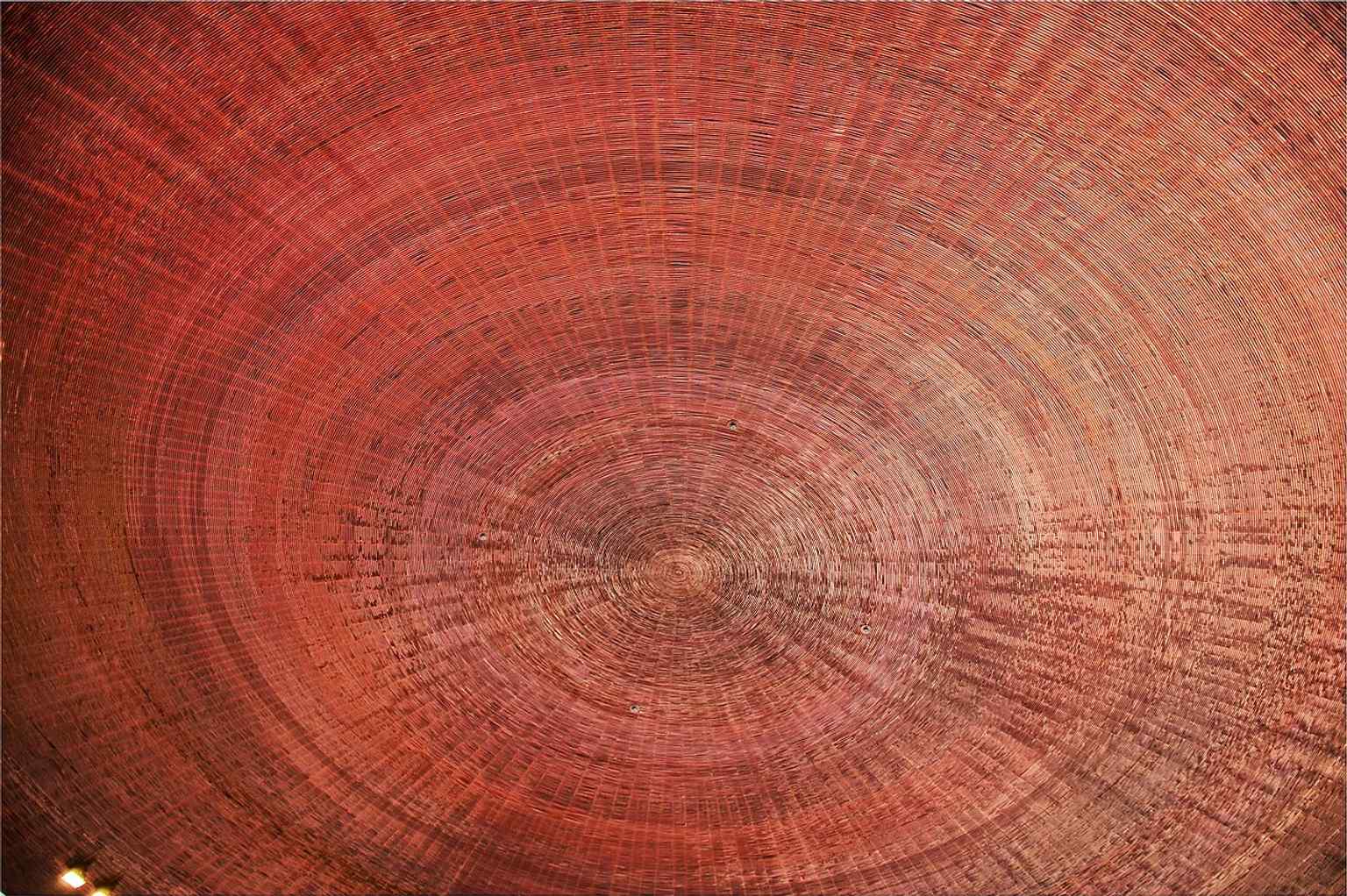
Looking up toward the dome and skylight ring, where 180 radial beams support the roof and flood the sanctuary with daylight.Photo: Old Pionear, Wikimedia Commons, CC BY-SA 4.0. Cropped & resized. The miracle is not only visual. Acoustician Mauri Parjo pushed the design toward better sound, and the brothers answered with copper surfaces and living rock walls that scatter and warm the music. That is why this church became one of Helsinki’s favorite concert spaces as well as a parish church. In nineteen sixty-eight, even before completion, protesters painted “Biafra” on the site, arguing the money should go to famine relief instead. So yes, this place arrived through dispute, not reverence alone.
And then, in nineteen sixty-nine, the breakthrough held. The city got a sacred room that feels both ancient and completely modern... sheltered by stone, opened by light.
From here, we head back into state power at Parliament House, about a twelve-minute walk away. If you plan to come inside later, the church is generally open daily, with shorter hours on weekends.
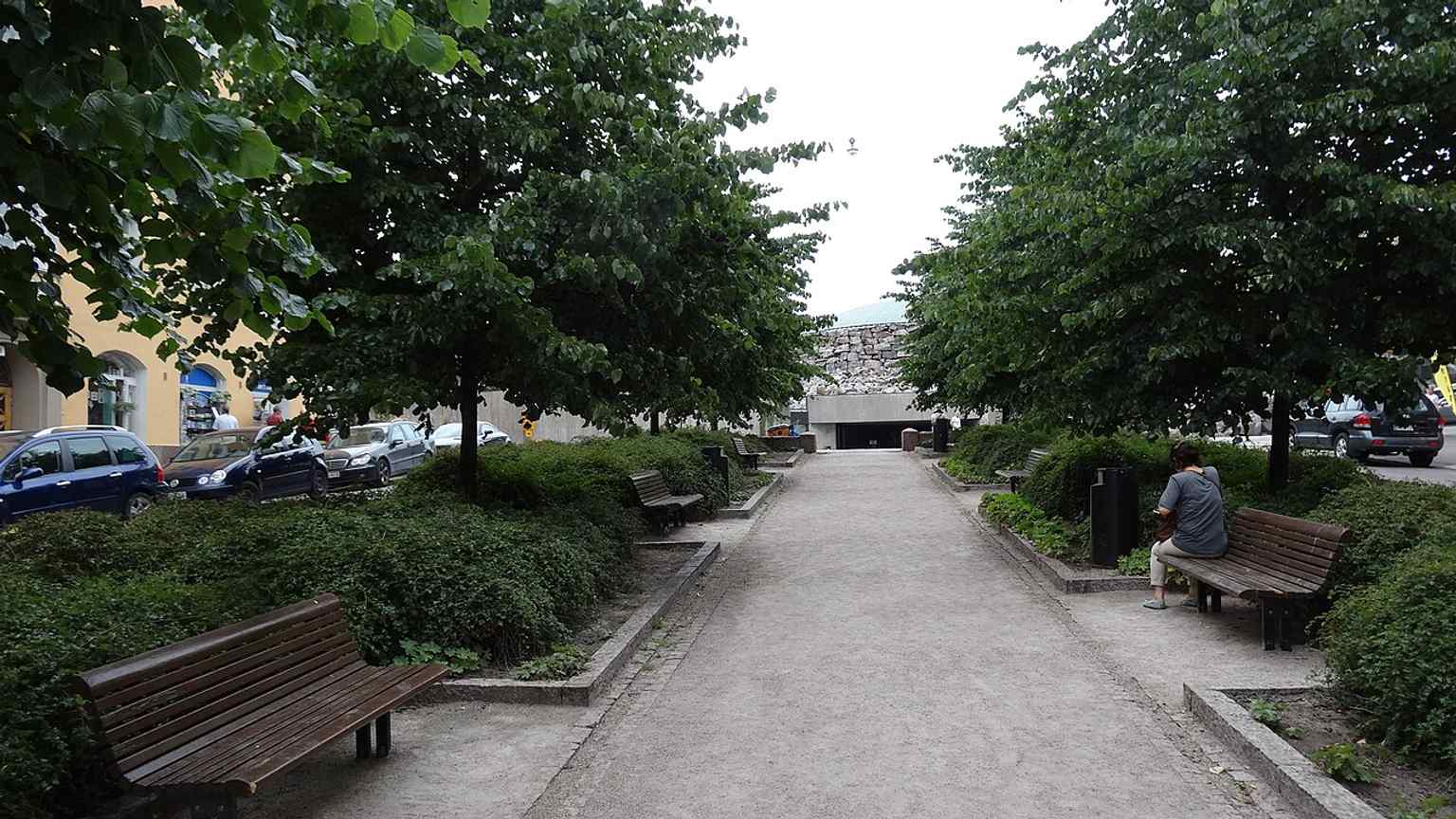
A classic exterior view of Temppeliaukio Church, the rock-cut Helsinki landmark completed in 1969 by Timo and Tuomo Suomalainen.Photo: GualdimG, Wikimedia Commons, CC BY-SA 4.0. Cropped & resized. 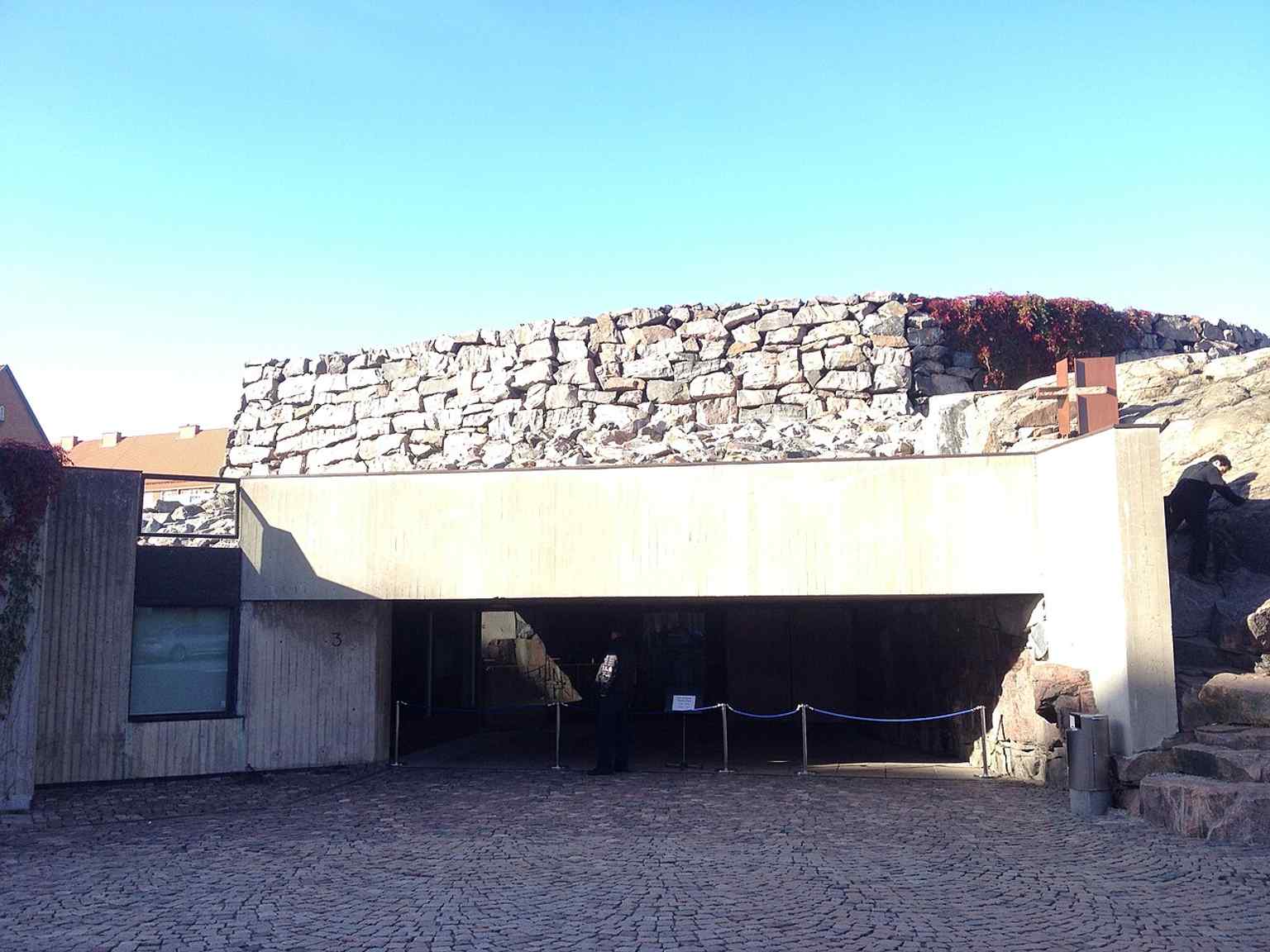
The church entrance at street level — a reminder that visitors step down from the city into a sanctuary carved directly into bedrock.Photo: Lauren Stevens, Wikimedia Commons, CC BY-SA 4.0. Cropped & resized. 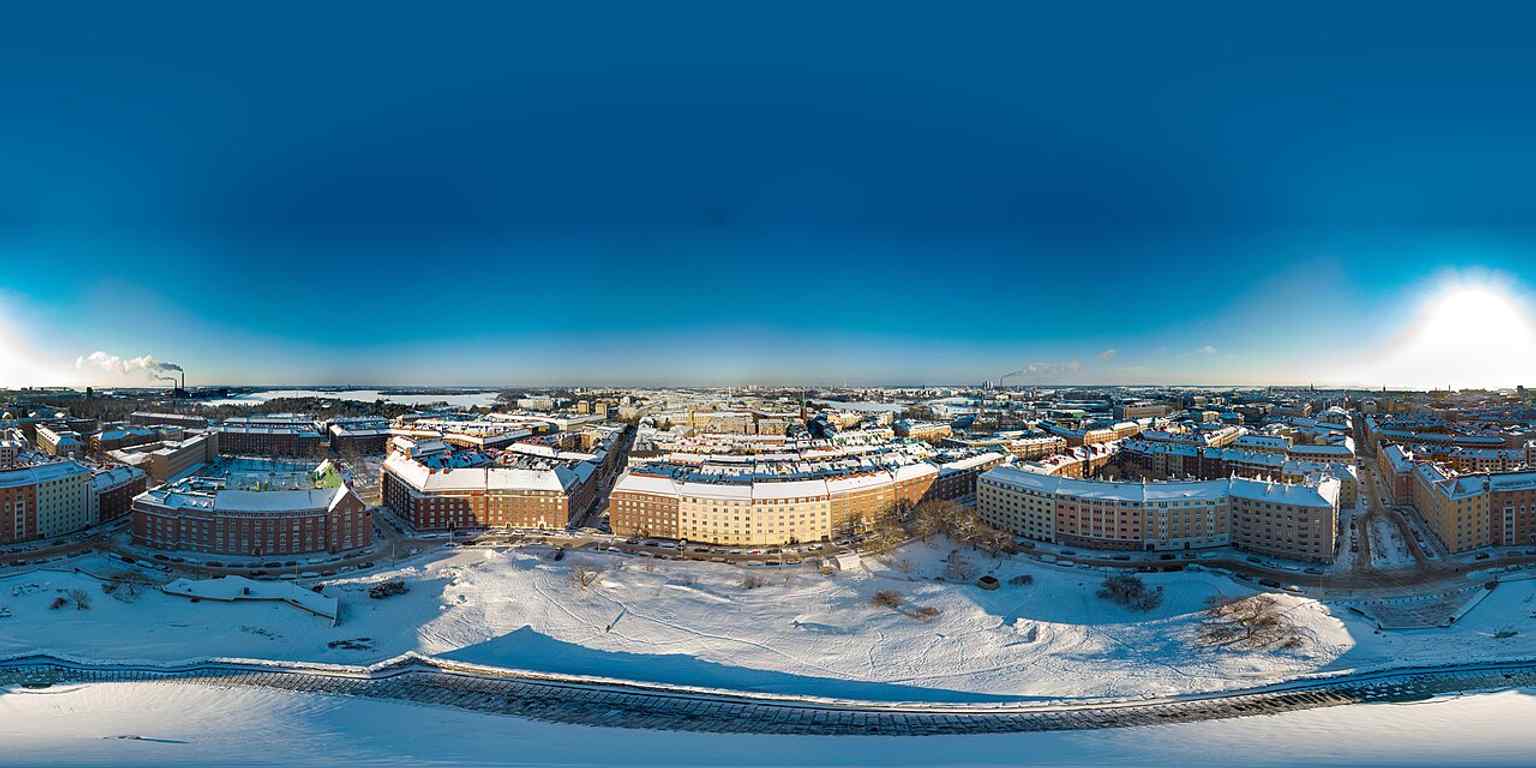
A wide 360° winter panorama of the church site, showing how the building sits within the rocky Etu-Töölö setting it was designed to preserve.Photo: Joneikifi, Wikimedia Commons, CC BY-SA 4.0. Cropped & resized. 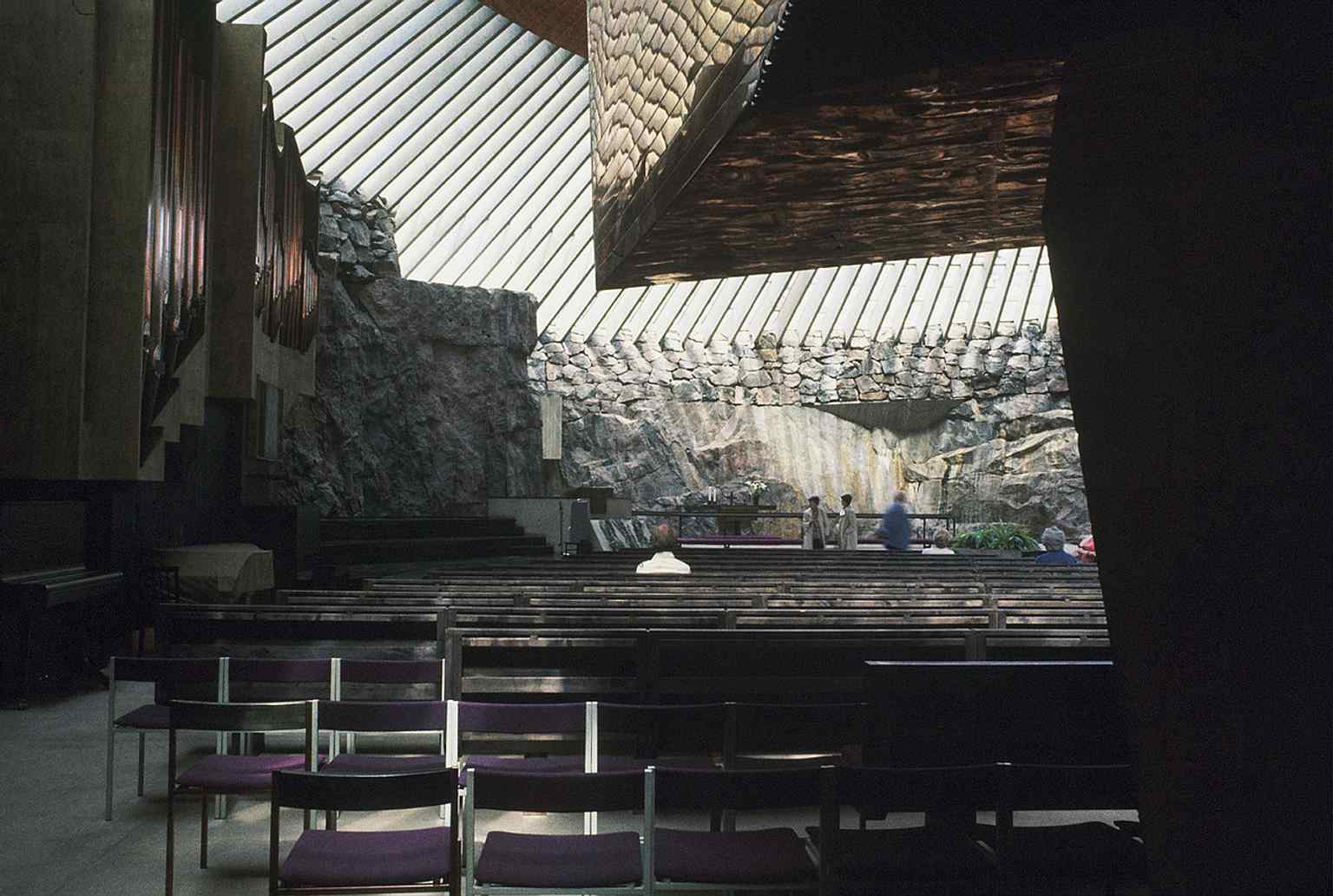
The view from under the balcony shows the intimate oval hall, designed so the congregation feels surrounded by raw rock.Photo: User:Arttu Suomalainen, Wikimedia Commons, CC BY-SA 3.0. Cropped & resized. 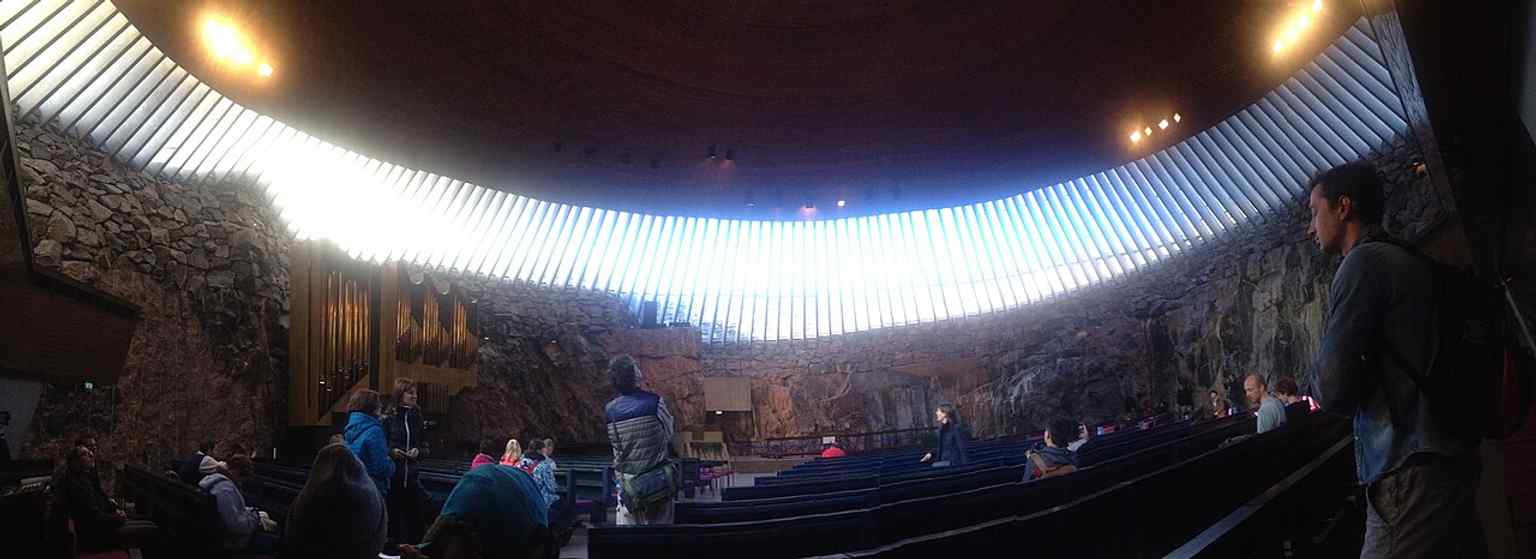
A panoramic interior shot that captures the church’s dramatic daylight, one of the reasons it is so popular for concerts and worship.Photo: Lauren Stevens, Wikimedia Commons, CC BY-SA 4.0. Cropped & resized. 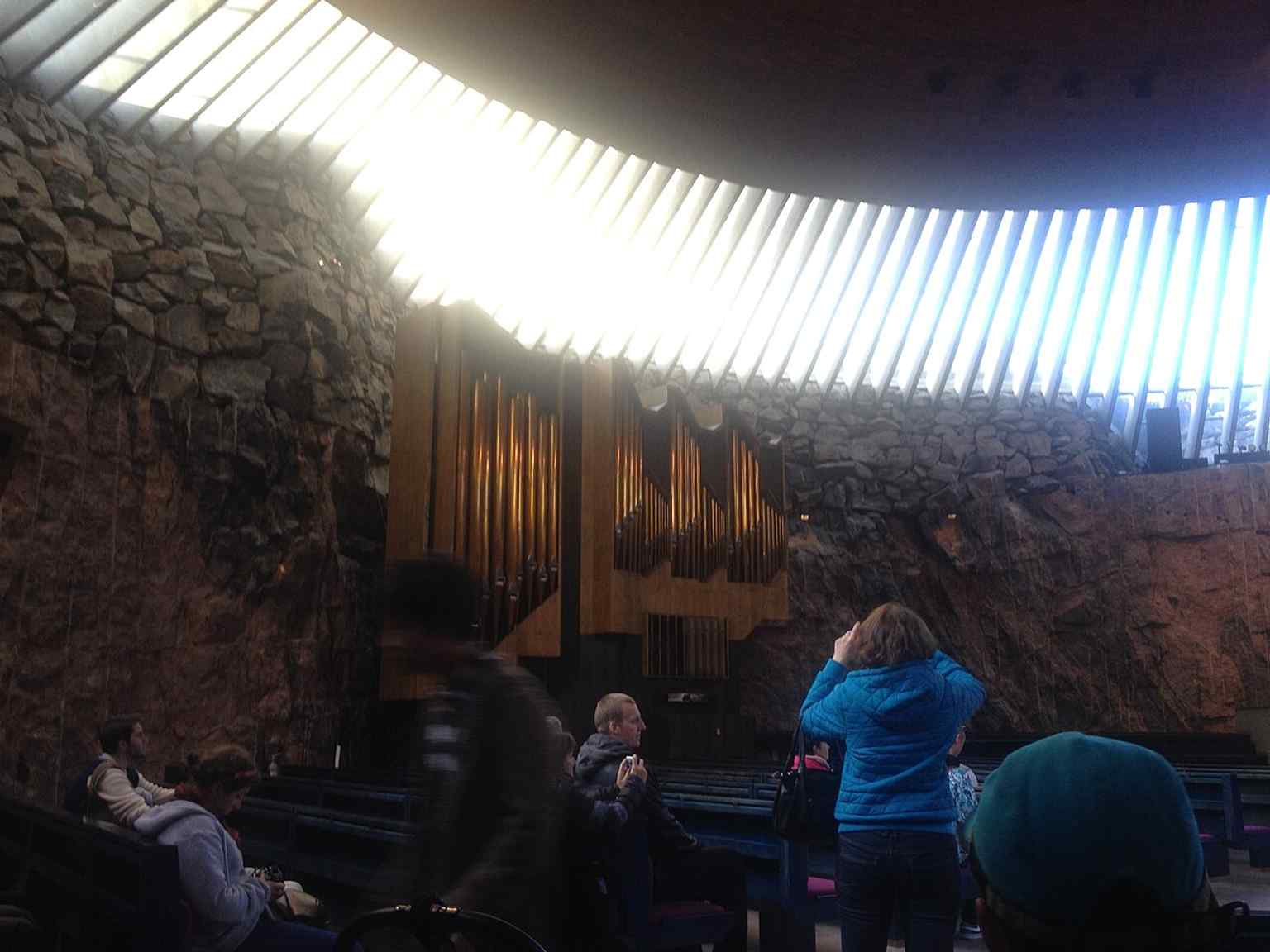
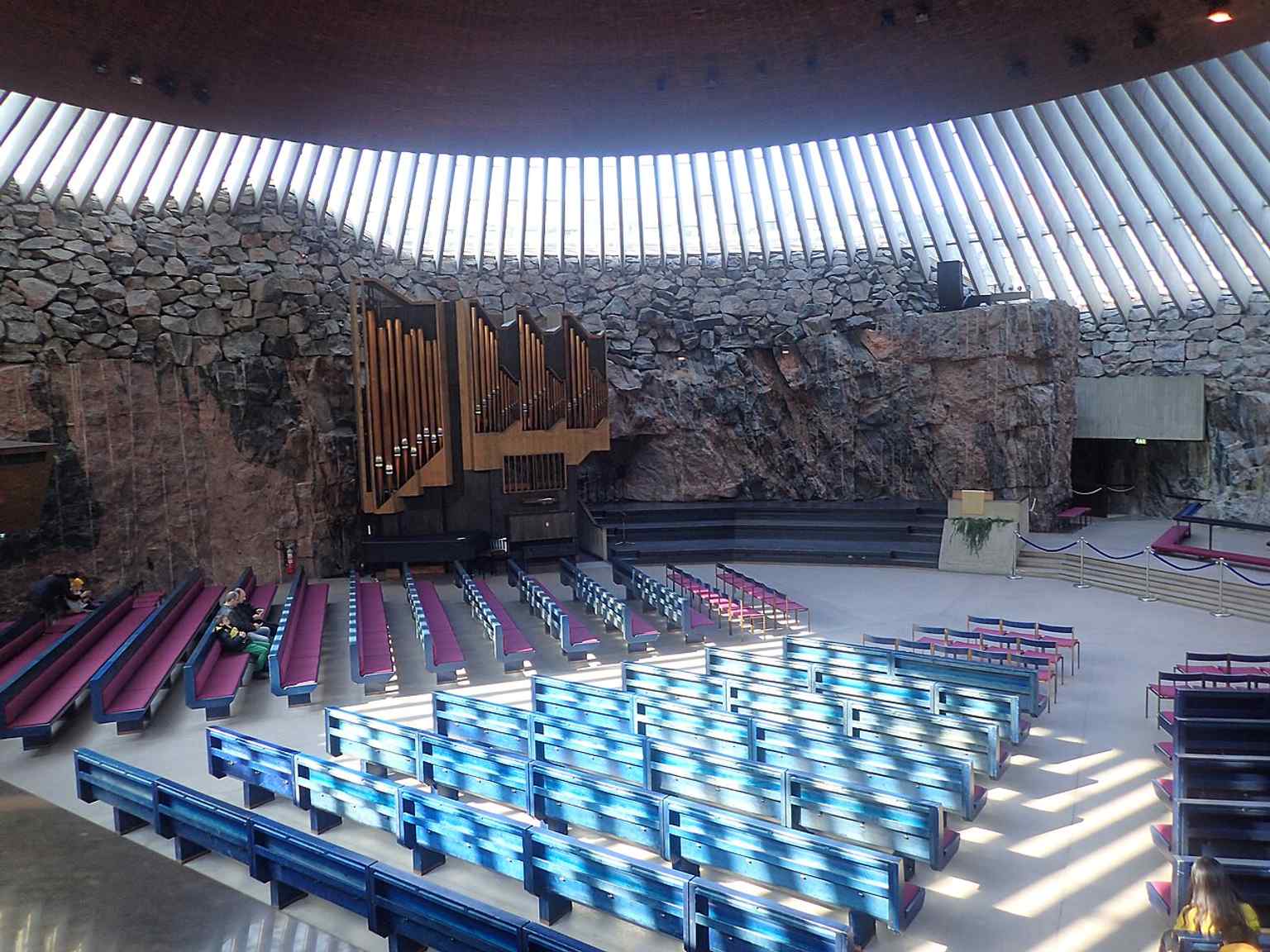
The organ inside Temppeliaukio Church — music is central here, and the building’s acoustics made it a prized concert hall.Photo: Lauren Stevens, Wikimedia Commons, CC BY-SA 4.0. Cropped & resized. On your left stands a massive cube of reddish-gray granite, lifted by a broad staircase and a row of fourteen tall columns, with round windows and stylized lion heads marking the…Read moreShow less
Open dedicated page →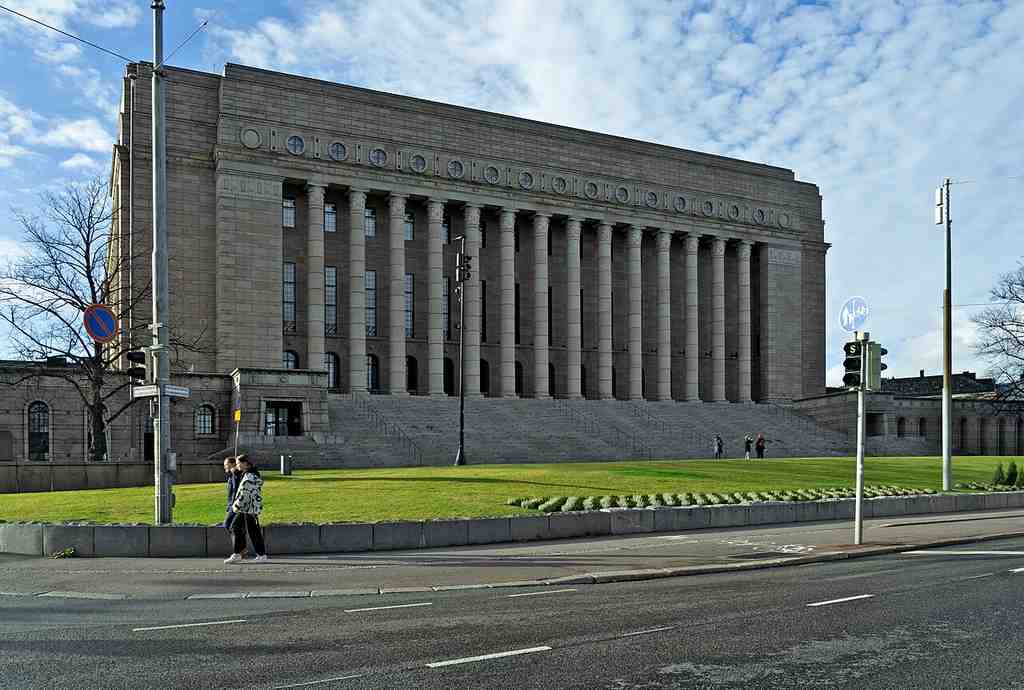
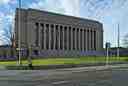
Parliament HousePhoto: Santeri Viinamäki, Wikimedia Commons, CC BY-SA 4.0. Cropped & resized. On your left stands a massive cube of reddish-gray granite, lifted by a broad staircase and a row of fourteen tall columns, with round windows and stylized lion heads marking the facade.
This is Parliament House, and it knows exactly what role it is playing. J. S. Sirén designed it in the nineteen twenties as a great stone argument for permanence: a strong state, visible to everyone, but reached by rules, stairs, and ceremony. That is why this slope is often called Parliamentary Hill. The climb matters. Democracy here does not hide in a courtyard; it puts itself on a stage and asks the public to look straight at it.
Before this building opened in nineteen thirty-one, parliament met for two decades in the Heimola House, a solution that dragged on so long it stopped feeling temporary. So when this place finally opened, it did more than provide desks and corridors. It announced that Finnish self-government had moved from improvisation into architecture.
Take in the symmetry... the whole front is carefully balanced. Sirén used Nordic classicism, borrowing the language of ancient Greece and Rome without turning the place into costume drama. Those columns rise to about the fourth-floor level, and their capitals - the carved tops - follow a Corinthian style, which means they sprout stylized leafy forms. The stone came from Kalvola, a Finnish granite chosen to suggest national toughness. Subtle? Not especially. Effective? Very.
Inside, Sirén hid the main chamber at the center like a protected core. It was unusually bold for its time: a circular debating hall, lit from above by a lantern skylight, meaning a raised roof light that drops daylight into the room. If you want a glimpse of that restored interior, have a look at the image in the app.
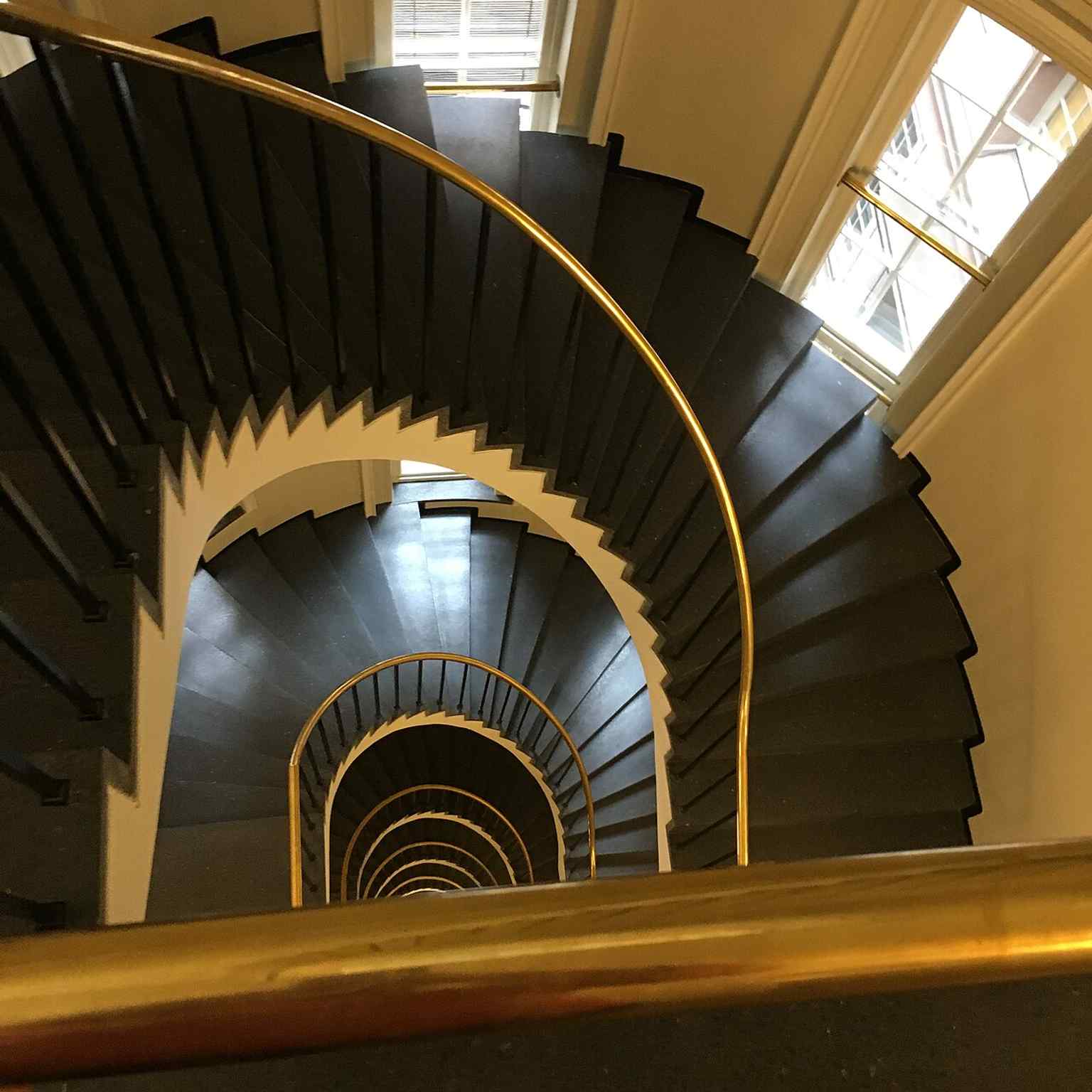
An interior view from the 2019 photo set that helps show the restored parliament spaces after the major 2015–2017 renovation.Photo: Eteil, Wikimedia Commons, CC BY-SA 4.0. Cropped & resized. And then there is P. E. Svinhufvud, one of the early speakers of parliament, who brings the human scale back into all this solemn stone. He had a reputation for bringing a little dry humor into formal settings. Even constitutional ritual, it turns out, can have a slightly eccentric casting process.
That mix of grandeur and odd humanity runs through the building’s history. In nineteen thirty-six, a member named Ryömä got an official rebuke here for a speech insulting Adolf Hitler, proof that debates inside this hall never floated free from Europe’s darker weather. In February nineteen fifty, a bomb attack struck the building and sharpened the sense that this granite block had become more than an office. It had become the visible body of national power.
More recently, the house went through a huge restoration from twenty fifteen to twenty seventeen. Engineers replaced pipes, ventilation, heating, windows, the roof, and conserved original colors, furniture, and decoration. During demolition, workers found not just leaks but empty liquor bottles... which feels reassuringly human for a place devoted to procedure. You can check the before-and-after image in the app to see how completely the facade disappeared behind restoration wrapping before it returned.
From here, authority looks formal, elevated, almost theatrical. Our next stop offers a very different civic gesture: not debate on a hill, but quiet care at street level. Head on to Kamppi Chapel, about seven minutes away.
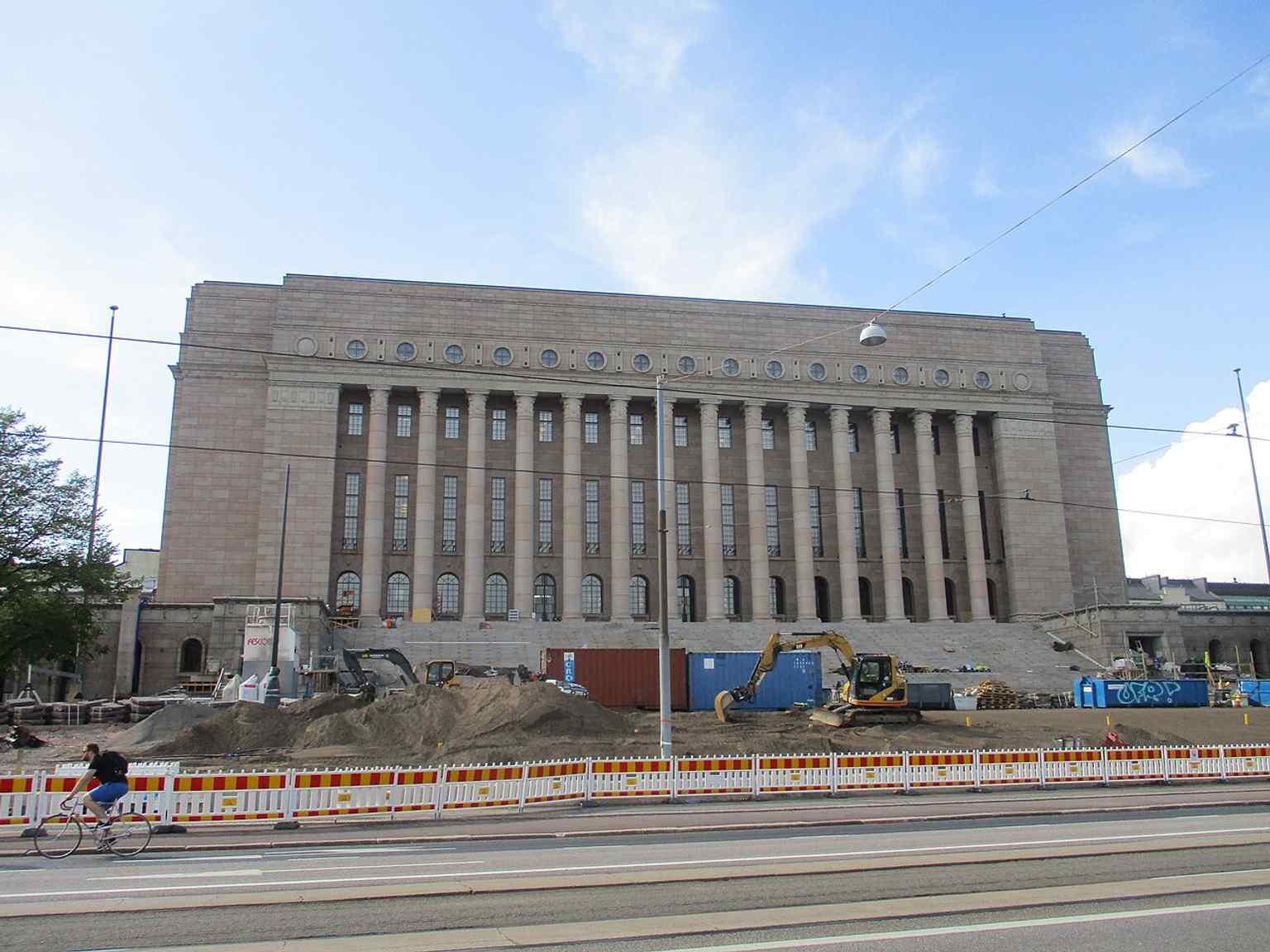
A crisp post-renovation view of Parliament House — the 2017 reopening marked the return of Finland’s legislature to its restored national landmark.Photo: Mikkoau, Wikimedia Commons, CC BY-SA 4.0. Cropped & resized. 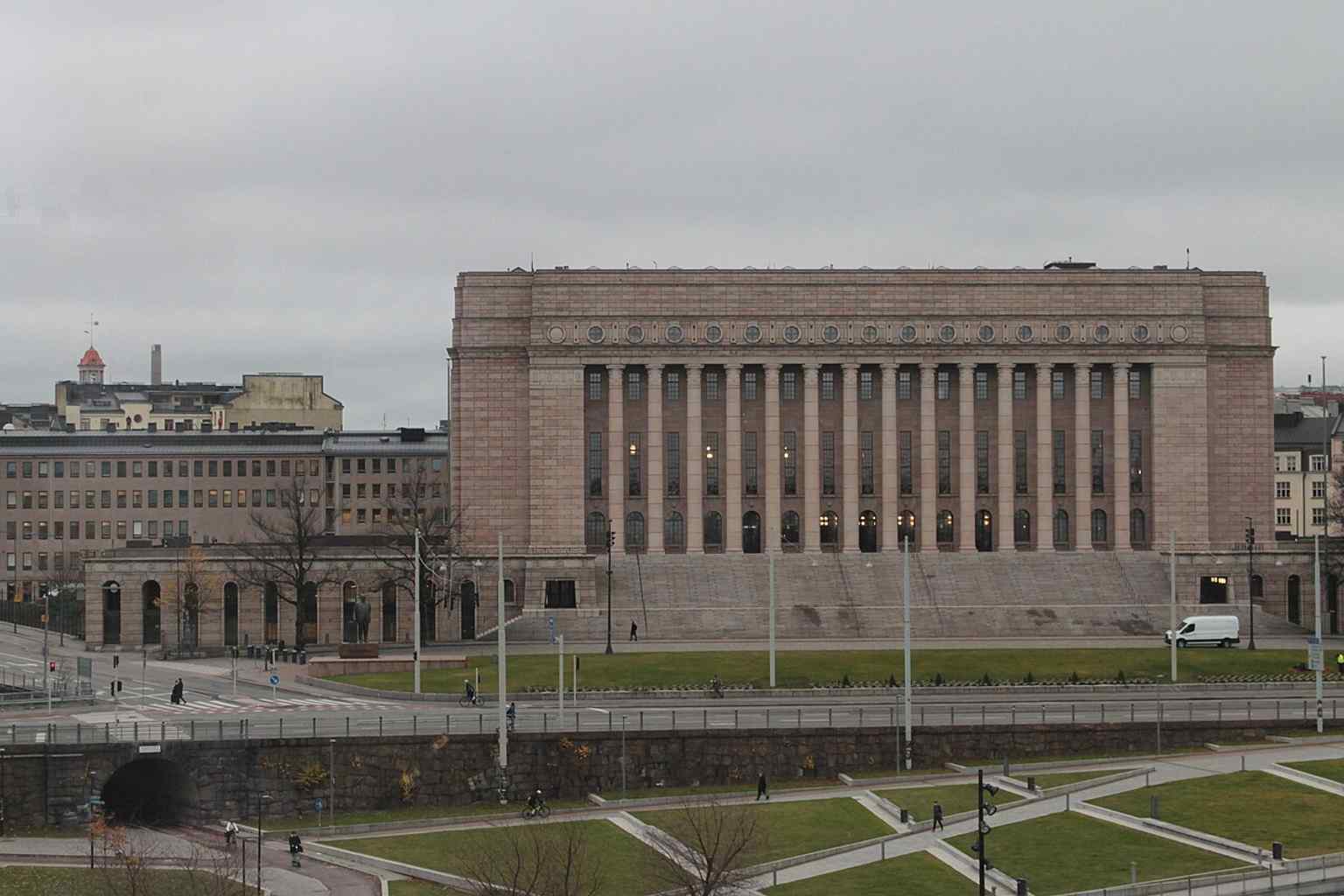
Seen from Oodi, this angle shows the parliament’s monumental facade and how it anchors the Etu-Töölö cityscape.Photo: DemieK07, Wikimedia Commons, CC BY 4.0. Cropped & resized. 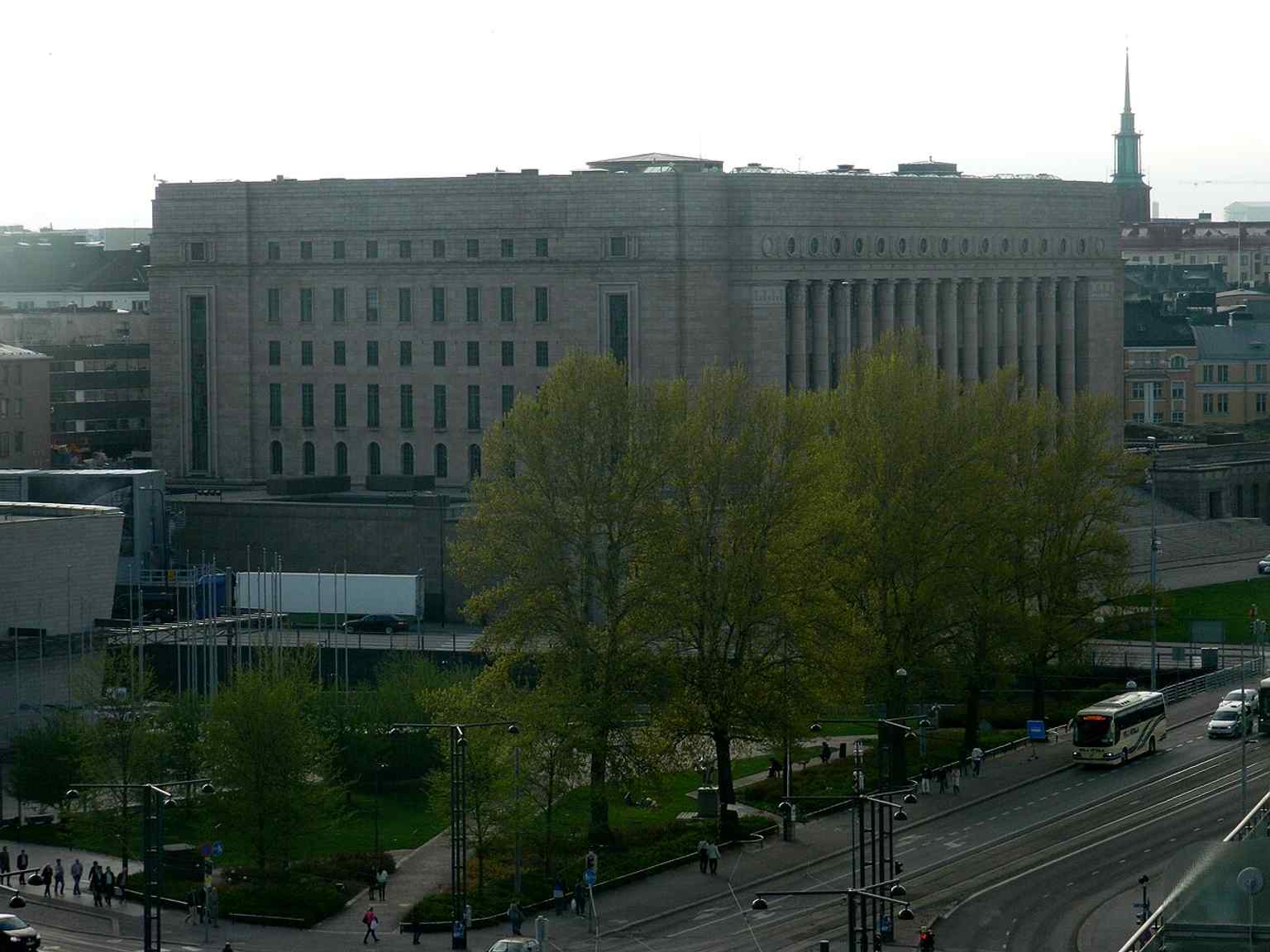
A classic side view from Hotel Torni that captures the building’s massive, cube-like form and granite exterior.Photo: Paasikivi, Wikimedia Commons, CC BY-SA 4.0. Cropped & resized. 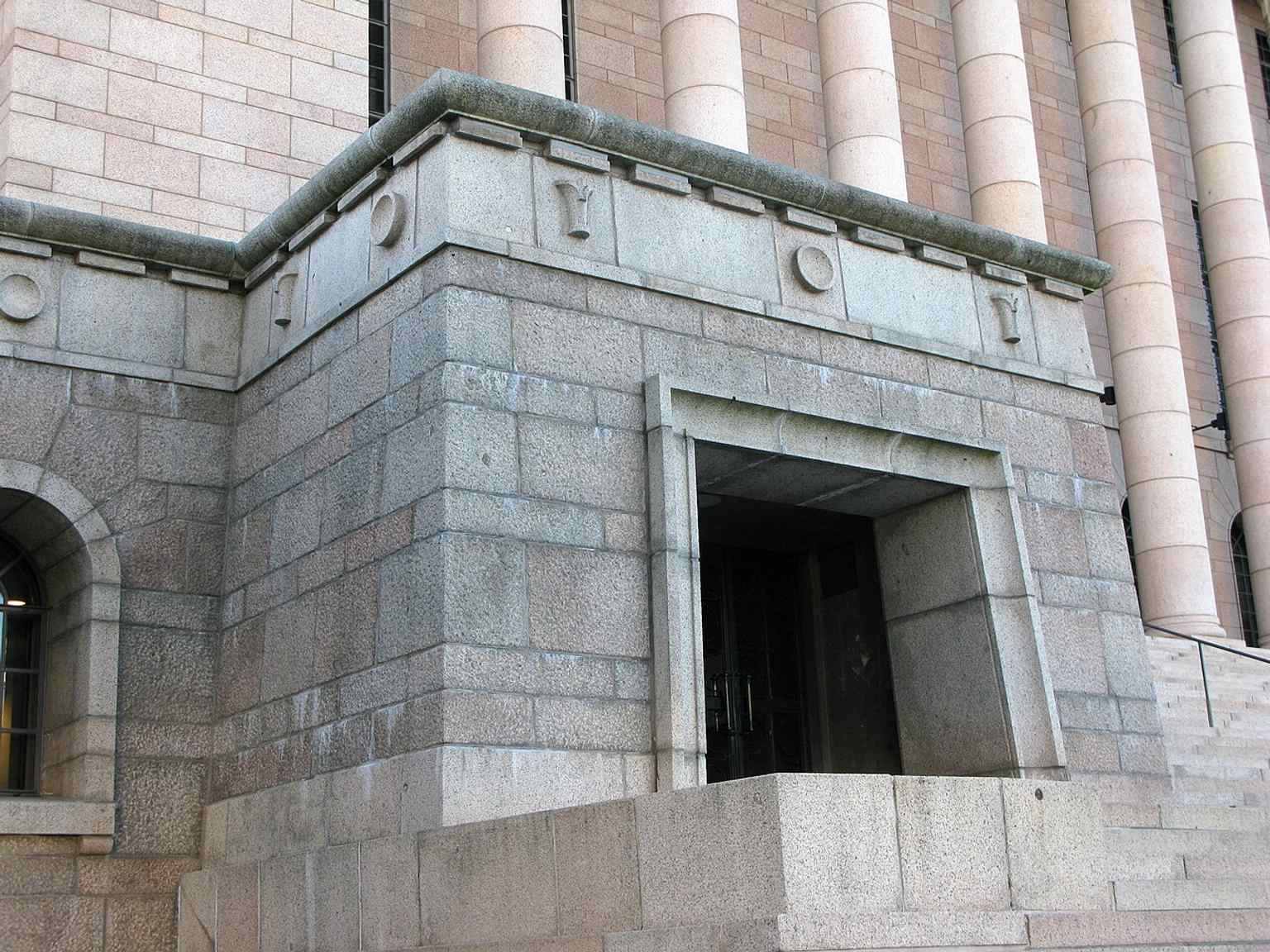
The entrance detail highlights the ceremonial stair and lehtiér access, part of Sirén’s symmetrical design for public processions.Photo: Amanuenssi, Wikimedia Commons, CC BY-SA 3.0. Cropped & resized. 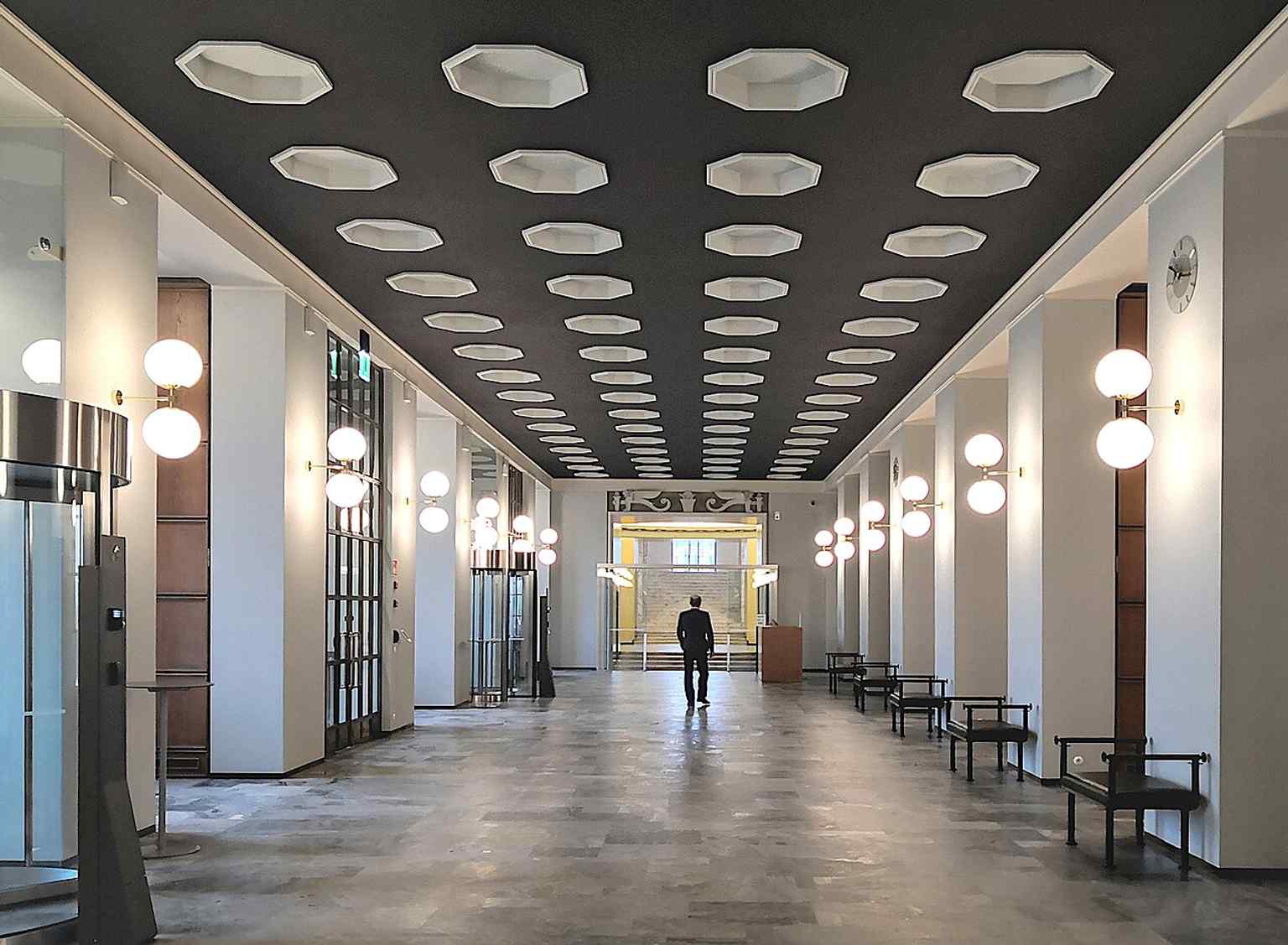
The main entrance hall reflects the building’s grand interior planning, where state functions were designed to feel formal but welcoming.Photo: Marit Henriksson, Wikimedia Commons, CC BY-SA 4.0. Cropped & resized. 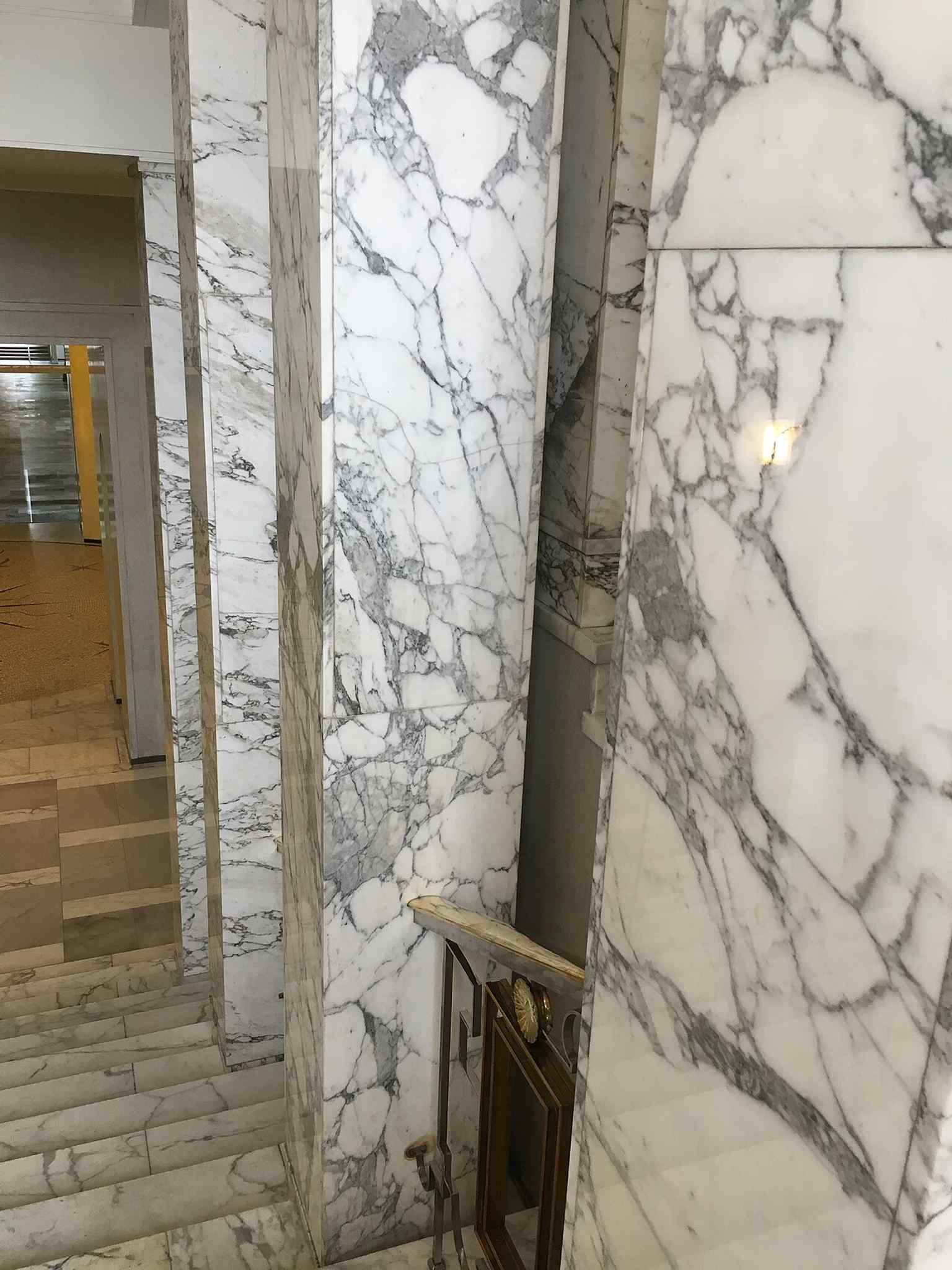
Another interior angle from the same series, useful for showing the everyday working spaces hidden inside the monumental shell.Photo: Eteil, Wikimedia Commons, CC BY-SA 4.0. Cropped & resized. 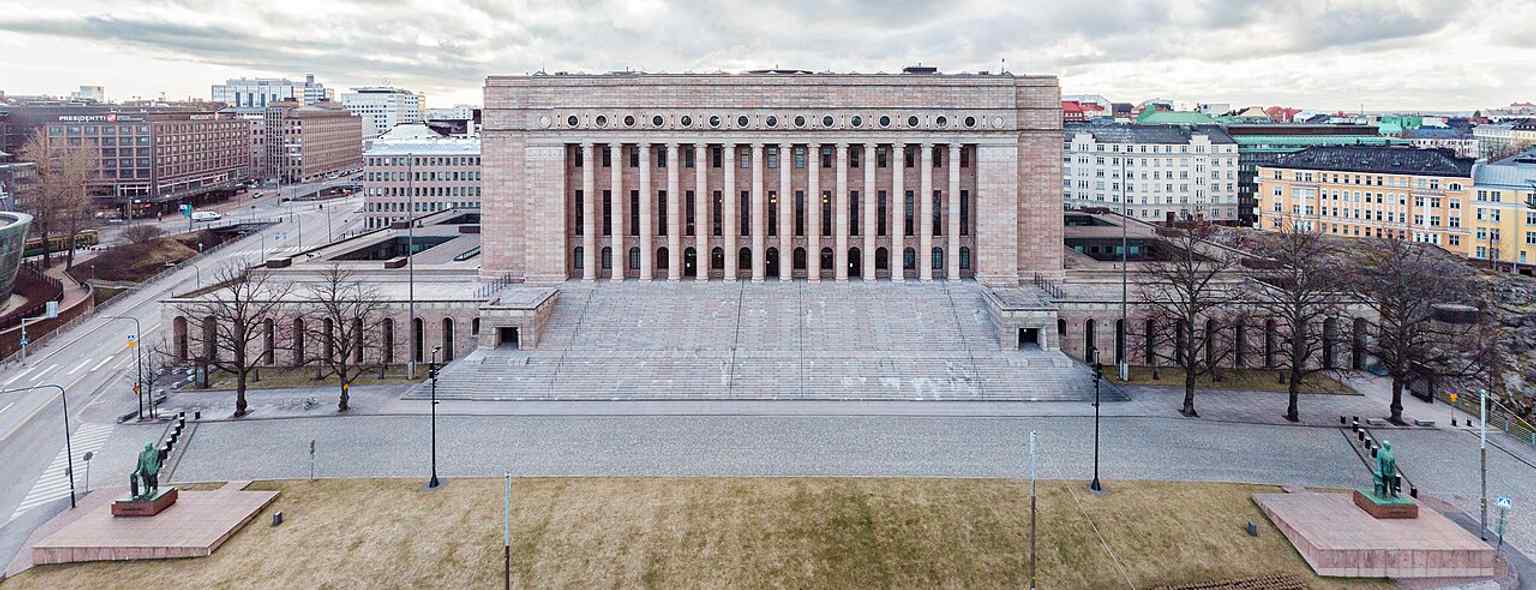
This aerial view places Parliament House in its urban setting, emphasizing its role as a landmark in central Helsinki.Photo: Joneikifi, Wikimedia Commons, CC BY-SA 4.0. Cropped & resized. 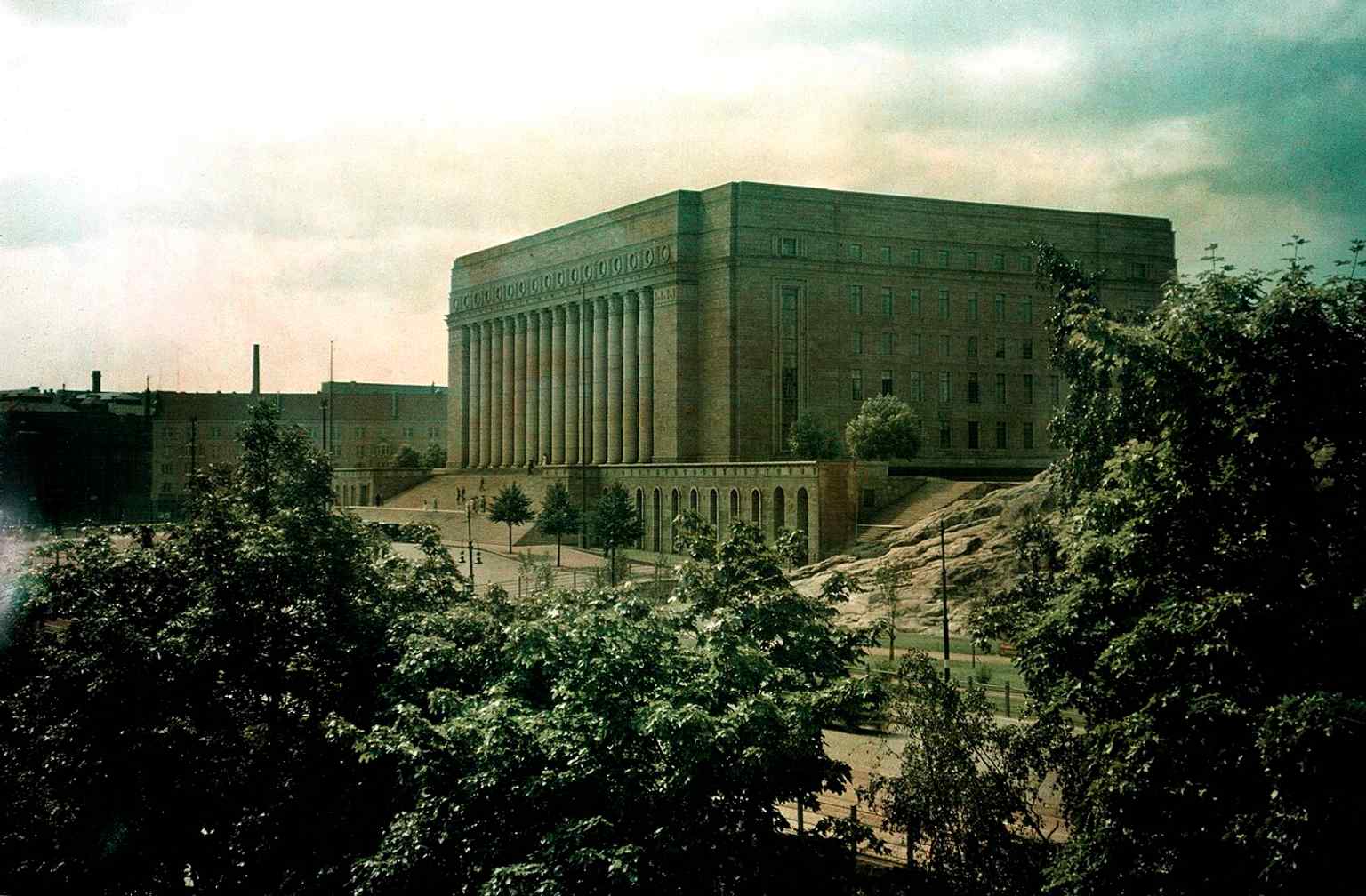
A 1930s view from Hakasalmi Park, showing the parliament soon after completion, when it symbolized Finland’s shift to a permanent seat of power.Photo: Unknown authorUnknown author, Wikimedia Commons, CC BY 4.0. Cropped & resized. 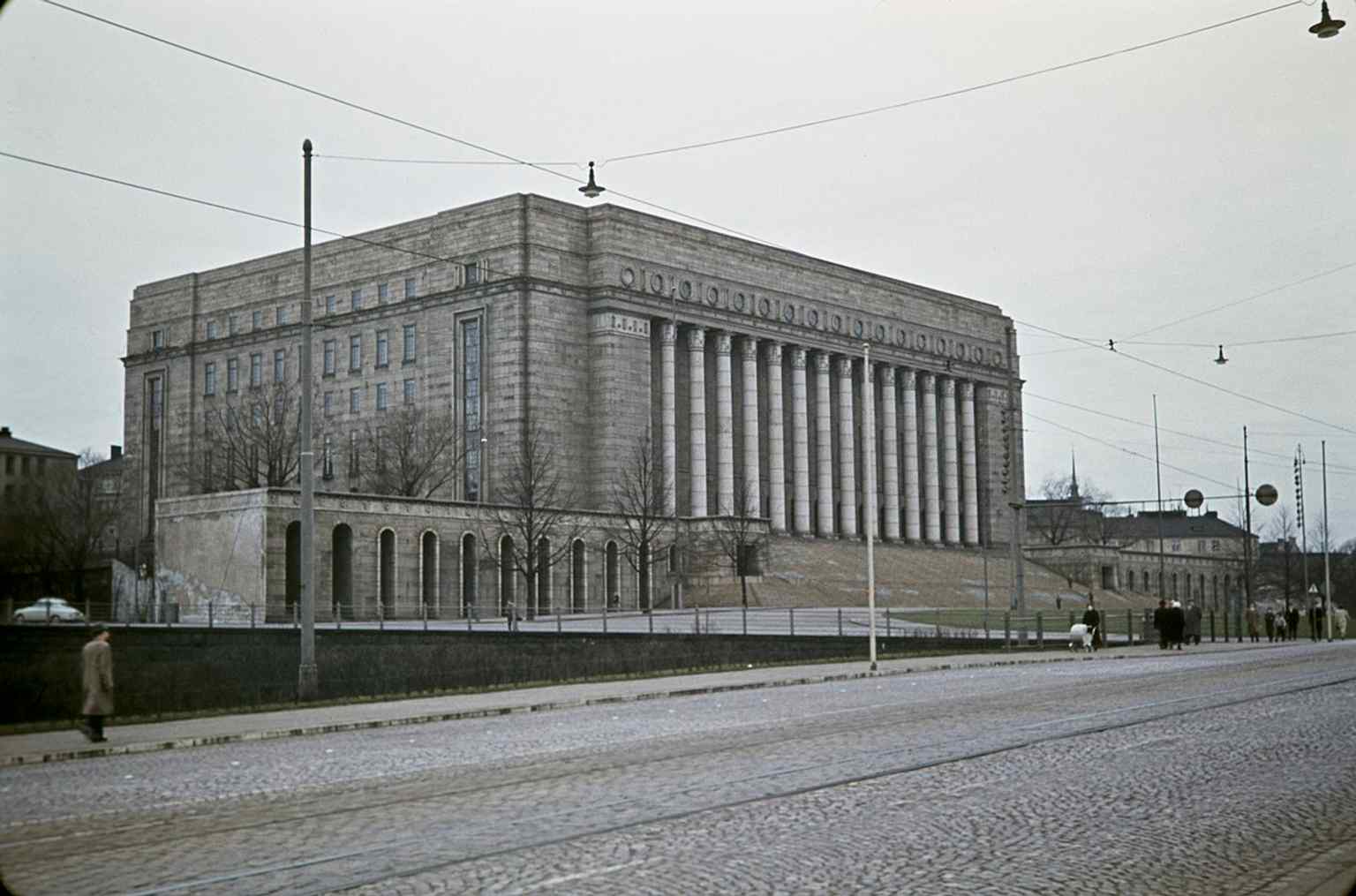
A 1950 photograph of the building on Mannerheimintie, close in time to the 1950 bombing that made the house one of Finland’s most charged political symbols.Photo: Arvo Kajantie, Wikimedia Commons, CC BY 4.0. Cropped & resized. 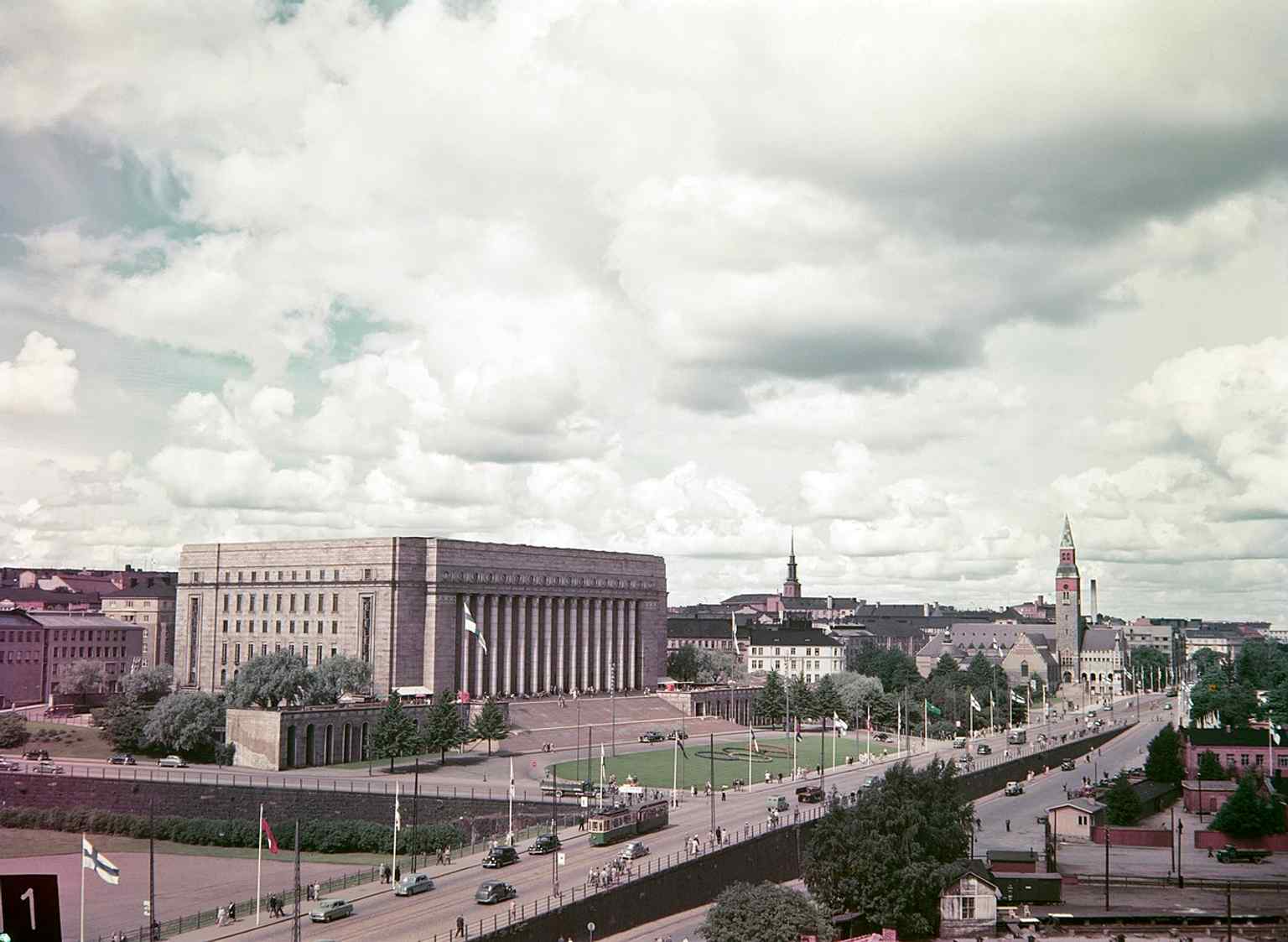
Olympic-era flag decorations on Mannerheimintie place Parliament House in a moment of national celebration in the early 1950s.Photo: Olympia-kuva Oy, Wikimedia Commons, CC BY 4.0. Cropped & resized. 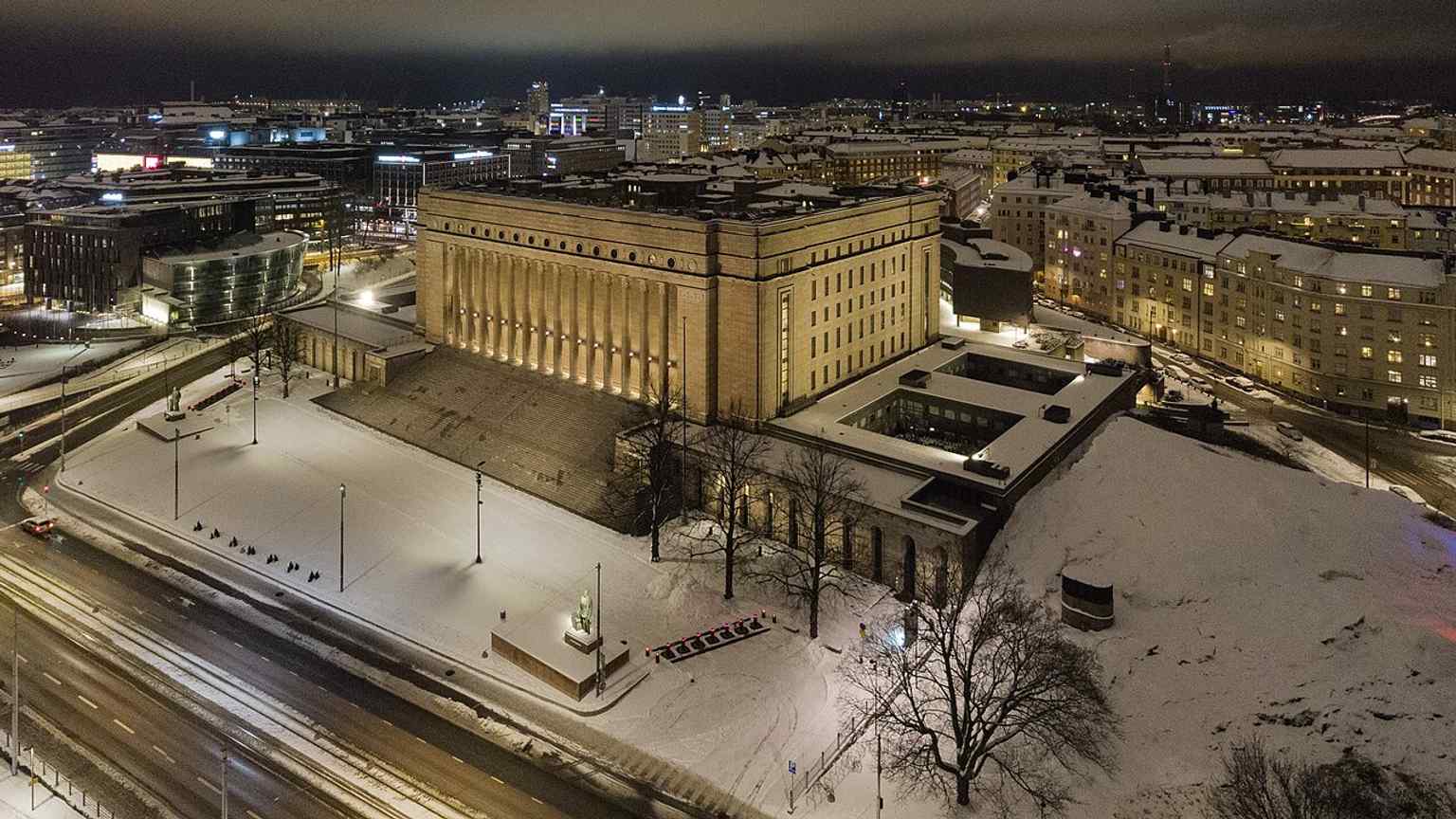
Nighttime lighting gives a more recent historical mood, showing how the parliament continues to stand out as a symbol of state authority.Photo: Joneikifi, Wikimedia Commons, CC BY-SA 4.0. Cropped & resized. 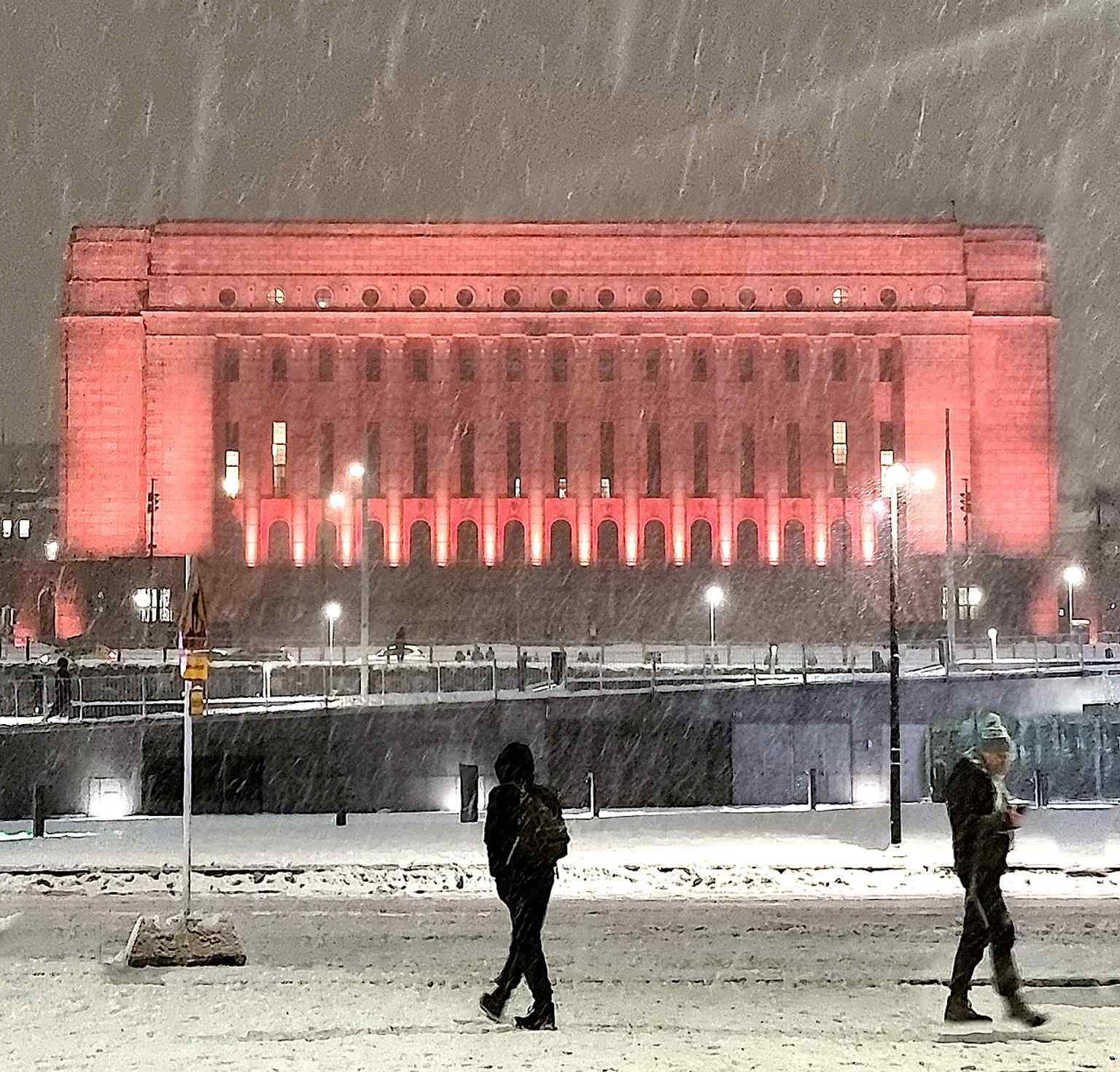
The building in red light creates a dramatic modern portrait of the parliament, a useful contrast to its restrained classical facade.Photo: Marit Henriksson, Wikimedia Commons, CC BY-SA 4.0. Cropped & resized. On your right, look for a smooth oval shell of pale spruce slats, shaped like a giant upright wooden bowl, with a dark slit of an entrance cut into its seamless curve. Helsinki…Read moreShow less
Open dedicated page →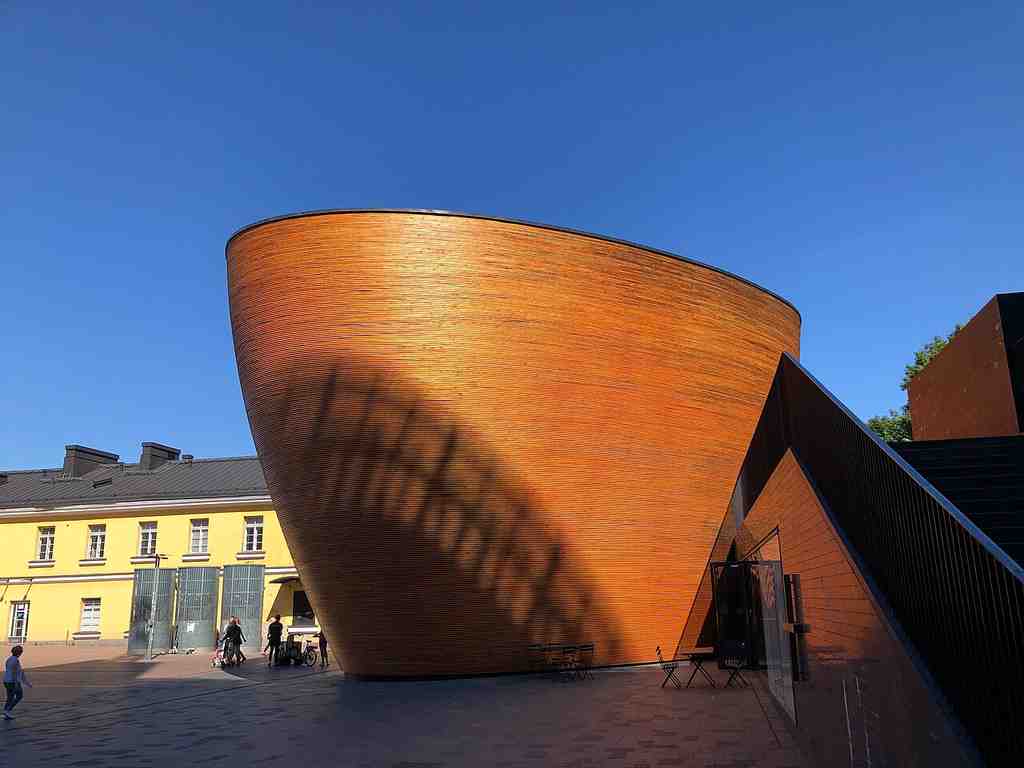
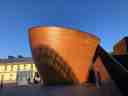
Kamppi ChapelPhoto: Vadelmavene, Wikimedia Commons, CC BY-SA 4.0. Cropped & resized. On your right, look for a smooth oval shell of pale spruce slats, shaped like a giant upright wooden bowl, with a dark slit of an entrance cut into its seamless curve.
Helsinki treats silence as something worth designing for, not just hoping for... and this chapel is one of the clearest examples. Right here beside transport, shopping, and the general civic bustle, architect Mikko Summanen of K-two-S drew a deliberate interruption: a low-threshold place where anyone could step out of the churn for a few minutes and simply be.
The chapel first appeared from under its protective cover on the first of February, two thousand twelve. Before the official opening, locals were already sneaking over to peek through gaps in the site fence. That made the building a minor city sensation before the yard was even finished... which is a very Helsinki kind of excitement, really: people getting worked up over a quiet room. In June that year, Bishop Irja Askola consecrated it, and the place quickly became part of public life.
If the rock church earlier used stone and light, this one answers with warm restraint. The structure is wood, the exterior made from stained spruce slats; inside, the walls are clad in alder and the doors are ash. If you glance at the image on your screen, you can see the symbol-free prayer room, shaped and tuned so outside noise barely enters at all.
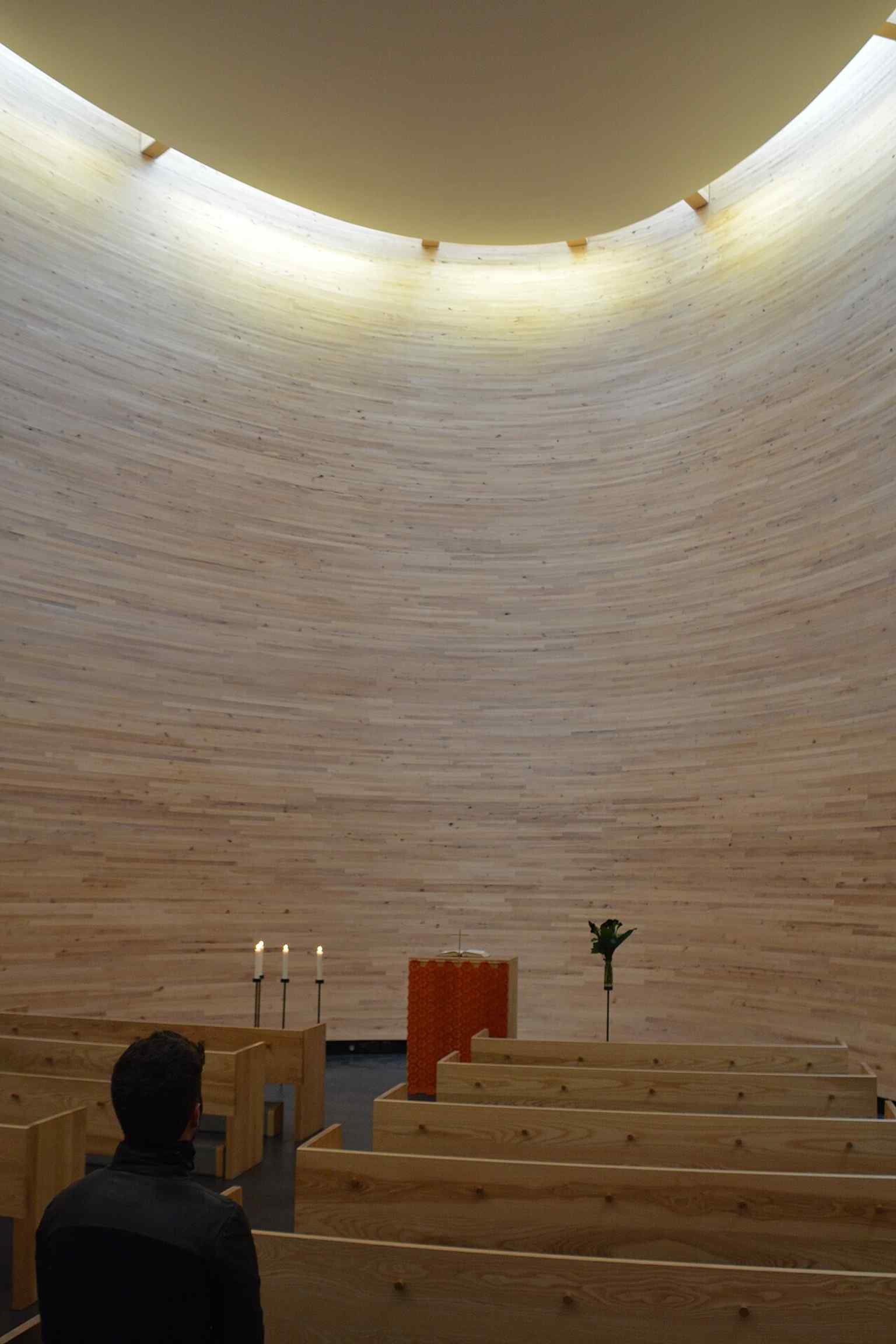
Inside the chapel’s silent, symbol-free prayer space, designed to block out the noise of busy central Helsinki.Photo: Bengt Oberger, Wikimedia Commons, CC BY-SA 4.0. Cropped & resized. That mattered. In its first month, nearly forty thousand people came. In ten years, more than two point two million visitors passed through. Many came just to sit, and a striking share of those seeking conversation help here were men, a quietly remarkable sign that vulnerability had found a public address.
Its future has been debated since staff cuts ended the free conversation service, which makes this place feel both loved and oddly fragile. One of the city’s gentlest spaces stands in one of its busiest zones. When you’re ready, Amos Rex is about a two-minute walk away. If you want to return inside, the chapel is usually open Tuesday through Saturday from eleven A-M to six P-M, and closed on Mondays and Sundays.
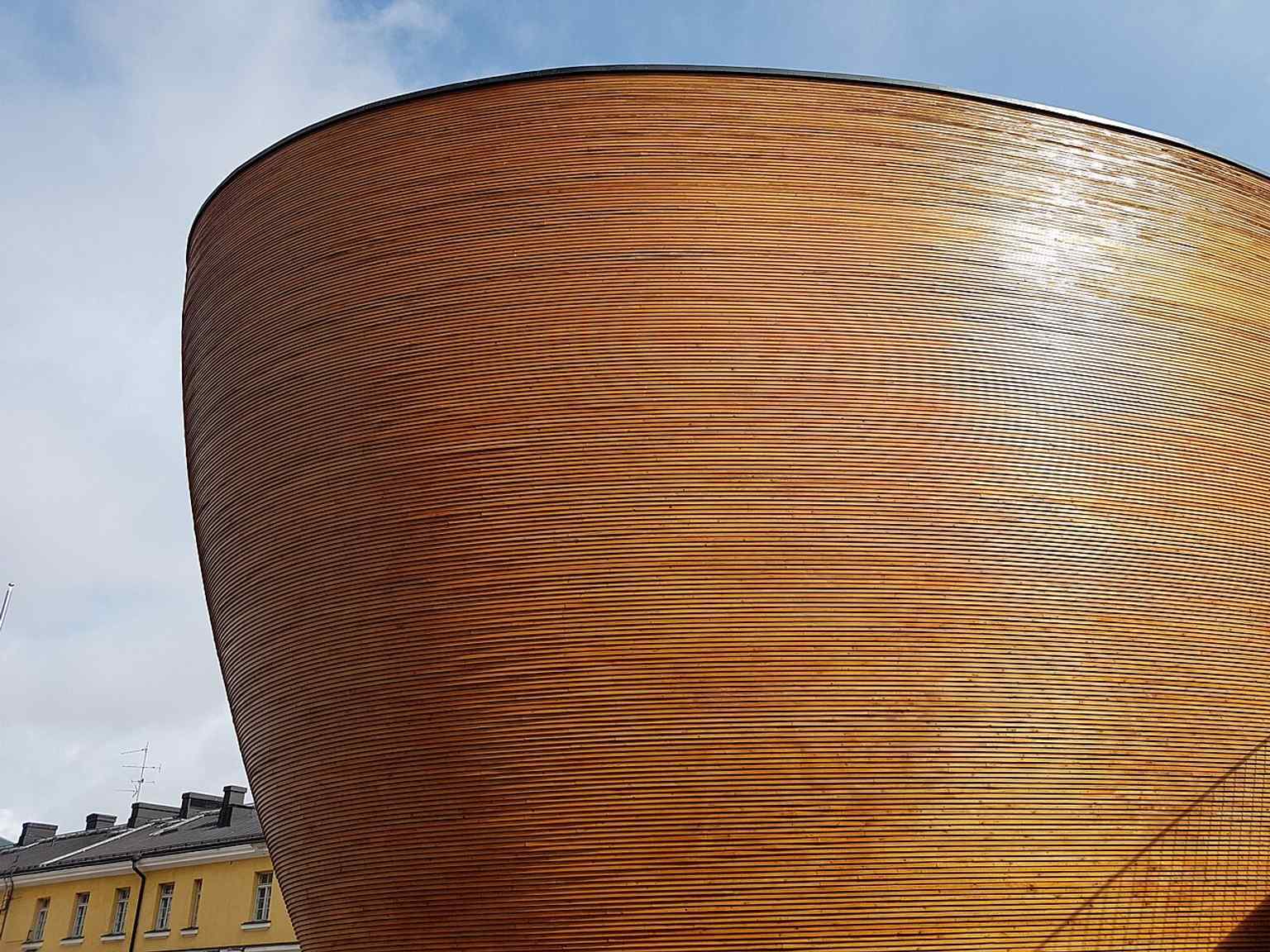
The smooth wooden exterior of Kamppi Chapel, the quiet design landmark that opened in 2012 on the edge of Narinkkatori.Photo: jsamwrites, Wikimedia Commons, CC BY-SA 4.0. Cropped & resized. Look to your right for a low pale concrete plaza that swells into smooth round domes, paired with the long white Lasipalatsi facade and its horizontal bands of windows. Amos Rex…Read moreShow less
Open dedicated page →Look to your right for a low pale concrete plaza that swells into smooth round domes, paired with the long white Lasipalatsi facade and its horizontal bands of windows.
Amos Rex is one of Helsinki’s boldest little reversals... a major museum that mostly disappears underground, then announces itself with skylights that look like the square has started breathing. Because apparently a normal rectangular building would have been too straightforward.
This museum opened in twenty eighteen, but its story starts with Amos Anderson, a publisher, collector, and arts patron with expensive tastes and a stubborn belief that private wealth should leave a public trace. Amos Anderson’s legacy still shapes Helsinki: he founded Konstsamfundet in nineteen forty, and after his death in nineteen sixty-one, that foundation kept funding art and culture, especially for Swedish-speaking Finns. First it ran the Amos Anderson Art Museum in his former home on Yrjönkatu. If you check the image on your screen, you can see that earlier chapter of the story: more grand house than experimental bunker.
By the early twenty-tens, that old museum had a problem. Contemporary art had grown larger, stranger, more immersive. The rooms could not keep up. So Konstsamfundet backed a fifty million euro gamble: build the new galleries under Lasipalatsi Square instead of on some distant plot. J-K-M-M Architects kept the nineteen thirty-six Glass Palace above ground largely intact and turned the roof of the museum into a public square. That matters. Helsinki did not hide this institution away; it folded it into daily city life.
Those domes are not sculpture for sculpture’s sake. They bring daylight into the galleries and keep contact between the street and the subterranean world. Have a look at the roofscape image in the app and you’ll see how deliberate that is. The whole design says art here should spill into public space, not wait politely behind a grand staircase.
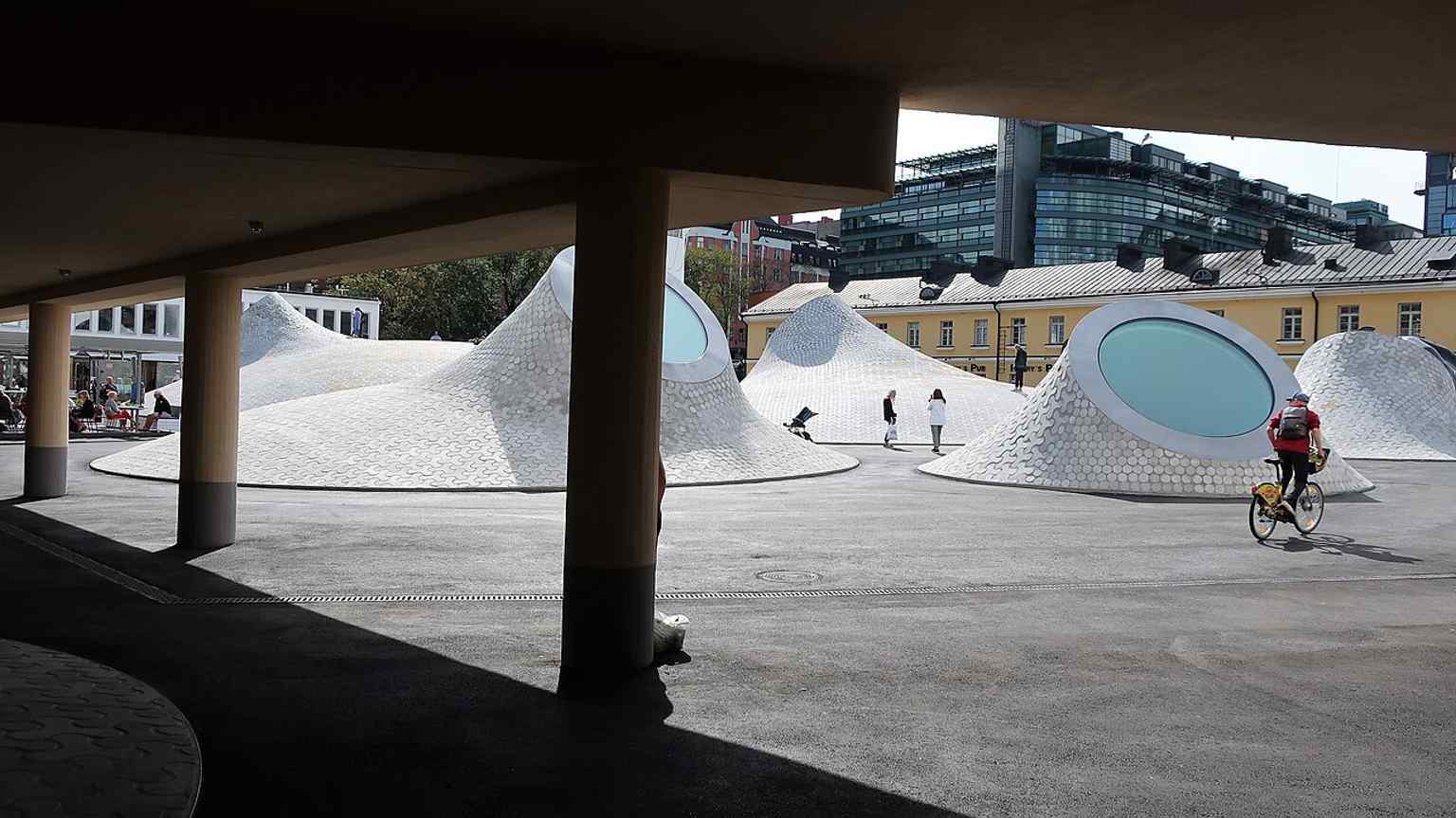
The signature domes in Amos Rex Square — the museum’s skylights that turn the plaza itself into part of the building.Photo: Kulttuurinavigaattori, Wikimedia Commons, CC BY-SA 4.0. Cropped & resized. If the Ateneum felt like an earnest civic academy, Amos Rex feels like its unruly younger cousin... still serious, just less interested in behaving. Its opening show, teamLab’s Massless, drew huge crowds, with waits of up to four hours. Later exhibitions ranged from René Magritte to young artists in Generation, a series created because people aged fifteen to twenty-three had almost nowhere to show work publicly. That may be the sharpest point here: this museum does not only preserve culture, it keeps renegotiating who gets to make it.
Even the name was engineered with Finnish practicality. It had to nod to Amos Anderson, connect to Bio Rex and Lasipalatsi, and work without translation. Short, clear, slightly playful. Very Helsinki, really.
Along this Mannerheimintie corridor, power keeps changing clothes: parliament, national culture, and now private patronage turned public experiment. From here, the city feels less like a finished masterpiece and more like an open proposal. When you’re ready, continue about nineteen minutes to the Old Market Hall, where public life shifts from art to appetite. If you plan to go in later, Amos Rex is usually open from eleven AM, closed on Tuesdays, and shuts at six PM on weekdays or five PM on weekends.
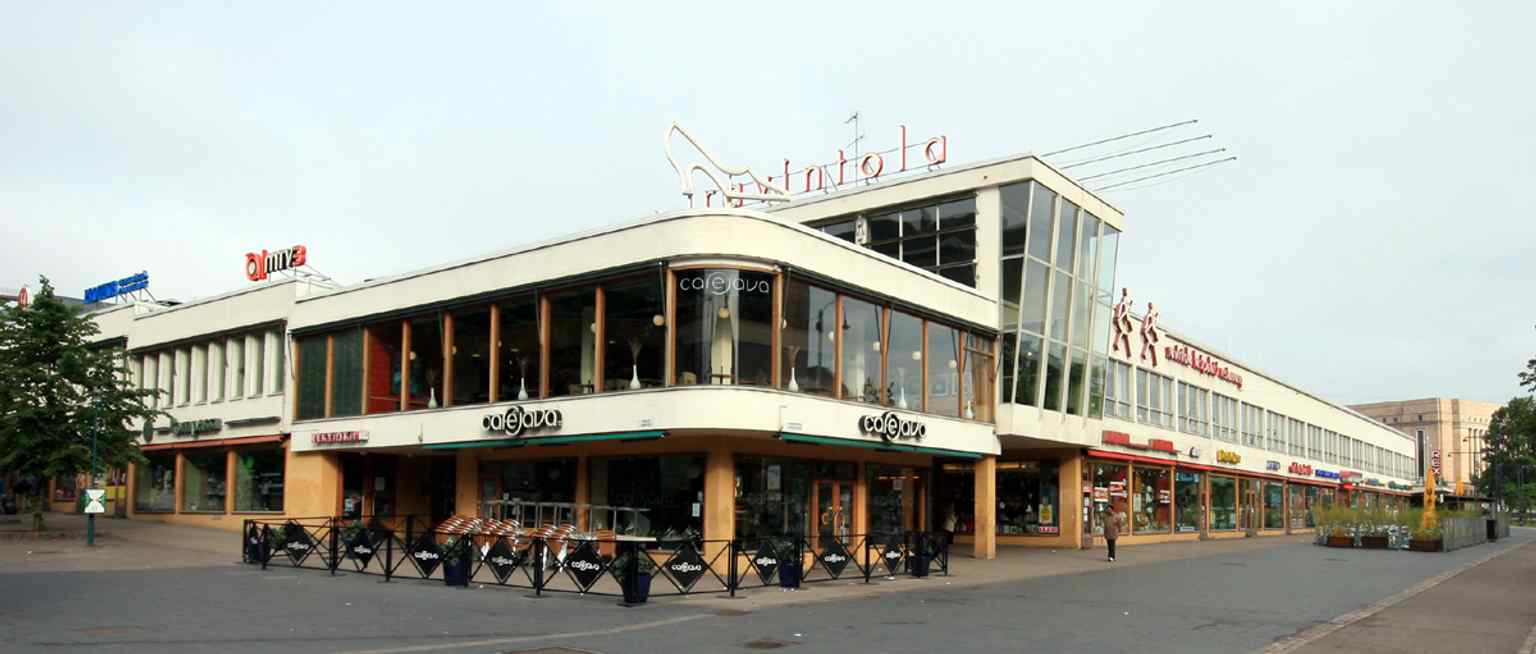
The 1936 Lasipalatsi Glass Palace, whose preserved façade and rooftop square form Amos Rex’s public entrance and urban setting.Photo: Mahlum, Wikimedia Commons, Public domain. Cropped & resized. 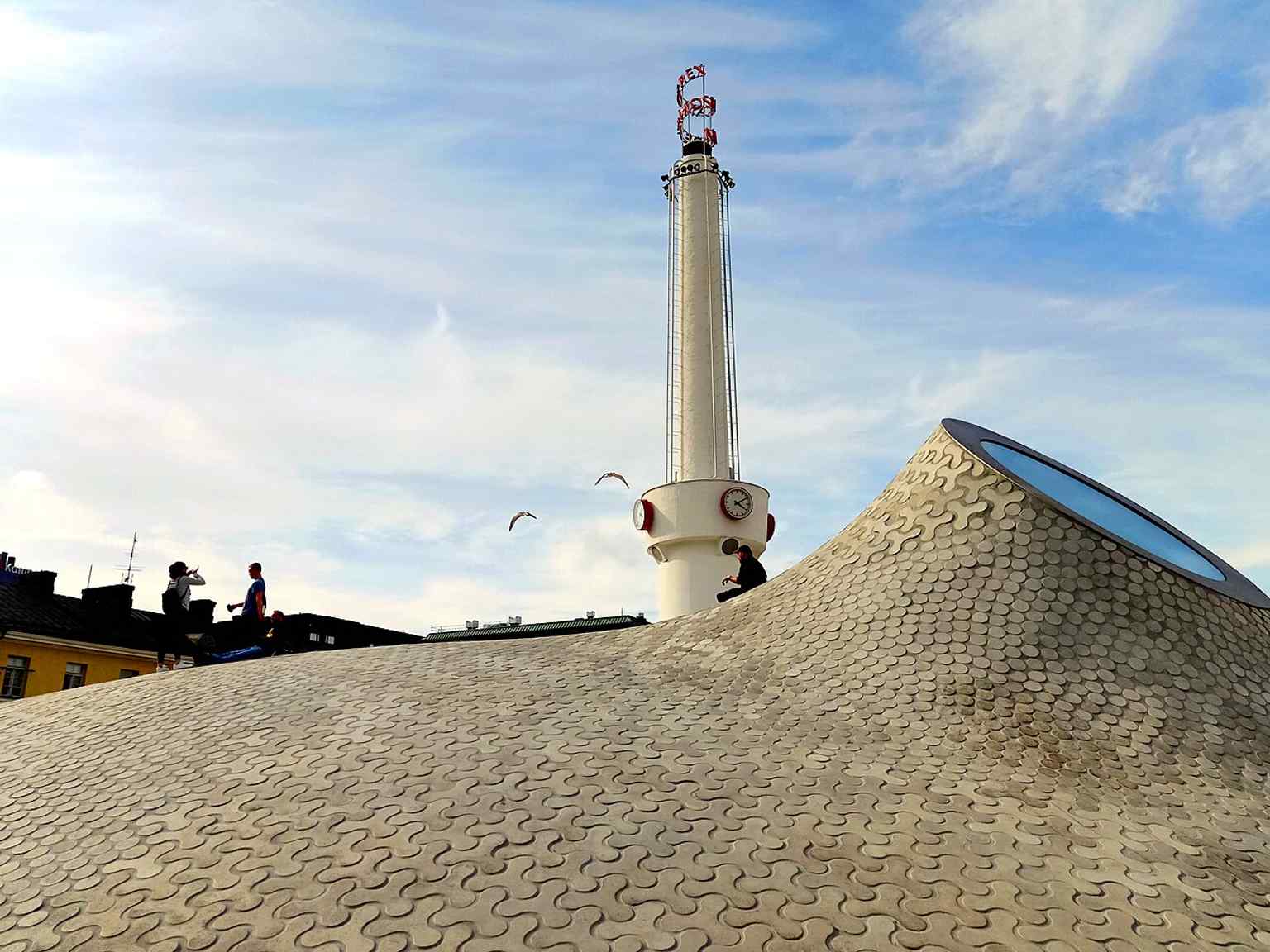
A clear view of Amos Rex’s roofscape, showing the conical skylights that made the underground museum instantly recognizable.Photo: Suyash Dwivedi, Wikimedia Commons, CC BY-SA 4.0. Cropped & resized. On your left, look for the long red-brick hall with a steep roof and repeated arched windows, a solid nineteenth-century market building stretched along the harbor. Before…Read moreShow less
Open dedicated page →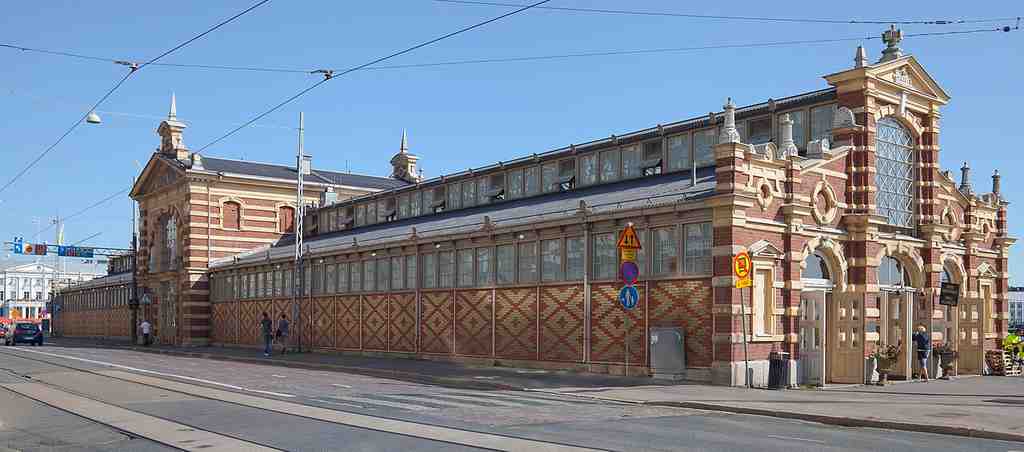
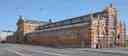
Old Market HallPhoto: Diego Delso, Wikimedia Commons, CC BY-SA 3.0. Cropped & resized. On your left, look for the long red-brick hall with a steep roof and repeated arched windows, a solid nineteenth-century market building stretched along the harbor.
Before Helsinki polished its image with culture, this waterfront ran on trade. This was the older bloodstream of the city, where ships, quays, and food deliveries shaped daily life more than grand ideals ever could. Vanha kauppahalli, the Old Market Hall, opened on the first of August, eighteen eighty-nine as Helsinki’s answer to a very practical problem: late nineteenth-century food selling had become chaotic, and people had started worrying, quite sensibly, about hygiene.
Architect Gustaf Nyström did his homework. He toured European market halls, then designed this one for local habits and local appetites, at a cost of more than two hundred and seventeen thousand markkaa... well over a million euros in today’s terms, just to make buying dinner more orderly.
Take a second and look at it not as a quaint attraction, but as a civic machine with personality: one roof for fish, bread, butter, rules, and public health.
Locals sometimes point out a small mismatch: the south façade still carries the year eighteen eighty-eight, even though the hall opened in eighteen eighty-nine, because cement delivery problems delayed the launch. If you check the before-and-after image, you’ll see how freight tracks and working quays once pressed much closer to the building.
Inside, around twenty-five traders and cafés still keep it alive, from salmon soup and fish sandwiches to one of Finland’s tiniest Alko shops. After the two thousand twelve to two thousand fourteen renovation, cheese merchant Tuula Paalanen said she had grown up in these aisles... which tells you this place sells memory as much as food. From here, the waterfront starts turning commerce into ceremony; in about five minutes, Havis Amanda carries that transformation into public myth. The hall is generally open from eight to six Monday through Saturday, and ten to five on Sunday.
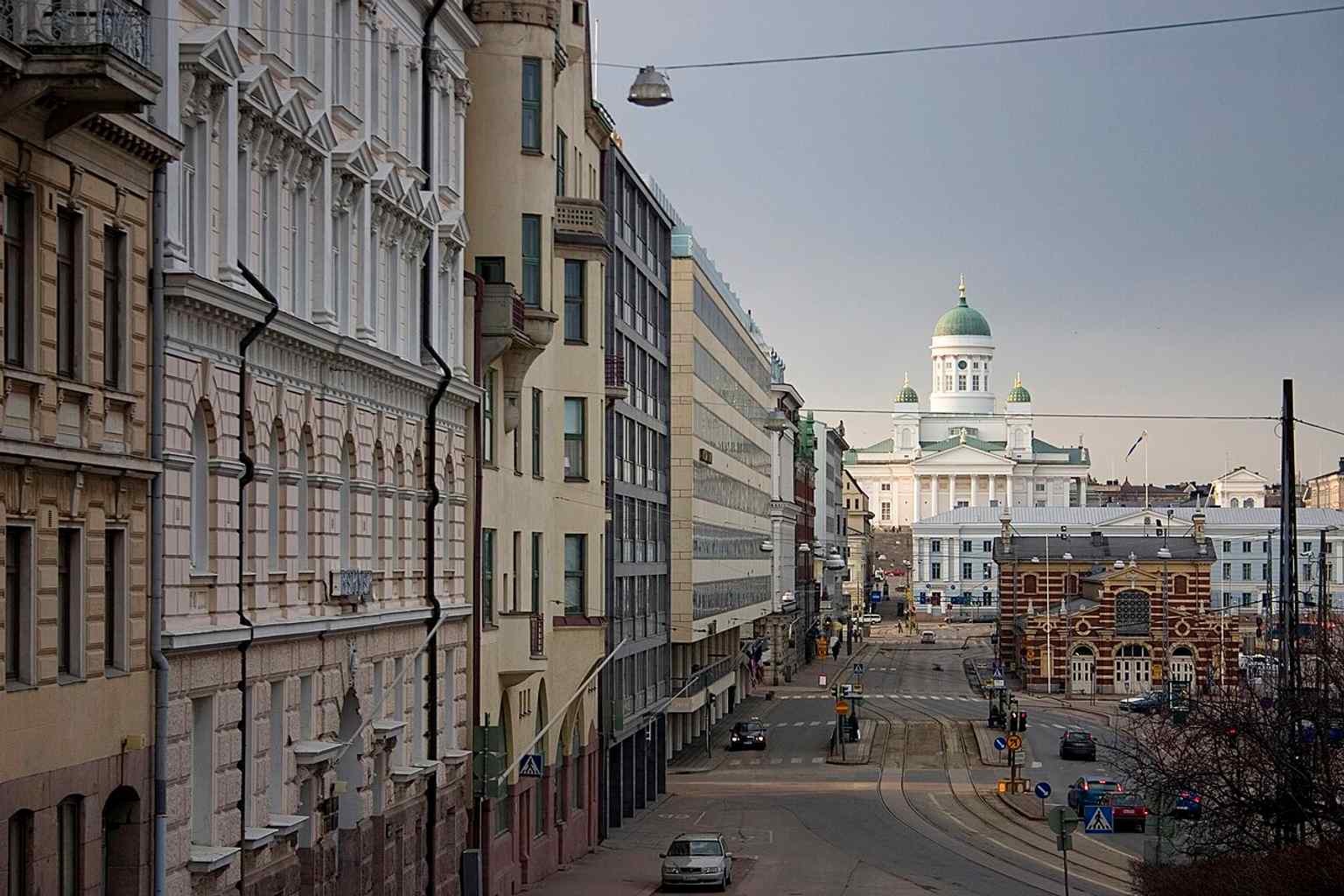
The hall sits on Eteläranta beside the Market Square, with Helsinki Cathedral visible beyond — a classic view of the city’s oldest market hall.Photo: Oula Lehtinen, Wikimedia Commons, CC BY-SA 3.0. Cropped & resized. 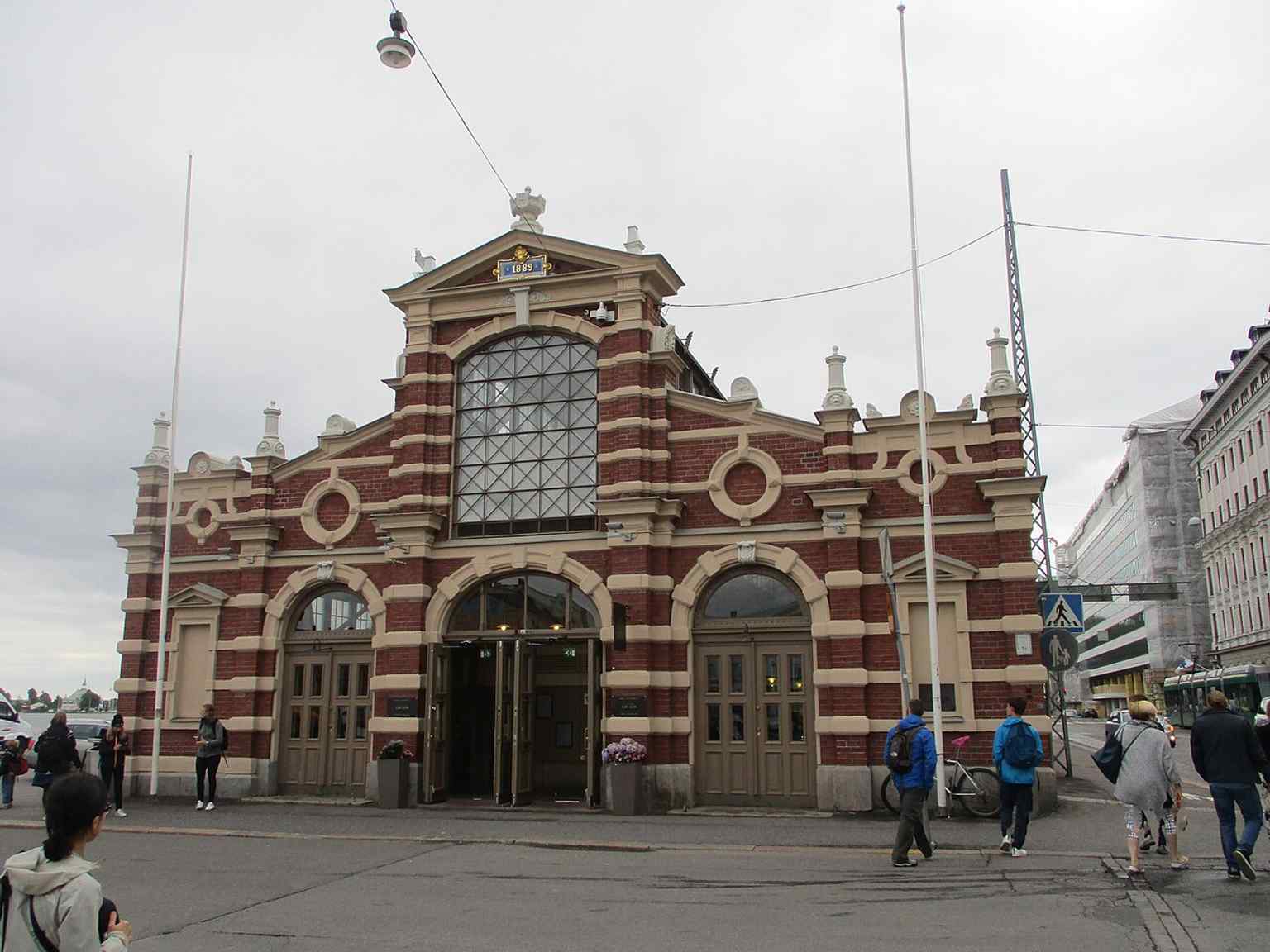
A clean exterior view of the Old Market Hall, the landmark that opened in 1889 after construction began the year before.Photo: Mikkoau, Wikimedia Commons, CC BY-SA 4.0. Cropped & resized. 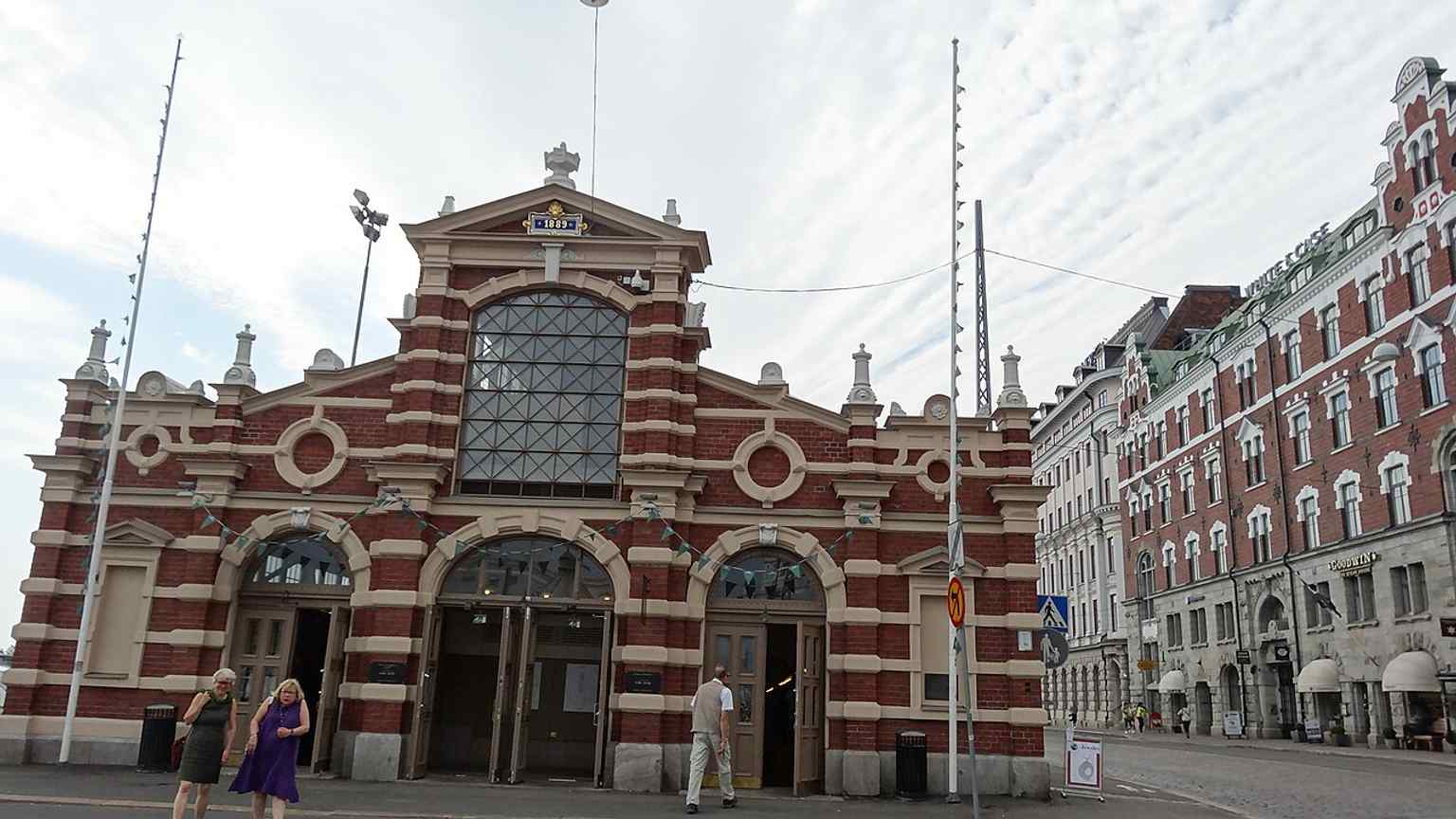
A wide 2014 street-level view of the market hall before its long renovation reopened the building to shoppers in June 2014.Photo: GualdimG, Wikimedia Commons, CC BY-SA 4.0. Cropped & resized. 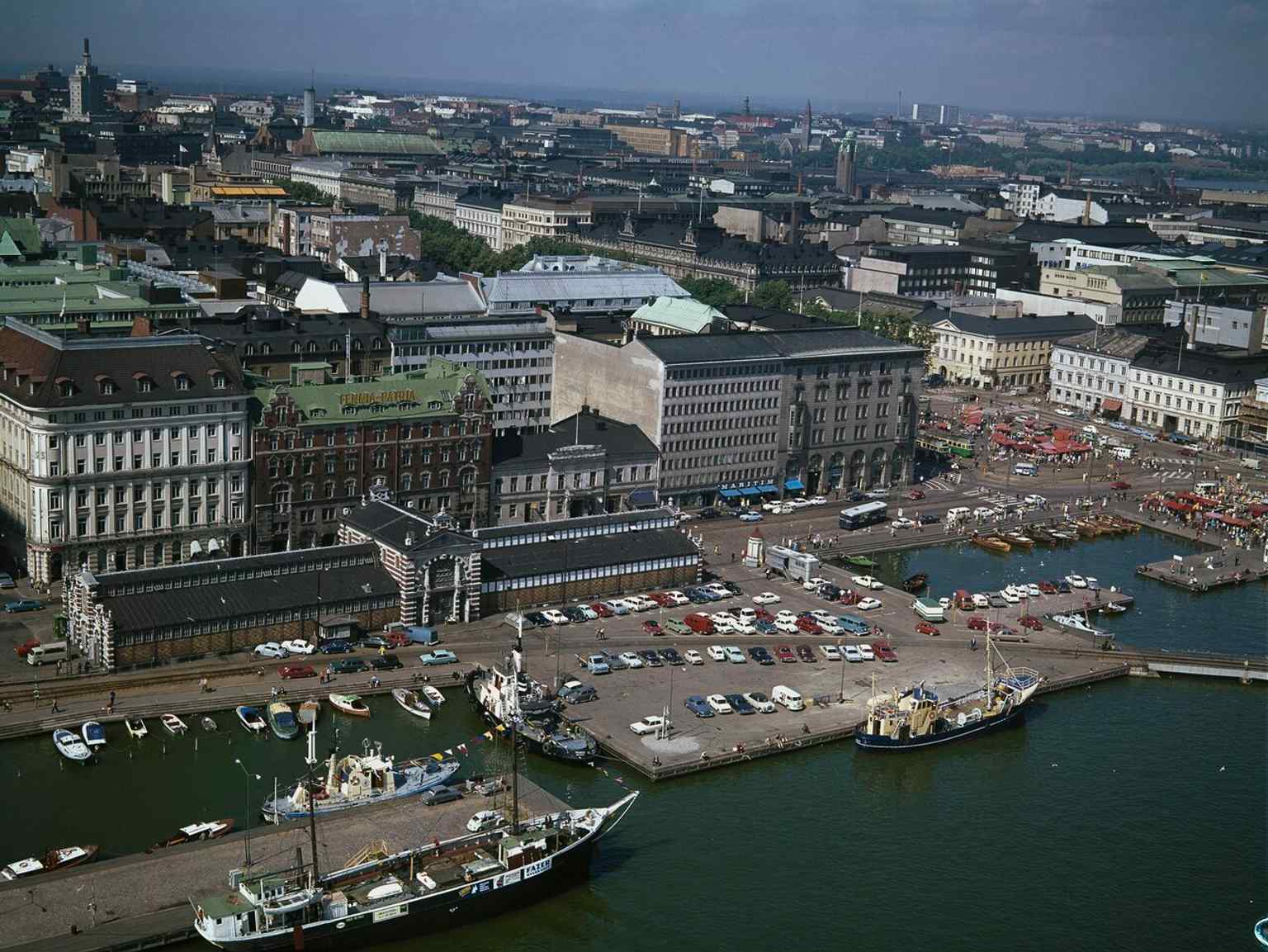
The hall in the 1970s, when the surrounding harbor rail and waterfront showed how closely the market hall was tied to Helsinki’s port life.Photo: SKY-FOTO Möller, Wikimedia Commons, CC BY 4.0. Cropped & resized. 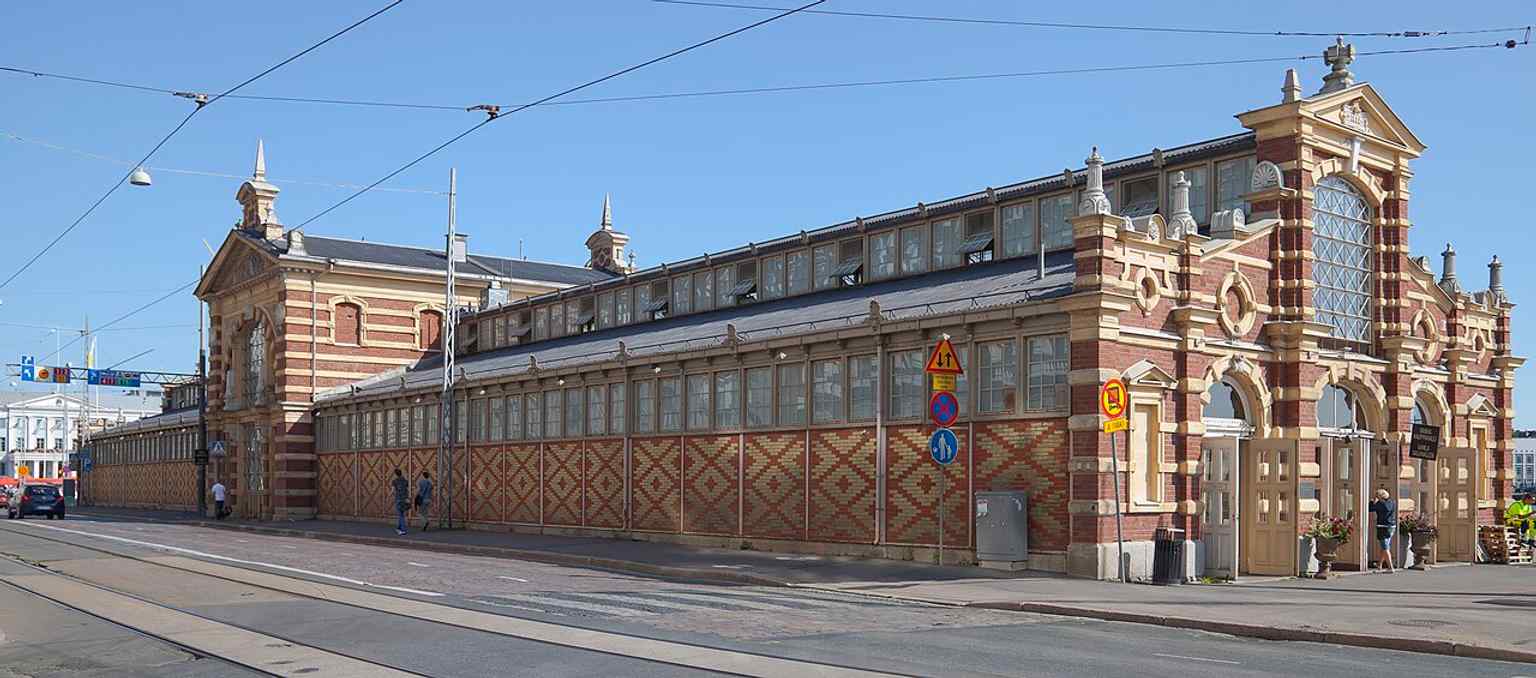
A strong full-façade view of the Old Market Hall, showing the distinctive brick building that became part of Helsinki’s European-style market hall tradition.Photo: Diego Delso, Wikimedia Commons, CC BY-SA 3.0. Cropped & resized. 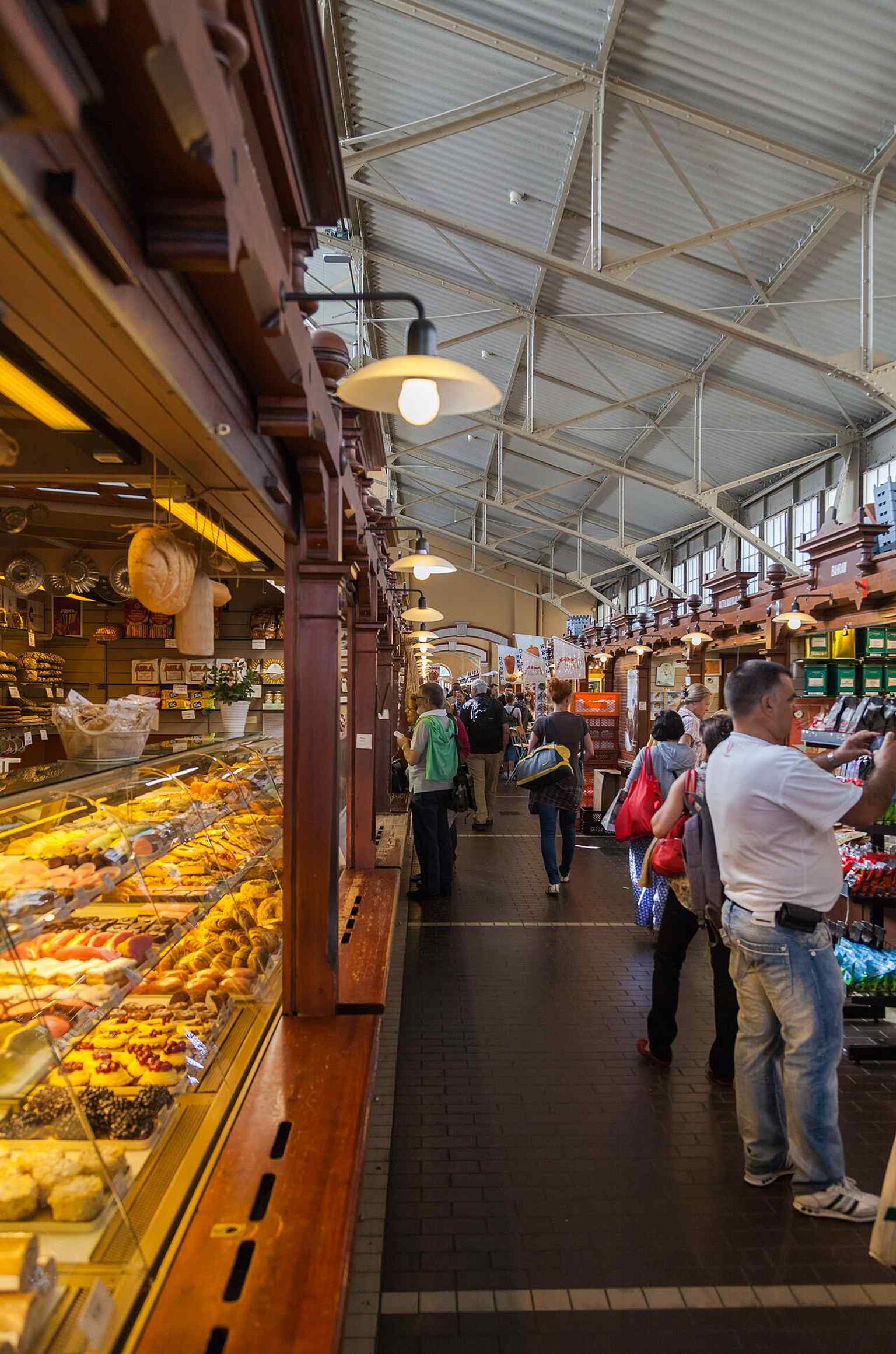
Inside the hall, where small food stalls and cafés keep the building’s original market atmosphere alive for lunch crowds and shoppers.Photo: Diego Delso, Wikimedia Commons, CC BY-SA 3.0. Cropped & resized. 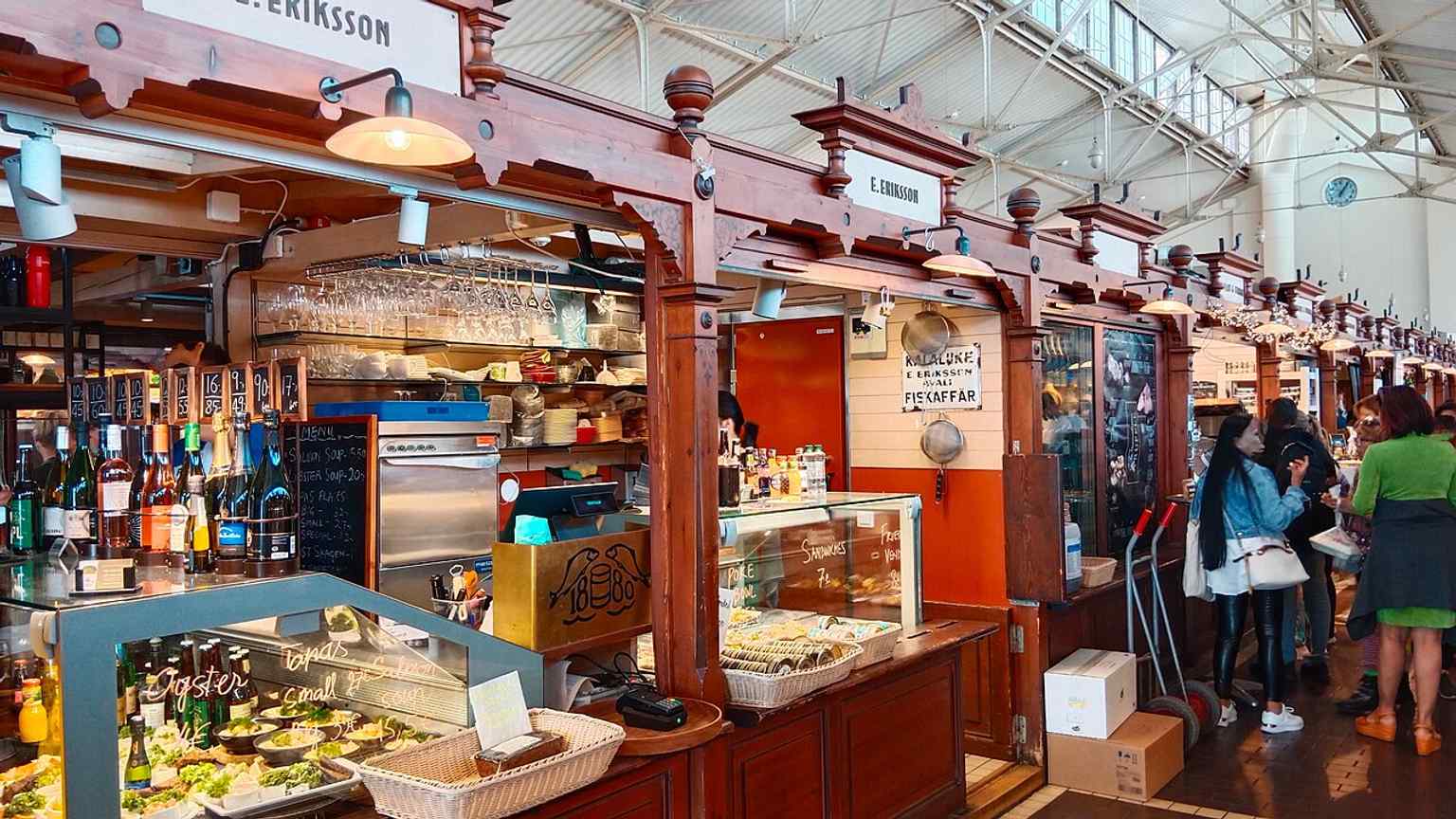
The renovated interior highlights the hall’s bright central space, which was carefully preserved when the building reopened after the 2012–2014 refurbishment.Photo: ThierryCollard, Wikimedia Commons, CC BY-SA 4.0. Cropped & resized. 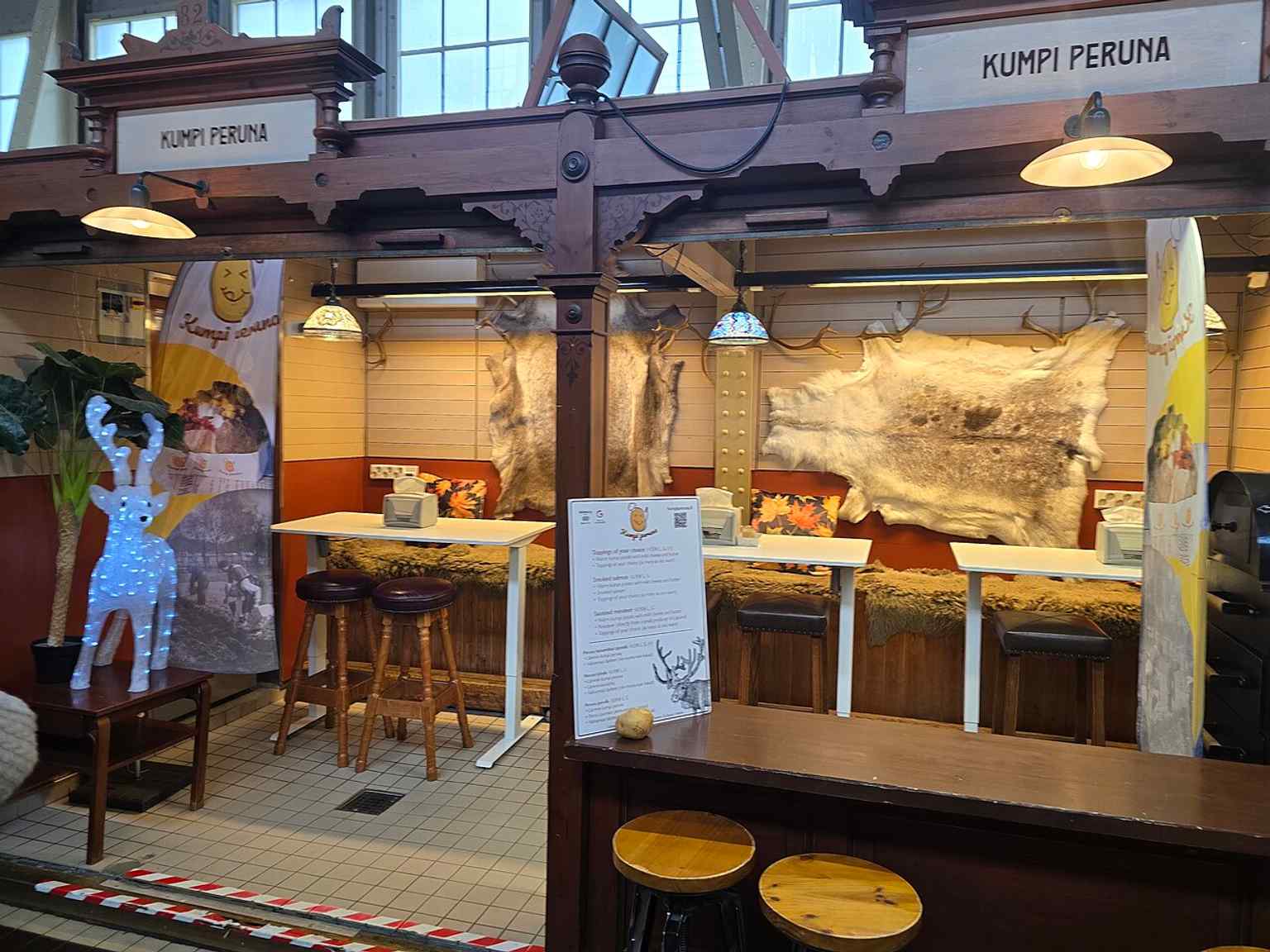
A modern interior view that reflects the hall’s everyday role as a place for specialty foods, cafés, and local routines.Photo: Lee Vilenski, Wikimedia Commons, CC BY-SA 4.0. Cropped & resized. 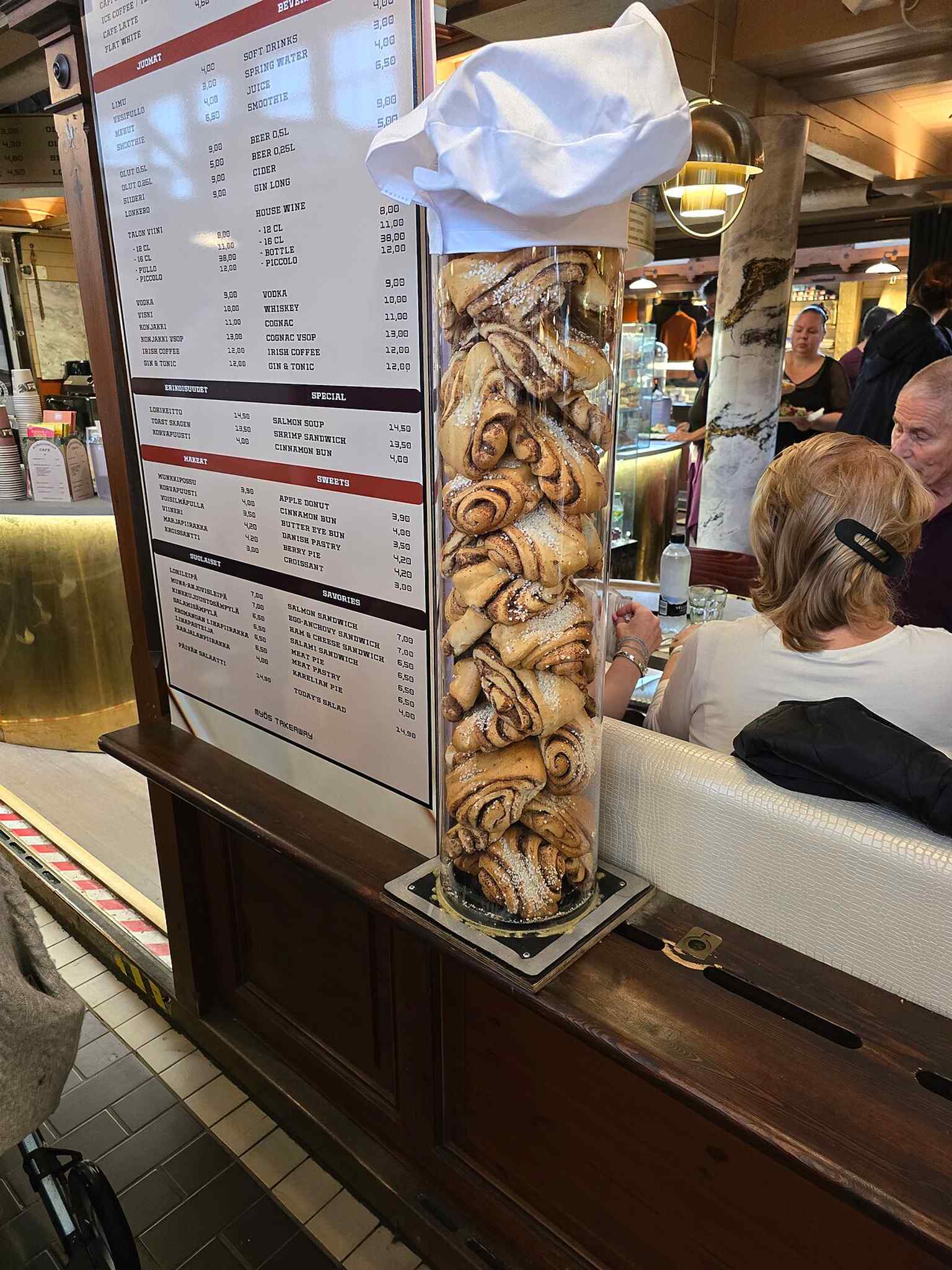
A closer look at the market stalls and shelving that make the hall feel more like a historic food market than a modern shopping center.Photo: Lee Vilenski, Wikimedia Commons, CC BY-SA 4.0. Cropped & resized. 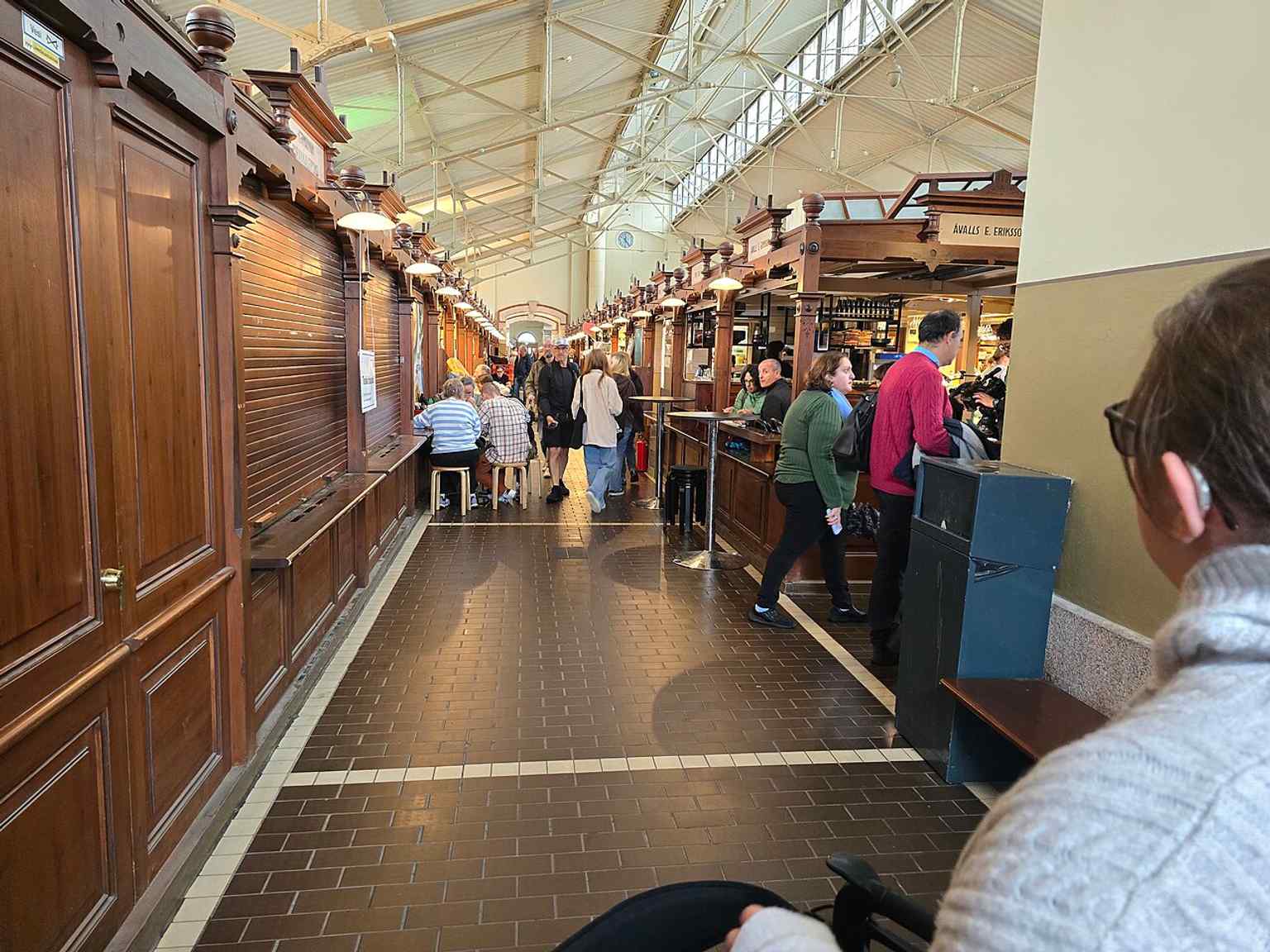
Details from inside the hall underline its mix of tradition and variety, from specialty food counters to the famous lunch stop culture.Photo: Lee Vilenski, Wikimedia Commons, CC BY-SA 4.0. Cropped & resized. 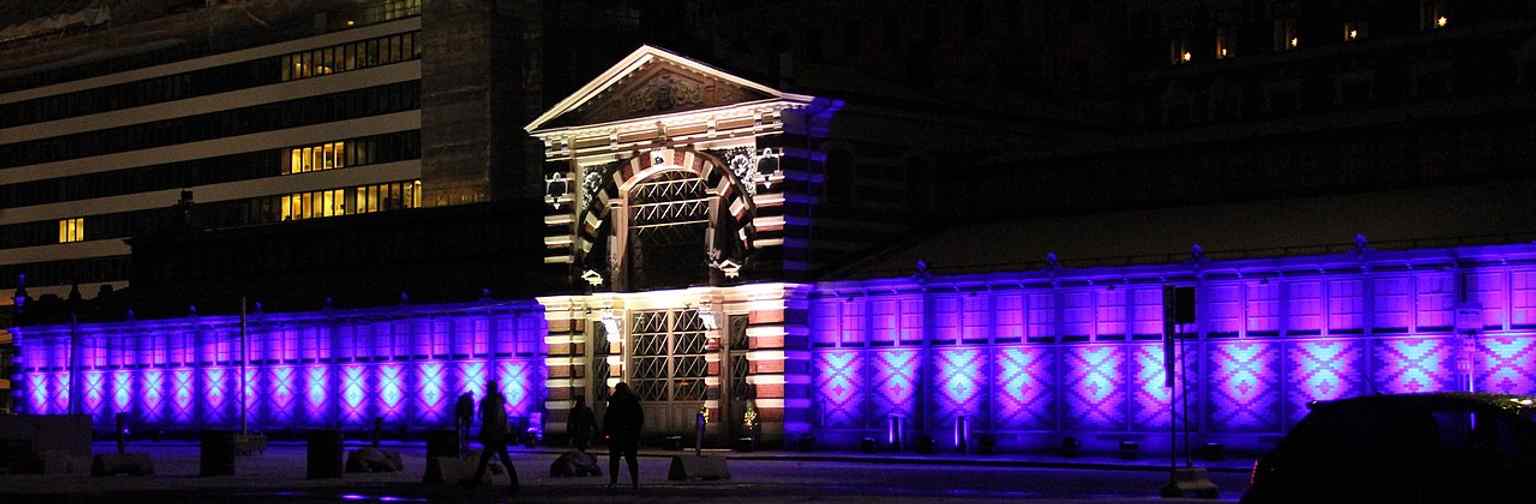
The hall lit in blue and white for Finland’s centenary, showing how this 19th-century building still serves as a living city landmark.Photo: Htm, Wikimedia Commons, CC BY-SA 3.0. Cropped & resized. 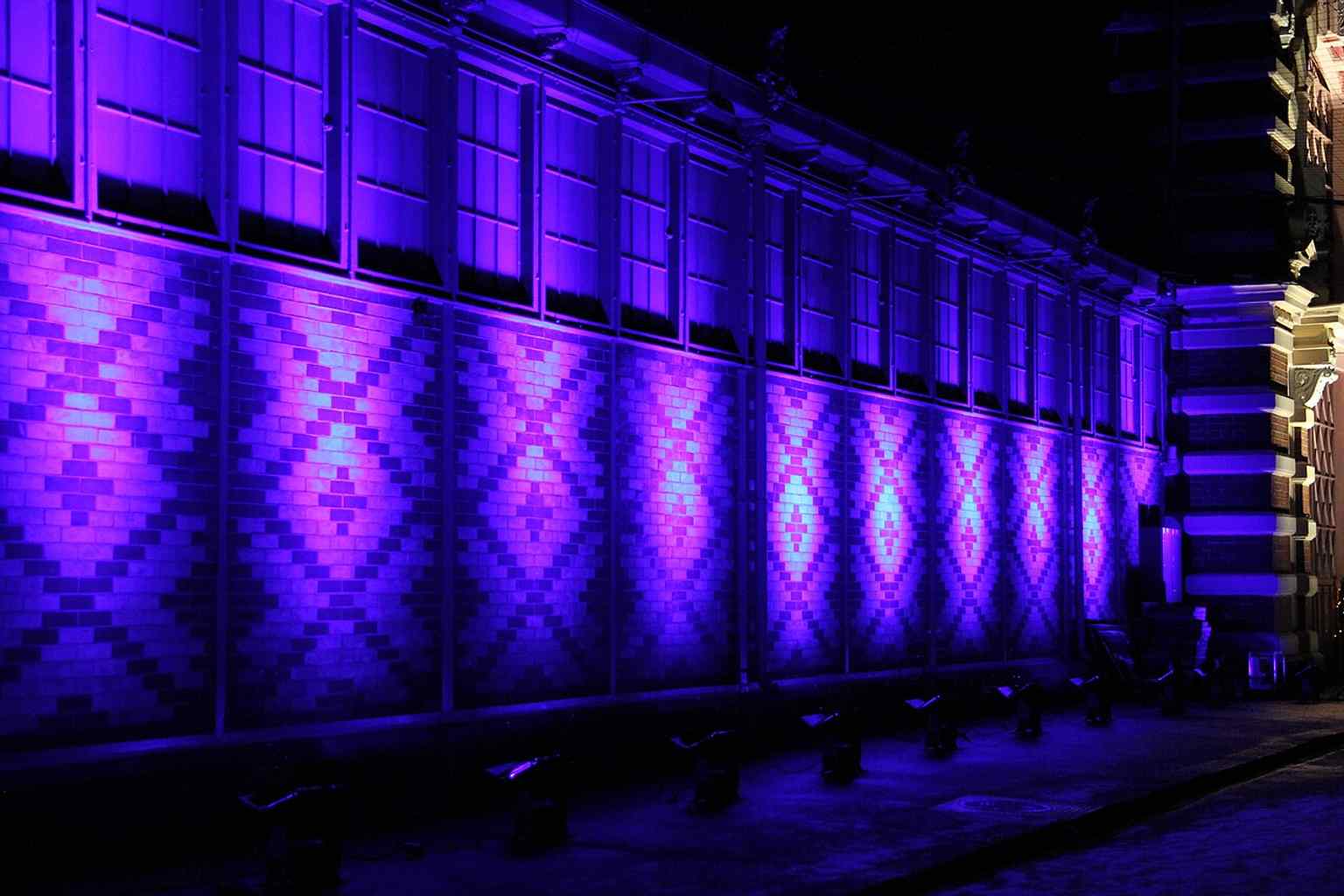
Night lighting brings out the hall’s façade, a building that has survived demolition threats and remained a beloved Helsinki institution.Photo: Htm, Wikimedia Commons, CC BY-SA 3.0. Cropped & resized. Look for a bronze mermaid-like woman standing on a rough stone pedestal in a circular red-granite fountain, with four sea lions stretching upward around her. Meet Manta...…Read moreShow less
Open dedicated page →Look for a bronze mermaid-like woman standing on a rough stone pedestal in a circular red-granite fountain, with four sea lions stretching upward around her.
Meet Manta... officially Havis Amanda, the beloved of the sea. Ville Vallgren sculpted her in Paris, cast her in bronze in nineteen oh six, and Helsinki set her here by Market Square in nineteen oh eight. In the contract, the subject was simple and grand: Helsinki rising from the sea. And that is exactly what she does. She stands just over two meters tall, naked, poised on her rock as if she has only just stepped out of the water and decided the city might be worth a look.
Every Vappu, students wash and cap her in a ritual called Mantan lakitus. That is the moment a sculpture stops behaving like a monument and starts acting like a citizen. One oversized white student cap, and suddenly the whole city is in on the joke, the ceremony, and the claim: this place belongs to the people who perform it.
The funny part is that this cheerful symbol began as a scandal. Vallgren, who had built his career in France and even became a French citizen, gave Helsinki a very Parisian figure: sinuous, sensual, art nouveau in style, meaning all flowing lines and elegant movement. He used two nineteen-year-old Parisian models, Marcelle Delquini and Léonie Tavier. He even shipped the work here in pieces from Le Havre on a steamship called Leo. Before the city chose this site, officials tested a wooden mock-up in several spots, including Erottaja. Market Square won because the open space suited her better than a street boxed in by tall buildings.
Then came the uproar. Lucina Hagman and the women of Naisasialiitto Unioni, the women’s rights association, condemned the statue as indecent. Some critics called her too French, too flirtatious, not nearly solemn enough to represent the nation. Vallgren stared at the fuss and basically replied: she is a mermaid leaving the sea... of course she is unclothed. Reasonable enough, though public morality rarely improves when invited to calm down.
And yet the city kept her. Better than that, the city adopted her. The basin beneath her, carved from polished red Balmoral granite from Vehmaa, gives her a proper stage, while the sea lions reaching upward add a bit of theatrical devotion. Vallgren likely studied living sea lions in a Paris park for those. If you want, check the before-and-after slider in the app; it’s a neat way to watch Manta stay herself while Helsinki rearranges its face around her.
Her survival has not been effortless. The bronze is only about five millimeters thick, and celebratory climbing damaged it often enough that the city carried out a major restoration between twenty twenty-three and twenty twenty-four. If you glance at the detail image on your screen, you can see how finely that restored surface still holds Vallgren’s touch.
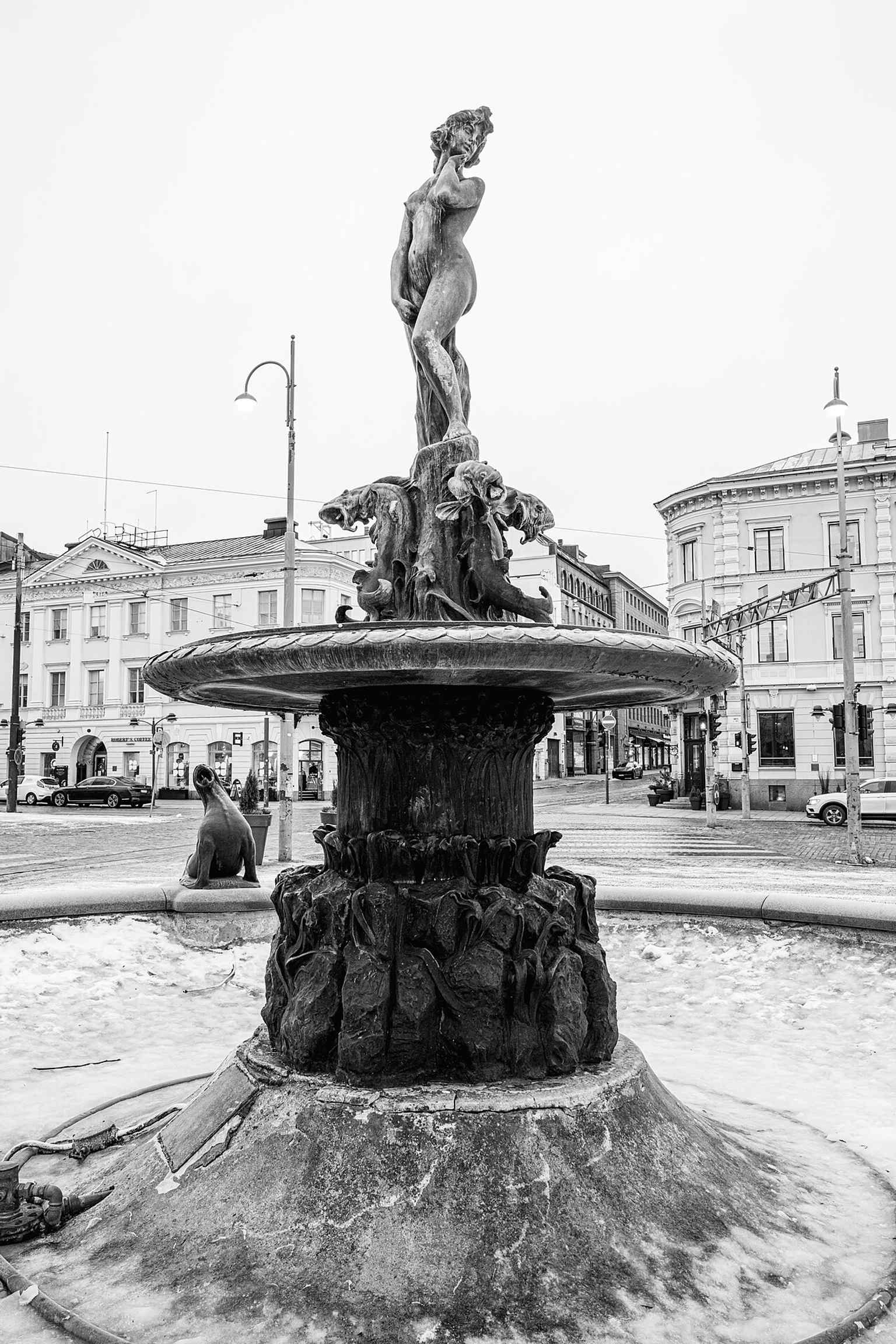
Winter close view of the fountain, showing the bronze figure and basin that were fully restored in 2023–2024.Photo: Sandun De Silva, Wikimedia Commons, CC BY-SA 4.0. Cropped & resized. So here she is: born from official commission, attacked in public, then claimed by ritual. Helsinki has a talent for that. From this rebellious little queen of the harbor, we’ll head toward the National Library, where the city’s arguments trade bronze drama for paper and ink. And fittingly enough, Manta is here all day, every day.
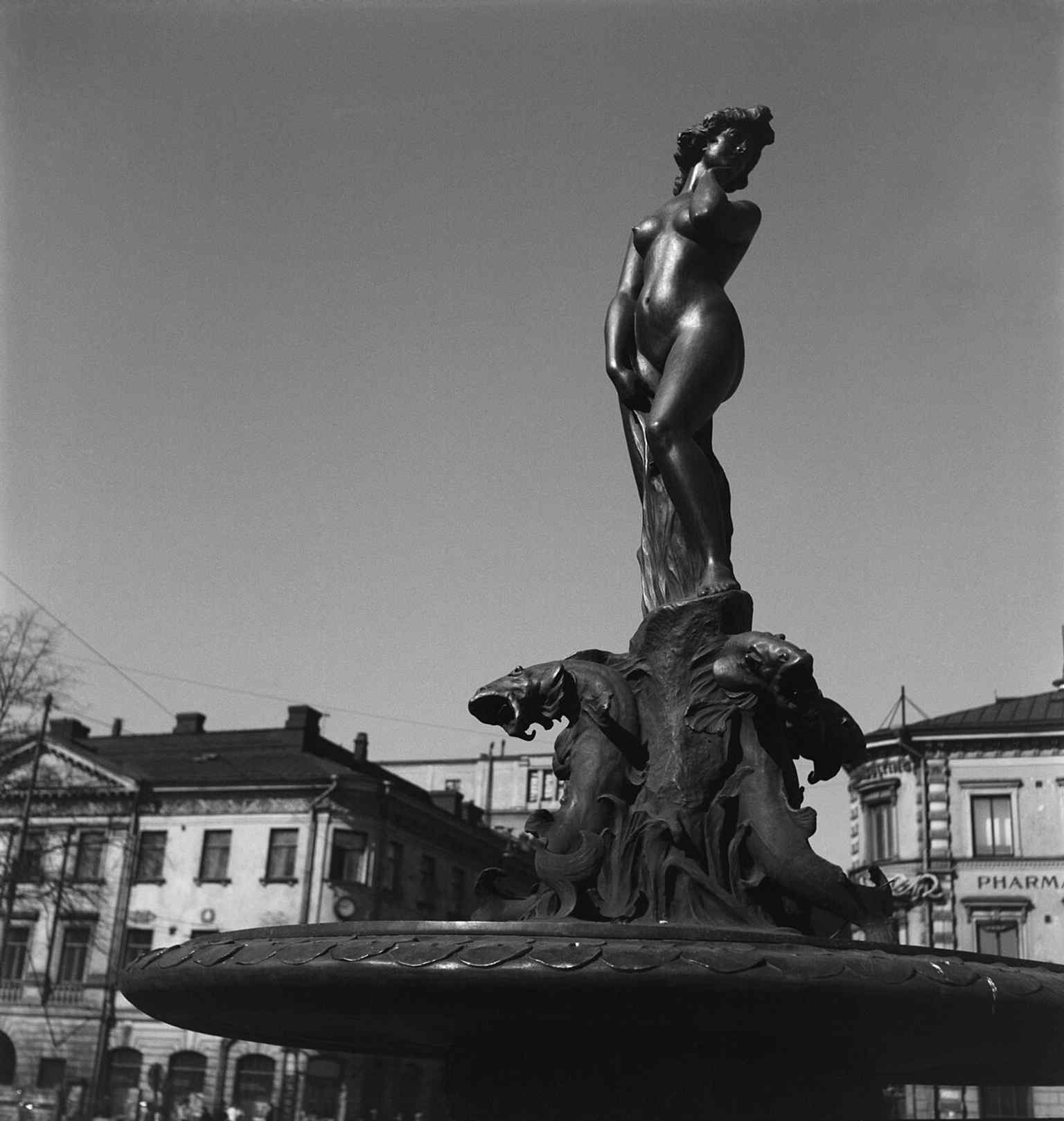
An early archival view of the fountain and mermaid figure at Market Square, reflecting the sculpture’s long public history.Photo: Archives of the Finnish Broadcasting Company Yle, Wikimedia Commons, Public domain. Cropped & resized. 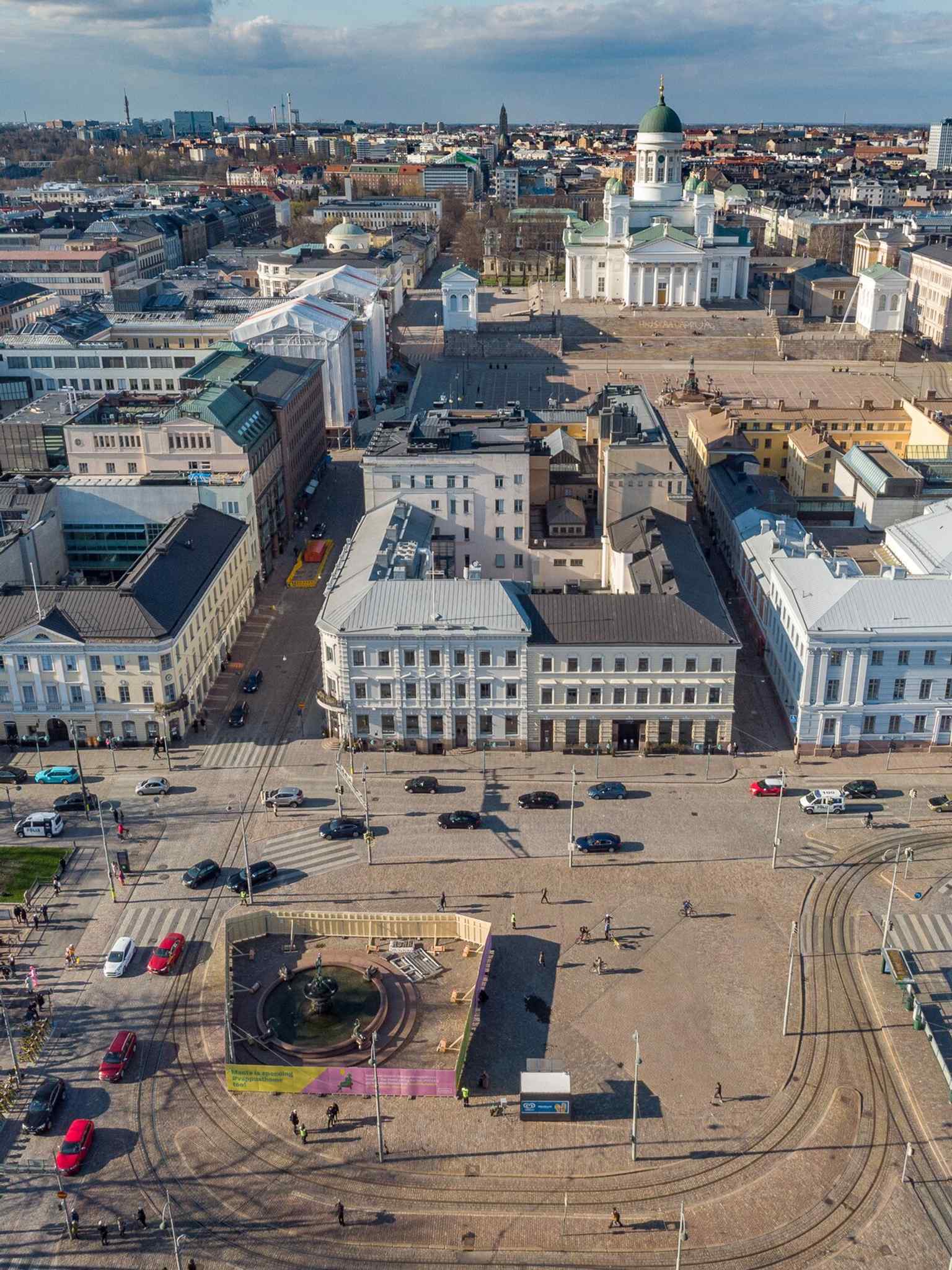
Aerial view of Havis Amanda and Senate Square on May Day eve 2020, when the statue’s Vappu tradition is usually the city’s focal point.Photo: Joneikifi, Wikimedia Commons, CC BY-SA 4.0. Cropped & resized. 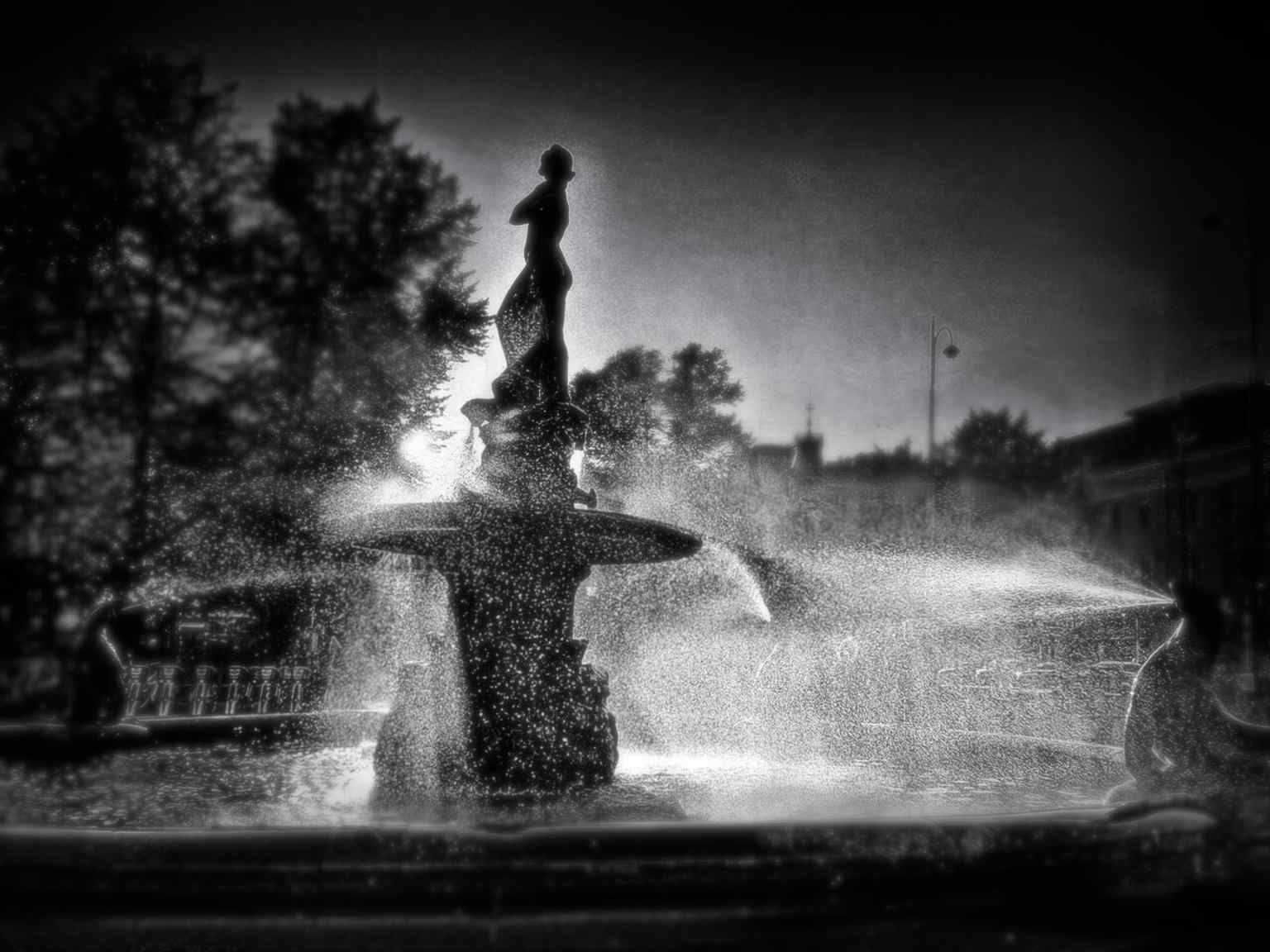
Havis Amanda’s square in downtown Helsinki, the urban setting that helped make the sculpture a city symbol.Photo: Marit Henriksson, Wikimedia Commons, CC BY-SA 4.0. Cropped & resized. On your left, the National Library stands out with its pale yellow neoclassical façade, broad symmetrical form, and the green dome rising above the roofline. It looks composed,…Read moreShow less
Open dedicated page →On your left, the National Library stands out with its pale yellow neoclassical façade, broad symmetrical form, and the green dome rising above the roofline.
It looks composed, even inevitable... but this building began as an answer to loss. Finland’s oldest and largest scientific library traces its roots back to Turku, where the academy library started in sixteen forty with about twenty books. By the early nineteenth century it held around thirty thousand volumes. Then the Great Fire of Turku, in eighteen twenty-seven, nearly erased it. Only about eight hundred books survived, and those survived for one absurdly practical reason: people had borrowed them.
That little escaped group still matters. It is the only direct link to the old Academy of Turku library. So the nation’s memory, at one crucial moment, depended on overdue books. Not every heroic rescue involves trumpets.
When the library moved to Helsinki, Fredrik Wilhelm Pipping took on the job of rebuilding the collection. His indispensable ally was Matti Pohto, a self-taught collector who traveled the country hunting down old Finnish books. Pohto’s work helped restore a printed past that fire had almost wiped out. That flips the usual picture of a grand national institution, doesn’t it? Behind the columns and dome, a lot of this story comes down to one determined librarian and one relentless book finder.
The building you see took shape under the same imperial vision that gave this district its calm order. Tsar Nicholas the First chose the most monumental design, but the real obsession was not grandeur. It was fire safety. The library stood on its own plot, surrounded by trees, and Engel designed the halls with brick vaults to resist flames. So this elegant landmark is also, in essence, a very sophisticated fireproof box.
If you glance at the image on your screen, the interior dome shows how ceremonial the reading rooms became, almost like a civic chapel for scholarship. And the Rotunda, added in the early nineteen hundreds with a steel frame and reinforced concrete, reveals the other side of the story: storage, expansion, logistics.
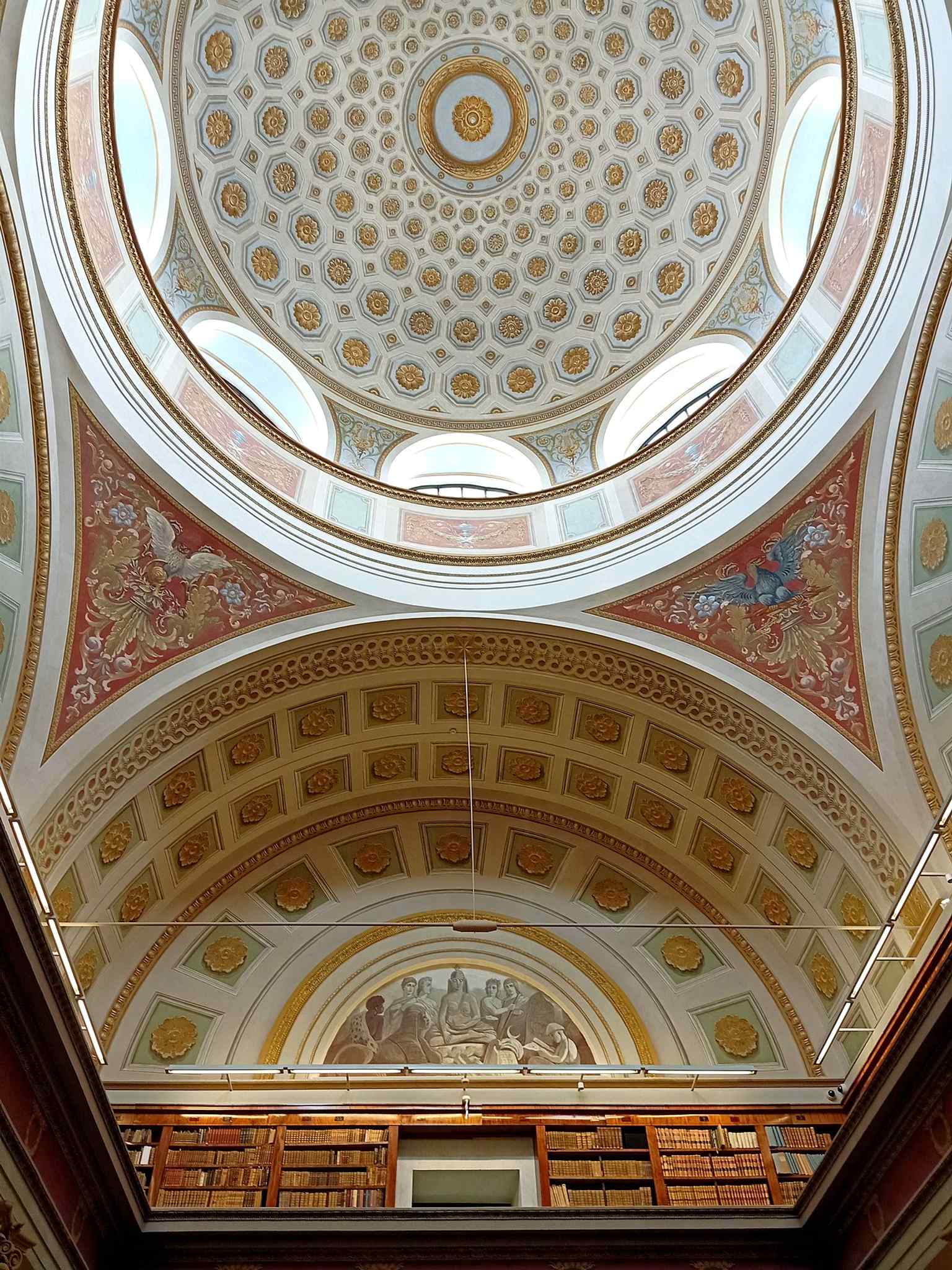
An upward view into the dome, emphasizing the building’s monumental cupola and the architectural drama of the central hall.Photo: Suyash Dwivedi, Wikimedia Commons, CC BY-SA 4.0. Cropped & resized. Today, this place stores memory at a scale most people never notice. The library preserves nearly everything published in Finland, plus sound recordings, images, and selected online material under legal deposit law. By twenty twenty-one, it held around three million books and another three million publications, and it had digitized about two point three million pages in a single year. Its online service carried more than twenty-one million pages. But the real local detail is even stranger: since two thousand and six, the library has been harvesting Finnish websites into a web archive. Not just books on shelves, then, but vanished homepages, old news pages, pieces of the internet most of us assumed would simply evaporate.
So this is not only a library. It is the country’s deep storage system, where printed paper turns into searchable afterlife. Out here, beside the university and across from the cathedral approach, Helsinki lines up knowledge, belief, and public power in one remarkably tidy composition. In about two minutes, head toward Helsinki Cathedral, where that alignment becomes impossible to miss.
If you want to step inside later, the main building is generally open on weekdays from nine to six, and closed on Saturdays and Sundays.
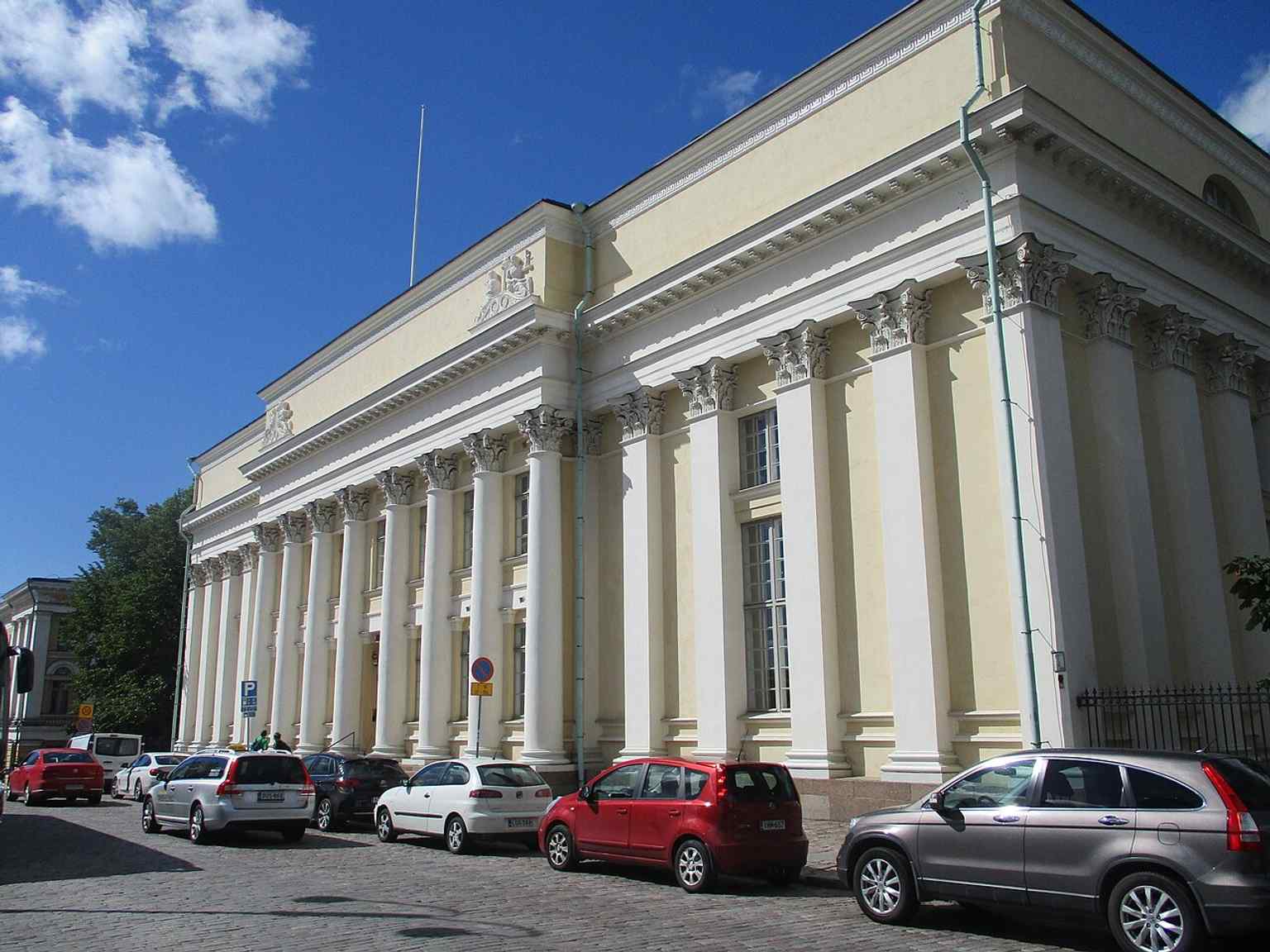
The grand Helsinki street façade of the National Library, the historic main building beside Senate Square and the University of Helsinki.Photo: Mikkoau, Wikimedia Commons, CC BY-SA 4.0. Cropped & resized. 
The Unioninkatu entrance, directly across from Helsinki Cathedral — exactly where visitors enter the National Library complex.Photo: HartOve, Wikimedia Commons, CC BY-SA 4.0. Cropped & resized. 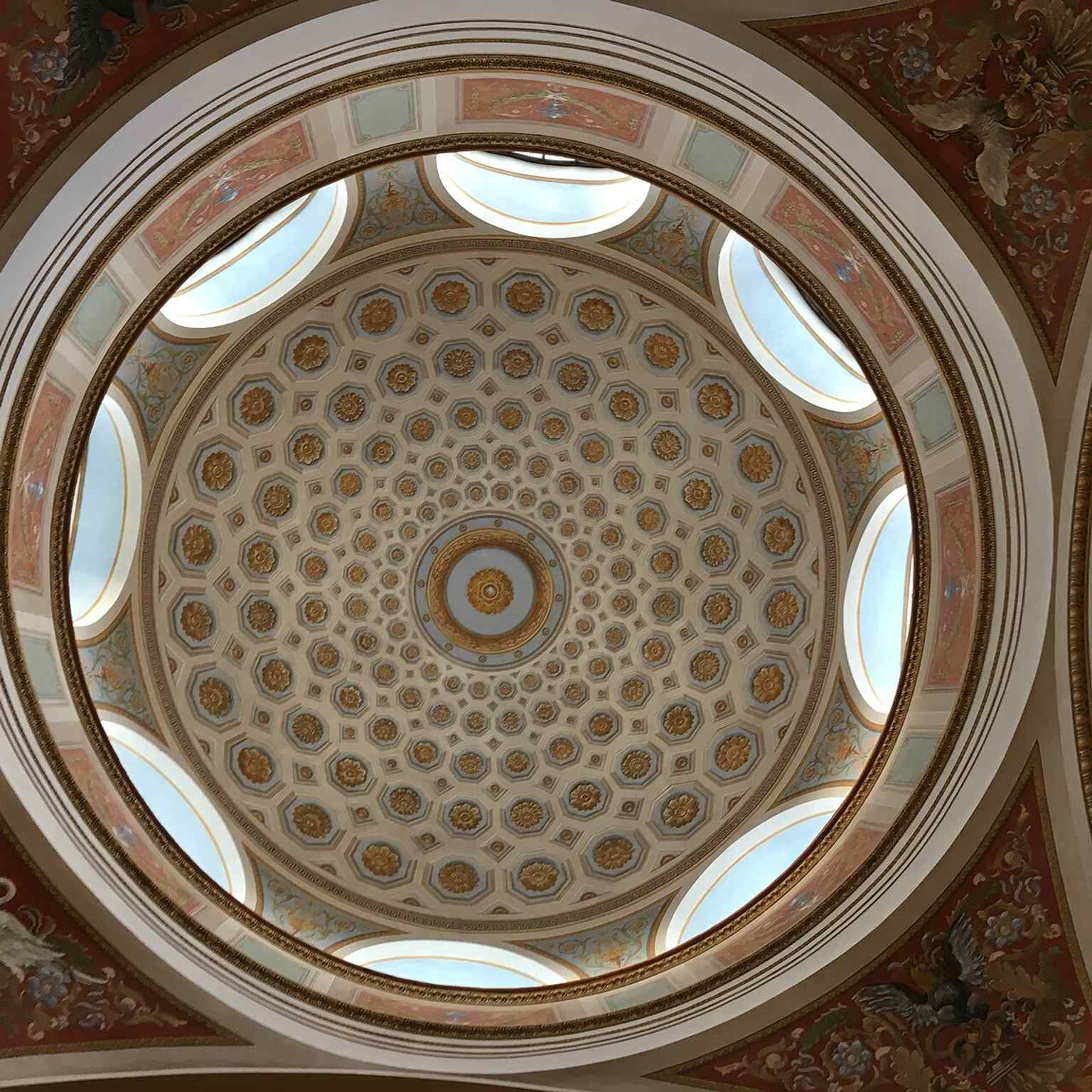
The library’s iconic green dome, a symbol of the Engel-designed building completed in 1840.Photo: Eteil, Wikimedia Commons, CC BY-SA 4.0. Cropped & resized. 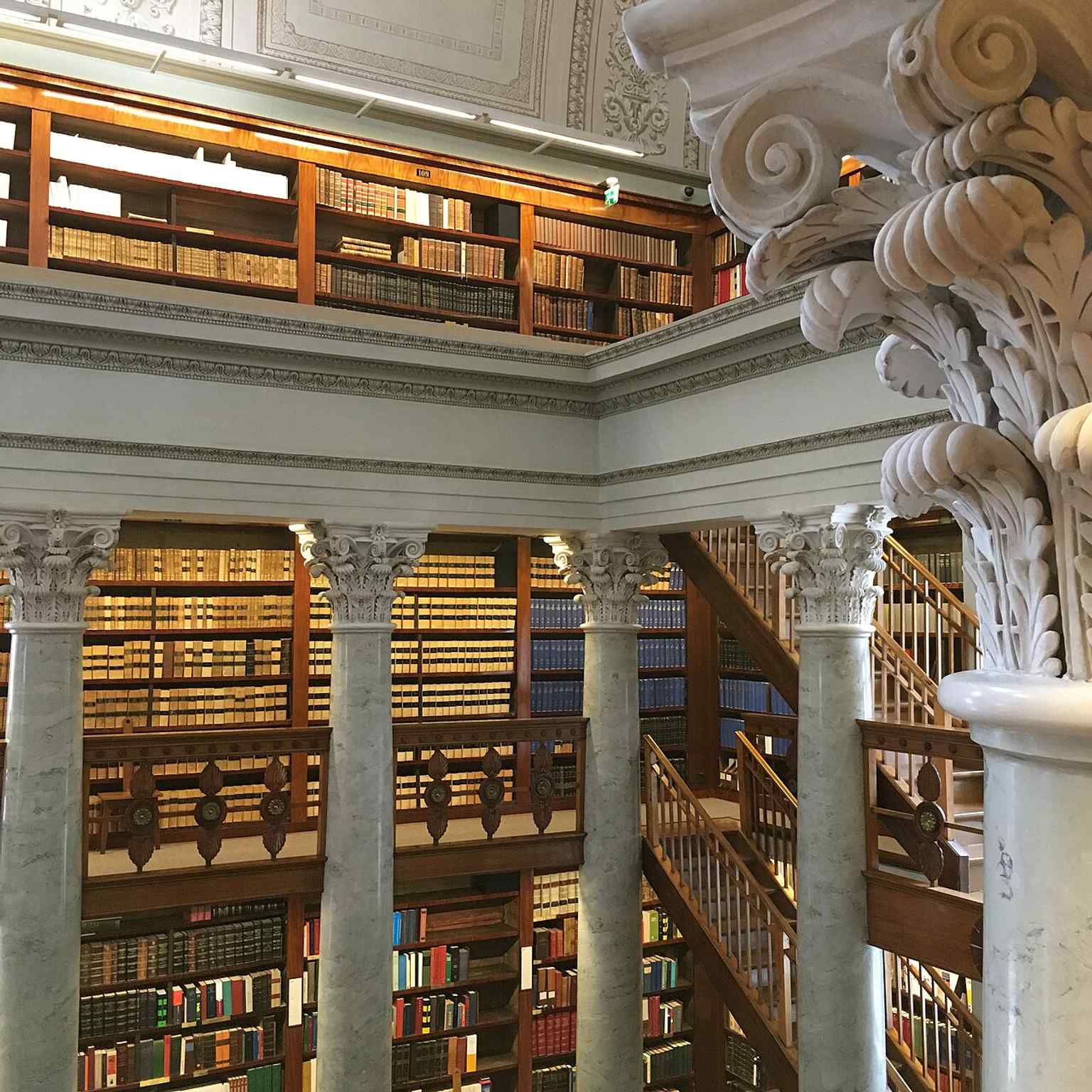
Rows of books and columns inside the library, echoing the institution’s vast collections and monumental interior design.Photo: Eteil, Wikimedia Commons, CC BY-SA 4.0. Cropped & resized. 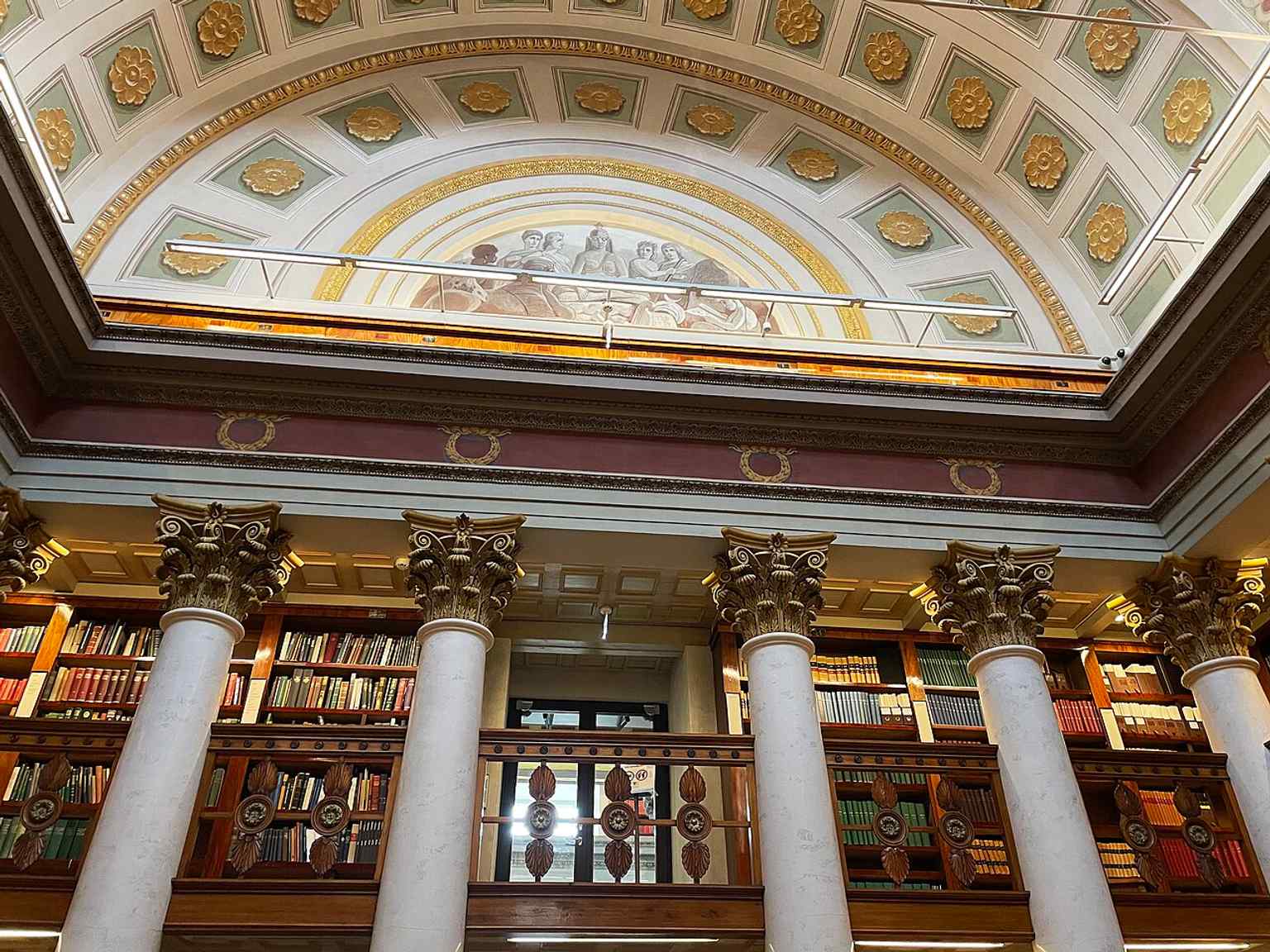
The Rotunda interior with shelves and wall decoration, part of the palonkestävä storage expansion made for the growing collections.Photo: Vikebe, Wikimedia Commons, CC0. Cropped & resized. 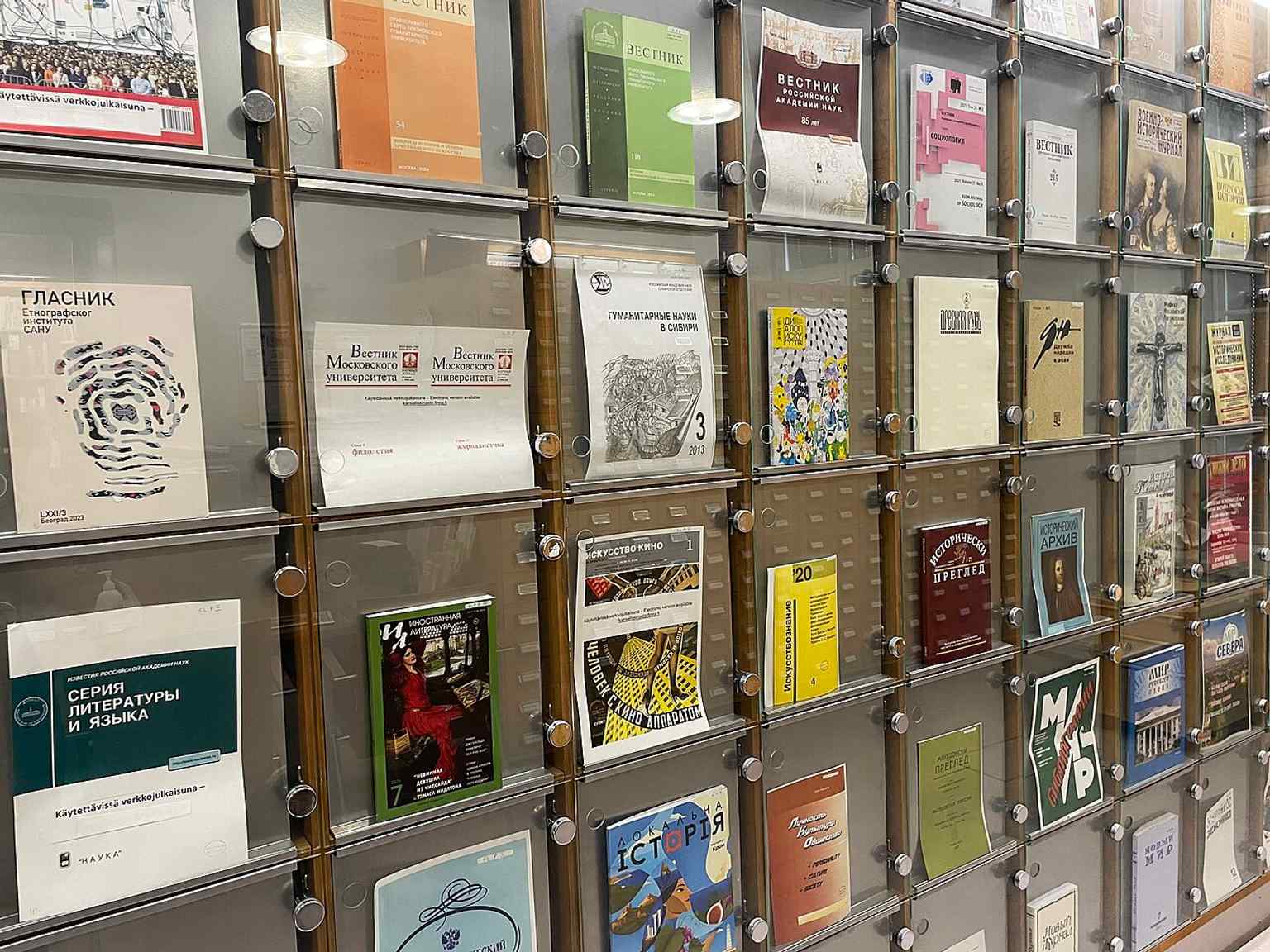
The Slavic department basement stacks, a reminder that the National Library also holds specialist collections and hidden storage areas.Photo: Vikebe, Wikimedia Commons, CC0. Cropped & resized. 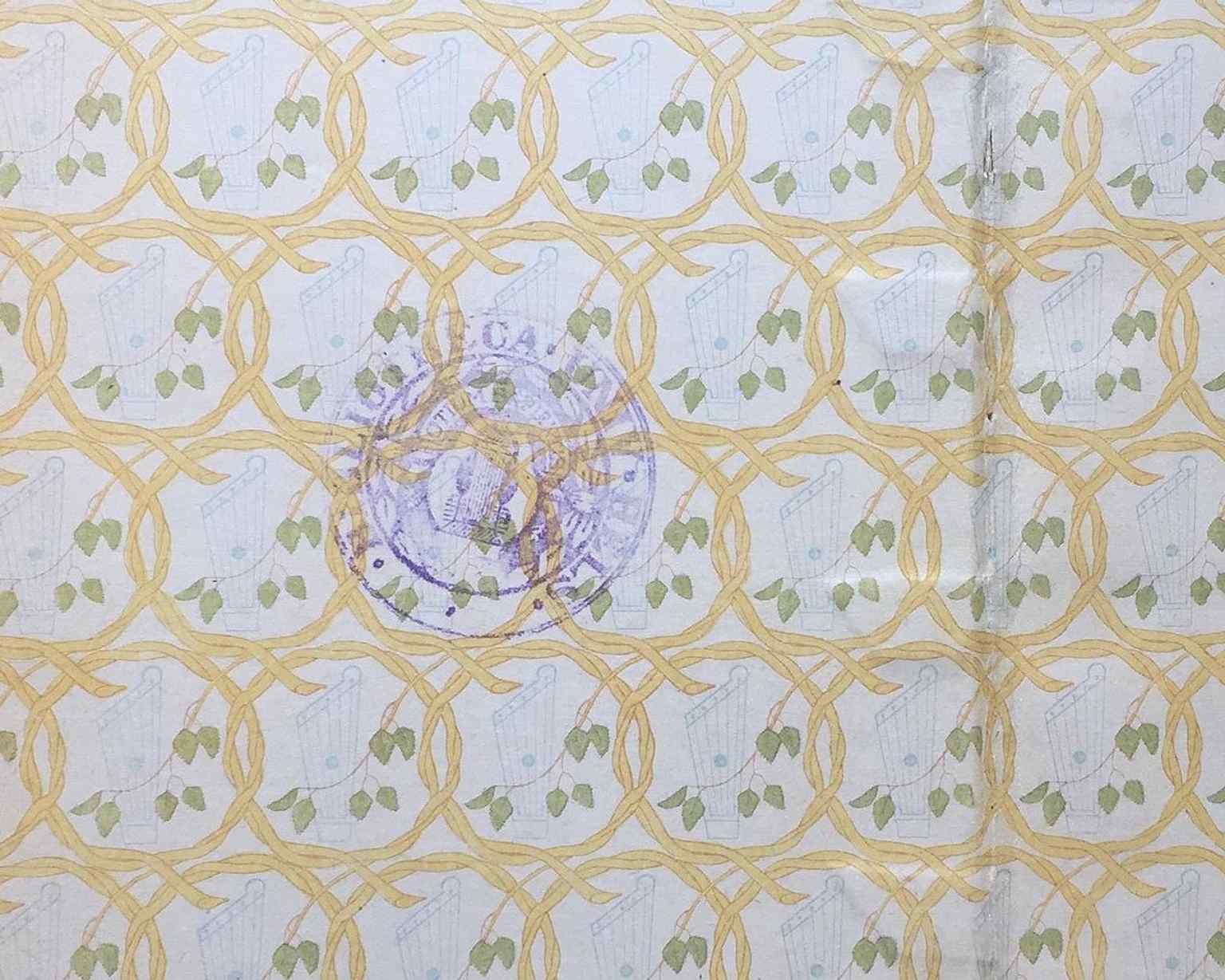
A rare book in the reading room, showing the library stamp and a kantele motif from Finland’s literary heritage.Photo: Alarichall, Wikimedia Commons, CC BY-SA 4.0. Cropped & resized. 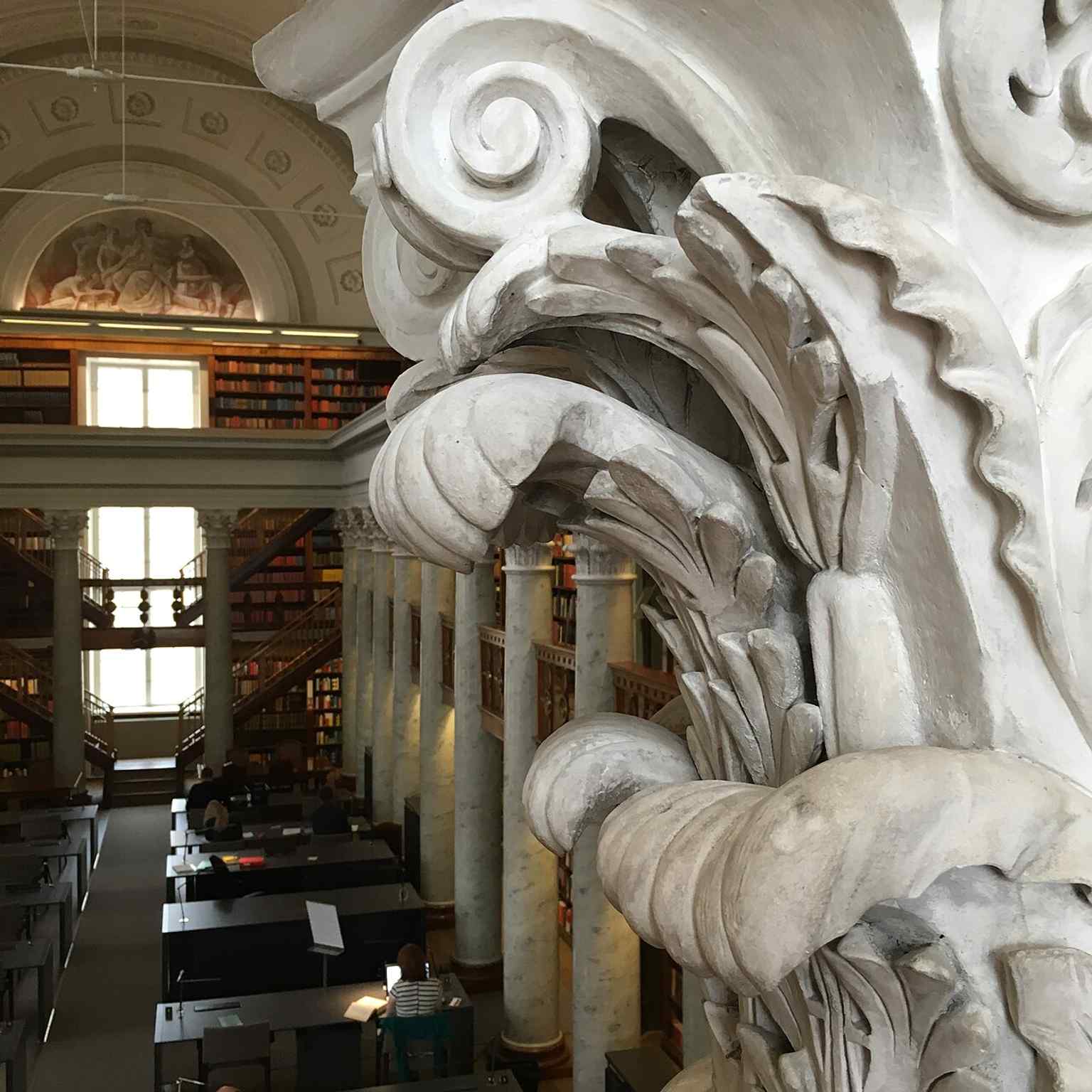
An interior detail from the historic building, useful for highlighting the preserved decorative craftsmanship of the renovated library.Photo: Eteil, Wikimedia Commons, CC BY-SA 4.0. Cropped & resized. 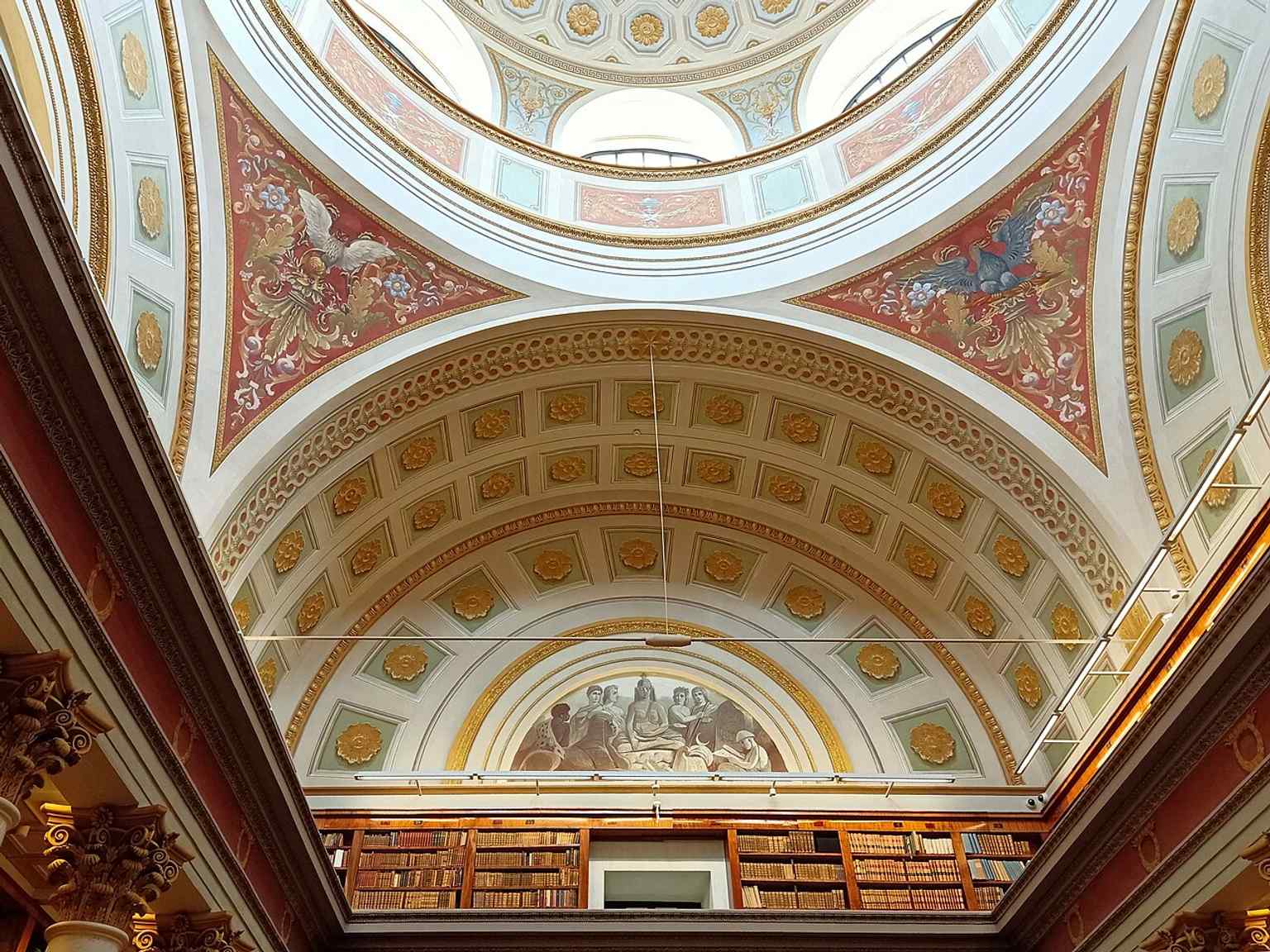
Another dome interior angle that shows the scale of the cupola and the layered restoration of the historic space.Photo: Suyash Dwivedi, Wikimedia Commons, CC BY-SA 4.0. Cropped & resized. On your right, Helsinki Cathedral rises as a pale neoclassical cross of painted masonry, with a tall green dome, four smaller corner towers, and a ring of apostles standing along…Read moreShow less
Open dedicated page →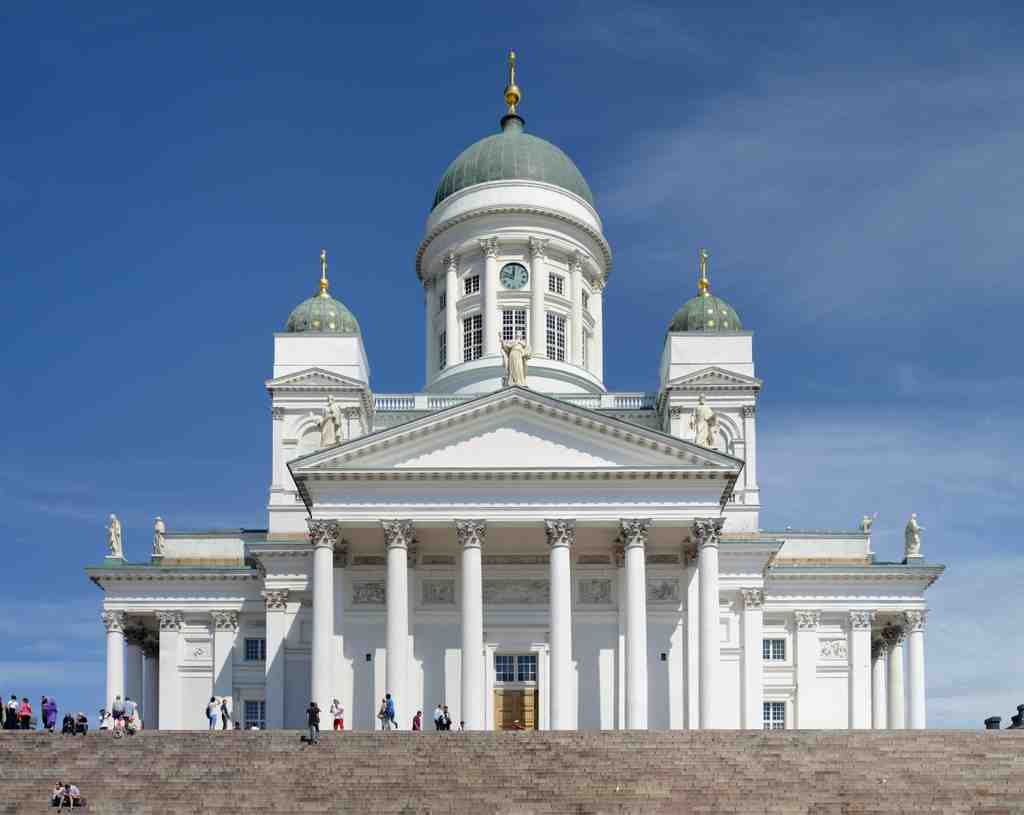
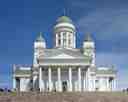
Helsinki CathedralPhoto: Alvesgaspar, Wikimedia Commons, CC BY-SA 3.0. Cropped & resized. On your right, Helsinki Cathedral rises as a pale neoclassical cross of painted masonry, with a tall green dome, four smaller corner towers, and a ring of apostles standing along the roofline.
This is the moment central Helsinki has been aiming at all along. Carl Ludvig Engel, the architect who gave this city center its commanding, coherent shape, spent years refining this church so it could rule the square from every direction. He started drawing it in eighteen eighteen, after Emperor Alexander the First made Helsinki the capital in eighteen twelve. At that point, the city was tiny, only about three thousand five hundred people, and still scarred by the fire of eighteen oh eight. So this hilltop church was not just a place for worship. It was a statement: here is the new capital, and here is the order it means to project.
The church looks white, but it actually wears three shades of very pale gray... a neat bit of visual diplomacy. From below, it reads as pure light and stone. Engel chose a Greek cross plan, meaning all four arms are equal, so the building stays balanced from every side. That mattered here, because this church was designed to be seen like a public monument, not tucked away as a neighborhood parish church.
And yet certainty, as ever, needed politics and money. Builders laid the foundation stone in eighteen thirty, and the work dragged on for more than twenty years. Tsar Nicholas the First financed the wider rebuilding with a loan of two million six hundred thousand rubles; this cathedral likely accounted for around one million rubles of that, roughly the scale of many tens of millions of euros today. When the church finally opened in eighteen fifty-two, people called it Nikolai Church, honoring the tsar and Saint Nicholas.
What you see is also not quite Engel’s pure version. He died in eighteen forty, and his assistant Ernst Bernhard Lohrmann finished the job. Lohrmann added the four smaller towers, plus the twelve zinc apostles on the roof, partly because the central dome and long body looked visually awkward without them. If you want a clearer look, check image two in the app; the rooftop figures make much more sense from above.
Engel also lost an argument right in front of you. A guardhouse once stood between the church and the square, and he wanted it kept. The authorities tore it down in eighteen thirty-nine and replaced it with the broad ceremonial staircase. If you like, have a quick look at the before-and-after image in the app; it shows how the space opened up and turned this church into the square’s unquestioned focal point.
That shift matters. After Finnish independence in nineteen seventeen, the Russian name felt wrong. The city renamed it the Great Church, and in nineteen fifty-nine it became Helsinki Cathedral. So this building began as an imperial emblem and ended up absorbed into Finnish identity, all while continuing to host state services. Helsinki does enjoy recycling power into public ritual.
Before we move on, take in the height, the stairs, the dome, the figures watching from the roofline, and ask yourself: does this feel more like a church, a capital marker, or both at once? Then let your gaze widen beyond the cathedral, because the real force of this place comes from the whole ensemble around it. We’ll head next into Senate Square.
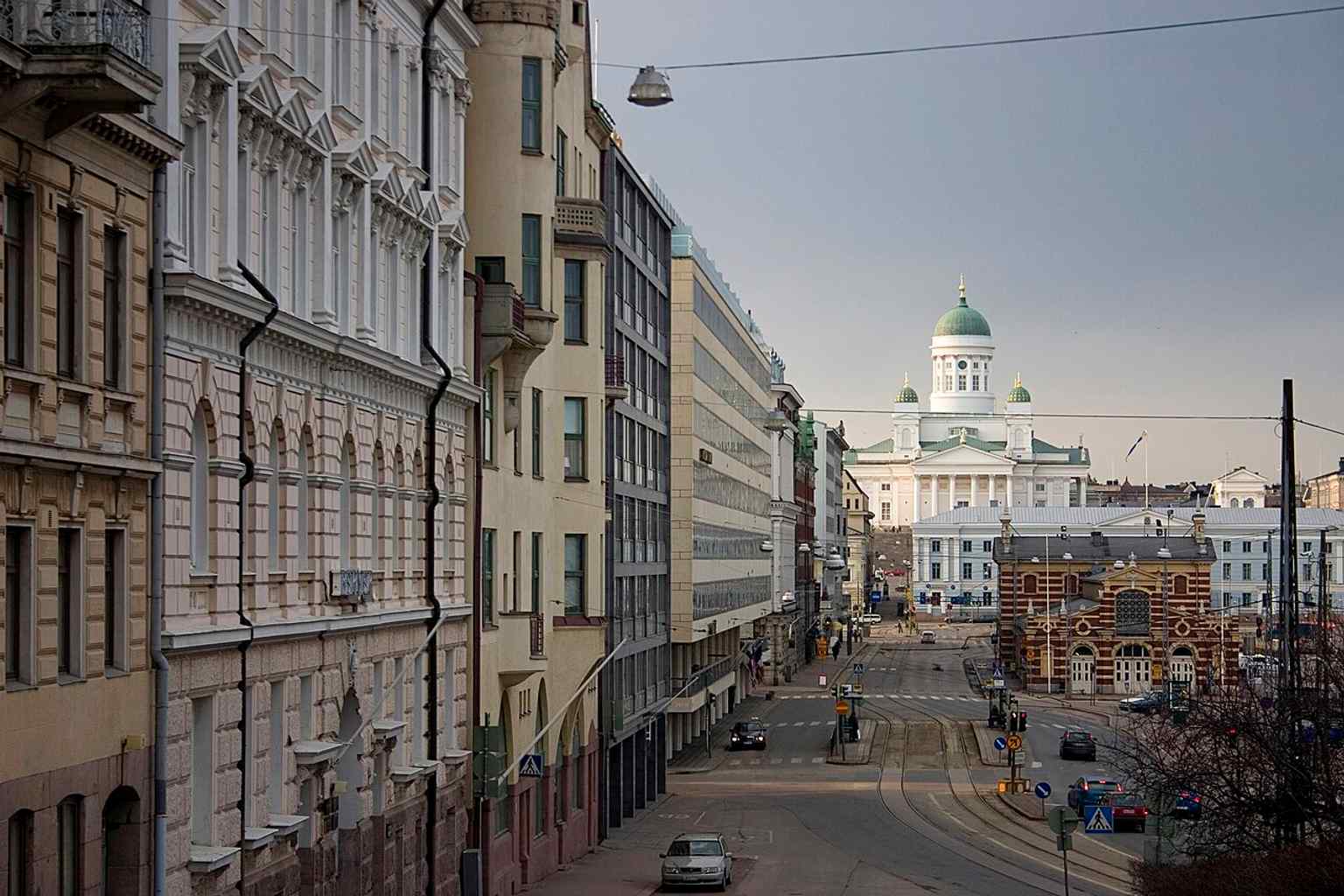
Helsinki Cathedral seen from the harbour side, with the Old Market Hall in the foreground and the church rising above the city skyline.Photo: Oula Lehtinen, Wikimedia Commons, CC BY-SA 3.0. Cropped & resized. 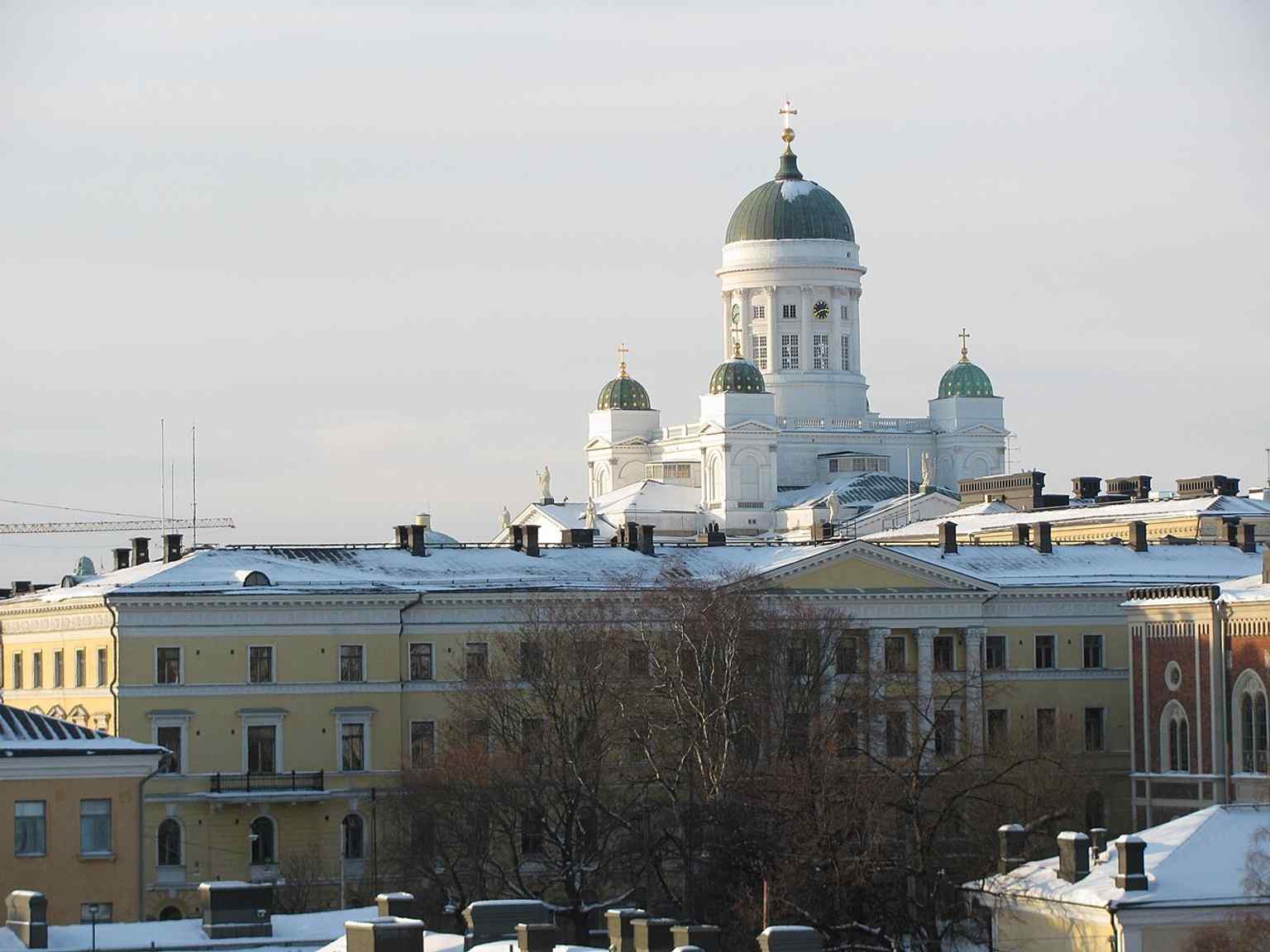
A crisp modern exterior view of the cathedral on its Senate Square perch, capturing the monumentality that made it a national symbol.Photo: Ranerana, Wikimedia Commons, CC BY-SA 4.0. Cropped & resized. 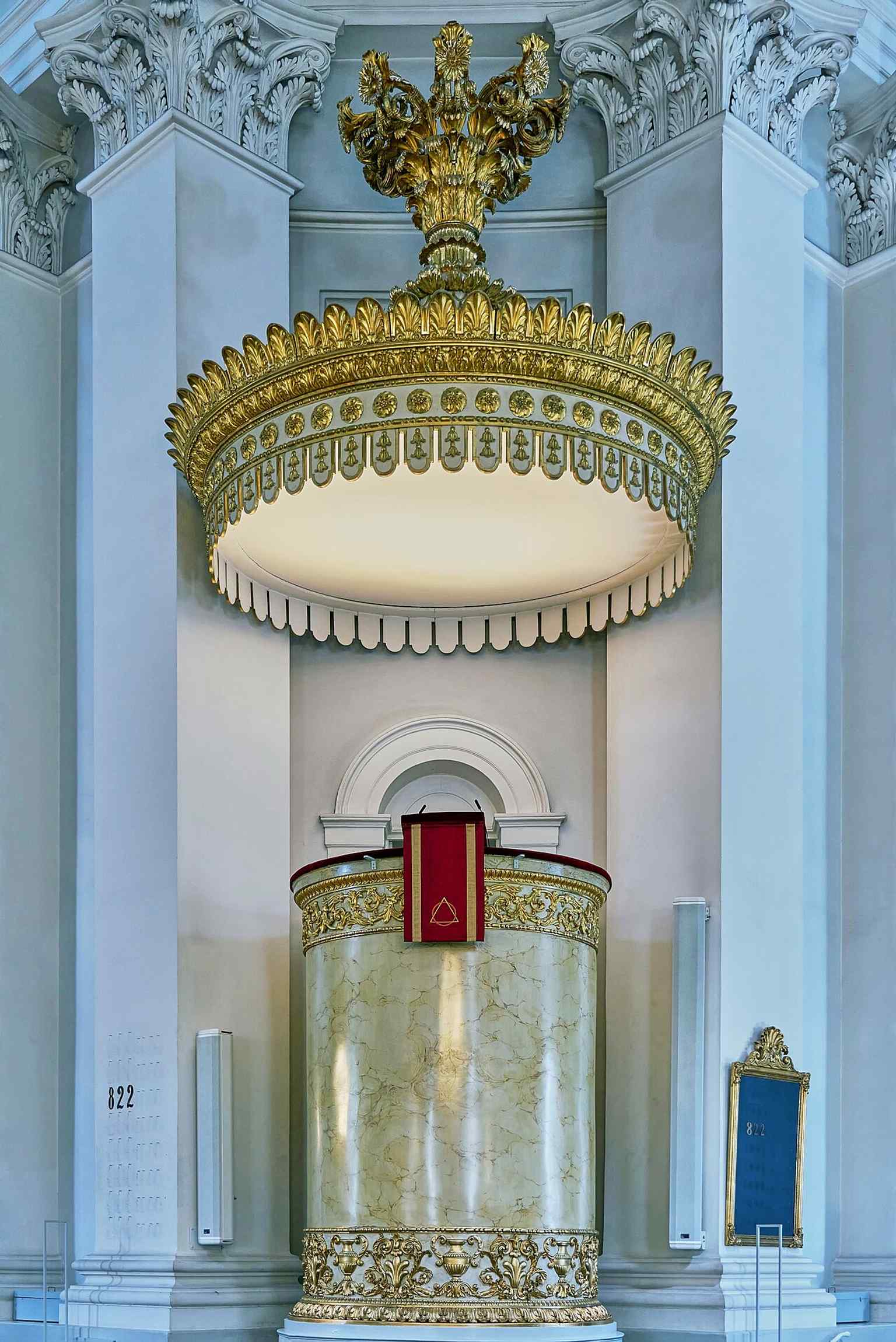
The pulpit and sculptural interior details, reflecting the cathedral’s unusually restrained neoclassical church space.Photo: Virtual-Pano, Wikimedia Commons, CC BY-SA 4.0. Cropped & resized. 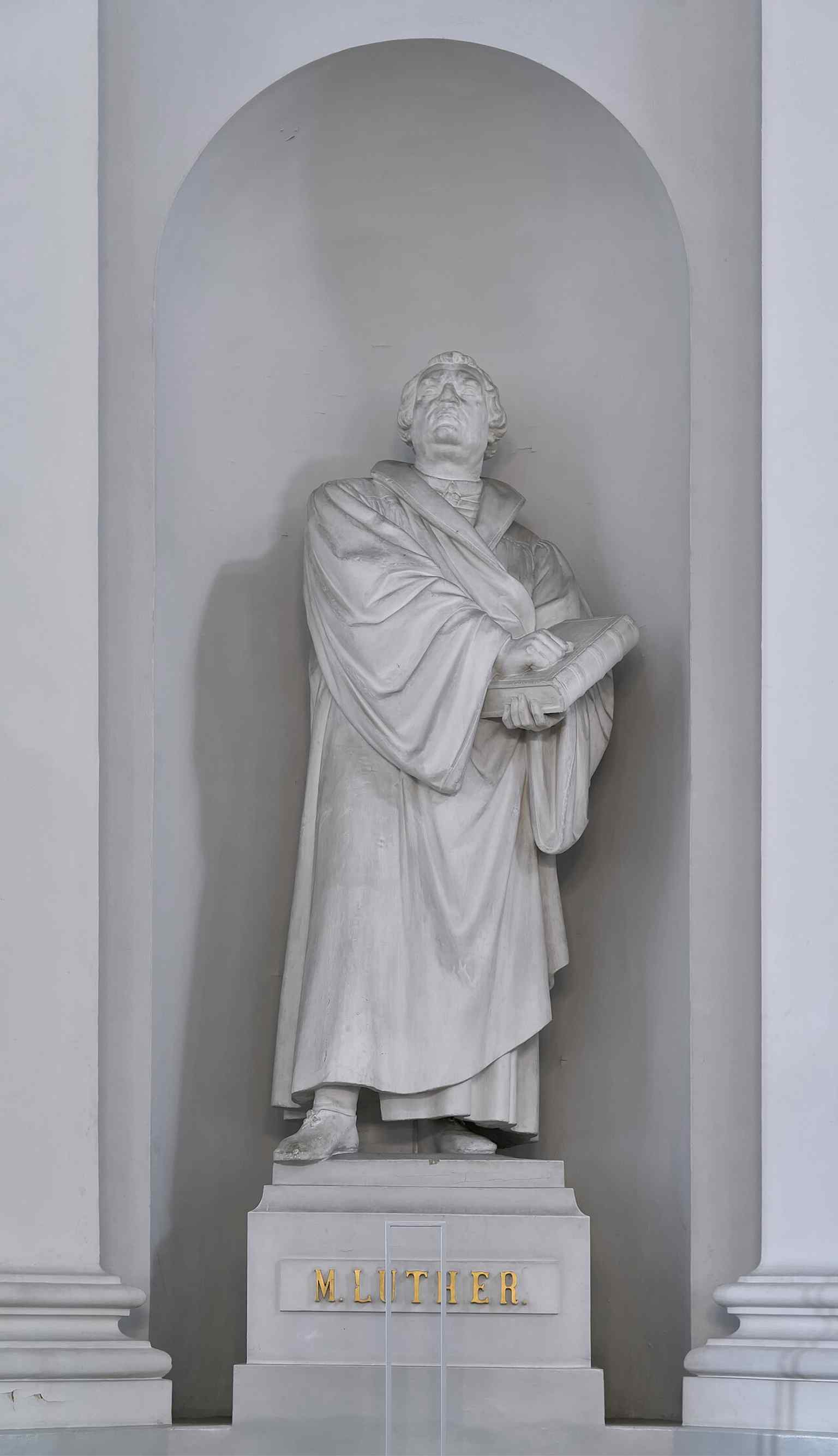
Martin Luther’s statue inside the cathedral, part of the trio of reformers that stand in the otherwise austere interior.Photo: Virtual-Pano, Wikimedia Commons, CC BY-SA 4.0. Cropped & resized. 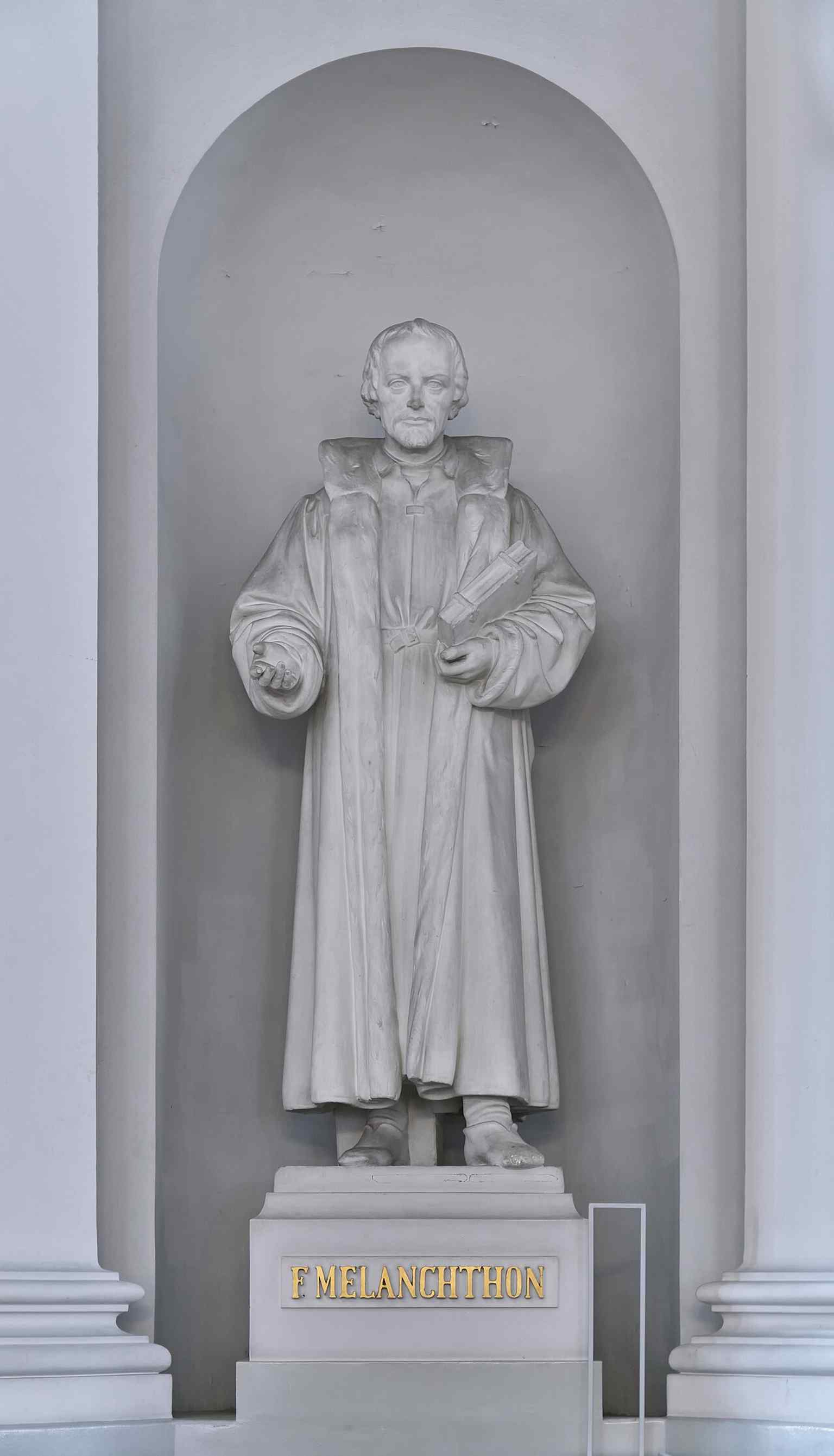
Philipp Melanchthon’s statue inside the cathedral, one of the few decorative focal points in the bright, minimal nave.Photo: Virtual-Pano, Wikimedia Commons, CC BY-SA 4.0. Cropped & resized. 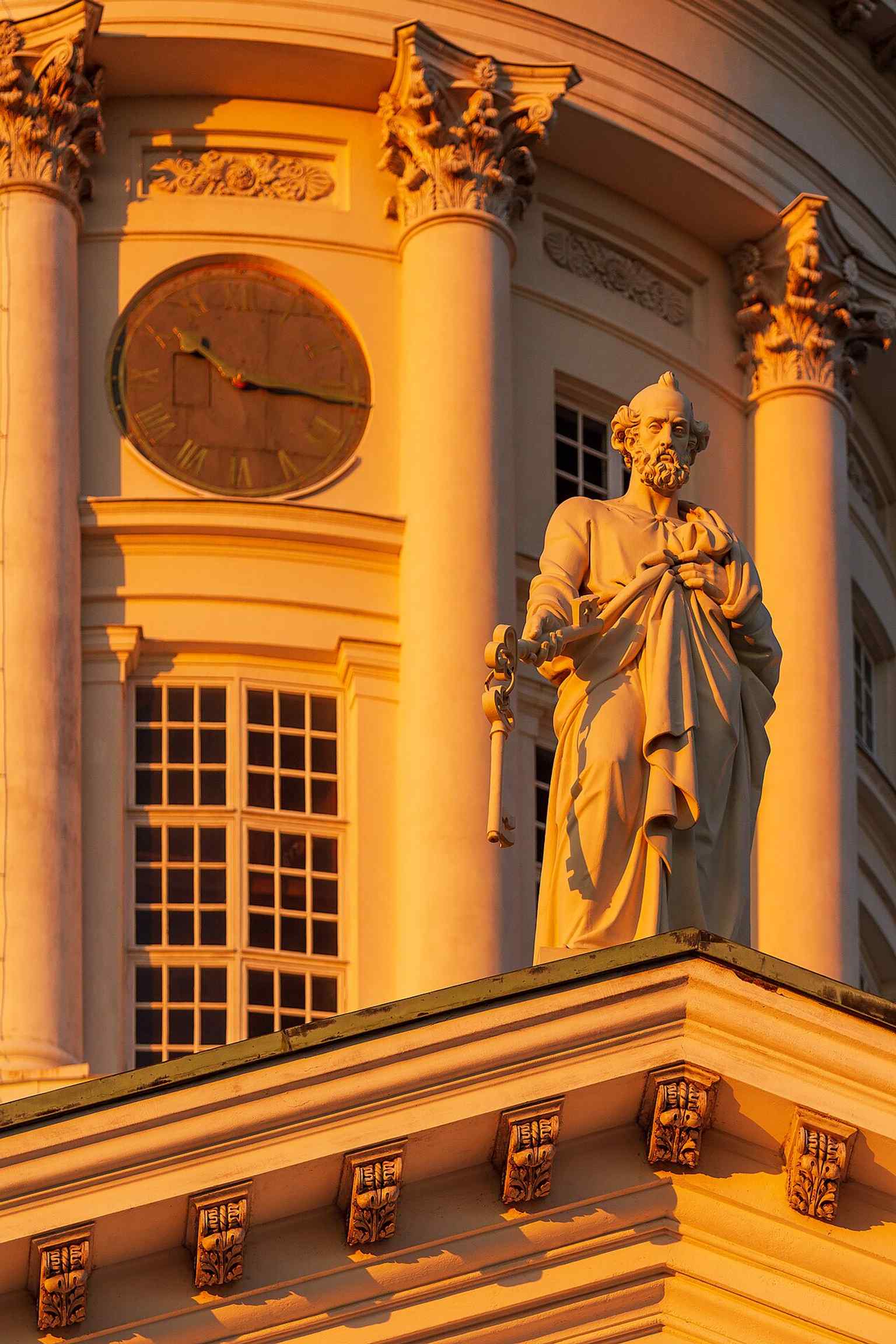
An apostle statue on the roof—part of the famous set of twelve zinc figures added to balance the cathedral’s long nave and central tower.Photo: Ximonic (Simo Räsänen), Wikimedia Commons, CC BY-SA 4.0. Cropped & resized. On your right, Senate Square opens as a broad pale-stone rectangle, framed by cream neoclassical facades and pinned at the center by the dark bronze statue of Alexander the…Read moreShow less
Open dedicated page →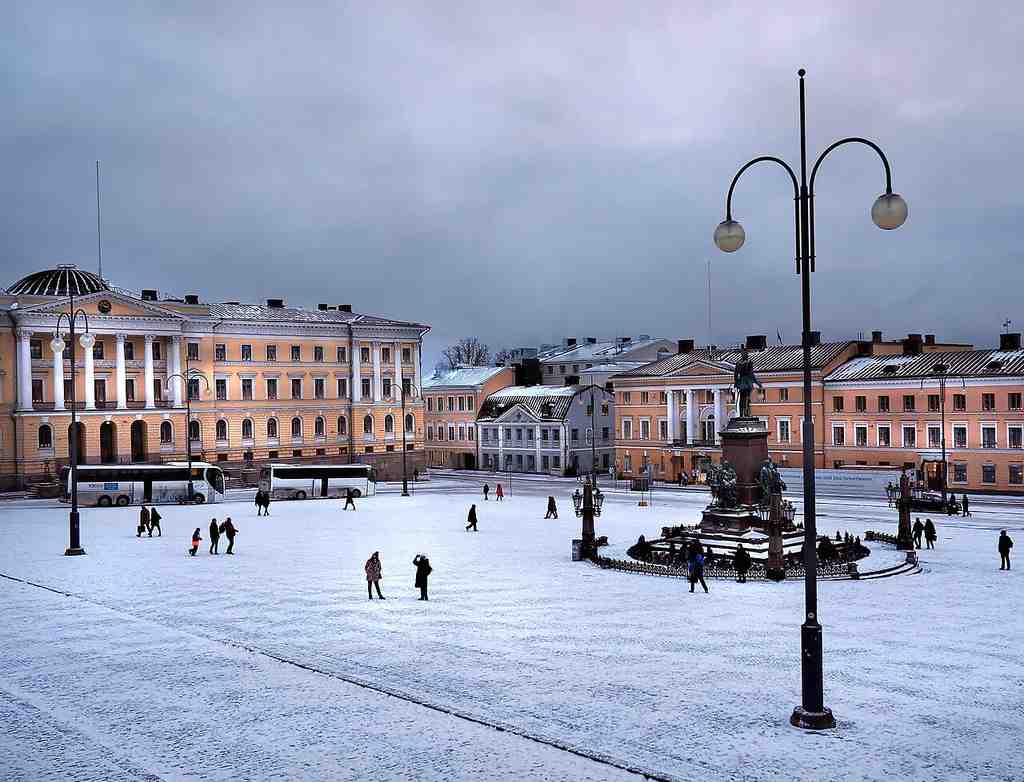
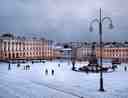
Senate SquarePhoto: Marit Henriksson, Wikimedia Commons, CC BY-SA 4.0. Cropped & resized. On your right, Senate Square opens as a broad pale-stone rectangle, framed by cream neoclassical facades and pinned at the center by the dark bronze statue of Alexander the Second.
This is Helsinki’s great piece of civic theater... a place arranged so carefully that separate buildings read like one composed scene. On the east side stands the Government Palace, where state power sits. On the west, the University answers it with a matching façade, because learning, apparently, deserved equal billing. And rising to the north, the Cathedral crowns the whole thing. Church, government, university, and the public gathered in one open room. Very efficient. Very imperial.
But this polished order replaced something older and far messier. Since sixteen forty, this area had been the town center, then called the Suurtori, the Great Square. It held the town hall, a school, a guardhouse, merchant houses, and even a churchyard. In fact, three different churches stood on or near this ground over time. Fire took one in sixteen fifty-four, war finished off another chapter in seventeen thirteen, and the wooden Ulrika Eleonora Church later stood here until the city remade the site.
When Russia named Helsinki the capital in eighteen twelve, Johan Albrecht Ehrenström drew up a new plan. He wanted a capital that could present itself with a straight face to Europe. Then Carl Ludvig Engel gave that plan its architecture: symmetry, pale stone, measured proportions, and lots of open space. If you glance at your screen, Engel’s watercolor shows the older square before this imperial makeover swept in.
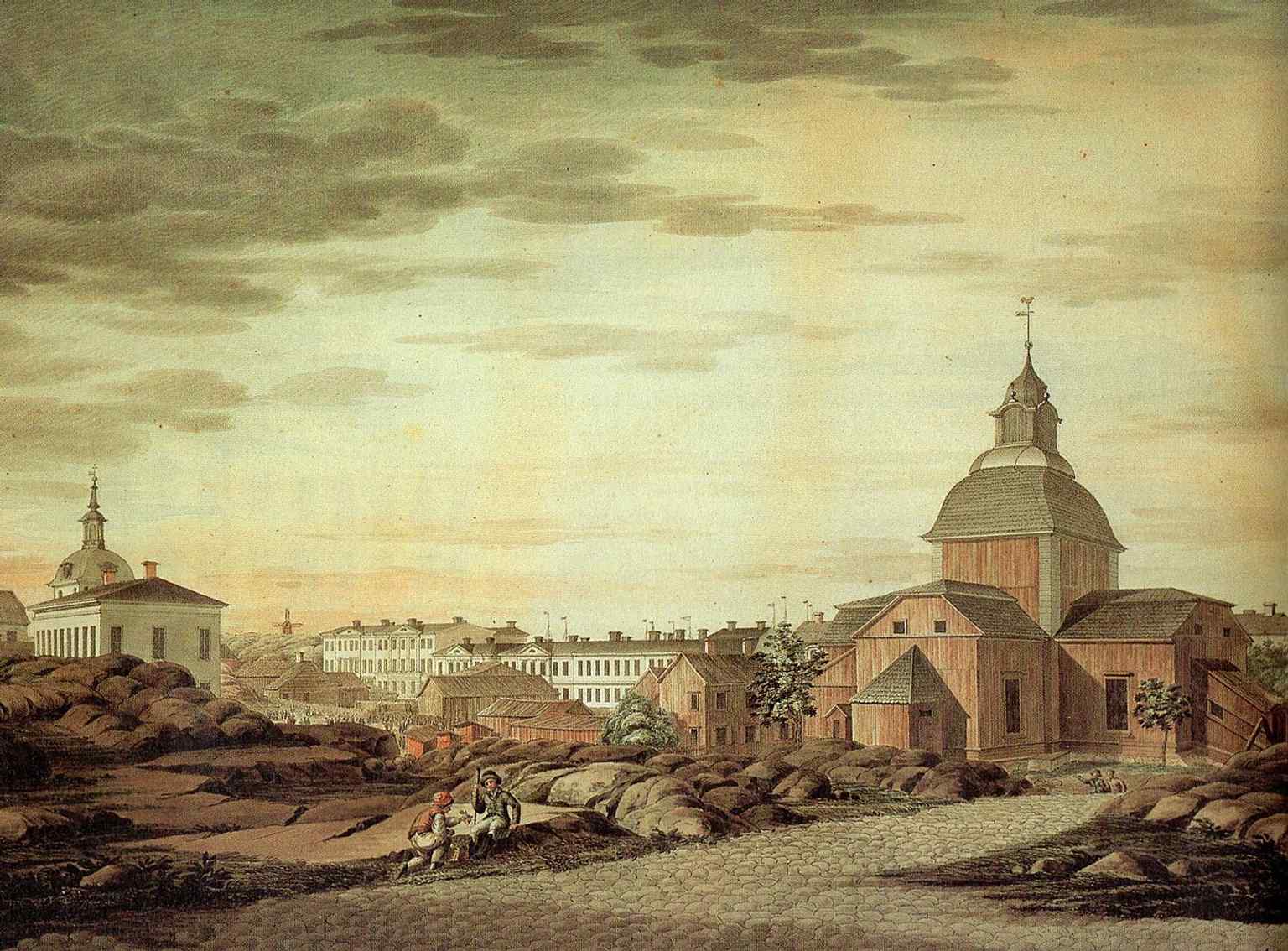
Engel’s 1816 watercolor shows the old market square before Senate Square was rebuilt, with Ulrika Eleonora Church and the early civic buildings that once stood here.Photo: Carl Ludvig Engel, Wikimedia Commons, Public domain. Cropped & resized. Under your feet, though, the old city never fully left. When workers leveled the area in the eighteen twenties, they did not move the cemetery burials. Recent excavations found hundreds of human remains just below the surface, and more than three hundred were reburied in two thousand and twenty-three. So this elegant square rests, quite literally, on earlier Helsinki.
Engel’s vision was disciplined almost to the point of obsession. The Government Palace, finished first, set the tone. When the university moved from Turku in eighteen twenty-eight, its main building rose opposite with an almost identical front, giving the square that balanced, mirror-like calm. Then came the Cathedral above them all. But even master planners lose arguments. Tsar Nicholas the First inspected the works in eighteen thirty-three and ordered the great staircase down to the square. Engel hated that idea because it broke his closed architectural frame. The tsar won. Funny how that kept happening with tsars.
And then the square began doing what great public spaces do: it turned ceremony into memory. Alexander the Second rode across here for the opening of the Diet in eighteen sixty-three. His statue, placed in the center in the eighteen nineties, later became a focus for protest against Russification, and this calm square saw demonstrations, clashes, even political violence. If you like, take a quick look at the before-and-after image in the app; it captures how that monument became the square’s fixed political center.
For all its grandeur, this space is also a threshold. Just beyond these formal lines, the older merchant city still survives in smaller streets and older houses... and that more intimate Helsinki waits for you at the City Museum, only a two-minute walk away. Fittingly, this public square is open twenty-four hours.
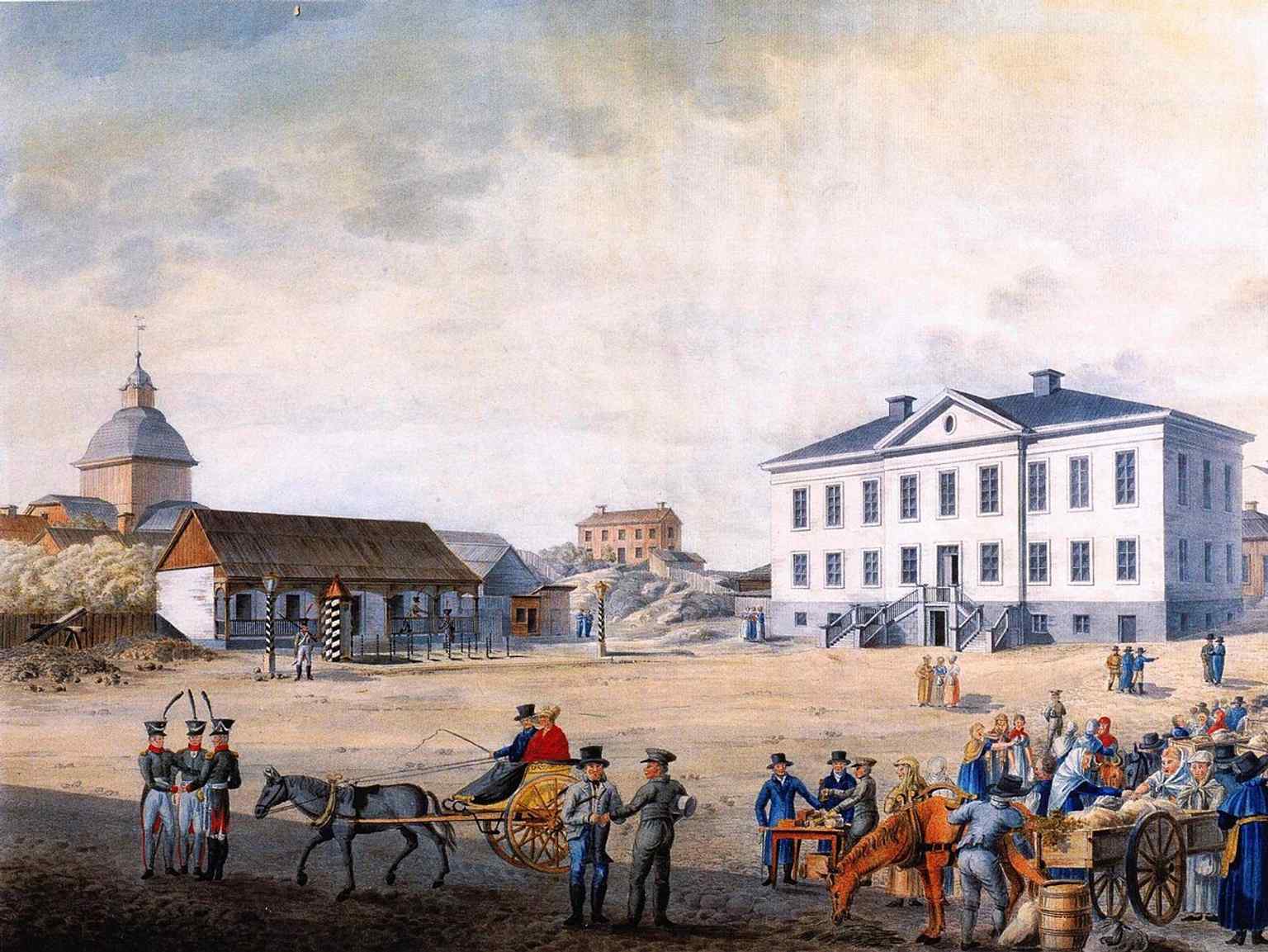
A historic view of the old Suurtori on the future Senate Square, showing the church, guardhouse, and town hall before the empire-style makeover.Photo: Carl Ludvig Engel, Wikimedia Commons, Public domain. Cropped & resized. 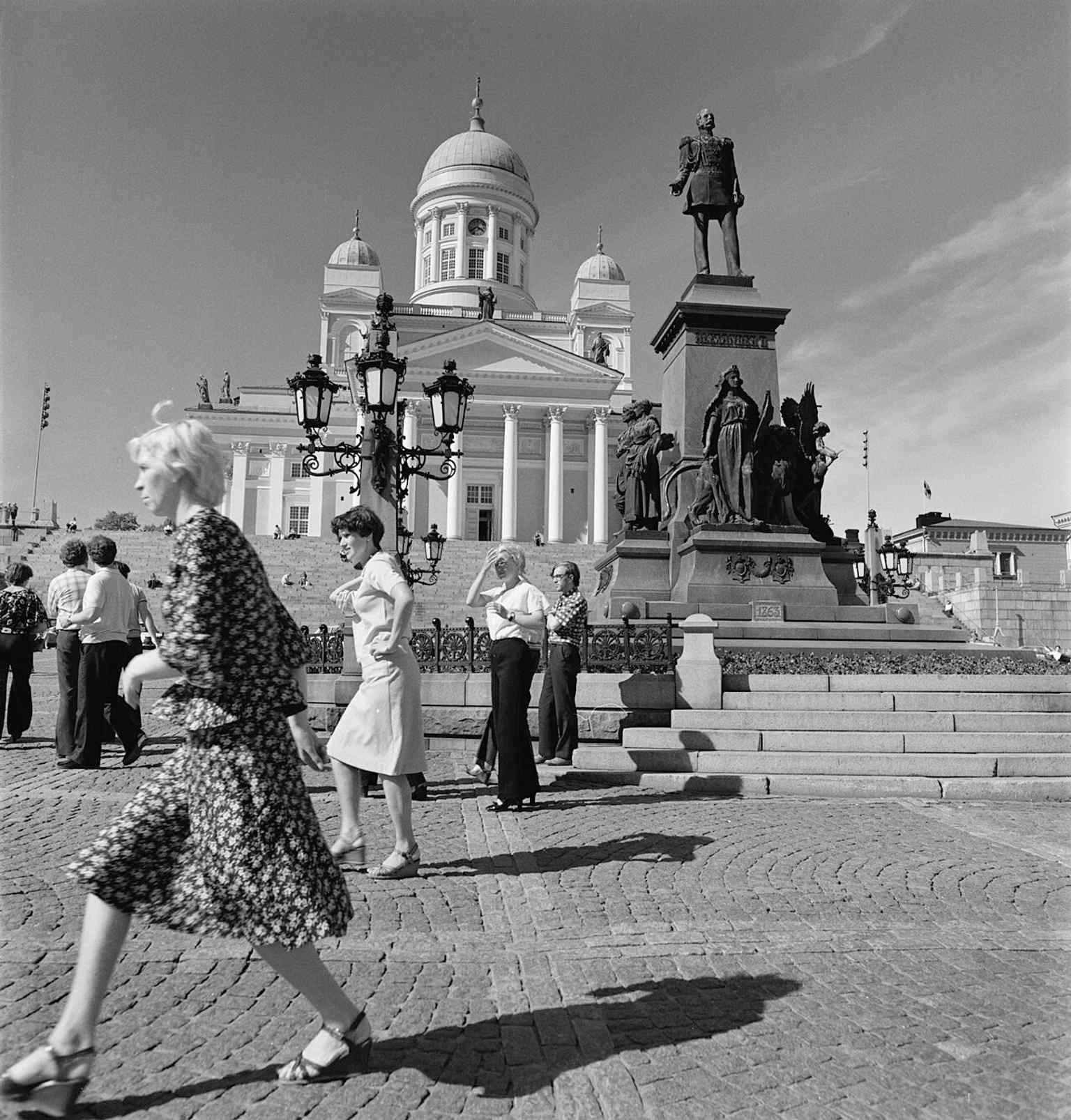
A 1979 black-and-white view of Senate Square, the Cathedral, and the Alexander II statue, capturing the classic ceremonial composition of the landmark.Photo: Volker von Bonin, Wikimedia Commons, CC BY 4.0. Cropped & resized. 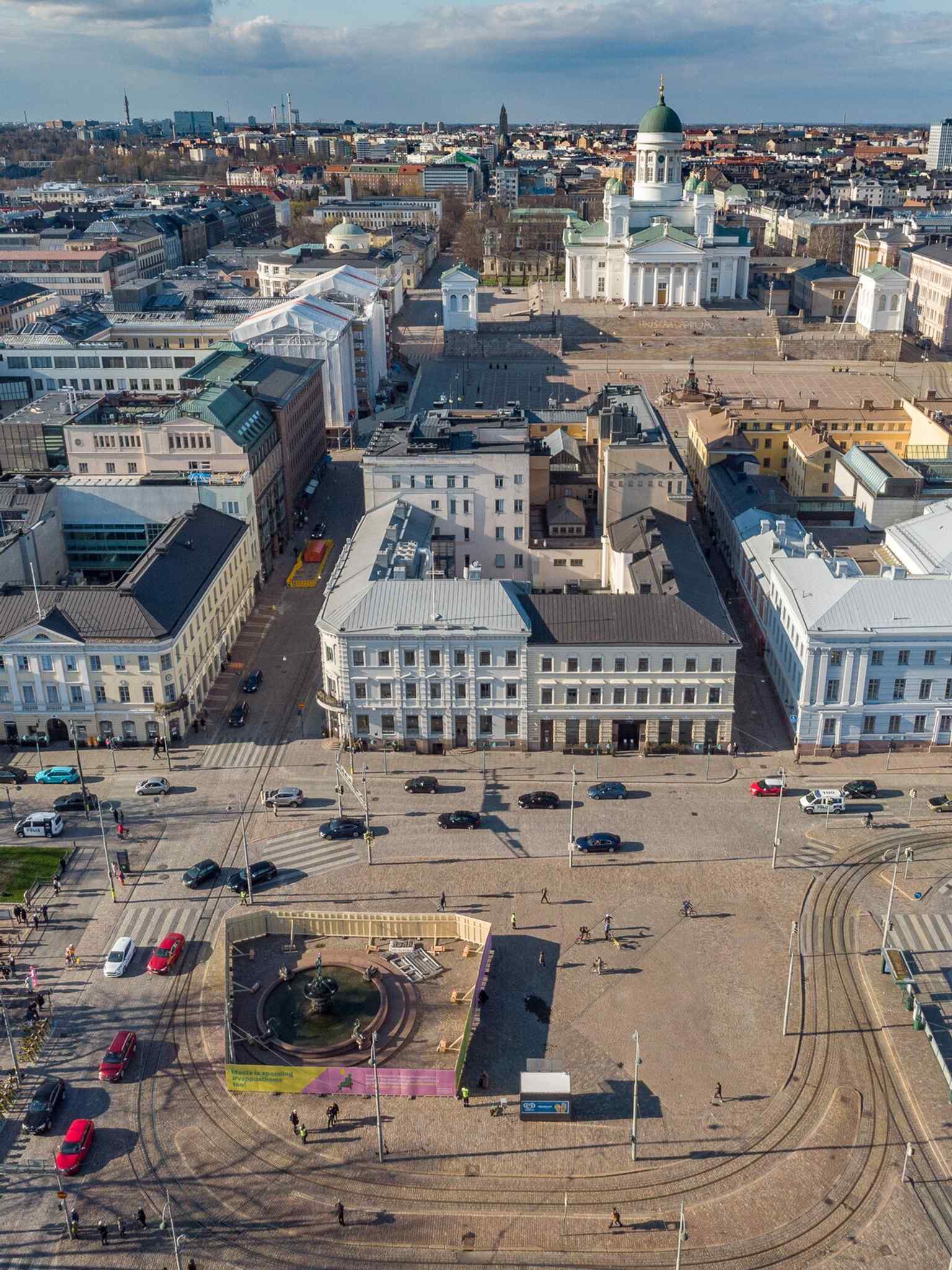
Aerial May Day eve view of Senate Square, showing how the square functions today as a public gathering place in the middle of central Helsinki.Photo: Joneikifi, Wikimedia Commons, CC BY-SA 4.0. Cropped & resized. 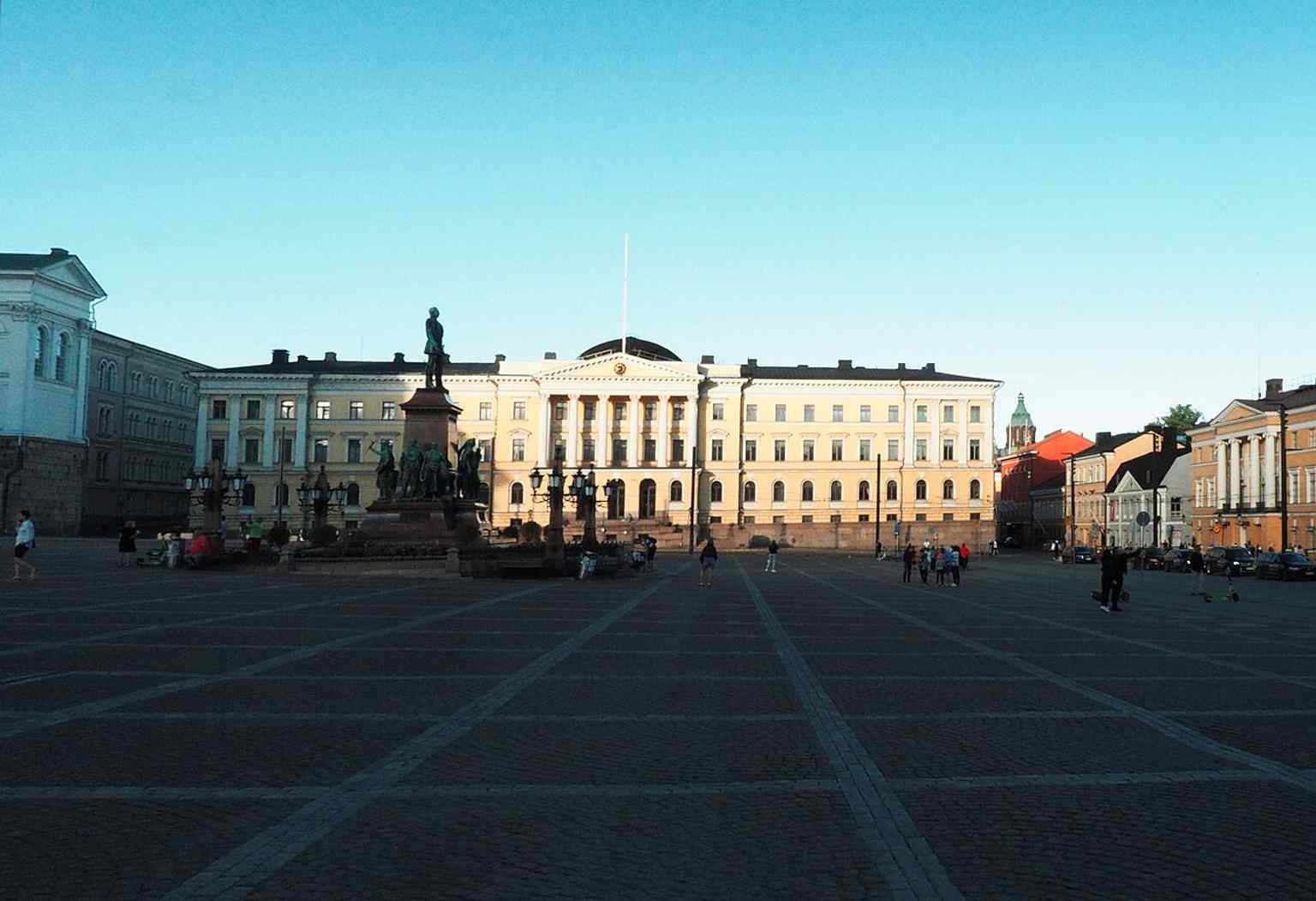
The Government Palace on the east side of the square, one of Engelin’s key monuments and part of the formal empire-style ensemble.Photo: Jorge Saturno, Wikimedia Commons, CC BY-SA 4.0. Cropped & resized. 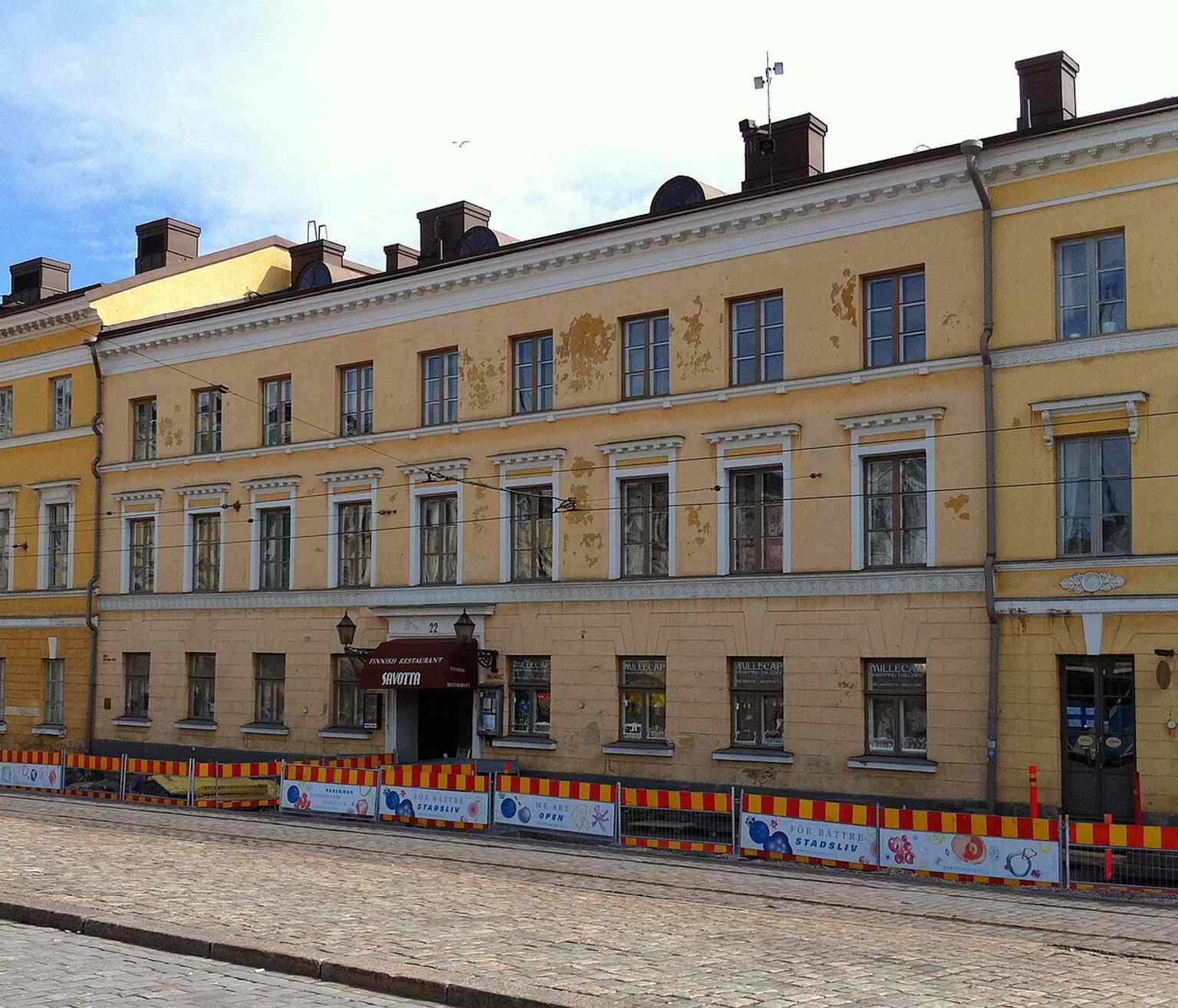
Burtz House on Aleksanterinkatu, one of the historic merchant buildings that survived around the square from the old city center.Photo: Jisis, Wikimedia Commons, CC BY-SA 3.0. Cropped & resized. 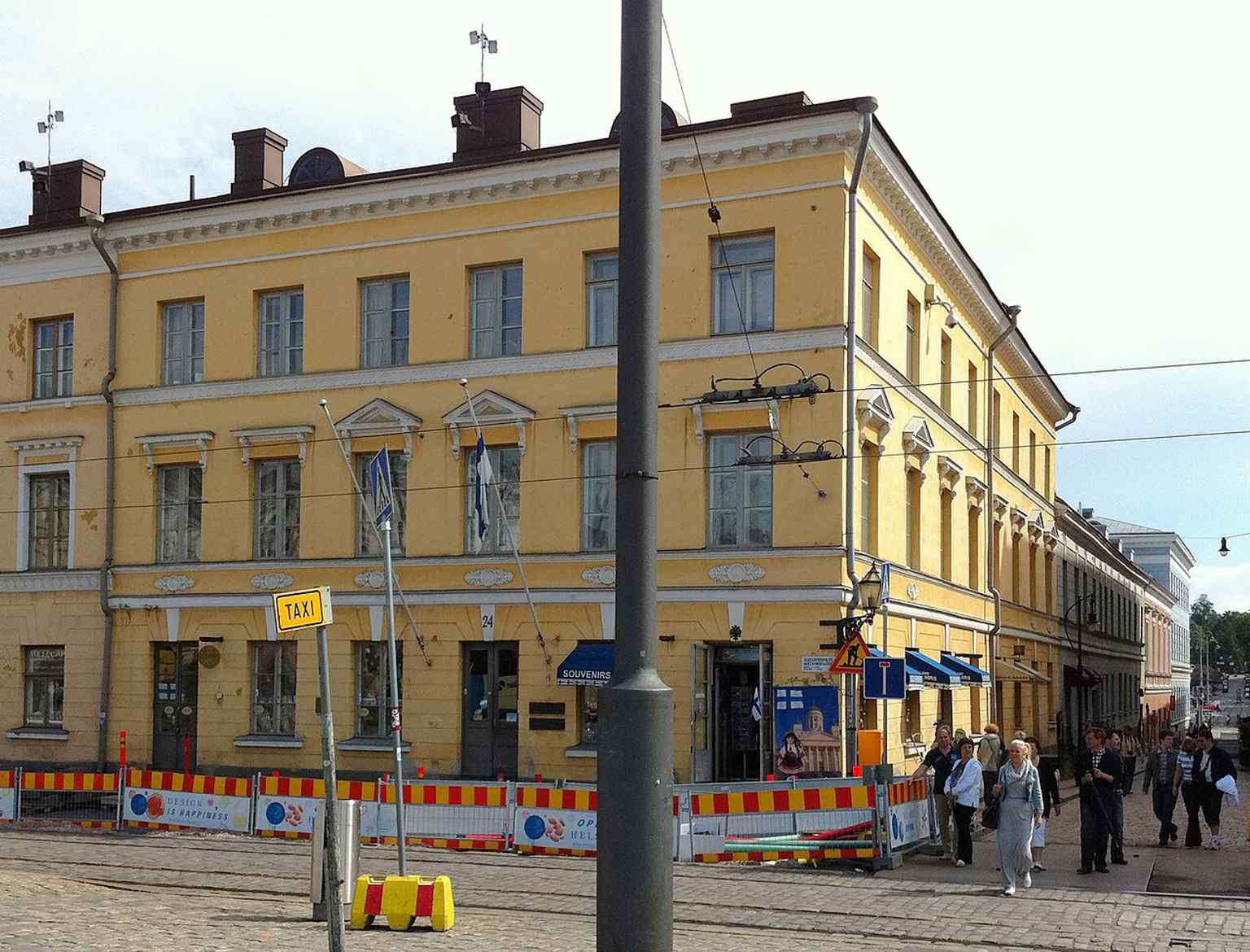
Hellenius House, built in 1770, is part of the older merchant block that reminds visitors Senate Square replaced an earlier urban center.Photo: Jisis, Wikimedia Commons, CC BY-SA 3.0. Cropped & resized. On your right, the Helsinki City Museum looks like a pale plaster-and-stone corner complex with rows of rectangular windows and several older facades stitched into one long…Read moreShow less
Open dedicated page →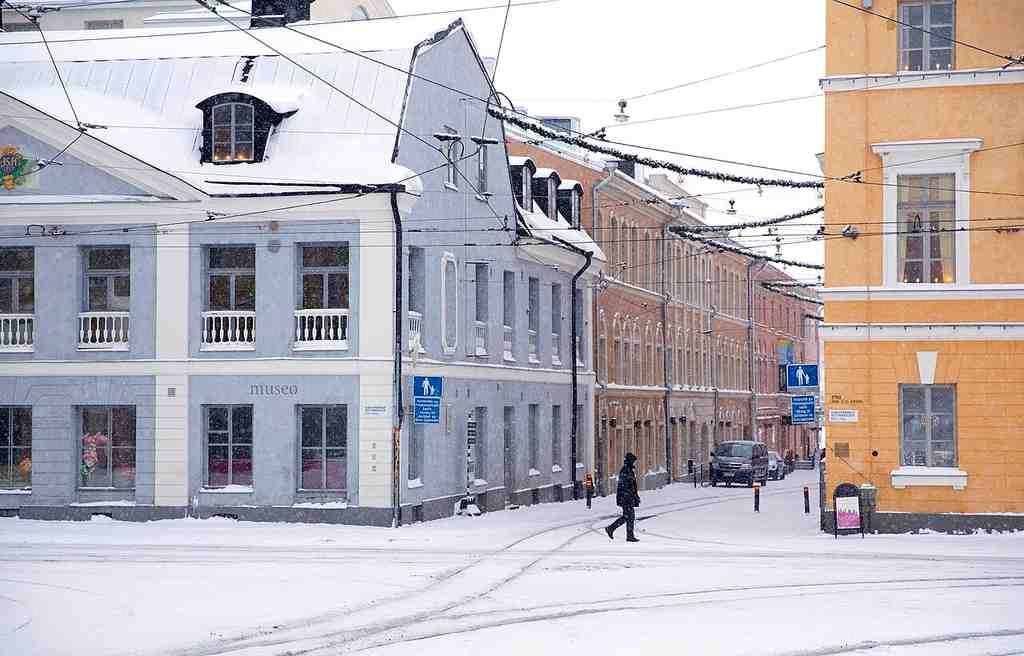
Helsinki City MuseumPhoto: Laurakakkonen, Wikimedia Commons, CC BY-SA 4.0. Cropped & resized. On your right, the Helsinki City Museum looks like a pale plaster-and-stone corner complex with rows of rectangular windows and several older facades stitched into one long frontage, including the lower eighteenth-century Sederholm House at the street edge.
This place covers nearly half a block of the oldest Helsinki, and that matters. Around Senate Square, you’ve met buildings that explain the nation in capital letters. Here, the scale drops to courtyards, shopkeepers, family rooms, photographs, and the stubborn details people usually forget. States tend to preserve speeches; cities also keep the kitchen drawer.
The museum joins five old buildings with a newer section in the middle, plus three inner courtyards, including Govinius courtyard. Before this became a museum, these buildings mostly served as offices, which feels very Helsinki somehow: practical first, poetic later.
The human face here is Johan Sederholm. His old merchant house on Aleksanterinkatu is the oldest building in central Helsinki. In the seventeen hundreds, Sederholm grew rich during the construction boom of Viapori, the sea fortress we now call Suomenlinna. He owned sawmills, a shipyard, and factories, and Stockholm sent for him three times as the city’s representative to the Swedish parliament. But he was no cuddly folk hero. Rivals accused him of profiting from the majamies system, an old trading arrangement that steered peasant imports toward favored merchants like him. So yes... he helped build the city, and annoyed half of it on the way.
Even his death did not finish the story. Yellow fever killed Sederholm in eighteen oh five. Later, when the Ulrika Eleonora Church and its graveyard were cleared away to make room for Senate Square, workers moved his coffin to what is now Old Church Park, and Carl Ludvig Engel designed his chapel there. Not many merchants manage to stay architecturally relevant after burial.
If you check the image in the app, you can see how this museum is less one building than a carefully patched-together piece of old Helsinki.
The museum opened to the public in nineteen twelve, a little late because of renovation, and it now cares for more than one and a half million objects, photographs, and artworks. Since twenty seventeen, much of that collection has been stored in an off-site facility, which gives municipal memory a faint spy-novel flavor. It also won Museum of the Year in twenty seventeen after remaking itself with help from residents, not just curators, and that spirit shows: this is a museum where people can touch, try, and argue with history a little.
From here, the story shifts toward the harbor, where trade and status put on formal clothes and become state ceremony at the Presidential Palace. If you want to step inside later, the museum is generally open from eleven A-M to seven P-M on weekdays, and from eleven A-M to five P-M on weekends.
On your left is a long pale stone palace with a strict three-story façade, rows of evenly spaced windows, and a columned central entrance capped by a triangular pediment. This…Read moreShow less
Open dedicated page →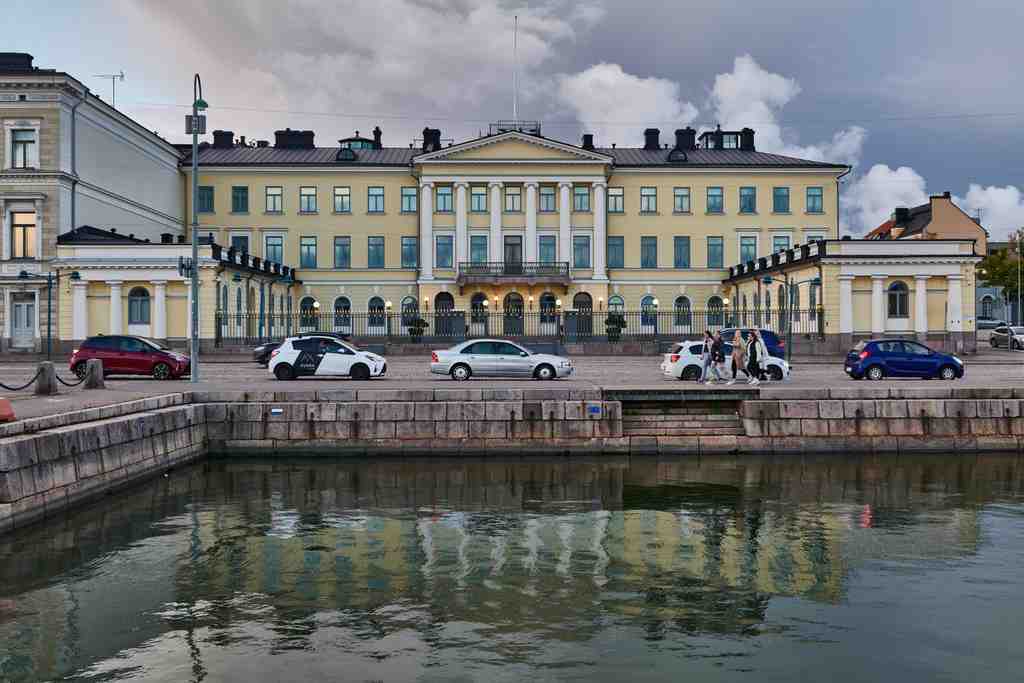
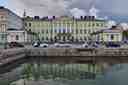
Presidential PalacePhoto: Leonhard Lenz, Wikimedia Commons, CC0. Cropped & resized. On your left is a long pale stone palace with a strict three-story façade, rows of evenly spaced windows, and a columned central entrance capped by a triangular pediment.
This building is a small masterclass in Helsinki changing costumes without changing the stage. Behind that calm, symmetrical face sits a whole relay of authority: merchant wealth, imperial ceremony, wartime upheaval, and modern state ritual.
It began in the eighteen hundreds as something far less lofty. Architect Pehr Granstedt designed it in eighteen fourteen for J. H. Heidenstrauch, a merchant so wealthy he counted as Helsinki’s richest resident. This was not a palace at all, but an upscale business home. The ground floor handled trade, the second floor housed the Heidenstrauch family, and the top floor held smaller rental apartments. Most visitors never notice that the state here quite literally took over commercial waterfront ground. The family lived here only seventeen years before the Finnish Senate bought the house in eighteen thirty-seven for the Russian emperor’s use. Helsinki does move fast when power wants a better address.
Even the design had layers from the start. Granstedt drew it, Giacomo Quarenghi revised those ideas, and only later did the plans settle into the form you see now, with that Saint Petersburg flavor in its empire style - meaning orderly classical grandeur, built to look calm, balanced, and unquestionably important.
Once the emperor claimed it, the merchant house had to learn court manners. Carl Ludvig Engel oversaw major changes, finished in eighteen forty-three. Builders inserted a Greek Orthodox chapel, a ballroom, dining rooms, a big kitchen, and apartments for the imperial entourage. Later, in the early nineteen hundreds, Johan Jacob Ahrenberg added a larger State Hall and the Atrium, because ceremony has a habit of expanding to fill the available floor plan.
And then history stopped behaving. During the First World War, the palace became a military hospital for two hundred wounded soldiers. During the Russian Revolution, it served as a headquarters for soldiers and workers. In the Finnish Civil War, German forces used it, and later Finnish forces did too. After that, some imagined it as a royal palace for a Finnish king. Furniture was even prepared... and then Finland settled on becoming a republic instead, so some of those pieces ended up sold to Stockmann. A very Finnish ending: monarchy, briefly considered, then redirected into retail.
By the early nineteen twenties, the building had entered its current life as the Presidential Palace. The old Orthodox chapel came out, and a library took its place. Presidents no longer live here - that ended in the nineteen nineties - so now the palace works mainly as a ceremonial house and office. Still, the rituals remain. Every sixth of December, the independence day reception unfolds inside, the biggest annual event in the building, all handshakes, gowns, medals, and careful choreography for the cameras. Power changes flags and job titles, but it still likes a staircase and a proper room.
If you check the image on your screen, that restored stove hints at the interiors beyond the façade. During the renovation from two thousand thirteen to two thousand fifteen, workers carefully brought back older colors, repaired historic lighting, and made the whole building function again without stripping away its memory.
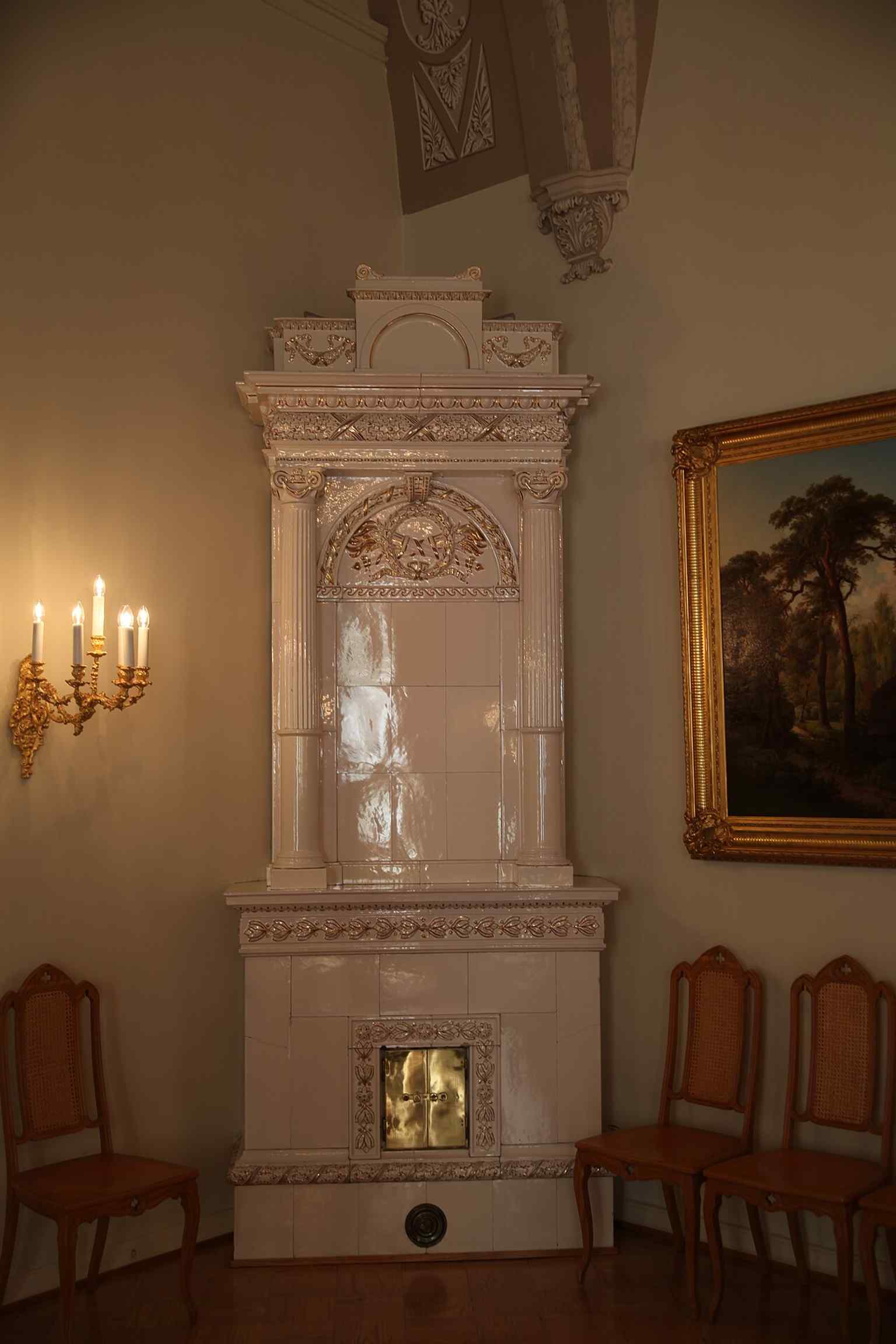
A close view of a palace stove, evoking the historic interiors that were carefully restored during the 2013–2015 renovation.Photo: Pekka Järveläinen, Wikimedia Commons, CC BY-SA 4.0. Cropped & resized. From here, imperial influence is about to turn more openly sacred and more visibly Russian in brick and domes. We’ll pick that up at Uspensky Cathedral, about a six-minute walk away. For practical purposes, you can pass by this exterior at any hour.
Red brick rises in terraces above the hill, topped by rounded gilded onion domes and a tall central cupola marked with an Orthodox cross. Uspenski does not blend in, and that is…Read moreShow less
Open dedicated page →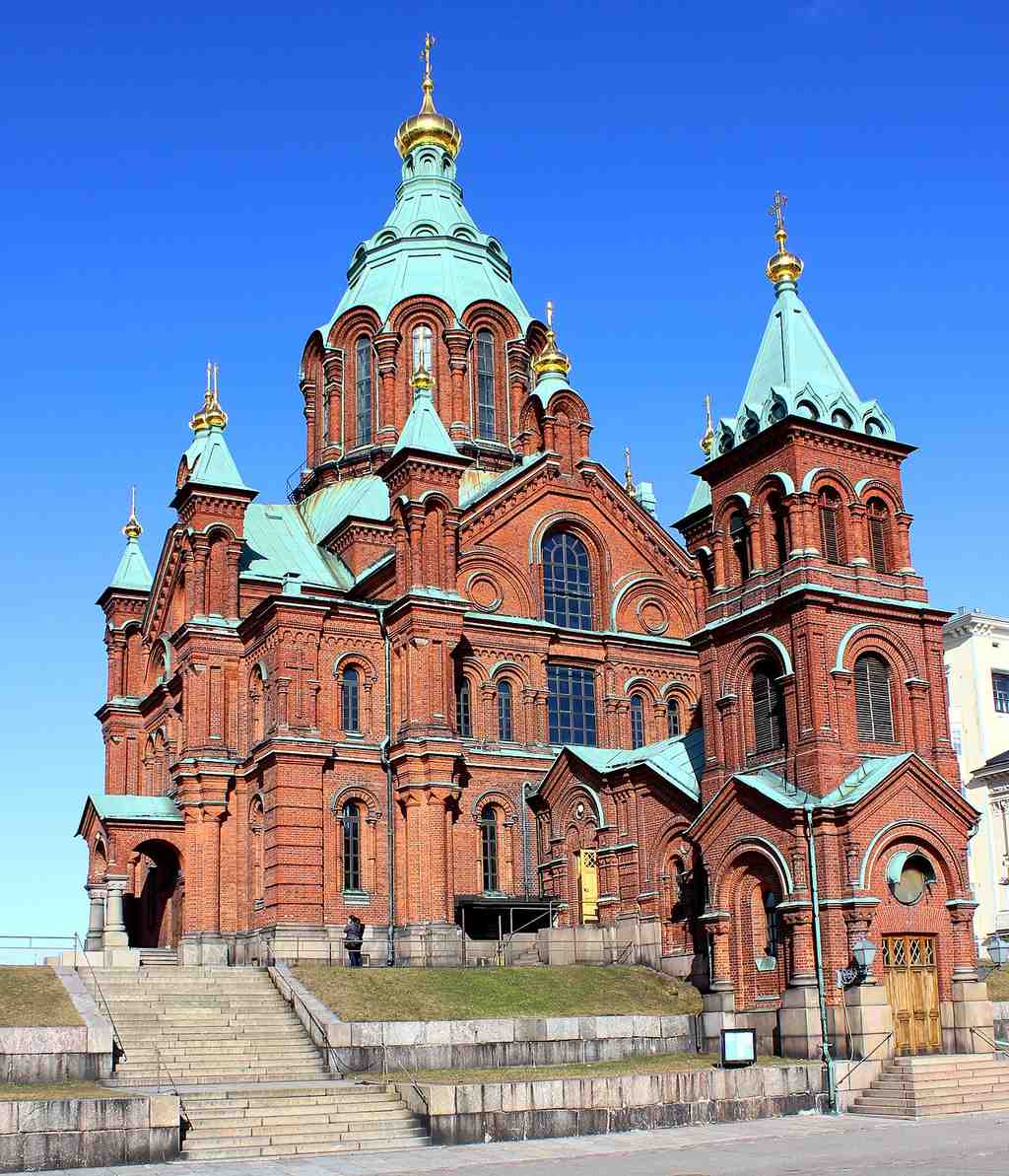
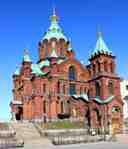
Uspensky CathedralPhoto: TobiasK, Wikimedia Commons, CC BY-SA 4.0. Cropped & resized. Red brick rises in terraces above the hill, topped by rounded gilded onion domes and a tall central cupola marked with an Orthodox cross.
Uspenski does not blend in, and that is precisely the point. This is the main church of Helsinki’s Orthodox parish and, since the archbishop’s seat moved here in two thousand and eighteen, the clearest center of Orthodox Finland as well. It stands on Katajanokka like a reminder that Helsinki did not grow from one tradition alone. It absorbed arrivals... from harbors, from empires, from war, and from private donors with, one assumes, both conviction and decent bank accounts.
Architect Aleksei Gornostajev drew the plans in a Russian style inspired by a sixteenth-century stone church near Moscow. He died in eighteen sixty-two before the work was finished, so Ivan Varnek carried it through, and the cathedral opened in eighteen sixty-eight. Half the money came from donors, half from the Russian state and the Holy Synod, the governing body of the Orthodox Church in imperial Russia. Even the bricks traveled: builders brought them from the ruined Bomarsund fortress in Åland after the Crimean War. So this church is not just red brick... it is recycled conflict turned into worship. Helsinki has always had a gift for that kind of transformation.
Now, take a second and compare this silhouette with the pale Lutheran skyline nearby.
One city, two very different sacred languages. Somehow, neither cancels the other.
Its name comes from the Slavonic word uspenie, meaning the falling asleep, or death, of the Virgin Mary. The thirteen gilded onion domes symbolize Christ and the twelve apostles, and they make this the largest Orthodox church in Northern and Western Europe. Workers regilded the domes in the nineteen sixties and again between two thousand and four and two thousand and seven, with donations helping yet again. If you glance at your screen, the interior image shows the painted vaults and the iconostasis, the wall of icons that screens the altar, in a church designed for Orthodox worship without pews.
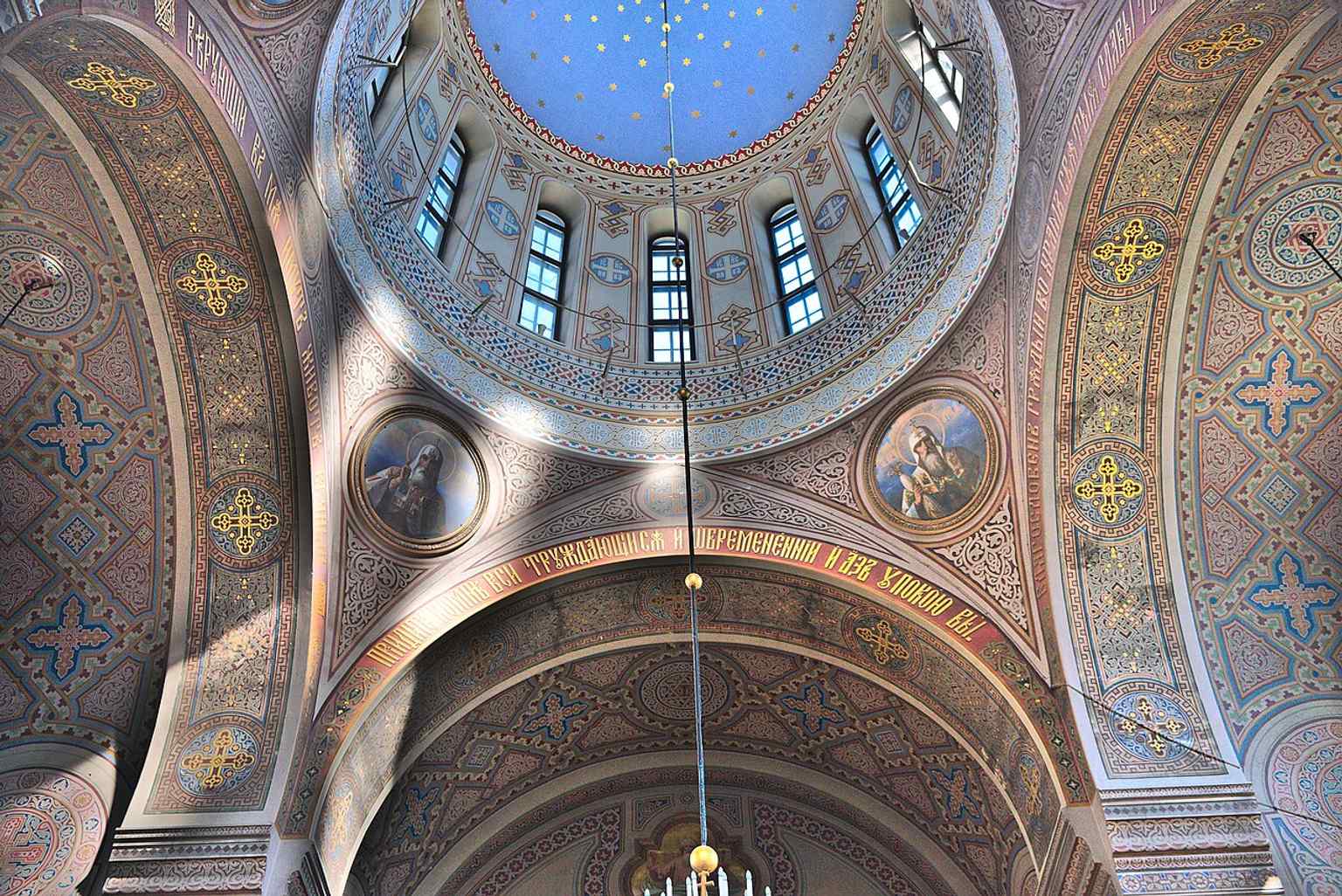
Inside the cathedral, the vaulted Orthodox space and painted ceiling show the Byzantine tradition that contrasts with its rugged red-brick exterior.Photo: Remaille31, Wikimedia Commons, CC BY-SA 4.0. Cropped & resized. The story here is not all grandeur. In two thousand and ten, thieves stole the treasured Kozelshchan Mother of God icon, a pearl-decorated image brought here from Sorvali in Viipuri during the Second World War. Police suspected a commissioned theft. Then a man already serving a prison sentence told them where to look, and they found the icon hidden near Turku in snow, wrapped in paper and packed in plastic, before conservators sent it to New Valamo Monastery for repair. Sacred objects, it turns out, need security cameras too.
If you want, check the before-and-after image in the app; the waterfront below has changed almost completely, while the cathedral still keeps the high ground.
And that may be the right final picture for Helsinki: imported forms, local brick, imperial ambition, private devotion, and a city confident enough to let all of it stay visible. It is strongest not as one clean image, but as many voices held together in a compact space.
If you want to go inside later, it is closed on Mondays, generally open Tuesday through Friday from ten to six, Saturday from ten to three, and Sunday from one to four, and outside services there may be an admission charge.
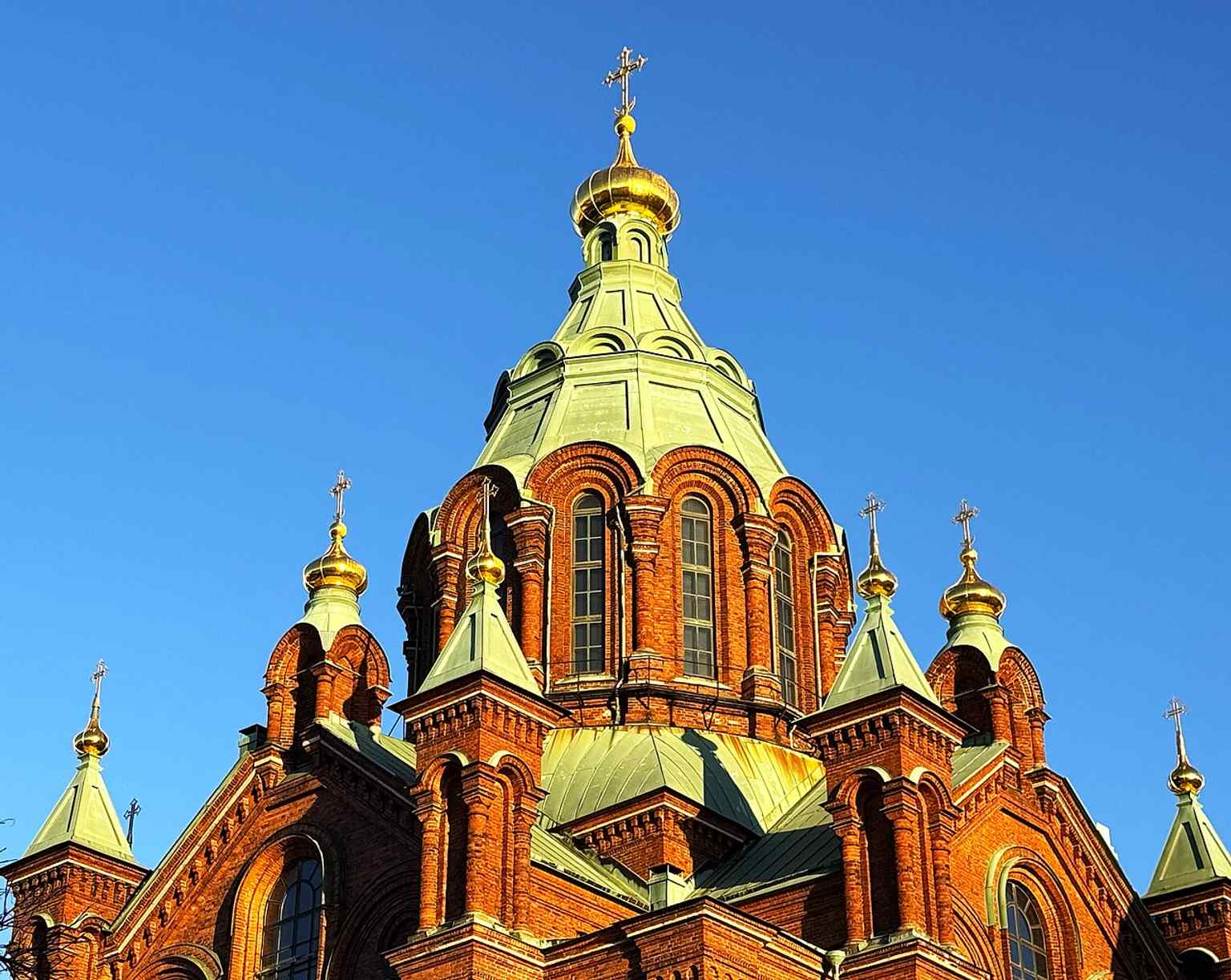
The cathedral’s gilded central dome and twelve smaller cupolas reflect the Russian-Byzantine style that makes it the largest Orthodox church in Northern and Western Europe.Photo: Sinikka Halme, Wikimedia Commons, CC BY-SA 4.0. Cropped & resized. 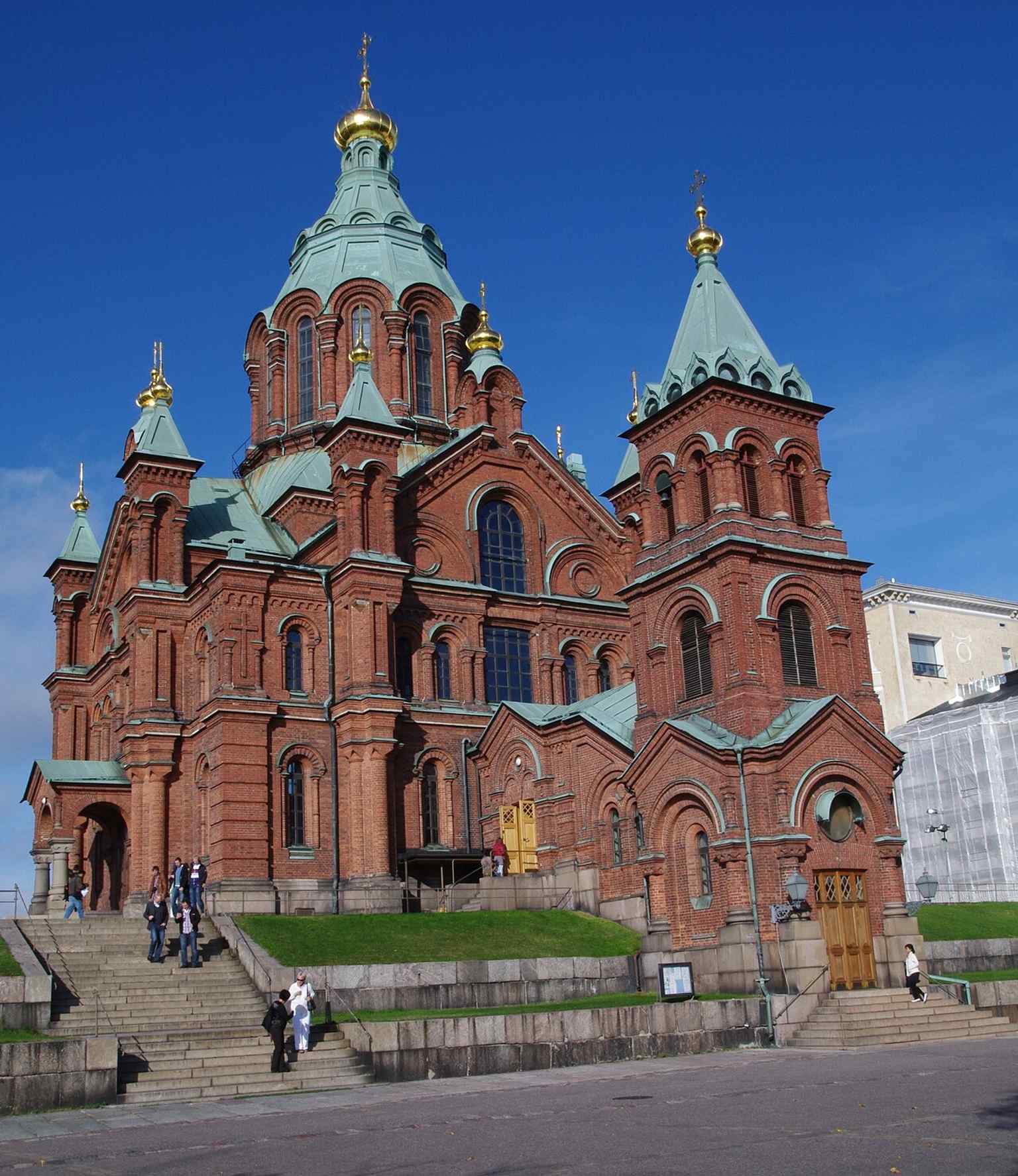
A classic full view of Uspensky Cathedral in red brick and gold, the Helsinki landmark that welcomes hundreds of thousands of visitors each year.Photo: Tuuraan78, Wikimedia Commons, CC BY-SA 3.0. Cropped & resized. 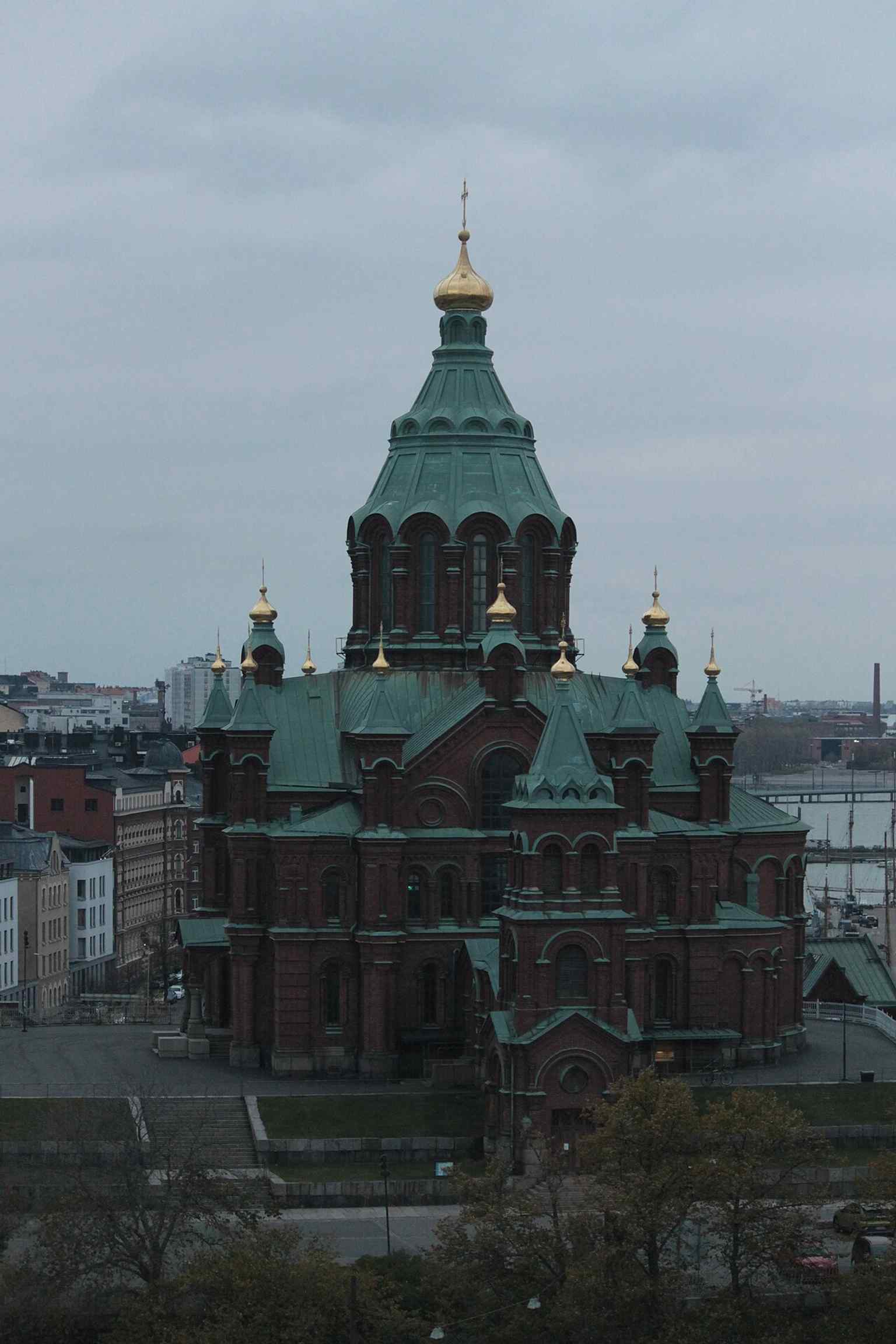
A bird’s-eye view from the nearby ferris wheel shows the cathedral’s position in central Helsinki and its commanding hilltop presence.Photo: DemieK07, Wikimedia Commons, CC BY-SA 4.0. Cropped & resized. 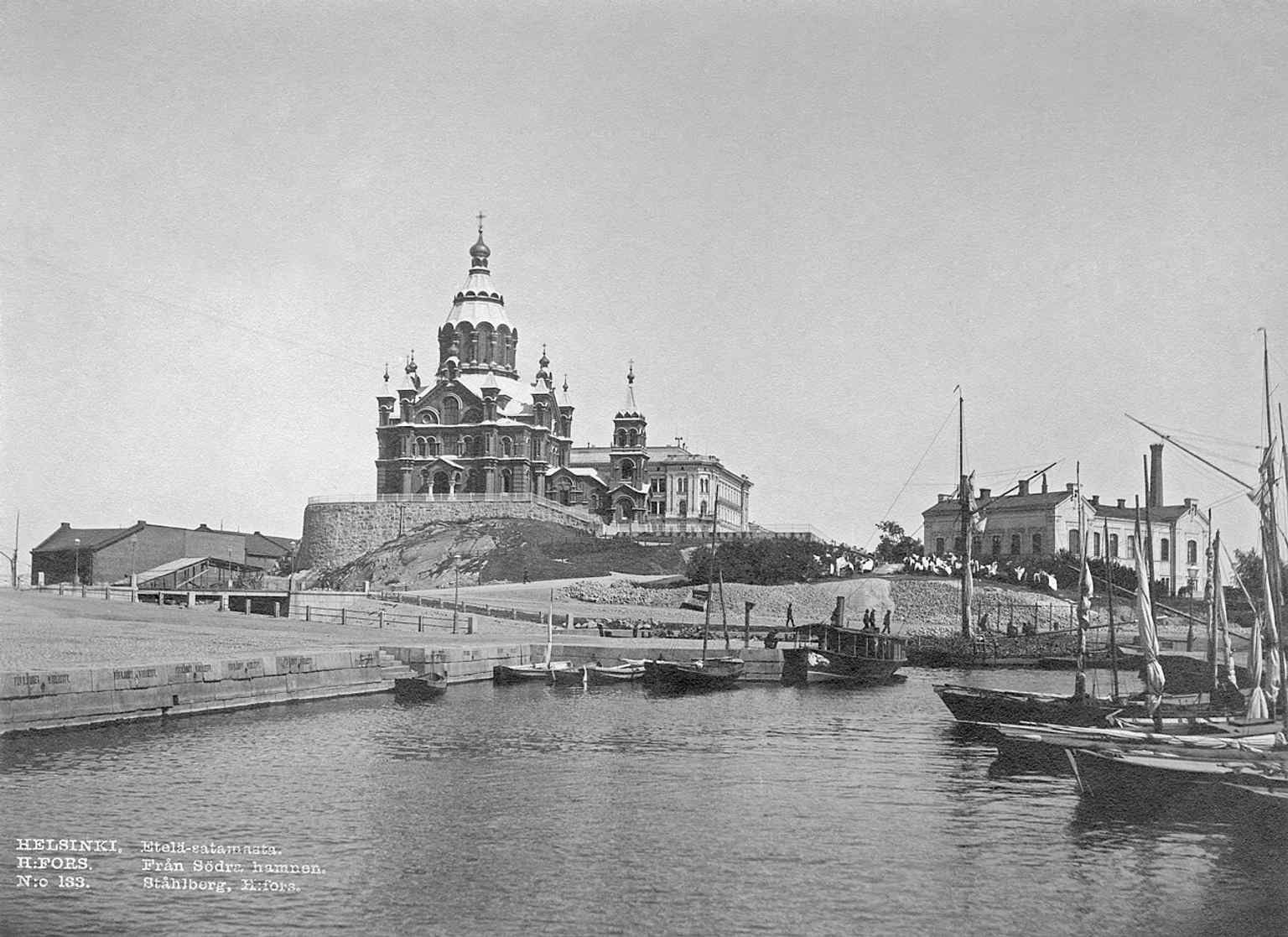
A rare 1890s black-and-white view of Uspensky Cathedral from South Harbour, showing how long it has dominated the Helsinki skyline.Photo: Unknown authorUnknown author, Wikimedia Commons, CC BY 4.0. Cropped & resized. 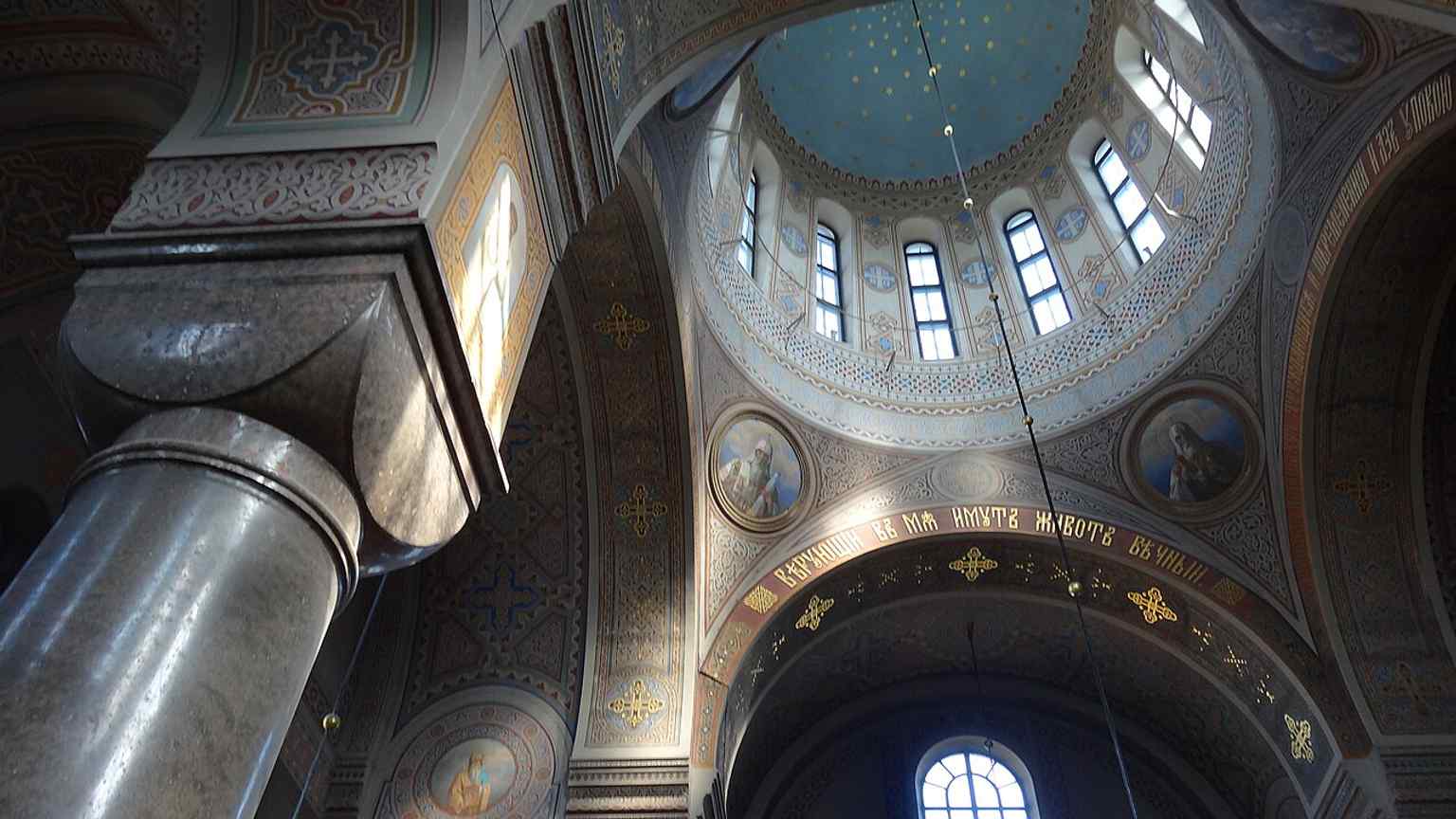
The nave interior reveals the cathedral’s spacious layout, designed for Orthodox worship without pews and centered on the iconostasis.Photo: GualdimG, Wikimedia Commons, CC BY-SA 4.0. Cropped & resized. 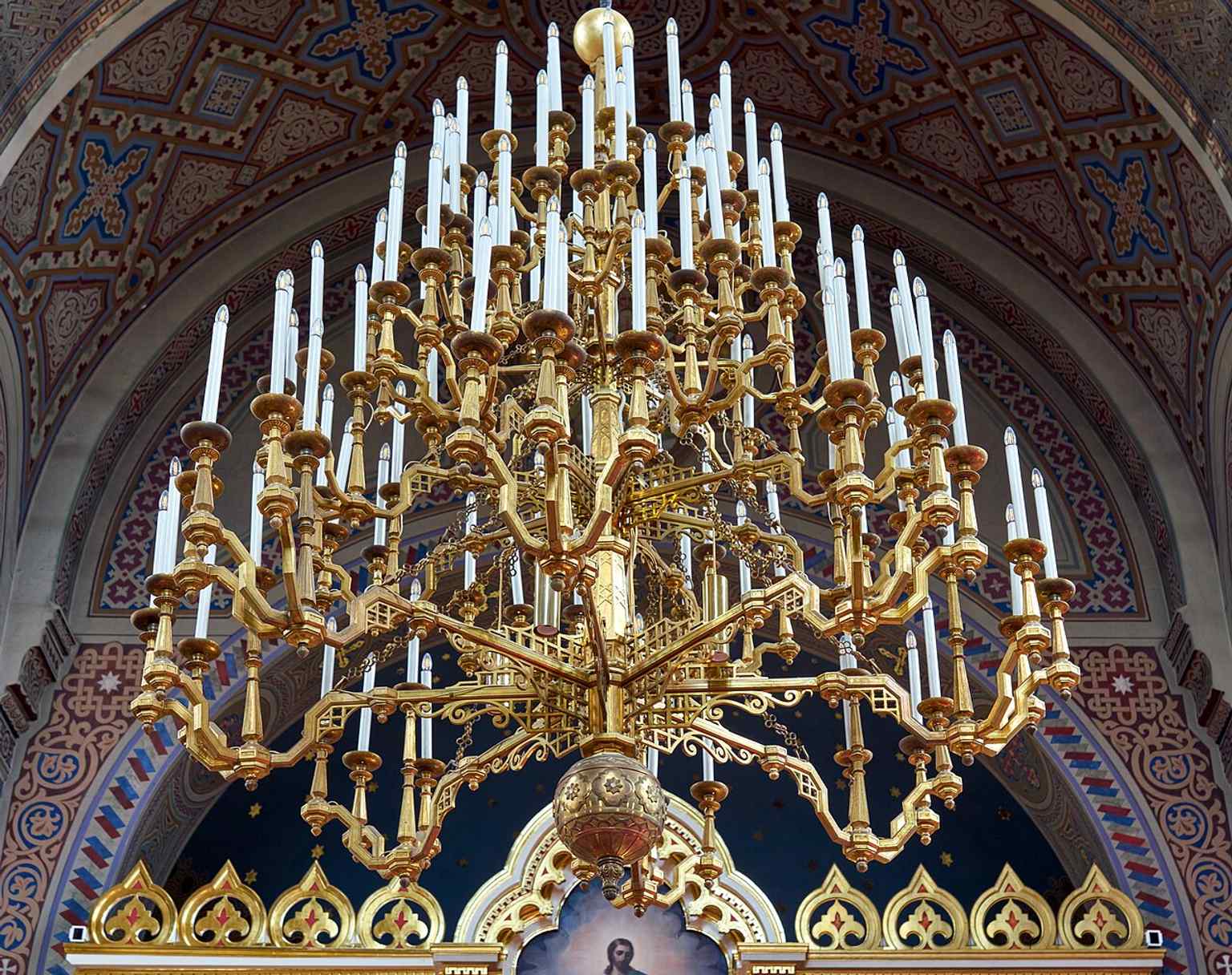
A close-up of the chandelier highlights the richly decorated interior atmosphere that complements the cathedral’s icon-filled worship space.Photo: Virtual-Pano, Wikimedia Commons, CC BY-SA 4.0. Cropped & resized. 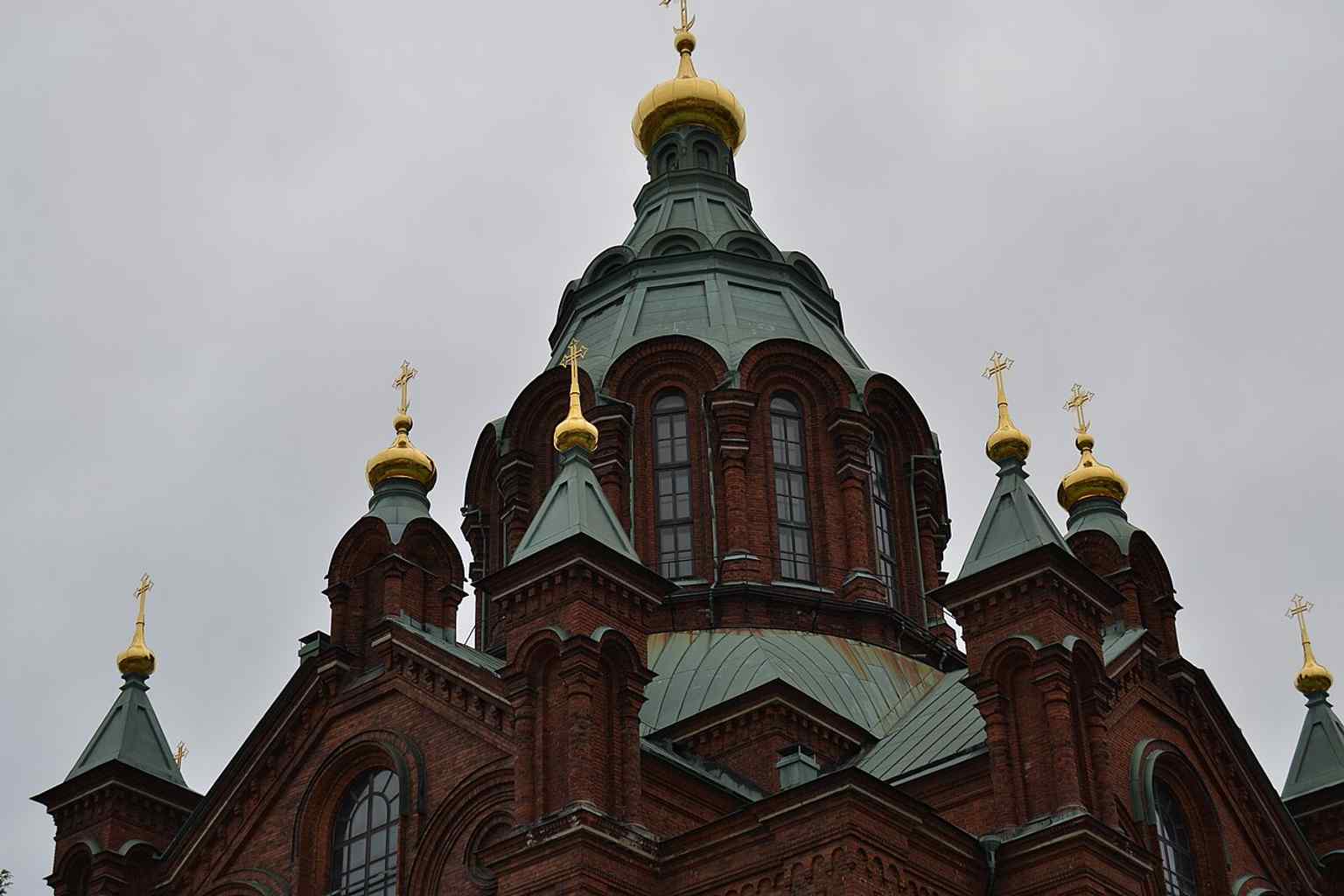
Roof details and gilded cupolas recall the major restoration campaign that re-gilded the domes in the 1960s and again in the 2000s.Photo: Tuulia.maria, Wikimedia Commons, CC BY-SA 4.0. Cropped & resized. 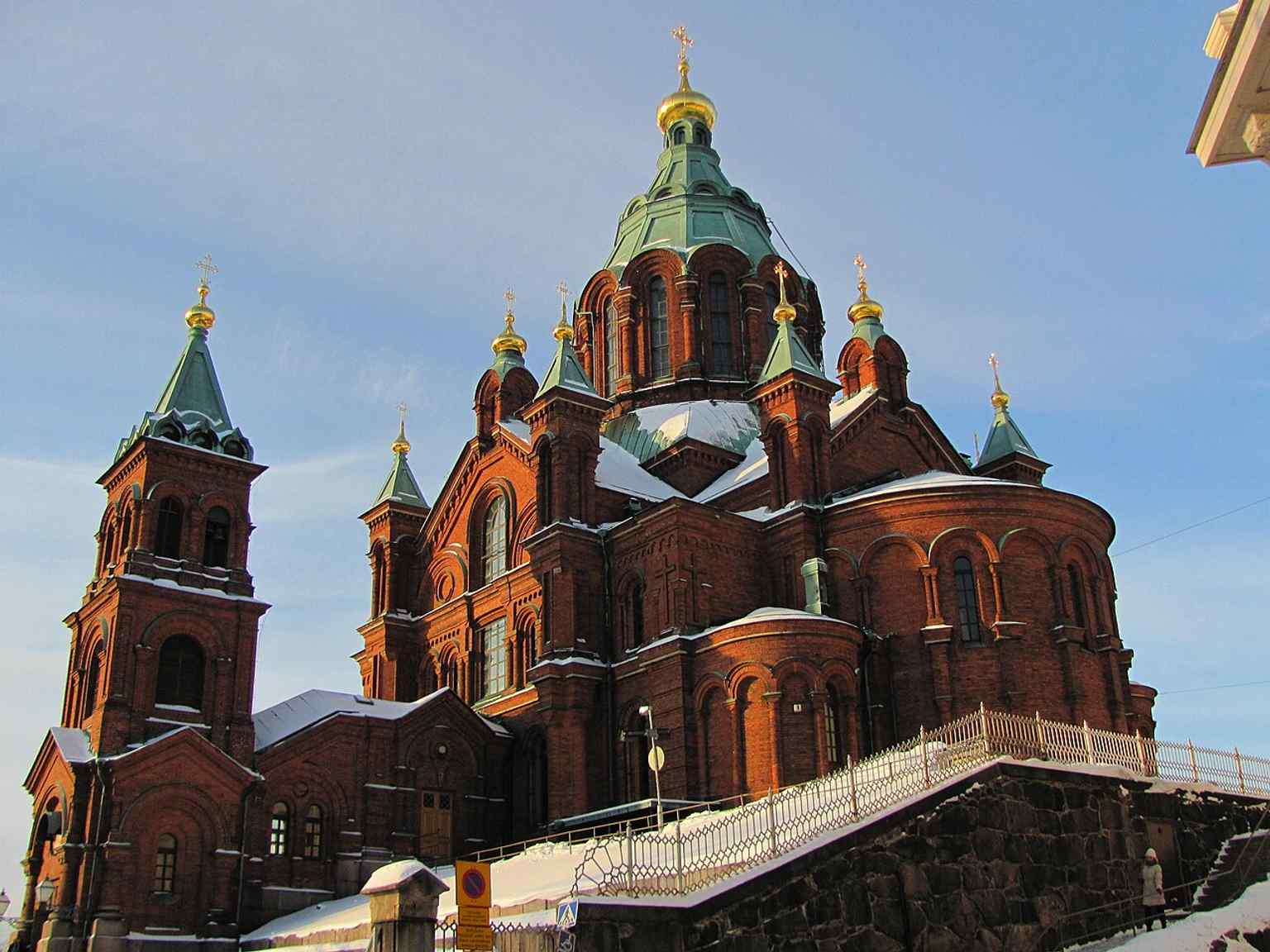
Another strong exterior angle of the cathedral, useful for showing its layered massing and the many domes that symbolize Christ and the apostles.Photo: Ranerana, Wikimedia Commons, CC BY-SA 4.0. Cropped & resized. 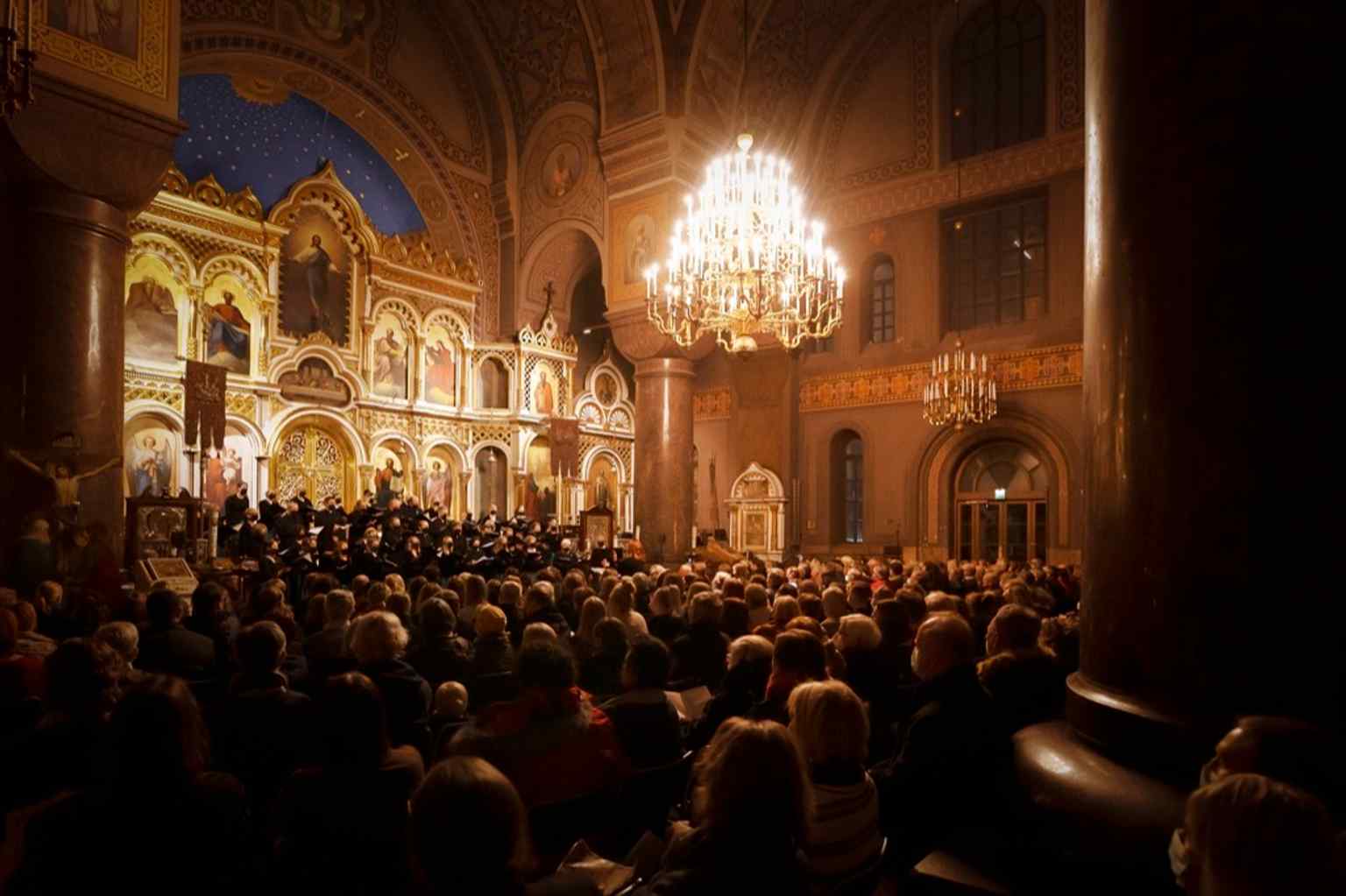
A choir performance inside the cathedral gives a sense of the living worship tradition that still fills this historic sacred space.Photo: Elfhill / Mansukoski, Wikimedia Commons, CC BY 4.0. Cropped & resized.
Frequently asked questions
How do I start the tour?
After purchase, download the AudaTours app and enter your redemption code. The tour will be ready to start immediately - just tap play and follow the GPS-guided route.
Do I need internet during the tour?
No! Download the tour before you start and enjoy it fully offline. Only the chat feature requires internet. We recommend downloading on WiFi to save mobile data.
Is this a guided group tour?
No - this is a self-guided audio tour. You explore independently at your own pace, with audio narration playing through your phone. No tour guide, no group, no schedule.
How long does the tour take?
Most tours take 60–90 minutes to complete, but you control the pace entirely. Pause, skip stops, or take breaks whenever you want.
What if I can't finish the tour today?
No problem! Tours have lifetime access. Pause and resume whenever you like - tomorrow, next week, or next year. Your progress is saved.
What languages are available?
All tours are available in 50+ languages. Select your preferred language when redeeming your code. Note: language cannot be changed after tour generation.
Where do I access the tour after purchase?
Download the free AudaTours app from the App Store or Google Play. Enter your redemption code (sent via email) and the tour will appear in your library, ready to download and start.
If you don't enjoy the tour, we'll refund your purchase. Contact us at [email protected]
Checkout securely with 






.jpg)


%20-%2001.jpg)


.jpg)


.jpg)
.jpg)
.jpg)


.jpg)
.jpg)


.jpg)


.jpg)


