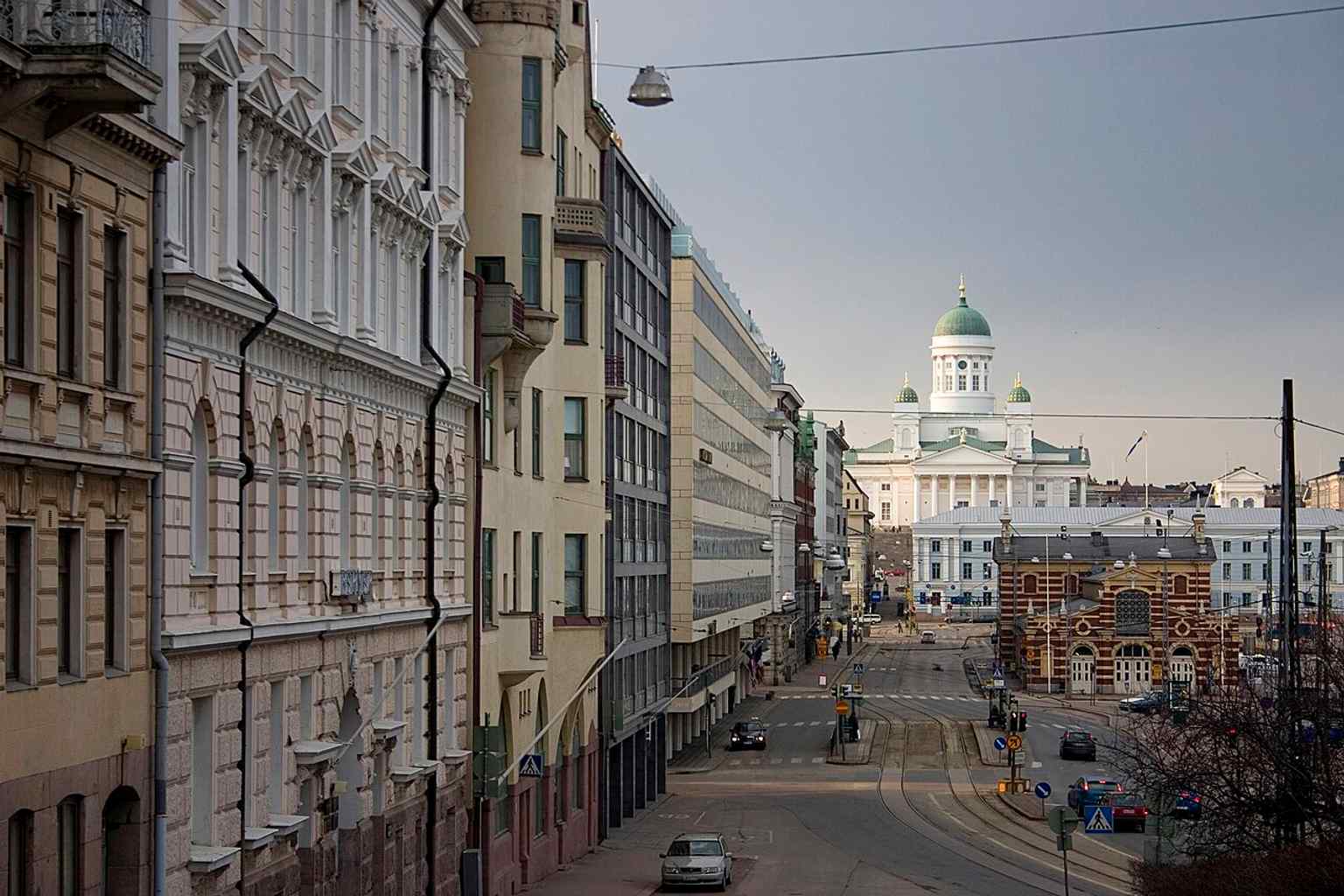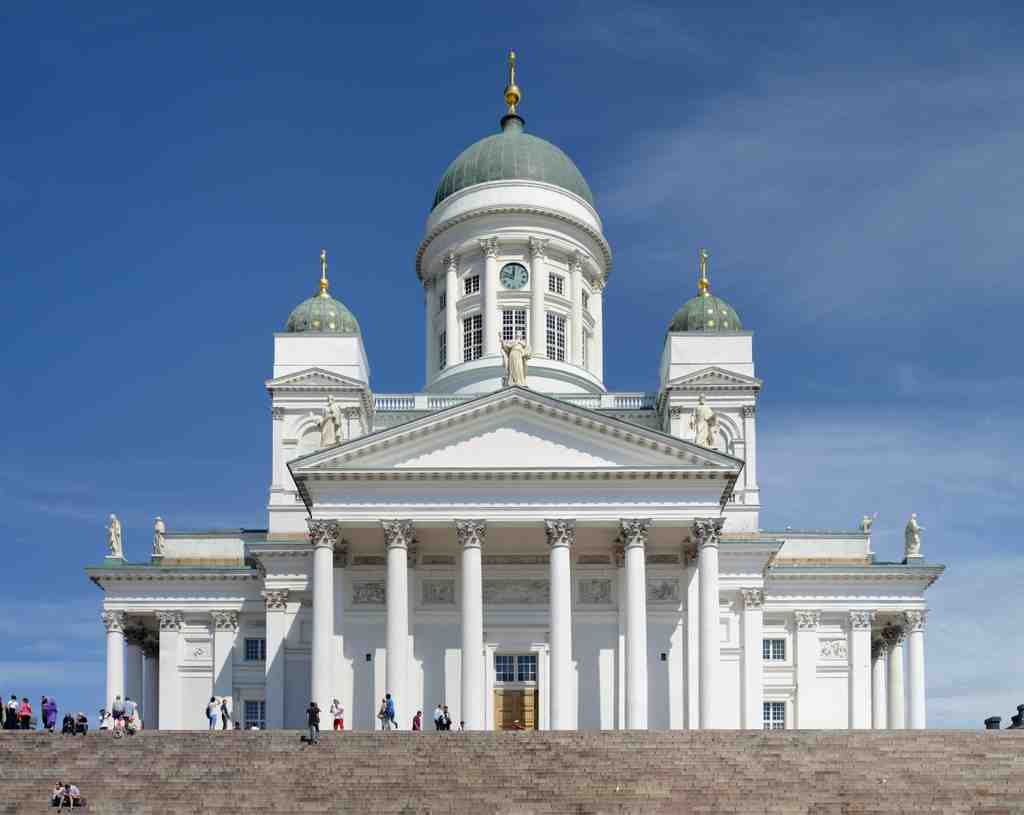
On your right, Helsinki Cathedral rises as a pale neoclassical cross of painted masonry, with a tall green dome, four smaller corner towers, and a ring of apostles standing along the roofline.
This is the moment central Helsinki has been aiming at all along. Carl Ludvig Engel, the architect who gave this city center its commanding, coherent shape, spent years refining this church so it could rule the square from every direction. He started drawing it in eighteen eighteen, after Emperor Alexander the First made Helsinki the capital in eighteen twelve. At that point, the city was tiny, only about three thousand five hundred people, and still scarred by the fire of eighteen oh eight. So this hilltop church was not just a place for worship. It was a statement: here is the new capital, and here is the order it means to project.
The church looks white, but it actually wears three shades of very pale gray... a neat bit of visual diplomacy. From below, it reads as pure light and stone. Engel chose a Greek cross plan, meaning all four arms are equal, so the building stays balanced from every side. That mattered here, because this church was designed to be seen like a public monument, not tucked away as a neighborhood parish church.
And yet certainty, as ever, needed politics and money. Builders laid the foundation stone in eighteen thirty, and the work dragged on for more than twenty years. Tsar Nicholas the First financed the wider rebuilding with a loan of two million six hundred thousand rubles; this cathedral likely accounted for around one million rubles of that, roughly the scale of many tens of millions of euros today. When the church finally opened in eighteen fifty-two, people called it Nikolai Church, honoring the tsar and Saint Nicholas.
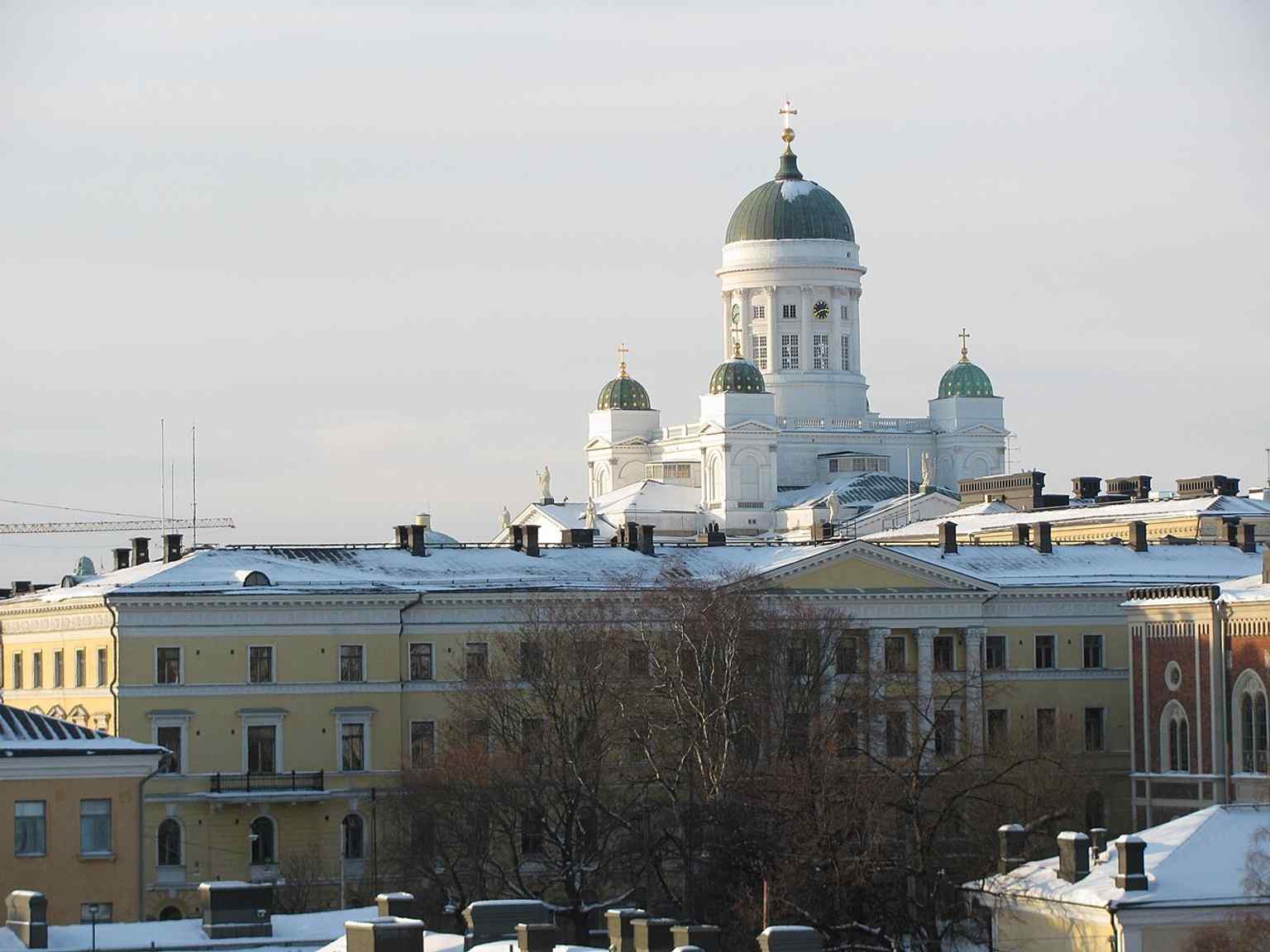
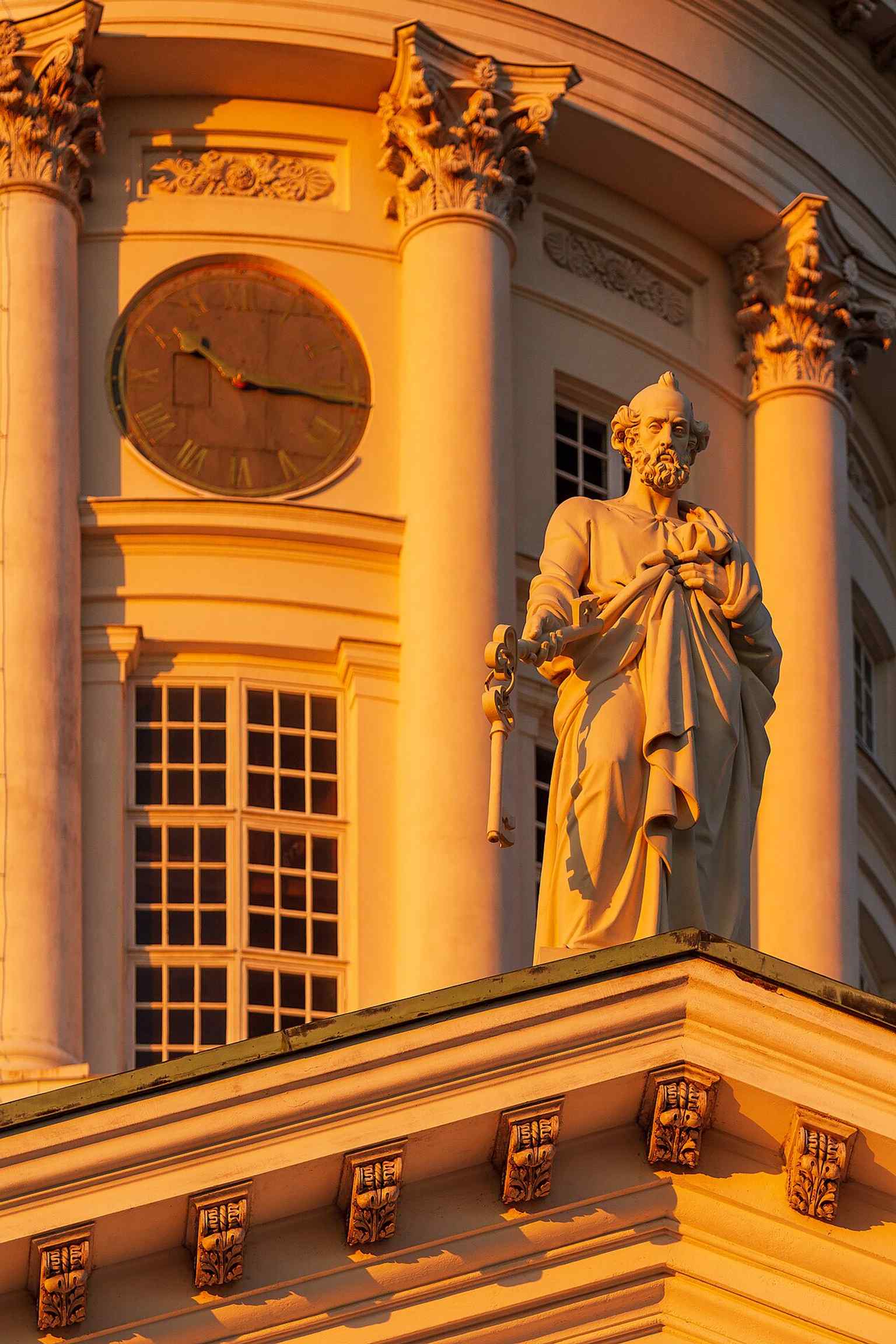
What you see is also not quite Engel’s pure version. He died in eighteen forty, and his assistant Ernst Bernhard Lohrmann finished the job. Lohrmann added the four smaller towers, plus the twelve zinc apostles on the roof, partly because the central dome and long body looked visually awkward without them. If you want a clearer look, check image two in the app; the rooftop figures make much more sense from above.
Engel also lost an argument right in front of you. A guardhouse once stood between the church and the square, and he wanted it kept. The authorities tore it down in eighteen thirty-nine and replaced it with the broad ceremonial staircase. If you like, have a quick look at the before-and-after image in the app; it shows how the space opened up and turned this church into the square’s unquestioned focal point.
That shift matters. After Finnish independence in nineteen seventeen, the Russian name felt wrong. The city renamed it the Great Church, and in nineteen fifty-nine it became Helsinki Cathedral. So this building began as an imperial emblem and ended up absorbed into Finnish identity, all while continuing to host state services. Helsinki does enjoy recycling power into public ritual.
Before we move on, take in the height, the stairs, the dome, the figures watching from the roofline, and ask yourself: does this feel more like a church, a capital marker, or both at once? Then let your gaze widen beyond the cathedral, because the real force of this place comes from the whole ensemble around it. We’ll head next into Senate Square.