
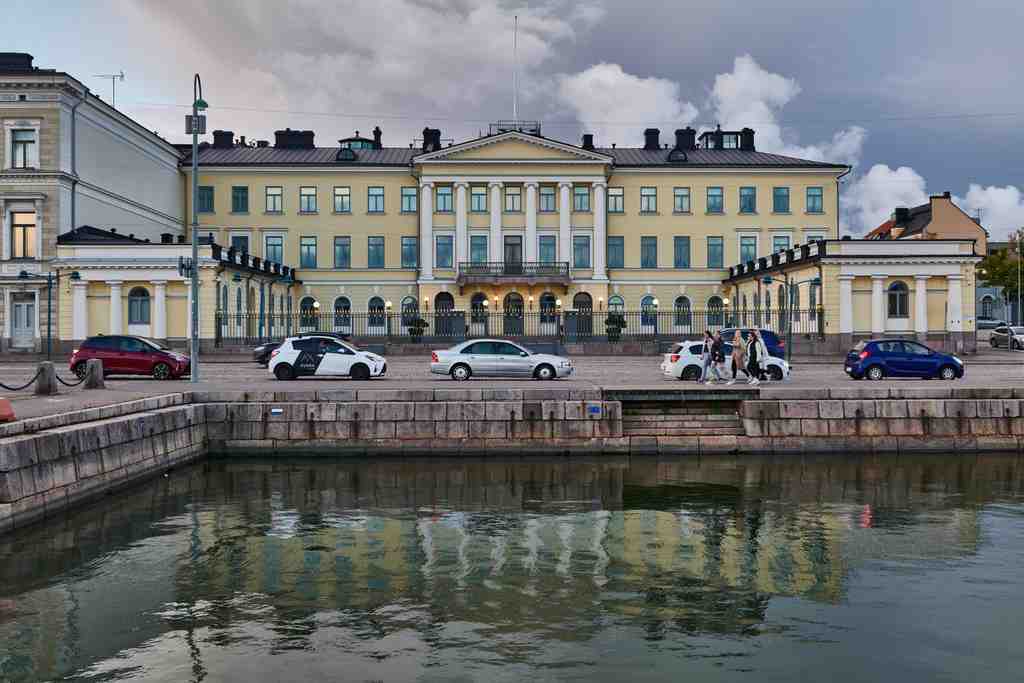
On your left is a long pale stone palace with a strict three-story façade, rows of evenly spaced windows, and a columned central entrance capped by a triangular pediment.
This building is a small masterclass in Helsinki changing costumes without changing the stage. Behind that calm, symmetrical face sits a whole relay of authority: merchant wealth, imperial ceremony, wartime upheaval, and modern state ritual.
It began in the eighteen hundreds as something far less lofty. Architect Pehr Granstedt designed it in eighteen fourteen for J. H. Heidenstrauch, a merchant so wealthy he counted as Helsinki’s richest resident. This was not a palace at all, but an upscale business home. The ground floor handled trade, the second floor housed the Heidenstrauch family, and the top floor held smaller rental apartments. Most visitors never notice that the state here quite literally took over commercial waterfront ground. The family lived here only seventeen years before the Finnish Senate bought the house in eighteen thirty-seven for the Russian emperor’s use. Helsinki does move fast when power wants a better address.
Even the design had layers from the start. Granstedt drew it, Giacomo Quarenghi revised those ideas, and only later did the plans settle into the form you see now, with that Saint Petersburg flavor in its empire style - meaning orderly classical grandeur, built to look calm, balanced, and unquestionably important.
Once the emperor claimed it, the merchant house had to learn court manners. Carl Ludvig Engel oversaw major changes, finished in eighteen forty-three. Builders inserted a Greek Orthodox chapel, a ballroom, dining rooms, a big kitchen, and apartments for the imperial entourage. Later, in the early nineteen hundreds, Johan Jacob Ahrenberg added a larger State Hall and the Atrium, because ceremony has a habit of expanding to fill the available floor plan.
And then history stopped behaving. During the First World War, the palace became a military hospital for two hundred wounded soldiers. During the Russian Revolution, it served as a headquarters for soldiers and workers. In the Finnish Civil War, German forces used it, and later Finnish forces did too. After that, some imagined it as a royal palace for a Finnish king. Furniture was even prepared... and then Finland settled on becoming a republic instead, so some of those pieces ended up sold to Stockmann. A very Finnish ending: monarchy, briefly considered, then redirected into retail.
By the early nineteen twenties, the building had entered its current life as the Presidential Palace. The old Orthodox chapel came out, and a library took its place. Presidents no longer live here - that ended in the nineteen nineties - so now the palace works mainly as a ceremonial house and office. Still, the rituals remain. Every sixth of December, the independence day reception unfolds inside, the biggest annual event in the building, all handshakes, gowns, medals, and careful choreography for the cameras. Power changes flags and job titles, but it still likes a staircase and a proper room.
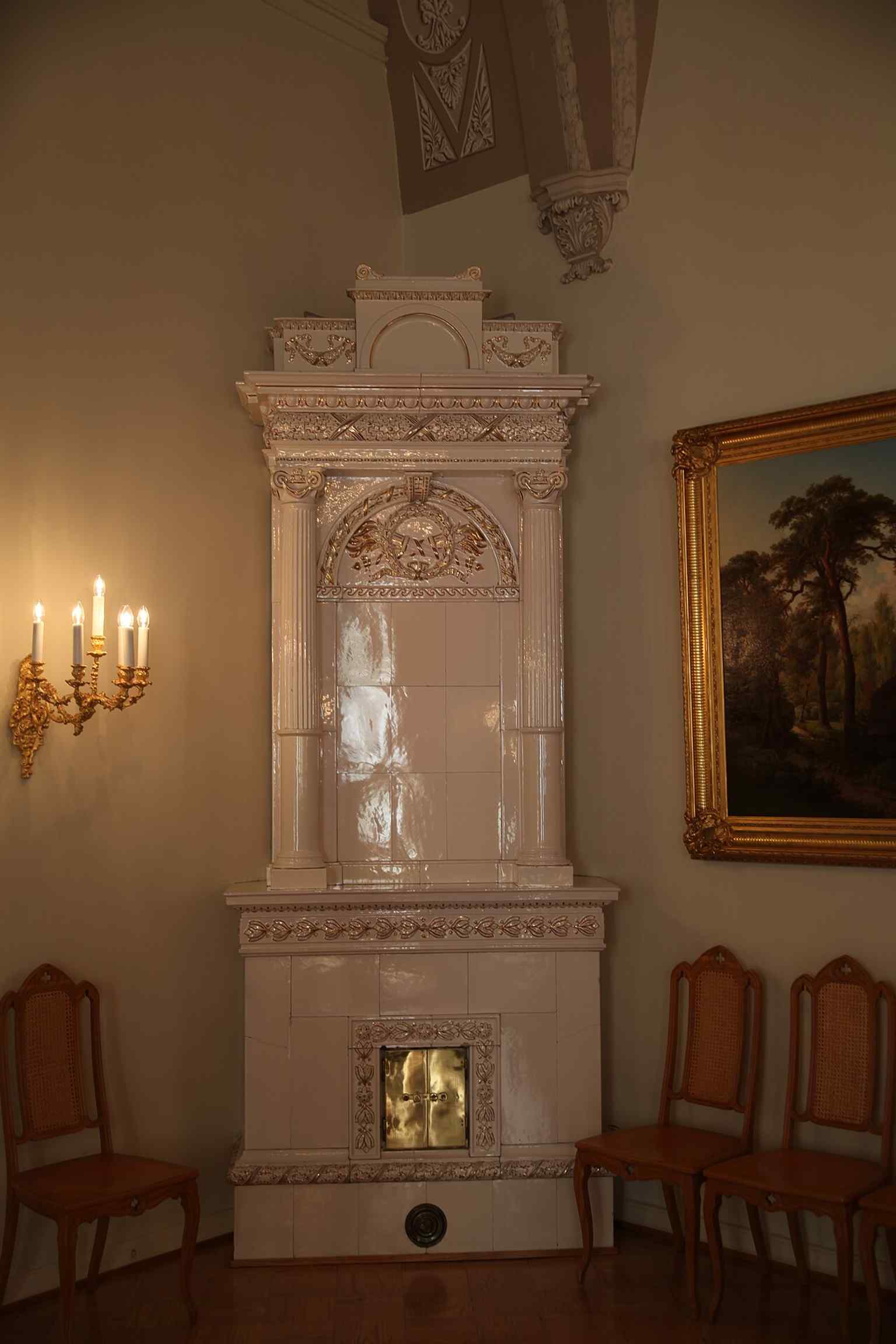
If you check the image on your screen, that restored stove hints at the interiors beyond the façade. During the renovation from two thousand thirteen to two thousand fifteen, workers carefully brought back older colors, repaired historic lighting, and made the whole building function again without stripping away its memory.
From here, imperial influence is about to turn more openly sacred and more visibly Russian in brick and domes. We’ll pick that up at Uspensky Cathedral, about a six-minute walk away. For practical purposes, you can pass by this exterior at any hour.





