
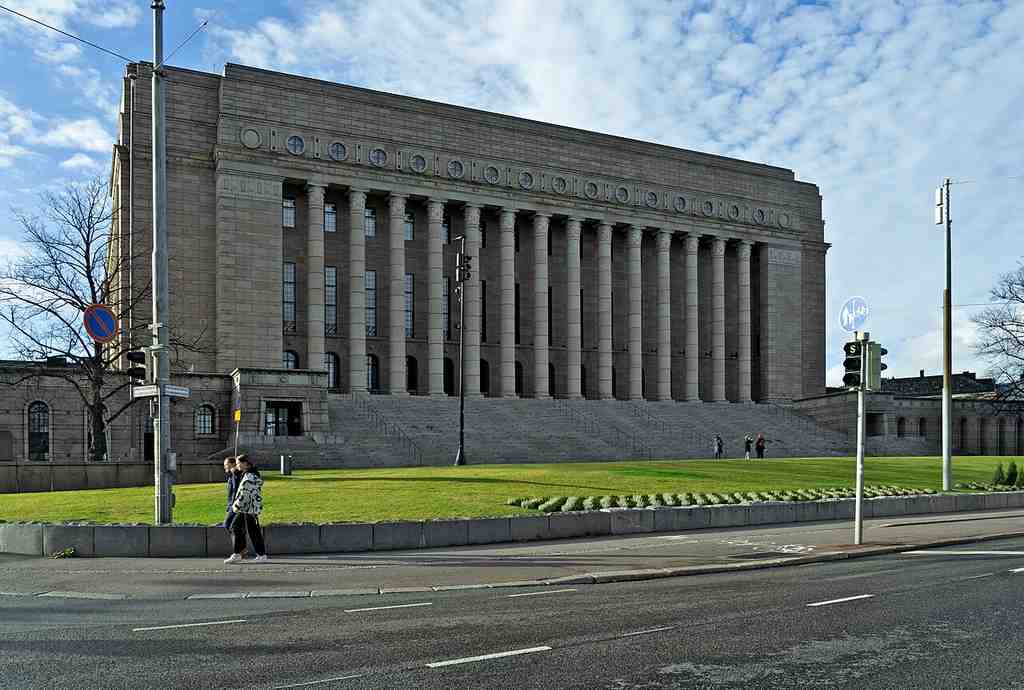
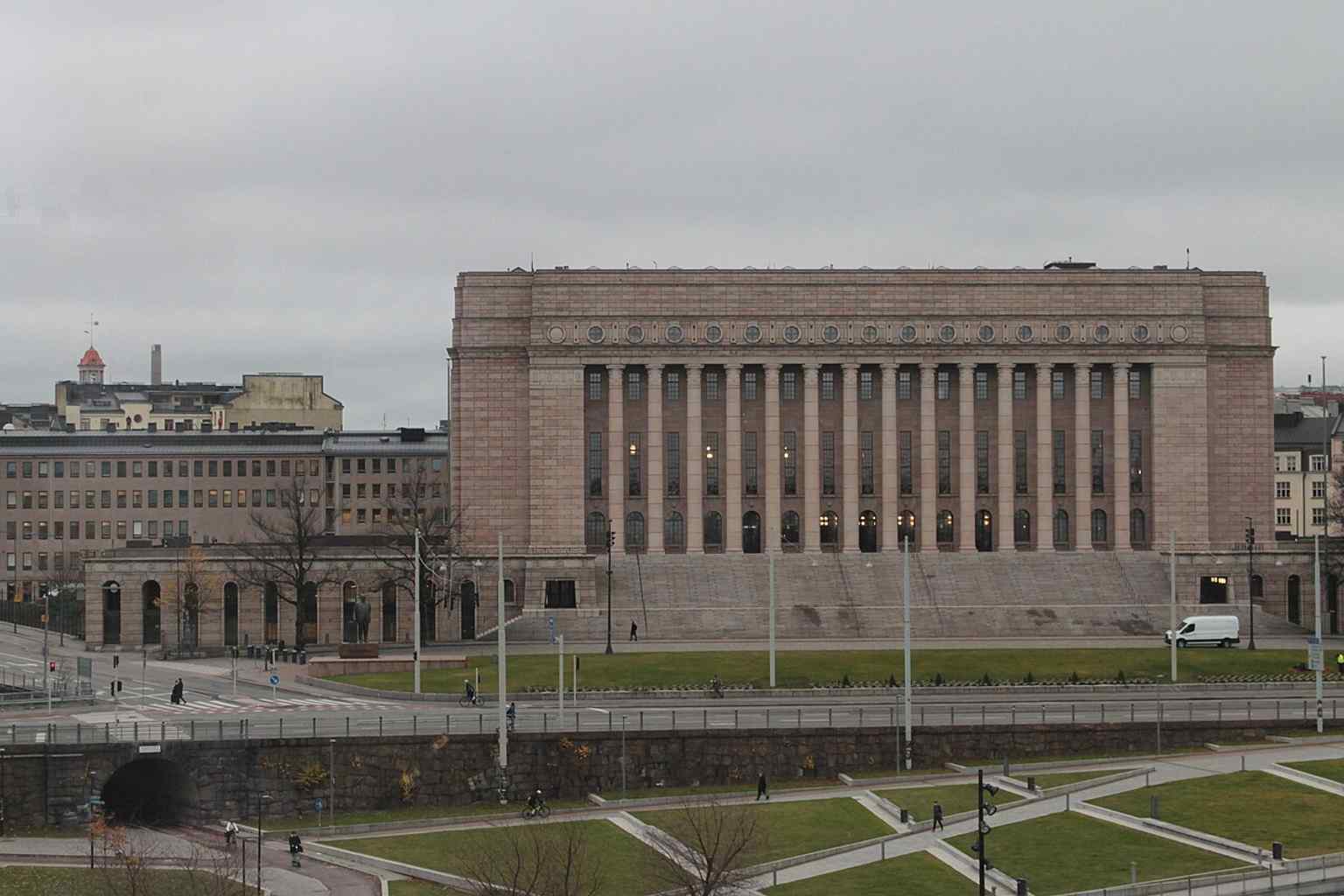
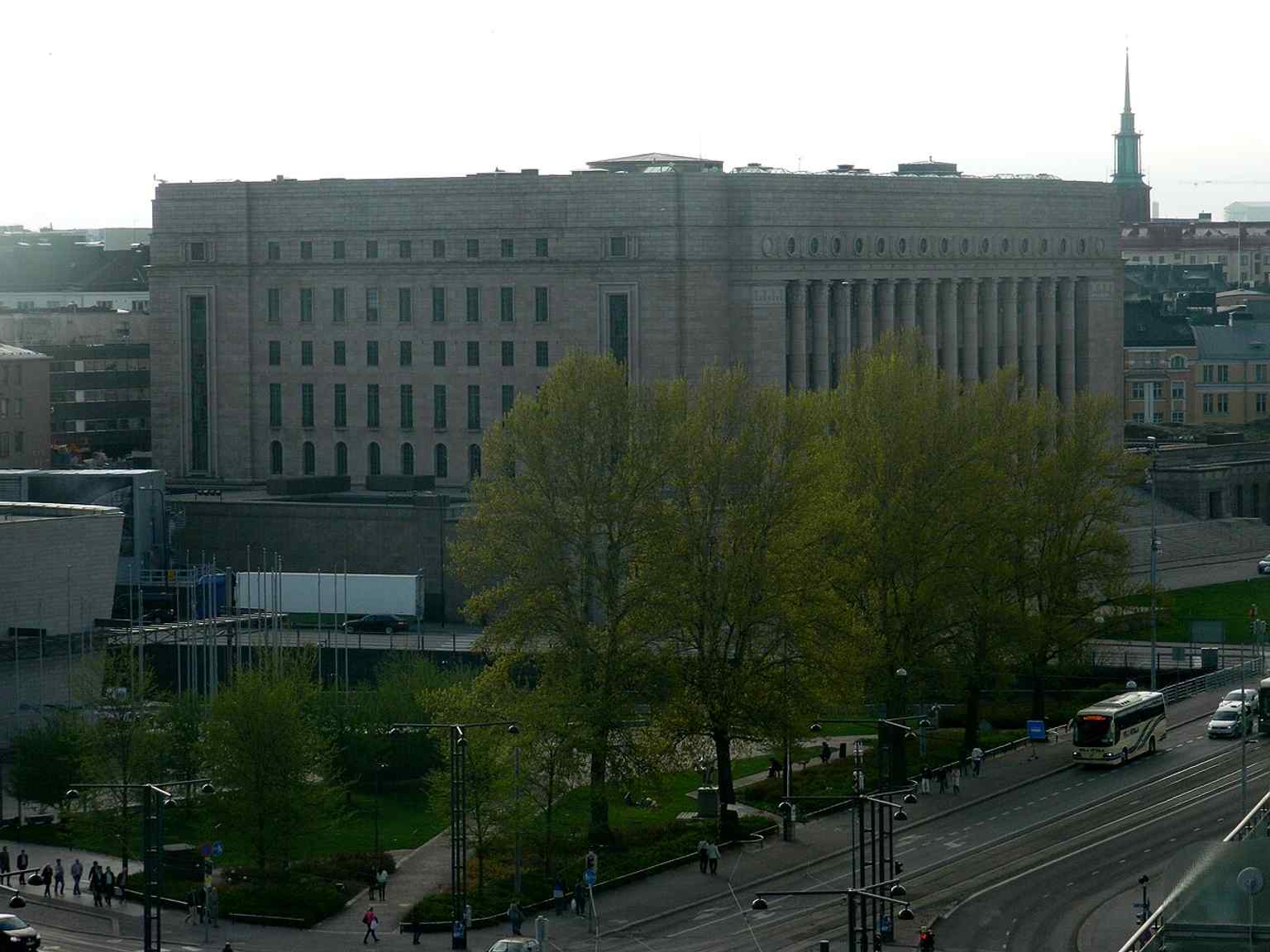
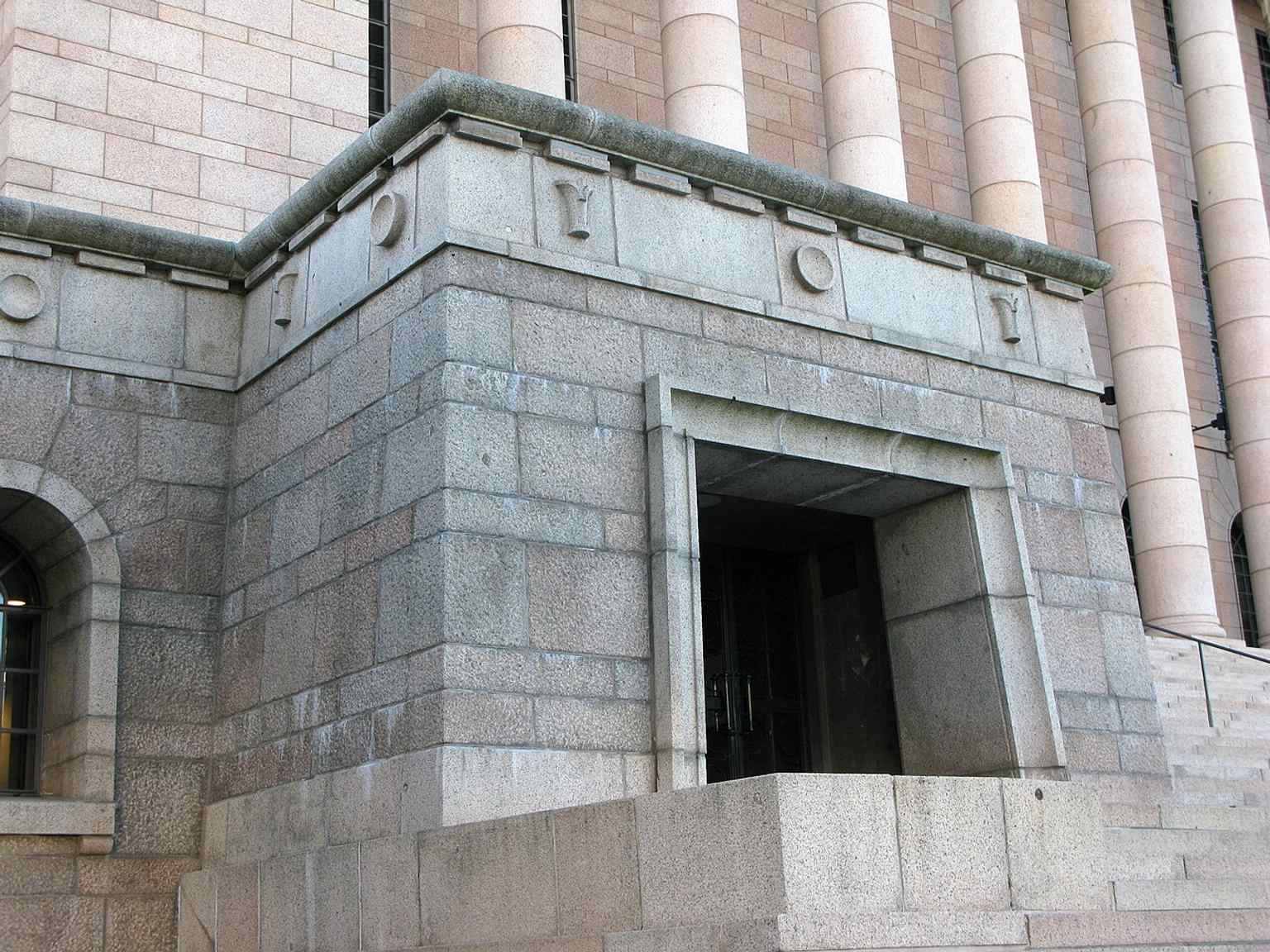
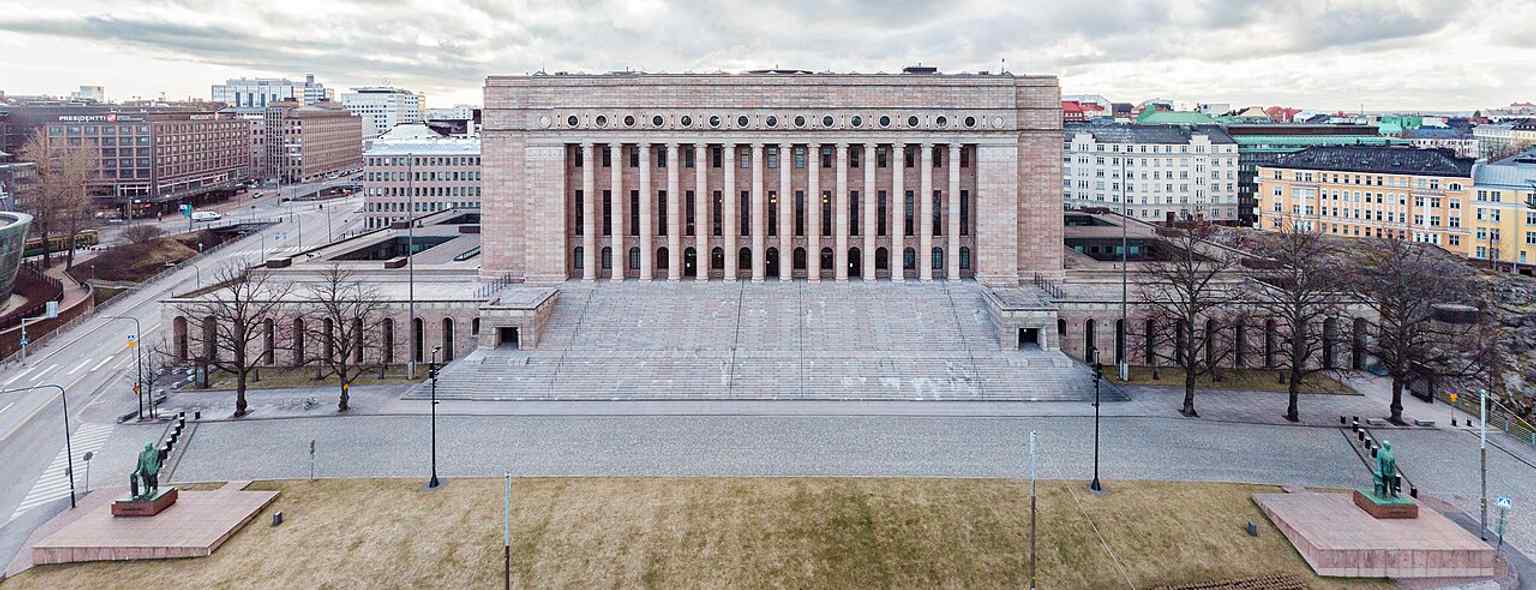
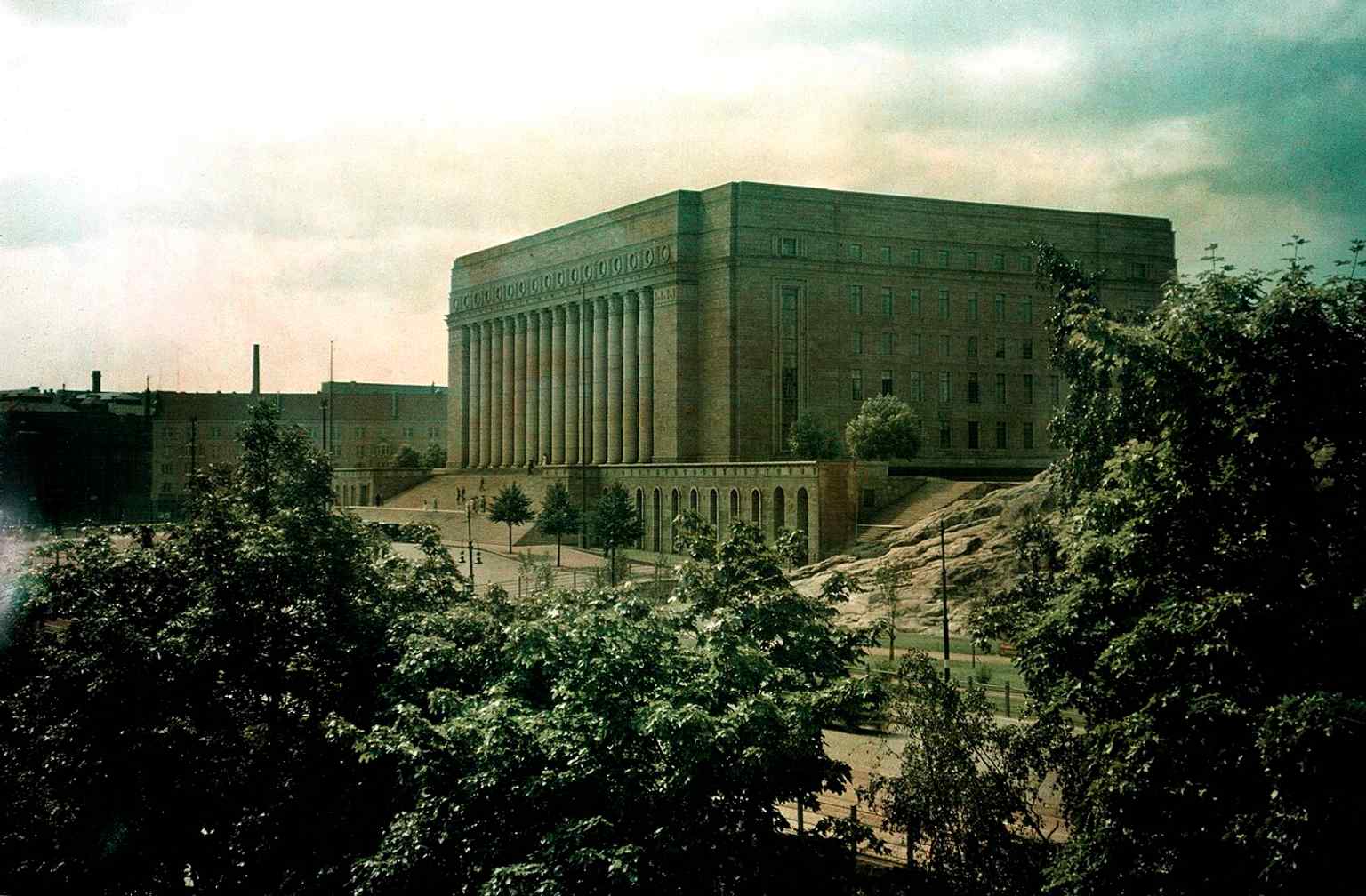
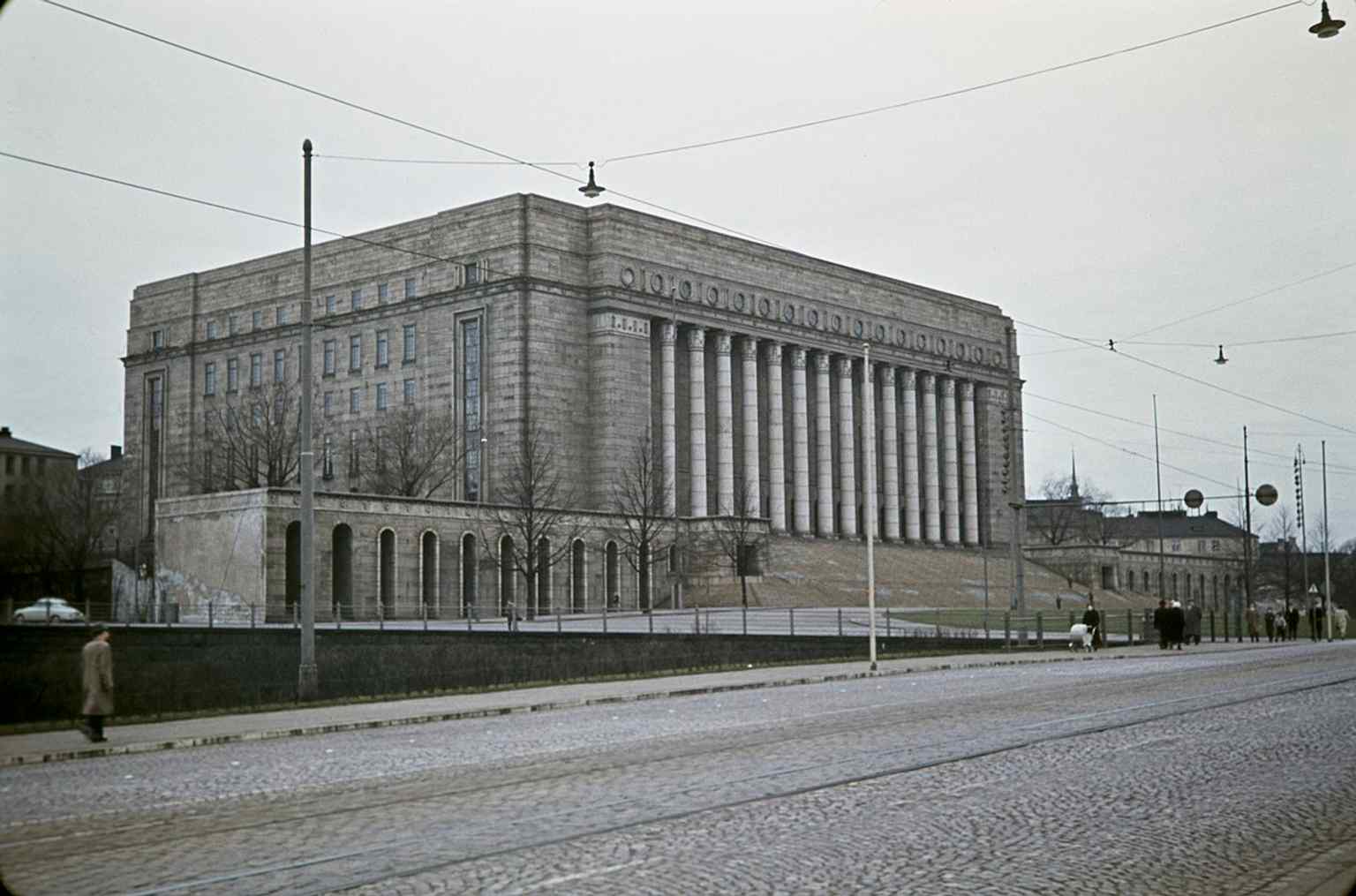
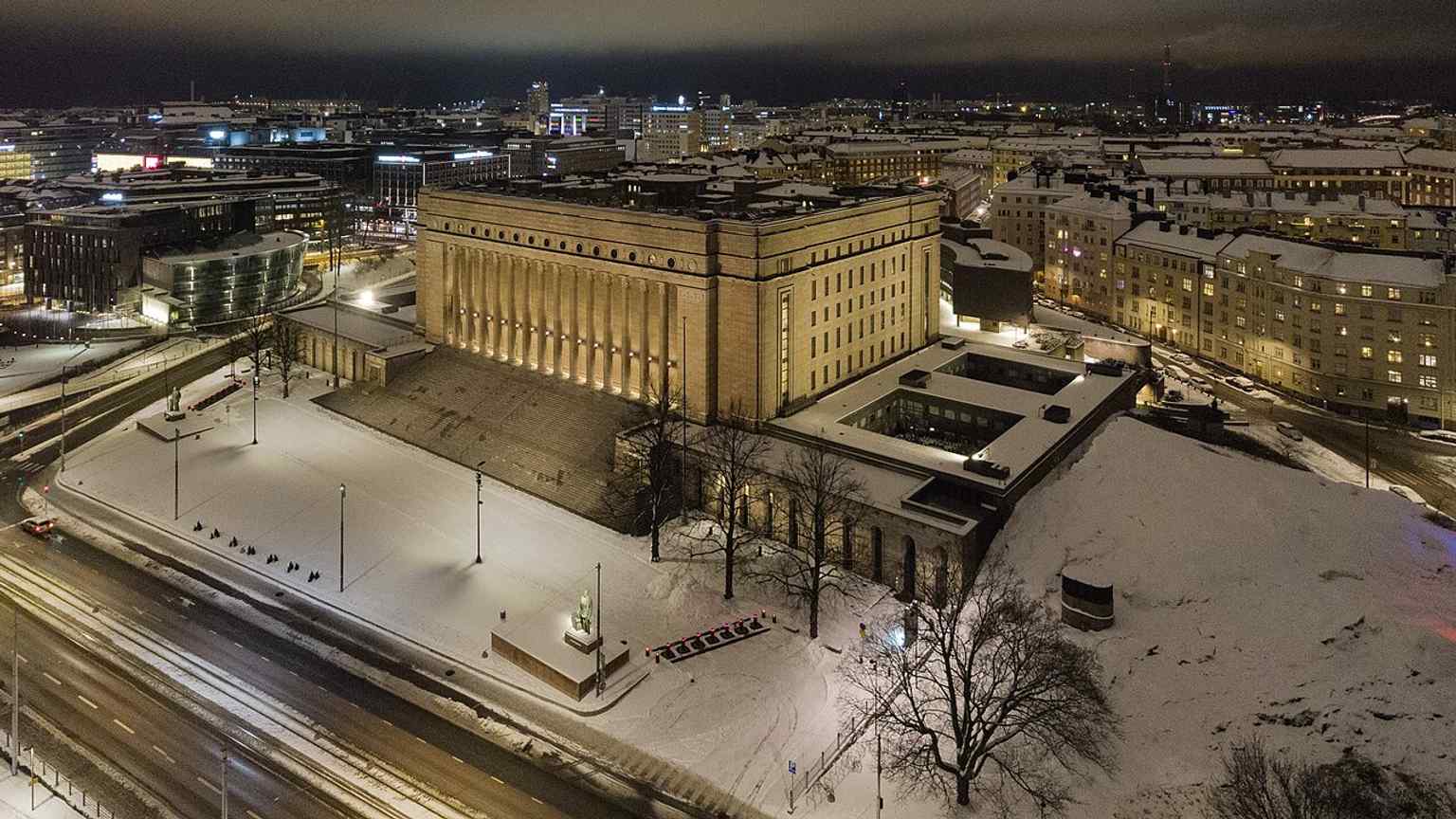
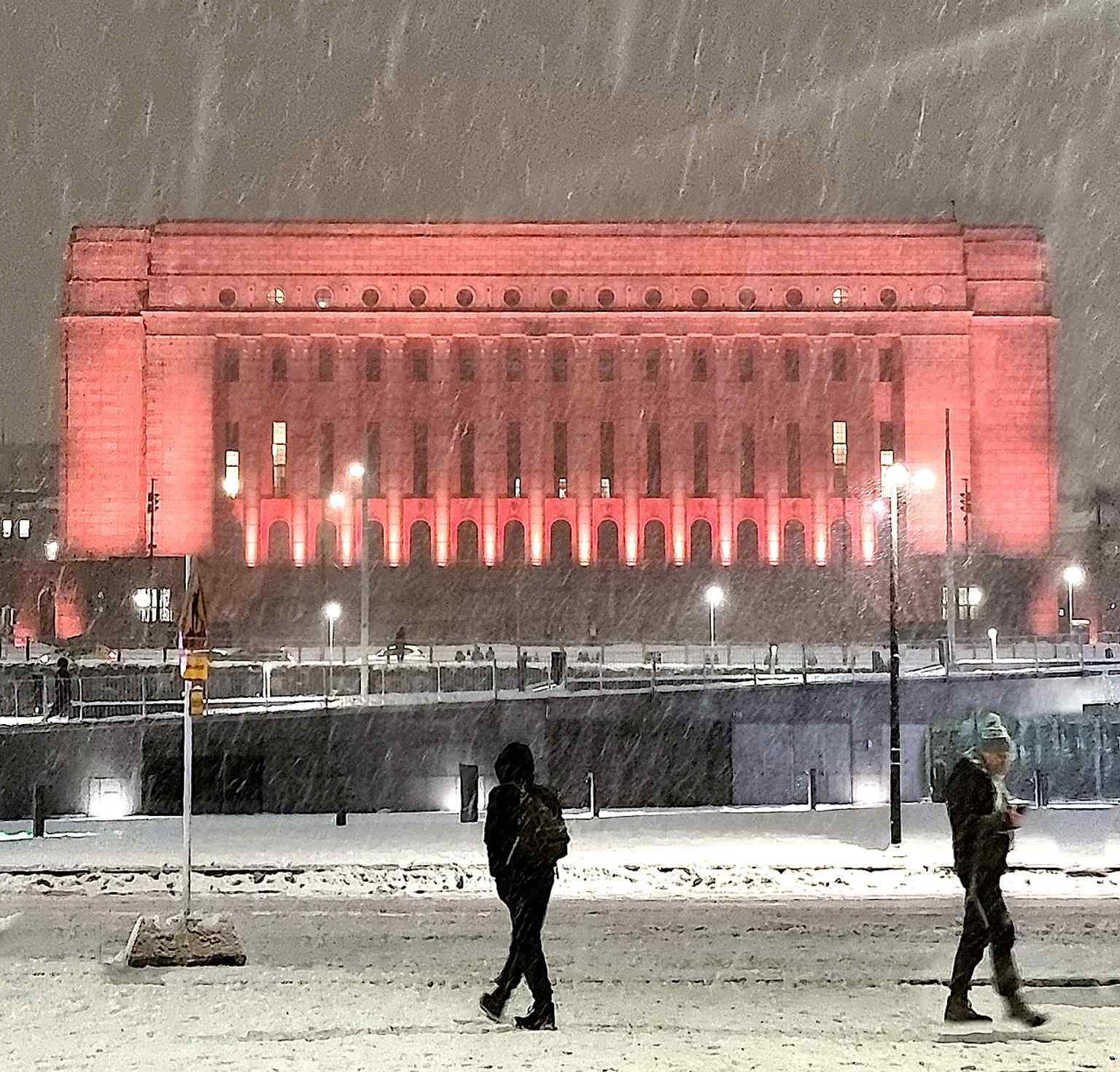
On your left stands a massive cube of reddish-gray granite, lifted by a broad staircase and a row of fourteen tall columns, with round windows and stylized lion heads marking the facade.
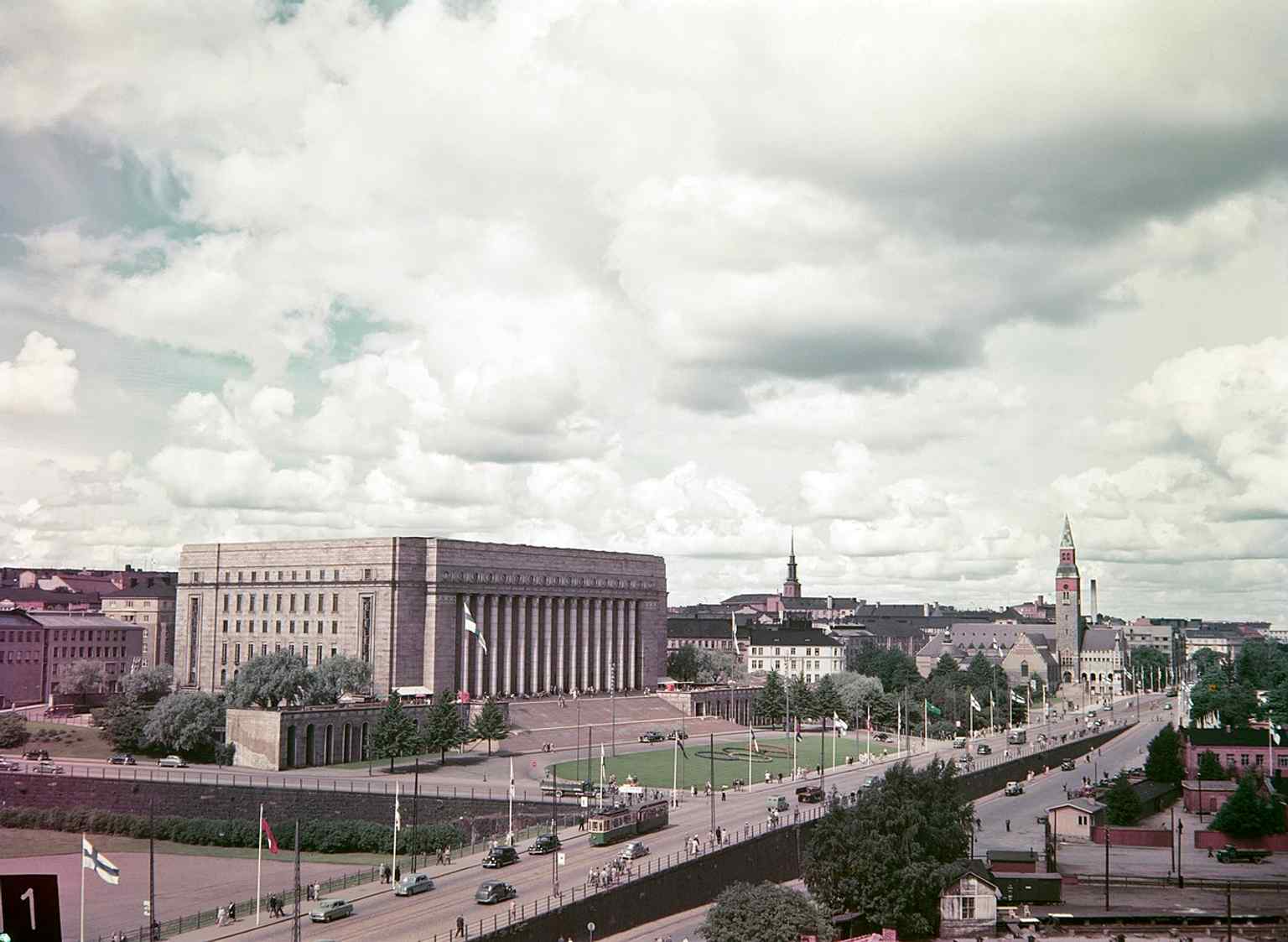
This is Parliament House, and it knows exactly what role it is playing. J. S. Sirén designed it in the nineteen twenties as a great stone argument for permanence: a strong state, visible to everyone, but reached by rules, stairs, and ceremony. That is why this slope is often called Parliamentary Hill. The climb matters. Democracy here does not hide in a courtyard; it puts itself on a stage and asks the public to look straight at it.
Before this building opened in nineteen thirty-one, parliament met for two decades in the Heimola House, a solution that dragged on so long it stopped feeling temporary. So when this place finally opened, it did more than provide desks and corridors. It announced that Finnish self-government had moved from improvisation into architecture.
Take in the symmetry... the whole front is carefully balanced. Sirén used Nordic classicism, borrowing the language of ancient Greece and Rome without turning the place into costume drama. Those columns rise to about the fourth-floor level, and their capitals - the carved tops - follow a Corinthian style, which means they sprout stylized leafy forms. The stone came from Kalvola, a Finnish granite chosen to suggest national toughness. Subtle? Not especially. Effective? Very.
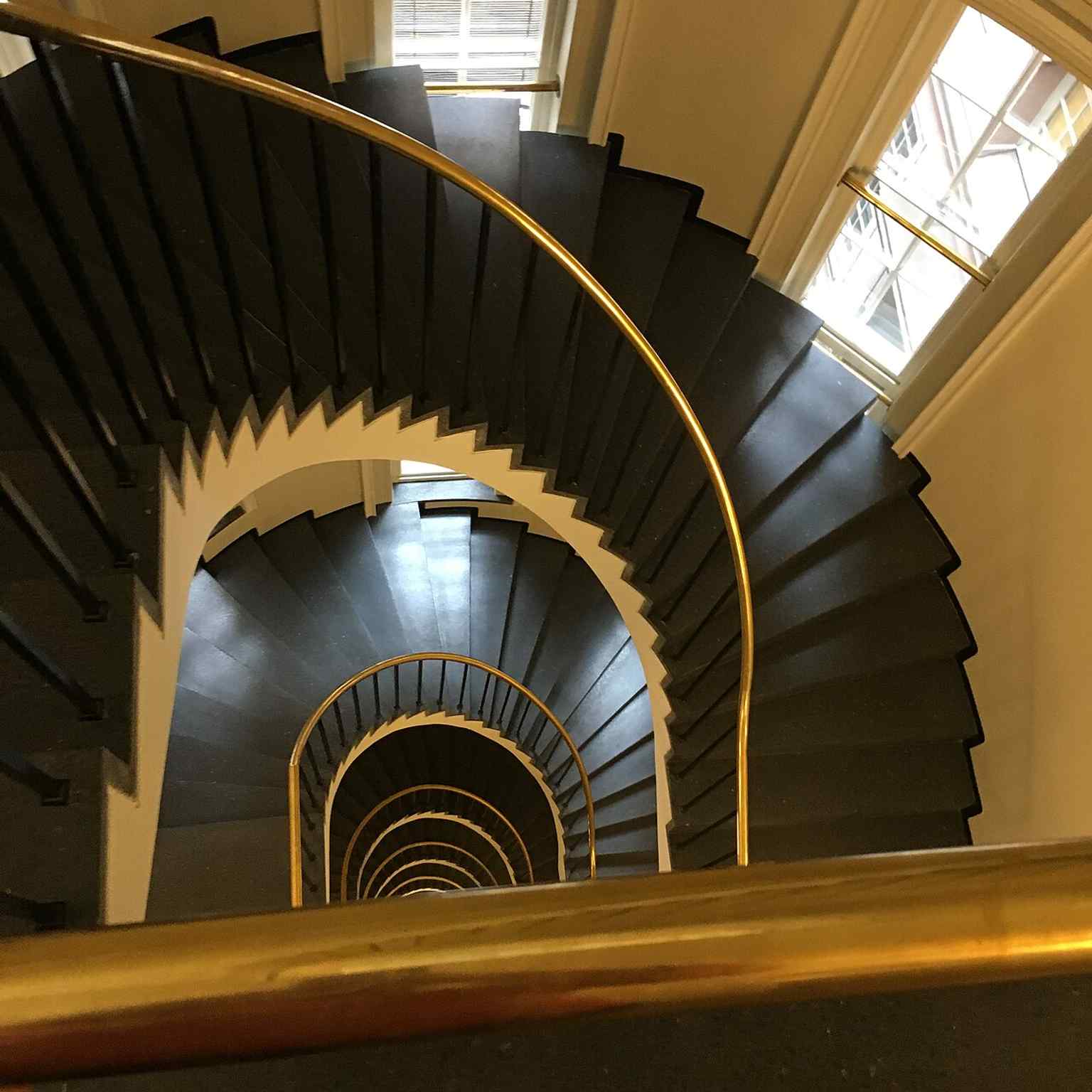
Inside, Sirén hid the main chamber at the center like a protected core. It was unusually bold for its time: a circular debating hall, lit from above by a lantern skylight, meaning a raised roof light that drops daylight into the room. If you want a glimpse of that restored interior, have a look at the image in the app.
And then there is P. E. Svinhufvud, one of the early speakers of parliament, who brings the human scale back into all this solemn stone. He had a reputation for bringing a little dry humor into formal settings. Even constitutional ritual, it turns out, can have a slightly eccentric casting process.
That mix of grandeur and odd humanity runs through the building’s history. In nineteen thirty-six, a member named Ryömä got an official rebuke here for a speech insulting Adolf Hitler, proof that debates inside this hall never floated free from Europe’s darker weather. In February nineteen fifty, a bomb attack struck the building and sharpened the sense that this granite block had become more than an office. It had become the visible body of national power.
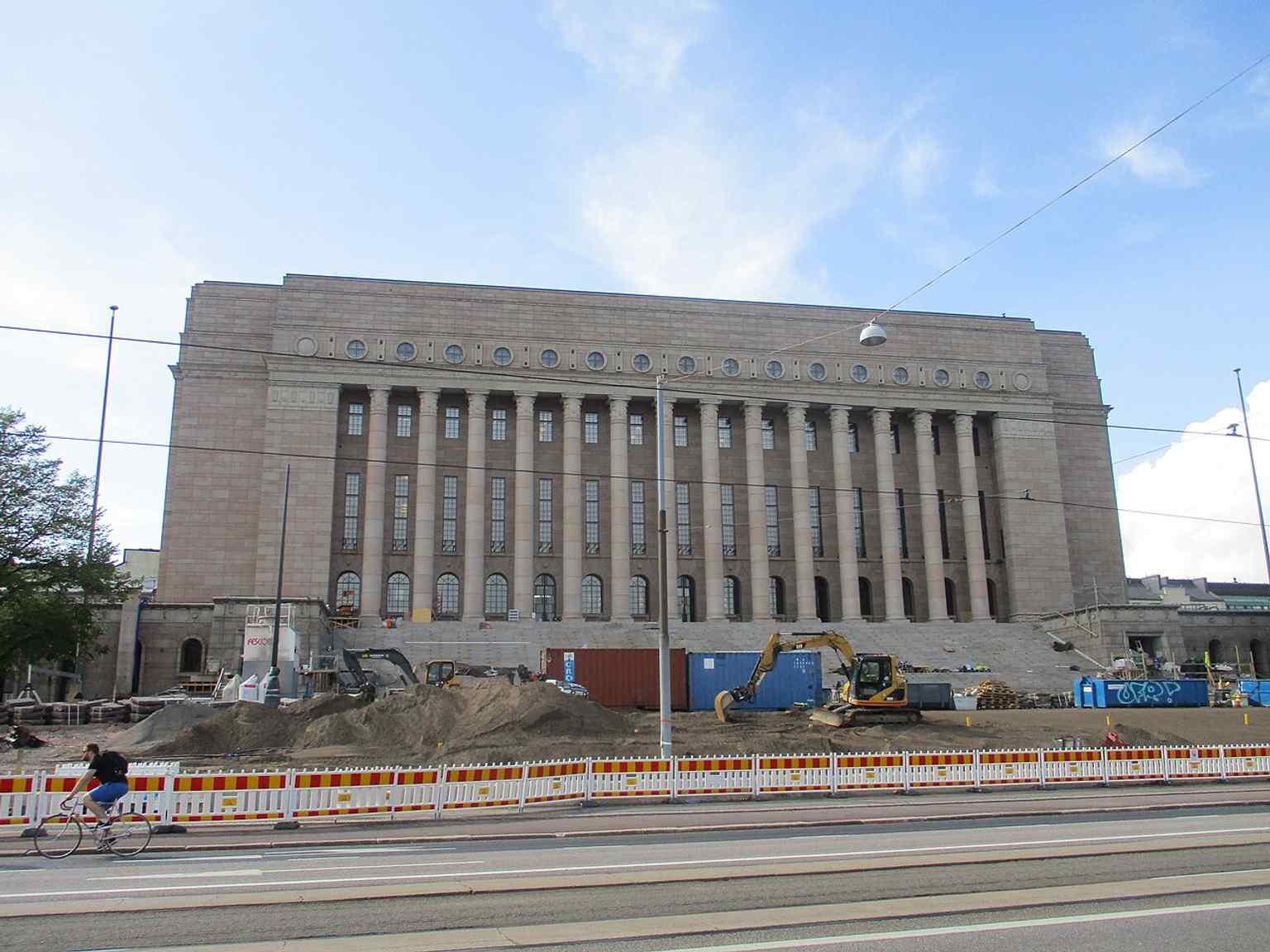
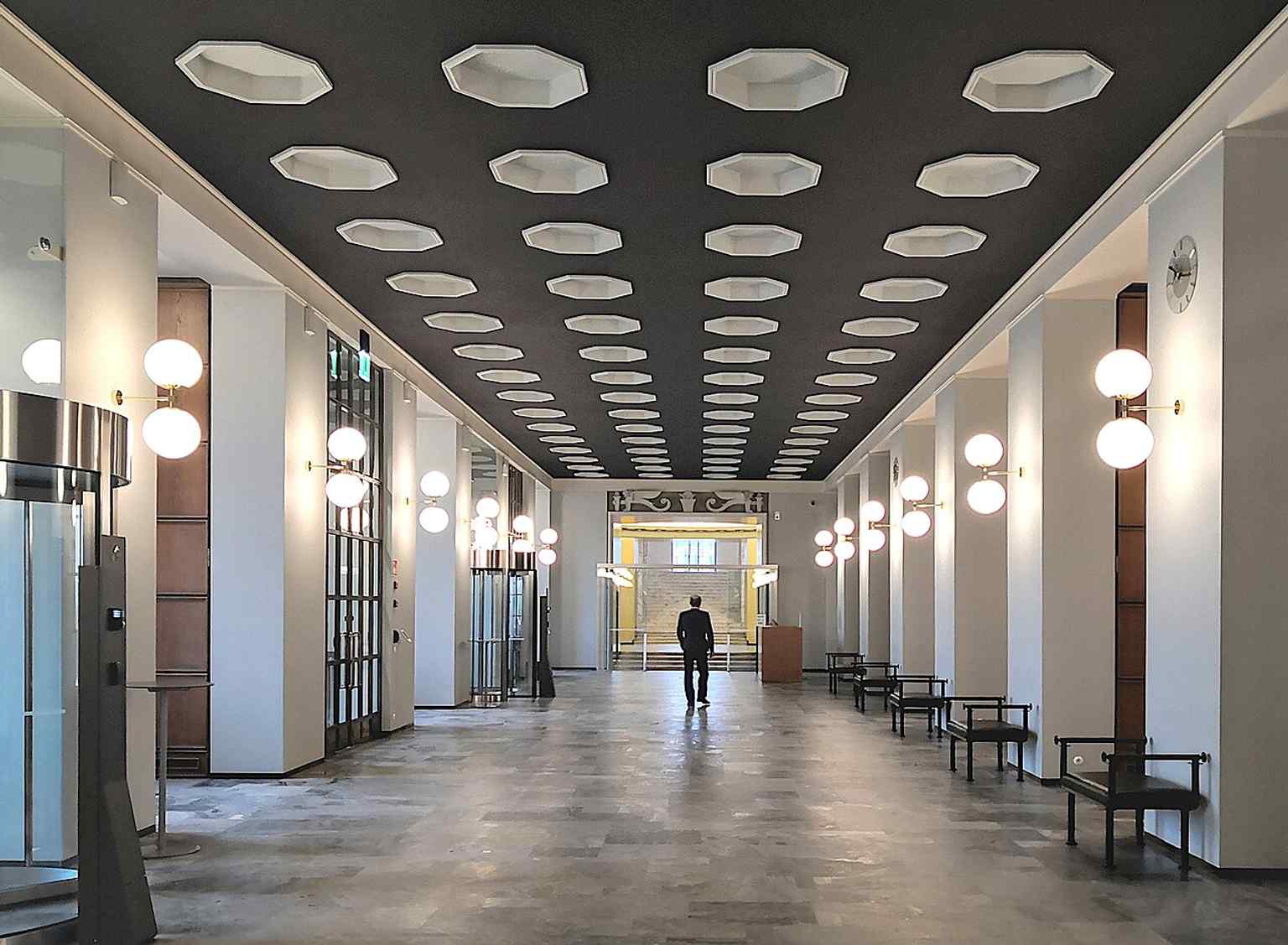
More recently, the house went through a huge restoration from twenty fifteen to twenty seventeen. Engineers replaced pipes, ventilation, heating, windows, the roof, and conserved original colors, furniture, and decoration. During demolition, workers found not just leaks but empty liquor bottles... which feels reassuringly human for a place devoted to procedure. You can check the before-and-after image in the app to see how completely the facade disappeared behind restoration wrapping before it returned.
From here, authority looks formal, elevated, almost theatrical. Our next stop offers a very different civic gesture: not debate on a hill, but quiet care at street level. Head on to Kamppi Chapel, about seven minutes away.






%20-%2001.jpg)


