Look for a dark bronze horse and rider in a calm forward walk, lifted high on a massive red granite pedestal marked simply with the name Mannerheim.
Helsinki is a compact capital where whole chapters of national life sit within walking distance... art, government, trade, belief, memory. This monument is one of the clearest early examples of power made public. Instead of hiding authority behind doors, the city sets it out here in shared space, large enough that nobody can pretend not to notice it.
The man up there is Carl Gustaf Emil Mannerheim, or C. G. E. Mannerheim: military leader, later president, and one of the most argued-over figures in Finnish history. Bronze simplifies a person. Here, history gets compressed into posture, uniform, horse, and height.
An equestrian statue simply means a statue of a rider on horseback, but in Europe it carries heavy baggage: rulers, commanders, men expected to look inevitable. Finland had almost none before this. So when sculptor Aimo Tukiainen created this one, unveiled on the fourth of June, nineteen sixty, on Mannerheim’s birthday, he was not just honoring a man. He was helping Finland decide what national authority should look like in public.
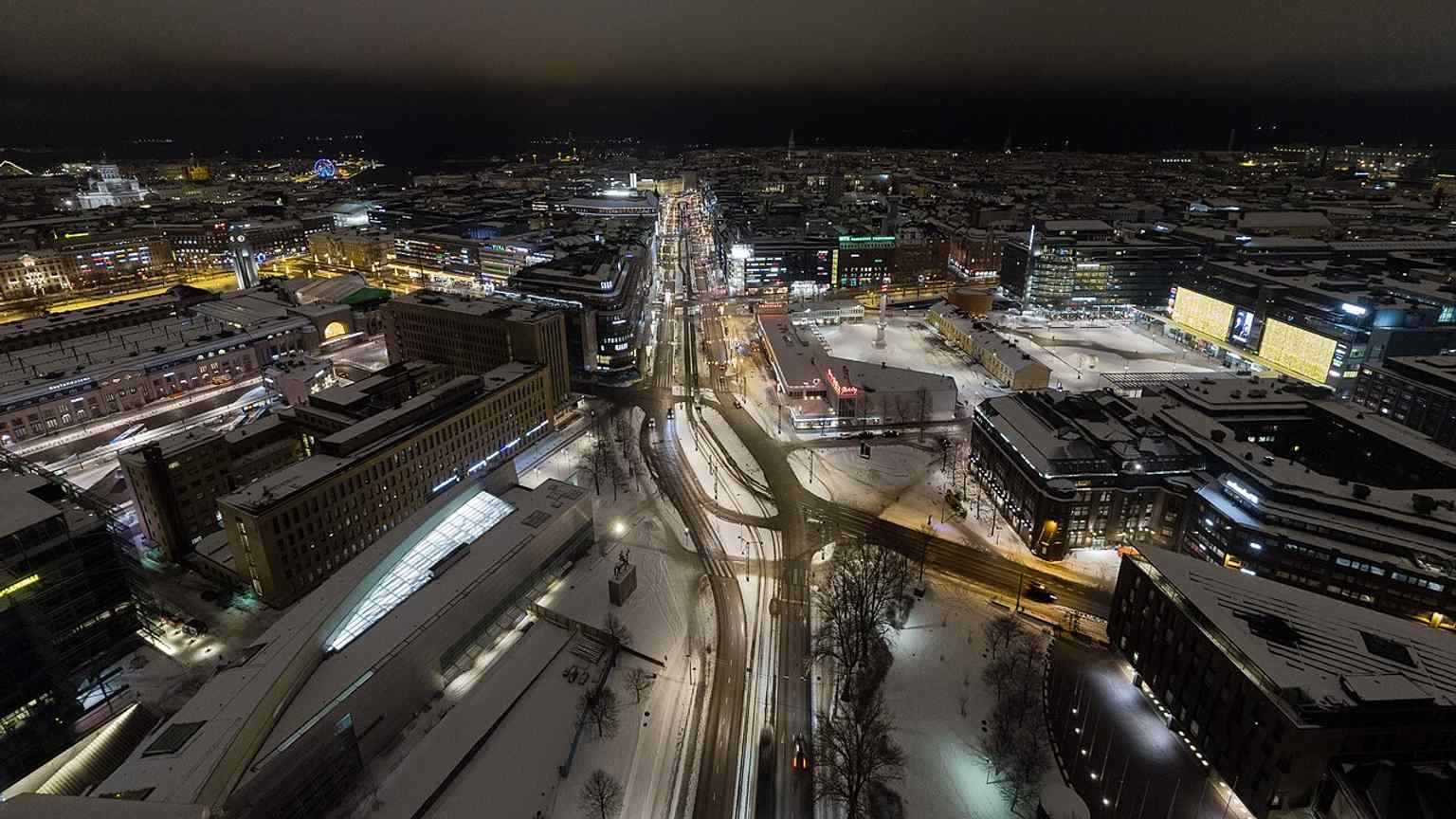
If you check the image on your screen, you can see how the whole square gives the statue breathing room in the middle of the city. That was deliberate. Officials considered several sites, even near Parliament and the National Museum, before choosing this plaza in front of the Post Office in nineteen fifty-six. The boulevard beside you became part of the story too: the Mannerheimintie corridor, a kind of civic spine where museums, state buildings, and public memory line up in plain view.
Tukiainen obsessed over accuracy. He studied photographs and film, and the committee even examined horse movement in slow motion to make sure the gait looked believable. Most visitors hear that this horse is Käthy, Mannerheim’s last mount. Locals will tell you that too. It is only half true. Käthy inspired the sculpture, but Tukiainen did not intend a strict portrait of one specific horse. What he chose instead was a free walk, not the usual heroic gallop. It gives the whole monument a strange authority: controlled, unspectacular, very Finnish.
There is a human story buried in that discipline. Tukiainen’s son, Heikki, remembered his father leaving home around six or seven in the morning and working until late, under intense public scrutiny. Everyone had opinions... on the horse’s legs, the medals, the uniform, the politics, naturally. Nations are generous with advice when someone else is doing the hard part.
The statue itself stands about five and a half meters high, and the red granite pedestal adds another six point three. Inside that pedestal sits something most people never notice: microfilm containing the names of the hundreds of thousands who donated to the project. In nineteen fifty-two alone, seven hundred thirty-seven thousand five hundred three donors gave seventy-eight million marks, roughly two point three million euros today. So this towering figure also rests, literally, on mass participation.
The monument drew criticism from the left, from modernist critics, from people who thought hero statues belonged to another age. That argument never really vanished. But that is exactly why this place matters: it shows how a city turns memory into stone and bronze, then leaves the public to keep debating it.
Farther up the boulevard, the story widens from one commanding figure to the institutions that explain the nation around him... and the National Museum is about an eight-minute walk away. This stop is always accessible, twenty-four hours a day.