
Helsinki Audio Tour: Bridges, Markets & Modern Marvels
Beneath Helsinki’s cool northern light, century-old secrets simmer just beneath the surface—hidden messages in sculpture, silent prayers behind stone doors, and forgotten whispers in busy markets. This self-guided audio tour pulls you beyond the postcards, guiding each step through untold stories and places most travelers never find. Which political scandal once rattled Salem Congregation’s calm facade? What message for the future hides in the bronze curves of the World Peace statue? And could an odd flood of fish at Hakaniemi be more than just a trade accident? Trace the city’s pulse from sacred halls to bustling squares. Feel sweeping history come alive with every shift in the wind and glance at the skyline. Discover Helsinki’s secret drama, where art, faith, and revolution twist together on street corners and under painted ceilings. Start walking. Your path to Helsinki’s hidden depths begins with the next step.
Tour preview
About this tour
- scheduleDuration 80–100 minsGo at your own pace
- straighten2.6 km walking routeFollow the guided path
- location_on
- wifi_offWorks offlineDownload once, use anywhere
- all_inclusiveLifetime accessReplay anytime, forever
- location_onStarts at Pitkäsilta
Stops on this tour
lock_open 3 free previews · 13 unlock with purchase
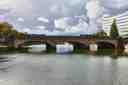
Pitkäsilta is a broad granite bridge with three low arches and stout stone posts, its masonry marked with carved Helsinki coats of arms. A bridge often looks like a simple answer…Read moreShow less
Open dedicated page →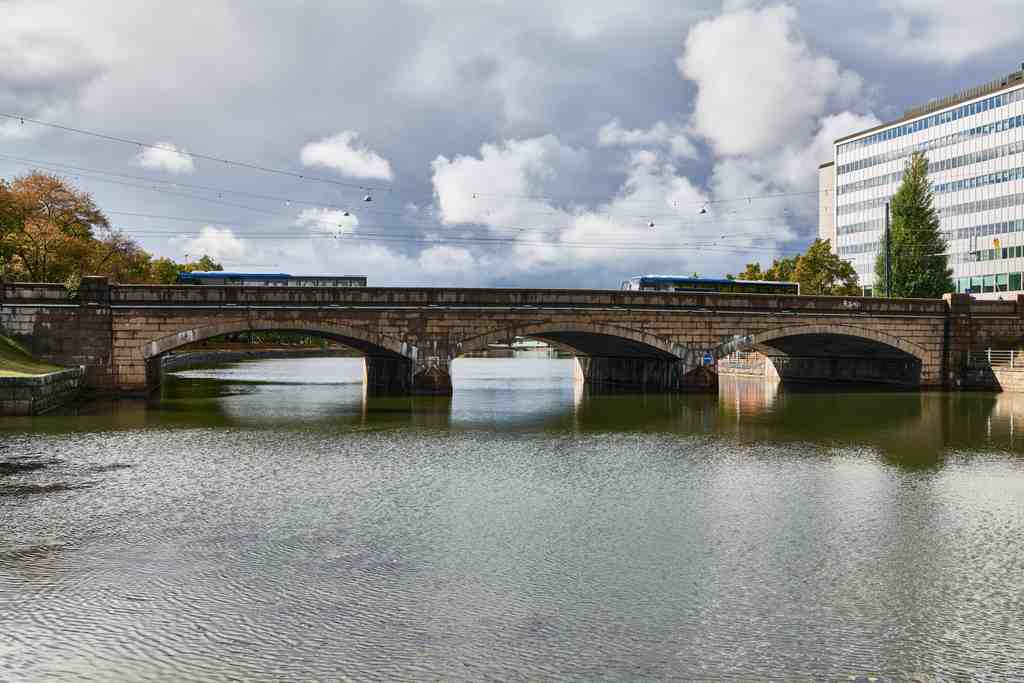
PitkäsiltaPhoto: Leonhard Lenz, Wikimedia Commons, CC0. Cropped & resized. Pitkäsilta is a broad granite bridge with three low arches and stout stone posts, its masonry marked with carved Helsinki coats of arms.
A bridge often looks like a simple answer to a practical problem: water here, people there. But this one learned very early that crossings are never only physical. Pitkäsilta carried carts, workers, traders, arguments, ambitions, and, in time, the uneasy feeling that one side of the city did not quite belong to the other.
For a long while, this was the edge of Helsinki itself. In the sixteen forties, the road from the young city toward Häme and eastern Uusimaa began near what is now Senate Square, and the first bridge across Kaisaniemenlahti arrived in sixteen fifty-one. Back then, the area ahead was still broken into islands, and this was simply the longer of two bridges leading toward them. That plain fact gave Pitkäsilta its name: the long bridge.
What you see now is the fifth bridge on this spot. Earlier wooden versions burned twice when retreating Swedish troops set them alight, first in seventeen thirteen and again in seventeen forty-two, and each time the city rebuilt. By the late nineteenth century, the crossing had become a pressure point. As Kallio and Sörnäinen filled with new residents, the bridge groaned under the strain. In January of nineteen ten, people counted between one thousand eight hundred and two thousand horse-drawn loads crossing each day, along with twenty-seven thousand to twenty-nine thousand pedestrians. A city can reveal itself in traffic figures if you know how to read them.
So Helsinki finally chose permanence. Architect Runar Eklund designed this restrained granite bridge, completed in nineteen twelve, with a deliberate simplicity: three arches, a width of twenty-two metres, and twelve heavy lamp-post piers, sometimes called “old man pillars”, carrying the city’s coat of arms. Look at the before-and-after image in the app when you like; it captures the moment a modest wooden crossing became this stern civic threshold.
And then came nineteen eighteen. Shell marks from the Battle of Helsinki still scar the structure. Historian Tuomas Hoppu later confirmed that those wounds truly belong to the Civil War, when German forces fired toward the bridge to cut Red Guard movement. No wonder Pitkäsilta became more than stone and traffic. For decades, people spoke of crossing it as crossing a social frontier, from the bourgeois centre to workers’ Helsinki north of the bridge.
If one bridge carried you from one social world into another, would you step forward feeling invited, judged, or quietly changed?
Now let your gaze follow the water beneath the arches, because the channels and shorelines ahead did not keep their original shape for long. We’ll continue toward Siltavuorensalmi. And, fittingly for a crossing, Pitkäsilta remains open at all hours.
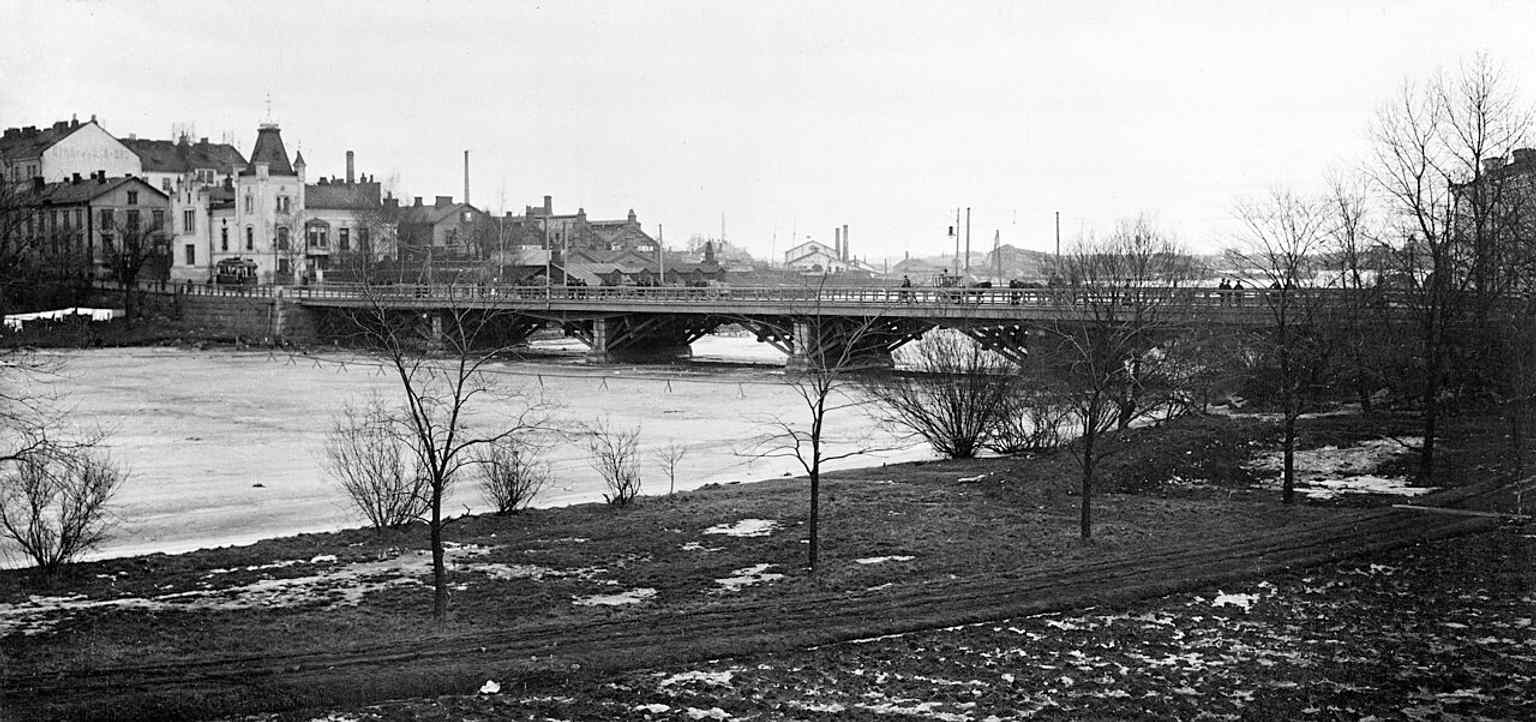
Pitkäsilta still wooden in 1909, before the stone bridge opened in 1912 and replaced the earlier crossings over Kaisaniemenlahti.Photo: Sakari Pälsi, Wikimedia Commons, CC BY 4.0. Cropped & resized. 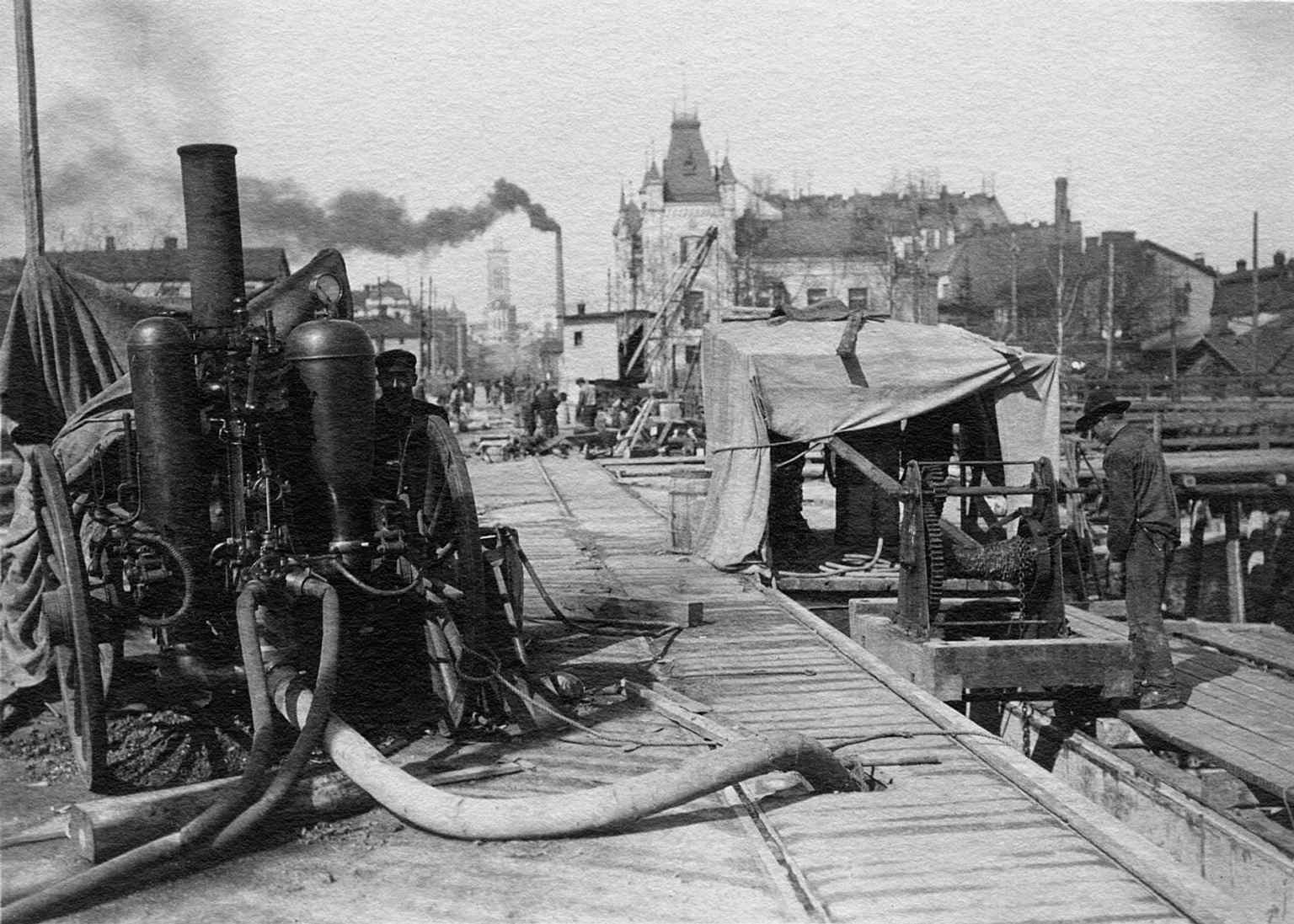
Bridge works in 1911, showing the construction phase that led to the current granite Pitkäsilta completed the next year.Photo: Unknown authorUnknown author, Wikimedia Commons, CC BY 4.0. Cropped & resized. 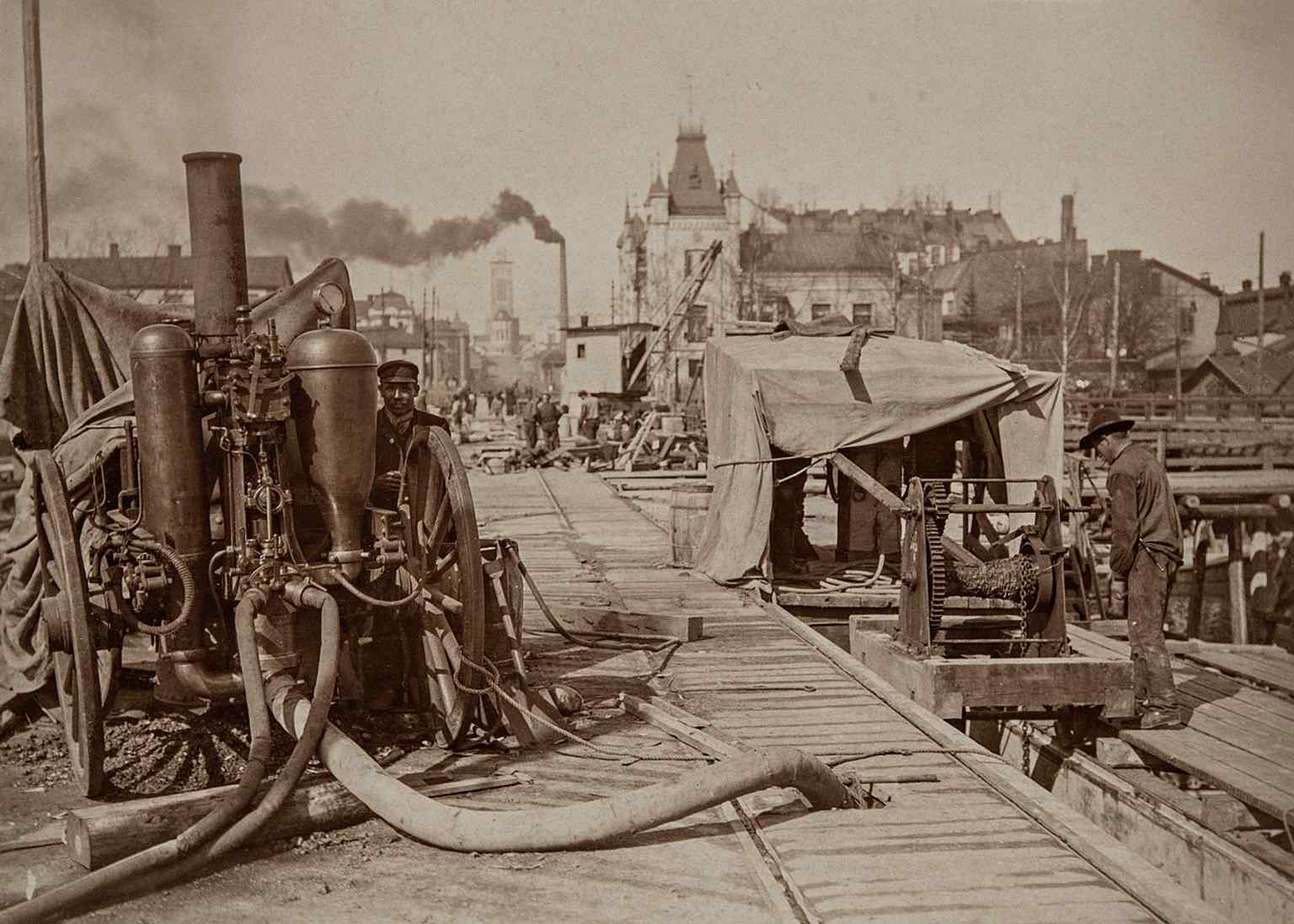
A busy construction scene with steam pump and winch, matching the 1911 build-out of the new 22-meter-wide stone bridge.Photo: Unknown authorUnknown author, Wikimedia Commons, CC BY 4.0. Cropped & resized. 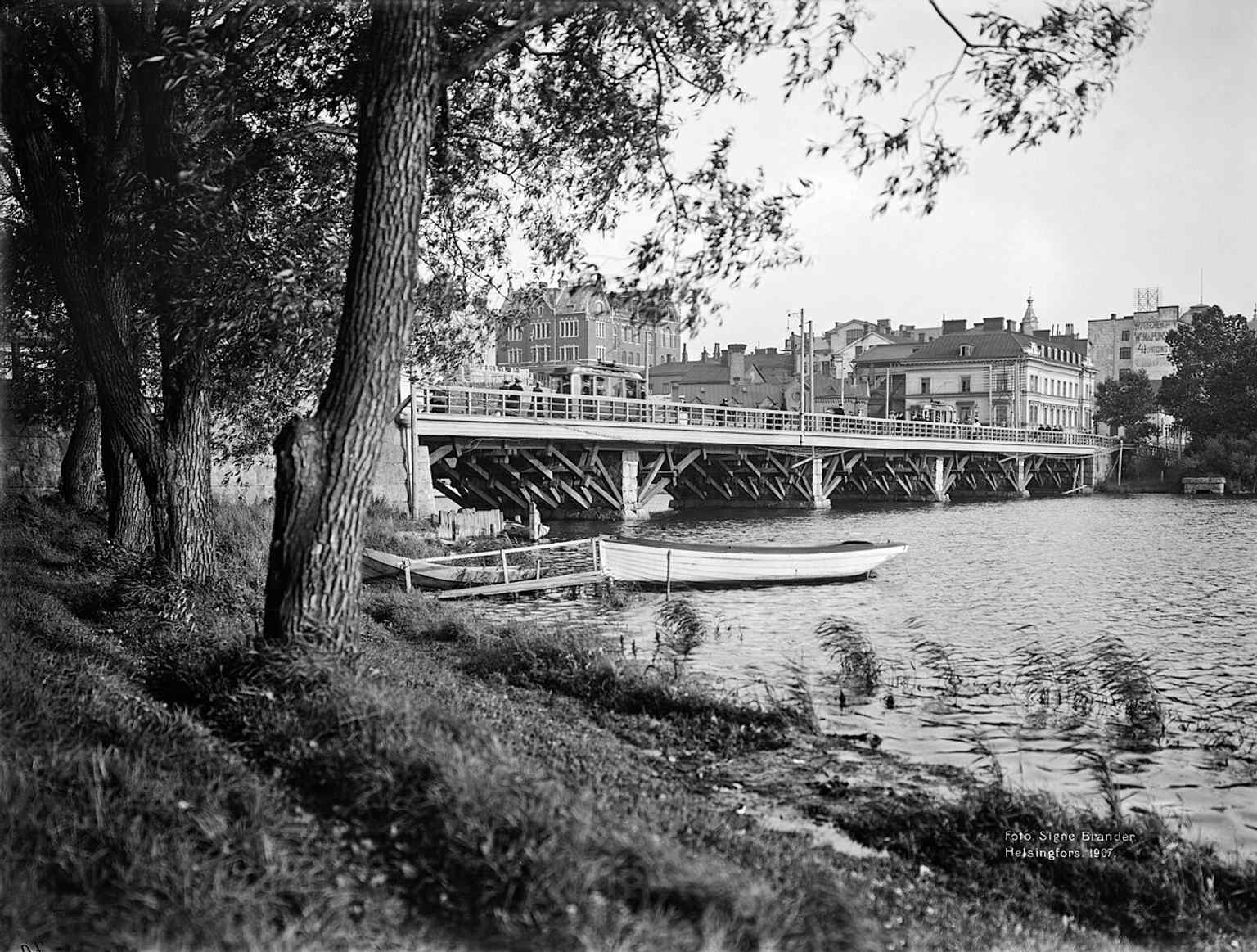
Pitkänsillanranta and the bridge in 1907, with the caption noting the new stone bridge would replace the wooden one in 1912.Photo: Signe Brander, Wikimedia Commons, CC BY 4.0. Cropped & resized. 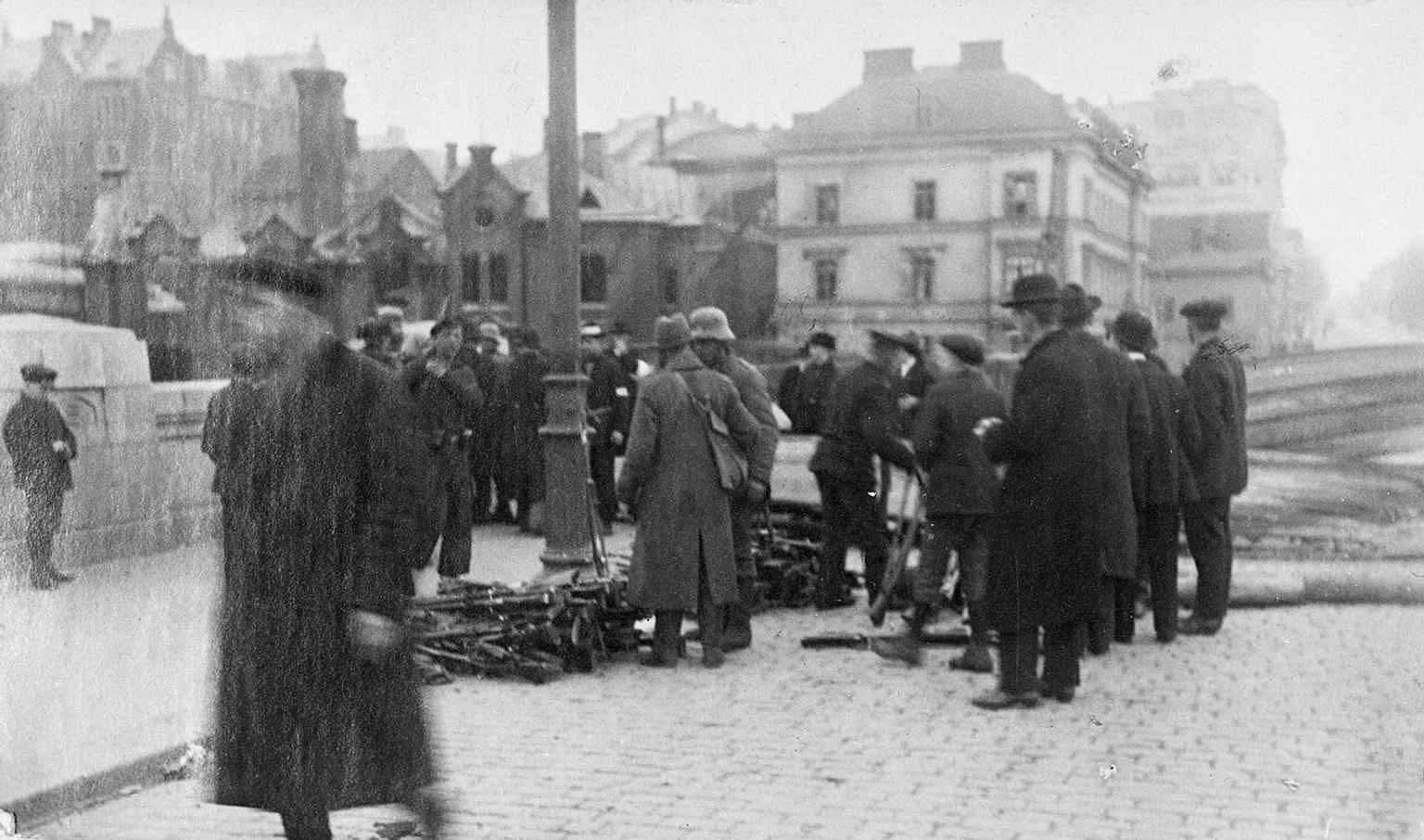
Pitkäsilta with the Maexmontan spirit factory behind it in 1918, tying the bridge to the battle damage seen during the Finnish Civil War.Photo: Unknown, Wikimedia Commons, Public domain. Cropped & resized. 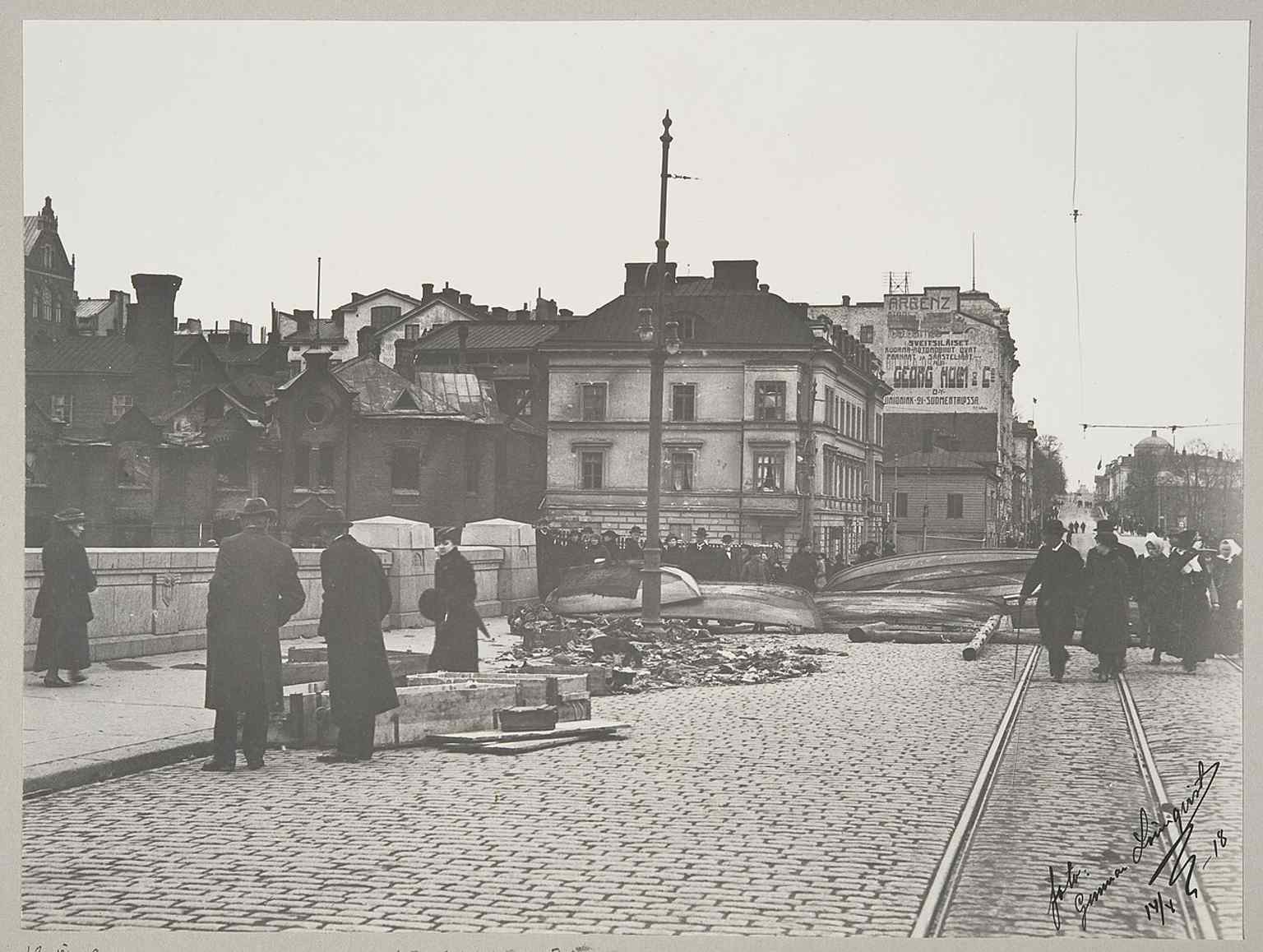
Barricades at the end of Pitkäsilta in 1918 — a stark reminder that the bridge became a frontline during the Battle of Helsinki.Photo: Gunnar Lönnqvist (Q23988306), Wikimedia Commons, Public domain. Cropped & resized. 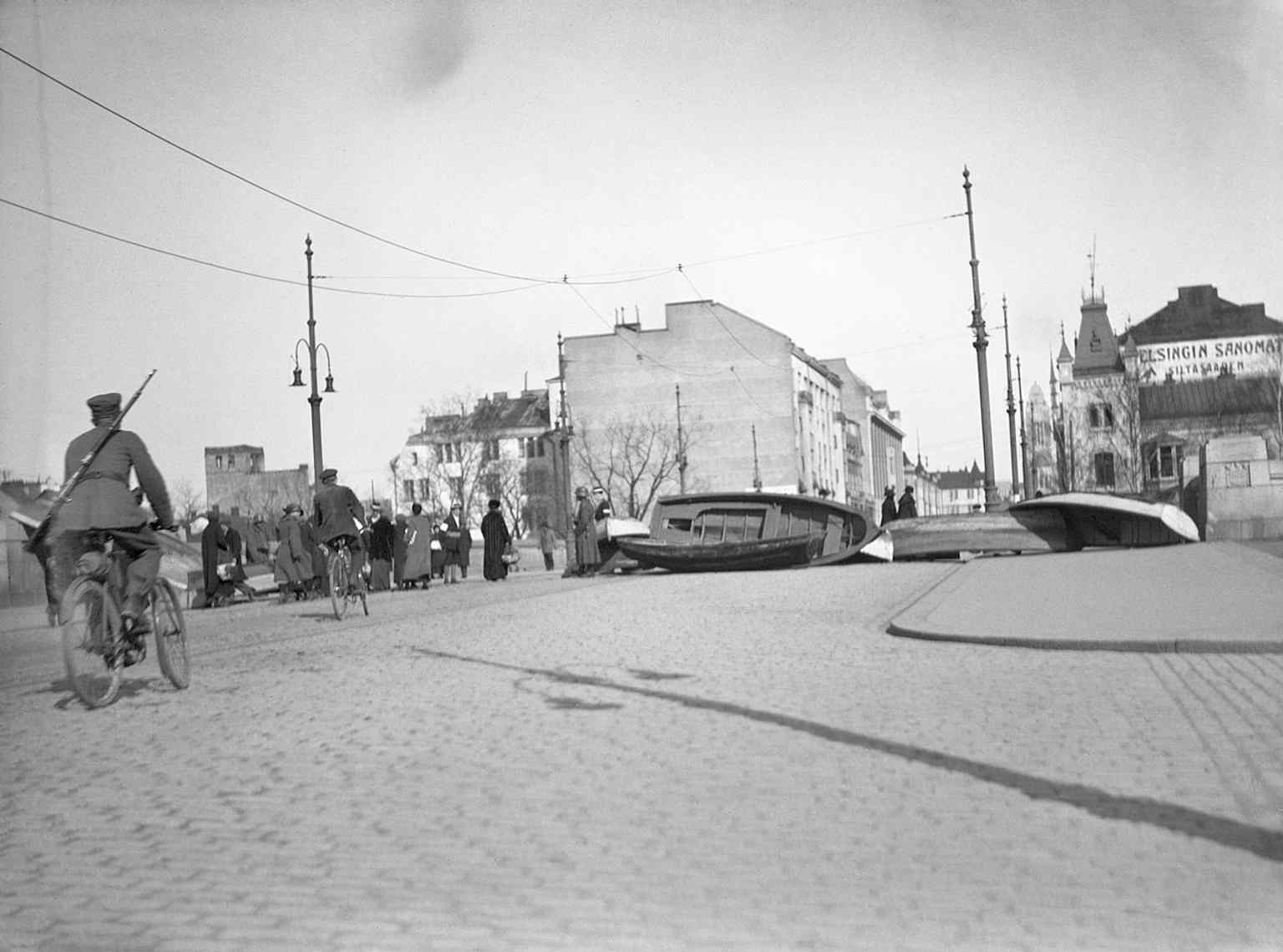
A checkpoint near Pitkäsilta in 1918, reflecting the bridge’s role as a controlled crossing between the city center and the workers’ districts.Photo: Nikolajeff A., Wikimedia Commons, CC BY 4.0. Cropped & resized. 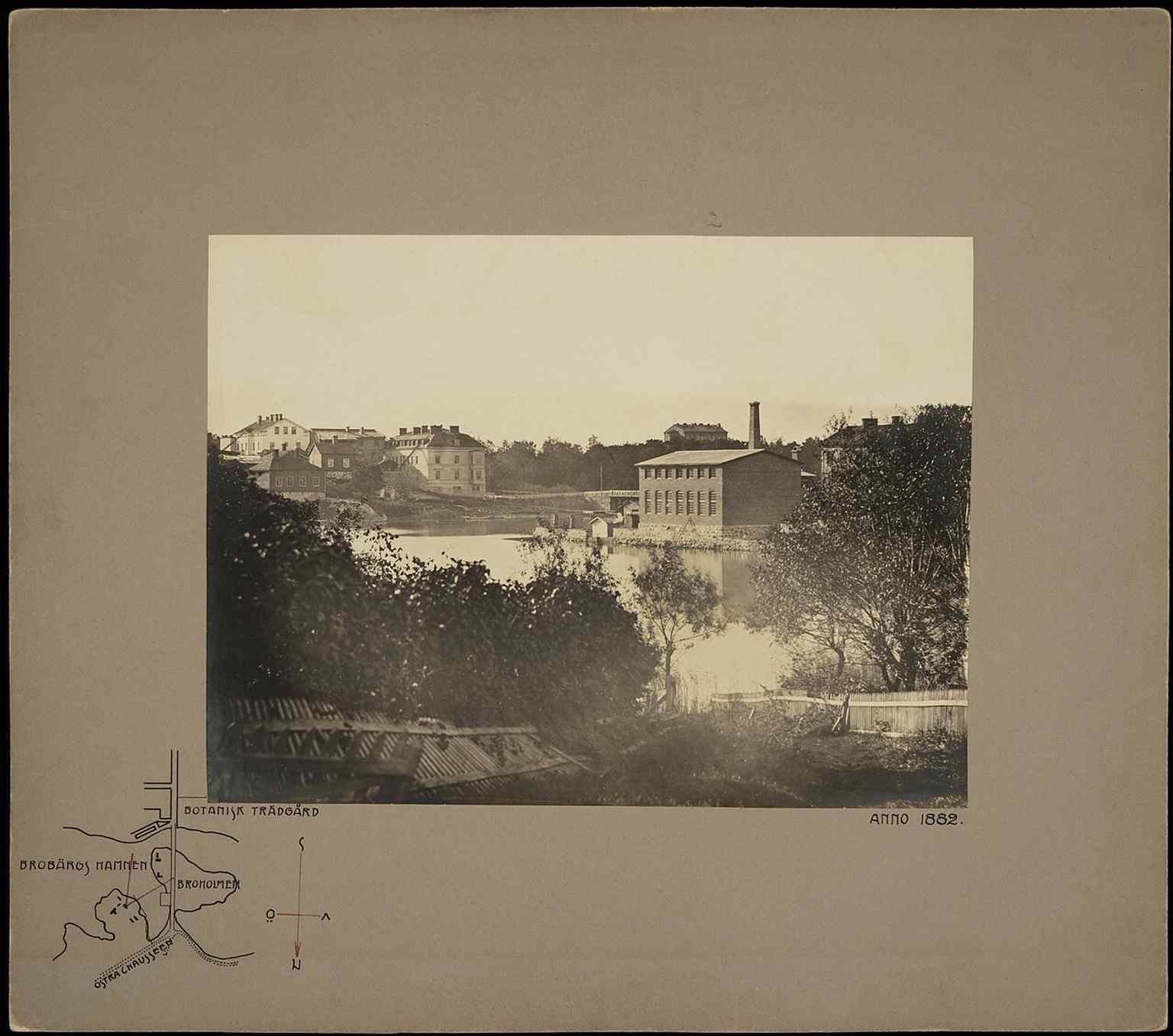
A 1882 view from Hakaniemenranta toward Pitkäsilta and Kaisaniemi, useful for showing the older urban setting before later infill and bridge changes.Photo: Alfred Edvard Rosenbröijer, Wikimedia Commons, Public domain. Cropped & resized. 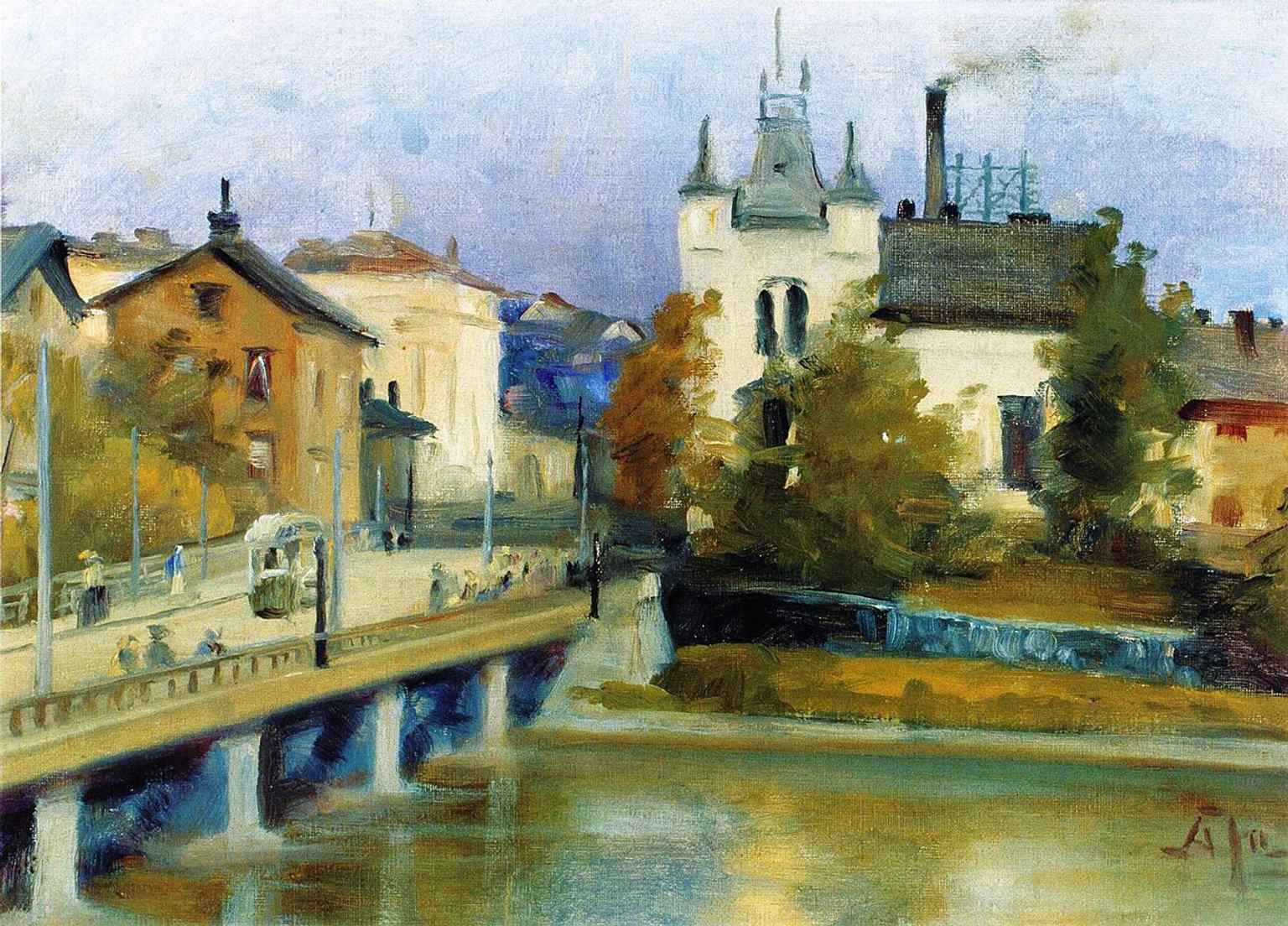
Alma Judén’s 1900 painting of Pitkäsilta and Siltasaari captures the bridge landscape before the current stone version was built.Photo: Alma Judén (1854–1914), Wikimedia Commons, Public domain. Cropped & resized. 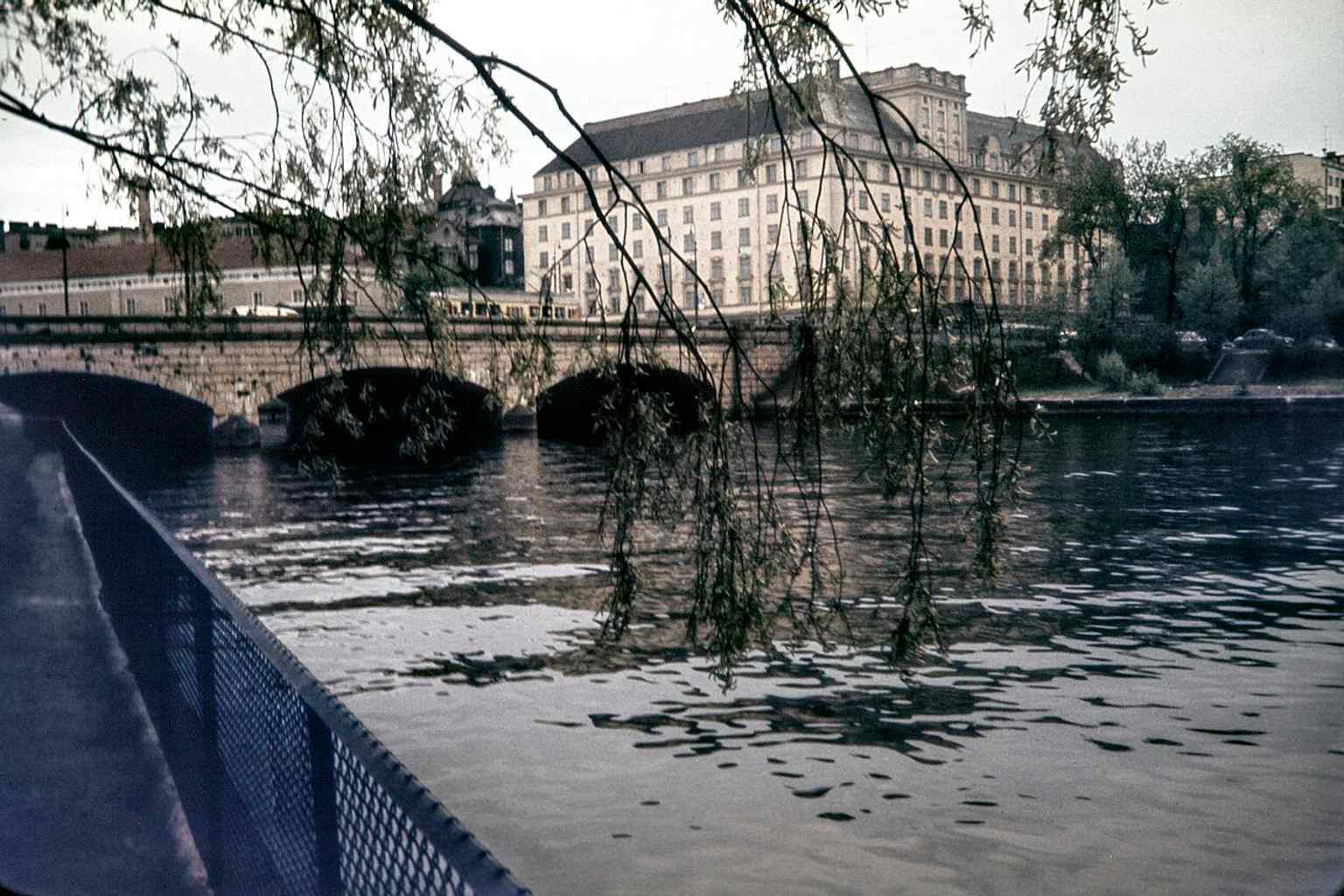
Pitkäsilta seen from the Pitkänsillanranta side in 1950, with the bay and the bridge’s span clearly linking the two shores.Photo: Arvo Kajantie, Wikimedia Commons, CC BY 4.0. Cropped & resized. 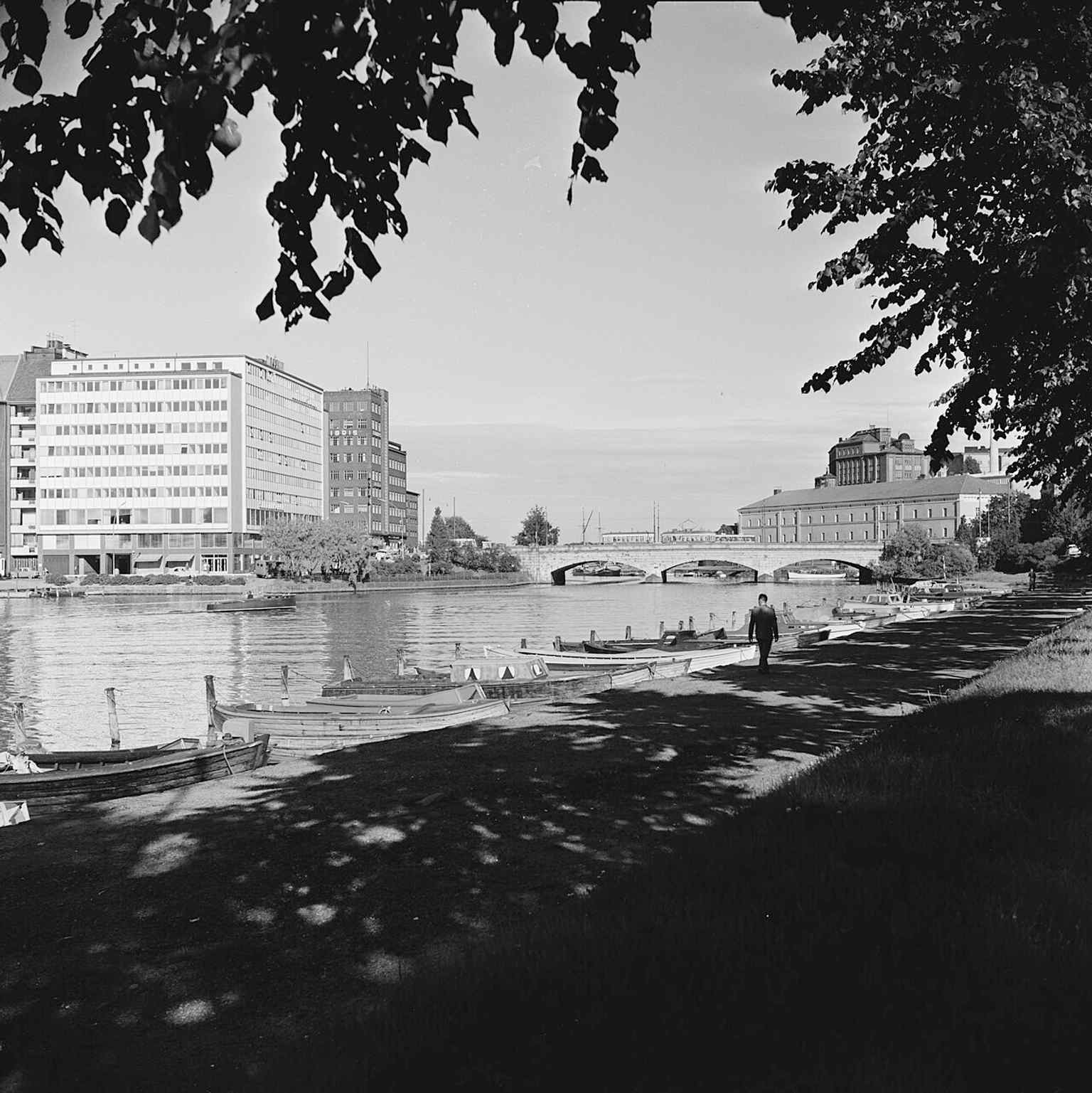
A wide 1958 view across Kaisaniemenlahti toward Siltasaari and Pitkäsilta, showing the bridge as an everyday crossing in central Helsinki.Photo: Volker von Bonin, Wikimedia Commons, CC BY 4.0. Cropped & resized. 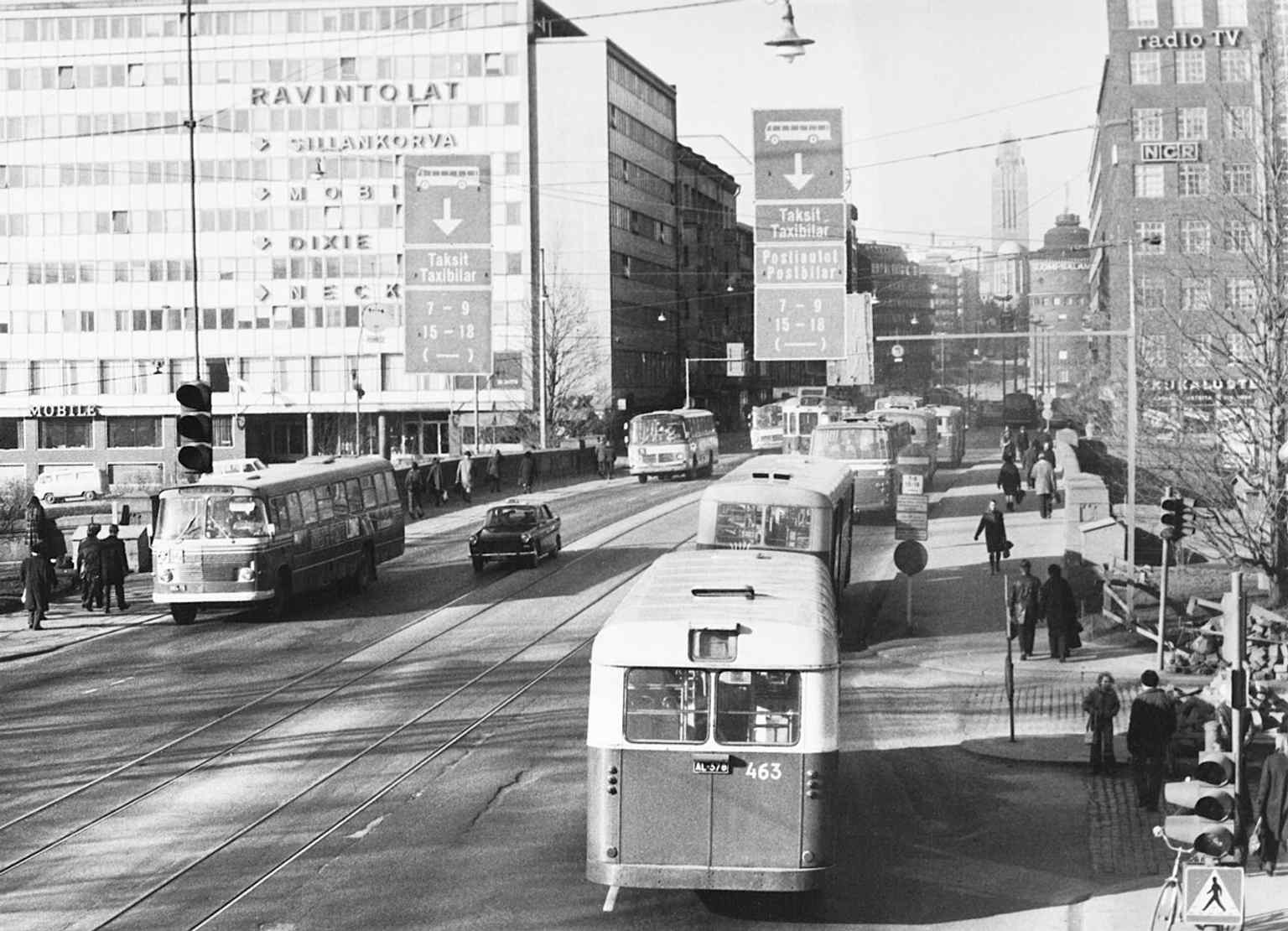
Looking from Unioninkatu toward Pitkäsilta in 1972, where tram and bus lanes were marked above the road — a sign of the bridge’s heavy traffic role.Photo: Unto Laitila, Wikimedia Commons, CC BY 4.0. Cropped & resized. 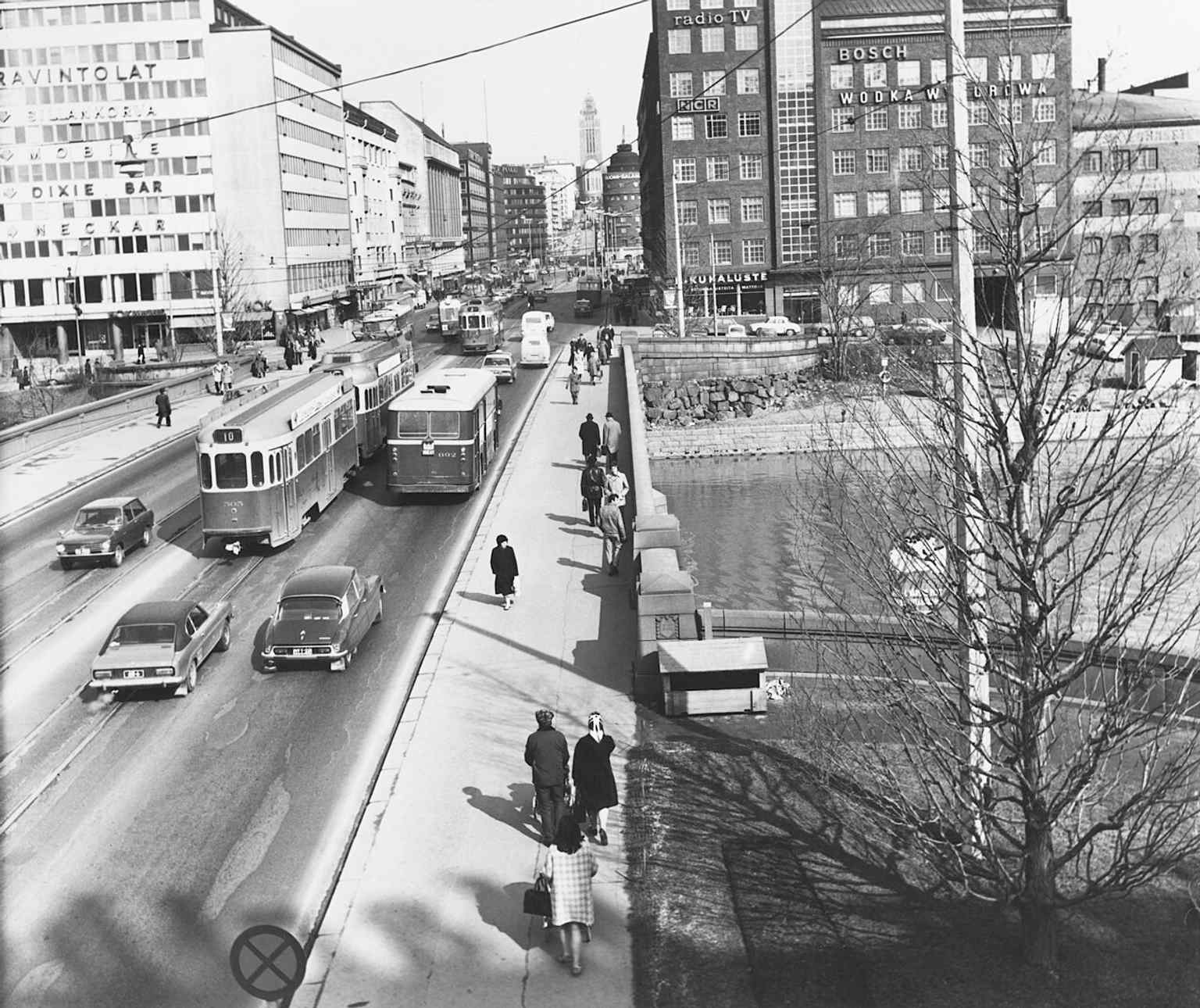
Traffic on Pitkäsilta in 1971, echoing the bridge’s importance as a major route between the city center and the northern districts.Photo: Unto Laitila, Wikimedia Commons, CC BY 4.0. Cropped & resized. 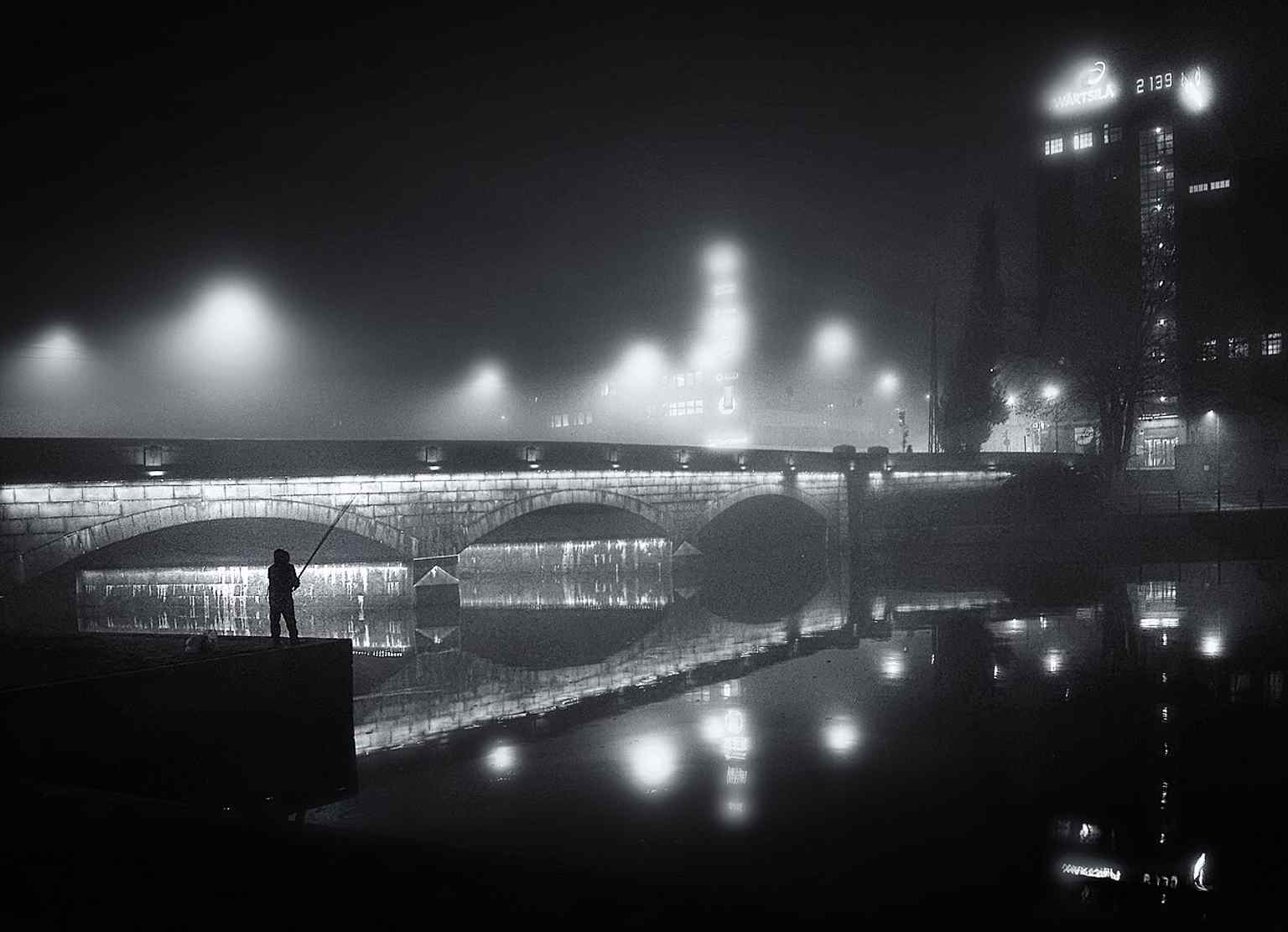
A foggy modern view of Pitkäsilta, showing how the bridge still marks the historic boundary often associated with Helsinki’s political divide.Photo: Marit Henriksson, Wikimedia Commons, CC BY-SA 4.0. Cropped & resized. On your left, look for a narrow ribbon of water held between stone embankments and crossed by a broad bridge, the last clear eastern opening into Helsinki’s inner shoreline. This…Read moreShow less
Open dedicated page →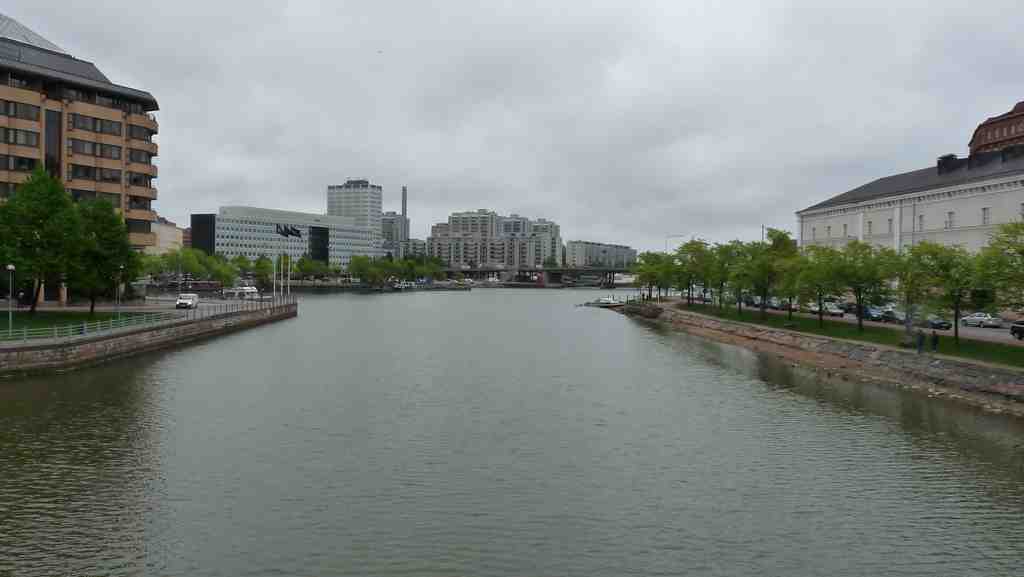
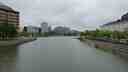
SiltavuorensalmiPhoto: Dmitry G, Wikimedia Commons, Public domain. Cropped & resized. On your left, look for a narrow ribbon of water held between stone embankments and crossed by a broad bridge, the last clear eastern opening into Helsinki’s inner shoreline.
This is Siltavuorensalmi, a salmi, or strait: a slim passage of water linking larger waters. Most people read it as a tidy line on the map. In truth, it is a survivor. Centuries ago, a much broader waterway curved around Kruununhaka, so the district was, for all practical purposes, an island. Then the western connection, Kluuvinlahti, slowly silted up, and in the nineteenth century the city filled it for building land. What remained here became the only eastern sea route into this part of Helsinki.
This is where made land begins to matter. People built embankments, meaning artificial edges of earth and stone, and they pushed fill into shallow water until the shoreline obeyed new plans. The railway embankment of the eighteen sixties and the expanding land around Hakaniemi Market Square slowed the current even more. Weak circulation means the water cannot properly refresh itself. By the nineteen sixties, sewage and industrial discharge had turned this strait into a foul, sulphur-smelling green gruel.
If you want a neat little shock, open the before-and-after image and compare the shoreline of nineteen oh seven with the engineered channel you see now.
Even the crossings changed the thing they crossed. The French engineer Freyssinet gave his name to the concrete method used later on the old bridge here, while the water below kept narrowing. In the twenty-twenties, new fill at Hakaniemenranta began pressing in again, so some locals fear this historic strait may shrink into little more than a canal. Next, we’ll walk on to Hakaniemi Bridge.
On your left is a low, pale concrete bridge with a long, shallow sweep and slim railings, striking for how flat it lies across the water. This crossing tells a very Helsinki…Read moreShow less
Open dedicated page →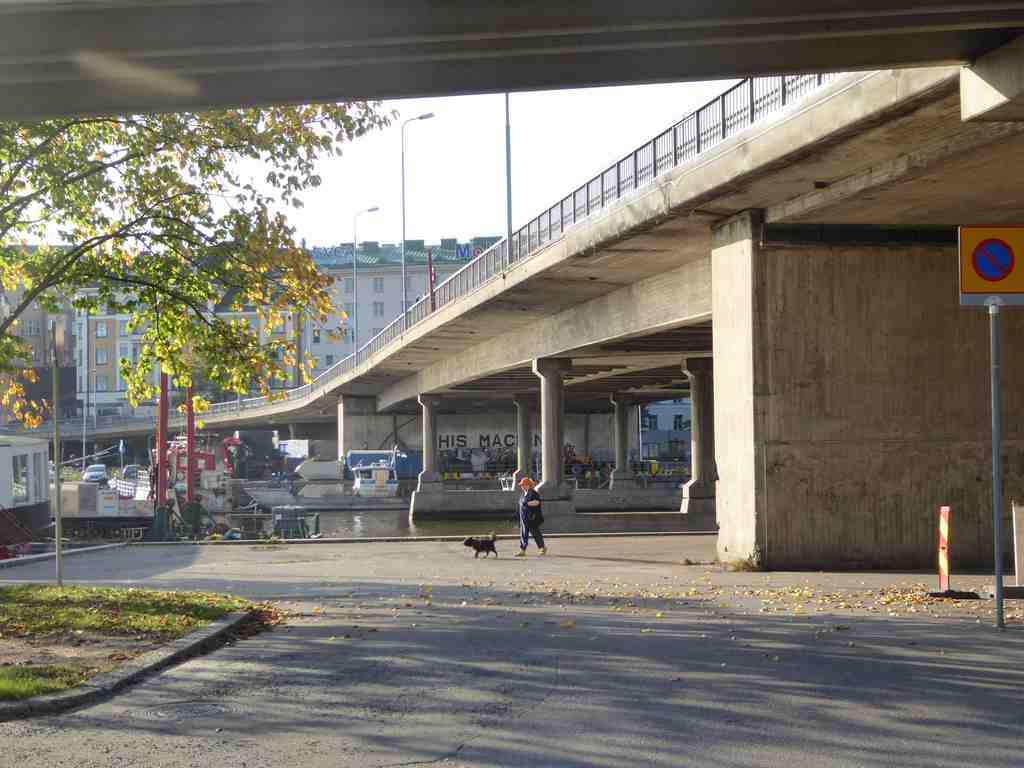
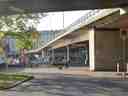
Hakaniemi BridgePhoto: Nemo bis, Wikimedia Commons, CC BY-SA 4.0. Cropped & resized. On your left is a low, pale concrete bridge with a long, shallow sweep and slim railings, striking for how flat it lies across the water.
This crossing tells a very Helsinki story: traffic builds, the city answers, then the answer ages and the pressure shifts again. The old Hakaniemi Bridge promised relief from a bottleneck; in the end, the city replaced it because the old solution no longer suited the place it was meant to serve.
Before nineteen sixty-one, vehicles coming from Sörnäisten rantatie toward the centre had to funnel along Hakaniemenranta and over Pitkäsilta. That route clogged Siltasaarenkatu and slowed the whole district. So Helsinki cut a new path across Siltavuorensalmi, carrying traffic directly from Siltasaari to Kruununhaka and on to Pohjoisranta. Even the highways numbered four and seven were sent this way. For a while, that felt decisive.
The engineer Ali Sandström gave the old bridge its structural character. He belonged to the first generation in Finland to work confidently with prestressed concrete. Prestressed means the engineers tighten steel inside the concrete so the finished structure stays under pressure and resists the fine cracks that ordinary concrete can develop. Here, Sandström used the German Dywidag method, known for thick tension steel and simple anchoring. For Finland at that moment, it was ambitious work.
Construction began after May Day in nineteen sixty, and the city opened the bridge in October nineteen sixty-one. It cost five hundred and sixteen million markkaa, about twelve and a half million euros in twenty twenty-one money. The structure ran for about three hundred and ninety metres in three parts: a central bridge over the water and approach sections at each end, including a notably sharp curve on the Kruununhaka side. Builders poured roughly twelve thousand cubic metres of concrete into it.
But the ground itself refused to make anything easy. Parts of the shoreline had already been altered with stony fill, so some sections needed bedrock foundations or Franki piles, while the water span could still stand on timber piles. In fact, the story reaches back to eighteen eighty-six, when a committee led by city engineer Fredrik Otto Ehrström proposed filling the channel between Siltasaari and Hakaniemi with dredged material from Sörnäinen Harbour. Long before this bridge appeared, the city had already started remaking the edge between land and water.
Even the name shifted at the last minute. Officials first chose Sörnäinen Bridge, then changed their minds before the opening, and Hakaniemi Bridge became the name that lasted. Its looks drew criticism too; some found the round piers and heavy form ungainly, though later concrete building nearby made it seem less startling.
If you like, glance at the before-and-after image in the app; it catches the bridge in a nineteen seventy rush hour and again in its final years, just before replacement.
By the two thousand and tens, the old bridge ranked among Helsinki’s worst for condition. Repairing it would have cost about as much as replacing it, so sentiment lost. A new bridge opened just east of it on the twentieth of May, twenty twenty-four, and demolition of the nineteen sixty-one bridge began the very next day. The new crossing sits lower, meets Hakaniemenranta at street level, and abandons the big ramp thinking of the motor age.
Ahead, at World Peace, the shoreline begins to speak less about traffic and more about the ideas people wanted to set in public view. And like any true piece of city infrastructure, this bridge remains open all day and all night.
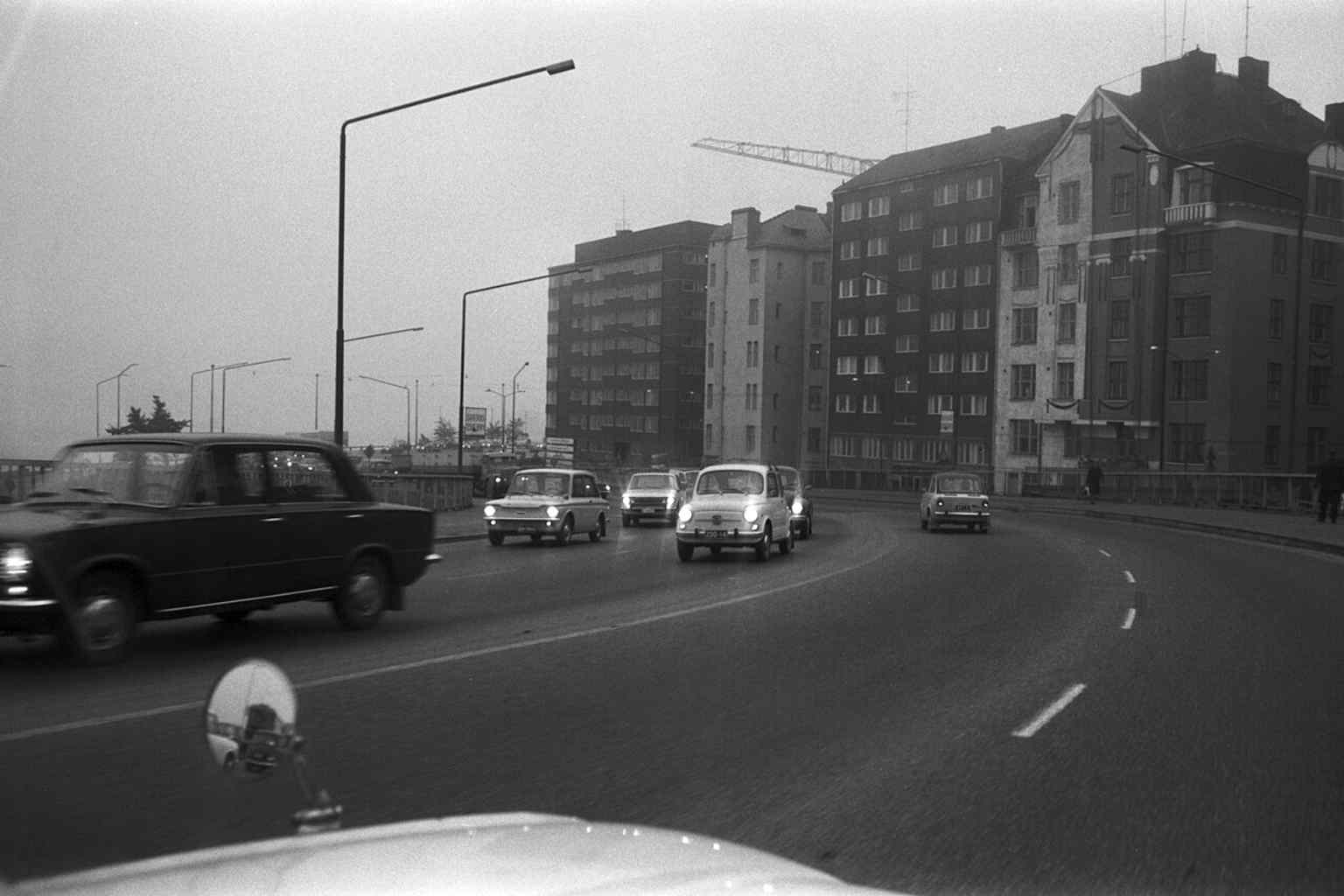
Rush-hour traffic on the old Hakaniemi Bridge in fog, with cars heading toward Kruununhaka — a reminder of how the 1961 bridge became a key route out of the Siltasaari bottleneck.Photo: Eeva Rista, Wikimedia Commons, CC BY 4.0. Cropped & resized. 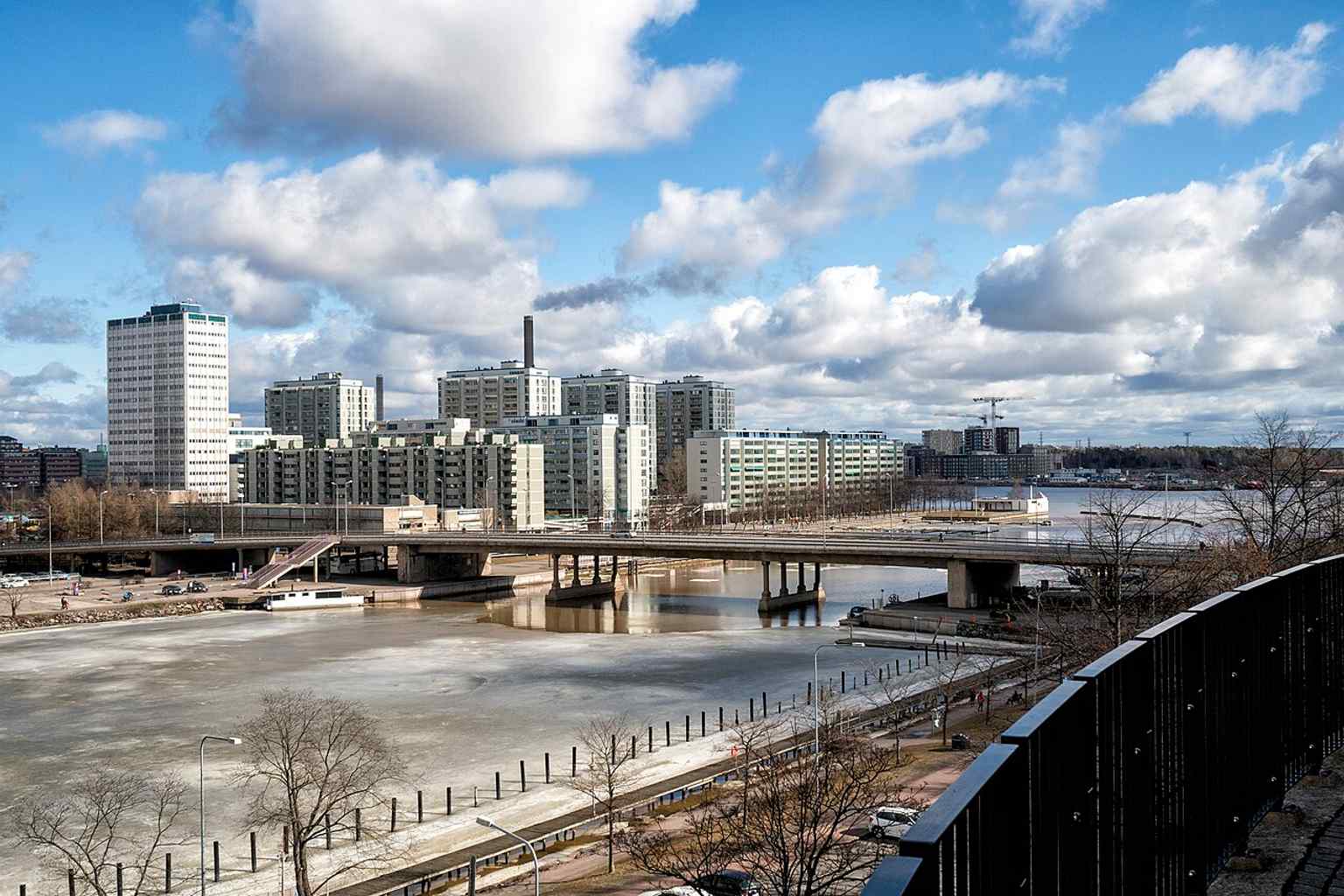
A view across Siltavuorensalmi toward Merihaka, showing the old Hakaniemi Bridge before demolition and the new replacement project tied to the Kruunusillat scheme.Photo: Pekka Vyhtinen, Wikimedia Commons, CC BY 4.0. Cropped & resized. 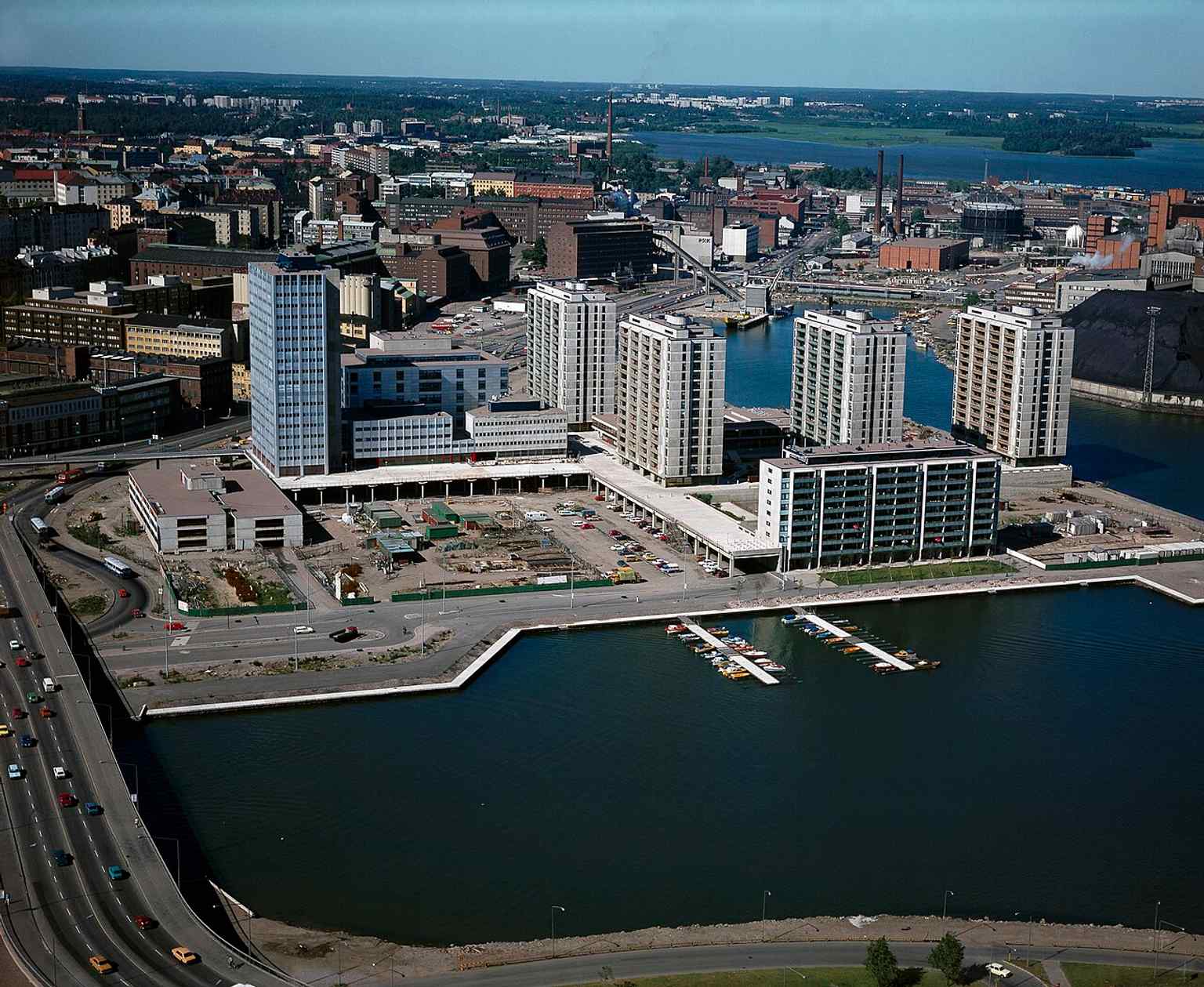
An aerial view of Merihaka from 1976, helping place the bridge in its changing urban setting beside the Hakaniemi shoreline redevelopment.Photo: SKY-FOTO Möller, Wikimedia Commons, CC BY-SA 4.0. Cropped & resized.
Show 13 more stopsShow fewer stopsexpand_moreexpand_less
Look for the broad asphalt waterfront road running in a straight line beside a low stone quay, its hard man-made edge tracing the water of Siltavuorensalmi. Hakaniemenranta has…Read moreShow less
Open dedicated page →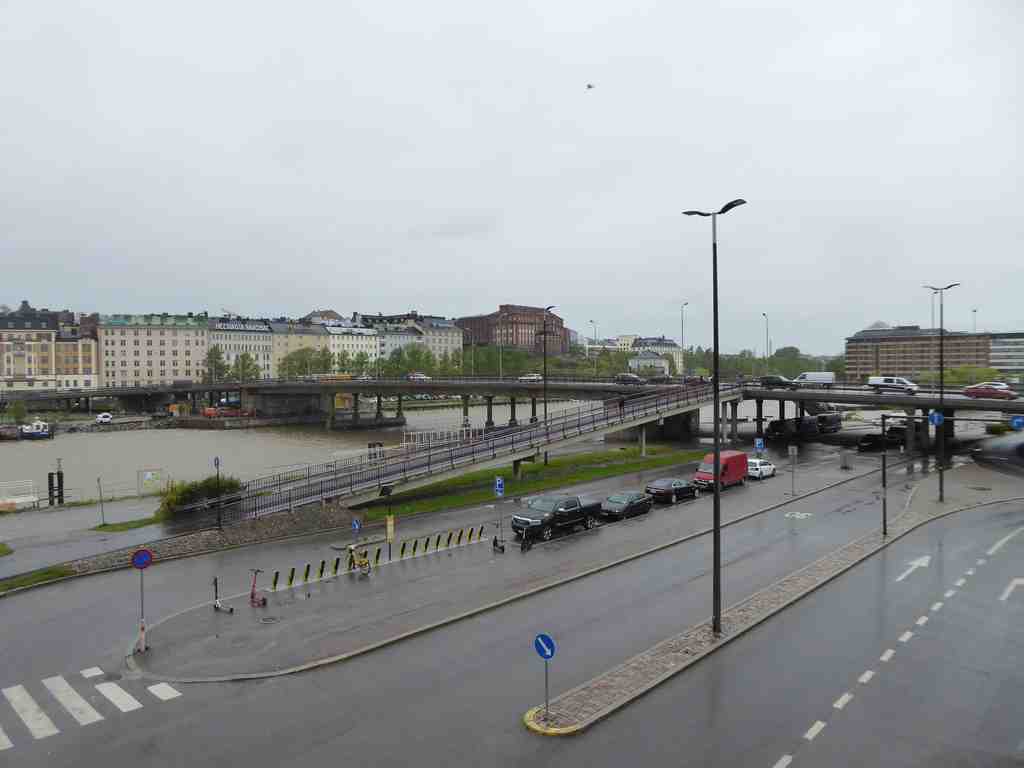
HakaniemenrantaPhoto: Nemo bis, Wikimedia Commons, CC BY-SA 4.0. Cropped & resized. Look for the broad asphalt waterfront road running in a straight line beside a low stone quay, its hard man-made edge tracing the water of Siltavuorensalmi.
Hakaniemenranta has never really belonged to postcard Helsinki. This strip worked for a living. In the late nineteenth century, industrial Hakaniemi formed one of the city’s machine-and-foundry edges, where workshops, harbour traffic, and workers’ routines shaped ordinary life. In eighteen eighty-two, John Stenberg set up a machine shop and foundry in the south-eastern part of Siltasaari, and the city later credited his works as Finland’s first maker of special machines and machine parts. So this street did not arrive on empty ground; it grew over an older landscape of metal, loading, and labour.
Even its name kept shifting, as if the shoreline itself refused to settle: first Hagnäsin rantakatu in nineteen oh eight, then Hakaniemen rantakatu a year later, and finally Hakaniemenranta in nineteen twenty-eight.
Most visitors never notice how unusually well preserved this place is in images. Signe Brander, the city’s official photographer for historic sites from nineteen oh seven to nineteen thirteen, returned here again and again. She photographed this shoreline across Siltavuorensalmi toward Kruununhaka, and she captured life north of Pitkäsilta so often that old working Helsinki survives here with rare clarity. If you like, have a look at the before-and-after image in the app; from the nineteen seventy-three street scene to the twenty twenty-four worksite, the shoreline itself is being rewritten.
Then the city gave Hakaniemenranta another job. When Sörnäisten rantatie widened in the early nineteen sixties into a major route from Itäväylä toward the centre, this became a traffic artery, four lanes wide long after the traffic had begun to fade. Now the edge changes again for the Kruunusillat tramway, new street alignments, and a shoreline pushed outward for new buildings.
Ahead, the raw industrial face begins to acquire a more commercial expression. Continue on to Hakaniemi Sokos.
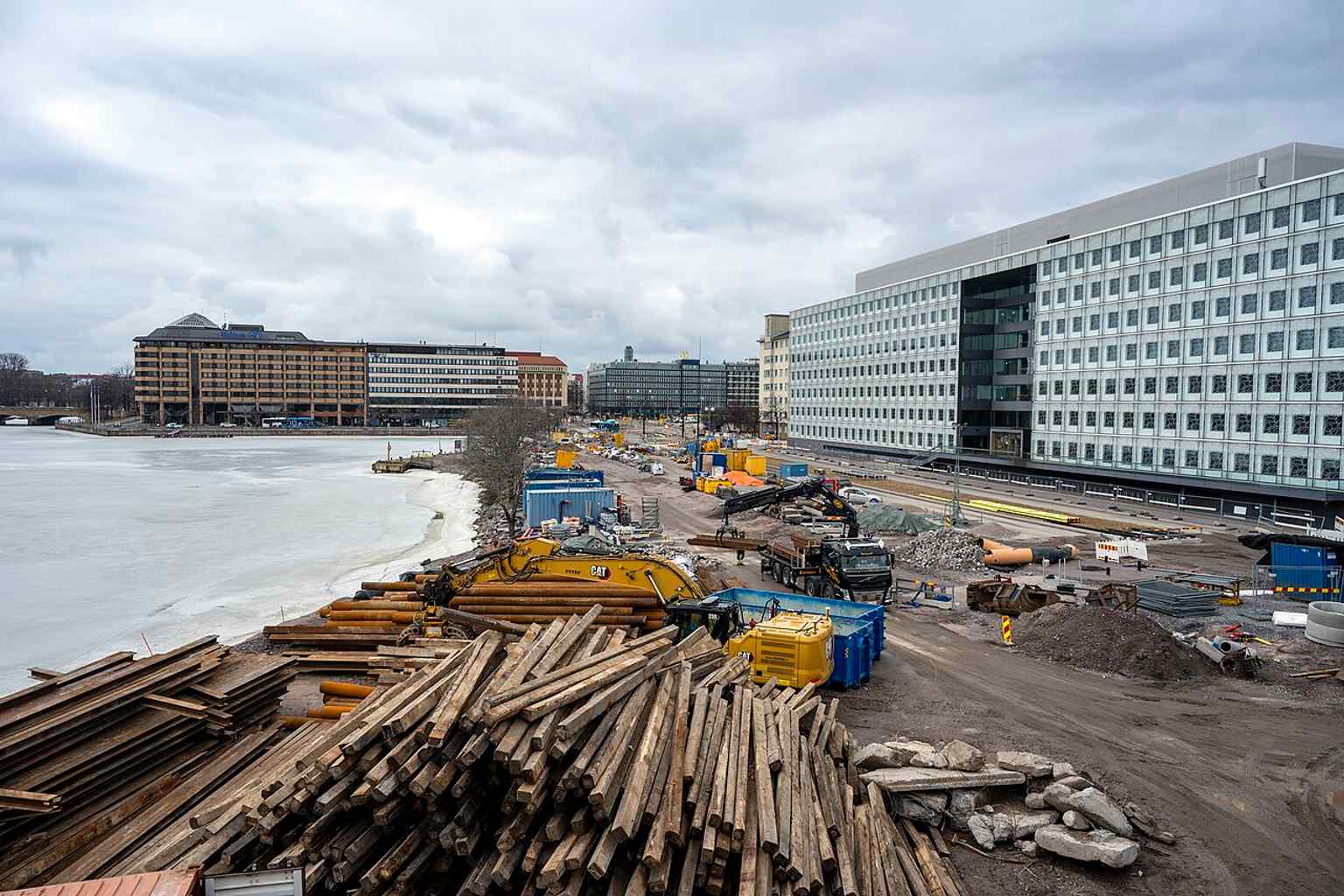
A March 2024 construction scene at Hakaniemenranta, with the new Hakaniemensilta and street realignments changing the waterfront frontage.Photo: Pekka Vyhtinen, Wikimedia Commons, CC BY 4.0. Cropped & resized. Look to the pale stone corner block with its long bands of rectangular windows and sturdy seven-storey form: that is the former Hakaniemi Sokos. This is the Elanto and Sokos…Read moreShow less
Open dedicated page →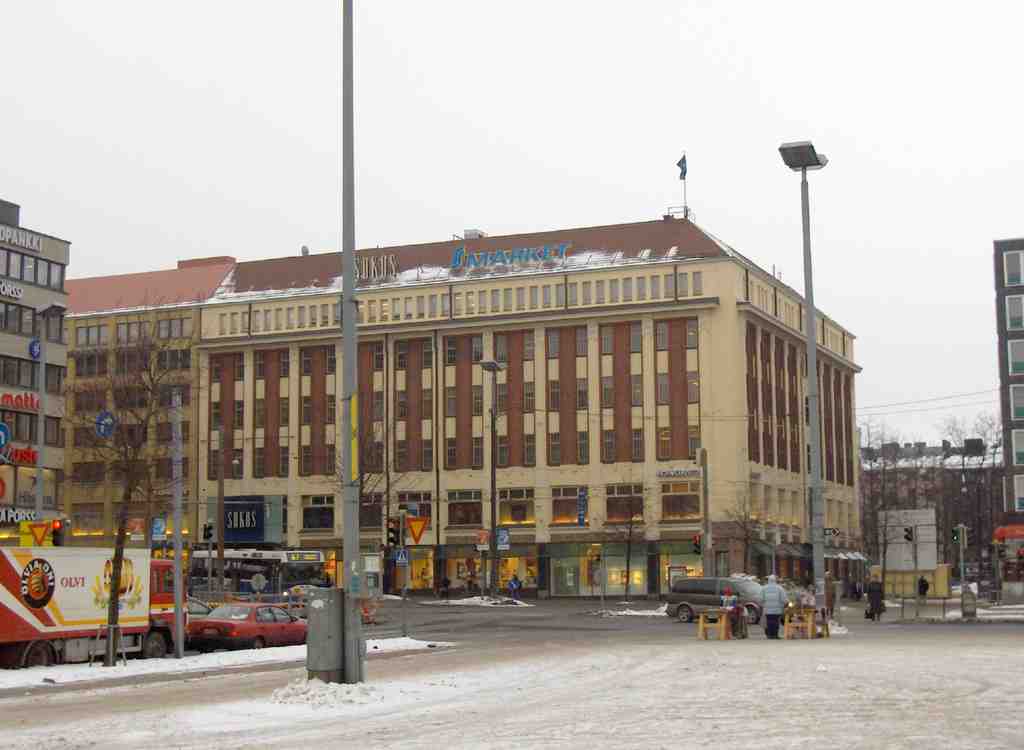
Hakaniemi SokosPhoto: Skorpion87, Wikimedia Commons, Public domain. Cropped & resized. Look to the pale stone corner block with its long bands of rectangular windows and sturdy seven-storey form: that is the former Hakaniemi Sokos.
This is the Elanto and Sokos commercial block, a place whose changing names mirror changing ideas about service, shopping, and neighbourhood identity. Architect Onni Tarjanne designed the first version in nineteen fourteen as the Siltala business house. Elanto, the member-owned co-operative retailer, bought it in nineteen seventeen, moved in its headquarters, opened a large street-level store, and placed flats above. One resident was Elanto’s managing director, Väinö Tanner, living over the shop before he entered national politics. That detail gives the place away: commerce, influence, and ordinary domestic life all gathered under one roof.
The first businesses here sold bread, milk, shoes, clothing, and sausage, and there was also an Elanto café. In nineteen twenty Elanto paid three million markkaa for the building, roughly several million euros today. Then the city’s harder history struck. During the Second World War, bombing in Finland’s Continuation War damaged the house, and repairs in nineteen forty-four added an extra floor.
After that, the building kept changing shape with Hakaniemi itself: a formal Elanto department store in nineteen fifty-six, a seven-storey expansion in the nineteen seventies, Max after Elanto’s credit crisis, then Sokos on the sixth of May, two thousand and four. H-O-K Elanto refused to turn it into a Prisma, their larger hypermarket format, insisting this address deserved a true department store. If you glance at the image in the app, you can catch it mid-remake in twenty twenty-one. Sokos closed at the end of twenty thirteen, but trade returned through S-market and Emotion.
Ahead, identity moves from the shop floor to the meeting hall: Paasitorni is about three minutes away.
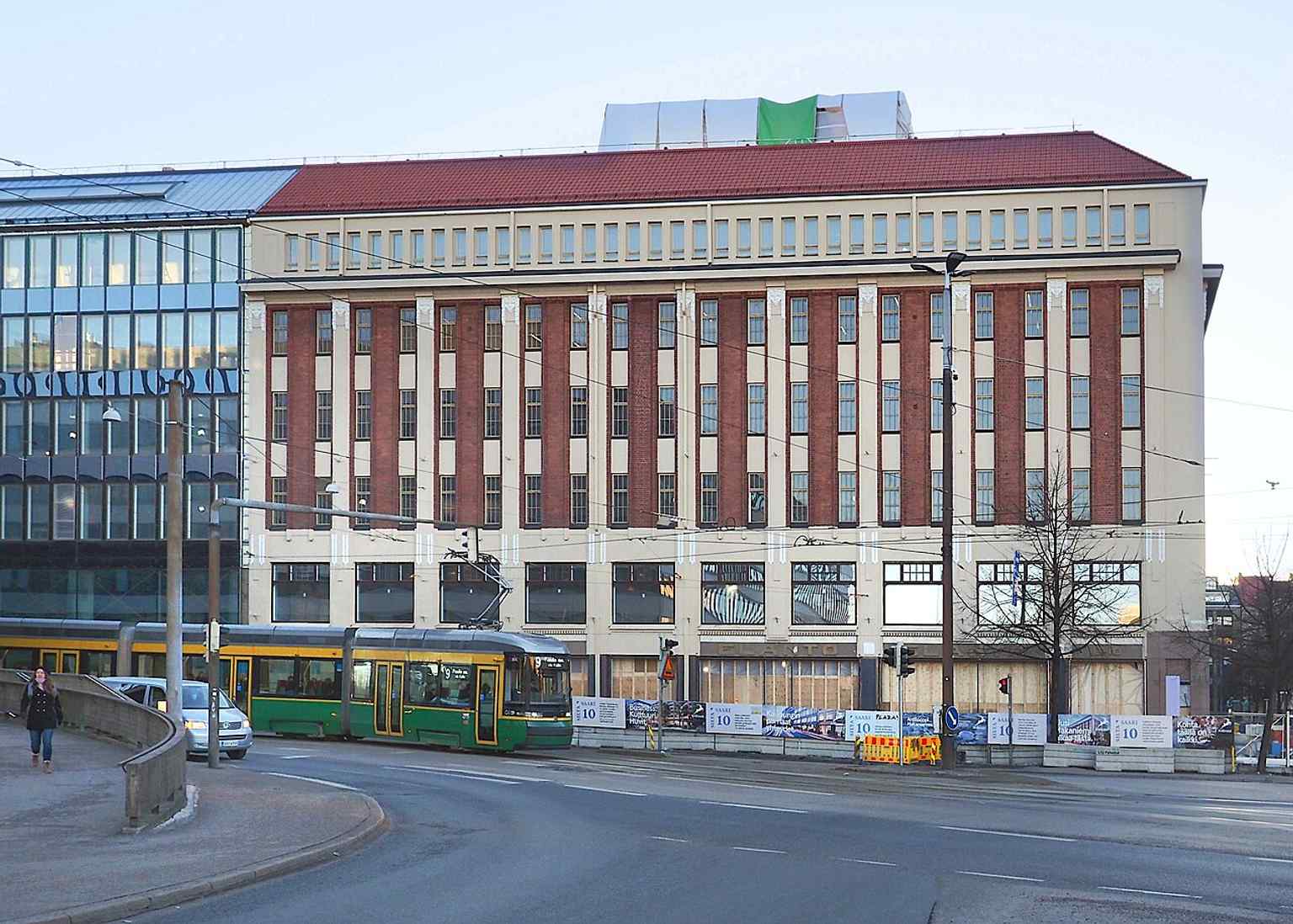
The former Hakaniemi department store under renovation in 2021 — the building that later reopened as S-market and Emotion after its long retail history dating back to Elanto.Photo: Marit Henriksson, Wikimedia Commons, CC BY-SA 4.0. Cropped & resized. Ahead of you rises a rugged granite building with a tall square tower, broad block-like walls, and carved decorative details that give this workers’ hall the air of a civic…Read moreShow less
Open dedicated page →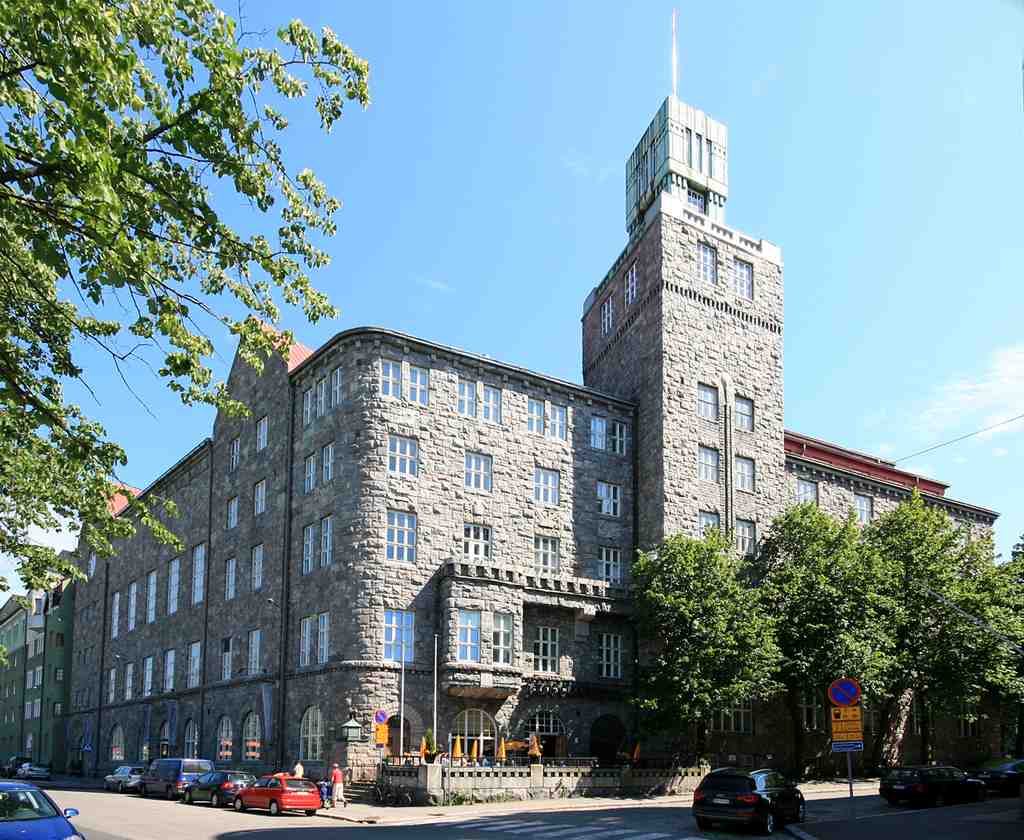
PaasitorniPhoto: Mahlum, Wikimedia Commons, Public domain. Cropped & resized. Ahead of you rises a rugged granite building with a tall square tower, broad block-like walls, and carved decorative details that give this workers’ hall the air of a civic fortress.
Paasitorni began as a place of spectacle long before it became a place of speeches. On this very site stood the Siltasaari circus arena, with room for two thousand people to watch horse shows, wrestling, and boxing. One of its stars, Anna Anthonius from Urjala, built her fame here with strongwoman feats, including a victory over the celebrated strongman Charles Jackson. Entertainment came first; power, in one form or another, quickly followed.
In Siltasaari and Hakaniemi, the workers’ movement did not grow only in party programmes. It grew in dining rooms, gym halls, choirs, reading circles, union meetings, and evenings when ordinary people practised speaking for themselves in public. The Helsinki Workers’ Association wanted a building that gave labour not just shelter, but presence: a house grand enough to say that workers belonged in the city’s centre, not at its edges.
Architect Karl Lindahl won the design competition in nineteen oh five, and when the building opened in nineteen oh eight, the celebrations lasted five full days. They used granite quarried from this very plot for the facade, the fence, and even the nearby shoreline street. Look at the sheer weight of the stone for a moment: does it feel defensive, proud, or welcoming? A workers’ building here needed to suggest all three.
The decoration mattered too. Lindahl and his craftsmen set tool motifs and trade symbols into the facade and interiors, mixed with geometric patterns and nature ornaments, turning labour itself into ornament. Inside, Juttutupa became the house restaurant; among its customers were Otto Wille Kuusinen and Vladimir Lenin, whose corner table still carried the nickname “the revolution table.”
Then came the rupture. On the twenty-sixth of January, nineteen eighteen, a red lantern burned at the top of the tower as the sign of revolution, and the house became a Red stronghold despite the workers’ association’s objections. During the Battle of Helsinki, shelling tore through the building so badly that the tower and banquet hall had to be rebuilt. If you like, have a quick look at the before-and-after image; it shows just how violent that break was.
Paasitorni did not stop there. Lindahl designed the nineteen twenty-five extension too, and later a Hungarian refugee artist, János Rozs, painted a thirteen metre fresco here in nineteen thirty-nine in exchange for meals. So these stones carry more than architecture. They carry performance, class ambition, damage, repair, and allegiance. In about one minute, we’ll continue to Saariniemenkatu six.
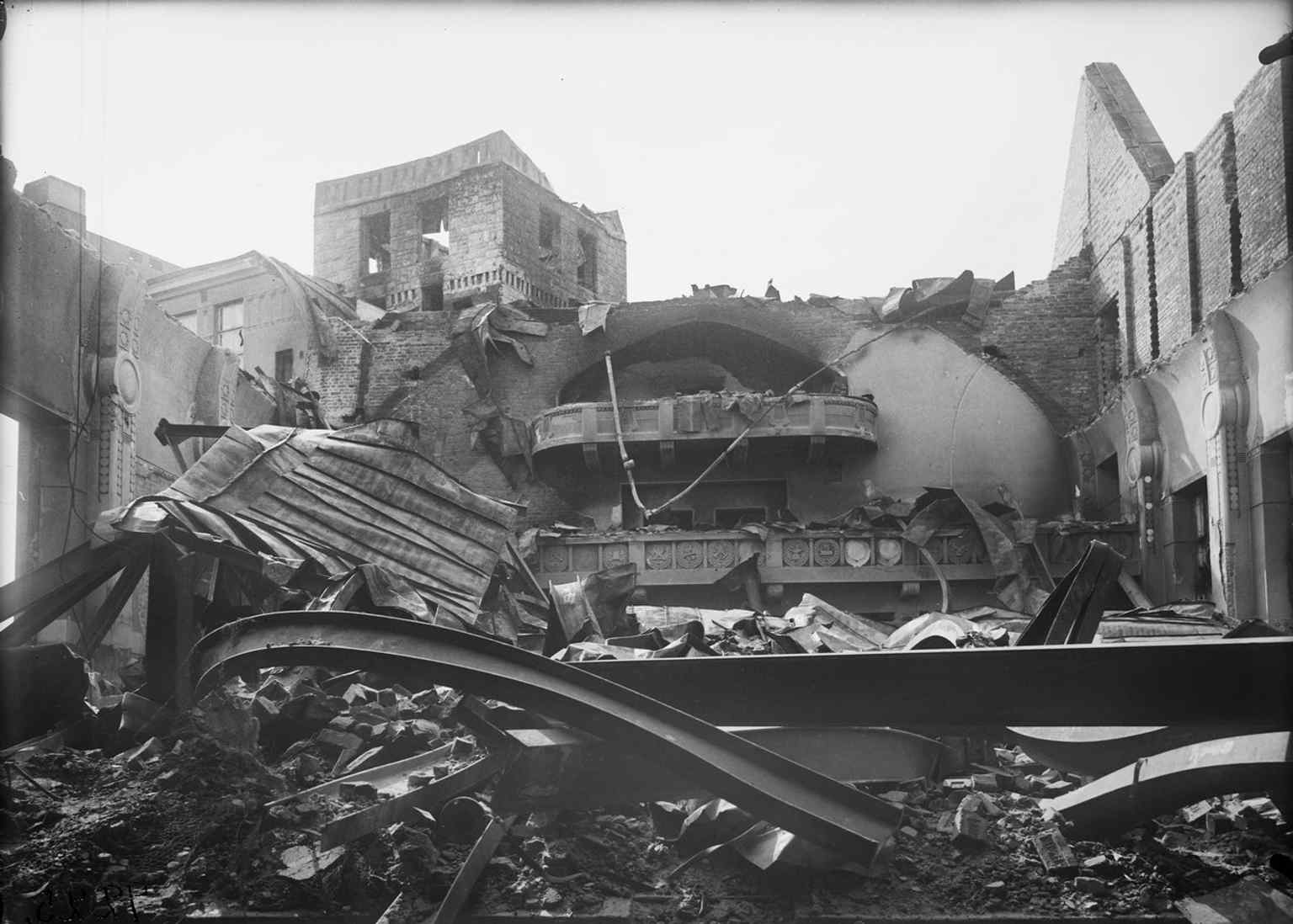
The shattered banquet hall in 1918 — a stark reminder of the Civil War destruction that reshaped Paasitorni’s interior and later restoration history.Photo: Holmberg, Edvin,, Wikimedia Commons, Public domain. Cropped & resized. Look for the dark brick block with its broad rectangular windows and the bronze relief fixed above the main entrance. This is Puoluetalo, the Party House, and it marks a subtle…Read moreShow less
Open dedicated page →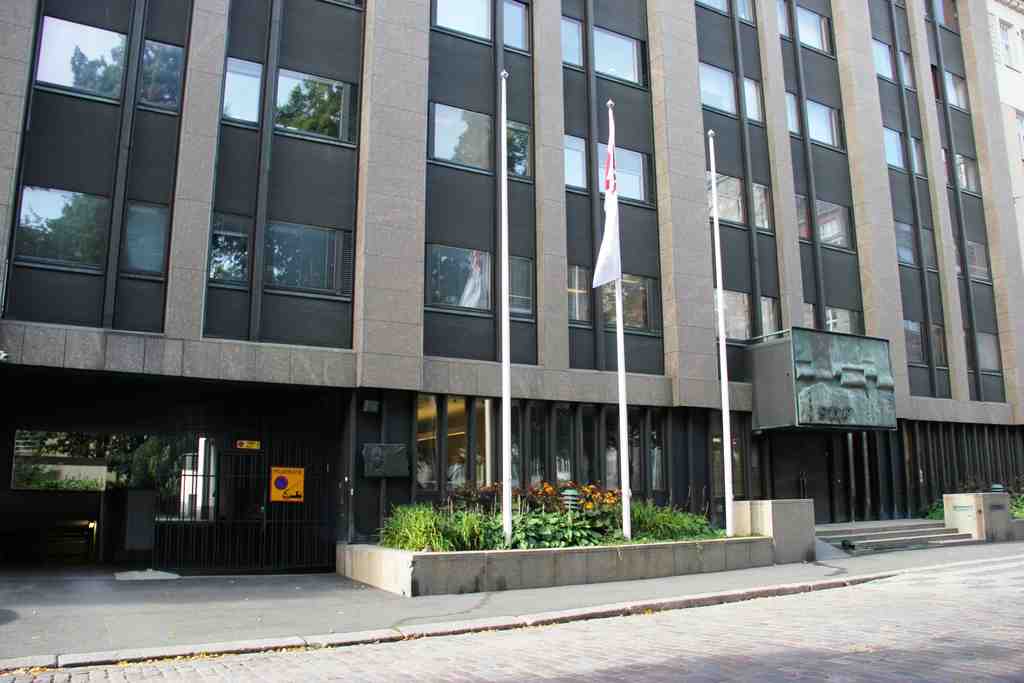
Saariniemenkatu 6Photo: Abc10, Wikimedia Commons, CC BY-SA 4.0. Cropped & resized. Look for the dark brick block with its broad rectangular windows and the bronze relief fixed above the main entrance.
This is Puoluetalo, the Party House, and it marks a subtle but decisive change in Hakaniemi’s political life. Here, conviction took on an address. The workers’ movement that spoke in halls and gathered in public squares settled into offices, committees, typed letters, and daily administration.
The Social Democratic Party of Finland, S-D-P, chose this site for its headquarters, and architects Jaakko Kontio, Kalle Räike, and Seppo Kilpiä gave it this solid form in nineteen seventy-nine. The party office stayed here until twenty fifteen. After that, the building changed hands and began another life as housing, which is rather fitting, because housing had been part of the plan from the start. The plot required half the spaces to be residential, so the building combined party offices with twenty-four small flats on the upper levels. Even its practical compromises tell you something about Helsinki: ideals here rarely float free of zoning, finance, and negotiation.
And negotiation is exactly how this house came into being. The party had worked from the old Workers’ House across the square, at Paasivuorenkatu three, but by the nineteen seventies that building had grown shabby and expensive to repair. A deal with the Workers’ Savings Bank unlocked this plot instead. The bank took the more valuable office site across the way, the party received this one plus money to build anew, and in May of nineteen seventy-seven the agreement set the whole machinery in motion.
Not everyone admired the result. A city facade committee dismissed the design as artificially monumental and ill at ease with its surroundings. Yet Kalevi Sorsa, the party leader, gathered officials and pressed ahead, and one permit officer replied, with dry Helsinki bluntness, that surely the country’s largest party could build the sort of house it wanted.
Now look above the door. Sculptor Kimmo Pyykkö made that bronze relief, called Interaction, in nineteen seventy-eight. He imagined waves moving before a rock shore on Lake Päijänne. Only later did the S-D-P letters get added on separate pins, so the political badge could come away without harming the artwork beneath. When the party sold the building in twenty fifteen, people watched that relief nervously. It had appeared in news images for decades, and without it, many felt the building might lose its identity altogether.
One more quiet surprise: a plaque here remembers writer Mika Waltari, born on this site in nineteen oh eight, in the earlier house that once stood here.
In a moment, walk into the little park ahead, Paasivuorenpuistikko. There, this larger story of institutions and power narrows again to a single human figure.
Ahead of you is a small rectangular park enclosed by a metal fence, crossed by stone paths, and centred on a bronze statue rising from a granite plinth. For such a modest patch…Read moreShow less
Open dedicated page →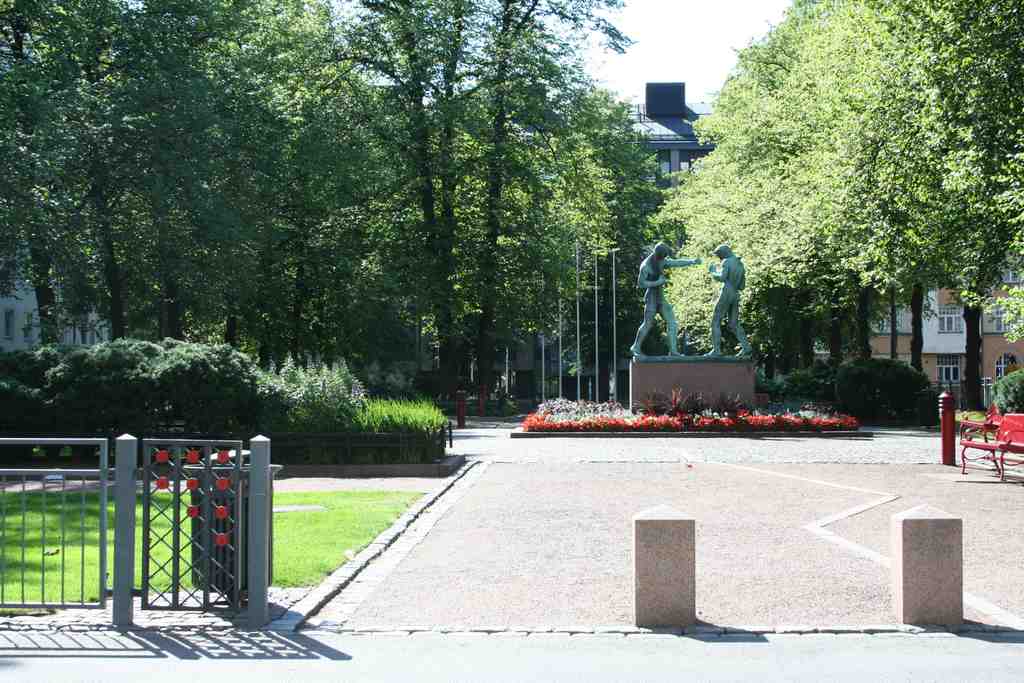
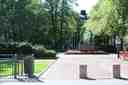
Main side parkPhoto: Htm, Wikimedia Commons, CC BY-SA 3.0. Cropped & resized. Ahead of you is a small rectangular park enclosed by a metal fence, crossed by stone paths, and centred on a bronze statue rising from a granite plinth.
For such a modest patch of ground, Paasivuorenpuistikko holds an astonishing amount of theatre. Most visitors never notice the sharp red granite line set into the walkway, a broken stripe called Punainen viiva, the Red Line. It runs here from Hakaniementori toward the former Social Democratic Party office, and it stands for something deceptively simple: casting a vote, drawing the red line on a ballot.
That political meaning lands differently when you know what stood here before the lawns and lindens. This was once Circus Park. Not merely acrobats and horses, but fifteen performing polar bears, famous for sliding tricks. The entertainments swung from riding shows to death-defying motorcycle acts, and the alcohol service brought enough disorder to scandalise the neighbourhood. If you glance at the image on your screen, you can catch one later chapter of that appetite for spectacle, when the space still hosted roaring public events.
Then comes the man who gave the place its more serious name. Matti Paasivuori arrived in Helsinki in eighteen eighty-seven as a carpenter and rose into the trade union movement and the Social Democratic Party. He believed absolutely in legality, and after the civil war he was almost alone among his party's parliamentary group in returning to parliament, because he had refused violence throughout the conflict. Suddenly these street names feel earned, not ornamental.
Even the bronze boxers in the middle carry local muscle and memory: Johannes Haapasalo modelled them on Helsinki fighters, Uuno Pitkä and Armas Wilkman. So this little park ties together voting, labour, sport, and performance in one tight knot.
And then the knot catches fire. On the twenty-sixth of January, nineteen eighteen, a red lantern burned atop Paasitorni beside you, the signal for revolution. Keep that lantern in mind as you walk on to Hakaniementori, about three minutes away, where the story widens from named lives to the force of a crowd. The park, incidentally, remains open at all hours.
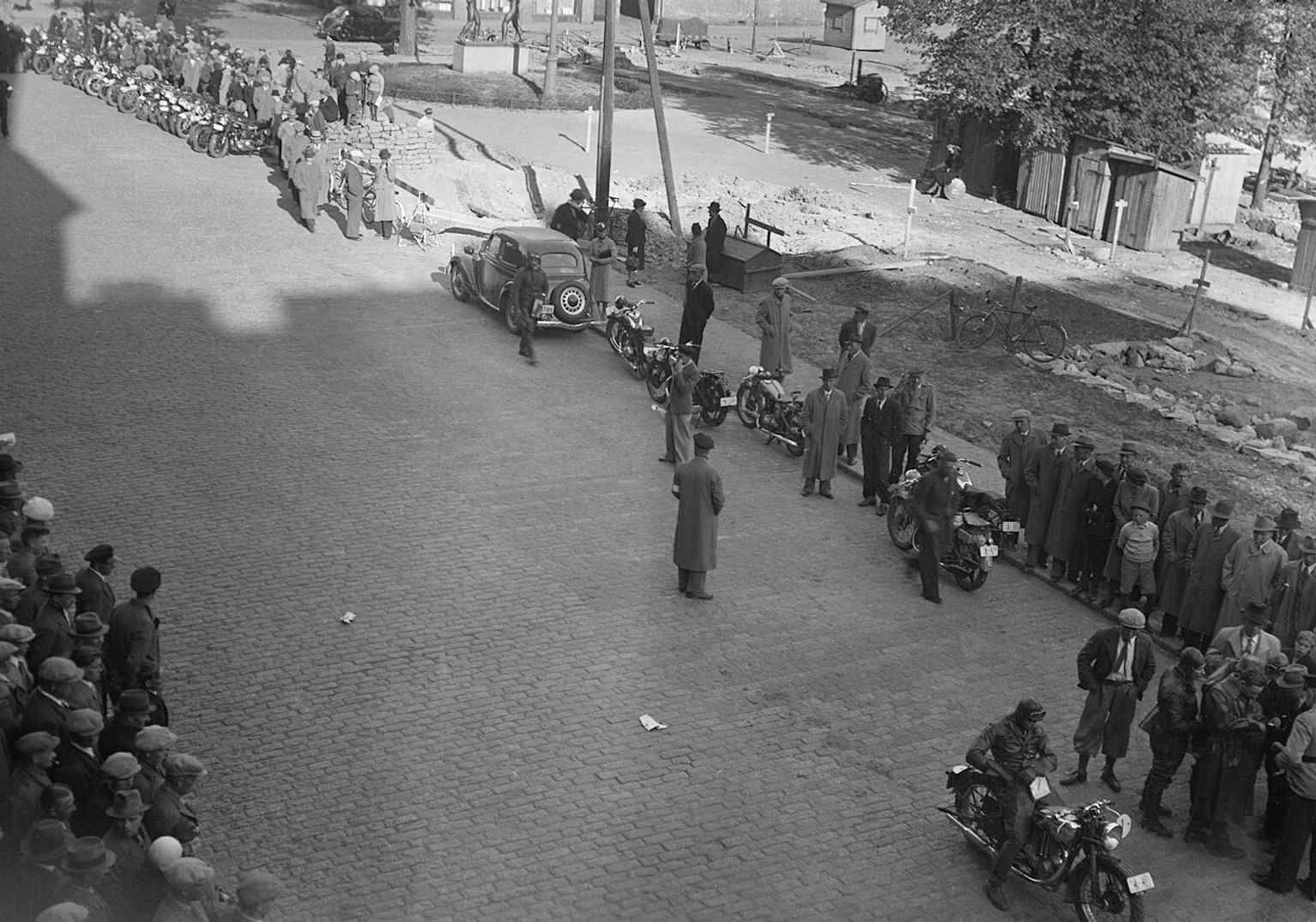
Motorcycle races in Paasivuorenpuistikko, seen from the Helsinki Workers' Association building balcony — the park once hosted lively public events before becoming the landscaped square beside Paasitorni.Photo: Väinö Kannisto, Wikimedia Commons, CC BY 4.0. Cropped & resized. On your right, look for the broad rectangular market square, its open surface laid in grey stone setts and defined by crisp kerb lines, a wide civic floor cut into the…Read moreShow less
Open dedicated page →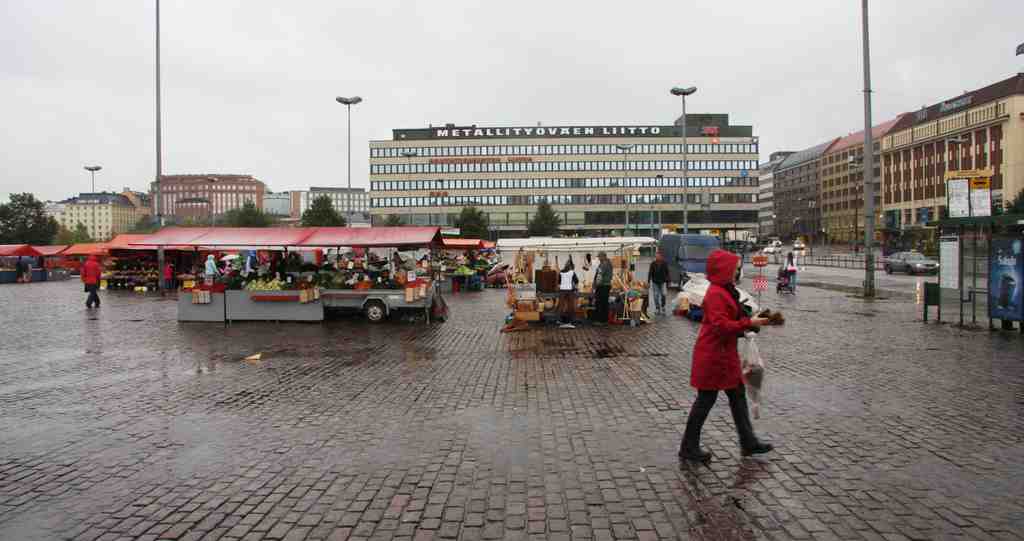
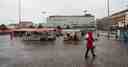
Hakaniemi MentorPhoto: Jisis, Wikimedia Commons, CC BY-SA 4.0. Cropped & resized. On your right, look for the broad rectangular market square, its open surface laid in grey stone setts and defined by crisp kerb lines, a wide civic floor cut into the district.
This is Hakaniementori, opened in eighteen ninety-seven, and it behaves less like a simple marketplace than a public stage. Traders, marchers, campaigners, and people hurrying home have all claimed the same patch of ground. Here, buying supper and arguing about society have long happened within the same few steps.
The surprise is that this solid-looking square began as water. The city filled the old strait here with dredged spoil from Sörnäinen harbour, and the new ground stayed so wet that people first crossed it on duckboards, narrow timber walkways laid over mud. One hard, persistent rumour even claimed that a workman sank into the slurry during the filling works and vanished for good.
Let your gaze travel slowly around the edges of the square. It is easy to sense how many kinds of gathering this place can hold at once: trade, waiting, reunion, protest, annoyance, celebration.
The first sellers appeared just before Christmas in eighteen ninety-seven. Soon the market offered berries, game, cloth, tailoring, and, by the nineteen twenties, fish. But the square also drew sharper energies. Many May Day marches and demonstrations set off from here, tying the place closely to the workers’ movement. Then, on the second of August, nineteen hundred and six, during a support strike for the mutiny at Viapori, the island fortress outside the city, a clash over a tram turned into gunfire between Red Guards and a student protection corps. Nine people died, and dozens were wounded. Ordinary public space had become a battlefield.
If you glance at the historic photo in the app, the square in nineteen forty-six looks half market, half fuel depot, stacked with firewood. Later, planners surrendered it to motor traffic and asphalt, before the metro era returned the stone surface.
And yet the square never stopped being intimate. President Tarja Halonen shopped here without bodyguards, and kept a regular table nearby in the market hall. That is Hakaniemi: not so much a fixed boundary as a shared habit. As you continue into Hakaniemi itself, that feeling only grows.
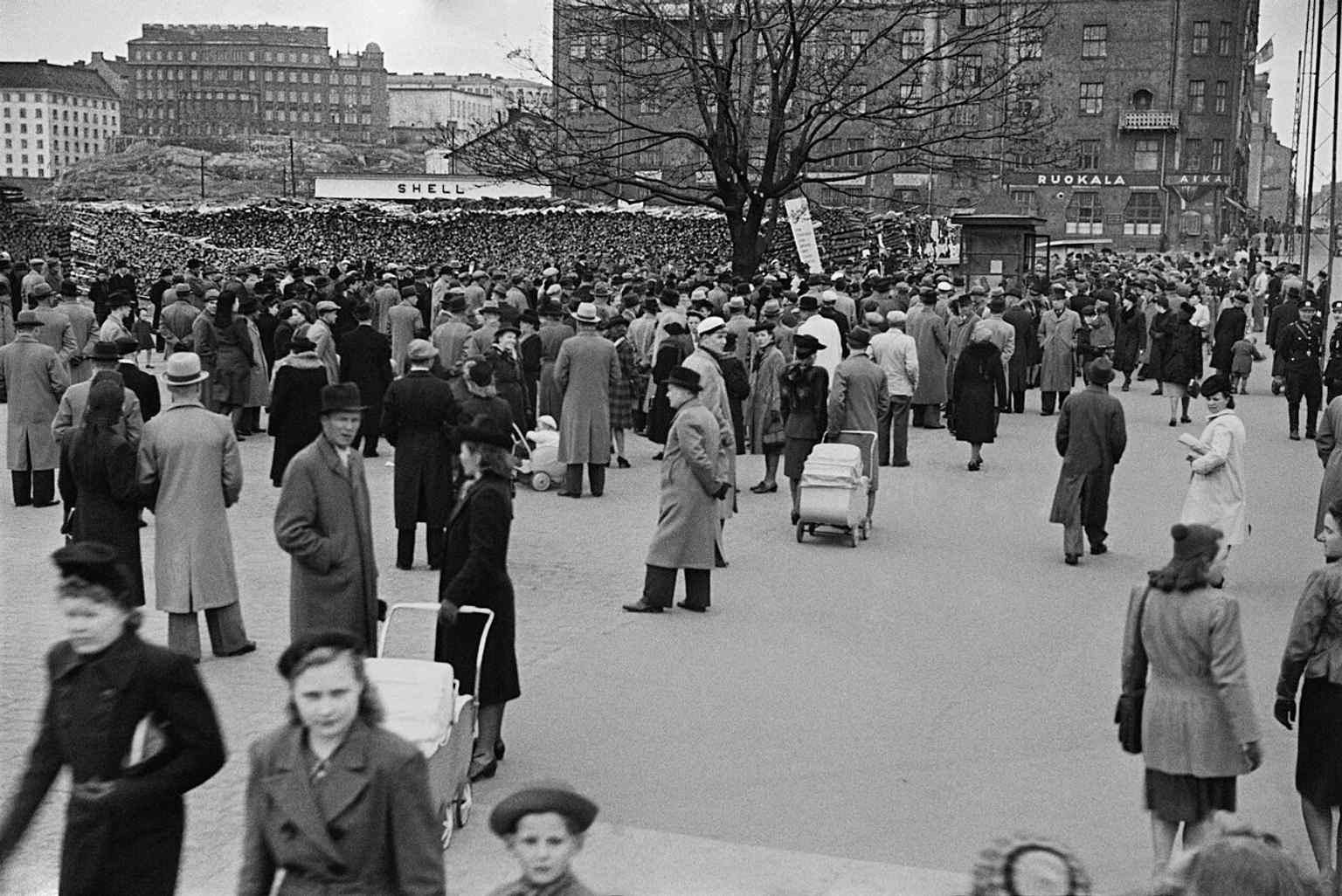
Hakaniemi Market Square crowded in 1946, with wartime firewood stacks still filling the square as the city recovered after the war.Photo: Väinö Kannisto, Wikimedia Commons, CC BY 4.0. Cropped & resized. 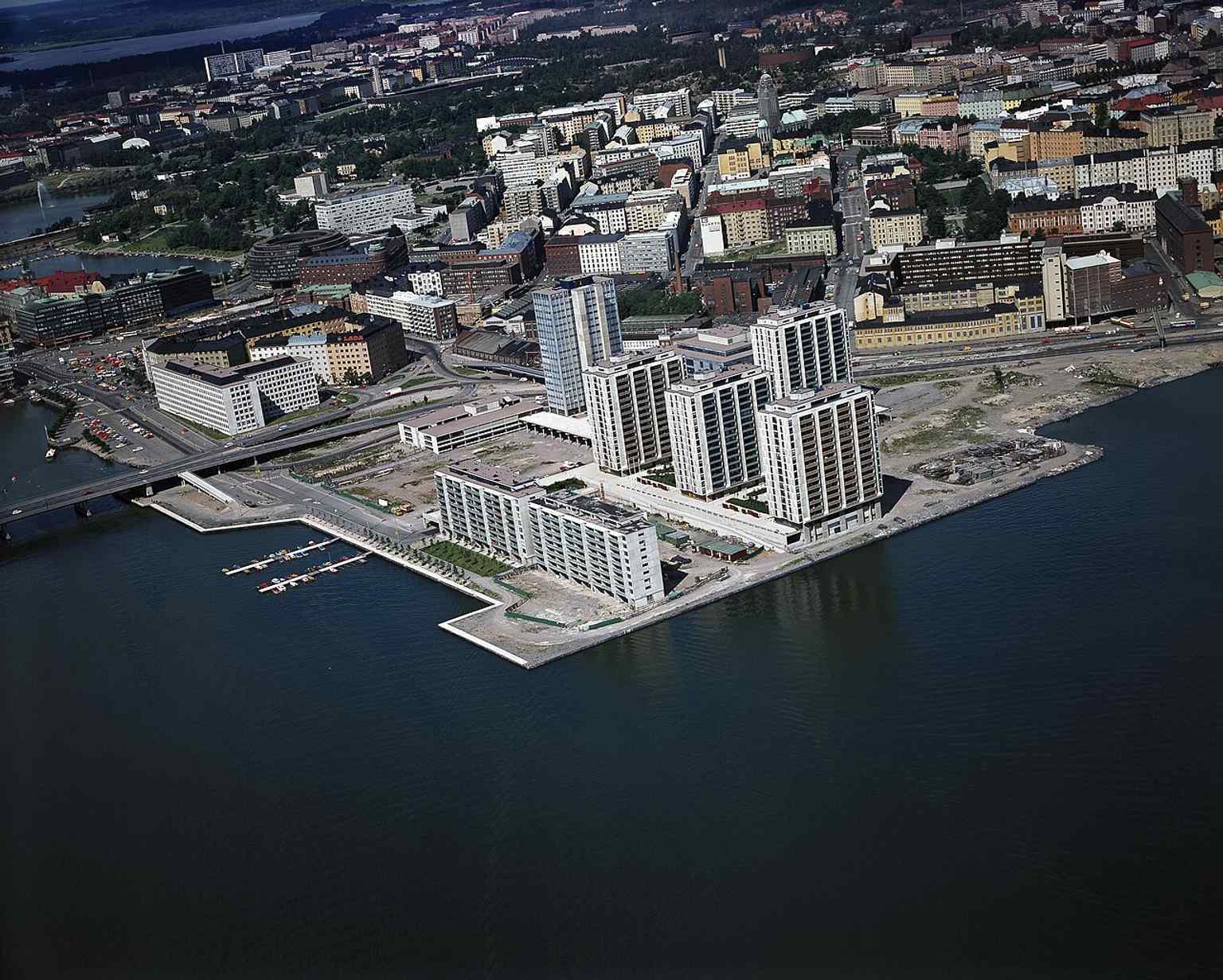
An aerial view of the Hakaniemi waterfront area in 1976, showing the square’s surroundings during the era when the market was being reshaped around new transport links.Photo: Sky-Foto Möller, Wikimedia Commons, CC BY 4.0. Cropped & resized. Look for the broad paved square framed by stone and brick blocks, with the long red-brick market hall and the round pale Ympyrätalo acting as Hakaniemi’s unmistakable…Read moreShow less
Open dedicated page →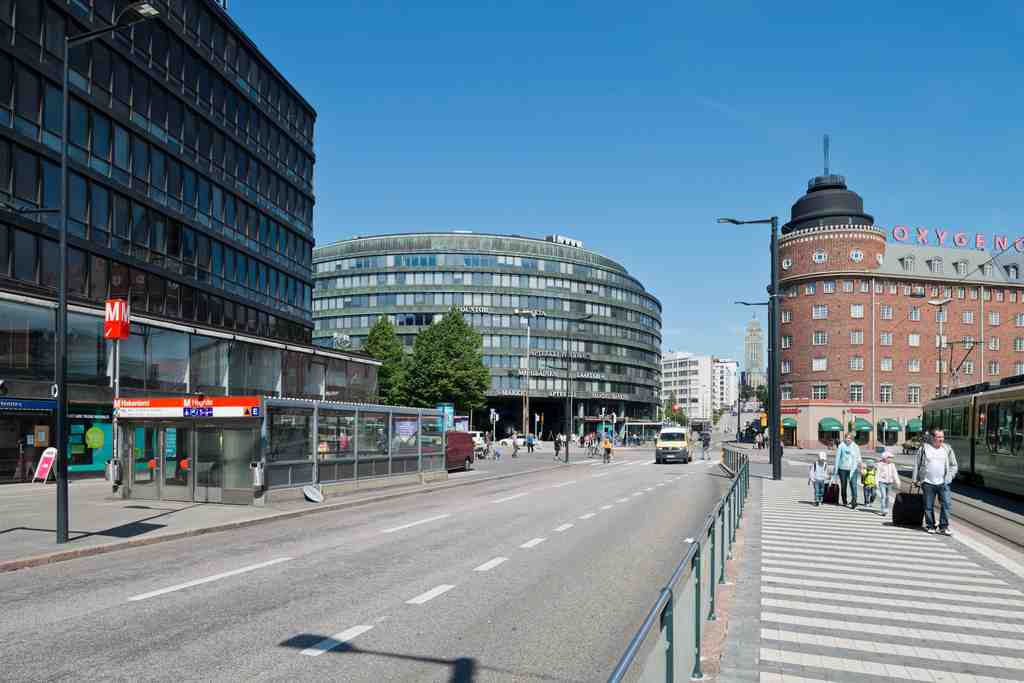
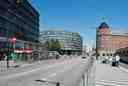
HakaniemiPhoto: Juho Nurmi, Wikimedia Commons, CC BY 4.0. Cropped & resized. Look for the broad paved square framed by stone and brick blocks, with the long red-brick market hall and the round pale Ympyrätalo acting as Hakaniemi’s unmistakable markers.
Stand here and Hakaniemi slips through your fingers a little. It has a powerful identity, yet an elastic one: everyone in Helsinki seems to know where Hakaniemi begins, but the map never quite agrees. Officially, its borders are hard to pin down. Socially, though, it is perfectly real.
That is partly because the ground beneath you is already an argument with geography. Hakaniemi began as a true headland, a piece of land pushing into the sea. In the late eighteenth century, a grazing field called Generalshagen gave the place its Swedish name, Hagnäs; the Finnish form settled into Hakaniemi in the early twentieth century. Then the city changed the shoreline. A narrow sound once cut across what became the market area, separating Siltasaari from the mainland. From the late eighteen eighties, workers filled that water with dredged material from Sörnäinen. The first dam failed. A second held. After eleven years, the sea had become solid ground, and traders began selling here in the late eighteen nineties.
If you glance at the aerial image on your screen, you can see how the square sits like a hinge between old shorelines, bridges, and traffic routes.
That hinge made Hakaniemi one of Helsinki’s great moving parts. By the nineteen twenties it had become a bus terminus. By the early nineteen thirties, as many as half of the city’s tram lines ran through here. The metro arrived in nineteen eighty-two. Buses, trams, regional routes from Vantaa, ferries from the waterfront nearby: this district learned to turn movement into identity.
But here is the twist. Hakaniemi did not become important simply because people passed through. It mattered because people gathered, argued, organised, and sometimes fought. The market square became a civic stage, and the district around it a stronghold of labour politics. The Finnish Trade Union Confederation, S-A-K, made its headquarters here; party offices and the Workers’ Hall gave the area a political charge that the bridges alone cannot explain.
One man captures that shift brutally: Johan Kock. In nineteen oh six, during the Viapori mutiny, Kock called a general strike. Red Guards stopped a tram at Hakaniementori to block strikebreakers. The confrontation turned to gunfire. Seven members of the Civil Guard and two Red Guards died. Many people see that clash as Finland’s first bloody collision between the two camps that would later face each other in civil war. Then, in January nineteen eighteen, Eero Haapalainen ordered a red lantern raised in the tower of the Workers’ Hall nearby. That light signalled revolution in Helsinki.
Even public memory here refuses to stay calm. The World Peace statue on the waterfront, a Soviet gift, stood for decades as a provocation as much as a monument. In nineteen ninety-one, a student group calling itself the Feather Group tarred and feathered it; one of them was the future broadcaster and politician Mikael Jungner. Someone even tried to blow it up in twenty ten. It left the area in twenty twenty-two, but the argument around it still clings to Hakaniemi.
So Hakaniemi is not just a place-name. It is a habit of assembly, a transport knot, a labour memory, and sometimes a warning. Not all of its history is solidaristic or comforting. Some of it is morally dark. Keep that in mind as you walk on to Wendtin talo, where another layer of this district begins to show itself.
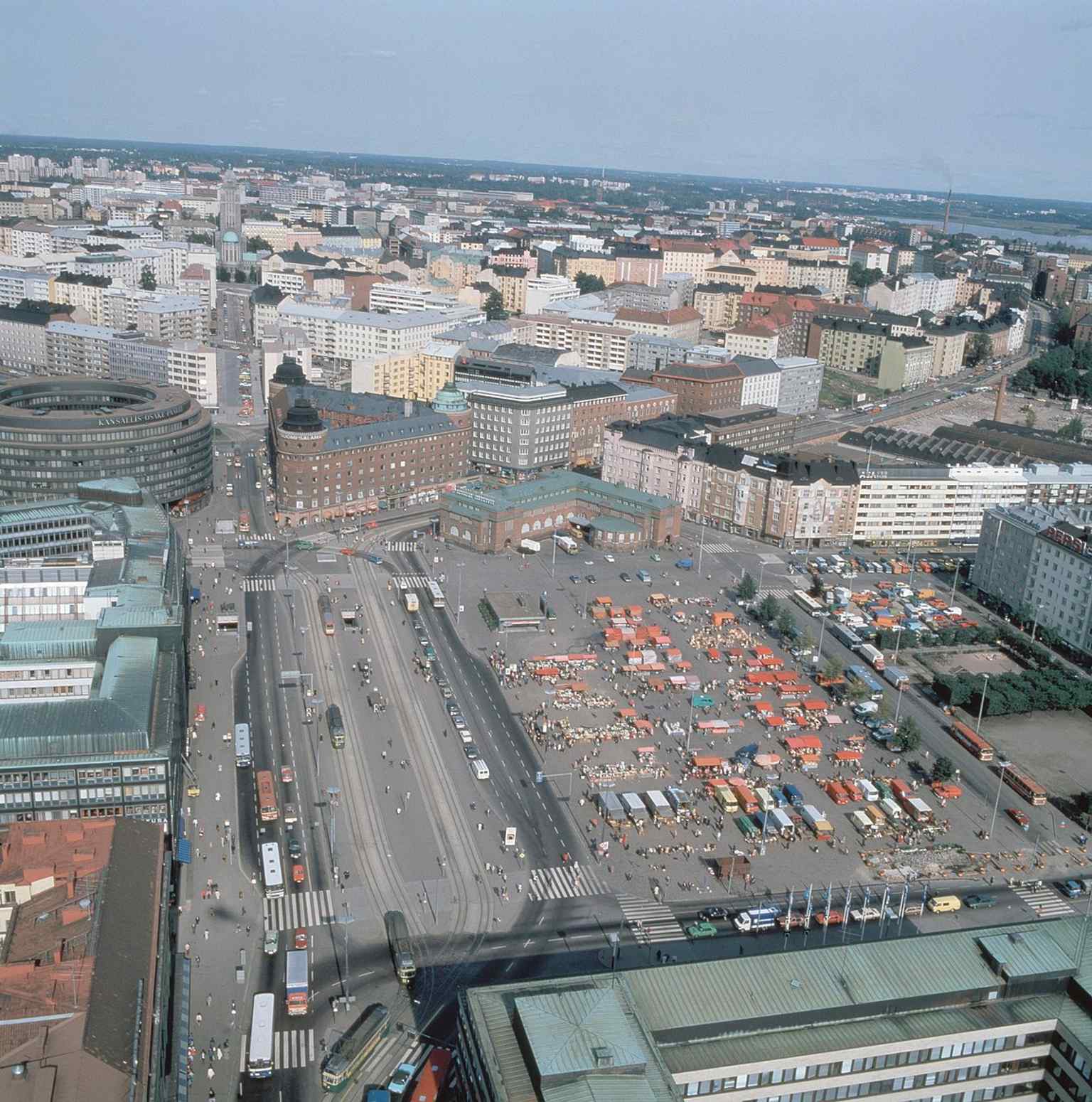
An aerial view of Hakaniementori and the surrounding blocks, showing how the square sits at the heart of the district.Photo: Unknown authorUnknown author, Wikimedia Commons, CC BY 4.0. Cropped & resized. 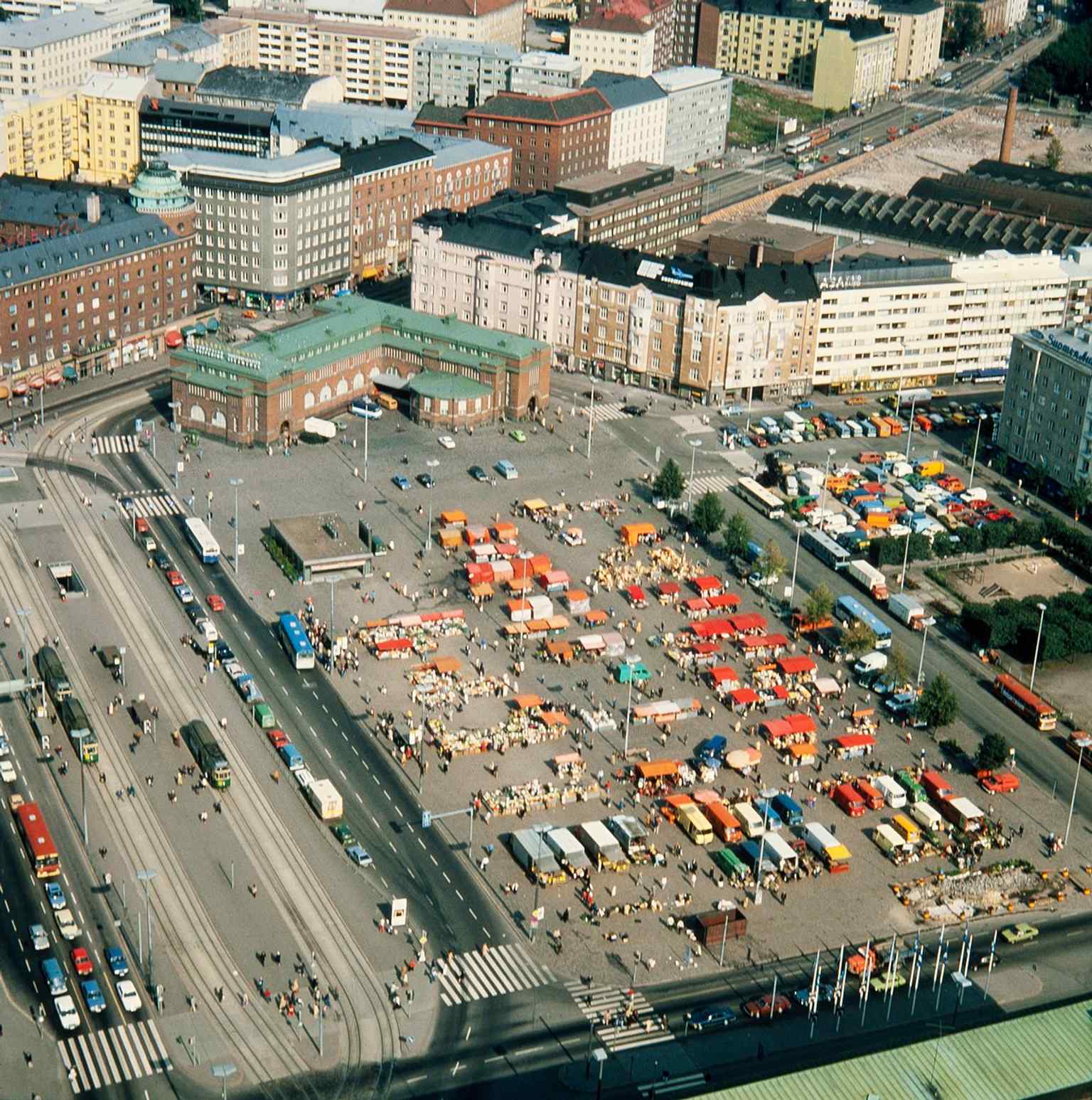
Hakaniementori from above, useful for explaining the area’s shifting shoreline and the busy transport hub around the market square.Photo: Unknown authorUnknown author, Wikimedia Commons, CC BY 4.0. Cropped & resized. 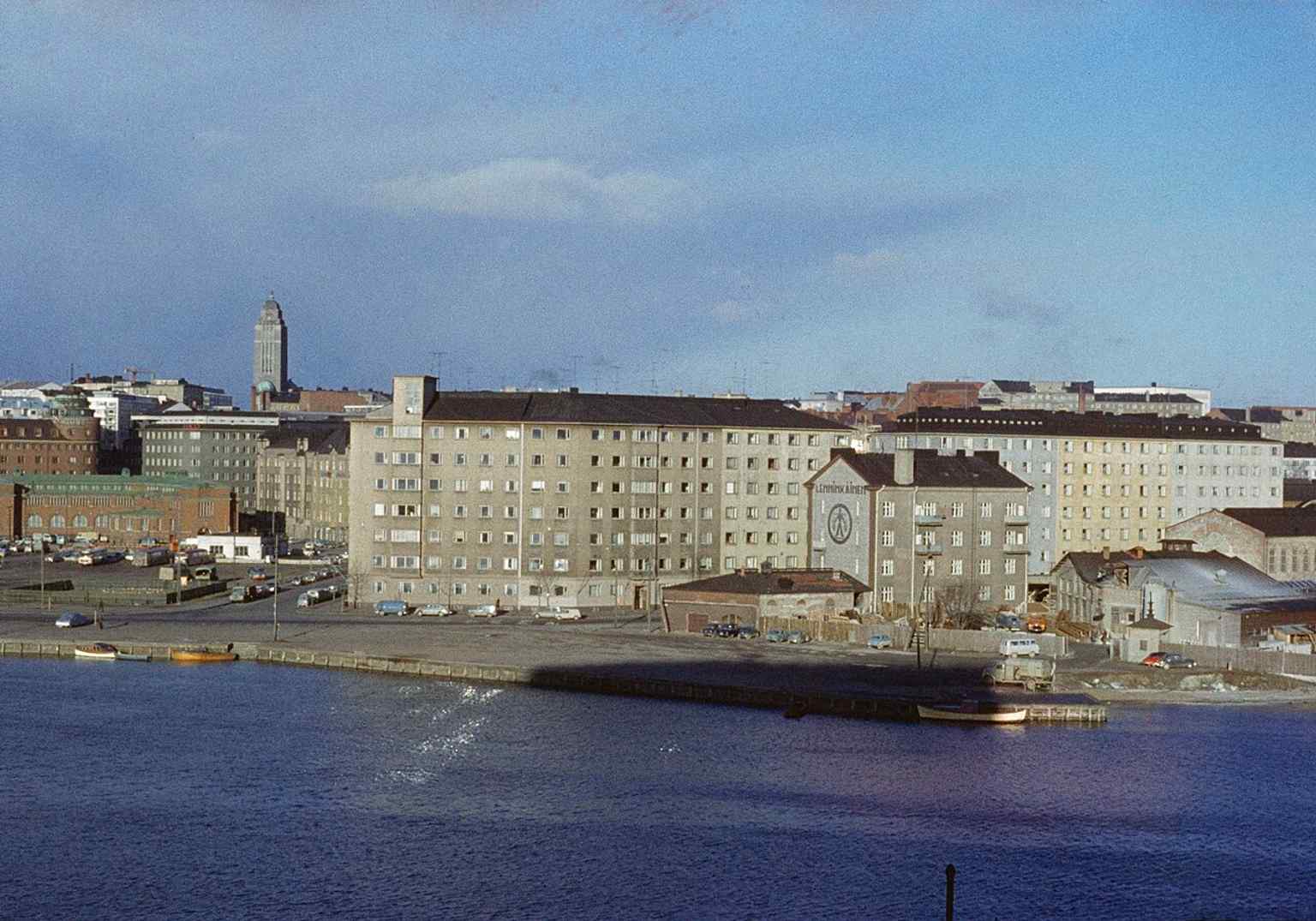
Hakaniemi’s waterfront with the market hall and Kallio Church in the background — a classic view of the area’s edge by the bay.Photo: Constantin Grünberg, Wikimedia Commons, CC BY 4.0. Cropped & resized. 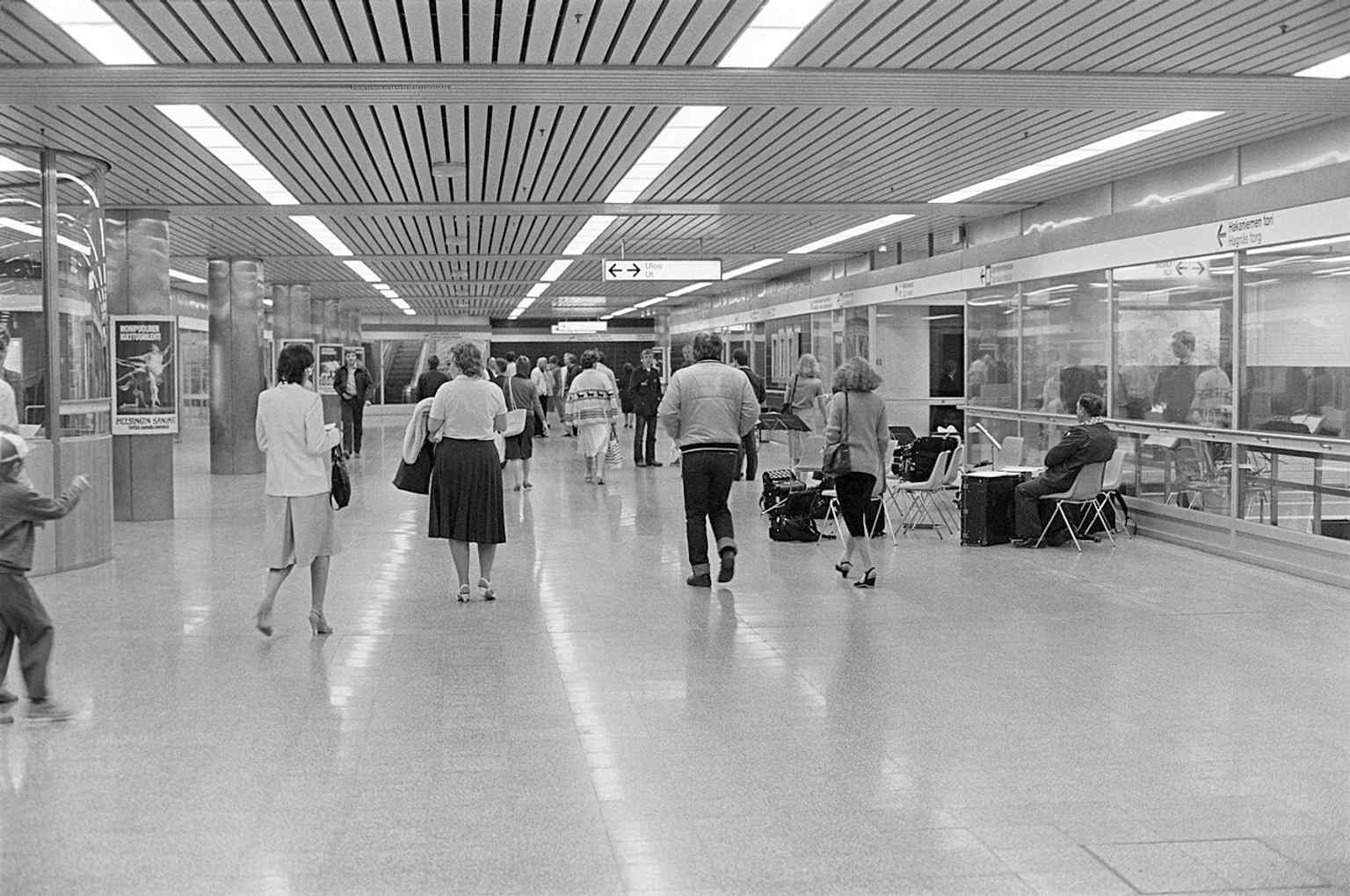
The metro station exit platform, showing Hakaniemi’s role as a major transit node since the metro opened in 1982.Photo: Jan Alanco, Wikimedia Commons, CC BY 4.0. Cropped & resized. 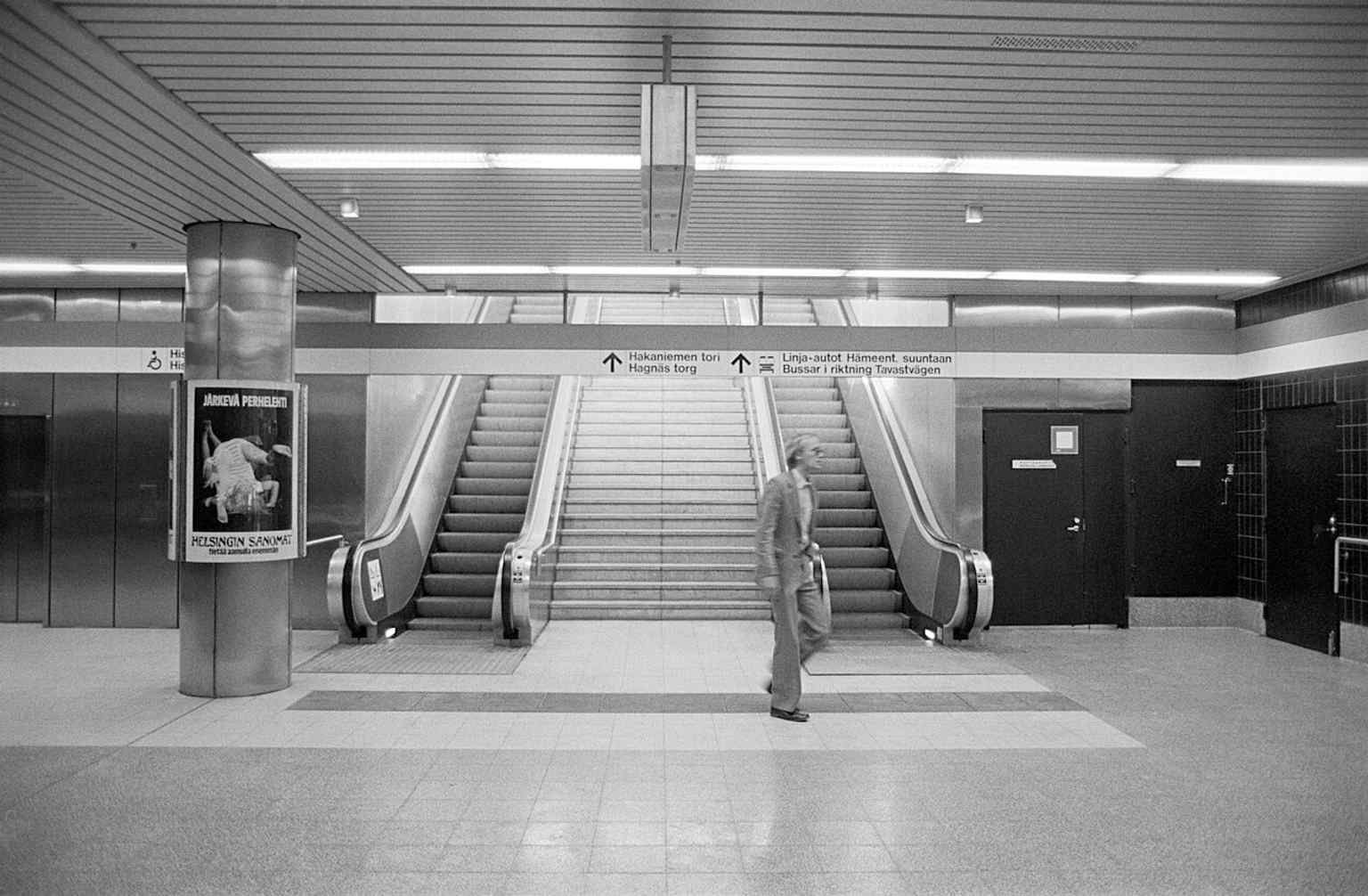
An exit from Hakaniemi metro station directly to Hakaniementori — a reminder that the square is built around transit.Photo: Jan Alanco, Wikimedia Commons, CC BY 4.0. Cropped & resized. 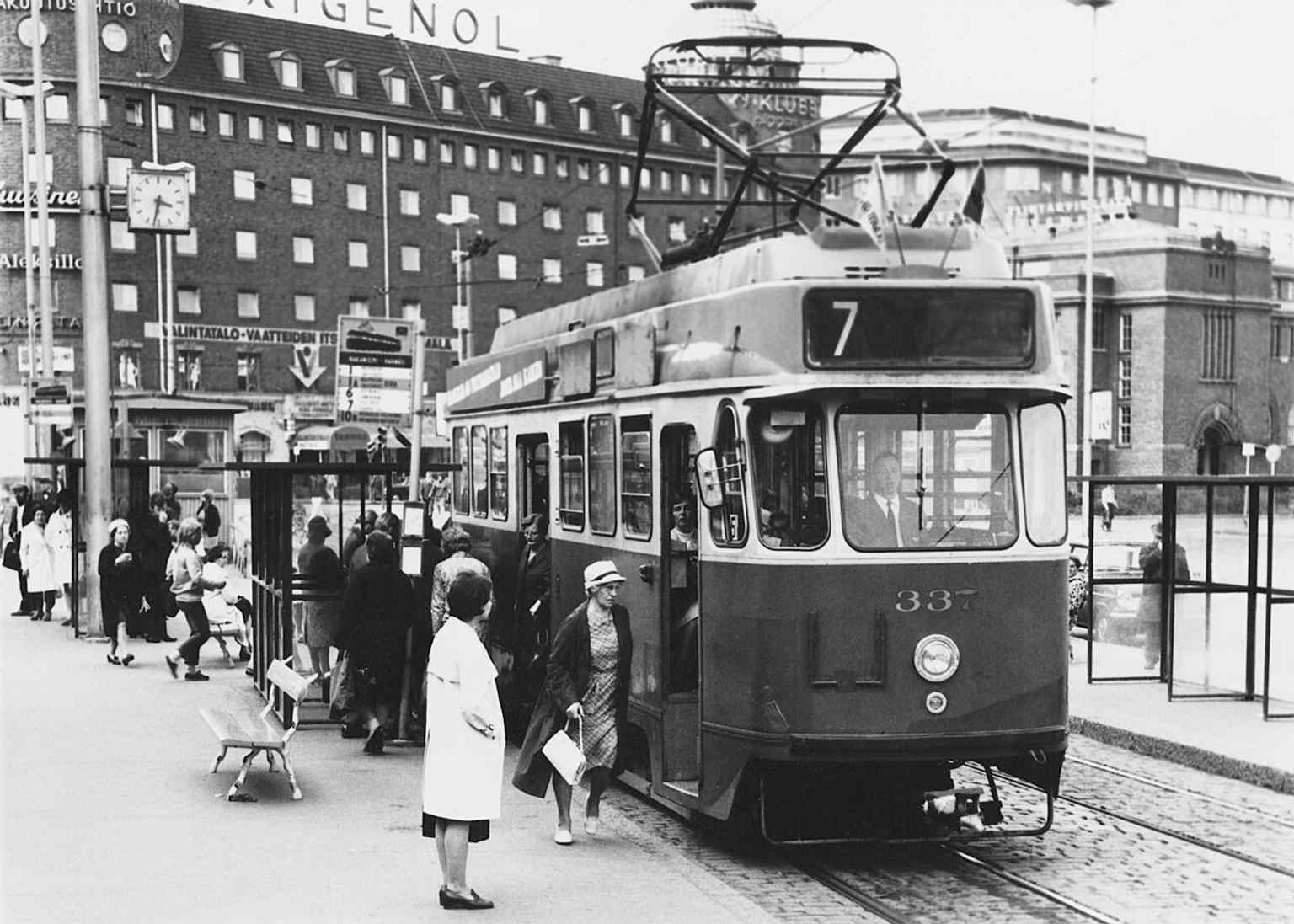
A tram on Hakaniementori, echoing the story of Hakaniemi as a long-time tram and bus hub.Photo: Unto Laitila, Wikimedia Commons, CC BY 4.0. Cropped & resized. 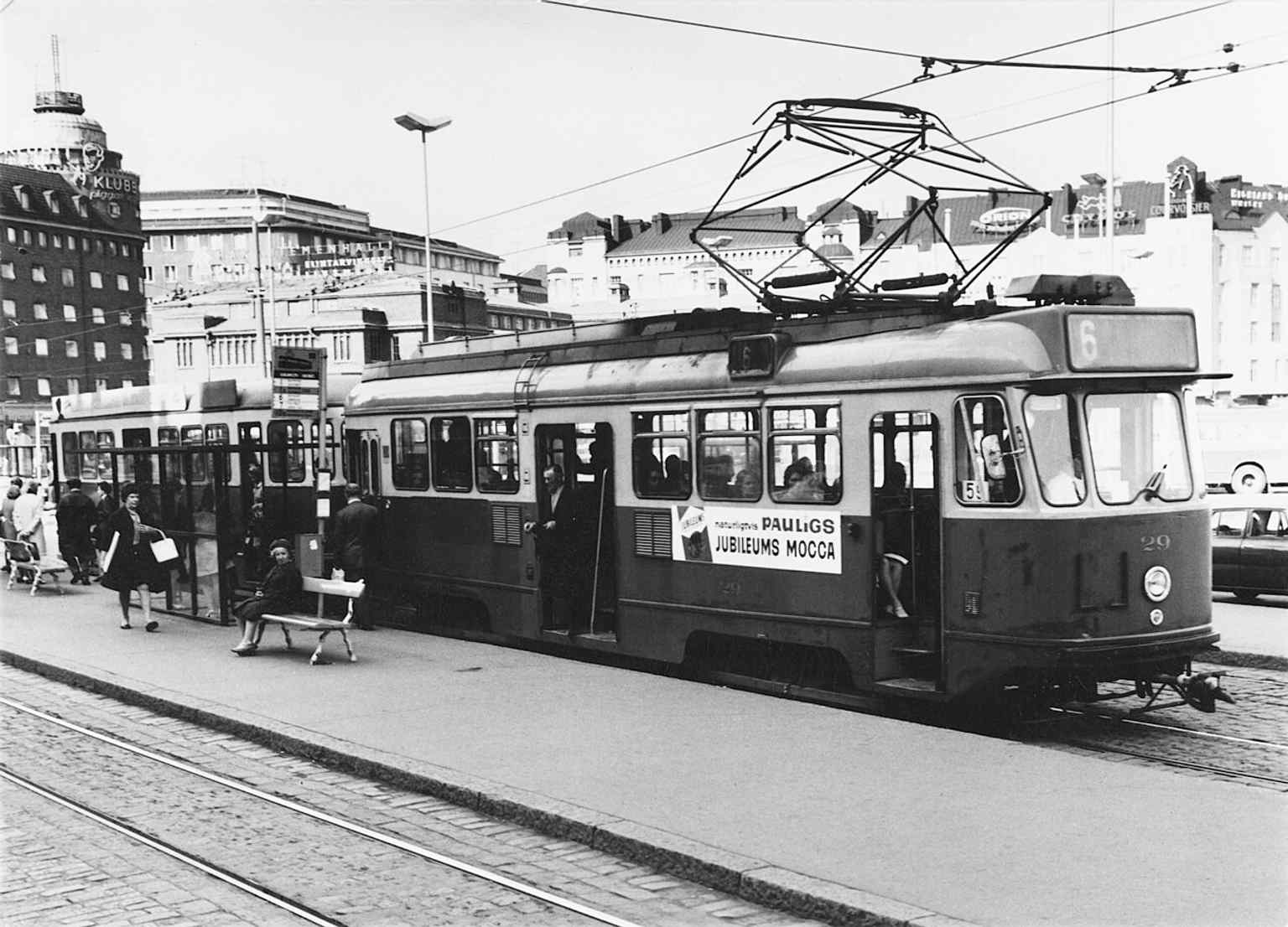
A 1961 tram on the square, capturing Hakaniemi before the metro era and before the area’s later redevelopment.Photo: Unto Laitila, Wikimedia Commons, CC BY 4.0. Cropped & resized. 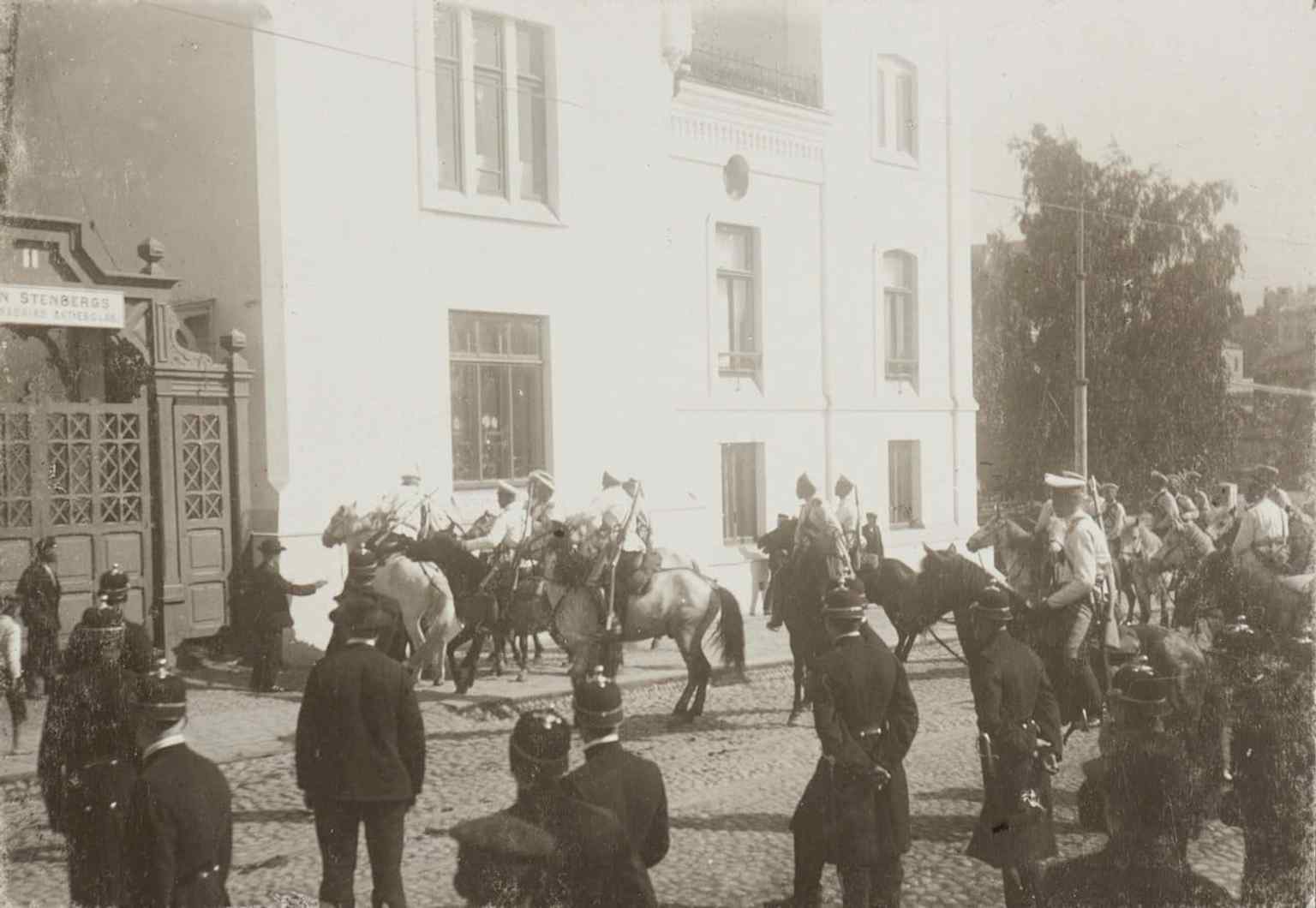
A depiction of the 1906 Hakaniemi riot, when clashes near Pitkäsilta became a symbol of Finland’s rising labor conflict.Photo: Johan Leonard Böök, Wikimedia Commons, CC BY-SA 4.0. Cropped & resized. In old photographs, Wendt House appears as a hefty pale stone corner block, tall and rectangular, with long rows of windows and a dark, steep roofline. Gustaf Estlander drew this…Read moreShow less
Open dedicated page →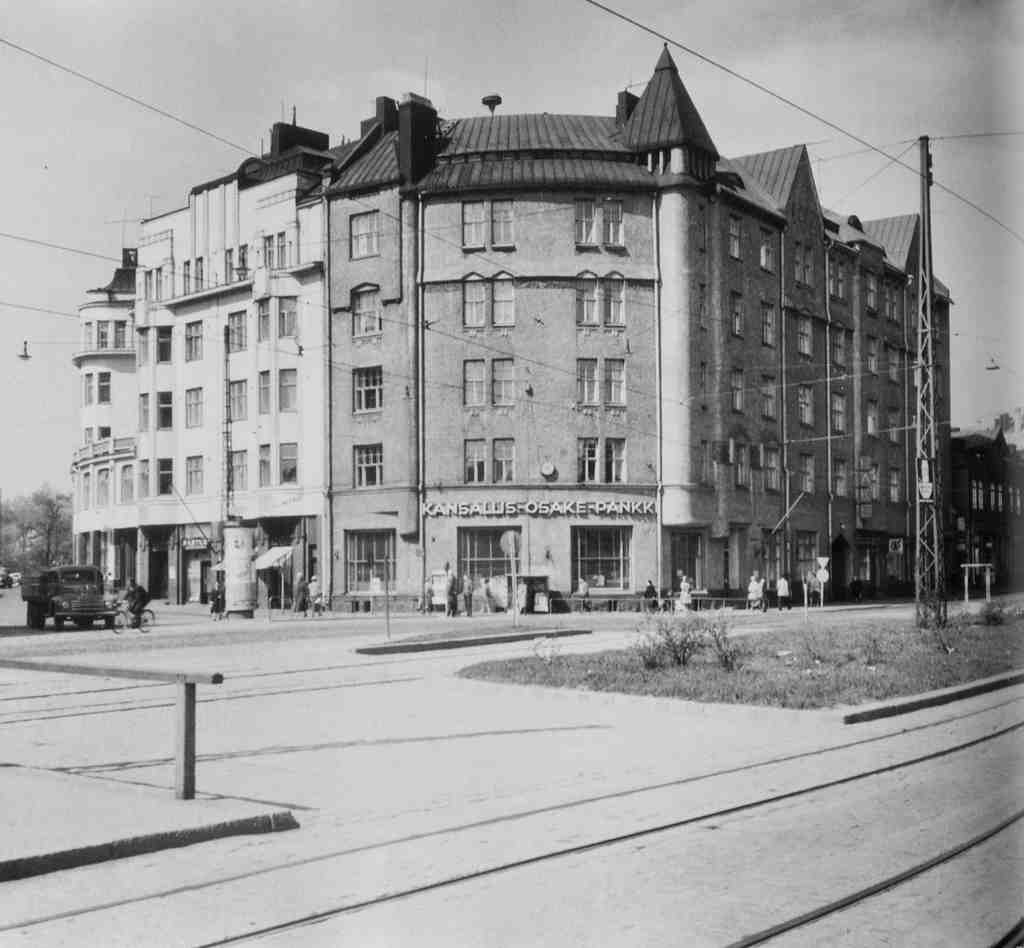
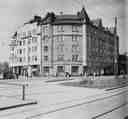
Wendt HousePhoto: Grünberg Constantin, Wikimedia Commons, Public domain. Cropped & resized. In old photographs, Wendt House appears as a hefty pale stone corner block, tall and rectangular, with long rows of windows and a dark, steep roofline.
Gustaf Estlander drew this house in nineteen oh three. He was an intriguing man: a sought-after Art Nouveau architect, a European speed-skating champion in eighteen ninety-three, and later one of the world’s great yacht designers. Here, though, his hand produced not elegance at sea but a solid urban stronghold.
Its name came from Carl von Wendt, the building manager, and that is where the story turns cold. He and his brother Georg lived here with their families and servants, a pocket of wealth set inside a workers’ district beyond Pitkäsilta. From these windows, the market square and the labour movement’s strongholds lay almost at hand. Yet Carl von Wendt later became one of the darkest figures in Helsinki’s memory. After the civil war of nineteen eighteen, he served as civilian commandant at the Suomenlinna prison camp. Prisoners remembered him for extreme cruelty: executions without trial, and food parcels refused to starving inmates.
That is the unsettling truth of this corner. Class did not live far apart here; it lived face to face. How should a city carry a name like Wendt’s when the building recalls privilege, but the man himself disturbs any easy pride?
In the early nineteen sixties, Kansallis-Osake-Pankki bought the whole block, cleared away the old houses, and prepared the ground for a sleeker future. In a moment, we meet that future at Ympyrätalo.
On your right, look for a pale concrete cylinder wrapped in dark horizontal window bands, a drum-shaped building that fills the whole block with one unbroken curve. This is…Read moreShow less
Open dedicated page →On your right, look for a pale concrete cylinder wrapped in dark horizontal window bands, a drum-shaped building that fills the whole block with one unbroken curve.
This is Ympyrätalo, the Circle House: modernist confidence made visible. Heikki and Kaija Siren drew it as a bold answer to a newly mobile Helsinki, a city learning to admire speed, clarity, and buildings that could be recognised in an instant.
Yet the curve stands on a place that once looked nothing like this. In nineteen oh seven, the photographer Signe Brander pointed her camera across the old shoreline and caught a scatter of wooden houses and a few stone buildings here, with open water still shaping the view. One of those lost houses was Wendt House, which we met moments ago. That is the quiet trick of Hakaniemi: it reinvents itself, but never quite severs the thread.
The bank Kansallis-Osake-Pankki opened this building in nineteen sixty-eight as its headquarters, and even the ground around it tried to anticipate the future. Those little kiosks outside were not just kiosks. They formed Finland’s largest drive-in bank, built for motorists who could bank without leaving the car. It sounded almost science fiction; demand faded within a few years, and the idea slipped into local memory like a stylish experiment.
If you glance at the image on your screen, the aerial view reveals another secret: from the street, Ympyrätalo can seem oddly compact, but its volume is actually greater than Parliament House. That sleight of hand is part of its charm.
The Siren family left more than one signature here. By the main entrance stands Hannu Siren’s steel sphere, Symboli, and during the major renovation from two thousand and two to two thousand and four, the architects included Jukka Siren, son of the original designers. Most of the interior changed; one office suite kept its nineteen sixties character at the city museum’s request, like a single preserved note in a rewritten score.
Carry that appetite for bold urban image with you now. In a few minutes, Arena House takes that confidence and turns it outward, into signage, commerce, and the theatre of the street.
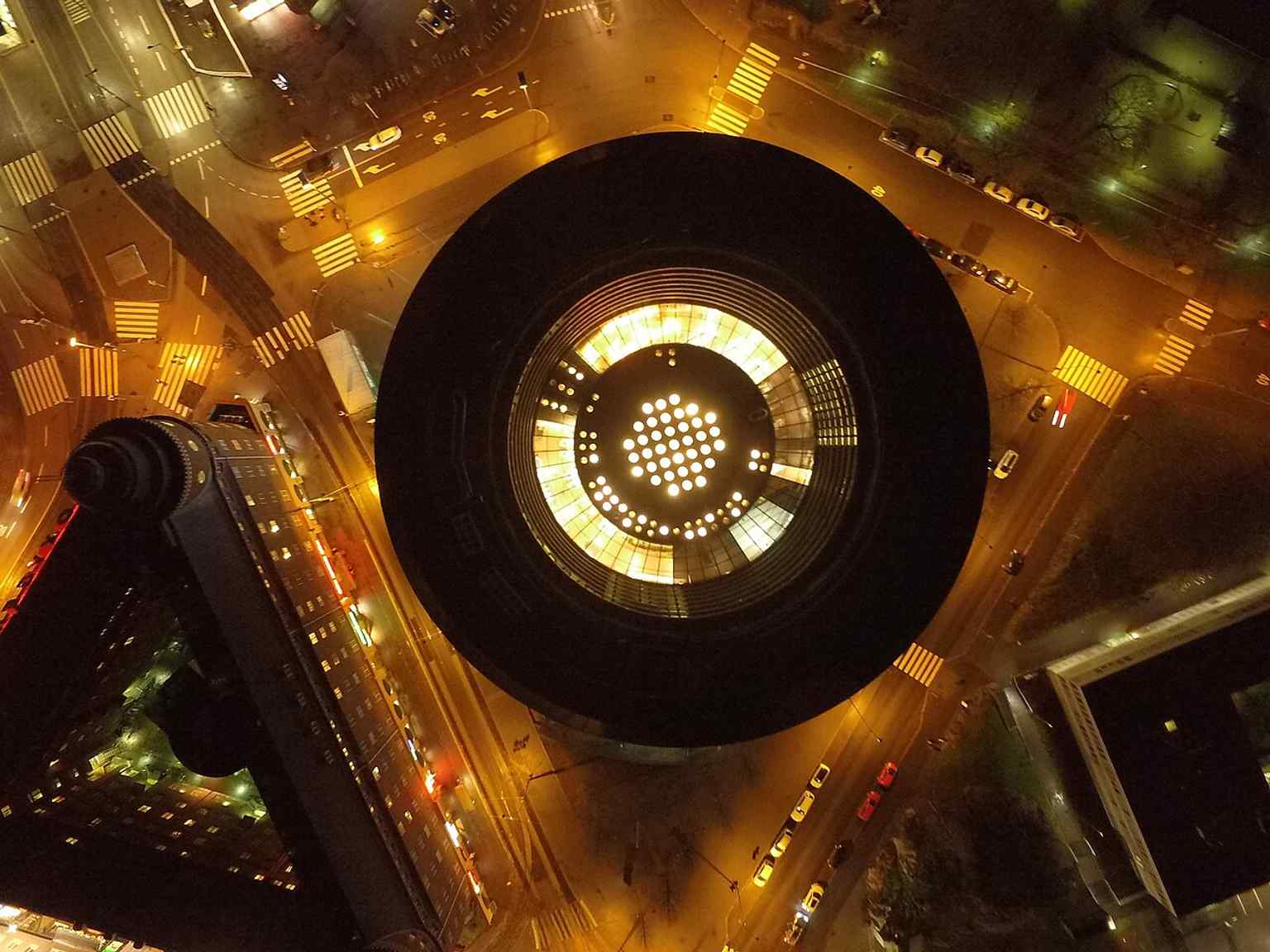
Night aerial of Ympyrätalo, showing the building’s distinctive round mass that makes it look compact from the street despite its large size.Photo: Kristoffer Östman, Wikimedia Commons, CC BY 4.0. Cropped & resized. 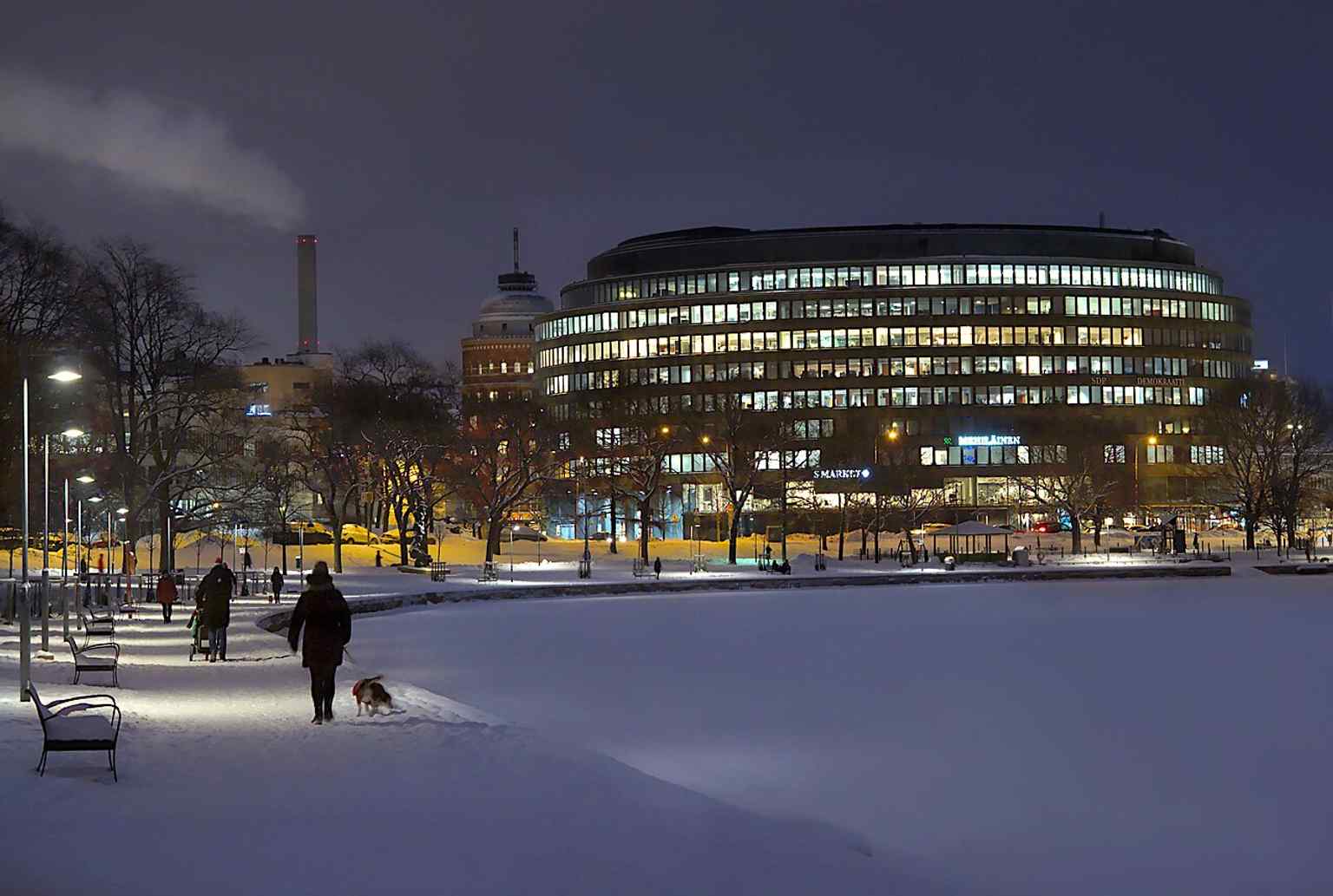
Ympyrätalo in winter, a clear exterior view of the 1968 former bank building that now houses shops and services.Photo: Marit Henriksson, Wikimedia Commons, CC BY-SA 4.0. Cropped & resized. On your right stands a red-brick wedge of a building, wrapping a triangular block with sharp street-facing corners and a towered edge, all crowned by the famous Oxygenol rooftop…Read moreShow less
Open dedicated page →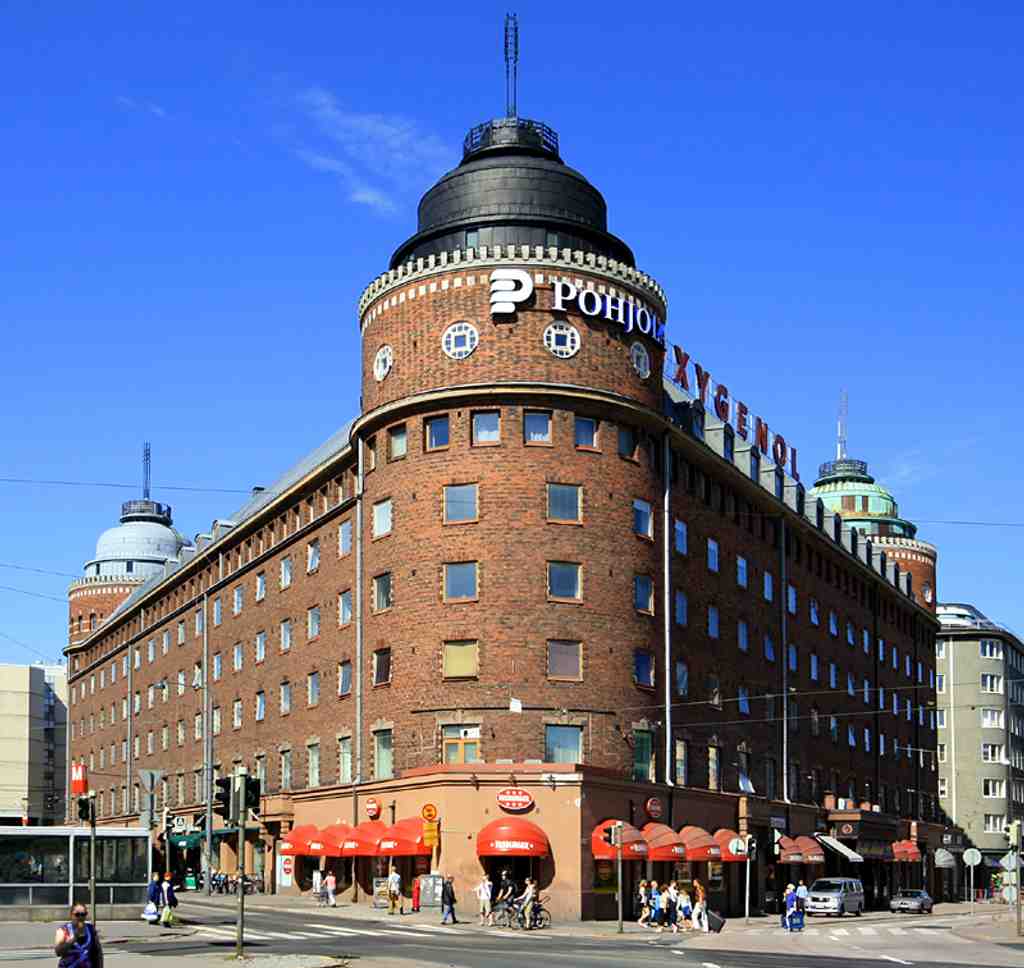
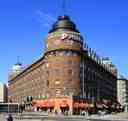
Arena HousePhoto: Mahlum, Wikimedia Commons, Public domain. Cropped & resized. On your right stands a red-brick wedge of a building, wrapping a triangular block with sharp street-facing corners and a towered edge, all crowned by the famous Oxygenol rooftop sign.
Arena House understands something subtle about cities: people remember silhouettes as keenly as they remember monuments. Architect Lars Sonck gave Hakaniemi this Danish-influenced brick giant in two stages, first in nineteen twenty-four, then in nineteen twenty-nine, until it filled the whole triangle between Hämeentie, Siltasaarenkatu, and Toinen linja. It does not merely occupy the junction. It stages it.
And the sign matters. That glowing Oxygenol name began as advertising for toothpaste, yet it grew into something far stranger and more powerful: part of Helsinki’s own self-portrait. The Architecture and Design Museum has pointed out that without it, both this building and the Hakaniemi skyline would feel somehow incomplete. That is a delicious thought, is it not? A sales message becoming civic memory.
If you look at the image in the app, the aerial view shows the block’s triangular trick especially well, and how tightly the streets press around it. For years, trams seemed to draw a frame around the whole building. Until twenty twenty, the old “Arena loop” track still curved around it for exceptional service, making the house feel almost pinned in place by rails.
Yet this address has reinvented itself again and again. Before Arena House, a customs gate stood here when Siltasaari really was an island, and the little bridge called Pikkusilta sent traffic out along what became Hämeentie. Then came a power station. Then, in the summer of nineteen twenty-four, Saija and John Bertil Sarlin turned their tower apartment into Radiola, Helsinki’s first radio station, sending experimental broadcasts out from an ordinary home. Later, filmgoers came for Roxy and Tuulensuu; theatre audiences followed.
Now let your eyes travel from the roof sign to the shape of the block itself and ask yourself: how much of a city’s identity comes from architecture, and how much from the names it learns to love? In a moment, we leave image-making behind for an older transaction altogether: the buying and selling of food at Hakaniemi Market Hall.
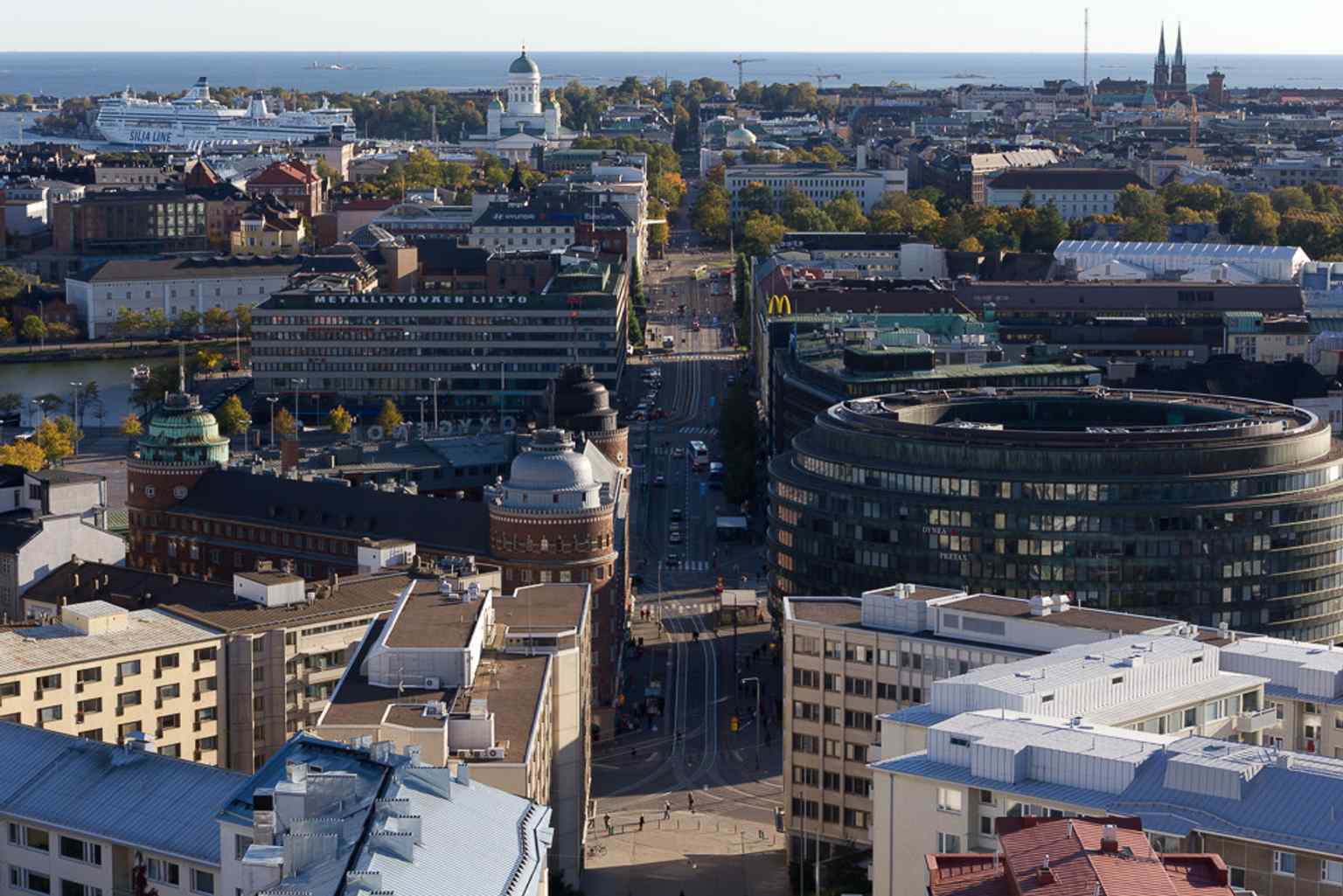
An elevated view of Siltasaarenkatu beside Arena House — this street forms one edge of the block, where tram traffic once surrounded the building.Photo: Joneikifi, Wikimedia Commons, CC BY-SA 4.0. Cropped & resized. Look for the long red-brick hall with its steep dark roof, rows of arched windows, and a strong corner gable that gives the square a dignified, almost civic seriousness. This is…Read moreShow less
Open dedicated page →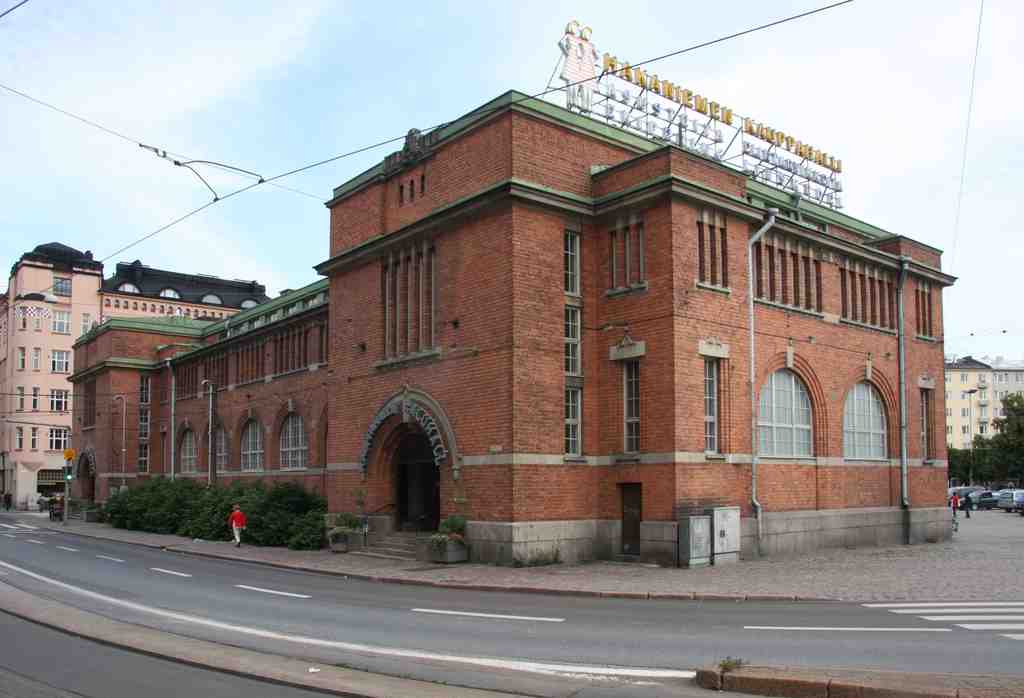
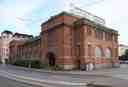
Hakaniemi Market HallPhoto: Jisis, Wikimedia Commons, CC BY-SA 4.0. Cropped & resized. Look for the long red-brick hall with its steep dark roof, rows of arched windows, and a strong corner gable that gives the square a dignified, almost civic seriousness.
This is Hakaniemi Market Hall, and it feels, somehow, exactly right here: trade gathered into form, appetite given architecture. Helsinki’s council set aside this site on the twentieth of October, nineteen oh-eight, because the market outside had already grown too unruly to leave to chance.
The architect Einar Flinckenberg drew two possibilities. One would have been a single-storey food hall. The other, more ambitious, spread life over two floors: food below, other goods above. In nineteen eleven, the city chose the larger version. It cost more, but officials judged it wiser in the long run and finer as a piece of building. They wanted more than shelter for sellers. They wanted a better-organised public square.
So this hall opened on the first of June, nineteen fourteen, with a plan that sounds almost military in its precision: thirty-two cellars, eleven fish shops in a side wing, one hundred and fourteen food stalls on the lower floor, and one hundred and three places upstairs for cloth, leather, tinware, ceramics, and home-made goods. Practicality, yes, but with poise. Flinckenberg and city architect Karl Hård af Segerstad gave it late Jugend style - that northern branch of Art Nouveau - already easing toward classic order. Natural stone, disciplined lines, and new concrete technology made it modern without fuss.
If you glance at the image on your screen, you can see the hall before its most recent renewal. What strikes me is how constant the outer face remained, even when the life inside kept adjusting to each new era.
And each era did test it. A newspaper greeted the grand opening with only six dry lines. Traders struggled through advance rents, war, and civil war. On the ninth of July, nineteen forty-one, Soviet bombers hit Kallio. Bombs fell right by the hall’s corner and the next block, setting nearby wooden houses alight. Yet this sturdy brick building endured.
Inside, the hall kept its human oddities and loyalties. For more than thirty years, Vieno Puustjärvi sold jewellery upstairs and read customers’ palms - a chirologist, that is, someone who claims to interpret the hand. That detail tells you something essential: this was never only a machine for buying food. It was a little society under one roof. And when the latest renovation, from twenty eighteen to twenty twenty-three, uncovered failing old timber piles under the foundations, the city did not give up on it. Workers replaced them with steel pipe piles, restored the interiors, built new storage below, and reopened the hall on the twenty-seventh of April, twenty twenty-three.
Around Hakaniemi, big commercial buildings have changed names, owners, even personalities. This hall has changed too, but more quietly. It has remained the square’s oldest, most faithful companion: protected, two storeys tall, and still built around the simple dignity of supplying daily life.
From here, we turn from nourishment you can weigh and wrap to nourishment people seek in another way. Our next stop is Salem Congregation in Helsinki, about a three-minute walk away.
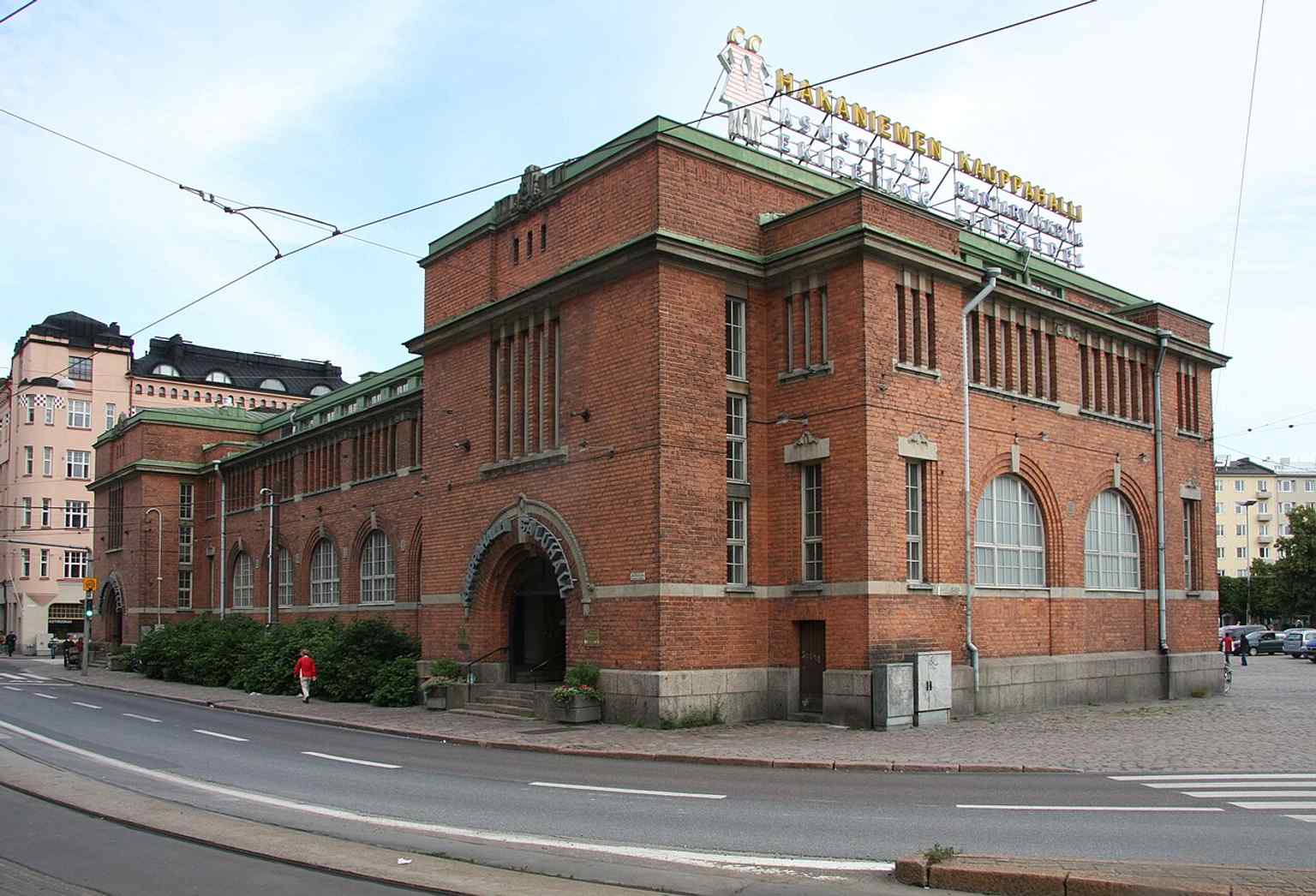
Hakaniemi Market Hall in 2008, before the long 2018–2023 renovation that modernized the hall while preserving its historic Jugend-style exterior.Photo: --Jisis (talk) 18:13, 6 September 2008 (UTC), Wikimedia Commons, CC BY-SA 4.0. Cropped & resized. On your right is a broad pale concrete church with crisp angular lines and a recessed entrance, its façade marked by a simple cross set high above the street. This is the Saalem…Read moreShow less
Open dedicated page →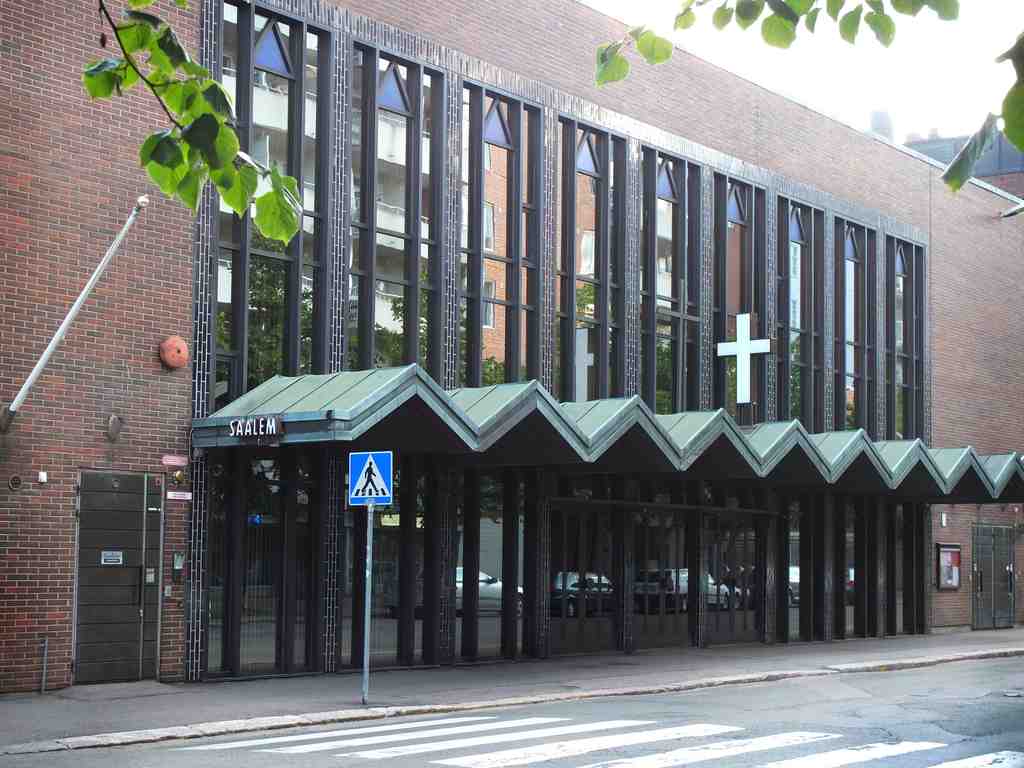
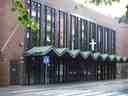
Salem Congregation in HelsinkiPhoto: Kotivalo, Wikimedia Commons, CC BY-SA 3.0. Cropped & resized. On your right is a broad pale concrete church with crisp angular lines and a recessed entrance, its façade marked by a simple cross set high above the street.
This is the Saalem Temple, home to Helsinki’s Saalem congregation, and it gives Hakaniemi one more identity to hold. Not only trade, not only politics, not only traffic and reclaimed shoreline, but spiritual hunger as well.
Most people notice the scale first. When this temple opened on New Year’s Day in nineteen seventy-eight, it gave the congregation a central home with room for seventeen hundred people in the main hall. Architect Veikko Gröhn drew it for a movement that had grown far beyond rented rooms and smaller prayer houses. Yet the deeper story is quieter, and far older than the concrete in front of you.
This plot matters because, in the early nineteen hundreds, a small prayer group met here in the Hakaniemi area and invited Thomas Ball Barratt, a Norwegian Methodist pastor, to Finland in nineteen eleven. That invitation helped ignite the Finnish Pentecostal revival, a Protestant movement that places special emphasis on direct experience of the Holy Spirit. Barratt’s meetings startled people. Worshippers spoke in tongues, meaning ecstatic prayer in languages unknown to the speaker, and the press spread news of it across the country almost as quickly as the believers did.
The local secret, though, is not only revival. It is administration. Helsinki’s early Pentecostal work gathered in a bilingual congregation called Filadelfia, but practical life in two languages proved difficult. So Eino I. Manninen, a trained forester who had studied in Helsinki and then become a pastor, joined other Finnish-speaking believers and founded Saalem on the fifth of March, nineteen twenty-eight. That intimate split often disappears behind grander headlines, yet it tells you something essential about Hakaniemi: even faith here had to negotiate language, identity, and who exactly belonged in the room.
Manninen led Saalem for nearly forty years. Under him, the congregation grew quickly, survived wartime disruption, and built international ties that brought figures such as Oral Roberts, David Wilkerson, Reinhard Bonnke, and Billy Graham into Finland’s religious life. Wilkerson, the pastor known for working with gang members and drug users in New York, especially shaped Saalem’s response to Helsinki’s own wounded young people. The congregation answered with street outreach and a magazine called Vastaus, meaning “Answer.” So this was never only a preaching hall. It became a place that tried to meet the city where the city was fraying.
Today Saalem is Finland’s largest Pentecostal congregation, with around three thousand six hundred members, part of the Finnish Pentecostal Church, and led since October twenty twenty-two by Stefan Sigfrids. Services and ministries reach families, seniors, children and worshippers in many languages, from Arabic and Persian to Russian, Estonian and English, while mission work stretches outward with Fida International.
That feels right for Hakaniemi. A district can raise market halls and union halls, department stores and round modernist blocks, and still leave room for prayer. In the end, that may be the truest picture of this part of Helsinki: not one creed, one class, or one skyline, but many ways of gathering and remaking a life.
Reviews
Frequently asked questions
How do I start the tour?
After purchase, download the AudaTours app and enter your redemption code. The tour will be ready to start immediately - just tap play and follow the GPS-guided route.
Do I need internet during the tour?
No! Download the tour before you start and enjoy it fully offline. Only the chat feature requires internet. We recommend downloading on WiFi to save mobile data.
Is this a guided group tour?
No - this is a self-guided audio tour. You explore independently at your own pace, with audio narration playing through your phone. No tour guide, no group, no schedule.
How long does the tour take?
Most tours take 60–90 minutes to complete, but you control the pace entirely. Pause, skip stops, or take breaks whenever you want.
What if I can't finish the tour today?
No problem! Tours have lifetime access. Pause and resume whenever you like - tomorrow, next week, or next year. Your progress is saved.
What languages are available?
All tours are available in 50+ languages. Select your preferred language when redeeming your code. Note: language cannot be changed after tour generation.
Where do I access the tour after purchase?
Download the free AudaTours app from the App Store or Google Play. Enter your redemption code (sent via email) and the tour will appear in your library, ready to download and start.
If you don't enjoy the tour, we'll refund your purchase. Contact us at [email protected]
Checkout securely with 






.jpg)


.jpg)
%20alueelta%20lounaaseen%20-%20G16251%20-%20hkm.HKMS000005-km0000m9ua.jpg)


