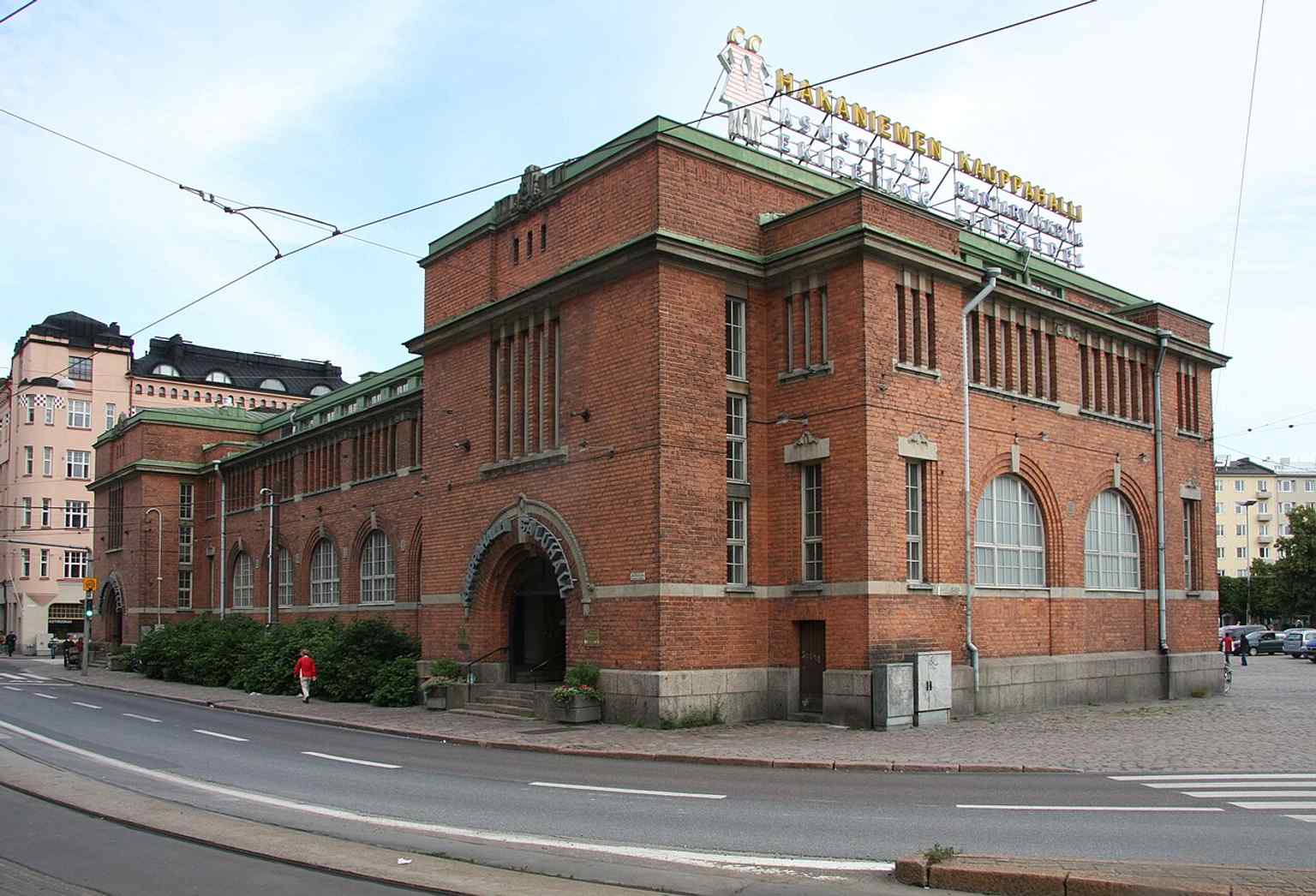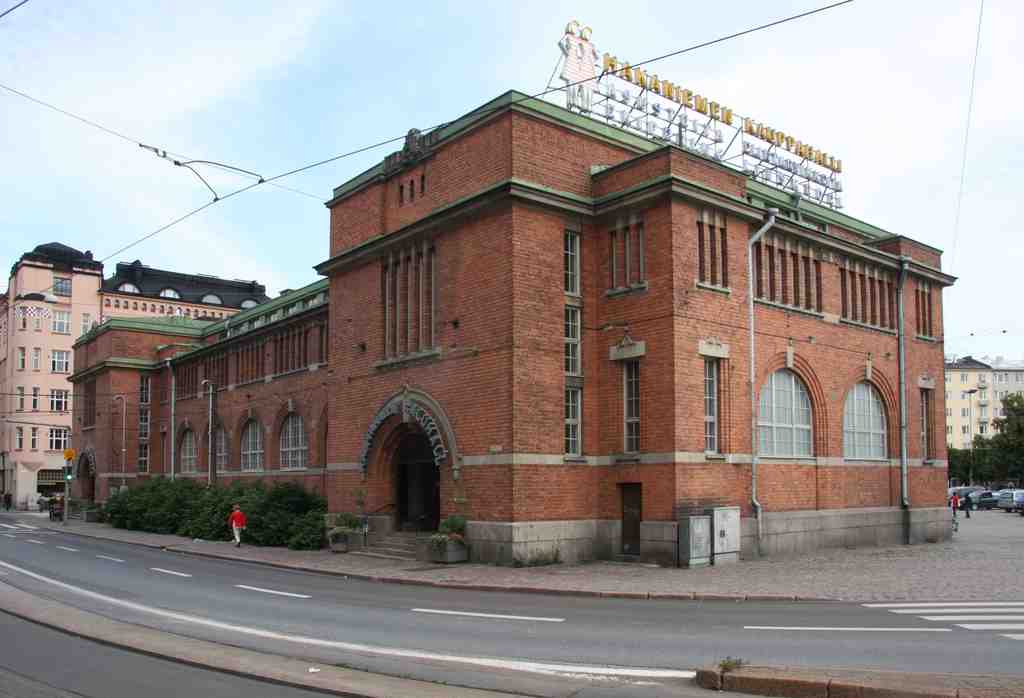
Look for the long red-brick hall with its steep dark roof, rows of arched windows, and a strong corner gable that gives the square a dignified, almost civic seriousness.
This is Hakaniemi Market Hall, and it feels, somehow, exactly right here: trade gathered into form, appetite given architecture. Helsinki’s council set aside this site on the twentieth of October, nineteen oh-eight, because the market outside had already grown too unruly to leave to chance.
The architect Einar Flinckenberg drew two possibilities. One would have been a single-storey food hall. The other, more ambitious, spread life over two floors: food below, other goods above. In nineteen eleven, the city chose the larger version. It cost more, but officials judged it wiser in the long run and finer as a piece of building. They wanted more than shelter for sellers. They wanted a better-organised public square.
So this hall opened on the first of June, nineteen fourteen, with a plan that sounds almost military in its precision: thirty-two cellars, eleven fish shops in a side wing, one hundred and fourteen food stalls on the lower floor, and one hundred and three places upstairs for cloth, leather, tinware, ceramics, and home-made goods. Practicality, yes, but with poise. Flinckenberg and city architect Karl Hård af Segerstad gave it late Jugend style - that northern branch of Art Nouveau - already easing toward classic order. Natural stone, disciplined lines, and new concrete technology made it modern without fuss.
If you glance at the image on your screen, you can see the hall before its most recent renewal. What strikes me is how constant the outer face remained, even when the life inside kept adjusting to each new era.
And each era did test it. A newspaper greeted the grand opening with only six dry lines. Traders struggled through advance rents, war, and civil war. On the ninth of July, nineteen forty-one, Soviet bombers hit Kallio. Bombs fell right by the hall’s corner and the next block, setting nearby wooden houses alight. Yet this sturdy brick building endured.
Inside, the hall kept its human oddities and loyalties. For more than thirty years, Vieno Puustjärvi sold jewellery upstairs and read customers’ palms - a chirologist, that is, someone who claims to interpret the hand. That detail tells you something essential: this was never only a machine for buying food. It was a little society under one roof. And when the latest renovation, from twenty eighteen to twenty twenty-three, uncovered failing old timber piles under the foundations, the city did not give up on it. Workers replaced them with steel pipe piles, restored the interiors, built new storage below, and reopened the hall on the twenty-seventh of April, twenty twenty-three.
Around Hakaniemi, big commercial buildings have changed names, owners, even personalities. This hall has changed too, but more quietly. It has remained the square’s oldest, most faithful companion: protected, two storeys tall, and still built around the simple dignity of supplying daily life.
From here, we turn from nourishment you can weigh and wrap to nourishment people seek in another way. Our next stop is Salem Congregation in Helsinki, about a three-minute walk away.