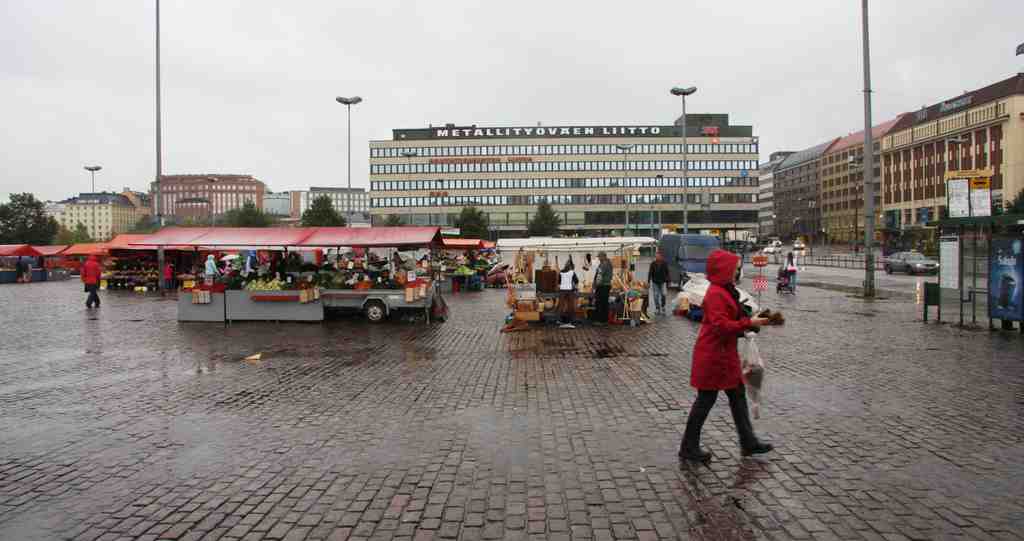
On your right, look for the broad rectangular market square, its open surface laid in grey stone setts and defined by crisp kerb lines, a wide civic floor cut into the district.
This is Hakaniementori, opened in eighteen ninety-seven, and it behaves less like a simple marketplace than a public stage. Traders, marchers, campaigners, and people hurrying home have all claimed the same patch of ground. Here, buying supper and arguing about society have long happened within the same few steps.
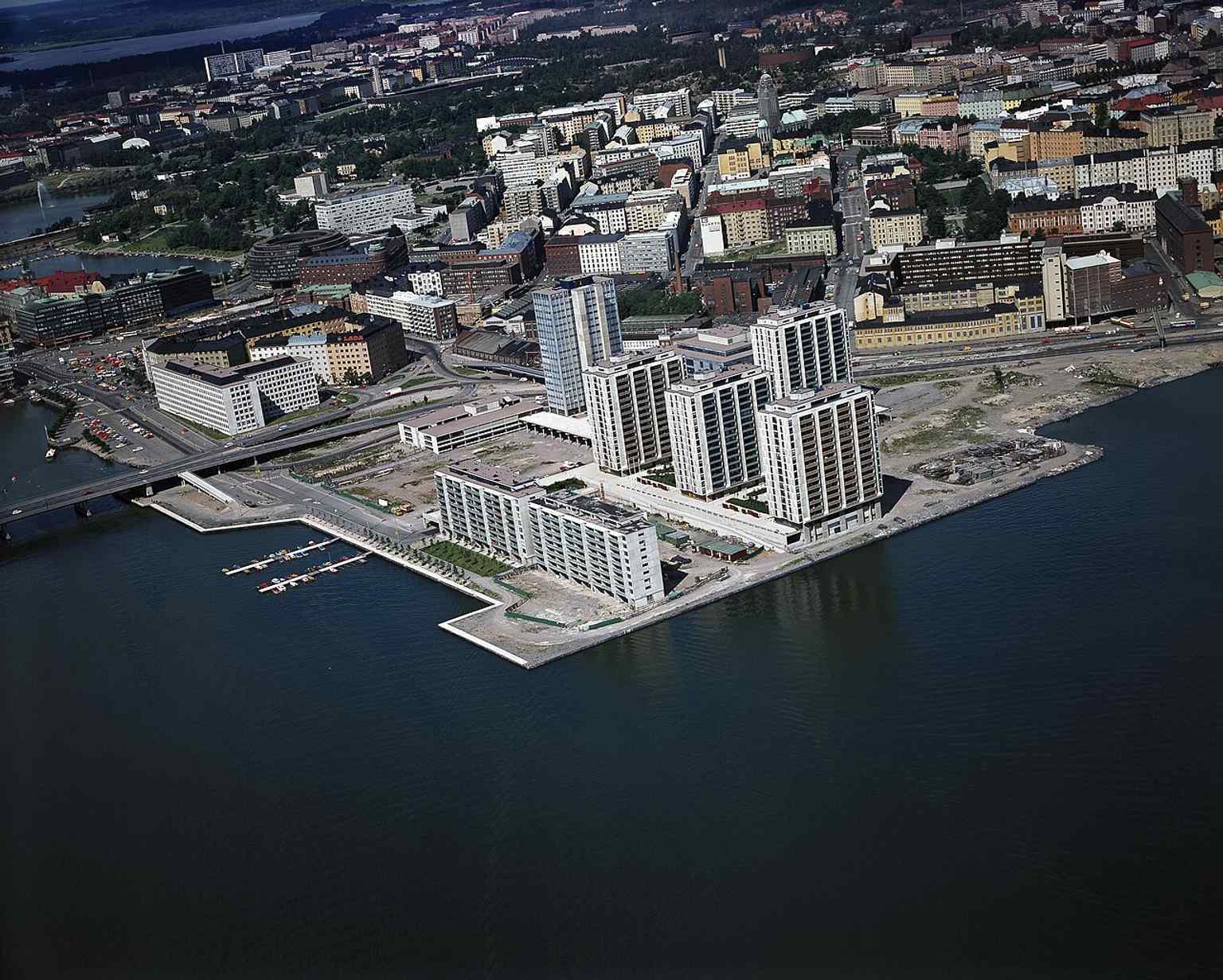
The surprise is that this solid-looking square began as water. The city filled the old strait here with dredged spoil from Sörnäinen harbour, and the new ground stayed so wet that people first crossed it on duckboards, narrow timber walkways laid over mud. One hard, persistent rumour even claimed that a workman sank into the slurry during the filling works and vanished for good.
Let your gaze travel slowly around the edges of the square. It is easy to sense how many kinds of gathering this place can hold at once: trade, waiting, reunion, protest, annoyance, celebration.
The first sellers appeared just before Christmas in eighteen ninety-seven. Soon the market offered berries, game, cloth, tailoring, and, by the nineteen twenties, fish. But the square also drew sharper energies. Many May Day marches and demonstrations set off from here, tying the place closely to the workers’ movement. Then, on the second of August, nineteen hundred and six, during a support strike for the mutiny at Viapori, the island fortress outside the city, a clash over a tram turned into gunfire between Red Guards and a student protection corps. Nine people died, and dozens were wounded. Ordinary public space had become a battlefield.
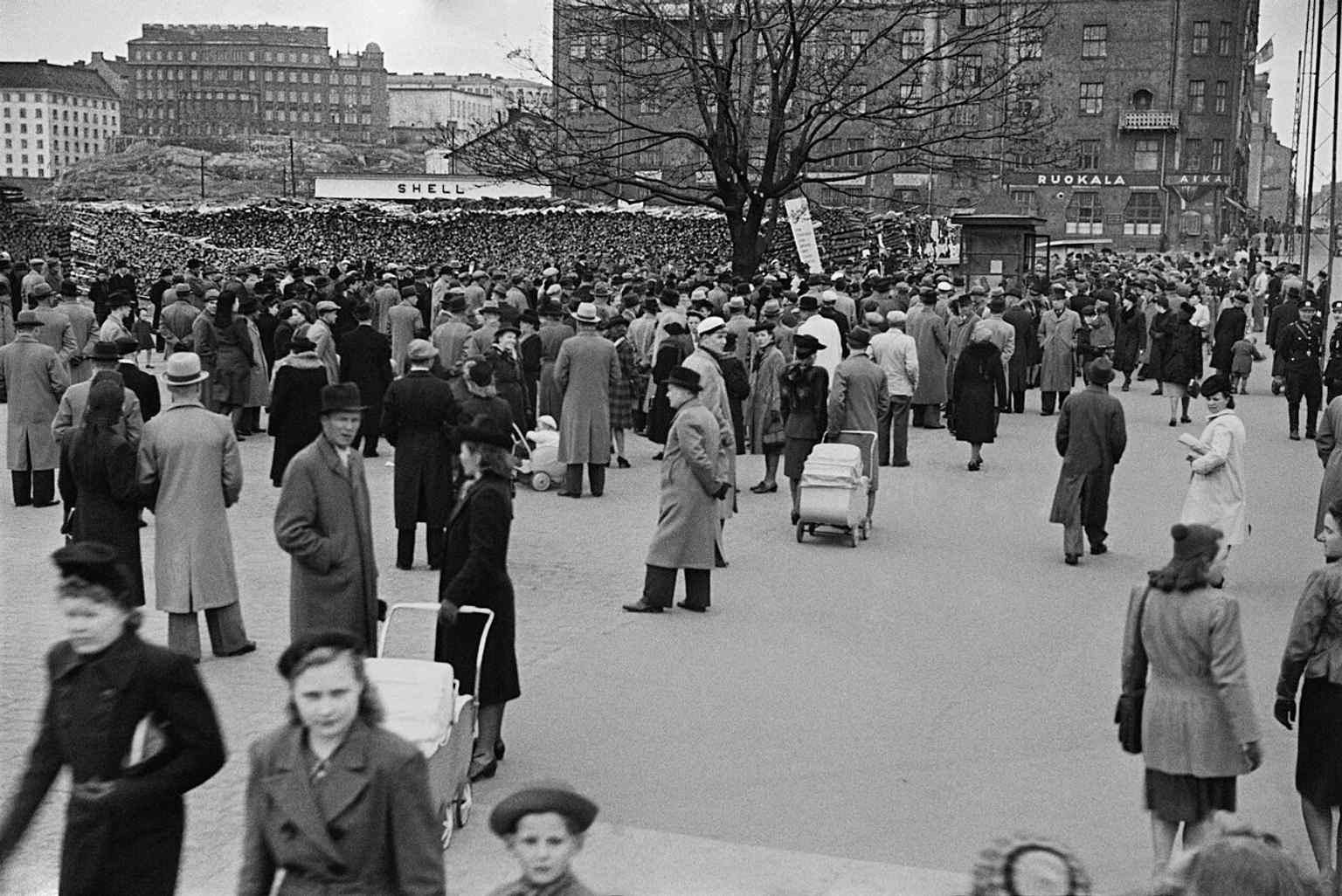
If you glance at the historic photo in the app, the square in nineteen forty-six looks half market, half fuel depot, stacked with firewood. Later, planners surrendered it to motor traffic and asphalt, before the metro era returned the stone surface.
And yet the square never stopped being intimate. President Tarja Halonen shopped here without bodyguards, and kept a regular table nearby in the market hall. That is Hakaniemi: not so much a fixed boundary as a shared habit. As you continue into Hakaniemi itself, that feeling only grows.