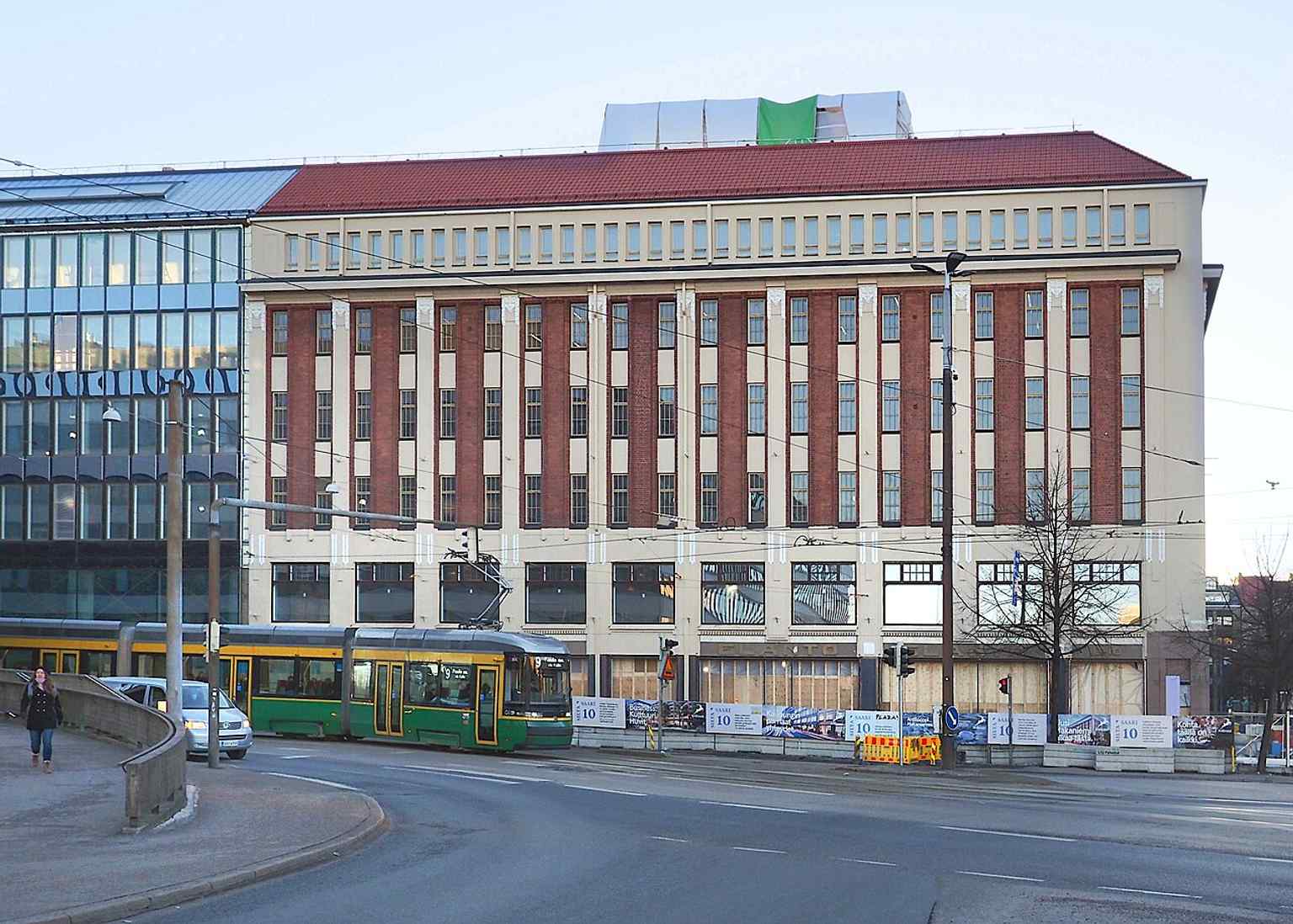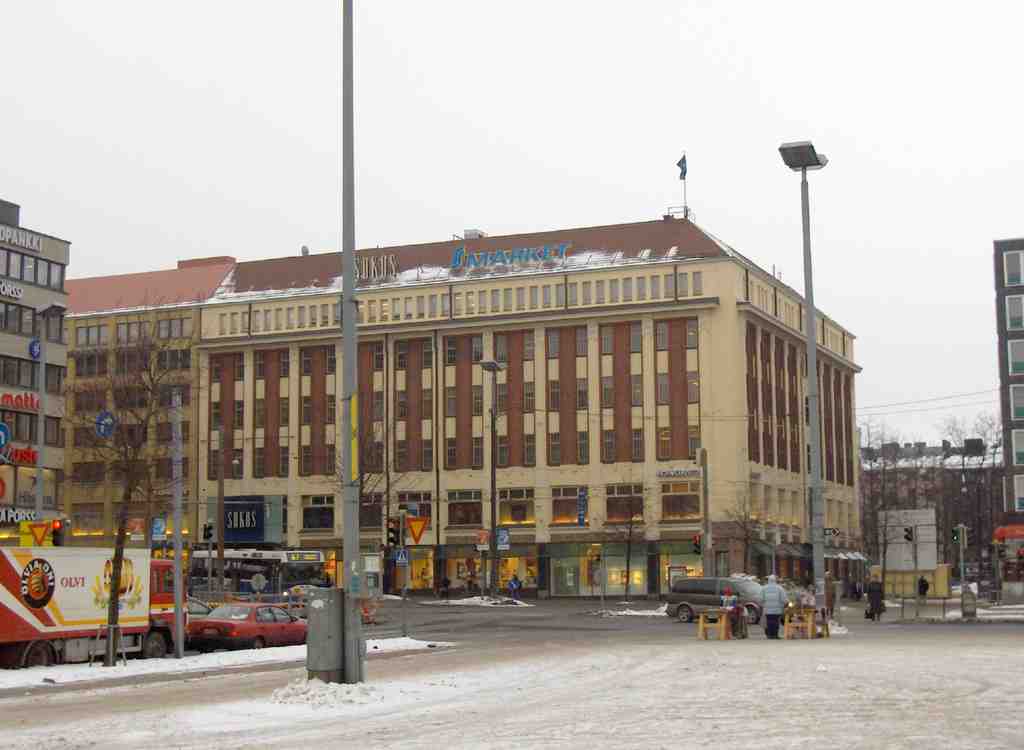
Look to the pale stone corner block with its long bands of rectangular windows and sturdy seven-storey form: that is the former Hakaniemi Sokos.
This is the Elanto and Sokos commercial block, a place whose changing names mirror changing ideas about service, shopping, and neighbourhood identity. Architect Onni Tarjanne designed the first version in nineteen fourteen as the Siltala business house. Elanto, the member-owned co-operative retailer, bought it in nineteen seventeen, moved in its headquarters, opened a large street-level store, and placed flats above. One resident was Elanto’s managing director, Väinö Tanner, living over the shop before he entered national politics. That detail gives the place away: commerce, influence, and ordinary domestic life all gathered under one roof.
The first businesses here sold bread, milk, shoes, clothing, and sausage, and there was also an Elanto café. In nineteen twenty Elanto paid three million markkaa for the building, roughly several million euros today. Then the city’s harder history struck. During the Second World War, bombing in Finland’s Continuation War damaged the house, and repairs in nineteen forty-four added an extra floor.
After that, the building kept changing shape with Hakaniemi itself: a formal Elanto department store in nineteen fifty-six, a seven-storey expansion in the nineteen seventies, Max after Elanto’s credit crisis, then Sokos on the sixth of May, two thousand and four. H-O-K Elanto refused to turn it into a Prisma, their larger hypermarket format, insisting this address deserved a true department store. If you glance at the image in the app, you can catch it mid-remake in twenty twenty-one. Sokos closed at the end of twenty thirteen, but trade returned through S-market and Emotion.
Ahead, identity moves from the shop floor to the meeting hall: Paasitorni is about three minutes away.