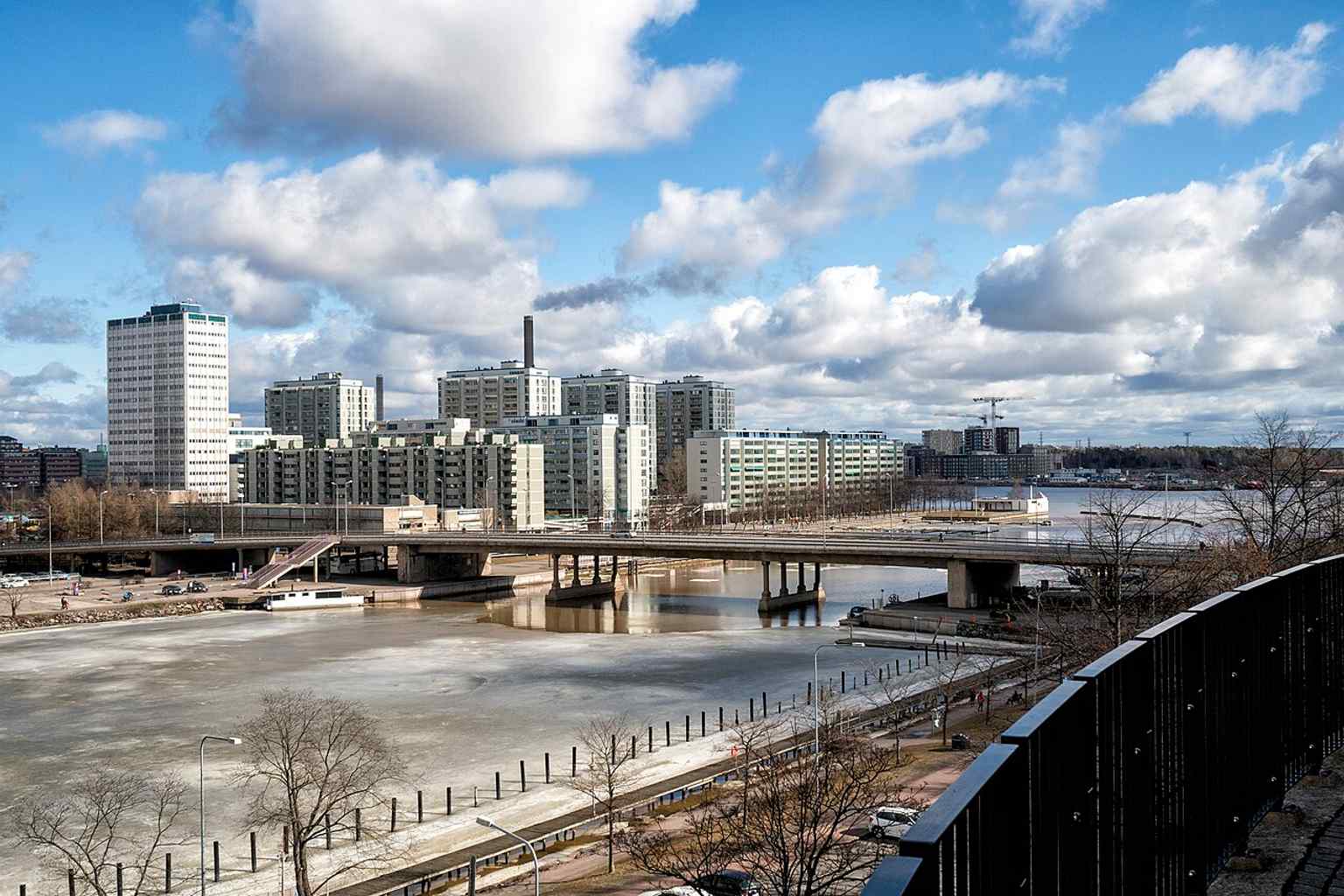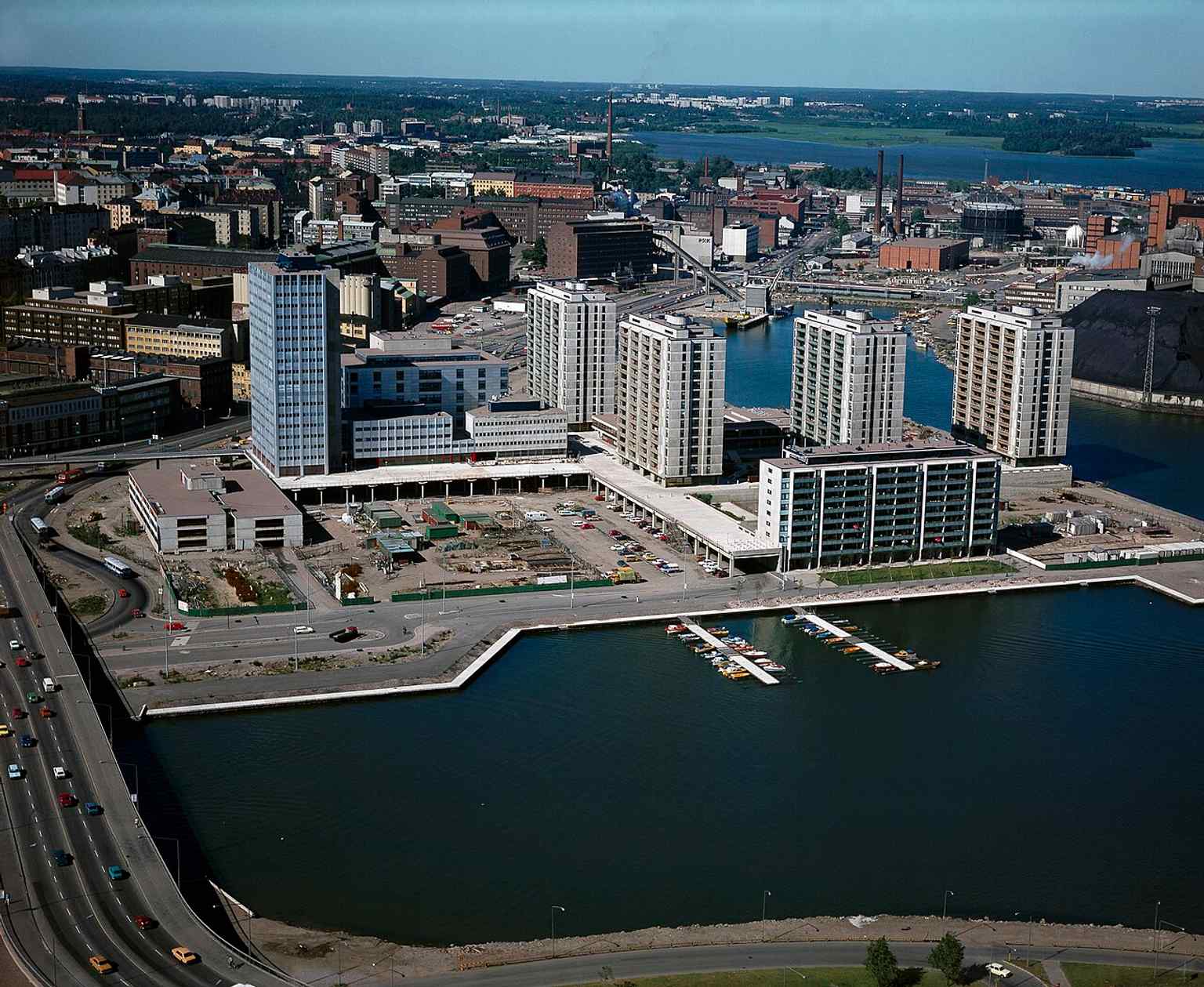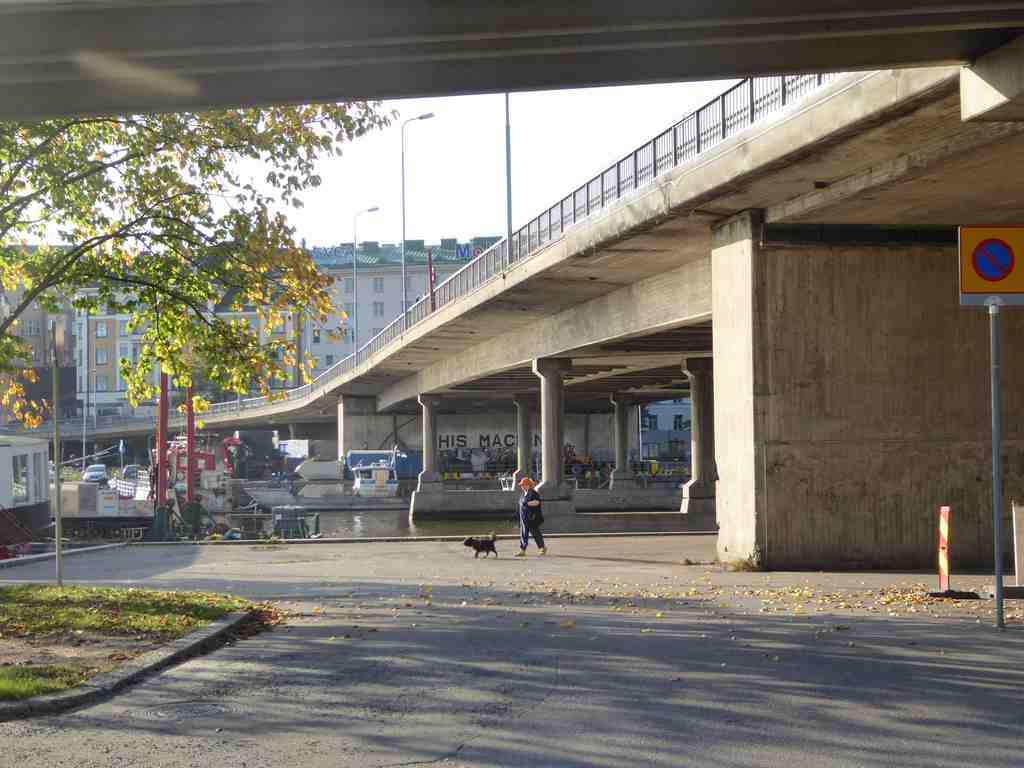
On your left is a low, pale concrete bridge with a long, shallow sweep and slim railings, striking for how flat it lies across the water.
This crossing tells a very Helsinki story: traffic builds, the city answers, then the answer ages and the pressure shifts again. The old Hakaniemi Bridge promised relief from a bottleneck; in the end, the city replaced it because the old solution no longer suited the place it was meant to serve.
Before nineteen sixty-one, vehicles coming from Sörnäisten rantatie toward the centre had to funnel along Hakaniemenranta and over Pitkäsilta. That route clogged Siltasaarenkatu and slowed the whole district. So Helsinki cut a new path across Siltavuorensalmi, carrying traffic directly from Siltasaari to Kruununhaka and on to Pohjoisranta. Even the highways numbered four and seven were sent this way. For a while, that felt decisive.
The engineer Ali Sandström gave the old bridge its structural character. He belonged to the first generation in Finland to work confidently with prestressed concrete. Prestressed means the engineers tighten steel inside the concrete so the finished structure stays under pressure and resists the fine cracks that ordinary concrete can develop. Here, Sandström used the German Dywidag method, known for thick tension steel and simple anchoring. For Finland at that moment, it was ambitious work.
Construction began after May Day in nineteen sixty, and the city opened the bridge in October nineteen sixty-one. It cost five hundred and sixteen million markkaa, about twelve and a half million euros in twenty twenty-one money. The structure ran for about three hundred and ninety metres in three parts: a central bridge over the water and approach sections at each end, including a notably sharp curve on the Kruununhaka side. Builders poured roughly twelve thousand cubic metres of concrete into it.
But the ground itself refused to make anything easy. Parts of the shoreline had already been altered with stony fill, so some sections needed bedrock foundations or Franki piles, while the water span could still stand on timber piles. In fact, the story reaches back to eighteen eighty-six, when a committee led by city engineer Fredrik Otto Ehrström proposed filling the channel between Siltasaari and Hakaniemi with dredged material from Sörnäinen Harbour. Long before this bridge appeared, the city had already started remaking the edge between land and water.
Even the name shifted at the last minute. Officials first chose Sörnäinen Bridge, then changed their minds before the opening, and Hakaniemi Bridge became the name that lasted. Its looks drew criticism too; some found the round piers and heavy form ungainly, though later concrete building nearby made it seem less startling.
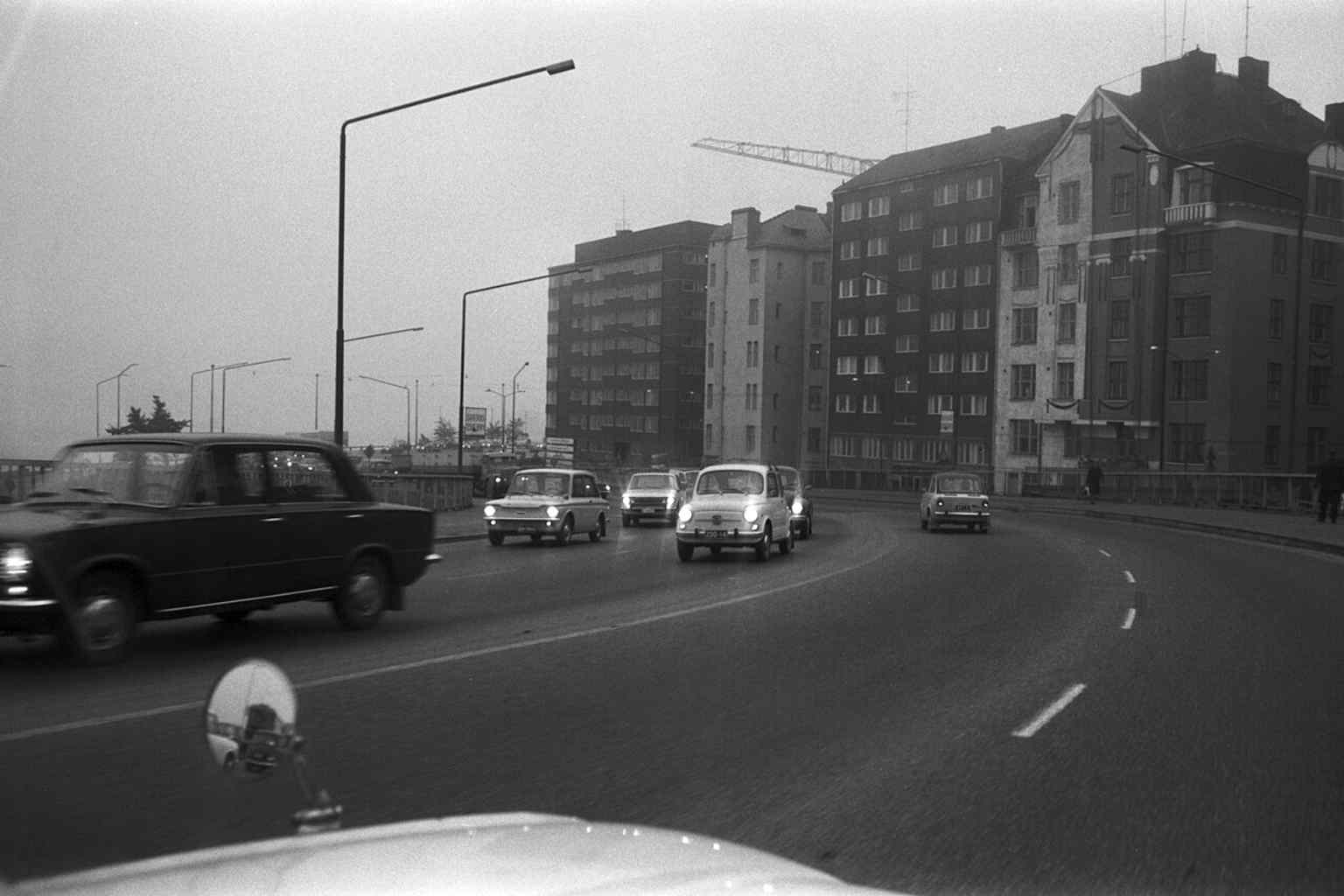
If you like, glance at the before-and-after image in the app; it catches the bridge in a nineteen seventy rush hour and again in its final years, just before replacement.
By the two thousand and tens, the old bridge ranked among Helsinki’s worst for condition. Repairing it would have cost about as much as replacing it, so sentiment lost. A new bridge opened just east of it on the twentieth of May, twenty twenty-four, and demolition of the nineteen sixty-one bridge began the very next day. The new crossing sits lower, meets Hakaniemenranta at street level, and abandons the big ramp thinking of the motor age.
Ahead, at World Peace, the shoreline begins to speak less about traffic and more about the ideas people wanted to set in public view. And like any true piece of city infrastructure, this bridge remains open all day and all night.