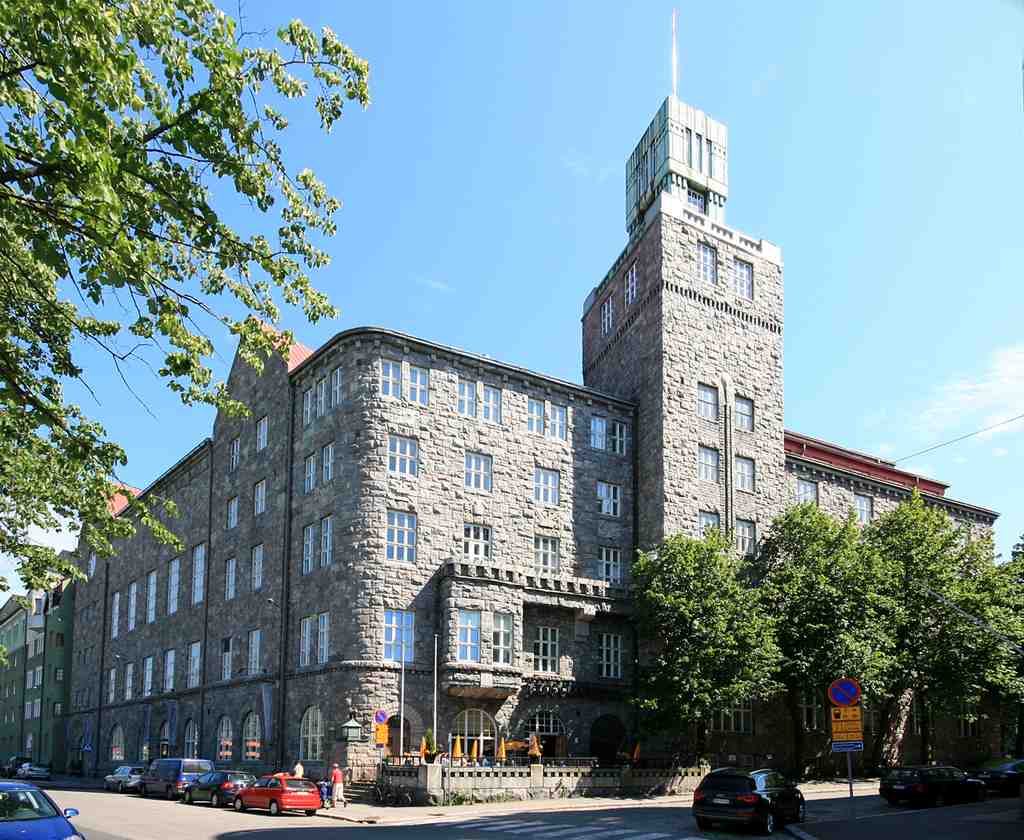
Ahead of you rises a rugged granite building with a tall square tower, broad block-like walls, and carved decorative details that give this workers’ hall the air of a civic fortress.
Paasitorni began as a place of spectacle long before it became a place of speeches. On this very site stood the Siltasaari circus arena, with room for two thousand people to watch horse shows, wrestling, and boxing. One of its stars, Anna Anthonius from Urjala, built her fame here with strongwoman feats, including a victory over the celebrated strongman Charles Jackson. Entertainment came first; power, in one form or another, quickly followed.
In Siltasaari and Hakaniemi, the workers’ movement did not grow only in party programmes. It grew in dining rooms, gym halls, choirs, reading circles, union meetings, and evenings when ordinary people practised speaking for themselves in public. The Helsinki Workers’ Association wanted a building that gave labour not just shelter, but presence: a house grand enough to say that workers belonged in the city’s centre, not at its edges.
Architect Karl Lindahl won the design competition in nineteen oh five, and when the building opened in nineteen oh eight, the celebrations lasted five full days. They used granite quarried from this very plot for the facade, the fence, and even the nearby shoreline street. Look at the sheer weight of the stone for a moment: does it feel defensive, proud, or welcoming? A workers’ building here needed to suggest all three.
The decoration mattered too. Lindahl and his craftsmen set tool motifs and trade symbols into the facade and interiors, mixed with geometric patterns and nature ornaments, turning labour itself into ornament. Inside, Juttutupa became the house restaurant; among its customers were Otto Wille Kuusinen and Vladimir Lenin, whose corner table still carried the nickname “the revolution table.”
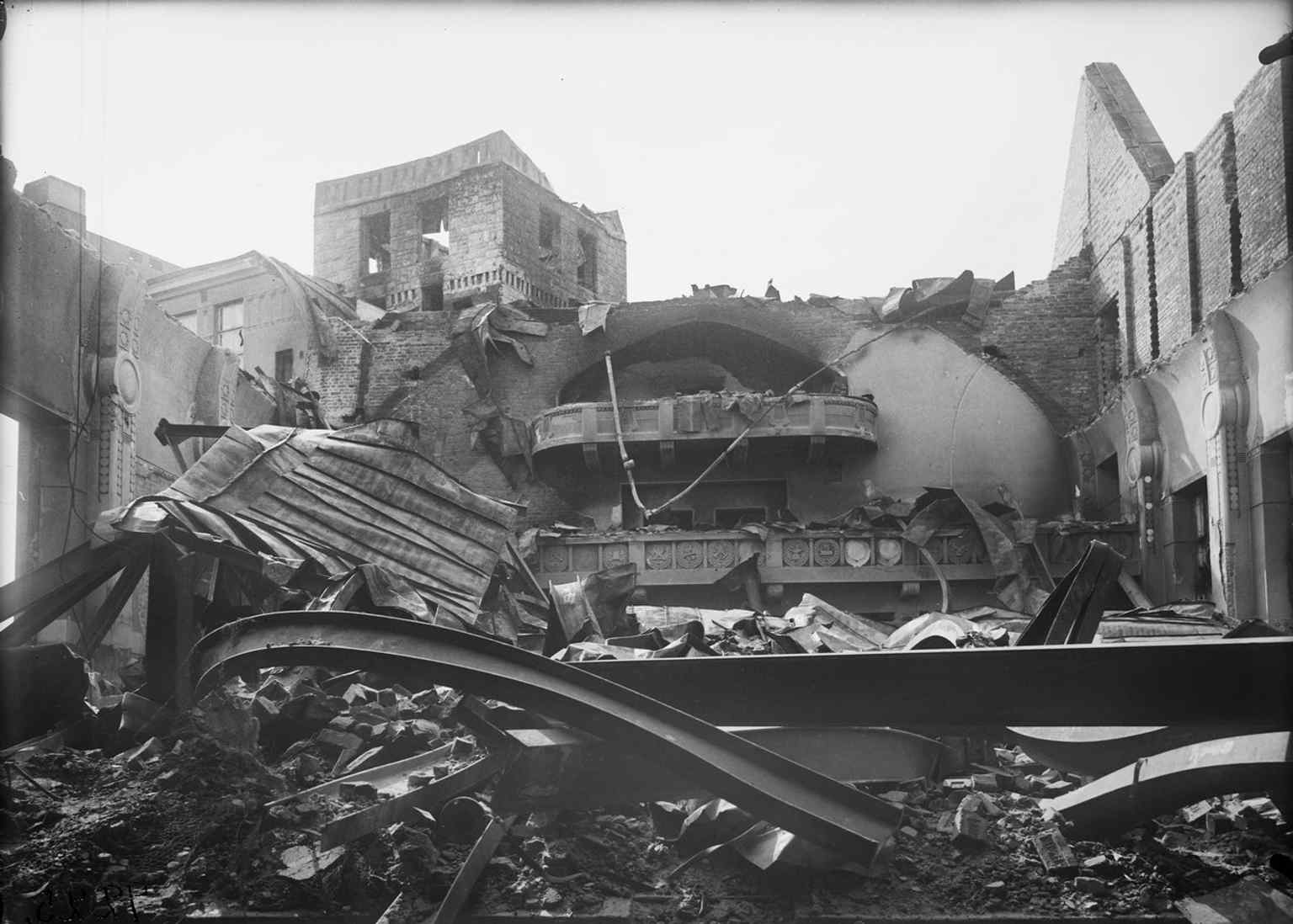
Then came the rupture. On the twenty-sixth of January, nineteen eighteen, a red lantern burned at the top of the tower as the sign of revolution, and the house became a Red stronghold despite the workers’ association’s objections. During the Battle of Helsinki, shelling tore through the building so badly that the tower and banquet hall had to be rebuilt. If you like, have a quick look at the before-and-after image; it shows just how violent that break was.
Paasitorni did not stop there. Lindahl designed the nineteen twenty-five extension too, and later a Hungarian refugee artist, János Rozs, painted a thirteen metre fresco here in nineteen thirty-nine in exchange for meals. So these stones carry more than architecture. They carry performance, class ambition, damage, repair, and allegiance. In about one minute, we’ll continue to Saariniemenkatu six.