
York Audio Tour: Historic Gems
Beneath the polished facade of York lies a city forged in fire, betrayal, and the relentless rumble of iron wheels. History here is not just observed in museums. It is etched into the very stones you walk upon. Unlock the secrets of the capital of the North with this self guided audio tour. Navigate away from the dense crowds to uncover scandalous rebellions and forgotten dramas that shaped the nation. Why did the silent halls of the National Railway Museum conceal a wartime mystery? What dark political pact was sealed behind the timber frames of Barley Hall? And why does the light hit the ancient stained glass of Holy Trinity Church with such haunting precision? Traverse through centuries of turbulence and triumph. Feel the heartbeat of a city that refuses to stay buried. Download the guide now. Your journey into the shadows of York begins.
Tour preview
About this tour
- scheduleDuration 90–110 minsGo at your own pace
- straighten3.1 km walking routeFollow the guided path
- location_onLocationYork, United Kingdom
- wifi_offWorks offlineDownload once, use anywhere
- all_inclusiveLifetime accessReplay anytime, forever
- location_onStarts at All Saints' Church, North Street, York
Stops on this tour
lock_open 3 free previews · 12 unlock with purchase
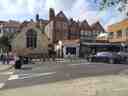
Look for the pale stone church with a squat square tower, a long pitched roof, and tall pointed windows rising just above the line of North Street. This is a fine place to begin,…Read moreShow less
Open dedicated page →Look for the pale stone church with a squat square tower, a long pitched roof, and tall pointed windows rising just above the line of North Street.
This is a fine place to begin, because York is terrible at starting from scratch... in the best possible way. People have worshipped on this patch of ground for more than a thousand years, and even before this church took shape, this stood within the Roman civilian city of Eboracum, beside the old road that crossed the river toward the military fortress where York Minster now stands. So before you is not one neat medieval building, but a stack of intentions: Roman threshold, parish church, Victorian repair job, modern conservation project.
The building itself keeps the record in stone. Its nave, the central hall of the church, dates back to the twelfth century. The arcades, those rows of arches inside, belong to the thirteenth. Then in the fourteenth century, builders remade the east end and added chapels around the chancel, the space around the altar. If you check the app image of the interior, you can see that layering almost at a glance, as if centuries politely agreed to share the same room.
But the most haunting story here belongs to someone who barely occupied a room at all. In the fifteenth century, the church added an anchorite cell at the west end for Emma Raughton. An anchorite chose a life of enclosure for prayer, sealed away from ordinary society but not cut off from worship. Emma’s tiny connection to the church came through a squint, a little opening in the wall, so she could see the Mass and hear it from her cell. Most people pass this church without ever guessing that one of its most important viewpoints was a slit in the masonry.
And that raises an awkwardly large question for such a small opening: what would it mean to shut yourself away, yet remain deeply tied to the sounds, rhythms, and rituals of the city outside?
Emma did not stay alone in memory. In the twentieth century, Sister Adeline Cashmere worked in a York factory and still lived the contemplative life here for nine years. Then Brother Walter Wilman, once a clothworker, later a lay reader and First World War veteran, lived in the rebuilt cell from the early nineteen thirties until his death in the nineteen seventies. The church even commissioned a modern artwork to remember Emma, so the woman once glimpsed through a crack in the wall now quietly looks back at the city.
Inside, the windows are another kind of witness. All Saints holds York’s finest collection of medieval stained glass after the Minster. One famous window, the Prick of Conscience, shows the fifteen signs before Doomsday with floods and earthquakes vivid enough to unsettle anybody. For centuries, people misread the damaged glass completely, until a sketch from sixteen seventy turned up and restorers reassembled it correctly in nineteen sixty-six. Another set of panels records ordinary medieval life with startling frankness: a man in spectacles, prisoners in stocks, a sick man in bed, bodies and troubles that grand history usually edits out. Take a look at the glass image in the app and you’ll get a sense of how intimate these windows can be.
That feels like York in miniature: a city seen through narrow openings, where side figures refuse to stay on the side. We’ll keep following those lives from odd angles as you head next to St Michael’s Church, Spurriergate, about a six-minute walk away. If you want to return and step inside later, the church usually opens from ten to four most days, and from ten fifteen to six thirty on Sundays.
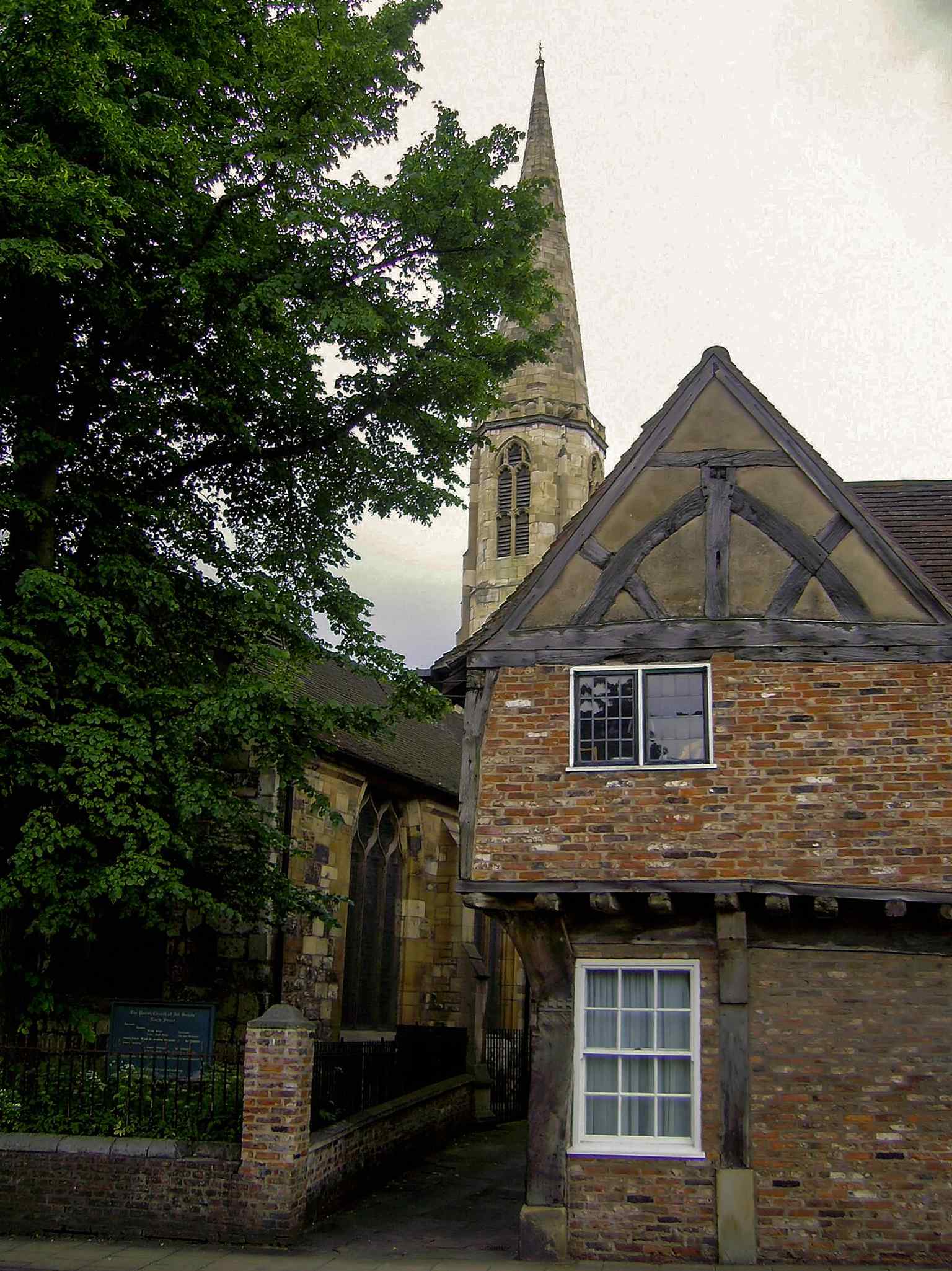
An overall view of All Saints Church, useful for introducing the Grade I listed building and its setting on North Street.Photo: Micjohn, Wikimedia Commons, Public domain. Cropped & resized. Look for the compact stone church with pointed-arch windows, a sturdy rectangular stone body, and a painted clock face set into the outer wall. St Michael’s, Spurriergate began…Read moreShow less
Open dedicated page →Look for the compact stone church with pointed-arch windows, a sturdy rectangular stone body, and a painted clock face set into the outer wall.
St Michael’s, Spurriergate began in the twelfth century, then picked up fourteenth- and fifteenth-century additions, so even from outside you’re seeing a building assembled across centuries rather than in one neat burst of ambition. York rarely does neat.
What makes this church especially revealing is that its survival never depended on prayer alone. What historians call lay patronage and local gifts simply means that ordinary townspeople, not just clergy, funded parish life through bequests, rents, and donations. Here, people like James Caffrey and Mr Richardson left money, alderman Thomas Mosley provided a rent charge, and parish assessments paid for repairs. Faith, in other words, sat very comfortably beside accounting.
There’s a wonderfully specific trace of that older world inside: a rare chalice brass memorial to William Langton, a former rector - the parish priest in charge - who died in fourteen sixty-six. Most tourists pass the building without the faintest idea that one of its own clergy is still remembered here in metal. Around fourteen sixty-four to fourteen sixty-five, records also mention money left for new bells, which tells you the tower was already doing its job by then. The parish was investing in sound, memory, and a little status too... because church bells were devotion, public announcement, and neighborhood prestige rolled into one.
If you glance at your screen, the west door image shows one of the oldest surviving bits of exterior masonry, still hanging on after later alterations. And those alterations were not subtle. In eighteen twenty-one, J-B and W Atkinson cut the church back for street widening on Spurriergate and Low Ousegate. The rector laid the foundation stone for a new east wall on the fifteenth of January, eighteen twenty-one, and builders finished by the sixteenth of June, eighteen twenty-two. They set the east wall back seven feet, effectively slicing away part of the interior bay - one structural section of the church. Then in eighteen forty-one, the street widened again, the church shortened again, and nearby parish buildings disappeared into a new terrace.
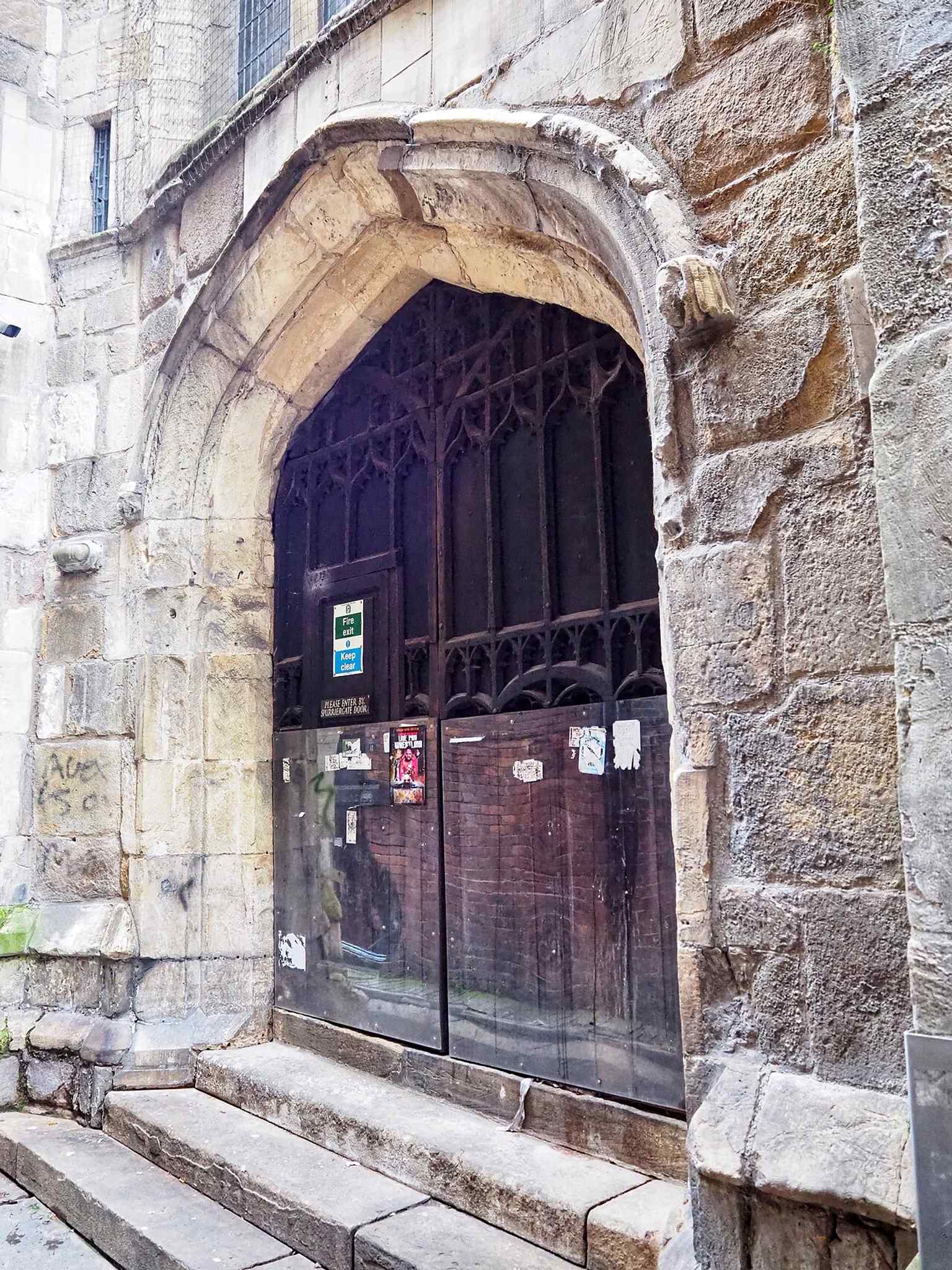
The west door preserves one of the church’s oldest exterior features, a reminder that St Michael’s still carries medieval fabric despite later street widening and rebuilding.Photo: Malcolmxl5, Wikimedia Commons, CC BY-SA 4.0. Cropped & resized. Even modern comforts caused arguments. Gas arrived for evening services in eighteen seventy-six. In nineteen eleven, Reverend O. H. Wethered split the congregation over electricity before the council approved it by nine votes to five. Ancient church, very modern committee squabble. Later, workers lowered the tower in nineteen sixty-six to nineteen sixty-seven. The church closed in nineteen eighty-four, then reopened in nineteen eighty-nine as a restaurant and café, with a small chapel upstairs still kept for occasional worship; the interior image in the app hints at that layered afterlife.
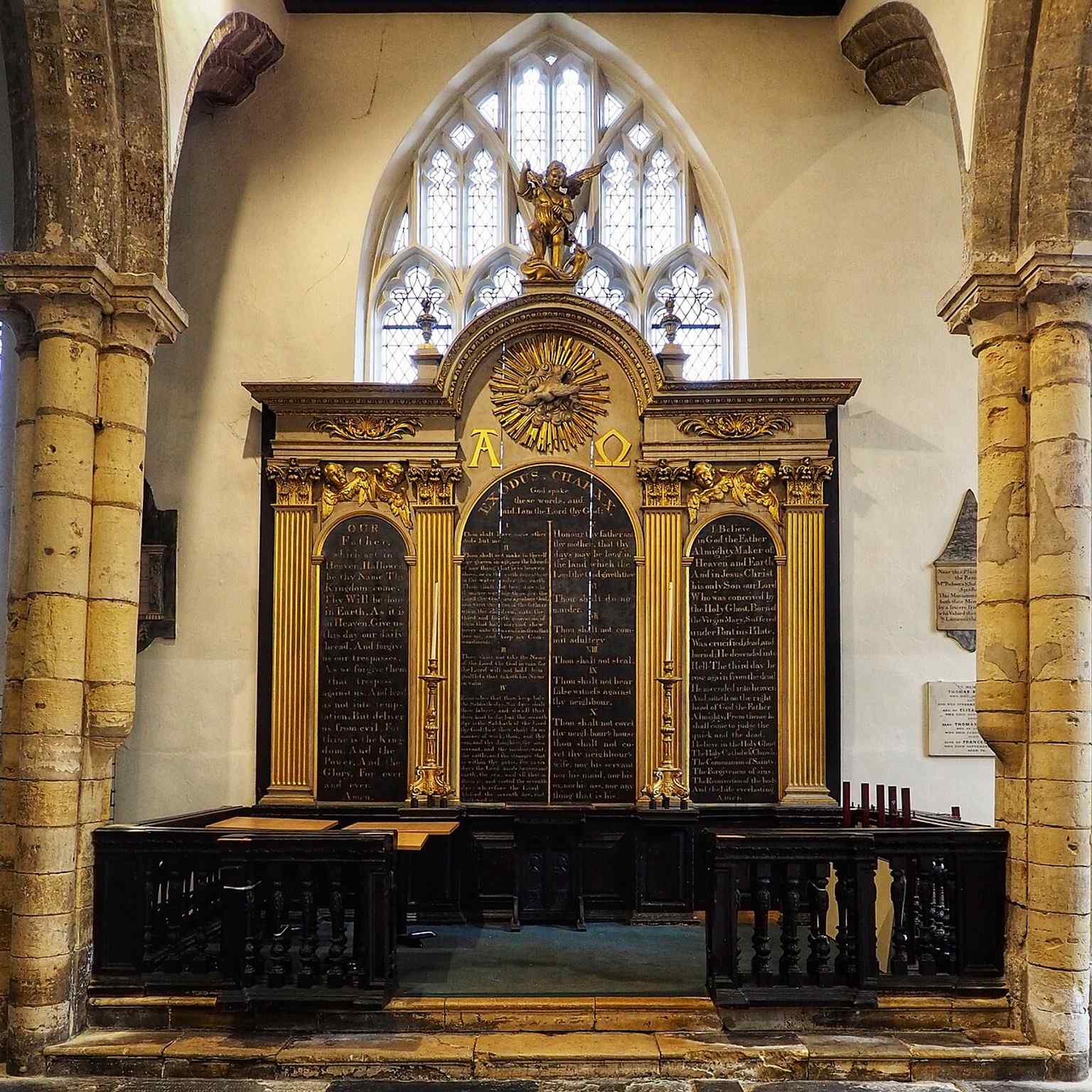
The reredos inside St Michael’s shows the church’s later interior life after its 20th-century closure and conversion, when the building reopened as a café and restaurant in 1989.Photo: Malcolmxl5, Wikimedia Commons, CC BY-SA 4.0. Cropped & resized. St Michael’s reminds you that York’s churches preserve not only grand belief, but ordinary investment - gifts, rents, repairs, votes, and memories. When you’re ready, head on to the Grand Opera House, about two minutes away.
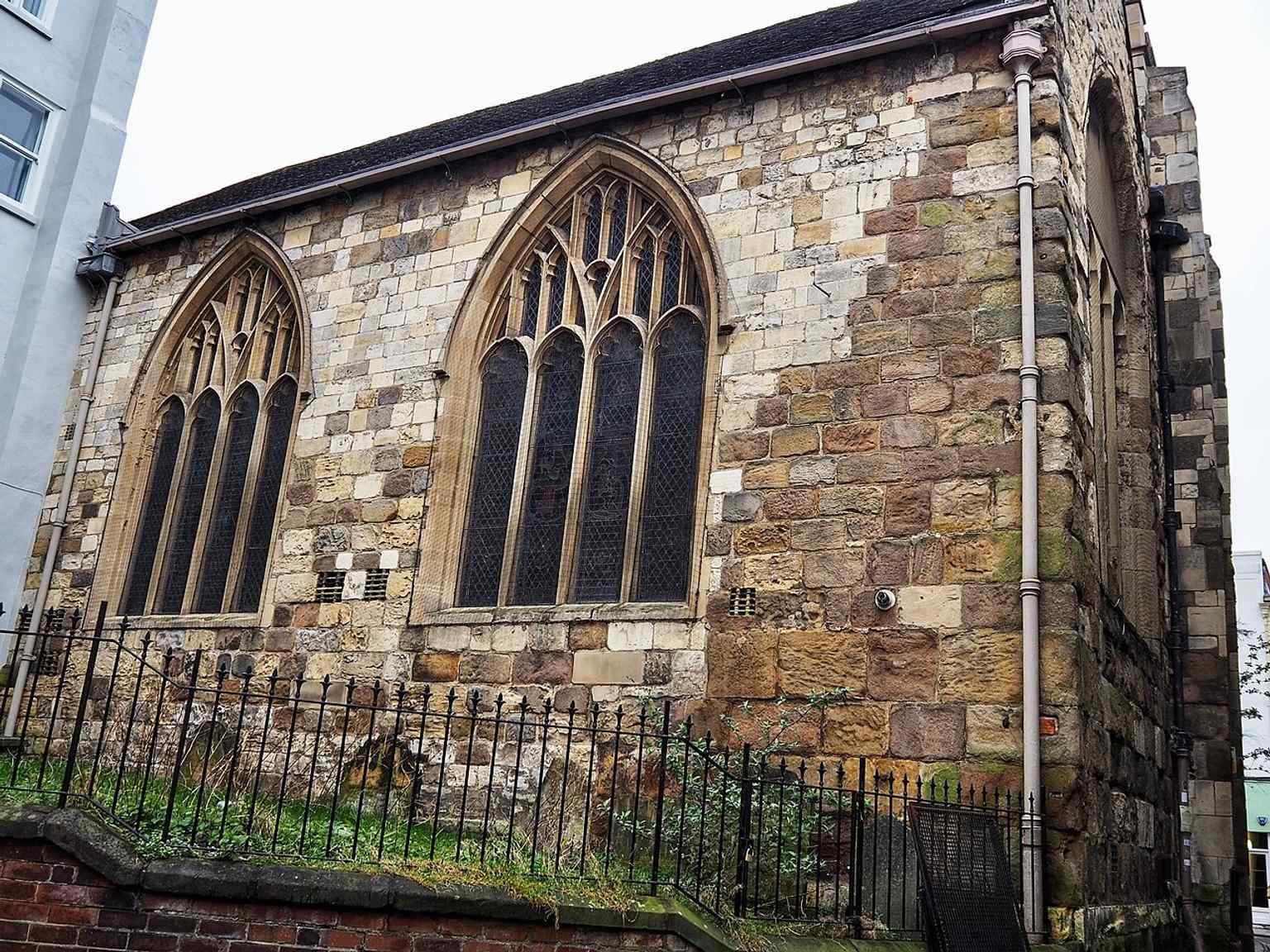
The church’s north side and churchyard show the surviving medieval building on Spurriergate, a Grade I former parish church first built in the 12th century.Photo: Malcolmxl5, Wikimedia Commons, CC BY-SA 4.0. Cropped & resized. 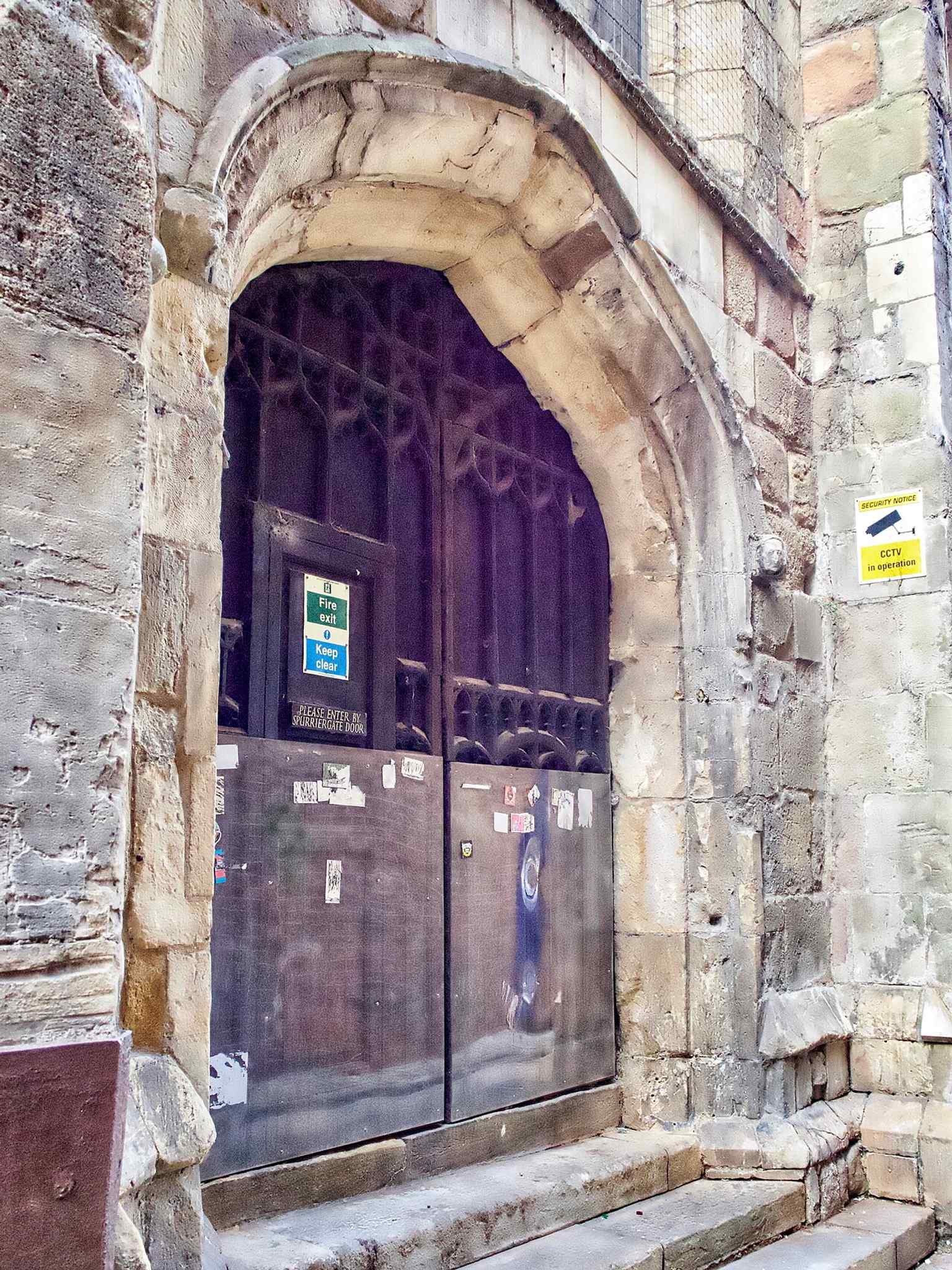
A close view of the west door highlights the church’s surviving masonry and the way the tower and front were reshaped after the lowering of the tower in the 1960s.Photo: Malcolmxl5, Wikimedia Commons, CC0. Cropped & resized. 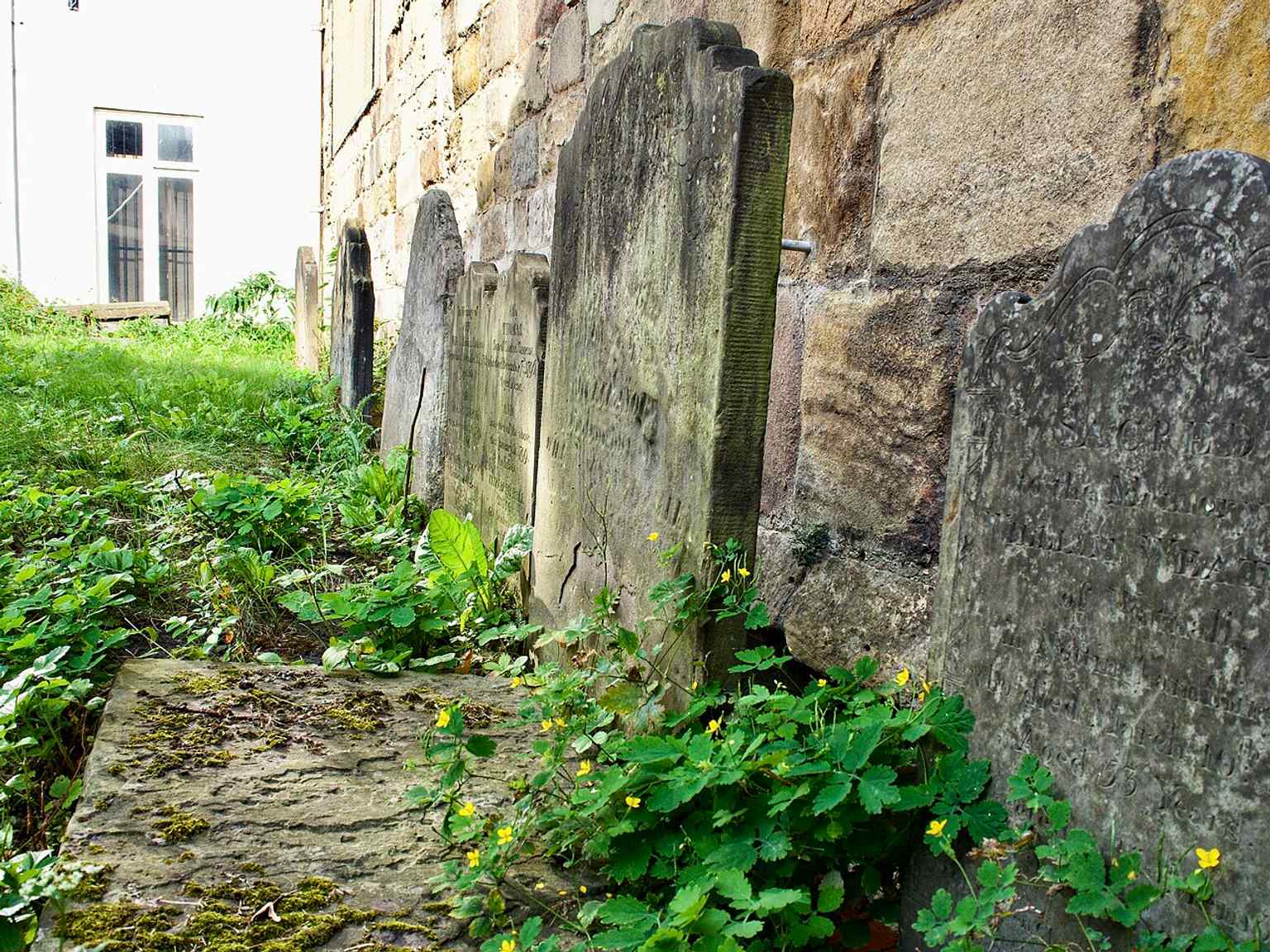
The churchyard gives a wider view of St Michael’s setting on Spurriergate, where the building was shortened and isolated by 19th-century road widening.Photo: Malcolmxl5, Wikimedia Commons, CC0. Cropped & resized. On your right is a red-brick corner building with linked round-headed windows and a side arch entrance, its slightly offbeat frontage hinting that this did not begin life as a…Read moreShow less
Open dedicated page →On your right is a red-brick corner building with linked round-headed windows and a side arch entrance, its slightly offbeat frontage hinting that this did not begin life as a theatre at all.
That odd mismatch is the whole point here. York does reinvention of place with a straight face, and this building is one of its best performances. What looks, at first glance, like a respectable row of shops and offices with theatrical ambitions started out as a corn exchange in the eighteen sixties - a trading hall for grain, not applause. George Alfred Dean gave it that Italianate look in eighteen sixty-eight, with the arched windows and asymmetrical front on Clifford Street, but he was designing commerce, not curtain calls.
If you glance at your screen, the side entrance tells on the building a little. Audiences still go in through that arch on Cumberland Street, because this was never given the full swaggering theatre frontage you might expect. York, apparently, likes its drama slightly disguised.
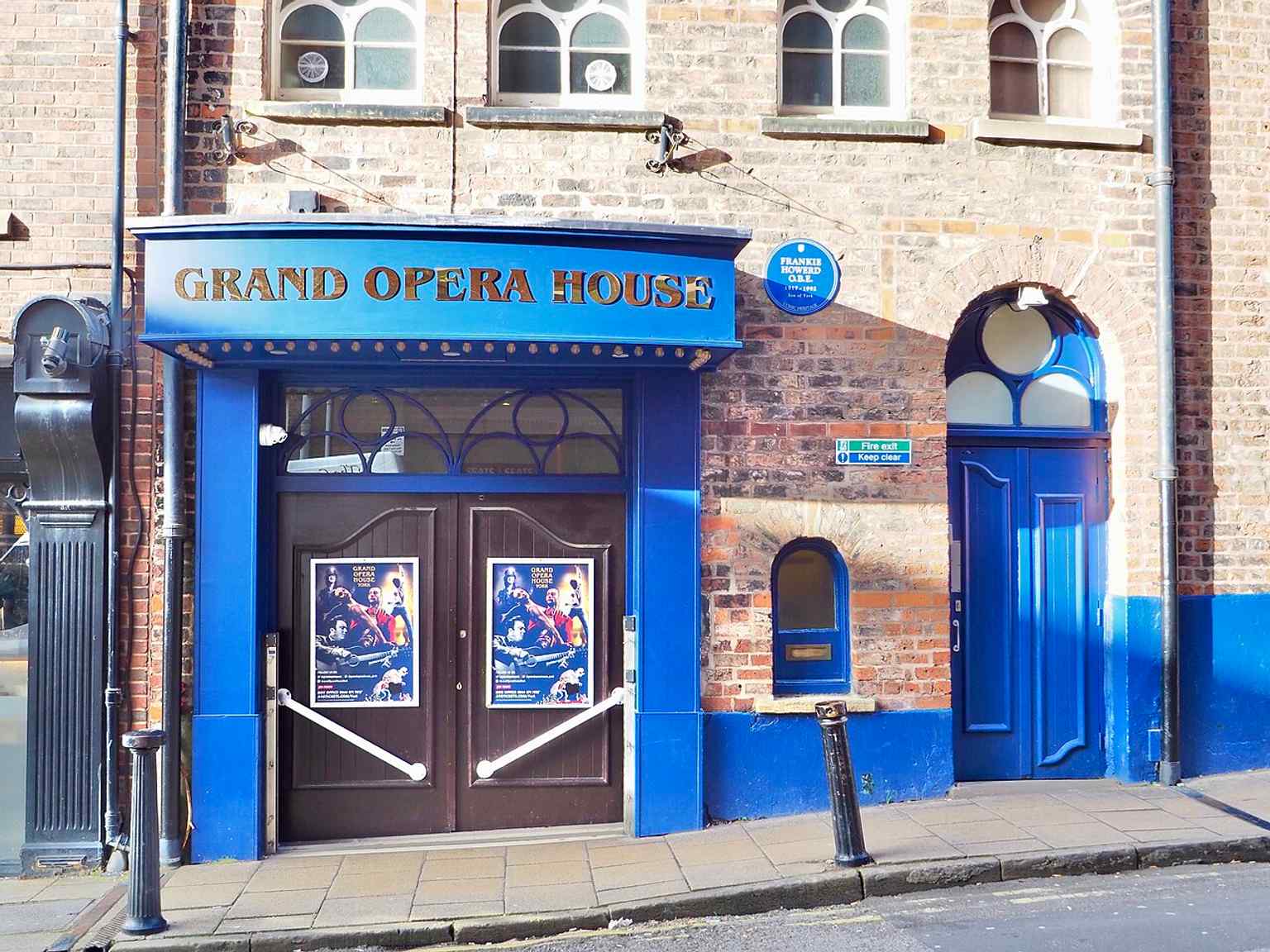
The Cumberland Street entrance, with the Frankie Howerd plaque, shows how audiences still enter through the building’s side arch rather than a grand theatre frontage.Photo: Malcolmxl5, Wikimedia Commons, CC BY-SA 4.0. Cropped & resized. The big turn came when William Peacock bought the corn exchange and the warehouse behind it. He spent twenty-four thousand pounds - roughly three million pounds in today’s money - to stitch the two together into a music hall. Inside, he installed raked seating, meaning the rows rise toward the back so more people can see, plus a proscenium arch, the big frame around the stage. On the twentieth of January, nineteen oh two, the new Grand Theatre and Opera House opened not with lofty opera, but with Little Red Riding Hood. Leading the bill was Florrie Forde, the Australian-born music-hall star. So from the start, this place aimed for delight, not dignity.
And it kept changing. In that same opening season, Professor Herbert brought his “Biograph Box” here for what local sources call York’s first public film showing. Later it screened silent films, then became the Empire Theatre, then shut in nineteen fifty-six under the weight of entertainment tax. Ernest Shepherd - “Shepherd of the Shambles,” no less - took over in nineteen fifty-eight and rechristened it the S. S. Empire. He ripped out the stage and sloping seats so the hall could host bingo, boxing, dancing, wrestling, even roller skating. That is not so much a career change as a full identity crisis.
If you look at the interior photo on your app, you can see the later rescue. Between nineteen eighty-seven and nineteen eighty-nine, new owners spent four million pounds restoring the stage, seating, and art nouveau decoration, and reopened with Macbeth. So the shell still carries several lives at once... market hall, picture house, skating rink, theatre.
Which is a useful thought to carry next door, because York Dungeon turns entertainment into something darker. And if you want to return for a show here, the usual opening hours are six to eight P-M from Monday to Saturday, with Sunday closed.
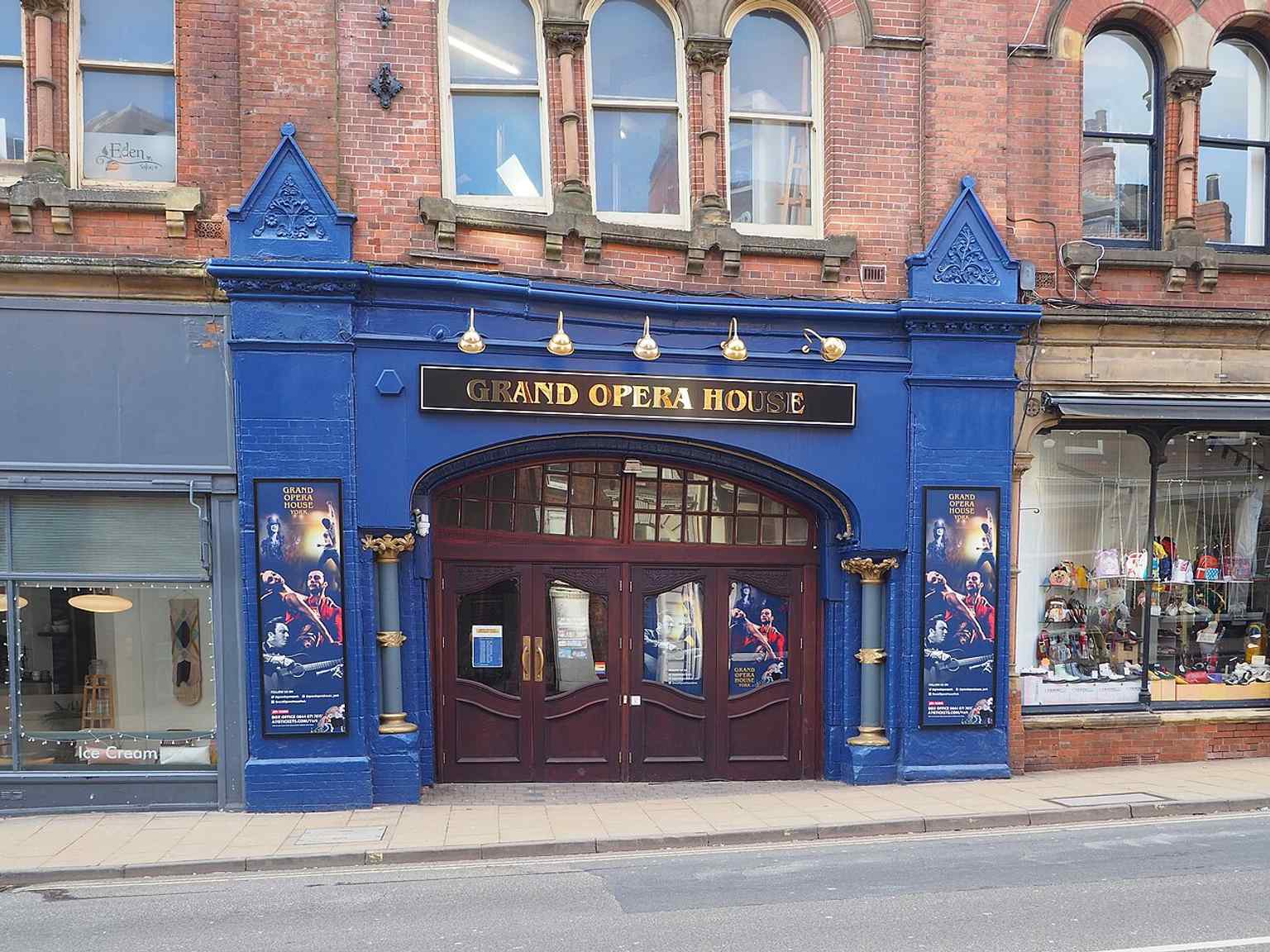
A clear view of the Clifford Street entrance on the former corn exchange frontage, linking the theatre back to its 1868 Italianate origins.Photo: Malcolmxl5, Wikimedia Commons, CC BY-SA 4.0. Cropped & resized. 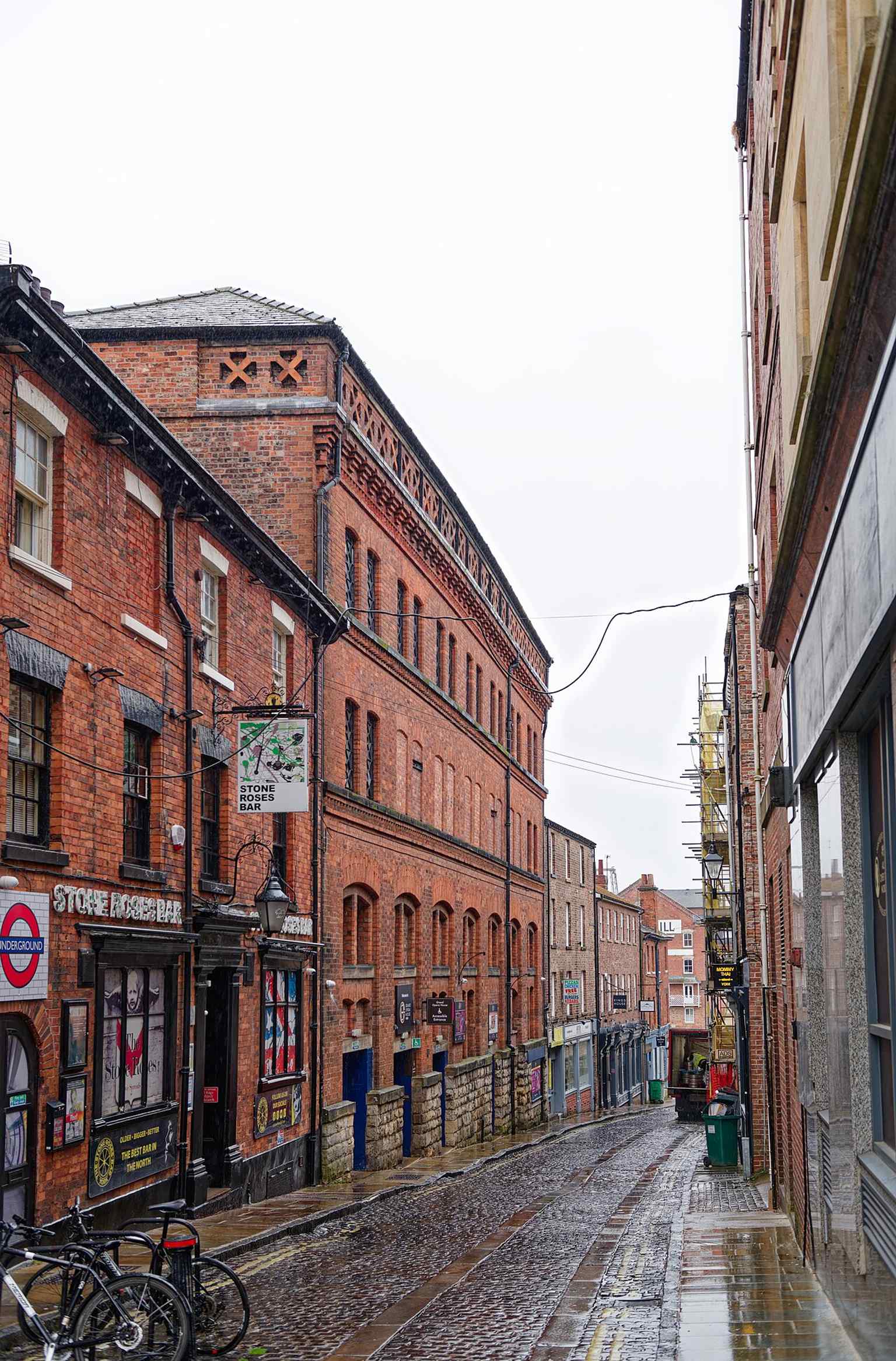
A tall street view of the Grand Opera House on Clifford Street, useful for showing the building’s red-brick theatre-and-corn-exchange hybrid form.Photo: Tilman2007, Wikimedia Commons, CC BY-SA 4.0. Cropped & resized.
Show 12 more stopsShow fewer stopsexpand_moreexpand_less
Look for the dark brick frontage, a broad rectangular entrance, and the bold York Dungeon sign fixed above the doors. This place has a wonderfully awkward job. It wants to teach…Read moreShow less
Open dedicated page →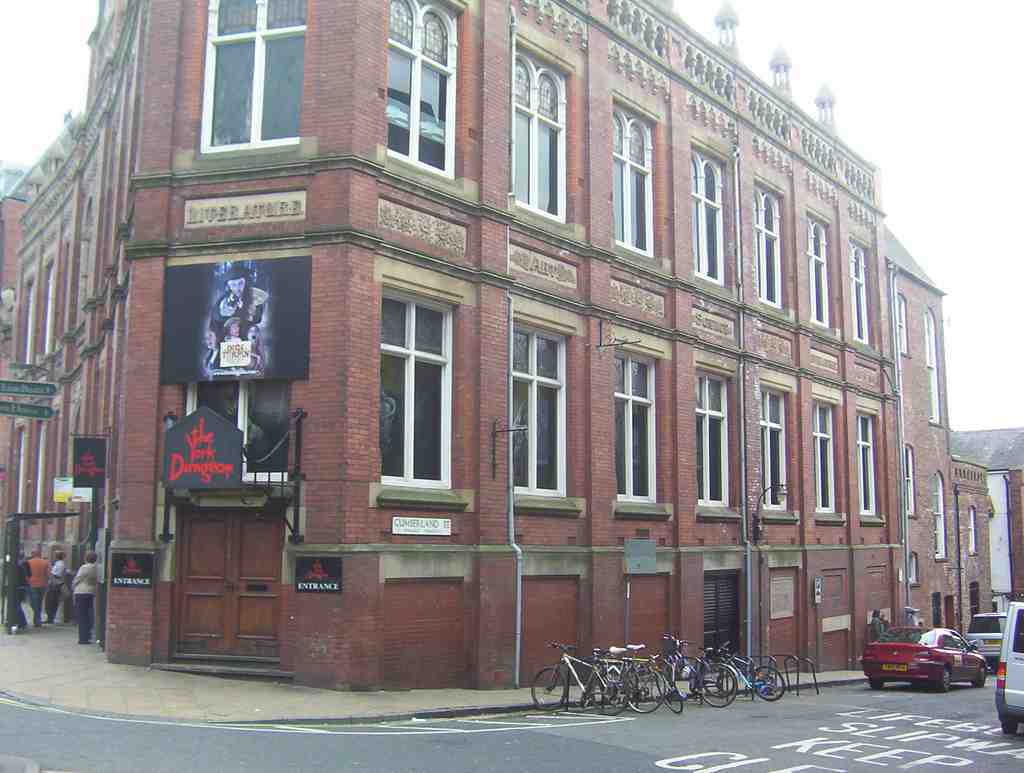
York DungeonPhoto: Kaly99, Wikimedia Commons, CC BY-SA 3.0. Cropped & resized. Look for the dark brick frontage, a broad rectangular entrance, and the bold York Dungeon sign fixed above the doors.
This place has a wonderfully awkward job. It wants to teach you about York's plague, crime, Vikings, Romans, and executions... while also making you jump out of your skin. Educational terror is a narrow lane to walk down.
York Dungeon opened here in nineteen eighty-six at twelve Clifford Street, the second Dungeon in the country after London. At first it leaned more toward a museum of horrors: displays, models, grim objects, a guided trudge through old punishments. But over time it changed into something much more theatrical. Here, history gets performed rather than simply explained. Actors take the roles of plague doctors' assistants, judges, innkeepers, torturers, and executioners; special effects do the heavy lifting; and your emotions get organized for you with considerable efficiency.
If you glance at the image in the app, you can see the exterior in an earlier form before later repairs and relaunches sharpened the presentation a bit more.
Inside, the stories come in a rapid procession. In nineteen ninety-seven, the Dungeon added a tale about York's so-called lost Roman legion, turning a fragment of ancient uncertainty into a dramatic set piece. Later came a plague doctor's surgery, Viking attacks in a show called Gorvik, a cheeky pun on Jorvik, and then witch trials, which later gave way to Ghosts of York. There is even a re-created pub, the Golden Fleece Inn, for ghost stories, and a Dick Turpin scene where drop benches lurch to mimic a crashing stagecoach. History, yes... but history with timing, sound cues, and the occasional jolt to the backside.
That mix raises a fair question: what gets sharpened so it can play to a room every seven minutes? Nuance usually loses. A Roman mystery becomes a single gripping legend. Plague becomes a grotesque encounter in a surgery. Crime becomes one vivid villain, Dick Turpin, rather than the longer, duller machinery of poverty, law, and punishment. It's not false, exactly. It's edited for maximum pulse rate.
Bryan Heeley understood that shift when he joined the two thousand and thirteen relaunch as a live Richard the Third. Staff even talked about him as one of the Dungeon's new "residents," which tells you a lot. York was no longer just displaying the dead; it was casting them.
That relaunch came after very real trouble. Flooding hit this riverside site again and again, in two thousand and one, two thousand and four, and twice in two thousand and twelve. The worst of it shut the attraction completely. Staff spent six months cleaning and rebuilding, using around fourteen thousand screws and more than three hundred litres of paint before reopening in March two thousand and thirteen. Helen Douglas, speaking for the team, stressed something easy to overlook in a place like this: safety. Emergency evacuation chairs went in as part of the refit, a sober little detail amid all the fake screams.
Even the controversies fit the pattern. In two thousand and four, Reverend Roger Simpson condemned the Christmas show Satan's Grotto for flirting with evil; the Dungeon insisted it was tongue-in-cheek. So there it is again: lesson, joke, outrage, ticket sold.
York doesn't just preserve history here... it casts it. In about two minutes, Fairfax House offers a very different kind of performance: elegance instead of execution. If you want to return later, the Dungeon usually opens from eleven to four on weekdays, with longer hours on Saturday.
On your left is a restrained brick townhouse with a tall, symmetrical front, sash windows in tidy vertical rows, and a central doorway framed in pale stone. Fairfax House looks…Read moreShow less
Open dedicated page →On your left is a restrained brick townhouse with a tall, symmetrical front, sash windows in tidy vertical rows, and a central doorway framed in pale stone.
Fairfax House looks polite... almost a little too polite. York does that well. But this was never just a handsome shell. In seventeen fifty-nine, Charles Gregory Fairfax, the ninth Viscount Fairfax of Emley, bought the house and hired the Yorkshire architect John Carr to refashion it. He had the money because of an inheritance from his late wife, Elizabeth Clifford, and he had a purpose too: this was meant to be a real home for his only surviving child, Anne Fairfax.
That matters. Anne is the quiet heart of this place. Her father did not shape these rooms simply to impress dinner guests; he shaped them for a daughter he loved, a young woman who never married and, after his death in seventeen seventy-two, withdrew to Gilling Castle and lived a much more isolated life than these elegant rooms might suggest.
If you glance at the image on your screen, you can see how calmly the house sits in the street, keeping its own counsel. And inside, that calm turns theatrical. John Carr’s interiors were full of signals: the dining room celebrated Abundance, the drawing room Friendship, and the saloon carried musical emblems and even a score from a love song called Belinda and Amelia. So here’s the lovely, slightly unnerving question: if your home were designed to broadcast your ideas about love, loyalty, and rank... what would your rooms confess for you?
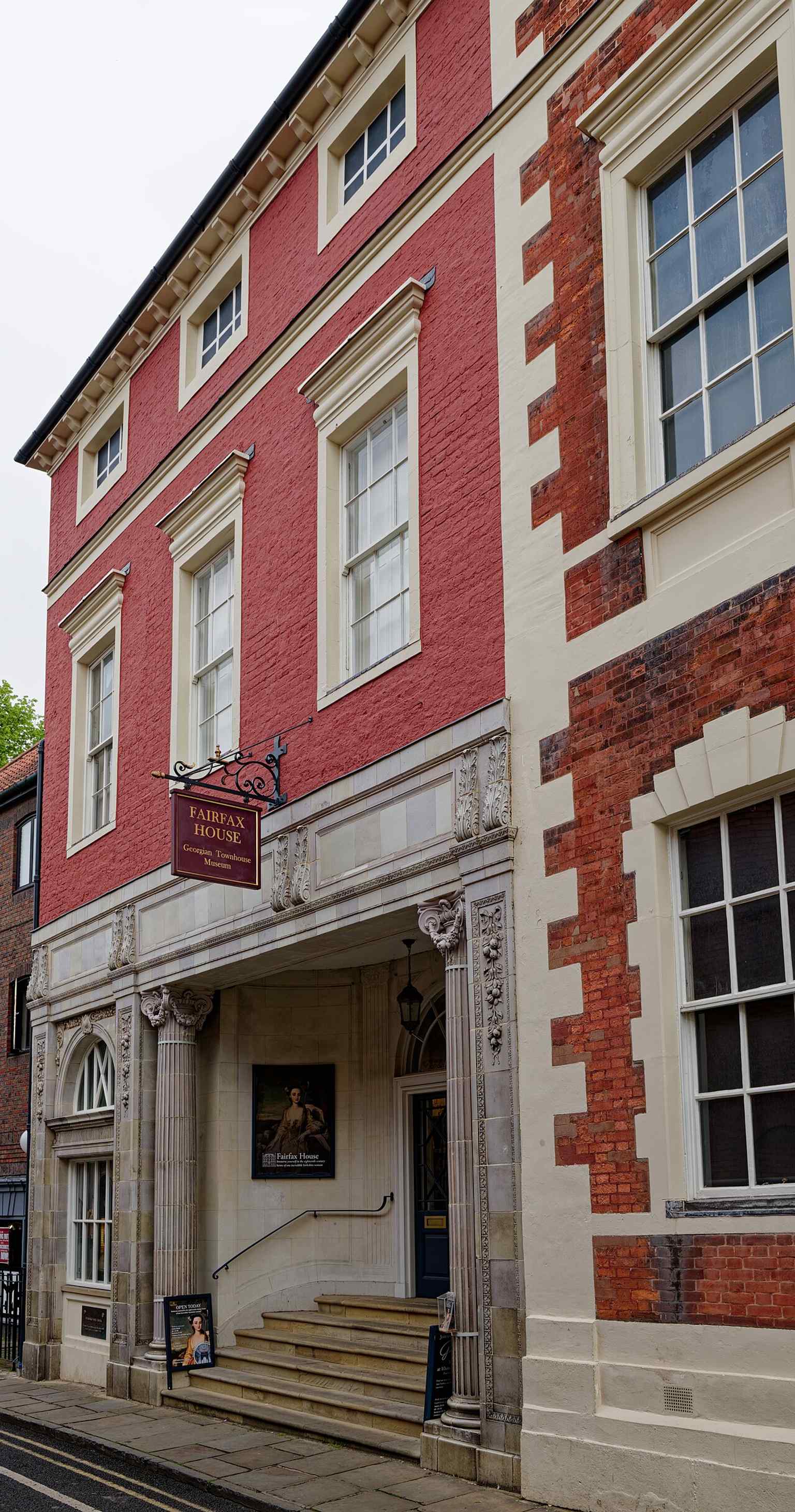
A street-level view of 25 and 27 Castlegate that helps show the house in its historic city-centre setting.Photo: Tilman2007, Wikimedia Commons, CC BY-SA 4.0. Cropped & resized. The decoration went even further. The plasterwork by James Henderson and Giuseppe Cortese ranks among the finest in Yorkshire, and the staircase carried eagles, dragons, and putti - those little carved cherub-like children you see in eighteenth-century decoration. Some scholars think they nodded to patriotism during the Seven Years’ War; others suspect they also hinted at the family’s Catholic sympathies. In other words, even the prettiest ceiling may be saying something pointed.
And then the house took on other lives, because York rarely leaves a building alone. After the Fairfax family, it passed through local owners, became a gentleman’s club, a building society, then folded into a dance hall and cinema. Those changes tore out walls, doorframes, cornices, even fireplaces. By the time York Civic Trust stepped in during the nineteen eighties, restoration meant detective work as much as repair. Craftsmen spent almost four years bringing the house back, helped by Noel Terry’s superb collection of English Georgian furniture - one rescue story leaning on another.
So stand here a moment with that in mind: behind the polished rooms lies a family drama, and behind the elegance, a set of coded messages people once expected their guests to read.
When you’re ready, continue to All Saints’ Church on Pavement, about a three-minute walk away. If you want to come back inside later, Fairfax House generally opens most days from late morning to late afternoon, with more limited hours on Friday and Sunday.
On your left, look for a pale stone church with a square tower, pointed windows, and a little lantern-like crown at the top that makes it stand out from the street around it. All…Read moreShow less
Open dedicated page →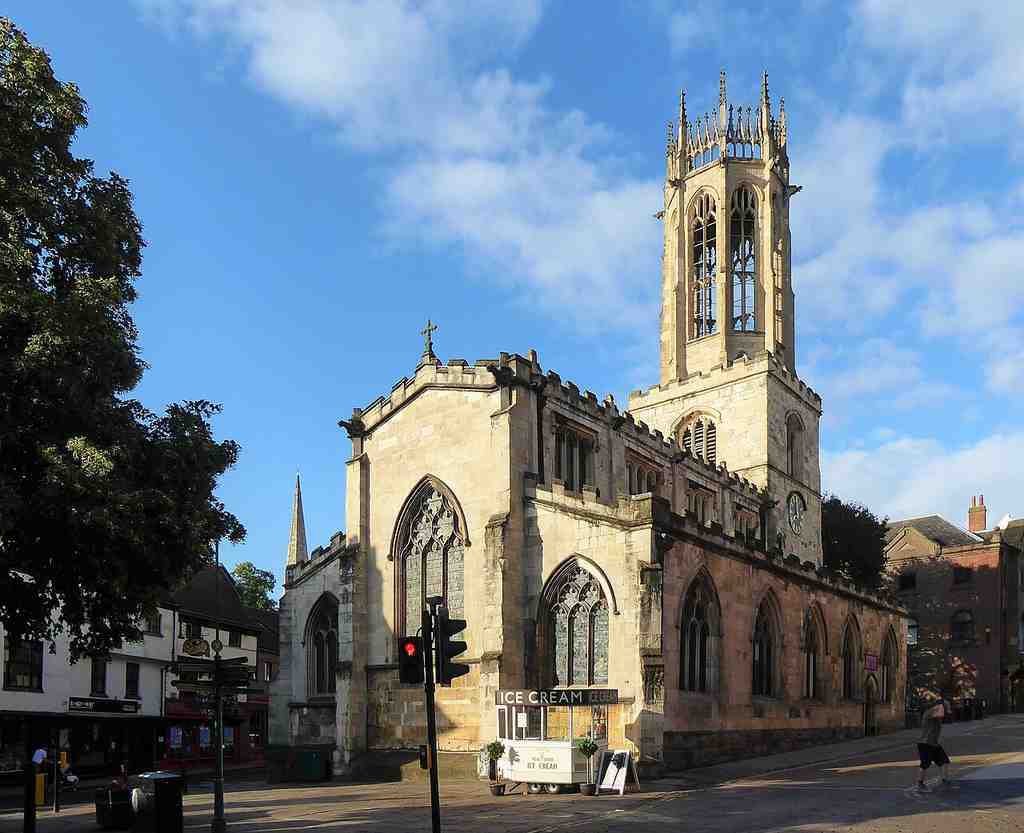
All Saints' Church, Pavement, YorkPhoto: Chris06, Wikimedia Commons, CC BY-SA 4.0. Cropped & resized. On your left, look for a pale stone church with a square tower, pointed windows, and a little lantern-like crown at the top that makes it stand out from the street around it.
All Saints, Pavement sits right in the middle of York’s commercial bloodstream, and that is the first thing to know about it. This was never a church hiding from city life. It stood in the thick of trade, carts, arguments, deals, funerals, and worship... which is a very York combination.
The church you see now mostly belongs to the fourteenth century, but the ground underneath may be much older. One record places All Saints here in the Domesday Book in ten eighty-six. Archaeologists also found an Anglo-Danish grave cover, which hints at an earlier burial ground before this building took shape. Local tradition, naturally ambitious, pushes the story all the way back to the year six hundred and eighty-five and Saint Cuthbert. York does love a deep backstory.
And then there is that tower. It was not just decorative. People kept a light burning in the lantern up there to guide travelers toward the city through the Forest of Galtres, which medieval writers describe as wolf-infested. So yes, this church functioned partly as a place of prayer and partly as a very early roadside safety system. If you look at the picture on your screen, you can get a clearer sense of that beacon-like top.
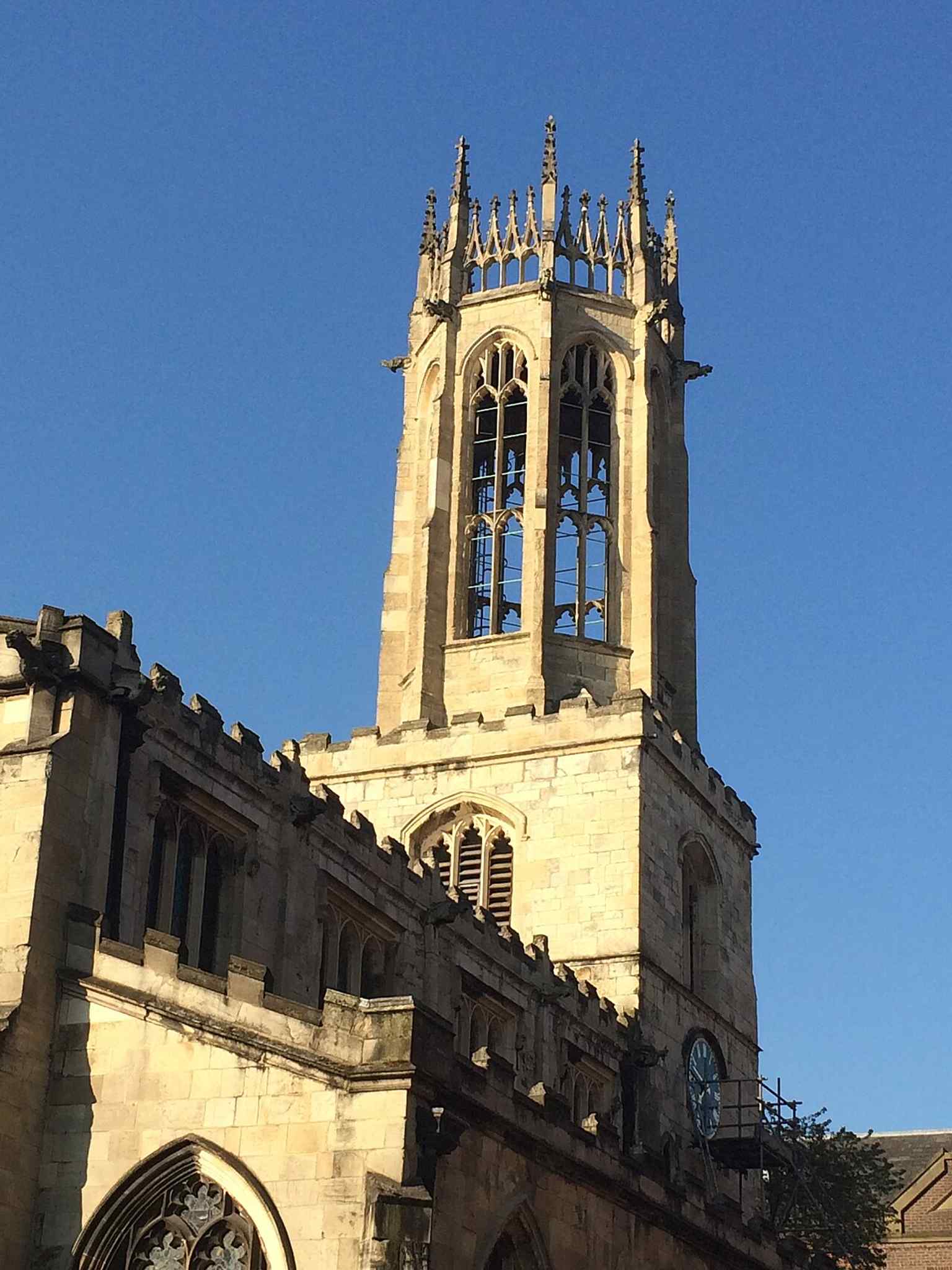
The lantern tower that once shone as a beacon for travellers entering York through the Forest of Galtres.Photo: Malcolmxl5, Wikimedia Commons, CC BY-SA 4.0. Cropped & resized. The street matters too. Pavement was one of York’s earliest paved streets, important enough that in fourteen ninety-seven carts were taxed here because the paving was new. By fifteen seventy-eight, the corporation and the parishioners had agreed to share repair costs because market traffic was chewing up the road beside the church. Holes in the street, arguments over who pays... some civic traditions never go out of fashion.
What makes All Saints especially York-ish is the way it kept absorbing lives from all around it. It became the guild and civic church of the city, and thirty-four Lord Mayors lie buried here. It also became a kind of refuge for memories from other churches that disappeared. Memorials came here from Saint Crux and Saint Saviour’s, and in nineteen fifty-seven a west window from around thirteen seventy, rescued from redundant Saint Saviour’s, found a new home here too. So this building does not just preserve itself; it shelters pieces of lost York.
One very human story survives in the memorial to Troop Sergeant Major John Polety. In eighteen twenty-nine, he helped fight the York Minster fire using his regiment’s fire engine, then died a week later. His brother Charles is remembered with him here. Another plaque honors Tate Wilkinson, the actor-manager who paid five hundred pounds in seventeen sixty-nine, around eighty thousand pounds today, for the royal patents that let the York and Hull theatres call themselves Theatre Royal. So even here, amid prayer books and memorials, the city’s theatrical life slips in through the side door.
If you glance at the interior image in the app, you can see the central hall of the church and traces of its Victorian reshaping. In eighteen forty-eight, workers removed the old box pews, those enclosed family compartments, and reused parts of them along the aisles. Even the furniture here has a second life.
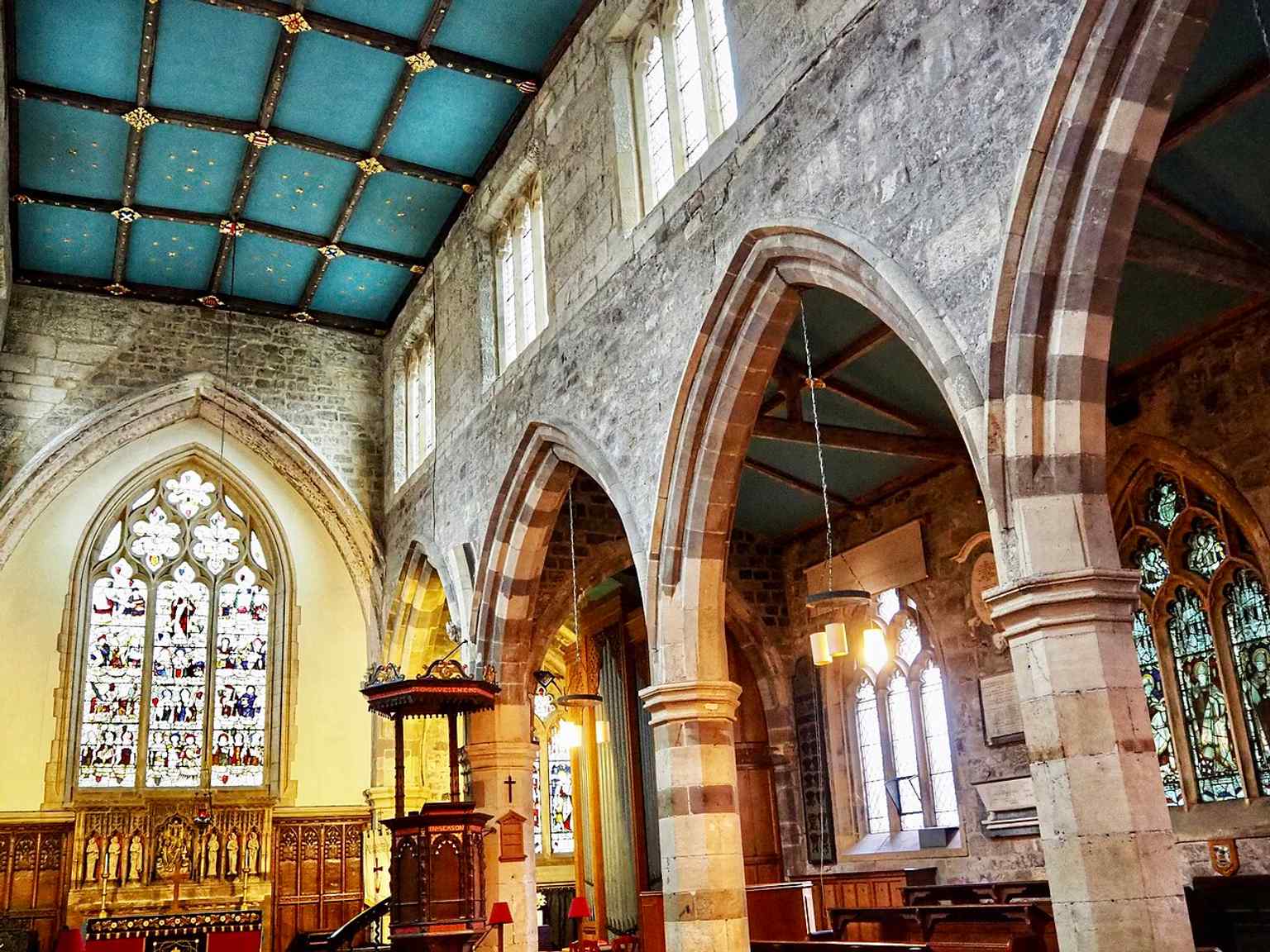
A wide interior view of the nave, where Victorian changes replaced the old box pews in 1848.Photo: Malcolmxl5, Wikimedia Commons, CC BY-SA 4.0. Cropped & resized. Before you go, tip your head up to that tower and imagine its light burning above the street, telling strangers that York was close, and safety closer. From here, the streets themselves start getting stranger... and our next stop, Whip-Ma-Whop-Ma-Gate, is about a two-minute walk away. If you want to return later, the church is generally open from ten to four most days, with shorter hours on Sundays.
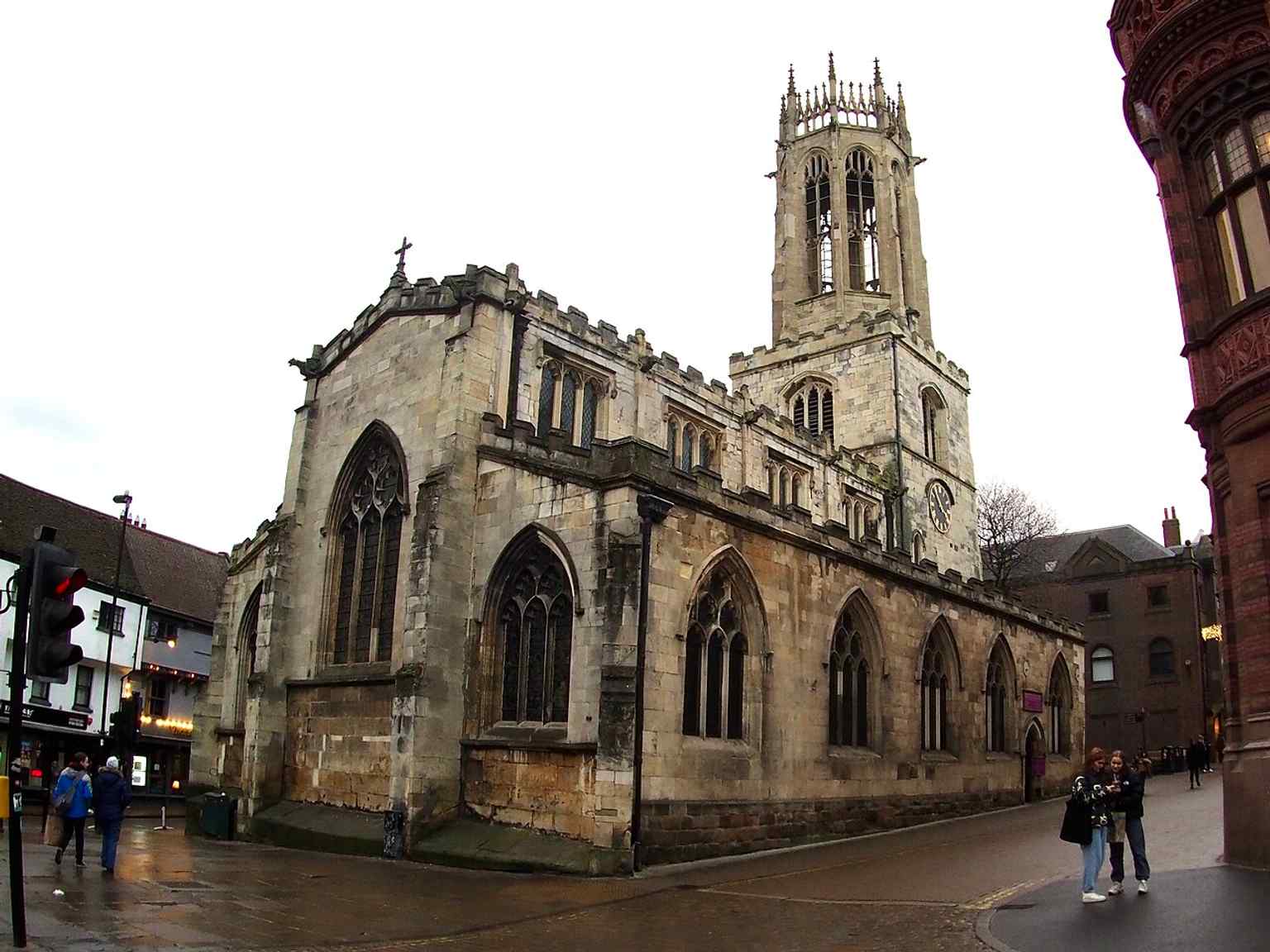
A clear modern view of All Saints on Pavement, the Grade I parish church at the heart of York’s old market street.Photo: Malcolmxl5, Wikimedia Commons, CC BY-SA 4.0. Cropped & resized. 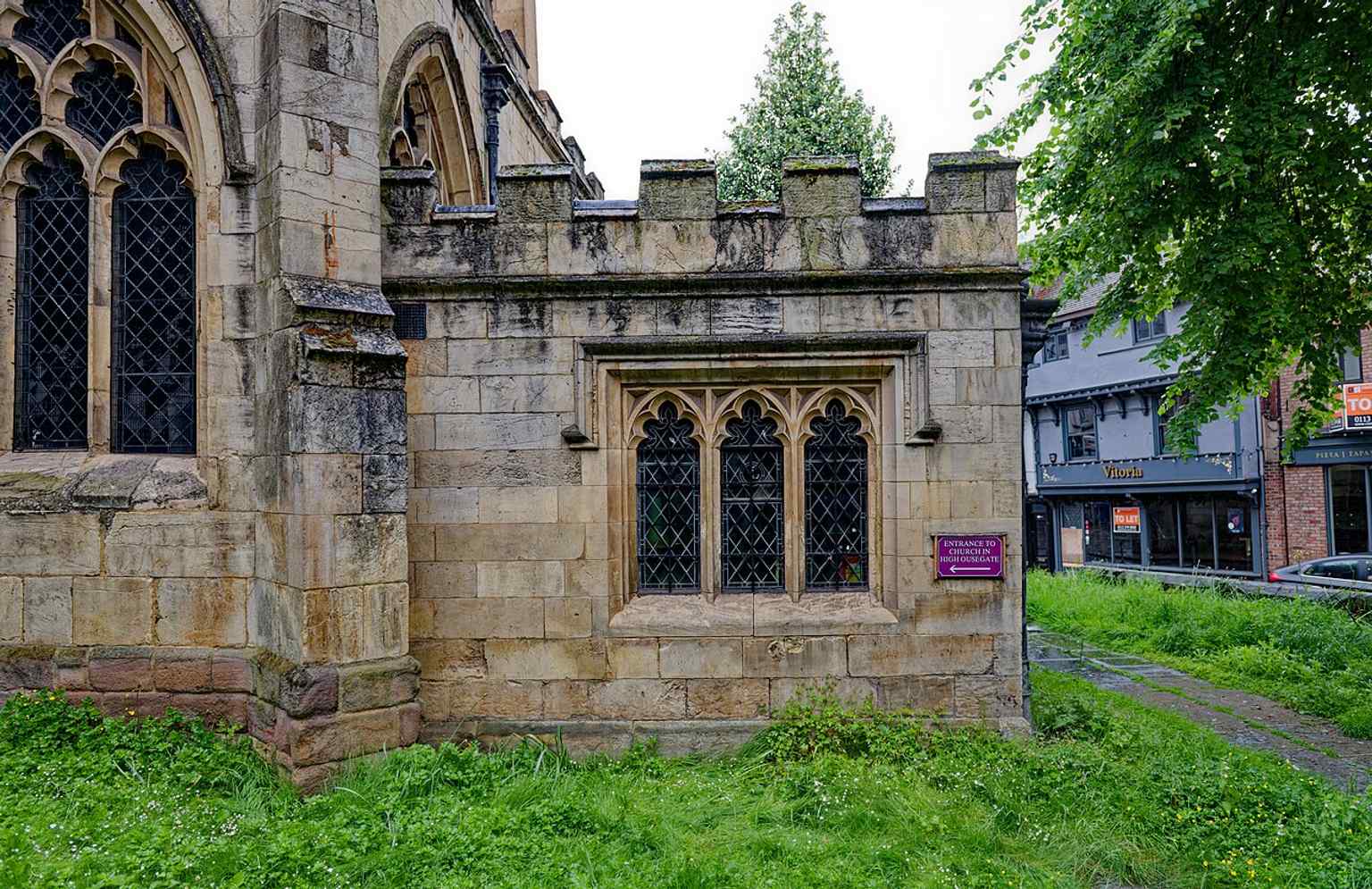
Another crisp recent exterior that helps show the building’s scale and setting on busy Pavement.Photo: Tilman2007, Wikimedia Commons, CC BY-SA 4.0. Cropped & resized. 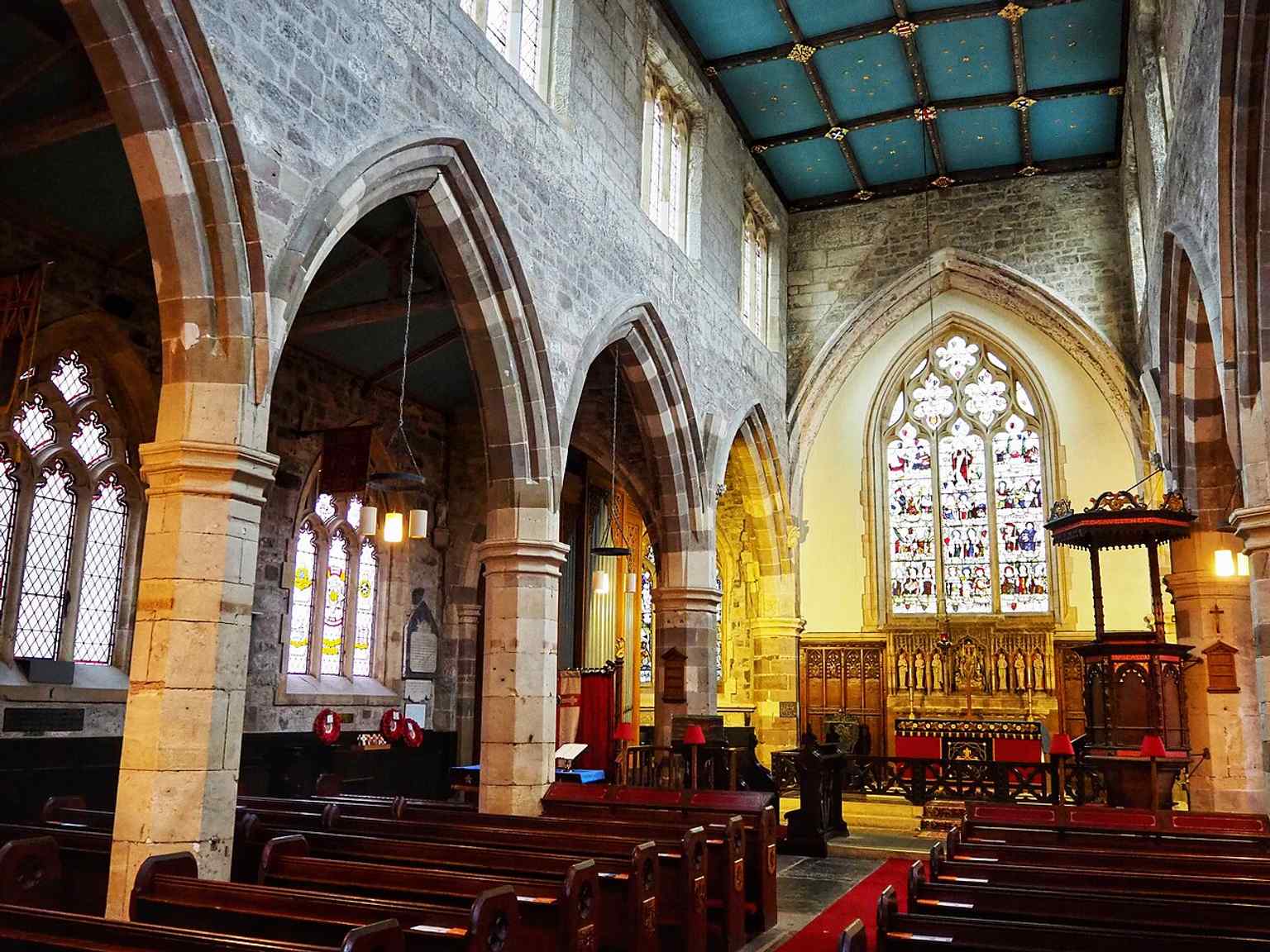
An interior angle that helps show the church as a living parish space rather than just a historic shell.Photo: Malcolmxl5, Wikimedia Commons, CC BY-SA 4.0. Cropped & resized. 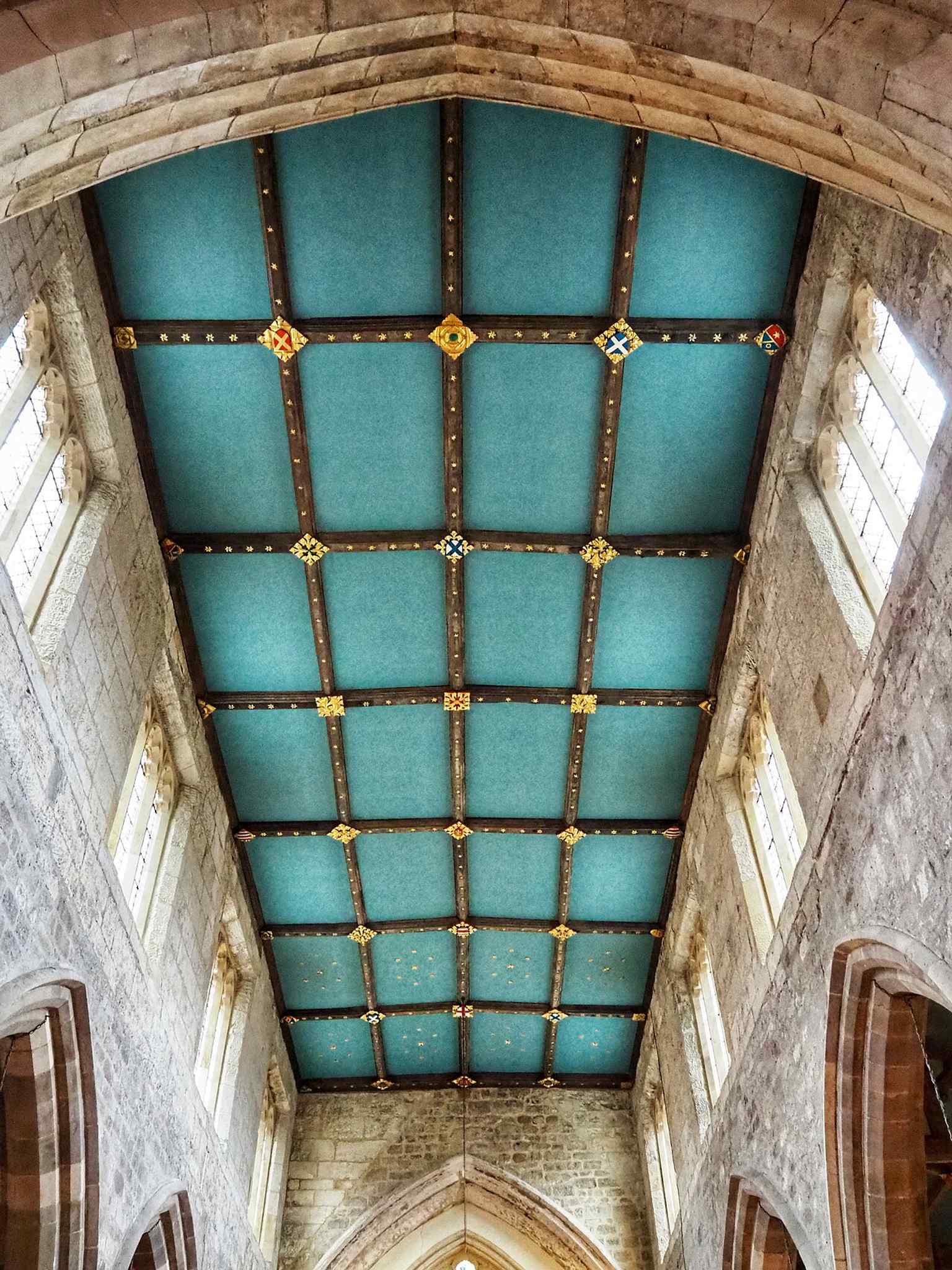
The decorated ceiling and roof structure, part of the 19th-century restorations that reshaped the church interior.Photo: Malcolmxl5, Wikimedia Commons, CC BY-SA 4.0. Cropped & resized. 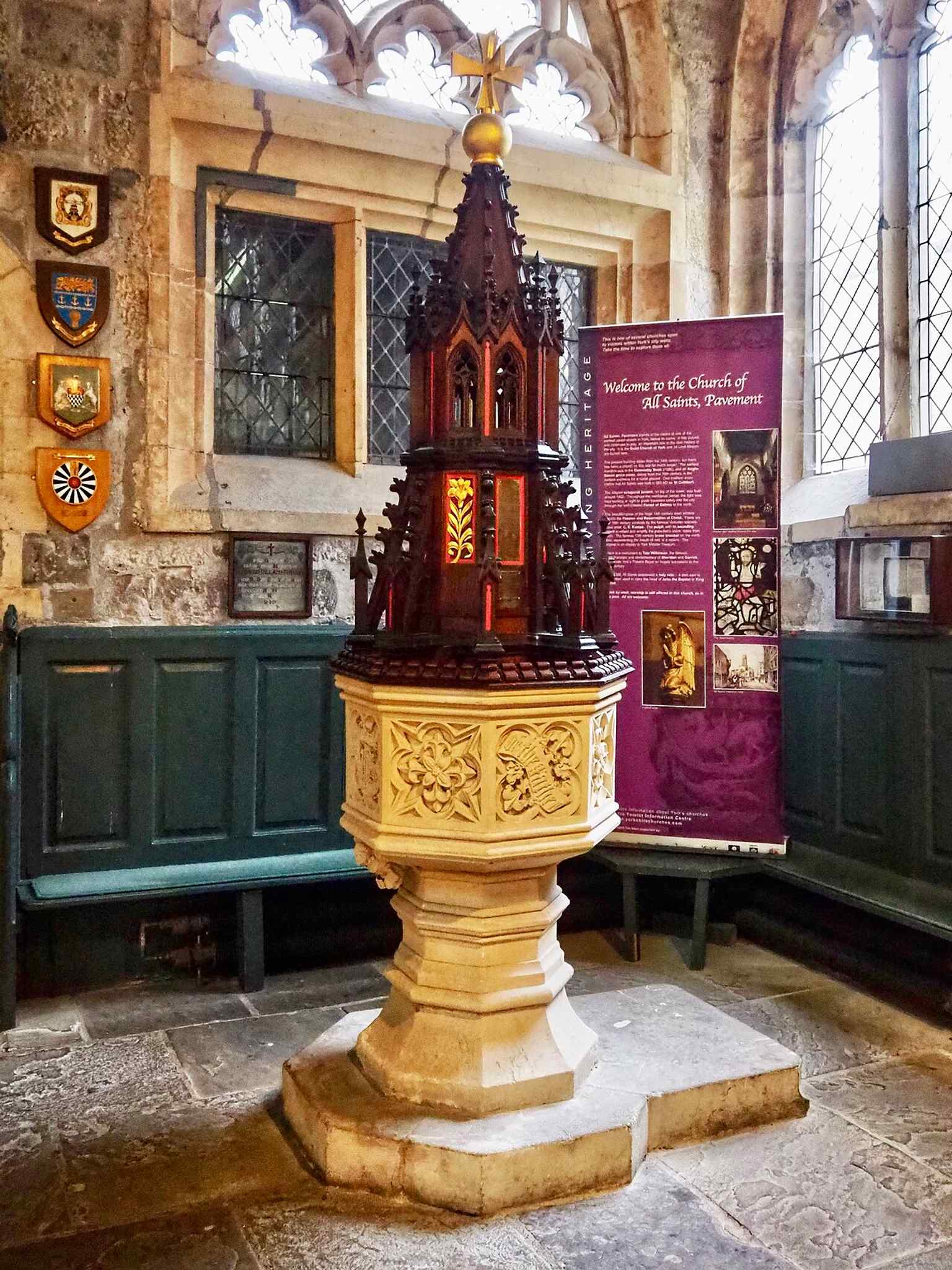
The font, a reminder of the church’s long sacramental life and centuries of parish use.Photo: Malcolmxl5, Wikimedia Commons, CC BY-SA 4.0. Cropped & resized. 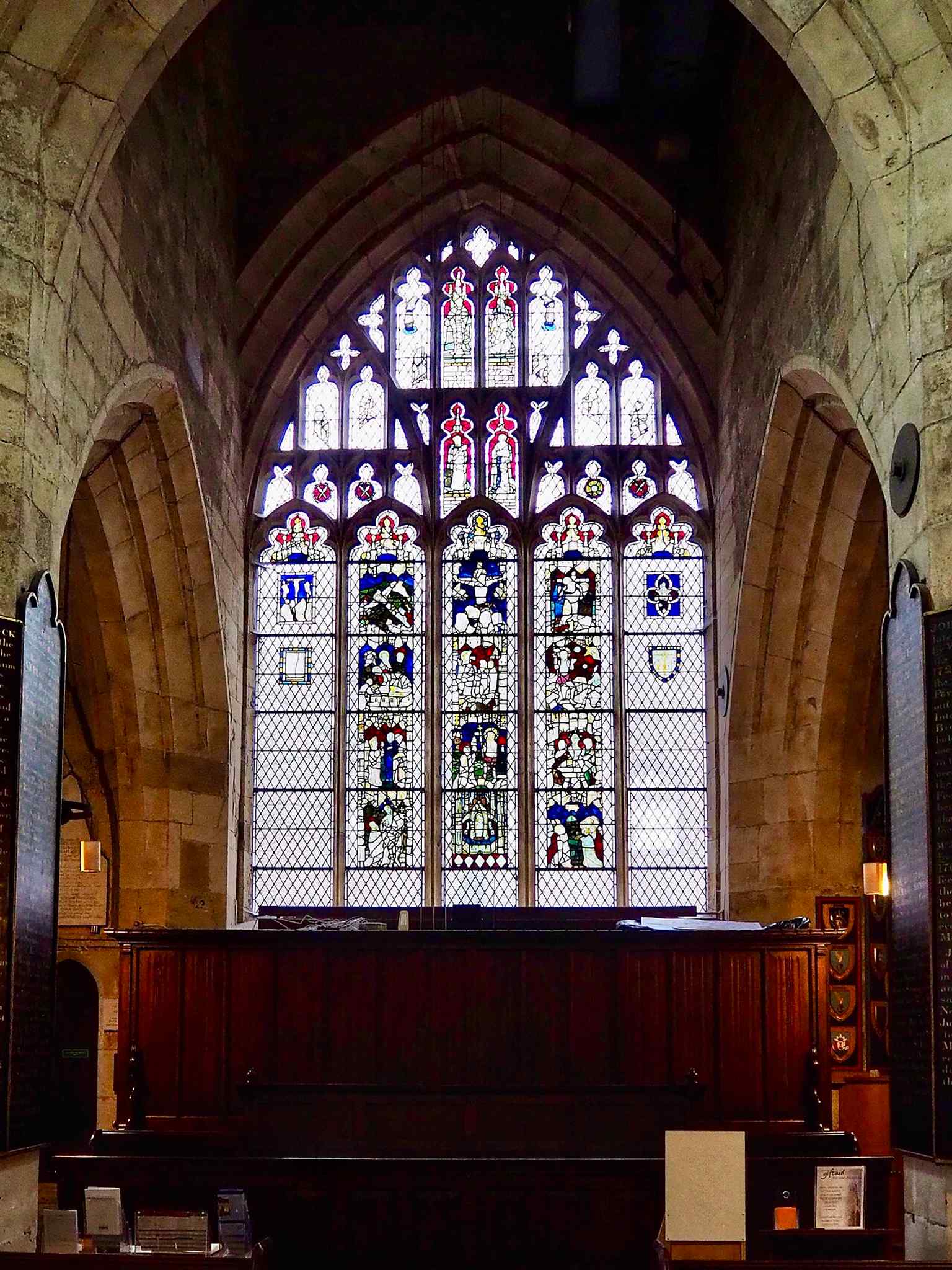
Stained glass in the church, reflecting the Victorian restoration campaign and later memorial glazing.Photo: Malcolmxl5, Wikimedia Commons, CC BY-SA 4.0. Cropped & resized. 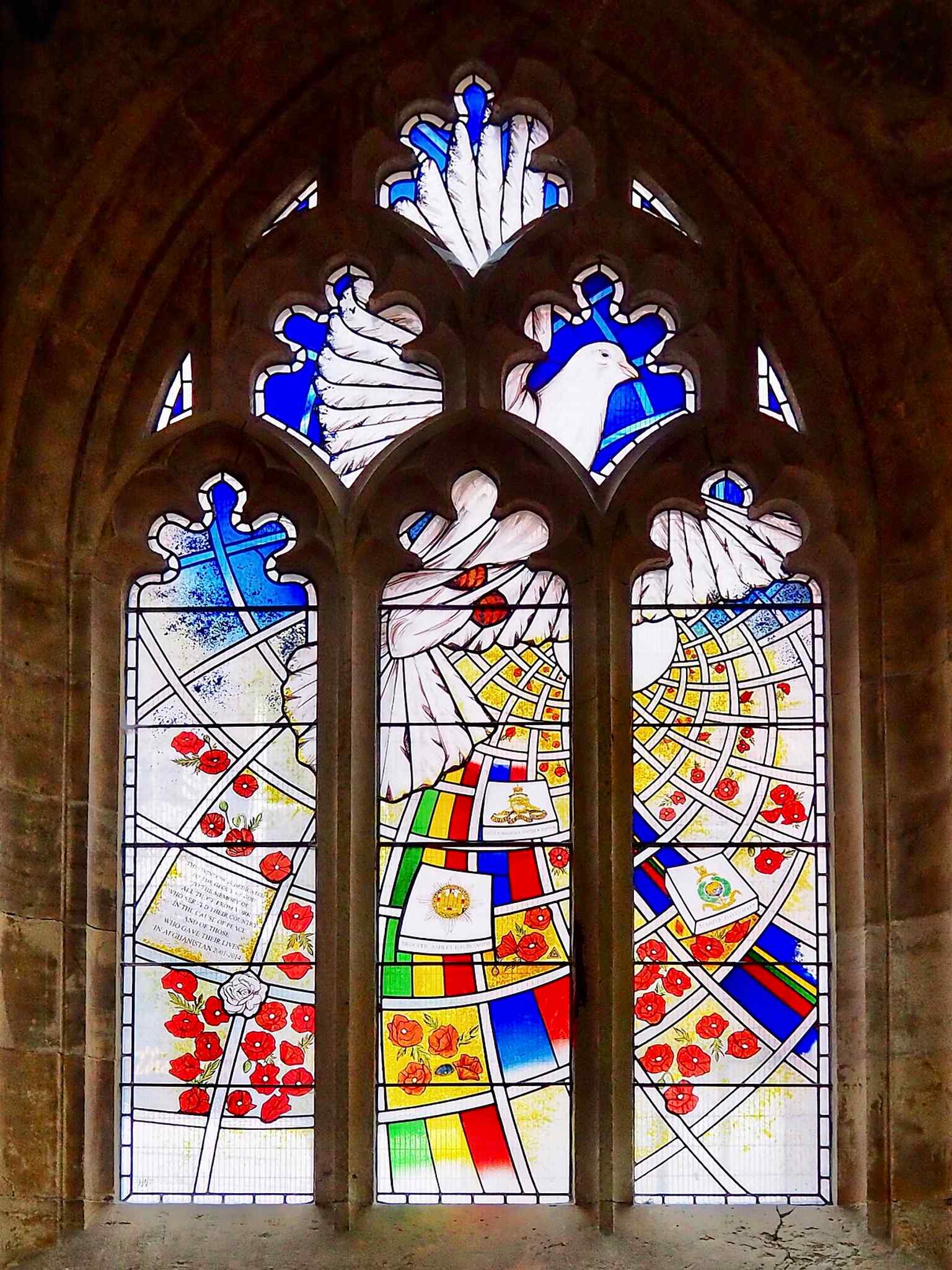
The Afghanistan Memorial Window, dedicated in 2015 to servicemen and women from the York area.Photo: Malcolmxl5, Wikimedia Commons, CC BY-SA 4.0. Cropped & resized. 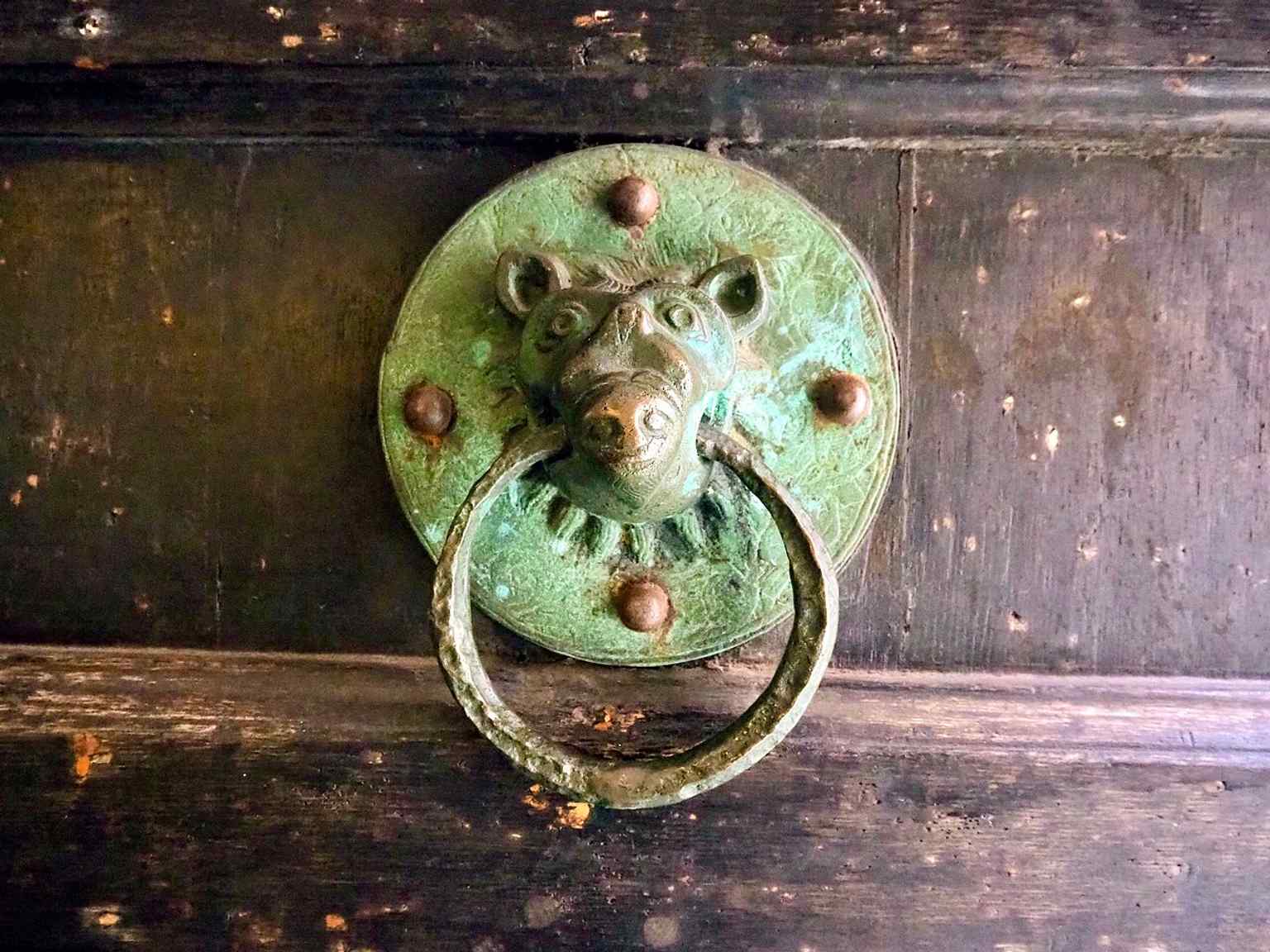
A close detail of the church’s entrance hardware, part of the fabric of the medieval building still in use.Photo: Malcolmxl5, Wikimedia Commons, CC BY-SA 4.0. Cropped & resized. Look for a very short, stone-paved lane pinched between brick shopfronts, with the Whip-Ma-Whop-Ma-Gate street sign serving as its unmistakable badge. Whip-Ma-Whop-Ma-Gate’s…Read moreShow less
Open dedicated page →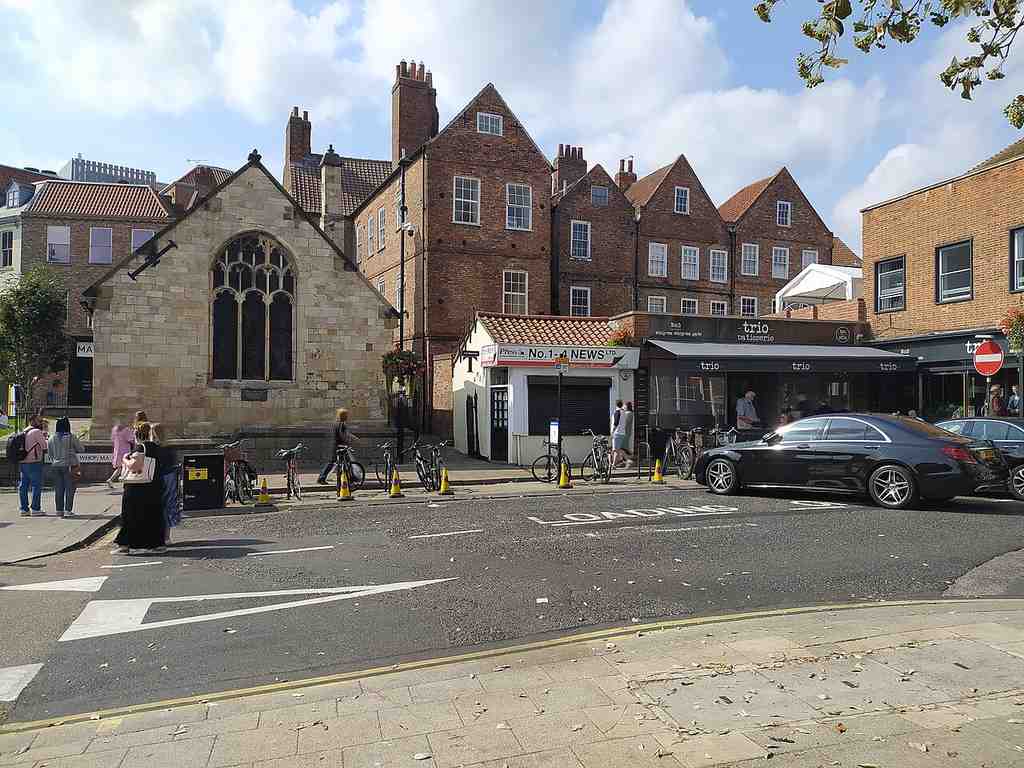
Whip-Ma-Whop-Ma-GatePhoto: Warofdreams, Wikimedia Commons, CC BY-SA 4.0. Cropped & resized. Look for a very short, stone-paved lane pinched between brick shopfronts, with the Whip-Ma-Whop-Ma-Gate street sign serving as its unmistakable badge.
Whip-Ma-Whop-Ma-Gate’s unstable identity starts with the name... which is a neat little summary of York itself. This stretch is only about eighty feet long, yet it has generated centuries of argument. In fifteen oh five, records called it Whitnourwhatnourgate, later Whitney Whatneygate. Scholars think that meant “neither-one-thing-nor-the-other street,” while the plaque by St Crux Parish Hall - a medieval church reborn as a parish hall - cheerfully translates it as “What a street!”
And then there’s the darker version. Local tradition says a whipping post and stocks once stood here, turning the joke into a memory of public punishment. In York, even the punchlines can bite.
If you check your screen, you can see how the whole lane fits into a single glance. Its fame wildly exceeds its size. People come here just to photograph the sign, and York author Martyn Clayton even borrowed the name for a novel. Literary immortality for a street hardly longer than a shrug.
Look at the other image and you’ll spot number one-and-a-half - one of only three official addresses here: one, one A, and one-and-a-half. That absurd numbering belongs to an early eighteenth-century house-and-shop range, later chopped about and reused, just like so much of this city.
So yes... what a street. And maybe, also, what a warning. Next, we’ll head into the Shambles, where cramped frontages hide even denser history.
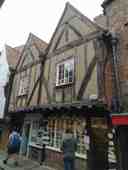
On your left, look for a narrow pair of timber-fronted buildings with jettied upper floors, dark wooden framing, and neat rows of small-paned sash windows above the…Read moreShow less
Open dedicated page →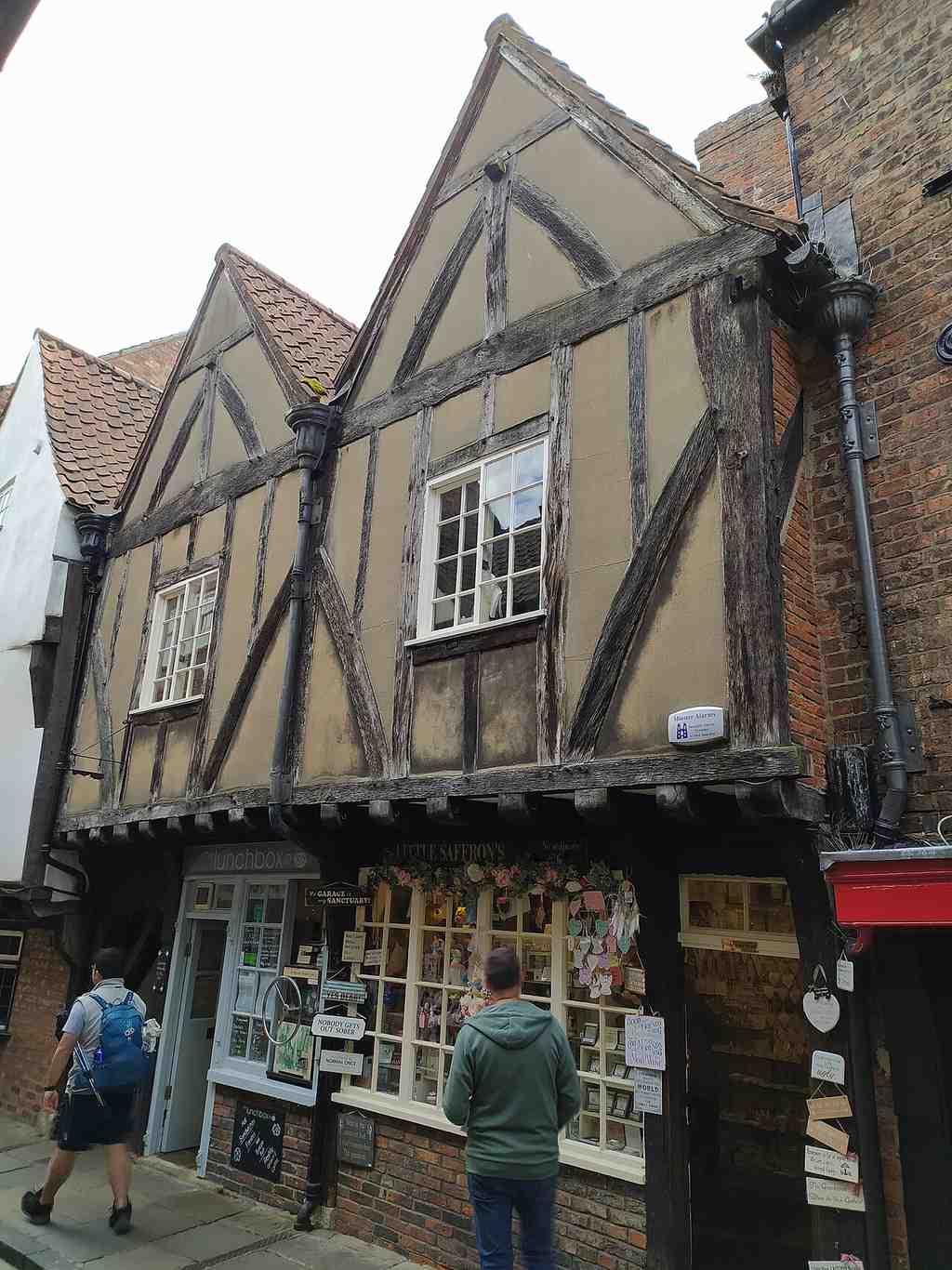
37–38 The ShamblesPhoto: Warofdreams, Wikimedia Commons, CC BY-SA 4.0. Cropped & resized. On your left, look for a narrow pair of timber-fronted buildings with jettied upper floors, dark wooden framing, and neat rows of small-paned sash windows above the shopfronts.
This is number thirty-seven and thirty-eight The Shambles... the version of this street that postcards prefer to soften. Parts of these buildings go back to the late fifteenth century, with more added in the seventeenth, so what survives is not one pure medieval relic but a patched, repaired survivor. Heritage records even note that some of number thirty-seven’s first-floor timber framing was only partly renewed, which is conservation in York for you: preservation, with a toolbox.
If you glance at the image on your screen, the upper timber work stands out nicely there. That matters, because the real story here is labor, not quaintness. A local history account places a slaughterhouse behind these two buildings. So the Shambles butchery past was not some vague street name left over from long ago; it shaped this exact spot, with cutting, hauling, and waste tucked just out of sight behind the pretty frontage. That detail almost never makes it into the fantasy version.
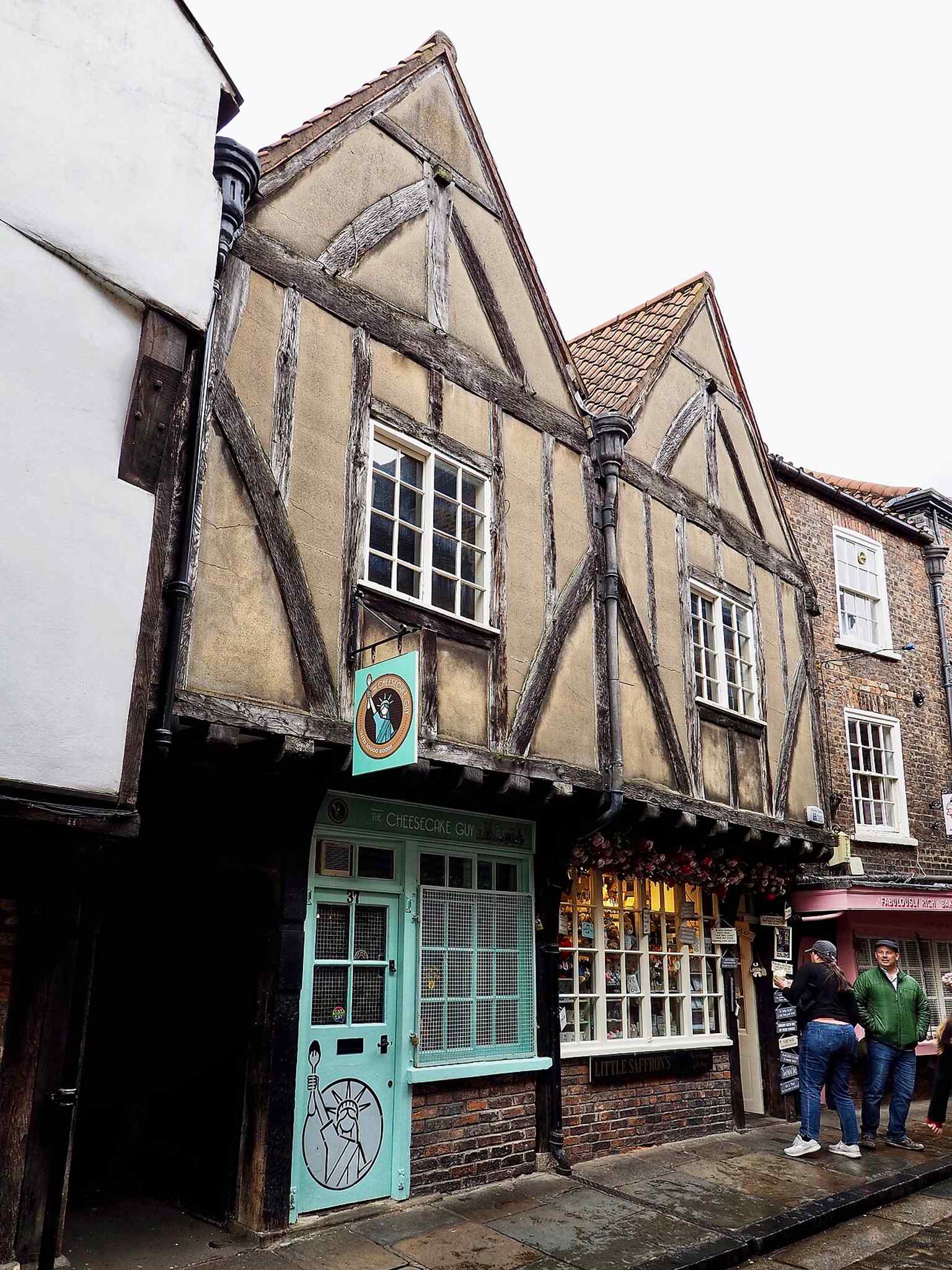
A closer view that helps pick out the timber-framed upper storey, echoing the surviving medieval fabric and later rebuilding noted in heritage records.Photo: Malcolmxl5, Wikimedia Commons, CC BY-SA 4.0. Cropped & resized. In nineteen fifty-four, the pair got major renovation and some rebuilding work... the very same year they were formally recognized as Grade two-star listed, on the fourteenth of June. Later, on the third of October, nineteen ninety-one, Roger Thomas photographed the rear exterior for an architectural survey, doing the unglamorous work that helps old buildings keep going.
Now number thirty-seven sells cheesecake and number thirty-eight trades as Little Saffrons. Same shells, different appetites. York does love a reinvention. When you’re ready, head on to Barley Hall, about four minutes away.
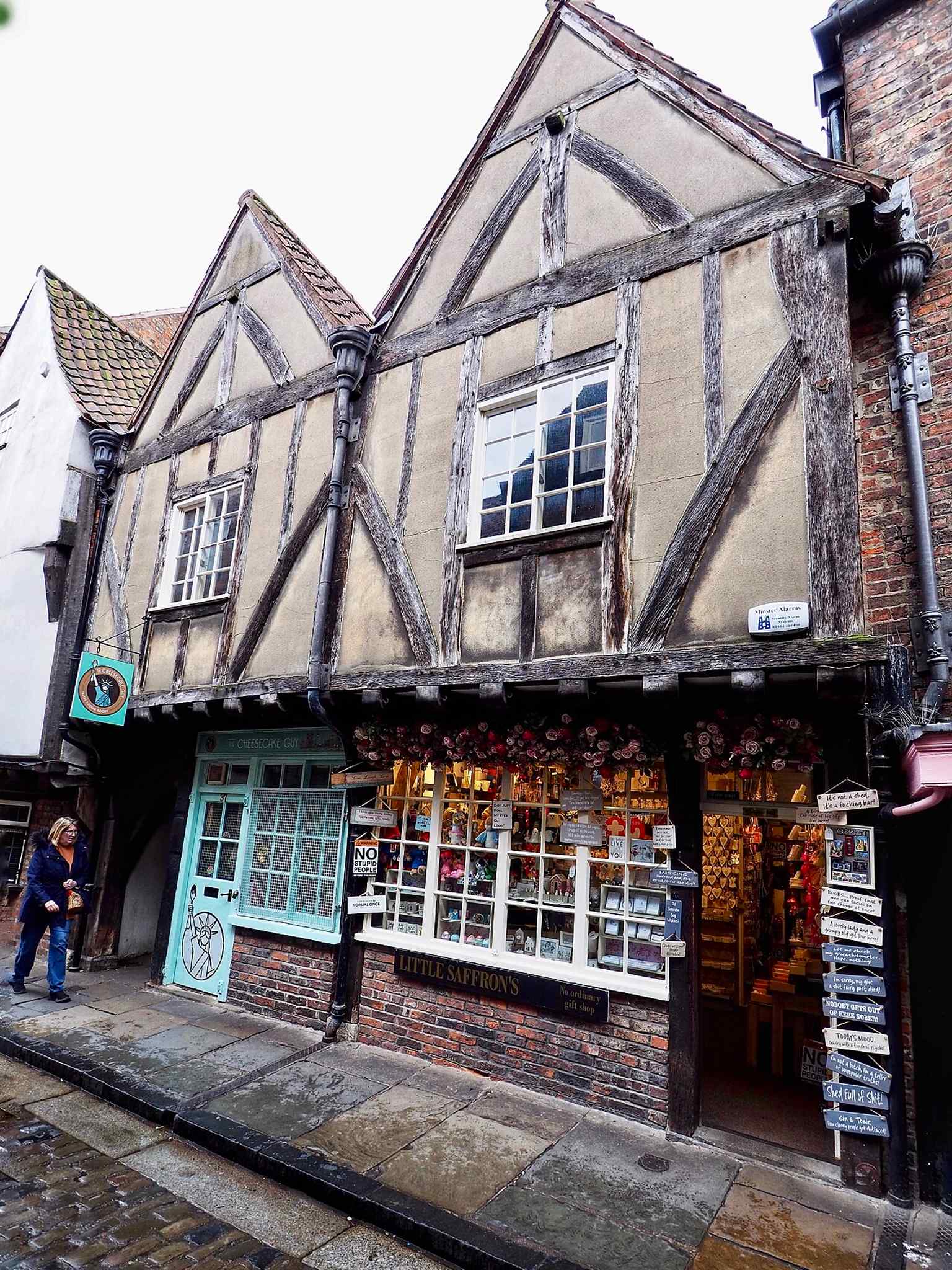
Another angle on the same historic frontage, useful for showing how the two adjoining buildings read as one layered heritage pair.Photo: Malcolmxl5, Wikimedia Commons, CC BY-SA 4.0. Cropped & resized. 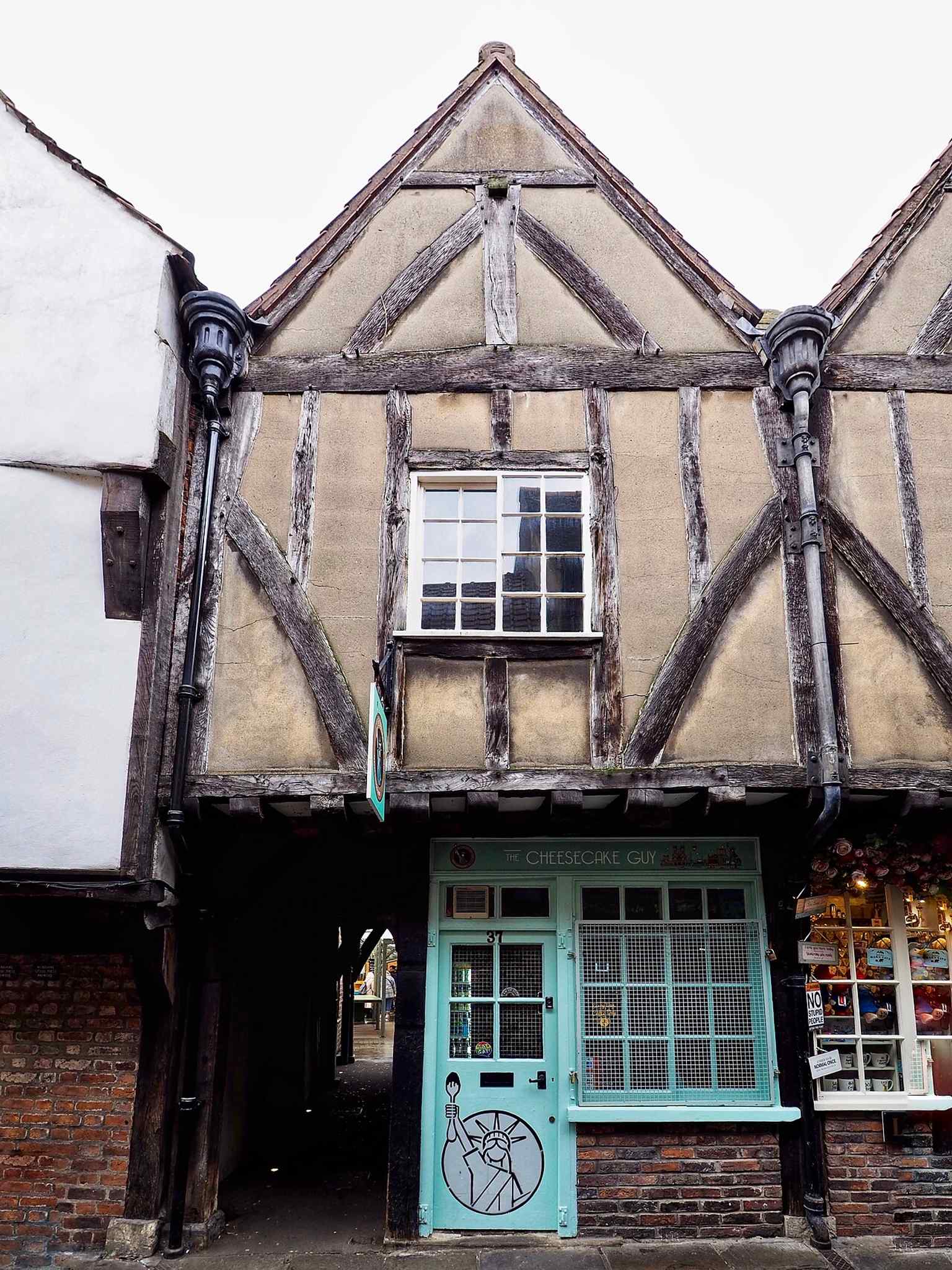
This tighter view of No. 37 highlights the building’s distinctive upper-floor structure, where some first-floor framing was only partly renewed.Photo: Malcolmxl5, Wikimedia Commons, CC BY-SA 4.0. Cropped & resized. 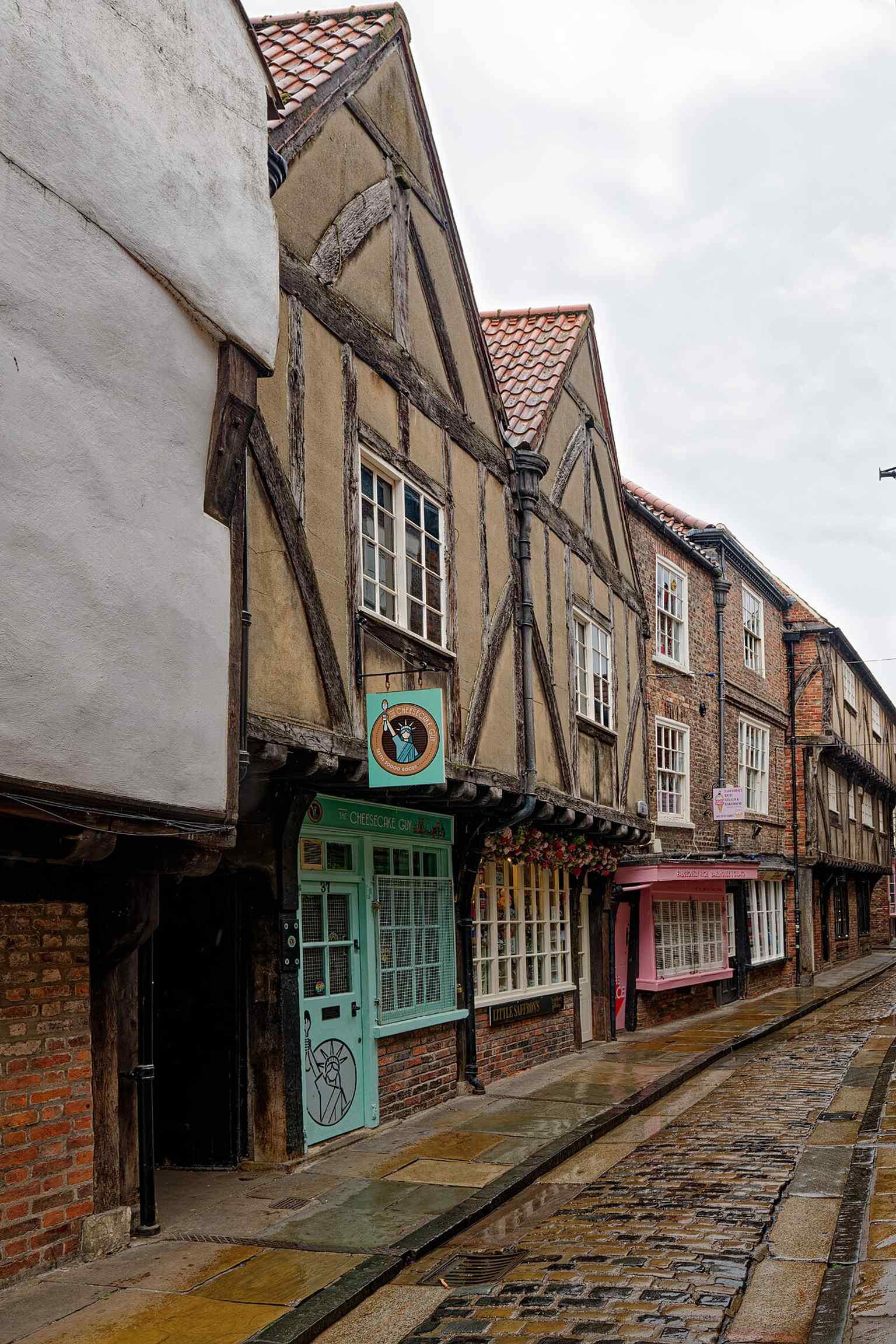
High-resolution view of the shopfronts at 37–38 The Shambles, showing how the medieval buildings now house modern businesses such as The Cheesecake Guy and Little Saffrons.Photo: Tilman2007, Wikimedia Commons, CC BY-SA 4.0. Cropped & resized. 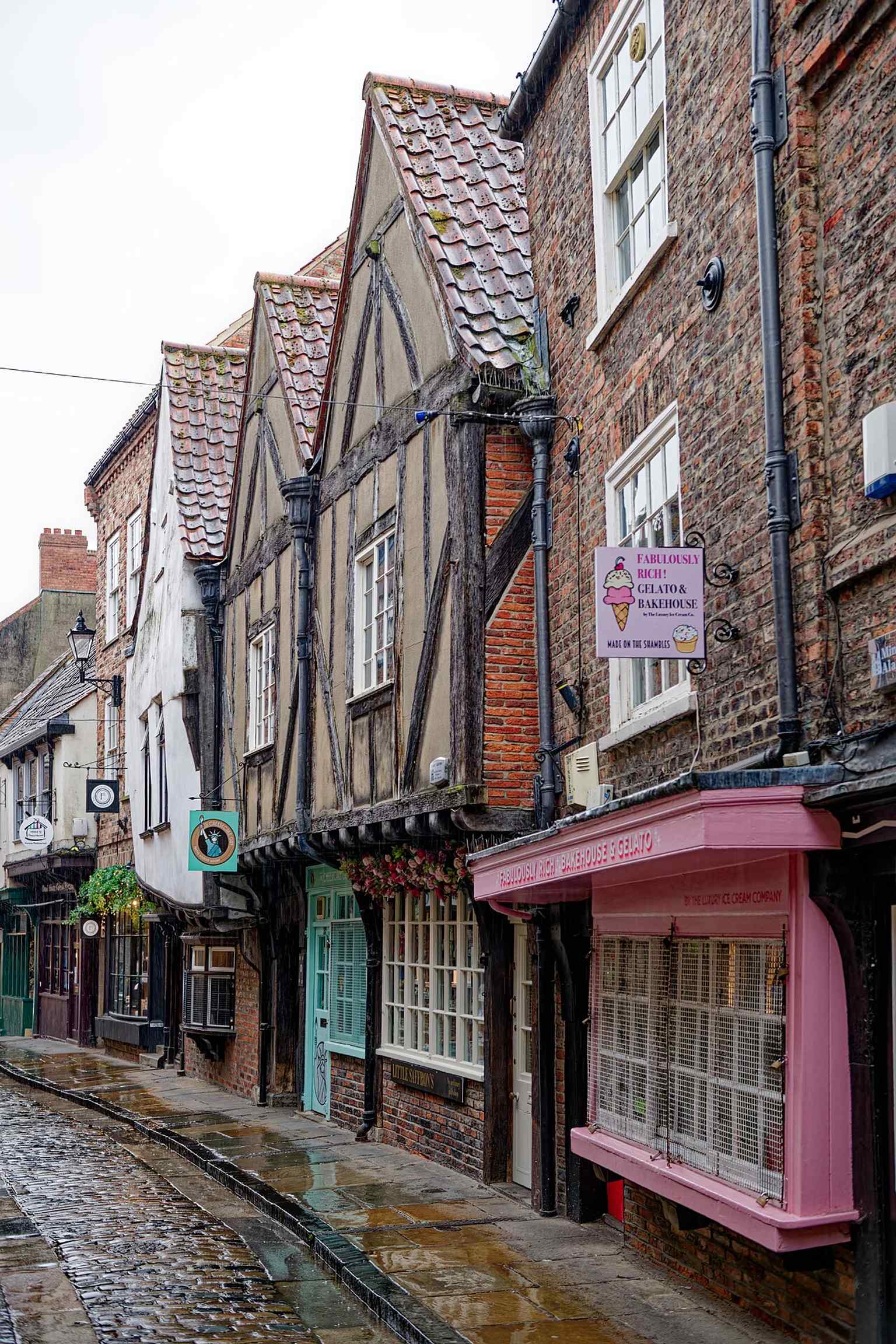
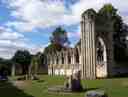
Another well-detailed street-facing view of 37–38 The Shambles, tying the medieval fabric to the modern commercial frontage.Photo: Tilman2007, Wikimedia Commons, CC BY-SA 4.0. Cropped & resized. On your right, the abbey shows itself as pale stone ruins: tall broken walls, long pointed window openings, and a jagged line of masonry marking the shell of an enormous…Read moreShow less
Open dedicated page →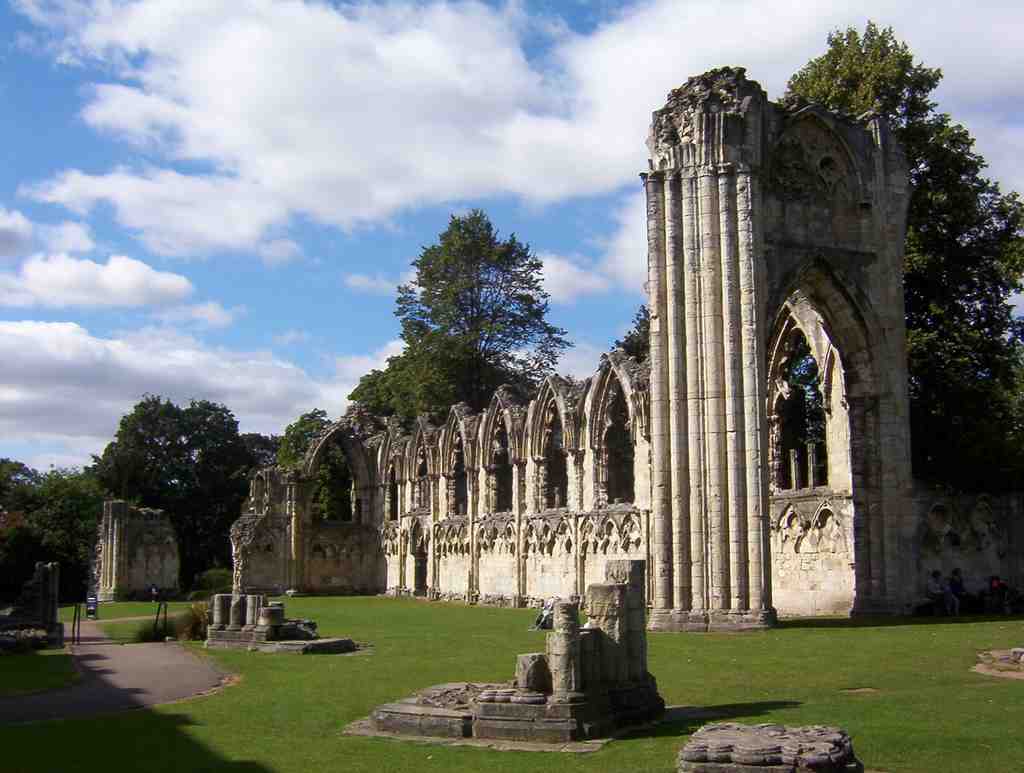
St Mary's Abbey, YorkPhoto: Kaly99, Wikimedia Commons, CC BY-SA 3.0. Cropped & resized. On your right, the abbey shows itself as pale stone ruins: tall broken walls, long pointed window openings, and a jagged line of masonry marking the shell of an enormous church.
What looks peaceful now once belonged to one of the richest Benedictine abbeys in northern England. A church stood here by ten fifty-five, dedicated to Saint Olaf. After the Norman Conquest, Alan Rufus handed the site to Abbot Stephen and monks from Whitby, and in ten eighty-eight King William the Second came to York, gave them more land, and set in motion a grand new abbey dedicated to the Virgin Mary.
And grand really is the word. This was not just a church. It sat inside a huge monastic precinct, almost three-quarters of a mile around, with walls, towers, privileges, its own prison, even its own gallows. A useful reminder that medieval holiness could come with a fairly muscular legal department. The abbots here were so powerful they wore mitres, like bishops, and got summoned to Parliament.
Most of what you see belongs to the great rebuilding begun in twelve seventy-one under Abbot Simon de Warwick, working with a master stonemason also named Simon. They finished the whole campaign by twelve ninety-four, astonishingly fast for a project of this size. The church stretched about three hundred and fifty feet long, with a nave, the great central hall of worship, plus transepts crossing it like arms, side aisles, chapels, library, chapter house, kitchens, infirmary... an entire world ordered around prayer, study, and administration.
Take a moment and look along those surviving walls. From where you're standing, try to measure the ambition of it... and then imagine the nerve it took to challenge the place from within.
Because the surprise here is that one of England's most famous monasteries began with a quarrel at this one. The monastic revolt of eleven thirty-two started when Prior Richard accused Abbot Geoffrey of letting discipline slide. This was not a mild disagreement over hymn selection. Richard and other reform-minded monks wanted a stricter life, closer to the rule they believed they had promised. The dispute turned ugly enough to become a riot, and Archbishop Thurstan stepped in.
Thurstan sheltered the rebels. Then, on the twenty-sixth of December, eleven thirty-two, he took thirteen expelled monks to the valley of the River Skell. There he backed Richard as first abbot of a new house: Fountains Abbey. So one of the greatest Cistercian monasteries in England began as a breakaway from this wealthy Benedictine giant. That changes the mood of these ruins a bit, doesn't it? Calm stone outside... fierce argument underneath.
If you check the app, one image pulls back enough to show the scale of the surviving church walls more clearly. And another shows King’s Manor, the later reuse of the abbot’s house after Henry the Eighth closed the abbey in fifteen thirty-nine, when it was worth more than two thousand pounds a year, roughly several million in modern terms.
So this ruin does not only mark loss. It also marks departure, rebellion, and a new beginning somewhere else entirely. In about a minute, we’ll head into York Museum Gardens, where the abbey’s afterlife keeps unfolding. If you want to explore a little longer later, the grounds are generally open daily from nine in the morning until six in the evening.
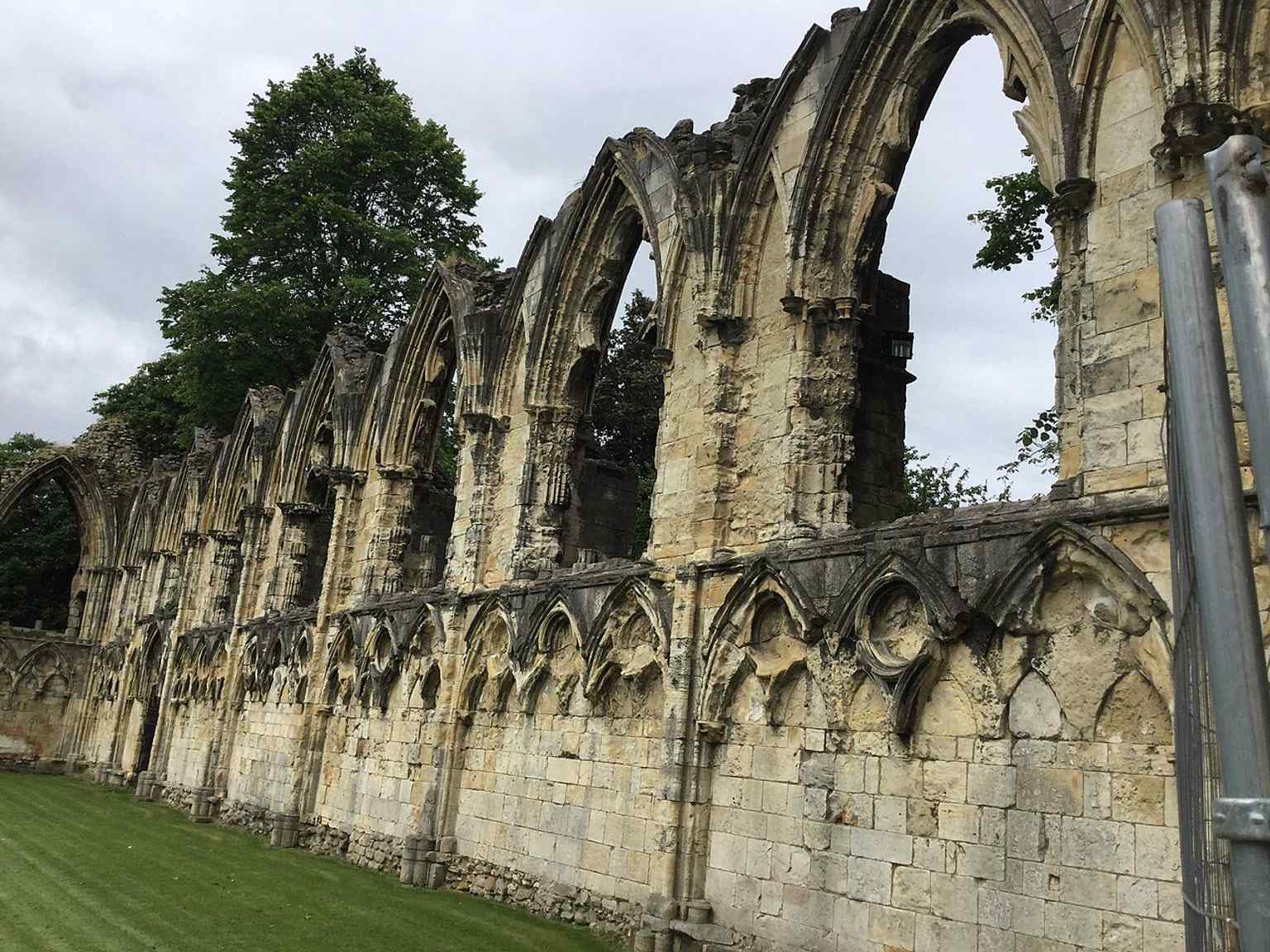
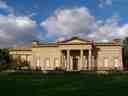
Close to the abbey remains, this image helps show the texture of the surviving stonework in the Museum Gardens.Photo: HMcpherson, Wikimedia Commons, CC BY-SA 4.0. Cropped & resized. On your left is a pale stone, temple-like building with a long symmetrical front, a triangular pediment, and a row of classical columns announcing Victorian confidence with zero…Read moreShow less
Open dedicated page →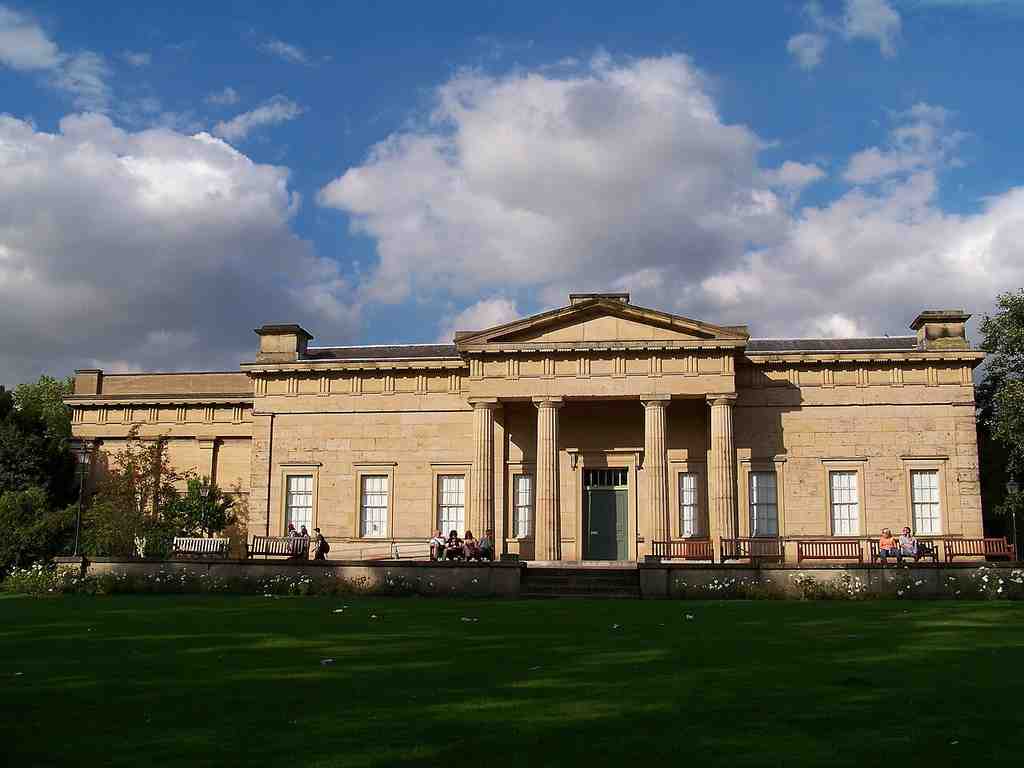
Yorkshire MuseumPhoto: Kaly99, Wikimedia Commons, CC BY-SA 3.0. Cropped & resized. On your left is a pale stone, temple-like building with a long symmetrical front, a triangular pediment, and a row of classical columns announcing Victorian confidence with zero shyness.
This museum is one of York’s boldest acts of reinvention. In the late eighteen twenties, the Yorkshire Philosophical Society outgrew its rooms in Ousegate and secured a royal grant of ten acres here, land that had belonged to St Mary’s Abbey. So a place once shaped by monks and prayer became a home for fossils, coins, Roman sculpture, and scientific debate. York does love a new use for old ground.
William Wilkins designed the building in the Greek Revival style, which means he gave it the look of an ancient classical temple: strict symmetry, columns, and that stern triangular top called a pediment. It opened in February eighteen thirty, making it one of the oldest museums in England. The surrounding land had to remain botanical gardens under the terms of the grant, which is why the Museum Gardens are not just pretty grounds but part of the original plan. If you want, take a glance at the before-and-after image in the app; the building stays wonderfully self-possessed even as the visitors and gardens around it change with the decades.
And here is the part most tourists miss: the museum does not merely sit near the abbey ruins... it sits directly over them. Some of St Mary’s Abbey survives in the basement, which makes this whole place feel like an argument in stone. First a powerful religious house, born from that turbulent monastic world we touched on earlier, then a nineteenth-century institution for science and archaeology, confidently planted on the same footprint.
The human face of that confidence was John Phillips, the museum’s first keeper. He was not just a caretaker with keys; he was a serious geologist, nephew of William Smith, the man behind the first full geological map of a country. Phillips helped turn the museum into a place for real research, not just dusty curiosities. In eighteen thirty-one, the museum even hosted the inaugural meeting of the British Association for the Advancement of Science, which is a grand way of saying some of the sharpest minds in Britain came here to compare notes and probably disagree politely.
But scholarship here has never been entirely tidy. Phillips’s escaped-bear encounter still lingers in the museum’s lore, a reminder that York rarely keeps learning and mischief in separate rooms.
Inside, the collections range from Roman York to Viking treasure, from dinosaur fossils to the oldest Mesolithic art in Britain. If you glance at the image of the carved abbey boss on your screen, you’ll see one small reminder that the medieval house below never quite disappeared.
The place has taken its knocks too. In nineteen forty-two, a bomb narrowly missed the museum, smashing roof and windows; curator Reginald Wagstaffe helped clear away so much broken glass and damaged specimens that seven large bath-tubs were filled with debris. Even then, the building carried on.
That feels right for York. Knowledge here is serious, ambitious, even a little grand... but never fully free of surprise, accident, or personality. When you’re ready, continue to York Theatre Royal, about four minutes away, where another York institution proves that performance is just another way this city keeps old spaces alive. The museum is generally open from ten in the morning to five in the afternoon, Tuesday through Sunday, and closed on Mondays.
In front of you is a pale stone theatre with a pointed Gothic frontage, tall arched windows, and carved heads set into the facade like permanent critics. York Theatre Royal began…Read moreShow less
Open dedicated page →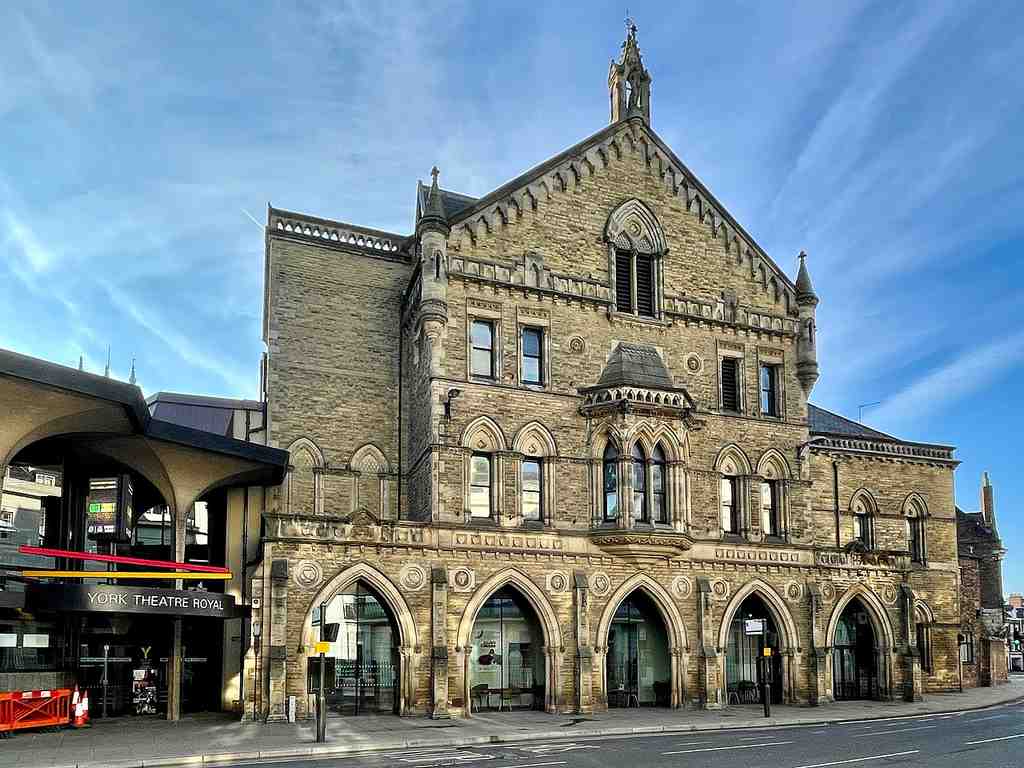
York Theatre RoyalPhoto: General George Marshall, Wikimedia Commons, CC BY-SA 4.0. Cropped & resized. In front of you is a pale stone theatre with a pointed Gothic frontage, tall arched windows, and carved heads set into the facade like permanent critics.
York Theatre Royal began in seventeen forty-four, but this site was already old news by then. The builders set their playhouse on top of, and partly among, St Leonard’s Hospital, one of medieval York’s great charitable institutions. So this building has always done a slightly uncanny trick: performance on the surface, older lives underneath.
Look at the front and you can read some of that layering. The Victorian makeover turned the frontage into a Gothic showpiece, and those carved heads include Elizabeth the First and figures from Shakespeare. If you check the app image, you’ll see the facade laid out clearly. Then, in nineteen sixty-seven, architect Patrick Gwynne added that modernist foyer beside it, all glass and concrete confidence... York being York, one century rarely gets the place to itself.
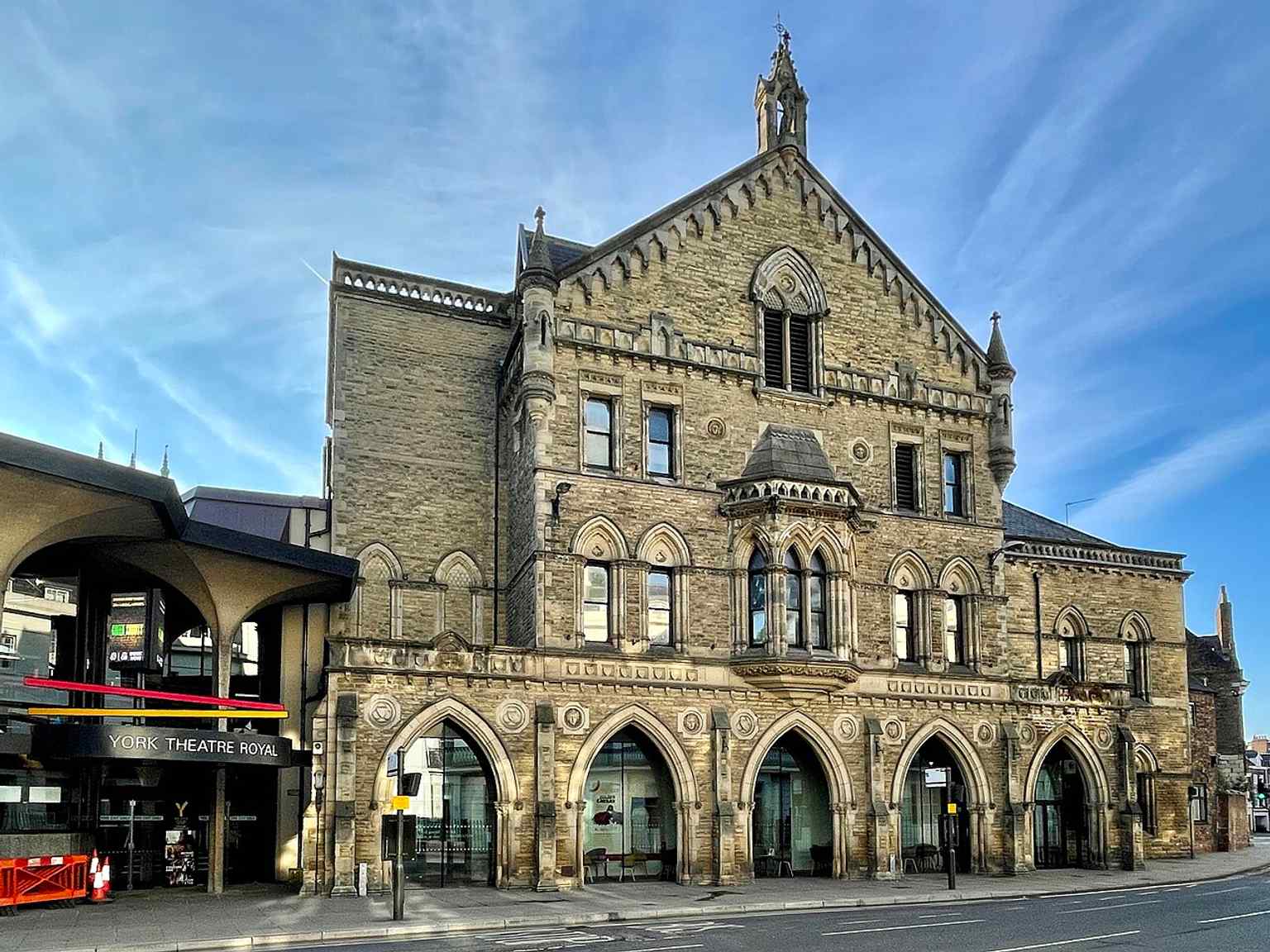
The front of York Theatre Royal on St Leonard’s Place — this Grade II* listed theatre dates back to 1744 and still anchors the city centre.Photo: General George Marshall, Wikimedia Commons, CC BY-SA 4.0. Cropped & resized. The human character I’d pin to this stop is Tate Wilkinson, the actor-manager who helped secure the theatre’s royal status in the eighteenth century. Wilkinson ran a Yorkshire circuit and brought serious talent here, including Sarah Siddons and John Philip Kemble. So while the Grand Opera House arrived later with Edwardian swagger, this place had already spent more than a century proving York could support ambitious theatre.
And then there is the delicious part beneath your feet. During the major redevelopment in twenty fifteen, archaeologists and builders opened up the site and found a cobbled street, a medieval well, and remarkably well-preserved remains of St Leonard’s Hospital under the stage. Some layers even predated the hospital. Imagine that for stagecraft: lift the floorboards, meet eight hundred years of York. The finds delayed the reopening, shifting it from late twenty fifteen to the spring of twenty sixteen, when the theatre finally reopened with Brideshead Revisited. For once, the backstage drama was entirely real.
That feels right for this city. We have seen York turn worship into commerce, ruins into gardens, and history into spectacle. Here, the past does not sit politely in a case. Actors still perform above buried archaeology and medieval walls, and a Grade two-star listed theatre still makes new work, hosts touring companies, and keeps the local stage alive. Even its pantomime became legend: Berwick Kaler turned Christmas here into a civic ritual for decades, with one wonderfully odd footnote that a very young Gary Oldman once played the cat.
So as you stand here, remember: in York, even the stage floor is only the latest surface laid over older acts. From here, head on toward Eboracum, about a five-minute walk, where the Roman layer steps back into the spotlight. If you want to return later, the theatre generally opens from ten AM to eight PM Monday to Saturday, and stays closed on Sunday.
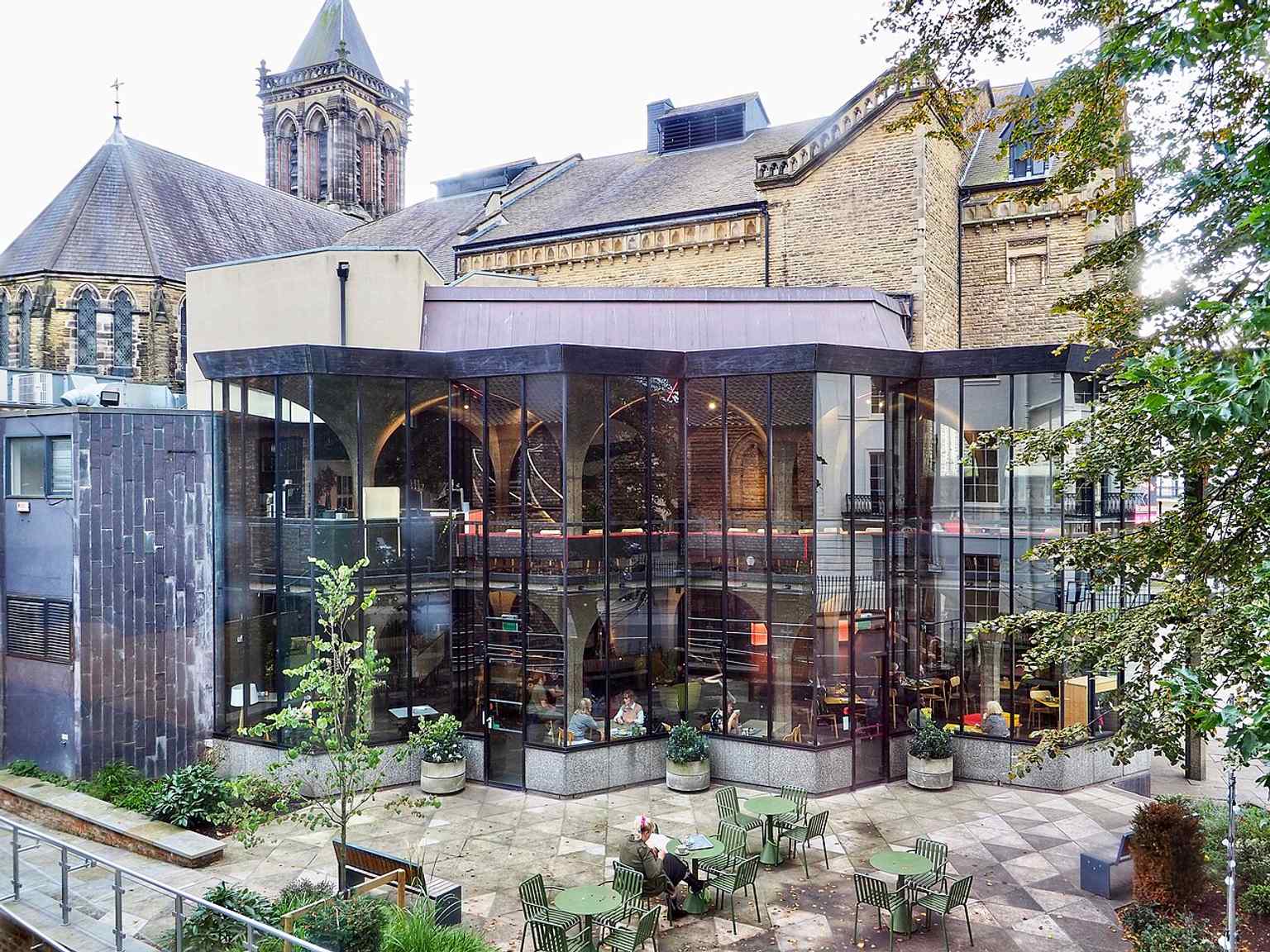
Patrick Gwynne’s 1967 extension, with its concrete parasols and glass wall, shows the modernist foyer added in a major postwar redevelopment.Photo: Malcolmxl5, Wikimedia Commons, CC BY-SA 4.0. Cropped & resized. Look for the bronze figure of Constantine set against the vast pale-stone mass of York Minster, rising above the buried Roman center that once formed Eboracum. Here, under your…Read moreShow less
Open dedicated page →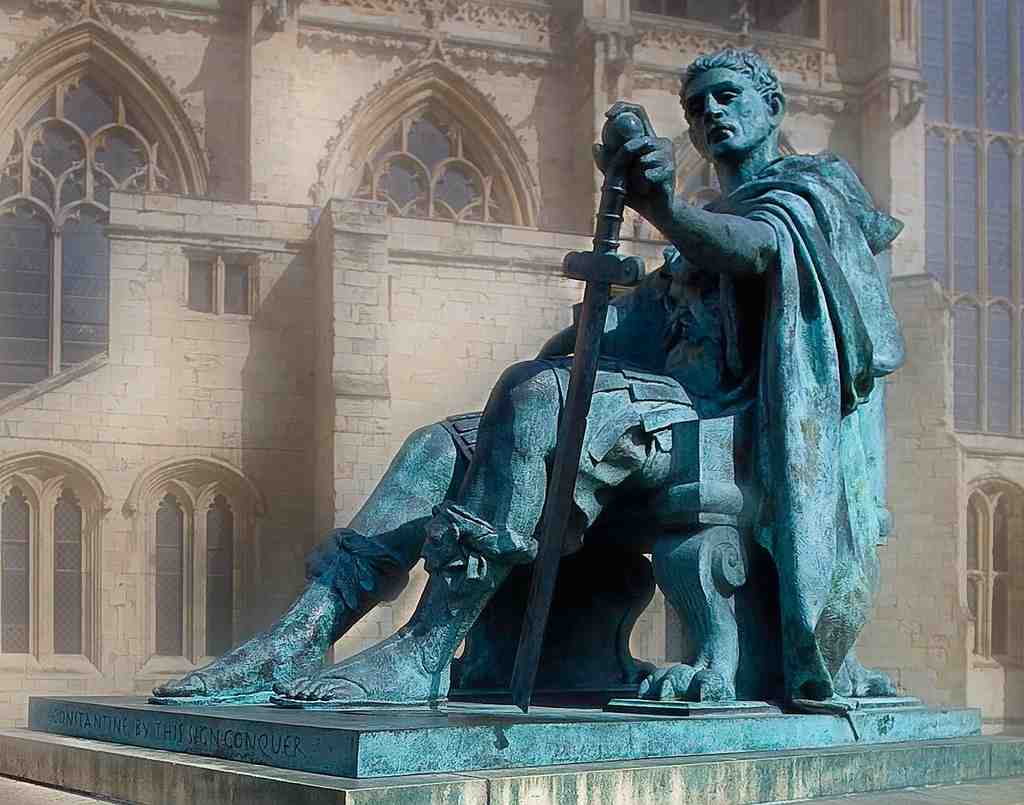
EboracumPhoto: Gernot Keller, Wikimedia Commons, CC BY 3.0. Cropped & resized. Look for the bronze figure of Constantine set against the vast pale-stone mass of York Minster, rising above the buried Roman center that once formed Eboracum.
Here, under your feet, York drops straight through its later lives and lands in Rome. This was Eboracum, imperial York: the largest town in northern Britannia, a military powerhouse, and a place where emperors died and the politics of an island shifted in real time.
Septimius Severus gives this place its first hard pulse. He came north to lead his final campaign against the Caledonian tribes, using Eboracum as his headquarters. By then he was about sixty and already in poor health... not the ideal condition for tramping around the edge of empire. After three years on campaign, he died here in February two hundred and eleven. Romans cremated him near the city, then sent his ashes back to Rome. But his death did not close the story. Soon after, Roman administrators split Britain into two provinces, and Eboracum became the capital of the northern half. So York was not merely surviving the empire; it was helping run it.
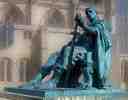
Then came another death with even bigger consequences. In three hundred and six, Constantius Chlorus died here, and his army immediately acclaimed his son Constantine as emperor. If you want a face for that moment, take a glance at the image on your screen of Constantine outside the Minster. That shout of loyalty in York launched the career of the man who would go on to reshape the Roman Empire.
And yet Eboracum was never only about emperors. Its people came from all over. An early written mention of the place survives on a wooden stylus tablet from Vindolanda, where the name appears as Eburaci, basically an address scratched onto wood. Later burials at Driffield Terrace revealed a harsher side of Roman York: many adult men, often under forty-five, some decapitated, many marked by violence. Scholars have wondered if they were soldiers or even gladiators. Genome work showed most were local Britons, but one man may have come from the Middle East. Add North African-style pottery and the wealthy Ivory Bangle Lady, and you get a city that feels less like a distant outpost and more like a busy imperial crossroads with muddy boots.
There is a small dry joke buried in all this: York has spent centuries building over Rome, then excavating Rome, then putting Rome in museums, then building museums over more Rome. If you look at the image of Constantine’s ancient head, there is even a twist there. One later study suggested the bust may have been recarved from an earlier emperor, probably Hadrian. Even the statue had a previous life... which, frankly, is very York.
So Eboracum is not just the opening chapter buried out of sight. It still sets the lines of the city, shapes what stands above it, and keeps reminding later York who it used to be. From here, make your way to Holy Trinity Church, Goodramgate... about a three-minute walk, and another place where old York refuses to disappear.
Look to your right for a compact limestone church with a plain medieval outline, a projecting porch, and a blue plaque by the entrance. Holy Trinity feels less like a monument…Read moreShow less
Open dedicated page →Look to your right for a compact limestone church with a plain medieval outline, a projecting porch, and a blue plaque by the entrance.
Holy Trinity feels less like a monument and more like a room that history forgot to tidy up. Parts of it go back to the twelfth century. The south-east chapel came in the thirteenth century, the south aisle and its arcade - that row of arches inside - in the fourteenth. Limestone laid the foundation, and later generations patched and extended it in brick, so even the walls admit that time leaves visible repairs.
This church carries some very human contradictions. In the south-east chapel there is a tiny squint, also called a hagioscope: a narrow opening cut so lepers could follow the service while being kept apart from everyone else. Worship and exclusion, sharing the same wall. If you want to see the detail clearly, have a look at the image on your screen.
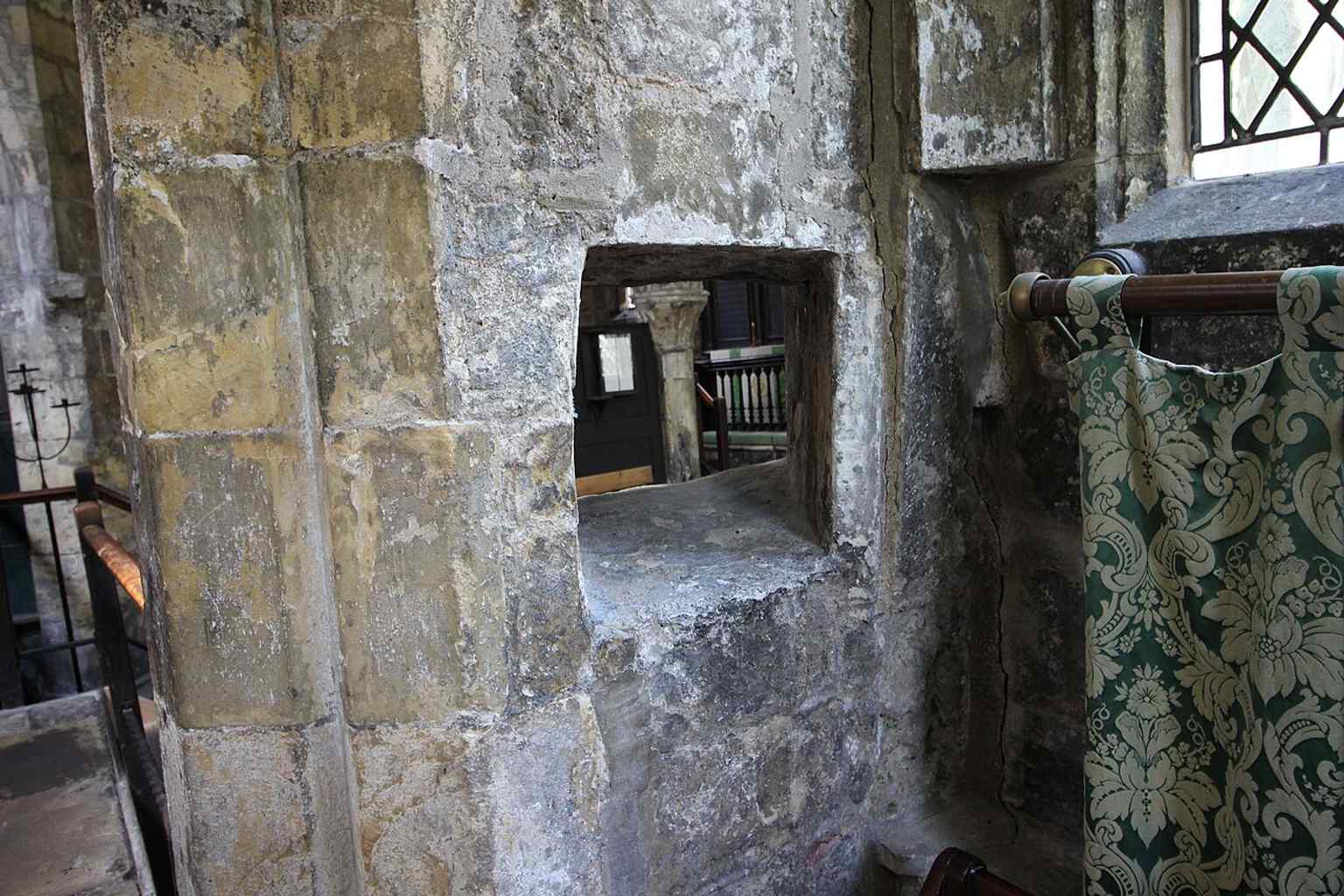
The hagioscope, or squint, that let lepers follow services from the side chapel while remaining apart from the main congregation.Photo: Beep boop beep, Wikimedia Commons, CC BY-SA 4.0. Cropped & resized. Then there is John Walker, the rector who donated the east window in fourteen seventy-one. He didn’t just pay for sacred glass; he placed himself in it, kneeling beneath the Holy Trinity. Medieval donors were not above a discreet bit of self-advertising.
Inside, the church is famous for its box pews, rare survivors from the seventeenth and eighteenth centuries. They make the interior feel almost Georgian still, as if the congregation has just stepped out for a moment and left the place holding its breath. The app image gives you that wonderfully enclosed, slightly private feel. It is often said to be the only church in York to keep its box pews.
Outside, the blue plaque marks Anne Lister and Ann Walker, who took Holy Communion here at Easter in eighteen thirty-four after exchanging rings and making wills in each other’s favor. They understood that act as sealing their union. The first plaque managed, rather impressively, to spark controversy by not stating plainly that Lister was a lesbian; it was replaced with one that did. The service was led by the Reverend James Dallin, whose own memorial is inside.
Holy Trinity also remembers people far beyond one congregation: York lord mayors, including George Hudson, and nearly four hundred former pupils of Bedern National School, with old red marks showing who was injured, captured, or killed in the First World War. No grand speech... just names, and what happened to them.
It nearly fell silent for good. Worship stopped for more than fifty years before restoration revived it in nineteen thirty-seven, and more recent conservators have even had to protect the entrance arch after loose masonry threatened the keystone. So this place survives because people kept deciding it should.
If you go in later, look for those box pews and that little squint, and ask yourself who got a place in the room... and who had to watch from the edge.
After everything this city has stored, staged, buried, rebuilt, and remembered, it feels right to end here, where the voices settle instead of competing.
If you want to see inside, Holy Trinity usually opens from Wednesday through Sunday, from eleven AM to four PM.
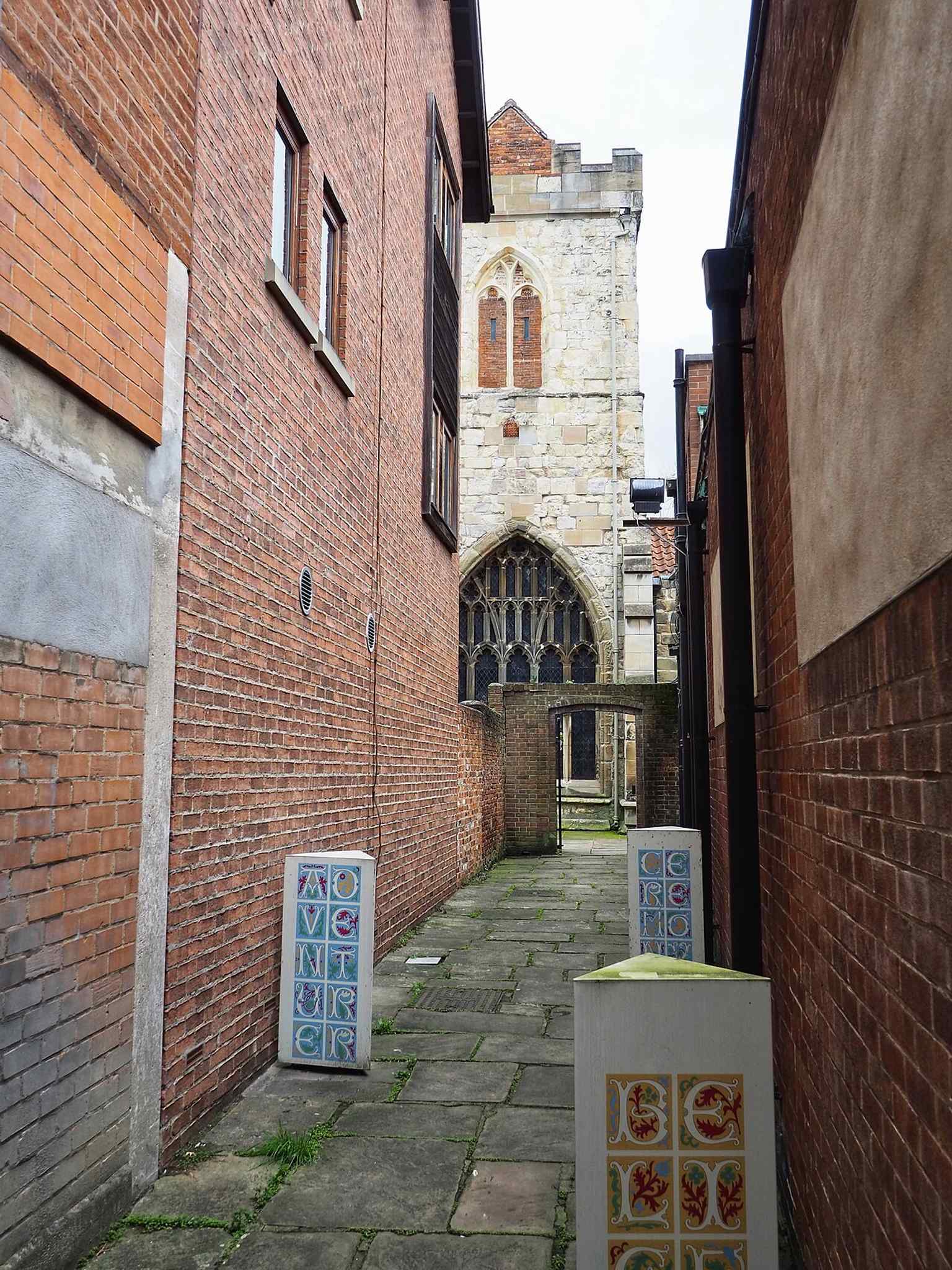
A clear view of Holy Trinity from Hornpot Lane, showing the Grade I medieval church hidden among later York streets.Photo: Malcolmxl5, Wikimedia Commons, CC BY-SA 4.0. Cropped & resized. 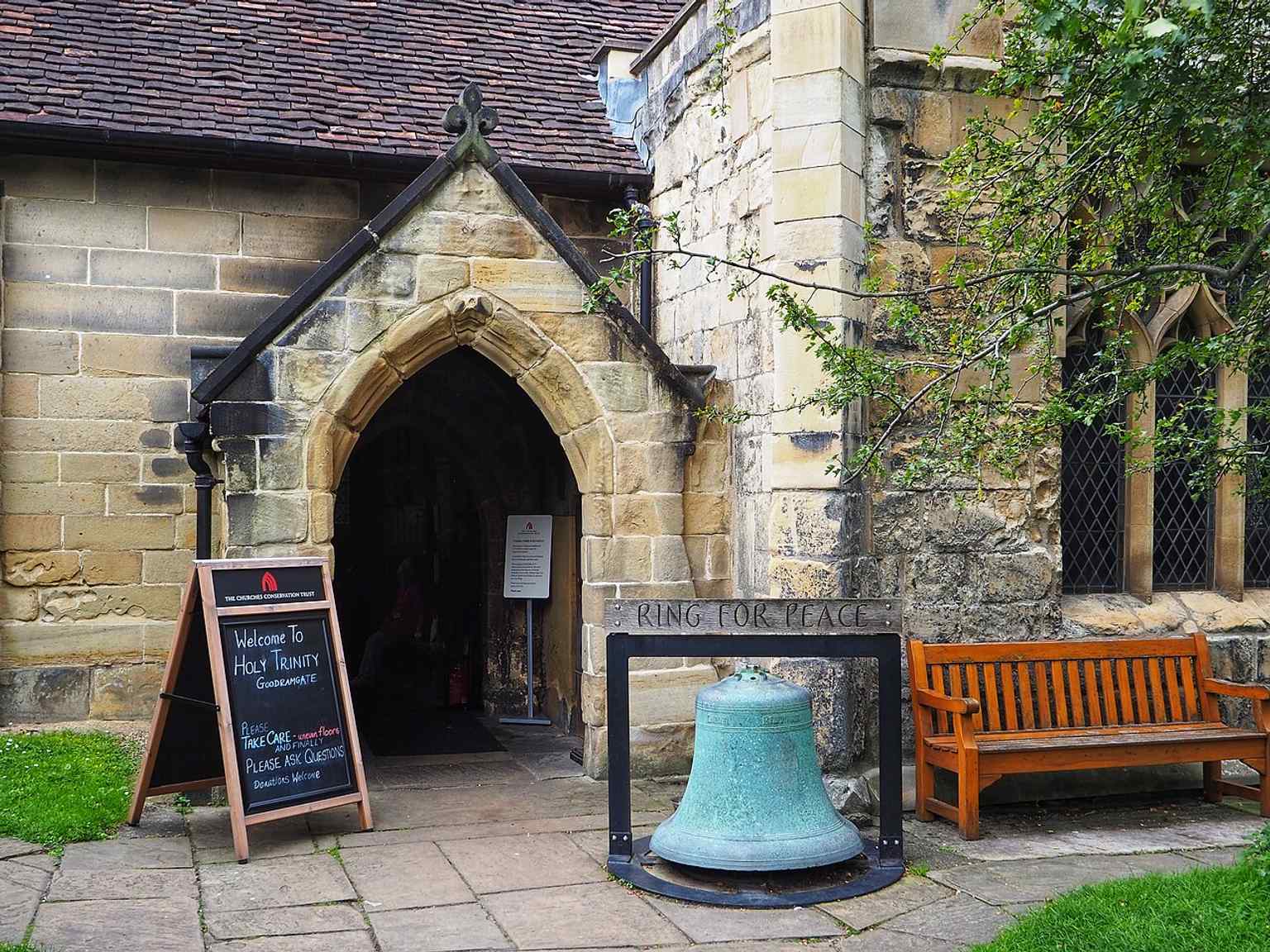
The church exterior with its layered stonework and later additions, reflecting centuries of change from the 12th century onward.Photo: Malcolmxl5, Wikimedia Commons, CC BY-SA 4.0. Cropped & resized. 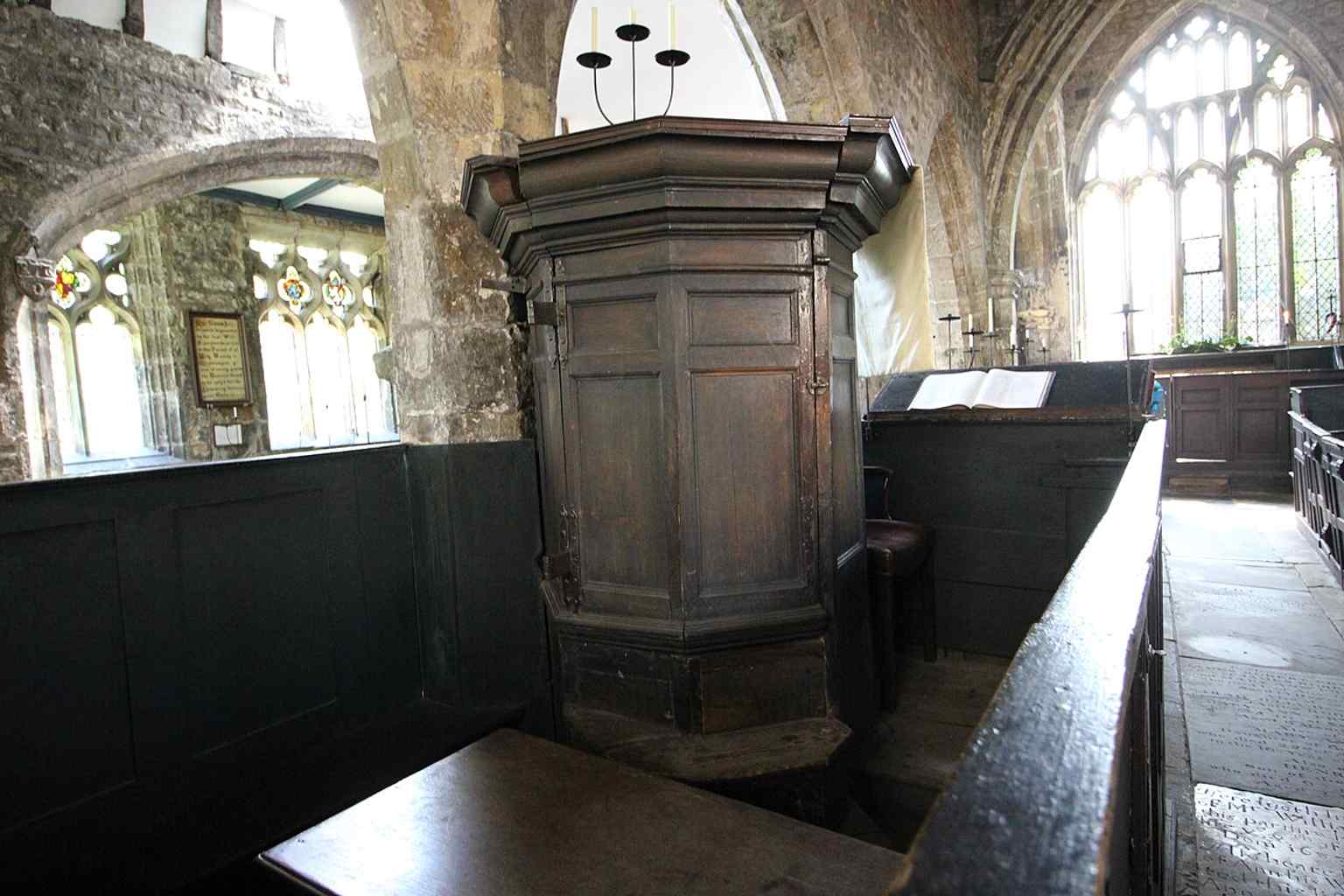
The pulpit inside the church, one of the surviving fittings that helps preserve its unusual historic interior.Photo: Beep boop beep, Wikimedia Commons, CC BY-SA 4.0. Cropped & resized. 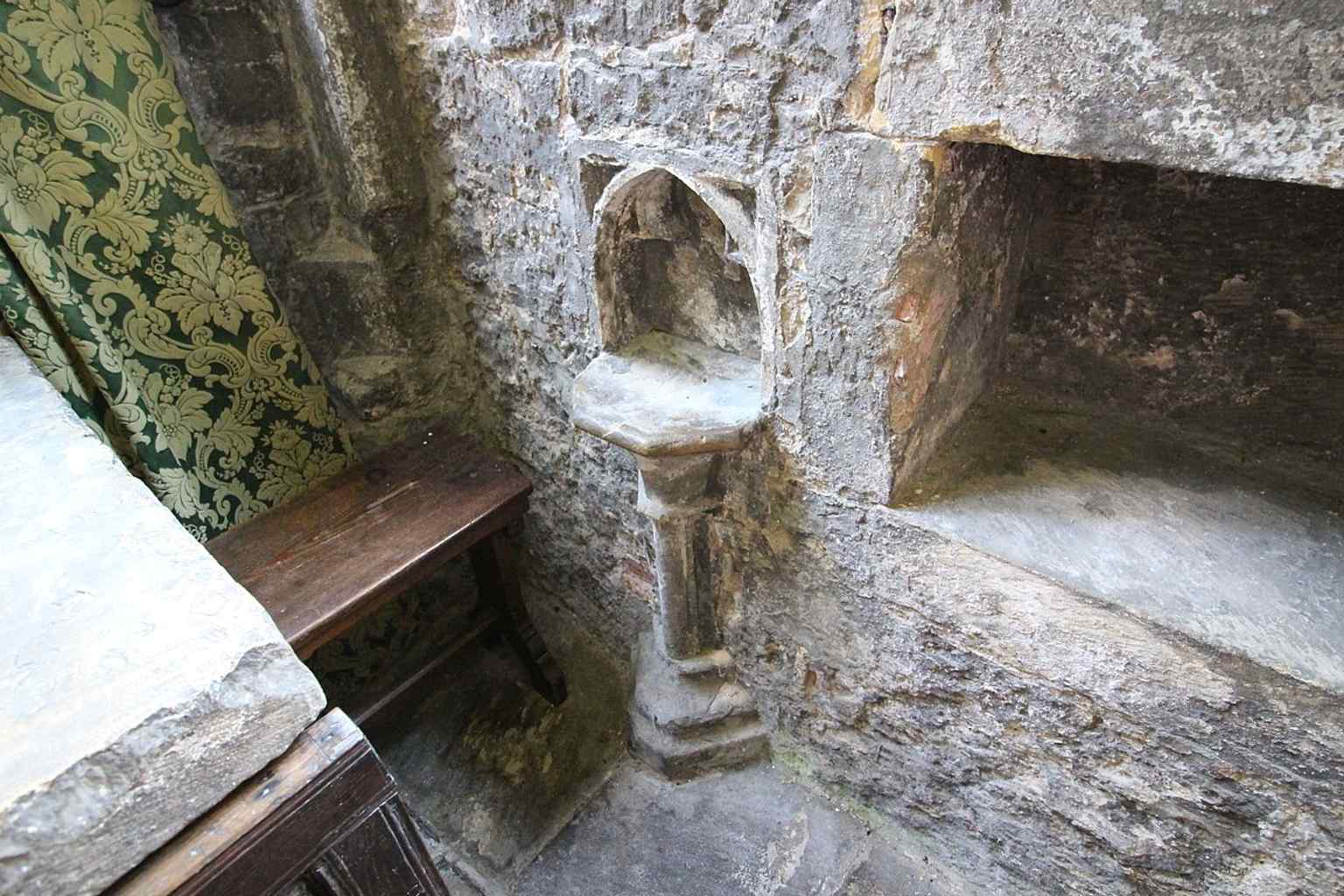
A medieval piscina in the church, a small liturgical feature that speaks to the building’s long pre-Reformation history.Photo: Beep boop beep, Wikimedia Commons, CC BY-SA 4.0. Cropped & resized. 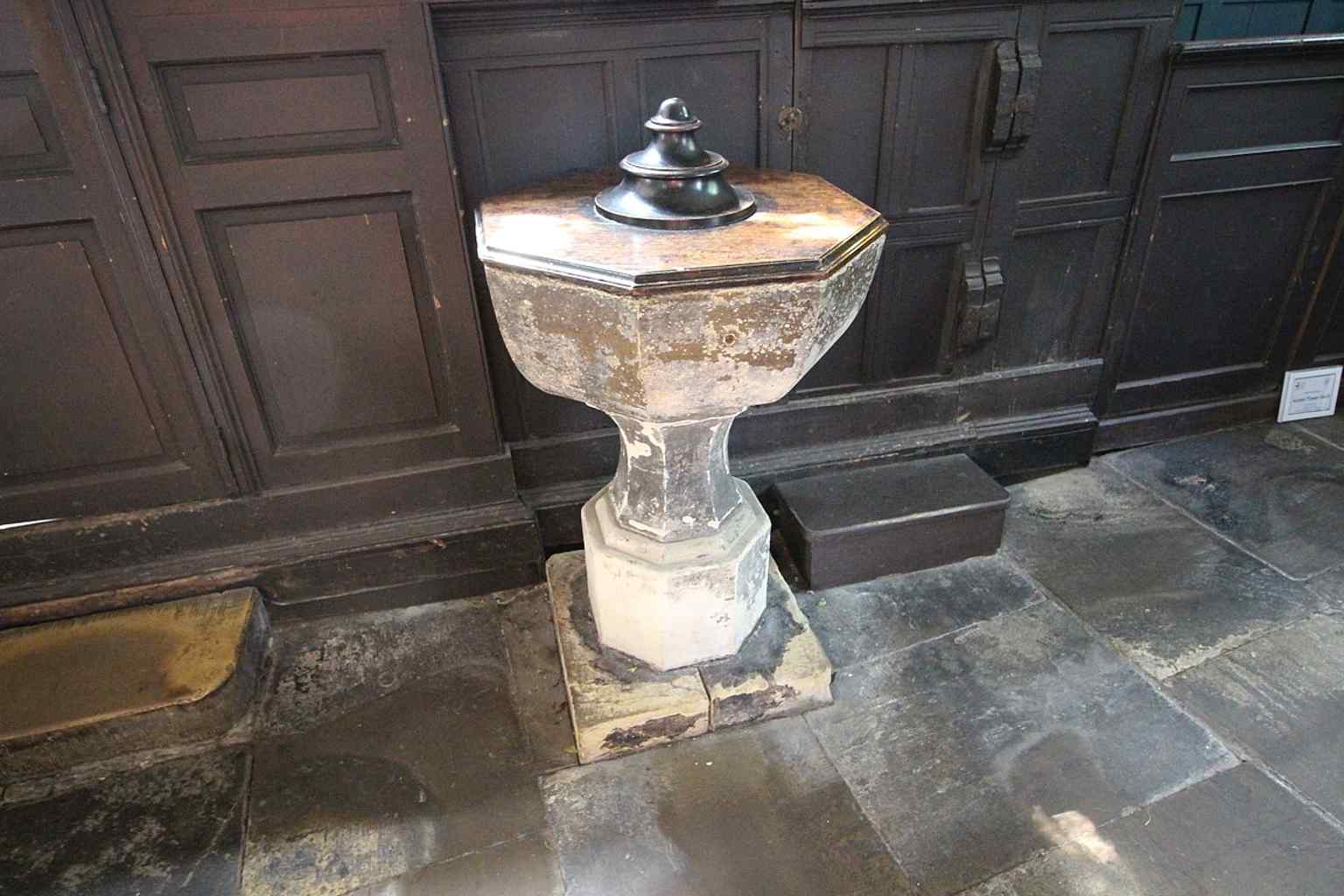
The font and interior fabric of Holy Trinity, part of the surviving parish church fittings that connect today’s visit to centuries of baptisms.Photo: Beep boop beep, Wikimedia Commons, CC BY-SA 4.0. Cropped & resized. 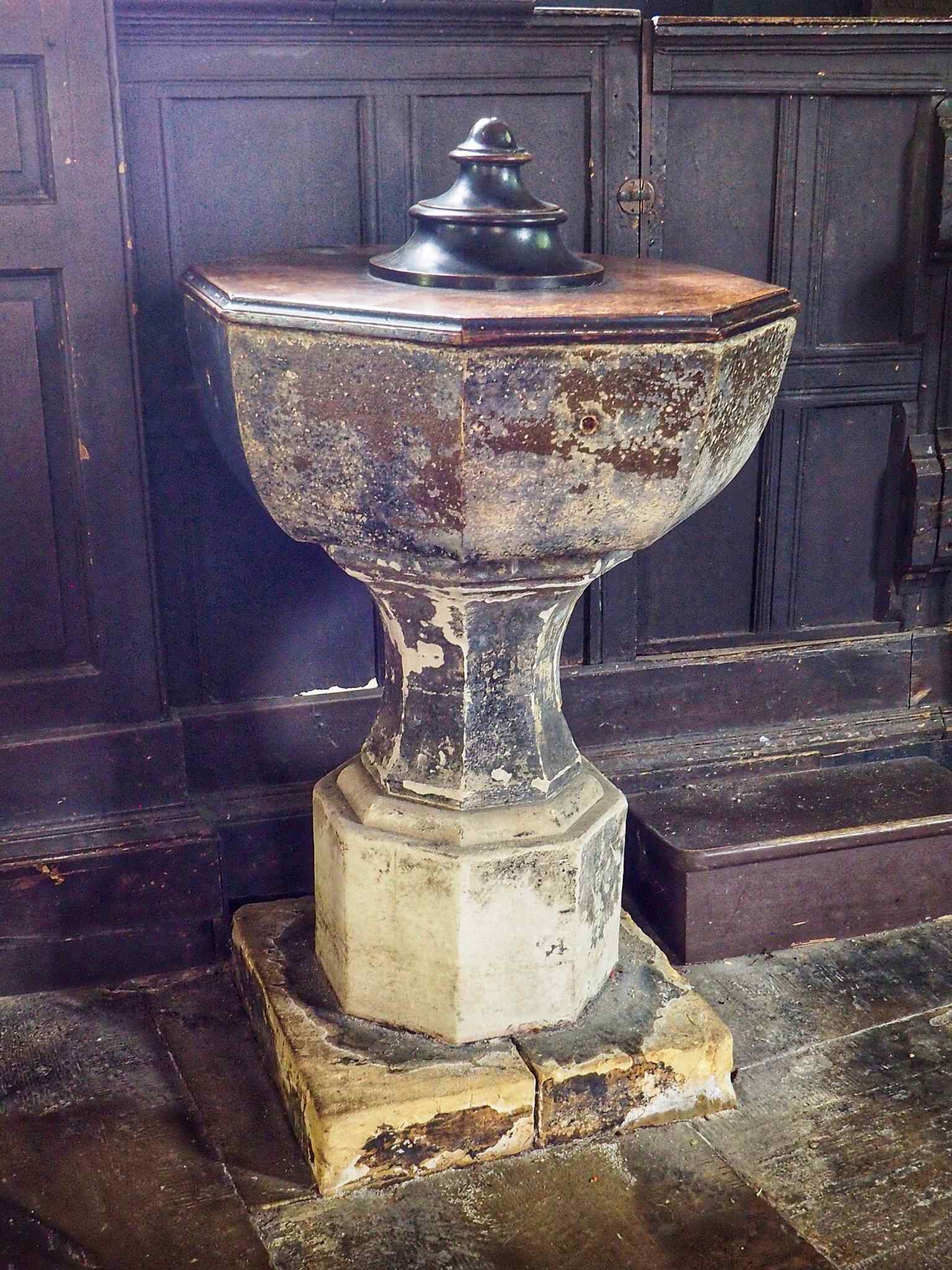
A recent documentary view of the church entrance and masonry, useful for showing the building’s ongoing conservation challenges.Photo: Malcolmxl5, Wikimedia Commons, CC BY-SA 4.0. Cropped & resized. 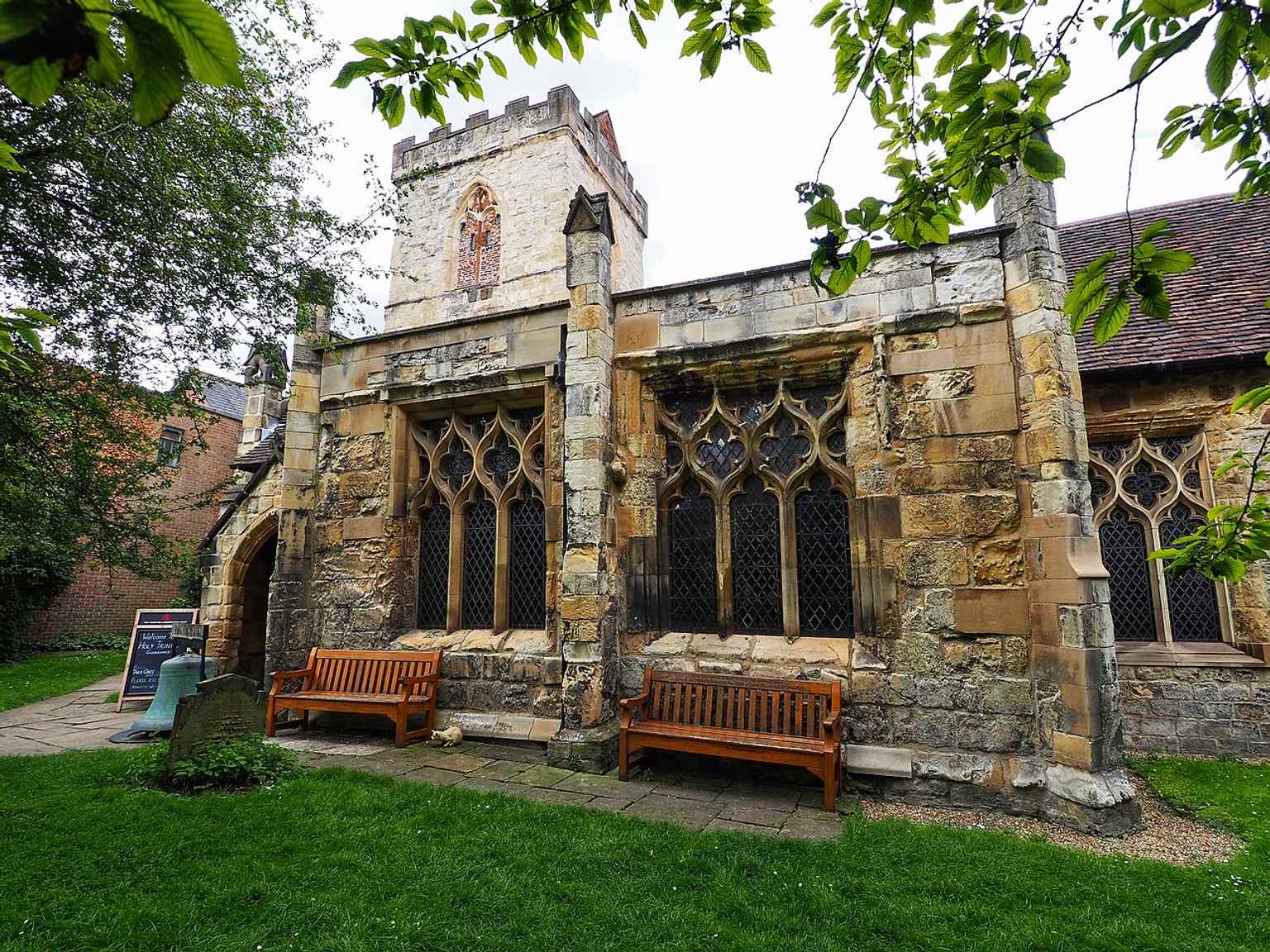
Another modern exterior angle that emphasizes the church’s medieval massing and later repairs in brick and stone.Photo: Malcolmxl5, Wikimedia Commons, CC BY-SA 4.0. Cropped & resized. 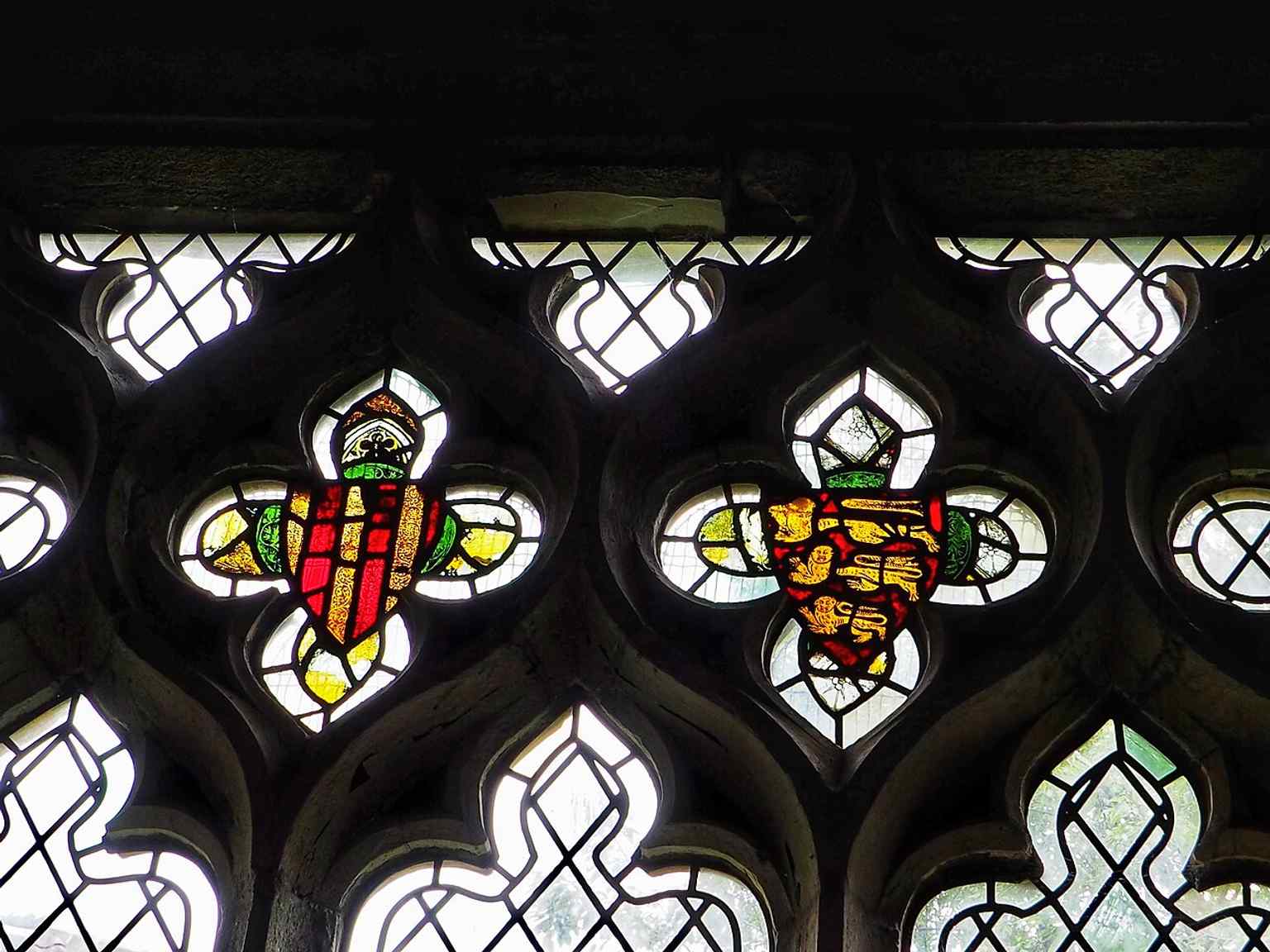
An interior view capturing the historic church space as a whole, where memorials and box pews still shape the experience.Photo: Malcolmxl5, Wikimedia Commons, CC BY-SA 4.0. Cropped & resized. 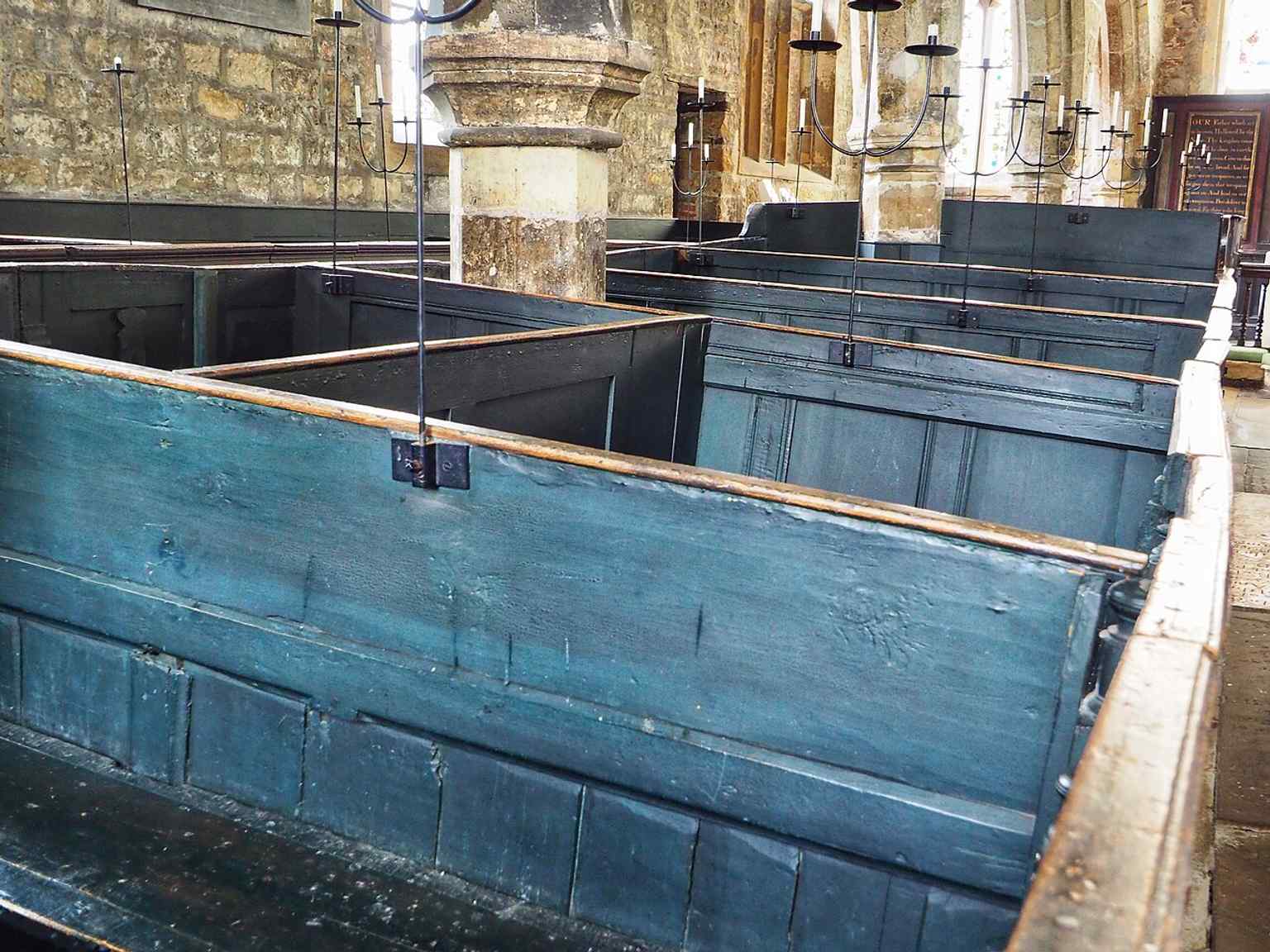
A close view of architectural stonework that helps tell the story of repairs, restoration, and vulnerable historic fabric.Photo: Malcolmxl5, Wikimedia Commons, CC BY-SA 4.0. Cropped & resized.
Frequently asked questions
How do I start the tour?
After purchase, download the AudaTours app and enter your redemption code. The tour will be ready to start immediately - just tap play and follow the GPS-guided route.
Do I need internet during the tour?
No! Download the tour before you start and enjoy it fully offline. Only the chat feature requires internet. We recommend downloading on WiFi to save mobile data.
Is this a guided group tour?
No - this is a self-guided audio tour. You explore independently at your own pace, with audio narration playing through your phone. No tour guide, no group, no schedule.
How long does the tour take?
Most tours take 60–90 minutes to complete, but you control the pace entirely. Pause, skip stops, or take breaks whenever you want.
What if I can't finish the tour today?
No problem! Tours have lifetime access. Pause and resume whenever you like - tomorrow, next week, or next year. Your progress is saved.
What languages are available?
All tours are available in 50+ languages. Select your preferred language when redeeming your code. Note: language cannot be changed after tour generation.
Where do I access the tour after purchase?
Download the free AudaTours app from the App Store or Google Play. Enter your redemption code (sent via email) and the tour will appear in your library, ready to download and start.
If you don't enjoy the tour, we'll refund your purchase. Contact us at [email protected]
Checkout securely with 






