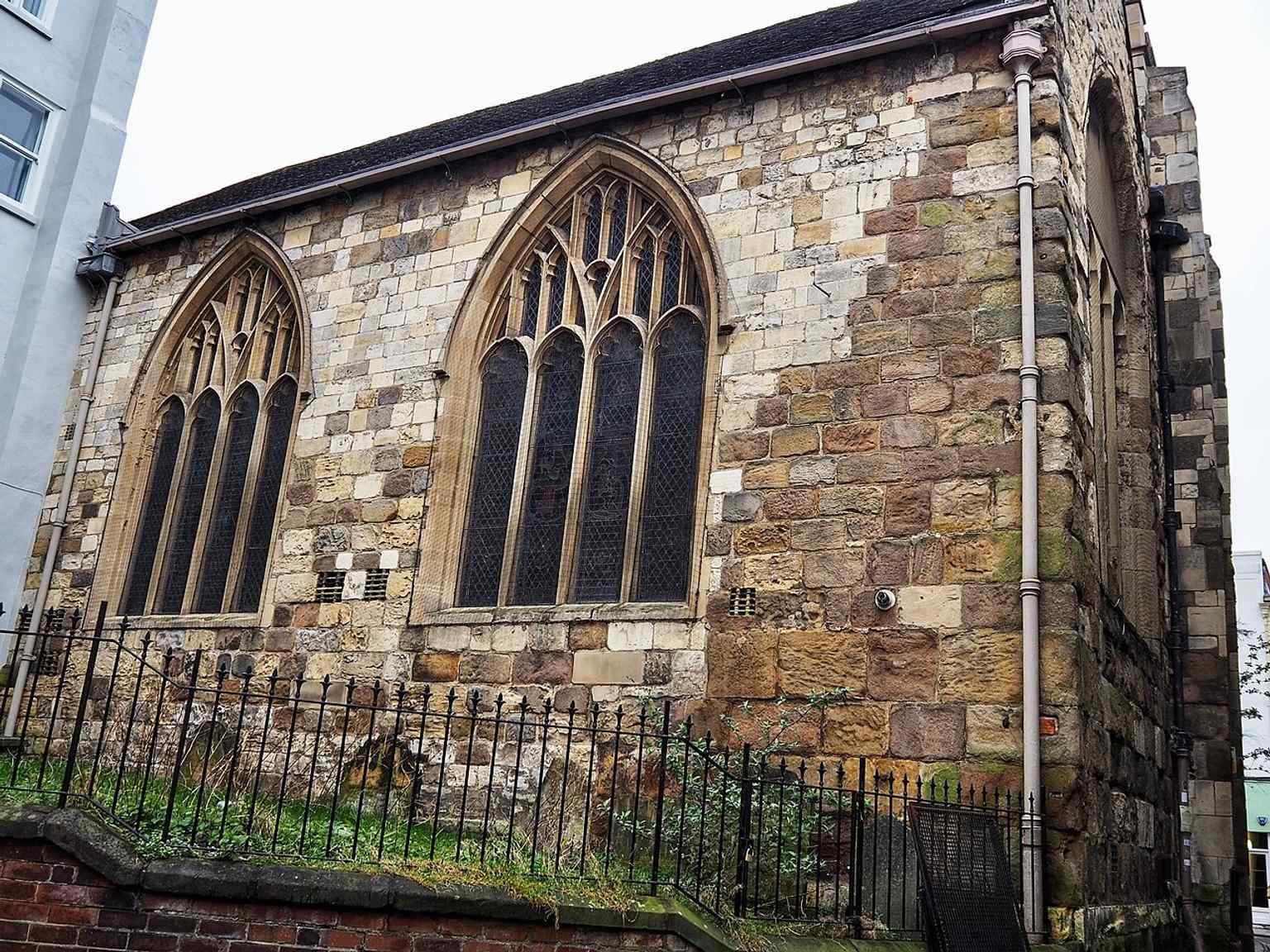
Look for the compact stone church with pointed-arch windows, a sturdy rectangular stone body, and a painted clock face set into the outer wall.
St Michael’s, Spurriergate began in the twelfth century, then picked up fourteenth- and fifteenth-century additions, so even from outside you’re seeing a building assembled across centuries rather than in one neat burst of ambition. York rarely does neat.
What makes this church especially revealing is that its survival never depended on prayer alone. What historians call lay patronage and local gifts simply means that ordinary townspeople, not just clergy, funded parish life through bequests, rents, and donations. Here, people like James Caffrey and Mr Richardson left money, alderman Thomas Mosley provided a rent charge, and parish assessments paid for repairs. Faith, in other words, sat very comfortably beside accounting.
There’s a wonderfully specific trace of that older world inside: a rare chalice brass memorial to William Langton, a former rector - the parish priest in charge - who died in fourteen sixty-six. Most tourists pass the building without the faintest idea that one of its own clergy is still remembered here in metal. Around fourteen sixty-four to fourteen sixty-five, records also mention money left for new bells, which tells you the tower was already doing its job by then. The parish was investing in sound, memory, and a little status too... because church bells were devotion, public announcement, and neighborhood prestige rolled into one.
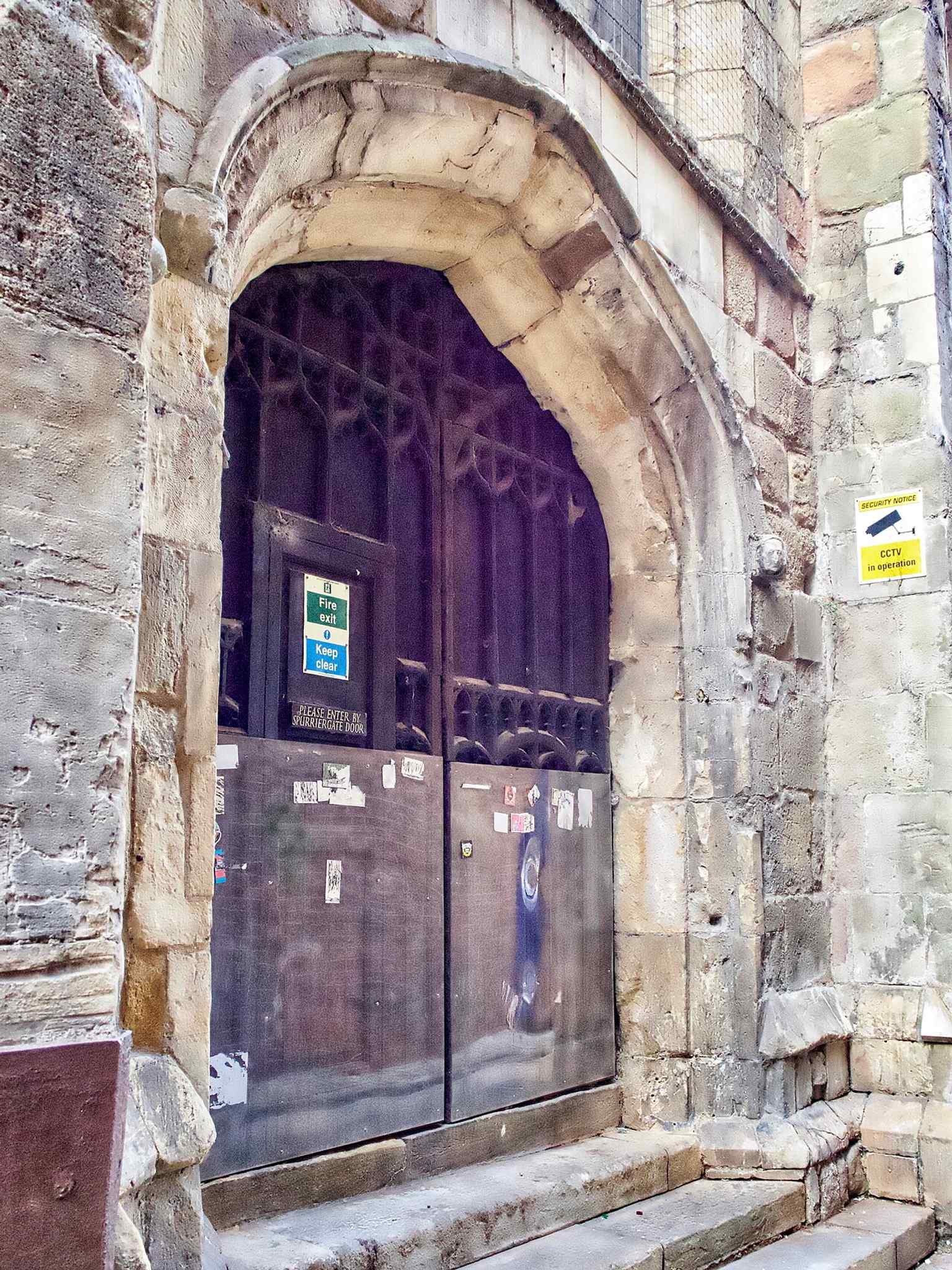
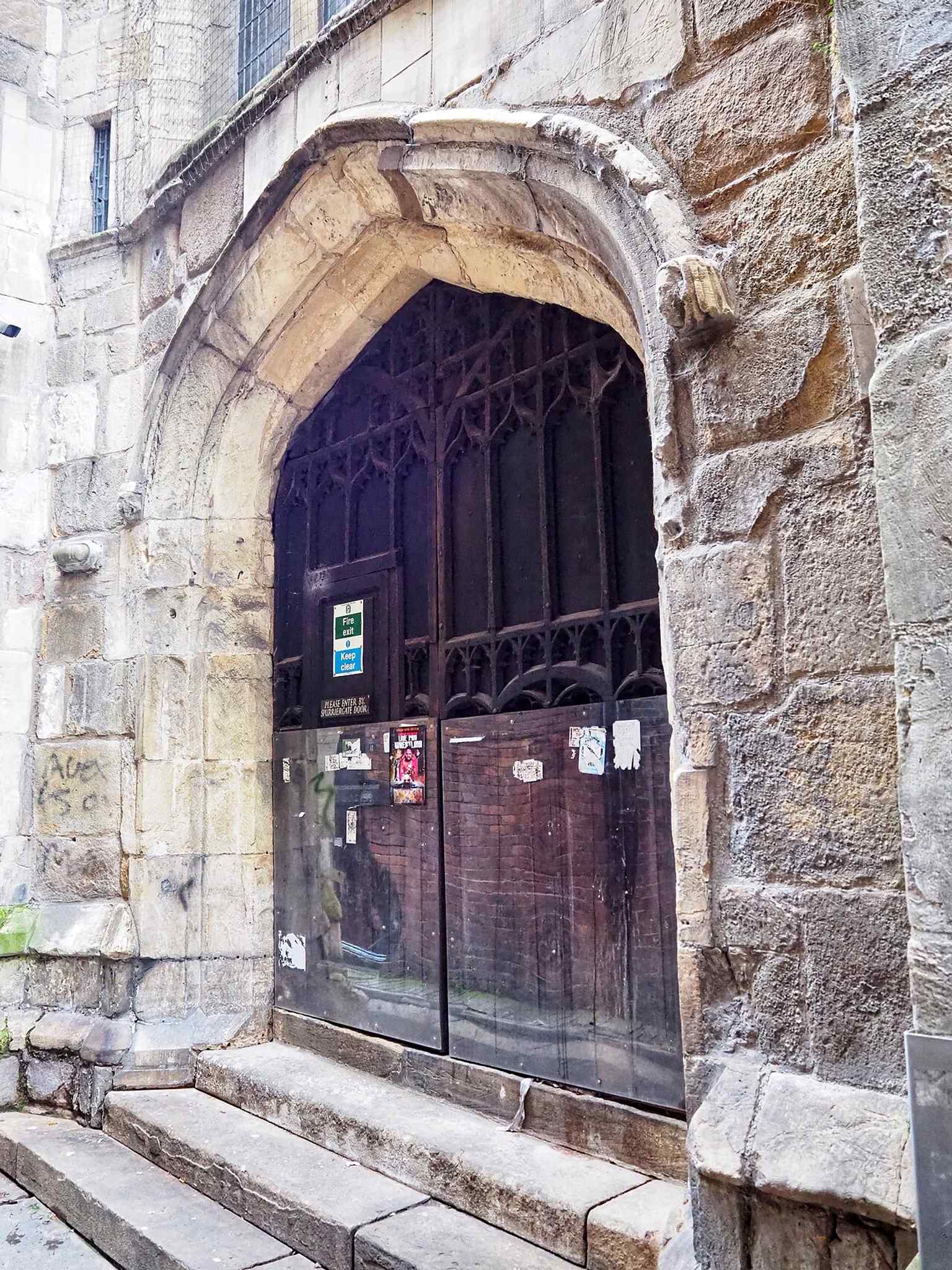
If you glance at your screen, the west door image shows one of the oldest surviving bits of exterior masonry, still hanging on after later alterations. And those alterations were not subtle. In eighteen twenty-one, J-B and W Atkinson cut the church back for street widening on Spurriergate and Low Ousegate. The rector laid the foundation stone for a new east wall on the fifteenth of January, eighteen twenty-one, and builders finished by the sixteenth of June, eighteen twenty-two. They set the east wall back seven feet, effectively slicing away part of the interior bay - one structural section of the church. Then in eighteen forty-one, the street widened again, the church shortened again, and nearby parish buildings disappeared into a new terrace.
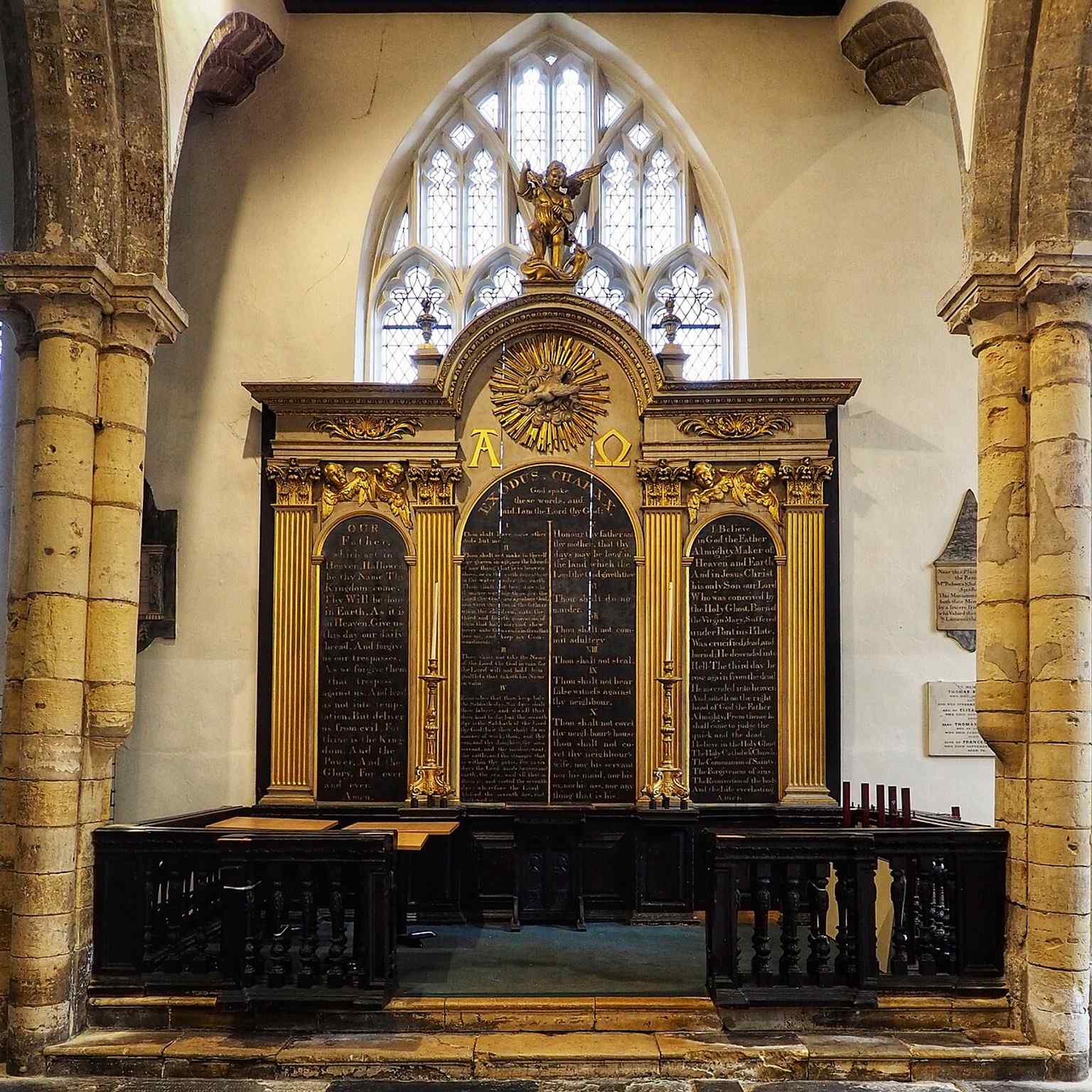
Even modern comforts caused arguments. Gas arrived for evening services in eighteen seventy-six. In nineteen eleven, Reverend O. H. Wethered split the congregation over electricity before the council approved it by nine votes to five. Ancient church, very modern committee squabble. Later, workers lowered the tower in nineteen sixty-six to nineteen sixty-seven. The church closed in nineteen eighty-four, then reopened in nineteen eighty-nine as a restaurant and café, with a small chapel upstairs still kept for occasional worship; the interior image in the app hints at that layered afterlife.
St Michael’s reminds you that York’s churches preserve not only grand belief, but ordinary investment - gifts, rents, repairs, votes, and memories. When you’re ready, head on to the Grand Opera House, about two minutes away.