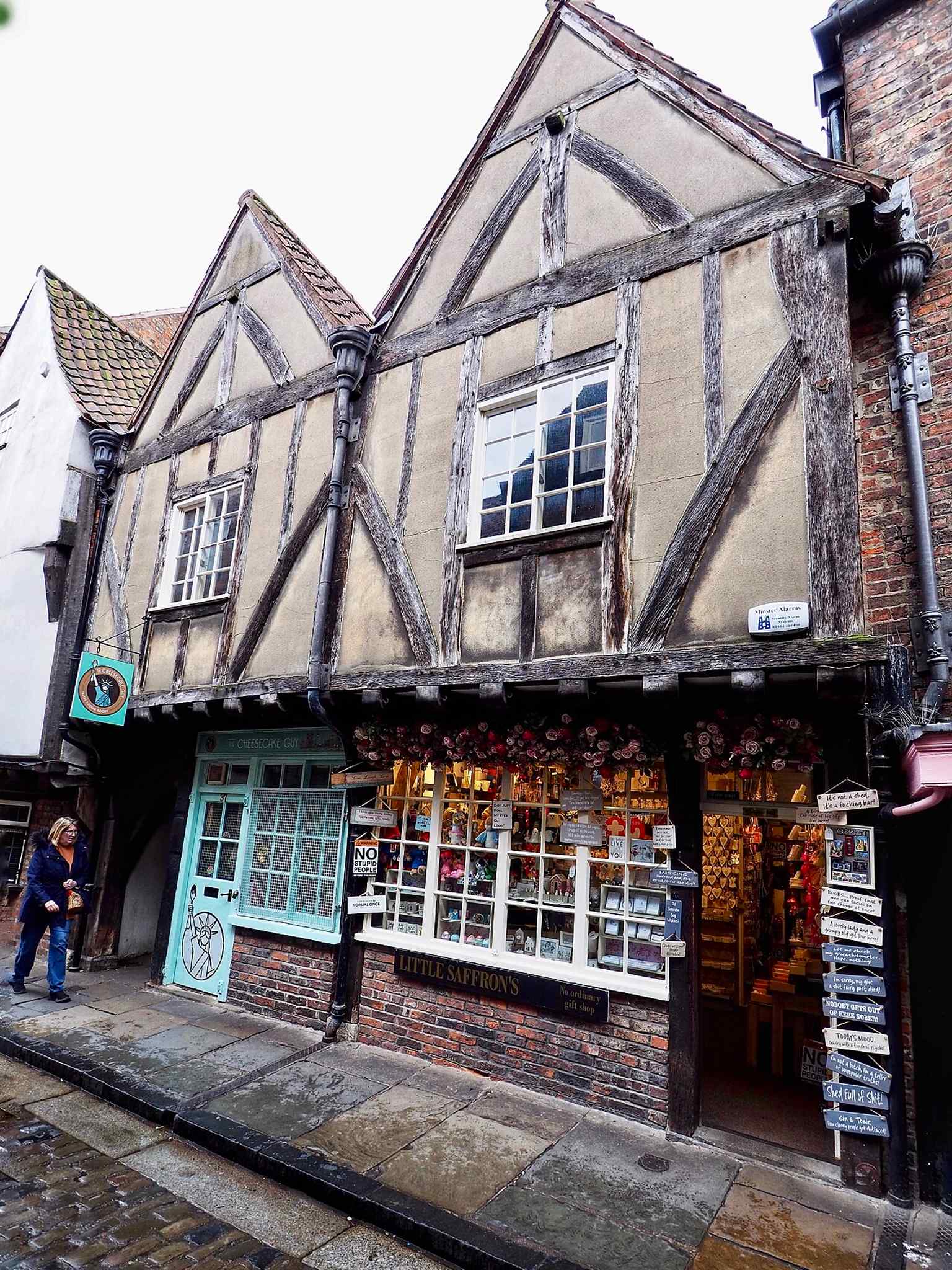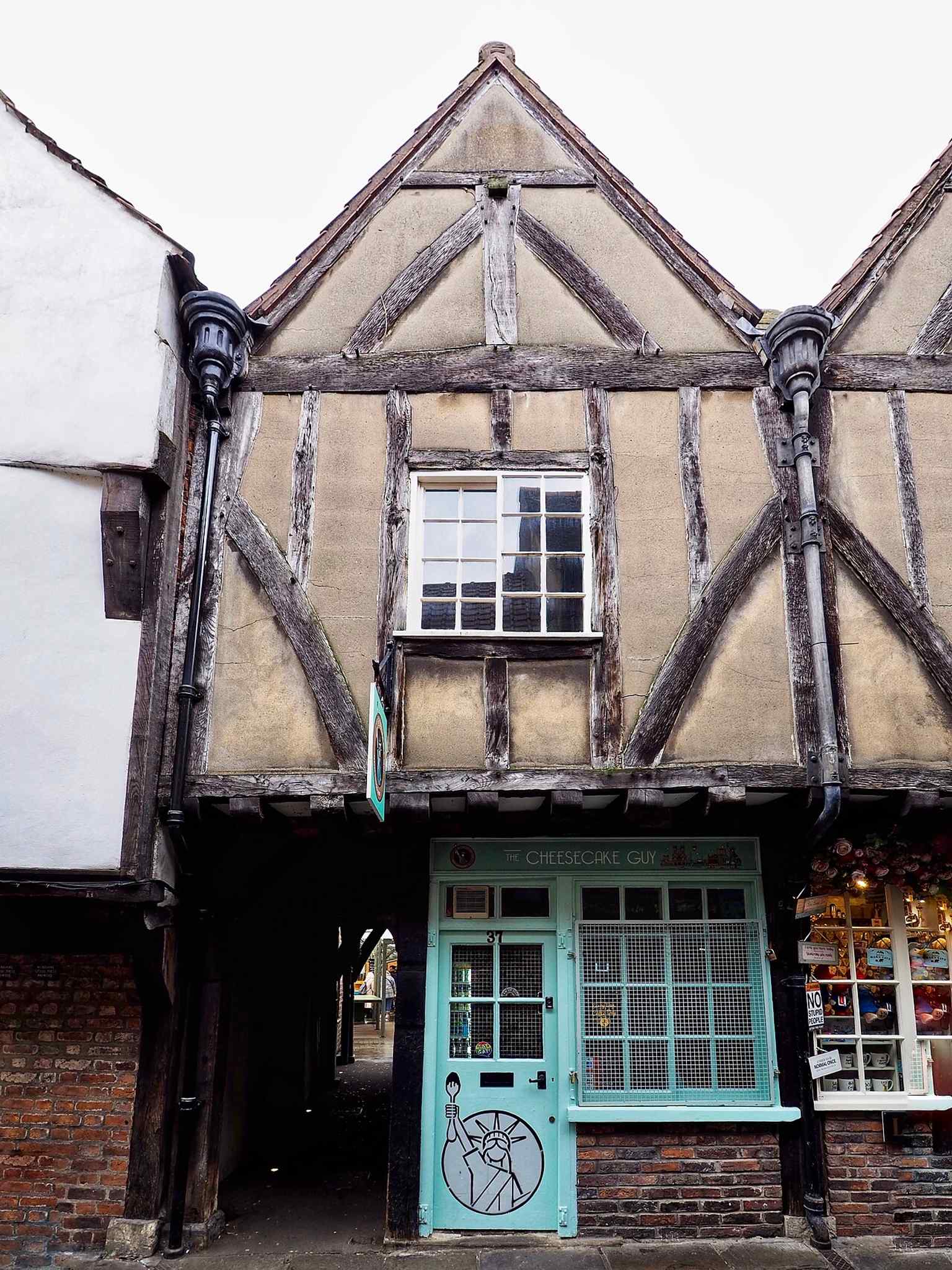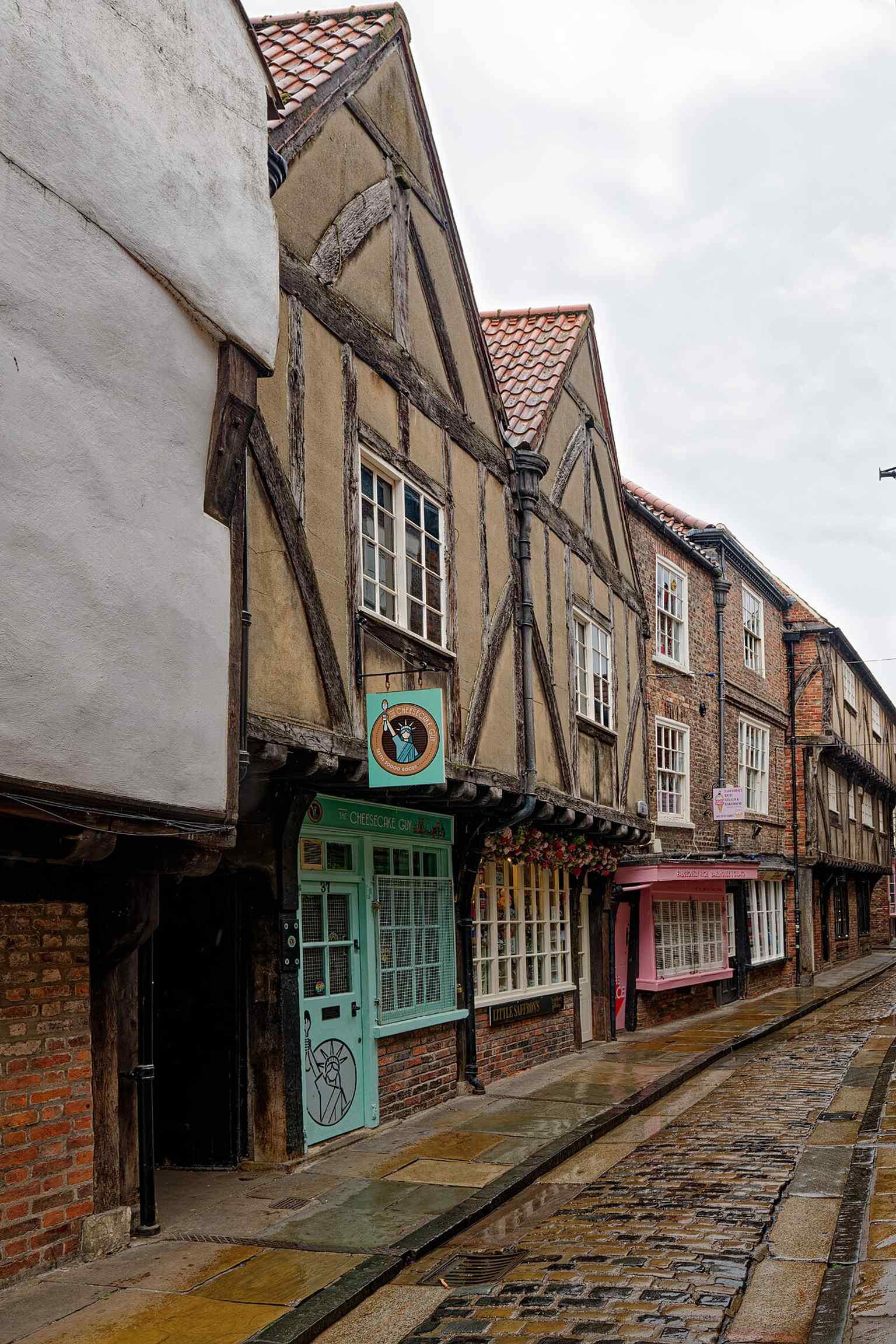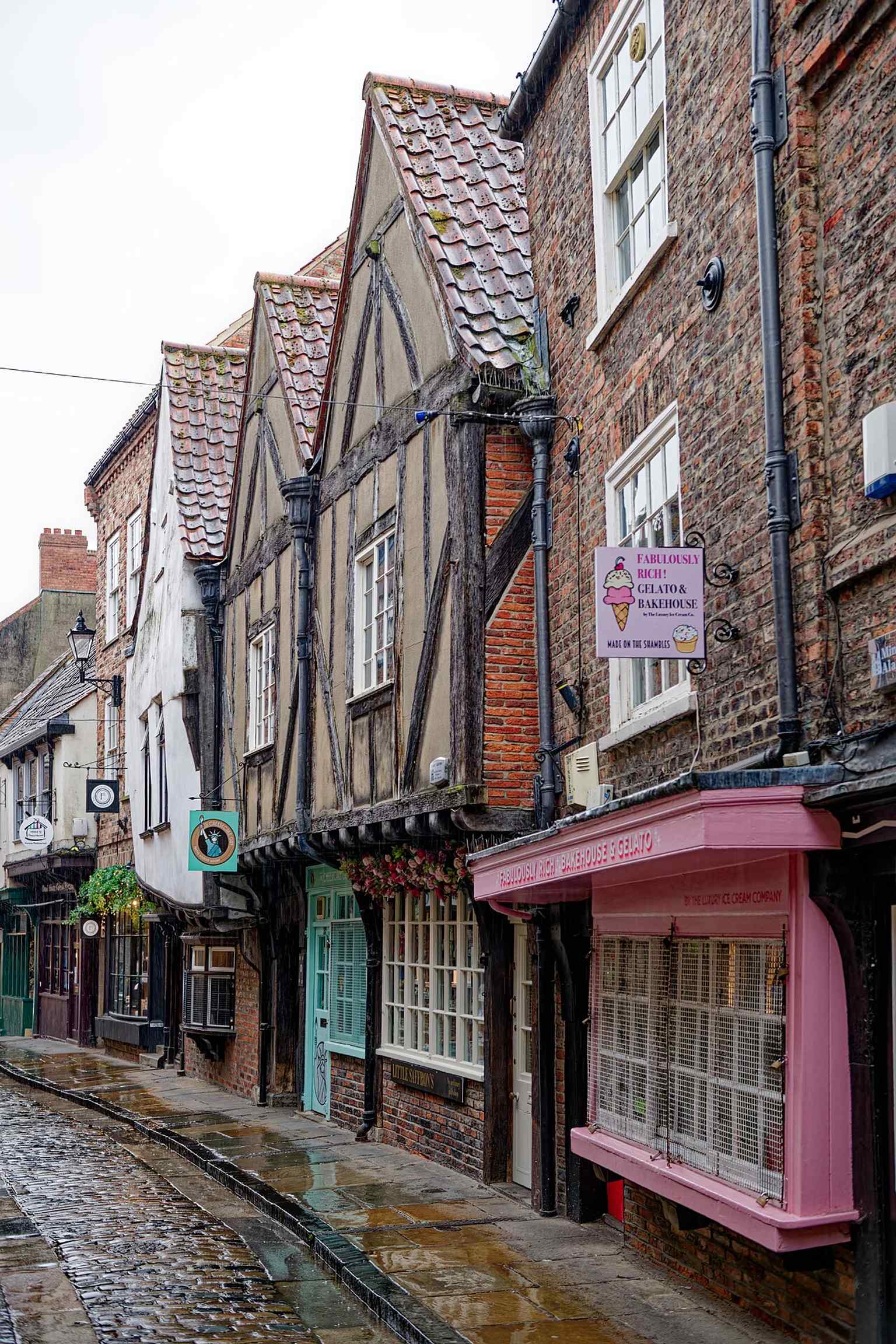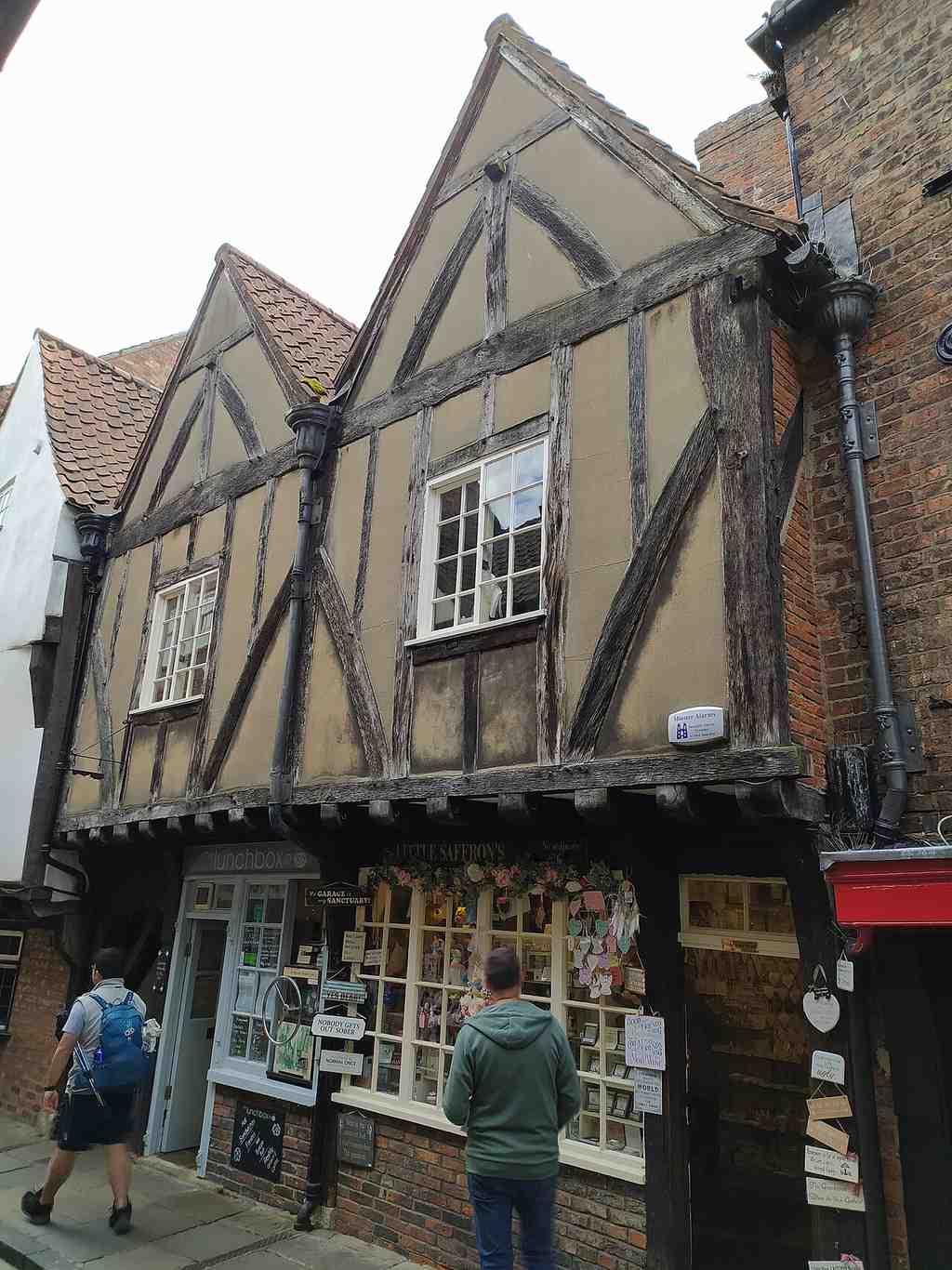
On your left, look for a narrow pair of timber-fronted buildings with jettied upper floors, dark wooden framing, and neat rows of small-paned sash windows above the shopfronts.
This is number thirty-seven and thirty-eight The Shambles... the version of this street that postcards prefer to soften. Parts of these buildings go back to the late fifteenth century, with more added in the seventeenth, so what survives is not one pure medieval relic but a patched, repaired survivor. Heritage records even note that some of number thirty-seven’s first-floor timber framing was only partly renewed, which is conservation in York for you: preservation, with a toolbox.
If you glance at the image on your screen, the upper timber work stands out nicely there. That matters, because the real story here is labor, not quaintness. A local history account places a slaughterhouse behind these two buildings. So the Shambles butchery past was not some vague street name left over from long ago; it shaped this exact spot, with cutting, hauling, and waste tucked just out of sight behind the pretty frontage. That detail almost never makes it into the fantasy version.
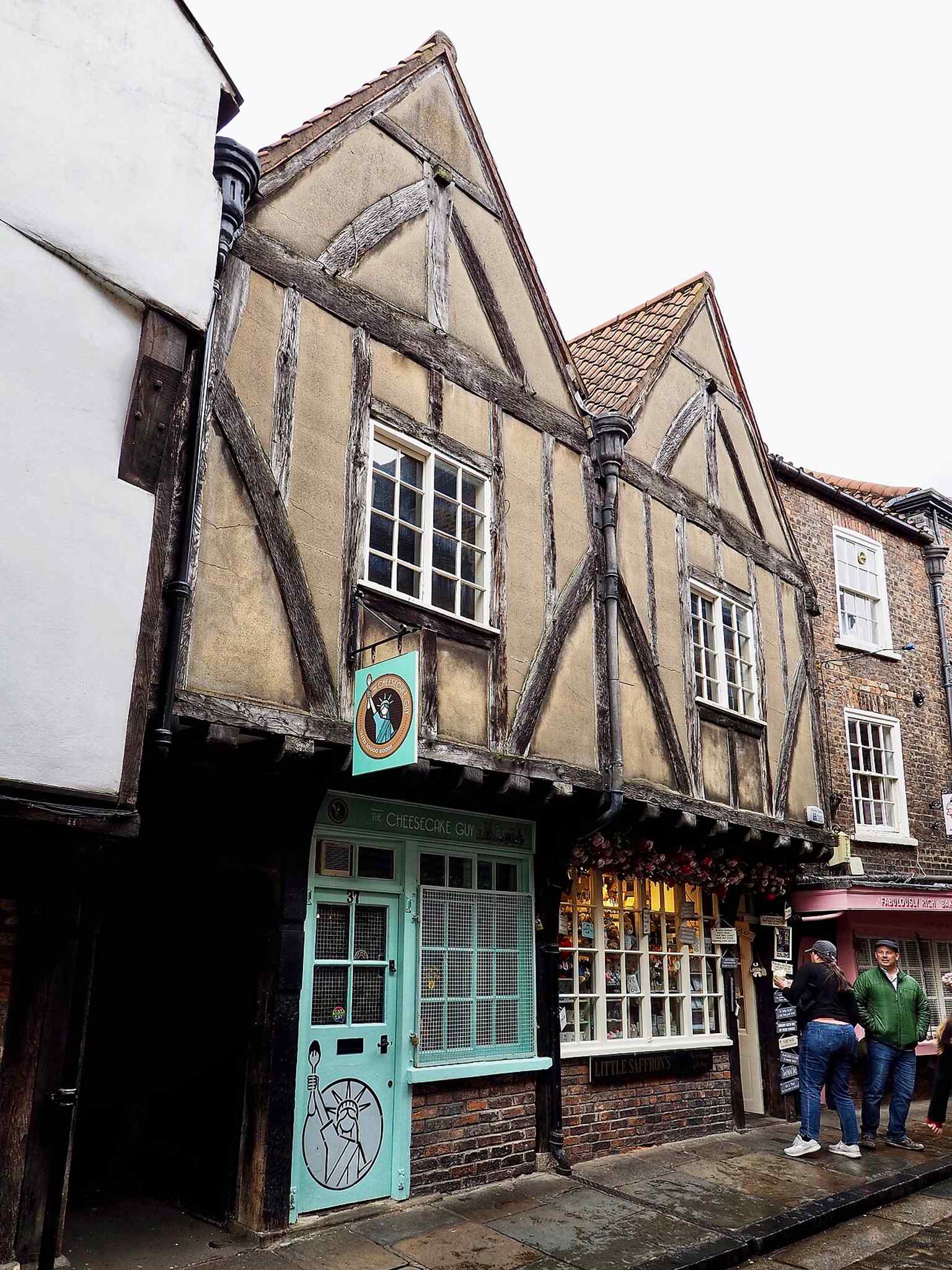
In nineteen fifty-four, the pair got major renovation and some rebuilding work... the very same year they were formally recognized as Grade two-star listed, on the fourteenth of June. Later, on the third of October, nineteen ninety-one, Roger Thomas photographed the rear exterior for an architectural survey, doing the unglamorous work that helps old buildings keep going.
Now number thirty-seven sells cheesecake and number thirty-eight trades as Little Saffrons. Same shells, different appetites. York does love a reinvention. When you’re ready, head on to Barley Hall, about four minutes away.