
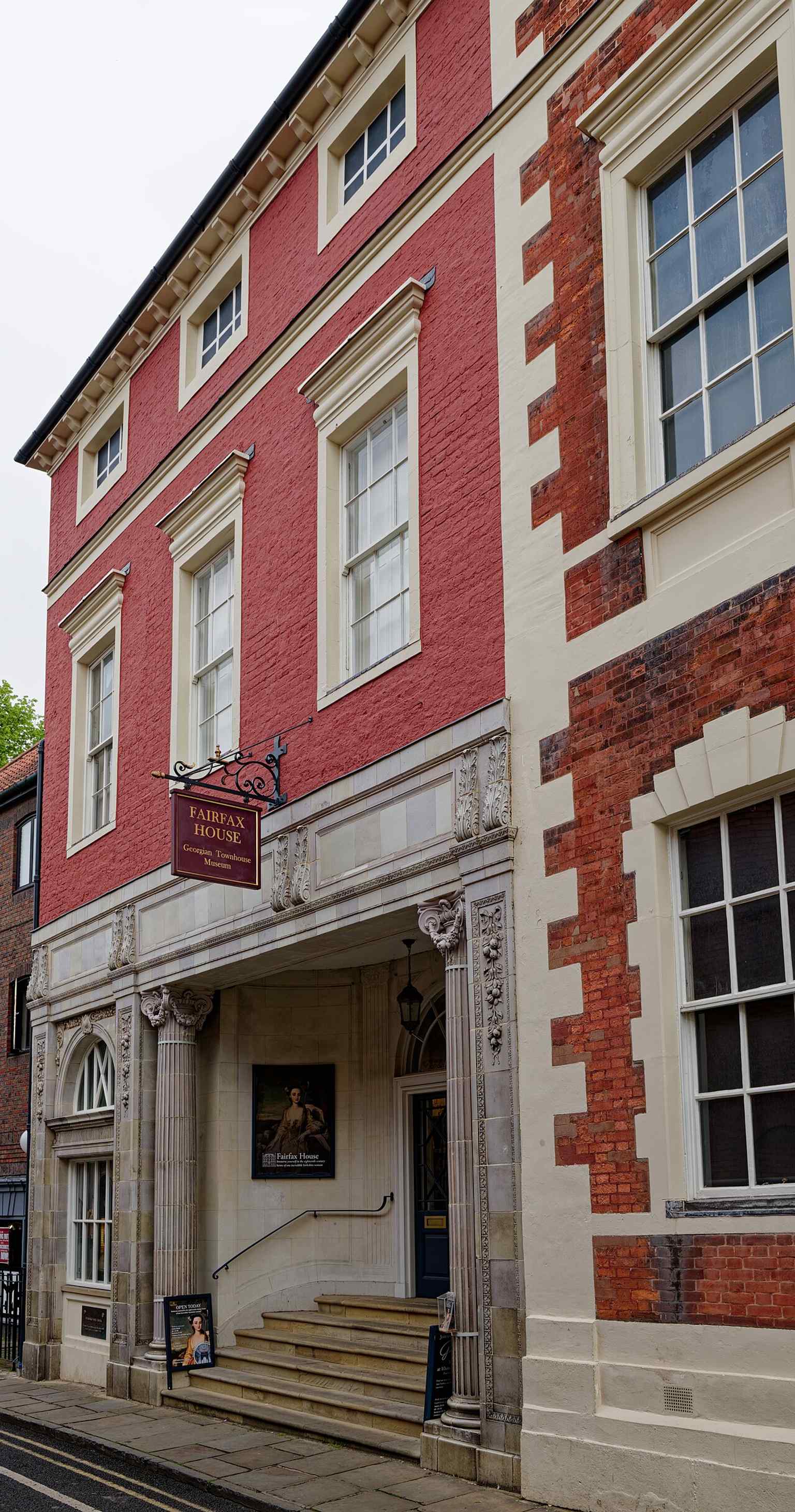
On your left is a restrained brick townhouse with a tall, symmetrical front, sash windows in tidy vertical rows, and a central doorway framed in pale stone.
Fairfax House looks polite... almost a little too polite. York does that well. But this was never just a handsome shell. In seventeen fifty-nine, Charles Gregory Fairfax, the ninth Viscount Fairfax of Emley, bought the house and hired the Yorkshire architect John Carr to refashion it. He had the money because of an inheritance from his late wife, Elizabeth Clifford, and he had a purpose too: this was meant to be a real home for his only surviving child, Anne Fairfax.
That matters. Anne is the quiet heart of this place. Her father did not shape these rooms simply to impress dinner guests; he shaped them for a daughter he loved, a young woman who never married and, after his death in seventeen seventy-two, withdrew to Gilling Castle and lived a much more isolated life than these elegant rooms might suggest.
If you glance at the image on your screen, you can see how calmly the house sits in the street, keeping its own counsel. And inside, that calm turns theatrical. John Carr’s interiors were full of signals: the dining room celebrated Abundance, the drawing room Friendship, and the saloon carried musical emblems and even a score from a love song called Belinda and Amelia. So here’s the lovely, slightly unnerving question: if your home were designed to broadcast your ideas about love, loyalty, and rank... what would your rooms confess for you?
The decoration went even further. The plasterwork by James Henderson and Giuseppe Cortese ranks among the finest in Yorkshire, and the staircase carried eagles, dragons, and putti - those little carved cherub-like children you see in eighteenth-century decoration. Some scholars think they nodded to patriotism during the Seven Years’ War; others suspect they also hinted at the family’s Catholic sympathies. In other words, even the prettiest ceiling may be saying something pointed.
And then the house took on other lives, because York rarely leaves a building alone. After the Fairfax family, it passed through local owners, became a gentleman’s club, a building society, then folded into a dance hall and cinema. Those changes tore out walls, doorframes, cornices, even fireplaces. By the time York Civic Trust stepped in during the nineteen eighties, restoration meant detective work as much as repair. Craftsmen spent almost four years bringing the house back, helped by Noel Terry’s superb collection of English Georgian furniture - one rescue story leaning on another.
So stand here a moment with that in mind: behind the polished rooms lies a family drama, and behind the elegance, a set of coded messages people once expected their guests to read.
When you’re ready, continue to All Saints’ Church on Pavement, about a three-minute walk away. If you want to come back inside later, Fairfax House generally opens most days from late morning to late afternoon, with more limited hours on Friday and Sunday.





