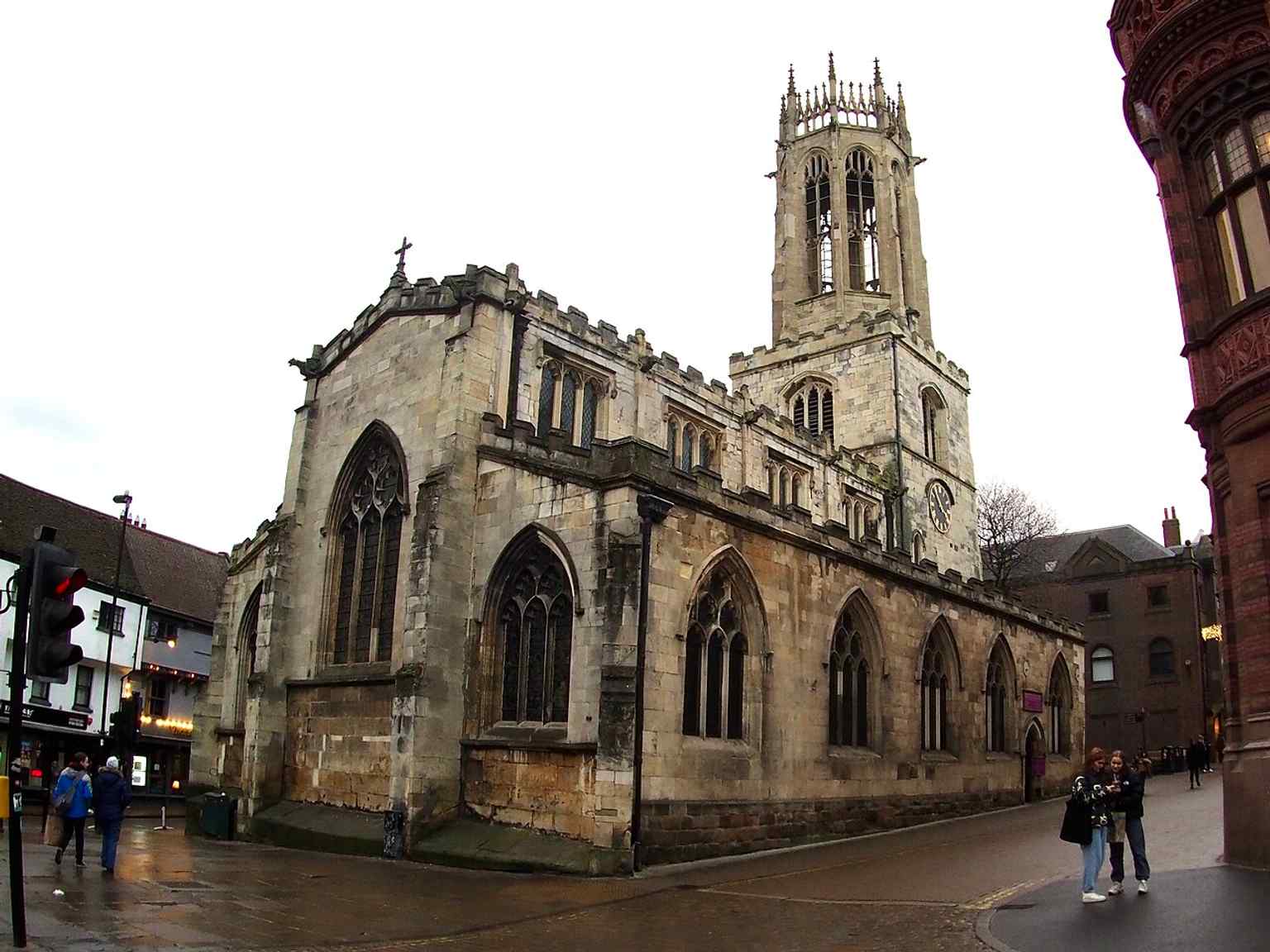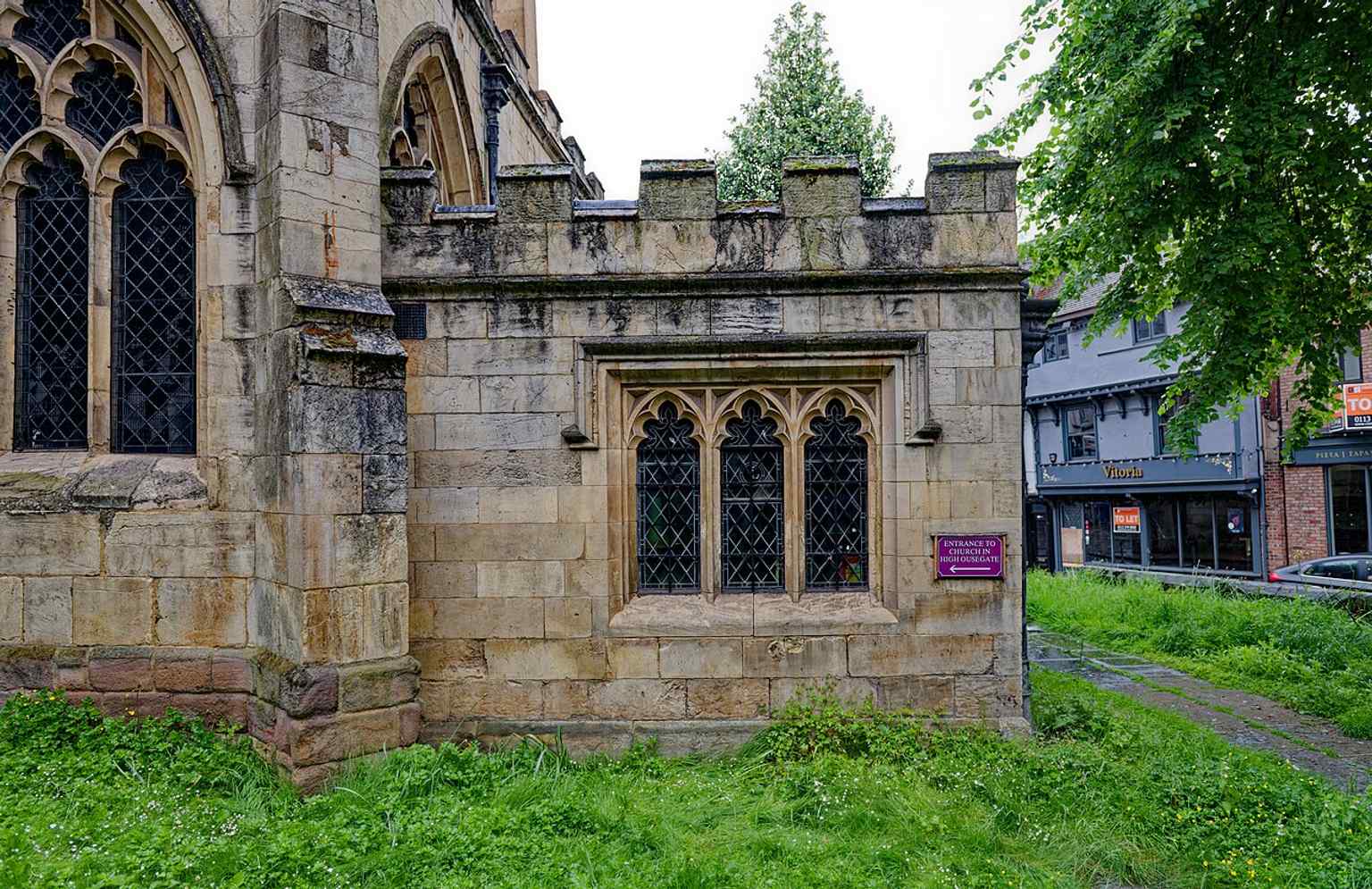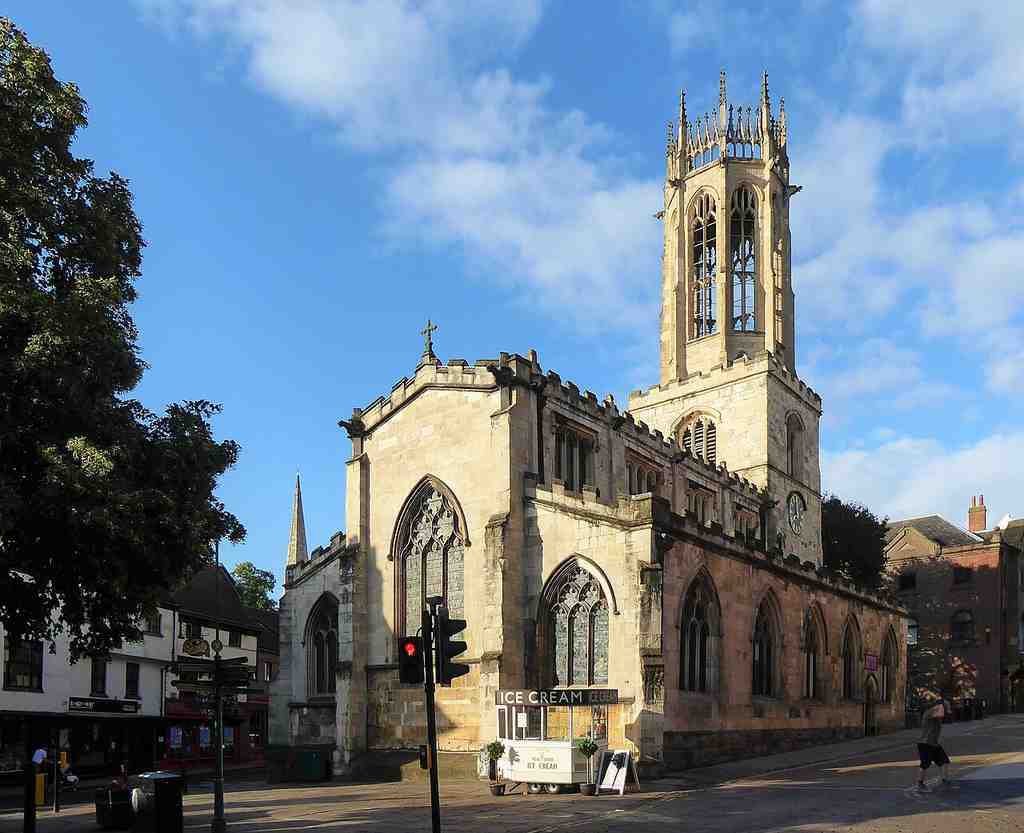
On your left, look for a pale stone church with a square tower, pointed windows, and a little lantern-like crown at the top that makes it stand out from the street around it.
All Saints, Pavement sits right in the middle of York’s commercial bloodstream, and that is the first thing to know about it. This was never a church hiding from city life. It stood in the thick of trade, carts, arguments, deals, funerals, and worship... which is a very York combination.
The church you see now mostly belongs to the fourteenth century, but the ground underneath may be much older. One record places All Saints here in the Domesday Book in ten eighty-six. Archaeologists also found an Anglo-Danish grave cover, which hints at an earlier burial ground before this building took shape. Local tradition, naturally ambitious, pushes the story all the way back to the year six hundred and eighty-five and Saint Cuthbert. York does love a deep backstory.
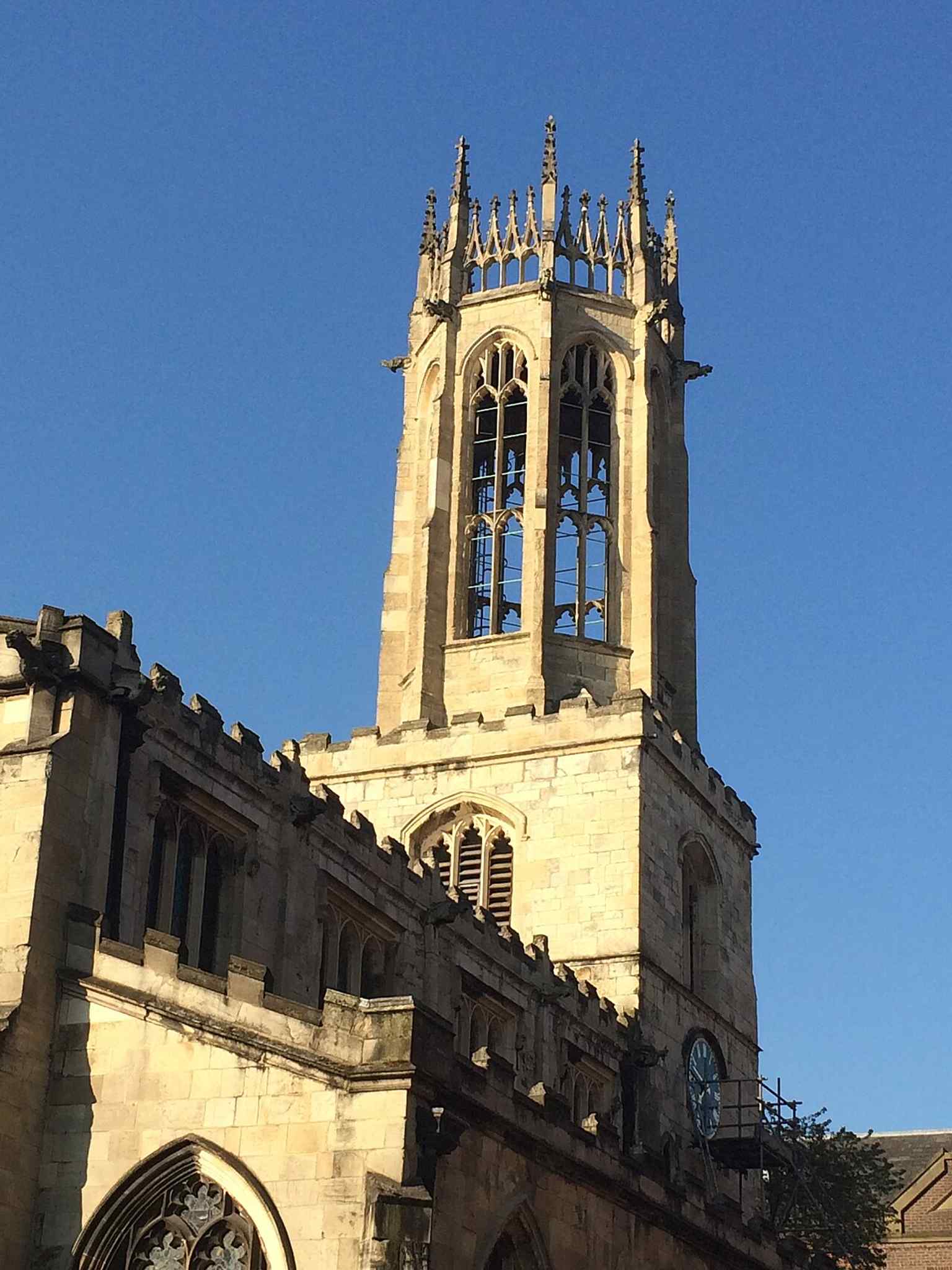
And then there is that tower. It was not just decorative. People kept a light burning in the lantern up there to guide travelers toward the city through the Forest of Galtres, which medieval writers describe as wolf-infested. So yes, this church functioned partly as a place of prayer and partly as a very early roadside safety system. If you look at the picture on your screen, you can get a clearer sense of that beacon-like top.
The street matters too. Pavement was one of York’s earliest paved streets, important enough that in fourteen ninety-seven carts were taxed here because the paving was new. By fifteen seventy-eight, the corporation and the parishioners had agreed to share repair costs because market traffic was chewing up the road beside the church. Holes in the street, arguments over who pays... some civic traditions never go out of fashion.
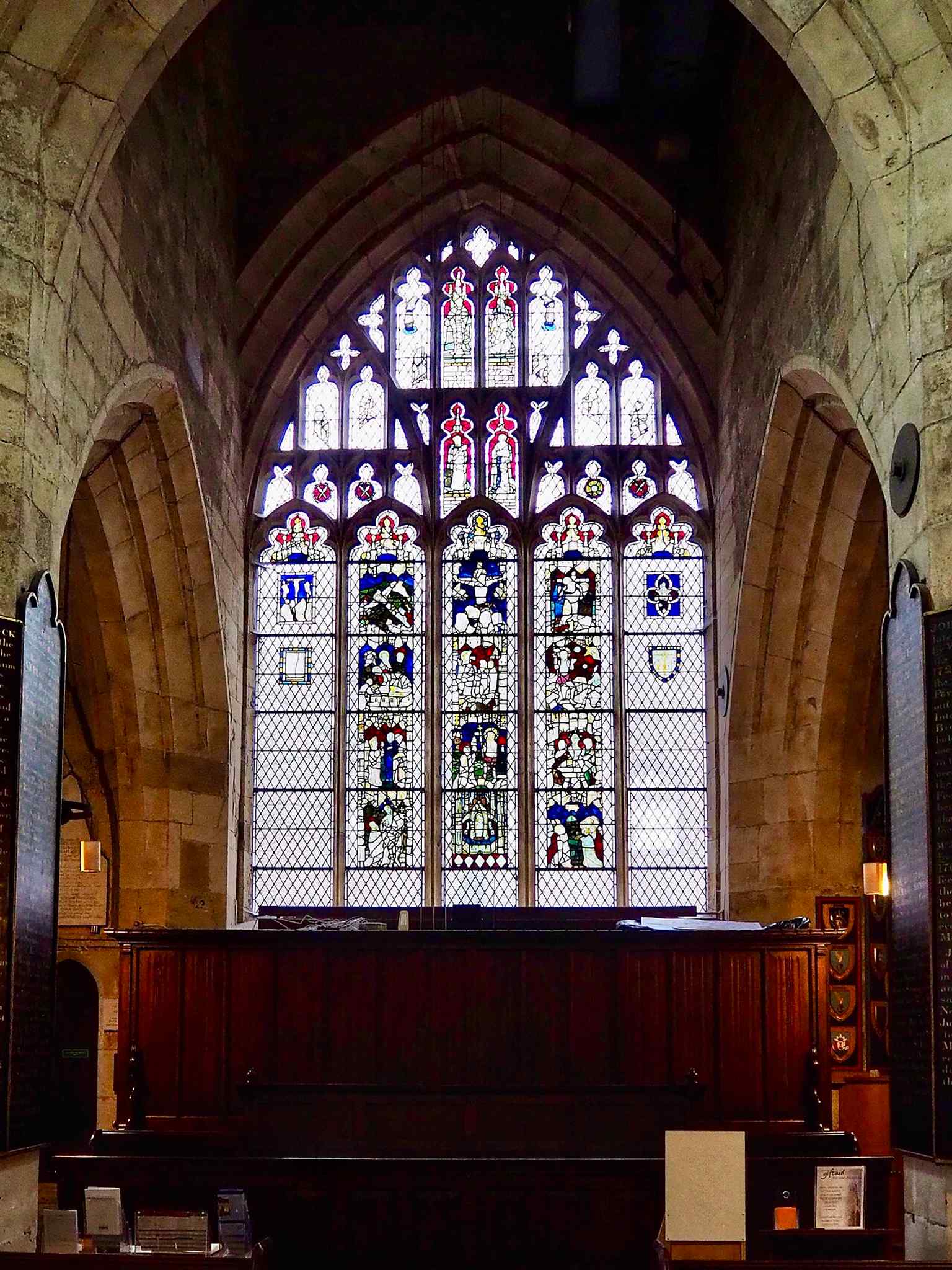
What makes All Saints especially York-ish is the way it kept absorbing lives from all around it. It became the guild and civic church of the city, and thirty-four Lord Mayors lie buried here. It also became a kind of refuge for memories from other churches that disappeared. Memorials came here from Saint Crux and Saint Saviour’s, and in nineteen fifty-seven a west window from around thirteen seventy, rescued from redundant Saint Saviour’s, found a new home here too. So this building does not just preserve itself; it shelters pieces of lost York.
One very human story survives in the memorial to Troop Sergeant Major John Polety. In eighteen twenty-nine, he helped fight the York Minster fire using his regiment’s fire engine, then died a week later. His brother Charles is remembered with him here. Another plaque honors Tate Wilkinson, the actor-manager who paid five hundred pounds in seventeen sixty-nine, around eighty thousand pounds today, for the royal patents that let the York and Hull theatres call themselves Theatre Royal. So even here, amid prayer books and memorials, the city’s theatrical life slips in through the side door.
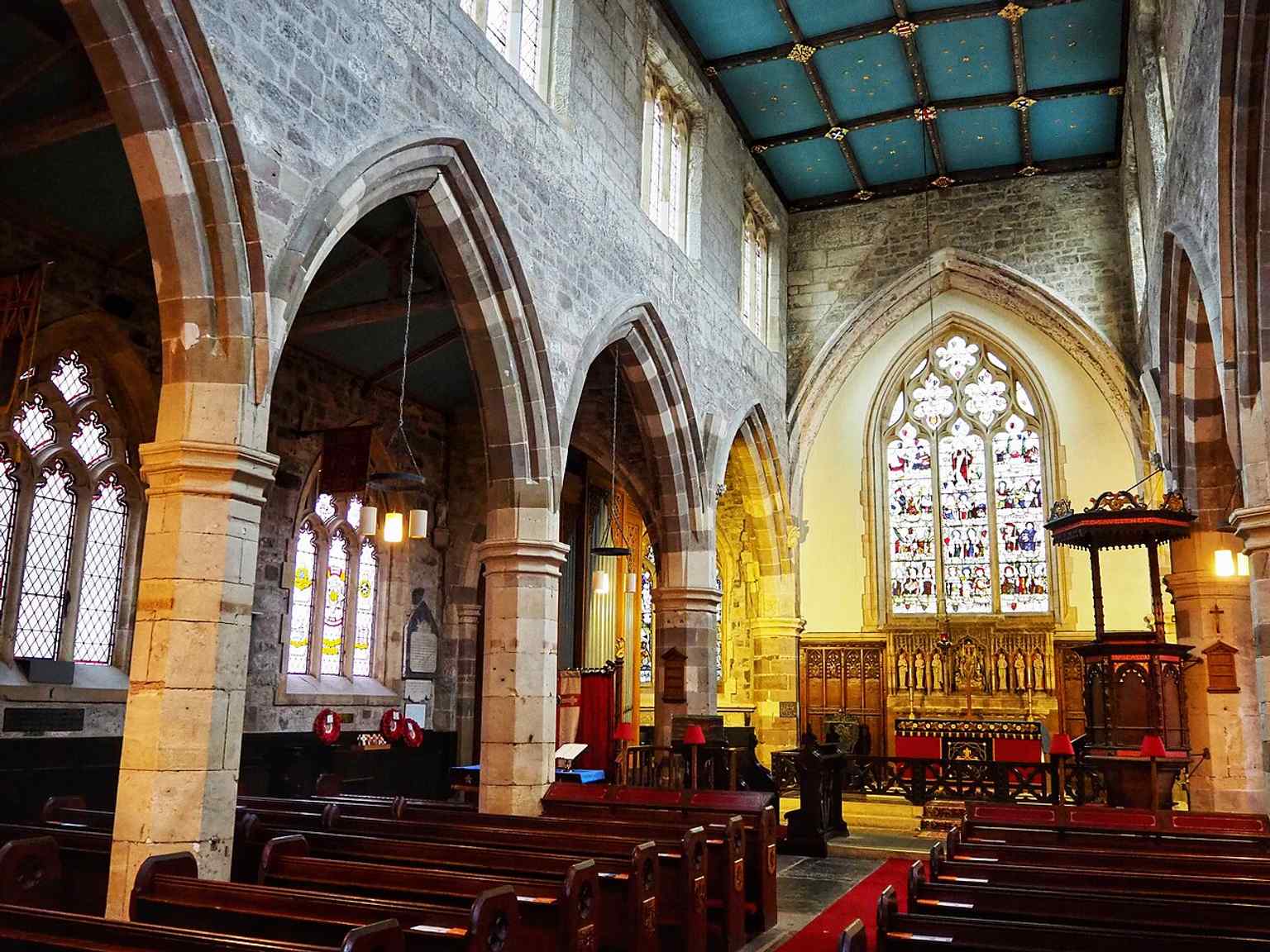
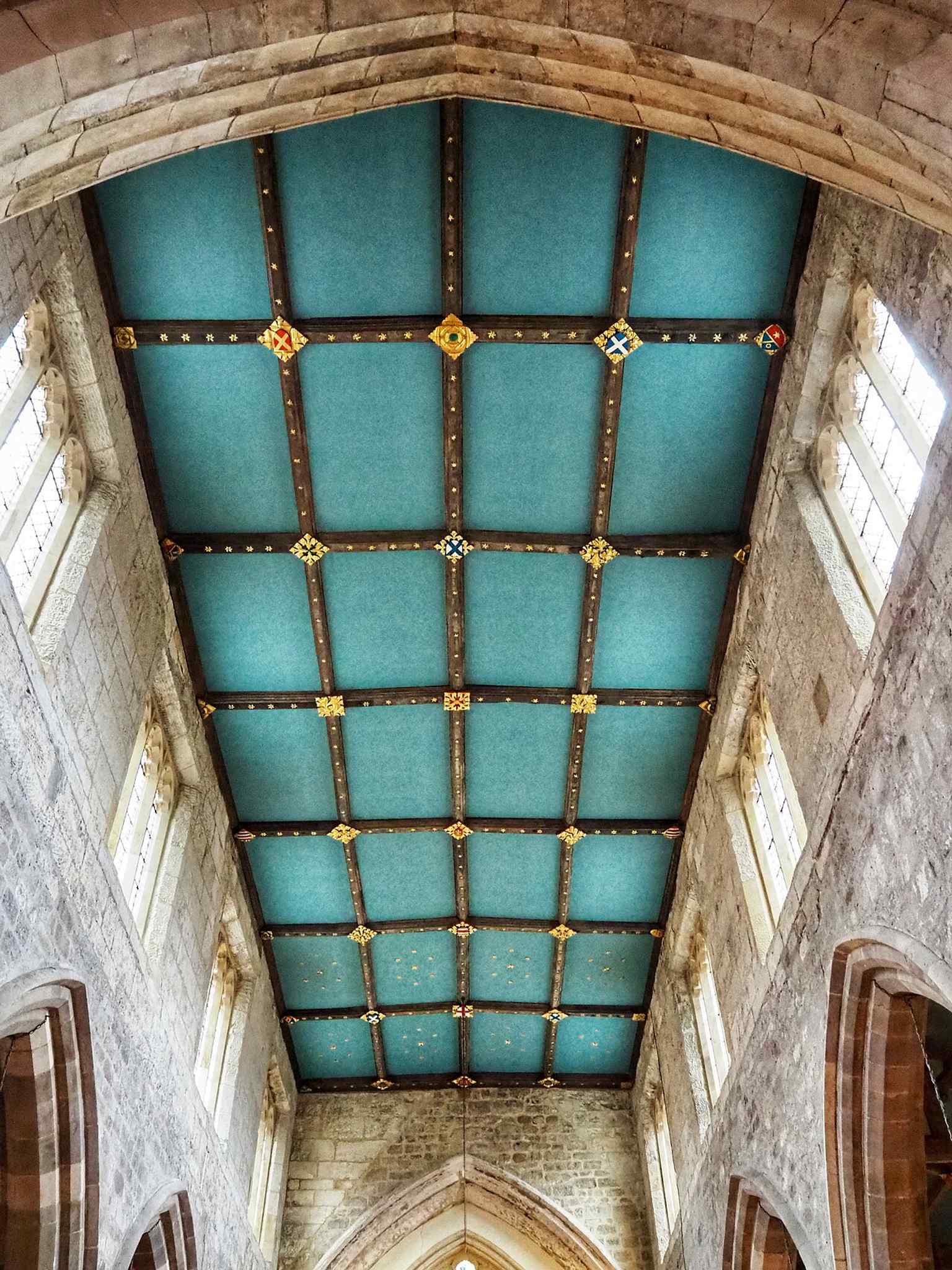
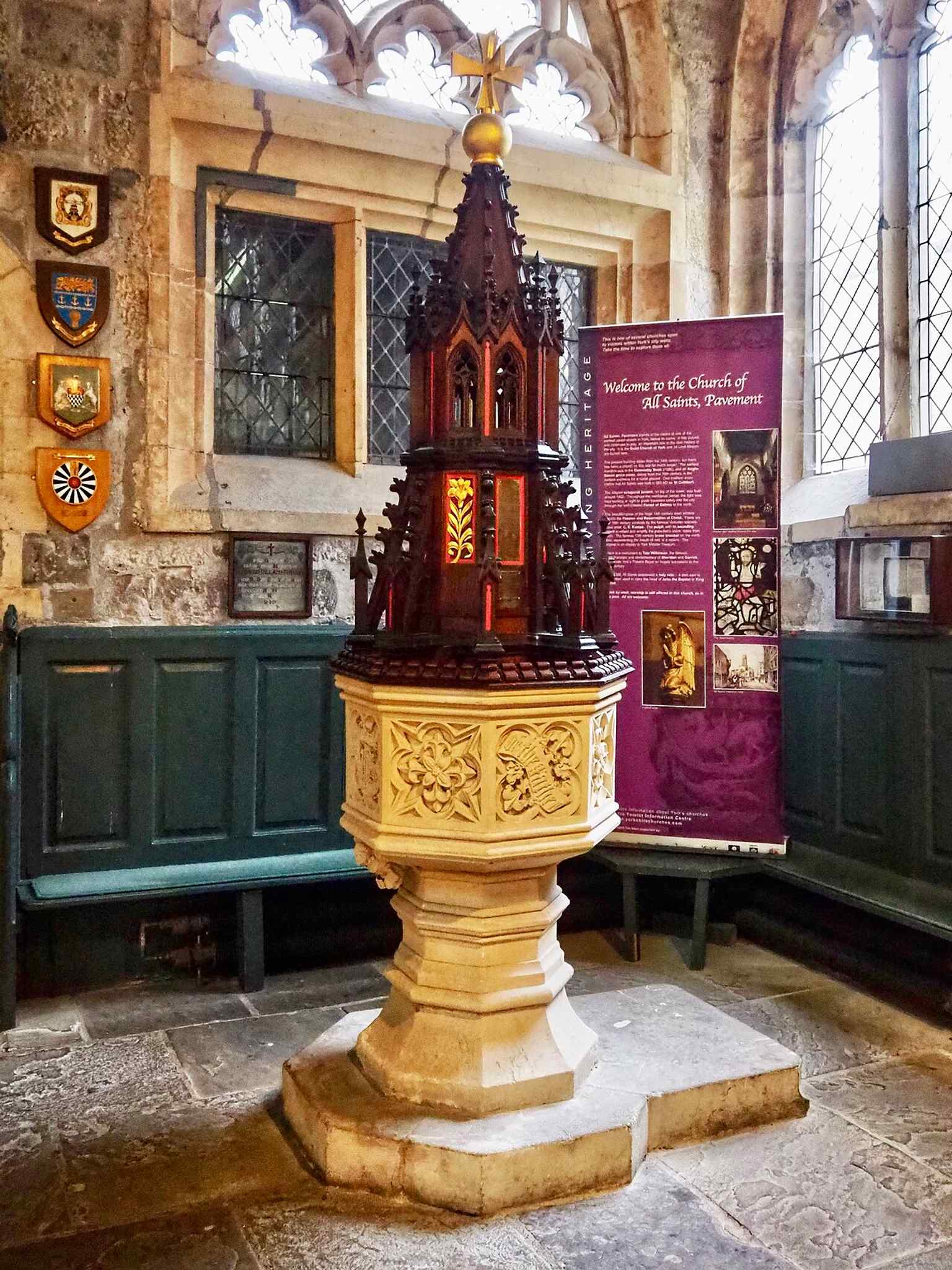
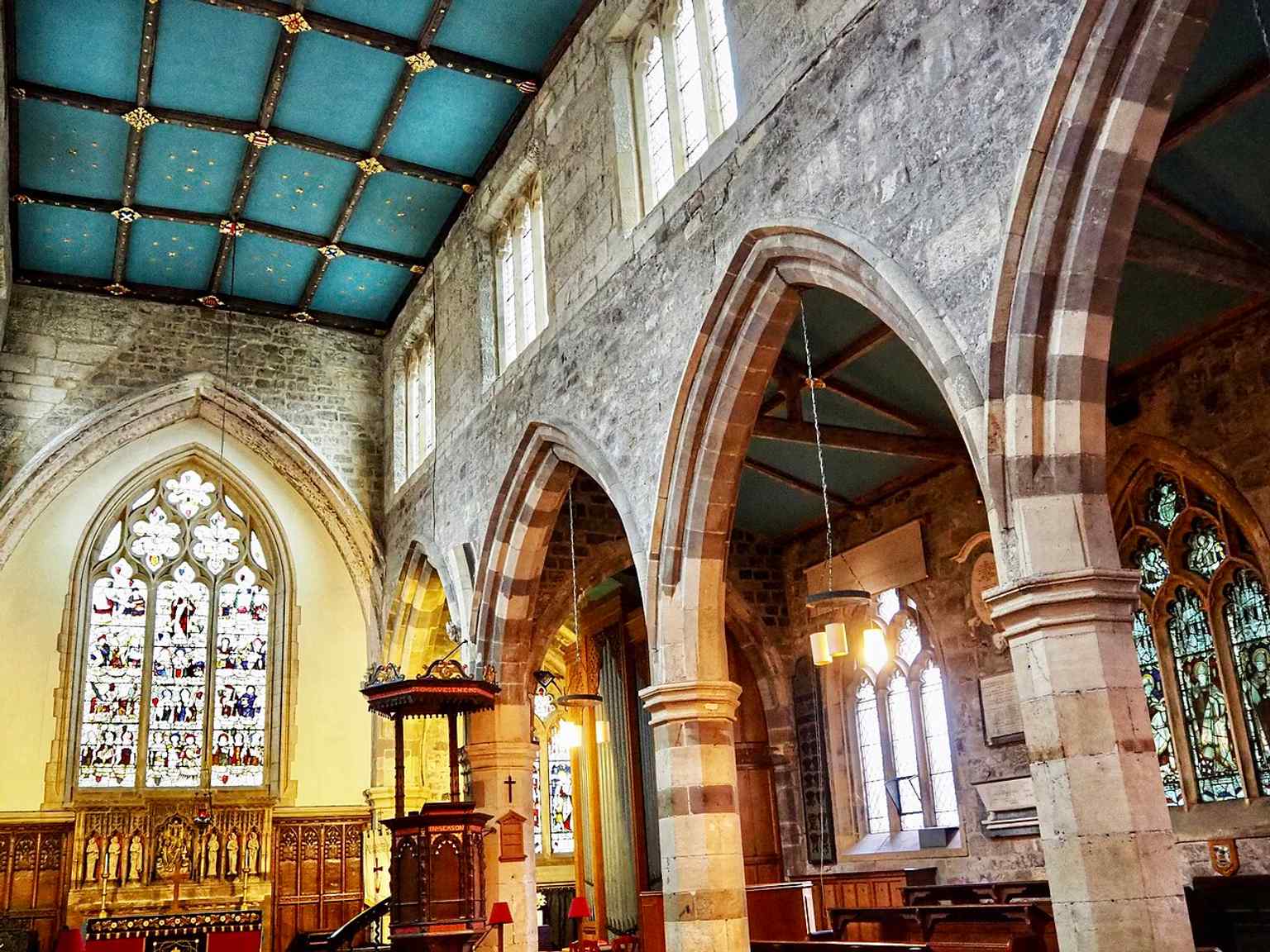
If you glance at the interior image in the app, you can see the central hall of the church and traces of its Victorian reshaping. In eighteen forty-eight, workers removed the old box pews, those enclosed family compartments, and reused parts of them along the aisles. Even the furniture here has a second life.
Before you go, tip your head up to that tower and imagine its light burning above the street, telling strangers that York was close, and safety closer. From here, the streets themselves start getting stranger... and our next stop, Whip-Ma-Whop-Ma-Gate, is about a two-minute walk away. If you want to return later, the church is generally open from ten to four most days, with shorter hours on Sundays.