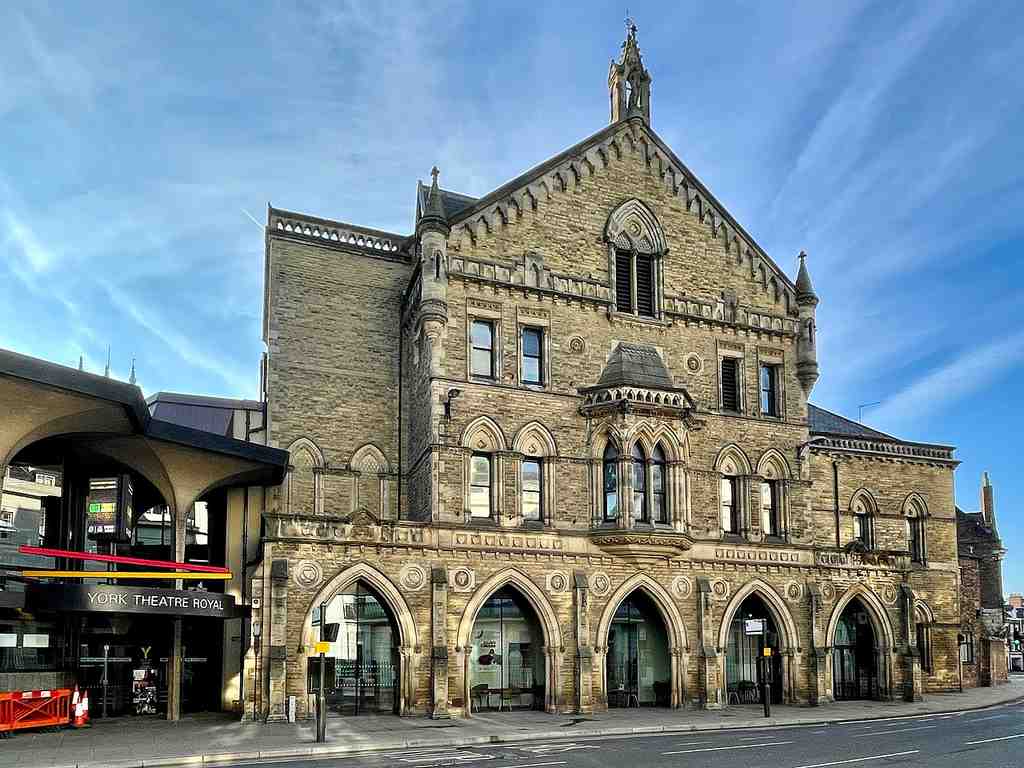
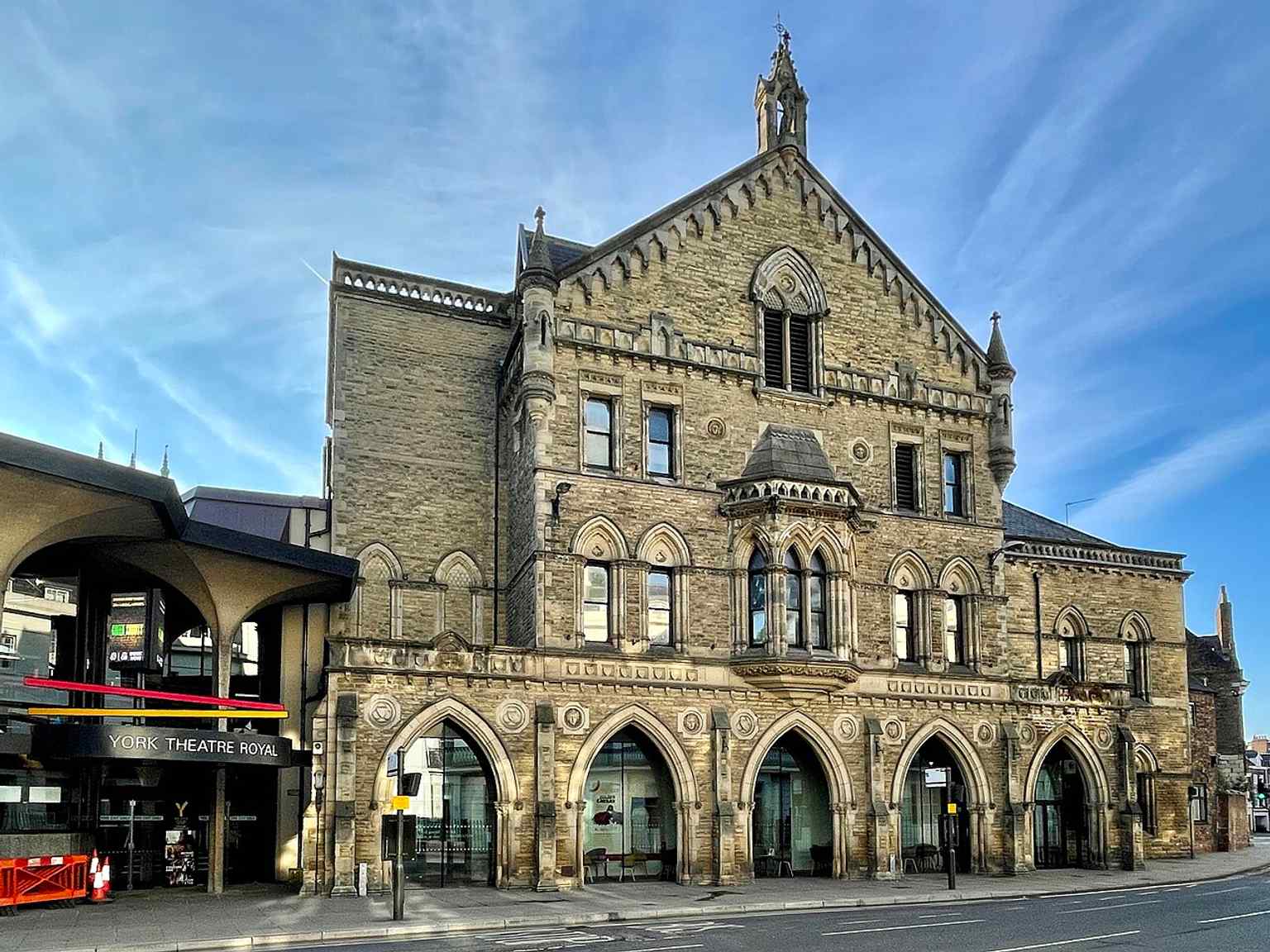
In front of you is a pale stone theatre with a pointed Gothic frontage, tall arched windows, and carved heads set into the facade like permanent critics.
York Theatre Royal began in seventeen forty-four, but this site was already old news by then. The builders set their playhouse on top of, and partly among, St Leonard’s Hospital, one of medieval York’s great charitable institutions. So this building has always done a slightly uncanny trick: performance on the surface, older lives underneath.
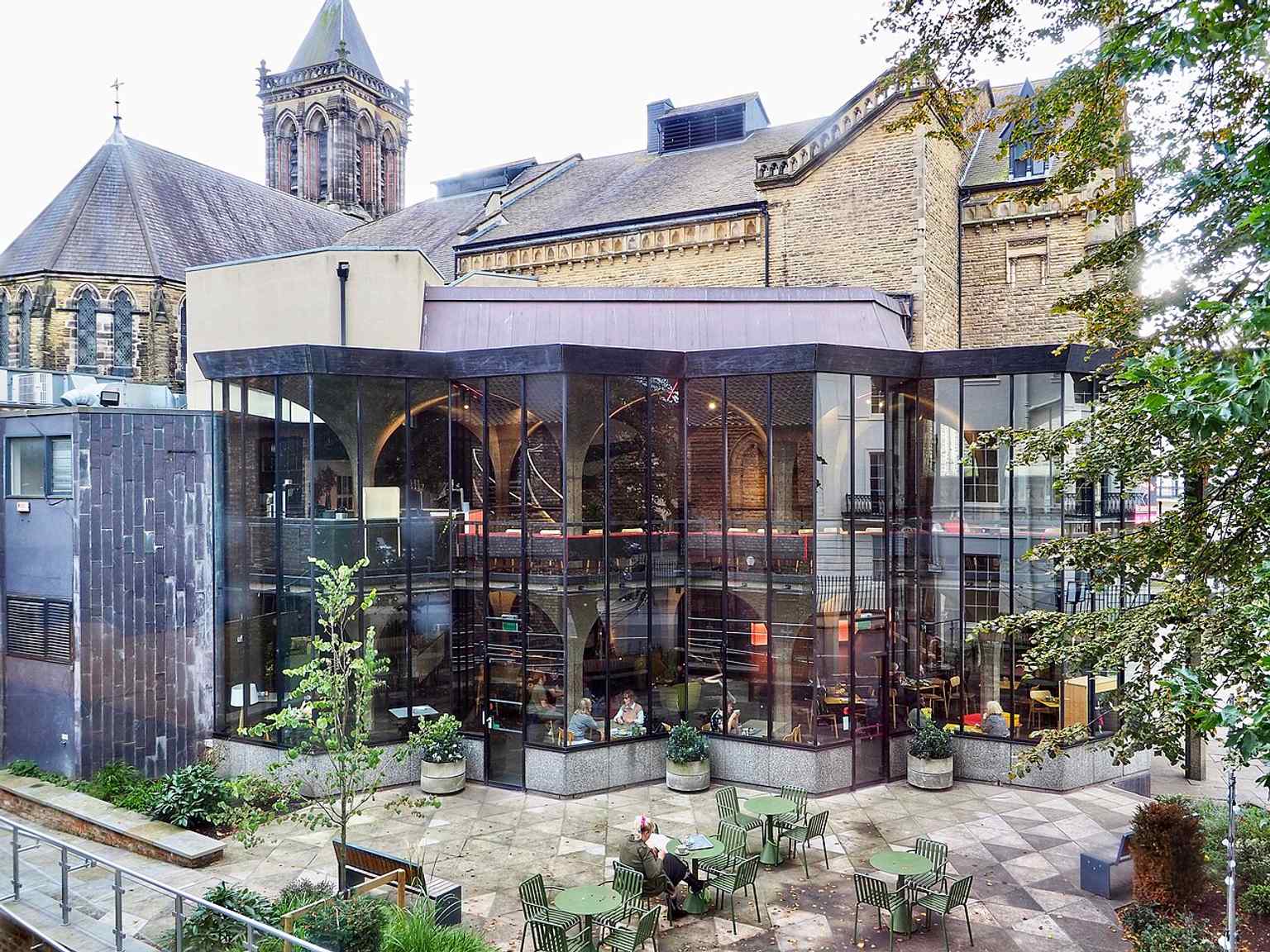
Look at the front and you can read some of that layering. The Victorian makeover turned the frontage into a Gothic showpiece, and those carved heads include Elizabeth the First and figures from Shakespeare. If you check the app image, you’ll see the facade laid out clearly. Then, in nineteen sixty-seven, architect Patrick Gwynne added that modernist foyer beside it, all glass and concrete confidence... York being York, one century rarely gets the place to itself.
The human character I’d pin to this stop is Tate Wilkinson, the actor-manager who helped secure the theatre’s royal status in the eighteenth century. Wilkinson ran a Yorkshire circuit and brought serious talent here, including Sarah Siddons and John Philip Kemble. So while the Grand Opera House arrived later with Edwardian swagger, this place had already spent more than a century proving York could support ambitious theatre.
And then there is the delicious part beneath your feet. During the major redevelopment in twenty fifteen, archaeologists and builders opened up the site and found a cobbled street, a medieval well, and remarkably well-preserved remains of St Leonard’s Hospital under the stage. Some layers even predated the hospital. Imagine that for stagecraft: lift the floorboards, meet eight hundred years of York. The finds delayed the reopening, shifting it from late twenty fifteen to the spring of twenty sixteen, when the theatre finally reopened with Brideshead Revisited. For once, the backstage drama was entirely real.
That feels right for this city. We have seen York turn worship into commerce, ruins into gardens, and history into spectacle. Here, the past does not sit politely in a case. Actors still perform above buried archaeology and medieval walls, and a Grade two-star listed theatre still makes new work, hosts touring companies, and keeps the local stage alive. Even its pantomime became legend: Berwick Kaler turned Christmas here into a civic ritual for decades, with one wonderfully odd footnote that a very young Gary Oldman once played the cat.
So as you stand here, remember: in York, even the stage floor is only the latest surface laid over older acts. From here, head on toward Eboracum, about a five-minute walk, where the Roman layer steps back into the spotlight. If you want to return later, the theatre generally opens from ten AM to eight PM Monday to Saturday, and stays closed on Sunday.