
Bilbao Audio Tour: The Architectural Wonders of Abando, Bilbao
Beneath the shimmering titanium curves of Bilbao, ancient secrets still echo through stone and glass. This self-guided audio tour peels back the city’s bold façade to reveal stories hidden from the casual eye—uncover power struggles, lost art, and the strange details shaping Bizkaia’s heart. Why did a modernist marvel spark a citywide uproar? Who vanished behind the iron gates of Montero House without a trace? What embarrassing miscalculation lingers at the summit of Bizkaia Tower? Wind through winding streets and striking museums, feeling tension rise with each step. Trace rebellion on cobblestones and scandal within golden galleries. Bilbao will change shape before your eyes as forgotten moments roar back to life. Start your journey now and let Bilbao's most astonishing truths guide your path where surface beauty meets shadowy depth.
Tour preview
About this tour
- scheduleDuration 80–100 minsGo at your own pace
- straighten2.9 km walking routeFollow the guided path
- location_on
- wifi_offWorks offlineDownload once, use anywhere
- all_inclusiveLifetime accessReplay anytime, forever
- location_onStarts at Abando Indalecio Prieto Station
Stops on this tour
lock_open 3 free previews · 12 unlock with purchase
The station is a broad stone-and-brick facade with a symmetrical, almost U-shaped front, a tall central entrance, and a monumental classical face that hides the great curved train…Read moreShow less
Open dedicated page →The station is a broad stone-and-brick facade with a symmetrical, almost U-shaped front, a tall central entrance, and a monumental classical face that hides the great curved train shed behind it.
Welcome to Bilbao’s front door... and like most front doors in this city, it has been rebuilt, argued over, and made to do more jobs than anyone first planned.
Rail reached this spot in eighteen sixty-three, when Abando was still a separate municipality and the first station opened here to connect Biscay with the Spanish interior. That original building came from the engineer Charles Blacker Vignoles and leaned in an English direction. What you see now arrived in nineteen forty-eight, when the architect Alfonso Fungairiño gave Bilbao a new terminal on the same ground: bigger, sterner, and meant to look permanent. The style is classical with a hard official edge, built in reinforced concrete dressed up with granite, limestone, and brick, like a workhorse wearing its Sunday jacket.
This is a good place to begin with urban reinvention. Bilbao has a habit of remaking itself by remaking its thresholds, and this station sits right at the front of that process. First it welcomed industrial arrivals, then commuter Bilbao, then a city recovering from disaster, and now it stands on the brink of another transformation, with plans to bury the tracks and fold high-speed rail into a new piece of the city above.
One man’s shadow still hangs over the name: Indalecio Prieto, the Bilbao-born public works minister. In nineteen thirty-three, he backed the idea of a new station here that would help organize Abando as part of the city, not just dump passengers into it. He wanted a connector. Ironically, the finished building turned out more closed than he hoped, more barrier than bridge. Bilbao, being Bilbao, kept working on that problem anyway.
Take a moment and study how the facade meets the streets around Plaza Circular. Even from where you’re standing, you can sense the pull in several directions at once: into the hall, along Gran Vía, toward Hurtado de Amézaga, and down into the transport network. A city shows its character pretty quickly in the way it moves people.
That brings us to gateways and circulation. Abando is not just a station; it’s an interchange folded into architecture. Long-distance trains leave from here for Madrid and Barcelona, three commuter lines begin or end here, the tram stops nearby, buses cluster around the surrounding streets, and the neighboring Concordia station adds more regional links. The elegant local trick is easy to miss: from inside the main hall, the transfer to Metro Bilbao’s line one and line two slips underground as part of the building itself, so changing from train to metro feels less like crossing systems and more like continuing through one big machine.
If you glance at the platform image in the app, you’ll catch that long-distance side of Abando in action. Behind this formal front sits the great semicircular shed over the tracks, carried by twelve lattice arches. And inside, out of your sight from here, there’s one of Bilbao’s signature pieces: a huge stained-glass window, three hundred and one colored panels wide, with a clock at its center and scenes of Biscayan life around it.
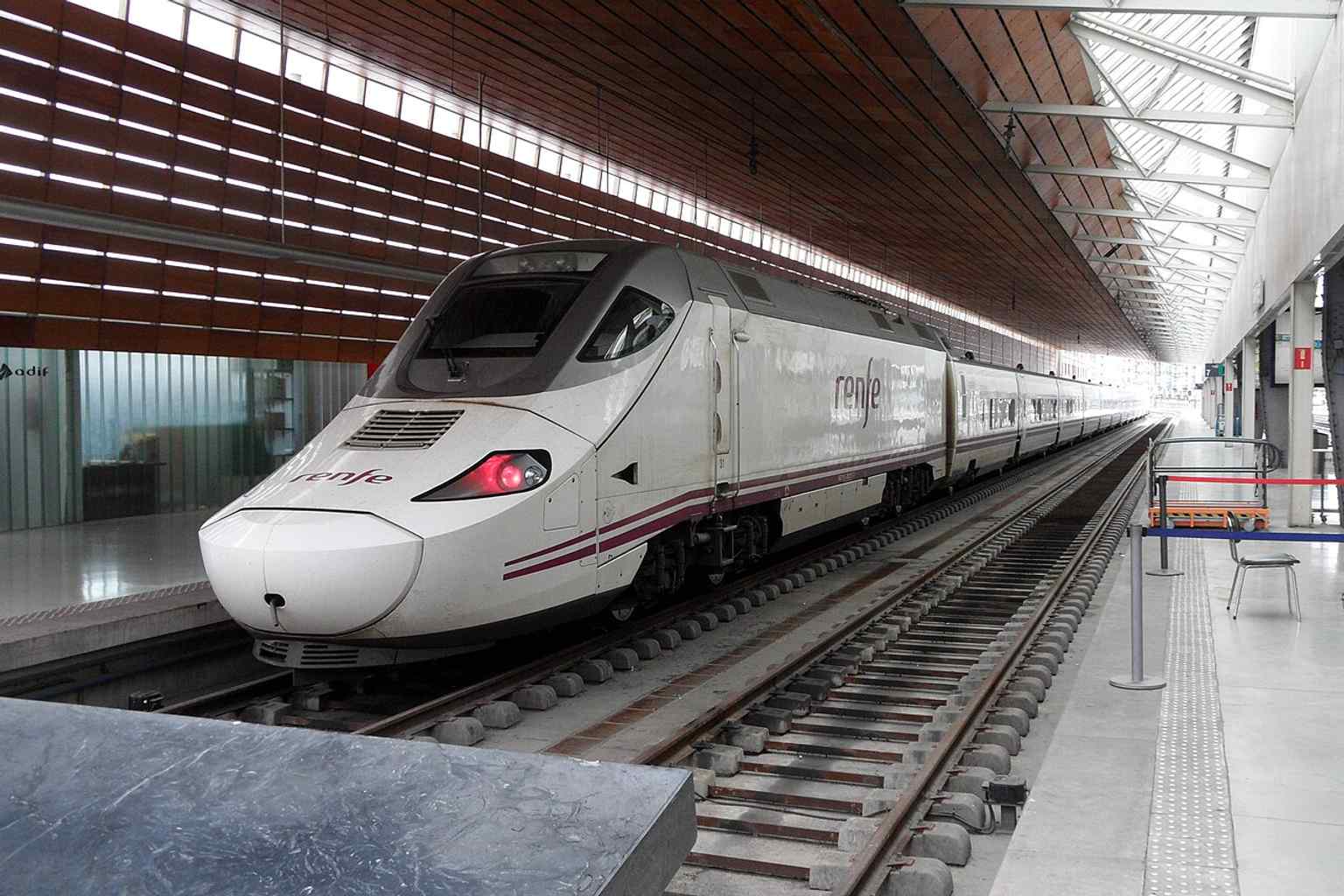
A Talgo train at Abando, showing the long-distance services that connect Bilbao with Madrid, Barcelona, and other major cities.Photo: Falk2, Wikimedia Commons, CC BY 3.0. Cropped & resized. This place has absorbed rough moments too. During the devastating floods of nineteen eighty-three, about five hundred people spent the night trapped in three express trains here before evacuations got them out. The reforms that followed added escalators down to the platforms and made the station easier to use, a practical answer to a hard memory.
Even the name stirred debate when officials changed Bilbao-Abando to Abando Indalecio Prieto in two thousand and six. Around here, names are never just labels; they tell you who thinks they have the right to define the city.
And that’s our cue. From the place where people arrive in Bilbao, we’ll head next to a place where a certain Bilbao once decided who belonged in its social world: the Building of the Bilbaina Society.
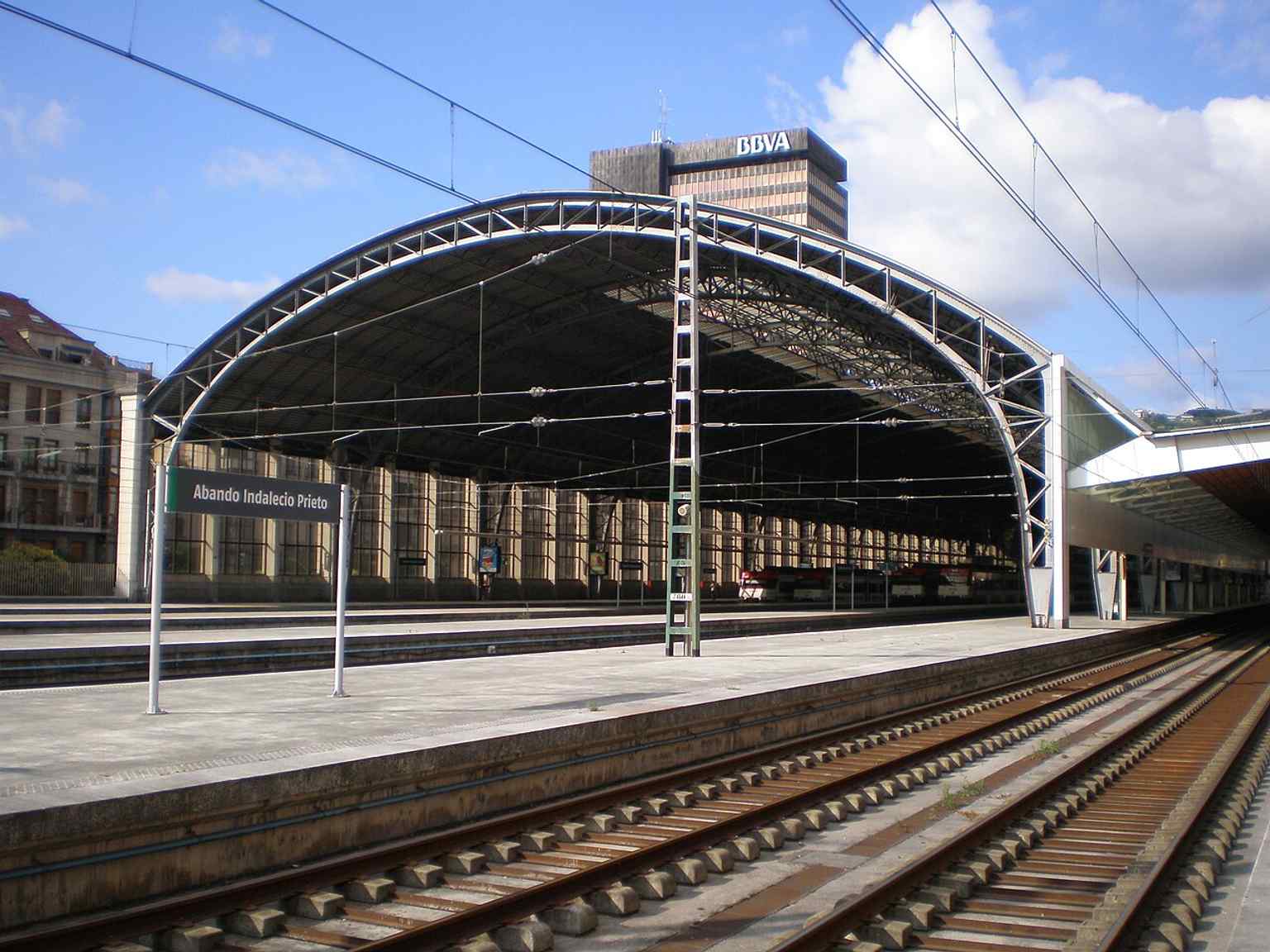
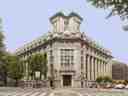
The monumental façade of Bilbao Abando, the city’s main station, with the Plaza Circular setting that makes it a central urban landmark.Photo: JT Curses, Wikimedia Commons, CC BY-SA 4.0. Cropped & resized. 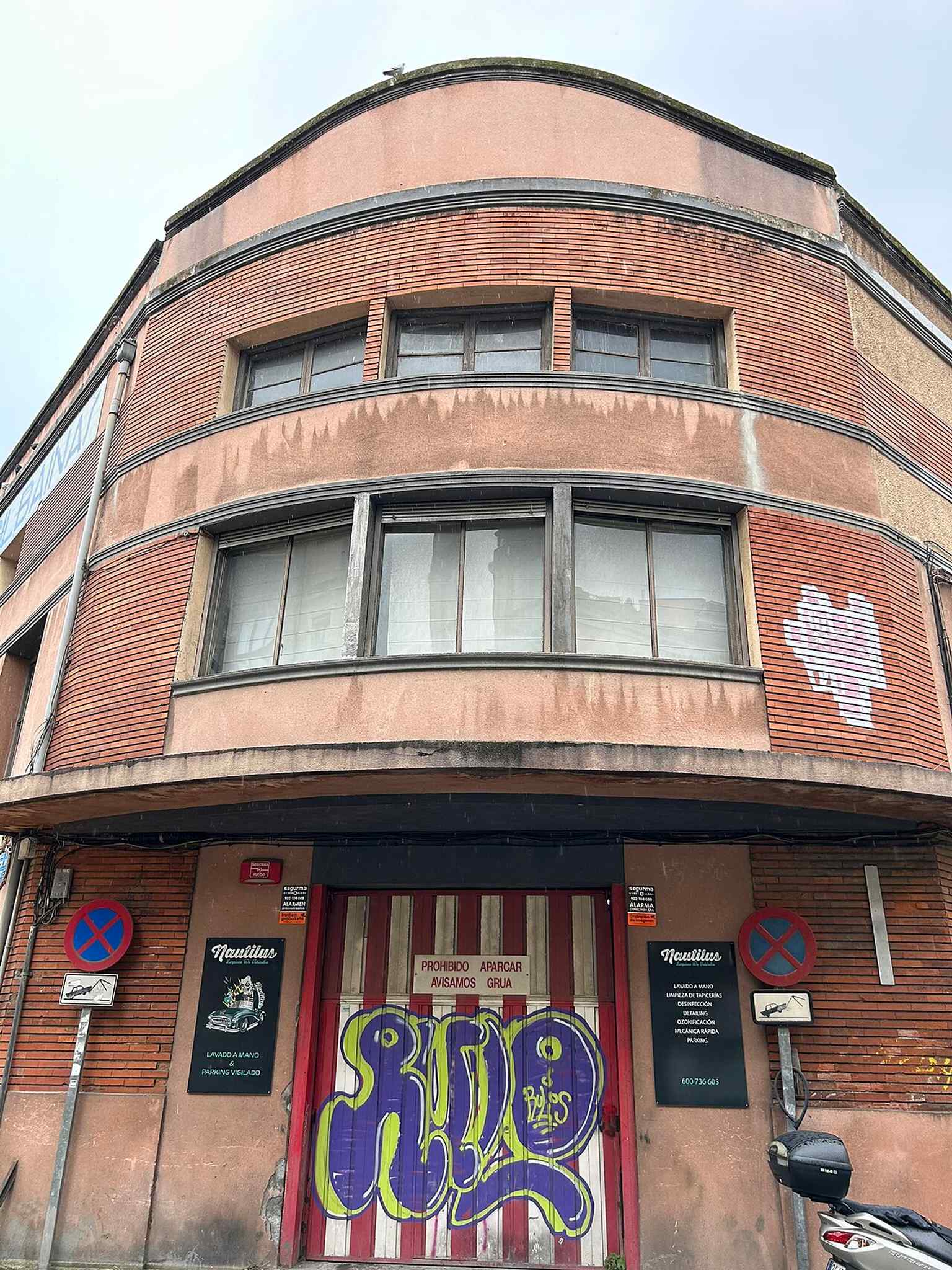
The side service buildings and parking area beside the station — part of the intermodal complex that links rail with city traffic.Photo: Asivilla16, Wikimedia Commons, CC0. Cropped & resized. Look for the pale stone facade with strong horizontal bands, a rounded corner topped by a circular dome, and a grand arched entrance framed by deep red Ereño marble columns. This…Read moreShow less
Open dedicated page →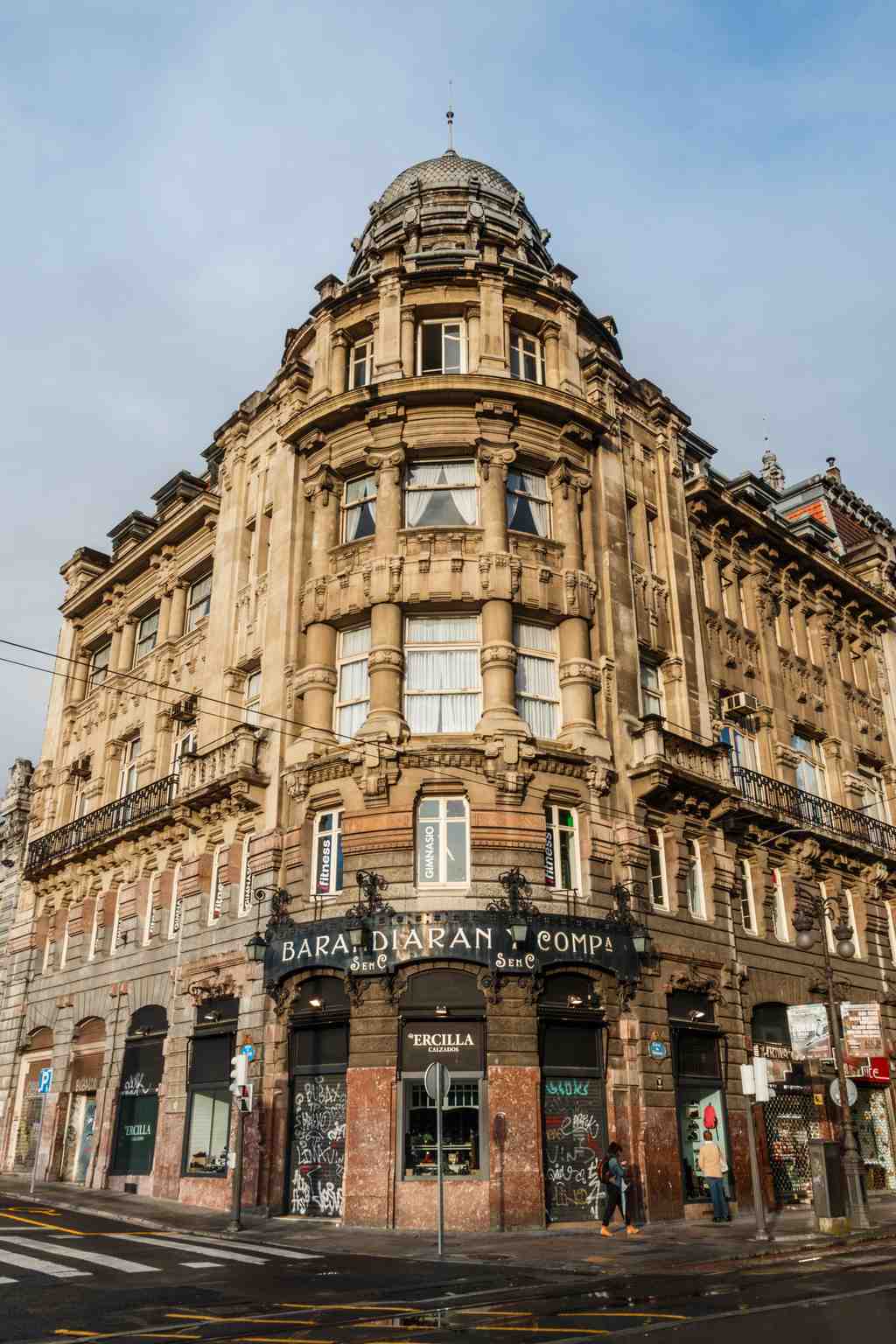
Building of the Bilbaina SocietyPhoto: Ebaki, Wikimedia Commons, CC BY-SA 4.0. Cropped & resized. Look for the pale stone facade with strong horizontal bands, a rounded corner topped by a circular dome, and a grand arched entrance framed by deep red Ereño marble columns.
This is the Building of the Bilbaina Society, opened on the twenty-fifth of January, nineteen thirteen, and it reads almost like a self-portrait of the people who paid for it. The Sociedad Bilbaína had spent seventy-five years in a first-floor home on Plaza Nueva. Then Bilbao expanded, fortunes grew, and the club decided it needed an address that matched the city’s new ambitions.
The industrial and financial bourgeoisie shaped that decision. By that, I mean the class of mine owners, shipbuilders, bankers, and merchants who wanted modern Bilbao to look polished as well as prosperous. They did not only fund industry; they also built networks, habits, and polished interiors where alliances could form over coffee, billiards, and dinner. Money likes privacy, but it also enjoys a handsome facade.
From where you stand, the building makes that point very clearly. The main front on Calle Navarra stretches wide and symmetrical, almost calm, then gathers drama at the cut-off corner where the streets meet, crowned by that dome. The big entrance arch is deliberately monumental. Above it, a stone balcony ties the central windows together, and higher up, columns and carved details pull your eye upward. Even the word chaflán matters here: it means that clipped corner of a city block, turned into a showpiece instead of a leftover edge.
In nineteen oh nine, the board turned the commission into a proper local contest. Twelve architects entered. Emiliano Amann won first prize, but here is the part locals enjoy: the committee did not quietly pick one drawing and call it a day. It publicly ranked several entries, turning the project into a visible rivalry among Bilbao architects. Then it kept adjusting Amann’s design, opening more windows for light and adding the corner tower element that gives the building extra swagger.
One man helps anchor that change: Pablo García Ogara, the society’s president. Between nineteen oh eight and nineteen oh nine, he led the move toward this site at La Concordia, near the Nervión, on land the society had acquired from local banking interests. At the inauguration banquet, he spoke as if he were closing one chapter of club life and opening another. And they did not celebrate modestly. Two days later came dancing, with rigodons and waltzes, and then a concert to round out the festivities. Very Bilbao: serious business, then very serious socializing.
Inside, the club followed the English model for private societies: a grand spiral staircase under a skylight, an English bar at ground level, a double-height library with an upper gallery, reading rooms, billiard rooms with original tables, dining rooms, dance rooms, even bedrooms with hotel-style services for members. Private comfort became a kind of urban performance.
The story did not stay elegant forever. In nineteen twenty-four, dictatorship banned gaming rooms and hurt the club’s finances. On the twentieth of July, nineteen thirty-six, anarcho-syndicalist brigadists took the street, set a machine gun at the doorway, searched the building top to bottom, and looted art, furniture, and the bar stocks. Later, members rebuilt. By nineteen forty-two, the library already held more than thirty-four thousand volumes, and later the building earned protected status as a cultural monument.
That is the trick of a city like this: a private club commissions a monument for itself, and before long the whole street inherits the view. When you are ready, head on to the Bilbao Stock Exchange, about two minutes away, where prestige steps out of the club and into the marketplace. If you are curious later, the society keeps long daily hours, roughly nine in the morning to eleven at night.
In front of you stands a sober pale-stone building with a symmetrical rectangular façade, tall evenly spaced windows, and a formal central entrance that looks determined to be…Read moreShow less
Open dedicated page →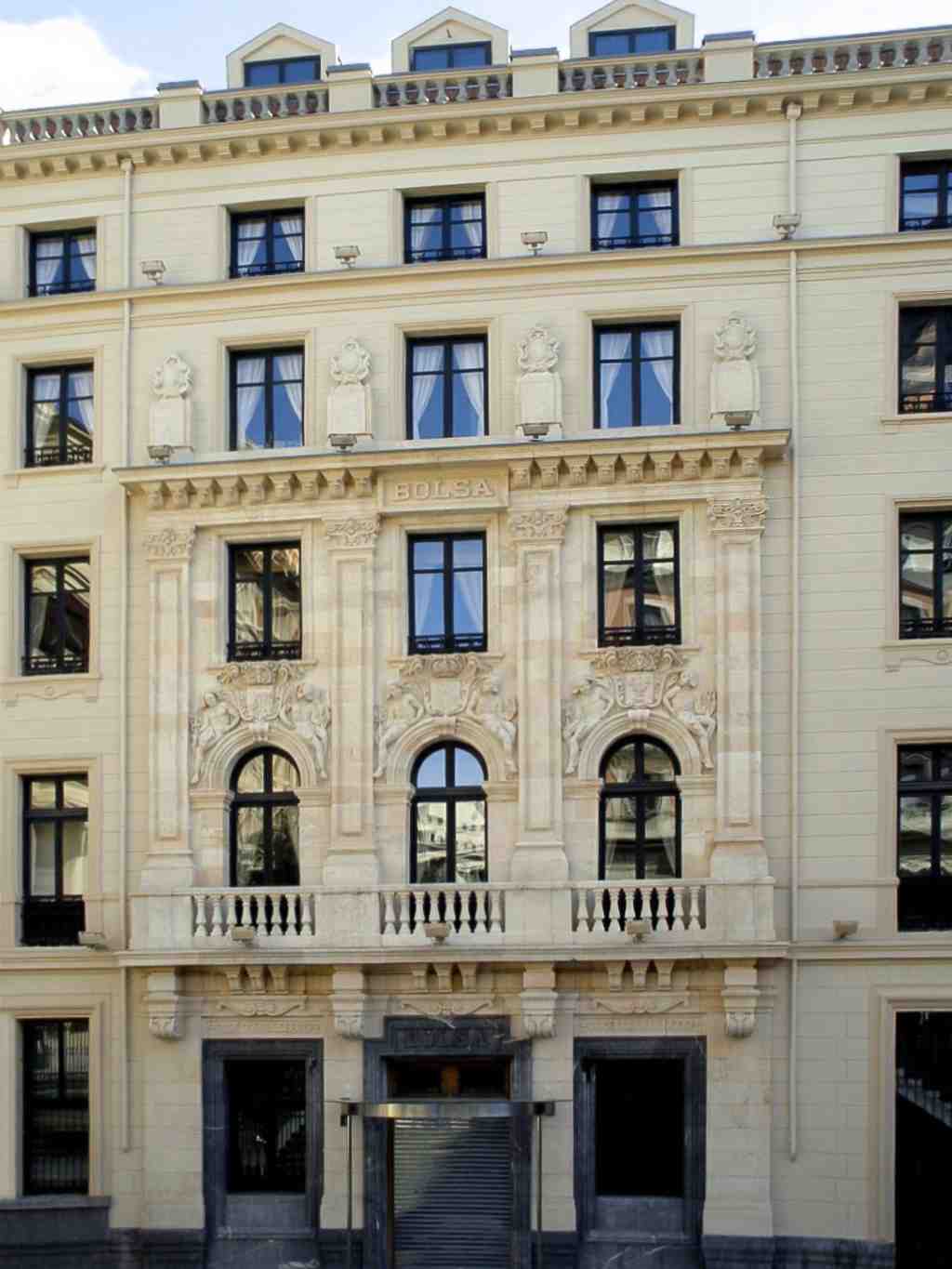
Bilbao Stock ExchangePhoto: Zarateman, Wikimedia Commons, CC0. Cropped & resized. In front of you stands a sober pale-stone building with a symmetrical rectangular façade, tall evenly spaced windows, and a formal central entrance that looks determined to be taken seriously.
That seriousness mattered. Bilbao’s stock exchange did not begin with swagger... it began with nerve. In eighteen eighty-nine, a small circle of local financiers signed the founding deed with a share capital of fifty thousand pesetas, spread across twenty-nine shareholders and two hundred bearer shares - roughly the buying power of a few hundred thousand euros today. Not huge money for a grand institution. More like a bold local wager.
And for a while, this market had no proper home at all. Its first trading session took place on the fifth of February, eighteen ninety-one, in the lobby of the Arriaga Theatre. Then it shifted to Plaza Nueva, then to a room lent by Banco de Bilbao in nineteen oh one, then back again to the Arriaga. Not exactly the picture of eternal stability. It was ambitious, useful, and growing fast... but still looking for an address that could make people believe in it.
That is the trick with finance. It does not only move money; it reshapes streets. Traders need speed, reputation, and proximity, so stations, banks, offices, and plazas begin clustering around them. Give capital a permanent doorway, and the city starts tailoring itself like a good suit around that doorway.
By the end of eighteen ninety-one, the exchange already listed forty official securities - public funds, bonds, and shares. The first six brokers multiplied to thirty-two by nineteen hundred, and a law in nineteen ten capped the number at forty. So in nineteen oh three, the brokers made their decisive move: they voted to build a headquarters of their own here on the Concordia lands, beside the railway station and near the rising banking axis of the ensanche, the planned expansion district. Location, as ever, was half the argument.
The architect Enrique Epalza gave them the other half. Epalza knew how to design with flair, but here he chose restraint. He dressed the exchange in what he called a purified eclectic style - formal, balanced, and businesslike. Inside, the key room was the sala del corro, the trading ring where deals happened face to face, with voices, glances, and quick judgments. Before screens took over, markets ran on human theater.
There is a nice irony in its early exile at the Arriaga. That theater had already hosted Bilbao’s first electric telegraph in eighteen fifty-four, so from the beginning, information and speculation shared an address. A city learns its habits early.
Since two thousand and two, Bilbao’s exchange has belonged to Bolsas y Mercados Españoles, B-M-E, the group that brings together Spain’s four stock exchanges. It still operates, though the old trading-floor roar has mostly given way to digital silence. Ahead, the architecture of money grows larger and more corporate along the Gran Vía; Bizkaia Tower is about a three-minute walk from here. If you want to come inside another time, the building generally opens on weekdays from eight in the morning to five thirty in the afternoon.
Show 12 more stopsShow fewer stopsexpand_moreexpand_less
On your left, look for a tall rectangular tower wrapped in a glass curtain wall, with tinted window panels and a strong vertical rhythm that sets it apart from the lower stone…Read moreShow less
Open dedicated page →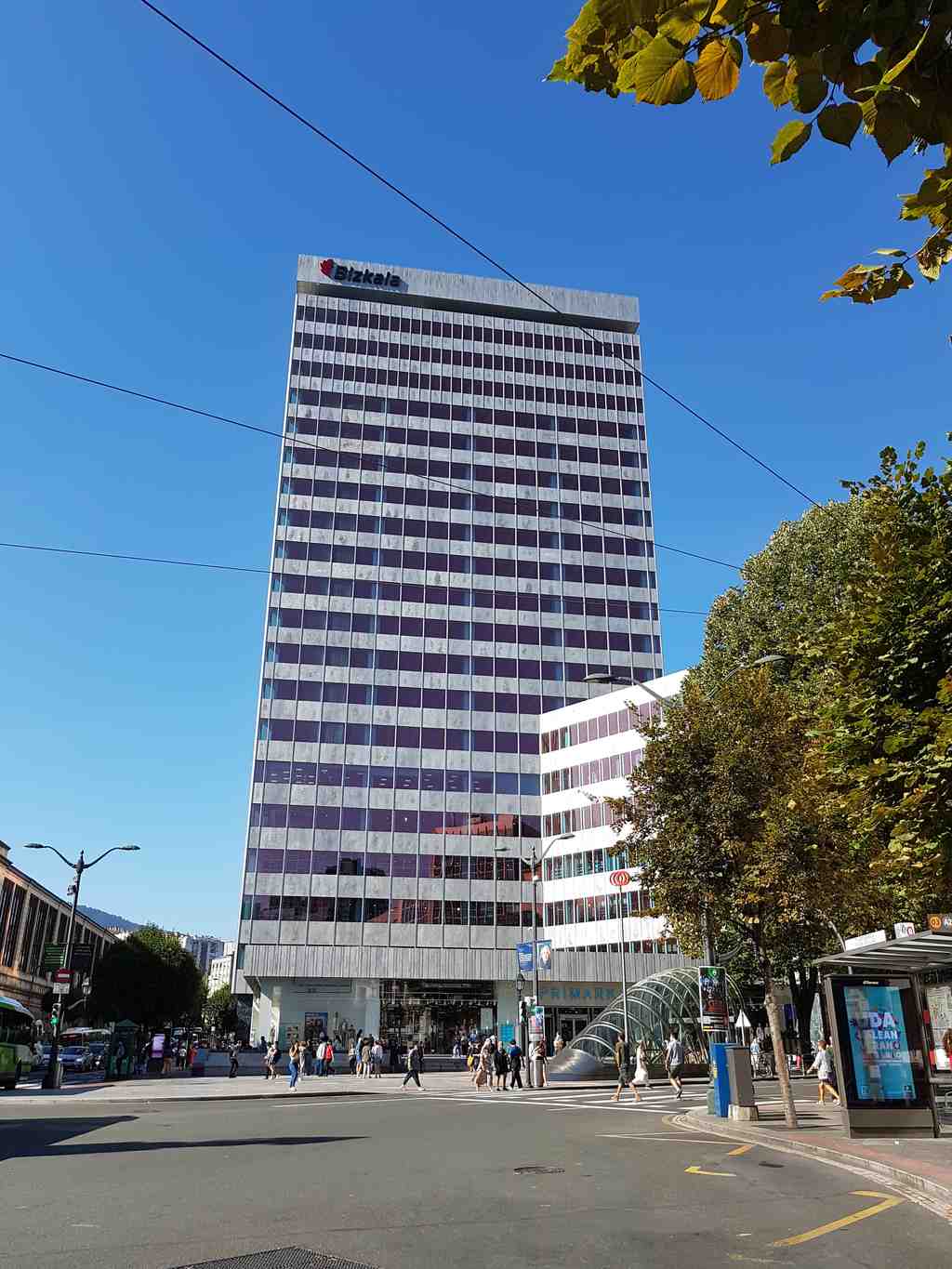
Bizkaia TowerPhoto: Xabier, Wikimedia Commons, CC BY-SA 4.0. Cropped & resized. On your left, look for a tall rectangular tower wrapped in a glass curtain wall, with tinted window panels and a strong vertical rhythm that sets it apart from the lower stone buildings around it.
This is Torre Bizkaia, once the Banco de Vizcaya tower, later the B-B-V-A tower, and now also known as B-A-T, short for B Accelerator Tower. If Gran Vía is Bilbao’s ceremonial spine, this is one of the moments where that spine straightens its back and says, very plainly, “We mean business.”
The bank wanted exactly that effect. In the nineteen sixties, Banco de Vizcaya decided its old headquarters no longer matched its ambitions. It wanted modernity in built form, not as a slogan, but as a skyline. So architects Enrique Casanueva, Jaime Torres, and José María Chapa designed this tower, and when it opened on the twenty-second of April, nineteen sixty-nine, it climbed to twenty-one floors and eighty-eight meters. For years, it stood as the tallest building in Bilbao... the city’s vertical exclamation point.
And the bank knew the language it was speaking. Its leaders looked to the Seagram Building in New York, the S-A-S tower in Copenhagen by Arne Jacobsen, and the Banco Popular building in Madrid. That helps explain the curtain wall here - a facade that hangs like a skin rather than bearing the weight itself - and the colored glass that breaks up what could have been a stern corporate face. Serious, yes... but not entirely humorless. Even bankers occasionally loosen the tie.
There is an older ghost under this address too. Before this tower rose, the Banco de Vizcaya had occupied a nineteen-oh-three headquarters here designed by José María de Basterra. So this spot didn’t just change buildings; it changed vocabulary, from stone authority to glass ambition.
At the base once stood Eduardo Chillida’s Elogio del hierro tres, “Praise of Iron Three.” It later moved away during remodeling, then returned to Bilbao in a new setting: today it stands by the Fine Arts Museum in the new Plaza Chillida. That little journey tells you something useful about Bilbao. Objects move, meanings move with them, and the city keeps rewriting the same story in a new location.
There’s also a harder human story here. During asbestos removal - asbestos being a fireproofing material once used widely, then discovered to be dangerous - workers later became part of a court case over exposure, and the ruling noted that environmental measurements were taken in the building rather than directly on the workers themselves. Towers advertise power from a distance; up close, somebody always pays the cost of keeping the image clean.
In recent years, the facade underwent a major restoration to recover its original visual language, even down to that pinkish tone and the replacement of one thousand one hundred sixteen windows. Inside, the building shifted again: big retail below, entrepreneurship and offices above. Finance built the monument; reinvention kept it alive.
Before we move on, tilt your gaze upward and compare this tower to the street around it. Does it feel like Bilbao growing naturally... or Bilbao making a deliberate interruption? Either way, no skyline statement stays final for long. In about two minutes, we’ll head to the B-B-V-A Building and watch that story continue. For practical purposes, the building generally keeps weekday hours from eight in the morning to six in the evening, and it closes on weekends.
On your right, look for the pale stone corner building with tall Corinthian columns, a broad curved façade on Gran Vía, and a small temple-like top crowned by Mercury, the Roman…Read moreShow less
Open dedicated page →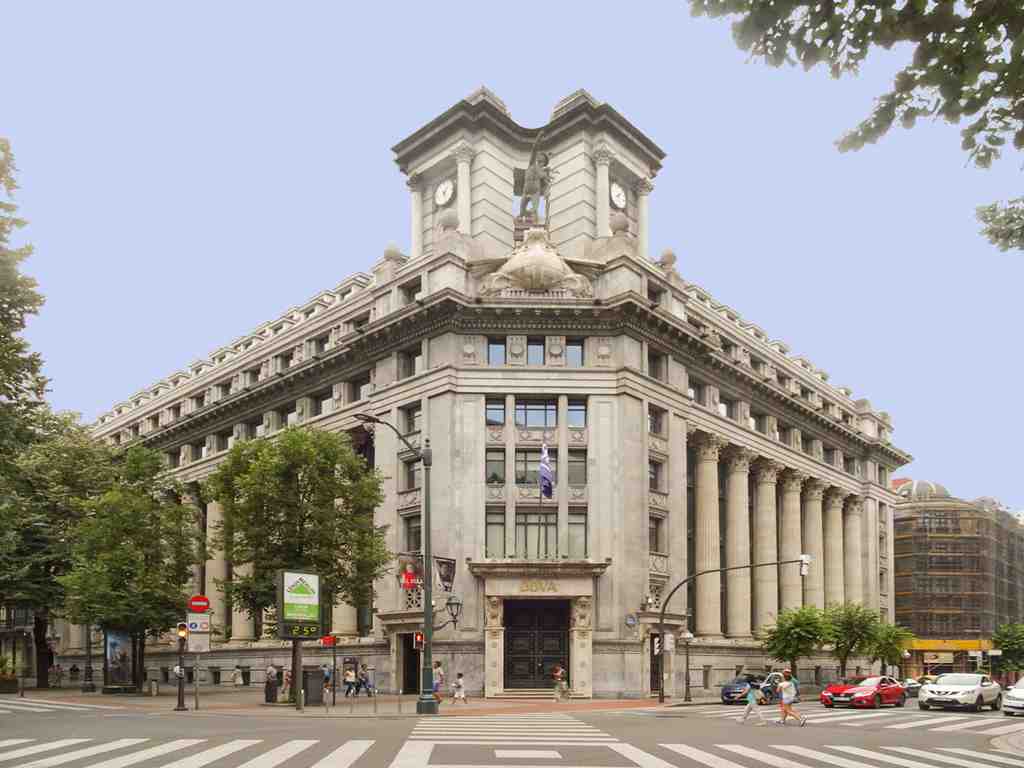
BBVA BuildingPhoto: Triplecaña, Wikimedia Commons, CC BY-SA 4.0. Cropped & resized. On your right, look for the pale stone corner building with tall Corinthian columns, a broad curved façade on Gran Vía, and a small temple-like top crowned by Mercury, the Roman god of trade.
This is the B-B-V-A Building, but its story began far less grandly... with a simple desk on the old Calle de la Estufa. Banco de Bilbao grew so fast that the desk was overwhelmed within months, and the bank started gathering property around San Nicolás. That early scramble matters, because it shows something Bilbao repeats again and again: institutions here rarely stay small for long.
And they rarely grow alone. In this city, mergers and alliances did not just change balance sheets; they redrew the map. The fusion of Banco de Bilbao and Banco del Comercio in nineteen oh one helped create a kind of banking triangle: the San Nicolás palace across the river, and Gran Vía numbers one and twelve here in the expansion district.
This particular building carries that layered history in its bones. Pedro Guimón drew the first project in nineteen twelve. Then Ricardo de Bastida reworked it, and after Bastida died, Francisco Hurtado de Saracho finished the job. Most visitors miss the little argument hidden in the dates: some references insist the project belongs to nineteen twelve, while local architectural guides place the real making of it between nineteen nineteen and nineteen twenty-three. Around here, that usually means a building took its time growing into itself.
Look up again at that rooftop Mercury by sculptor Moisés de Huerta. He is a neat little clue: this was once the headquarters of Banco del Comercio, and the message is not subtle. Trade lives here. In nineteen fifty-seven, Banco de Bilbao moved its operations into Gran Vía twelve and turned this into a banking center of the new ensanche, the planned expansion of the city. In nineteen seventy-four, Hurtado de Saracho added another floor and roofed over the inner courtyard, giving the building the silhouette you see now.
Even its memory was carefully banked. In nineteen seventy-one, Banco de Bilbao began gathering its historical archive in San Nicolás, one of Spain’s earliest private banking archives. Up ahead, Kutxabank widens this tale from one powerful house to a broader Basque pattern... and it is only about four minutes away.
On your left, Hotel Carlton stands out as a grand cream-stone block with a central arched porch, rows of iron balconies, and a steep slate mansard roof that crowns the whole…Read moreShow less
Open dedicated page →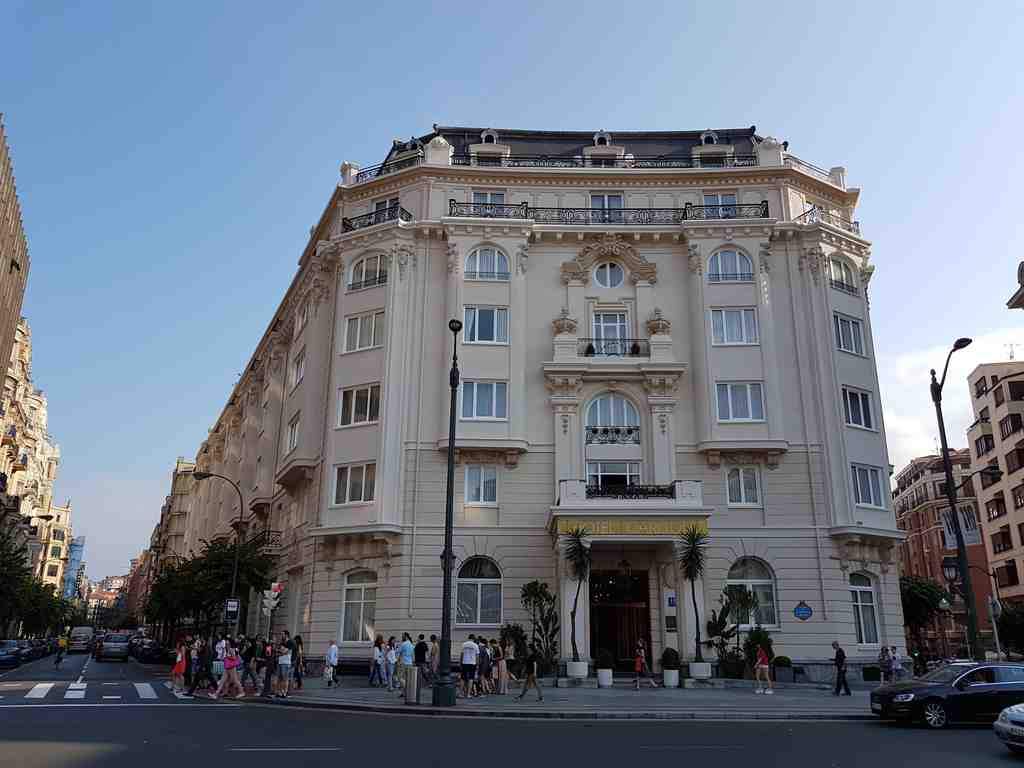
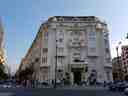
Hotel CarltonPhoto: Xabier, Wikimedia Commons, CC BY-SA 4.0. Cropped & resized. On your left, Hotel Carlton stands out as a grand cream-stone block with a central arched porch, rows of iron balconies, and a steep slate mansard roof that crowns the whole façade.
This is Bilbao dressing for the big table. Architect Manuel María Smith gave the city a hotel that could hold its own against the grand addresses of Europe, and local business families created the Gran Hotel Carlton company to make it happen. When the doors opened on the fifth of January, nineteen twenty-six, the place offered two hundred rooms, each with its own bathroom and telephone... a level of comfort that, in Spain at the time, felt downright fancy-pants.
If you glance at the image in the app, you can catch that carefully staged grandeur: the symmetrical front, the central entrance porch, the sense that every line is trying to stand a little straighter than necessary. The style is late Second Empire, a French-inspired grand hotel look, with plenty of ornament, rounded arches at street level, projecting bay windows above, and that mansard roof - the one with steep slate sides - like a formal hat set neatly on top.
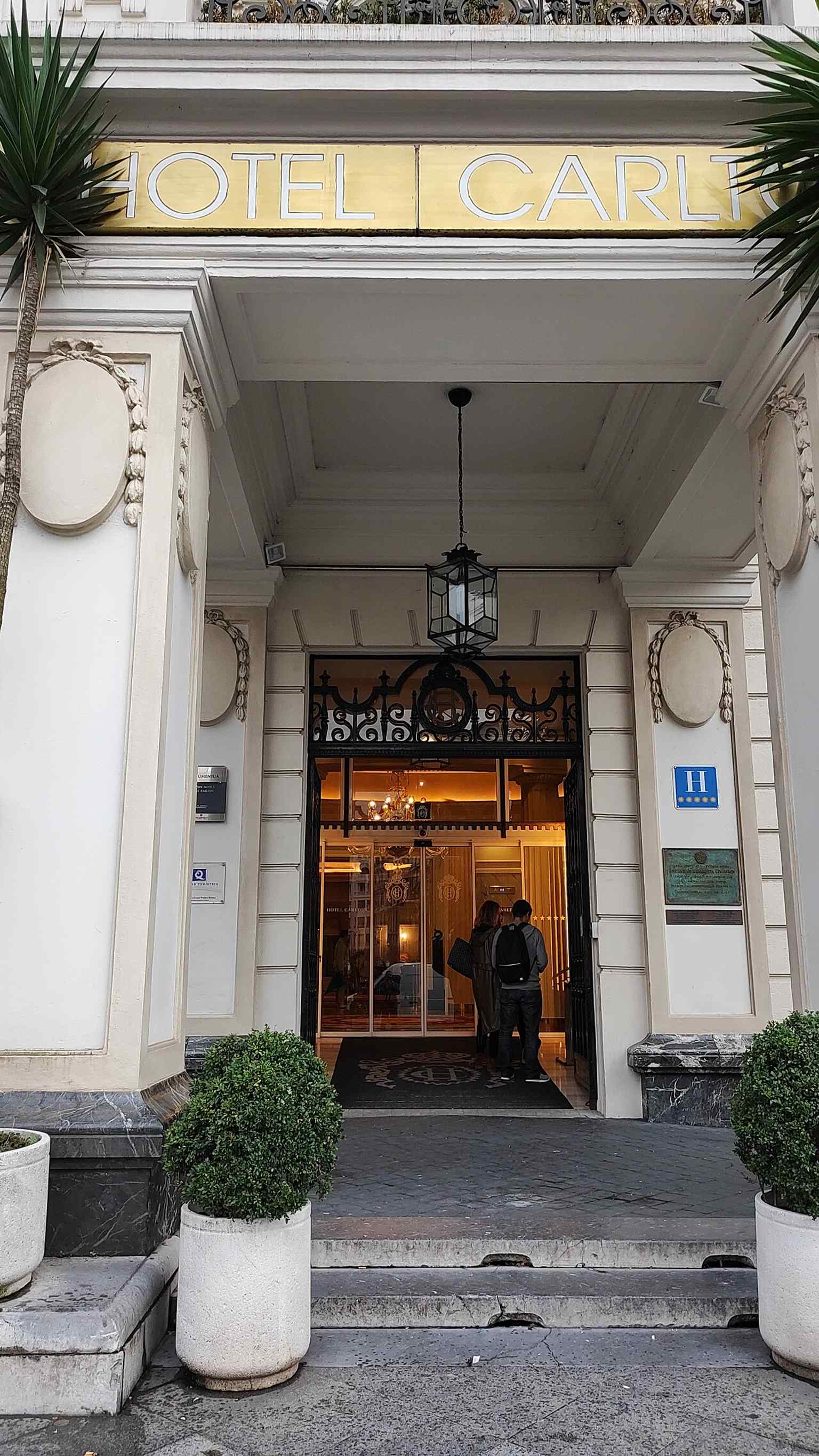
The Hotel Carlton’s main façade on Plaza Moyúa, the grand 1926 landmark that became the seat of the Basque government during the Civil War.Photo: Josi, Wikimedia Commons, CC BY-SA 4.0. Cropped & resized. But here is where the story turns.
This luxurious hotel did not remain merely luxurious. After the military uprising of the eighteenth of July, nineteen thirty-six, José Antonio Aguirre and the first Basque Government moved their headquarters here. In the middle of war and bombardment, this address became the political nerve center of a government trying to function under fire. If a hotel you knew suddenly became the seat of wartime power, would you ever look at its chandeliers the same way again?
Most visitors notice the elegance first. Locals remember the human scenes. In January of nineteen thirty-six, Federico García Lorca returned here after a recital with Margarita Xirgu. Back in the lobby, she insisted on accompanying him, and their farewell carried a terrible weight in hindsight: Xirgu left for Cuba, Lorca went back to Granada, and only months later he was murdered. That tiny moment in a hotel lobby ties Bilbao’s cultural life to the storm that followed.
The Carlton even sheltered art during the war. The Bilbao Fine Arts Museum stored twenty works here before sending them urgently to France around the twentieth of April, nineteen thirty-seven. And decades later, during remodeling in nineteen ninety-four, workers found a hidden wooden door in the basement. Behind it sat a Civil War bunker, nearly empty except for two chairs and two newspapers from nineteen thirty-six. That’s the Carlton in one image: polished upstairs, emergency downstairs.
In about one minute, Moyúa opens up around you. As you head there, keep this façade in mind... because in Bilbao, elegance and crisis have a habit of sharing the same address.
On your right, look for an oval stone plaza with a tiered central fountain, formal geometric gardens, and a broad ring-like layout that still gives away its older name, Plaza…Read moreShow less
Open dedicated page →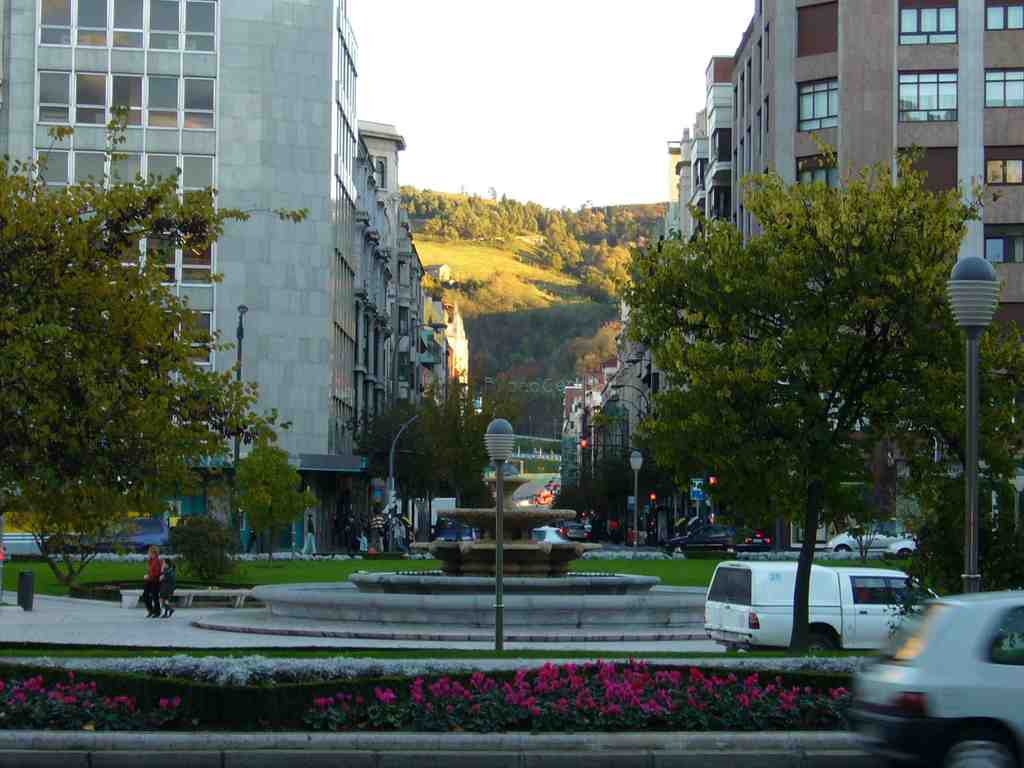
MoyúaPhoto: Wikimedia Commons contributor, Wikimedia Commons, Public domain. Cropped & resized. On your right, look for an oval stone plaza with a tiered central fountain, formal geometric gardens, and a broad ring-like layout that still gives away its older name, Plaza Elíptica.
This square is Bilbao’s urban salon... the kind of place where the city presents itself in public, smooths its jacket, and waits to be seen. It looks composed, almost ceremonial, but Moyúa has never been just decoration. It is a stage, a crossroads, and sometimes a pressure point.
The name tells you that right away. At first, people called it Plaza Elíptica, plain and geometric. Later the city renamed it for Federico Moyúa, a mayor who served two terms and remained politically active during the dictatorship era. That switch changed the square from a shape into a person, and that is a telling move in a city that keeps editing its own public face.
Its current look came in the nineteen forties, when architect José Luis Salinas gave the plaza the fountain and formal gardens that became its signature. If you check the image on your screen, you can see how carefully that layout still holds the center. Bilbao keeps tending it too: repairs for leaks, waterproofing for the fountain, new lighting, and even a replanting of twenty-two thousand flowers in twenty twenty-six. Reinvention here often arrives dressed as maintenance.
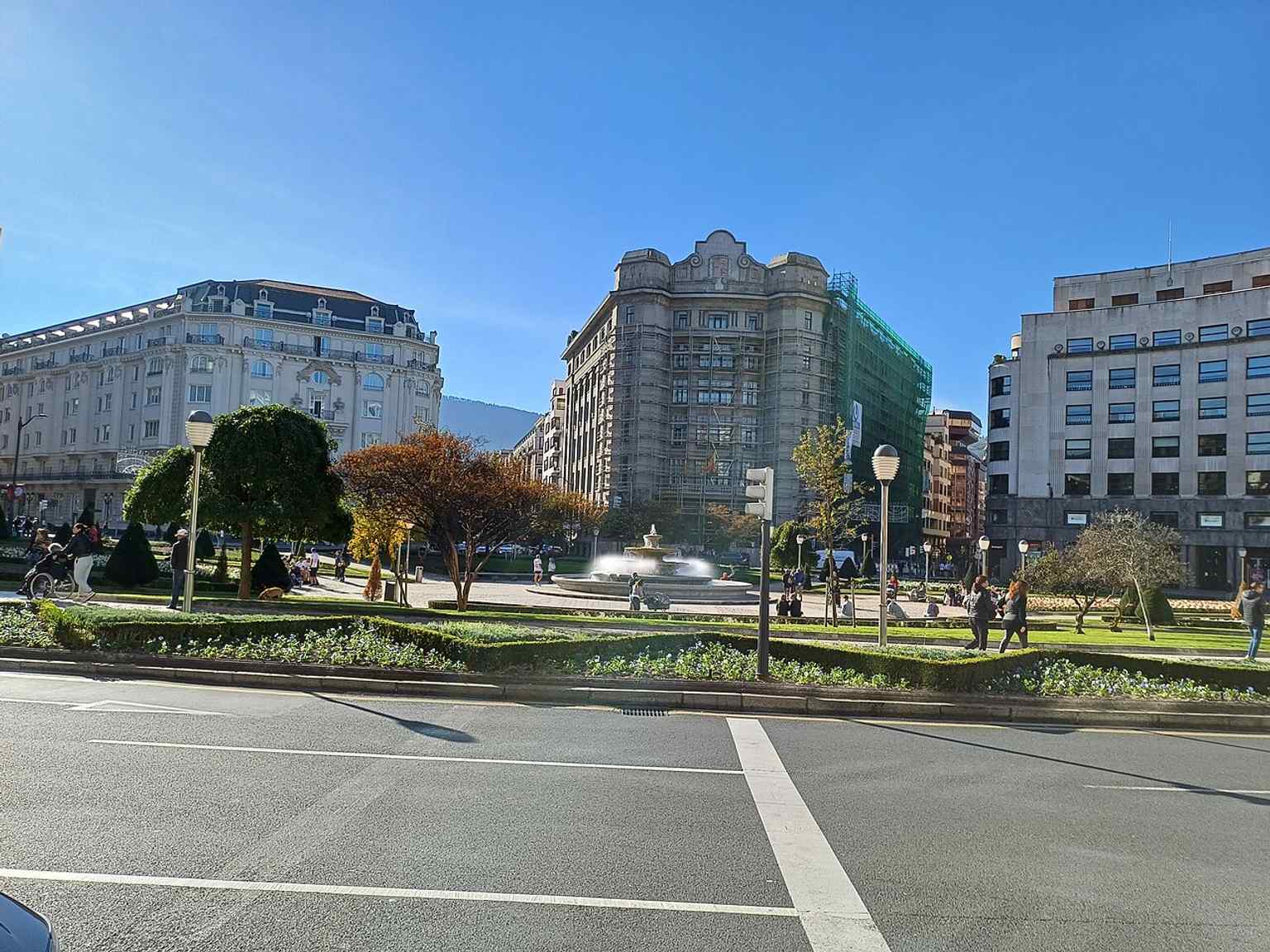
A broad view of Moyúa square in Bilbao, showing the formal layout that replaced the earlier Plaza Elíptica name and geometric identity.Photo: Quahadi, Wikimedia Commons, CC BY-SA 4.0. Cropped & resized. But this elegant circle also sits over one of the network’s most heavily used stations. Metro lines one and two share the same tracks and platforms below, and buses end here too, so one disruption travels fast. Serious service interruptions in twenty eighteen, twenty nineteen, and again in twenty twenty-three shut the station and rippled across the system. That is the other truth of a civic center: it gathers beauty, yes, but it also absorbs shock.
Even the naming remains unfinished. In recent years, street plaques have begun restoring Plaza Elíptica, while station announcements still say Moyúa... classic city behavior, changing the sign before changing the habit.
Next, we trade grand civic posture for something more playful and personal at Montero House, about a minute away.
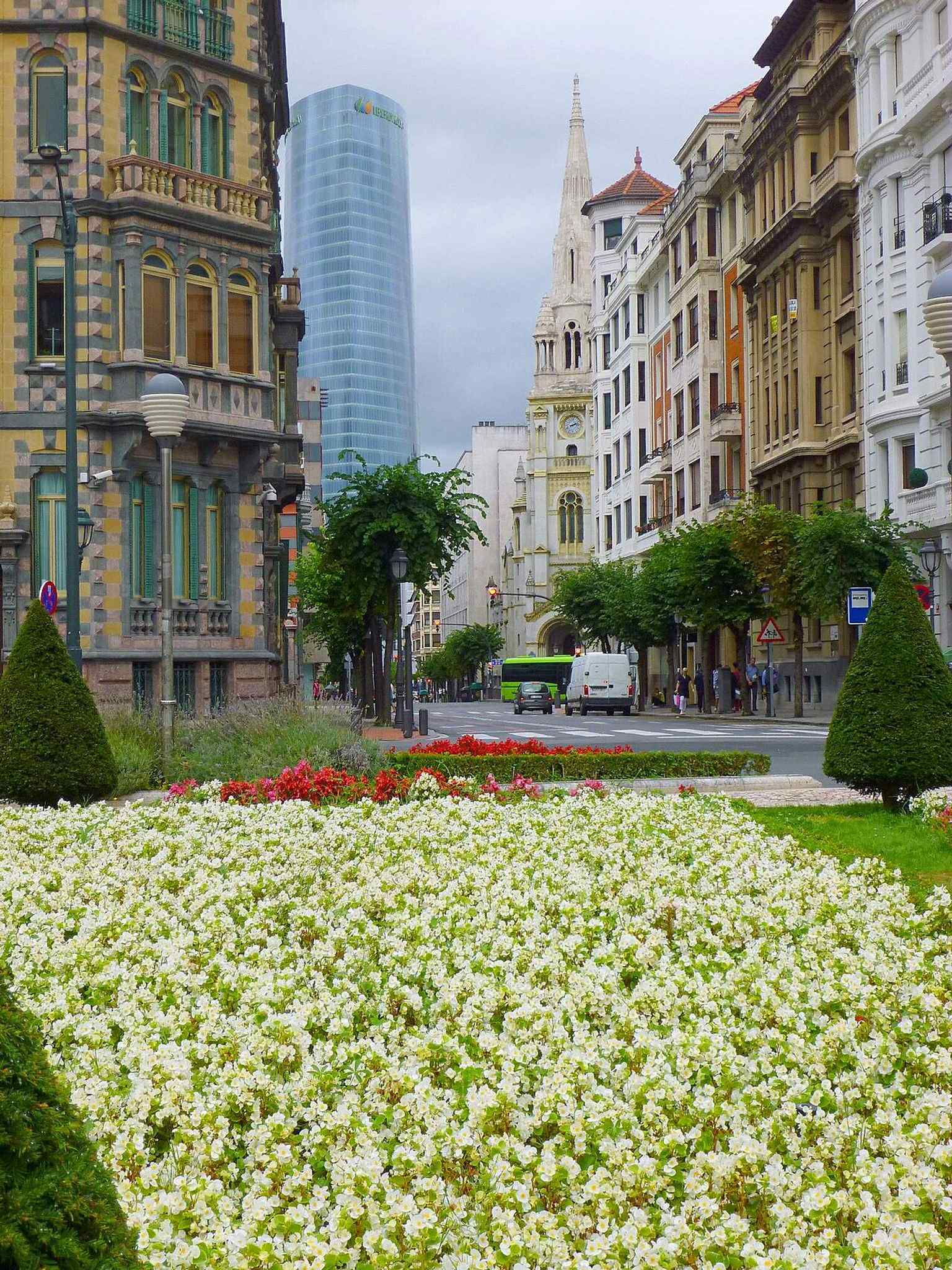
Plaza Moyúa seen with its flower beds — the square was redesigned in the 1940s and is still maintained as one of Bilbao’s signature civic spaces.Photo: Zarateman, Wikimedia Commons, CC BY-SA 4.0. Cropped & resized. 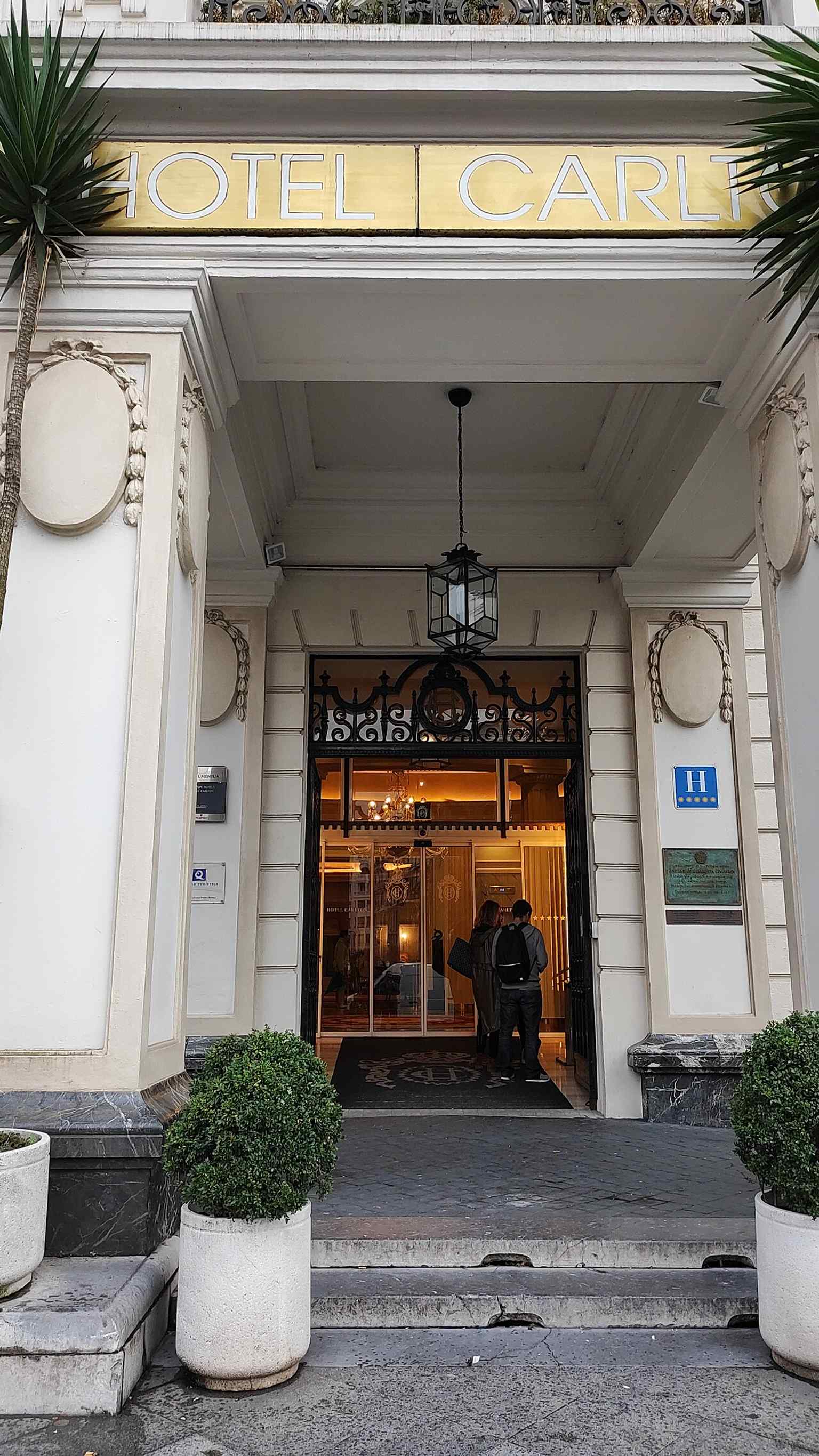
Hotel Carlton fronts Moyúa, one of the plaza’s landmark façades and a key part of the elegant urban ensemble around the square.Photo: Josi, Wikimedia Commons, CC BY-SA 4.0. Cropped & resized. 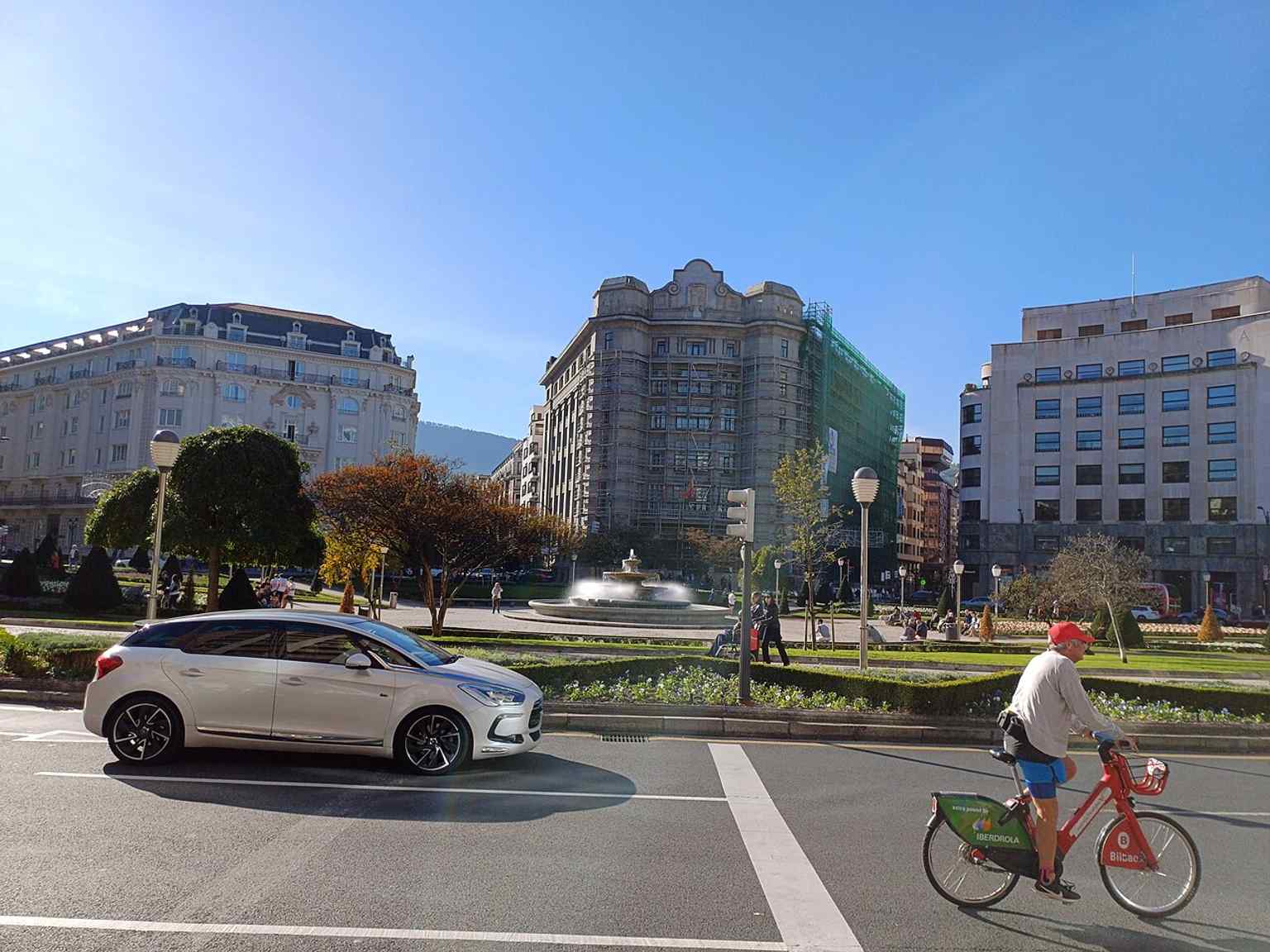
Another wide street-level view of Moyúa, where the central gardens and traffic circulation reflect the plaza’s changing role in Bilbao’s pedestrian plans.Photo: Quahadi, Wikimedia Commons, CC BY-SA 4.0. Cropped & resized. 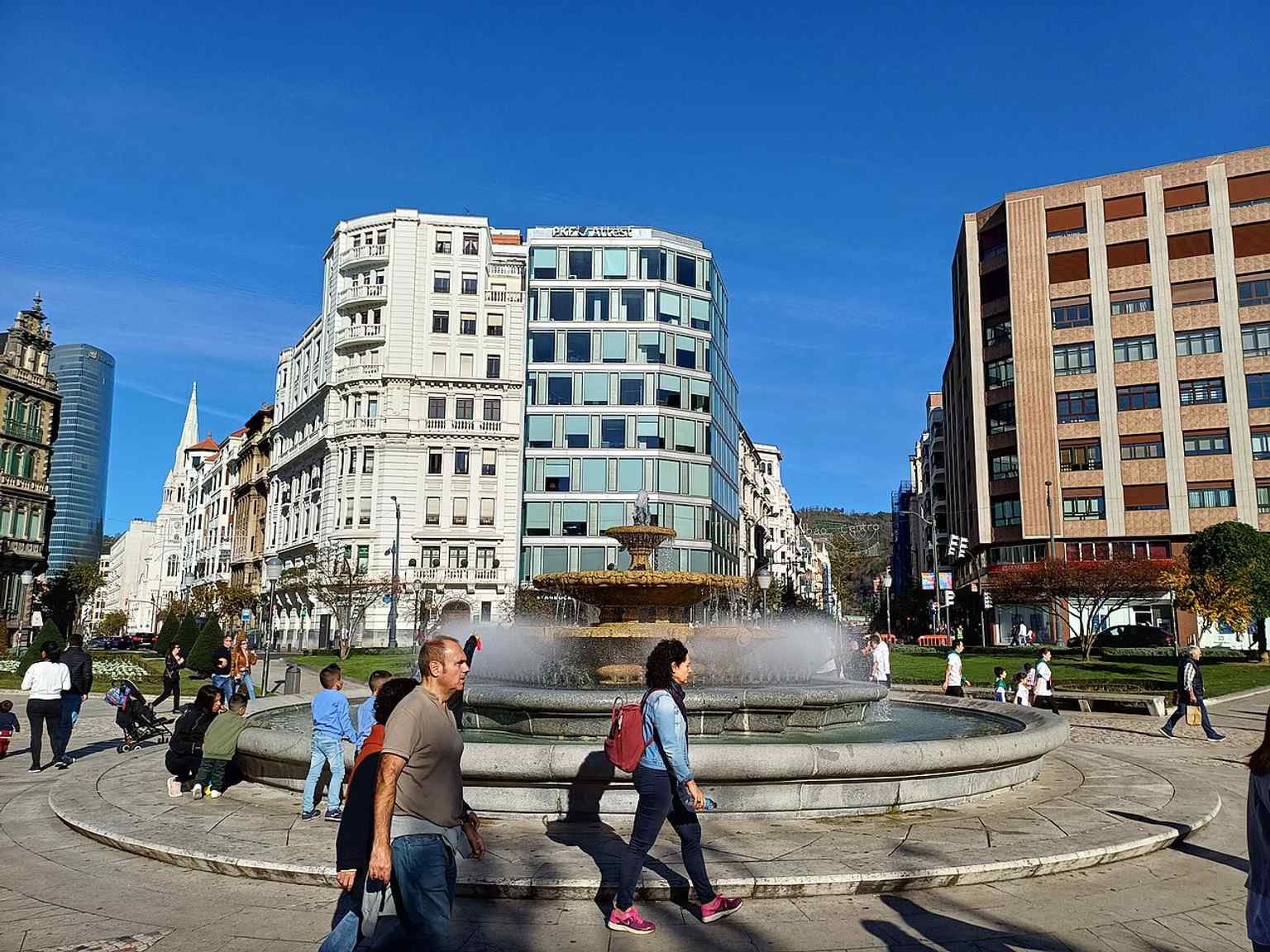
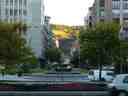
Moyúa square framed by surrounding buildings and greenery — a good view of the central plaza that has repeatedly appeared in station and city news.Photo: Quahadi, Wikimedia Commons, CC BY-SA 4.0. Cropped & resized. 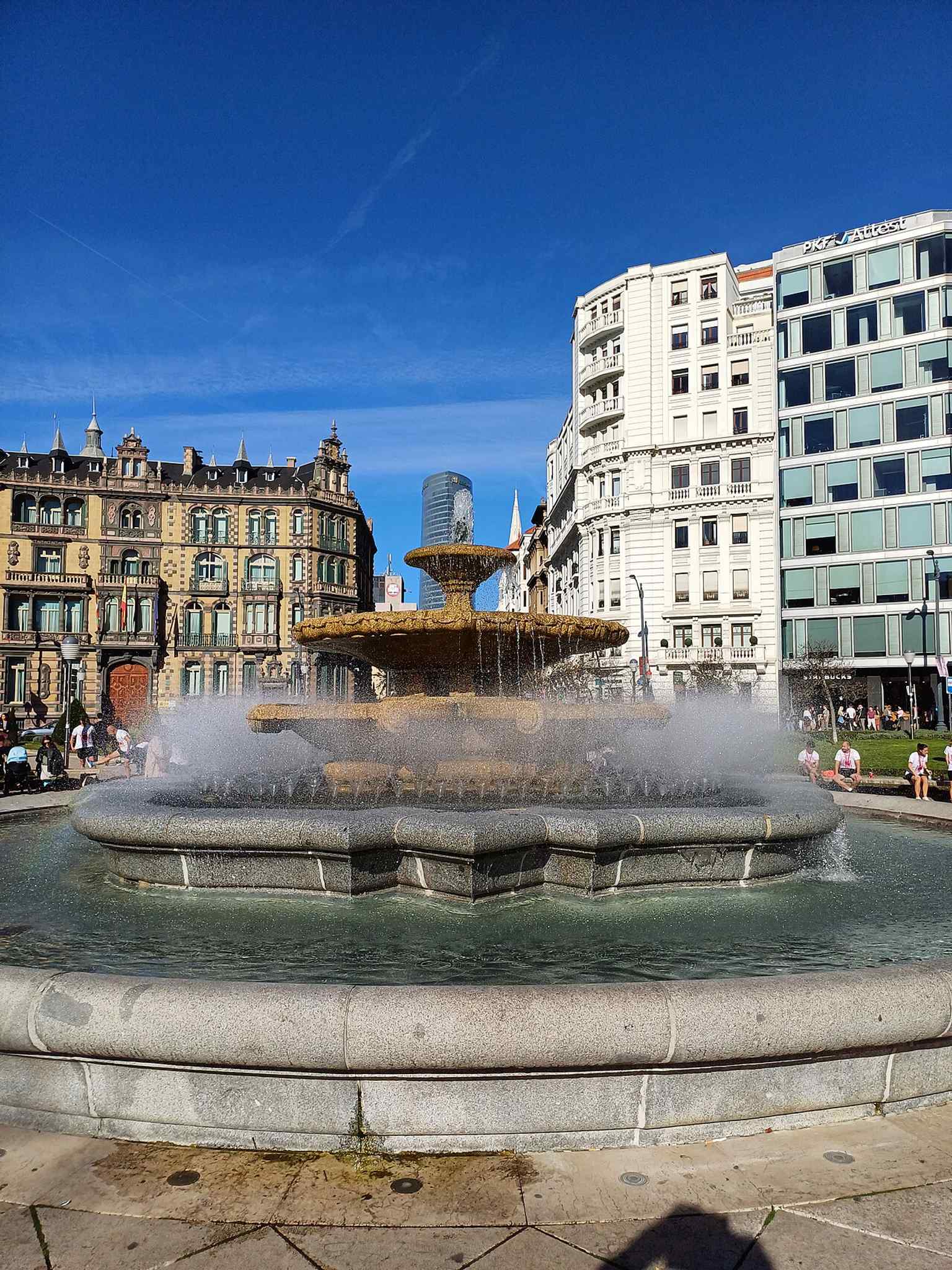
A closer look at Moyúa’s landscaped core, echoing the plaza’s emblematic gardens and the fountain-centered design from the 1940s redesign.Photo: Quahadi, Wikimedia Commons, CC BY-SA 4.0. Cropped & resized. 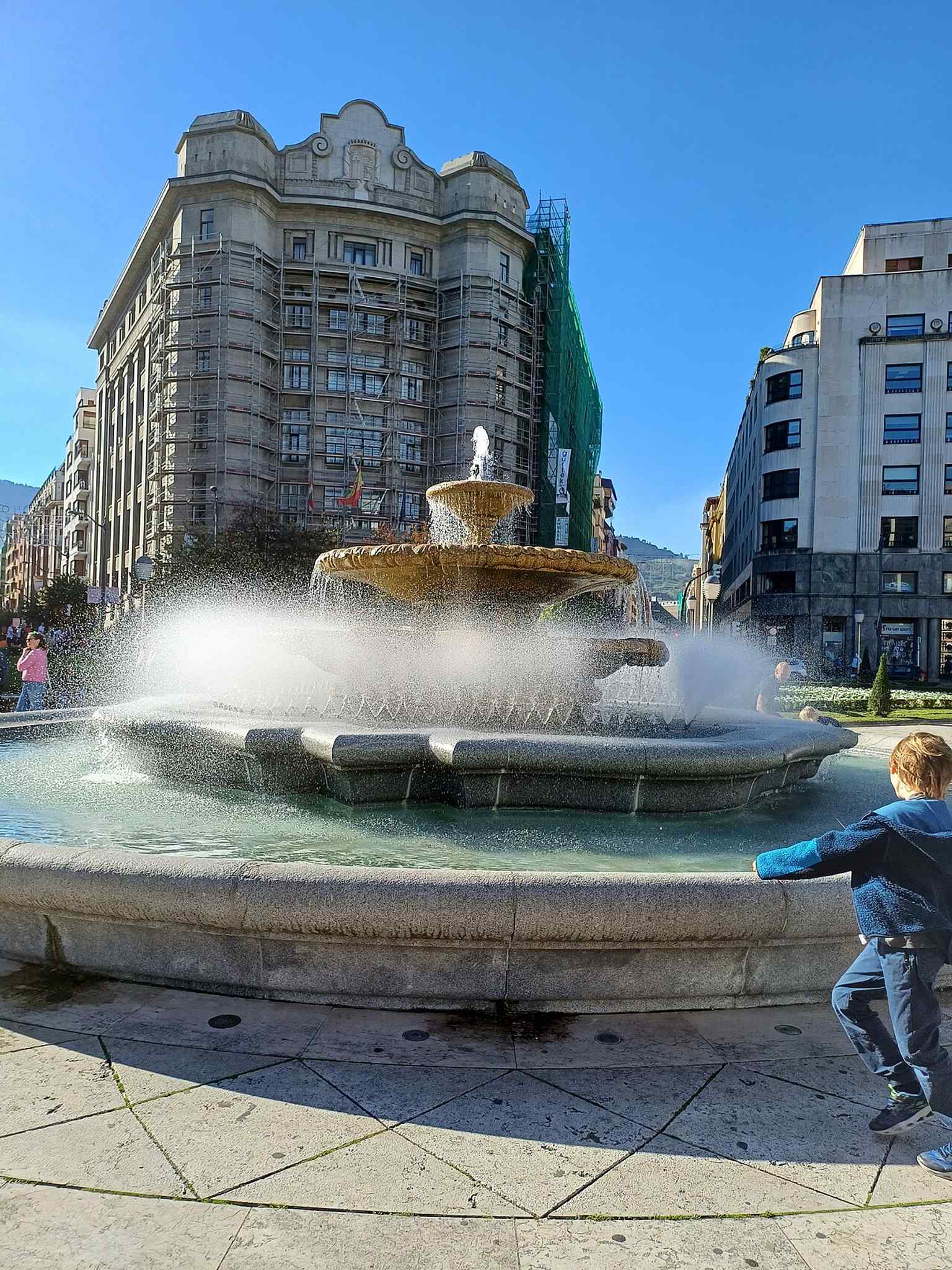
Moyúa square from another angle, useful for showing the open civic space that has been at the center of Bilbao’s renaming and urban planning debates.Photo: Quahadi, Wikimedia Commons, CC BY-SA 4.0. Cropped & resized. 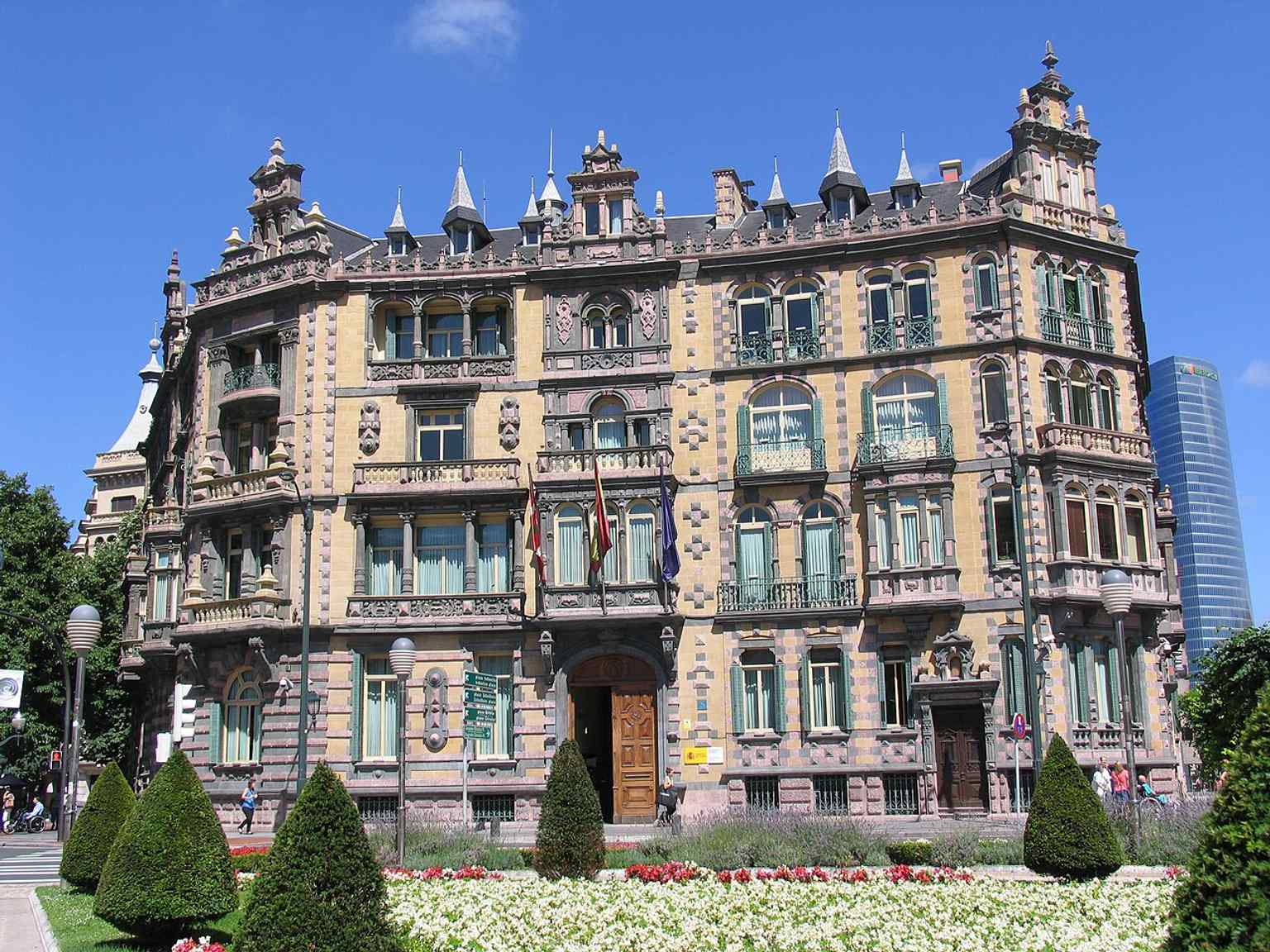
The Chavarri Palace near Moyúa, part of the historic architectural backdrop that makes the square feel like Bilbao’s civic center.Photo: Alex Urcaregui, Wikimedia Commons, CC BY-SA 4.0. Cropped & resized. On your right stands a pale stone palace with a steep slate roof, pointed gables, and a parade of mismatched windows that makes the whole façade look gloriously unwilling to…Read moreShow less
Open dedicated page →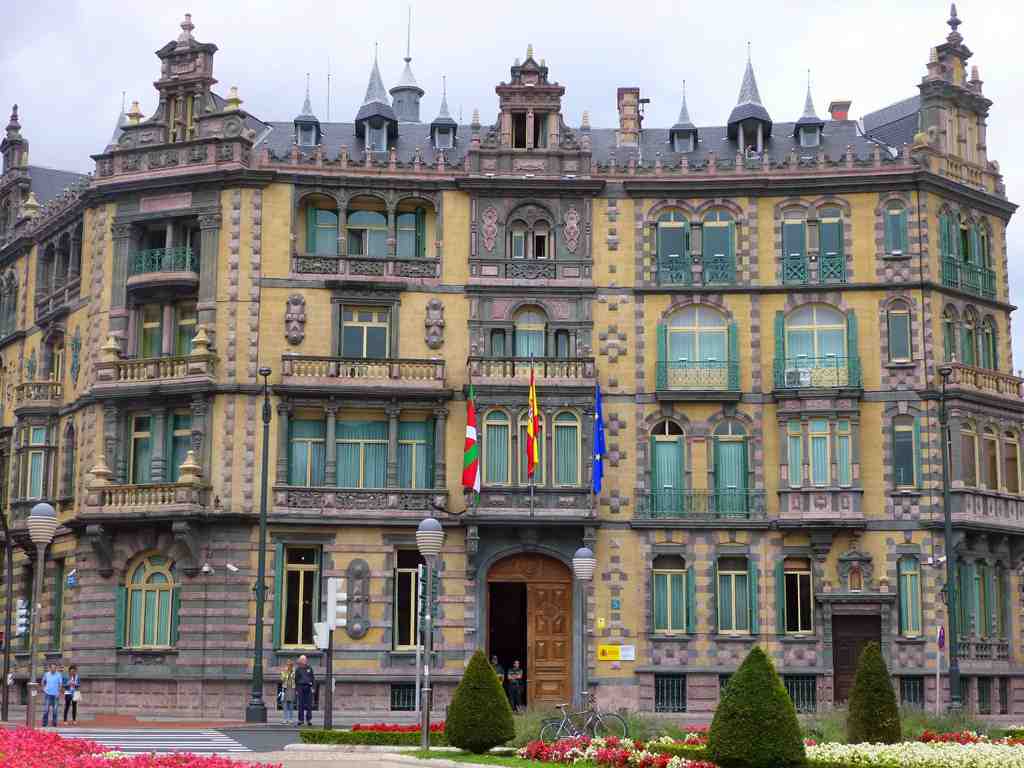
Chavarri PalacePhoto: Zarateman, Wikimedia Commons, CC BY-SA 4.0. Cropped & resized. On your right stands a pale stone palace with a steep slate roof, pointed gables, and a parade of mismatched windows that makes the whole façade look gloriously unwilling to repeat itself.
This is Chávarri Palace, and it is Abando showing off in full formalwear. In the early twentieth century, brothers Víctor and Benigno Chávarri y Salazar ordered a home that would announce their family’s industrial success to the city. They did not think small. They hired Paul Hankar, a Belgian architect, and Bilbao architect Atanasio de Anduiza carried the project through, giving Moyúa one of its boldest imported statements: a palace in the Flemish style, the kind you might expect in Antwerp or Bruges rather than here.
Take a moment with those windows. One of the building’s most famous quirks is that no set is exactly the same as another. Even the windows seem to have individual ambitions. If you glance at the image in the app, you can catch that restless variety across the façade more clearly.
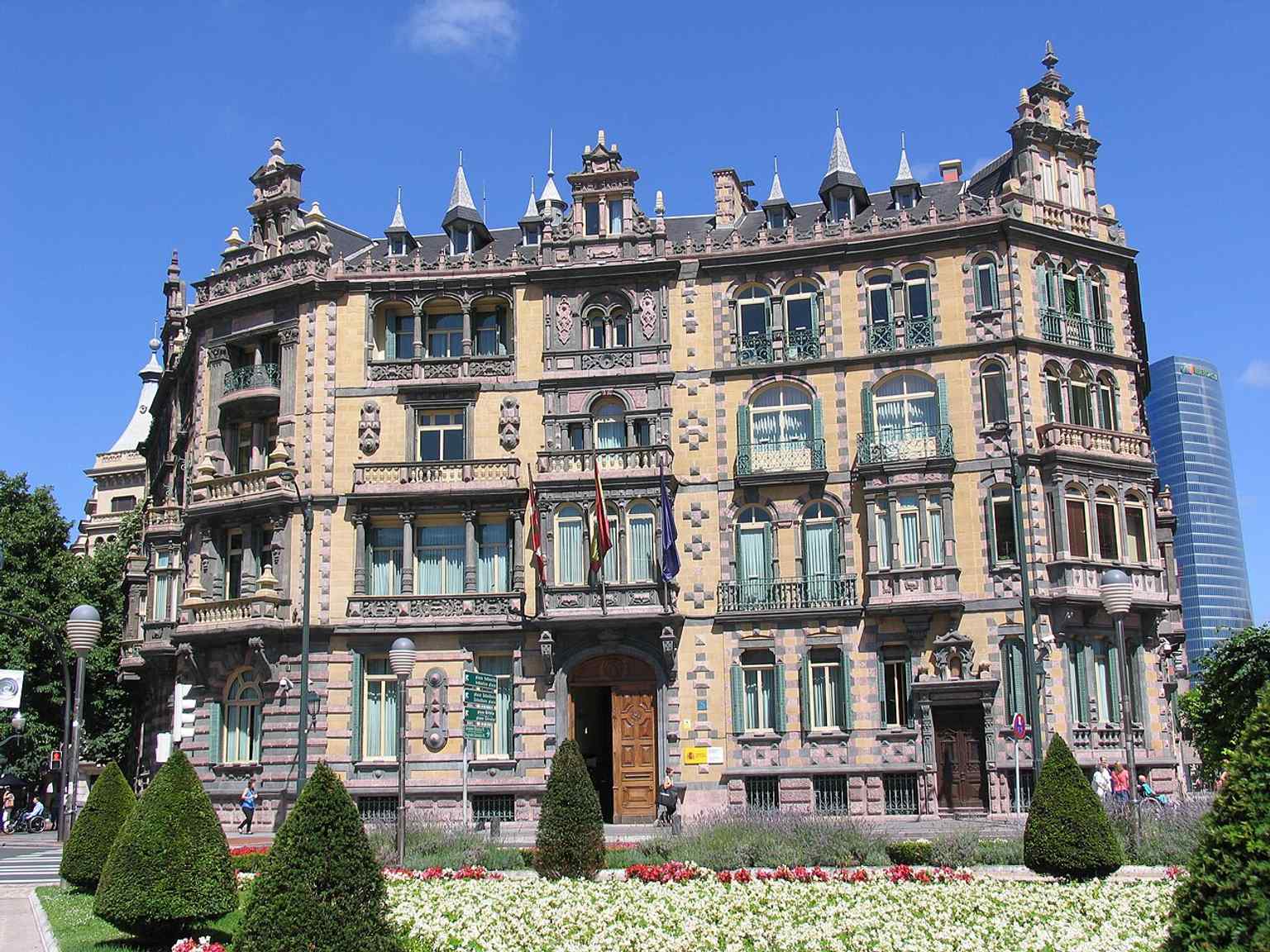
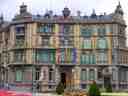
The palace’s Belgian-inspired façade in Bilbao, designed by Paul Hankar and completed by Atanasio de Anduiza, shows the distinctive eclectic style that made it a symbol of the city’s new industrial bourgeoisie.Photo: Alex Urcaregui, Wikimedia Commons, CC BY-SA 4.0. Cropped & resized. Inside, the performance continued. Several salons carried decoration by the painter José Echenagusia Errazquin, and the Music Room, done in French Baroque style - that means rich, ornate, and proudly dramatic - still preserves ceiling paintings attributed to him.
But here comes the turn in the story. Víctor Chávarri fell gravely ill and died in nineteen hundred, before he could really live in the palace he had commissioned. So this monument to triumph also carries a private loss inside its walls.
Later, the family sold it to the Spanish state in nineteen forty-three. Eugenio María de Aguinaga reshaped it between nineteen forty-three and nineteen forty-seven for government use, undoing much of the original domestic layout. Then, during Francisco Franco’s longest stay in Bilbao, from the eighteenth to the twenty-second of June, nineteen fifty, the palace became a stage for official ceremony and propaganda.
Today it houses Spain’s government representation in Biscay, still only partly open, still a little guarded with its secrets. From here, old Abando has made its final grand bow. Next, in about seven minutes, head toward Euskadi Square, where Bilbao starts rehearsing a very different future.
Look for a broad pale-stone plaza with a rounded layout, a straight central promenade cutting through it, and rings of tall trees marking its edges. This square is where Bilbao…Read moreShow less
Open dedicated page →Look for a broad pale-stone plaza with a rounded layout, a straight central promenade cutting through it, and rings of tall trees marking its edges.
This square is where Bilbao changes gear. If Plaza Moyúa feels like the old city receiving guests in a polished drawing room, Plaza Euskadi feels like the city rolling up the map, clearing the table, and sketching a new future right on top of it.
Diana Balmori, the landscape architect who taught at Yale and also shaped the nearby Campa de los Ingleses, designed this place not as a standalone plaza but as a hinge. In the Abandoibarra redevelopment, the big plan approved in two thousand and three, Balmori worked with César Pelli and Eugenio Aguinaga to turn former industrial land into a new civic, cultural, and business district by the river. This square became the join between the older Ensanche and that new riverfront world. That is the trick here: it does not simply decorate the city... it connects two versions of it.
You can feel that in the layout. The square covers about six thousand six hundred square meters, with a five-meter-wide central promenade, oaks on the north side, and lindens on the south. If you glance at the image in the app, you can see how open the design is, almost like a landing strip for pedestrians moving between neighborhoods.
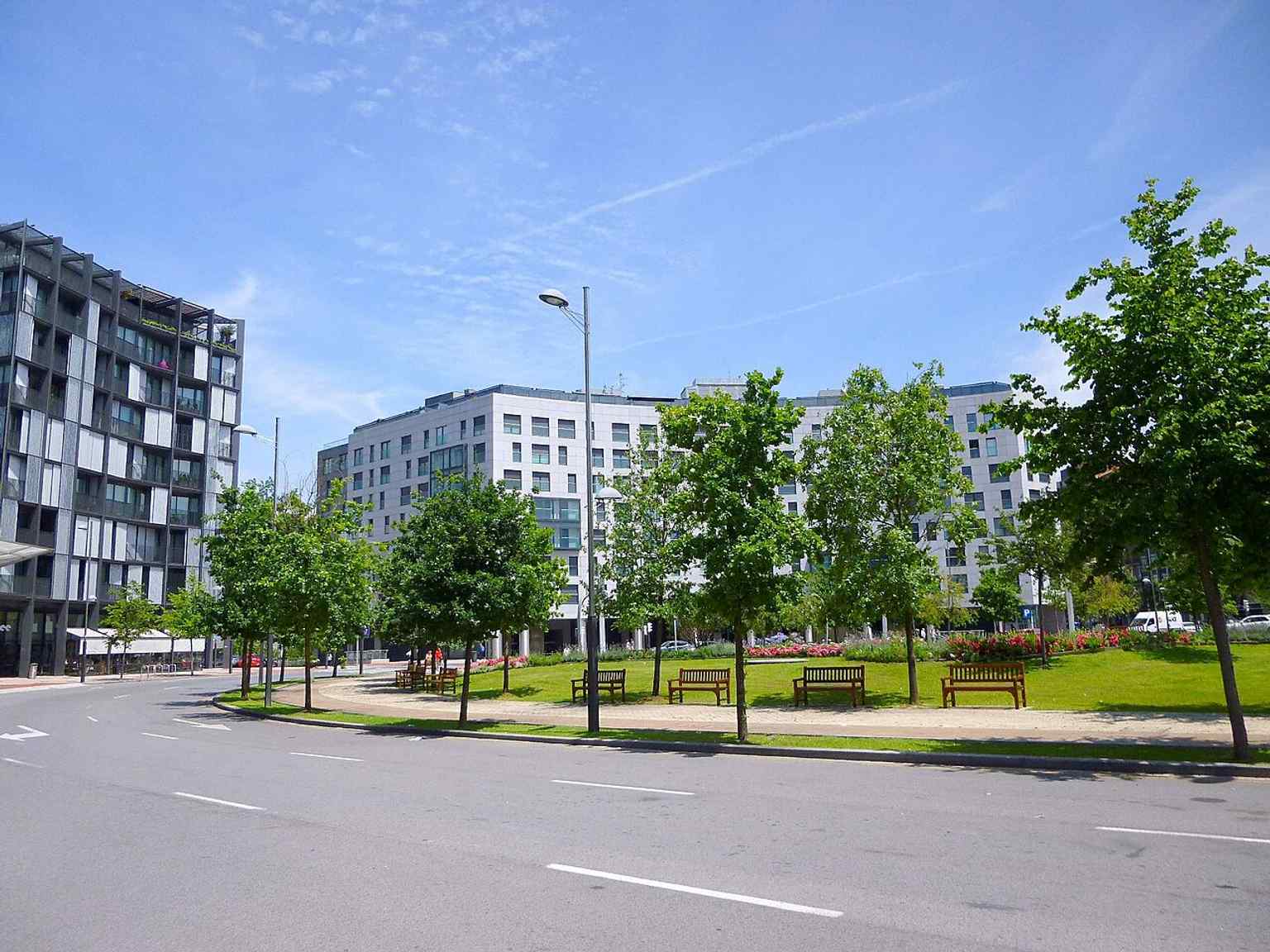
A broad view of Plaza Euskadi itself, showing the open pedestrian space that links Abandoibarra with the city center.Photo: Zarateman, Wikimedia Commons, CC BY-SA 4.0. Cropped & resized. Most visitors never hear the small local quarrel tucked inside this place. Before the official name settled, some people pushed for Plaza Euskal Herria instead. Mayor José Ignacio Azkuna said no, and Plaza Euskadi it remained. Even a new square in Bilbao, apparently, arrives with opinions attached.
There is another layer under your feet. Before this plaza opened to the public on the eighteenth of March, two thousand and eleven, this site held a commuter rail station tied to the old Abandoibarra rail corridor. The tracks went, the city opened itself to the river, but the transport memory never quite vanished. Officials even studied the idea of putting a metro station beneath this very square. Bilbao rarely throws away an old function; it usually teaches it a new language.
And Balmori had to fight for this one. The financial crisis that hit Spain in two thousand and eight forced her to rethink the project almost from scratch. The fountain disappeared. The ambitious inner garden disappeared too. Her team counts the plaza as complete in two thousand and twelve, a year after the public opening, which tells you something useful: Abandoibarra did not arrive fully formed. It settled, adjusted, and kept negotiating with reality.
That negotiation never really stopped. In later plans, Norman Foster proposed extending the Fine Arts Museum and nearby park into this area by removing the traffic circle. Aguinaga pushed back hard and argued Foster had it wrong. The grandest version stalled, and a gentler rethink prevailed. Very Bilbao: even the future gets debated at street level.
Now lift your eyes toward the skyline wrapped around this square. Pelli once said that if the city kept growing, building upward was inevitable. Standing here, that argument stops being theory. It becomes glass, height, and confidence. Head toward the tallest answer of all... the Iberdrola Tower waits just ahead.
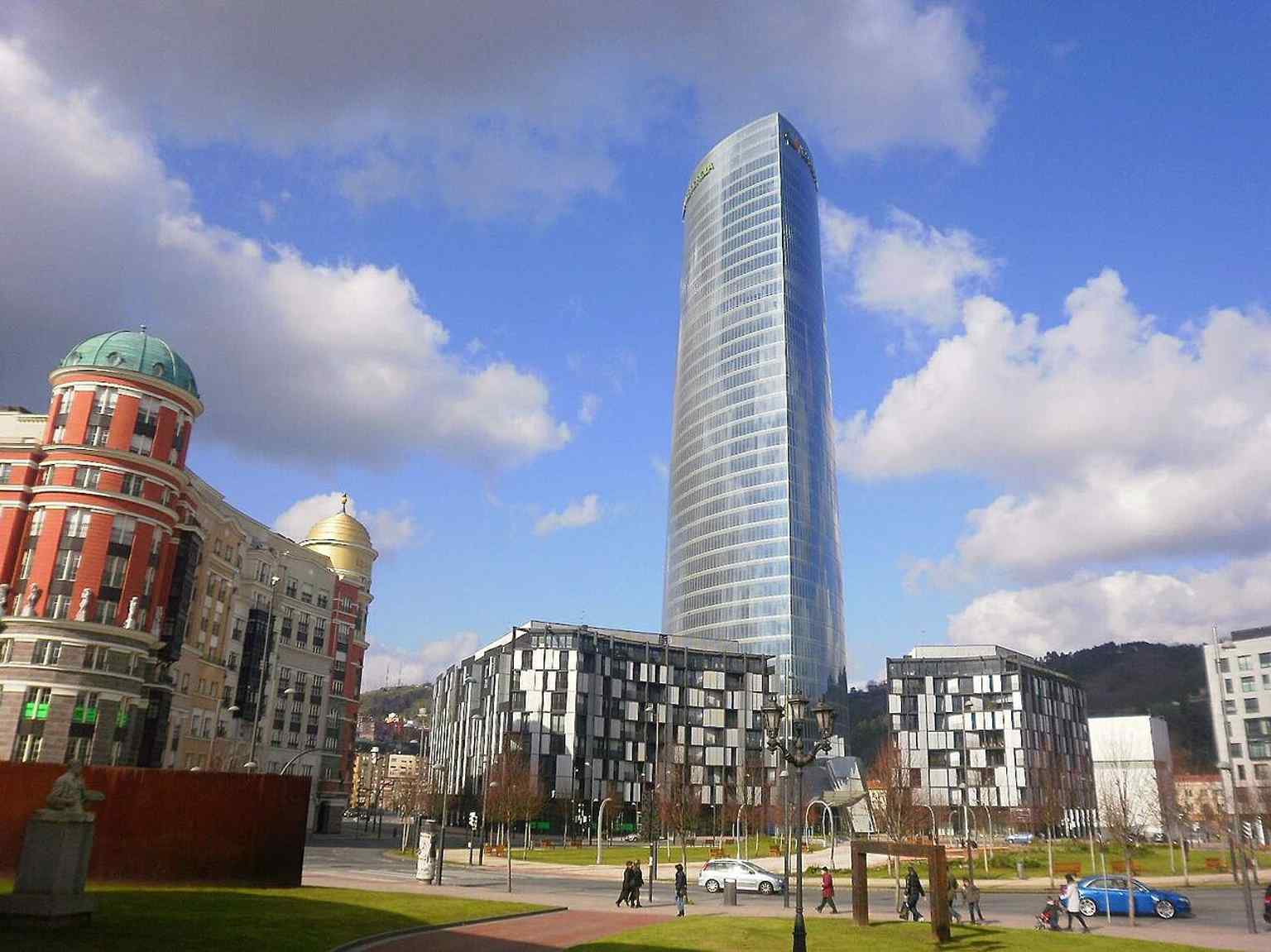
Plaza Euskadi with the Torre Iberdrola and Artklass framing the square — a good view of the vertical skyline that grew around Balmori’s design.Photo: Zarateman, Wikimedia Commons, CC BY-SA 3.0. Cropped & resized. 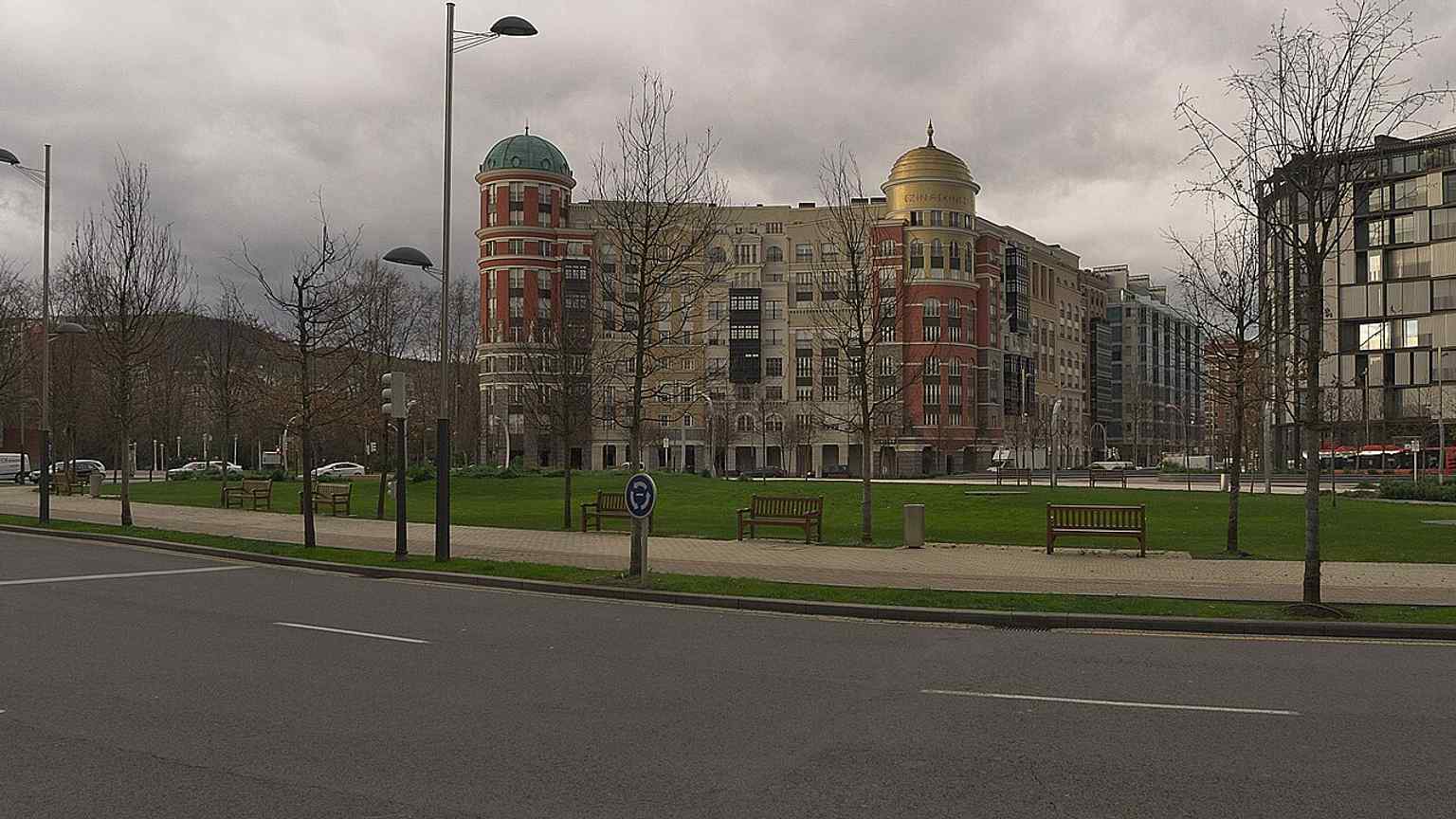
The Artklass building beside Plaza Euskadi, one of the distinctive residential towers mentioned among the square’s surrounding landmarks.Photo: José Luis Filpo Cabana, Wikimedia Commons, CC BY-SA 4.0. Cropped & resized. On your right, Iberdrola Tower is a tall glass oval that narrows as it rises, wrapped in a smooth curtain wall and finished with a distinct sculptural crown at the top. This is…Read moreShow less
Open dedicated page →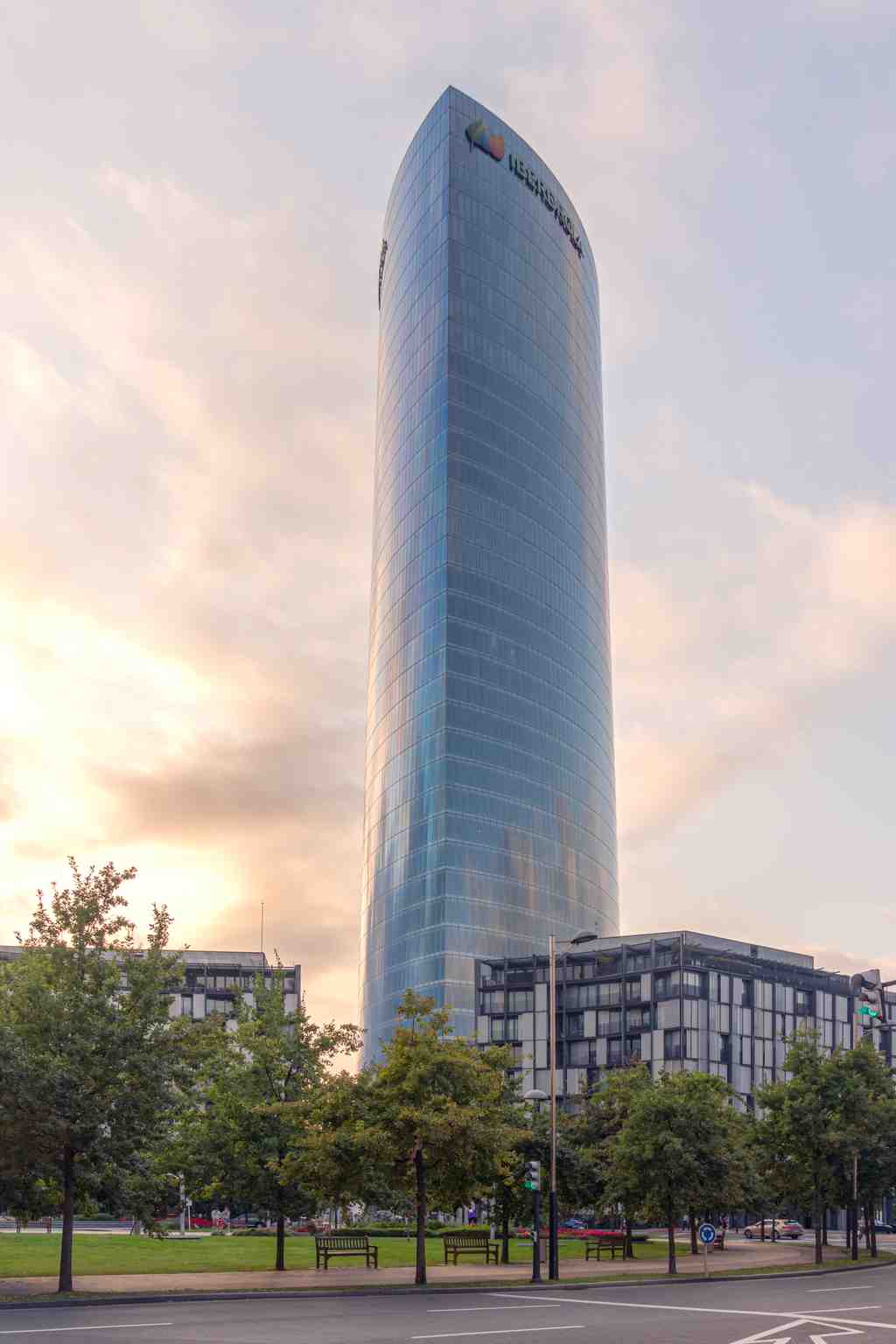
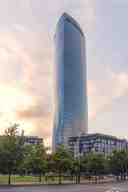
Iberdrola TowerPhoto: Fernando, Wikimedia Commons, CC BY-SA 4.0. Cropped & resized. On your right, Iberdrola Tower is a tall glass oval that narrows as it rises, wrapped in a smooth curtain wall and finished with a distinct sculptural crown at the top.
This is the point where a lot of Bilbao’s recent story pulls into focus. The ground under your feet once belonged to an industrial river edge, close to the old Euskalduna shipyards and the working waterfront. Then, in nineteen ninety-two, Bilbao Ría two thousand - a public regeneration company - began remapping places like Abandoibarra, turning underused industrial land into parks, housing, offices, and cultural buildings. This tower was meant to be the exclamation point... not just another office block, but the one high-rise that would pin the whole new business district to the skyline.
César Pelli, the Argentine American architect, gave it that job. People on the project remembered him as unusually hands-on and collaborative, and he described the tower as part of the city rather than a flashy object dropped from outer space. That sounds simple, but it mattered here. Bilbao did not want a stranger; it wanted a new landmark that could shake hands with the older city.
The first plans for Abandoibarra imagined two towers of two hundred meters. In the end, planners and architects, including Aguinaga y Asociados, settled on one. Even then, the scheme wobbled. In nineteen ninety-eight, the Biscay provincial authority bought the plot from R-E-N-F-E, Spain’s national rail company, for seventy-nine million euros and planned to gather its scattered offices here. It even pushed the design higher, from one hundred fifty to one hundred sixty meters, to fit more space. Then politics changed. After the two thousand three elections, José Luis Bilbao scrapped the idea because he judged the cost too high. For a moment, this site looked like a grand promise with no tenant - a very expensive empty plate.
Then Iberdrola stepped in, in July of two thousand and four. The energy company needed a headquarters its older Gardoqui offices could not provide, so it agreed to take the upper floors and anchor the whole project. That decision rescued the plan and changed the city’s silhouette. Construction moved through deep excavation for five underground levels, while nearby pieces of the district rose in sync: the square, housing, the Deusto library, and parking below ground. If you want a glimpse of that phase, take a look at the construction image on your screen. It really does feel like the future pushing up through old ground.
The financial crisis of two thousand and eight nearly knocked it sideways too, and Iberdrola and Kutxabank had to renegotiate ownership. So even this polished tower carries a few fingerprints from anxiety and improvisation. Bilbao style, you might say: elegant finish, complicated paperwork.
By the time King Juan Carlos the First inaugurated it on the twenty-first of February, two thousand and twelve, the tower had become the tallest building in Bilbao and the Basque Country: one hundred sixty-five meters, forty floors, and a clear sign that the riverfront had entered a new chapter. If you glance at the image showing the tower by the Nervión, you can see exactly how it anchors the whole redeveloped edge.
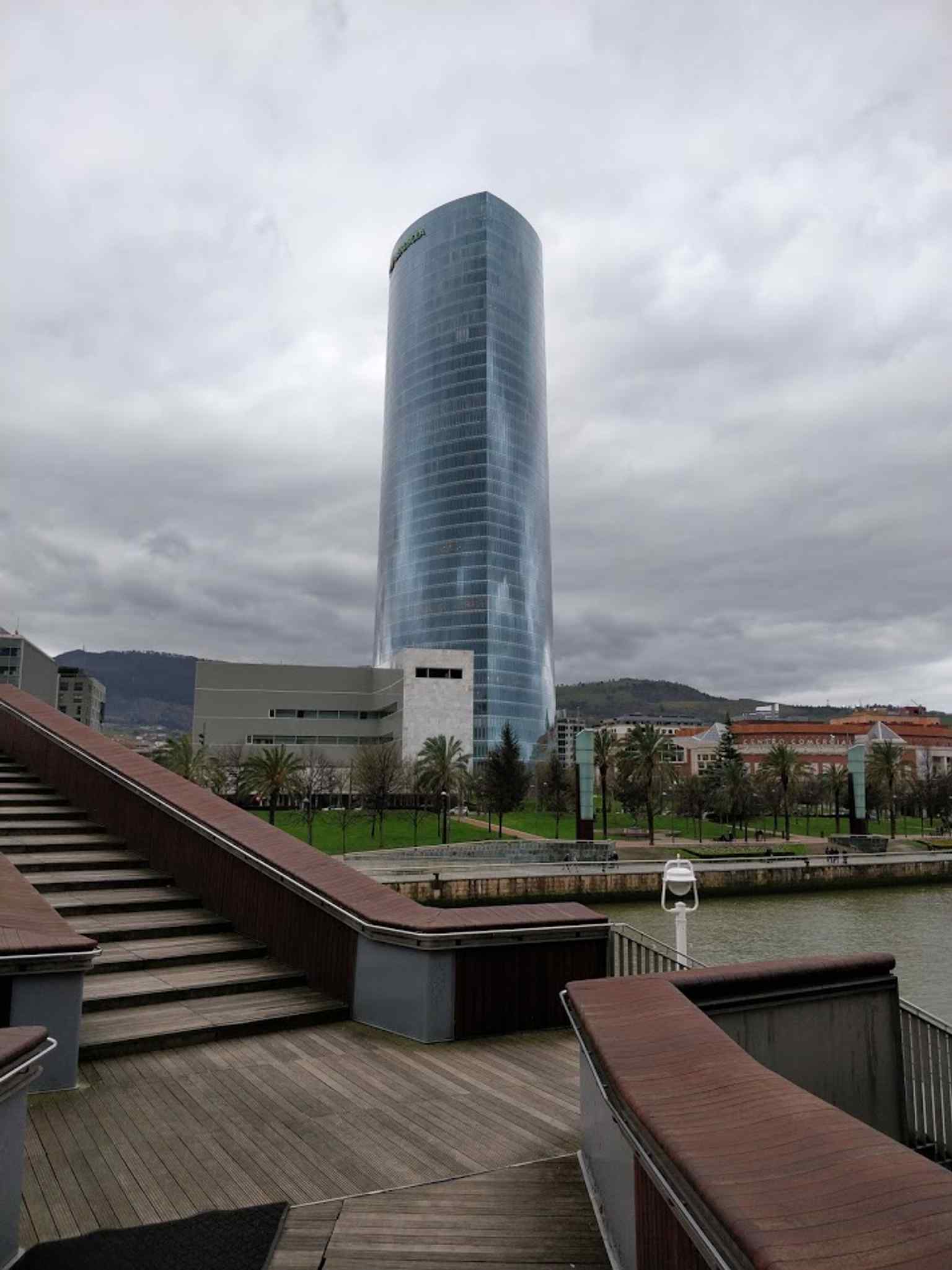
Seen from the Pedro Arrupe footbridge, this angle places the tower in its Abandoibarra riverside setting beside the Nervión.Photo: Ramon Garcia, Wikimedia Commons, CC BY-SA 4.0. Cropped & resized. And now, fittingly, we leave the big monument to corporate power for something quieter and more public: the Deusto University Library, about a two-minute walk away, where glass gives way to study, memory, and shared knowledge. If you ever want to return, the tower generally opens Monday through Friday from seven thirty in the morning to eight thirty in the evening, Saturday from nine until two, and it closes on Sunday.
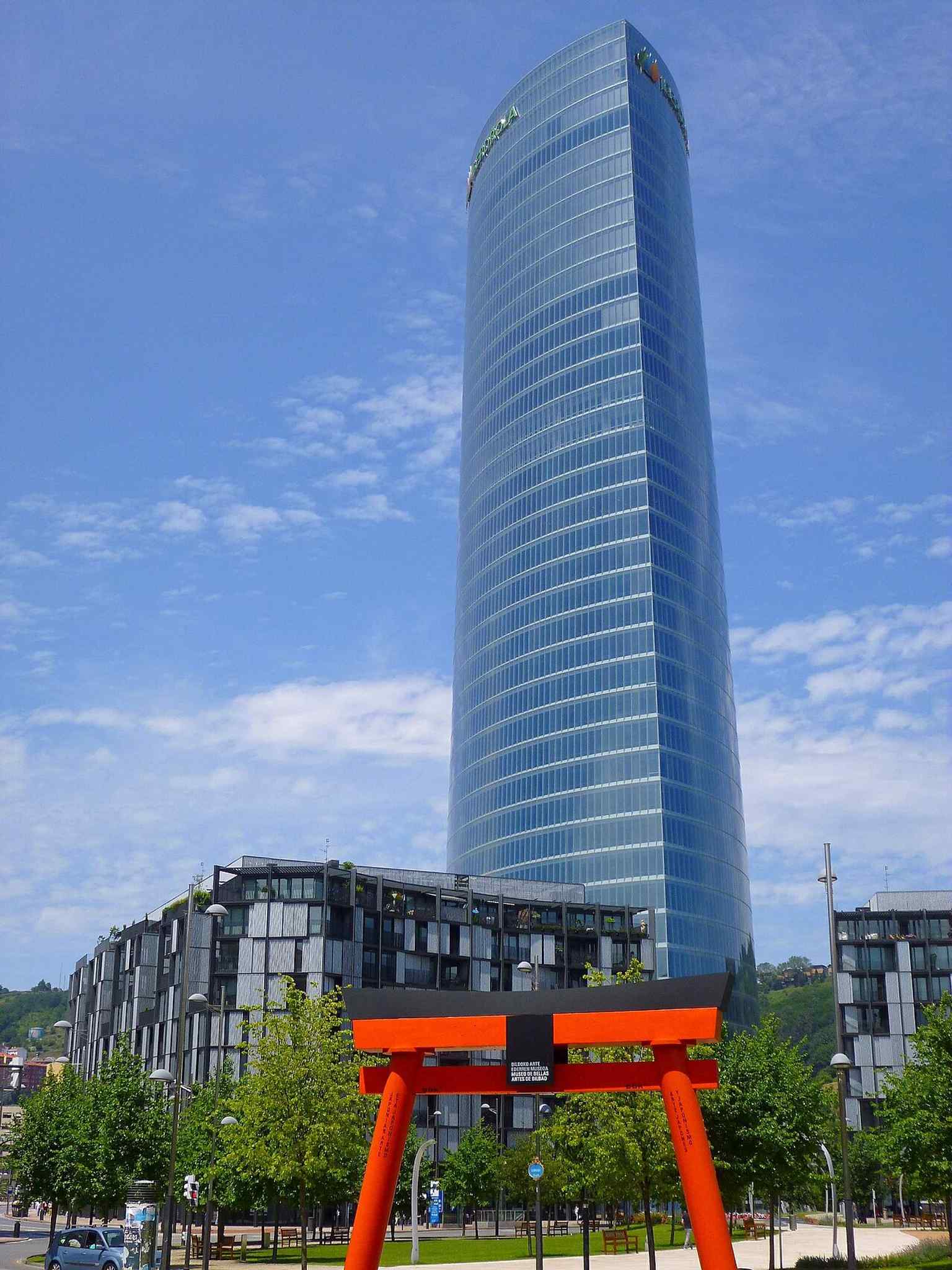
A clean front view of Torre Iberdrola, the 165-metre headquarters tower that became Bilbao’s tallest building.Photo: Zarateman, Wikimedia Commons, CC BY-SA 4.0. Cropped & resized. 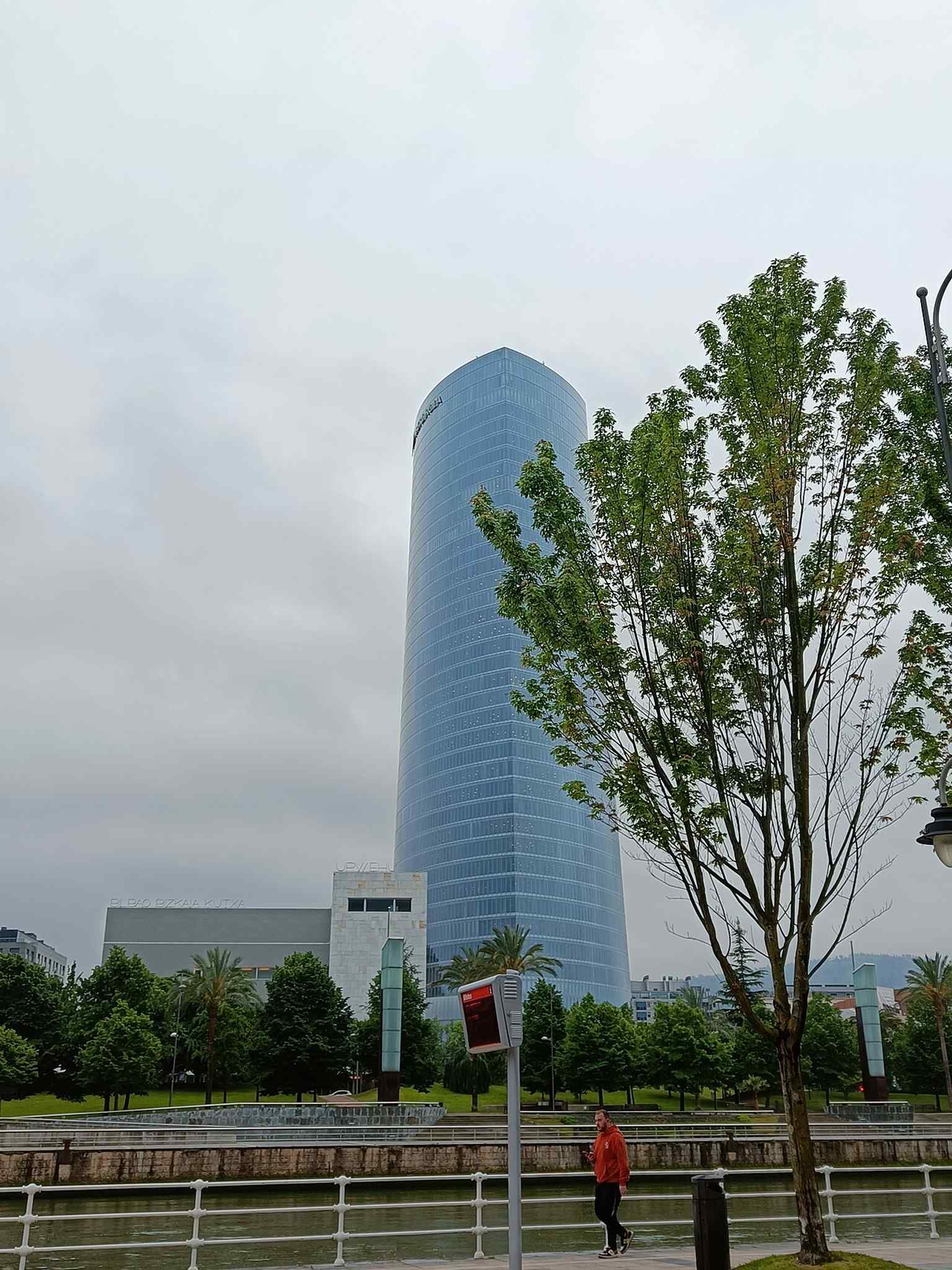
The tower across the Nervión River, showing how it anchors the regenerated riverfront next to Deusto and Abandoibarra.Photo: Miren Pascual, Wikimedia Commons, CC BY-SA 4.0. Cropped & resized. 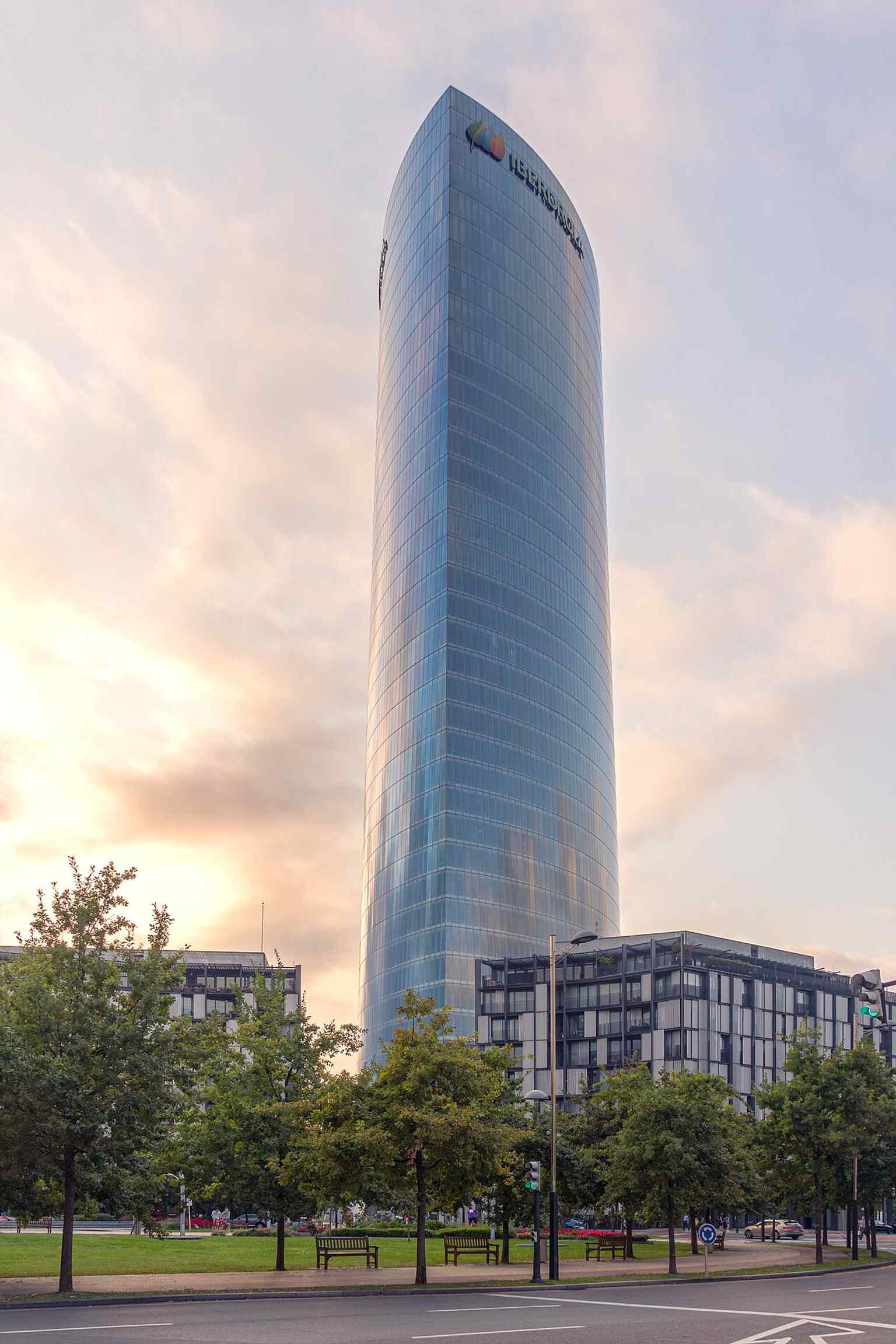
A tall 2019 view of Iberdrola Tower, useful for showing the full 40-storey profile of the skyscraper.Photo: Fernando, Wikimedia Commons, CC BY-SA 4.0. Cropped & resized. 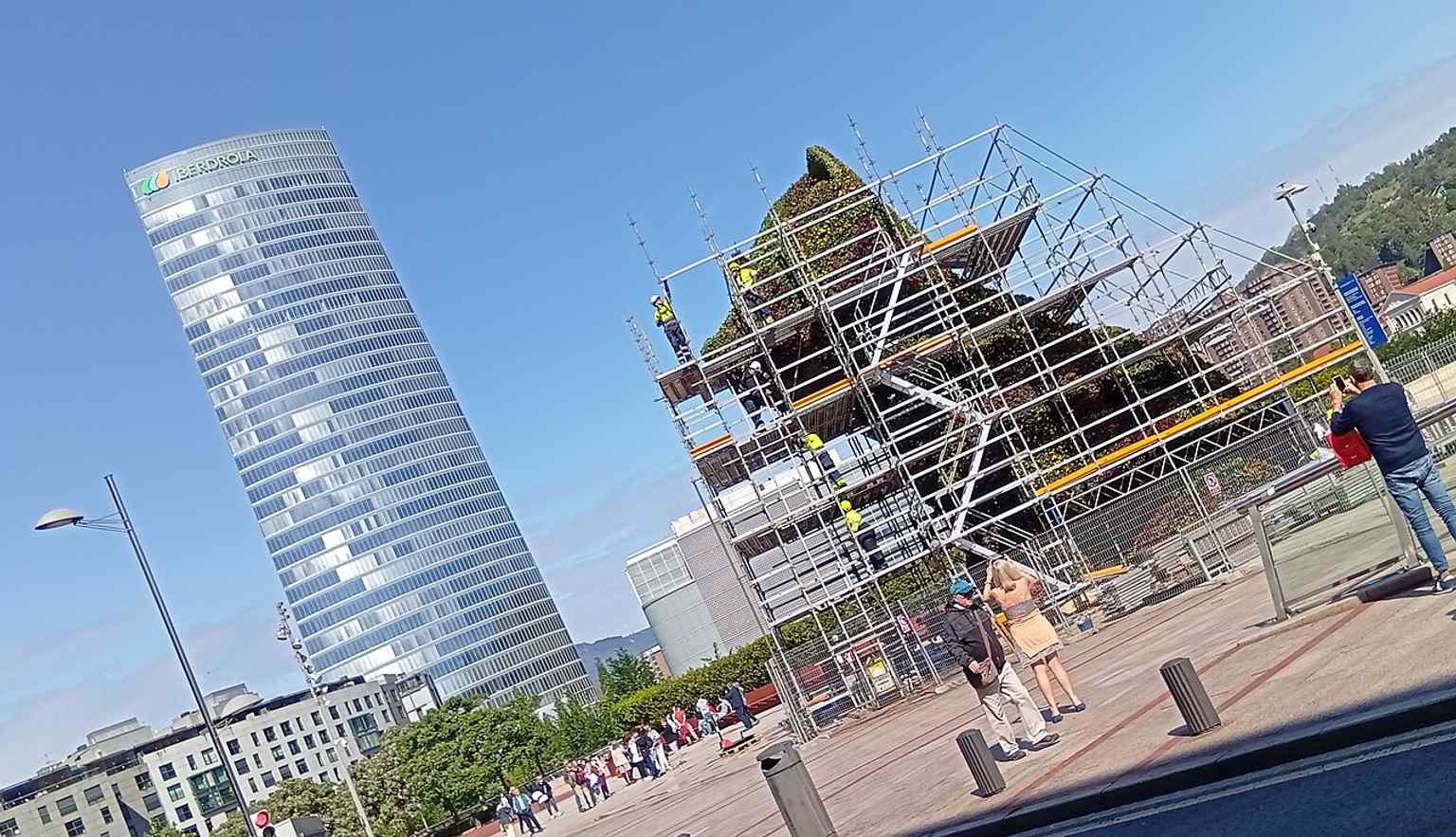
The tower’s sculptural rooftop feature during maintenance works, a reminder that the building also evolved after its 2012 inauguration.Photo: Javierme, Wikimedia Commons, CC BY 4.0. Cropped & resized. On your left stands a pale glass-and-stone block, broad and rectangular, with a gridded facade and a deep entrance carved into its smooth face. This is the Deusto University…Read moreShow less
Open dedicated page →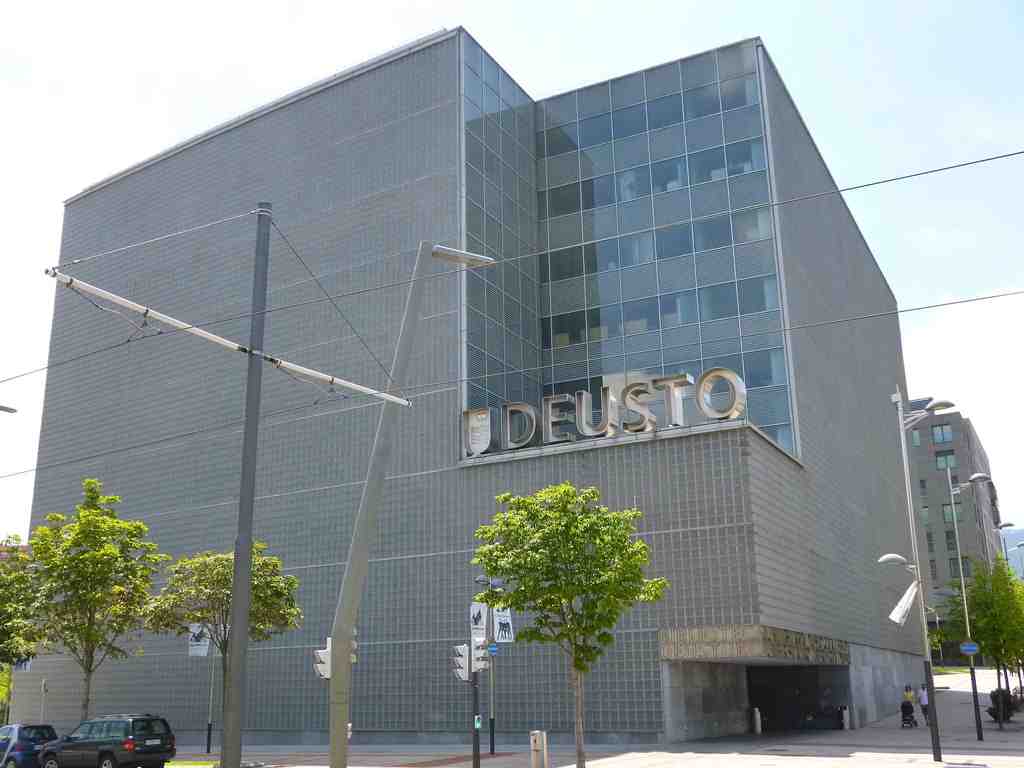
Deusto University LibraryPhoto: Zarateman, Wikimedia Commons, CC BY-SA 4.0. Cropped & resized. On your left stands a pale glass-and-stone block, broad and rectangular, with a gridded facade and a deep entrance carved into its smooth face.
This is the Deusto University Library, formally the Center for Learning and Research Resources... though around here, people sensibly stick with “the library.” And that matters, because Rafael Moneo did not design this place as a fancy box to stack books in. He wanted a meeting point between readers and knowledge, filled with natural light, open space, and a public spirit. In other words, less dusty warehouse, more thinking machine.
That idea fits this stretch of Abandoibarra perfectly. Nearby, the riverfront shows off with titanium curves and corporate glass. This building answers in a quieter voice. It says a city does not only renew itself with spectacle or skyline... it also renews itself by making room for study, research, and the long patient work of learning.
The library opened on the twenty-seventh of January, two thousand and nine, replacing the university’s older library. But its story started before the doors opened. Bilbao City Hall and the University of Deusto struck a funding agreement: the city contributed one million euros, and in return received the title of Distinguished Sponsor. That is a very Bilbao sort of arrangement, if you ask me... civic pride, practical money, and a little ceremony all at the same table.
Moneo anchors the human side of the story here. On opening day, he stood with rector Jaime Oraá while the new building was being blessed. Then the polished ceremony got interrupted by a flood-risk warning, and one witness had to rush off to collect his children. That tiny moment tells you a lot about the place: even at a grand inauguration, local life barges in, sleeves rolled up, asking who is picking up the kids.
Inside, this is far more than shelves. Students, alumni, and professors use group study rooms, research spaces, laptop loans, and even a dining service. The collections stretch from nearly one million printed volumes to electronic resources, and from current course books to incunables - books printed before fifteen-oh-one - plus older historical holdings and a digital repository called Loyola. The university founded the library collection back in eighteen eighty-six, so this modern shell carries a very old memory.
And people came. In its first year here, the building drew more than forty-three thousand users and hosted four hundred fifty-eight organized visits. The whole campus rhythm changed. Students crossed the Pedro Arrupe footbridge instead of lingering in older cloisters and gardens, and the new library filled up with life. It even became a cultural venue, with welcome sessions in Spanish, Basque, and English, and exhibitions on biblical texts, Egypt, and the university’s own bibliographic treasures.
There is one more local wrinkle. In two thousand sixteen, two glass facade tiles, each weighing seven and a half kilos, came loose. The university removed fifty-eight more as a precaution, and in two thousand eighteen it renewed all four facades. Even landmark buildings, bless them, still have to behave in the real world.
Keep that in mind as you head toward the Guggenheim, about five minutes from here. The famous image ahead makes more sense once you have seen this place first: not just a city showing off, but a city making room for memory, money, ideas, and the public together. If you want to return, the library generally opens Monday through Friday from eight in the morning to nine thirty at night, Saturday until two forty-five in the afternoon, and closes on Sunday.
On your right, the Guggenheim looks like a sweep of silvery titanium curves and pale limestone blocks gathered around glass, with panels that read almost like fish scales from…Read moreShow less
Open dedicated page →On your right, the Guggenheim looks like a sweep of silvery titanium curves and pale limestone blocks gathered around glass, with panels that read almost like fish scales from across the street.
From here, you can see why this building became Bilbao’s calling card... but it helps to remember it did not land here like a miracle from outer space. In the early nineteen nineties, this stretch of riverfront belonged to a worn-out port landscape, the kind of ground cities often try not to photograph. The Basque government proposed something bold: it would fund a Guggenheim here, in exchange for the Solomon R. Guggenheim Foundation managing the museum and bringing major exhibitions to Bilbao. That gamble turned a neglected industrial edge into the best-known face of Abandoibarra.
Frank Gehry, the Canadian-American architect, answered with a building that refuses to sit still. He wrapped it in thirty-three thousand titanium plates over steel, mixed in limestone from Granada and broad sheets of treated glass, and gave the exterior those famous swoops that catch light like water. It is not exactly shy. Yet for all the drama, this giant statement did something rare: it opened in nineteen ninety-seven on time and on budget, helped by meticulous computer modeling in software called CATIA, which let the team calculate those curves piece by piece instead of crossing their fingers and hoping for the best.
If you glance at the app, the aerial view makes the point beautifully: the museum really unfolds along the Nervión rather than posing like a box dropped from the sky. And inside, which you cannot see from here, everything turns around a bright central hall Gehry nicknamed the Flower, with galleries branching outward.
The opening came with both celebration and grief. Five thousand residents gathered outside for a pre-opening light show and concerts. Then, just before the official inauguration by King Juan Carlos the First on the eighteenth of October, nineteen ninety-seven, E-T-A militants tried to hide four anti-tank grenades in a planter outside the museum. Basque police officer José María Aguirre Larraona confronted them. They shot him, and he later died of his wounds. So this glittering landmark also carries a very human memory of the risks and tensions surrounding public life here.
Inside, the museum became a powerhouse for modern and contemporary art, with changing exhibitions by Spanish and international artists and a huge permanent draw: Richard Serra’s Matter of Time, a sequence of massive steel forms set in an equally massive gallery. Outside, the building did even more. In its first three years, nearly four million visitors came, and people started using the phrase “Bilbao effect” for the way one cultural project could reshape a city’s image and economy.
But here is the gentle warning tucked inside the postcard: this museum did not rescue Bilbao alone. It crowned years of planning, money, river cleanup, transport, and civic nerve. When one building becomes shorthand for a whole city, what does it help the world see... and what slips out of the frame?
Our final stop trades spectacle for something quieter. Head on to the Auditorium of the University of the Basque Country, about a four-minute walk away. If you want to return later, the museum is closed on Mondays and otherwise usually opens from ten in the morning until seven in the evening.
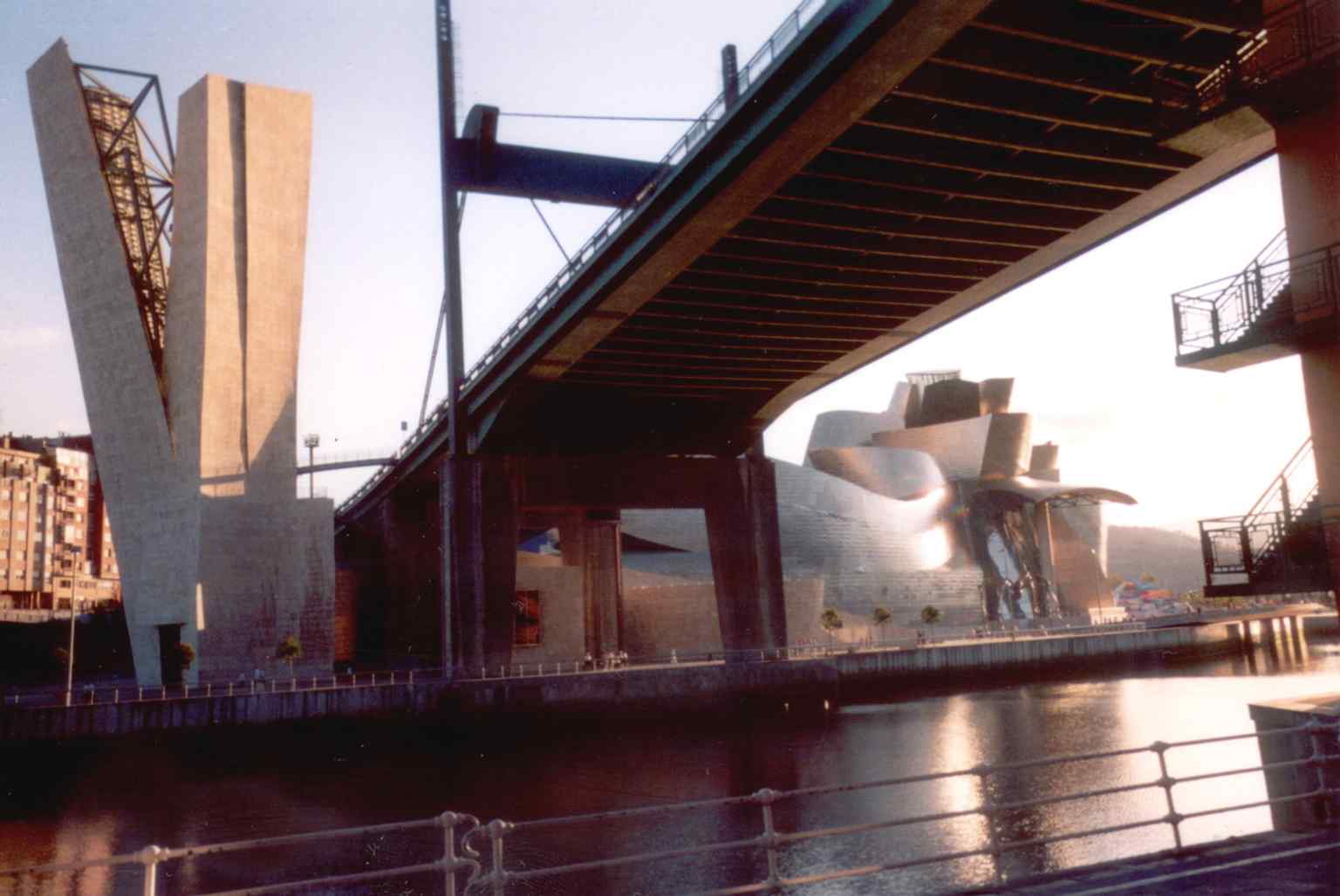
Classic exterior view with the La Salve bridge nearby, echoing the museum’s integration into the city’s industrial riverfront.Photo: No machine-readable author provided. Urby2004 assumed (based on copyright claims)., Wikimedia Commons, CC BY-SA 3.0. Cropped & resized. 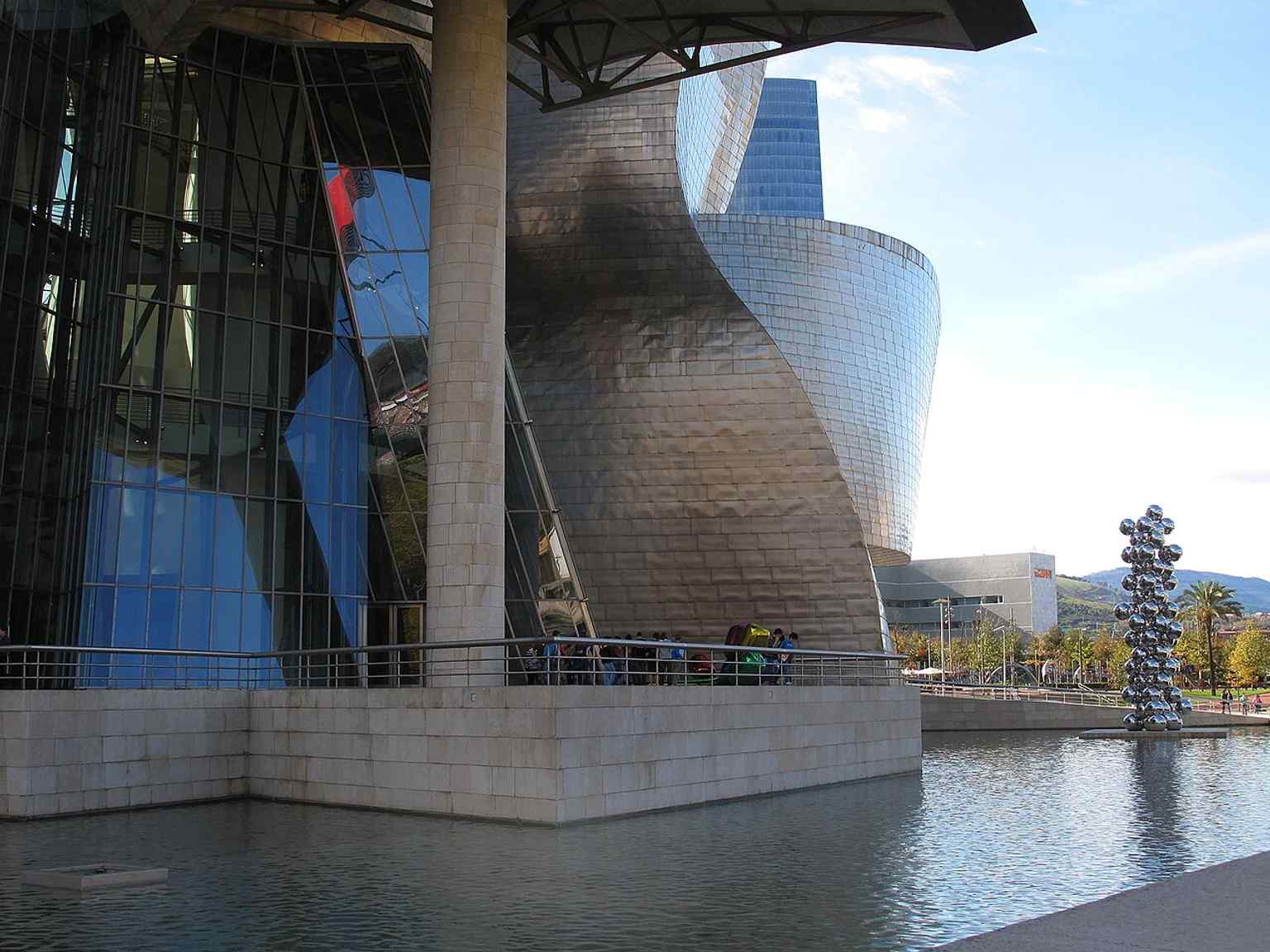
Jeff Koons’s Tulips and Anish Kapoor’s Tall Tree and the Eye outside the museum — a strong reminder that the Guggenheim is as much about contemporary art as architecture.Photo: Kamahele, Wikimedia Commons, CC BY-SA 3.0 de. Cropped & resized. 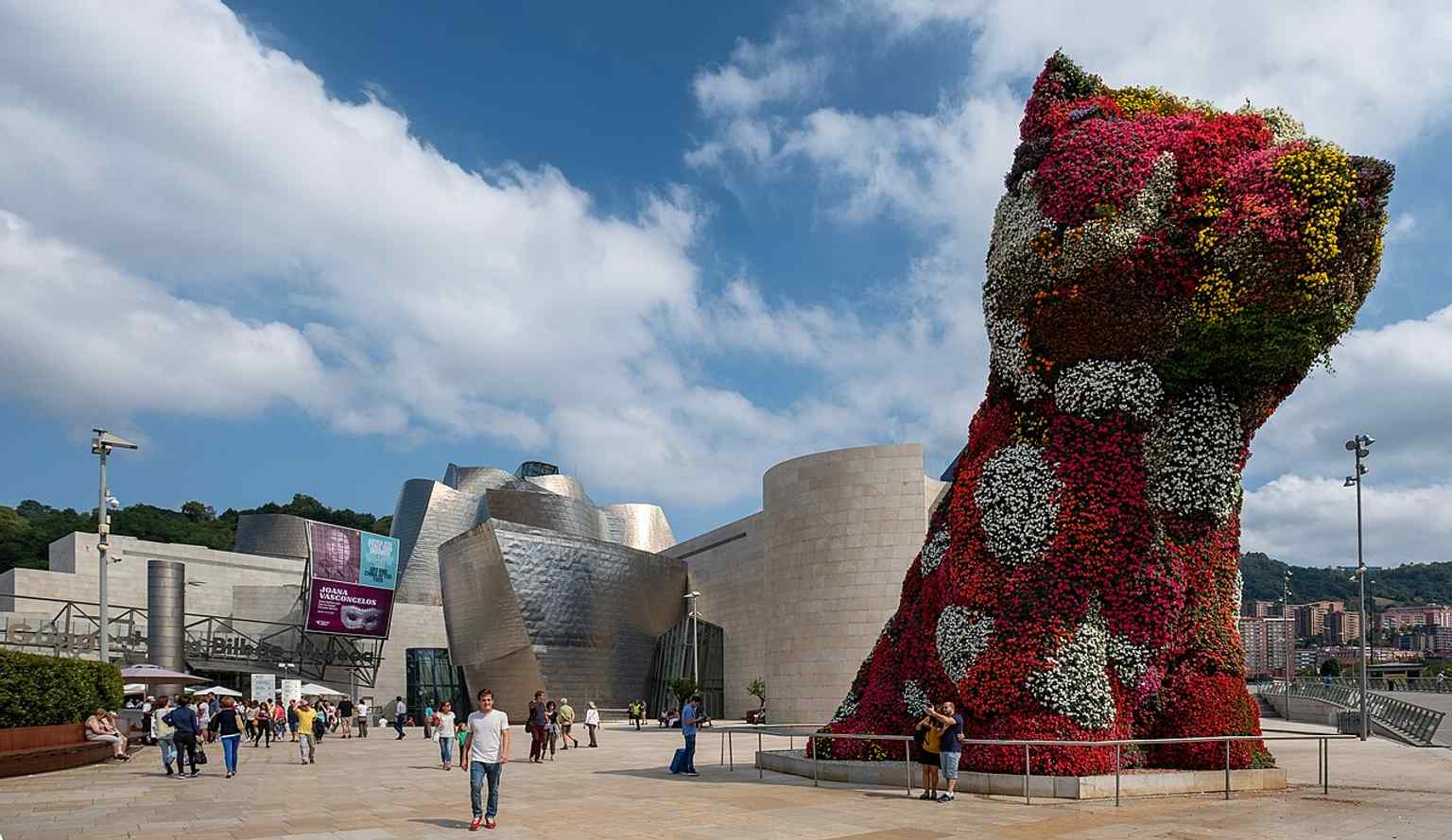
Jeff Koons’s Puppy guarding the entrance, one of Bilbao’s most beloved art landmarks and a symbol of the museum’s tourist appeal.Photo: Jules Verne Times Two, Wikimedia Commons, CC BY-SA 4.0. Cropped & resized. 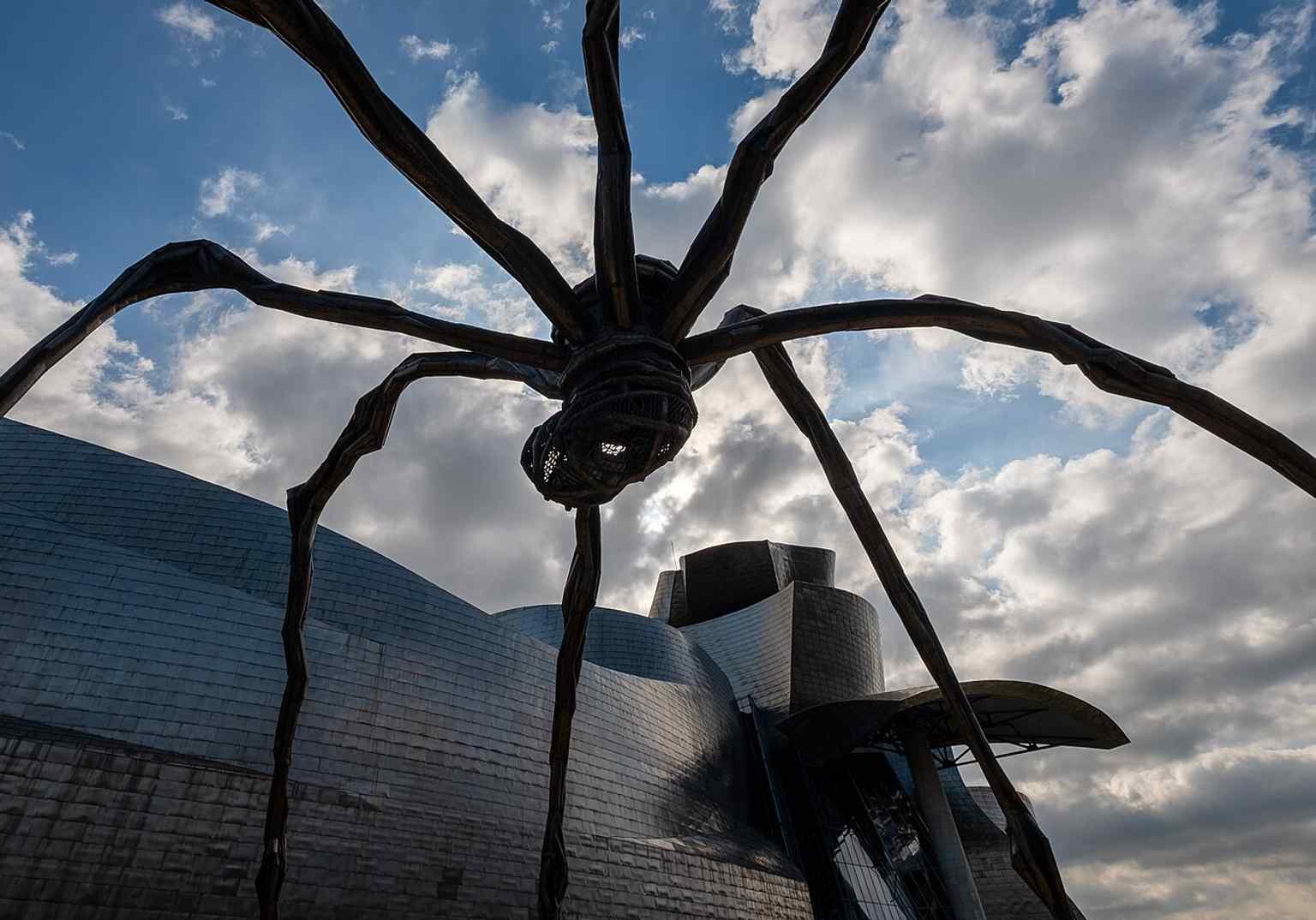
Louise Bourgeois’s Maman outside the museum, showing how major site-specific artworks turned the plaza into part of the experience.Photo: Jules Verne Times Two, Wikimedia Commons, CC BY-SA 4.0. Cropped & resized. 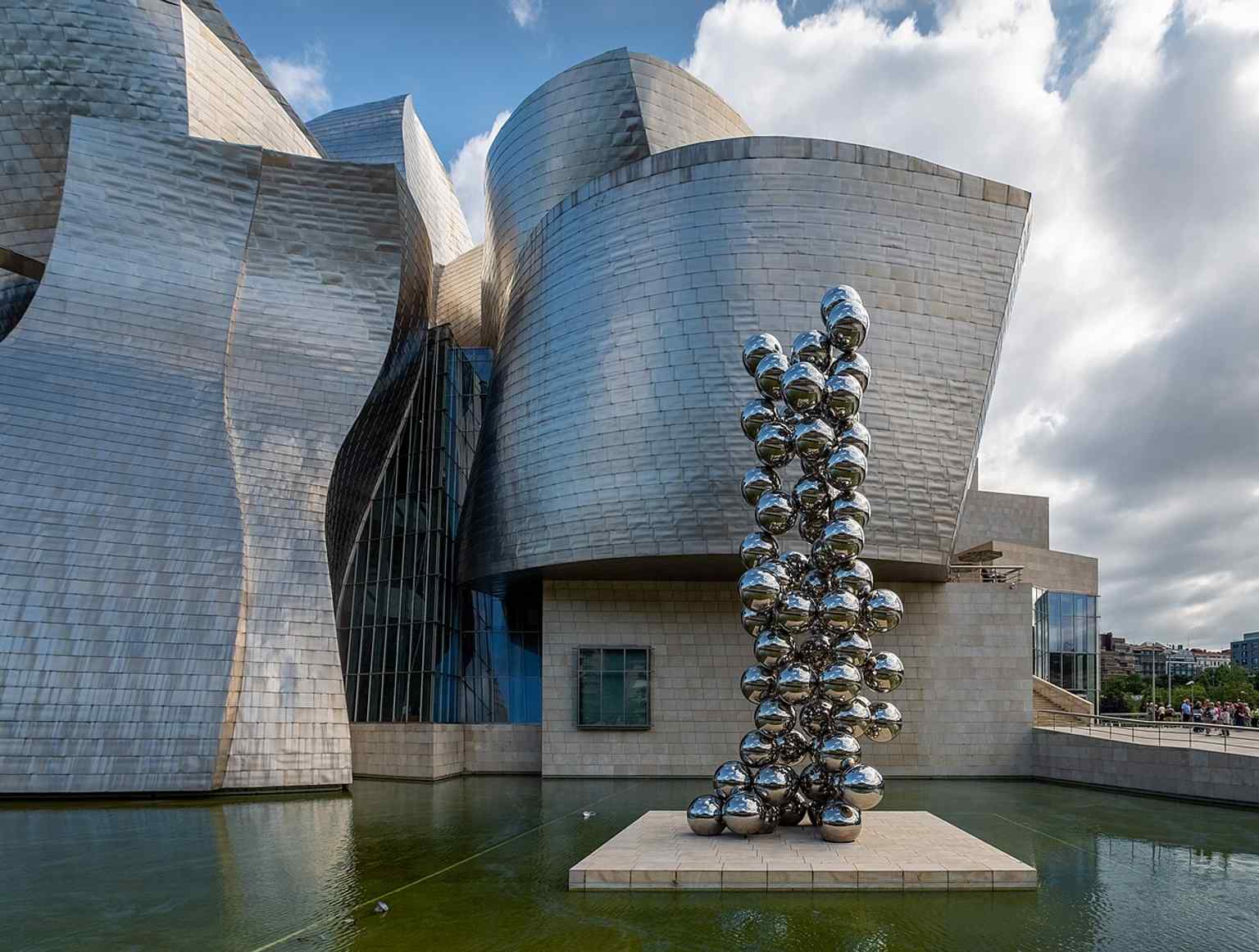
Anish Kapoor’s Tall Tree and the Eye beside the museum, echoing the building’s reflective surfaces and bold sculptural language.Photo: Jules Verne Times Two, Wikimedia Commons, CC BY-SA 4.0. Cropped & resized. On your left, look for the L-shaped modern building faced in gray handmade tiles and white marble, with a sharp inner corner that feels almost like a folded screen. This is…Read moreShow less
Open dedicated page →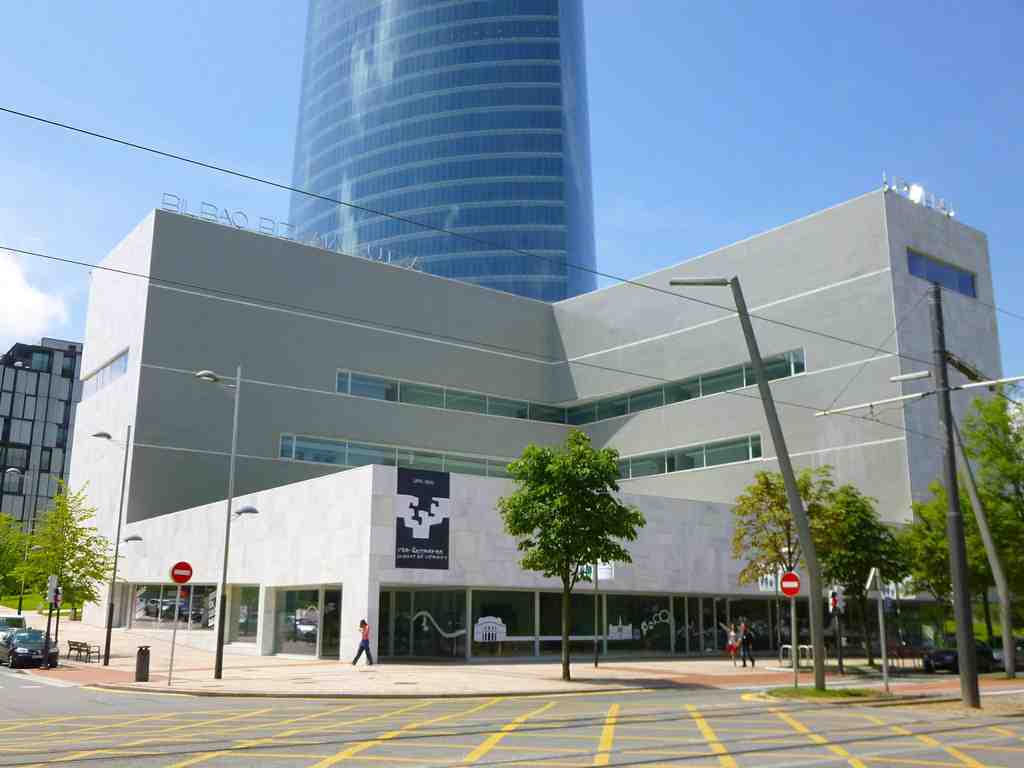
Auditorium of the University of the Basque CountryPhoto: Zarateman, Wikimedia Commons, CC BY-SA 4.0. Cropped & resized. On your left, look for the L-shaped modern building faced in gray handmade tiles and white marble, with a sharp inner corner that feels almost like a folded screen.
This is Bizkaia Aretoa, the ceremonial home of the University of the Basque Country, and it makes a fine final note for Abando. Portuguese architect Alvaro Siza designed it, and the building opened on the twenty-first of September, two thousand ten. It did not appear here by accident. The B-B-K Foundation handed the project to the university, and the university treated it as part of Abandoibarra’s bigger transformation: not just more construction, but a statement that learning and public culture belonged on this remade riverfront.
It holds more than nine thousand square meters across six floors, and its heart is the Mitxelena auditorium, planned from the start for major public events, not tucked away as some administrative afterthought. In other words, this place came dressed for the occasion.
Its skin is what people remember first. Those gray tiles are handmade, and they play a neat visual trick: from one angle they can look almost leaden, from another they pick up a livelier sheen. If you glance at the image on your screen, you can see that gray surface holding its own beside the taller neighbors around it. Siza paired that shifting tile with white marble, and the whole composition quietly answers Rafael Moneo’s Deusto library nearby. Two serious buildings, having a very polite conversation.
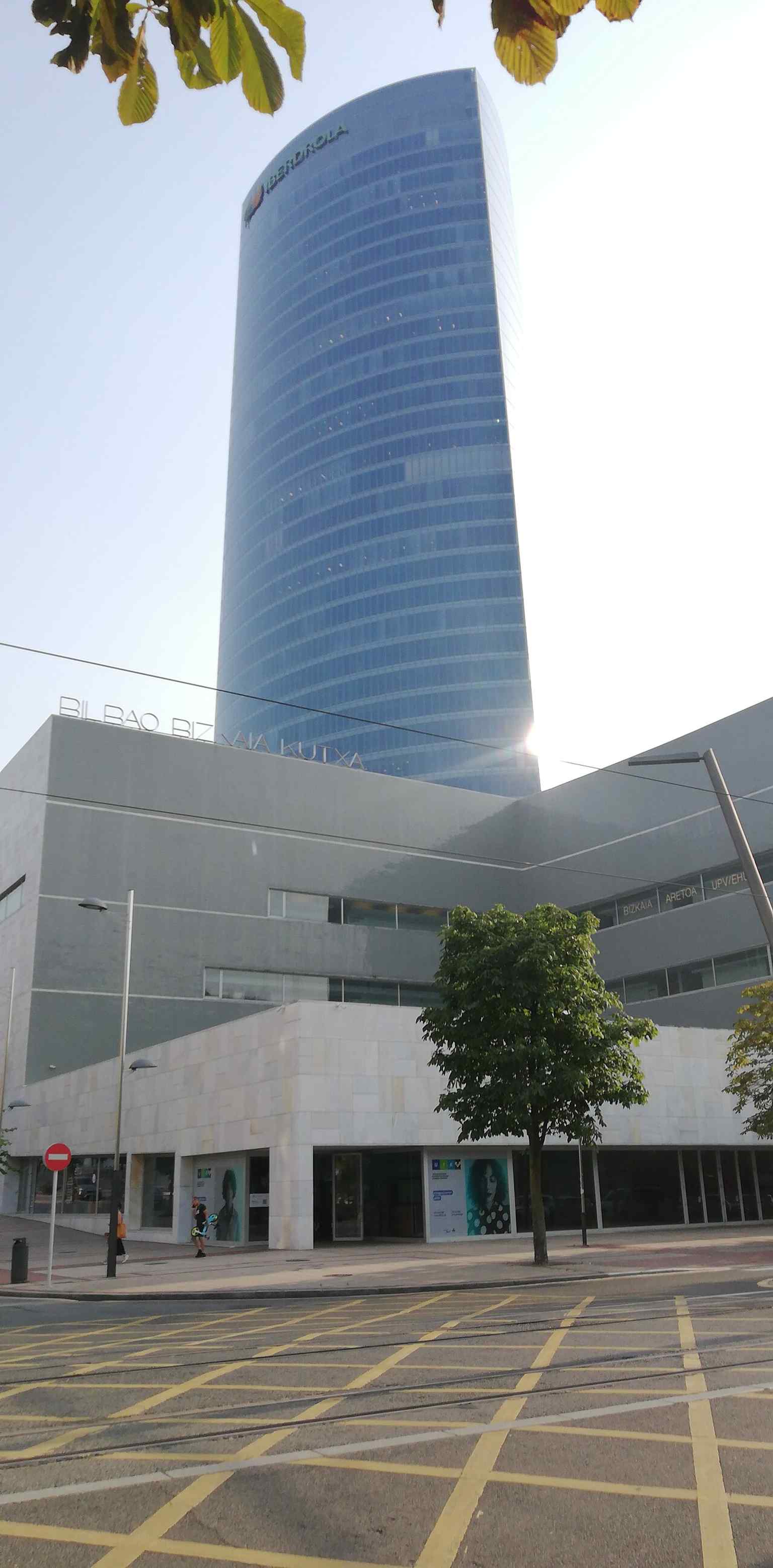
Bizkaia Aretoa’s modern façade in Abandoibarra, with the Iberdrola Tower behind it — the university’s landmark auditorium designed by Álvaro Siza.Photo: Josi, Wikimedia Commons, CC BY 4.0. Cropped & resized. At the opening, a whole constellation of Basque public life gathered here: rector Inaki Goirizelaia, B-B-K president Mario Fernandez, mayor Inaki Azkuna, and others. Even in a formal ceremony, nerves and humor slipped in. On the terrace, while photographers arranged the shot, Goirizelaia and Fernandez joked about needing a screen between themselves and the drop beyond it. A very human little moment in a building meant for solemn ones.
And solemnity is only half the story. The Sala Chillida, named for sculptor Eduardo Chillida, who designed the university’s logo and later received an honorary doctorate, has hosted conferences, performances, cocktails, and exhibitions. One of the most powerful showed forensic work from more than one hundred twenty exhumations across Spain, restoring dignity to victims through science. On other occasions, art students projected video onto the inner corner, comparing it to a fronton, the walled court used for Basque pelota. That comparison fits: this building likes to return ideas at a new angle.
That may be the best closing thought for Bilbao too. A station, a bank, a tower, a museum, a university hall... each one changed its meaning as the city changed around it. And here, in these gray tiles that never look exactly the same twice, Abando gathers into one last lesson: places are not fixed things. They are arguments between stone, memory, ambition, and whoever happens to be looking.

Frequently asked questions
How do I start the tour?
After purchase, download the AudaTours app and enter your redemption code. The tour will be ready to start immediately - just tap play and follow the GPS-guided route.
Do I need internet during the tour?
No! Download the tour before you start and enjoy it fully offline. Only the chat feature requires internet. We recommend downloading on WiFi to save mobile data.
Is this a guided group tour?
No - this is a self-guided audio tour. You explore independently at your own pace, with audio narration playing through your phone. No tour guide, no group, no schedule.
How long does the tour take?
Most tours take 60–90 minutes to complete, but you control the pace entirely. Pause, skip stops, or take breaks whenever you want.
What if I can't finish the tour today?
No problem! Tours have lifetime access. Pause and resume whenever you like - tomorrow, next week, or next year. Your progress is saved.
What languages are available?
All tours are available in 50+ languages. Select your preferred language when redeeming your code. Note: language cannot be changed after tour generation.
Where do I access the tour after purchase?
Download the free AudaTours app from the App Store or Google Play. Enter your redemption code (sent via email) and the tour will appear in your library, ready to download and start.
If you don't enjoy the tour, we'll refund your purchase. Contact us at [email protected]
Checkout securely with 






.jpg)


%20julesvernex2.jpg)
%20julesvernex2.jpg)
%20julesvernex2.jpg)
