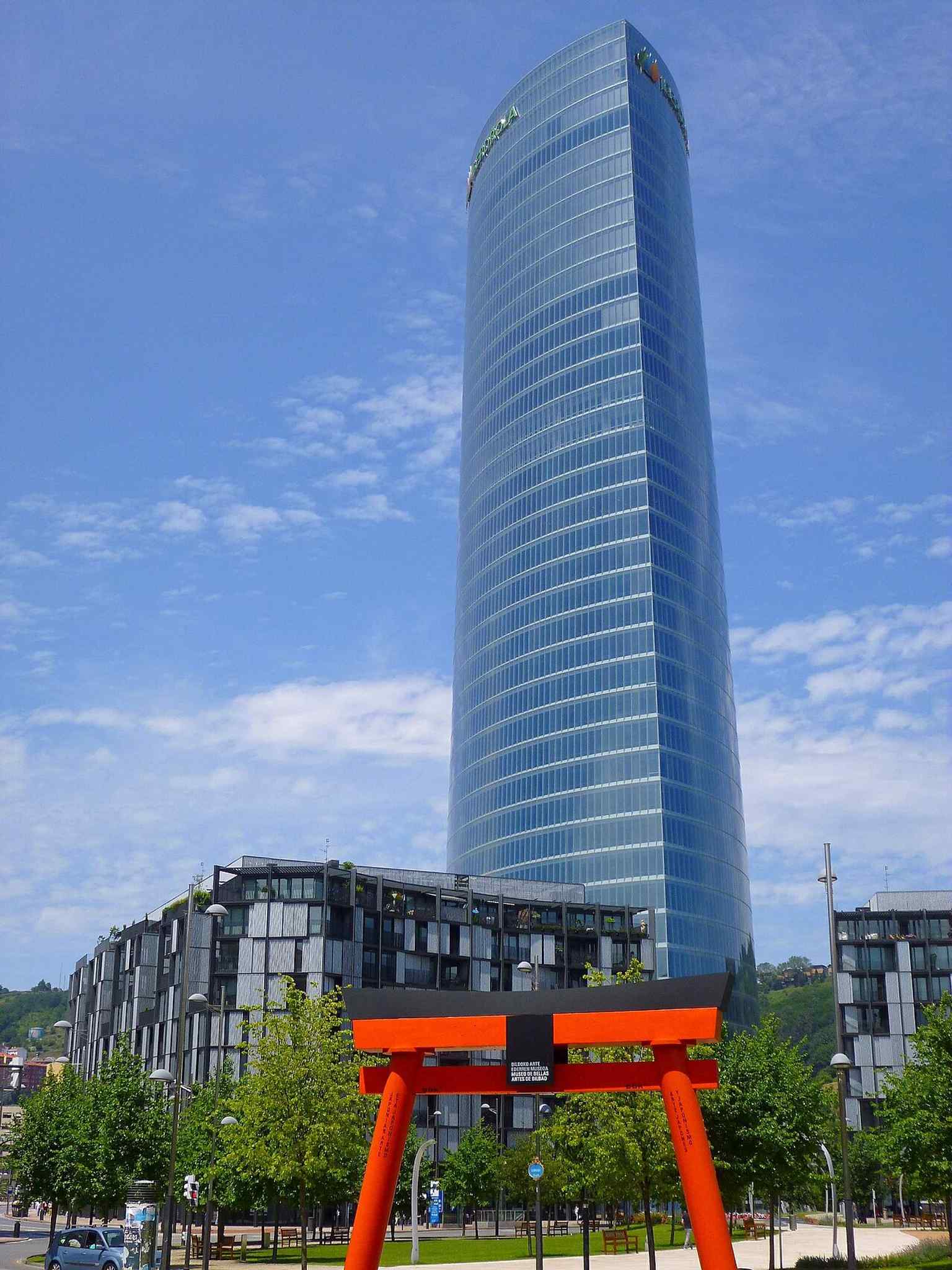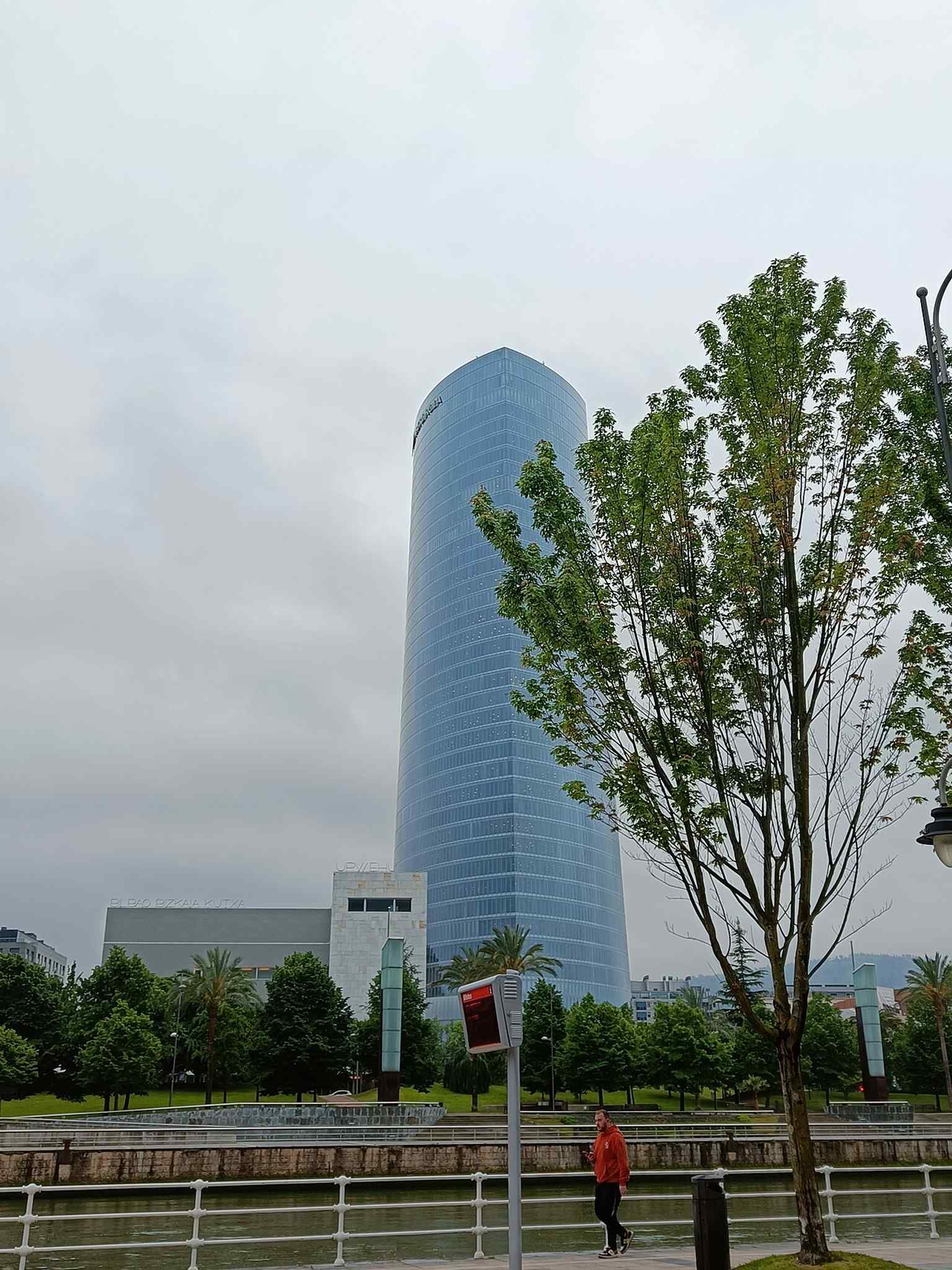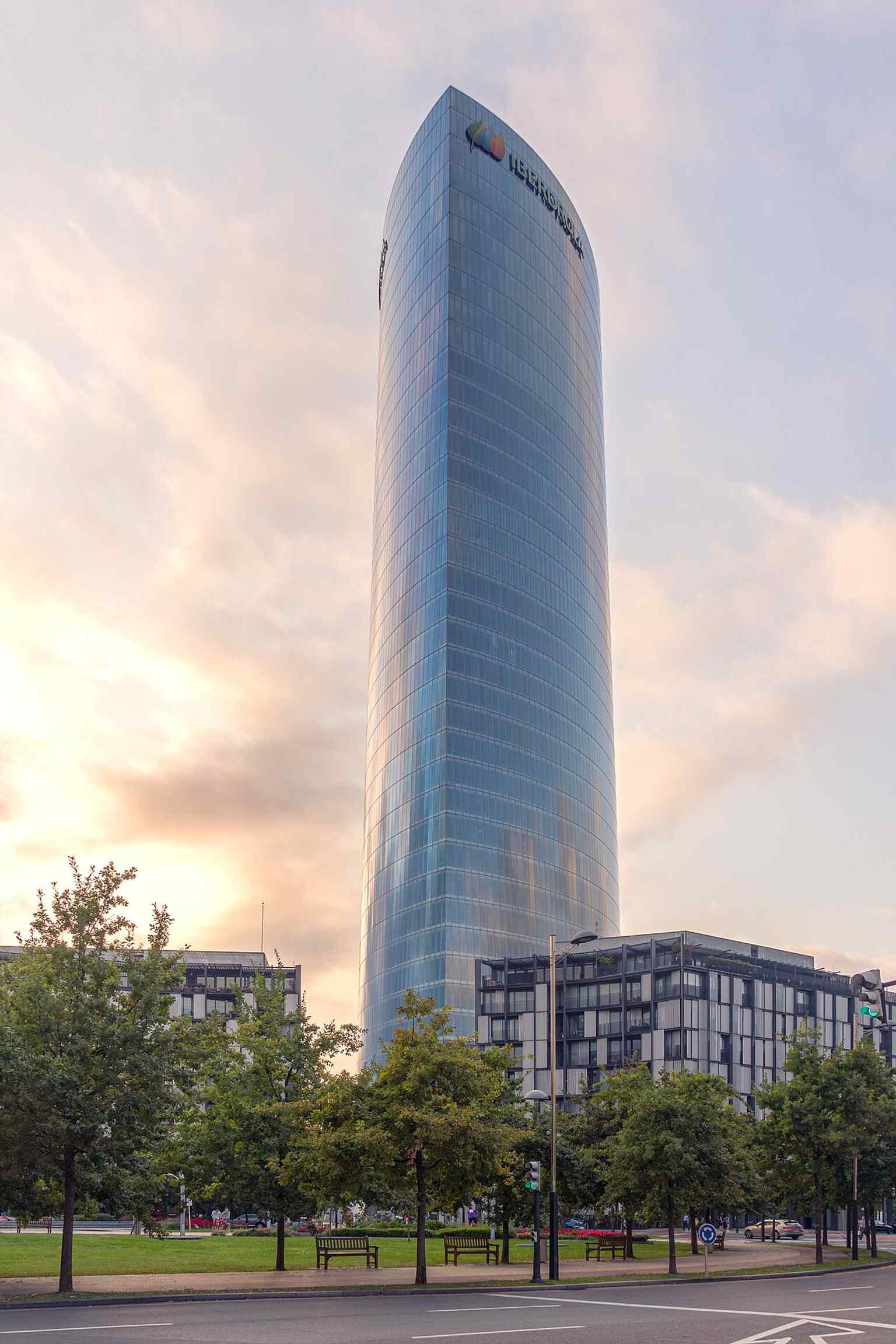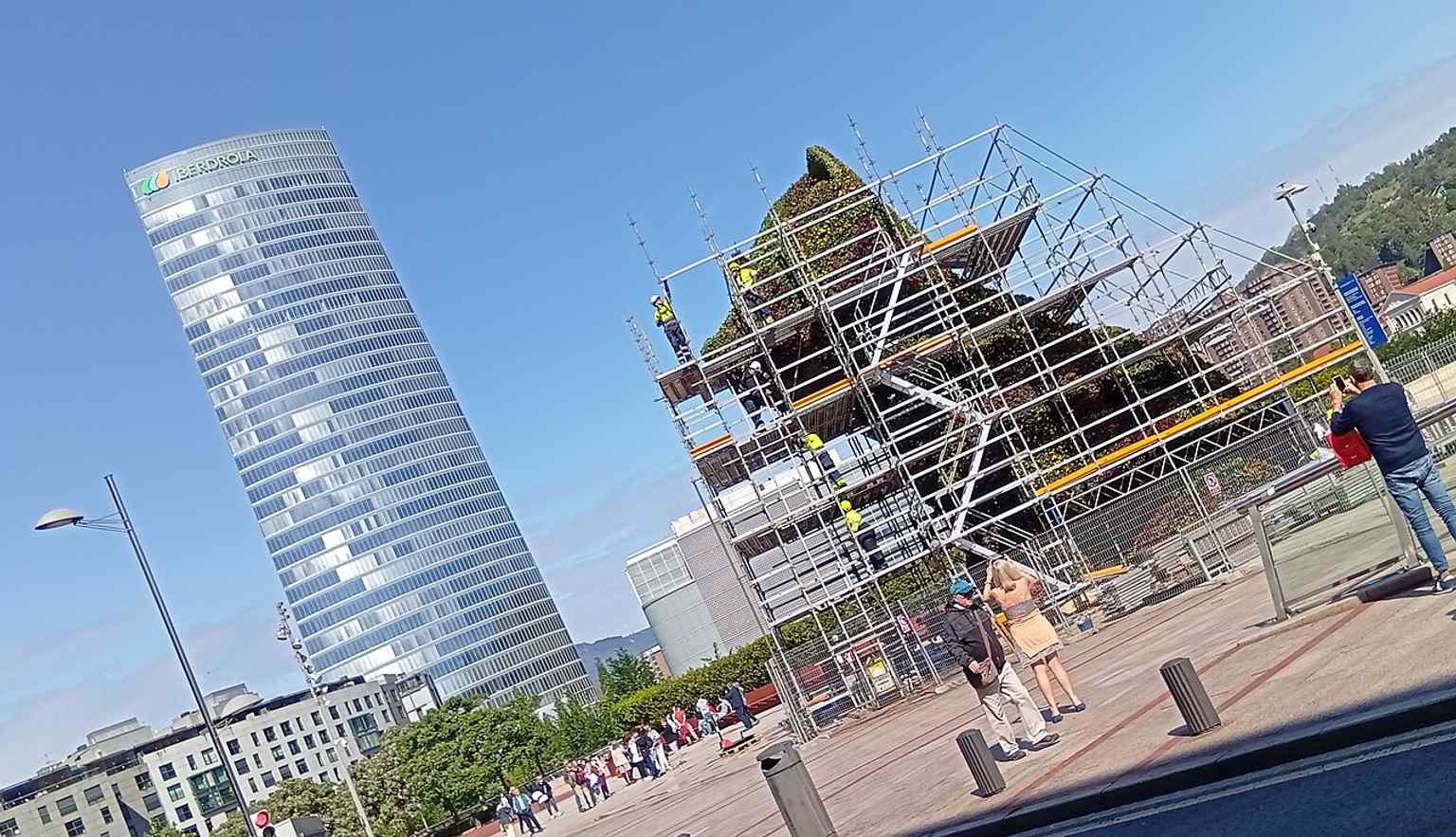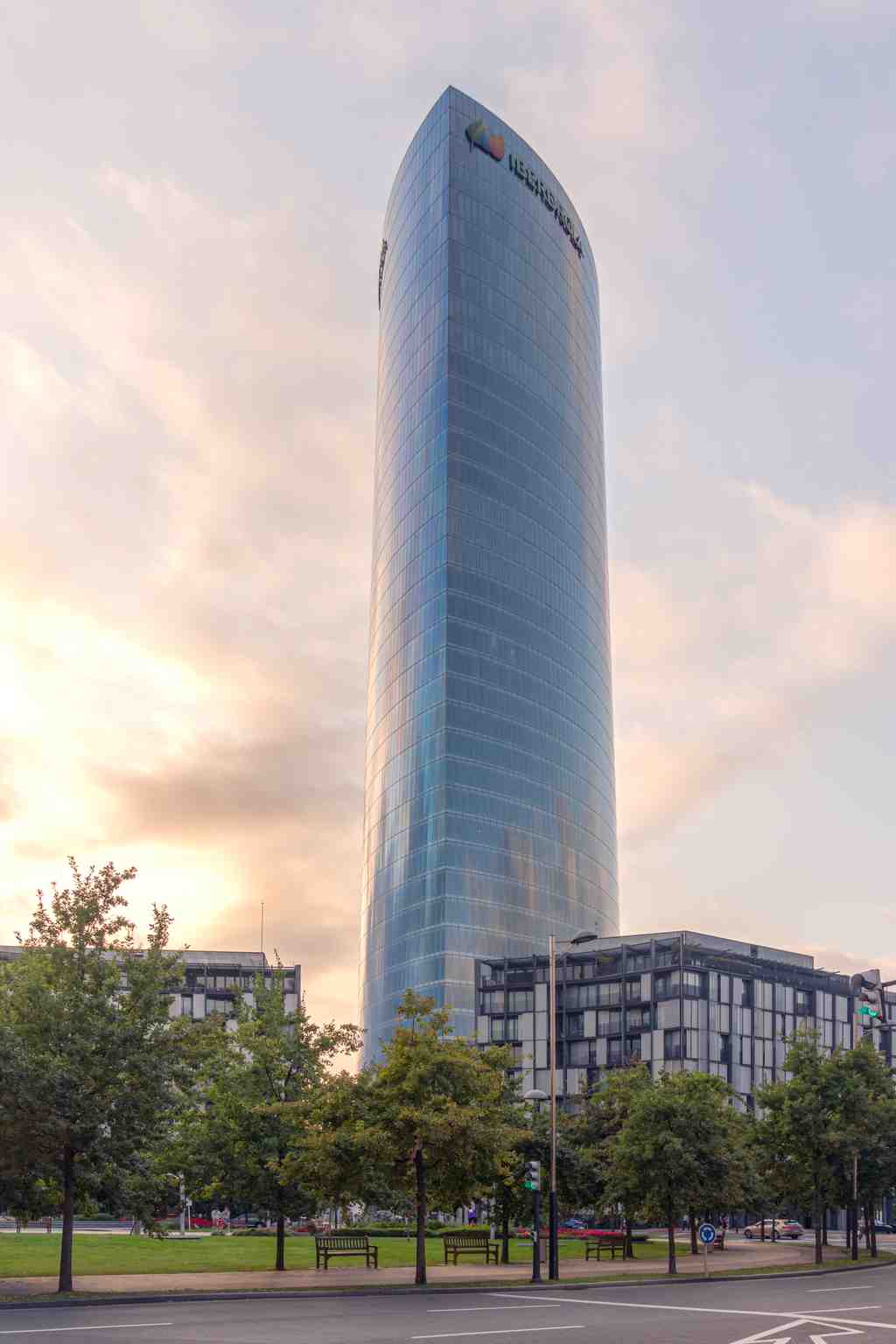
On your right, Iberdrola Tower is a tall glass oval that narrows as it rises, wrapped in a smooth curtain wall and finished with a distinct sculptural crown at the top.
This is the point where a lot of Bilbao’s recent story pulls into focus. The ground under your feet once belonged to an industrial river edge, close to the old Euskalduna shipyards and the working waterfront. Then, in nineteen ninety-two, Bilbao Ría two thousand - a public regeneration company - began remapping places like Abandoibarra, turning underused industrial land into parks, housing, offices, and cultural buildings. This tower was meant to be the exclamation point... not just another office block, but the one high-rise that would pin the whole new business district to the skyline.
César Pelli, the Argentine American architect, gave it that job. People on the project remembered him as unusually hands-on and collaborative, and he described the tower as part of the city rather than a flashy object dropped from outer space. That sounds simple, but it mattered here. Bilbao did not want a stranger; it wanted a new landmark that could shake hands with the older city.
The first plans for Abandoibarra imagined two towers of two hundred meters. In the end, planners and architects, including Aguinaga y Asociados, settled on one. Even then, the scheme wobbled. In nineteen ninety-eight, the Biscay provincial authority bought the plot from R-E-N-F-E, Spain’s national rail company, for seventy-nine million euros and planned to gather its scattered offices here. It even pushed the design higher, from one hundred fifty to one hundred sixty meters, to fit more space. Then politics changed. After the two thousand three elections, José Luis Bilbao scrapped the idea because he judged the cost too high. For a moment, this site looked like a grand promise with no tenant - a very expensive empty plate.
Then Iberdrola stepped in, in July of two thousand and four. The energy company needed a headquarters its older Gardoqui offices could not provide, so it agreed to take the upper floors and anchor the whole project. That decision rescued the plan and changed the city’s silhouette. Construction moved through deep excavation for five underground levels, while nearby pieces of the district rose in sync: the square, housing, the Deusto library, and parking below ground. If you want a glimpse of that phase, take a look at the construction image on your screen. It really does feel like the future pushing up through old ground.
The financial crisis of two thousand and eight nearly knocked it sideways too, and Iberdrola and Kutxabank had to renegotiate ownership. So even this polished tower carries a few fingerprints from anxiety and improvisation. Bilbao style, you might say: elegant finish, complicated paperwork.
By the time King Juan Carlos the First inaugurated it on the twenty-first of February, two thousand and twelve, the tower had become the tallest building in Bilbao and the Basque Country: one hundred sixty-five meters, forty floors, and a clear sign that the riverfront had entered a new chapter. If you glance at the image showing the tower by the Nervión, you can see exactly how it anchors the whole redeveloped edge.
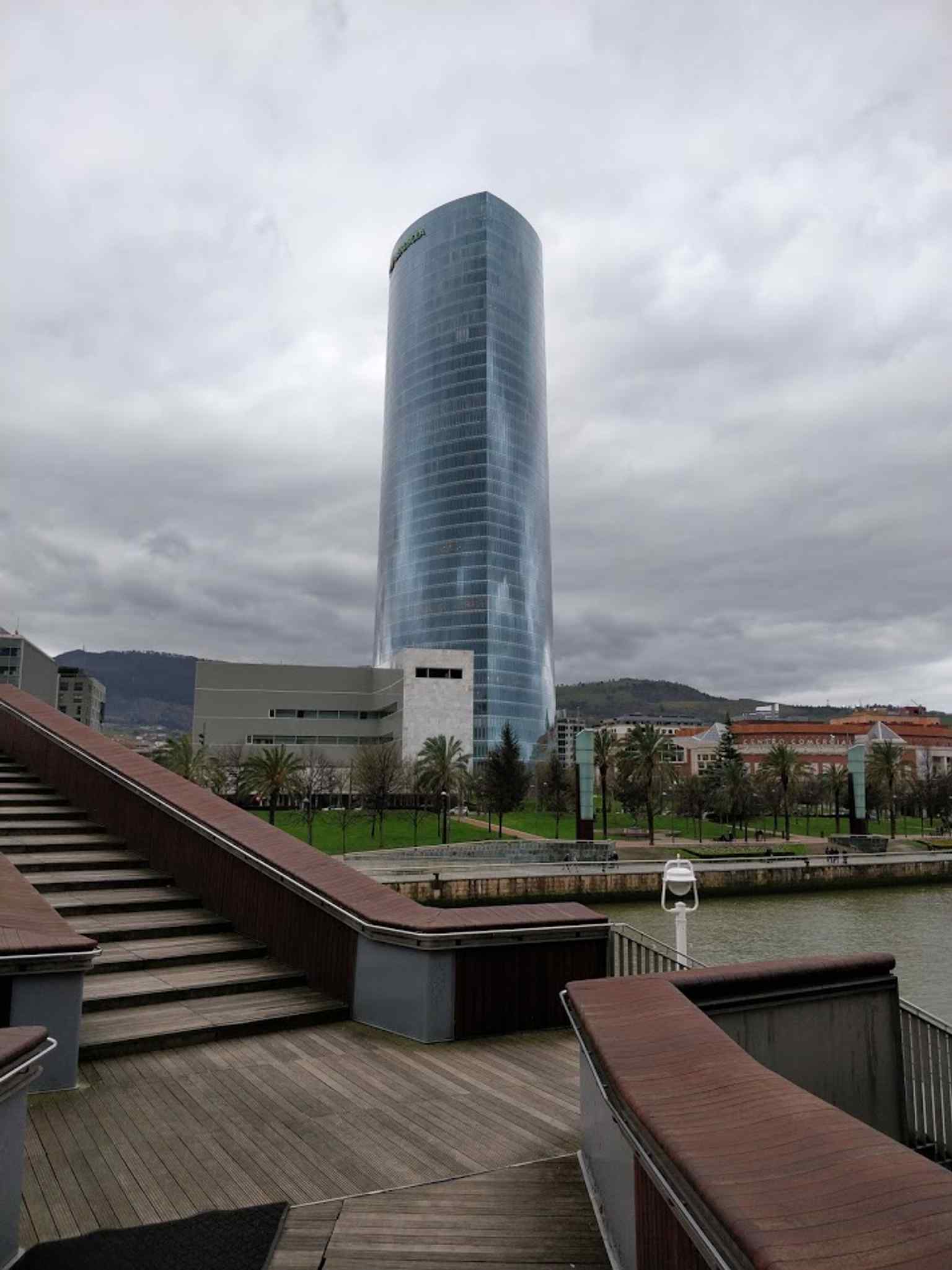
And now, fittingly, we leave the big monument to corporate power for something quieter and more public: the Deusto University Library, about a two-minute walk away, where glass gives way to study, memory, and shared knowledge. If you ever want to return, the tower generally opens Monday through Friday from seven thirty in the morning to eight thirty in the evening, Saturday from nine until two, and it closes on Sunday.