
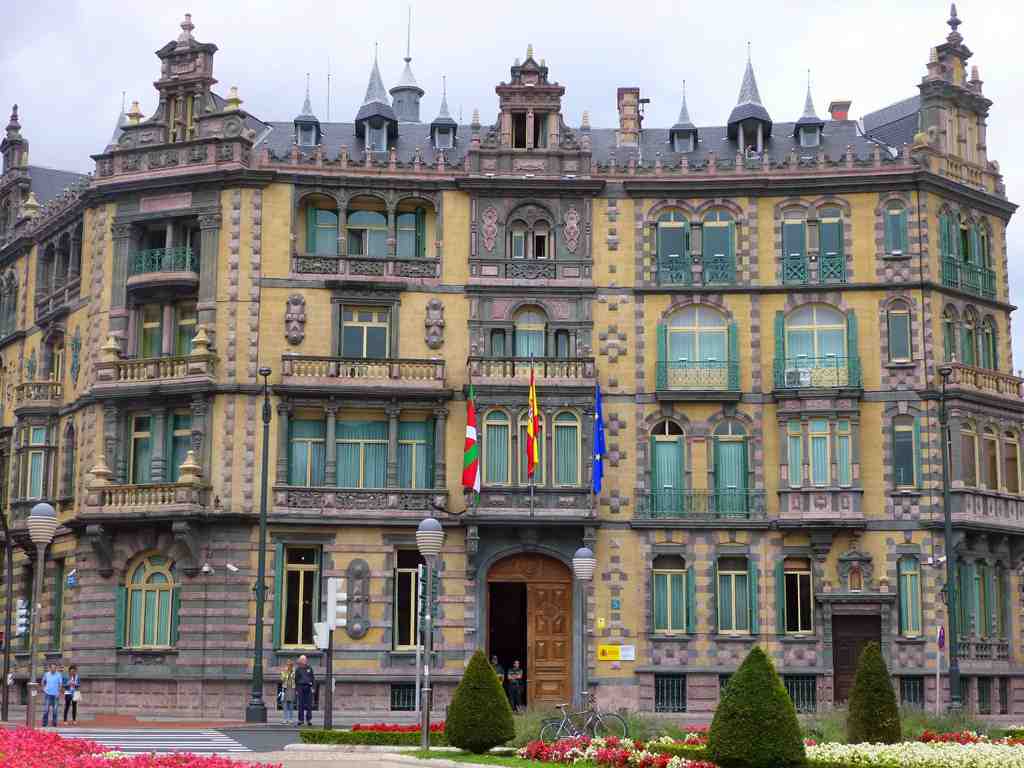
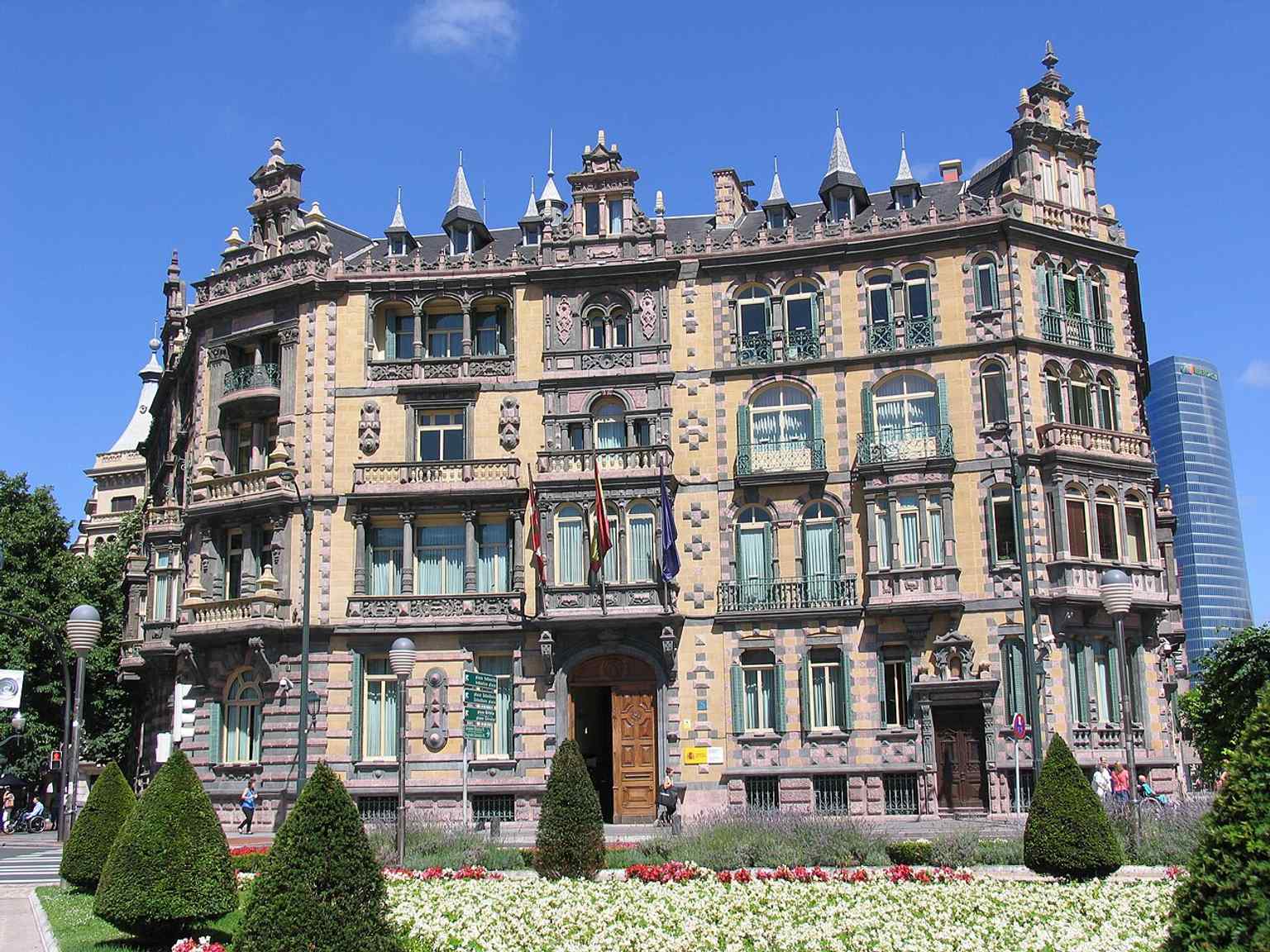
On your right stands a pale stone palace with a steep slate roof, pointed gables, and a parade of mismatched windows that makes the whole façade look gloriously unwilling to repeat itself.
This is Chávarri Palace, and it is Abando showing off in full formalwear. In the early twentieth century, brothers Víctor and Benigno Chávarri y Salazar ordered a home that would announce their family’s industrial success to the city. They did not think small. They hired Paul Hankar, a Belgian architect, and Bilbao architect Atanasio de Anduiza carried the project through, giving Moyúa one of its boldest imported statements: a palace in the Flemish style, the kind you might expect in Antwerp or Bruges rather than here.
Take a moment with those windows. One of the building’s most famous quirks is that no set is exactly the same as another. Even the windows seem to have individual ambitions. If you glance at the image in the app, you can catch that restless variety across the façade more clearly.
Inside, the performance continued. Several salons carried decoration by the painter José Echenagusia Errazquin, and the Music Room, done in French Baroque style - that means rich, ornate, and proudly dramatic - still preserves ceiling paintings attributed to him.
But here comes the turn in the story. Víctor Chávarri fell gravely ill and died in nineteen hundred, before he could really live in the palace he had commissioned. So this monument to triumph also carries a private loss inside its walls.
Later, the family sold it to the Spanish state in nineteen forty-three. Eugenio María de Aguinaga reshaped it between nineteen forty-three and nineteen forty-seven for government use, undoing much of the original domestic layout. Then, during Francisco Franco’s longest stay in Bilbao, from the eighteenth to the twenty-second of June, nineteen fifty, the palace became a stage for official ceremony and propaganda.
Today it houses Spain’s government representation in Biscay, still only partly open, still a little guarded with its secrets. From here, old Abando has made its final grand bow. Next, in about seven minutes, head toward Euskadi Square, where Bilbao starts rehearsing a very different future.





