
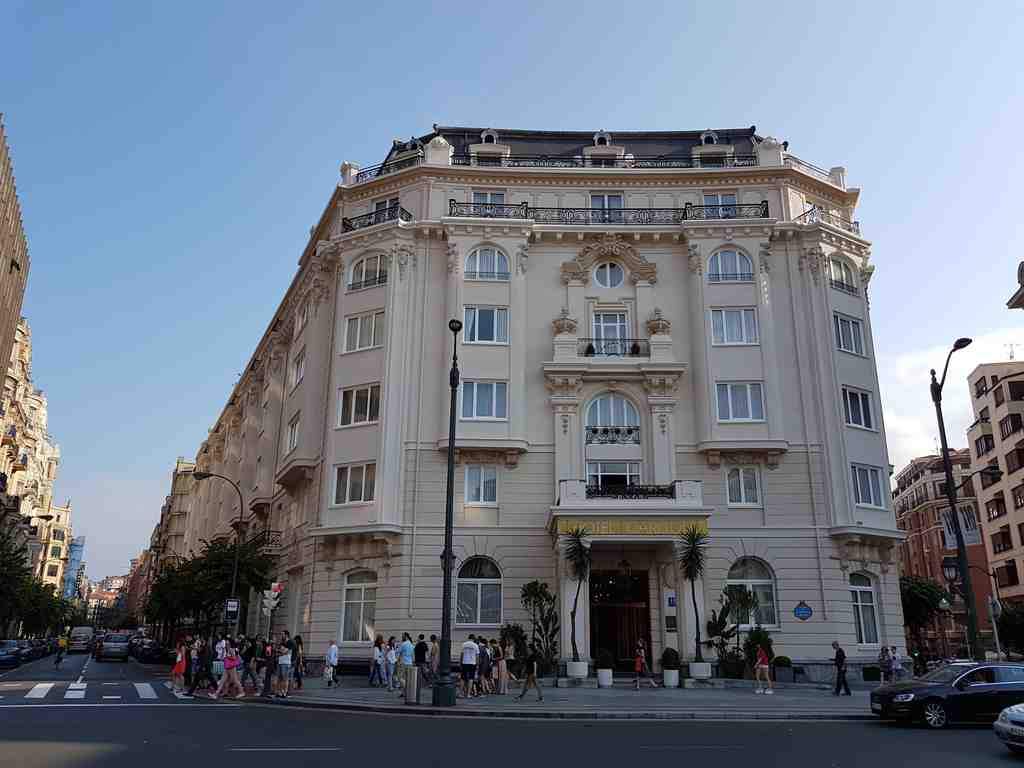
On your left, Hotel Carlton stands out as a grand cream-stone block with a central arched porch, rows of iron balconies, and a steep slate mansard roof that crowns the whole façade.
This is Bilbao dressing for the big table. Architect Manuel María Smith gave the city a hotel that could hold its own against the grand addresses of Europe, and local business families created the Gran Hotel Carlton company to make it happen. When the doors opened on the fifth of January, nineteen twenty-six, the place offered two hundred rooms, each with its own bathroom and telephone... a level of comfort that, in Spain at the time, felt downright fancy-pants.
If you glance at the image in the app, you can catch that carefully staged grandeur: the symmetrical front, the central entrance porch, the sense that every line is trying to stand a little straighter than necessary. The style is late Second Empire, a French-inspired grand hotel look, with plenty of ornament, rounded arches at street level, projecting bay windows above, and that mansard roof - the one with steep slate sides - like a formal hat set neatly on top.
But here is where the story turns.
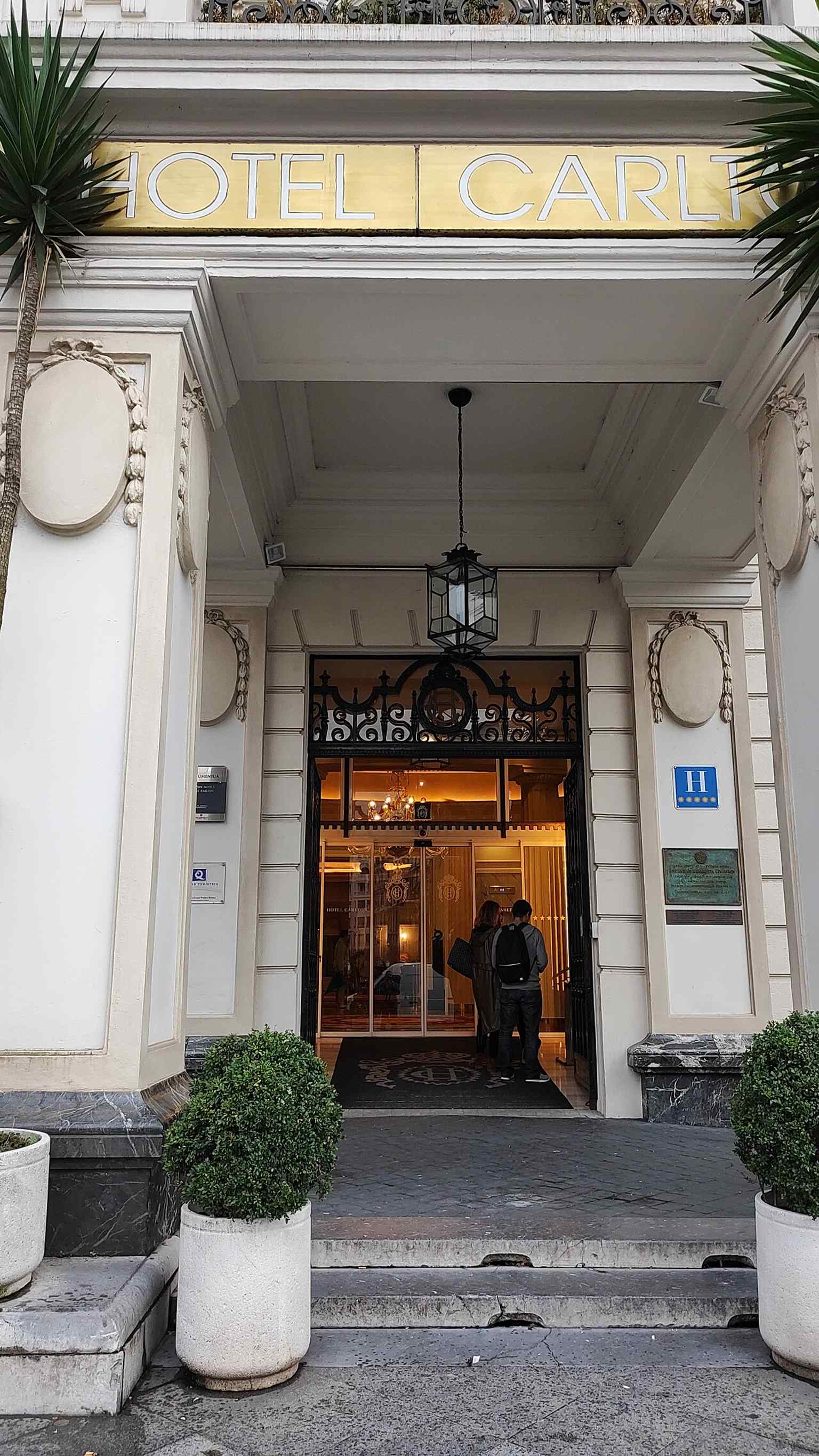
This luxurious hotel did not remain merely luxurious. After the military uprising of the eighteenth of July, nineteen thirty-six, José Antonio Aguirre and the first Basque Government moved their headquarters here. In the middle of war and bombardment, this address became the political nerve center of a government trying to function under fire. If a hotel you knew suddenly became the seat of wartime power, would you ever look at its chandeliers the same way again?
Most visitors notice the elegance first. Locals remember the human scenes. In January of nineteen thirty-six, Federico García Lorca returned here after a recital with Margarita Xirgu. Back in the lobby, she insisted on accompanying him, and their farewell carried a terrible weight in hindsight: Xirgu left for Cuba, Lorca went back to Granada, and only months later he was murdered. That tiny moment in a hotel lobby ties Bilbao’s cultural life to the storm that followed.
The Carlton even sheltered art during the war. The Bilbao Fine Arts Museum stored twenty works here before sending them urgently to France around the twentieth of April, nineteen thirty-seven. And decades later, during remodeling in nineteen ninety-four, workers found a hidden wooden door in the basement. Behind it sat a Civil War bunker, nearly empty except for two chairs and two newspapers from nineteen thirty-six. That’s the Carlton in one image: polished upstairs, emergency downstairs.
In about one minute, Moyúa opens up around you. As you head there, keep this façade in mind... because in Bilbao, elegance and crisis have a habit of sharing the same address.





