
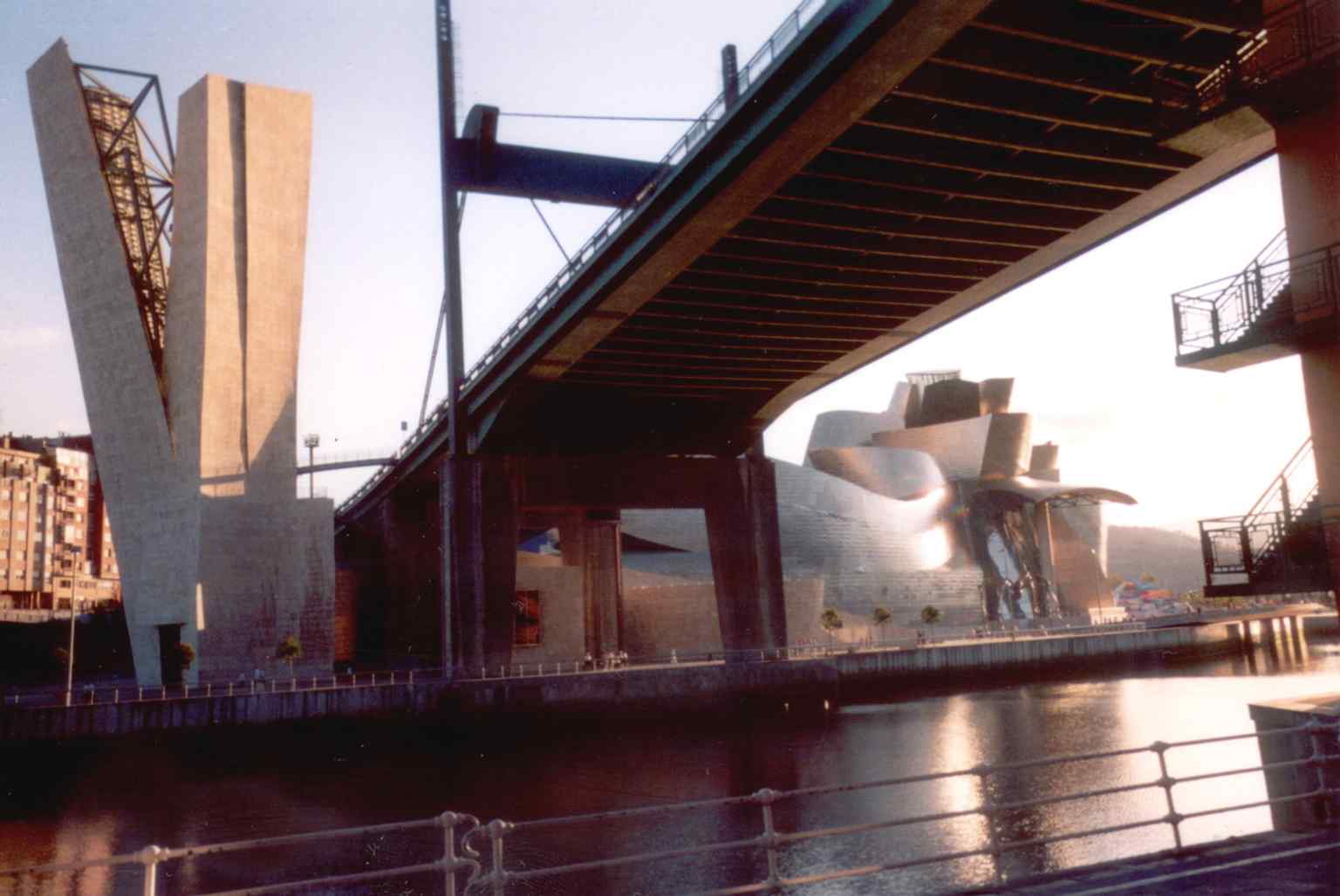
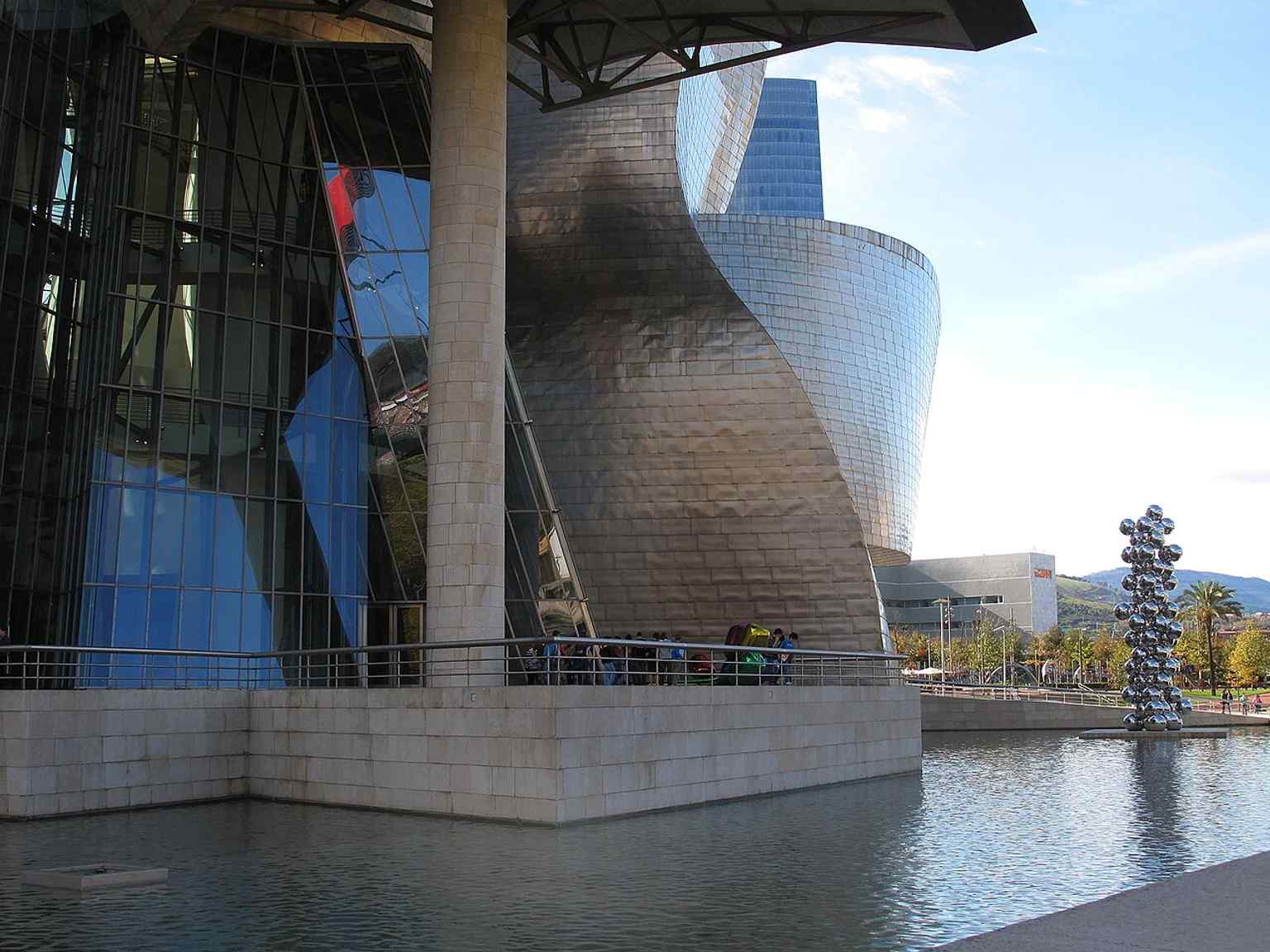
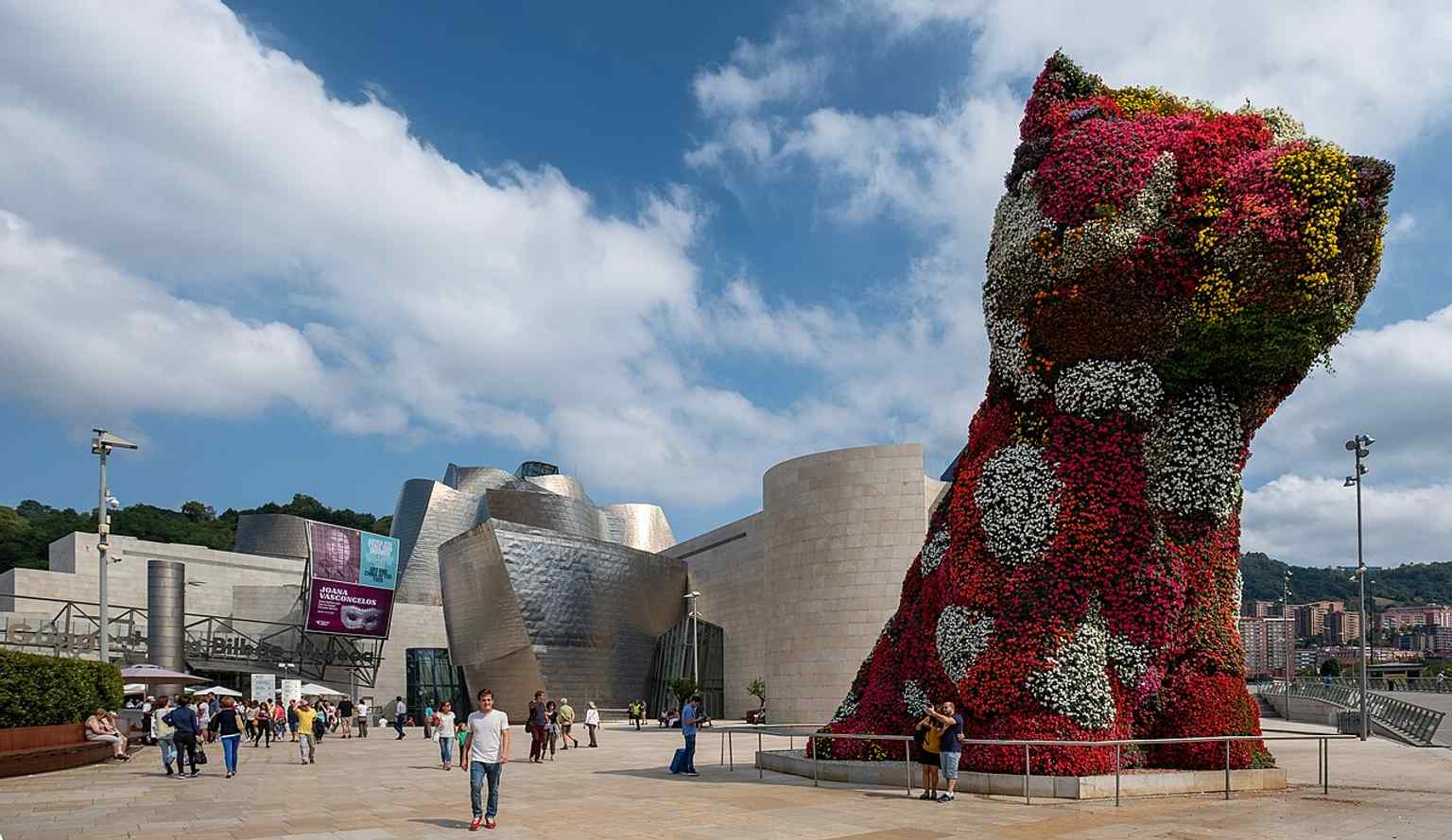
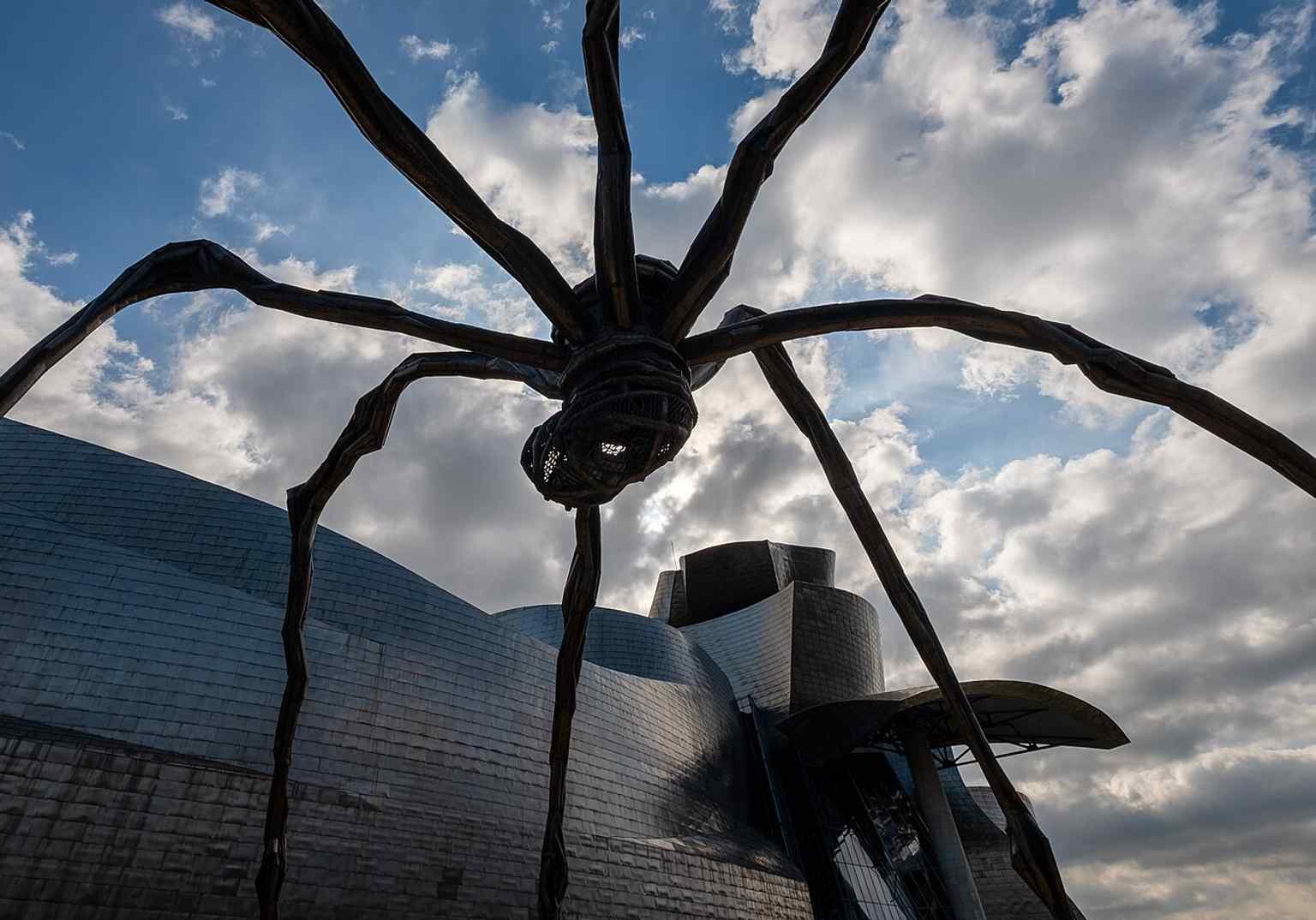
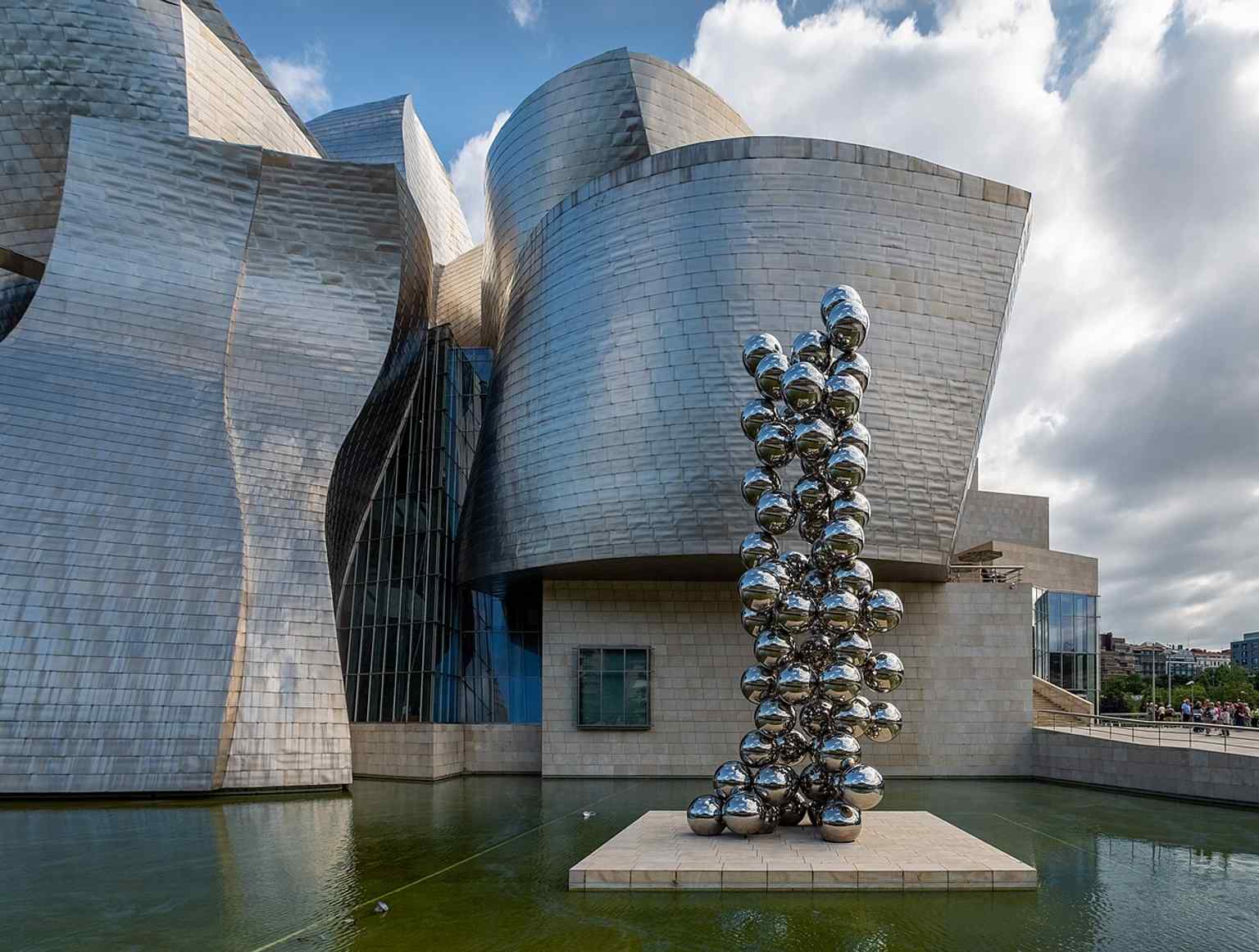
On your right, the Guggenheim looks like a sweep of silvery titanium curves and pale limestone blocks gathered around glass, with panels that read almost like fish scales from across the street.
From here, you can see why this building became Bilbao’s calling card... but it helps to remember it did not land here like a miracle from outer space. In the early nineteen nineties, this stretch of riverfront belonged to a worn-out port landscape, the kind of ground cities often try not to photograph. The Basque government proposed something bold: it would fund a Guggenheim here, in exchange for the Solomon R. Guggenheim Foundation managing the museum and bringing major exhibitions to Bilbao. That gamble turned a neglected industrial edge into the best-known face of Abandoibarra.
Frank Gehry, the Canadian-American architect, answered with a building that refuses to sit still. He wrapped it in thirty-three thousand titanium plates over steel, mixed in limestone from Granada and broad sheets of treated glass, and gave the exterior those famous swoops that catch light like water. It is not exactly shy. Yet for all the drama, this giant statement did something rare: it opened in nineteen ninety-seven on time and on budget, helped by meticulous computer modeling in software called CATIA, which let the team calculate those curves piece by piece instead of crossing their fingers and hoping for the best.
If you glance at the app, the aerial view makes the point beautifully: the museum really unfolds along the Nervión rather than posing like a box dropped from the sky. And inside, which you cannot see from here, everything turns around a bright central hall Gehry nicknamed the Flower, with galleries branching outward.
The opening came with both celebration and grief. Five thousand residents gathered outside for a pre-opening light show and concerts. Then, just before the official inauguration by King Juan Carlos the First on the eighteenth of October, nineteen ninety-seven, E-T-A militants tried to hide four anti-tank grenades in a planter outside the museum. Basque police officer José María Aguirre Larraona confronted them. They shot him, and he later died of his wounds. So this glittering landmark also carries a very human memory of the risks and tensions surrounding public life here.
Inside, the museum became a powerhouse for modern and contemporary art, with changing exhibitions by Spanish and international artists and a huge permanent draw: Richard Serra’s Matter of Time, a sequence of massive steel forms set in an equally massive gallery. Outside, the building did even more. In its first three years, nearly four million visitors came, and people started using the phrase “Bilbao effect” for the way one cultural project could reshape a city’s image and economy.
But here is the gentle warning tucked inside the postcard: this museum did not rescue Bilbao alone. It crowned years of planning, money, river cleanup, transport, and civic nerve. When one building becomes shorthand for a whole city, what does it help the world see... and what slips out of the frame?
Our final stop trades spectacle for something quieter. Head on to the Auditorium of the University of the Basque Country, about a four-minute walk away. If you want to return later, the museum is closed on Mondays and otherwise usually opens from ten in the morning until seven in the evening.






%20julesvernex2.jpg)
%20julesvernex2.jpg)
%20julesvernex2.jpg)