
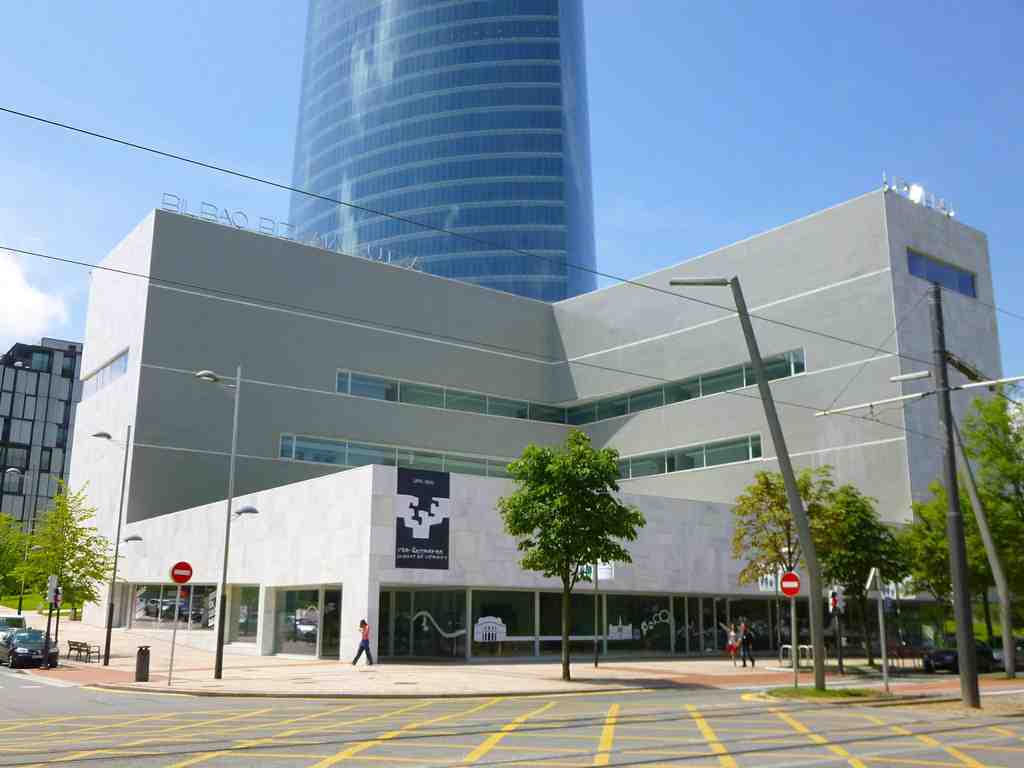
On your left, look for the L-shaped modern building faced in gray handmade tiles and white marble, with a sharp inner corner that feels almost like a folded screen.
This is Bizkaia Aretoa, the ceremonial home of the University of the Basque Country, and it makes a fine final note for Abando. Portuguese architect Alvaro Siza designed it, and the building opened on the twenty-first of September, two thousand ten. It did not appear here by accident. The B-B-K Foundation handed the project to the university, and the university treated it as part of Abandoibarra’s bigger transformation: not just more construction, but a statement that learning and public culture belonged on this remade riverfront.
It holds more than nine thousand square meters across six floors, and its heart is the Mitxelena auditorium, planned from the start for major public events, not tucked away as some administrative afterthought. In other words, this place came dressed for the occasion.
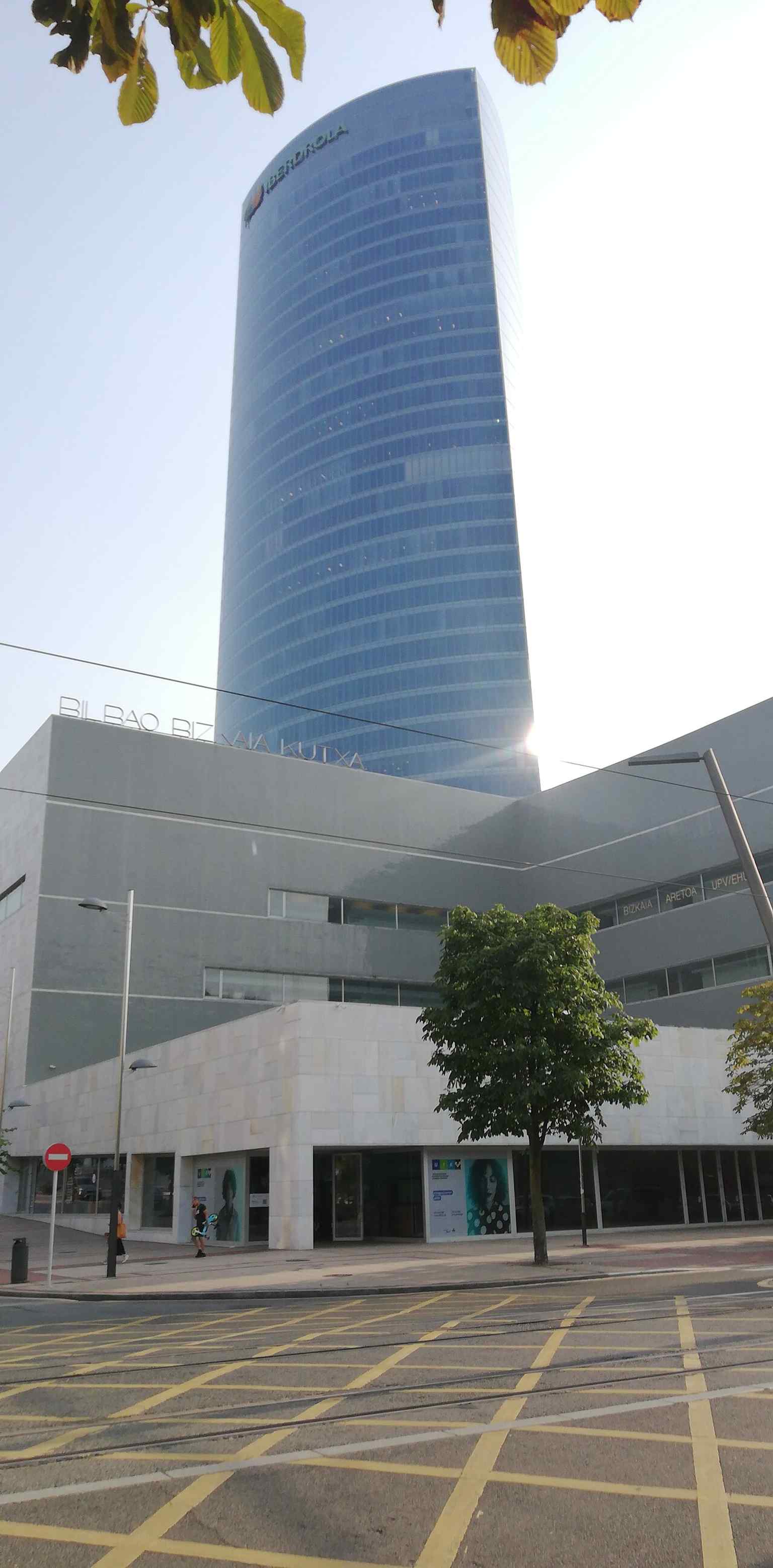
Its skin is what people remember first. Those gray tiles are handmade, and they play a neat visual trick: from one angle they can look almost leaden, from another they pick up a livelier sheen. If you glance at the image on your screen, you can see that gray surface holding its own beside the taller neighbors around it. Siza paired that shifting tile with white marble, and the whole composition quietly answers Rafael Moneo’s Deusto library nearby. Two serious buildings, having a very polite conversation.
At the opening, a whole constellation of Basque public life gathered here: rector Inaki Goirizelaia, B-B-K president Mario Fernandez, mayor Inaki Azkuna, and others. Even in a formal ceremony, nerves and humor slipped in. On the terrace, while photographers arranged the shot, Goirizelaia and Fernandez joked about needing a screen between themselves and the drop beyond it. A very human little moment in a building meant for solemn ones.
And solemnity is only half the story. The Sala Chillida, named for sculptor Eduardo Chillida, who designed the university’s logo and later received an honorary doctorate, has hosted conferences, performances, cocktails, and exhibitions. One of the most powerful showed forensic work from more than one hundred twenty exhumations across Spain, restoring dignity to victims through science. On other occasions, art students projected video onto the inner corner, comparing it to a fronton, the walled court used for Basque pelota. That comparison fits: this building likes to return ideas at a new angle.
That may be the best closing thought for Bilbao too. A station, a bank, a tower, a museum, a university hall... each one changed its meaning as the city changed around it. And here, in these gray tiles that never look exactly the same twice, Abando gathers into one last lesson: places are not fixed things. They are arguments between stone, memory, ambition, and whoever happens to be looking.





