

Grosseto Audio Tour: Echoes of Palaces, Piazzas, and Ancient Walls
Beneath Grosseto’s quiet facades lie layers of rebellion, intrigue, and forbidden beauty that most wanderers never see. Let this self-guided audio tour lead you through tangled stories and overlooked corners, where the echoes of vanished empires and bold revolts still shape the streets. Who defied the ruling powers at the very heart of Piazza Dante and paid the ultimate price? What secret once pulsed beneath the grand Art Museum, waiting to be uncovered? Why was Grosseto’s stately Post Office once the scene of an oddly specific but notorious scandal that still sparks whispers today? Move through time as archways, piazzas, and marble statues reveal explosive conflicts and quiet secrets beneath the Tuscan sun. Every step exposes a new layer of drama, urging you to see this city as its ancestors did: alive with risk and revelation. Press play and let Grosseto reveal what it’s been hiding all along.
Tour preview
About this tour
- scheduleDuration 50–70 minsGo at your own pace
- straighten2.5 km walking routeFollow the guided path
- location_on
- wifi_offWorks offlineDownload once, use anywhere
- all_inclusiveLifetime accessReplay anytime, forever
- location_onStarts at Palace of the Agricultural Consortium
Stops on this tour
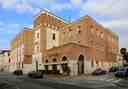
To spot the Palace of the Agricultural Consortium, look for a large, stately building on Via Roma with red bricks, grand travertine stone details, and a central tower-like section…Read moreShow less
To spot the Palace of the Agricultural Consortium, look for a large, stately building on Via Roma with red bricks, grand travertine stone details, and a central tower-like section with a row of windows above the main entrance-plus, you’ll see the Italian flag proudly waving out front. Ah, welcome, welcome! You’ve made it to a true chapter in the storybook of Grosseto-the Palace of the Agricultural Consortium, standing right here, where Via Roma stretches like fresh pasta from the rolling pin! Take in that imposing structure: strong lines, a bold tower poking into the sky, all dressed in red brick with accents of creamy travertine. It’s like the building is flexing its muscles, ready to show off Grosseto’s agricultural heart. But wait, did you expect this place to have been here since the days of gladiators and togas? Ha! Not quite. Our story begins in the early 1900s, when farmers in this region were desperate for something more than the usual “good luck and a bit of rain.” In 1906, the first agricultural consortium opened nearby, not for fine dining, but to sell practical things-machinery and chemical fertilizers, the backbone of any ambitious local farmer! By 1908, they had a full branch working out deals, swapping gossip, and selling those bags of fertilizer with the same secrecy as a spy exchanging precious codes. But business was booming-too booming for their first little shop. In 1909, the organization eyed this very plot, bought from the Carriaggi brothers, and dreamed big: imagine a grand palace, a real headquarters worthy of Grosseto’s rising ambitions. The plans came slow-first from an engineer Maconi in 1921, then another, Guido Bonci Casuccini, in 1931, and finally, after years of back and forth, the ultimate design was drawn by the determined (and probably slightly exhausted) Umberto Tombari in 1937. The construction? Well, that was another saga worthy of opera! After six hopeful companies competed for the job, victory went to the firm Alpiano-Castelli, who offered a nice discount-because, of course, every good Italian project starts with a bit of haggling! Building kicked off in late 1938, and by November of the following year, locals watched this structure rise, the cost ballooning all the way to a cool one million lire. When the doors finally opened in February 1940, you can bet there was a lot of chest-puffing pride in Grosseto. The ground floor became the public’s playground-displaying everything from shiny tractors to the newest marvels in seed-planting. Upstairs? The brains of the empire: directors, office staff, and even the headquarters of the farmers’ fascist union, because even wheat and olives have a taste for politics, eh? But life changes, and after the Consortium split by decree in 1939, this palace became the proud property of the Grosseto branch. It didn’t stop there! In 1942 the ambitious Tombari drew up an expansion on via Damiano Chiesa-a new home for the director, first built as one floor, later lifted up with another storey. Maybe the director just wanted a better view. Can you blame him? From the outside, the building’s regular rank-and-file windows and bold corners mark it as authority’s home, while the grand stairs and travertine-clad tower seem to proclaim, “Here, we mean business…and business is agriculture!” The marble coats, heavy cornice, and the loggia that once displayed hulking machinery-oh, it must have been a traffic-stopper in its glory days! Don’t miss the marble coats-of-arms above: these are the crests of proud Tuscan cities, watching over every contract and handshake made inside. Step in, and the drama continues: green and white marble stairs sweeping upwards, wood and ceramic finishes still whispering stories from the 1940s, and tucked away, a dramatic meeting room with Tolomeo Faccendi’s beautiful bas-relief-a tribute to the harvest, carved by hands that, I like to imagine, knew the joy of sinking fingers into rich Tuscan soil. So take a breath, lift your eyes, and remember: this palace was, and remains, a monument to Grosseto’s grit and the eternal hope for a good harvest. And, as any local will tell you, you simply don’t mess with a farmer-especially one with a palace like this! Ready to explore more? Andiamo!
Open dedicated page →To spot the Post Office Building, just look for an impressive, fortress-like structure right ahead of you with gleaming pale stone cladding, tall arched windows, a powerful tower…Read moreShow less
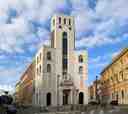
To spot the Post Office Building, just look for an impressive, fortress-like structure right ahead of you with gleaming pale stone cladding, tall arched windows, a powerful tower shooting skyward, and at its base, a spectacular marble sculpture above the entrance-believe me, this building isn’t shy! Ah, welcome to the grand stage of Grosseto’s own “palazzo delle Poste e Telegrafi!” If this place doesn’t make you stand at attention, maybe the towering marble lions will! Right now, you’re staring at the beating heart of communication for the city-a civic temple erected at the very crossroads of history and ambition. This is no ordinary post office-this is a story in stone, marble, and a pinch of political drama. Picture this: it’s the 1930s, and Italy is buzzing with grand plans to wriggle out of an economic crisis-unemployment was sky-high, and Mussolini was doling out jobs like confetti at a carnival. He signed a decree in 1930, making Grosseto the proud host of this monumental new post office, handpicking the daring Angiolo Mazzoni as the architect. Mazzoni was like the Michelangelo of bureaucracy-he didn’t just stick a stamp on a blueprint; he reimagined the very urban soul of Grosseto. Forget boring boxes-he dreamed up something that would knock the socks off anyone stepping out of the historic Porta Nuova. The site? A busy circular piazza, now called piazza fratelli Rosselli, was chosen for its energy and connections-think of it as the crossroads where old meets new, where memories of the Risorgimento (look for the obelisk monument) brush up against the city’s future. And yet, in true Italian style, there was drama! The previous “palazzina liberty,” a lovely Art Nouveau beauty built just one year earlier, was ruthlessly demolished alongside some other buildings along then-viale Pisani. I imagine the demolition crews, taking a quick espresso break, shaking their heads-“Che peccato!” What a shame! But onward! Progress waits for no one. In the early 1930s, the city was buzzing with more than just postal deliveries-picture the crush of 120 workers a day, the clatter of marble blocks from Garfagnana and the sparkle of travertine from Rapolano. The contracts zipped from Milan to Arcidosso to Pistoia, with one company even shaving 19.36% off the asking price! Now that's Italian bargaining for you-“What’s your final offer? And will you throw in a free panino?” By 1932, the masterpiece was ready for its big unveiling-and who better to cut the ribbon than the king himself, Vittorio Emanuele III? Imagine the fanfare, the crowds, the sense of stepping bravely into a new era! The square was transformed, lined with bold new icons: Palazzo del Governo in Neoclassical pomp, Villa Panichi waving its whimsical Liberty touches, and this, the crescendo-Mazzoni’s monumental post office, standing on its own trapezoidal plinth, breaking from all traditional shapes. A visual anchor for the whole neighborhood, visible from every approach. Take a closer look at the main facade-it’s nearly twenty meters high and split into three crisp sections. The core is crowned with a giant portal, flanked by beefy Ionic columns and topped with a heroic marble group by Napoleone Martinuzzi-the very image of the Maremma “tamed by man.” Above it all? A striking elliptical tower, with a ribbon of vertical windows leading the eye up, up-like a gigantic exclamation mark shouting, “Look at me!” The curved granite staircase, made from island of Elba stone, sweeps out gracefully to the piazza-a bit like an opera diva making her grand entrance. At its feet sits the rationalist fountain-a circle of Portasanta marble and a diorite globe, a little pool where, on hot days, pigeons stop for a quick splash. Those side wings? They hug the main plaza and reach out along via Roma and viale Matteotti, styled in warm bricks with flashes of elegant travertine. Each element-whether window, door, or column-was obsessively designed. The two smaller entrances on each side retain their original glass-and-brass lanterns, the floors and benches shimmer with precious stones, and if you peer through the side windows, you might even spot the twinkle of old neon lights from the 1930s! Inside, the extravagance continues: the entrance hall is an ellipse of polished marble, with the echo of footsteps on violet “cipollino” stone, the glimmer of brass, and the cool touch of Carrara statuary. The postal hall is a cathedral to communication-concave walls, gleaming red Amiata marble, high arched ceilings with original glass chandeliers, and old brass clocks that once kept the city’s pulse in time. Behind the scenes: staircases spiraling skyward, hidden meeting rooms, and, if desks could talk, a million whispered secrets of love letters sent and bills paid. Post-war, the building just kept reinventing itself: adding floors, stretching a bit here, getting a nip and tuck there-until, after a full restoration in 2008, it gleamed brighter than ever. Critics once sniffed at its “solemn, even gloomy monumentality,” but now it stands as an icon-equal parts history, ambition, and just a dash of Italian show-off. So, take it all in. Maybe drop a postcard inside. And remember: in Grosseto, even sending a letter is a grand affair worthy of kings, duchesses, and the occasional nosy tourist! Shall we continue?
Open dedicated page →On your left, peeking mysteriously from behind a parade of leafy trees, you’ll spot the reddish-brick Villino Pastorelli, easy to find thanks to its fairy-tale tower with…Read moreShow less
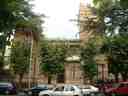
On your left, peeking mysteriously from behind a parade of leafy trees, you’ll spot the reddish-brick Villino Pastorelli, easy to find thanks to its fairy-tale tower with battlements and a whimsical blend of arches, loggias, and medieval details-just look past those branches! Now, my friend, let’s take a moment here in the shade and imagine ourselves transported back to early 1900s Grosseto. Imagine the smell of fresh earth and kiln-fired brick drifting on the breeze-because those very bricks, which give the Villino Pastorelli its unique reddish warmth, traveled only a stone’s throw from the San Lorenzo furnace, owned by the family of Lorenzo Porciatti, the genius who designed this showstopper. Porciatti had a flair for the dramatic-if you’ve ever wondered what would happen if an English Gothic castle decided to go on holiday in Tuscany, well, this is it! Back in its earliest days, this villa stood almost as a castle at the northern entrance to Grosseto’s historic core, just outside the ancient customs gate. Picture a classic Italian scene: a wrought-iron barrier, demolished only in 1924, separating the quietly dignified villa from the city bustle. The house was shielded by a protective line of trees, and further surrounded by a private yard-nowadays, that’s a parking lot, but let’s focus on the romance rather than the Renaults! The villa was originally built between 1908 and 1913 for a wealthy farmer named Millanta, and trust me, he had taste. The place wasn’t just a home; it was practically a love letter to neo-Gothic style, with every detail carefully thought out. You see the lower arches, the elegant upstairs loggia with delicate twin columns, the square tower with crenellations ready for a miniature Juliet and Romeo drama, and a laterally attached hall that looks like a medieval chapel with spunky tumbling pinnacles. Even the windows-oh, don’t miss those!-are framed by fanciful stone tracery. It’s as if Porciatti saw an English “domestic architecture” magazine and said, “Yes, but let’s make it Tuscan!” Now, the villa’s story is as twisty as its stunning design. After Millanta, it became the property of the Pastorelli family-hence the name-and in the dramatic war years of 1942 and 1943, it was transformed into the “Excelsior,” an inn, restaurant, and even a “dancing” venue where guests waltzed under the shade of those trees. Imagine the music floating over the garden as locals slipped away from the grim realities of wartime for a little bit of la dolce vita. The garden itself became a dance floor, rich with laughter-although I bet those who danced a bit too enthusiastically had to watch out for the roots! After the Second World War, the villa’s life took on a more serious note. The Banca Nazionale dell’Agricoltura snapped it up and made some substantial changes-enlarging the rear of the building and considering even more grand expansions (plans for an entire new wing survive, like a “what could have been” of local daydreams). Later, until 2013, it housed the famous Banca Monte dei Paschi di Siena. Now, since 2019, it’s the stylish headquarters for an interior design firm-a fitting fate for a building that’s always been obsessed with beauty. Inside, though much was changed for bank counters and offices, the villa once was a treasure box of Gothic flair: marble stairs wound up to apartments, ballrooms hosted lively receptions (imagine the swish of skirts and the clink of glasses), and even a “beautiful frescoed hall” for the most important gatherings. Upstairs, surprisingly, some original wooden fixtures and colorful hexagonal floors survive, especially in the turret’s attic and the side chapel-where geometric tiles and an intricately carved doorway evoke a medieval vibe more English than Tuscan. Villino Pastorelli is considered one of Porciatti’s masterpieces-a playful, somewhat theatrical display of English-inspired Gothic transplanted into the heart of Maremma. Local critics have called it a “fairy-tale castle,” and who could disagree? All these years later, even behind its leafy camouflage and modern cars, it still whispers secrets of garden waltzes, aristocratic ambitions, and the dreams of architects who never saw a turret they didn’t want to add. If only these walls could talk-eh, maybe they’d sing! And if you find yourself tempted to twirl in the parking lot, just blame the Excelsior spirit. Off we go, on to our next adventure! Interested in a deeper dive into the urban context, description or the criticism? Join me in the chat section for an insightful conversation.
Open dedicated page →
Show 13 more stopsShow fewer stopsexpand_moreexpand_less
 4
4Bastion Remembrance
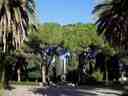
Buy tour to unlock all 20 tracksStraight ahead, you’ll spot the Bastion Rimembranza by its lush cluster of pine trees and palm fronds that frame a solemn monument at its heart-just look between the greenery and…Read moreShow less
Straight ahead, you’ll spot the Bastion Rimembranza by its lush cluster of pine trees and palm fronds that frame a solemn monument at its heart-just look between the greenery and you can’t miss the obelisk rising up in the dappled Tuscan sunlight. Now, my friend, you are standing where history oozes from the very ground beneath your shoes! You’re at one of the six mighty bastions that guard the ancient walls of Grosseto, the Bastion Rimembranza-though once upon a time, it answered to the name “Baluardo di San Francesco.” Just imagine: it’s the late sixteenth century, the Medici family are running the show in Tuscany, and they decide their fine city needs tougher walls-so they call in Baldassarre Lanci, who sketches plans so bold you’d think he was paid by the cannonball. Simone Genga takes command of the works, and by 1577, the brand-spanking-new bastion stands, keeping a stern watch near the convent of San Francesco. Oh, but history never sits still! To let Grossetanos come and go easily, a chunk of that poor old convent was demolished and a road-playfully called the “street of the cheese game”-was born. By the eighteenth century, what was once all military swagger is now... a pasture. Yes, cows and goats where soldiers once marched. The land is sold to Gaspero Valeri, a wealthy fellow so respected, he becomes gonfaloniere-the top dog of the city. At some point, there’s even a powder magazine here; but eventually, the fortress vibe wears thin, and the walls start becoming less “defend at all costs” and more “let’s take a gentle stroll.” Enter the Lorraine dukes! They turn the area into a public park and, in 1884, plant a bust of Giuseppe Garibaldi right here. The city bows to Italy’s bearded hero, and the bastion briefly wears his name. But wait, the plot thickens-by 1927, it transforms into a “Park of Remembrance” to honor Grosseto’s fallen soldiers from World War I. The trees you see were planted in their memory, every cypress and pine a silent salute, with their names on each trunk. Emotions run high as the park is unveiled by Galeazzo Ciano himself in a grand ceremony. And if that wasn’t enough-there’s even more! Once upon a time, you could find an aquarium tucked within the bastion, full of curious sea creatures from the Tyrrhenian coast, attracting crowds from 1993 until 2016. Imagine fish swimming in tanks where soldiers once dreamed of home! Today, the ancient stones host a peaceful monument to the fallen, surrounded by shady groves and touched by centuries of stories-some heroic, some hilarious, some quietly moving. So, take a breath and let the past and present swirl around you. Here, every stone has a tale and every tree whispers a name. Welcome to one of Grosseto’s most storied corners!
Open dedicated page →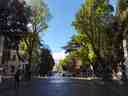 5
5Porta Nuova
Buy tour to unlock all 20 tracksLook straight ahead-between the tall, leafy trees, you’ll spot a break in the streetscape where the road leads out beneath open sky, marking the northern gateway to the historic…Read moreShow less
Look straight ahead-between the tall, leafy trees, you’ll spot a break in the streetscape where the road leads out beneath open sky, marking the northern gateway to the historic center: this is where the legendary Porta Nuova once stood, now a vital artery connecting past and present Grosseto. Ah, benvenuti, miei amici-right in front of you, you stand on history’s stage! Trust me, if these cobbles could speak, they’d have juicier stories than a Tuscan grandma on market day. You are face to face with what once was Porta Nuova: the northern entryway to Grosseto, a gate that guarded dreams, anxieties, and sacks of flour alike. Take a deep breath. Can you feel the spirits of centuries past brushing by you? Cast your mind back to medieval times, to when sturdy walls snaked around Grosseto, and this gate-known first as Porta di San Pietro-was the city’s northern threshold. In those days, four great gates pierced the defenses, and here, at the limit of the city’s beating heart, was the portal to Siena, the link to rival lands and vital supplies. It wasn’t just a door; it was the city’s handshake-or if the Sienese were in a grumpy mood, its clenched fist. Now, imagine the 1300s. The Republic of Siena, always on the lookout for an excuse to build something imposing, decided to give the walls a grand makeover. Above this very spot rose the mighty Cassero di San Pietro, a stocky tower, crouched over an archway as sharp as a sword’s tip, ready to swat away troublemakers or, let’s be honest, nosy neighbors. This “Porta Senese,” as folks came to call it, connected Grosseto not just to Siena but to the pulse of everything that happened north of here-grain, gossip, soldiers, and more than a few secret lovers brewing rendezvous on moonlit roads. But then, the winds of time (and a little Medici ambition) swept through in the late 1500s. The mighty Medici, never content with anything less than magnificent, swept away the medieval shell, building their own city walls even thicker, even smarter, even more “Look how important we are!” They closed up this northern gate, making it just a shadow of itself. Its proud wooden doors remained, silent sentries peeking out from stone, but-pssht!-no more parading armies or gossiping traders. The only action was the creak of rusty hinges and maybe, too often, the annoyed sighs of locals locked out after curfew. But you know, my friends, you can never keep a Tuscan down for long. By the 1700s, complaints were louder than rain on terracotta tiles: farmers and merchants, desperate to reach the wide lands to the north, grumbled all the way to the grand duke. “We don’t want Porta Vecchia, we want our northern gate back! Who wants to wade through floods, stink, and wind at the southern end?” They begged for Porta Nuova to emerge, and-grazie mille, Colonel Odoardo Warren-plans were made for a sparkling new opening. By 1755, the northern route was reborn, complete with a handsome triple-arched bridge and guard houses for the new order of things. Can you hear the clatter of carts and the shouts of grain merchants, the rhythmic tramp of guards swearing loyalty at a gate that welcomed dreams and ambition each dawn? Porta Nuova became the grand entrance-no longer the rear door, but the red carpet to Grosseto. The years rolled on, of course, and by the 19th century the city wasn’t huddled behind those walls anymore. The gate, once a proud portal, became less a defense and more a passage into a city yearning for open sky and new prospects. The grand duke himself ordered the expansion: gone was the medieval tower, replaced by a simple brick facade and a dignified attic; side by side stood the twin customs houses, ready to check every cart and carriage. But oh, progress never sleeps. The coming of the railway in the 1860s brought dreams of grandeur-imagine proposals for triumphal arches!-but, alas, the city council’s wallet said “no, grazie.” Instead, the old gate was fully swept away, replaced by practical doors and iron fences and bustling customs posts. By the 20th century, Piazza del Popolo blossomed just beyond where you stand, and the lively suburb of Porta Nuova grew, echoing the city’s leap beyond its walls. Even the old customs gate and iron railings vanished, making room for gardens and then grand plazas. So take a final look-where now there is an open road, there once was a mighty gate that watched over Grosseto’s stories for centuries. And remember, every time you pass here, you’re walking in the footprints of centuries of Tuscans, each with their own tale to tell, their own dreams riding out through the gates of Porta Nuova!
Open dedicated page →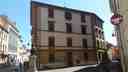 6
6Former Bank of Italy building
Buy tour to unlock all 20 tracksJust ahead, you'll see a grand four-story building with sturdy tan stonework at street-level, elegant brown shutters, and a rounded-arch doorway right in the center-look to where…Read moreShow less
Just ahead, you'll see a grand four-story building with sturdy tan stonework at street-level, elegant brown shutters, and a rounded-arch doorway right in the center-look to where the square opens up and the stone meets the soft sunlight. Ah, you’ve made it to the Former Bank of Italy building! If these walls could talk, they’d ask you for your savings-and probably your secrets, too! Just imagine yourself here when this spot buzzed with the whispers of old Grosseto, right at the crossroads of piazza Socci and Corso Carducci-a place where fortunes changed hands, and maybe even a scandal or two! But rewind the clock a bit further, all the way to the end of the 1700s, and you’d find not this elegant palazzo, but a pair of narrow old houses squeezed together and peering out over the town’s main street. Fast-forward into the 1800s and voilà-the scene changes to a bustling inn: the Stella d’Italia. The locals still tell tales of its legendary mistress, the widow Palandri, who broke every rule-living in Grosseto through every sweltering summer and chilly winter, robust as a horse and cheerful as a songbird, a real-life marvel of Tuscan resilience. Her successor, Oreste Civinini, ran an inn so fine that even George Dennis, the famed English explorer, praised it as the best between Pisa and Rome-a compliment that still makes the local inns blush. After a glittering run, Stella d’Italia packed up and moved to fancier digs, and here’s where the real transformation began. The land was snapped up by the Bank of Italy in 1896, right when Grosseto was on the move-new squares taking shape, grand boulevards springing up, a city striding confidently into the modern age! The building became the bank’s Tycoon HQ, and by 1925, it was given its striking Liberty-meets-neoclassical make-over, all curvy lines and clever details, with a little baroque panache just for fun. The grand entrance you see today frames a door that guarded the local treasures for decades. Imagine the bustle in 1930: stern bankers, chattering townsfolk, and perhaps the odd mischievous child peeking in, hoping for a glimpse of lucchetti d’oro-golden locks! Even Marcello Piacentini, the maestro of modern Italian architecture, nearly put his stamp on it-almost. Instead, local architects made sure the building fit Grosseto’s unique style: stately but never stiff, stylish but always welcoming. By 1977, the Bank moved on, craving a shiny new home beyond the city walls. Now, offices and studios fill these halls, but the building keeps its secrets. Remember: in Grosseto, nothing ever really disappears-it just gets another story! Now, shall we stroll onward to the next piece of our living history?
Open dedicated page →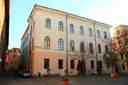 7
7Archaeological Museum and Art of Maremma
Buy tour to unlock all 20 tracksTo spot the Archaeological and Art Museum of the Maremma, look for the large, stately cream-colored building with tall, arch-topped windows and a simple, elegant façade right in…Read moreShow less
To spot the Archaeological and Art Museum of the Maremma, look for the large, stately cream-colored building with tall, arch-topped windows and a simple, elegant façade right in the corner of Piazza Baccarini. Ah, bellissimo! Here you are, standing in the shadow of one of Grosseto’s true treasure troves-where stories are buried under every cobblestone and a whiff of adventure is always in the air, even among these potted trees. This, my friend, is not just a museum; it’s the beating heart of centuries of Maremma’s secrets and a few, let’s say, “misplaced” Etruscan knick-knacks. The building itself began life with a much more serious purpose back in the 19th century-as the courthouse, no less! You can almost imagine the stern judges pacing the halls, never suspecting that one day, their offices would be full of ancient statues and mysterious artifacts, rather than trembling defendants. Step inside-at least in your imagination for now-and you’ll find yourself surrounded by the ghosts of countless ages, from the Stone Age to the Roman Empire, with a particular nod to the Etruscans. You’d be forgiven for wondering if Indiana Jones himself might pop out from behind a statue at any moment. This vast collection began, wonderfully enough, as the pet project of a passionate priest: Giovanni Chelli, who had a taste for rare antiquities and, as it turns out, a stubborn streak. In the 1860s, old Chelli was hunting down ancient treasures around Tuscany-in Volterra, Chiusi, you name it-swapping letters with priests, politicians, and treasure-loving noblemen. Chelli’s dream? To plant a cultural flag right here in Grosseto, a city where, at the time, a good library was harder to find than a decent cup of espresso. The museum’s journey was far from smooth. There were more moves than a game of musical chairs: first in the bishop’s palace-until the bishop moved back in-then the city shuffled it from dusty attics to cloisters and even threatened to give it all away. In fact, Grosseto, at one point, lost some of its best pieces, like a beautiful statue of Artemis and the mighty Talamone pediment, all relocated to Florence by those pesky officials. Chelli would have wept-or maybe written another angry letter! After years of being overshadowed by the library and a touch neglected-especially when director Cappelli got a little distracted founding another museum for sacred art-the real turnaround came with Aldo Mazzolai. Picture this man: post-war, sleeves rolled up, dashing out across the muddy fields of Maremma to save any ancient coin or jug before tomb robbers could nab it. When the floods of '44 and '66 swept through, Mazzolai helped rescue whatever was left and pushed, pushed-like a true Italian mamma-for better conditions. You’ve got your very own local hero, Indiana Mazzolai. Finally, in 1975, the museum found its forever home-right here in the old courthouse, fit with a spiral cement staircase as mighty as Pisa’s Leaning Tower... well, maybe not as crooked, eh? The museum reopened, now split into five fabulous sections spanning three floors. You’ll wander from the wild prehistory of the Maremma-stone tools and mysterious idols-to the glory days of Roselle, the lost Etruscan city, and then to the Roman statuary: emperors, gods, and enough marble to start your own empire. Don’t miss the star-crossed lovers Augustus and Livia, immortalized together in the gallery. There’s drama, too! Bombings in the Second World War left gaps in the collection, muddy floods unreadable labels, and yet, time after time, the city’s spirit-and a crew of volunteers-revived what could have been lost. As you stand here, imagine not only the ancient hands that shaped these treasures but also the struggles, the courage, and sometimes the chaos that brought them to you. So if you hear a little voice echoing off these pale walls-maybe Giovanni Chelli himself, or a slightly disgruntled ex-judge-it’s just another story waiting to be discovered. And in the Maremma, there’s always another story around the corner! Fascinated by the seat, exhibition halls or the directors? Let's chat about it
Open dedicated page →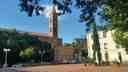 8
8Church of Saint Francis
Buy tour to unlock all 20 tracksEasy to spot! Look ahead for a large open square with warm brick pavement, lush hedges on one side, and the tall, slender bell tower of the Church of San Francesco rising high…Read moreShow less
Easy to spot! Look ahead for a large open square with warm brick pavement, lush hedges on one side, and the tall, slender bell tower of the Church of San Francesco rising high above the trees-just follow that pointed spire! Now, take a deep breath and imagine you’re not just standing in a modern Italian piazza, but traveling through nearly eight centuries of colorful, chaotic, and sometimes rather cheeky history! Piazza San Francesco isn’t just the heart of Grosseto’s old town-it’s a living storybook where every brick has a tale, every stone a scandal, and every old Franciscan might just be peeking around the corner to see what you’re up to. So, picture this: it’s the year 1233. Not a pizza in sight-yet! This was an area buzzing with monks and holy men. You might have heard someone talking about the “contrada fratrum minorum”-which basically meant “The Neighbourhood of the Little Brothers,” the original Franciscans. They’d just kicked out the Benedictines from the old San Fortunato convent. By 1289, the site was reborn as the Church and Convent of San Francesco, anchoring the north-east of this piazza-a spot that, back then, might have felt more like open countryside than a busy city square. But don’t just think of holy prayers and quiet contemplation! By the 13th century, right next to the church, you’d have found the “Ricovero di fra Roncone”-a shelter for pilgrims and folks down on their luck, run by the very first guardian of the convent. It would have been a lively sight: mud-caked travelers, nuns shelling peas in the sun, and maybe a slightly grumpy Franciscan telling children to stop chasing chickens around the well! Jump ahead to 1465, and someone-probably fed up with hauling water from the Serchio river-decided they needed a proper well. The grand “Pozzo dello Spedale” or “Well of the Horns” magically appeared, funded by the mighty Republic of Siena, who even carved their seal right into its side. They say if you listen closely, you might still hear the echo of old Sienese merchants arguing about water taxes. With the city’s new ties to the powerful Grand Duchy of Tuscany in the 16th century, the old pilgrim’s shelter grew up-transforming into the Misericordia Hospital. By 1787, it had a facelift bigger than nonna’s Sunday dinner, complete with an “Arco delle Monache”-an elegant arch linking the hospital with the Clarisse nuns’ convent. Imagine a secret passage so the nuns could whisk over with soup when someone was having a bit of a crisis! Alas, in 1927, the arch was torn down, as modernity swept in. But the courtyards, the gardens of the Clarisse, and their stories survived-well, at least until the 1990s, when the old walled orchard was opened for the townsfolk and the terrace you see today became a stage for music, theatre, and raucous cultural celebrations. Don’t miss the bronze statue of St. Francis-he’s been keeping an eye on things since 1965, though he swapped his fountain for a sober pedestal during the Jubilee in 2000. And over there, the old Misericordia, now home to eager university students, stands where nuns once kept the peace. So, look around and let the centuries swirl-Grand Dukes, friars, Sienese skulls, singing nuns, and perhaps even a saint himself. Welcome to Piazza San Francesco, where time laughs and the past is always ready to join you for an espresso!
Open dedicated page → 9
9Plaza La Glorieta
Buy tour to unlock all 20 tracksTo spot the Plaza de la Palma, look straight ahead for a rectangular open square lined with stately buildings; to your left you’ll see the warm terracotta side and bell tower of…Read moreShow less
To spot the Plaza de la Palma, look straight ahead for a rectangular open square lined with stately buildings; to your left you’ll see the warm terracotta side and bell tower of the Misericordia church peeking out behind a row of trees, with the whole area basking in the sunlight like a piazza in a classic Italian film. Ah, you’ve made it! Welcome, my friend, to Piazza della Palma-the beating heart of Grosseto’s old town and, if you ask any local, the spot where history, gossip, and daily life mix together like the ingredients of a fine Tuscan ribollita. You can’t mistake it: this big, open space, longer than a baker’s lunch break and lined with trees, stretches from north to south. At first glance, you’ll see it’s hemmed in by handsome buildings and, at one end, that proud red church tower of the Misericordia. Stand right here and let your imagination wander back in time, because oh, does this place have stories. Believe it or not, you’re standing where Grosseto was truly born. Archaeological digs a few decades ago-yes, with men in dusty hats and brushes-uncovered traces of early huts and earth houses right beneath your feet. Picture villagers in the Dark Ages hustling around, building little wooden structures, sheltering from the moody Ombrone River just a stone’s throw away. Clever folks, they picked this spot because it’s about five meters higher than the rest of town-not enough to give you altitude sickness, but plenty to keep their socks dry during the frequent floods. It was a central hub, circled by its own wooden palisade or maybe a ditch, with smaller settlements huddled around like ducklings around their mamma. Now, while most homes were humble, mud-and-wood affairs, by the 9th century the most important buildings-churches of course!-were already being built from stone. Solid as a rock, these structures stood out like the best-dressed guest at a village festa. Grosseto itself gets its very first mention in official documents in the year 803 AD. In those days, it was called “loco Grossito” (I know, it sounds like a character from a spaghetti western, right?) and by the 10th century, it was important enough to get proper defenses and earn the title “castrum”-a real fortress town, ready in case of bandits... or maybe just jealous Pisan neighbors dropping by unannounced. Fast forward through centuries of market sellers, tradesmen, squabbles, and lovers’ rendezvous, and we land in the 19th and early 20th centuries, when things changed faster than a caffe gets cold. The original San Leonardo church was knocked down to make way for the pinkish-red Misericordia church you see there, whose bell tower pokes up just enough for everyone to know who’s boss. The mighty Grosseto prison was built nearby too-imposing enough to keep even the naughtiest Tuscan kid in line. Rich landlords moved in, schools were built (the earliest secular kindergarten in the region opened across the piazza in 1879), and grand homes like the Ponticelli Palace appeared with their fancy turrets. But ah, let’s get to the main act-la palma! The square gets its nickname from the legendary palm tree that stood, right at the center, for over two centuries. The story goes, there was once a courtyard behind the old palace of Egidio Bruchi, Grosseto’s liberal-minded mayor. In the late 1700s, someone planted a palm there-a Mediterranean oddity that gave the spot not just shade but a touch of the exotic. It was described in travel diaries and became a kind of natural mascot for everyone in town. But fate, like a mischievous wind, had other plans. In 1937, a furious storm tore the old palm apart, leaving locals so despondent you’d think their favorite team had lost the derby. Bruchi, ever the optimist, found another palm and planted it, right beside the stump of the beloved old one. Then, during the bombings of 1943, Bruchi’s palace was destroyed, clearing space for the wider, open piazza we see now. And so the square was born anew, with a series of palms planted in memory-each standing against the elements, disease, and yes, even the dreaded red palm weevil! The latest chapter: in 2020, a Californian palm took its place at the center, thanks to the generosity of a local merchant. Today, the piazza is still the stage for everyday drama: kids running, cars weaving in and out, folks catching up over an espresso. There’s even a museum of natural history-once a neglected nursery, now full of dazzling fossils and curious local flora. But let’s be real-everyone still calls it Piazza della Palma, no matter what the politicians try. And every time the wind rustles those palm leaves, it's like hearing whispers from all who came before-farmers, priests, rebels, children, and dreamers, each wanting their story told in the shade of this timeless square. Now that’s the Italian way, no?
Open dedicated page →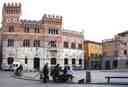 11
11Piazza Dante
Buy tour to unlock all 20 tracksAs you walk up, look ahead and just to your left to spot the grand Palazzo Aldobrandeschi with its impressive neo-Gothic facade-all red brick and white stone-standing proudly…Read moreShow less
As you walk up, look ahead and just to your left to spot the grand Palazzo Aldobrandeschi with its impressive neo-Gothic facade-all red brick and white stone-standing proudly beside a lively open square, with a dramatic statue right in the center and a chain-linked set of pillars circling it like the city’s own little necklace. Ah, benvenuto to Piazza Dante-the beating heart of Grosseto! Here you stand in the city’s living room, a place so full of stories, secrets, and maybe a scandal or two, that even the old paving stones might start whispering if you listen closely. Now, take a look around: the square is like a giant, slightly wonky trapezoid, hemmed in by prestigious buildings that look as though they've assembled for a royal portrait. There’s the commanding face of the Palazzo Aldobrandeschi to your left, bustling porticoes, and-towering at the far edge-the proud side of Grosseto’s great Duomo. The square is always alive, with locals chattering, children weaving around the statue, and old-timers keeping a watchful eye out for anyone daring enough to call the piazza by its nickname, “piazza delle Catene.” Yes, those very chains and little columns around the statue! If you ever get lost, just ask for “the square with the chains” and you’ll get pointed straight here. Picture it: it’s the year 1222, the echo of medieval cloaks swishing and stern monks hurrying across the original piazza, which was much smaller than the one you see today. Bit by bit, the square grew with the city’s ambitions, its borders stretched as grand new buildings rose-especially in the wild days of the 13th and 14th centuries. Imagine the clamor of the markets, the solemn ring of cathedral bells (the very same Cathedral of San Lorenzo whose mighty flank faces you now), and gossip snapping like fresh bread as merchants and town officials argued about everything from salt to who owed whom a favor. During the city’s “Sienese years,” when Grosseto was under the rule of its pushy northern neighbor Siena, the square became the true power center-the place where the most powerful families, the great and the not-so-good, all vied to outdo each other with the height of their palazzos. As time passed, the square saw its fortunes rise and fall. In the grim centuries of Medici rule-picture tumbleweeds and a lot of long faces-this place went from vibrant public square to little more than a gloomy citadel, with Grosseto serving as a military outpost or, depending on your luck, an oversized prison. The population thinned to barely a handful, but the city’s heart kept beating right here. By the 18th century, with the arrival of the Lorraine dynasty and a breath of fresh urban renewal, the square finally shook off its dusty old coat. The pavements were redrawn under the watchful eyes of the Grand Duke’s engineers-one of whom even complained the piazza was “half broken” and more pothole than paving. Clearly, potholes are a proud Italian tradition! Look at the center now and meet the star of the show-Grand Duke Leopoldo II, forever immortalized in marble as “Canapone.” Now, this sculpture isn’t just a pretty face. It’s a whole pageant of symbols: the grand duke holds a woman, an allegory for Maremma struck by malaria, and a lively child, representing hope for the future. His foot? Oh, it’s squashing a snake-malaria again! And just behind, a fierce griffin-Grosseto itself-snatches up the serpent. Talk about dramatic! It’s medicine, mythology, and city pride all rolled up in one glorious hunk of marble. Throughout the centuries, the square acquired more than its share of architectural glory. The palatial Palazzo Aldobrandeschi, built at the dawn of the 1900s, flaunts its neo-Gothic curves and battlements as the headquarters of the provincial government. Look around and spot the whimsical houses: Casa Magagnini, with its flowery stone balconies; Casa Santini, crowned with battlements; the old Palazzo Severi, once home to the Vanni family and now to the local pharmacy (which, by the way, could probably tell a few centuries’ worth of secrets, if only those medicine bottles could talk). And who could forget the great column in the square? Once used to post public announcements and “bandi” (no, not bands, but old official proclamations), the current monument is actually a real Roman column hauled up from the ancient ruins of Roselle, just to add an extra dash of history to your stroll. But perhaps the greatest mystery and transformation came after World War II, when the square was, for a while, paved over and even used as a parking lot-sacrilege! Somehow, Grossetani never let go of their affection for the chains, and after decades of clamor, the square reclaimed its classical look. Now, as you stand in the midst of all this grandeur-chains sparkling, statues watching, centuries swirling around you-you can’t help but feel the heartbeat of Grosseto pulsing from the past right into your very feet. So linger, my friend, soak it in. Piazza Dante is not just a square; it’s the living, laughing soul of the city-always waiting for the next story to walk across its stones.
Open dedicated page →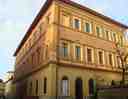 13
13Chelliana Municipal Library
Buy tour to unlock all 20 tracksTo spot the Chelliana Municipal Library, just look ahead for a grand, three-story ochre and red building with tall windows, cornered on via Mazzini-it stands out proudly like an…Read moreShow less
To spot the Chelliana Municipal Library, just look ahead for a grand, three-story ochre and red building with tall windows, cornered on via Mazzini-it stands out proudly like an old aristocrat showing off its best attire. Welcome, welcome! Right now, you're face to face with the heart and soul of Grosseto’s cultural life-the Chelliana Municipal Library, nestled elegantly in the stately nineteenth-century Palazzo Mensini. Can you smell the faint aroma of old paper and history in the air? Take a deep breath, my friend, for you’re standing where so many passions for learning, rebellion, and a touch of stubborn Tuscan spirit have ignited over centuries! Let’s go back to the late 1850s: imagine Grosseto mostly deserted during summer, everyone fleeing the malaria-ridden heat, leaving behind a city so empty you could eat your lunch in the main piazza undisturbed. In comes Giovanni Chelli, a canon of San Lorenzo-part priest, part radical, with a stubborn streak that would make a mule jealous. Chelli was the champion of books, determined to bring a library to this forgotten corner of Tuscany. It wasn’t easy-he had to fight indifference, bureaucracy, and even exile, all while sweet-talking local notables into donating their prized tomes. Picture him, sleeves rolled up, convincing bishops, vicars, and town elders to hand over their volumes, perhaps with the classic Italian promise: “It’s for the future of the city… and maybe a statue in your honor, eh?” Chelli’s first collection-5,000 precious books-grew not just from generous bequests but from almost begging letters to kings and even Napoleon III! By March 1st, 1860, Grosseto finally got its first public library, a small treasure trove side by side with the city’s archaeological museum. Imagine the scene: dusty tomes, local farmers scratching their heads, and maybe an errant chicken or two wandering in! But trouble followed. The poor library was shuffled from building to building-chased out by bishops, squashed into corners, wrangled over by politicians-so much so that if these books had legs, they’d have run off to Rome just for a quiet life. Over the decades, directors with colorful characters kept the dream alive. One, Agostino Barbini, devoted his career to neatly indexing the growing chaos, while Professor Alfredo Segrè trawled through ancient manuscripts, piecing together centuries of knowledge. Now, let’s crank up the drama-World War II arrives. Maria Emilia Broli, the library’s first real bibliographic whizz, sees the Allied bombs falling towards Palazzo Mensini. She hatches a daring rescue: an anti-fascist priest in a village nearby hides the rarest treasures in his church, saving them from flames and looters. Still, after the war, the library sits bedraggled and waterlogged-a sorry disaster of mud and ruined pages. Who comes to the rescue? Luciano Bianciardi, future literary rebel of the Maremma! Armed, not with a pen, but with-wait for it-a feather duster, he digs artefacts and rare books out of the mud. His efforts are tireless: organizing conferences, bringing in famous writers, and, in a true stroke of Italian genius, launching the Bibliobus-a van packed with books that rumbles out to every remote village, its motto “The Chelliana Bookmobile, once a week, to your piazza!” Through years of flood, termite invasions, and a near-epic series of moves, the library’s fame only grows. Its collection balloons to more than 130,000 treasures-medieval manuscripts, incunabula, centuries-old herbals from Siena, and records of Grosseto’s folk traditions. Some years, of course, resembled a comic opera: floods in the basement, squabbles over where to house the books, even a theft of a priceless 1612 world atlas. But always, the Chelliana-and the people who love it-fought on. Finally, in 2019, after a long exile, the library triumphantly returned here to its rightful home. Today, as you stand outside these grand windows, remember: this isn’t just a building full of dusty books. It’s a battleground of dreamers. It’s a time machine. And, my friend, it’s an open invitation-step inside and you’re part of the story! Now, onward! There’s still more Grosseto to explore, and who knows what other tales-or trouble-we’ll find around the next corner!
Open dedicated page →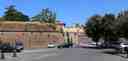 14
14Walls of Grosseto
Buy tour to unlock all 20 tracksIn front of you, rising solid and proud, you’ll spot a massive brick wall topped with wild grass and shaded by tall umbrella pines, its ancient curve broken only by a grand stone…Read moreShow less
In front of you, rising solid and proud, you’ll spot a massive brick wall topped with wild grass and shaded by tall umbrella pines, its ancient curve broken only by a grand stone archway-just look for this imposing, fortress-like barrier across from the car park, and you’ve found the legendary Walls of Grosseto. Ah, bella, take a deep breath-the scent of history is in the air, perhaps mixed with a bit of exhaust from these modern carriages, but never mind, we’re about to time-travel! Picture yourself centuries back, standing in the shadow of these walls, nervous whispers all around: pirates, foreign armies, and those grim Medici taxes-mamma mia, life wasn’t always so dolce! Now, these walls might look like just another pretty relic from Italy’s treasure chest, but believe me, they're rare gems: intact city fortifications are as rare as a polite scooter driver in Rome! Grosseto was born out of misery and mud, when the ancient city of Roselle was finally abandoned (too many mosquitoes, they say, or maybe the Roman bathhouses just got too crowded). From day one, Grosseto threw up defenses-brick by brick, wall by wall. The first circle of these beauties was finished in the twelfth century-a time when everyone was either building walls or fighting about who should have built them first. But, ah, the drama! Over the centuries these walls had more makeovers than a reality TV star-sieges, sieges, and more sieges, patch jobs, and finally a complete Renaissance facelift. When Cosimo I de’ Medici swept through in the sixteenth century, he looked at the old medieval walls and probably declared, “Che brutto!” He hired the brilliant Baldassarre Lanci to transform them into these geometric, hexagonal beauties you see today! Imagine-it took nineteen years (yes, nineteen, and you thought Italian roadwork was slow), and most of the labor came from prisoners leaping at the chance to trade chains for, well, more bricks. Now try to picture hammering bricks under the Tuscan sun, knowing the city is relying on you to keep out bandits, invaders, and pushy salesmen hawking dodgy olive oil. As the walls grew, so did rumours-secret tunnels, hidden storerooms, mysterious footsteps at night. They even buried underground cisterns to capture every precious drop of rainwater, since the local rivers are more fashionably late than a Neapolitan wedding. Some say, on certain misty mornings, you can still hear the workers’ hammers echo through the walls. Look closely: you can still see the original bastions, those angular “shoulders” at each corner, almost all of them pentagonal, crowned once upon a time with picturesque little guardhouses-called garitte or “casini.” The “Cassero Senese” inside was extra protected with smaller bastions, both for show and survival. If you squint, perhaps you’ll catch a ghostly sentry eyeing you warily from a missing garitta (don’t worry, friendly ghosts-they’re just here for the legends-and maybe a decent espresso). For centuries, these mighty walls were circled by a deep moat, and at the gates-Porta Nuova to the north, Porta Vecchia to the south-life pulsed. Gossip, trade, secret lovers sneaking back after curfew (ehh, you think medieval teens were so different?), and even a few wild boar, legend has it! Over time, lesser gates “postierle” popped up for the more athletic or, shall we say, creatively sneaky citizens. But then-eh, enter the age of romance! By the time Grand Duke Leopoldo II strolled in, he had a softer vision for Grosseto. In 1855, he ordered the demolition of nearly all the towers and most of the guardhouses, transforming these once-fearsome walls into a public promenade where sweethearts and grandmothers could stroll among leafy trees. The march of time didn’t slow down: in World War II, a bombing raid destroyed the last “Casino delle Palle,” the wall’s final grand garitta-if only those walls could talk, eh? Today, the two that survived still perch like watchful owls atop the bastions of Santa Lucia and Vittoria. The circle of Grosseto’s walls stretches for three kilometers. Today, instead of angry armies or restless peasants, you’ll find locals enjoying a walk, children playing, and lovers carving their initials in the ancient brick-a good-luck charm for eternal amore, they say. So linger a little, run your hands along the cool stone, and listen-if you’re lucky, the walls might just whisper an old secret or two to you. Or at least invite you for gelato, which, let’s be honest, is a pretty good consolation prize!
Open dedicated page →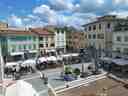 15
15Piazza del Sale
Buy tour to unlock all 20 tracksTo spot Piazza del Sale, just look ahead for the open square lined with pastel buildings, café umbrellas, and a sun-drenched terrace bustling with people-right where history…Read moreShow less
To spot Piazza del Sale, just look ahead for the open square lined with pastel buildings, café umbrellas, and a sun-drenched terrace bustling with people-right where history mingles with modern life! Ah, you’ve found yourself in the heart of Grosseto’s secrets, right here in Piazza del Sale! Take a deep breath-do you smell the espresso from the cafés, the faint hint of salty sea air mixing with laughter and a hint of centuries-old mystery? This isn’t just a piazza, my friend, it’s a living, breathing slice of Tuscan storytelling, a place where every stone and every window shutter seems to whisper an anecdote! Let’s start way, way back-remember, Italian history always has more layers than a lasagna. The story begins in 1291, when this very area was the heartbeat of what was called the Terzo di San Giorgio. Back then, the neighborhood borrowed its name from the ancient Church of San Giorgio, which itself already had centuries of history under its belt. Can you imagine? People have been gathering here for over 700 years! They gossiped, traded, argued, and maybe even flirted, right where your feet stand. But the true star of the show here is salt-not the kind you sprinkle on your pasta, but pure, precious white gold, hauled in from the salt pans of Querciolo and Castiglioni. Grosseto was famous for its abundance of salt, so much so that even the poet Cecco Angiolieri wrote about it in his verses! Imagine wagon after wagon, laden with salt, clattering over these stones, destined for the imposing Cassero del Sale-a great warehouse built here in the 13th century, its walls echoing with the haggling of merchants and the clang of scales. It was the economic engine of the city. But, ah, then came Siena-a city known for its appetite (and not just for panforte)! When Grosseto fell into Sienese hands, they didn’t just change the rules-they changed the square itself. The mighty new Cassero for the Dogana del Sale rose up, regulating every grain of salt, with magistrates eyeing the ledgers as closely as any modern taxman. All the hustle and bustle of Siena’s salt officials mixed with the daily drama of townsfolk-if you listen hard, maybe you’ll hear the echoes of a frustrated merchant or two, trying to sneak in an extra barrel of salt. With time, the tides of power shifted. Florence and the Medici swept in, walls came tumbling down, and the Medici rebuilt their own ramparts-so solid you could almost bounce a coin off them. The Cassero was partly demolished, but a stubborn sliver was tucked inside the new walls, as if the past refused to be buried. In the 16th century, an elegant stairway was added, turning even humble salt storage into something worthy of a Medici flourish. Fast forward to the 18th and 19th centuries and the piazza transformed again. The old towers were knocked down, leafy promenades replaced fortress ramparts, and instead of soldiers, you’d find a parade of locals enjoying a stroll, soldiers replaced by the bright chatter of children and cafés. The customs office moved in, regulating every person and cargo entering the city-imagine the drama when someone tried to smuggle a particularly fine wheel of pecorino cheese! By the late 1800s, the sweet chaos of the Thursday market took over. Farmers, butchers, and bakers mingled with elegant ladies and wide-eyed children, and the square earned its new moniker: Piazza del Mercato. There was even a ghetto in this quarter for a time, and Ricasoli Street, right next to you, was once known as Via del Ghetto. Look at the buildings around you. See that sturdy, slightly austere façade of the Cassero del Sale on the northern edge? That’s the old salt warehouse, rebuilt, added to, proudly harboring the memory of ages past. On the corner, Palazzo Carmignani-its Liberty-style decorations a little flamboyant, a little cheeky, a lot Italian! Don’t miss those original 1800s fittings inside the cobbler’s shop; the locals love a good pair of shoes and a story, and here you get both. If you sneak a peek at the palazzetto Del Fa and palazzetto Cesaroni, you’ll see more hidden history-shop signs adorned with iron initials, the marks of families who have called these walls home for generations. There’s even a lingering spirit of the old liquors once made by the Torrefazione Onorato-so if you catch a whiff of something sweet, blame the ghosts of toasts past. These days, the market may have moved, but Piazza del Sale stays lively. The cafés brim with laughter, students debate over tiny cups of coffee, and at night, the square transforms into a glowing, friendly hub. Under your feet, ruins from the medieval Cassero still peek out, bravely refusing to be forgotten. So, as you stand here, take a moment to feel the pulse of history-centuries of trade, politics, love, rivalry, and, of course, a little bit of Tuscan mischief. This is Grosseto’s real soul, served up with a side of salt and a generous dash of charm. Now, which way to the next adventure, eh? Intrigued by the description, buildings or the image gallery? Make your way to the chat section and I'll be happy to provide further details.
Open dedicated page → 16
16Royal Palace Industrial Technical School
Buy tour to unlock all 20 tracksIn front of you, you’ll spot a grand, slightly concave brick building dominating the corner of the square, its imposing entrance marked by a wide stone staircase flanked by…Read moreShow less
In front of you, you’ll spot a grand, slightly concave brick building dominating the corner of the square, its imposing entrance marked by a wide stone staircase flanked by columns and proudly displaying Italian and European flags above the doorway-just follow the curve of the piazza and you can’t miss it. Ah, eccoci! The mighty Palazzo della Regia Scuola Tecnica Industriale rises before you, and let me tell you, if these walls could gossip, they’d never let you off the hook. Picture this: in the buzzing thirties, when Grosseto was stretching her limbs beyond the ancient city gates, the push for progress was in the air-sometimes mixed with a bit of brick dust. This very plot was once considered ‘unfit’… too swampy, too risky, they said! And indeed, it stood right over the old port of Grosseto, where, ages ago, boats used to float serenely until the great land reclamation of the 1830s buried the waterways in a sea of dirt. Seriously, you couldn’t pick muddier real estate even if you tried! Now, imagine the drama! Plans for the new technical school bounced from one engineer to another like an overcooked meatball: first Giulio Feri, then Ernesto Ganelli, Ugo Pellizzari, and finally the star of the show, Umberto Tombari, who also gifted us the grand Agricultural Consortium building from our first stop. Perhaps he just had a thing for complicated plots-and complicated plots of land! In 1933, the city managed to buy up this very spot for what then felt like a king’s ransom: 110,000 lire. By 1936, the project was locked in, but of course, the fun was only getting started. Between arguments over concrete, foundation pits that seemed to swallow tools whole, and the risk of building a palace on what amounted to a giant, ancient mud pie, every step was a nail-biter. To combat the swampy ground, the ingenious solution was a dense forest of concrete piles driven deep into the earth-because nothing says “we’re here to stay!” like a parade of concrete columns anchoring you down. And still, delays haunted the construction. By 1940-just as the shadows of war were growing long-the building was finally finished. If you’ve ever wondered why Italian patience is legendary, just ask someone from Grosseto who remembers those years! Soak up the atmosphere: stand at the base of that grand staircase, gaze up at the colossal entrance framed in travertine, with its three massive doors, and feel the echo of generations of students bustling in and out, heads buzzing with dreams. The style is pure rationalist bravado, a touch of the “regime-era” monumentalism with yet just enough warmth from those earthy bricks and travertine inserts-like an Italian mamma giving you a stern look but sneaking you an extra cookie. Inside, the heartbeat of the school is a magnificent circular staircase in bright, bold orange-today that is, once upon a time it shimmered with faux marble glamour-rising grandly upwards, encircled by a marble pillar etched with the “heroic” names from the Fascist days. At the top, a terrace gazes over the square, once meant for celebratory moments, or perhaps just for a teacher to keep an eye out for students trying to sneak off early. And deep within its halls is the Aula Magna-take a moment to imagine the whispers of debate, applause, and maybe a scolded student or two. Here, you’ll also find an allegorical fresco painted just as the war ended, by Renzo Capezzuoli-layers of history literally painted onto the walls. Through the decades, the building has shifted and adapted-serving as a middle school, then home to the agricultural institute, and finally, after a thorough facelift in the roaring eighties, it became a home for the Istituto Professionale Luigi Einaudi and now the Luciano Bianciardi hub, nurturing everything from budding business leaders to artists lost in a tangle of music and choreography. So, as you stand under the blazing Tuscan sun, place your hand on the cool brick and imagine: the echo of young shoes clattering up the steps on their first nervous day, the thrill of possibility, and maybe the faint ghost of an old port sleeping deep beneath your feet. Grosseto’s history, from land to learning, all wrapped up in this one indomitable building! Now, what do you say, shall we find the nearest gelateria to celebrate this epic journey together?
Open dedicated page →
Frequently asked questions
How do I start the tour?
After purchase, download the AudaTours app and enter your redemption code. The tour will be ready to start immediately - just tap play and follow the GPS-guided route.
Do I need internet during the tour?
No! Download the tour before you start and enjoy it fully offline. Only the chat feature requires internet. We recommend downloading on WiFi to save mobile data.
Is this a guided group tour?
No - this is a self-guided audio tour. You explore independently at your own pace, with audio narration playing through your phone. No tour guide, no group, no schedule.
How long does the tour take?
Most tours take 60–90 minutes to complete, but you control the pace entirely. Pause, skip stops, or take breaks whenever you want.
What if I can't finish the tour today?
No problem! Tours have lifetime access. Pause and resume whenever you like - tomorrow, next week, or next year. Your progress is saved.
What languages are available?
All tours are available in 50+ languages. Select your preferred language when redeeming your code. Note: language cannot be changed after tour generation.
Where do I access the tour after purchase?
Download the free AudaTours app from the App Store or Google Play. Enter your redemption code (sent via email) and the tour will appear in your library, ready to download and start.
If you don't enjoy the tour, we'll refund your purchase. Contact us at [email protected]
Checkout securely with 


