
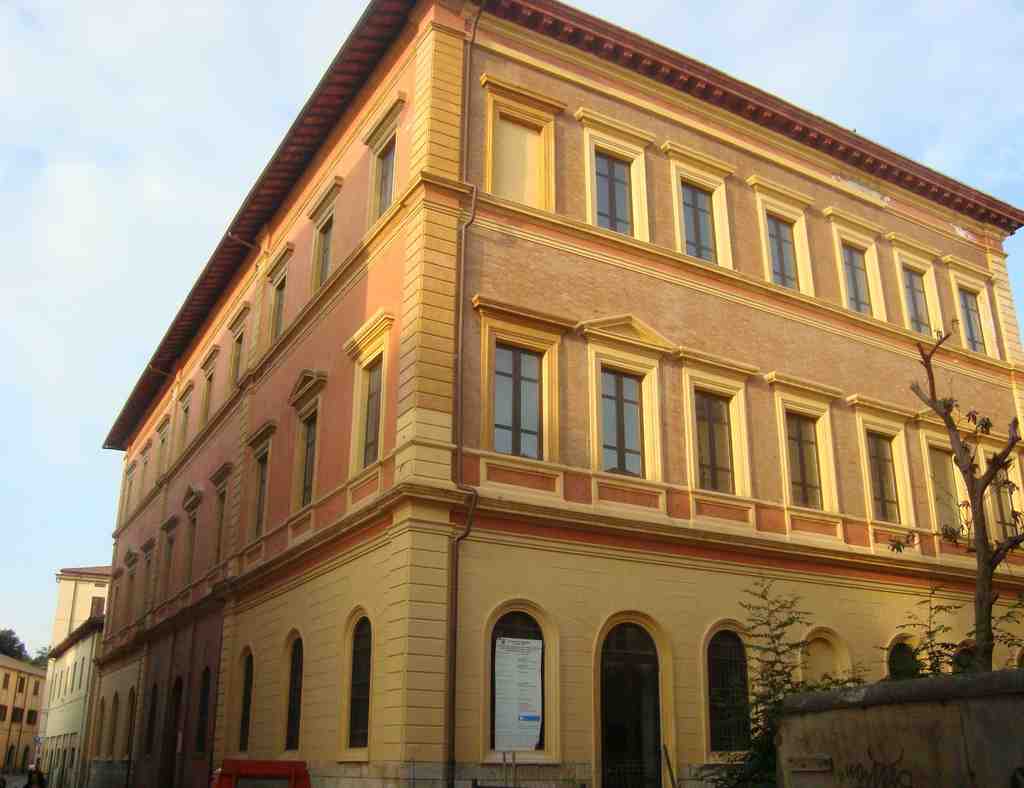
To spot the Chelliana Municipal Library, just look ahead for a grand, three-story ochre and red building with tall windows, cornered on via Mazzini-it stands out proudly like an old aristocrat showing off its best attire.
Welcome, welcome! Right now, you're face to face with the heart and soul of Grosseto’s cultural life-the Chelliana Municipal Library, nestled elegantly in the stately nineteenth-century Palazzo Mensini. Can you smell the faint aroma of old paper and history in the air? Take a deep breath, my friend, for you’re standing where so many passions for learning, rebellion, and a touch of stubborn Tuscan spirit have ignited over centuries!
Let’s go back to the late 1850s: imagine Grosseto mostly deserted during summer, everyone fleeing the malaria-ridden heat, leaving behind a city so empty you could eat your lunch in the main piazza undisturbed. In comes Giovanni Chelli, a canon of San Lorenzo-part priest, part radical, with a stubborn streak that would make a mule jealous. Chelli was the champion of books, determined to bring a library to this forgotten corner of Tuscany. It wasn’t easy-he had to fight indifference, bureaucracy, and even exile, all while sweet-talking local notables into donating their prized tomes. Picture him, sleeves rolled up, convincing bishops, vicars, and town elders to hand over their volumes, perhaps with the classic Italian promise: “It’s for the future of the city… and maybe a statue in your honor, eh?”
Chelli’s first collection-5,000 precious books-grew not just from generous bequests but from almost begging letters to kings and even Napoleon III! By March 1st, 1860, Grosseto finally got its first public library, a small treasure trove side by side with the city’s archaeological museum. Imagine the scene: dusty tomes, local farmers scratching their heads, and maybe an errant chicken or two wandering in!
But trouble followed. The poor library was shuffled from building to building-chased out by bishops, squashed into corners, wrangled over by politicians-so much so that if these books had legs, they’d have run off to Rome just for a quiet life. Over the decades, directors with colorful characters kept the dream alive. One, Agostino Barbini, devoted his career to neatly indexing the growing chaos, while Professor Alfredo Segrè trawled through ancient manuscripts, piecing together centuries of knowledge.
Now, let’s crank up the drama-World War II arrives. Maria Emilia Broli, the library’s first real bibliographic whizz, sees the Allied bombs falling towards Palazzo Mensini. She hatches a daring rescue: an anti-fascist priest in a village nearby hides the rarest treasures in his church, saving them from flames and looters. Still, after the war, the library sits bedraggled and waterlogged-a sorry disaster of mud and ruined pages.
Who comes to the rescue? Luciano Bianciardi, future literary rebel of the Maremma! Armed, not with a pen, but with-wait for it-a feather duster, he digs artefacts and rare books out of the mud. His efforts are tireless: organizing conferences, bringing in famous writers, and, in a true stroke of Italian genius, launching the Bibliobus-a van packed with books that rumbles out to every remote village, its motto “The Chelliana Bookmobile, once a week, to your piazza!”
Through years of flood, termite invasions, and a near-epic series of moves, the library’s fame only grows. Its collection balloons to more than 130,000 treasures-medieval manuscripts, incunabula, centuries-old herbals from Siena, and records of Grosseto’s folk traditions. Some years, of course, resembled a comic opera: floods in the basement, squabbles over where to house the books, even a theft of a priceless 1612 world atlas. But always, the Chelliana-and the people who love it-fought on.
Finally, in 2019, after a long exile, the library triumphantly returned here to its rightful home. Today, as you stand outside these grand windows, remember: this isn’t just a building full of dusty books. It’s a battleground of dreamers. It’s a time machine. And, my friend, it’s an open invitation-step inside and you’re part of the story!
Now, onward! There’s still more Grosseto to explore, and who knows what other tales-or trouble-we’ll find around the next corner!


