
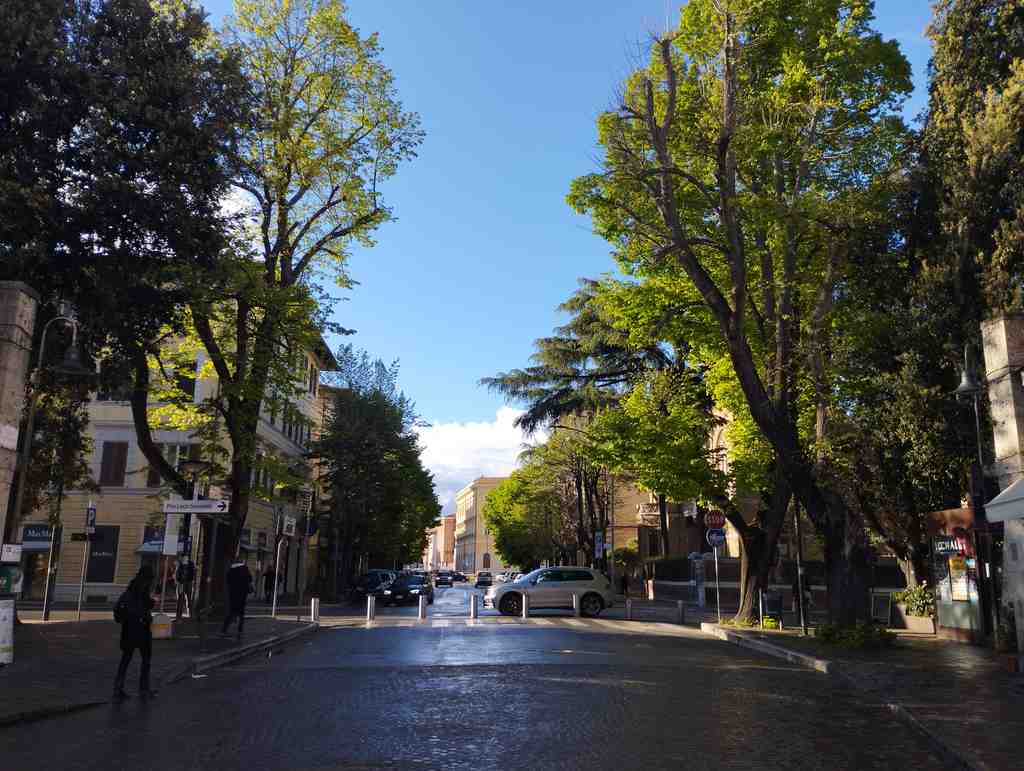
Look straight ahead-between the tall, leafy trees, you’ll spot a break in the streetscape where the road leads out beneath open sky, marking the northern gateway to the historic center: this is where the legendary Porta Nuova once stood, now a vital artery connecting past and present Grosseto.
Ah, benvenuti, miei amici-right in front of you, you stand on history’s stage! Trust me, if these cobbles could speak, they’d have juicier stories than a Tuscan grandma on market day. You are face to face with what once was Porta Nuova: the northern entryway to Grosseto, a gate that guarded dreams, anxieties, and sacks of flour alike.
Take a deep breath. Can you feel the spirits of centuries past brushing by you? Cast your mind back to medieval times, to when sturdy walls snaked around Grosseto, and this gate-known first as Porta di San Pietro-was the city’s northern threshold. In those days, four great gates pierced the defenses, and here, at the limit of the city’s beating heart, was the portal to Siena, the link to rival lands and vital supplies. It wasn’t just a door; it was the city’s handshake-or if the Sienese were in a grumpy mood, its clenched fist.
Now, imagine the 1300s. The Republic of Siena, always on the lookout for an excuse to build something imposing, decided to give the walls a grand makeover. Above this very spot rose the mighty Cassero di San Pietro, a stocky tower, crouched over an archway as sharp as a sword’s tip, ready to swat away troublemakers or, let’s be honest, nosy neighbors. This “Porta Senese,” as folks came to call it, connected Grosseto not just to Siena but to the pulse of everything that happened north of here-grain, gossip, soldiers, and more than a few secret lovers brewing rendezvous on moonlit roads.
But then, the winds of time (and a little Medici ambition) swept through in the late 1500s. The mighty Medici, never content with anything less than magnificent, swept away the medieval shell, building their own city walls even thicker, even smarter, even more “Look how important we are!” They closed up this northern gate, making it just a shadow of itself. Its proud wooden doors remained, silent sentries peeking out from stone, but-pssht!-no more parading armies or gossiping traders. The only action was the creak of rusty hinges and maybe, too often, the annoyed sighs of locals locked out after curfew.
But you know, my friends, you can never keep a Tuscan down for long. By the 1700s, complaints were louder than rain on terracotta tiles: farmers and merchants, desperate to reach the wide lands to the north, grumbled all the way to the grand duke. “We don’t want Porta Vecchia, we want our northern gate back! Who wants to wade through floods, stink, and wind at the southern end?” They begged for Porta Nuova to emerge, and-grazie mille, Colonel Odoardo Warren-plans were made for a sparkling new opening. By 1755, the northern route was reborn, complete with a handsome triple-arched bridge and guard houses for the new order of things.
Can you hear the clatter of carts and the shouts of grain merchants, the rhythmic tramp of guards swearing loyalty at a gate that welcomed dreams and ambition each dawn? Porta Nuova became the grand entrance-no longer the rear door, but the red carpet to Grosseto.
The years rolled on, of course, and by the 19th century the city wasn’t huddled behind those walls anymore. The gate, once a proud portal, became less a defense and more a passage into a city yearning for open sky and new prospects. The grand duke himself ordered the expansion: gone was the medieval tower, replaced by a simple brick facade and a dignified attic; side by side stood the twin customs houses, ready to check every cart and carriage.
But oh, progress never sleeps. The coming of the railway in the 1860s brought dreams of grandeur-imagine proposals for triumphal arches!-but, alas, the city council’s wallet said “no, grazie.” Instead, the old gate was fully swept away, replaced by practical doors and iron fences and bustling customs posts.
By the 20th century, Piazza del Popolo blossomed just beyond where you stand, and the lively suburb of Porta Nuova grew, echoing the city’s leap beyond its walls. Even the old customs gate and iron railings vanished, making room for gardens and then grand plazas.
So take a final look-where now there is an open road, there once was a mighty gate that watched over Grosseto’s stories for centuries. And remember, every time you pass here, you’re walking in the footprints of centuries of Tuscans, each with their own tale to tell, their own dreams riding out through the gates of Porta Nuova!


