
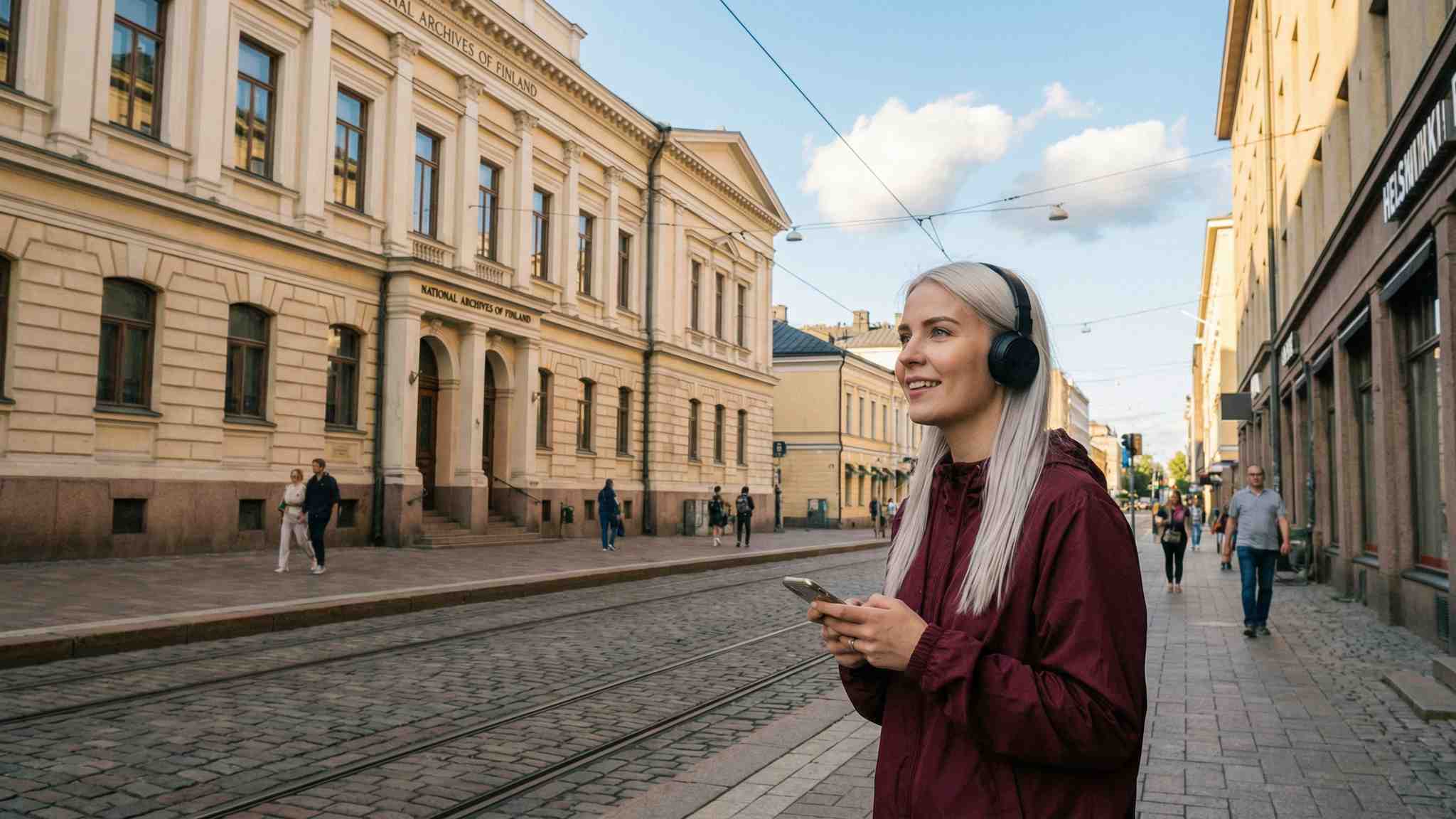
Helsinki Audio Tour: From Nobles to Notorious—A Stroll Through Power & Intrigue
Just outside Helsinki Cathedral, the echo of ancient footsteps still vibrates beneath your feet as secrets of power and rebellion slumber in plain sight. This self-guided audio tour opens doors into Helsinki’s storied past and elegant facades, guiding you to corners where the dramatic and the unexpected collide. Unlock tales and legends most travelers breeze past. Why did a single speech on Senate Square nearly topple the city’s leaders overnight? Who vanished behind the imposing doors of the Bank of Finland, leaving behind only scandal and rumor? What odd artifact is hidden in a forgotten niche outside Helsinki Cathedral, and who placed it there? Trace your own path across cobblestones that sparked revolutions. Wander through courtyards where conspiracies brewed and faded. Feel Helsinki’s true heartbeat as history and mystery spill into the present. Begin this journey now. See what lies beneath Helsinki’s beautiful surface.
Tour preview
About this tour
- scheduleDuration 70–90 minsGo at your own pace
- straighten2.2 km walking routeFollow the guided path
- location_on
- wifi_offWorks offlineDownload once, use anywhere
- all_inclusiveLifetime accessReplay anytime, forever
- location_onStarts at Holy Trinity Church, Helsinki
Stops on this tour
lock_open 3 free previews · 12 unlock with purchase
This pale stone church has a compact square body, a low green dome, and a slender bell tower rising from the roofline, marking Helsinki’s oldest Orthodox church. At first glance,…Read moreShow less
Open dedicated page →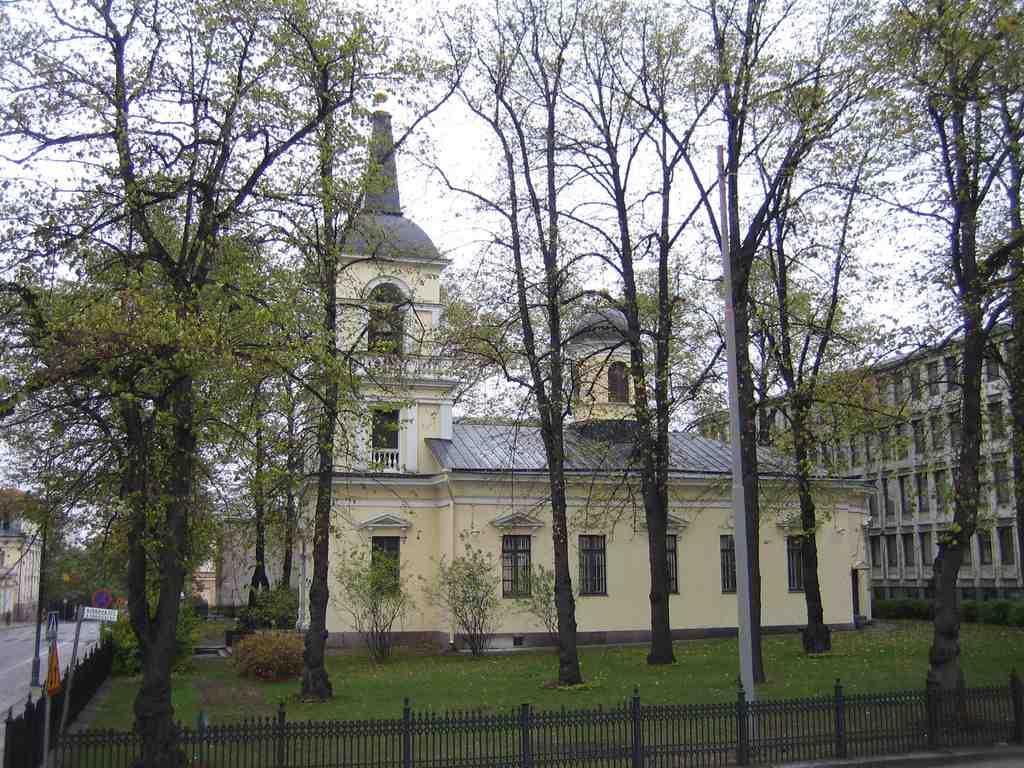
Holy Trinity Church, HelsinkiPhoto: Tomisti, Wikimedia Commons, CC BY-SA 3.0. Cropped & resized. This pale stone church has a compact square body, a low green dome, and a slender bell tower rising from the roofline, marking Helsinki’s oldest Orthodox church.
At first glance, Holy Trinity feels almost shy... calm, balanced, and restrained. But this is a good place to begin, because Helsinki often hides its struggles behind elegant facades. This church did not simply appear as a quiet house of prayer. It came out of tax politics, religious rivalry, and the fierce will of people who refused to wait their turn.
The Russian state had planned to help fund both a Lutheran church and an Orthodox one with a salt tax on imports. But the Lutheran project, the future Helsinki Cathedral, stalled again and again. So the city’s wealthy Orthodox merchants stepped around the delay. They gathered private donations, pushed ahead, and opened this church in eighteen twenty-seven... a full twenty-five years before their giant Lutheran neighbor was finished.
Look closely at the neoclassical lines, so measured and serene. Would you ever guess that this peaceful exterior began with competition, impatience, and a small engineering humiliation?
Carl Ludvig Engel designed the church in eighteen twenty-six, including a wooden bell tower. Then the parishioners gave more generous, heavier bells than his tower could safely carry. So the wooden structure had to come down, and builders replaced it in stone before disaster struck. Locals know that little twist, and once you know it, the tower feels less like decoration and more like a correction.
One man stands at the heart of the story: Jegor Uschakoff. He arrived in Finland with the Russian army in eighteen oh eight as a serf, property of the Sheremetev family. He bought his freedom, became one of Helsinki’s richest merchants, and personally oversaw this church, then served as its warden. Imagine that journey: from servant to guardian of a sanctuary.
If you glance at the image on your screen, you can peek inside at the icons and the Orthodox sanctuary, where liturgy still sounds in Church Slavic and Finnish.
And that is the pattern we’ll keep finding here: order on the surface, ambition underneath. When you’re ready, we’ll walk about one minute to the National Archives of Finland.
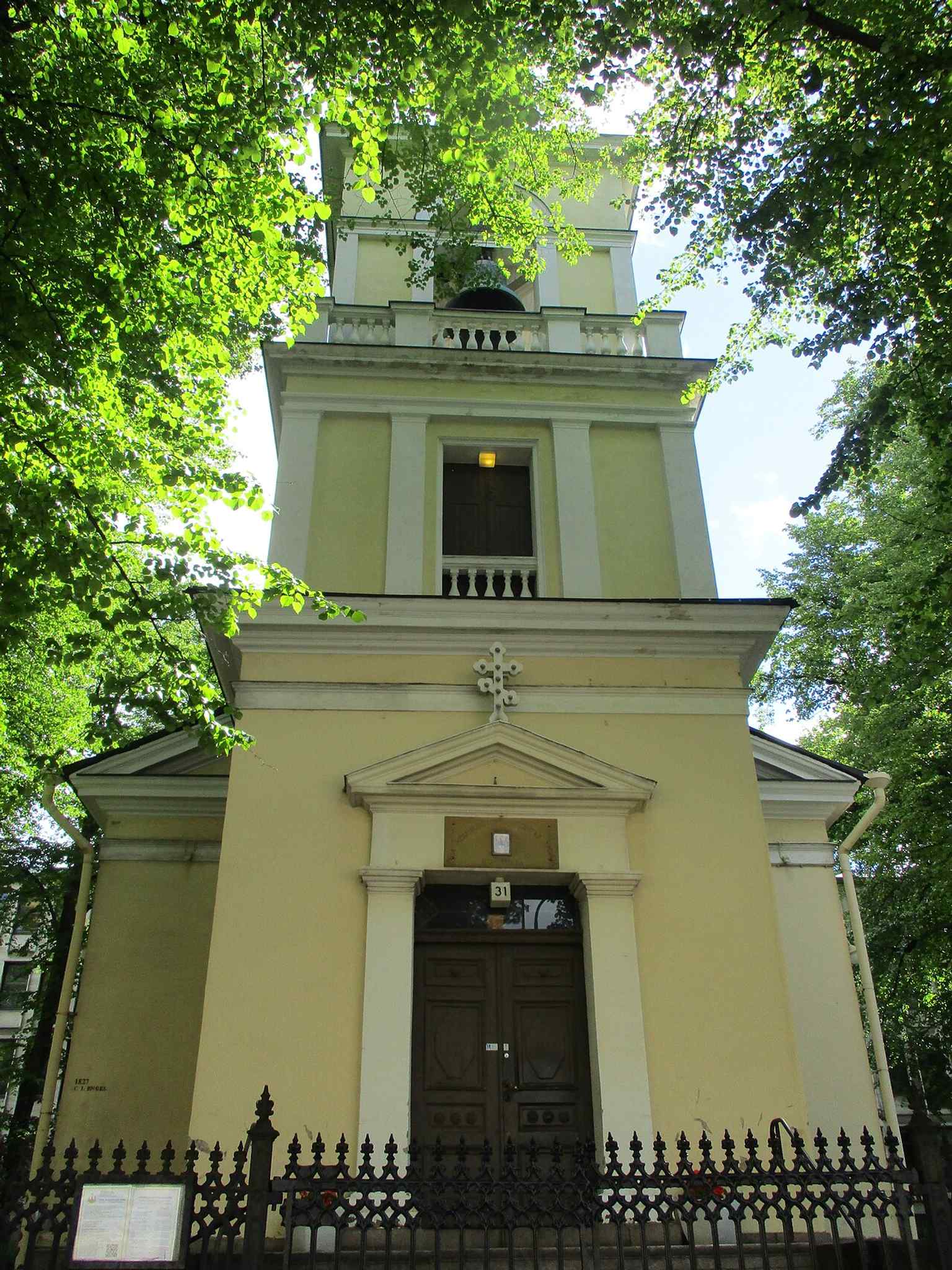
The church’s pale neoclassical façade in central Helsinki — the city’s oldest Orthodox church, completed in 1826 and opened the next year.Photo: Mikkoau, Wikimedia Commons, CC BY-SA 4.0. Cropped & resized. On your right, look for a solid pale stone block with tall rectangular windows and, above the entrance, a sculpted trio of women beneath the Latin words Archivum Finlandiae…Read moreShow less
Open dedicated page →
National Archives of FinlandPhoto: KMG Turku, Wikimedia Commons, Public domain. Cropped & resized. On your right, look for a solid pale stone block with tall rectangular windows and, above the entrance, a sculpted trio of women beneath the Latin words Archivum Finlandiae Publicum.
This is the National Archives of Finland, and it began in eighteen sixteen as part of the Senate of Finland. In eighteen ninety, architect Gustaf Nyström gave it this new home and solved a very practical fear: fire. He ran cast-iron shelving from basement to roof so the shelves themselves helped carry the floors, then used iron and concrete between levels. It was the first purpose-built fireproof archive building of its kind in the Nordic countries. That may sound dry... but it meant the state could keep its memory alive on paper.
Memory, preservation, and erasure meet here in a very uneasy balance. An archive protects the national story, but it also shapes that story, because whatever is saved can still speak, and whatever disappears becomes harder to prove. That tension matters in a city like this, where power liked to dress itself in orderly facades.
Nyström gave the papers a strong body, and sculptor Carl Eneas Sjöstrand gave the building its moral message. Above the entrance, Finland hands a scroll of law to History, while Source Criticism reads a book. Source criticism simply means testing whether evidence is trustworthy before calling it truth. If you want a closer look at that rooftop trio, the detail on your screen makes it easier to read their message
Inside, this main branch keeps central government records and private archives from people who shaped Finnish society, including nearly every president. The oldest document held by the institution dates to the year thirteen sixteen. Many visitors come searching for family traces in parish registers, the birth, marriage, and death books Lutheran priests kept for centuries. Others look for the Great Petition of eighteen ninety-nine, when volunteers gathered more than five hundred twenty thousand signatures in just eleven days to protest Russification, even skiing from village to village before the petition was smuggled toward Saint Petersburg.
But this place also raises a harder question. In the push toward mass digitization, some original paper records have been scanned and then destroyed. Critics have described books having their spines sliced off, pages separated for fast scanners, and bindings thrown away. The Archives argues that culturally important originals are preserved and that digitization saves millions of euros in storage costs. Historians answer that an archive is supposed to conserve, not discard. A digital copy can preserve words, yes... but not always the feel, structure, or physical evidence of the object itself.
Most tourists never notice that this same institution is also Finland’s authority on heraldry, meaning coats of arms and official emblems. Here, medieval noble seals and modern municipal symbols end up together in the Europeana Heraldica database, sharing one very bureaucratic afterlife.
If you check the before-and-after image, the façade barely changes while the street around it keeps moving.
That is the quiet lesson of this place: the grand buildings of Helsinki are only half the story. The other half lives in records, omissions, and symbols. When you are ready, continue on to Helsinki Cathedral, about two minutes away. If you want to return, the archives is generally open Monday through Friday from nine in the morning to six in the evening.
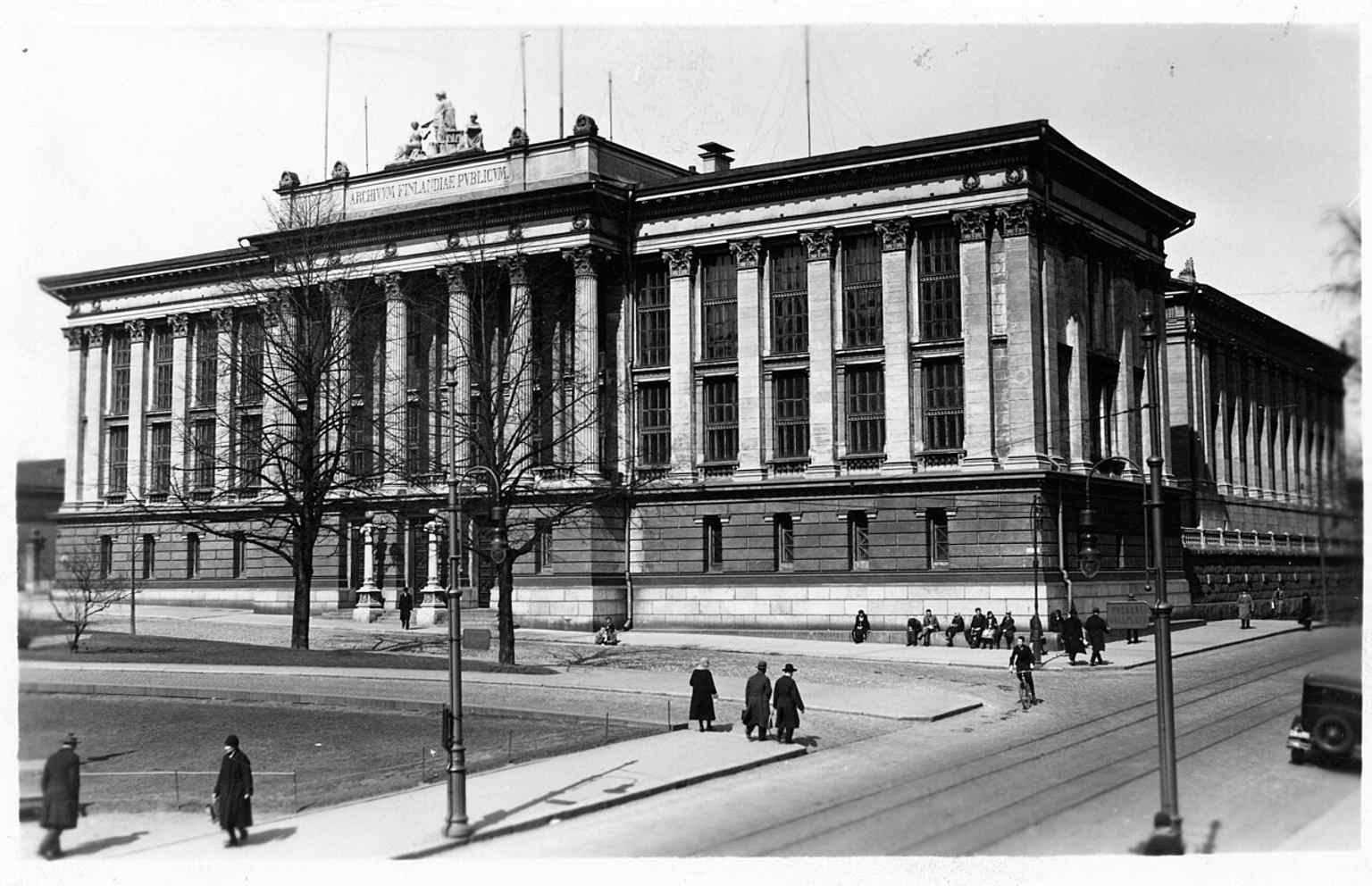
The National Archives façade in 1930, showing the purpose-built 1890 archive building that was designed to protect documents from fire.Photo: Unknown photographer, Wikimedia Commons, Public domain. Cropped & resized. 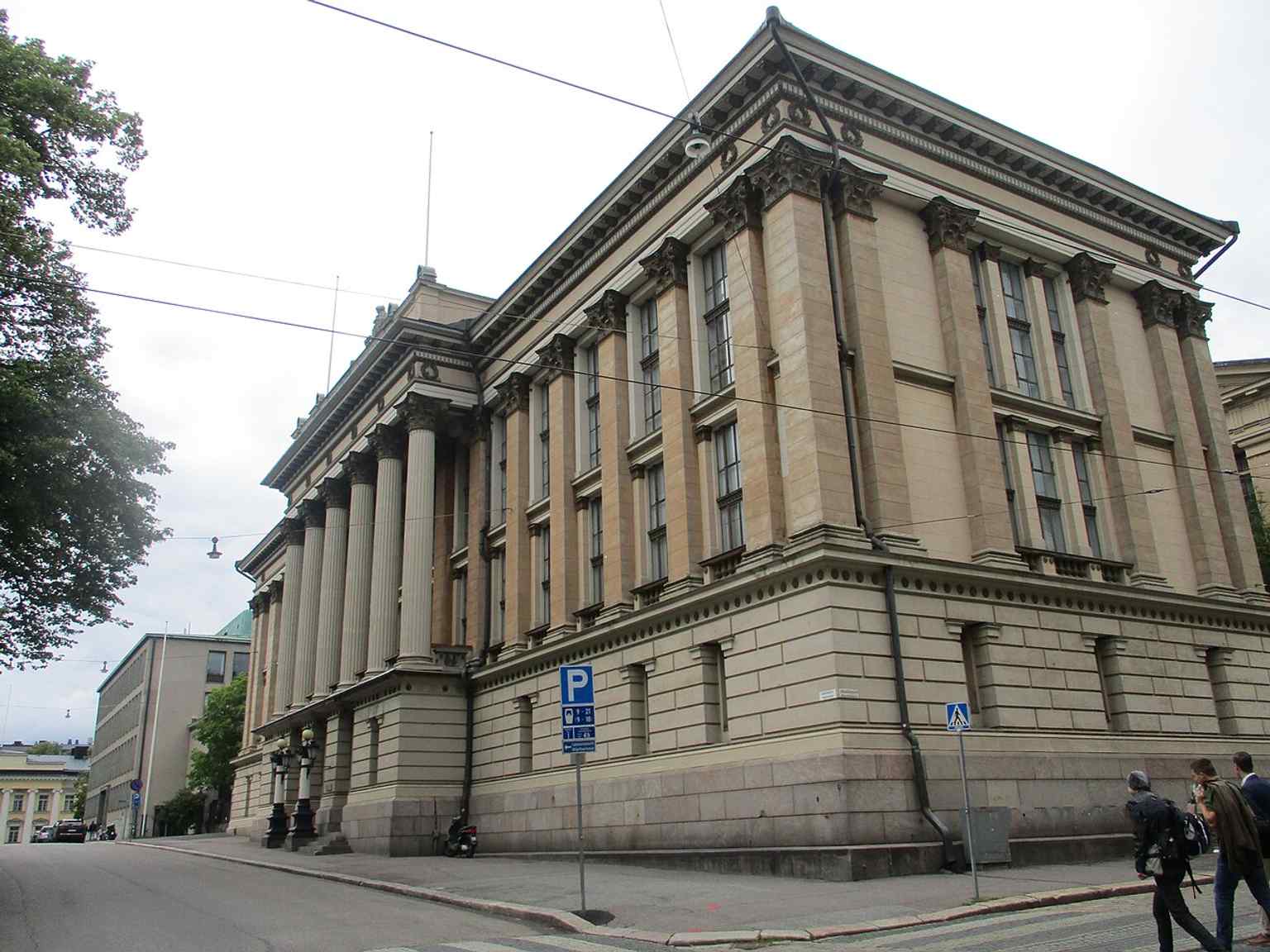
A clear modern view of the Helsinki headquarters on Rauhankatu, the main branch that houses the country’s central archives and private collections.Photo: Mikkoau, Wikimedia Commons, CC BY-SA 4.0. Cropped & resized. 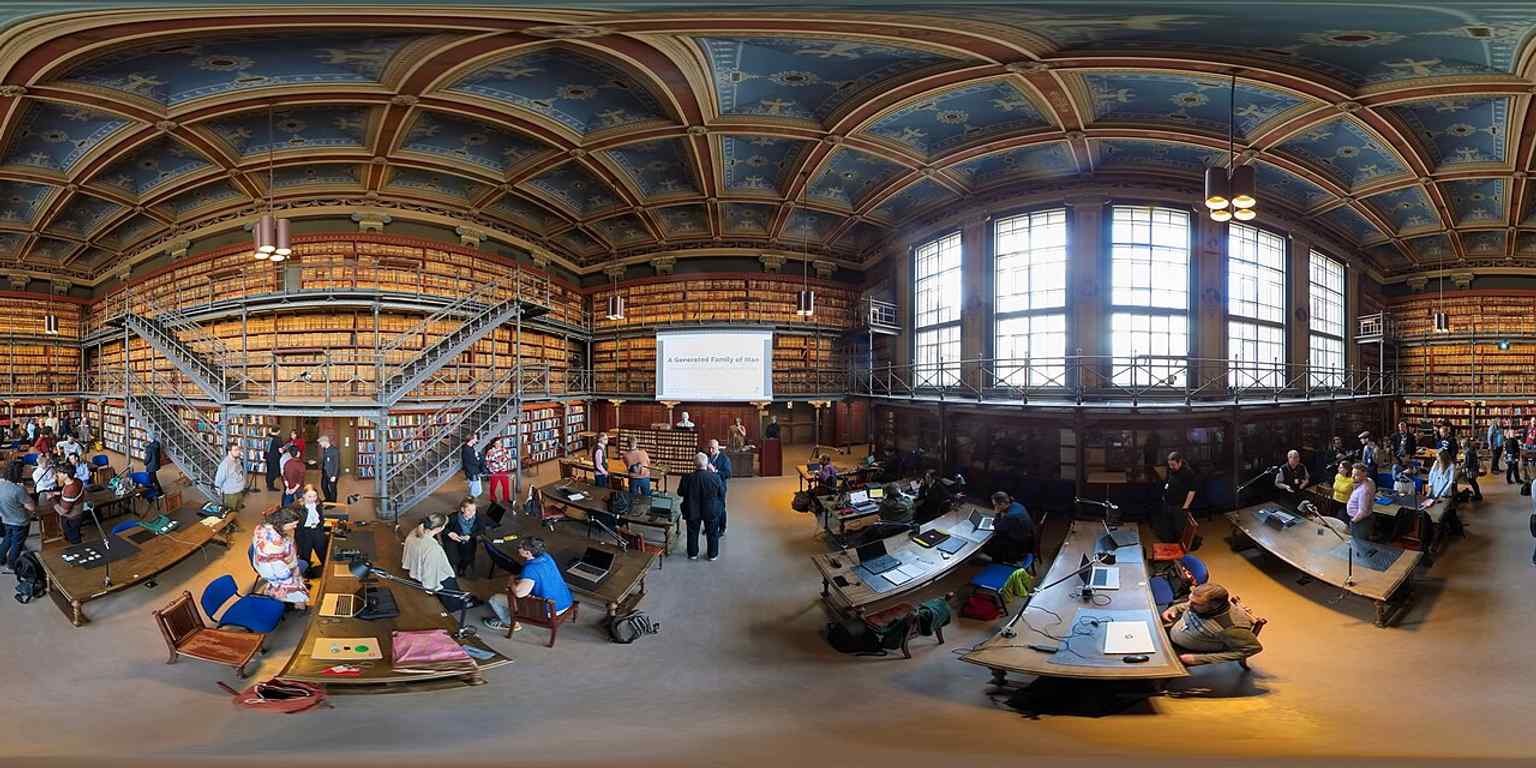
A 360° interior view from an archives event, giving a sense of the working spaces inside the National Archives of Finland in Helsinki.Photo: Fuzheado, Wikimedia Commons, CC0. Cropped & resized. 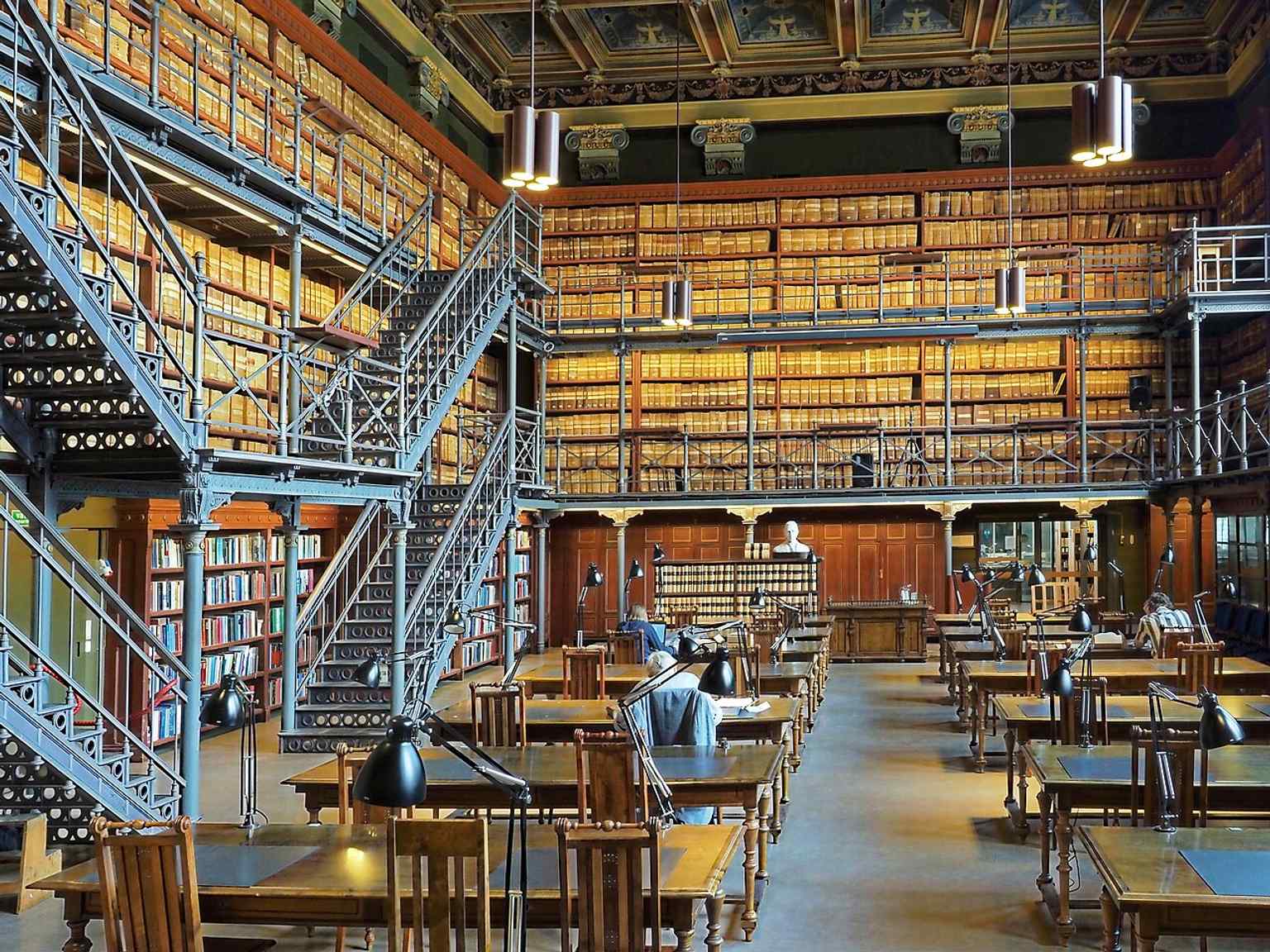
The researcher’s reading room, where visitors consult original records, family history sources, and documents ordered through the Astia service.Photo: Marit Henriksson, Wikimedia Commons, CC BY-SA 4.0. Cropped & resized. On your right rises a pale gray masonry church with a broad flight of steps, a large green central dome, and twelve figures standing along the roofline like sentries. This is the…Read moreShow less
Open dedicated page →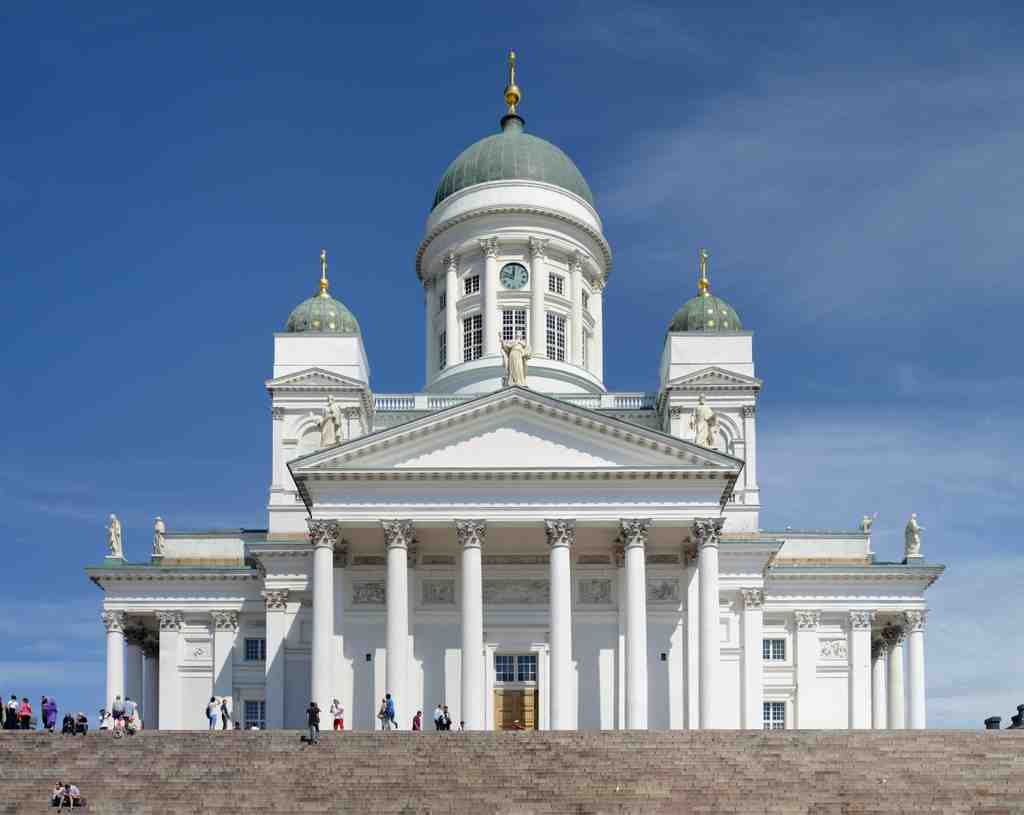
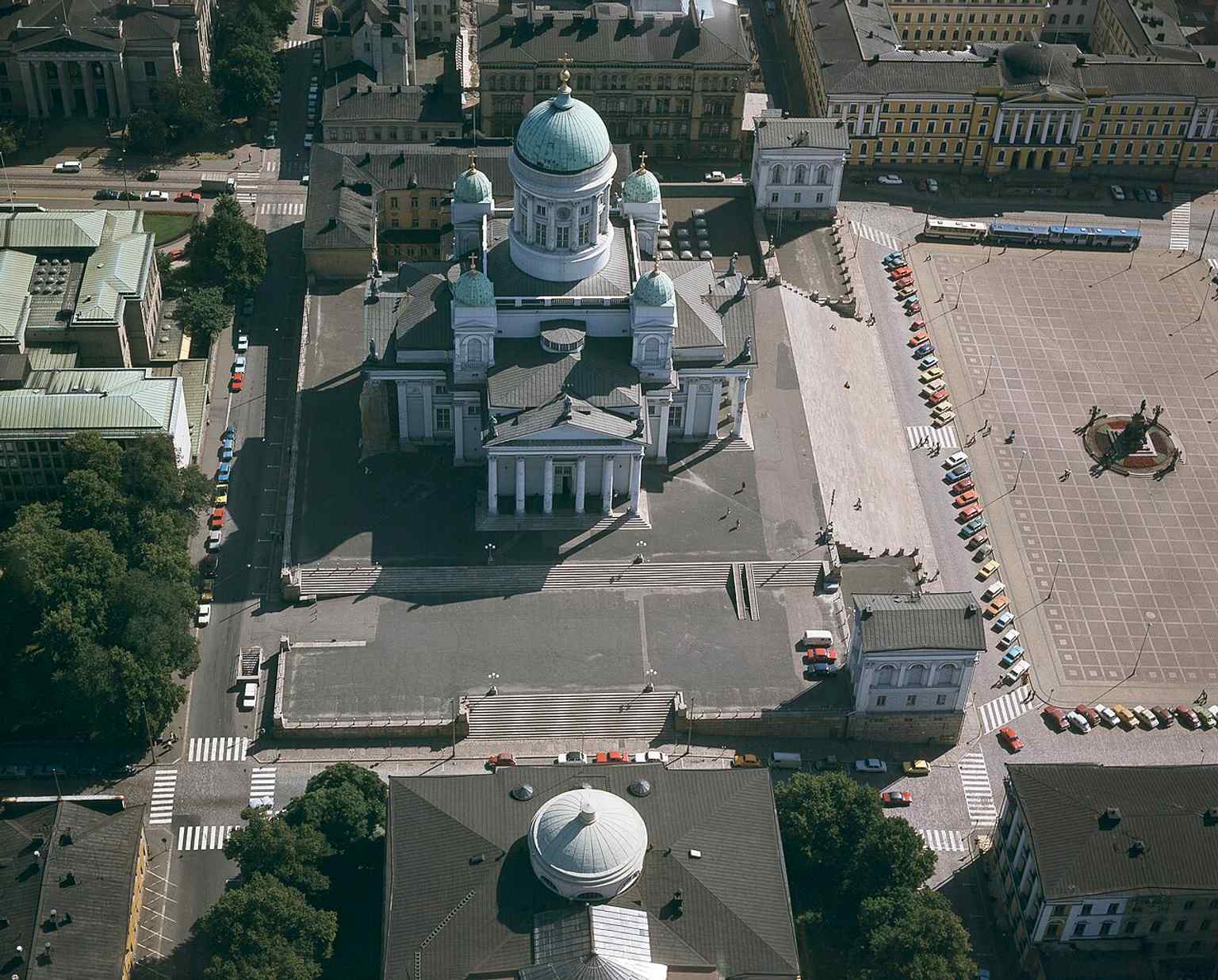
Helsinki CathedralPhoto: Alvesgaspar, Wikimedia Commons, CC BY-SA 3.0. Cropped & resized. On your right rises a pale gray masonry church with a broad flight of steps, a large green central dome, and twelve figures standing along the roofline like sentries.
This is the moment when Helsinki stops looking like a small northern town and starts announcing itself as a capital. This is Engel’s imperial city plan made visible. Carl Ludvig Engel designed this center like a stage set for authority: straight axes, balanced facades, and buildings placed so power looked orderly, natural, and permanent. From this hill, the city could present itself as disciplined and legitimate... even though that image had to be built almost from scratch.
When Emperor Alexander the First declared Helsinki the capital on the eighth of April, eighteen twelve, this was still a damaged little town. A fire in eighteen oh eight had destroyed about a third of its buildings, and only around thirty-five hundred people lived here. Yet decree came first, and stone followed. The crown reserved this rocky rise for a Lutheran main church, and even directed fifteen percent of salt customs into a fund for two churches in the new capital, one Lutheran and one Orthodox.
Engel worked on the design for years. He did not especially love central-plan churches, but he understood this site. People would see the building from every direction, so he chose a Greek cross plan, meaning all four arms are equal, and gave it a calm neoclassical style, a revival of ancient classical forms with columns, symmetry, and restraint. If you glance at the old image in the app, you can see the cathedral before the great stairs were added, with the old guardhouse still shaping the square.
Those stairs carry a little wound in the story. In eighteen thirty-nine, the imperial senate ordered the guardhouse demolished and replaced with a monumental staircase. Engel objected. He thought the square would become too exposed, too theatrical. He lost. That matters, because what you see here is not just a church. It is a lesson in how rulers wanted the city to be read.
Money told its own story. Construction began in eighteen thirty, and it moved slowly. Emperor Nicholas the First financed the wider works through a loan of two point six million rubles, roughly the scale of many tens of millions of euros today, and about one million rubles likely went into this cathedral alone. Debt, decree, and design all meet in this facade.
Engel died in eighteen forty, before the work was finished. His assistant, E. B. Lohrmann, carried it onward and changed the exterior in important ways: he added the four corner towers and the twelve zinc apostles on the roof, cast in Berlin. Together they form an unusually large zinc sculpture group. The church opened in eighteen fifty-two as Saint Nicholas Church, honoring the emperor and Saint Nicholas. After Finland became independent in nineteen seventeen, that Russian imperial name felt impossible to keep. People renamed it the Great Church, and in nineteen fifty-nine it became Helsinki Cathedral.
If you want, check the before-and-after image in the app; it shows how the square below changed its surface and traffic, while this hill kept teaching the same lesson about who stood above whom.
And yet names change, paint changes too. At its opening, this church was yellow, not the pale gray-and-white you see now. Power always tries to look timeless, but it is constantly being repainted.
When you’re ready, continue to the House of the Estates, about a one-minute walk away. There, we’ll see how this grand skyline turned into rooms where rank, privilege, and representation had to be negotiated.
Helsinki Cathedral rising above the harbor frontage, a classic skyline view that shows why it became one of the city’s best-known symbols.Photo: Oula Lehtinen, Wikimedia Commons, CC BY-SA 3.0. Cropped & resized. 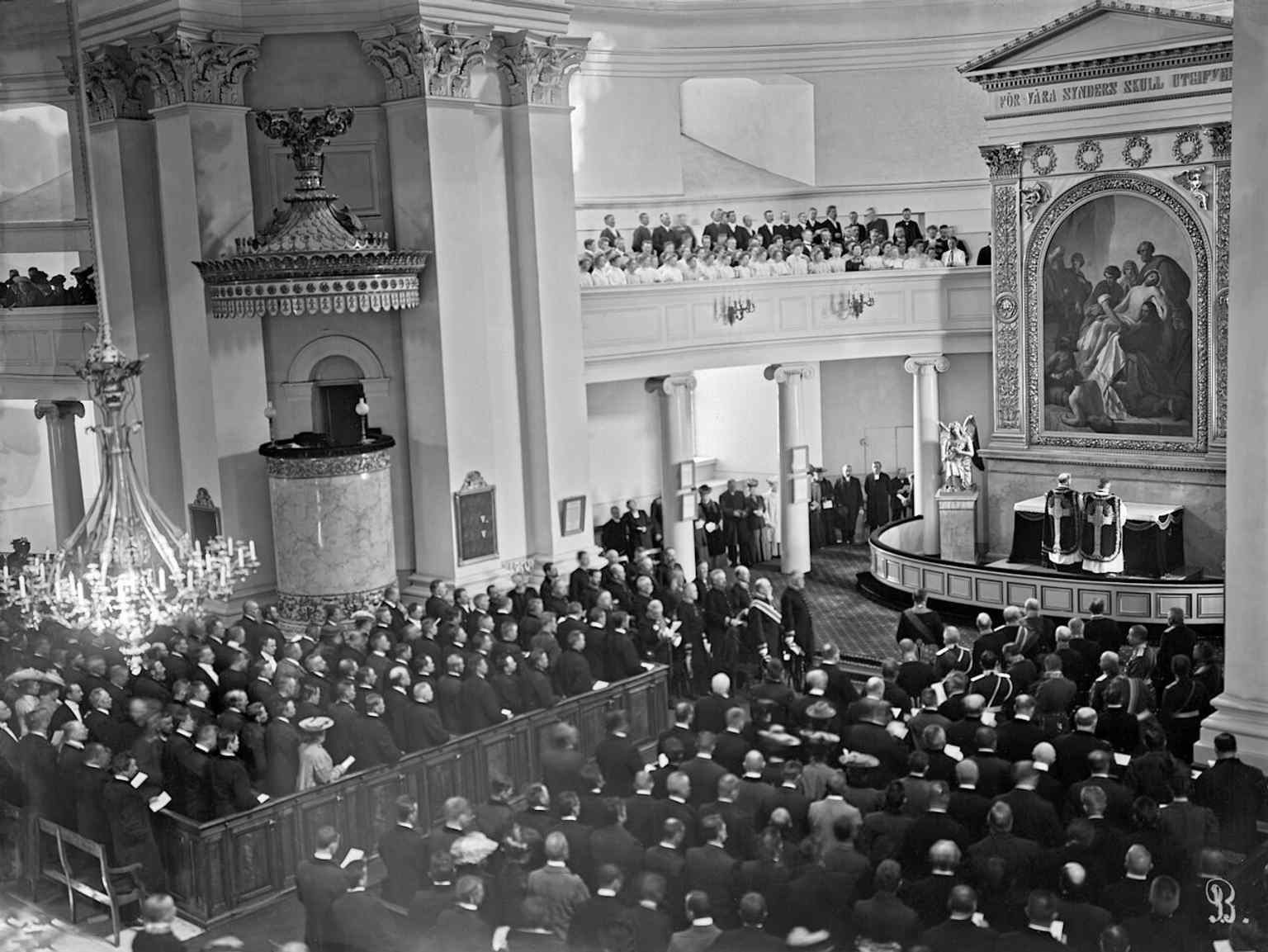
A close exterior view of the cathedral’s white-and-gray façade, including the monumental stairs and the terrace that Engel wanted to keep visually open toward the square.Photo: Ranerana, Wikimedia Commons, CC BY-SA 4.0. Cropped & resized. 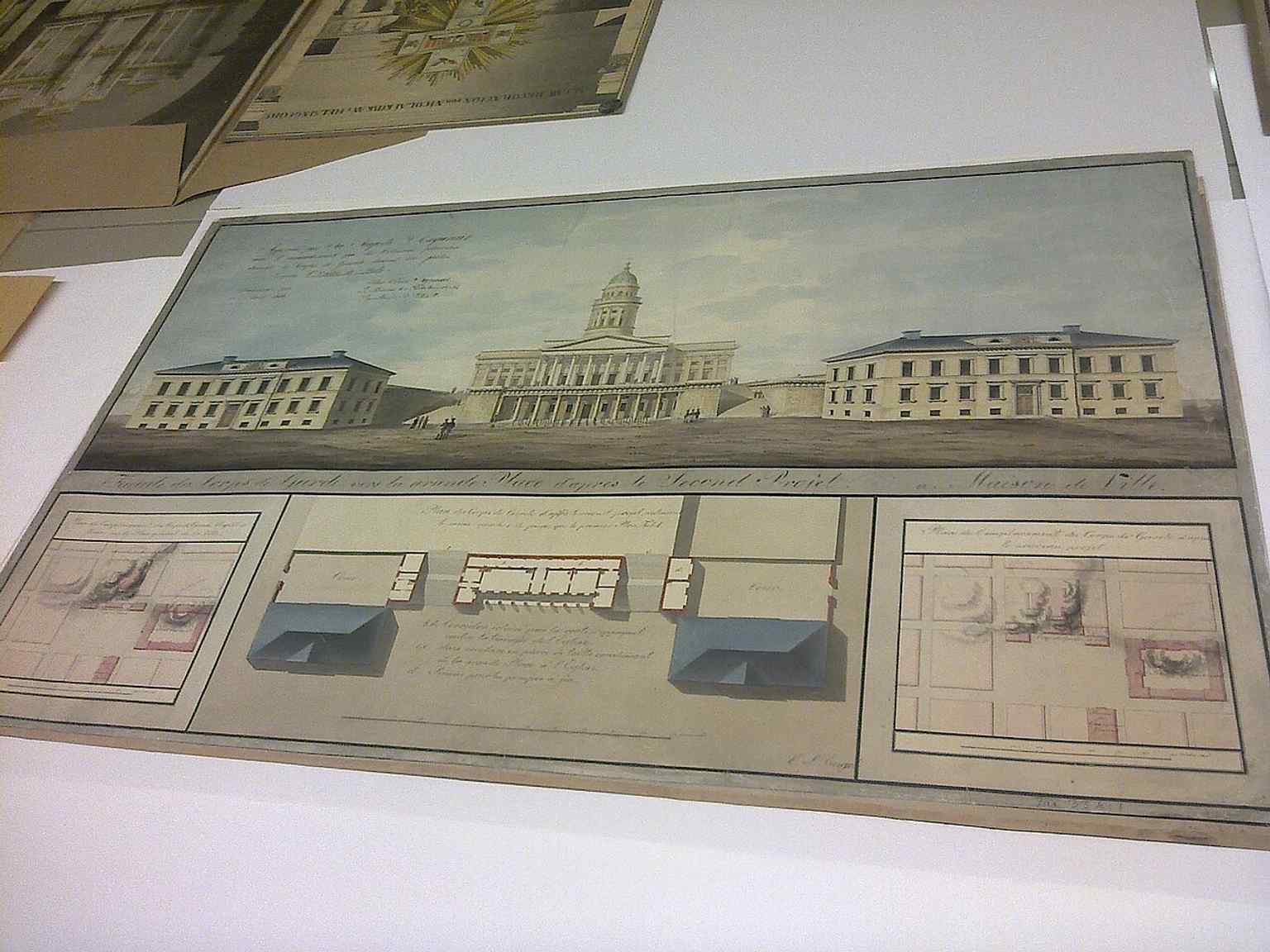
One of the rooftop apostle statues, part of the famous set of twelve zinc sculptures added after Engel’s death to balance the building’s silhouette.Photo: Ximonic (Simo Räsänen), Wikimedia Commons, CC BY-SA 4.0. Cropped & resized. 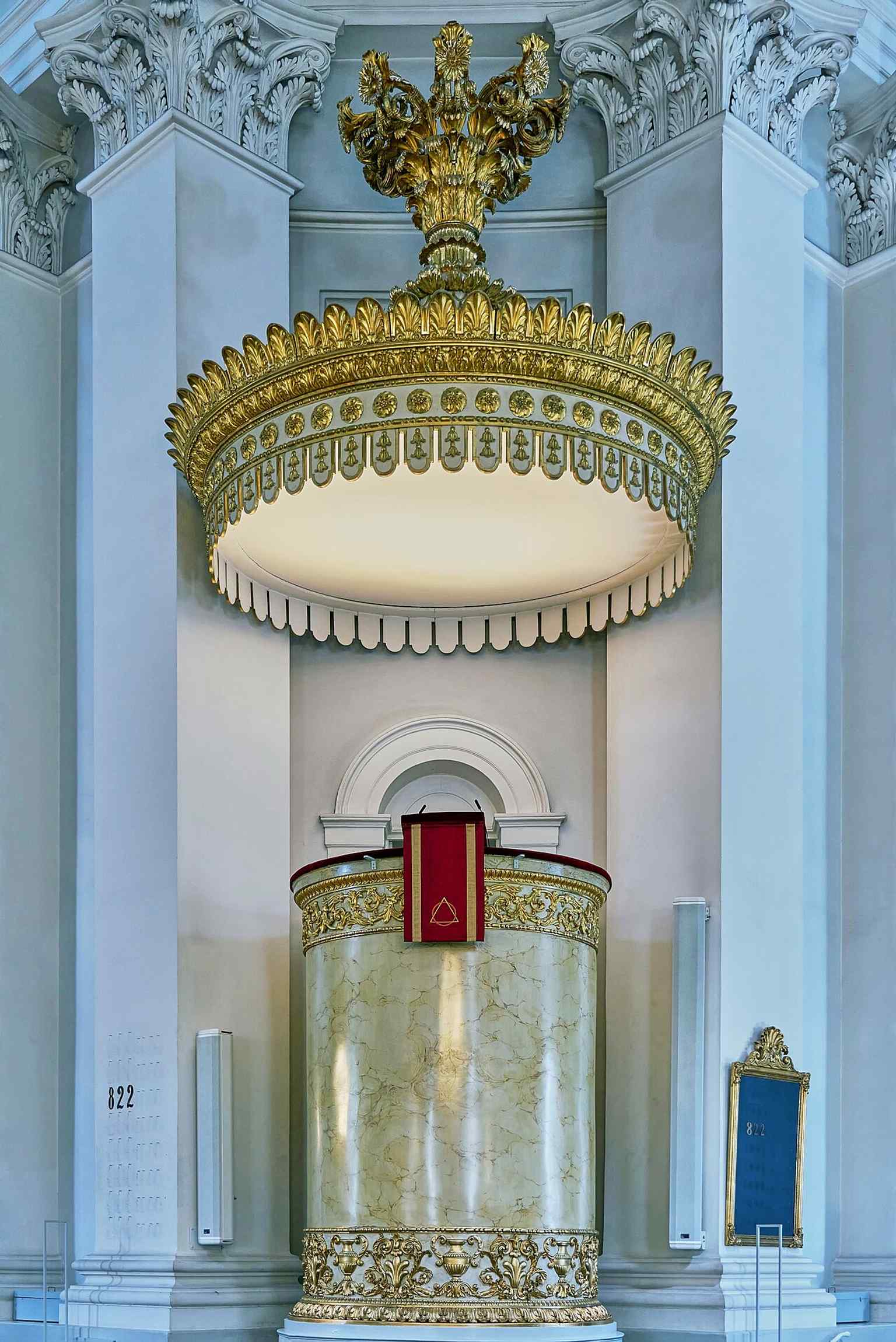
The main organ inside Helsinki Cathedral, echoing the church’s strong musical tradition dating back to its first organist and early chapel music.Photo: Virtual-Pano, Wikimedia Commons, CC BY-SA 4.0. Cropped & resized. 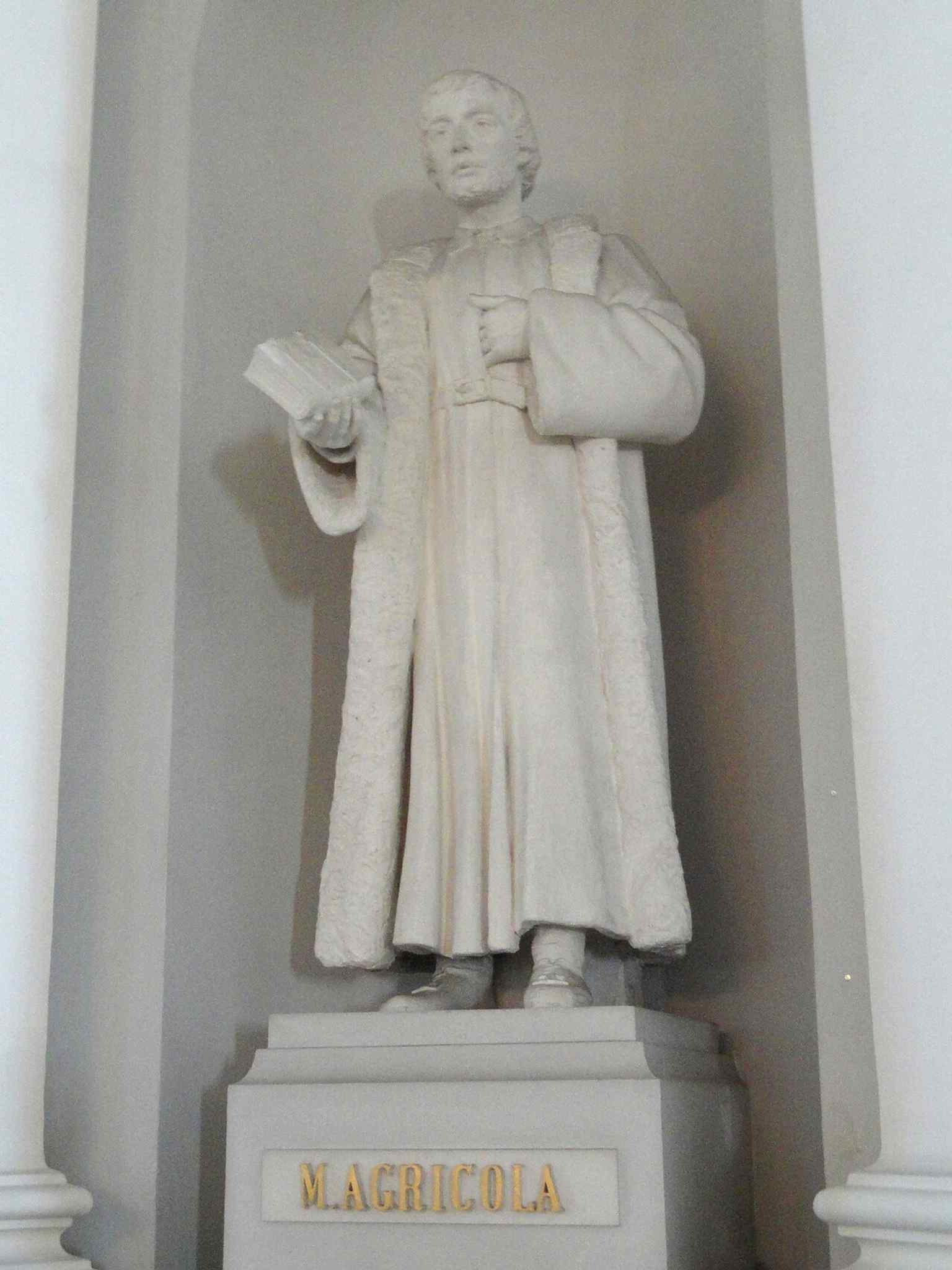
The pulpit and bright, stripped-down interior show Engel’s preference for a calm, symmetrical worship space with minimal ornament.Photo: Virtual-Pano, Wikimedia Commons, CC BY-SA 4.0. Cropped & resized. 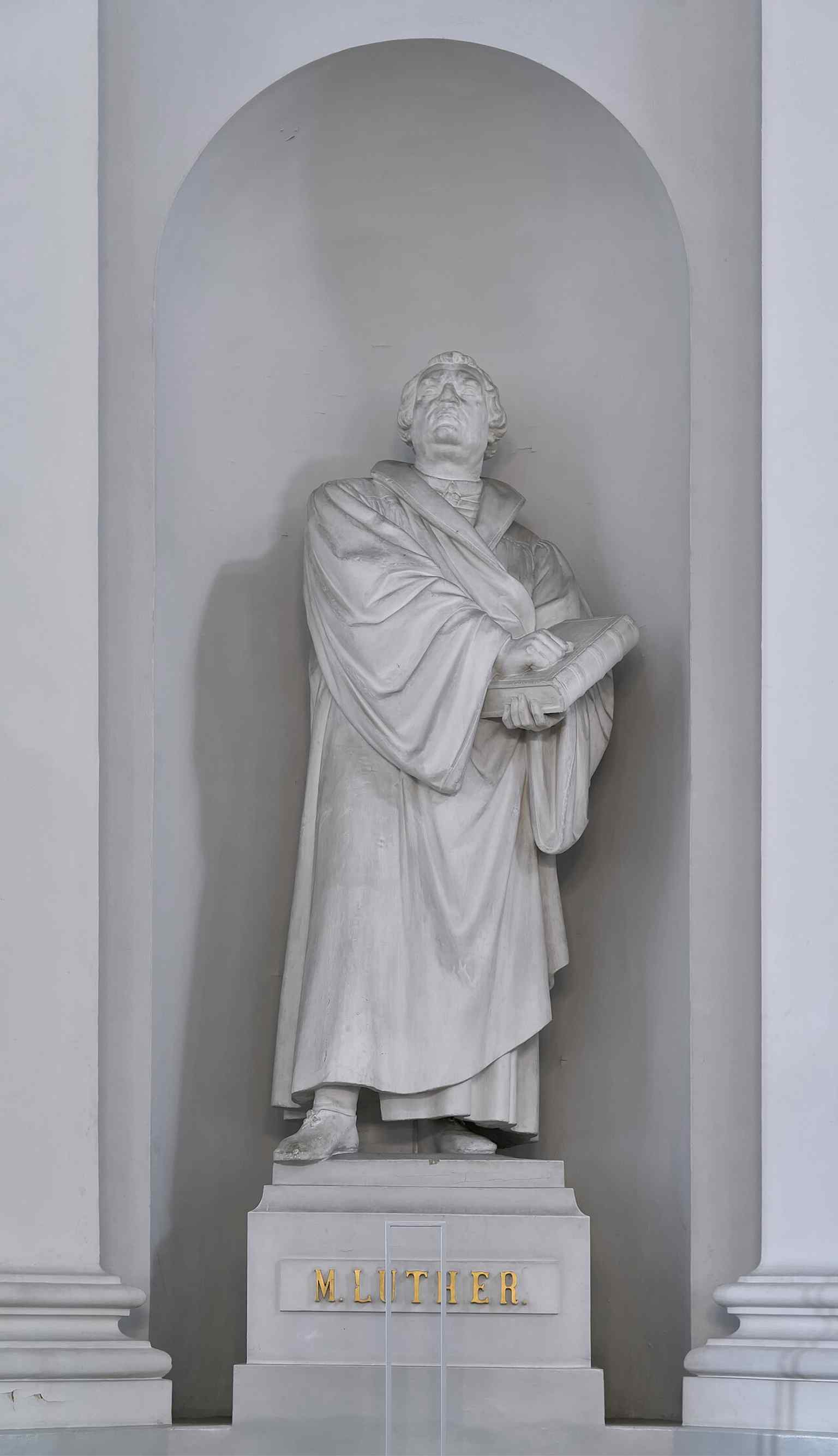
Mikael Agricola’s statue in the nave, one of the three reformer figures that serve as the cathedral’s main interior decoration.Photo: Virtual-Pano, Wikimedia Commons, CC BY-SA 4.0. Cropped & resized. 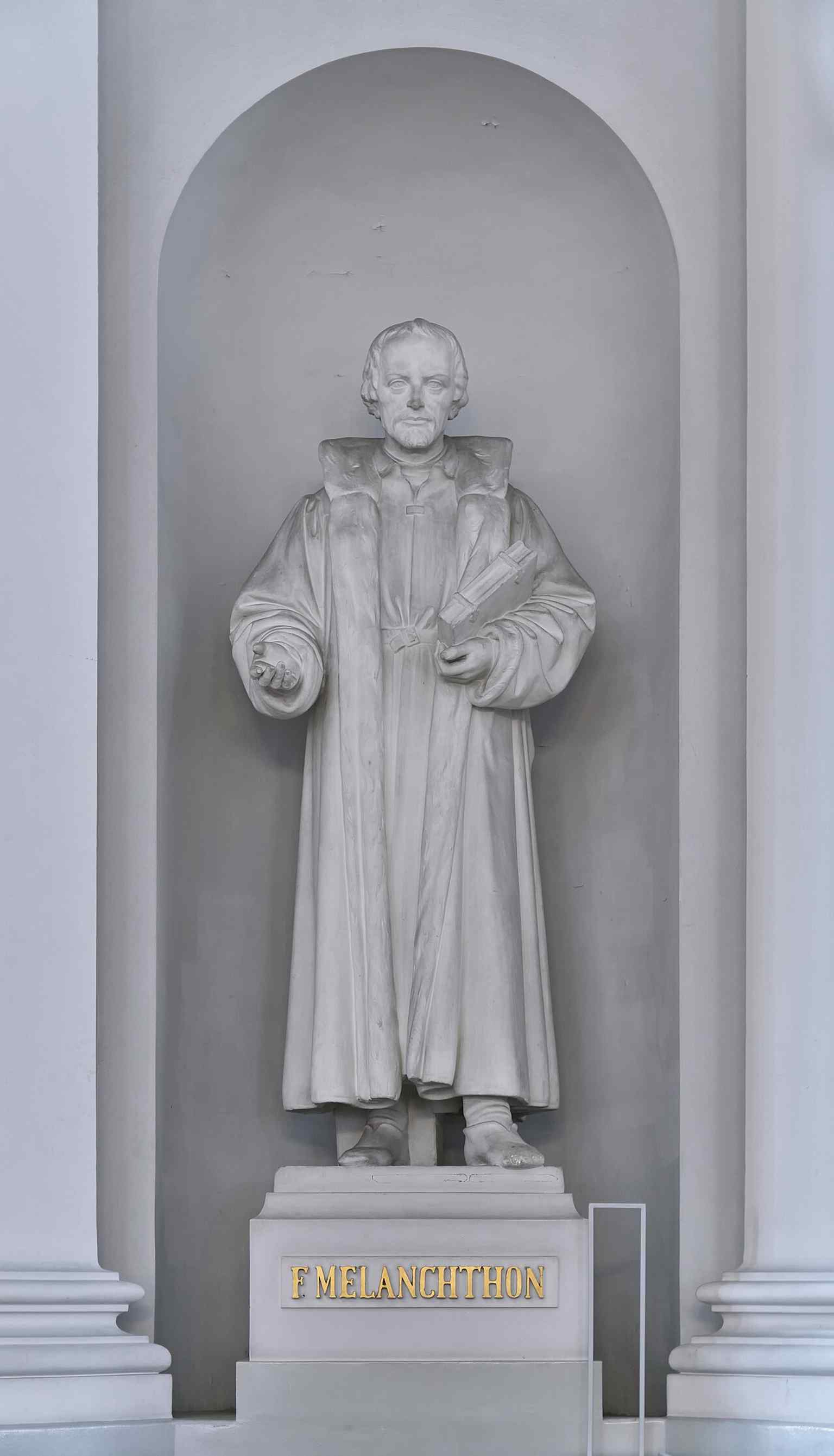
Martin Luther’s statue inside the cathedral, part of the trio of reformers that stand in the otherwise sparse church interior.Photo: Virtual-Pano, Wikimedia Commons, CC BY-SA 4.0. Cropped & resized. 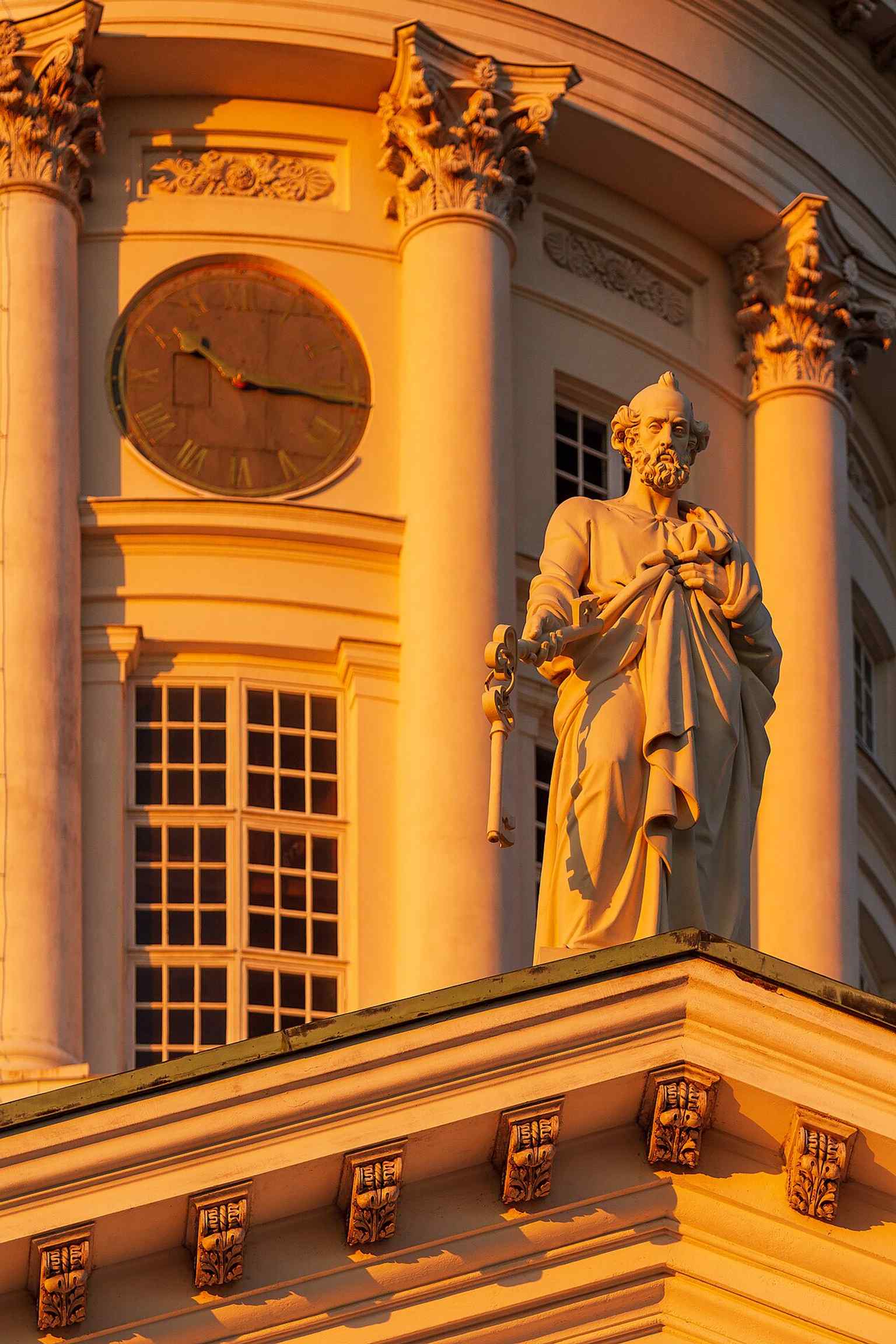
Philipp Melanchthon’s statue, highlighting how the cathedral’s interior uses a few carefully placed artworks instead of heavy ornament.Photo: Virtual-Pano, Wikimedia Commons, CC BY-SA 4.0. Cropped & resized.

Show 12 more stopsShow fewer stopsexpand_moreexpand_less
On your right stands a pale stone building with a temple-like front, tall columns, and a sculpted triangular pediment crowded with historic figures. This house gave ceremony to…Read moreShow less
Open dedicated page →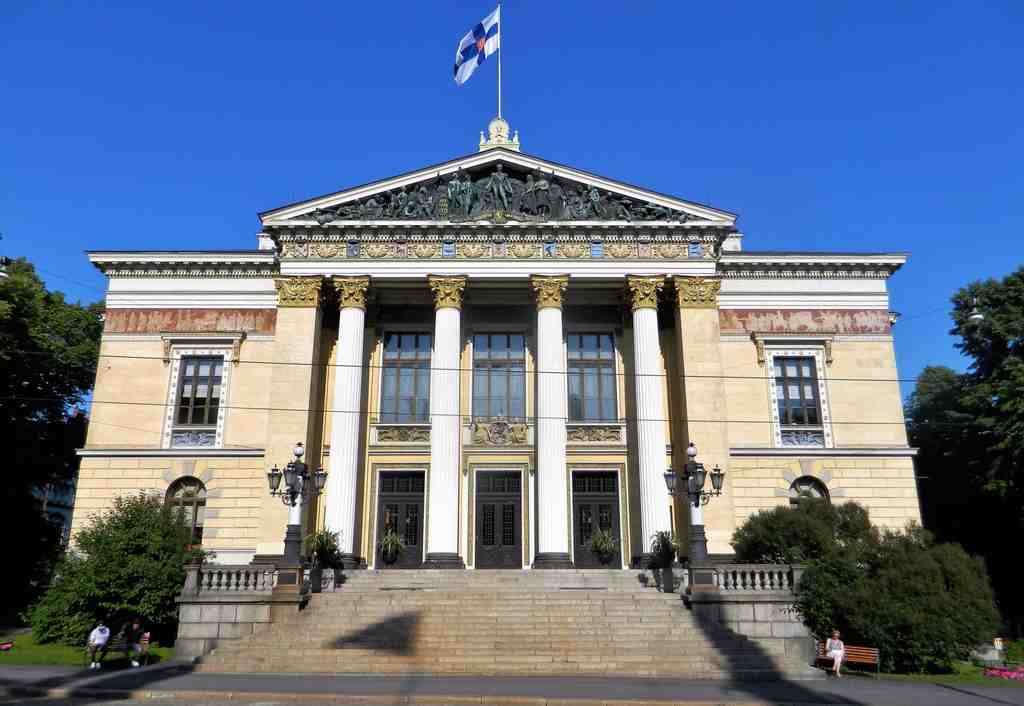
House of the EstatesPhoto: Paasikivi, Wikimedia Commons, CC BY-SA 4.0. Cropped & resized. On your right stands a pale stone building with a temple-like front, tall columns, and a sculpted triangular pediment crowded with historic figures.
This house gave ceremony to power. It belonged to the old estate-based political order, a system that organized political voice by rank rather than equality: nobles, clergy, burghers, and peasants each had their own place, and many people had no place at all. Even reform, here, needed the right doorway, the right title, the right room.
The story took decades. As early as the eighteen sixties, people knew the estates needed a permanent home in the capital. The nobles solved it first with their own House of Nobility in eighteen sixty-two. The other three estates waited... and waited... until a competition in eighteen eighty-seven finally opened the way. A young architect, Gustaf Nyström, stepped forward. He had learned from the older generation, but this became his statement: a Neo-Renaissance building that borrows the posture of a Greek temple, as if politics itself should look ancient, orderly, unquestionable.
The House of the Estates opened in January of eighteen ninety-one. Each non-noble estate received its own chamber. If you glance at the image of the entrance stairs on your screen, you can feel how the building trained representatives to move with dignity before they ever spoke.
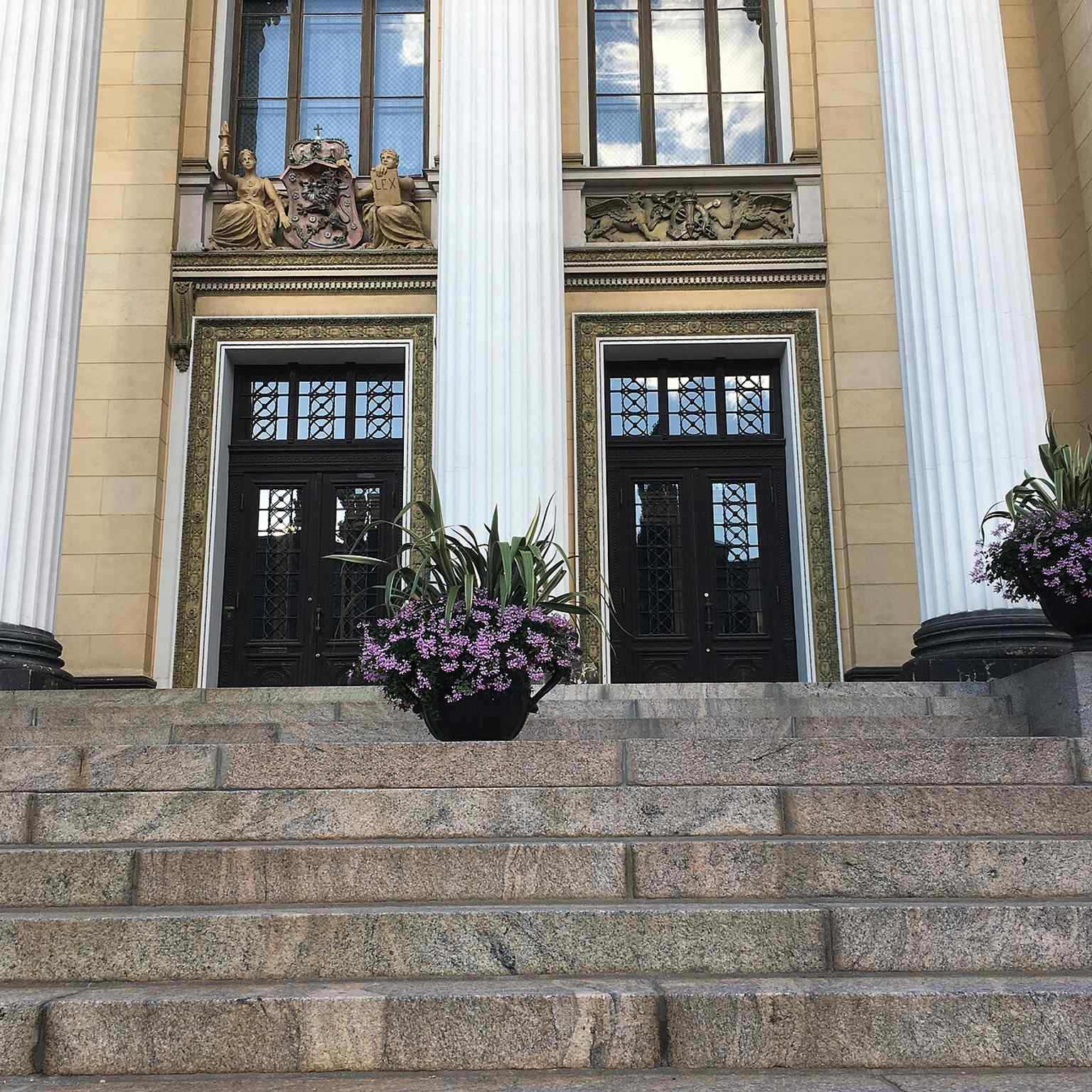
The grand entrance stairs lead into the building’s ceremonial core, where the interiors were designed to impress visiting representatives.Photo: Eteil, Wikimedia Commons, CC BY-SA 4.0. Cropped & resized. Look up at the pediment. Emil Wikström later filled it with Alexander the First and the Diet of Porvoo of eighteen oh-nine, an imperial scene about laws and rights. And around three sides of the building runs a painted frieze by Salomo Wuorio, a ceremonial procession in the style of ancient art. Nyström wanted sculpture there, but money settled for paint... which feels fitting in a house devoted to appearances.
And yet, after all that waiting, this grand stage served the estate parliament for only a short time. The old order ended in nineteen oh-six. If you like, take a quick look at the before-and-after image; the jump from nineteen oh-seven to today makes that brief life feel strangely tender.
Later this building held scientific societies, and now governments often negotiate here after elections. But the balance of power is already shifting. From rank and ritual, we move next toward finance, administration, and harder contests... at the Bank of Finland.
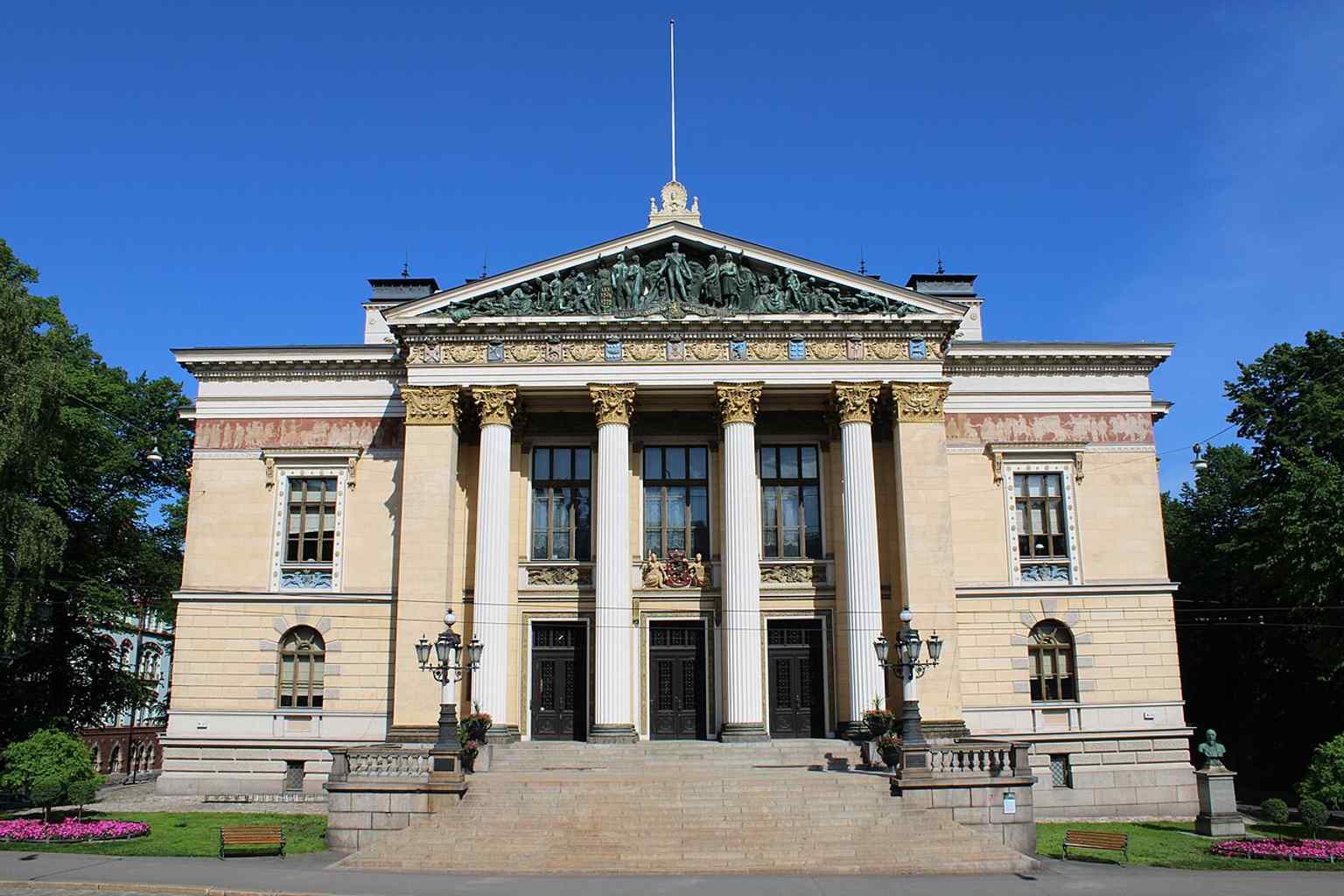
A clear modern facade view of the House of the Estates, showing the dignified neoclassical frontage that once hosted Finland’s estate-based parliament.Photo: Josefiina Alanen, Wikimedia Commons, CC BY 4.0. Cropped & resized. 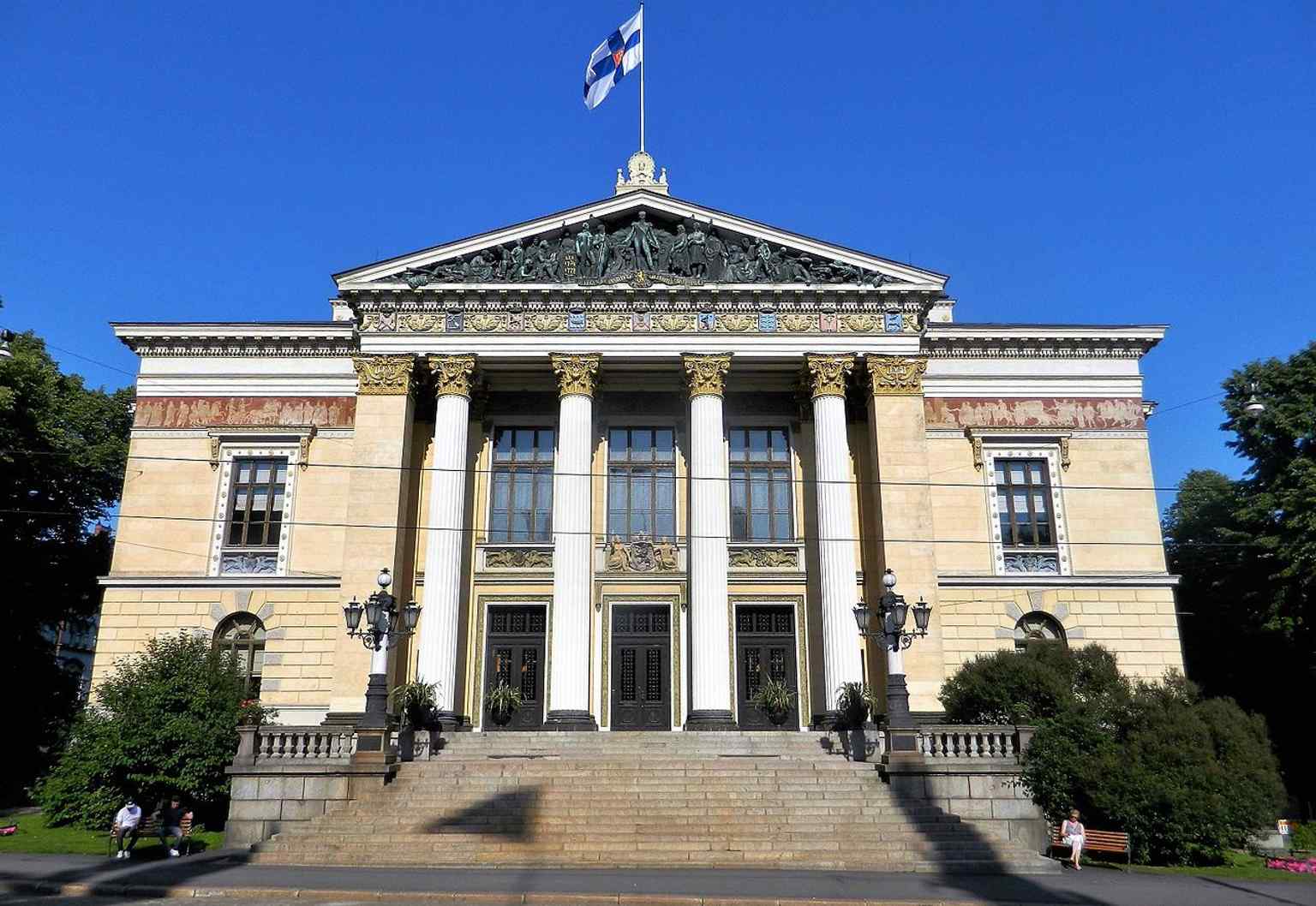
The main building with flags flying — a fitting view for a house now used for state meetings and government negotiations.Photo: Paasikivi, Wikimedia Commons, CC BY-SA 4.0. Cropped & resized. 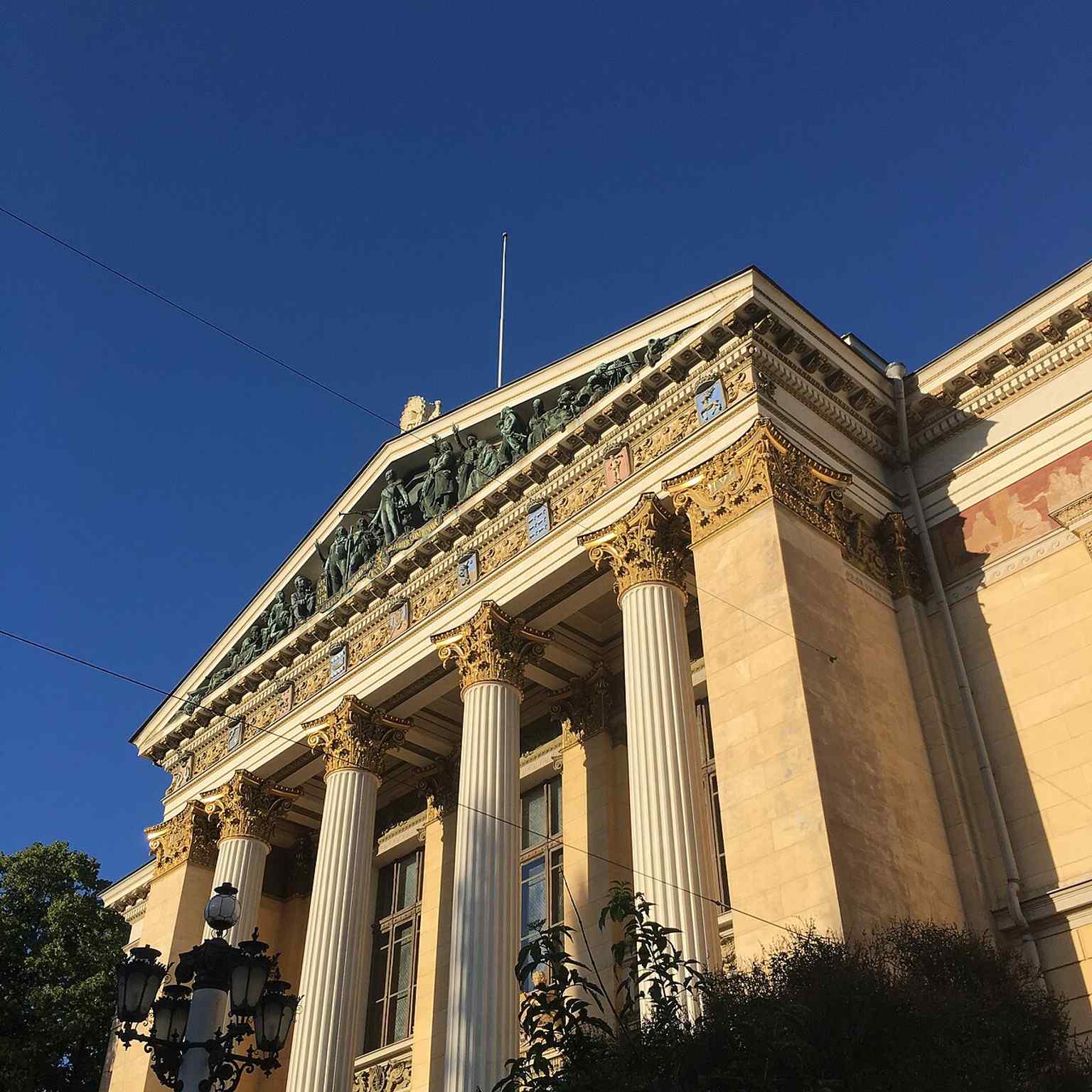
A close look at the columned facade, echoing the building’s temple-like classical front described in the source text.Photo: Eteil, Wikimedia Commons, CC BY-SA 4.0. Cropped & resized. Directly ahead stands a heavy red-brick bank with round-arched windows, pale stone trim, and a fortress-like Romanesque facade. Before coins and banknotes, the Finnish word for…Read moreShow less
Open dedicated page →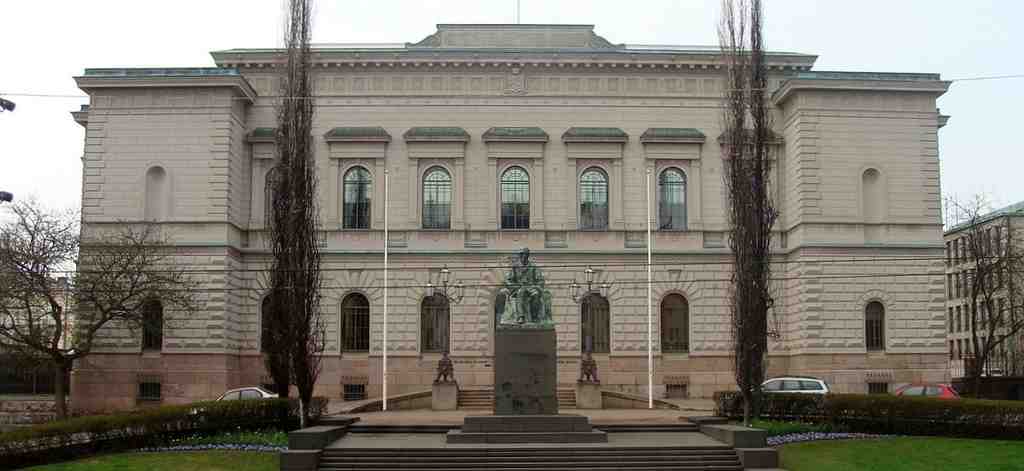
Bank of FinlandPhoto: Paasikivi, Wikimedia Commons, CC BY-SA 4.0. Cropped & resized. Directly ahead stands a heavy red-brick bank with round-arched windows, pale stone trim, and a fortress-like Romanesque facade.
Before coins and banknotes, the Finnish word for money was raha... and raha once came from the fur trade, where animal pelts stood in for value. I love that detail because it reminds us that value is never abstract for long. It begins in the hand, in trade, in trust, in whatever a community agrees will carry worth from one life to another.
Money can be a tool of sovereignty. It does not only buy bread or timber; it quietly tells people which capital they belong to, which laws shape contracts, and whose promises will be believed tomorrow. Long before Finland became politically independent, it began to win a measure of independence through currency.
After Russia took Finland from Sweden in eighteen oh nine, Tsar Alexander the First ordered a new institution in Turku: the Office of Exchange, Lending, and Deposits. It opened in eighteen twelve, issued ruble notes, and lent money to landowners and merchants. Unusually for such an old central bank, it always remained government-owned. When it moved to Helsinki in eighteen nineteen and took the name Bank of Finland in eighteen forty, the struggle underneath the paperwork was simple: would Finnish daily life keep orbiting Sweden, submit fully to Russian instability, or carve out its own financial rhythm? That long life is why the bank counts itself among the oldest surviving central banks in the world.
The answer came through a senator named Johan Vilhelm Snellman, whose statue stands in front of the entrance. In eighteen sixty-five, Snellman persuaded Alexander the Second to let Finland keep its own markka tied to silver, meaning the currency's value followed a fixed amount of silver even if the Russian ruble wobbled. That sounds technical... but it changed ordinary life. Wages, rents, debts, and savings could begin to answer to rules set here, not only in Saint Petersburg. That is how a country can start practicing self-rule before it fully possesses it.
The building in front of you made that claim visible. Finland held its first international architectural competition for this headquarters in eighteen seventy-six, and Ludwig Bohnstedt won. He gave the bank this stern Romanesque-Renaissance face, then packed the interior with iron bars and brick vaulting as fireproof protection for the nation's reserves in a city long vulnerable to fire. If you glance at your screen, you can see the old strong box brought here from Turku, a survivor from the bank's earliest decades.
This place also carries harder memories. During the civil war in nineteen eighteen, Red Guards occupied the head office and seized the printing presses, hoping control of banknotes would help secure control of the country. The staff refused to obey them, and the gold reserves had already been moved north to Kuopio. Later, Soviet bombing in nineteen forty-four scarred Snellman's monument; the shrapnel marks on the pedestal were left there on purpose. You can see that close detail in the app.
Today the Bank of Finland serves as Finland's central bank inside the Eurosystem, no longer issuing the markka, but still guarding the delicate bond between public trust and national choice.
From here, the next view gathers church, government, commerce, and finance into one carefully arranged scene: Senate Square. If you want to come back another time, the bank is generally open on weekdays from nine in the morning to four in the afternoon, and closed on weekends.
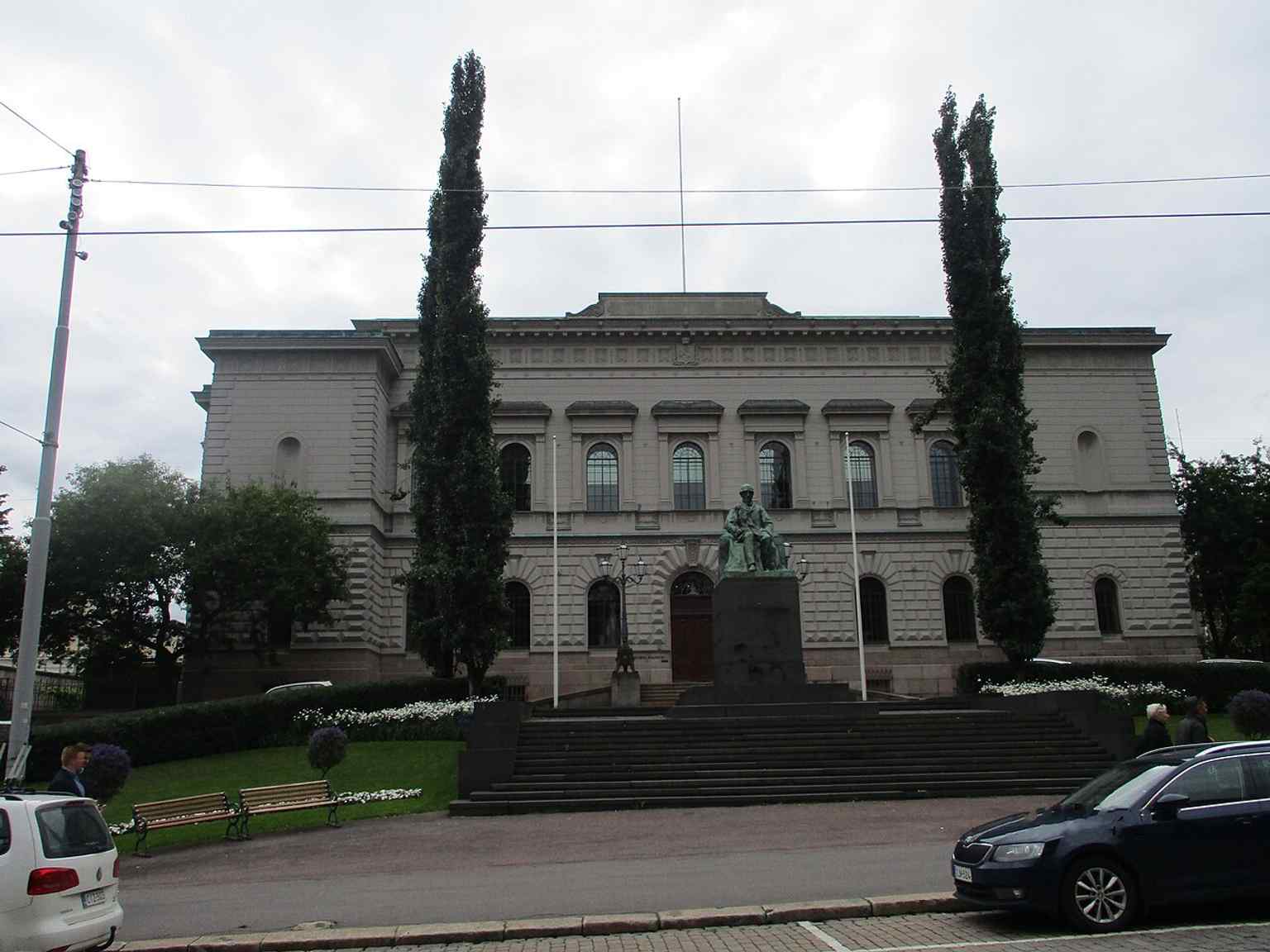
A clear modern view of the headquarters complex, showing the institution’s continued presence in central Helsinki.Photo: Mikkoau, Wikimedia Commons, CC BY-SA 4.0. Cropped & resized. 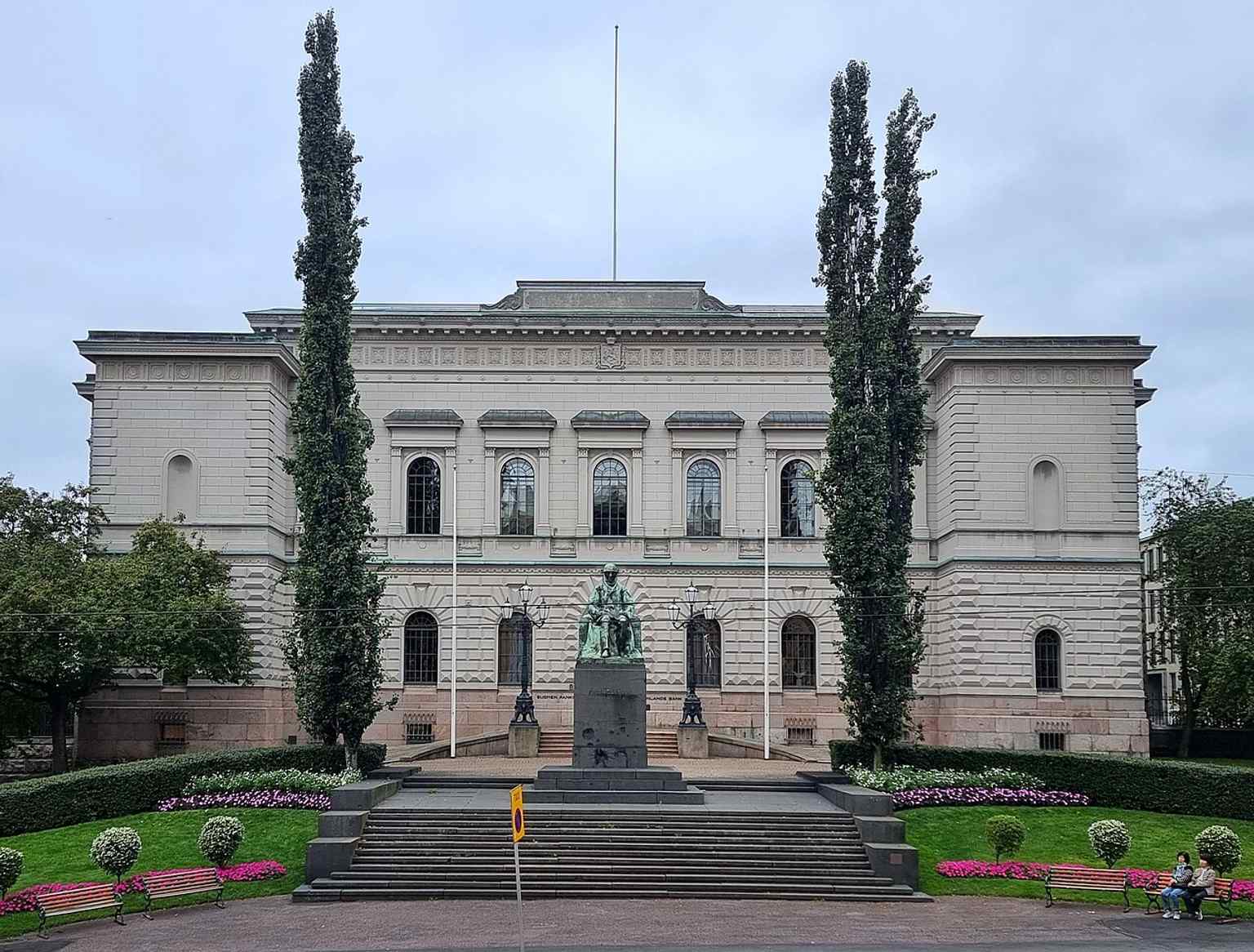
A recent rephotograph of the bank building, useful for showing the landmark as it appears today after generations of use.Photo: Marit Henriksson, Wikimedia Commons, CC BY-SA 4.0. Cropped & resized. 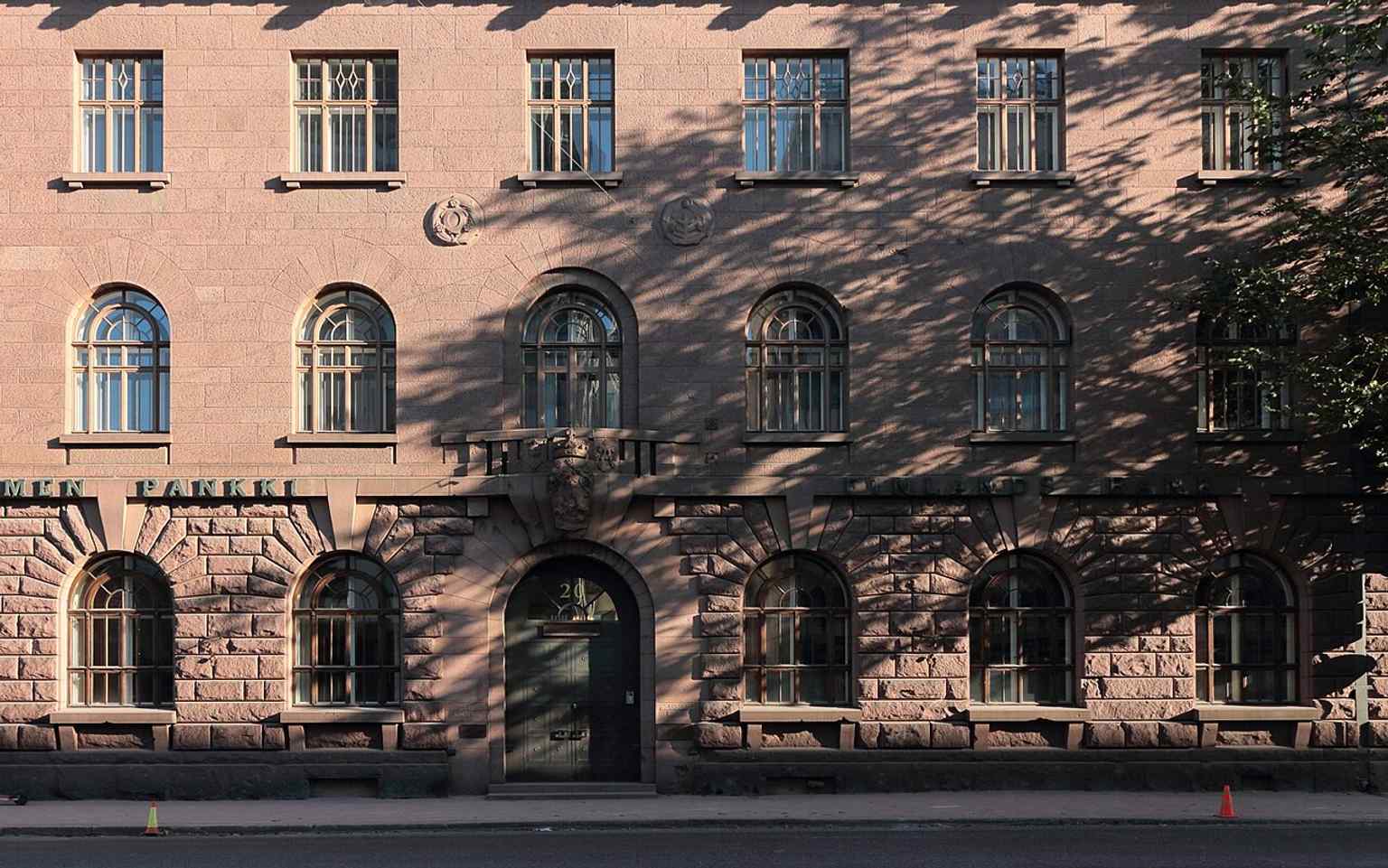
The former Turku branch, recalling the bank’s origins and early expansion beyond Helsinki into Finland’s regional cities.Photo: Estormiz, Wikimedia Commons, CC0. Cropped & resized. On your right, Senate Square opens as a broad stone plaza framed by pale-yellow neoclassical buildings, with a great fan of white cathedral steps rising behind the bronze statue…Read moreShow less
Open dedicated page →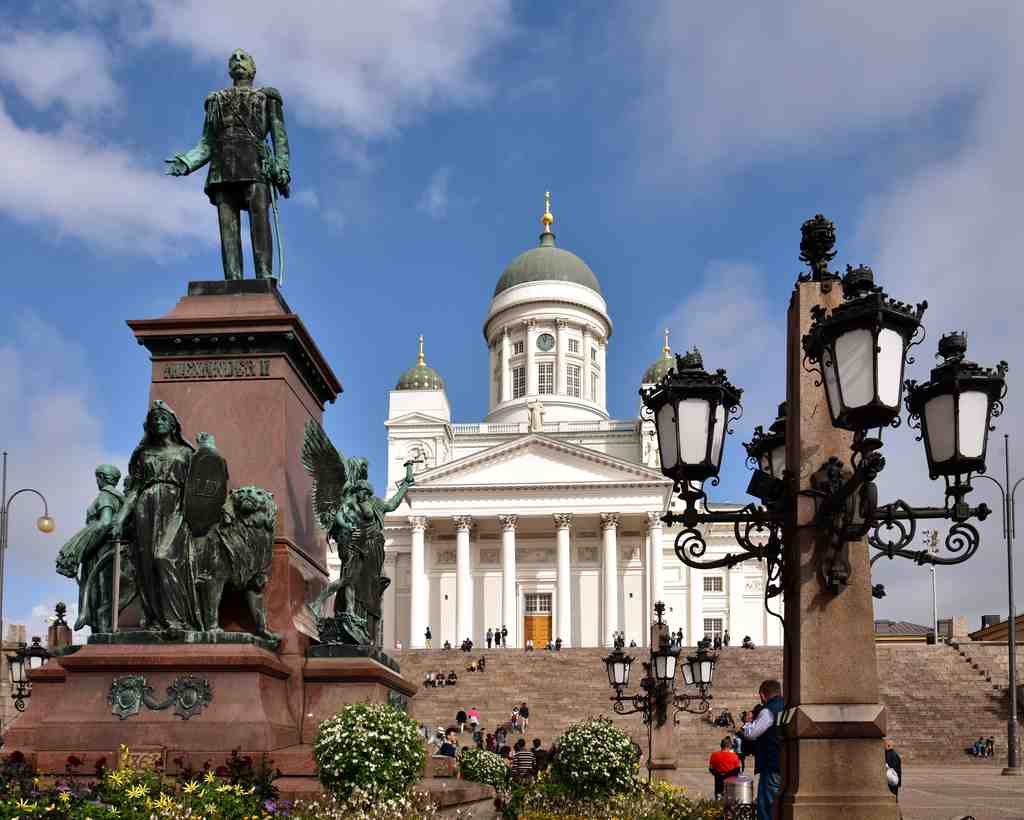
Senate Square, HelsinkiPhoto: Bahnfrend, Wikimedia Commons, CC BY-SA 4.0. Cropped & resized. On your right, Senate Square opens as a broad stone plaza framed by pale-yellow neoclassical buildings, with a great fan of white cathedral steps rising behind the bronze statue at its center.
This is the version of Senate Square that guidebooks love: Carl Ludvig Engel’s grand civic composition, where power was arranged almost like a lesson in stone. Religion stands there in the Cathedral. Government faces it from the east in the long palace. Learning answers from the University side. Commerce lingers at the edges in the older merchants’ buildings. It feels balanced, deliberate... almost too orderly.
And that is exactly why this place can unsettle you once you know what it replaced.
Before Engel and the planner Johan Albrecht Ehrenström turned Helsinki into an imperial capital in eighteen twelve, this area was the old Great Square. It held a churchyard. It also held punishment in public view. In the seventeenth and eighteenth centuries, officials brought condemned people here to be hanged or beheaded, making fear part of everyday city life.
Then came the plague. In seventeen ten, the Great Plague tore through Helsinki and killed nearly two-thirds of the town. More than one thousand victims were buried in mass graves here. Most people crossing this square never realize that later construction work uncovered human bones again, as if the ground refused to keep the secret forever. That is the local detail people pass along in a lower voice.
Engel knew none of those dead personally, of course, but his story belongs here too. He imagined a more enclosed square, almost intimate, with a guardhouse and columns on the north side. Ehrenström and Emperor Nicholas the First overruled him. They wanted the space opened dramatically toward the sea, and they demanded the grand staircase you see today. Engel took that hard; he felt his design had been compromised. Yet the feature that broke his heart became the square’s defining gesture. If you want a glimpse of the version he lost, look at the old image on your screen showing the square before those stairs existed.
At the center stands Emperor Alexander the Second, raised here in eighteen ninety-four. Finns remembered him as the tsar who restored the Diet, the national assembly, in eighteen sixty-three and widened Finland’s autonomy. Even this monument carries a double meaning. Around the pedestal, one figure represents Law as a woman in a bearskin cloak with a lion beside her, a quiet way for sculptor Walter Runeberg to hint at Finland itself. During the years of Russification, people laid flowers here to protest Russian control without saying a word.
If you like, take a quick look at the before-and-after image in the app; it catches the square shifting from an imperial ceremony for Alexander the Second into the open public plaza you see now.
So this beautiful order is real... but it is also a covering. A city preserved one age here by laying it over another. When a nation builds its most ceremonial square over plague graves and an execution ground, does that make the place less noble... or more truthful?
Hold that thought as we continue in about three minutes to the Tori Quarters, where trade and everyday life tell another side of the story. And like all the strongest public spaces, this one never really closes; Senate Square remains open all day, every day.
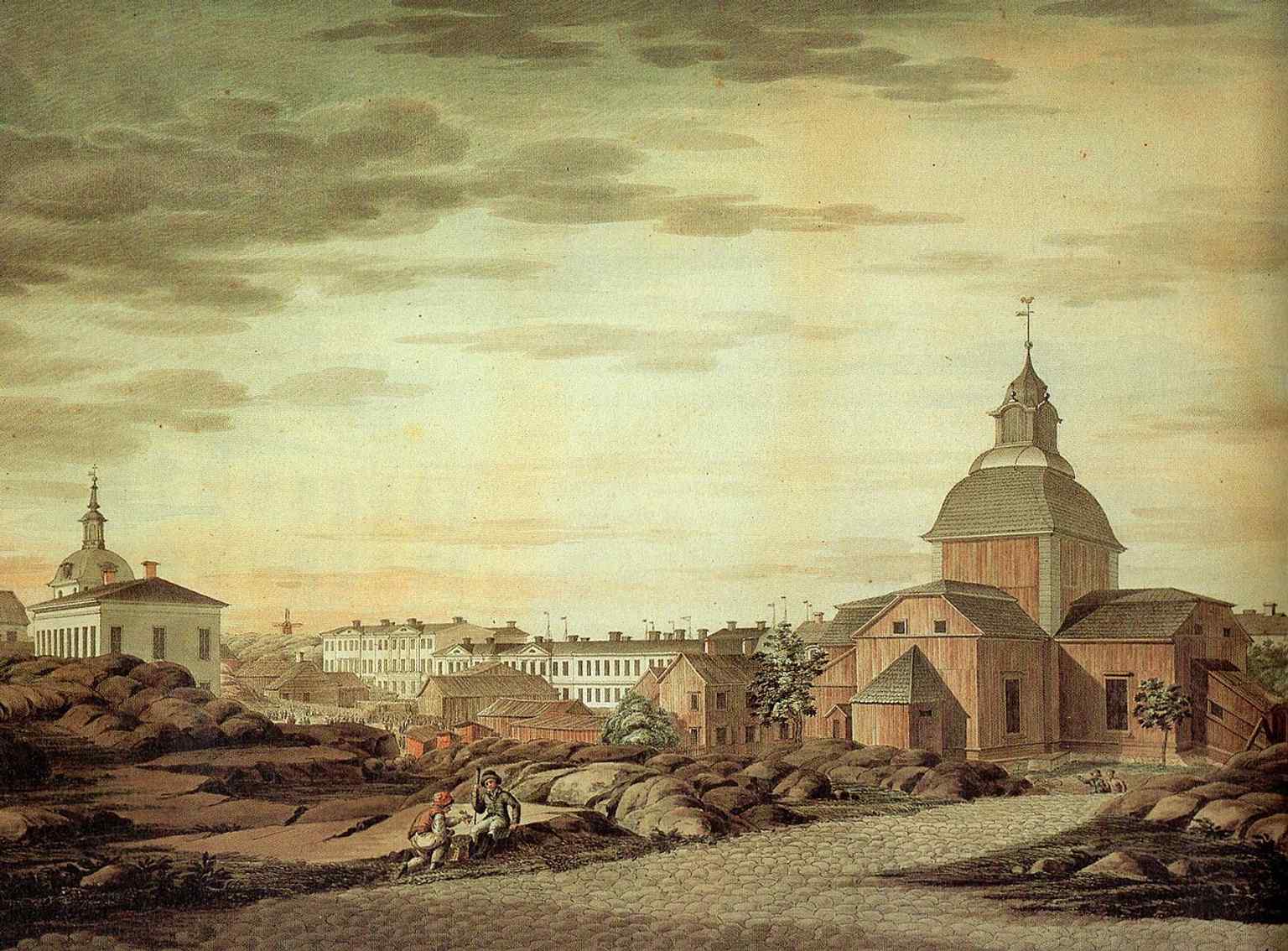
Engel’s watercolor shows his vision for the square as an ordered imperial ensemble, with Ulrika Eleonora Church on the right.Photo: Carl Ludvig Engel, Wikimedia Commons, Public domain. Cropped & resized. 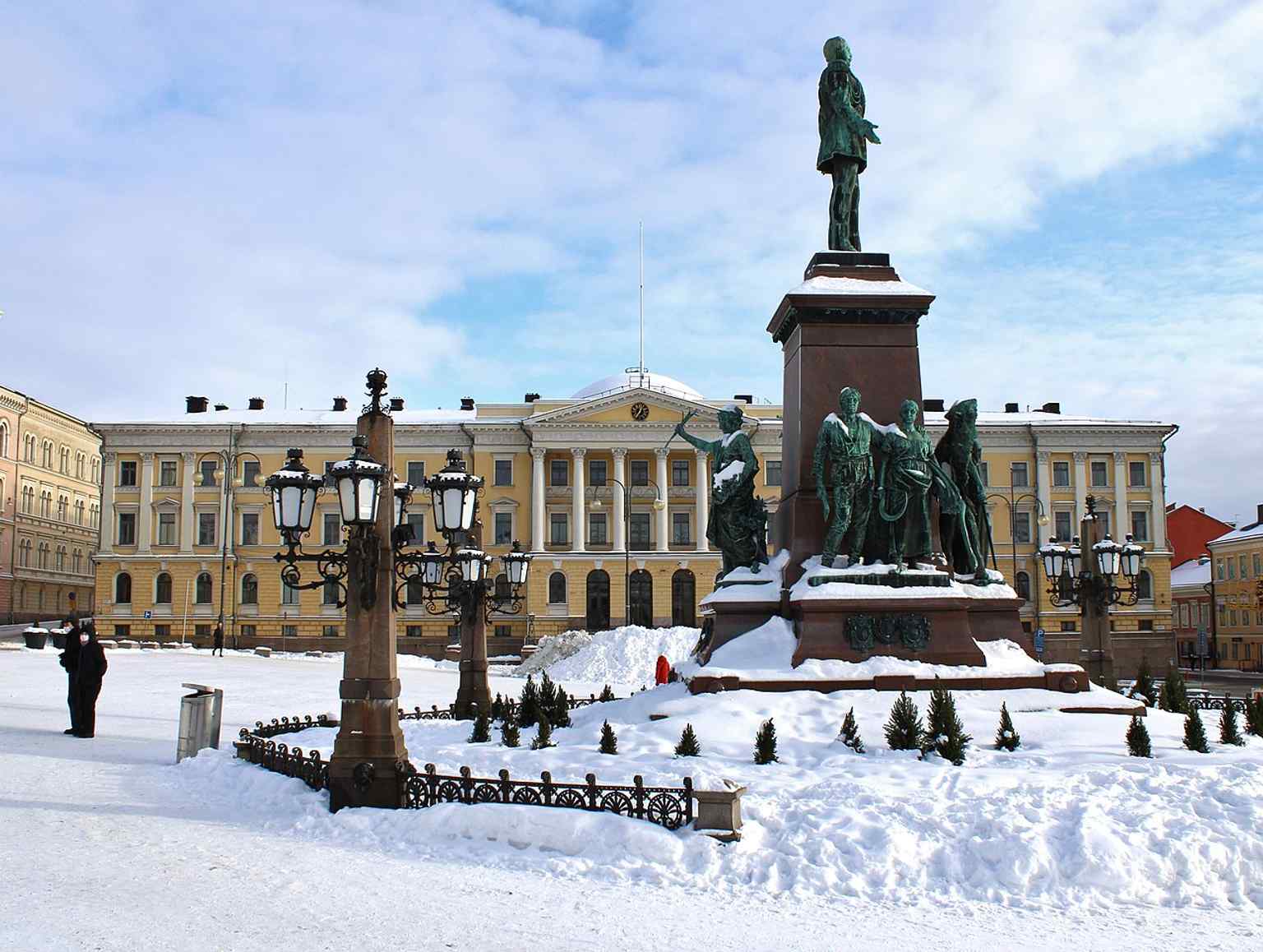
The Government Palace in winter, once the seat of the Finnish Senate and now home to the Prime Minister and cabinet.Photo: Josefiina Alanen, Wikimedia Commons, CC BY 4.0. Cropped & resized. On your left, Tori Quarters looks like a linked cluster of pale plaster-and-stone empire buildings, laid out in crisp rectangular street blocks, with archways and gateways leading…Read moreShow less
Open dedicated page →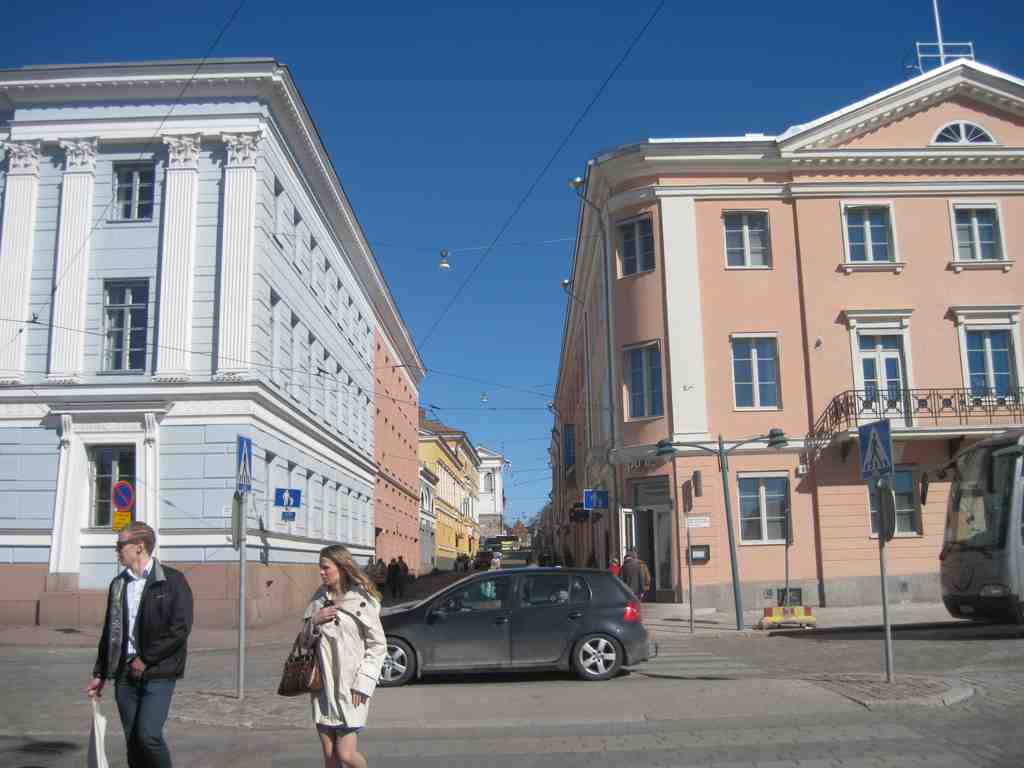
Tori QuartersPhoto: KLS, Wikimedia Commons, Public domain. Cropped & resized. On your left, Tori Quarters looks like a linked cluster of pale plaster-and-stone empire buildings, laid out in crisp rectangular street blocks, with archways and gateways leading into hidden inner courtyards.
This is one of the places where Helsinki feels most human to me... not a single monument, but a whole weave of streets and rooms. Tori Quarters stretches between Senate Square and Market Square, bounded by Aleksanterinkatu to the north and Pohjoisesplanadi to the south. These four blocks - Elephant, Lion, Rhino, and Dromedary - formed the connective tissue of the city, where a merchant town slowly learned to live as a capital. Trade and government did not stand apart here. They shared walls, staircases, kitchens, and counting rooms.
That is why these blocks matter so much. The square nearby shows power in broad daylight. Here, power moved through errands, deliveries, rent books, hotel registers, and whispered deals. Rich and poor crossed paths constantly. A clerk might step out of an office and pass a porter, a diplomat, a cook, or a sailor on the same pavement.
If you want one building that captures that layered life, look toward Goviniuksen talo, on the corner by Katariinankatu. Most people pass its façade without a second glance. But behind it, for more than eighty years, Hotel Kleineh welcomed the city’s elite. Louis Kleineh, the restaurateur people called the restaurant king, turned it into a place where officials and cultural figures met over dinners, celebrations, and private conversations that never entered any archive. Fredrik Cygnaeus celebrated his fiftieth birthday there in style, and in eighteen sixty-one the sailing club Nyländska Jaktklubben began there. After Louis died, his widow kept the hotel’s refined reputation alive. A lot of Helsinki’s respectable surface was polished in rooms like those.
Elsewhere in these quarters, the stories get stranger. In the Lion block, Bock House served as the official residence of Finland’s governor-general from eighteen sixteen to eighteen thirty-eight, and later its grand Empire Hall hosted Helsinki’s first city council in eighteen seventy-five. One building, two kinds of authority: imperial rule first, local democracy after.
Then there was Kiseleff House in the Rhino block. Before shops and offices, it held a sugar factory. Sugar refining sounds sweet enough... but the process used cattle blood, stored on site, and the smell became so awful that it drifted over the new administrative center. Fire risk and stench finally drove the factory away to Töölönlahti in eighteen twenty-three. That is Helsinki in miniature: elegant plans, messy realities.
The city later moved office spaces out of these blocks, restored the old buildings, and reopened them for restaurants, cafés, shops, and courtyards. The work finished in twenty seventeen, and people began calling this Helsinki’s new old city. It is a fitting name. The façades look orderly, but the lives inside them were crowded with ambition.
And when money, empire, and unrest pressed this tightly together, the strain could turn violent.
In about two minutes, we’ll follow that pressure to the robbery of the Helsinki branch of the State Bank of Russia, where the city’s polished civic heart met revolution face to face.
Look for the pale stone facade, the tall rectangular windows set in a strict row, and the formal entrance marked by embassy insignia on this stately building at Pohjois-Esplanadi…Read moreShow less
Open dedicated page →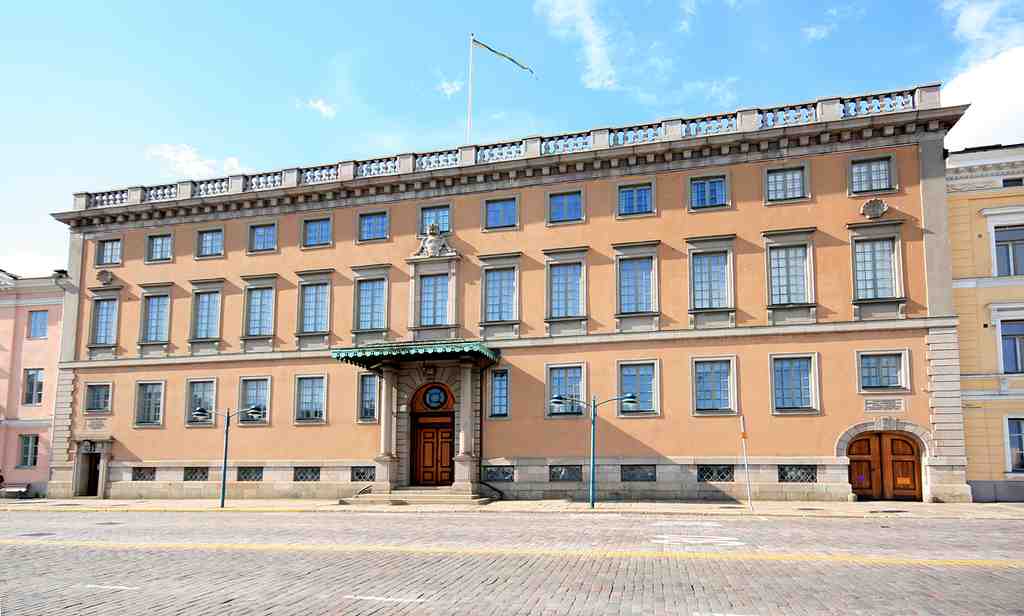
Robbery of the Helsinki branch of the State Bank of RussiaPhoto: Mahlum, Wikimedia Commons, Public domain. Cropped & resized. Look for the pale stone facade, the tall rectangular windows set in a strict row, and the formal entrance marked by embassy insignia on this stately building at Pohjois-Esplanadi seven.
Today it carries the calm face of diplomacy, but in February of nineteen oh six, this address held the Helsinki branch of the State Bank of Russia... and it became the scene of one of the city’s most shocking acts of political violence. The nineteen oh six Helsinki bank robbery was not a daredevil caper. It was a revolutionary operation, planned by professionals who believed ideas needed cash, and that cash could be taken at gunpoint.
The plot grew out of the unrest that followed the Russian Revolution of nineteen oh five and Finland’s general strike. A Latvian revolutionary named Jānis Luters, who used the alias Bobis, organized it from behind the scenes. He was experienced in prison escapes and arms deals. On the day itself, he stayed away. Instead, Jan Tshokke led a group of fifteen Latvian Bolsheviks - Bolsheviks being the hardline revolutionary wing of the Russian socialist movement - with help from Finnish activists, including Karl Gustaf Konrad Nyman, Walter Sjöberg, and the sculptor Alpo Sailo.
Inside this building, the violence came fast. The bank’s porter, Palandin, refused to raise his hands. The robbers shot him three times - in the ear, chest, and stomach - and stabbed him with a dagger. He died trying to resist. Staff and customers were forced into a side room. One customer, Elsa Zilliacus, an employee from another bank, lost the cash case she had brought in with her. In a matter of moments, the attackers seized a mixed haul of Russian rubles and Finnish marks worth one hundred and seventy thousand rubles... roughly two million euros in today’s money.
And here is the hard question this building leaves behind: when a political movement pays for its future with murder and robbery, does the cause excuse the act... or stain it forever?
The money did not vanish into local criminal circles. It fed a much larger struggle across the empire. Lenin had secretly visited Helsinki earlier that month, and later accounts suggest he likely approved the plan. Another conspirator, Nikolai Burenin - the son of a wealthy Saint Petersburg merchant and also a concert pianist - arranged to receive part of the loot in Tampere that same evening, while appearing in public at a concert. That contrast tells you everything: polished culture in one room, revolutionary finance in another.
Then the city’s neat lines broke apart. Some robbers fled toward Kerava, where a gendarme named Mihailov tried to arrest them and was shot dead. Others reached Tampere. There, Jan Tshokke’s arrest turned into a siege inside the police station. He pulled a hidden dagger during a body search, stabbed officers, fired a Browning pistol, shouted from the window for help, and held off police and volunteers for hours. By the end, two policemen and one civilian were dead, and seven others were wounded before firefighters and volunteers brought him down with a high-pressure water hose. Tshokke later received multiple life sentences and died in prison in nineteen ten.
So standing here, in front of this elegant facade, it becomes clear that money was never just money in this district. It was authority, obedience, rebellion... and blood. Once gunfire entered the center of Helsinki, every official building nearby felt less secure, less untouchable. In a moment, we’ll walk about two minutes to the Presidential Palace, where power tried to look composed even as the ground beneath it shook.
If you’re noting practical details, this site generally keeps longer hours on weekdays and shorter opening hours on weekends.
On your left, look for the pale stone, three-story empire façade with its long rows of tall windows and the columned central entrance raised above broad steps. This is Helsinki…Read moreShow less
Open dedicated page →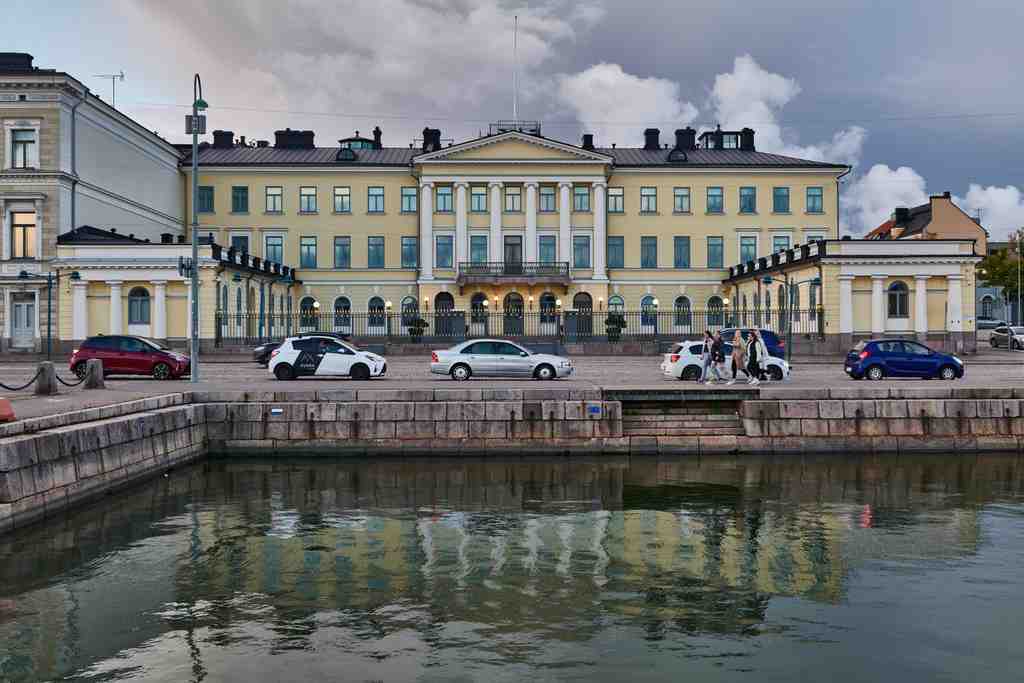
Presidential palacePhoto: Leonhard Lenz, Wikimedia Commons, CC0. Cropped & resized. On your left, look for the pale stone, three-story empire façade with its long rows of tall windows and the columned central entrance raised above broad steps.
This is Helsinki at its most polished... and also one of its neatest reinventions. What looks like a palace began in the year eighteen fourteen as a merchant’s house for Johan Henrik Heidenstrauch, who was then the richest man in Helsinki. Architect Pehr Granstedt planned it for business on the first floor, family life on the second, and small rental apartments above. Even that design had layers: Giacomo Quarenghi revised Granstedt’s sketches before Granstedt finally signed the drawings in early eighteen seventeen.
So this building started by borrowing prestige. It dressed a merchant’s fortune in elegant empire style, the version of classic architecture that Helsinki learned partly from Saint Petersburg. If you glance at the image in your app, you can see how calm and controlled that façade still looks from the square.
But power has a habit of moving into houses other people built. The Heidenstrauch family lived here only seventeen years. In eighteen thirty-seven, the Finnish Senate bought the mansion for the Russian emperors’ residence in Finland. Carl Ludvig Engel wanted an entirely new palace somewhere grander, but the emperor refused and ordered this one taken over instead. That decision tells you a great deal about this city: ceremony often arrived by appropriation, not by fresh beginnings.
And here is the detail locals love to slip into the story. When officials turned the merchant house into an imperial residence, they did not stop at ballrooms and dining rooms. They inserted an Orthodox court chapel deep inside the ceremonial heart of the building, folded right into the machinery of display. Alongside it came a dance hall, a grand dining room, large kitchens, and rooms for the imperial entourage. By eighteen forty-three, trade had yielded to court ritual.
The building kept changing as authority changed. In the early nineteen hundreds, Johan Jacob Ahrenberg expanded it again with a new Mariankatu entrance, an atrium, and a larger State Hall for official ceremony. Then the polished surface cracked. During the First World War, this palace became a military hospital for two hundred wounded soldiers. During the Russian Revolution, it served as headquarters for Russian soldiers and workers. In the civil war of nineteen eighteen, German and then Finnish military staffs took over. Image eleven shows one of the strangest moments of all: Tsar Nicholas the Second visiting the hospital inside these rooms.
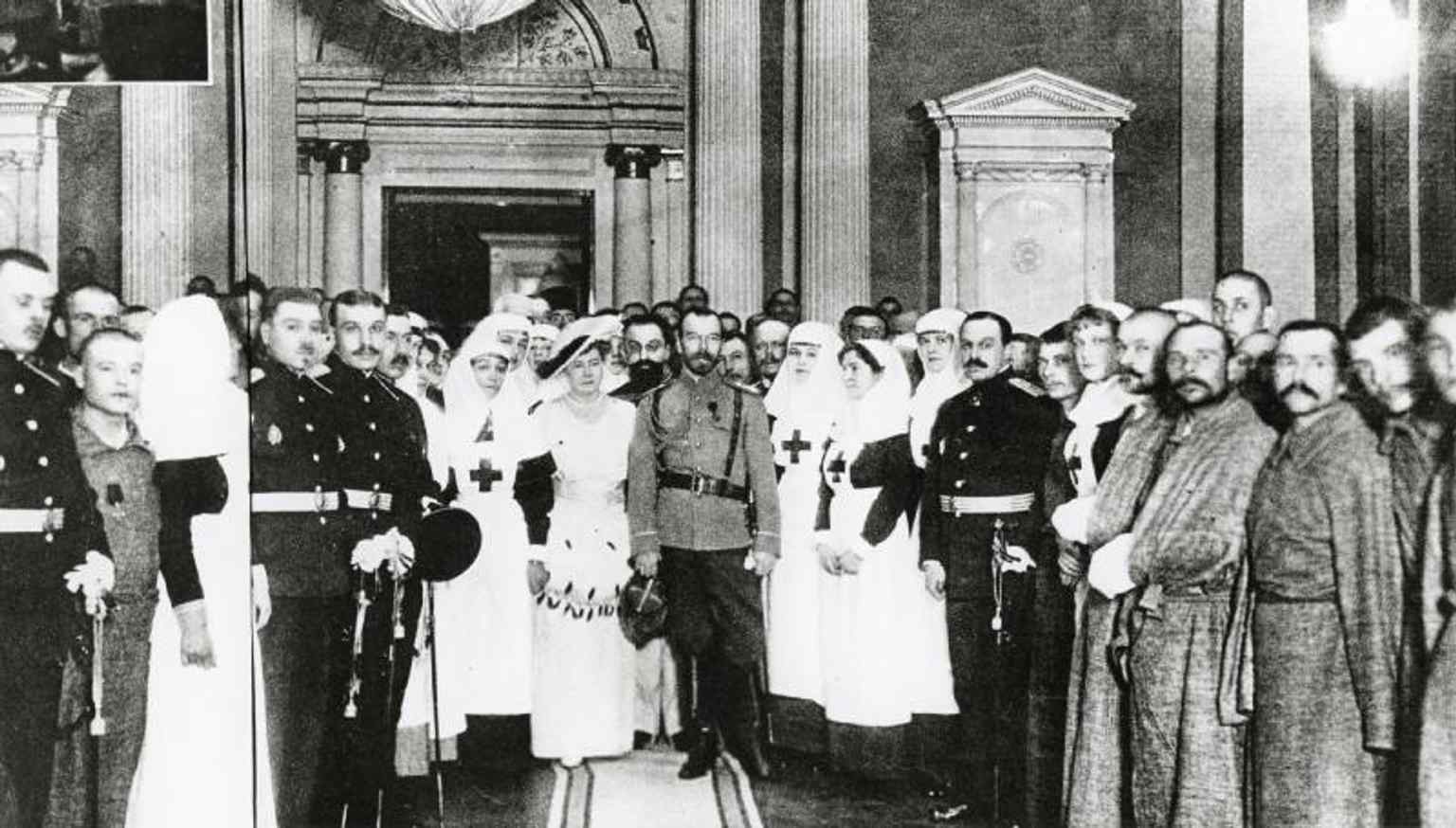
Tsar Nicholas II visiting the military hospital in the palace during World War I, when the building served very different wartime roles.Photo: Suomen Rautatiemuseo, Wikimedia Commons, CC BY-SA 4.0. Cropped & resized. After independence, some people even imagined this place as a castle for a Finnish king. Finland chose a republic instead. Furniture ordered for a monarchy ended up sold to Stockmann, which feels almost perfectly Finnish in its practicality. From nineteen nineteen to nineteen twenty-one, the Foreign Ministry worked here. Then the state remade the building again as the Presidential Palace, removing the old court chapel and creating a library in its place.
Today the famous independence day reception still unfolds here, but no president lives in the palace now. The residence became a workplace, and from here we turn toward Government Palace, where power stops posing for the portrait and gets down to governing. The exterior is one of those city sights you can pass at any hour.
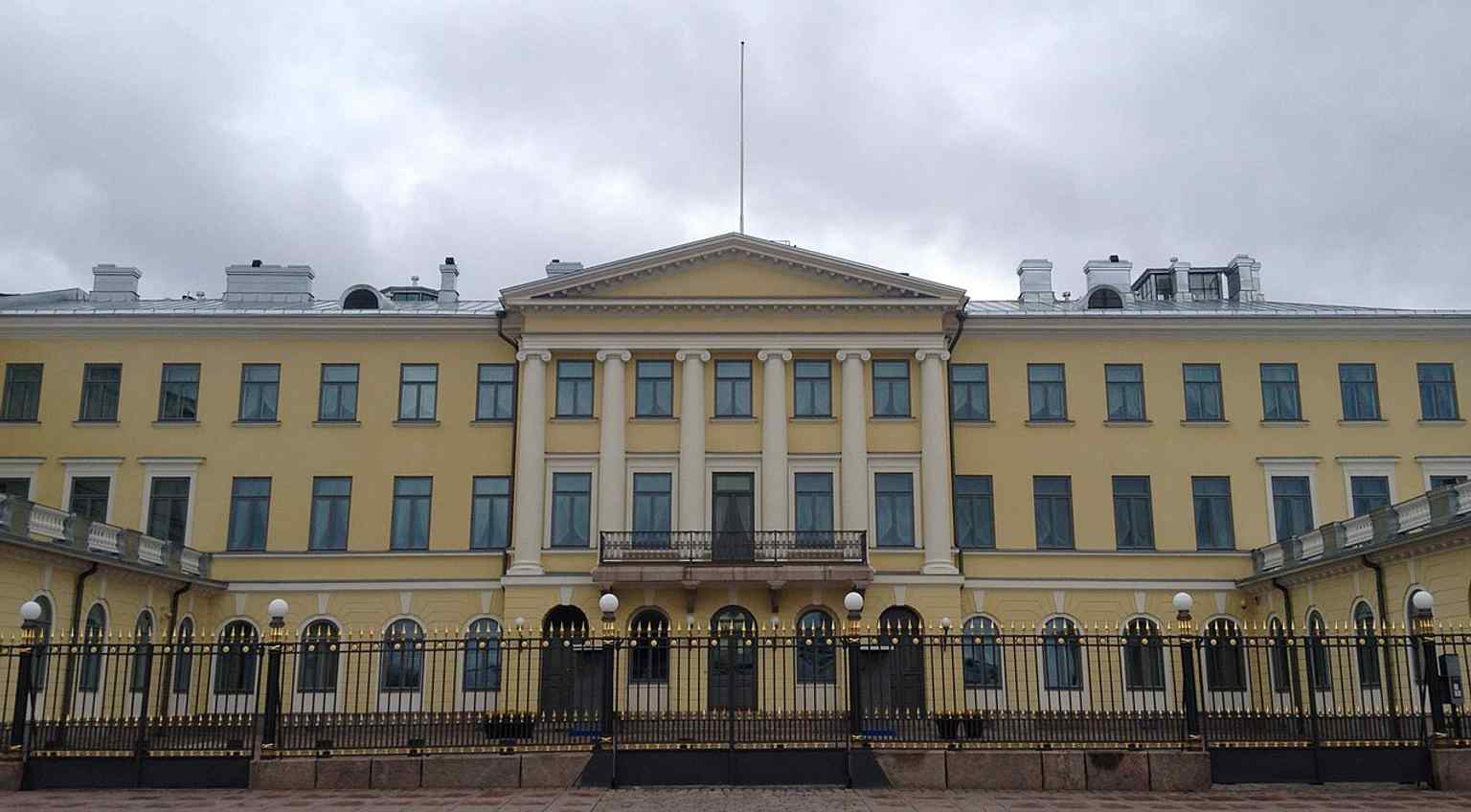
The palace seen from the waterfront, emphasizing its prominent position beside Helsinki’s Market Square.Photo: Lauren Stevens, Wikimedia Commons, CC BY-SA 4.0. Cropped & resized. 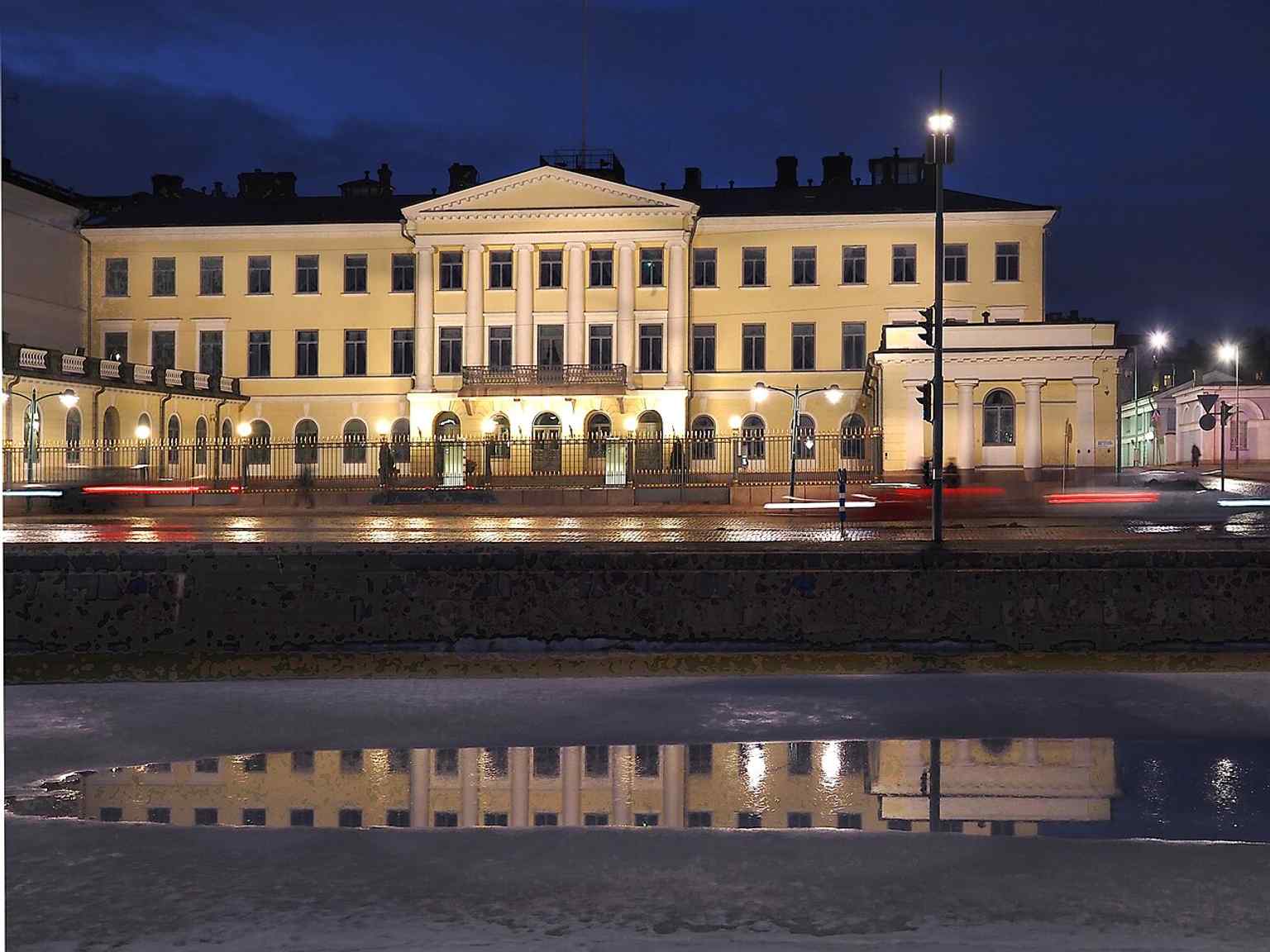
A winter view of the Presidential Palace, highlighting how the building’s stately white façade stands out in the cityscape.Photo: Marit Henriksson, Wikimedia Commons, CC BY-SA 4.0. Cropped & resized. 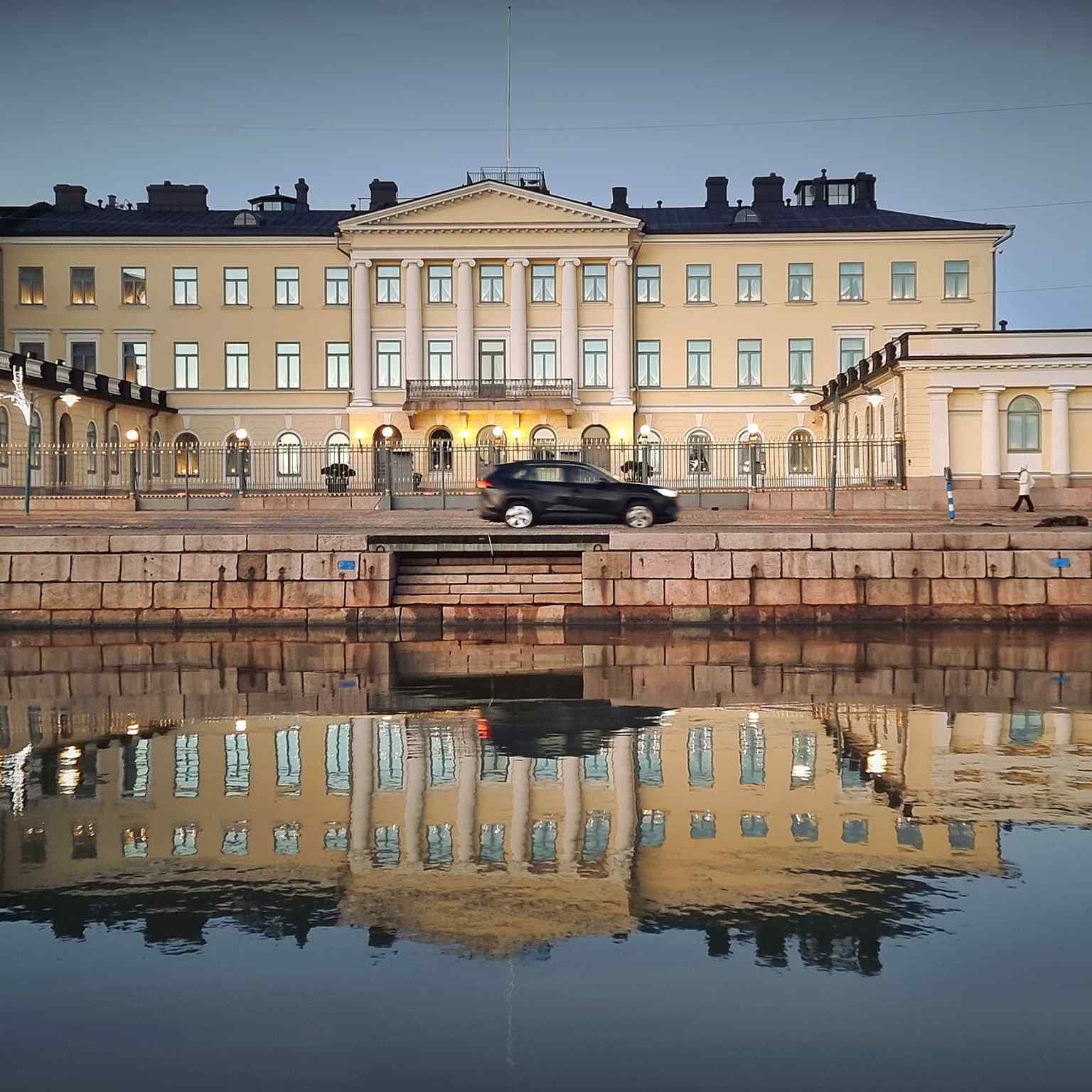
A reflective 2023 view that captures the palace’s façade from an atmospheric angle, modern Helsinki mirrored in the water.Photo: Marit Henriksson, Wikimedia Commons, CC BY-SA 4.0. Cropped & resized. 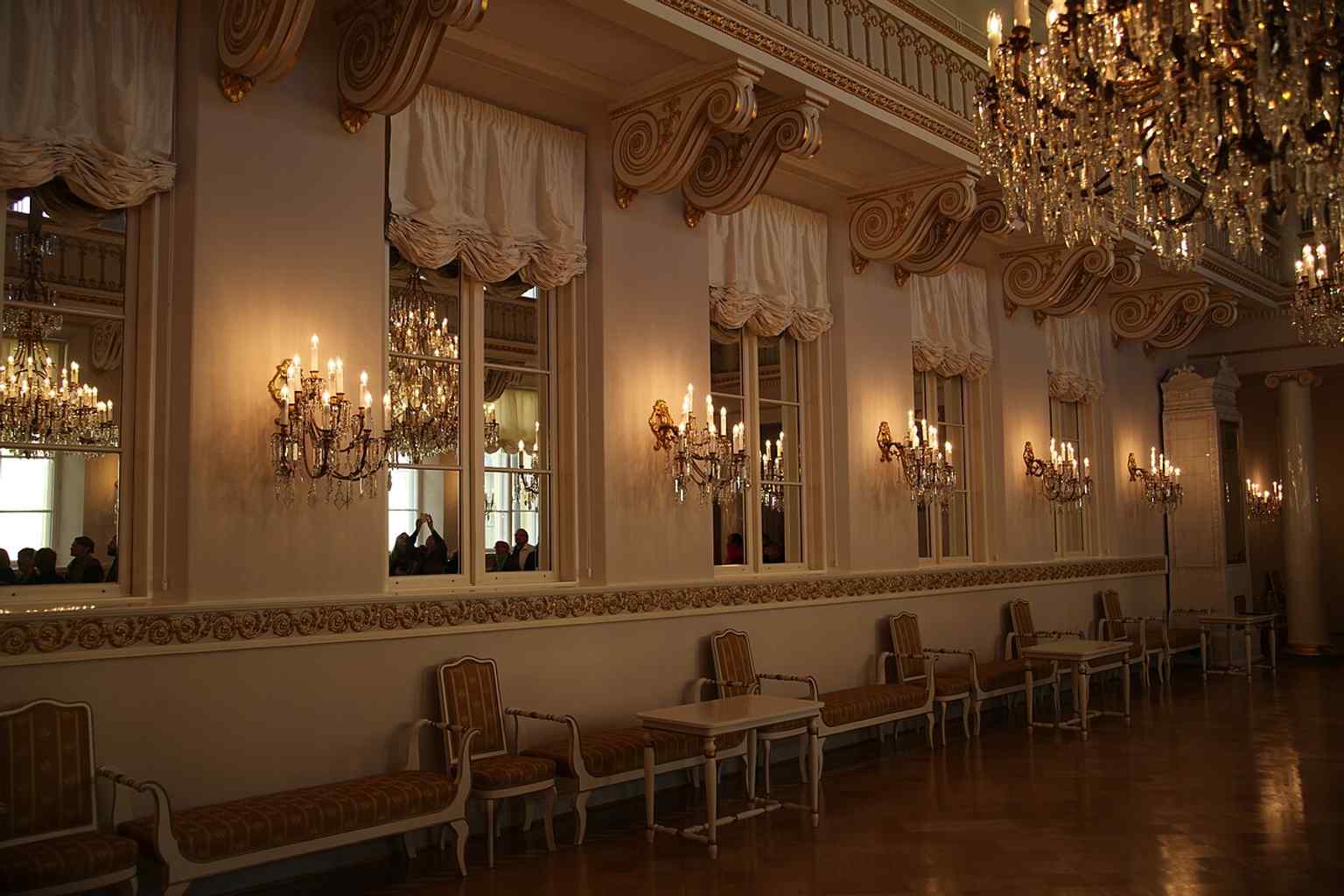
An interior hall in the palace, useful for showing the calm, formal atmosphere of the state rooms after the 2015 restoration.Photo: Pekka Järveläinen, Wikimedia Commons, CC BY-SA 4.0. Cropped & resized. 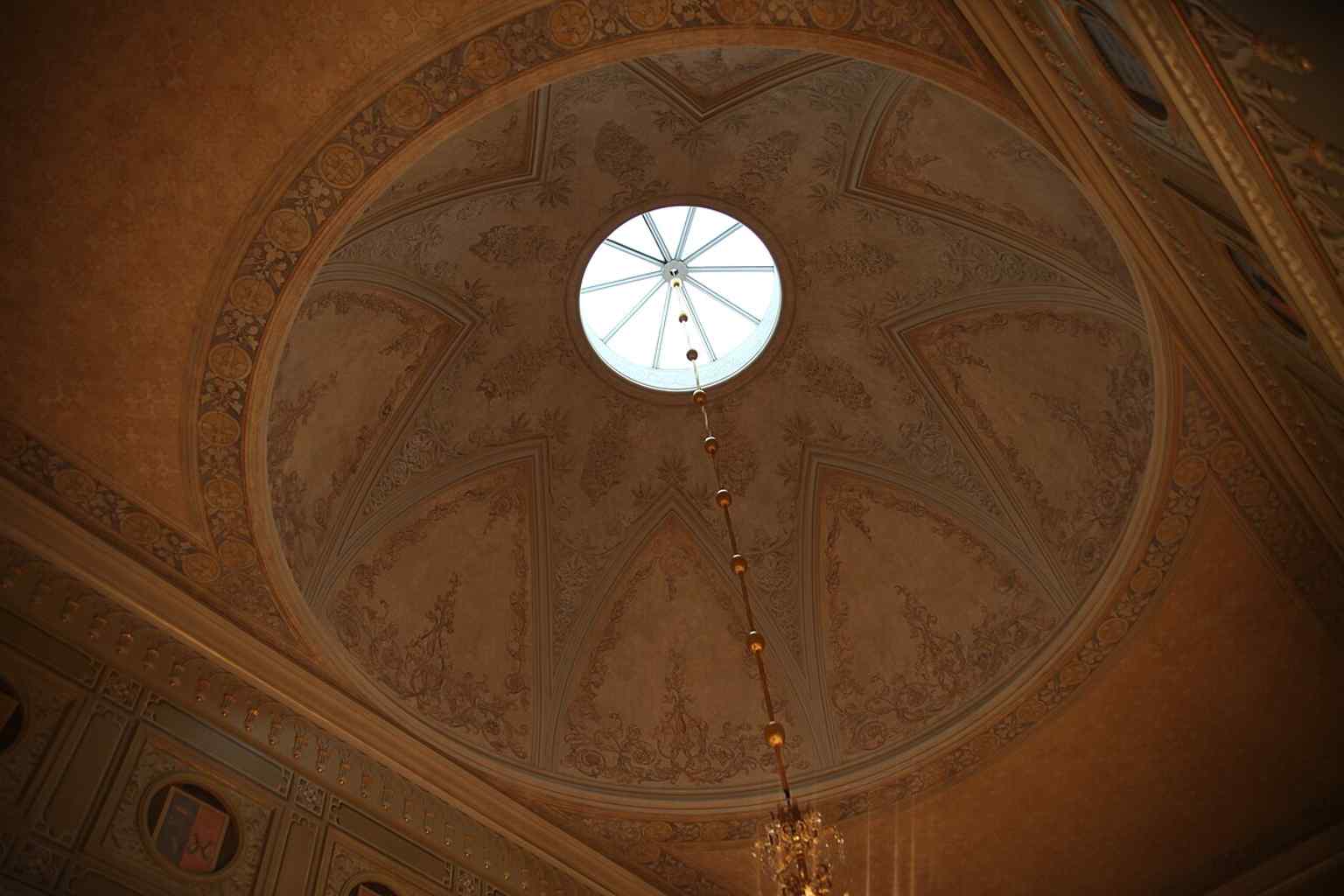
The central dome inside the palace — part of the impressive interior architecture created for a ceremonial state residence.Photo: Pekka Järveläinen, Wikimedia Commons, CC BY-SA 4.0. Cropped & resized. 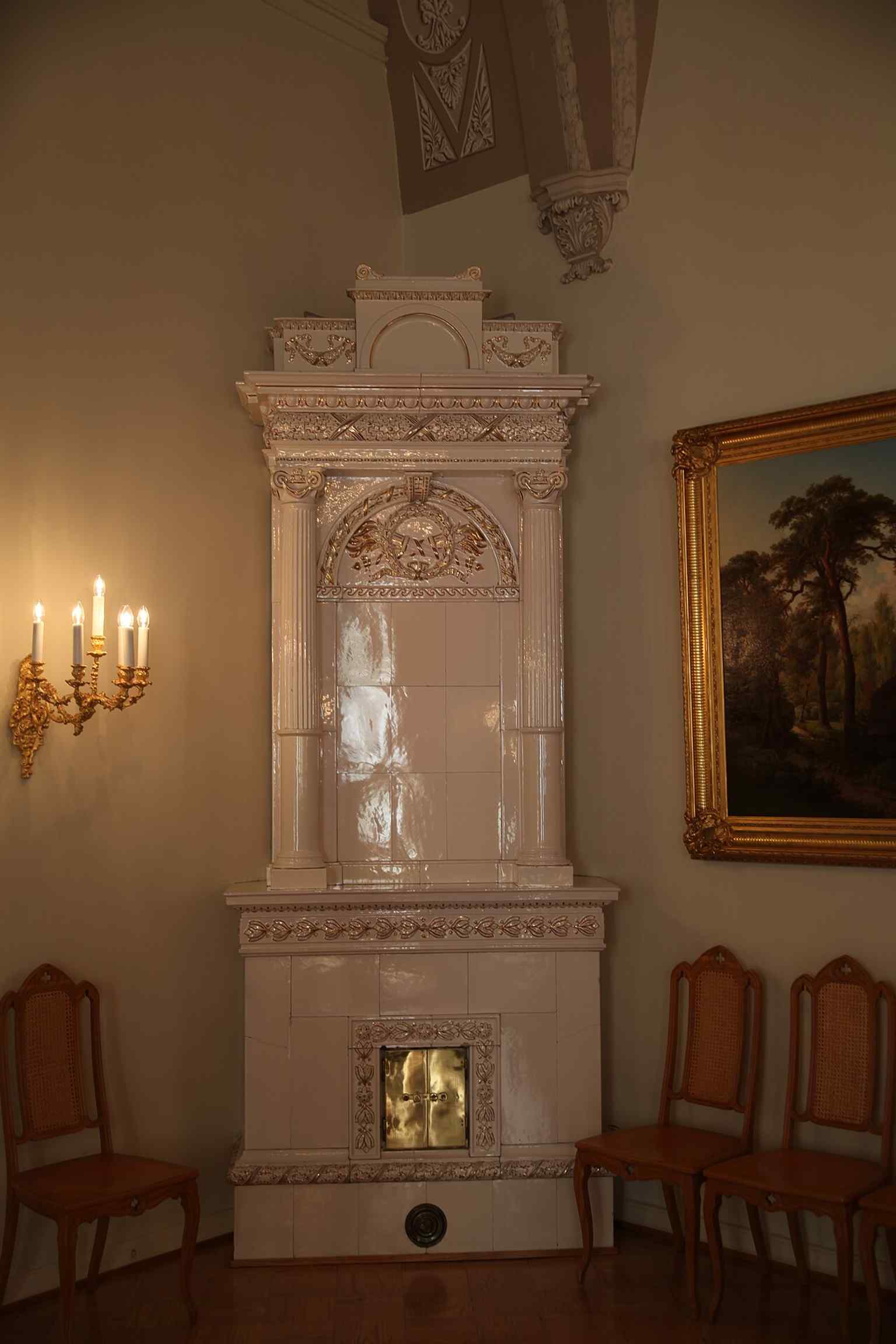
A room interior that helps illustrate how the palace combines historic grandeur with a working presidential environment.Photo: Pekka Järveläinen, Wikimedia Commons, CC BY-SA 4.0. Cropped & resized. 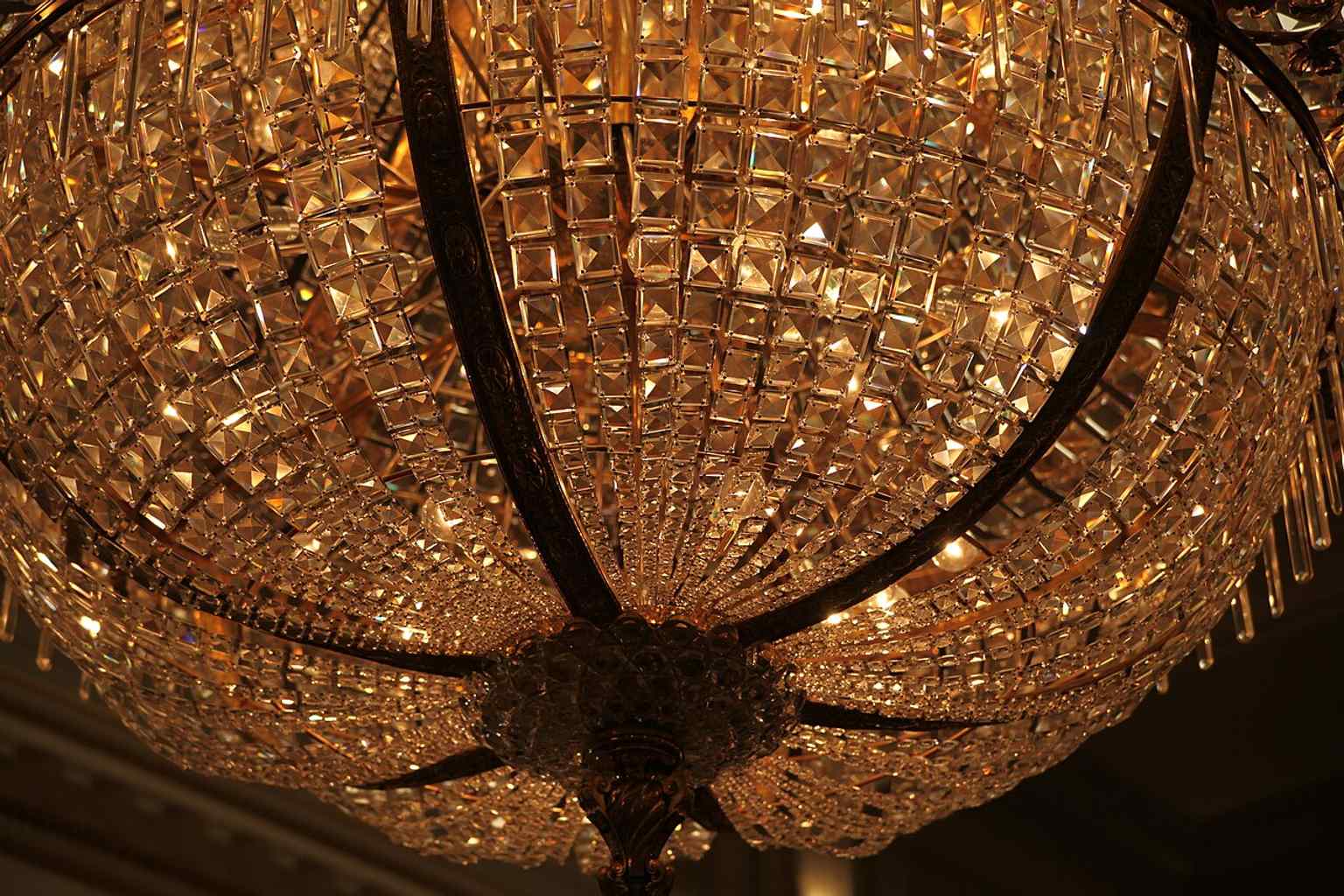
A chandelier detail, reflecting the palace’s richly appointed ceremonial interiors and restored historic lighting.Photo: Pekka Järveläinen, Wikimedia Commons, CC BY-SA 4.0. Cropped & resized. 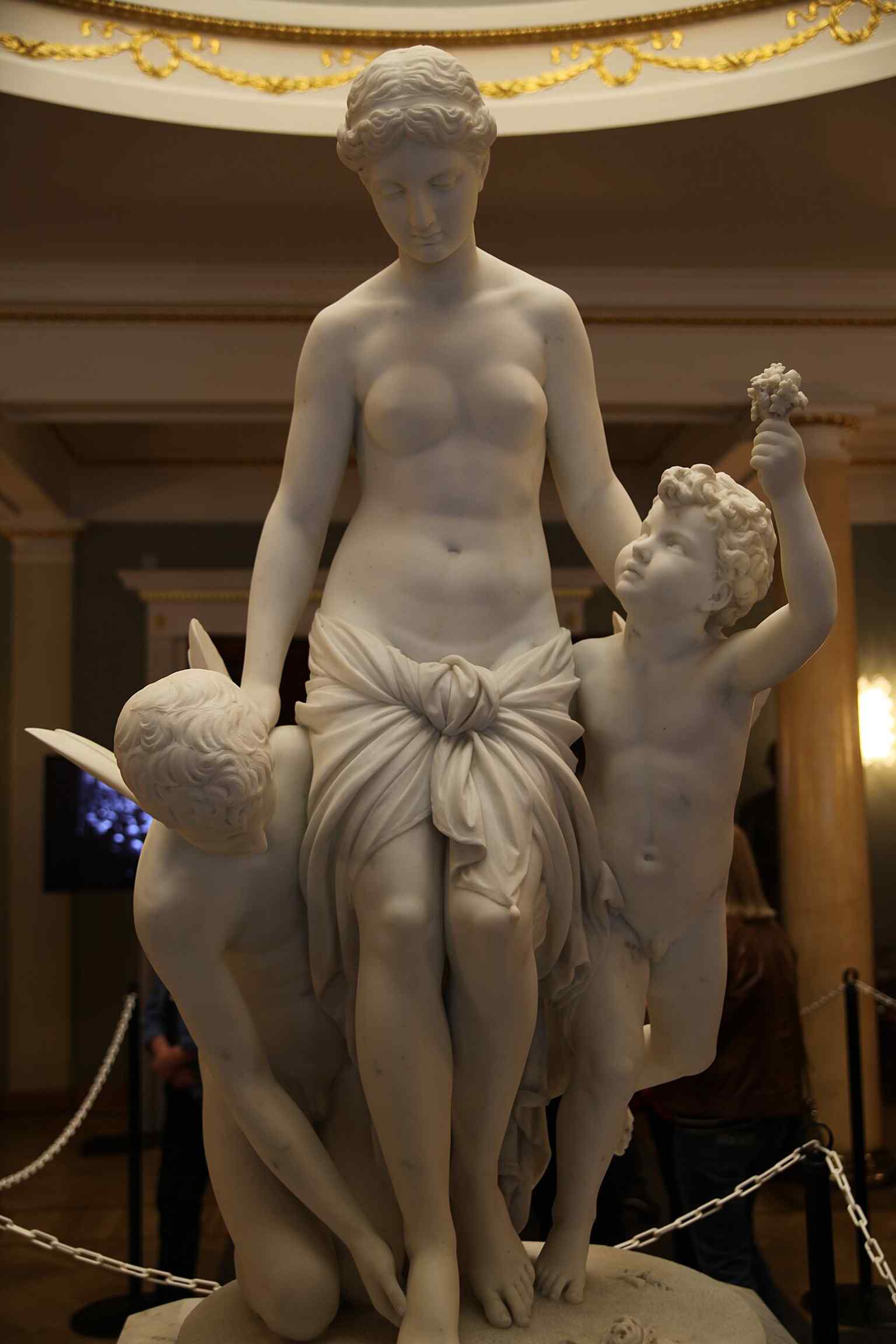
Walter Runeberg’s sculpture Psyche carried by Zephyrs — one of the artworks that give the palace its museum-like character.Photo: Pekka Järveläinen, Wikimedia Commons, CC BY-SA 4.0. Cropped & resized. 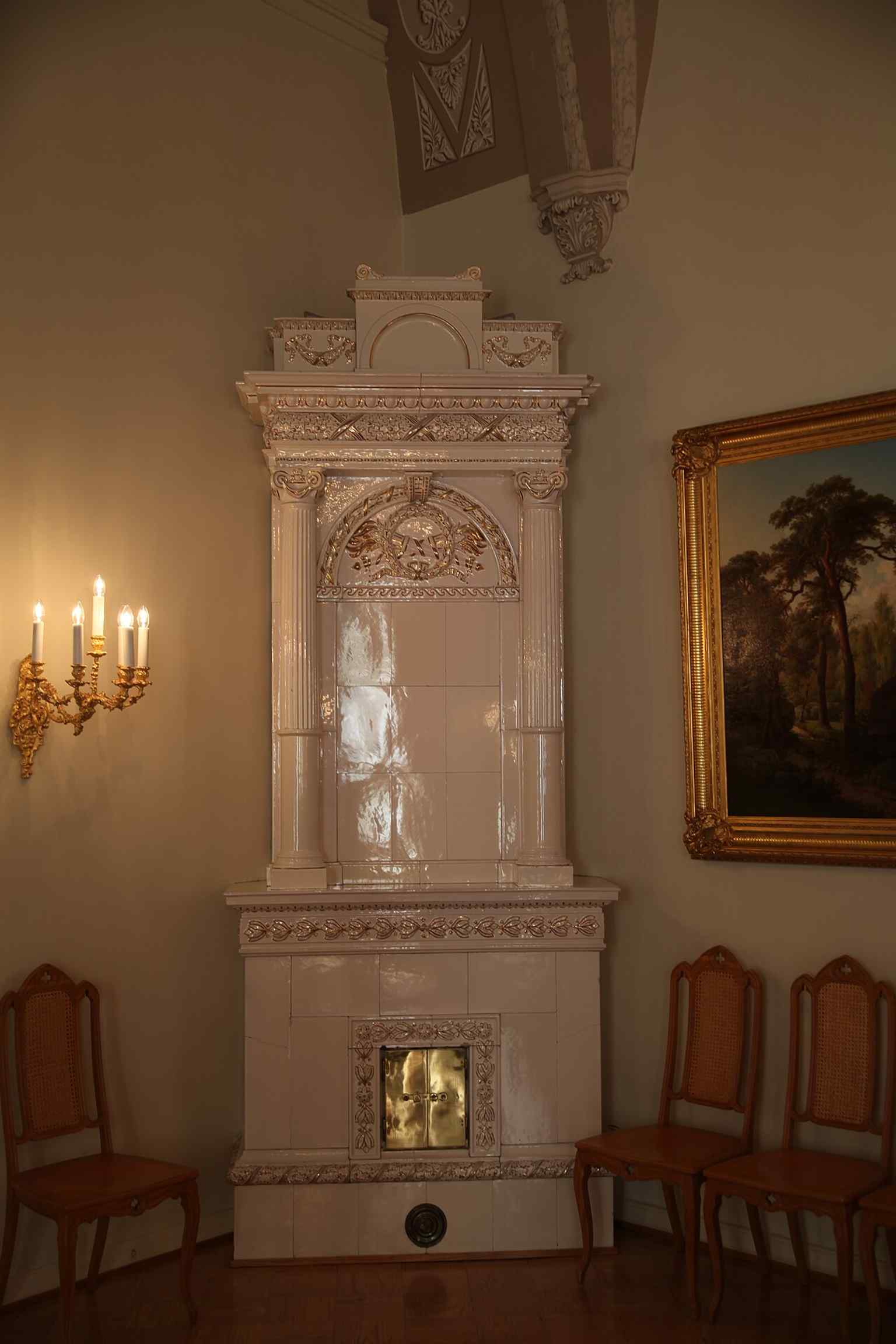
A restored stove, one of the palace details that hints at the building’s long life from imperial residence to presidential workplace.Photo: Pekka Järveläinen, Wikimedia Commons, CC BY-SA 4.0. Cropped & resized. On your right stands a long pale-yellow stone facade, laid out in strict symmetry, with Corinthian columns rising to a triangular pediment marked by a black-and-gold clock. This…Read moreShow less
Open dedicated page →On your right stands a long pale-yellow stone facade, laid out in strict symmetry, with Corinthian columns rising to a triangular pediment marked by a black-and-gold clock.
This is the Government Palace, though for most of its life people knew it as the Senate House. Carl Ludvig Engel began designing it in the eighteen tens, soon after Helsinki became the capital of the Grand Duchy of Finland and urgently needed rooms for central government. Work started in eighteen eighteen, the Senate moved into the square-facing west wing in eighteen twenty-two, and the rest of the block grew around it over the following decades. Engel gave this side of the square its discipline: temple-like columns, balanced wings, the calm face of a state teaching people how authority should look.
And yet... despite the word “palace,” this was never mainly a royal residence or a grand ceremonial hall. It was an office building, the working core of rule. The Finnish Senate operated here from eighteen twenty-two until independence. After that, the new government took over, and on the twenty-seventh of November, nineteen eighteen, the building took its current name. Today it still holds the Prime Minister’s Office, the Office of the Chancellor of Justice, and much of the Ministry of Finance.
If you can, let your eyes travel across that measured facade and imagine how much human tension such symmetry tries to contain.
Inside, Engel took special pride in the main staircase, crowned by a dome inspired by the Pantheon in Rome. If you want a glimpse of that ceiling, the image on your screen shows the space where official procedure suddenly turned deadly.
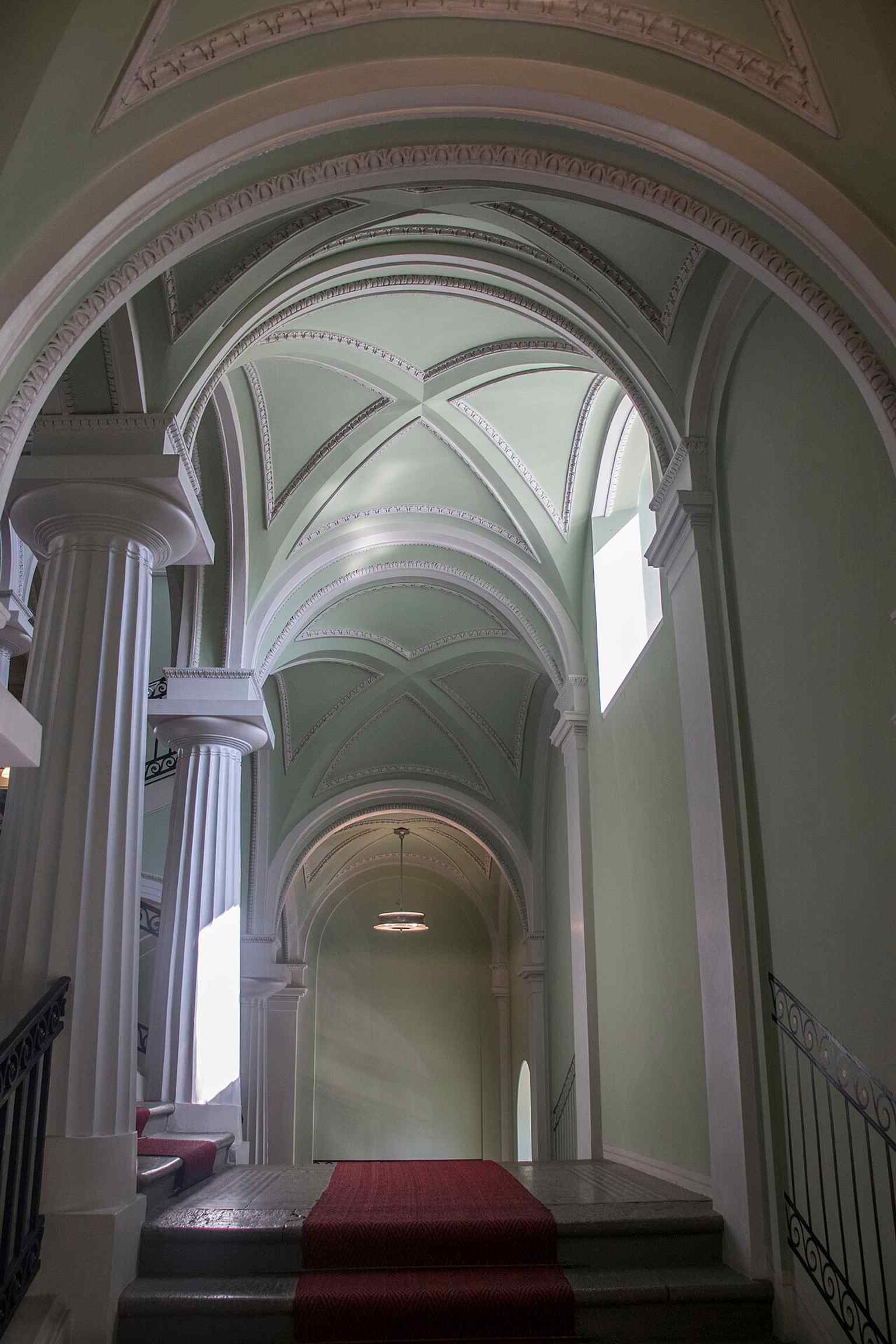
A close look at the grand staircase ceiling, one of the palace’s most famous surviving interiors and a highlight of Engel’s original design.Photo: WanderingTrad, Wikimedia Commons, CC BY-SA 4.0. Cropped & resized. The shooting of Governor-General Bobrikov shattered this house of order in nineteen oh four. Resistance climbed the stairs of official power and struck in the open. A twenty-nine-year-old civil servant, Eugen Schauman, waited on the second-floor landing and shot Bobrikov, the Russian governor-general who had become a symbol of tightening imperial control over Finland. Later, people fixed a memorial plaque at the site.
That is the shock at the center of this building. For decades, politics here had worn the clothes of petitions, decrees, committees, and the old estate-based order of negotiation. Then one man with a pistol broke that script on a staircase built for obedience. The architecture promised control; history answered with rupture.
And still, the rooms above continued to carry turning points. In the President’s Presentation Room on the second floor, P. E. Svinhufvud’s independence senate issued Finland’s declaration of independence on the fourth of December, nineteen seventeen. Later, the same building saw major decisions on Finland’s place in Europe and in the wider alliance system. The throne symbols of empire were removed; portraits of Finnish presidents took their place.
If you’d like, the before-and-after image in the app gives a quick sense of how this frontage changed from a spare nineteen-sixties civic setting to the fuller city frame around it now.
Even the clock above you tells a story of routine: Jaakko Könni, from the famous clockmaking family of Ilmajoki, installed it in eighteen twenty-two, and a clockmaker has wound it by hand every Wednesday since nineteen twenty.
Stand here one more moment and feel how thin the line can be between orderly administration and crisis. When you’re ready, we’ll walk about three minutes to the House of Nobility.
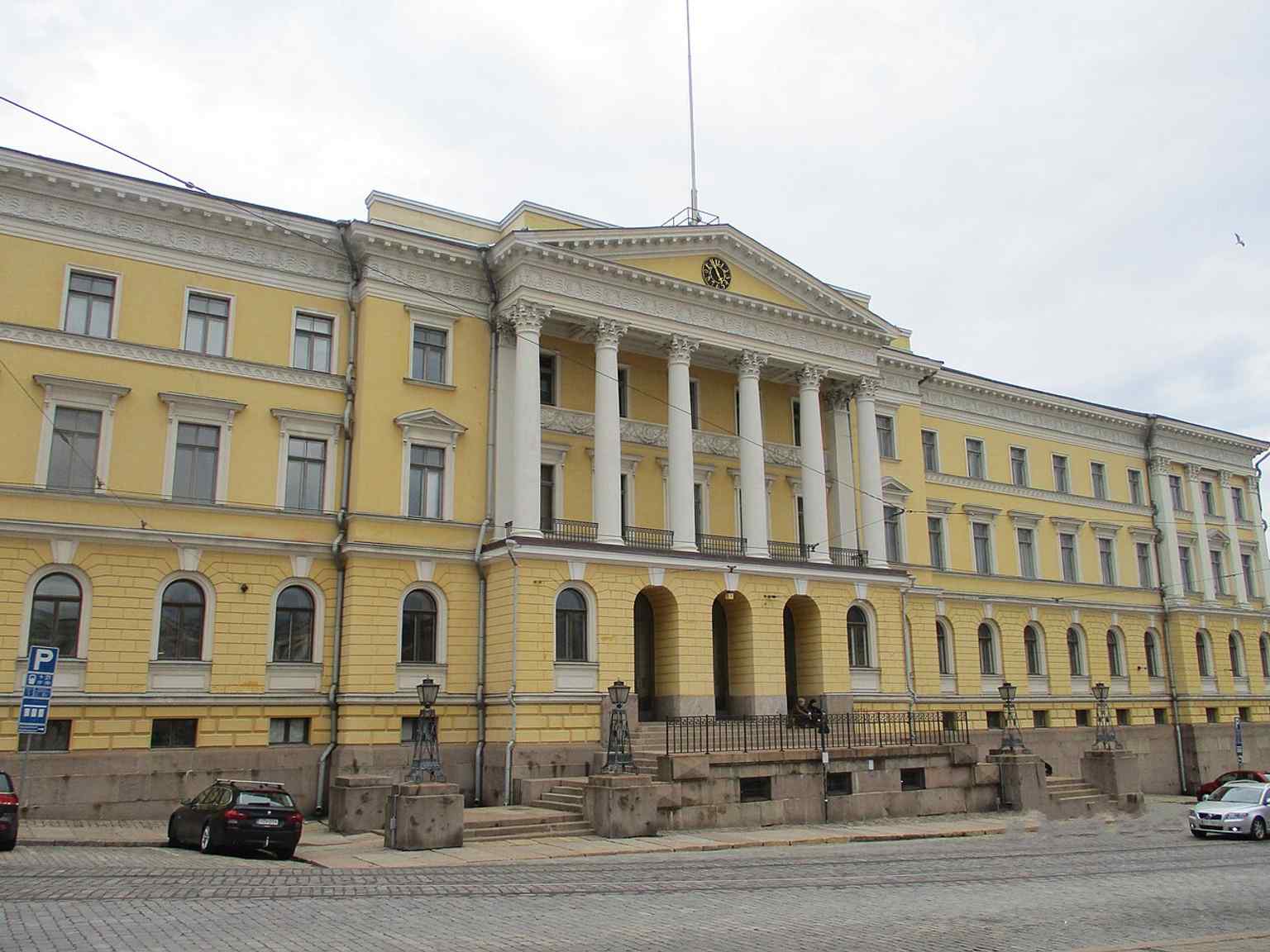
The Government Palace seen from the Senate Square, the Neo-Classical façade Engel began designing in 1818 for Finland’s central administration.Photo: Mikkoau, Wikimedia Commons, CC BY-SA 4.0. Cropped & resized. On your right rises a red-brick, castle-like hall with steep gables and pointed windows, marked by heraldic ornament over the entrance. This is the House of Nobility, and few…Read moreShow less
Open dedicated page →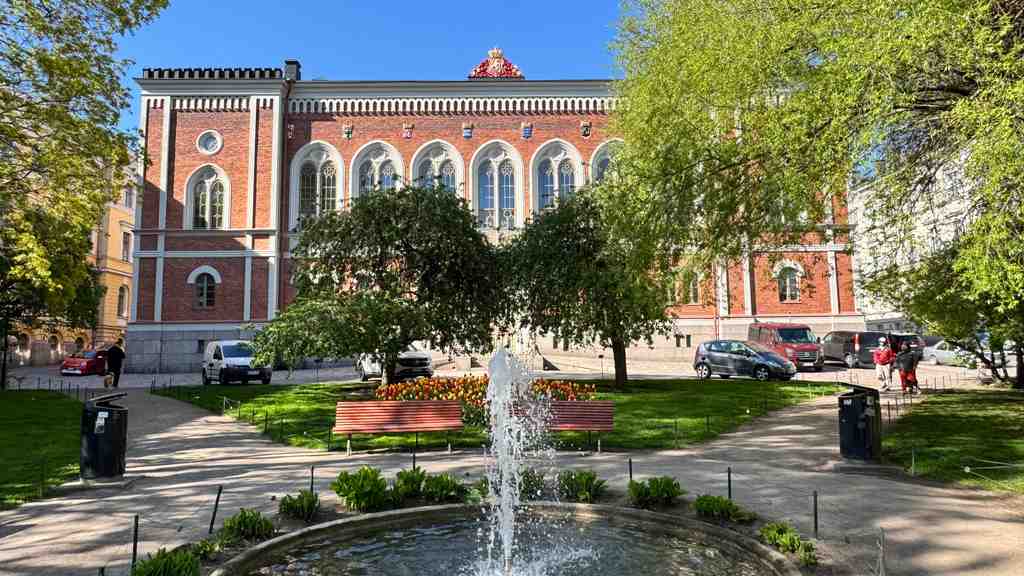
House of NobilityPhoto: Vadelmavene, Wikimedia Commons, CC0. Cropped & resized. On your right rises a red-brick, castle-like hall with steep gables and pointed windows, marked by heraldic ornament over the entrance.
This is the House of Nobility, and few buildings in Helsinki tell you so plainly who once expected to be remembered forever. Noble identity lived through names, coats of arms, family lines, and meeting rituals... and this house gave all of that a body in brick.
Before Finland changed hands in the war of eighteen oh eight to eighteen oh nine, nobles from Finland gathered in Stockholm, at Sweden’s House of Nobility. Then the map shifted, the Russian Empire took Finland, and the new Grand Duchy began inventing its own institutions. In eighteen eighteen, Finland’s House of Nobility took shape as an institution. But an institution needs a stage. After Helsinki became the capital in eighteen twelve, the nobility secured this site near the imperial center, and here they built a home for rank itself.
The road to this building was long, proud, and a little anxious. Carl Ludvig Engel drew early plans, but he died before the project could move forward. Harald von Bosse proposed something too grand and too expensive. Ernst Lohrmann and Anders Fredrik Granstedt tried other versions. Then Georg Theodor von Chiewitz arrived with the design you see now, and in eighteen sixty-two he gave the nobility something enduring: Finland’s most important neo-Gothic building, made of exposed brick, not covered in plaster, with those elegant Venetian-style window groupings.
If you glance at the image on your screen, you can see how the little park softens the façade’s authority. That green margin was planned early, and it matters. This house never meant to feel merely useful; it meant to feel set apart.
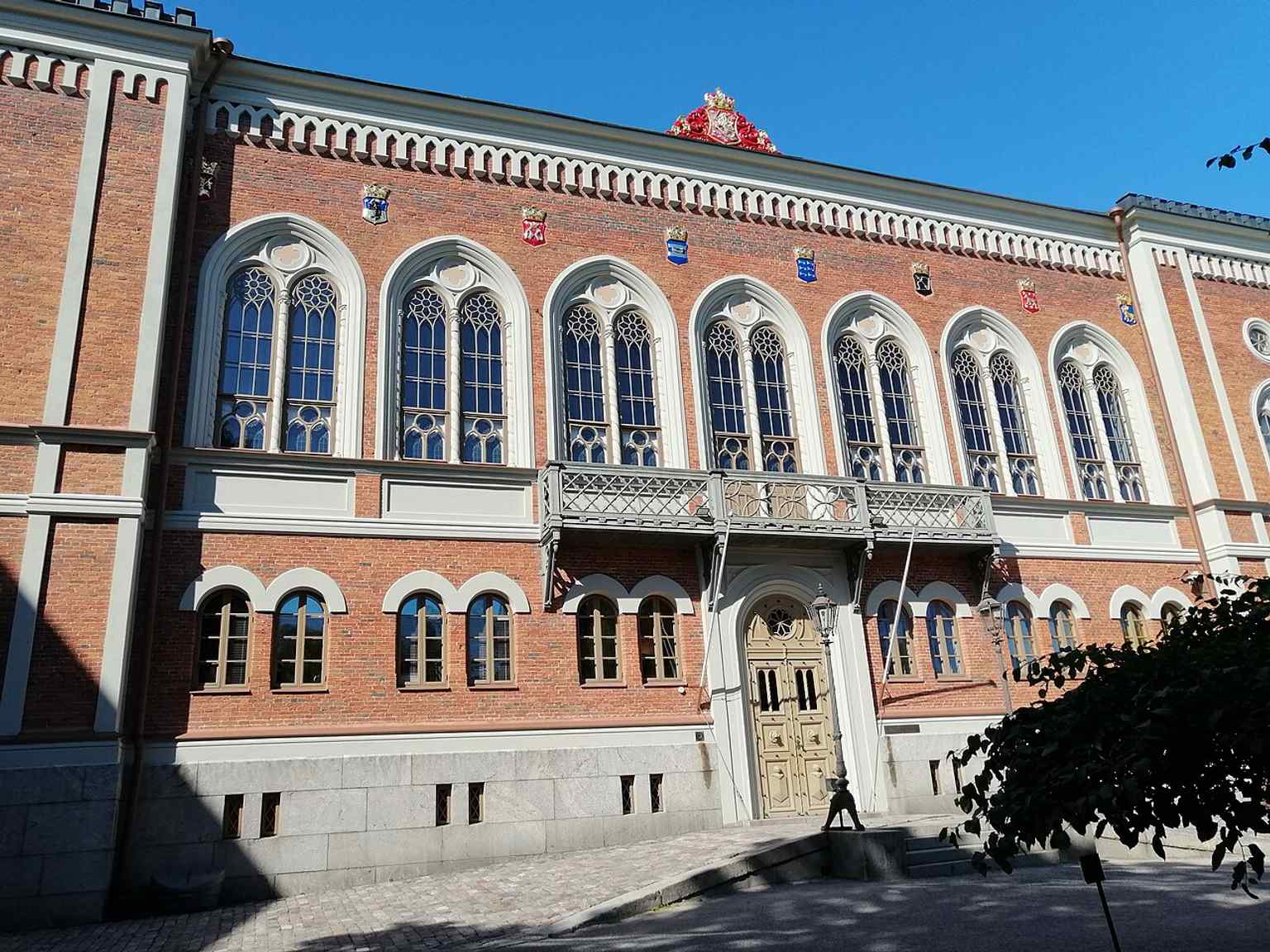
The House of Nobility seen from Ritarihuoneenpuistikko, showing the neo-Gothic brick façade and the small park that gives the building its green margin in the city.Photo: JoAlanen, Wikimedia Commons, CC0. Cropped & resized. Not every noble wanted it. Baron Axel Gustaf Mellin argued that the money should help poor noble widows and daughters instead. Nils Henrik Pinello called the project a tomb chamber fit only for bones. They were arguing over something larger than a building: whether aristocratic memory should feed the living or preserve itself in ceremony.
And preserve itself it did. From eighteen sixty-three to nineteen oh six, this house served as the meeting place of the noble estate in Finland’s old estate-based parliament. In the early sessions, when space ran short, the other estates gathered here too. So this became, for a time, the clearest stage set for that whole old order.
Look again at the front in the app image if you like. It still stands not as a dead relic but as a working institution, with archives, a library, and halls used for concerts and gatherings. Some groups build very strong memory machines... and this is one of them.
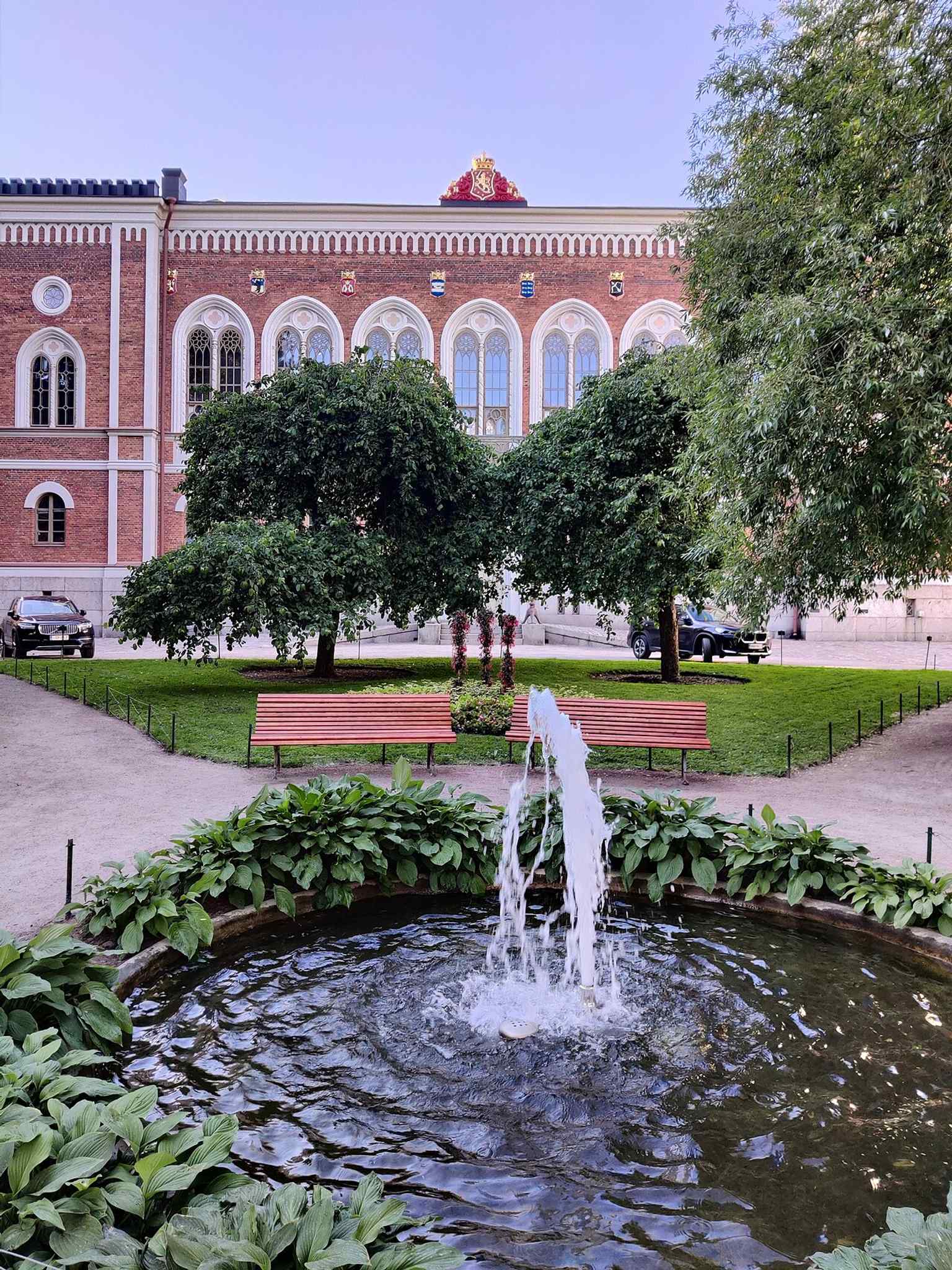
A full-height street view of Ritarihuone, the key neo-Gothic landmark designed by Georg Theodor von Chiewitz and completed in 1862.Photo: Nipsnakkeli, Wikimedia Commons, CC BY-SA 4.0. Cropped & resized. But the next struggle in this neighborhood turns away from inherited rank and toward language, scholarship, and the making of national culture. The Finnish Academy of Science and Letters is about a minute from here.
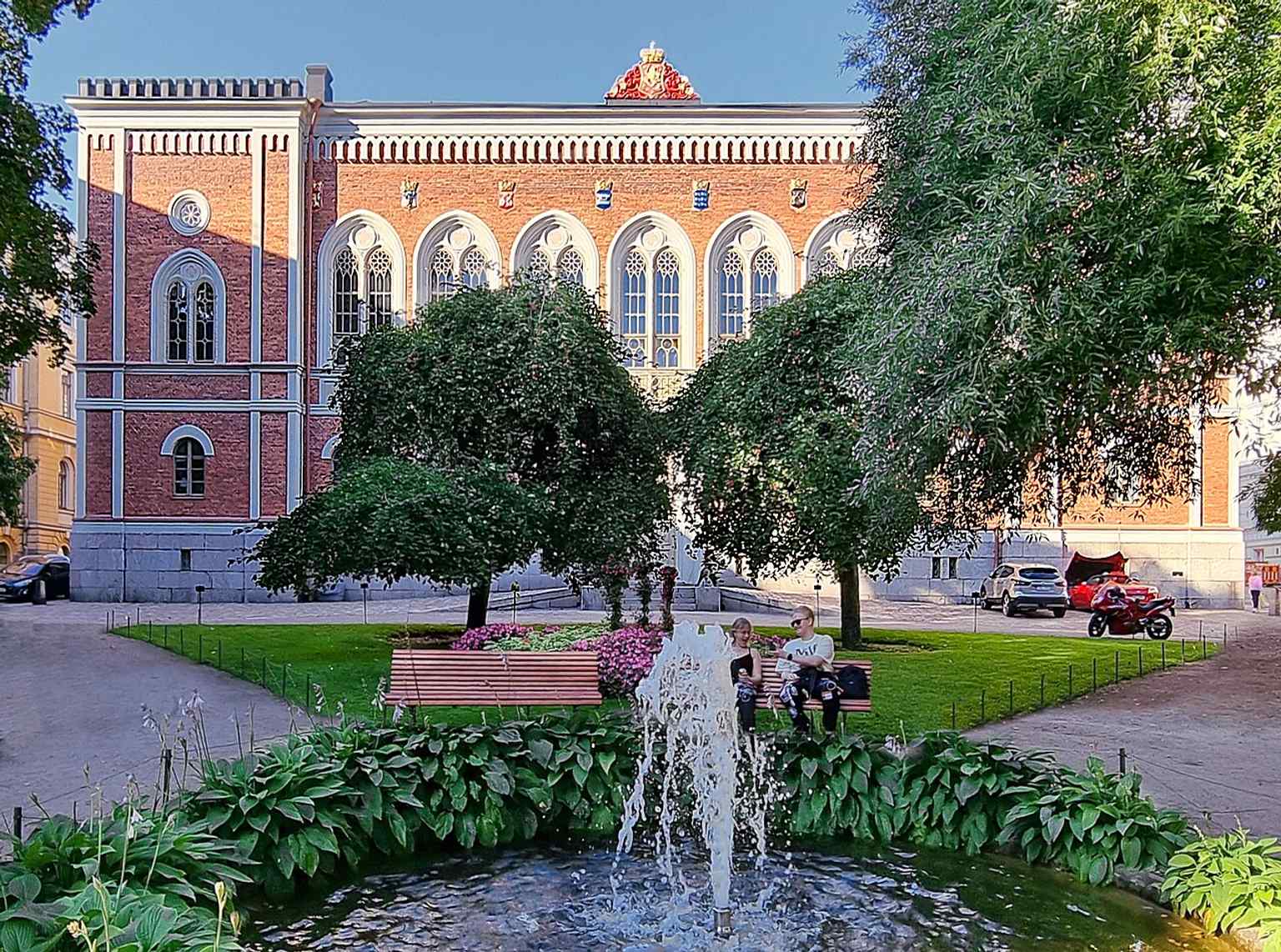
A closer look at the building’s front with the fountain in the foreground — a reminder that the southern side of the site was landscaped as a park early on.Photo: Marit Henriksson, Wikimedia Commons, CC BY-SA 4.0. Cropped & resized. 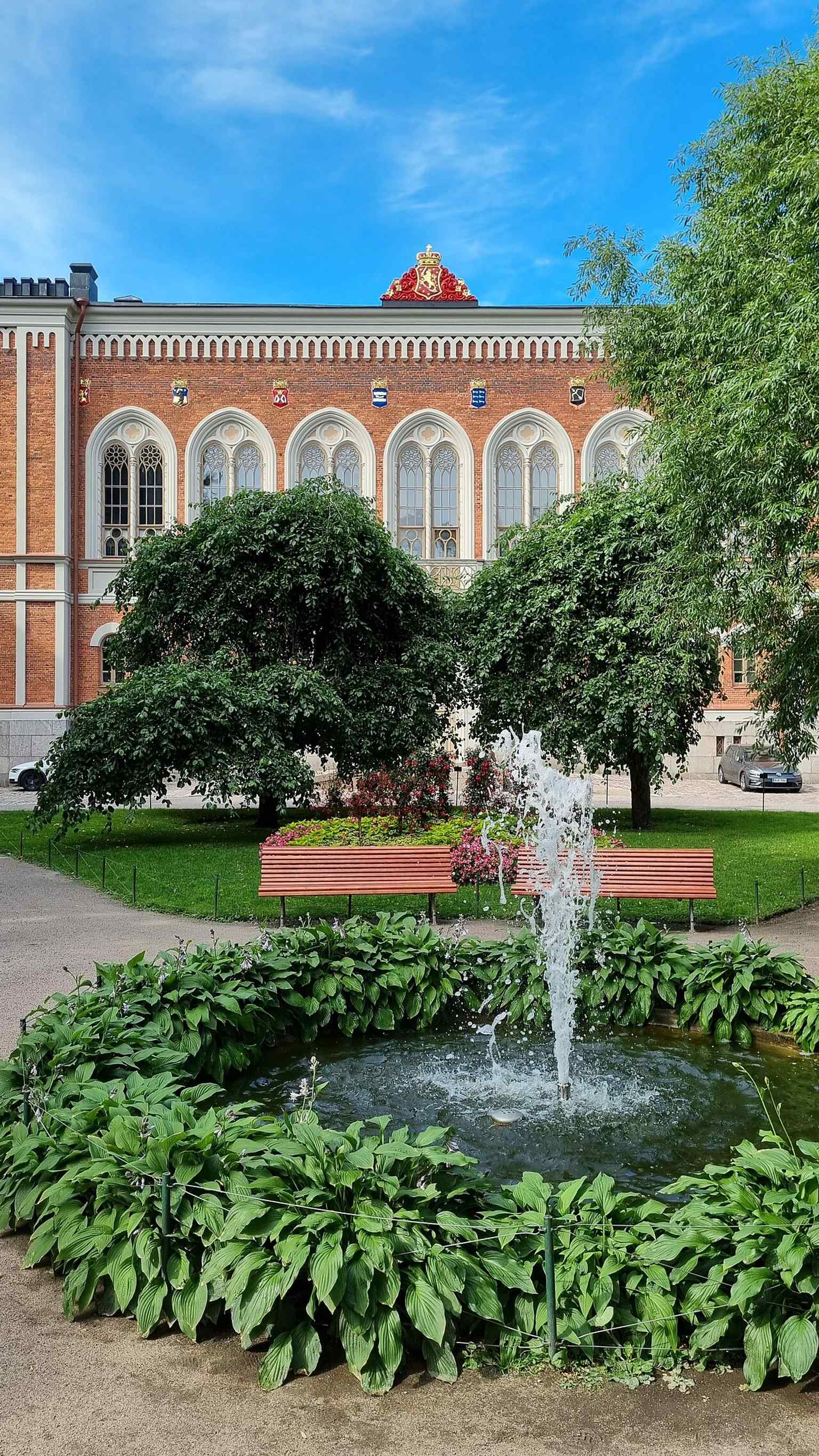
The House of Nobility in Helsinki, a good general view of the historic seat of the Finnish nobility’s assembly and later state diets.Photo: Cope Baronet, Wikimedia Commons, CC BY-SA 4.0. Cropped & resized. 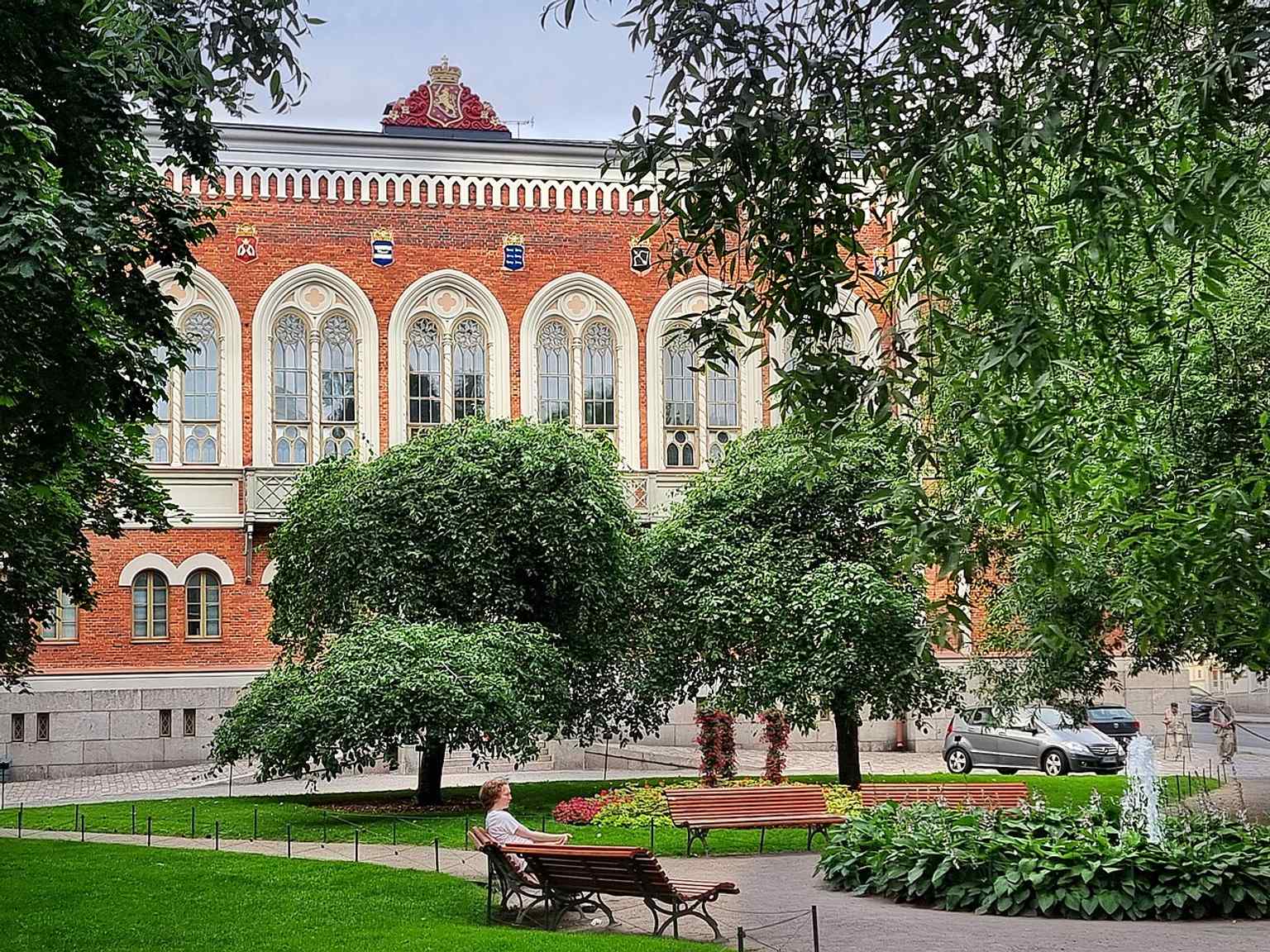
A recent view of the House of Nobility, showing how the 19th-century building still stands as an active institution rather than a museum piece.Photo: Marit Henriksson, Wikimedia Commons, CC BY-SA 4.0. Cropped & resized. On your left, look for a pale plaster townhouse with a long rectangular facade, tall evenly spaced windows, and a modest classical entrance at Mariankatu five. This house keeps…Read moreShow less
Open dedicated page →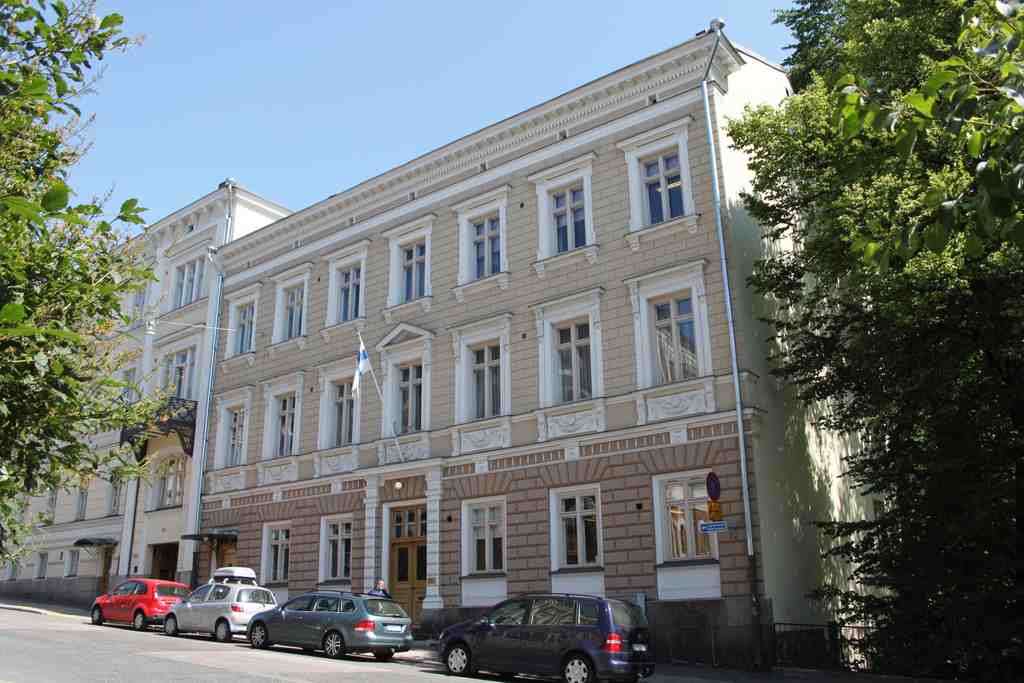
Finnish Academy of Science and LettersPhoto: Arkkipuudeli, Wikimedia Commons, CC BY-SA 3.0. Cropped & resized. On your left, look for a pale plaster townhouse with a long rectangular facade, tall evenly spaced windows, and a modest classical entrance at Mariankatu five.
This house keeps its arguments behind polite lines. That feels right for the Finnish Academy of Science and Letters, because this place tells a story about power that does not wear a uniform or sit on a throne. Sometimes power chooses the language of a lecture, the wording of a journal, the terms children learn to trust.
The academy began in nineteen oh eight, in the tense years of Russification, when the Russian Empire pushed harder against Finnish autonomy and people here fought over what Finland even was. In science and scholarship, prestige still lived mostly in Swedish, the language of much of the educated elite. For many Finnish speakers, that meant exclusion from the highest rooms of learning. So a determined group, led by the chemist Gustaf Komppa and the folklorist Kaarle Krohn, created a new academy to prove something deeply political: Finnish could carry serious science. It did not belong only to farmyards and folk songs. It could name the stars, classify plants, argue philosophy, and shape a nation.
That struggle belongs beside the ministries and palaces we have seen, and beside the violence of that same era, when even Governor-General Bobrikov became a target. Here, the battle looked quieter... but it reached just as deep.
And here is the part locals treasure: this was not originally a public seat of knowledge at all. Henrik Borgström, a wealthy merchant, opened this house in eighteen forty-one as a cultural salon, meaning a private home where influential people gathered to talk, debate, and quietly decide what counted. In these rooms, figures like J. V. Snellman and the composer Fredrik Pacius once moved through polite conversation and national ambition. If you glance at the image on your screen, you can see that restrained merchant elegance still clinging to the facade. The academy only acquired the property in stages and fully purchased it in twenty eighteen, almost as if the house had slowly come home to its old habit of shaping minds.
Gustaf Komppa gives this place its most vivid human pulse. He served as secretary general from nineteen oh eight to nineteen forty-four, almost the whole first age of the institution. He was no dusty committee man. In nineteen oh three, he stunned chemists across the world by achieving the first total synthesis of camphor, a fragrant compound people had long relied on from natural sources in Asia. He also helped found Orion, the pharmaceutical company, and planted the Tammisto Arboretum because he loved trees as much as molecules. That combination feels very Finnish to me: laboratory rigor, practical industry, and a private tenderness for the living world.
The academy still carries weight. It holds hundreds of seats across science and the humanities, invites foreign members, and honors research with prizes. Much of its financial strength rests on Vilho Väisälä, the meteorologist who found a fallen Russian radiosonde in a field, decided he could make a better one, and built the company Vaisala. His gift of company shares later grew into a fund that supports research on a grand scale.
So when you stand here, remember: rule is not only about who governs. It is also about who gets to name, classify, publish, and teach. The next stop, the old customs and packing house, is right beside us, and this building is generally open on weekdays from eight in the morning until four in the afternoon.
On your left, look for the low pale stone building with a simple gabled roof, rows of rectangular windows, and a footprint that sits slightly crooked against the street. This old…Read moreShow less
Open dedicated page →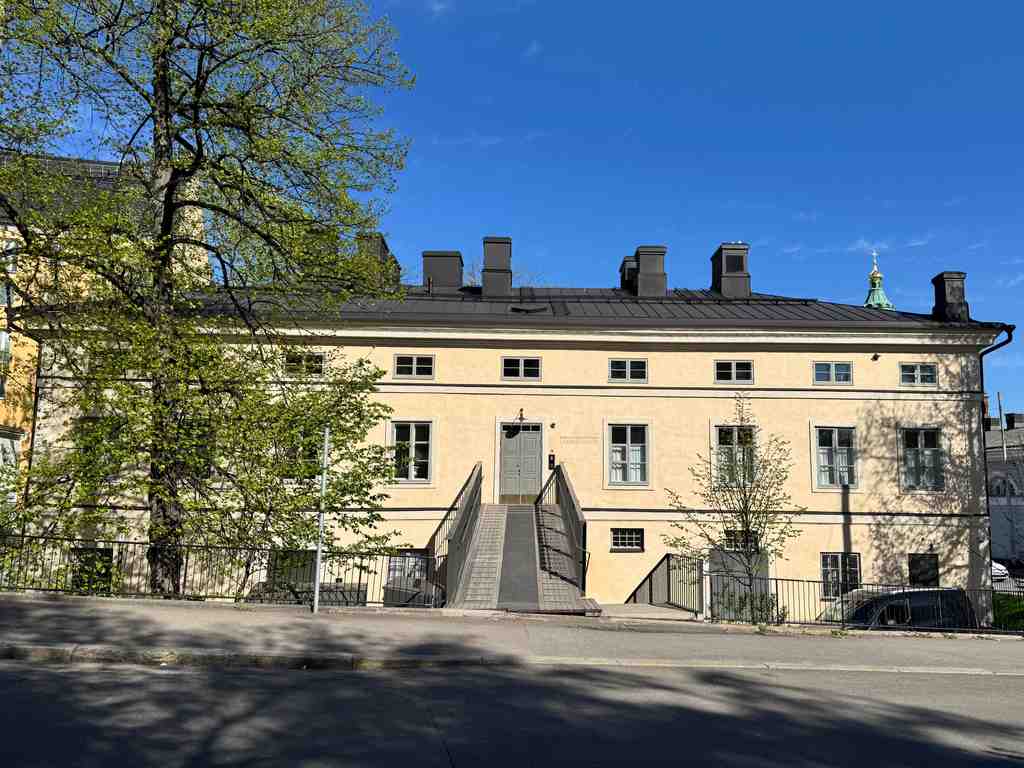
Old customs and packing roomPhoto: Vadelmavene, Wikimedia Commons, CC0. Cropped & resized. On your left, look for the low pale stone building with a simple gabled roof, rows of rectangular windows, and a footprint that sits slightly crooked against the street.
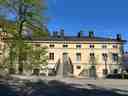
This old customs and packing house was Helsinki’s gatekeeper. Here, the city decided what could come in from the sea, what it was worth, and how tightly it should be controlled.
That may sound dry... but imagine the real traffic of it: barrels of salt, sacks of coffee, spices, clay pipes, glass, and everyday goods from far beyond the harbor. A customs officer judged the cargo’s value. Then the goods went into the packing room, really a warehouse under the same roof, for a second inspection before anyone could claim them. Long before the nearby palaces and ministries spoke for the city, this building handled the flow that fed them.
Its story feels especially human when you meet Samuel Berner, the German-born master mason who took on the job. Helsinki had only one mason of his rank, and the city gave him a nightmare of a site. In the seventeen fifties, this edge of town still met the water. Builders had to lay huge log rafts under the foundations to spread the weight over soft shoreline clay. Berner fought that ground for years and died in seventeen sixty-one, four years before the building finally opened in seventeen sixty-five. His successor, Johan Christopher Hillert, finished the work... but Berner’s struggle never disappeared. You can still sense it in the building’s odd angle. It does not obey the later straight street grid, because it follows the old shoreline, and it still leans slightly from those sinking foundations.
That crookedness is part scar, part memory.
This is one of the very few surviving buildings in central Helsinki from the Swedish era, and for a time it held more than trade. From seventeen sixty-five to eighteen oh four, the city council met here because the old town hall had become unusable. In one sturdy stone shell, commerce and government almost shared a desk.
Fire changed it in eighteen oh eight. Flames swallowed its high mansard roof - that steep double roofline you see on many eighteenth-century buildings - and after the blaze, the house got the lower, simpler roof it wears now.
Then came its wonderfully ordinary afterlives. Customs moved out in the eighteen eighties. The building turned into an auction chamber, known as the poor man’s department store, where people bid on goods from bankrupt estates and homes after a death. One family’s loss became another family’s bargain. Later it served as a police station, and in the late twentieth century many locals knew it less as a historic treasure than as the place where angry drivers came to argue about parking fines. Cities do that... they wrap huge history inside very everyday inconvenience.
And even now the ground keeps talking. During later renovations, archaeologists found traces under the floors of a Russian fortification from the Great Wrath, the brutal wartime occupation earlier in the seventeen hundreds, along with Venetian glass, German stoneware, and pipe fragments. Beneath this customs house, the city kept its older checkpoints buried in silence.
Ahead, we leave customs and policing for another kind of authority, one devoted to knowledge. In about three minutes, we’ll arrive at the House of Science and Letters.
On your right is a pale stone-and-plaster building with a calm, symmetrical façade, tall rectangular windows, and angel reliefs flanking the entrance. This house tells a very…Read moreShow less
Open dedicated page →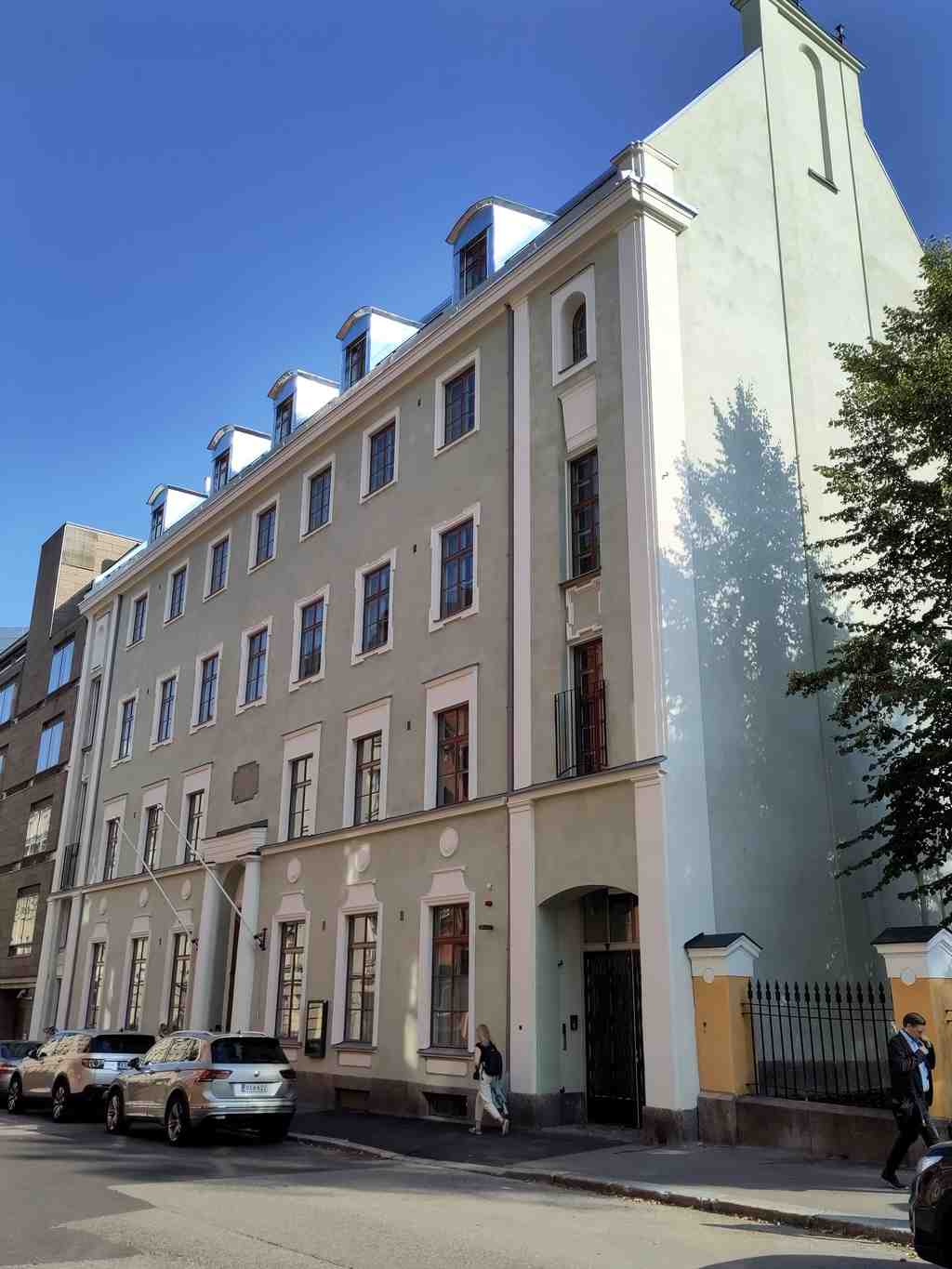
House of Science and LettersPhoto: Taivuo, Wikimedia Commons, CC BY-SA 4.0. Cropped & resized. On your right is a pale stone-and-plaster building with a calm, symmetrical façade, tall rectangular windows, and angel reliefs flanking the entrance.
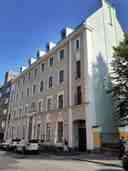
This house tells a very Helsinki story: knowledge often settles into spaces shaped by older owners, old damage, and second chances. Long before science societies met here, this plot held wooden homes, sheds, a sauna, even a stable. In eighteen forty-two, the merchant Daniel Nyström described a whole little world on this site. Then fire swept through Kruununhaka in eighteen fifty-eight and erased almost everything except one wooden house along the street.
What stands here now grew from a different kind of ambition. Lisa Hagman, an educator who believed girls deserved serious education, opened her private school here in the nineteen twenties. At first, she had to make do with the older buildings. She turned rooms into classrooms and squeezed a school into a patchwork of spaces. But she wanted something better, something modern and dignified, so she chose the young architect Elsa Arokallio. That choice matters. Arokallio had only qualified a few years earlier, and this became one of her most important private commissions.
The street wing rose quickly in nineteen twenty-five: foundation stone in April, roof celebration in June, opening in October. It carried the clean balance of nineteen twenties classicism, though Lisa Hagman added a twist. She arranged for the sculptor Emil Cedercreutz to create dozens of reliefs for the interiors, turning the school into a kind of moral picture book about work, home, faith, and country... without even asking Arokallio first. You can almost feel the architect’s mixed feelings. The angels by the entrance are one surviving sign of that choice.
The building kept changing roles, because cities do. The school failed financially in nineteen thirty-three. The state took over. Other schools used it. War damaged it in nineteen forty-four. Later, the University of Helsinki held lectures here. Then, in the nineteen nineties, scientific societies moved in after the House of the Estates returned mostly to government ceremony. That shift says a lot: one grand civic house became more exclusive, and this former school became a working home for research, publishing, and ethics.
And it nearly vanished. In the nineteen seventies, people fought demolition plans. If you want, have a quick look at the before-and-after image in the app; the protest banner from nineteen seventy-five makes the survival feel very personal.
Now the House of Science and Letters holds meetings, seminars, offices, and even a public science café. So this building has not stayed pure. It has stayed useful. That may be the deeper victory.
From here, our final walk takes about five minutes to Hotel Maria, where barracks, imperial memory, and polished luxury all end up sharing one address. If you plan to come back inside here later, it usually opens on weekdays from eight AM to five forty-five PM and stays closed on weekends.
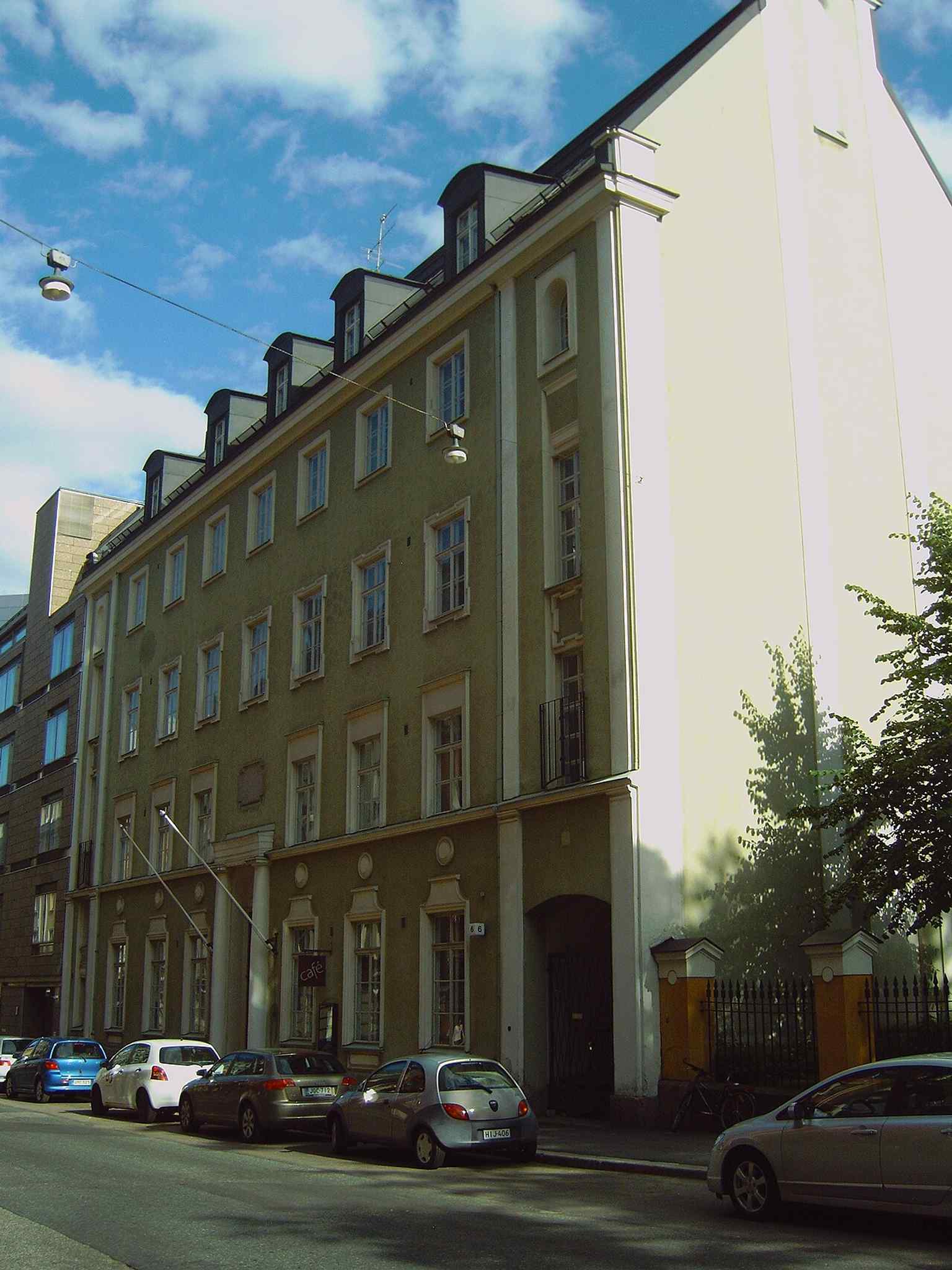
The main façade of the House of Science and Letters on Kirkkokatu, still showing the elegant 1920s classicist look designed by Elsa Arokallio.Photo: Hyperboreios, Wikimedia Commons, Public domain. Cropped & resized. 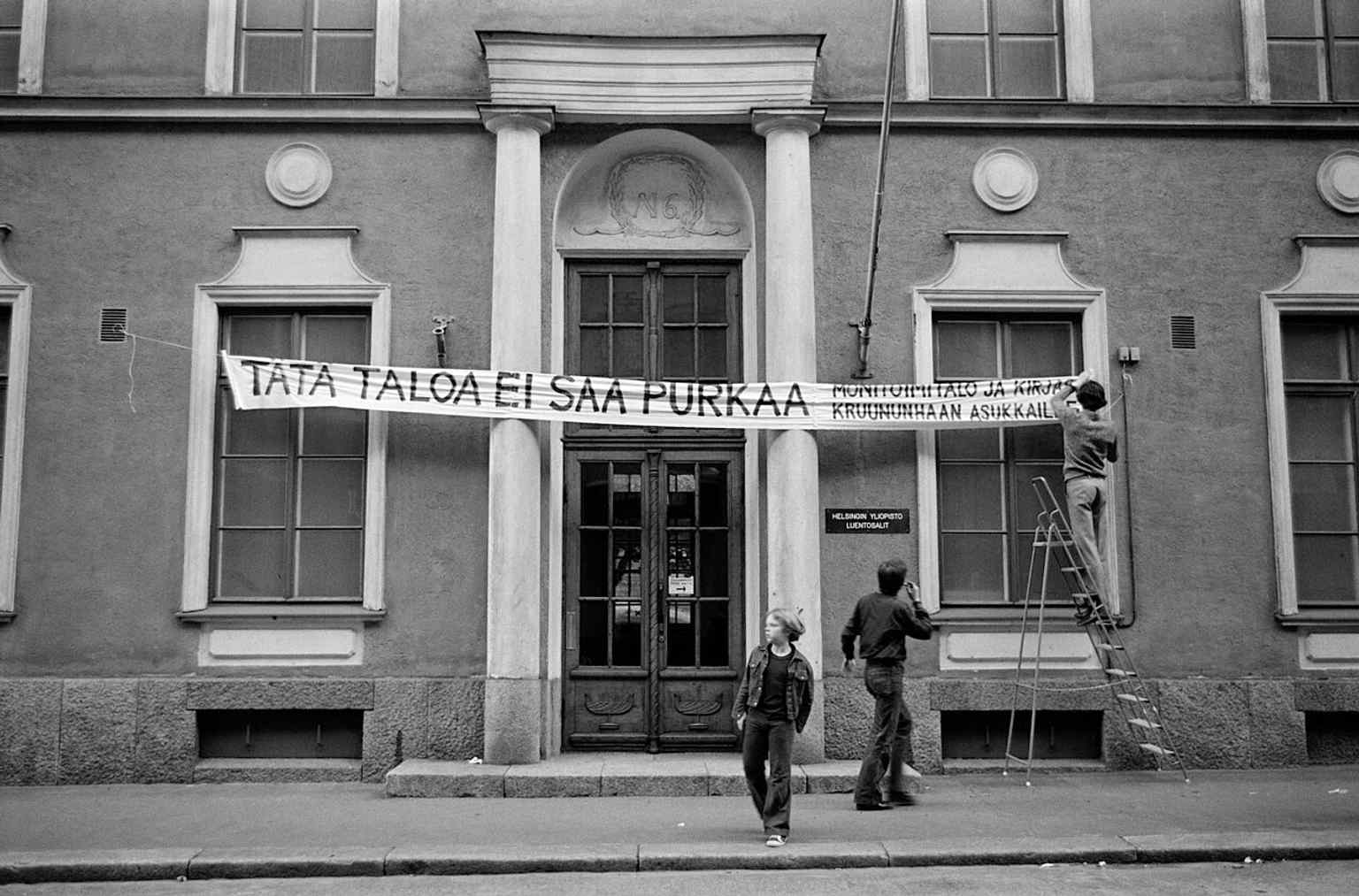
A 1975 protest at Kirkkokatu 6, when locals fought to save the building from demolition — a key moment in the house’s survival story.Photo: Eeva Rista, Wikimedia Commons, CC BY 4.0. Cropped & resized. On your right stands a long pale stone-and-stucco complex with tall rectangular windows, a disciplined classical frontage, and discreet Maria lettering at the entrance. This is…Read moreShow less
Open dedicated page →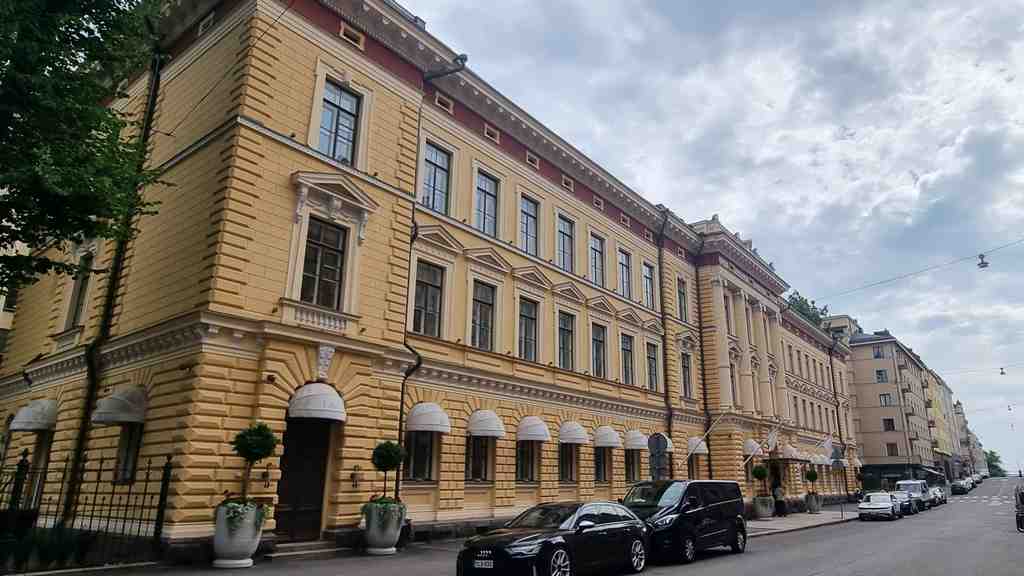
Hotel MariaPhoto: Jukka Aminoff, Wikimedia Commons, CC BY-SA 4.0. Cropped & resized. On your right stands a long pale stone-and-stucco complex with tall rectangular windows, a disciplined classical frontage, and discreet Maria lettering at the entrance.
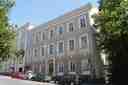
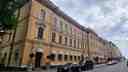
This is Waldorf Astoria Helsinki, long known as Hotel Maria, and it feels like a fitting last stop because so much of Helsinki’s story gathers here under one polished name. What you see as a luxury hotel began, piece by piece, between eighteen eighty-five and nineteen thirty. Architect Evert Lagerspetz drew the oldest part as officers’ barracks for the Uusimaa Battalion. Later, Armas Siitonen pushed the complex toward Liisankatu in the nineteen thirties. After soldiers left, civil servants moved in: the Finnish Agricultural Board, the Seed Inspection Department, the Department of Agricultural Chemistry. Uniforms gave way to paperwork.
But the deeper local memory is sharper than that. Most visitors never realize this address stands in the old Karhu, or Bear, block. From nineteen oh-one to nineteen eighteen, Russian forces occupied these quarters. Then, in nineteen eighteen, troops from the German Baltic Sea Division took them over. And all of this stands on Liisankatu, a street named for a Russian empress, Elizabeth Alexeievna. That is Helsinki in miniature... military pressure, imperial naming, and careful reinvention sharing the same stones.
The hotel’s chosen patron spirit is Grand Duchess Maria Feodorovna, the Danish-born wife of Tsar Alexander the Third. She came to Finland as a kind of refuge from the strain of the Russian court, and the hotel leans into that memory. Inside, designers chose ivory, beige, and taupe, shades linked to her wardrobe and jewelry, as if softness itself could become a brand of authority. It is a tender idea, and also a revealing one: even now, prestige borrows power from old crowns.
The rebirth was immense. Workers restored extensive original plaster mouldings by hand to preserve the nineteenth-century character. Samppa Lajunen’s company, Samla Capital, bought the block in twenty twenty. Fira led construction starting in January of twenty twenty-three, and the Finnish firm Avarc shaped the new work. The hotel opened in late twenty twenty-three, with the full renovation wrapping up in twenty twenty-four. Soon it became the first Waldorf Astoria in the Nordic countries.
And yet even this glamorous chapter carries its own unease. The project cost about one hundred and sixty-six million euros. Financing proved difficult, London investors stepped in, and later the hotel became part of a public scandal when losses and cross-investments shook trust in Samla’s funds. The main lender forced a distress sale, and Singapore-based M and L Hospitality Group took over. So yes, Bruce Springsteen stayed here and drew fans to these quiet streets. Yes, the Emir of Qatar reserved the entire hotel during a state visit. But behind the velvet image sat a very modern struggle over money, risk, and who gets protected when prestige falters.
So here is the thought I want to leave with you: when a former military block becomes one of the city’s most luxurious addresses, are we honoring its history, softening it, or packaging it for comfort?
After this walk, Helsinki no longer reads as a row of handsome facades. It reads like layers of ambition, fear, adaptation, and display... written over each other, never fully erased.
Frequently asked questions
How do I start the tour?
After purchase, download the AudaTours app and enter your redemption code. The tour will be ready to start immediately - just tap play and follow the GPS-guided route.
Do I need internet during the tour?
No! Download the tour before you start and enjoy it fully offline. Only the chat feature requires internet. We recommend downloading on WiFi to save mobile data.
Is this a guided group tour?
No - this is a self-guided audio tour. You explore independently at your own pace, with audio narration playing through your phone. No tour guide, no group, no schedule.
How long does the tour take?
Most tours take 60–90 minutes to complete, but you control the pace entirely. Pause, skip stops, or take breaks whenever you want.
What if I can't finish the tour today?
No problem! Tours have lifetime access. Pause and resume whenever you like - tomorrow, next week, or next year. Your progress is saved.
What languages are available?
All tours are available in 50+ languages. Select your preferred language when redeeming your code. Note: language cannot be changed after tour generation.
Where do I access the tour after purchase?
Download the free AudaTours app from the App Store or Google Play. Enter your redemption code (sent via email) and the tour will appear in your library, ready to download and start.
If you don't enjoy the tour, we'll refund your purchase. Contact us at [email protected]
Checkout securely with 






%2C%20St%C3%A4nderhuset%20(Helsinki)%2C%20Maison%20des%20%C3%89tats%20(Helsinki)%2C%20House%20of%20the%20Estates%20(Helsinki)%2003.jpg)


