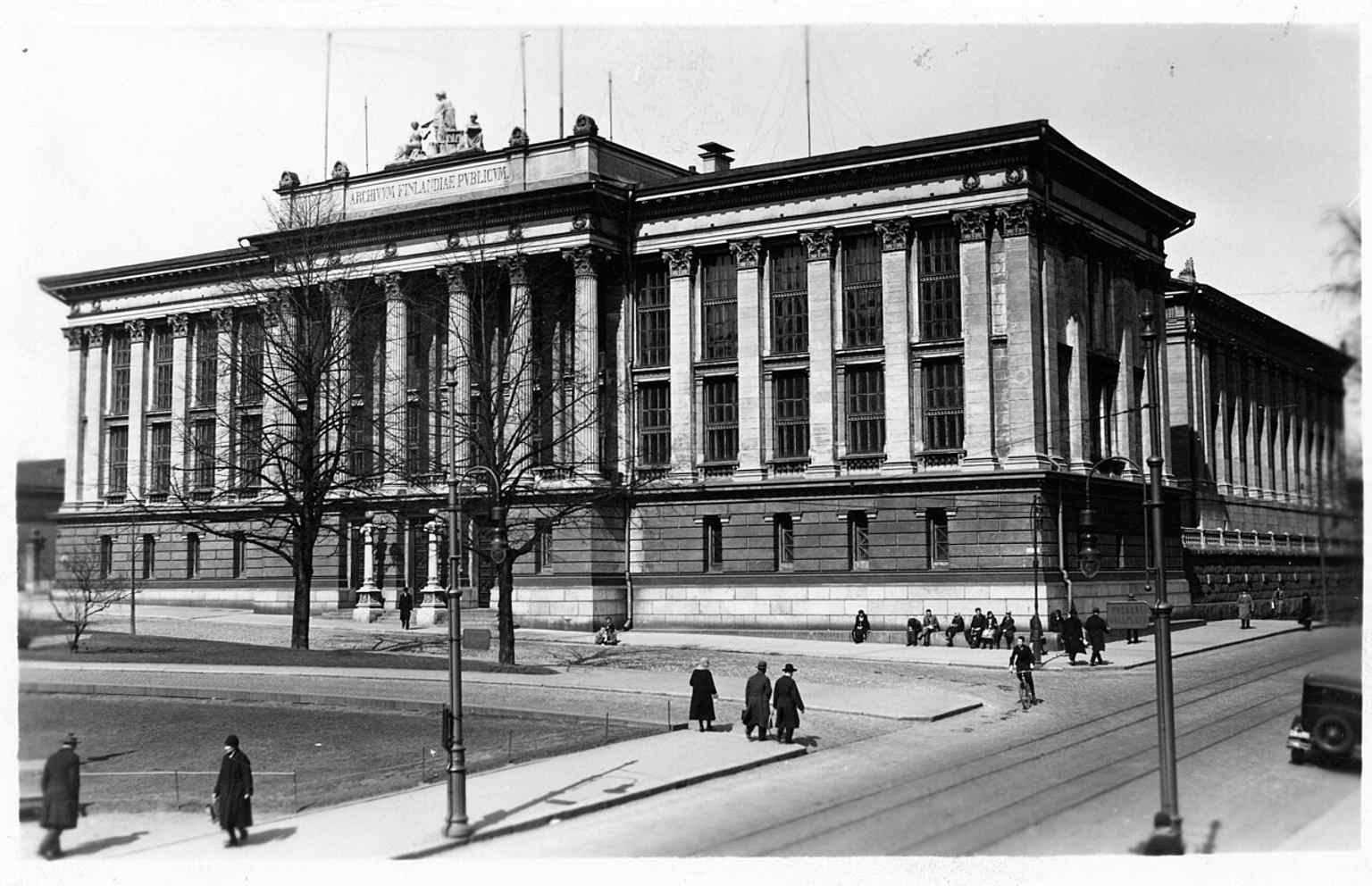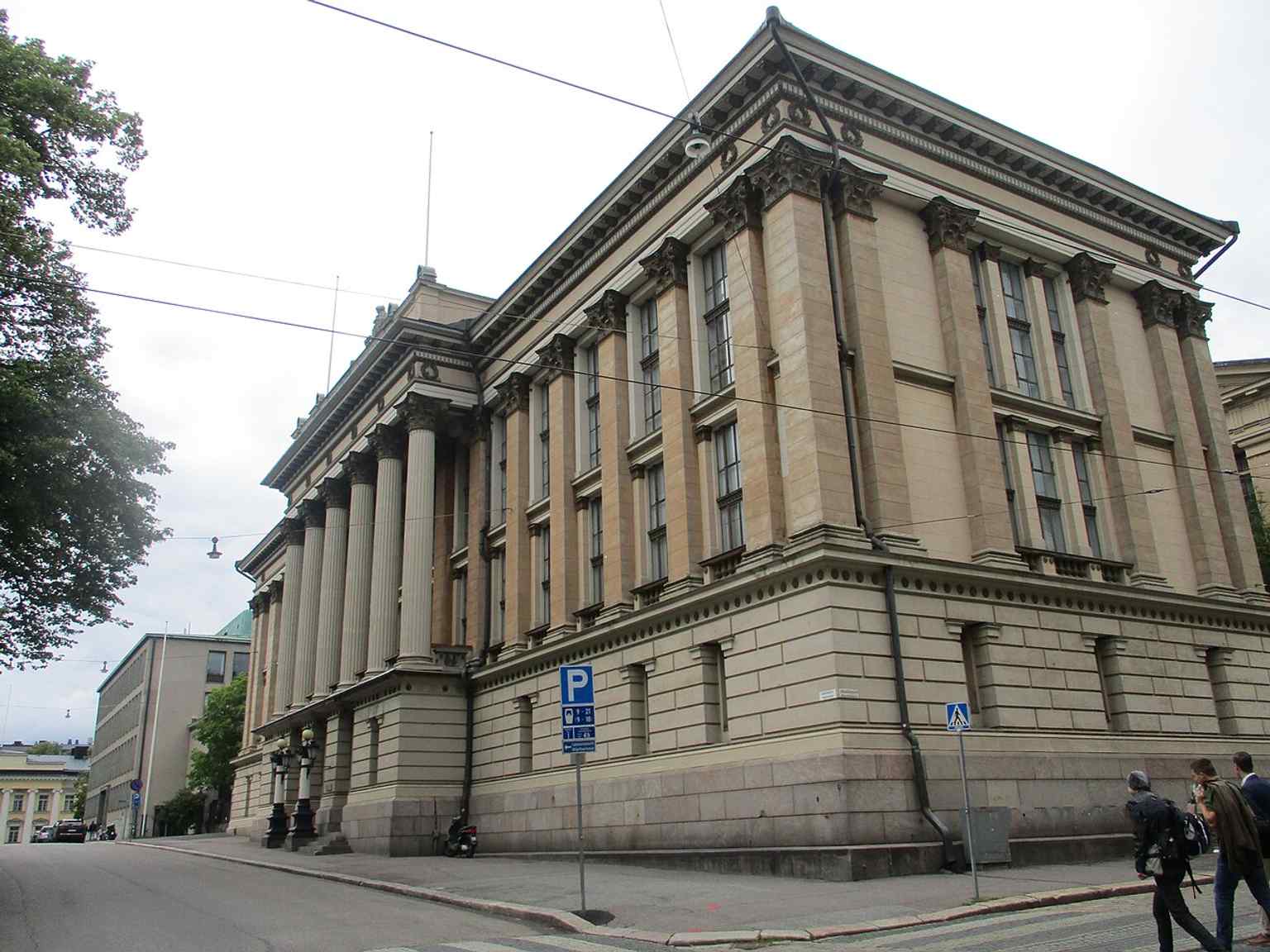
On your right, look for a solid pale stone block with tall rectangular windows and, above the entrance, a sculpted trio of women beneath the Latin words Archivum Finlandiae Publicum.
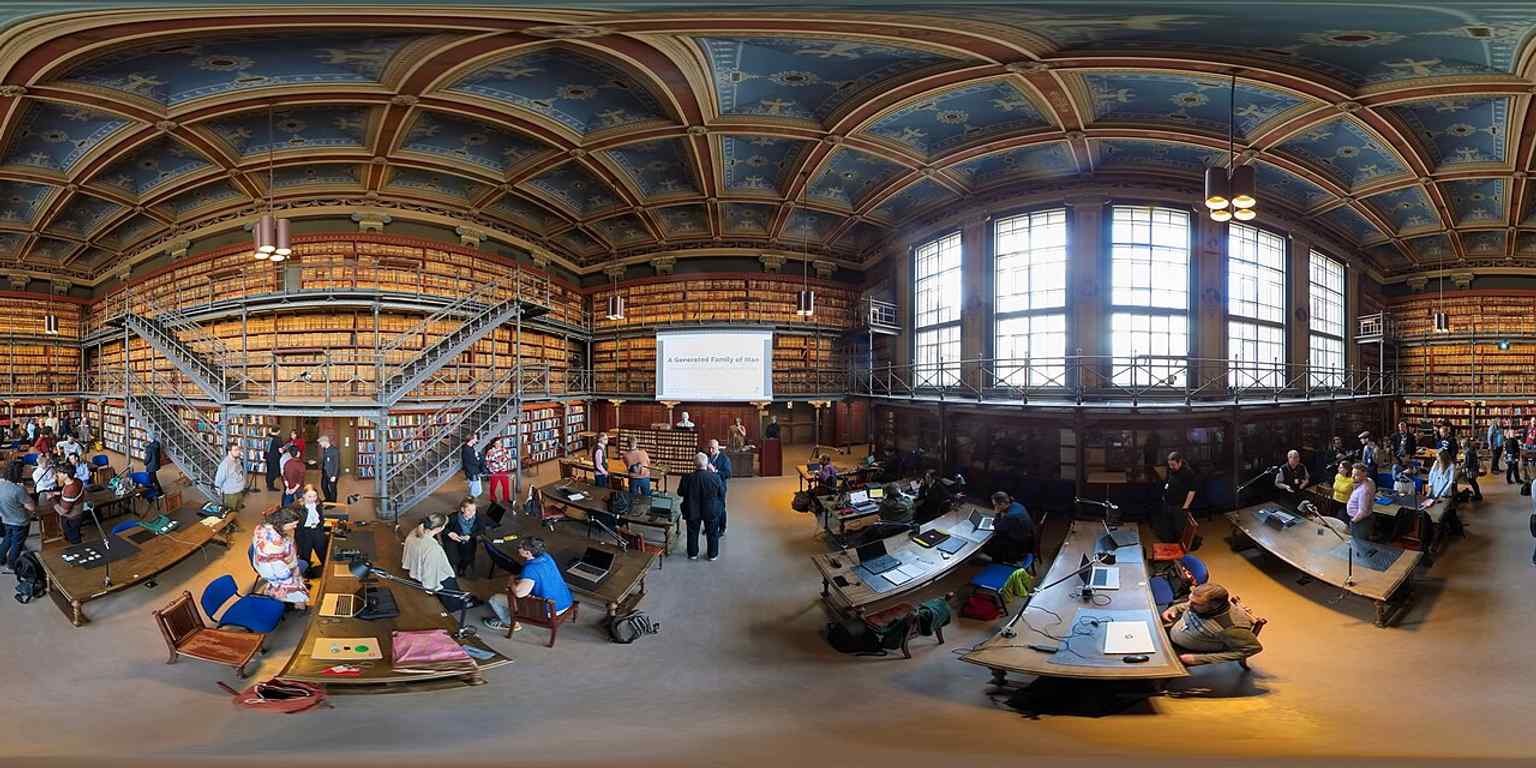
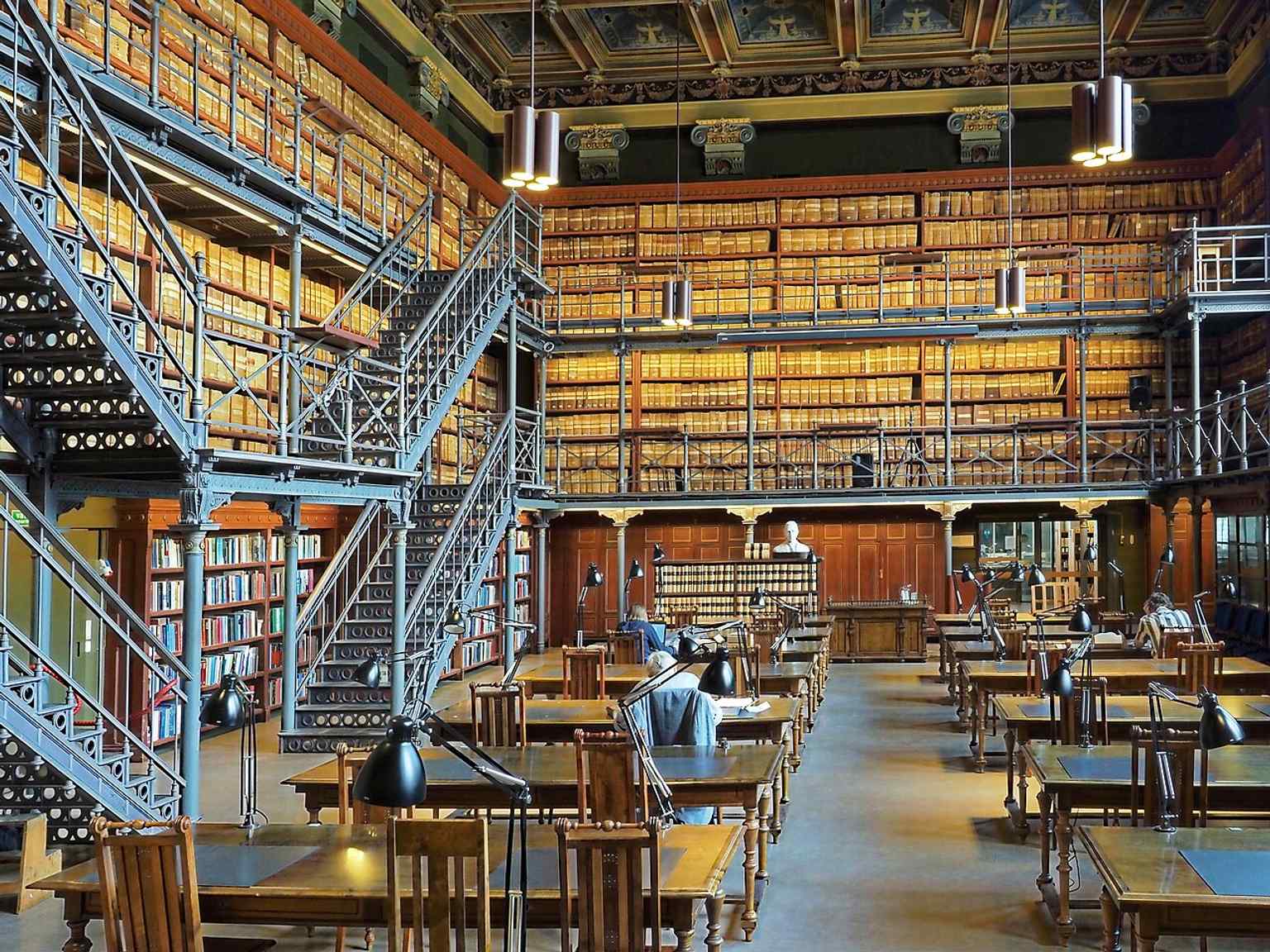
This is the National Archives of Finland, and it began in eighteen sixteen as part of the Senate of Finland. In eighteen ninety, architect Gustaf Nyström gave it this new home and solved a very practical fear: fire. He ran cast-iron shelving from basement to roof so the shelves themselves helped carry the floors, then used iron and concrete between levels. It was the first purpose-built fireproof archive building of its kind in the Nordic countries. That may sound dry... but it meant the state could keep its memory alive on paper.
Memory, preservation, and erasure meet here in a very uneasy balance. An archive protects the national story, but it also shapes that story, because whatever is saved can still speak, and whatever disappears becomes harder to prove. That tension matters in a city like this, where power liked to dress itself in orderly facades.
Nyström gave the papers a strong body, and sculptor Carl Eneas Sjöstrand gave the building its moral message. Above the entrance, Finland hands a scroll of law to History, while Source Criticism reads a book. Source criticism simply means testing whether evidence is trustworthy before calling it truth. If you want a closer look at that rooftop trio, the detail on your screen makes it easier to read their message
Inside, this main branch keeps central government records and private archives from people who shaped Finnish society, including nearly every president. The oldest document held by the institution dates to the year thirteen sixteen. Many visitors come searching for family traces in parish registers, the birth, marriage, and death books Lutheran priests kept for centuries. Others look for the Great Petition of eighteen ninety-nine, when volunteers gathered more than five hundred twenty thousand signatures in just eleven days to protest Russification, even skiing from village to village before the petition was smuggled toward Saint Petersburg.
But this place also raises a harder question. In the push toward mass digitization, some original paper records have been scanned and then destroyed. Critics have described books having their spines sliced off, pages separated for fast scanners, and bindings thrown away. The Archives argues that culturally important originals are preserved and that digitization saves millions of euros in storage costs. Historians answer that an archive is supposed to conserve, not discard. A digital copy can preserve words, yes... but not always the feel, structure, or physical evidence of the object itself.
Most tourists never notice that this same institution is also Finland’s authority on heraldry, meaning coats of arms and official emblems. Here, medieval noble seals and modern municipal symbols end up together in the Europeana Heraldica database, sharing one very bureaucratic afterlife.
If you check the before-and-after image, the façade barely changes while the street around it keeps moving.
That is the quiet lesson of this place: the grand buildings of Helsinki are only half the story. The other half lives in records, omissions, and symbols. When you are ready, continue on to Helsinki Cathedral, about two minutes away. If you want to return, the archives is generally open Monday through Friday from nine in the morning to six in the evening.