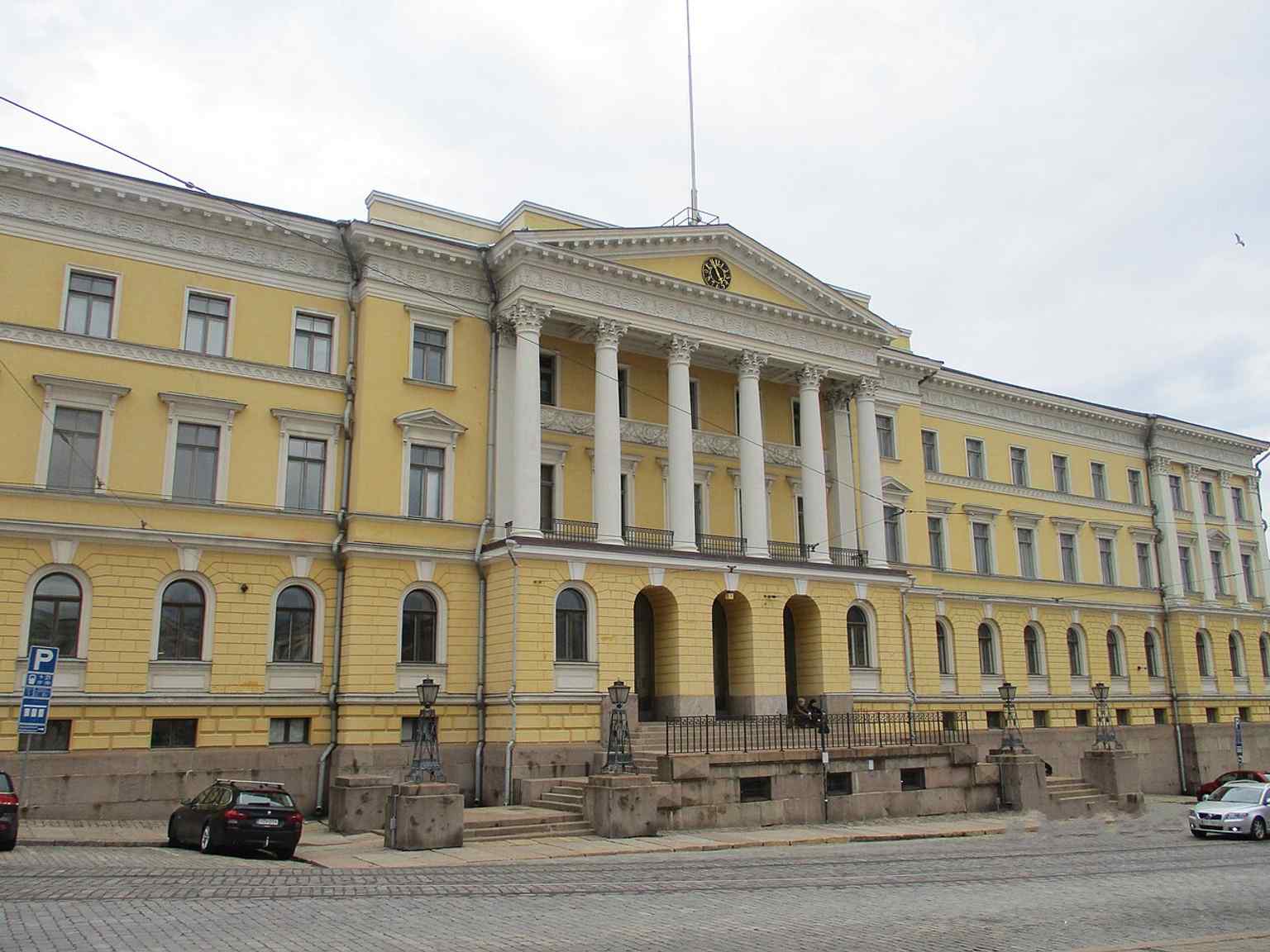
On your right stands a long pale-yellow stone facade, laid out in strict symmetry, with Corinthian columns rising to a triangular pediment marked by a black-and-gold clock.
This is the Government Palace, though for most of its life people knew it as the Senate House. Carl Ludvig Engel began designing it in the eighteen tens, soon after Helsinki became the capital of the Grand Duchy of Finland and urgently needed rooms for central government. Work started in eighteen eighteen, the Senate moved into the square-facing west wing in eighteen twenty-two, and the rest of the block grew around it over the following decades. Engel gave this side of the square its discipline: temple-like columns, balanced wings, the calm face of a state teaching people how authority should look.
And yet... despite the word “palace,” this was never mainly a royal residence or a grand ceremonial hall. It was an office building, the working core of rule. The Finnish Senate operated here from eighteen twenty-two until independence. After that, the new government took over, and on the twenty-seventh of November, nineteen eighteen, the building took its current name. Today it still holds the Prime Minister’s Office, the Office of the Chancellor of Justice, and much of the Ministry of Finance.
If you can, let your eyes travel across that measured facade and imagine how much human tension such symmetry tries to contain.
Inside, Engel took special pride in the main staircase, crowned by a dome inspired by the Pantheon in Rome. If you want a glimpse of that ceiling, the image on your screen shows the space where official procedure suddenly turned deadly.
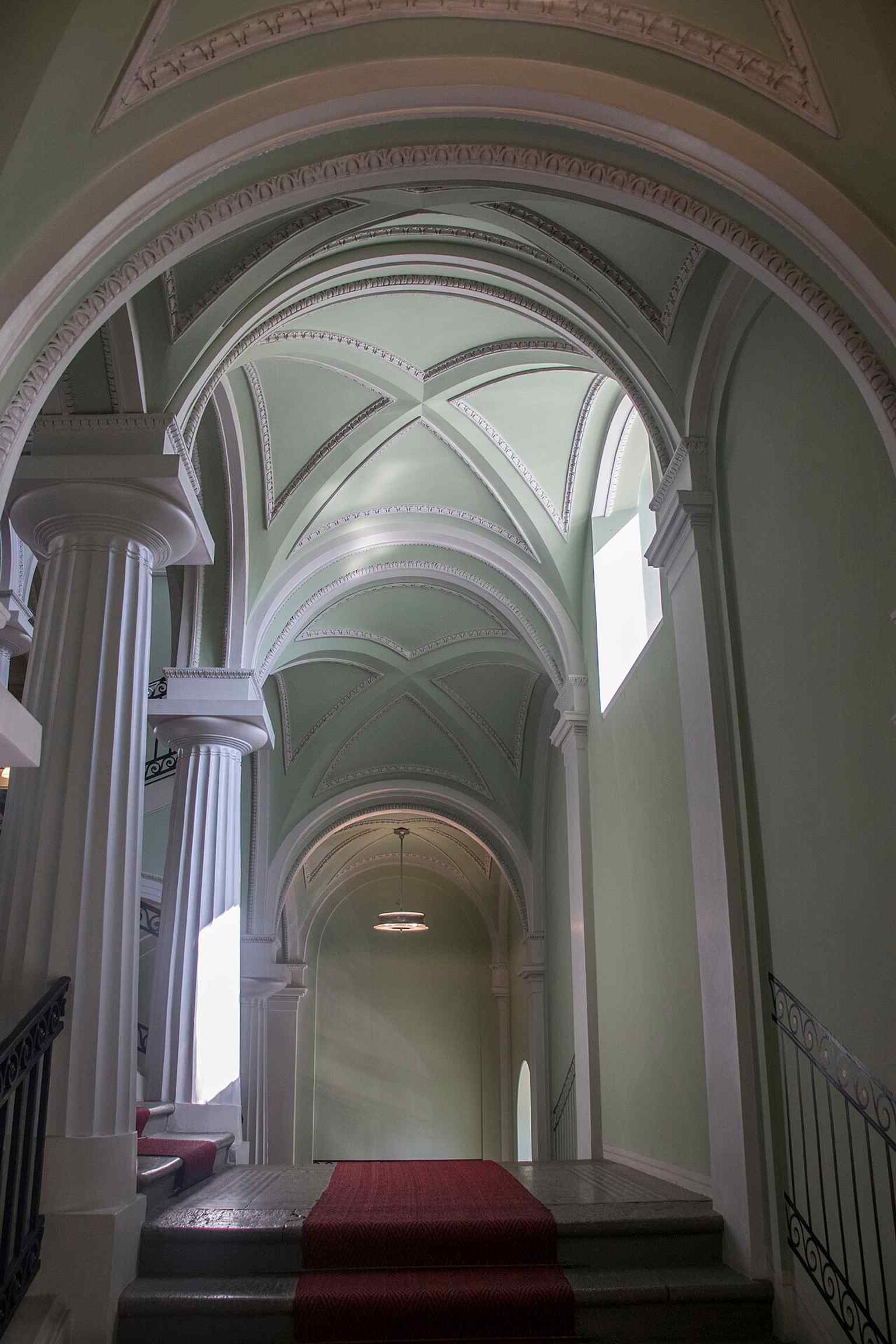
The shooting of Governor-General Bobrikov shattered this house of order in nineteen oh four. Resistance climbed the stairs of official power and struck in the open. A twenty-nine-year-old civil servant, Eugen Schauman, waited on the second-floor landing and shot Bobrikov, the Russian governor-general who had become a symbol of tightening imperial control over Finland. Later, people fixed a memorial plaque at the site.
That is the shock at the center of this building. For decades, politics here had worn the clothes of petitions, decrees, committees, and the old estate-based order of negotiation. Then one man with a pistol broke that script on a staircase built for obedience. The architecture promised control; history answered with rupture.
And still, the rooms above continued to carry turning points. In the President’s Presentation Room on the second floor, P. E. Svinhufvud’s independence senate issued Finland’s declaration of independence on the fourth of December, nineteen seventeen. Later, the same building saw major decisions on Finland’s place in Europe and in the wider alliance system. The throne symbols of empire were removed; portraits of Finnish presidents took their place.
If you’d like, the before-and-after image in the app gives a quick sense of how this frontage changed from a spare nineteen-sixties civic setting to the fuller city frame around it now.
Even the clock above you tells a story of routine: Jaakko Könni, from the famous clockmaking family of Ilmajoki, installed it in eighteen twenty-two, and a clockmaker has wound it by hand every Wednesday since nineteen twenty.
Stand here one more moment and feel how thin the line can be between orderly administration and crisis. When you’re ready, we’ll walk about three minutes to the House of Nobility.