AudaTours logoAudaTours

Stop 4 of 17

Helsinki Cathedral

headphones 04:26 Buy tour to unlock all 19 tracks
Helsinki Cathedral
Helsinki Cathedral
Helsinki CathedralPhoto: Alvesgaspar, Wikimedia Commons, CC BY-SA 3.0. Cropped & resized.

On your right rises a pale gray masonry church with a broad flight of steps, a large green central dome, and twelve figures standing along the roofline like sentries.

This is the moment when Helsinki stops looking like a small northern town and starts announcing itself as a capital. This is Engel’s imperial city plan made visible. Carl Ludvig Engel designed this center like a stage set for authority: straight axes, balanced facades, and buildings placed so power looked orderly, natural, and permanent. From this hill, the city could present itself as disciplined and legitimate... even though that image had to be built almost from scratch.

When Emperor Alexander the First declared Helsinki the capital on the eighth of April, eighteen twelve, this was still a damaged little town. A fire in eighteen oh eight had destroyed about a third of its buildings, and only around thirty-five hundred people lived here. Yet decree came first, and stone followed. The crown reserved this rocky rise for a Lutheran main church, and even directed fifteen percent of salt customs into a fund for two churches in the new capital, one Lutheran and one Orthodox.

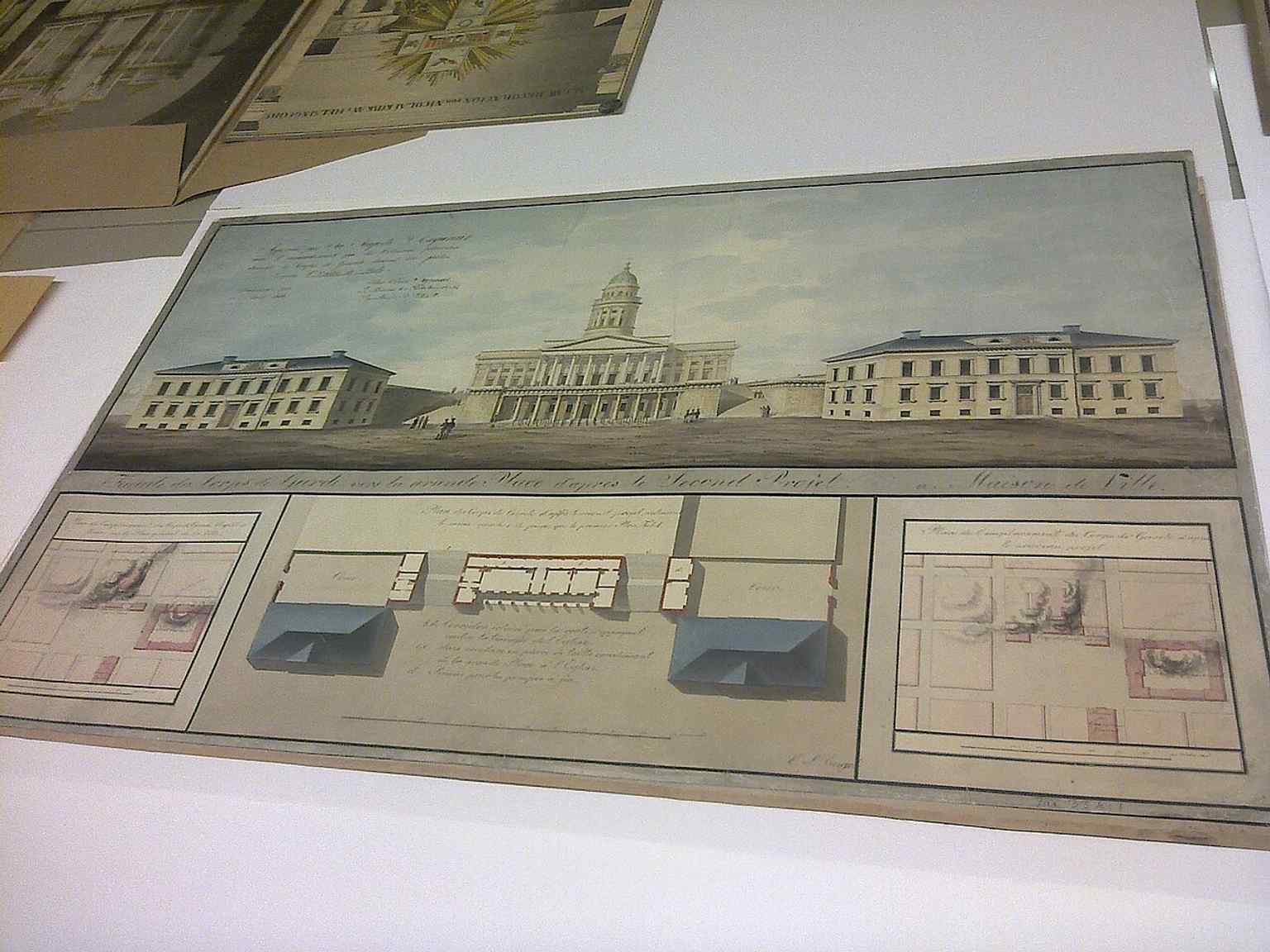
Engel worked on the design for years. He did not especially love central-plan churches, but he understood this site. People would see the building from every direction, so he chose a Greek cross plan, meaning all four arms are equal, and gave it a calm neoclassical style, a revival of ancient classical forms with columns, symmetry, and restraint. If you glance at the old image in the app, you can see the cathedral before the great stairs were added, with the old guardhouse still shaping the square.

Those stairs carry a little wound in the story. In eighteen thirty-nine, the imperial senate ordered the guardhouse demolished and replaced with a monumental staircase. Engel objected. He thought the square would become too exposed, too theatrical. He lost. That matters, because what you see here is not just a church. It is a lesson in how rulers wanted the city to be read.

Money told its own story. Construction began in eighteen thirty, and it moved slowly. Emperor Nicholas the First financed the wider works through a loan of two point six million rubles, roughly the scale of many tens of millions of euros today, and about one million rubles likely went into this cathedral alone. Debt, decree, and design all meet in this facade.

Engel died in eighteen forty, before the work was finished. His assistant, E. B. Lohrmann, carried it onward and changed the exterior in important ways: he added the four corner towers and the twelve zinc apostles on the roof, cast in Berlin. Together they form an unusually large zinc sculpture group. The church opened in eighteen fifty-two as Saint Nicholas Church, honoring the emperor and Saint Nicholas. After Finland became independent in nineteen seventeen, that Russian imperial name felt impossible to keep. People renamed it the Great Church, and in nineteen fifty-nine it became Helsinki Cathedral.

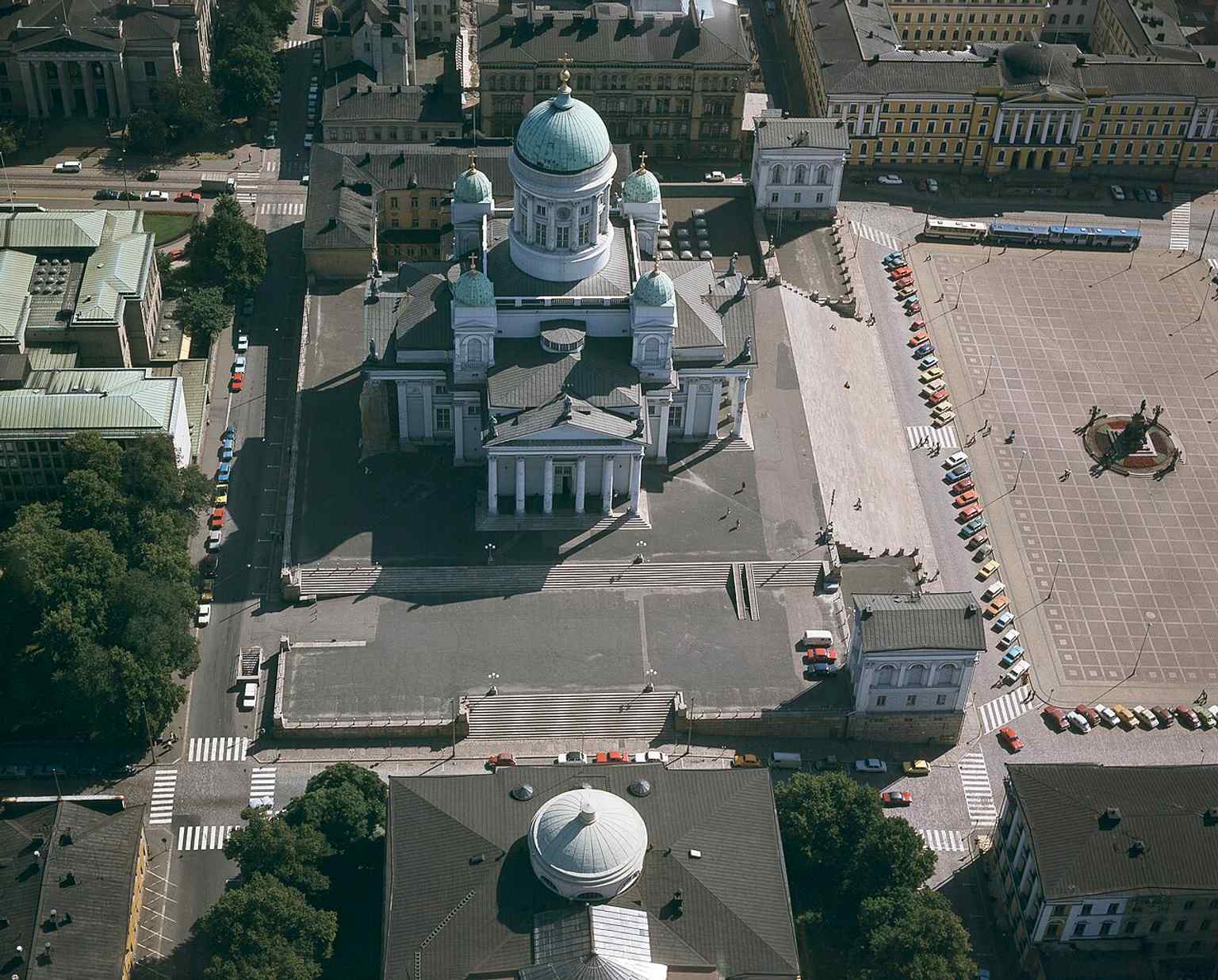
If you want, check the before-and-after image in the app; it shows how the square below changed its surface and traffic, while this hill kept teaching the same lesson about who stood above whom.

And yet names change, paint changes too. At its opening, this church was yellow, not the pale gray-and-white you see now. Power always tries to look timeless, but it is constantly being repainted.

When you’re ready, continue to the House of the Estates, about a one-minute walk away. There, we’ll see how this grand skyline turned into rooms where rank, privilege, and representation had to be negotiated.
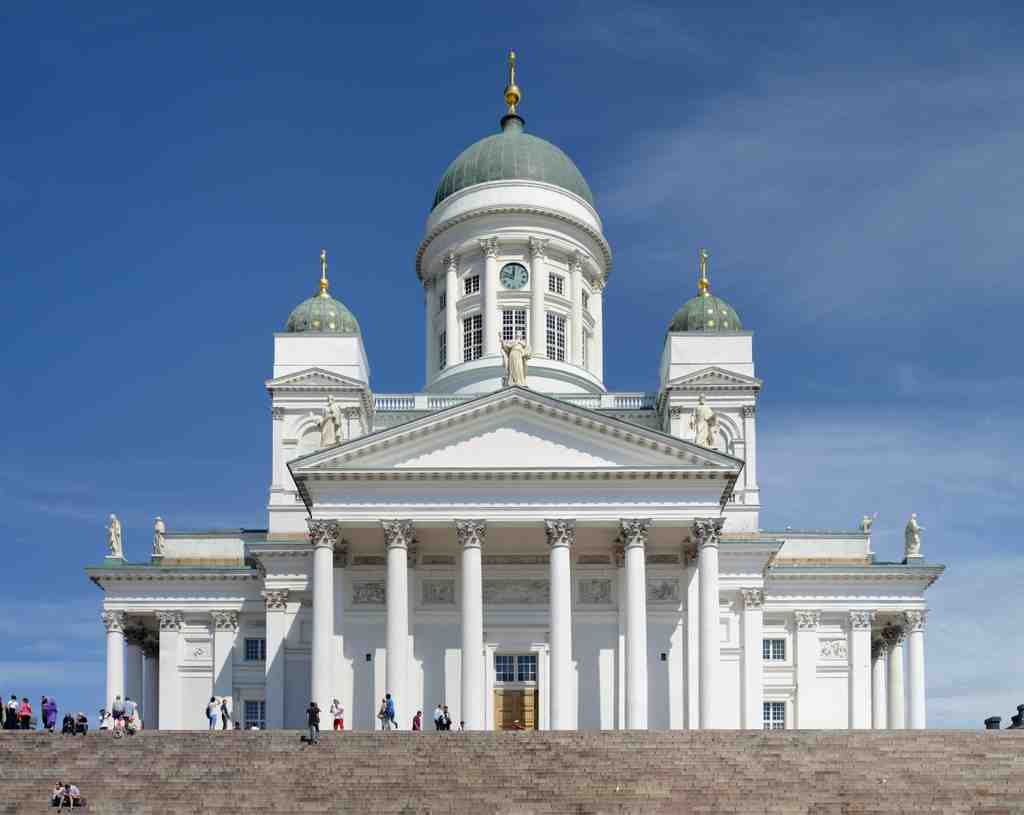
Helsinki Cathedral rising above the harbor frontage, a classic skyline view that shows why it became one of the city’s best-known symbols.
Helsinki Cathedral rising above the harbor frontage, a classic skyline view that shows why it became one of the city’s best-known symbols.Photo: Oula Lehtinen, Wikimedia Commons, CC BY-SA 3.0. Cropped & resized.
A close exterior view of the cathedral’s white-and-gray façade, including the monumental stairs and the terrace that Engel wanted to keep visually open toward the square.
A close exterior view of the cathedral’s white-and-gray façade, including the monumental stairs and the terrace that Engel wanted to keep visually open toward the square.Photo: Ranerana, Wikimedia Commons, CC BY-SA 4.0. Cropped & resized.
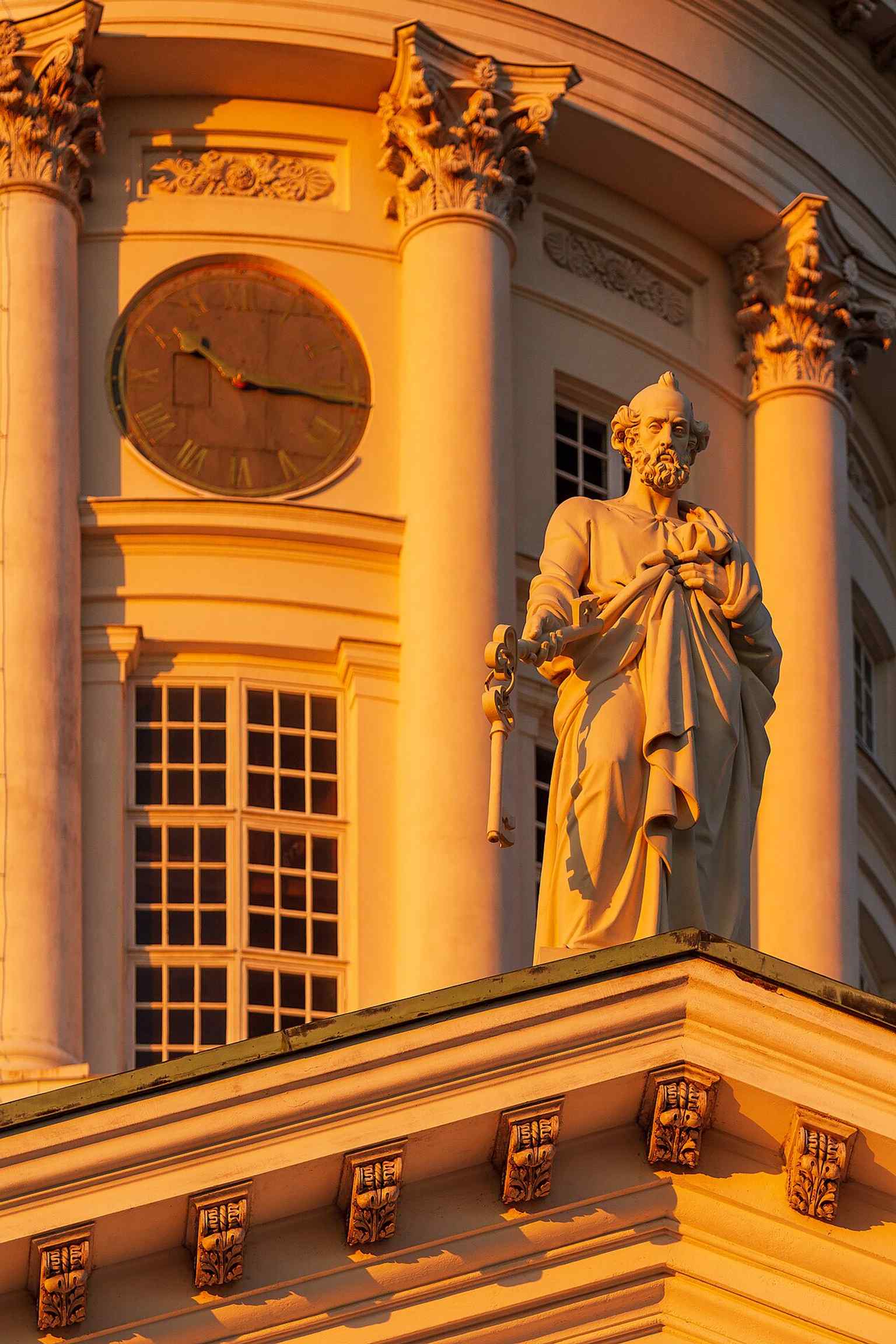
One of the rooftop apostle statues, part of the famous set of twelve zinc sculptures added after Engel’s death to balance the building’s silhouette.
One of the rooftop apostle statues, part of the famous set of twelve zinc sculptures added after Engel’s death to balance the building’s silhouette.Photo: Ximonic (Simo Räsänen), Wikimedia Commons, CC BY-SA 4.0. Cropped & resized.
The main organ inside Helsinki Cathedral, echoing the church’s strong musical tradition dating back to its first organist and early chapel music.
The main organ inside Helsinki Cathedral, echoing the church’s strong musical tradition dating back to its first organist and early chapel music.Photo: Virtual-Pano, Wikimedia Commons, CC BY-SA 4.0. Cropped & resized.
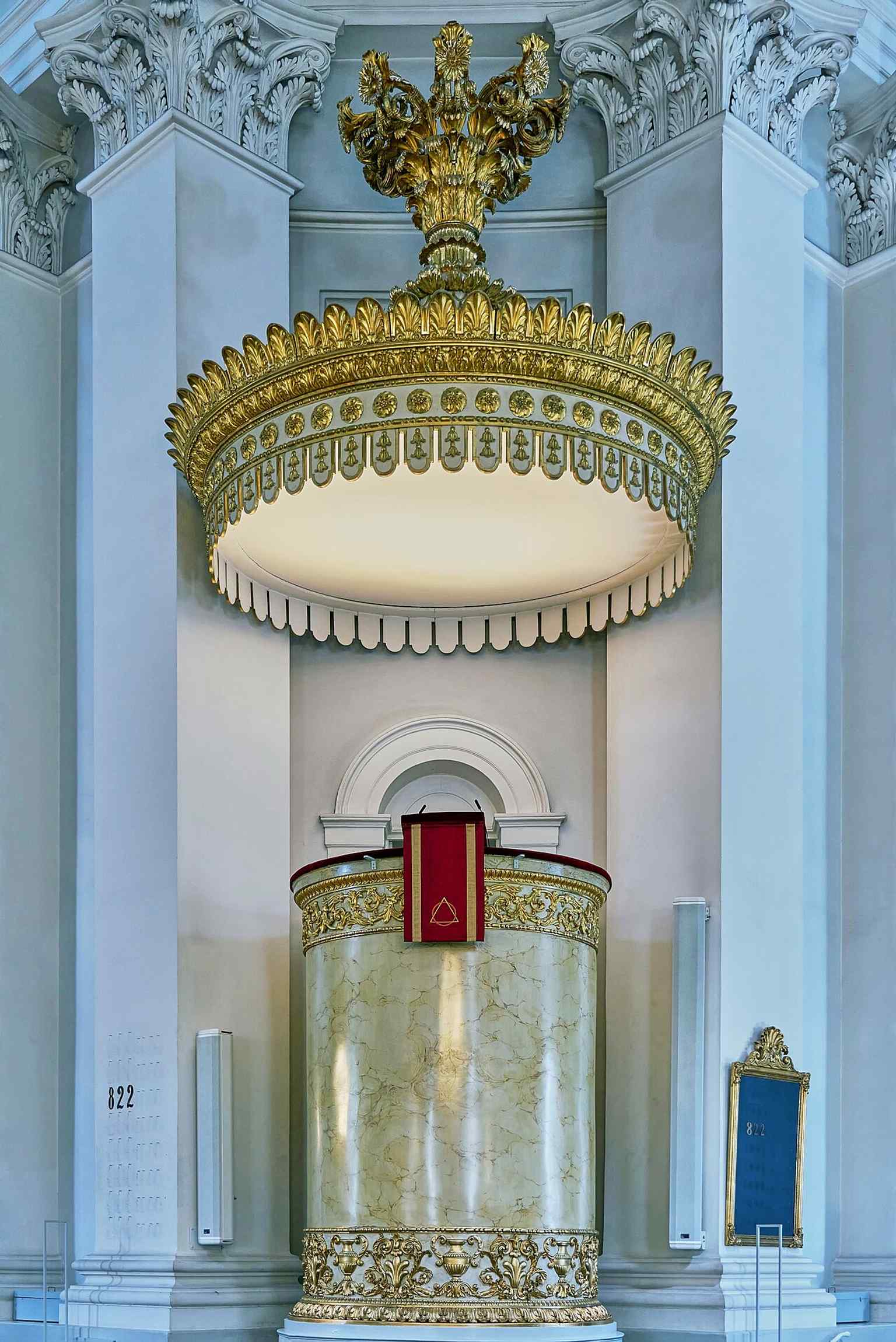
The pulpit and bright, stripped-down interior show Engel’s preference for a calm, symmetrical worship space with minimal ornament.
The pulpit and bright, stripped-down interior show Engel’s preference for a calm, symmetrical worship space with minimal ornament.Photo: Virtual-Pano, Wikimedia Commons, CC BY-SA 4.0. Cropped & resized.
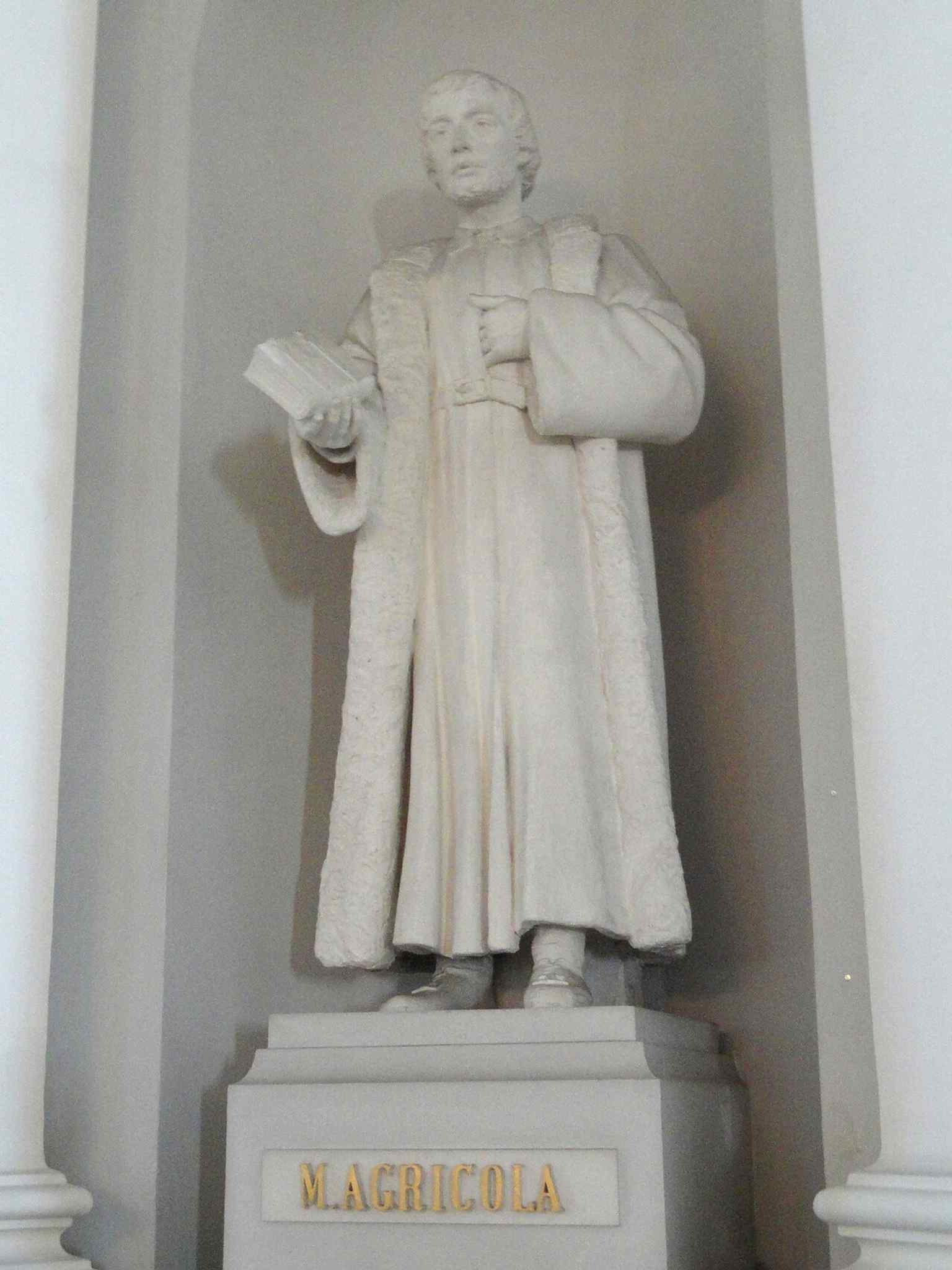
Mikael Agricola’s statue in the nave, one of the three reformer figures that serve as the cathedral’s main interior decoration.
Mikael Agricola’s statue in the nave, one of the three reformer figures that serve as the cathedral’s main interior decoration.Photo: Virtual-Pano, Wikimedia Commons, CC BY-SA 4.0. Cropped & resized.
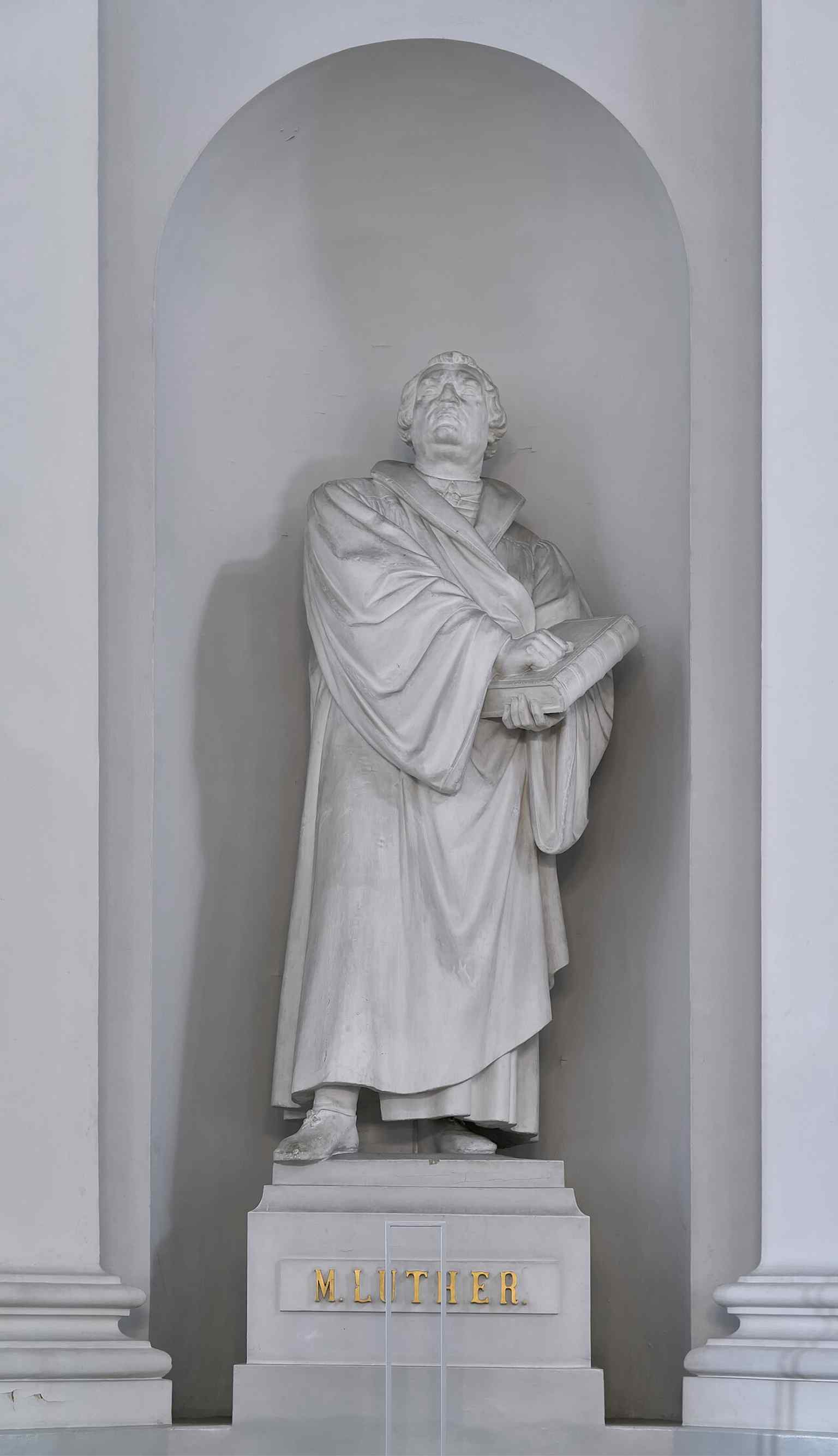
Martin Luther’s statue inside the cathedral, part of the trio of reformers that stand in the otherwise sparse church interior.
Martin Luther’s statue inside the cathedral, part of the trio of reformers that stand in the otherwise sparse church interior.Photo: Virtual-Pano, Wikimedia Commons, CC BY-SA 4.0. Cropped & resized.
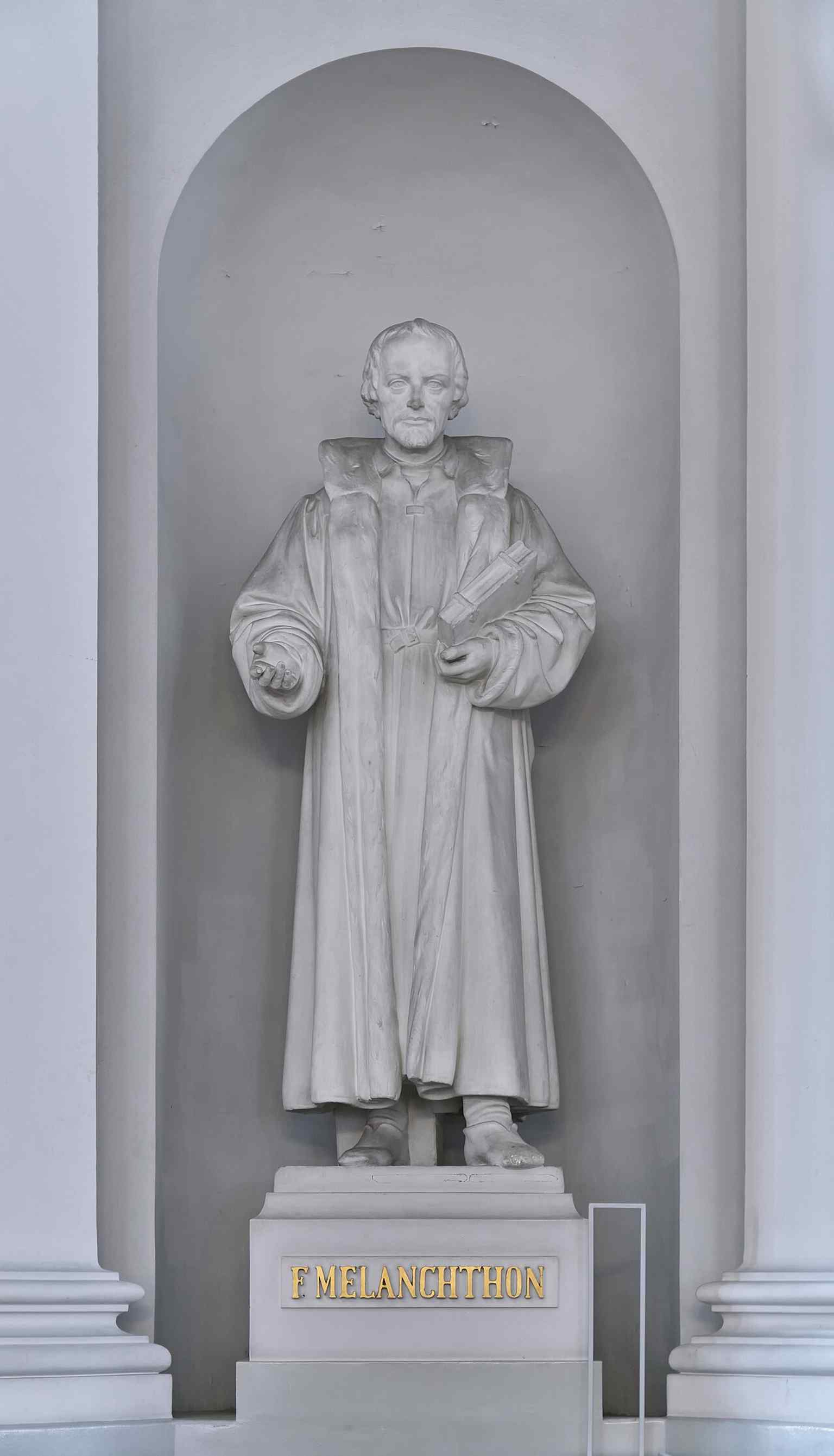
Philipp Melanchthon’s statue, highlighting how the cathedral’s interior uses a few carefully placed artworks instead of heavy ornament.
Philipp Melanchthon’s statue, highlighting how the cathedral’s interior uses a few carefully placed artworks instead of heavy ornament.Photo: Virtual-Pano, Wikimedia Commons, CC BY-SA 4.0. Cropped & resized.
arrow_back Back to Helsinki Audio Tour: From Nobles to Notorious—A Stroll Through Power & Intrigue
Loved by travellers

Thousands of tours started.
Plenty of opinions.

4.8 across the App Store and Google Play. Here's a few we keep coming back to.

starstarstarstarstar
This was a solid way to get to know Brighton without feeling like a tourist. The narration had depth and context, but didn't overdo it.
Christoph
Christoph
Brighton Tour
starstarstarstarstar
Started this tour with a croissant in one hand and zero expectations. The app just vibes with you, no pressure, just you, your headphones, and some cool stories.
download Get the app

Pop your headphones in.
Step outside.

Free to download. Tours in every city. Start in 60 seconds — no account, no card.

Download on the App StoreGet it on Google Play
starstarstarstarstar_half
4.8
AudaTours app icon
headphones
~ 4 min until your first tour starts
public
1,000+ cities worldwide
all_inclusive
AudaTours
Unlimited

Every tour. Every city. One subscription.

3101 tours2271 cities138 countries50+ languages