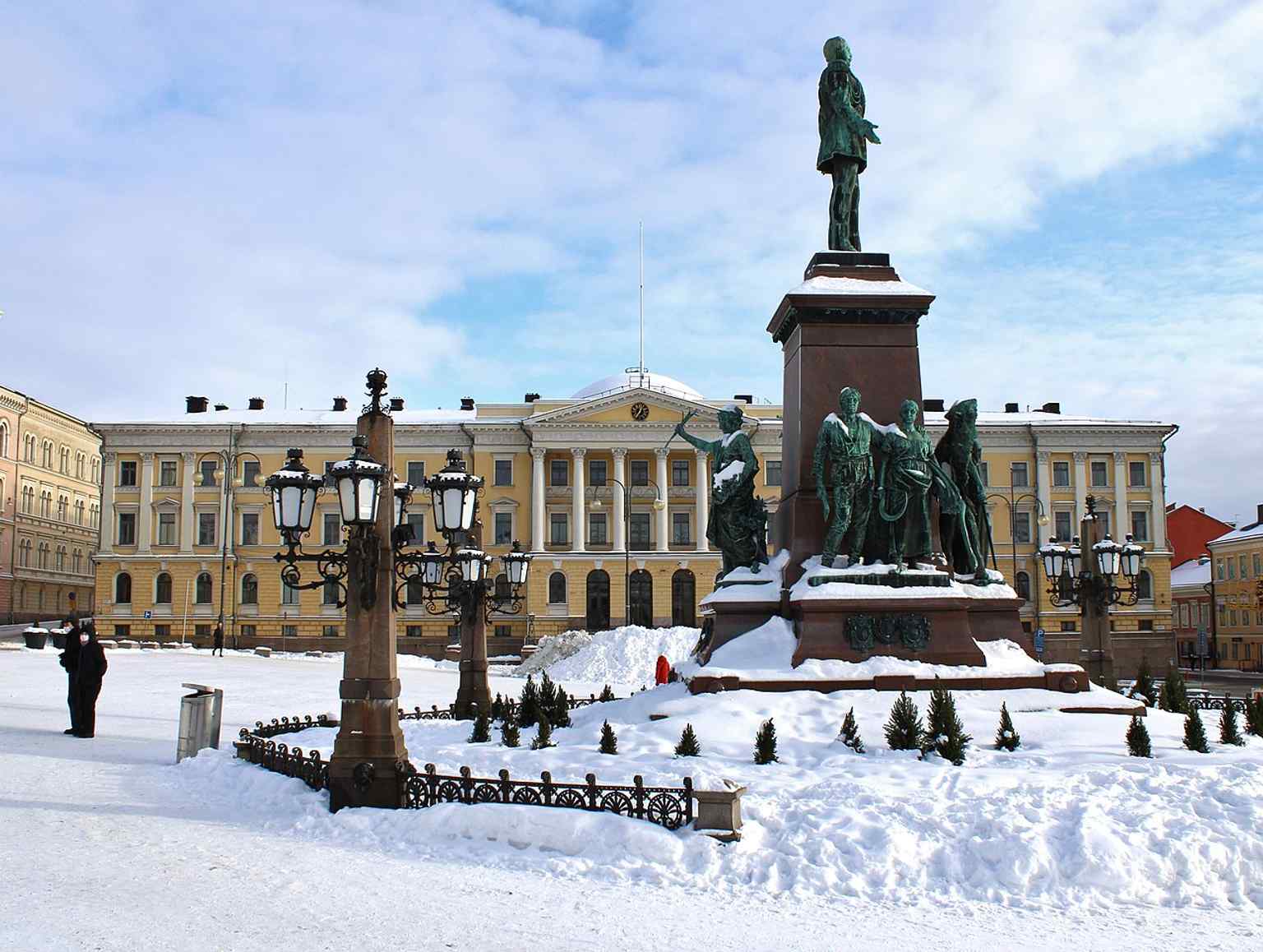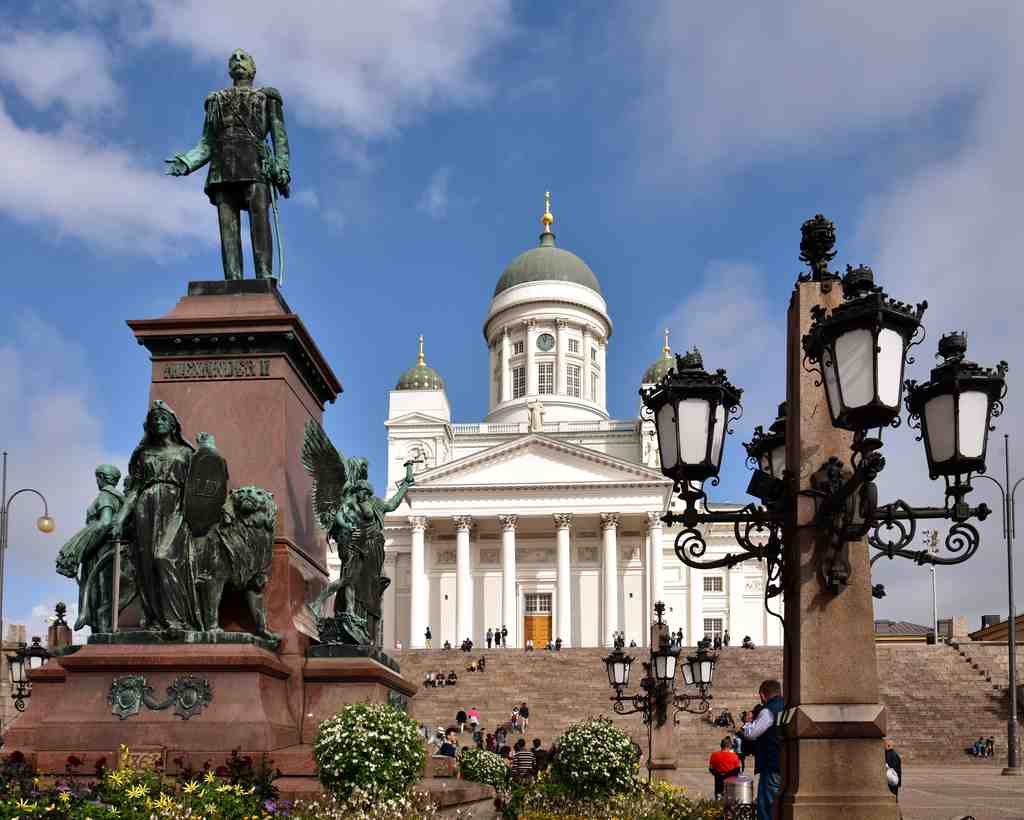
On your right, Senate Square opens as a broad stone plaza framed by pale-yellow neoclassical buildings, with a great fan of white cathedral steps rising behind the bronze statue at its center.
This is the version of Senate Square that guidebooks love: Carl Ludvig Engel’s grand civic composition, where power was arranged almost like a lesson in stone. Religion stands there in the Cathedral. Government faces it from the east in the long palace. Learning answers from the University side. Commerce lingers at the edges in the older merchants’ buildings. It feels balanced, deliberate... almost too orderly.
And that is exactly why this place can unsettle you once you know what it replaced.
Before Engel and the planner Johan Albrecht Ehrenström turned Helsinki into an imperial capital in eighteen twelve, this area was the old Great Square. It held a churchyard. It also held punishment in public view. In the seventeenth and eighteenth centuries, officials brought condemned people here to be hanged or beheaded, making fear part of everyday city life.
Then came the plague. In seventeen ten, the Great Plague tore through Helsinki and killed nearly two-thirds of the town. More than one thousand victims were buried in mass graves here. Most people crossing this square never realize that later construction work uncovered human bones again, as if the ground refused to keep the secret forever. That is the local detail people pass along in a lower voice.
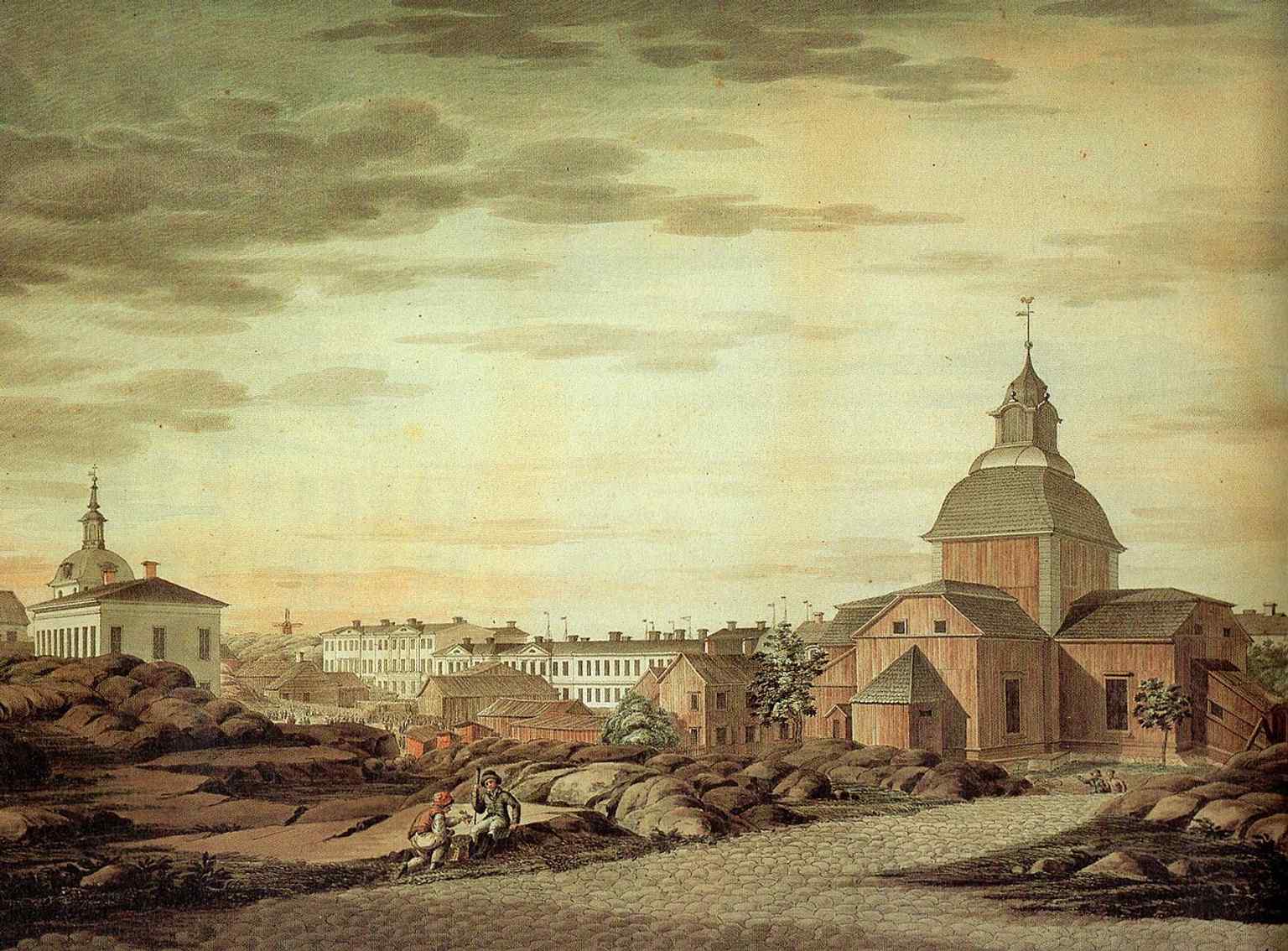
Engel knew none of those dead personally, of course, but his story belongs here too. He imagined a more enclosed square, almost intimate, with a guardhouse and columns on the north side. Ehrenström and Emperor Nicholas the First overruled him. They wanted the space opened dramatically toward the sea, and they demanded the grand staircase you see today. Engel took that hard; he felt his design had been compromised. Yet the feature that broke his heart became the square’s defining gesture. If you want a glimpse of the version he lost, look at the old image on your screen showing the square before those stairs existed.
At the center stands Emperor Alexander the Second, raised here in eighteen ninety-four. Finns remembered him as the tsar who restored the Diet, the national assembly, in eighteen sixty-three and widened Finland’s autonomy. Even this monument carries a double meaning. Around the pedestal, one figure represents Law as a woman in a bearskin cloak with a lion beside her, a quiet way for sculptor Walter Runeberg to hint at Finland itself. During the years of Russification, people laid flowers here to protest Russian control without saying a word.
If you like, take a quick look at the before-and-after image in the app; it catches the square shifting from an imperial ceremony for Alexander the Second into the open public plaza you see now.
So this beautiful order is real... but it is also a covering. A city preserved one age here by laying it over another. When a nation builds its most ceremonial square over plague graves and an execution ground, does that make the place less noble... or more truthful?
Hold that thought as we continue in about three minutes to the Tori Quarters, where trade and everyday life tell another side of the story. And like all the strongest public spaces, this one never really closes; Senate Square remains open all day, every day.