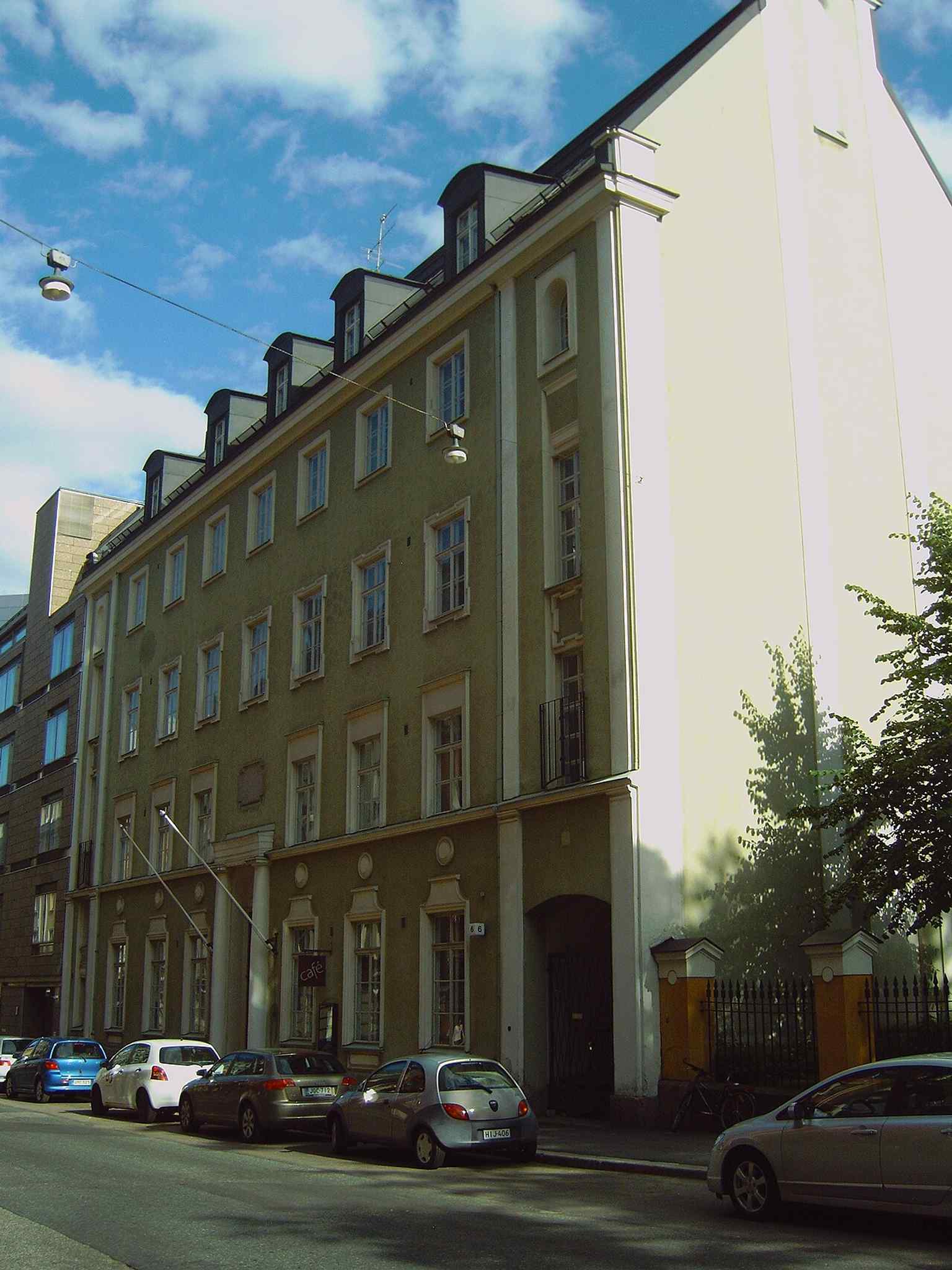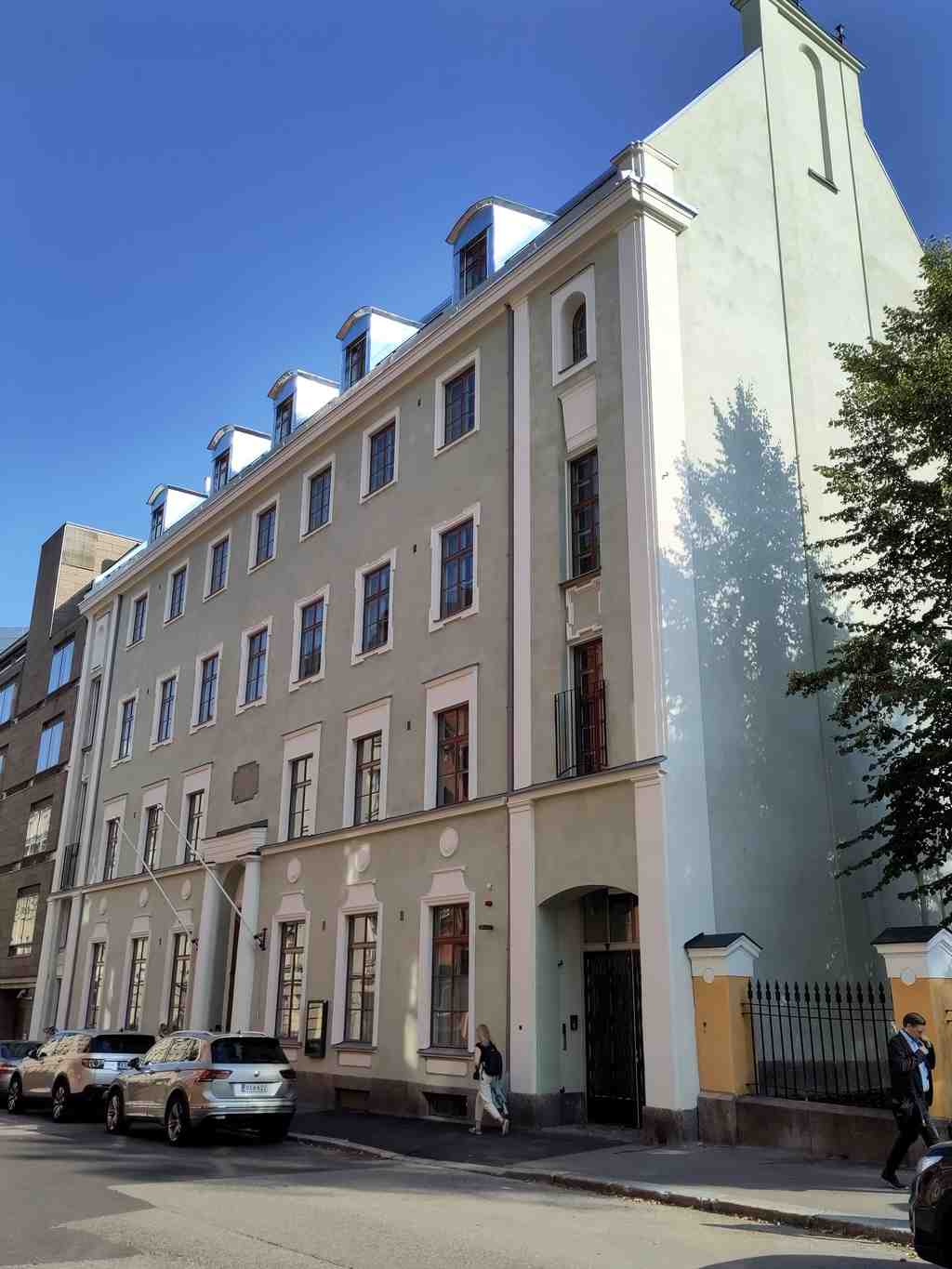
On your right is a pale stone-and-plaster building with a calm, symmetrical façade, tall rectangular windows, and angel reliefs flanking the entrance.
This house tells a very Helsinki story: knowledge often settles into spaces shaped by older owners, old damage, and second chances. Long before science societies met here, this plot held wooden homes, sheds, a sauna, even a stable. In eighteen forty-two, the merchant Daniel Nyström described a whole little world on this site. Then fire swept through Kruununhaka in eighteen fifty-eight and erased almost everything except one wooden house along the street.
What stands here now grew from a different kind of ambition. Lisa Hagman, an educator who believed girls deserved serious education, opened her private school here in the nineteen twenties. At first, she had to make do with the older buildings. She turned rooms into classrooms and squeezed a school into a patchwork of spaces. But she wanted something better, something modern and dignified, so she chose the young architect Elsa Arokallio. That choice matters. Arokallio had only qualified a few years earlier, and this became one of her most important private commissions.
The street wing rose quickly in nineteen twenty-five: foundation stone in April, roof celebration in June, opening in October. It carried the clean balance of nineteen twenties classicism, though Lisa Hagman added a twist. She arranged for the sculptor Emil Cedercreutz to create dozens of reliefs for the interiors, turning the school into a kind of moral picture book about work, home, faith, and country... without even asking Arokallio first. You can almost feel the architect’s mixed feelings. The angels by the entrance are one surviving sign of that choice.
The building kept changing roles, because cities do. The school failed financially in nineteen thirty-three. The state took over. Other schools used it. War damaged it in nineteen forty-four. Later, the University of Helsinki held lectures here. Then, in the nineteen nineties, scientific societies moved in after the House of the Estates returned mostly to government ceremony. That shift says a lot: one grand civic house became more exclusive, and this former school became a working home for research, publishing, and ethics.
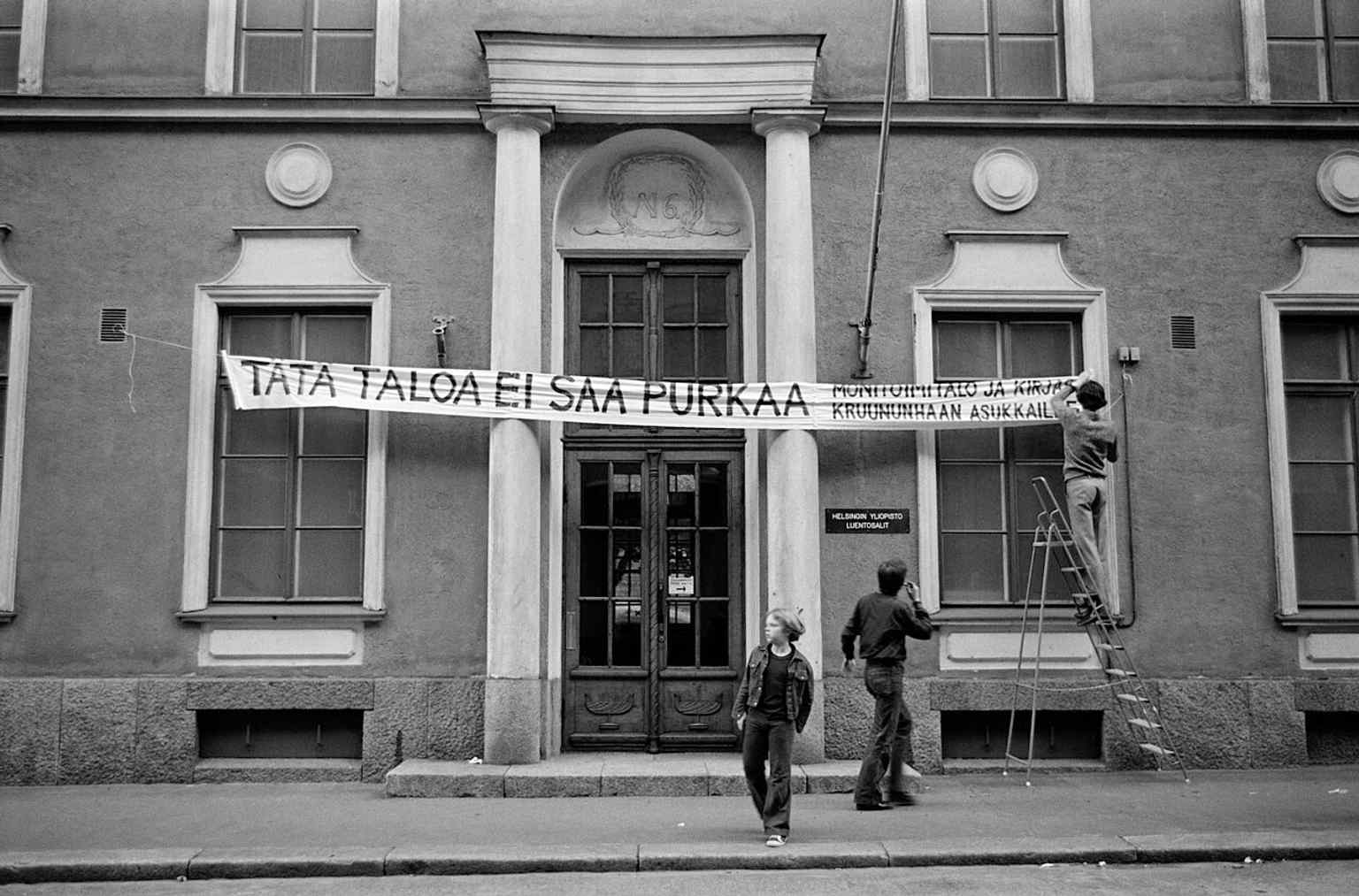
And it nearly vanished. In the nineteen seventies, people fought demolition plans. If you want, have a quick look at the before-and-after image in the app; the protest banner from nineteen seventy-five makes the survival feel very personal.
Now the House of Science and Letters holds meetings, seminars, offices, and even a public science café. So this building has not stayed pure. It has stayed useful. That may be the deeper victory.
From here, our final walk takes about five minutes to Hotel Maria, where barracks, imperial memory, and polished luxury all end up sharing one address. If you plan to come back inside here later, it usually opens on weekdays from eight AM to five forty-five PM and stays closed on weekends.