
Tallinn Audio Tour: Hidden Stories of Guilds, Monks, and Medieval Marvels
A single candle once revealed a secret at St. Nicholas Church that would echo for centuries through Tallinn’s cobbled heart. Behind the beautiful facades of Old Town lie stories that can’t be glimpsed from postcard-perfect streets. On this self-guided audio tour, uncover tales hidden in plain sight and walk paths where history’s whispers become impossible to ignore. Which chilling event at Tallinn Town Hall nearly toppled the city’s rulers overnight? What enigmatic artwork inside St. Nicholas holds a clue to a long-forgotten betrayal? And which unremarkable stone in the square changed hundreds of lives with a sudden, suspicious noise? Move through alleyways where revolts raged and scandals brewed. Stand where power shifted with a single word. Feel legend and truth blur as you explore Tallinn’s mysterious side, seeing each ancient wall and crooked street with new eyes. The candle has burned. The secrets wait. Step into the shadows and begin your discovery.
Tour preview
About this tour
- scheduleDuration 60–80 minsGo at your own pace
- straighten1.7 km walking routeFollow the guided path
- location_on
- wifi_offWorks offlineDownload once, use anywhere
- all_inclusiveLifetime accessReplay anytime, forever
- location_onStarts at Puppet Theatre Museum
Stops on this tour
lock_open 3 free previews · 11 unlock with purchase
Look for the solid pale stone facade, the tall rectangular mass of the building, and the glass bridge that links the historic parts of the complex. Think of this city as a stage.…Read moreShow less
Open dedicated page →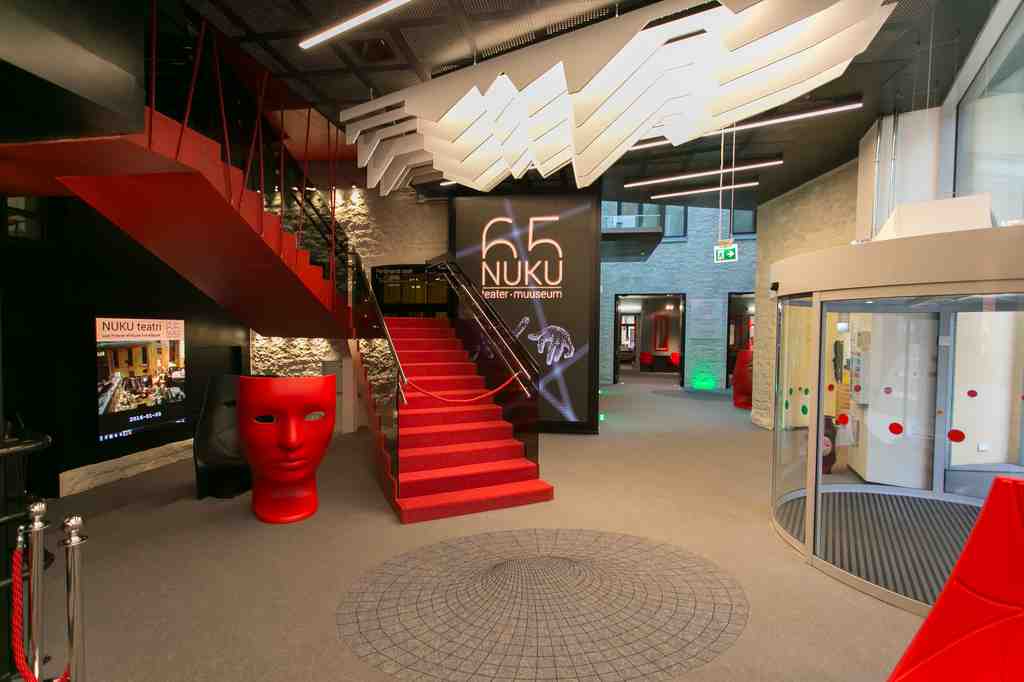
Puppet Theatre MuseumPhoto: Hannele Känd, Wikimedia Commons, CC BY-SA 4.0. Cropped & resized. Look for the solid pale stone facade, the tall rectangular mass of the building, and the glass bridge that links the historic parts of the complex.
Think of this city as a stage. In Tallinn’s Old Town, buildings rarely keep a single part for long: a noble hall becomes a theatre, a theatre becomes a museum, and every new role leaves a trace in the wings. That is why this is such a perfect beginning, because this address has been performing for more than two centuries.
The theatrical life here started in eighteen oh nine, when Tallinn’s first professional theatre opened on this very site, then known as Reval Theatre. It was a wooden building, lively and ambitious, and rather doomed. Fire damaged it badly in eighteen fifty-five, and in nineteen oh two flames finished the job completely. What you see now rose from that loss between nineteen oh four and nineteen oh seven, when architect Nikolai Tamm designed this stone building for the Reval Noble Society. Even when nobles took over the script, the place never quite forgot its original lines.
Then, in nineteen fifty-two, theatre returned in a different costume. The State Puppet Theatre of Soviet Estonia moved the art of puppetry into Tallinn’s cultural heart, and in two thousand ten the Puppet Theatre Museum opened here as part of the same living institution, now called Estonia’s Youth Theatre. The building itself is protected as a historic monument, which feels fitting: memory here does not sit quietly in a cabinet. It performs.
One man shaped that spirit more than anyone else: Ferdinand Veike, the founder and first artistic leader. He liked to say, “A puppet is no trinket.” It is a marvellous motto for Tallinn, really. Playfulness here is never shallow; behind the painted face, there is always something serious being said.
Inside, the museum keeps more than eight hundred puppets, masks, costumes, props, photographs and working sketches, not only from Estonia but from places such as India and China. One of its treasures is the original Buratino puppet from nineteen fifty-four. An artist in Riga, Paul Schoenhof, made it for The Adventures of Buratino, but Soviet censors rejected it because they thought it looked too influenced by Disney’s Pinocchio, too suspiciously Western, too “capitalist.” Schoenhof gave the forbidden puppet to Veike. The theatre built larger copies for the stage, but that first little exile survived, and now it stands as a relic of how art slips past official labels.
Labels matter here. In two thousand twenty, the theatre dropped its familiar Nuku name and rebranded as Estonia’s Youth Theatre, hoping to shake off the idea that puppets belong only to children. Many people still use the old name. The museum kept it, almost like a quiet refusal to let one costume erase another.
And there is one lovely detail hidden in the complex: a glass bridge connecting the older buildings, allowing visitors to glimpse the workshops where new figures are still made. So even now, this place is not merely storing the past. It is rehearsing the future.
From here, we step toward a grander kind of performance: the Great Guild Building, a two minute walk away, where merchants learned how ceremony could look very much like authority. If you want to come back later, the museum is usually open Tuesday through Sunday from ten to six, and closed on Monday.
On your left stands a pale limestone hall with a steep triangular gable and a pointed-arch portal, its heavy oak door marked by bronze lion-head knockers. This is the Great Guild…Read moreShow less
Open dedicated page →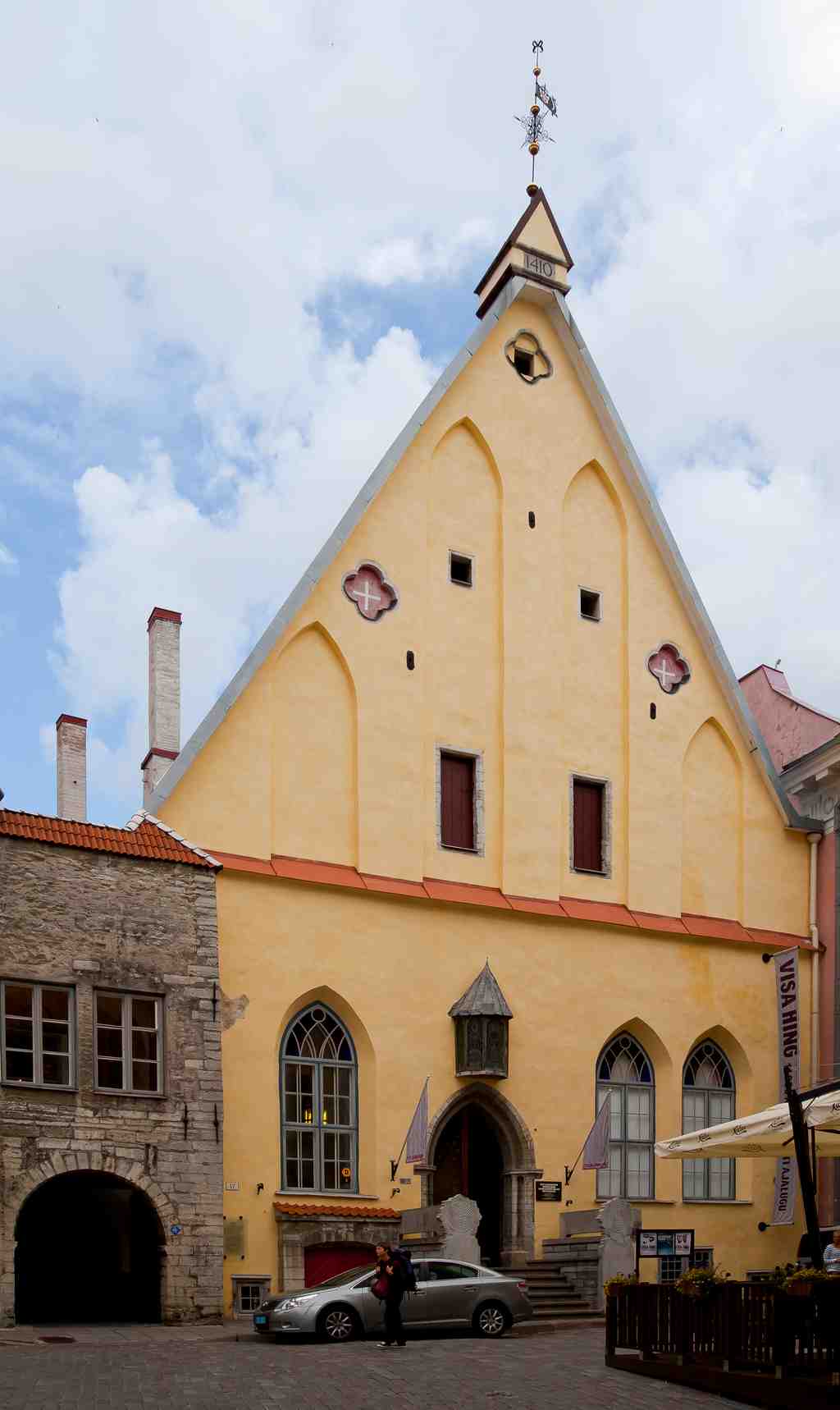
Great Guild BuildingPhoto: Diego Delso, Wikimedia Commons, CC BY-SA 3.0. Cropped & resized. On your left stands a pale limestone hall with a steep triangular gable and a pointed-arch portal, its heavy oak door marked by bronze lion-head knockers.
This is the Great Guild Building, Gothic in style, and it tells you something essential about Tallinn very early on: a grand façade here rarely has only one life. Since nineteen fifty-two, this has housed the Estonian History Museum. Before that, it served the richest merchant brotherhood in medieval Reval, the old name for Tallinn.
A guild, in plain terms, was a powerful association of people in the same trade. The Great Guild gathered the city’s wealthiest merchants, shipowners, and jewellers. In time, it became so dominant that only its members could rise to the city council and become burgomasters, the city’s mayors. They controlled trade in furs, salt, cloth, metals, and the crucial routes to Novgorod and Pskov.
These men were not only traders. They acted as early guardians of memory, shaping how the city wished to see itself. Long before museums collected objects in glass cases, merchant elites staged prestige in stone, ceremony, and public ritual. They preserved the city’s official dignity by deciding who belonged at the centre of its story.
And they built accordingly. In fourteen oh six, the guild bought the former house of burgomaster Goschalk Schotelmund here on Pikk Street, then cleared it and raised this larger limestone hall by fourteen ten. Notice the gable, the triangular face of the roof above the façade. Even more deliciously, the builders set the new hall half a metre back from the official street line, quietly breaking the rule so the building could be seen more majestically.
If you glance at the detail on your screen, you can admire one of the bronze knockers cast in fourteen thirty by master Merten Seifert. A lion grips the ring in its jaws, and one inscription blesses all who are in this house and all who will come here. Even the door announced power with ceremony.
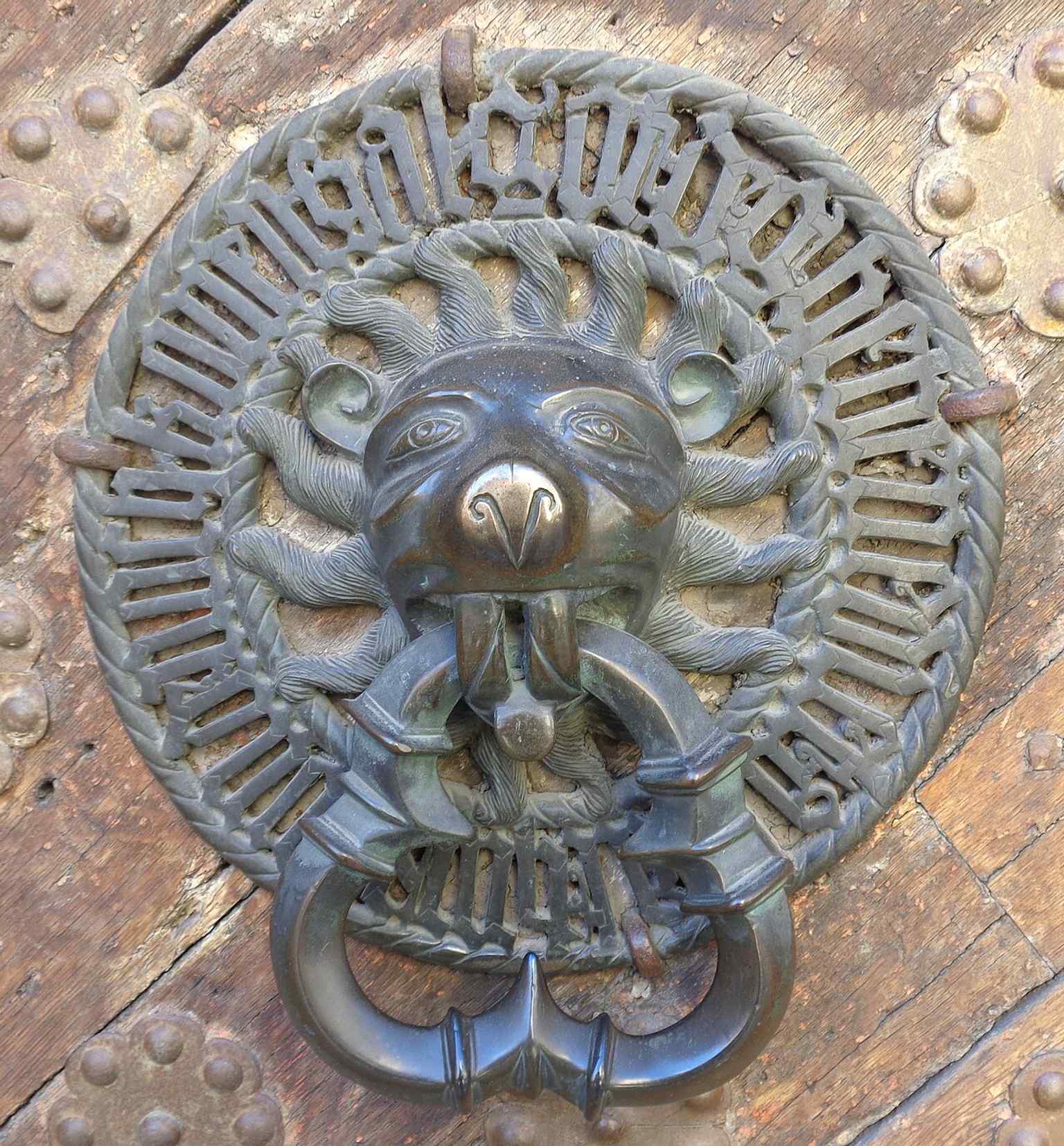
The left-hand door hammer from the main portal — a medieval bronze fitting that turned the entrance into a display of status and sacred wording.Photo: Borodun, Wikimedia Commons, CC BY-SA 4.0. Cropped & resized. The guild’s most theatrical tradition was the May Count festival. Each spring, young merchants and townsmen competed in archery and horse races beyond the walls. The winner became the May Count and chose a May Countess. Then came the splendid entry into town through Viru Gate, ending in a feast here at the hall. One surviving account records seven barrels of beer consumed.
And here is the detail locals quietly relish: during that ceremonial entry, the freshly crowned May Count supposedly had the right to pardon one prisoner he encountered at the gate. Just like that, a pageant turned into justice. If a city teaches people to accept authority through spectacle, is that merely entertainment, or a remarkably elegant way of making power feel rightful?
Inside, the main hall still rises under Gothic vaults, the stone ribs crossing overhead like an ordered canopy; you can see it on your screen here. Those vaults later heard church services after the fire at St. Olaf’s, hosted theatre performances, and even welcomed Tallinn’s first film screening in eighteen ninety-six. The costume changed; the stage remained.
The Great Hall of the Estonian History Museum, still soaring under Gothic vaults where merchants once dined, negotiated, and later even held church services after the 1820 fire at St. Olaf’s.Photo: Diego Delso, Wikimedia Commons, CC BY-SA 3.0. Cropped & resized. But merchant memory never held Tallinn alone. Very soon, other communities will begin assembling their own version of this city, and the Museum of the Peoples of Tallinn is only about two minutes away. If you want to come back inside here later, the museum is open Tuesday to Sunday from ten until six, and closed on Monday.
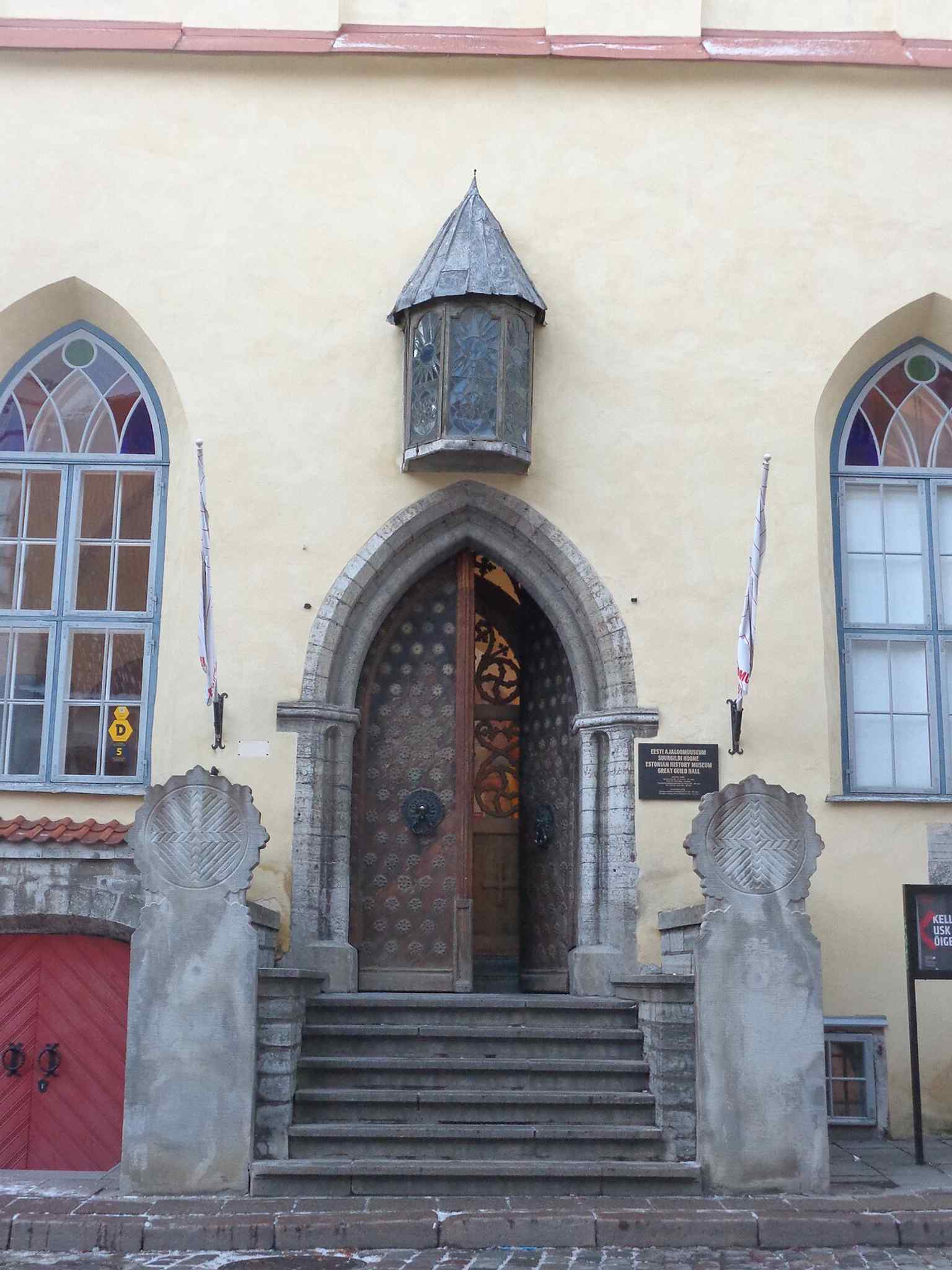
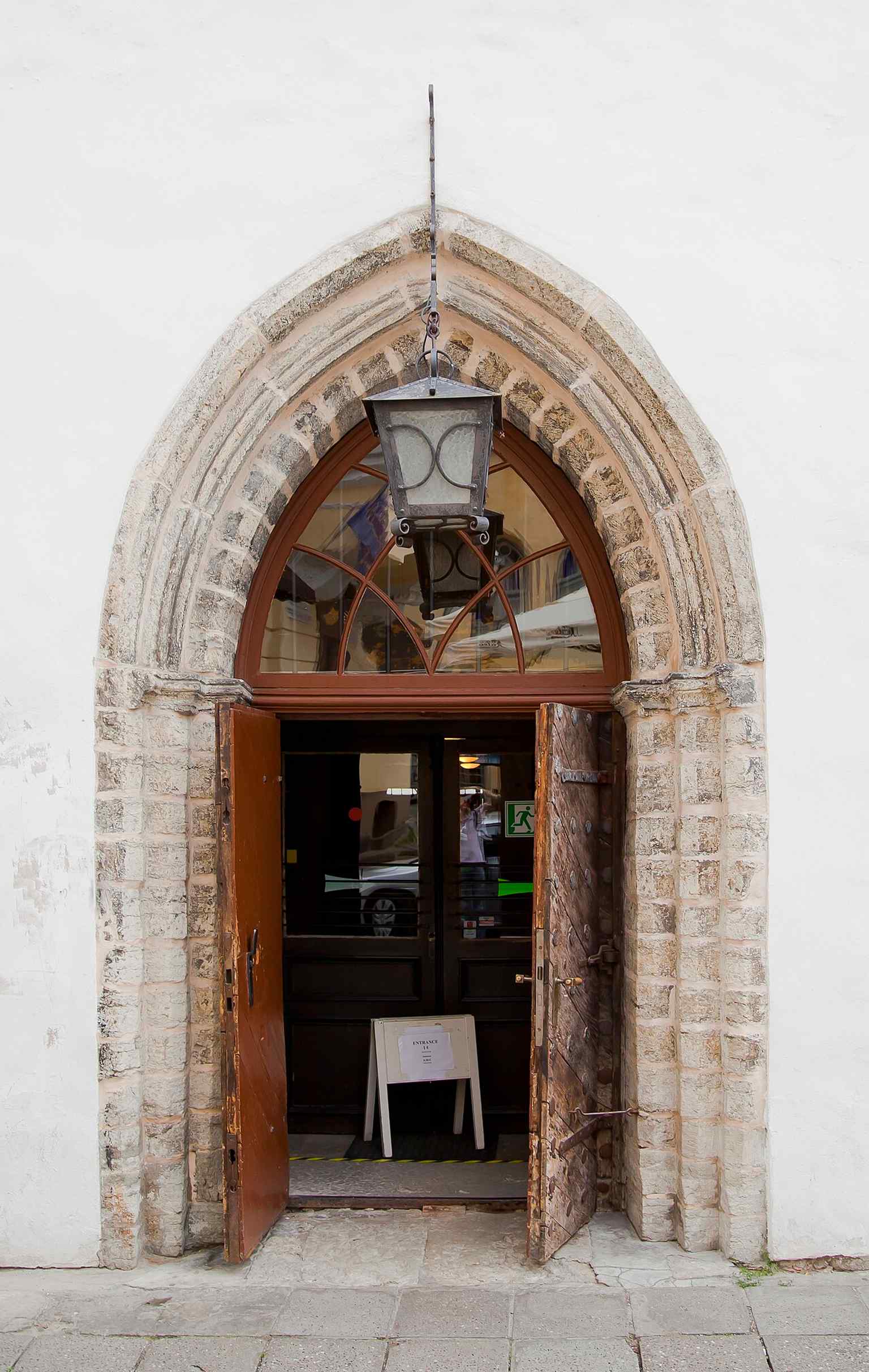
The main portal on Pikk Street, with its pointed arch and heavy oak door, is the building’s ceremonial entrance and one of the best-preserved medieval gateways in Tallinn.Photo: Borodun, Wikimedia Commons, CC BY-SA 4.0. Cropped & resized. 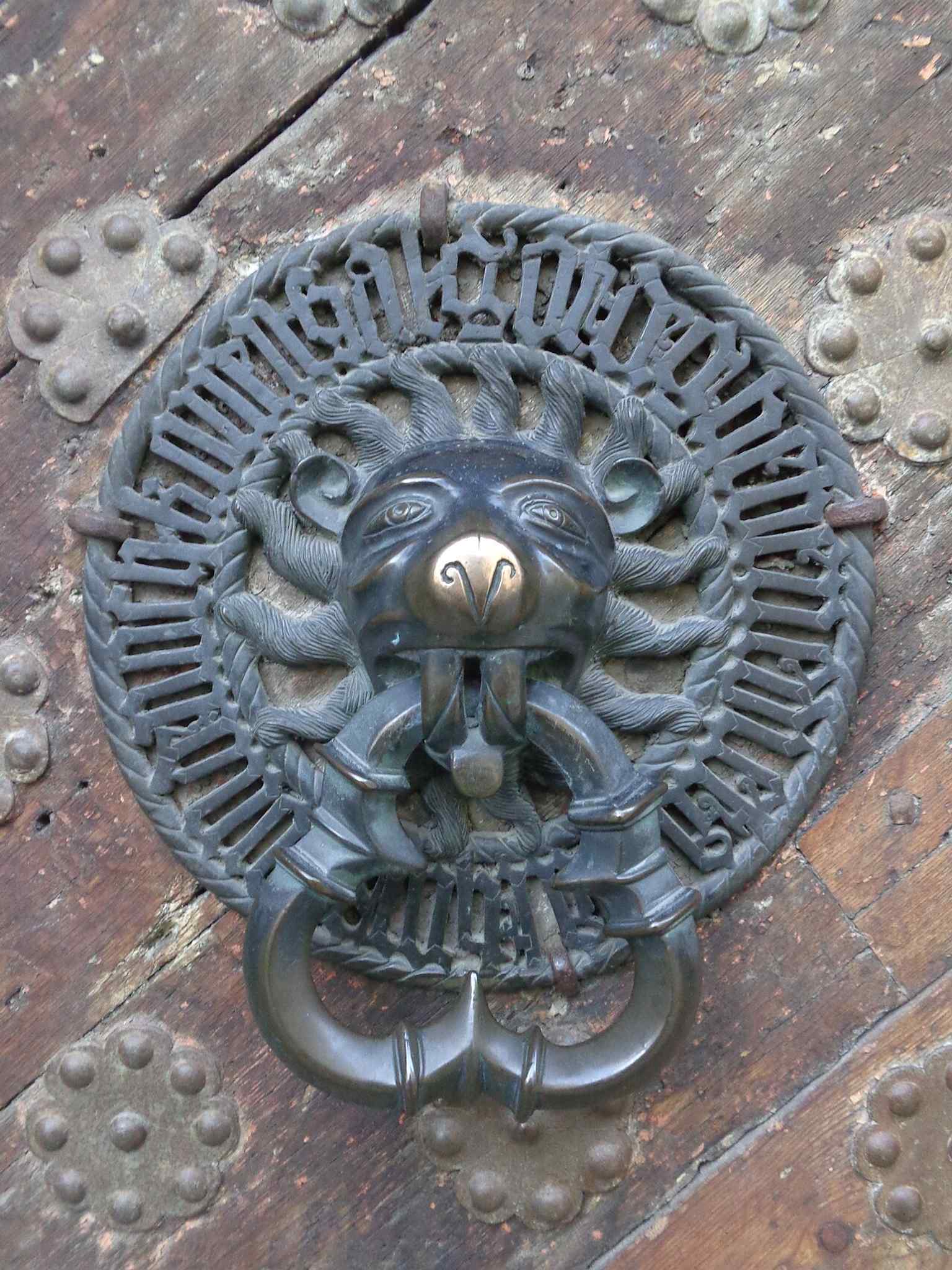
One of the bronze door hammers on the main door — a 15th-century detail that links the guild’s wealth and craftsmanship to the entrance itself.Photo: Borodun, Wikimedia Commons, CC BY-SA 4.0. Cropped & resized. 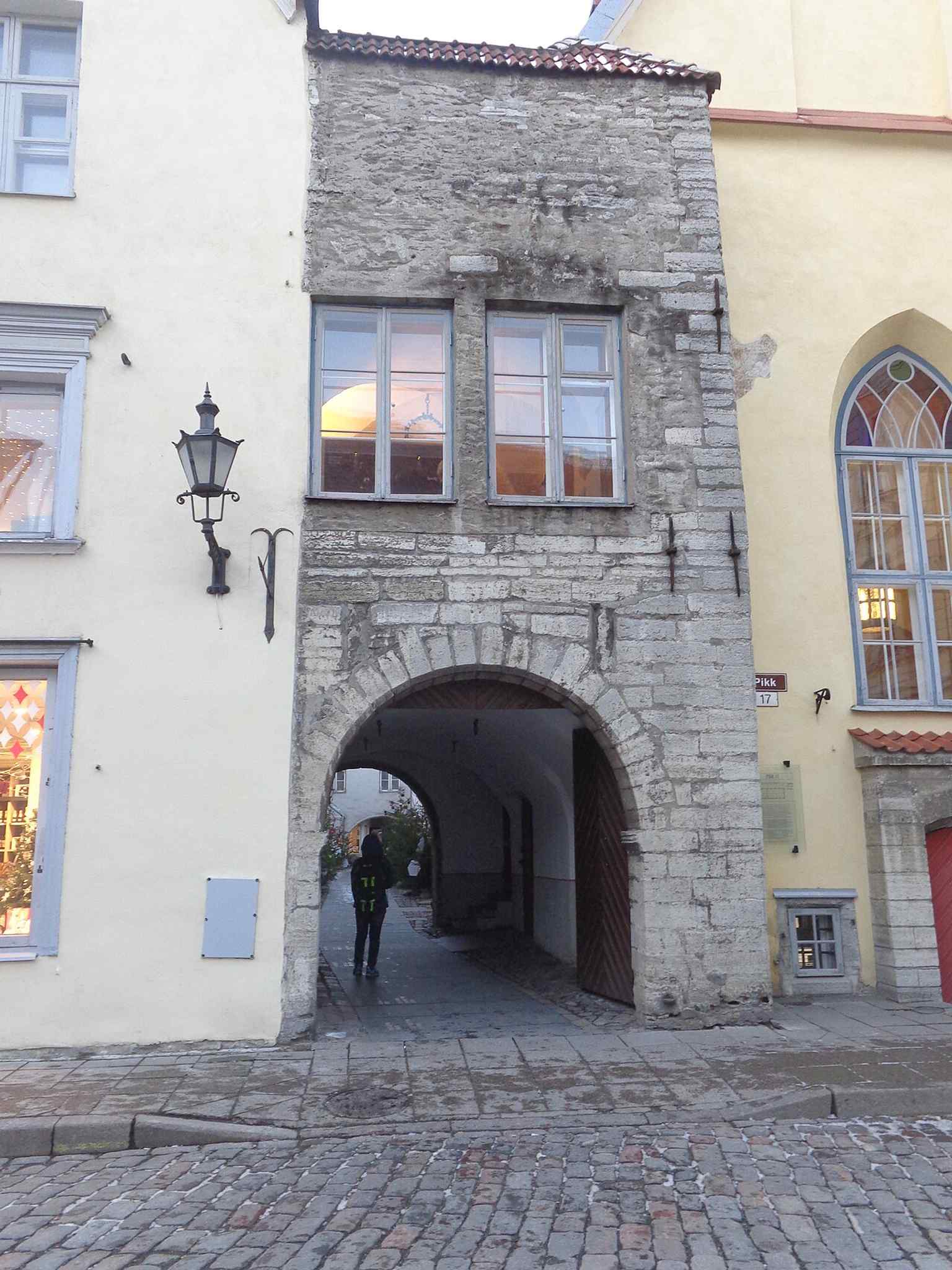
The entrance to Börsi käik from Pikk Street, the passage that once served the guild’s practical side and is now known as the “Path of History.”Photo: Borodun, Wikimedia Commons, CC BY-SA 4.0. Cropped & resized. 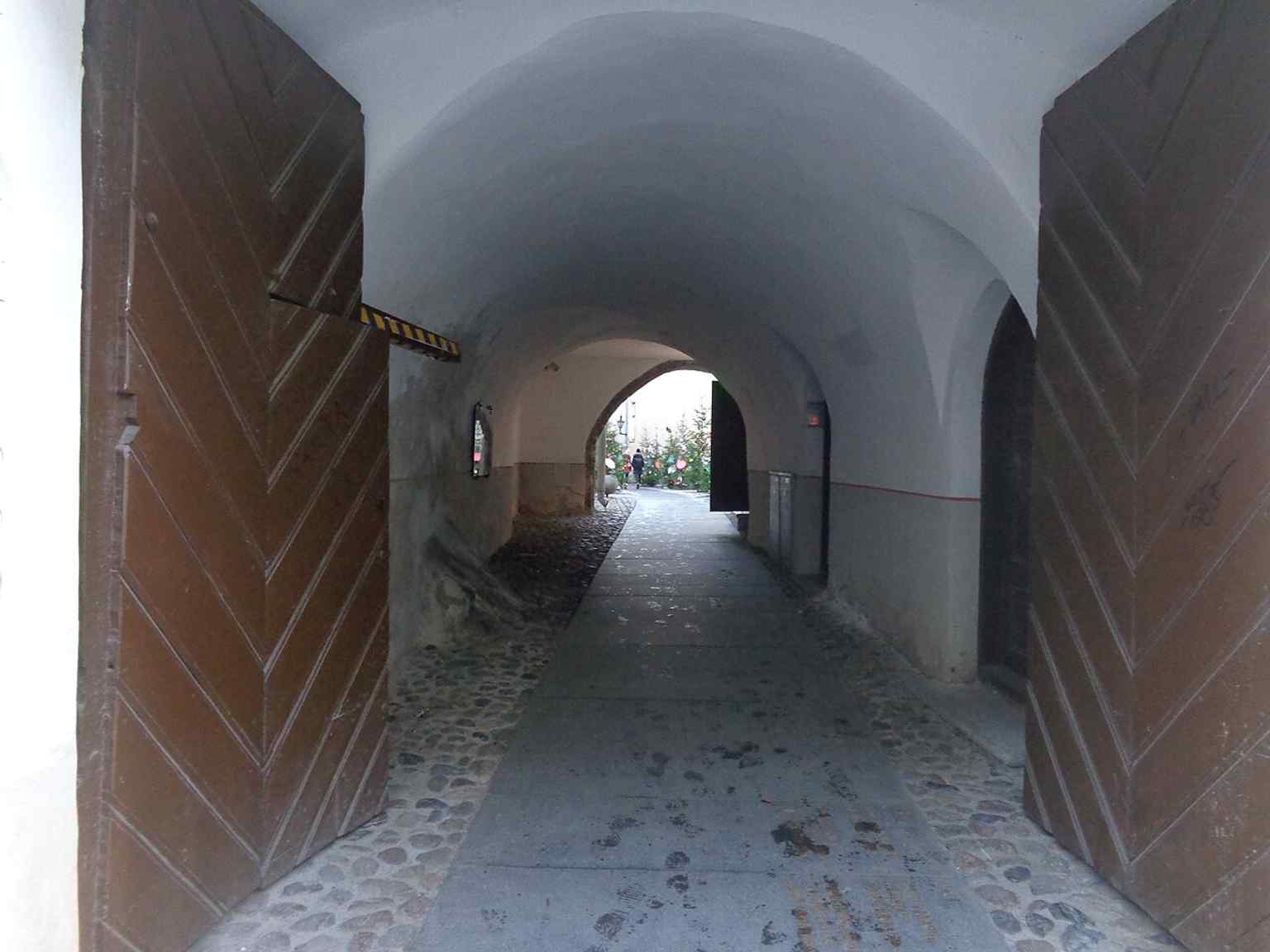
The Lai Street entrance to Börsi käik shows how the guild complex opens toward the rear side of the block, beyond the main Pikk Street façade.Photo: Borodun, Wikimedia Commons, CC BY-SA 4.0. Cropped & resized. 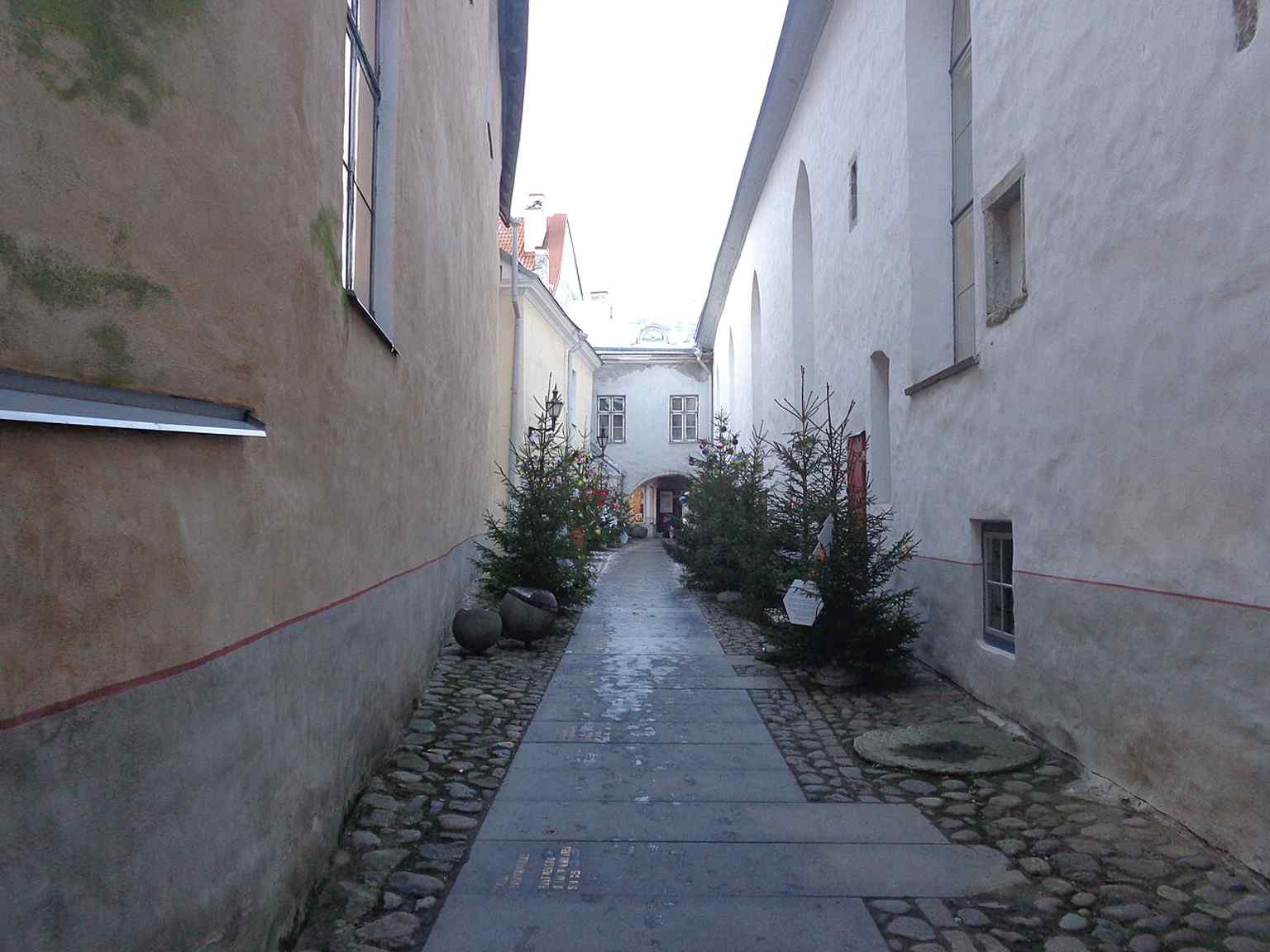
Börsi käik, the narrow passage beside the guild, where the old customs and tax-sorting yard has become a walk through Estonian history.Photo: Borodun, Wikimedia Commons, CC BY-SA 4.0. Cropped & resized. 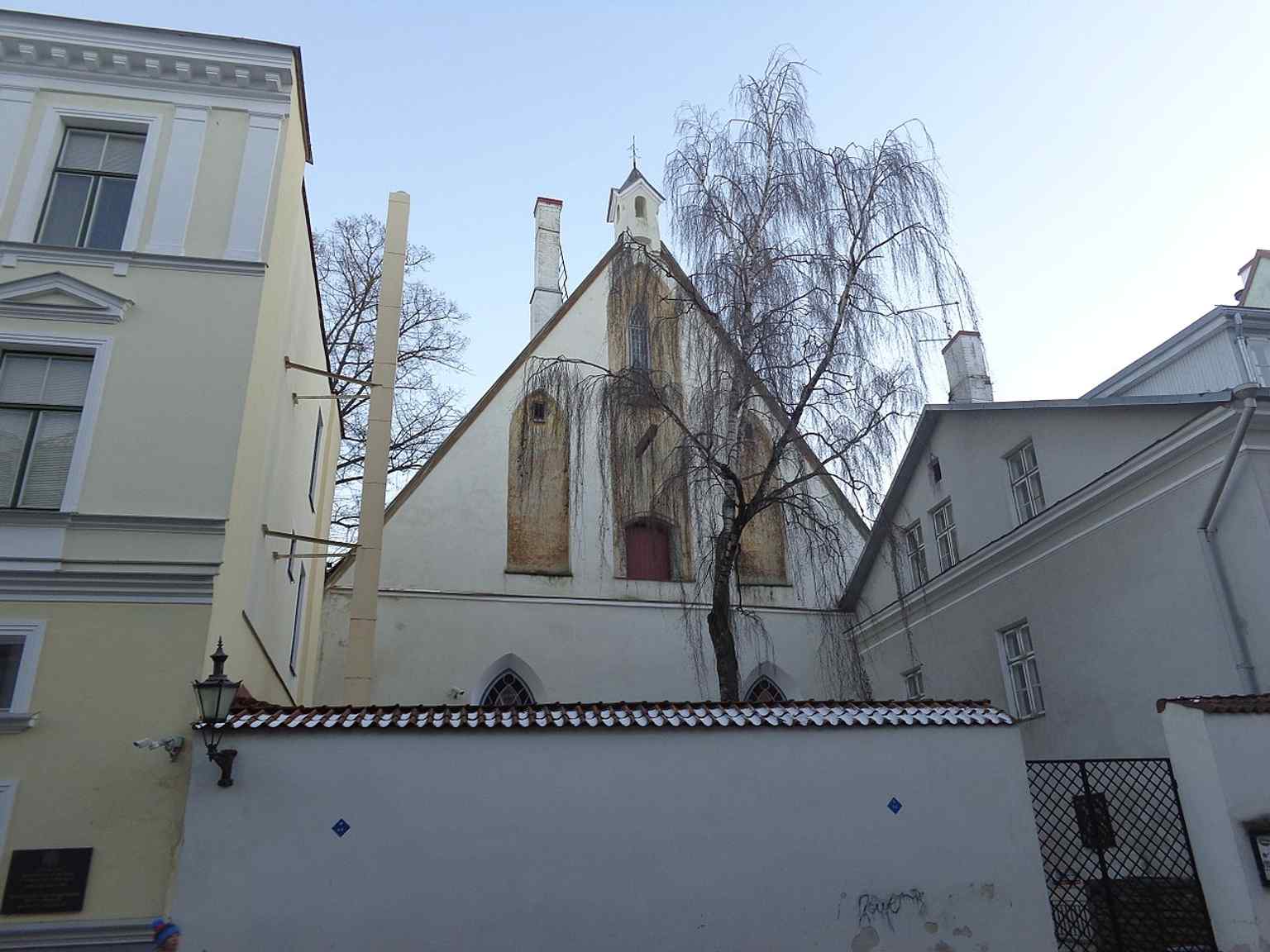
The back façade from Lai Street, reflecting the building’s layered history and its later rebuilding after 19th-century deterioration.Photo: Borodun, Wikimedia Commons, CC BY-SA 4.0. Cropped & resized. 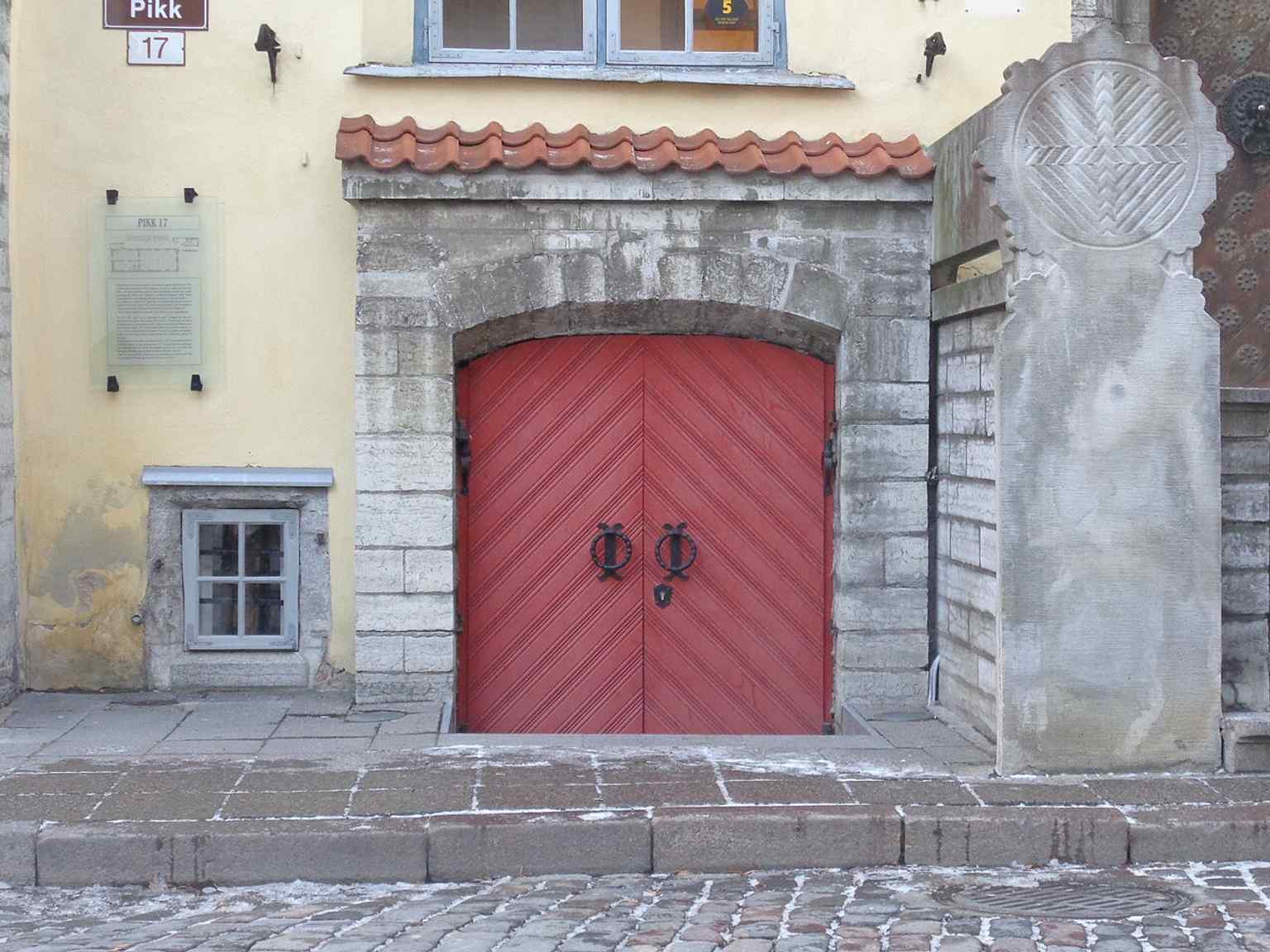
The cellar entrance, a reminder that the building’s lower levels stored wine and goods — and once even held a dungeon for disciplined guild members.Photo: Borodun, Wikimedia Commons, CC BY-SA 4.0. Cropped & resized. 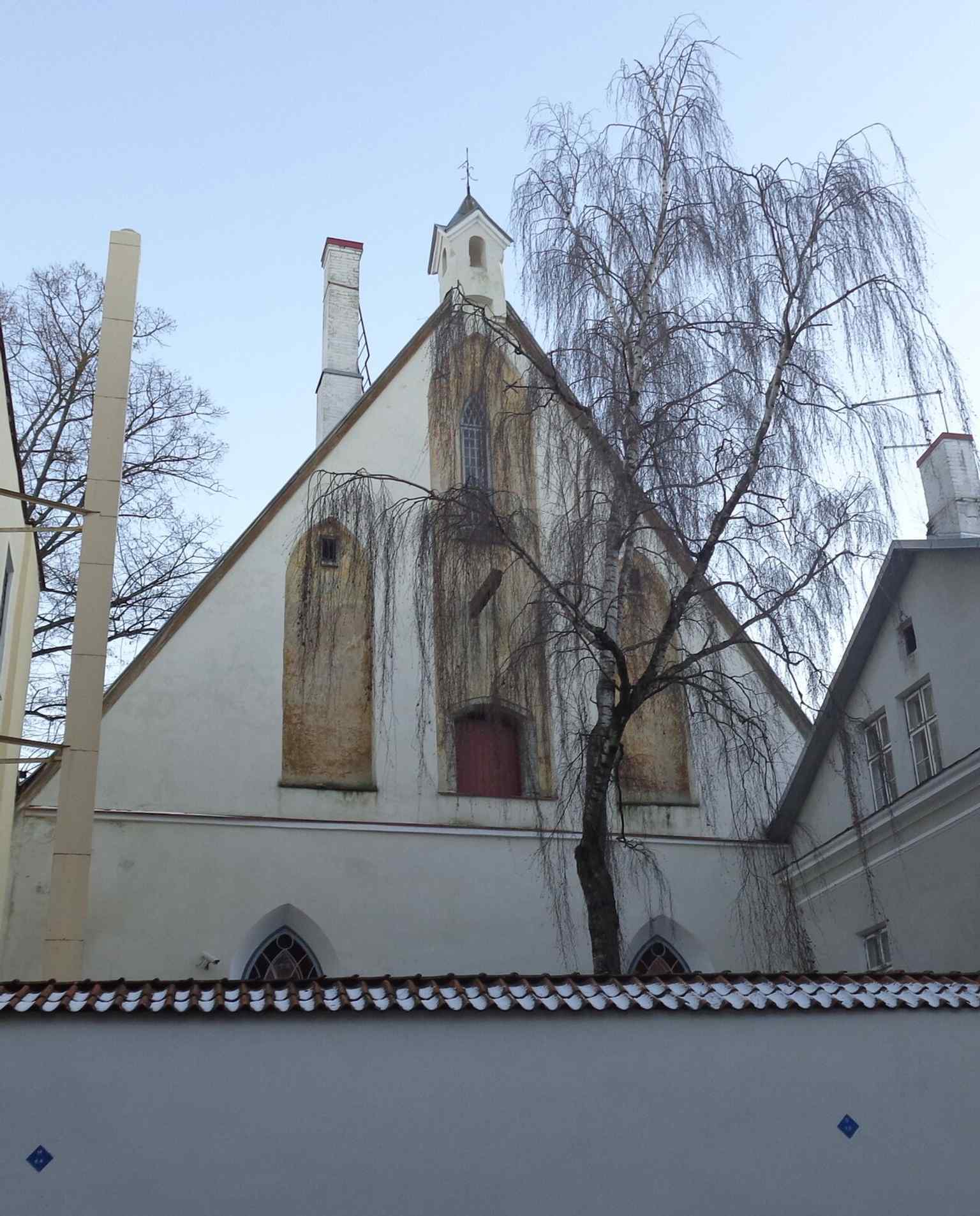
A tighter view of the rear façade on Lai Street, useful for showing the building’s less ceremonial side and its reconstructed back wall.Photo: Borodun, Wikimedia Commons, CC BY-SA 4.0. Cropped & resized. 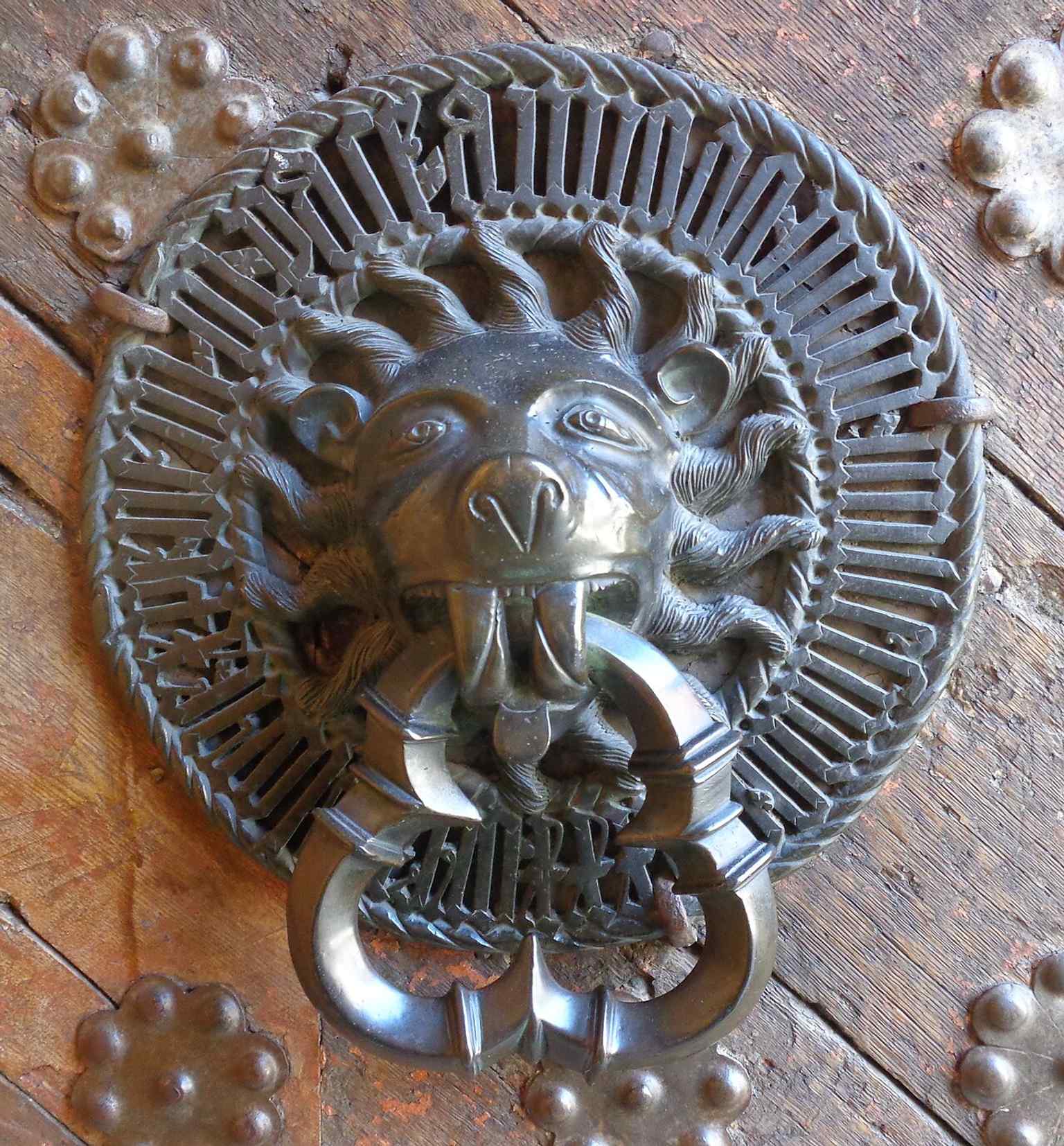
The right-hand door hammer on the main portal, one of the building’s finest surviving details from the 1430s.Photo: Borodun, Wikimedia Commons, CC BY-SA 4.0. Cropped & resized. 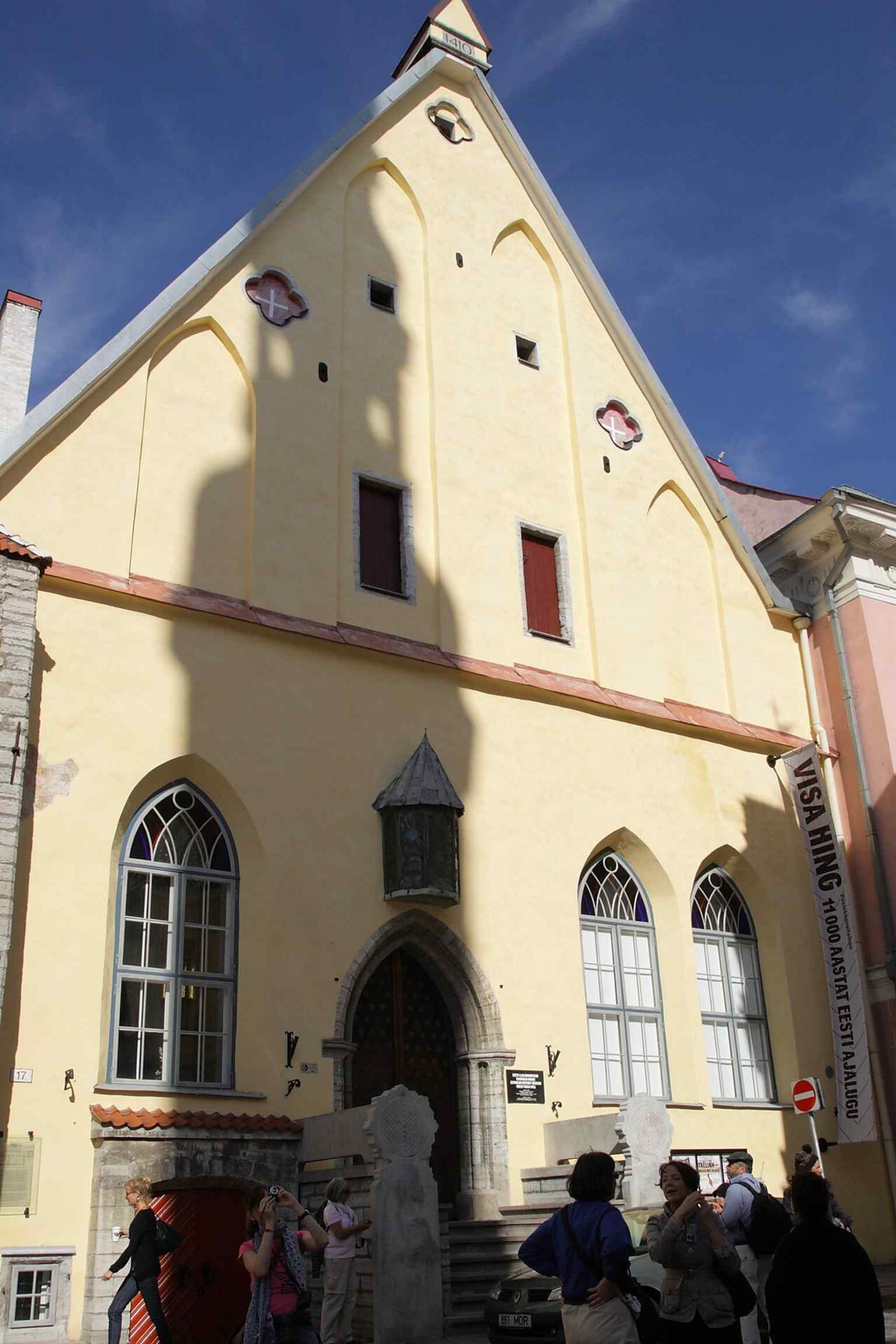
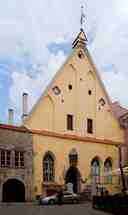
This historical view of the Great Guild Hall and Börsi käik helps show how the complex evolved between the 15th and 19th centuries.Photo: Vamps, Wikimedia Commons, CC BY-SA 3.0 ee. Cropped & resized. Look for the tall, narrow plaster-and-stone townhouse with a steep gable and an arched gateway cut into the façade. This house on Pikk Street holds one of Tallinn’s most delicate…Read moreShow less
Open dedicated page →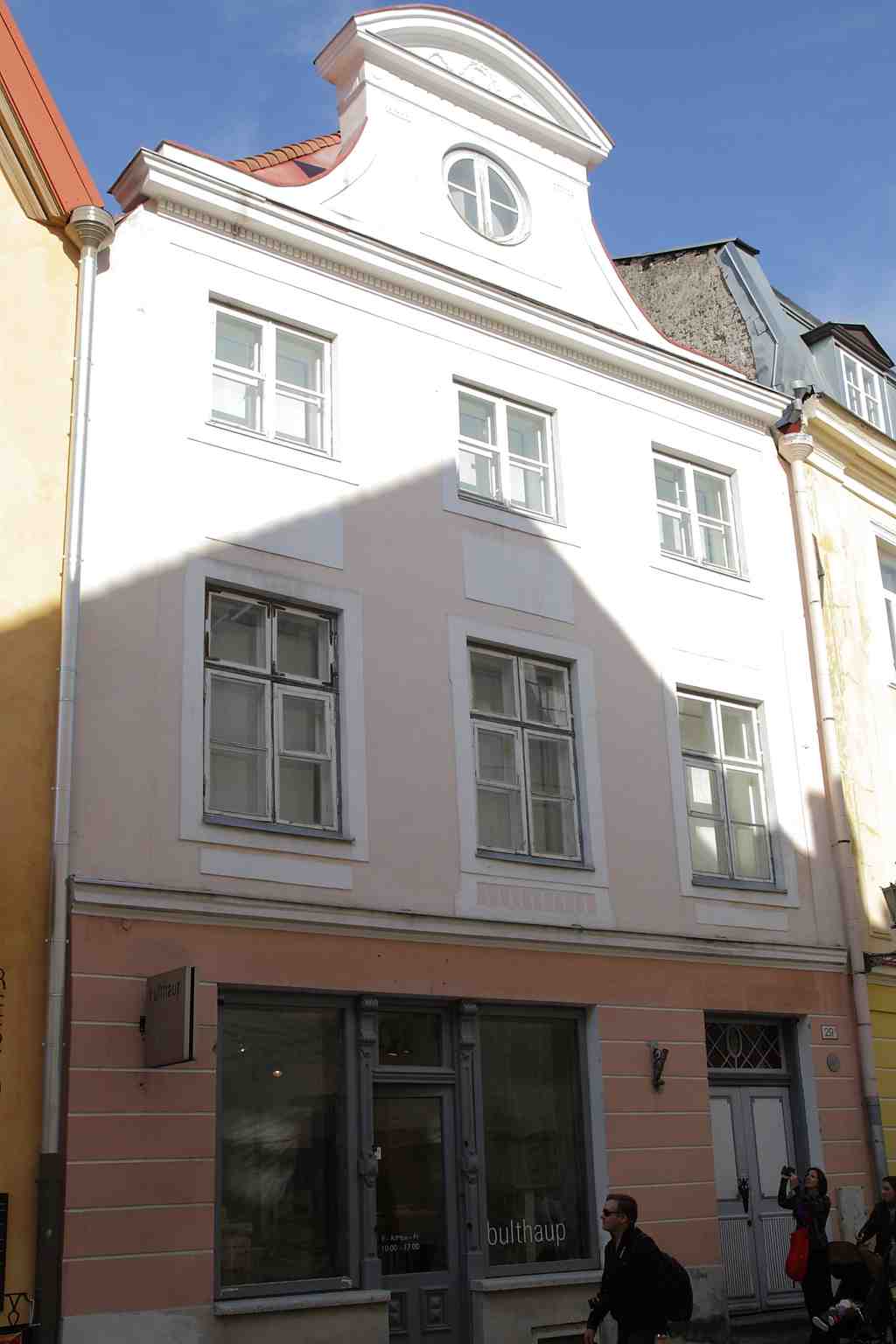
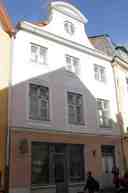
Museum of the Peoples of TallinnPhoto: Vamps, Wikimedia Commons, CC BY-SA 3.0 EE. Cropped & resized. Look for the tall, narrow plaster-and-stone townhouse with a steep gable and an arched gateway cut into the façade.
This house on Pikk Street holds one of Tallinn’s most delicate arguments: how a city names the people who belong to it. Until the sixth of September, twenty twenty-four, this was the Tallinn Russian Museum. Then the city renamed it the Museum of the Peoples of Tallinn, part of a broader move to remove the word “Russian” from public institutions. That might sound abrupt, but Tallinn has long survived by revising its labels after political breaks, occupations, and new beginnings. Here, reinvention does not wipe the slate clean. It rearranges the shelves, rewrites the caption, and asks again who gets represented in public memory.
The museum opened in twenty sixteen to preserve and present the heritage of Tallinn’s Russian community. Yet its own staff later argued that the exhibitions had already grown beyond a single story, reflecting the traditions of many peoples living in Tallinn and their contribution to the city’s culture. So the new name did not invent a wider mission from nothing; it made official a shift that had been gathering for years.
That question stretches back much further. In nineteen thirty-one, inside the Great Guild building nearby, organisers staged the first Russian Exhibition. It was a deliberate act of communal self-preservation through display: icons, church silver, theatre designs by the stage artist Yepinatyev, and paintings by local artists such as Anatoly Kaigorodov, Alexander Grinyov, and Viktor Alekseyev. The exhibition drew prominent visitors, including Colonel Jakobsen, Bishop Ioann of Pechory, and later President Konstantin Päts. Encouraged by the response, the organisers asked the government for a permanent museum. Economic hardship stopped them.
The idea returned, and returned again. In the two thousands, politicians such as Sergei Ivanov and Stanislav Cherepanov pushed for it. Then came a bruising legal struggle sometimes called the “war of two museums”: the city had the building, while Ivanov’s non-profit held on to the collection and told the court the objects were stored in a safe place known only to the Ministry of Culture. Even memory, it seems, can be contested property.
And then there is the house itself, number twenty-nine-a, the Nottbeck House, protected as an architectural monument. People often call it medieval, but that is only part of the truth. Its present face is a collage of rebuildings. In the early twentieth century, the Estonian painter Ants Laikmaa worked here. He opened what became Estonia’s first art school in this very building, and his studio mixed Estonians, Russians, and Baltic Germans in one creative room. One surviving photograph shows Laikmaa posing in the courtyard with Roma companions, an image bold enough to unsettle respectable old Reval society. He understood something this museum still wrestles with: identity is never still, and culture refuses neat borders.
Inside, there is no fixed permanent display yet, only temporary exhibitions, which somehow suits the place. This is a museum that keeps admitting the story is still being edited.
Now, just ahead, we meet a brotherhood that protected its place in the city far more physically, locking status and treasure behind its own walls: the House of the Blackheads. If you plan to return, the museum is usually open Wednesday to Sunday from eleven in the morning until six in the evening, and closed on Mondays and Tuesdays.
Show 11 more stopsShow fewer stopsexpand_moreexpand_less
On your right, look for a tall, narrow stone façade that rises into a steep stepped gable, with a dark carved portal below and a parade of sculpted figures and coats of arms…Read moreShow less
Open dedicated page →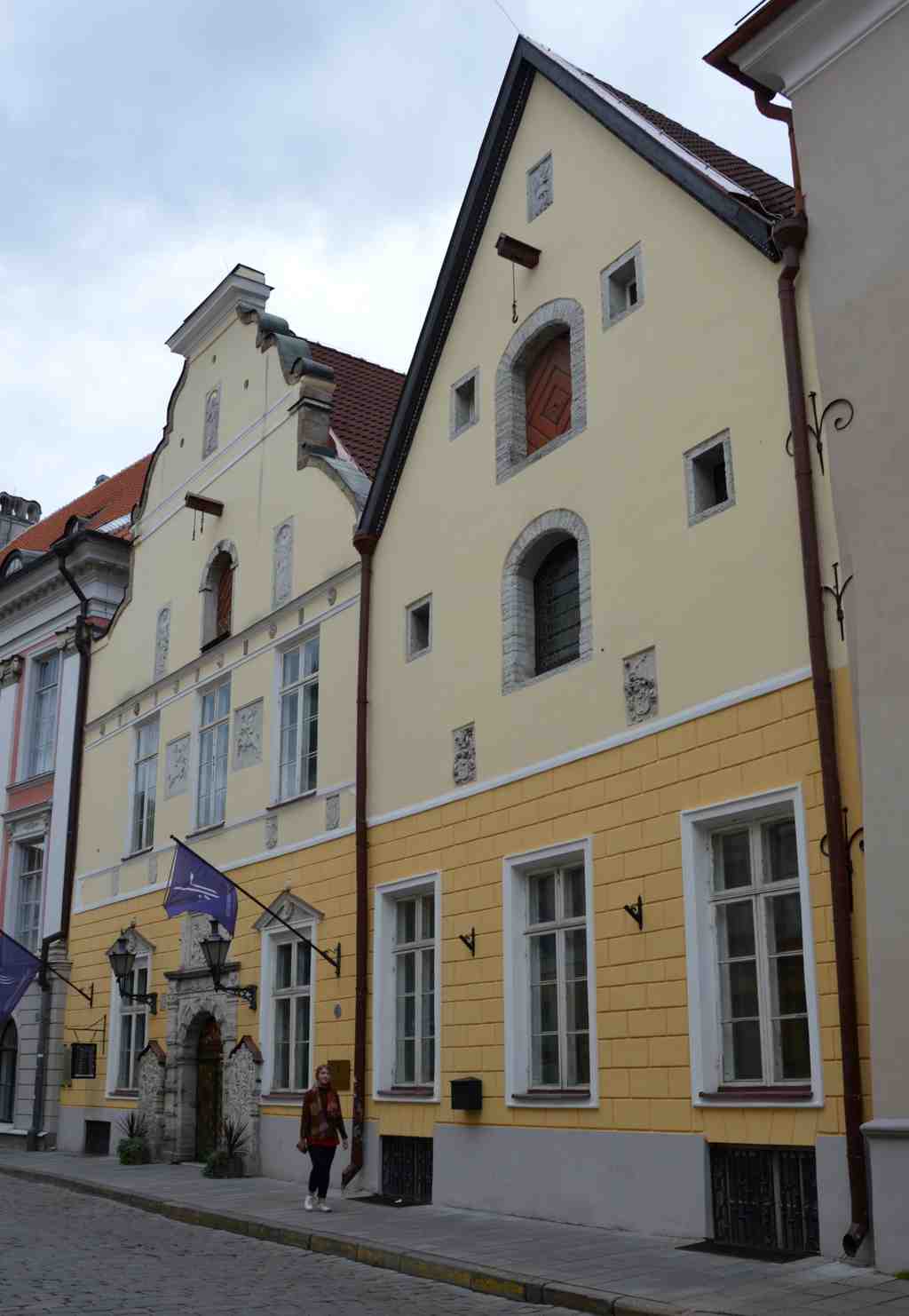
House of the BlackheadsPhoto: Olaf Meister, Wikimedia Commons, CC BY-SA 4.0. Cropped & resized. On your right, look for a tall, narrow stone façade that rises into a steep stepped gable, with a dark carved portal below and a parade of sculpted figures and coats of arms above.
This is the House of the Blackheads, and it belongs to one of Tallinn’s most fascinating social inventions: a brotherhood of wealthy, unmarried merchants and shipowners, formed around the year thirteen ninety-nine. They were bachelors, yes, but hardly carefree ones. Their rulebook, written down by fourteen oh seven, set out behaviour, duties, and fines for misconduct, payable in money or even in wax for church candles. So this was never merely a drinking club for ambitious young traders. It mixed business, youth, ritual, and status with almost monastic discipline.
The brotherhood rented this house in fifteen seventeen and bought it in fifteen thirty-one from the councillor J. Fiant. Inside, they created something unusually grand for a merchant property: not rows of storage rooms, but a ceremonial hall. In the early fifteen thirties they added a great new room at the back, supported by a striking octagonal pillar and load-bearing arches, with columns dividing the space into two long aisles, rather like a church interior adapted for feasting, meetings, and display. Commerce here dressed itself in ceremony.
And yet the most revealing act tied to this house happened not in public, but in secret. Most people admire the façade and never suspect that in fifteen twenty-four, when Reformation unrest threatened religious images and treasures, the Blackheads quietly removed and hid church valuables before iconoclasts could reach them. Among the rescued objects was a splendid altar from Bruges, commissioned decades earlier. Silver, paintings, sacred vessels, even model ships passed through their care. In this city, memory did not always wait for an official guardian; sometimes a private brotherhood moved first.
Now let your eyes travel upward. The façade you see owes much to Arent Passer, the master builder who reshaped it in fifteen ninety-seven. He kept the building’s Gothic height and gave it new Netherlandish Renaissance ornament. Above, Christ appears as the saviour of the world, with Justice holding scales and Peace carrying a palm branch. Around them sit the heraldic signatures of the Blackheads’ trading world: Bruges, Novgorod with its key, London, and Bergen with its crowned herring. If you open the image on your phone, the portal detail shows just how confidently this house announced itself.
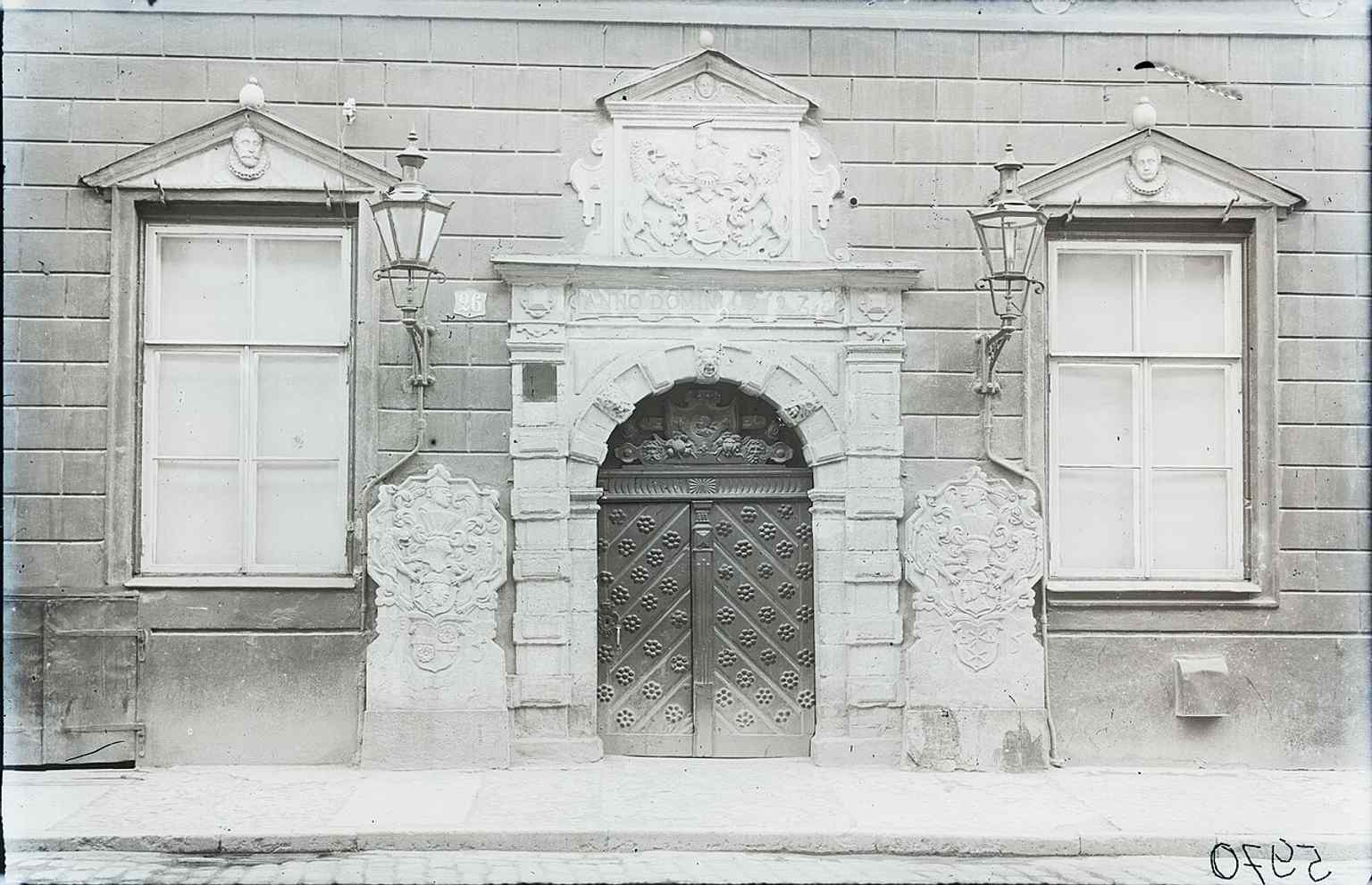
The ornate Blackheads’ portal on Pikk Street, a key façade detail of the Renaissance rebuilding that still marks the house today.Photo: Adolf Purve, Wikimedia Commons, Public domain. Cropped & resized. There is another delicious touch. The ground-floor window pediments carry portrait sculptures of King Sigismund the Third Vasa and his wife Anna of Austria, carved for a royal visit that never happened. Even an absent guest could serve the performance of prestige. The carved shield over the portal, added in sixteen oh four by Berent Geistman, completes the effect: a merchant brotherhood presenting itself almost like a court.
That performance kept changing. In eighteen ninety-five the brotherhood became a more modern club. In the Soviet years, the house served youth culture and a library. Now music fills it again; the White Hall inside has returned entertainment to a building that was designed for it.
And that is the tension to carry forward: splendid display on the outside, swift defensive instinct within. Just ahead, Rosen Palace declares status in a different accent altogether. If you want to come back inside here another time, it generally opens Monday to Friday from nine to five, and stays closed on Saturdays and Sundays.
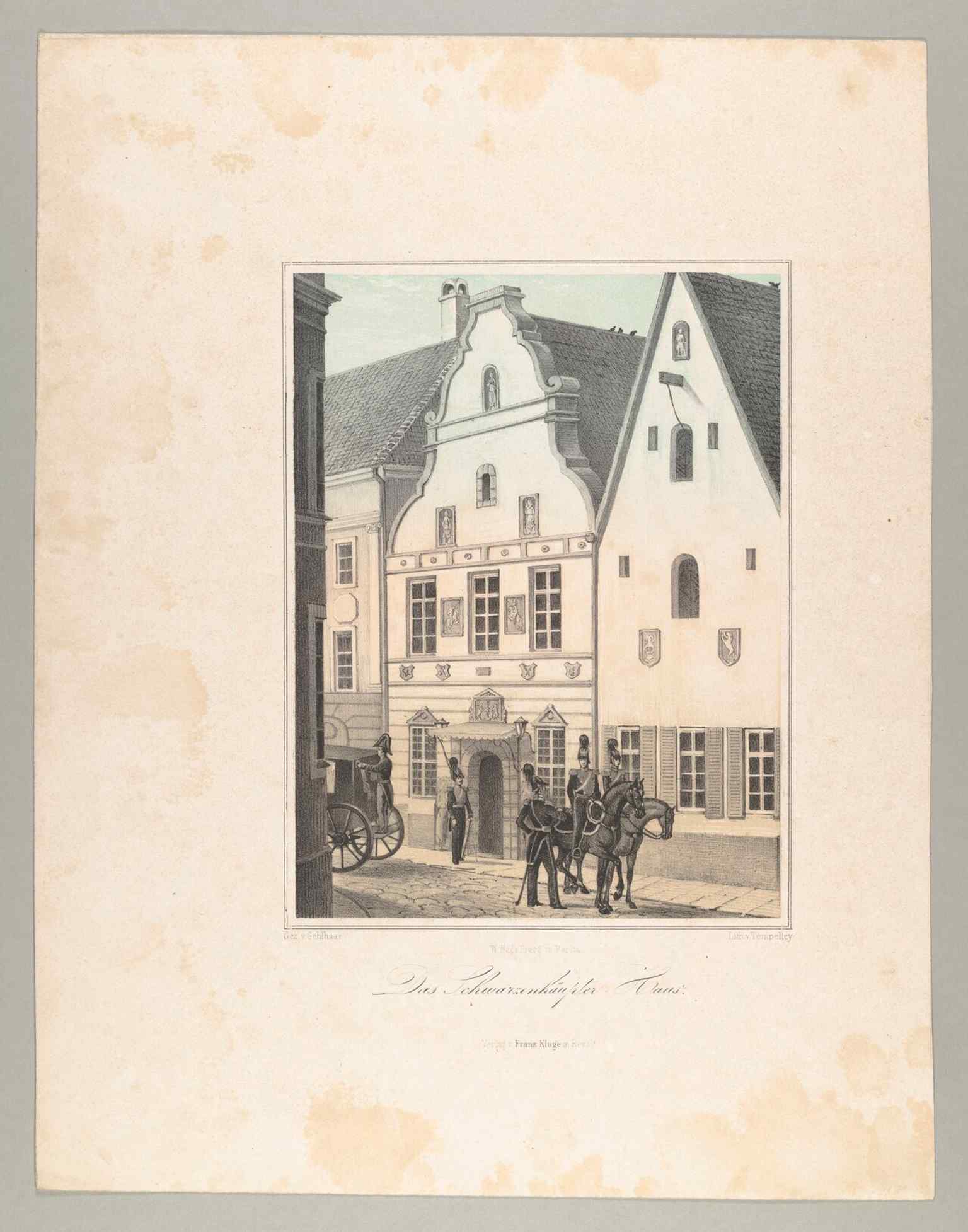
A 19th-century view of the House of the Blackheads, showing how this Tallinn landmark looked long before modern restorations.Photo: Theodor Gehlhaar, Wikimedia Commons, Public domain. Cropped & resized. On your right, look for a pale stone façade arranged in a strict, symmetrical block, with arched ground-floor windows and a triangular gable carrying the Rosen family coat of…Read moreShow less
Open dedicated page →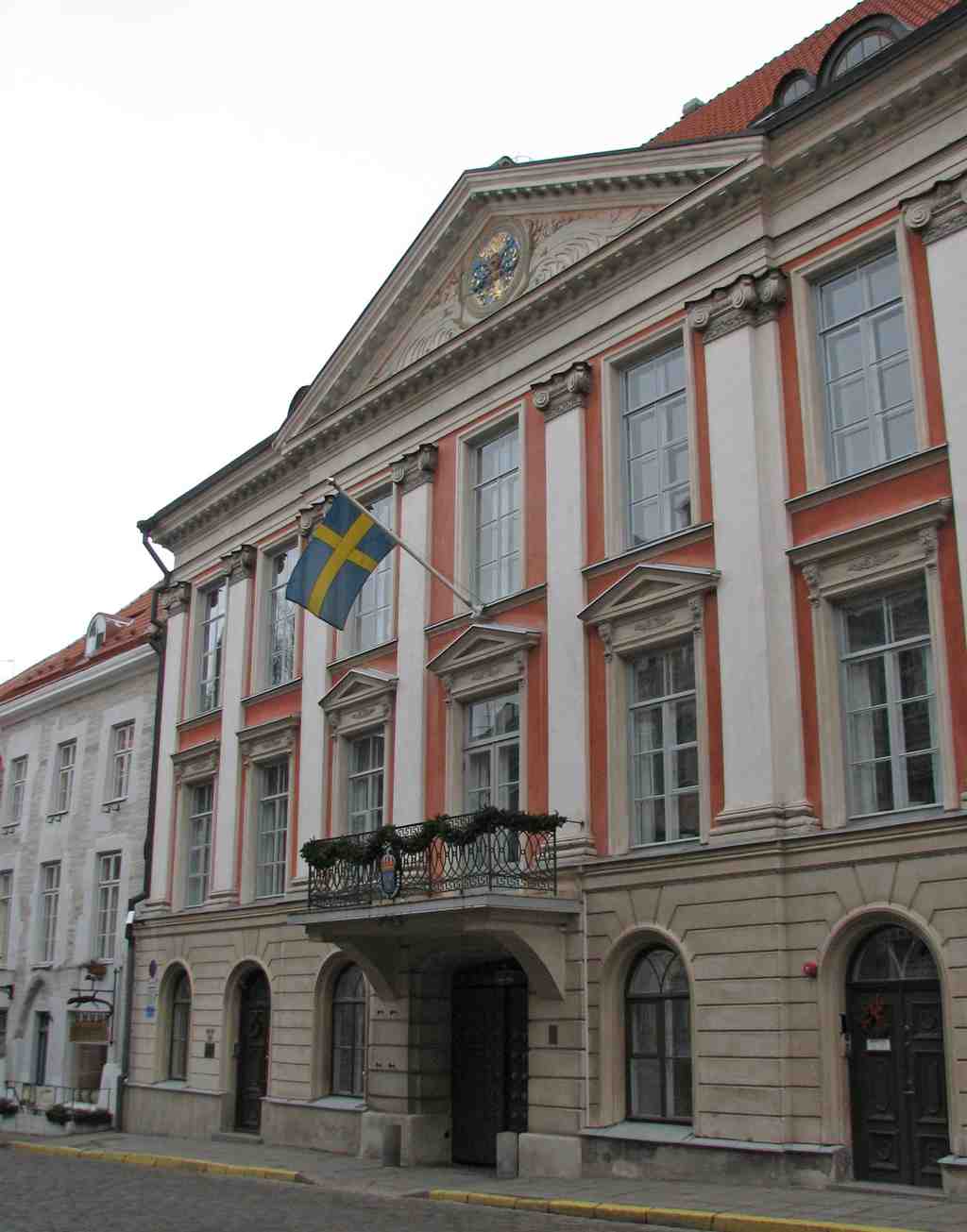
Rosen PalacePhoto: Narking, Wikimedia Commons, CC BY 3.0. Cropped & resized. On your right, look for a pale stone façade arranged in a strict, symmetrical block, with arched ground-floor windows and a triangular gable carrying the Rosen family coat of arms.
This is Rosen Palace, and it announces a change in Tallinn’s social language. The merchant brotherhoods nearby displayed wealth through halls and guild houses; here, under Swedish rule, Aksel von Rosen’s baroque ambition spoke in a different accent altogether. He was a high-ranking nobleman, deputy chairman of the court in Tartu, and between the sixteen seventies and sixteen seventy-four he cleared away two half-ruined houses on this plot and raised one of the grandest aristocratic residences in the city.
If you study the front, you can still feel that ambition. The façade is balanced and formal, divided by pilasters, those shallow flat columns attached to the wall, with Ionic capitals at the top. The lower windows are arched. Above the main cornice, that projecting ledge near the roofline, sits the triangular pediment with the Rosen arms, carved in stone and once meant to leave no doubt at all about whose house this was. If you want a closer look at the layers of the façade, glance at the detail on your screen.
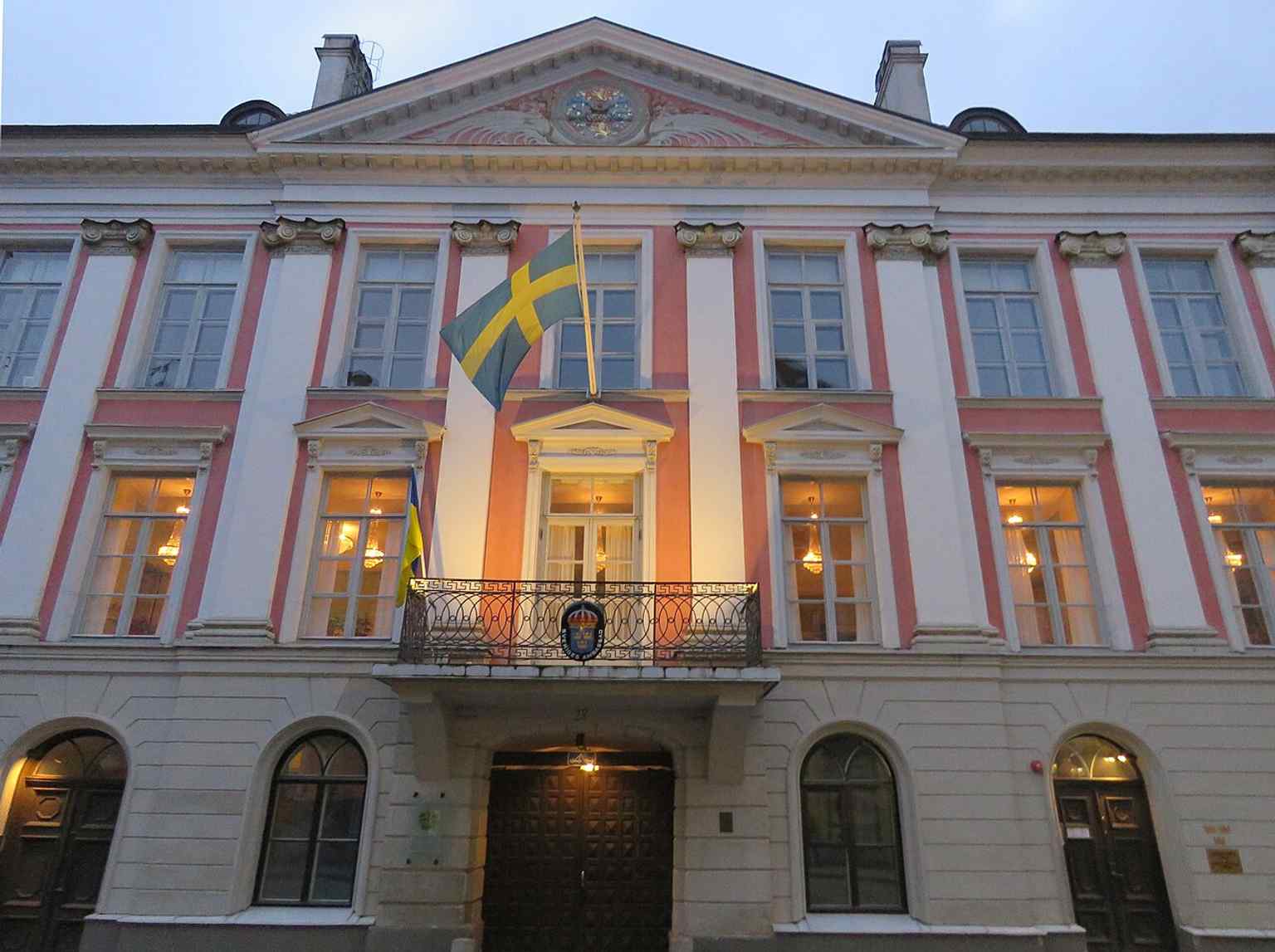
Facade detail from Rosen Palace, reflecting the rebuilt windows and architectural changes that accumulated over centuries.Photo: BeshevI, Wikimedia Commons, CC BY-SA 4.0. Cropped & resized. And yet, there is a small sadness built into the story. Aksel did not enjoy his palace for long. He died in sixteen seventy-nine and was buried in Saint Olaf’s Church. The house passed to his younger son, Bengt Gustav, and then to Bengt Gustav’s daughter. So this great declaration of family permanence slipped out of the direct line rather quickly. That is often the way with grand houses: they promise dynasties and deliver only a few brief seasons of ownership.
The palace itself refused to stay still. In the late eighteenth century Admiral Andrei Polyansky took possession, and for nearly a century the house served as the admiralty of the Russian Baltic fleet. Later Count Moritz Nieroth altered it again. Wilhelm von der Borg replaced a wooden balcony with a metal one in the early twentieth century and reshaped openings and stairs. By then, the original baroque appearance had been so thoroughly reworked that what you see now is not a sealed seventeenth-century relic, but a conversation between centuries.
That makes the building more interesting, not less. During restoration in the nineteen nineties, workers removed a temporary wall on the third floor and uncovered traces of an older baroque layout, including what was probably a lofty banquet hall. It was as though the house, after all its disguises, suddenly remembered one of its earliest selves. If you look at the image in the app, you can see how it still holds its place in this powerful stretch of Pikk Street, shoulder to shoulder with other houses of status.
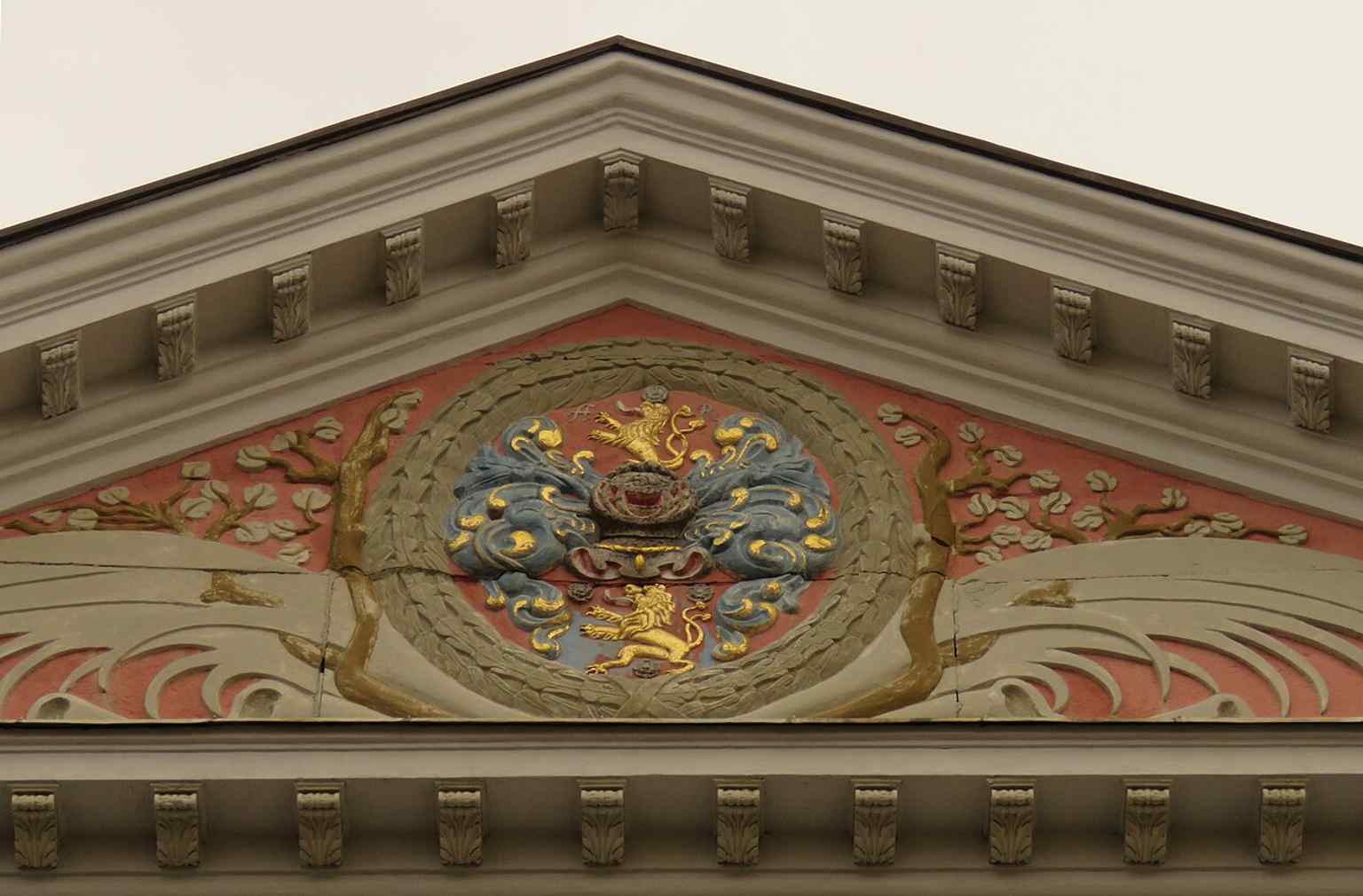
Rosen Palace on Pikk Street, part of the distinctive façade line alongside other landmark old town buildings mentioned in the history.Photo: BeshevI, Wikimedia Commons, CC BY-SA 4.0. Cropped & resized. Today, the palace serves as the Embassy of Sweden. After being an aristocratic residence, an admiralty, a credit society property, even a Soviet railway training school, it has returned to a representative role. Quite elegant, really: power changed hands, changed language, changed costume, but this address kept receiving it.
In a moment, we’ll leave noble display behind and head toward a church where influence moved through worship, language, and civic life from within. The Church of the Holy Spirit is about a two-minute walk from here.
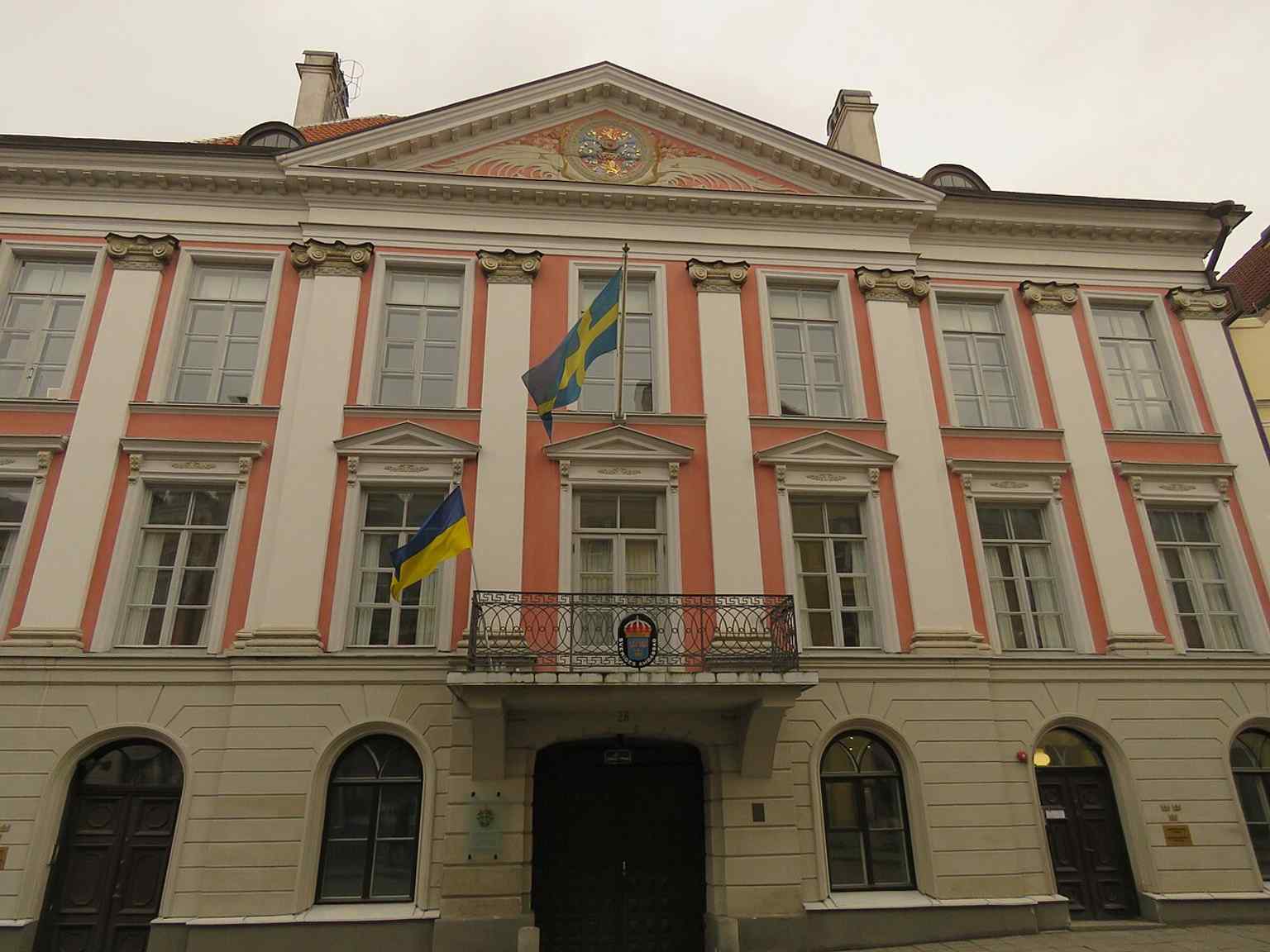
A contemporary view of Rosen Palace in Tallinn’s Old Town, a baroque manor that now houses Sweden’s embassy.Photo: BeshevI, Wikimedia Commons, CC BY-SA 4.0. Cropped & resized. Look for the pale stone-and-plaster church with its steep tiled roof, slender octagonal tower, and carved clock set into the outer wall. This is the Church of the Holy Spirit,…Read moreShow less
Open dedicated page →Look for the pale stone-and-plaster church with its steep tiled roof, slender octagonal tower, and carved clock set into the outer wall.
This is the Church of the Holy Spirit, and it keeps one of Tallinn’s gentlest revolutions. A church stood on this site by the early twelve hundreds, and the stone body before you settled into its present medieval form in the fourteenth century. It is one of the city’s best-preserved sacred buildings, and it still keeps much of its original medieval shape. On your screen, the exterior view shows how compact that medieval shape still feels. But the true turning point here was not stone. It was speech. By fifteen thirty-one, worship here already sounded in Estonian, and in fifteen thirty-five the first known printed Estonian church text, a catechism linked to Simon Wanradt and Johann Koell, emerged through this parish. Holy words had long arrived in Latin or German; here, they began to meet people in the language of home.
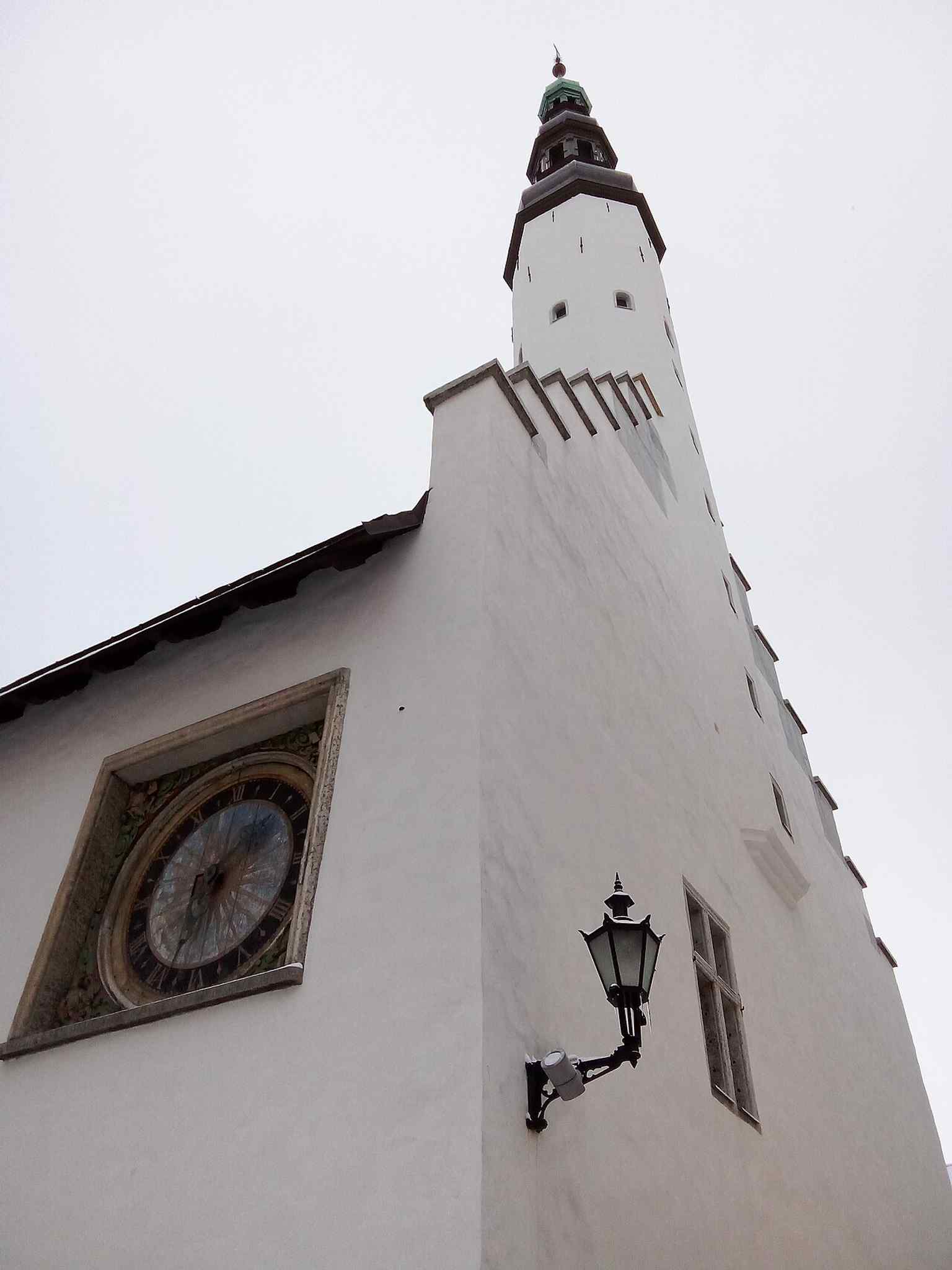
A crisp modern view of the Church of the Holy Spirit’s compact medieval body and tall western tower, the oldest surviving sacred building in Tallinn in its original form.Photo: Marmuras, Wikimedia Commons, CC0. Cropped & resized. What shifts inside a city when prayer is no longer heard as someone else’s authority, but as a voice speaking directly to your own life? The guardians of memory here were pastors, printers, and families returning week after week.
One of them still speaks across the centuries. Georg Müller, pastor here from sixteen oh one to sixteen oh eight, left thirty-nine Estonian sermons. In one, he argued with his flock about singing: not whether they sang loudly, but whether they sang with sincere hearts. Because of that small dispute, he survives not as a monument, but as a living voice.
This church also knew how fragile a city can be. In sixteen eighty-four fire ran up the tower. The church escaped total ruin, and that same year Christian Ackermann made the baroque wall clock that still measures the street’s ordinary hours. Then, in two thousand and two, flames struck the spire again during repair work; the bell tower’s interior burned almost entirely, the tower came down that very day, and builders restored it in two thousand and three to the historic design. If you look at the spire detail on your phone, you are looking at survival made visible. The church nearly slipped away in another fashion during the nineteenth century. After the old parish moved, it almost emptied out, and some discussed handing it to the Russian Orthodox Church. Then, in eighteen seventy-seven, a new Estonian congregation began here with only two families, and the building breathed again.
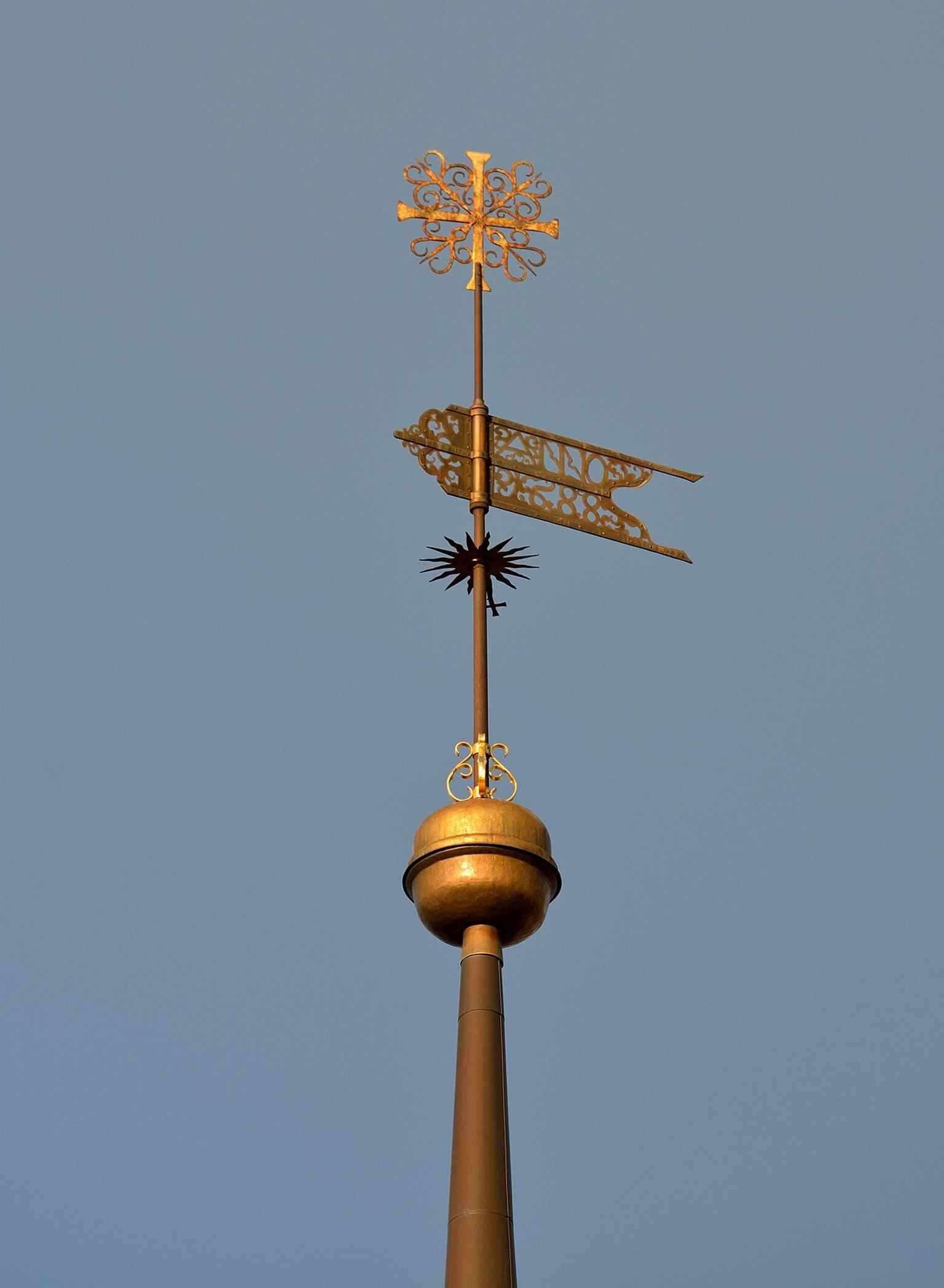
The tower’s finial and weather vane, recalling the 1688 restoration after the 1684 fire and the church’s rebuilt spire silhouette.Photo: Ivar Leidus, Wikimedia Commons, CC BY-SA 3.0 ee. Cropped & resized. Some places endure because people keep speaking and praying within them. In a moment, we’ll meet a place that survived by staying useful in a more practical way: the Town Hall Pharmacy, about one minute from here. If you want to come back inside later, it generally opens from half past nine until six, with shorter Sunday hours from eleven until four.
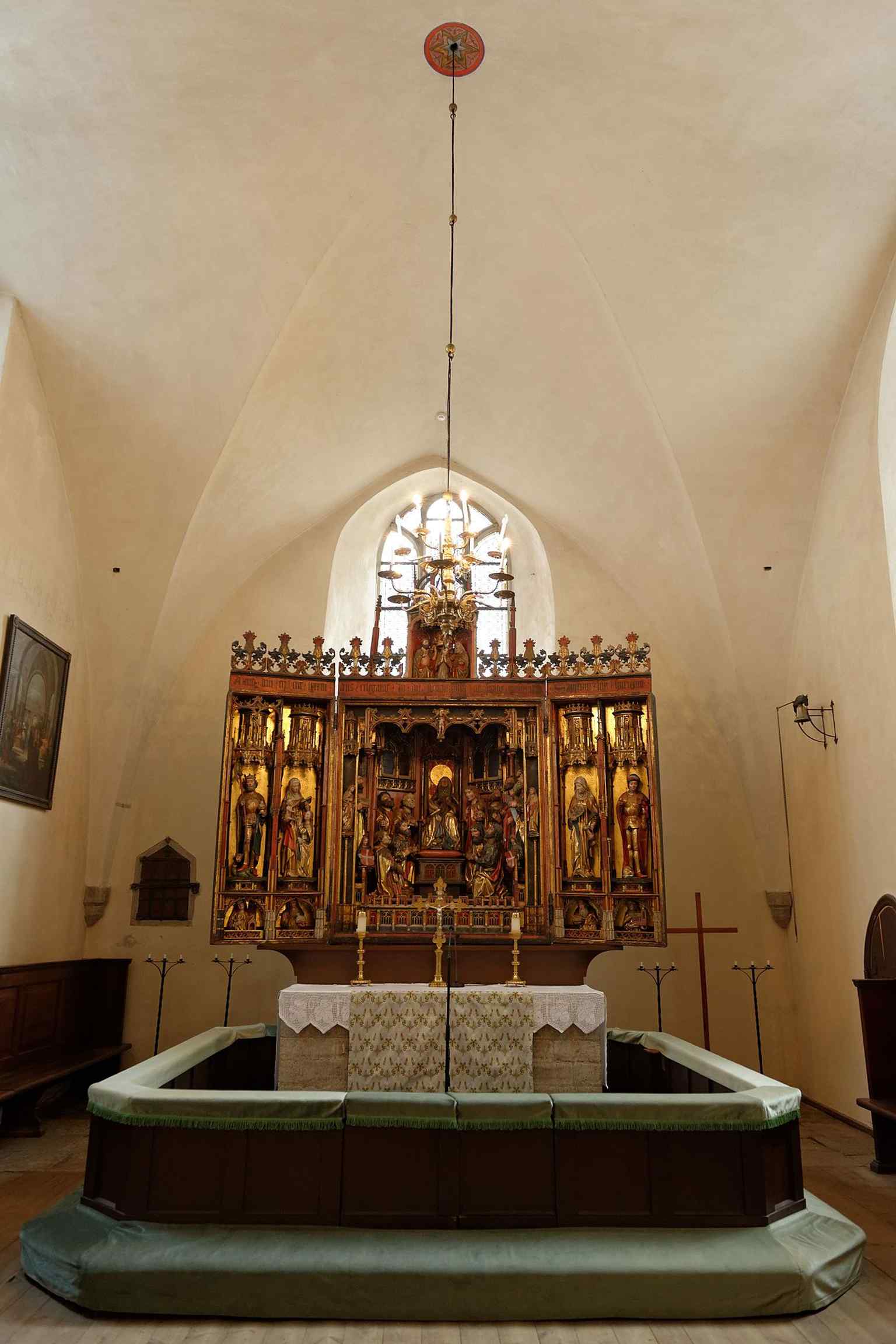
The main altar inside the church, connecting the interior to the long liturgical history that includes major early Estonian-language sermons.Photo: Thoodor, Wikimedia Commons, CC BY-SA 3.0 ee. Cropped & resized. 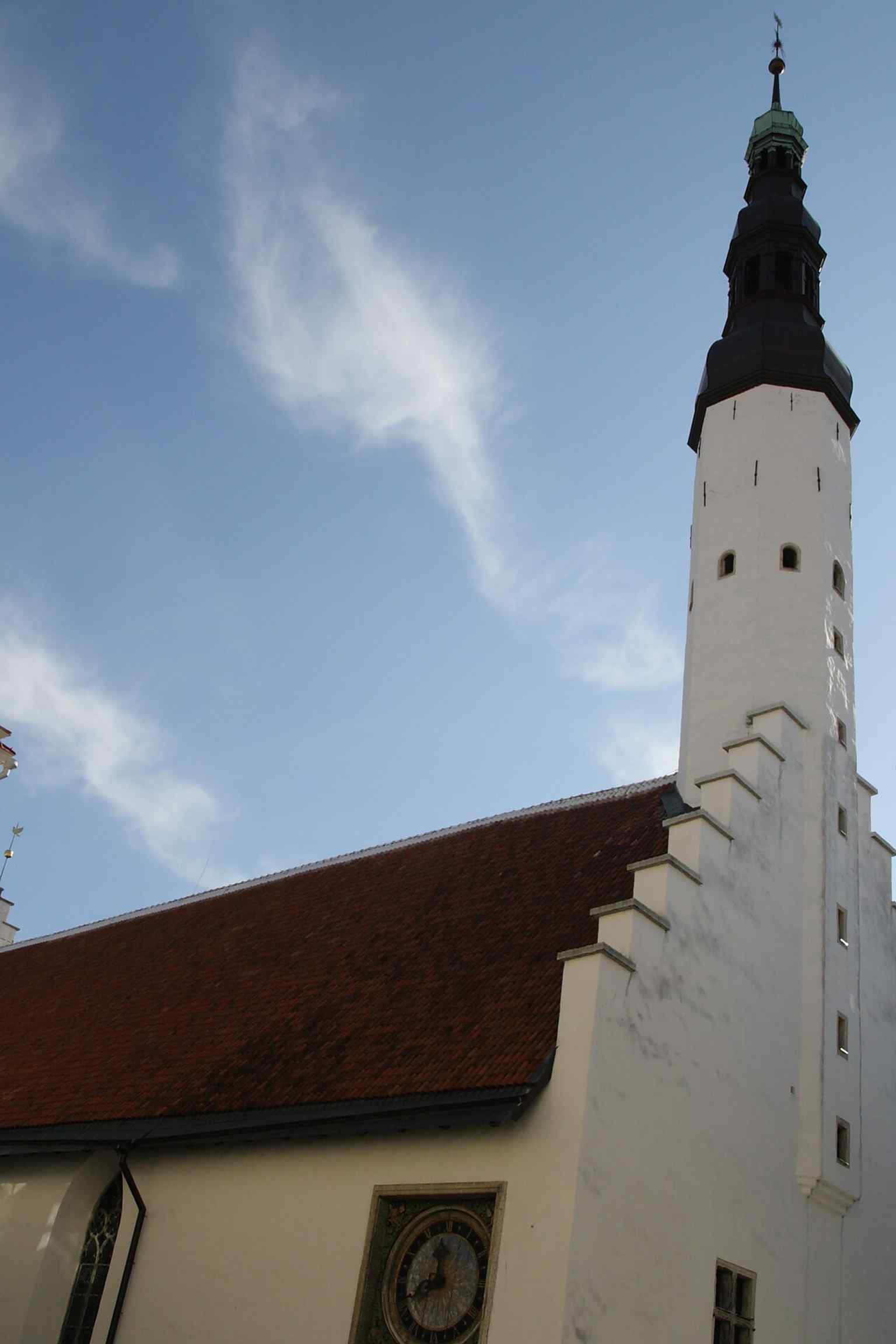
A historical view of the church from the 14th to 17th centuries, fitting for a landmark whose fabric has survived with unusual continuity.Photo: Vamps, Wikimedia Commons, CC BY-SA 3.0 ee. Cropped & resized. 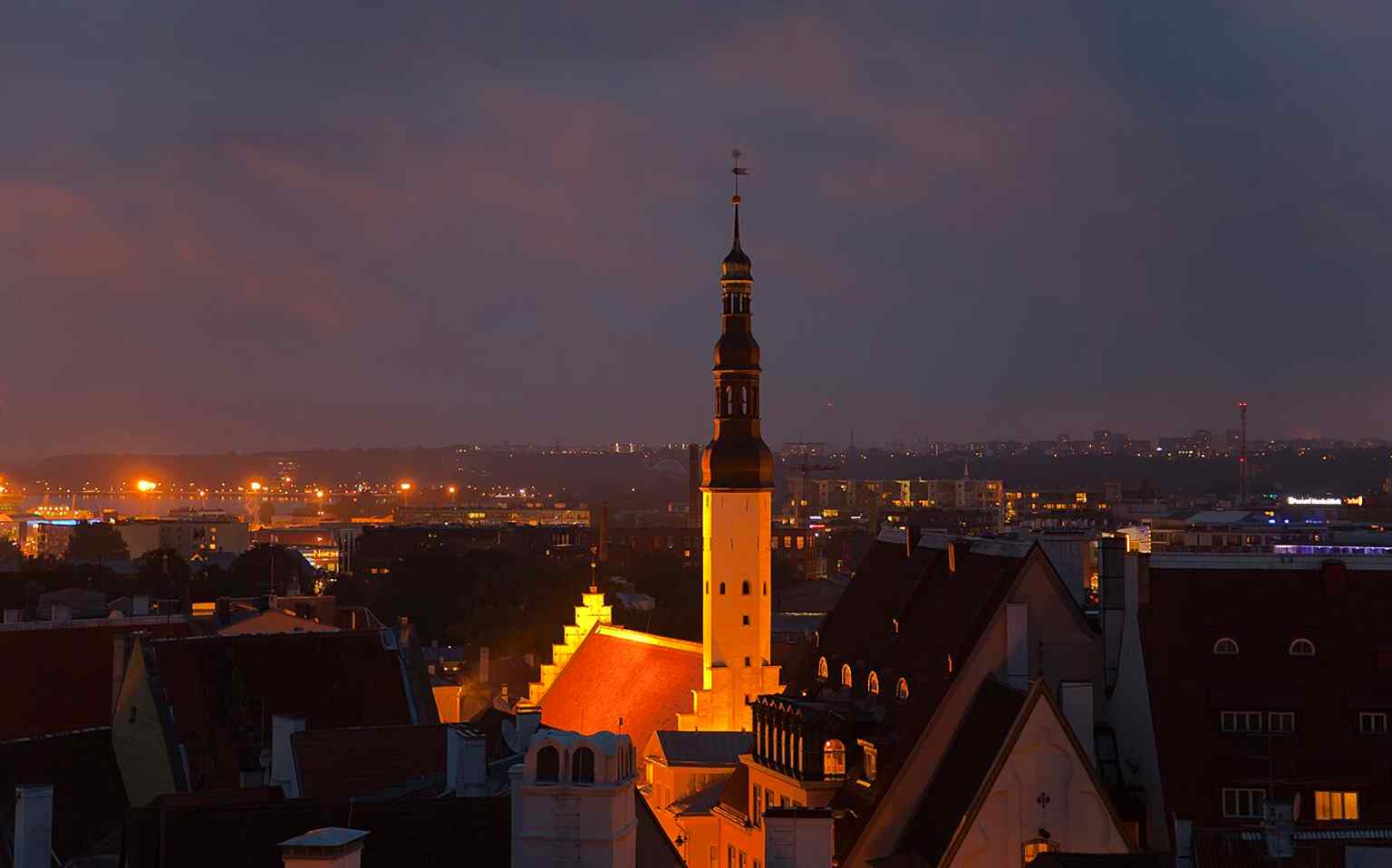
A panoramic view from Toompea placing the church within Tallinn’s medieval skyline, where its small tower still stands out above the Old Town.Photo: Diego Delso, Wikimedia Commons, CC BY-SA 3.0. Cropped & resized. 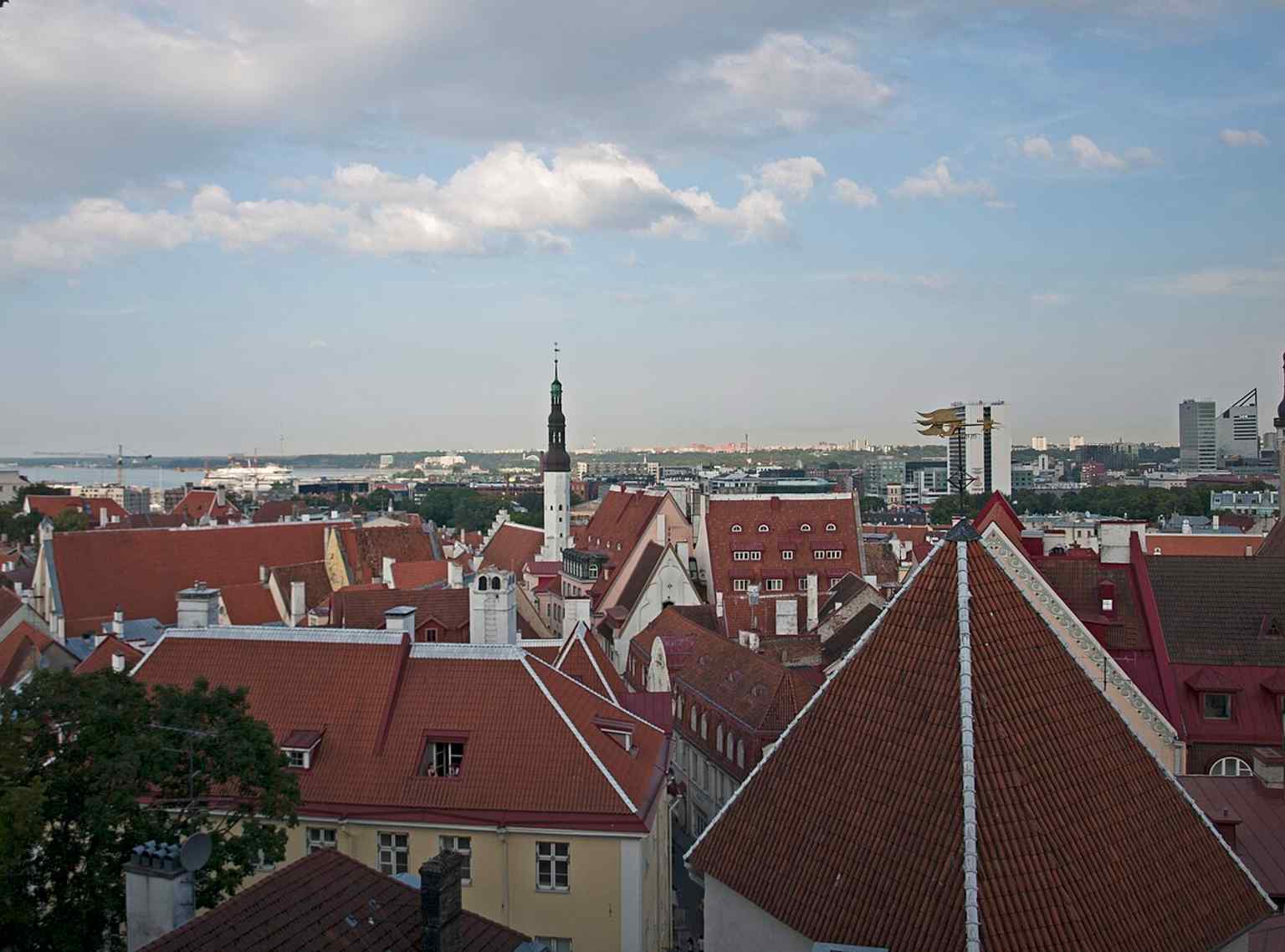
The tower seen from a high viewpoint, with nearby Old Town architecture in the foreground and the church’s spire rising over the streets.Photo: Ymblanter, Wikimedia Commons, CC BY-SA 4.0. Cropped & resized. 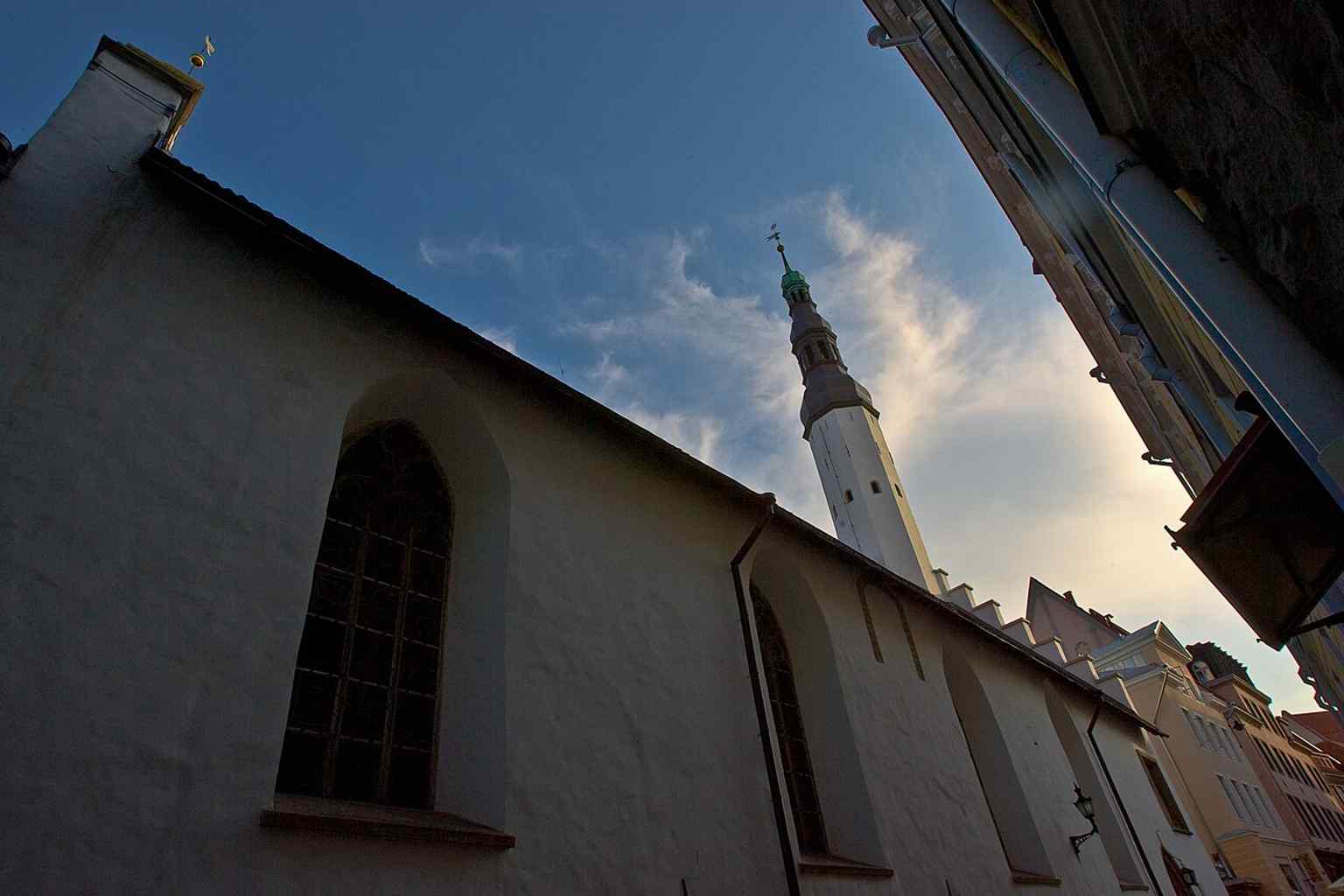
A classic full exterior view of the church, useful for presenting its simple medieval massing and well-preserved facade.Photo: Rene Suurkaev, Wikimedia Commons, CC BY-SA 3.0 ee. Cropped & resized. 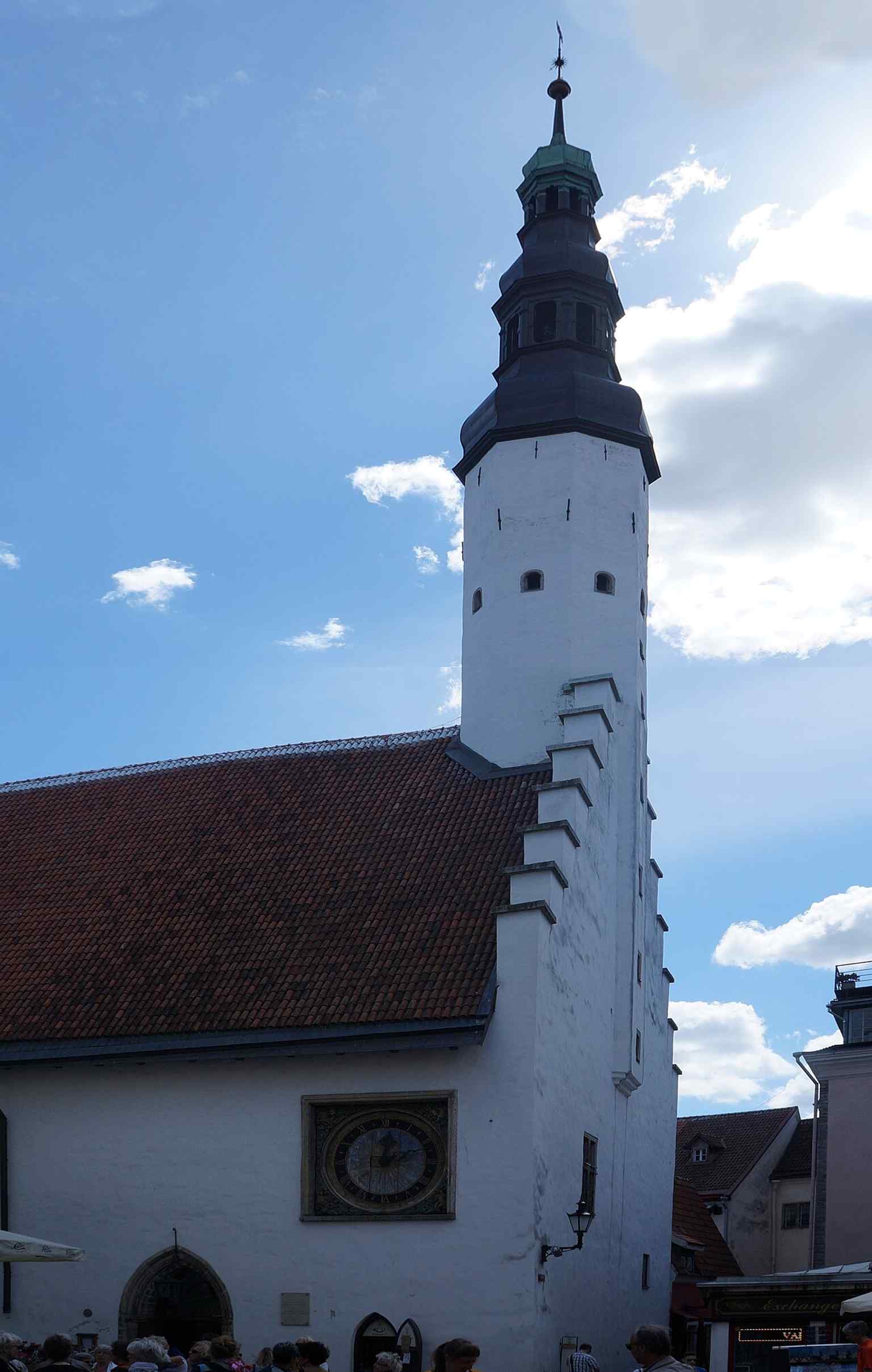
A tall, detailed exterior shot that emphasizes the church’s narrow profile and tower, part of the oldest surviving sacral building in Tallinn.Photo: PIERRE ANDRE LECLERCQ, Wikimedia Commons, CC BY-SA 4.0. Cropped & resized. 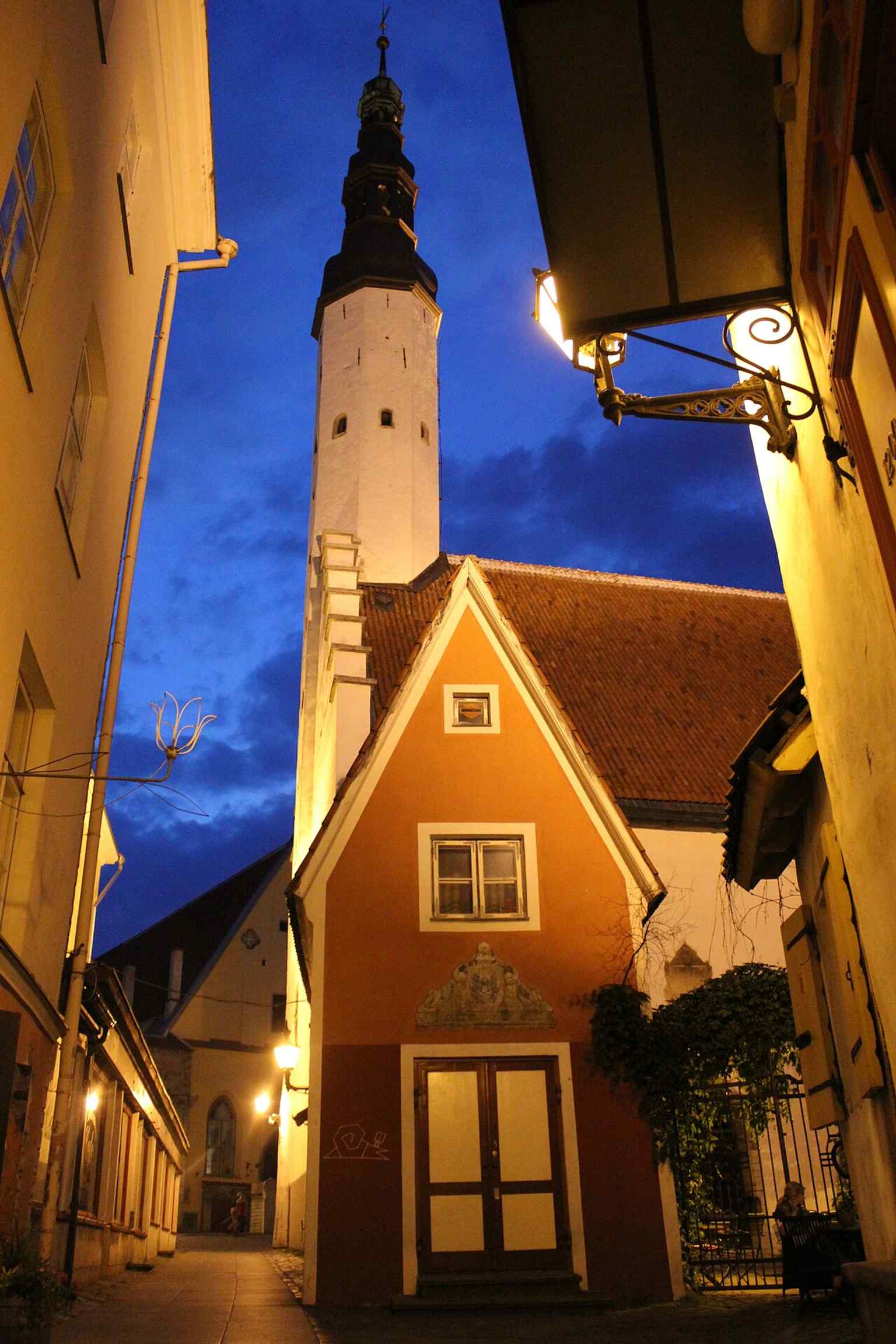
The church tower in the Old Town, a compact Gothic survivor that has witnessed centuries of fires, reforms, and restoration.Photo: Julian Nyča, Wikimedia Commons, CC BY-SA 4.0. Cropped & resized. Look for the pale plaster-and-stone gabled house with its narrow pointed roofline and the old apothecary sign fixed to the façade facing the square. This is Raeapteek, the Town…Read moreShow less
Open dedicated page →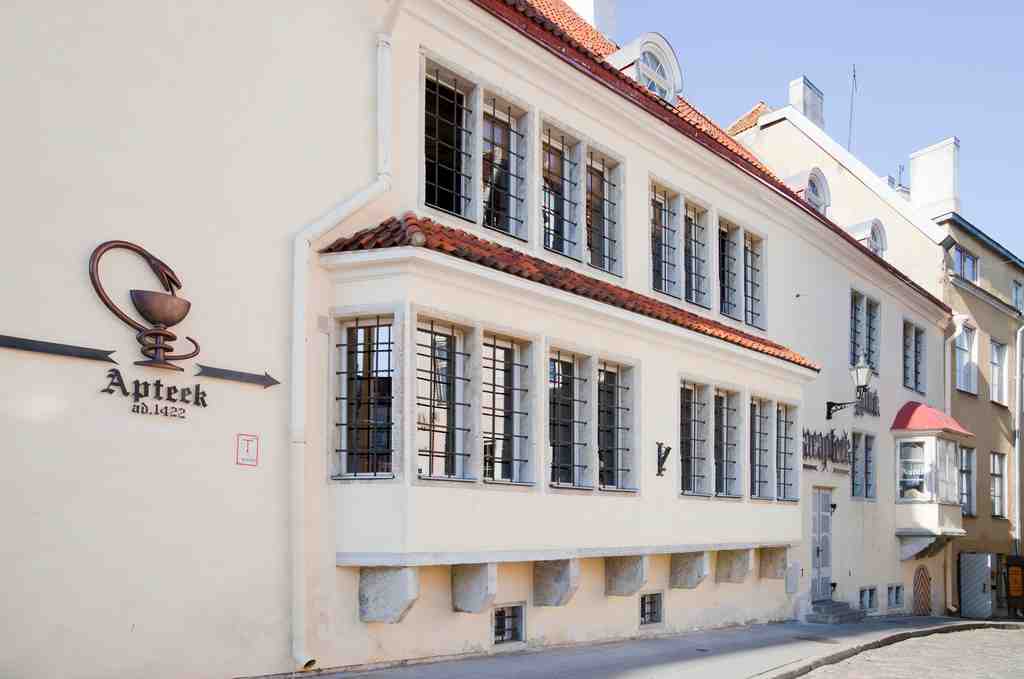
Town Hall PharmacyPhoto: Diego Delso, Wikimedia Commons, CC BY-SA 3.0. Cropped & resized. Look for the pale plaster-and-stone gabled house with its narrow pointed roofline and the old apothecary sign fixed to the façade facing the square.
This is Raeapteek, the Town Hall Pharmacy, and it holds one of Tallinn’s most stubborn little miracles: it has served the city from this very building since the early fifteenth century. Regimes changed, tastes changed, even the square changed its manners, yet people kept coming to this doorway for remedies.
The records grow hazy at the beginning, which only adds to the charm. Historians know the pharmacy already had its third owner by the year fourteen twenty-two, and some place its founding around fourteen fifteen. That makes it one of the oldest continuously operating pharmacies in Europe, and one of the oldest working commercial businesses in Tallinn. Not a museum pretending to be alive, but a real place that simply never quite stopped.
And what a place it was. Medieval customers did not come here only for medicine. They bought paper, ink, wax, spices, candles, gunpowder, even shotgun pellets. When tobacco first reached Estonia, this was the first place that sold it. The pharmacy also poured claret, a spiced wine, so the city’s magistrates often slipped across from the Town Hall to warm themselves, exchange gossip, and settle business. In other words, civic life did not only happen behind council doors. Quite a lot of it happened here, beside the jars.
If you glance at the image on your screen, you can see how the building still holds that layered identity: shop, memory box, and survivor all at once.
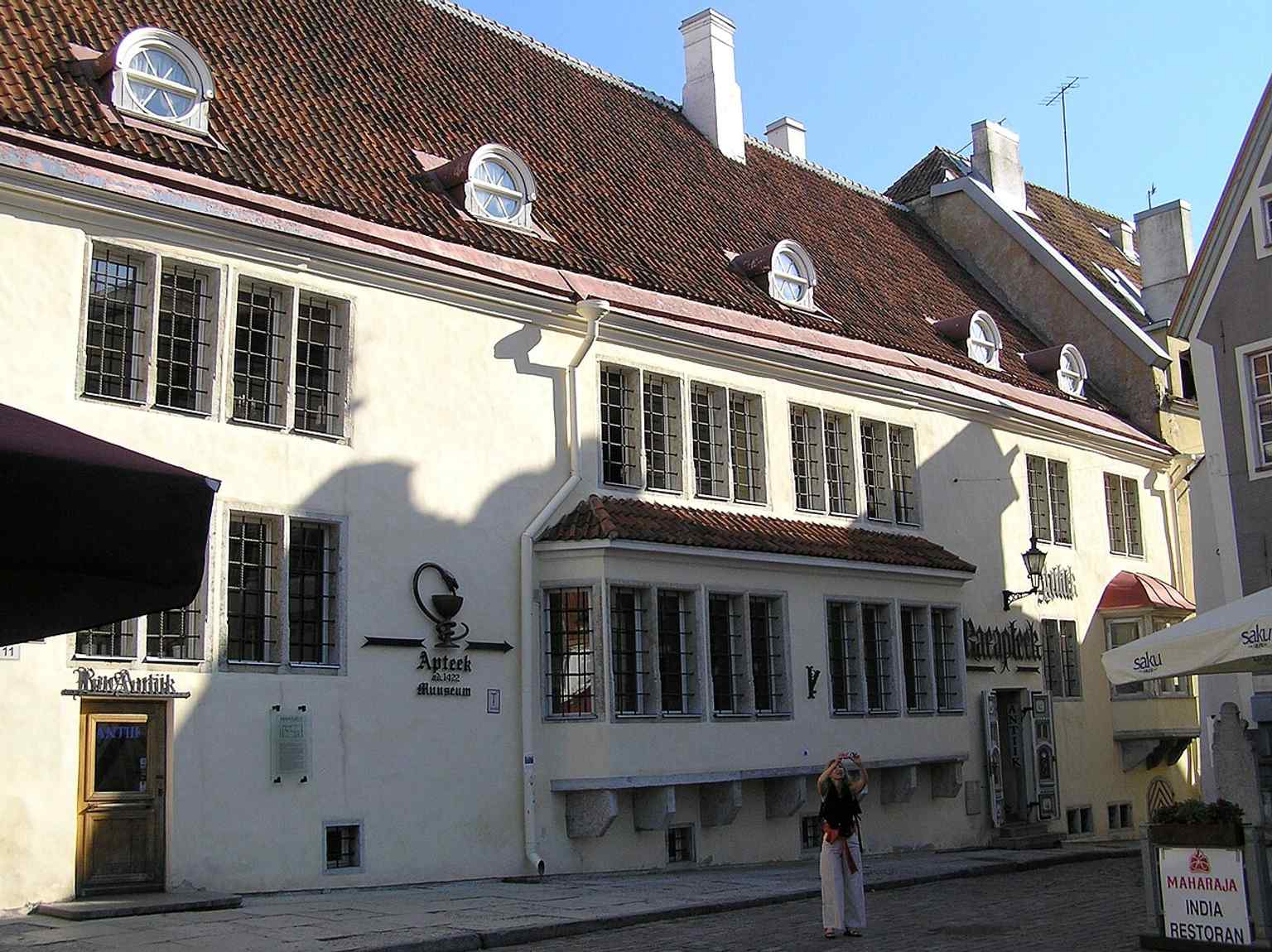
The pharmacy’s historic façade on Town Hall Square, where Raeapteek has operated from the same building since the early 1400s.Photo: Epukas, Wikimedia Commons, Public domain. Cropped & resized. The most famous family here were the Burkharts, who ran the pharmacy for more than three centuries, across ten generations. One of them, Johann Burkhart the Fifth, gives the place its human face. In seventeen ten, when plague tore through Reval, as Tallinn was then known, many doctors fled or died. Johann was only twenty-seven, but he stayed. He treated the sick as the city panicked around him, then went on to serve as city physician and doctor to the garrison and naval hospital. That is the sort of bravery that turns a business into an institution.
Yet old medicine had its stranger side. The official price list from sixteen ninety-five survives, and it reads like a cabinet of nightmares: fifty-four kinds of medicinal water, twenty-five fats, one hundred and twenty-eight oils, plus remedies made from bleached dog dung, wolf intestines, human fat, and earthworms in oil. Alongside all that, there was marzipan. According to tradition, an apprentice named Mart mixed a sweet medicinal paste here in fourteen forty-one, and Tallinn later cherished it as “March bread,” prescribed for headaches and even lovesickness.
If you fancy a peek inside, the app’s interior photo shows the preserved woodwork, old vessels, and the atmosphere restored after the long renovation that ended in two thousand and three. Practicality, here, became inheritance.
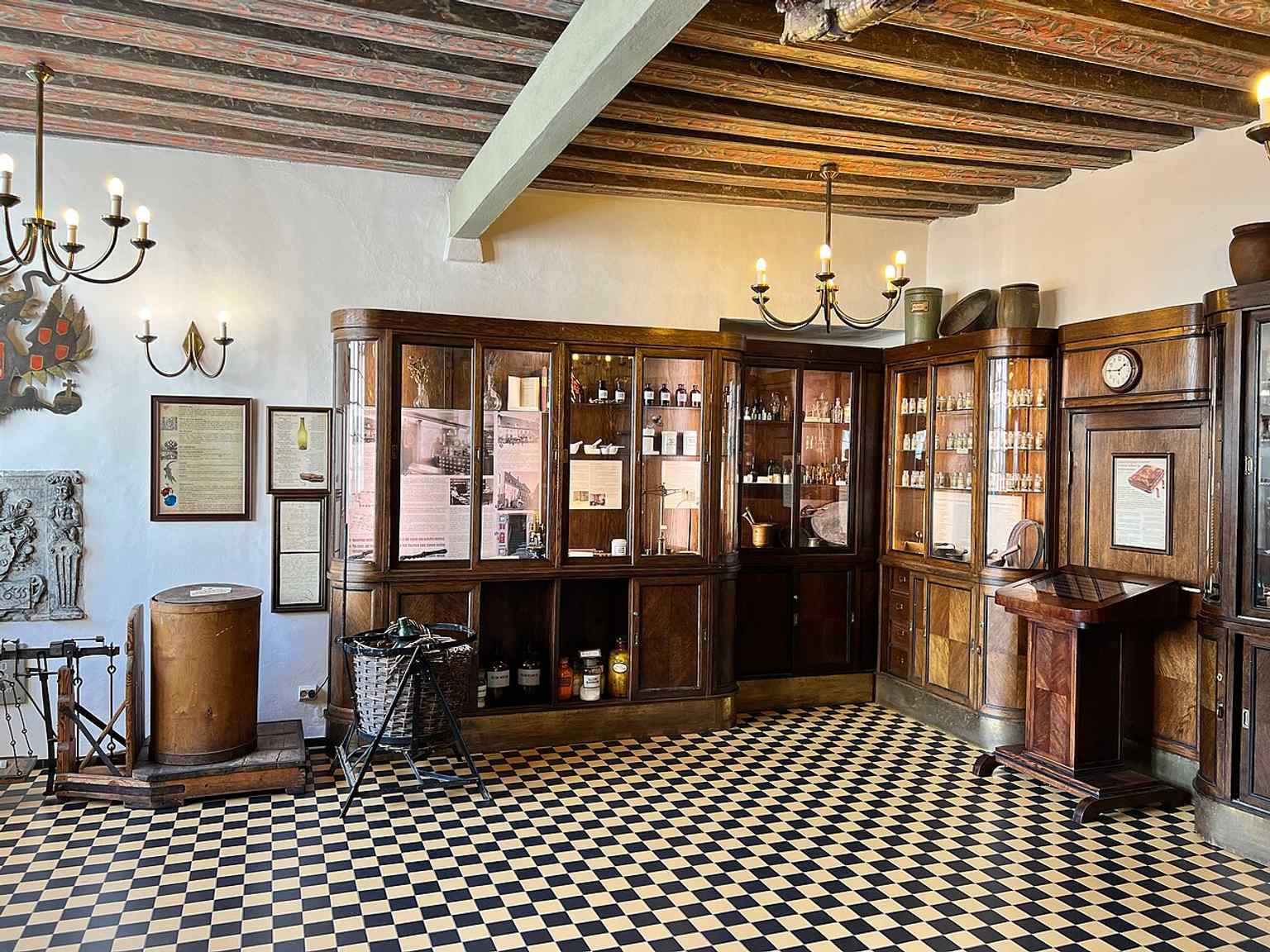
The interior of Raeapteek, where historic woodwork and displays help evoke its centuries as both apothecary and city meeting place.Photo: HartOve, Wikimedia Commons, CC BY 4.0. Cropped & resized. That may be the quiet wonder of this address. Other places in the old city changed purpose with each new authority. This one kept doing the same essential thing: easing pain, trading knowledge, and serving the life of the square.
Now let your eyes move beyond this façade to the larger body that kept all these institutions breathing together: the Old Town itself, just one minute away. And if you plan to step inside later, the pharmacy is generally open from Monday to Saturday, from ten in the morning until six in the evening, and closed on Sunday.
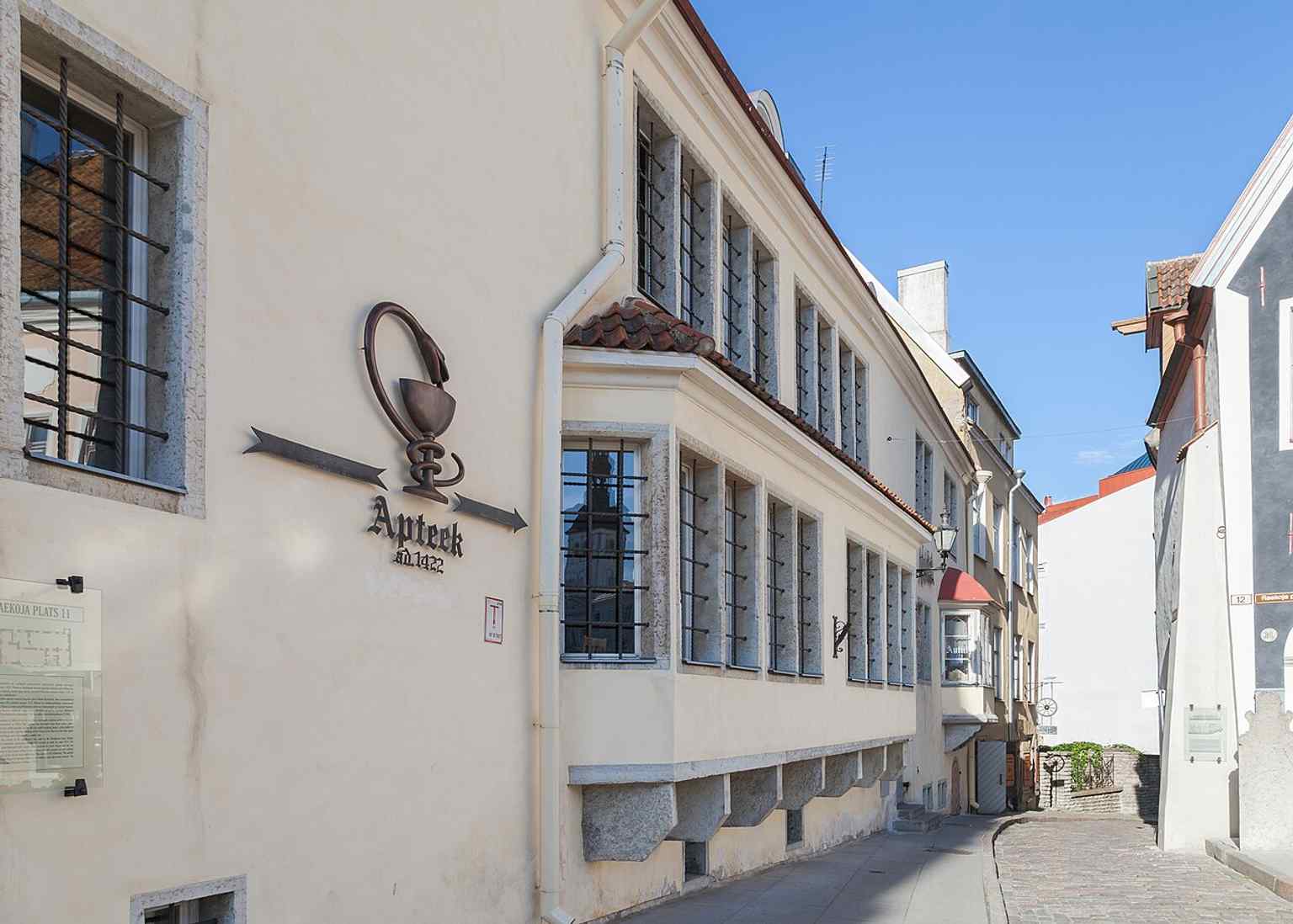
A wider street-level view of Town Hall Pharmacy, placing it directly opposite Tallinn’s city hall in the heart of the old town.Photo: Diego Delso, Wikimedia Commons, CC BY-SA 3.0. Cropped & resized. 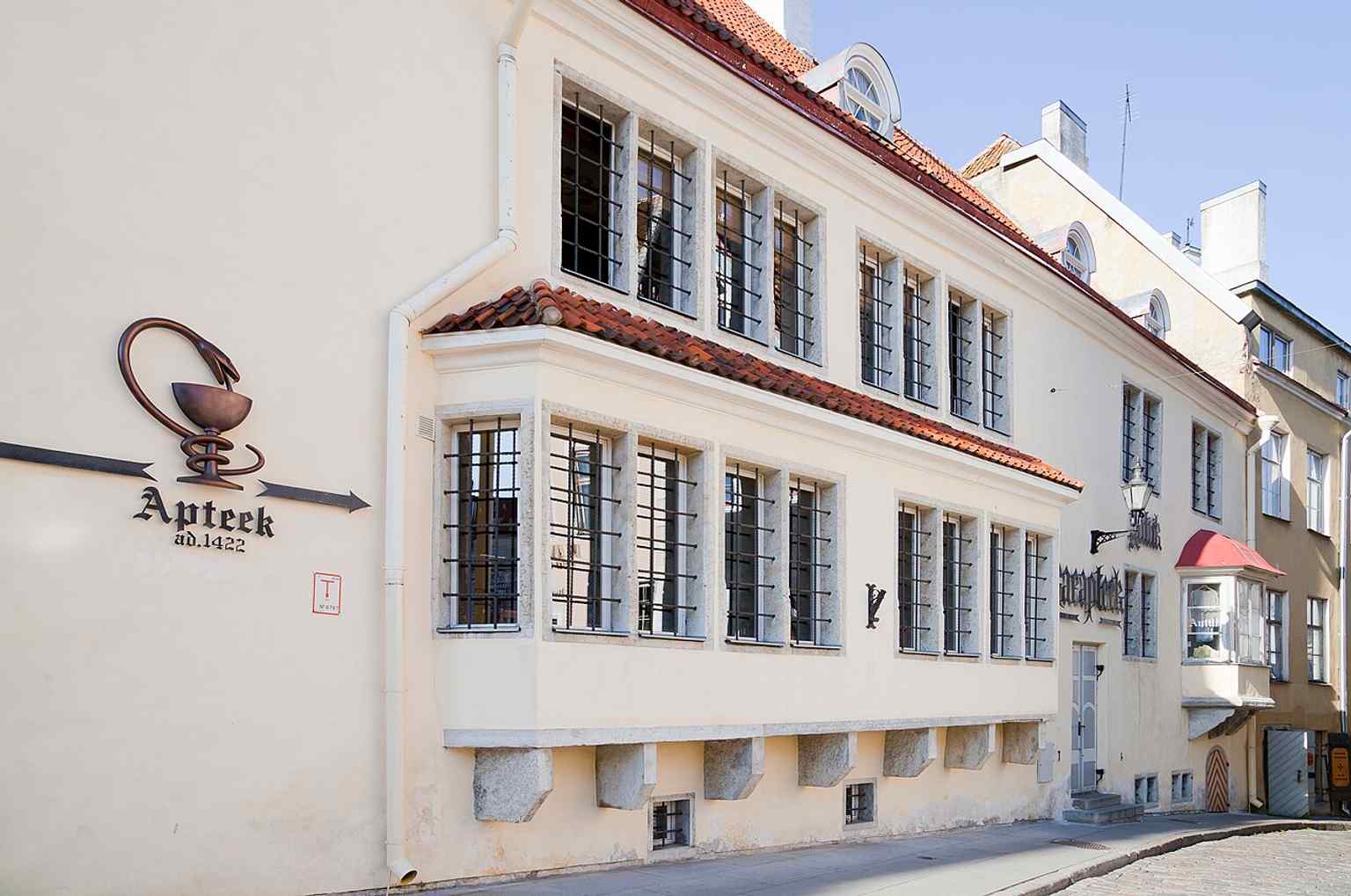
Another clear exterior angle of Raeapteek, useful for showing the landmark’s setting on the square and its long-lived storefront.Photo: Diego Delso, Wikimedia Commons, CC BY-SA 3.0. Cropped & resized. 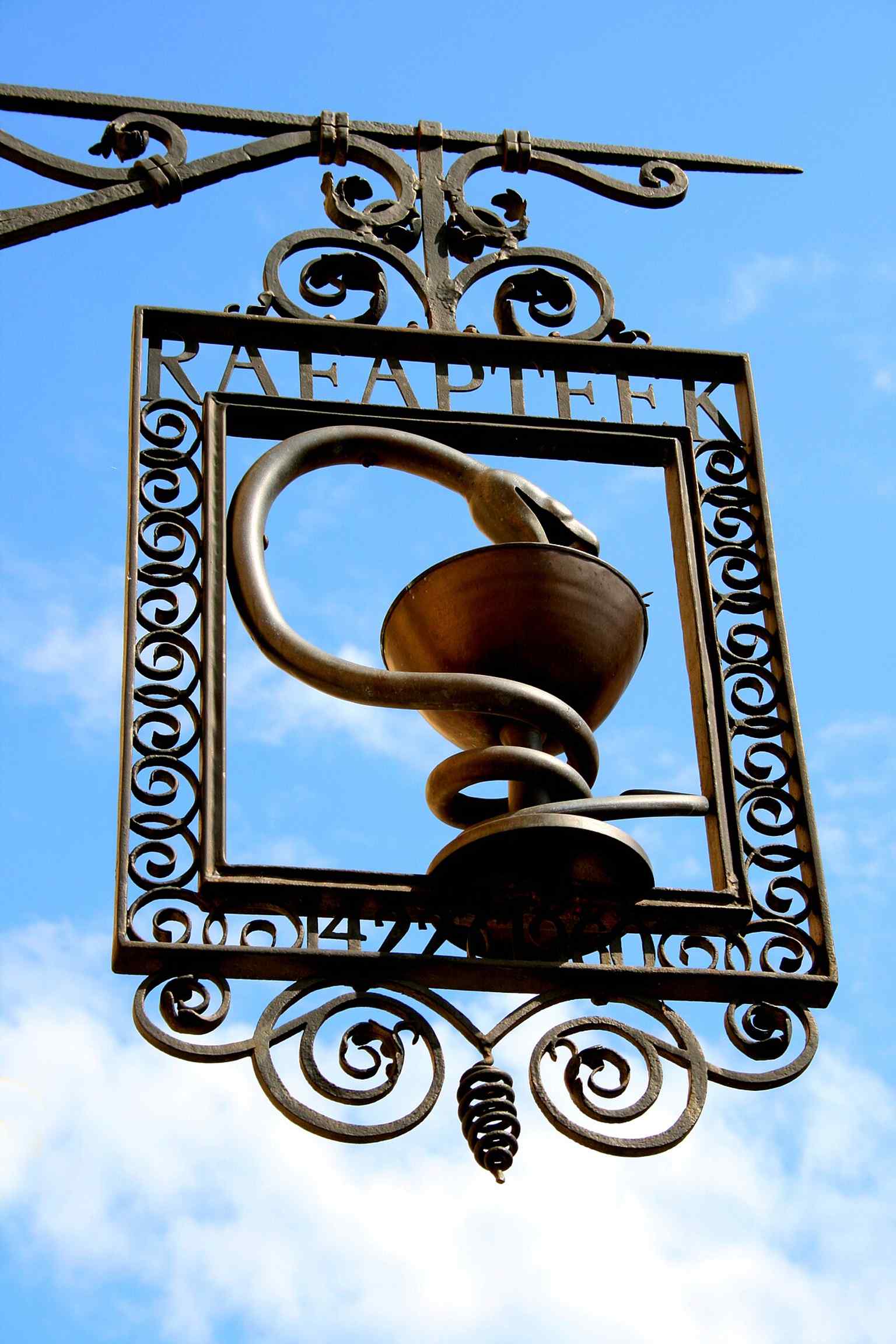
The old pharmacy logo, a small but telling detail from one of Europe’s oldest continuously running pharmacies.Photo: Settimioma, Wikimedia Commons, CC BY-SA 3.0 ee. Cropped & resized. 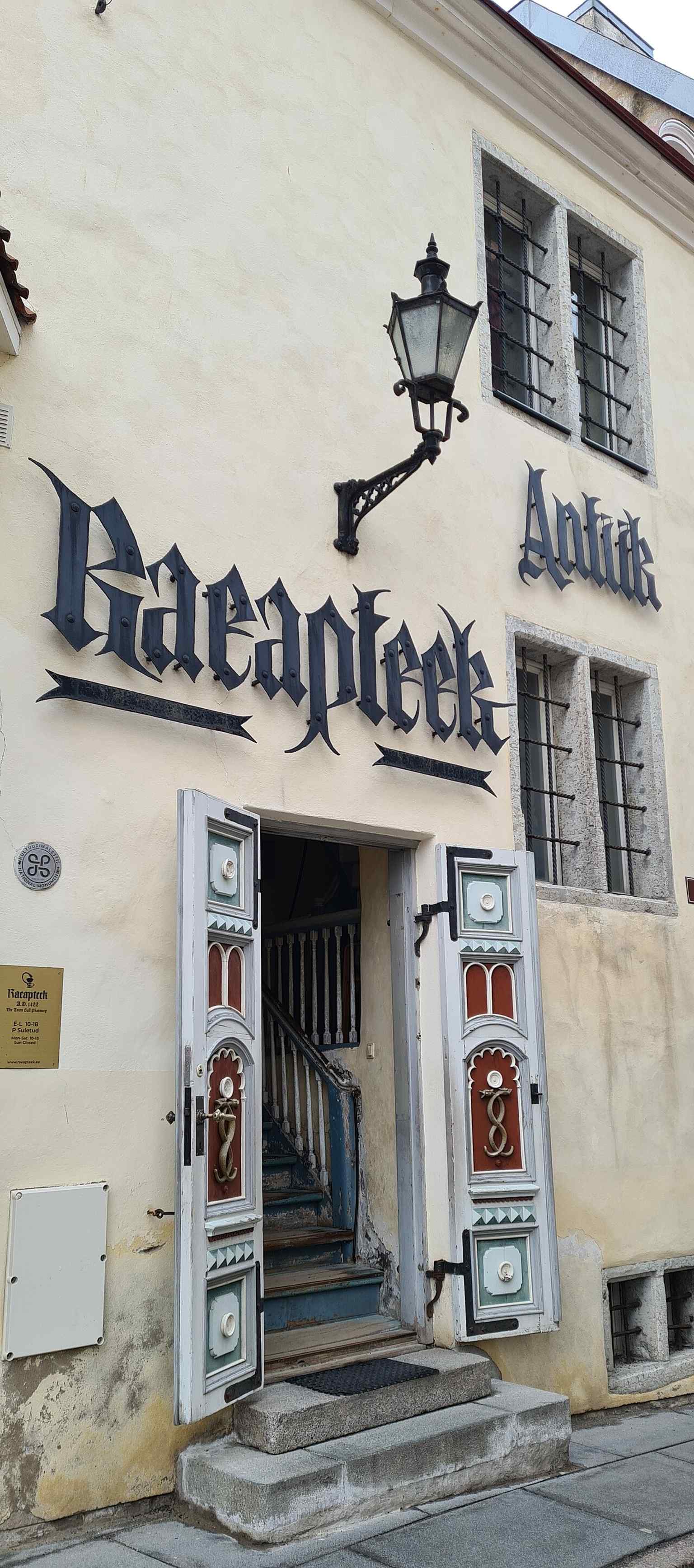
A tall interior view that helps show the pharmacy’s preserved historic atmosphere, beyond its modern retail role on the ground floor.Photo: BeshevI, Wikimedia Commons, CC BY-SA 4.0. Cropped & resized. 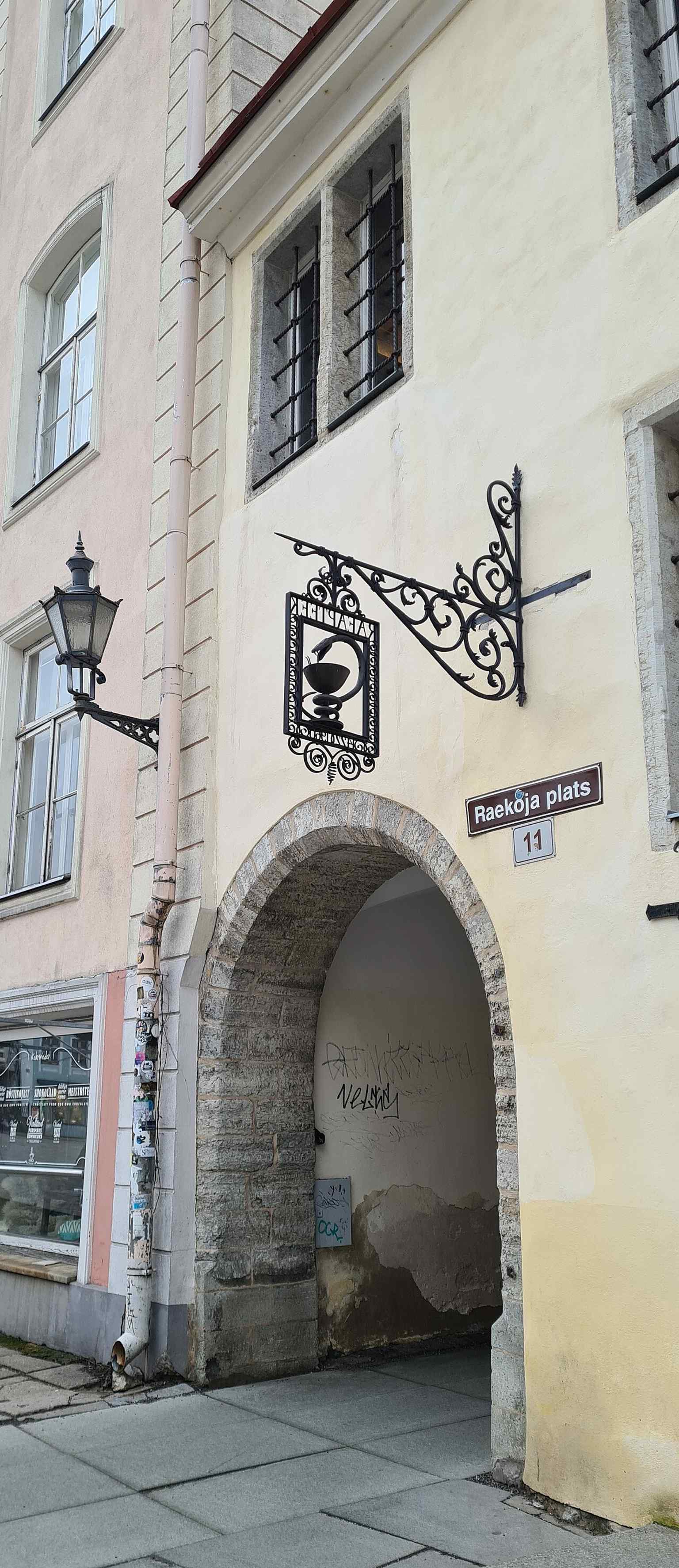
A close detail from inside Raeapteek, matching the story of antique fixtures and the museum-like character preserved after the restoration.Photo: BeshevI, Wikimedia Commons, CC BY-SA 4.0. Cropped & resized. 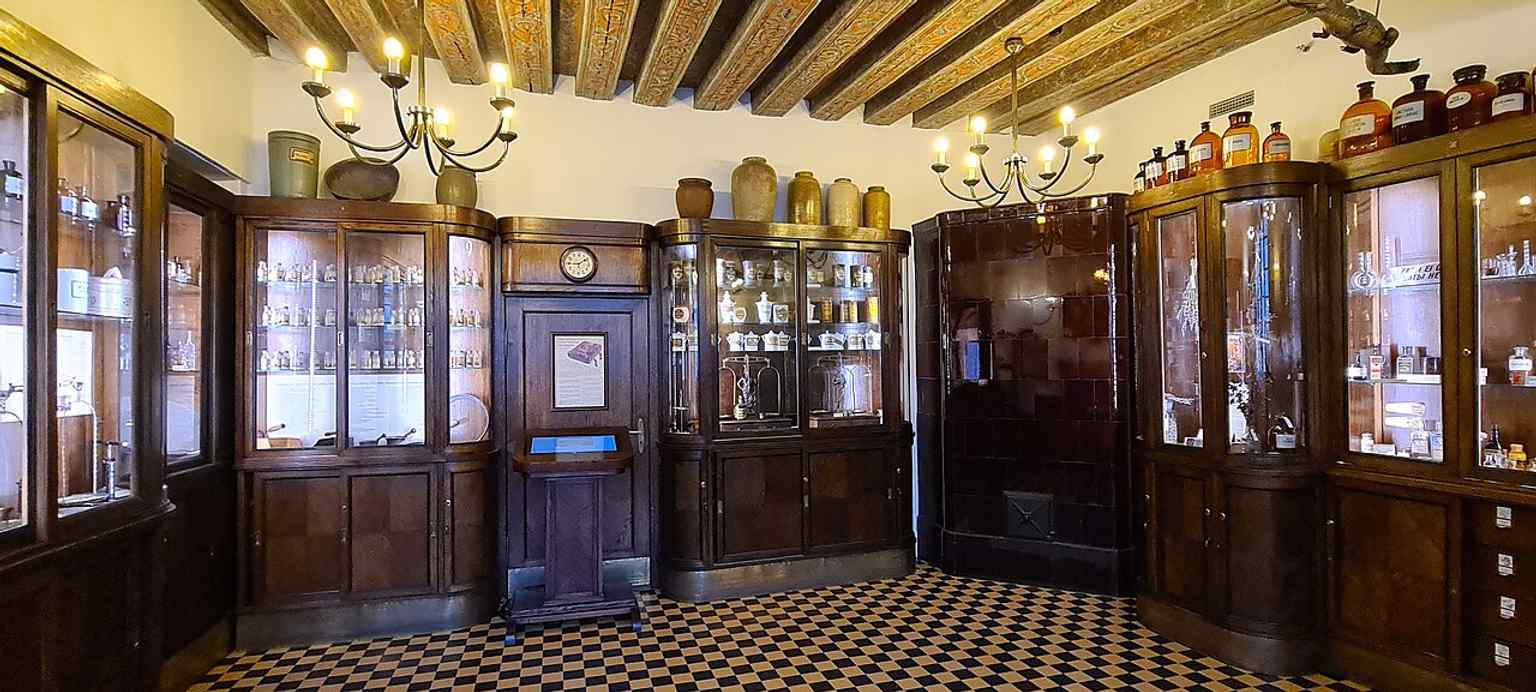
A broader view of the building’s façade, helpful for introducing Raeapteek as a medieval-era institution that still stands on Town Hall Square.Photo: BeshevI, Wikimedia Commons, CC BY-SA 4.0. Cropped & resized. 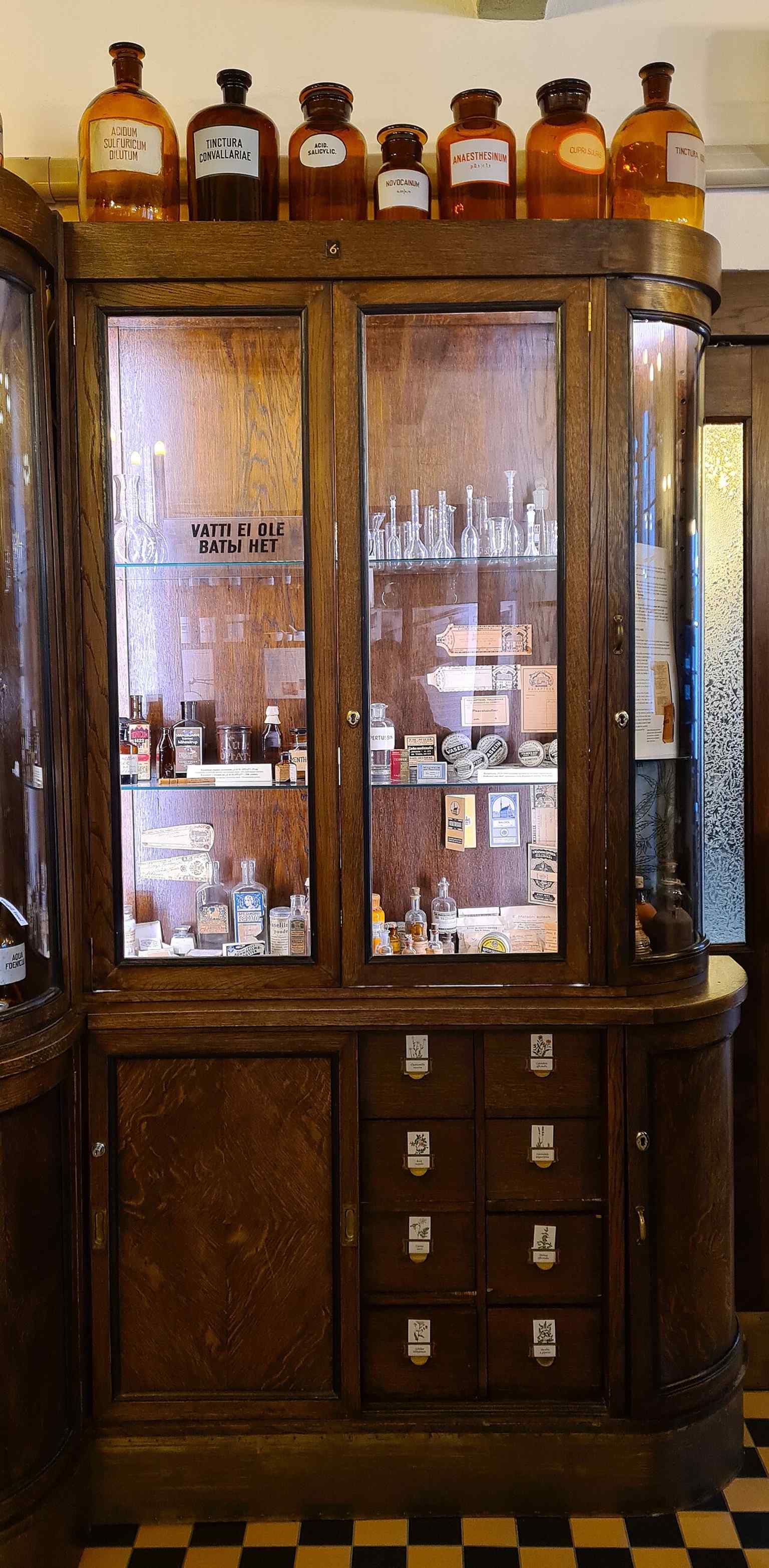
An interior detail that fits the pharmacy’s collection of old medicinal objects, documents, and curiosities linked to the Burghart era.Photo: BeshevI, Wikimedia Commons, CC BY-SA 4.0. Cropped & resized. 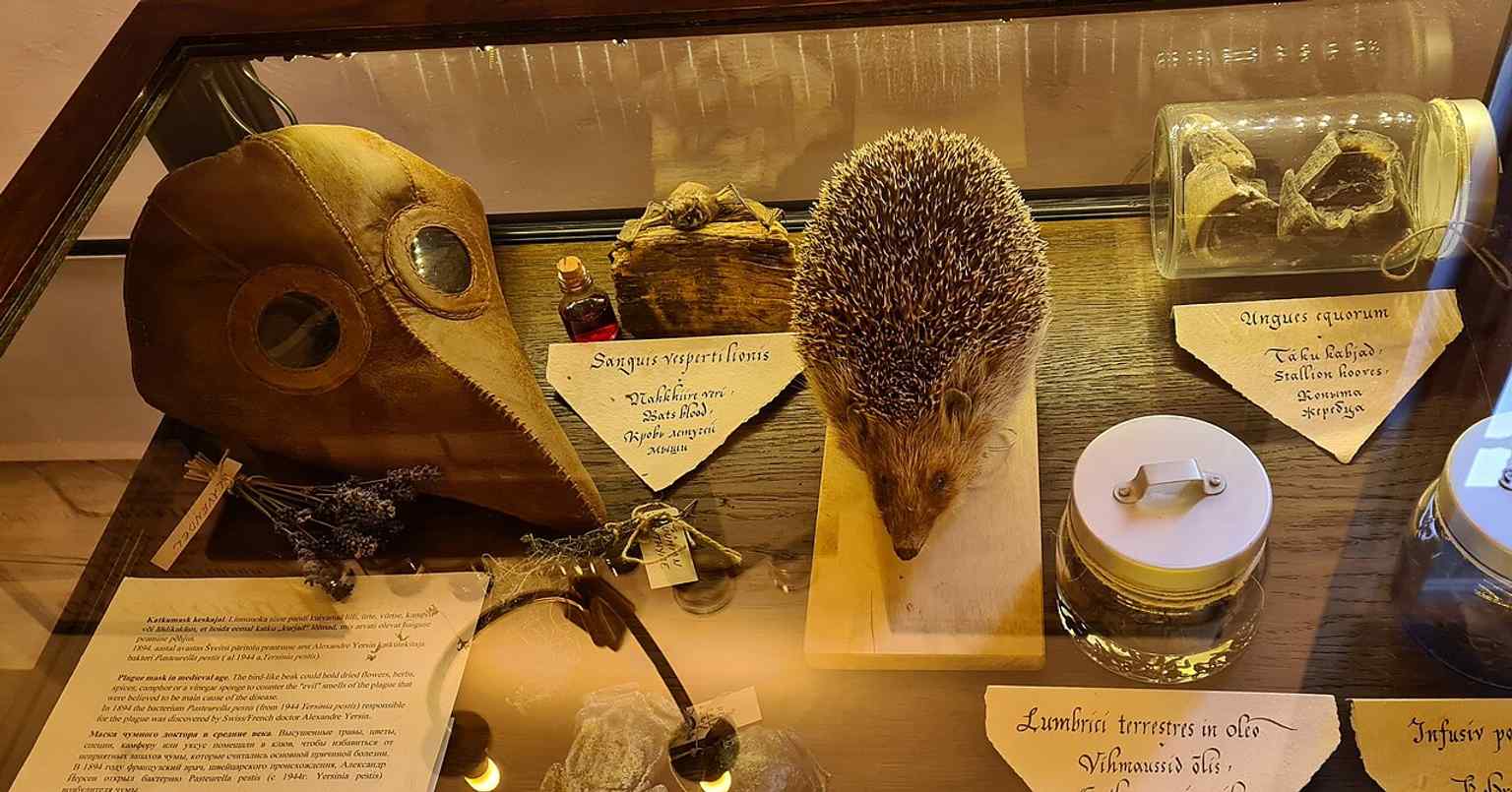
A wider modern view that can support the story of Raeapteek as both a working pharmacy and a preserved heritage site.Photo: BeshevI, Wikimedia Commons, CC BY-SA 4.0. Cropped & resized. 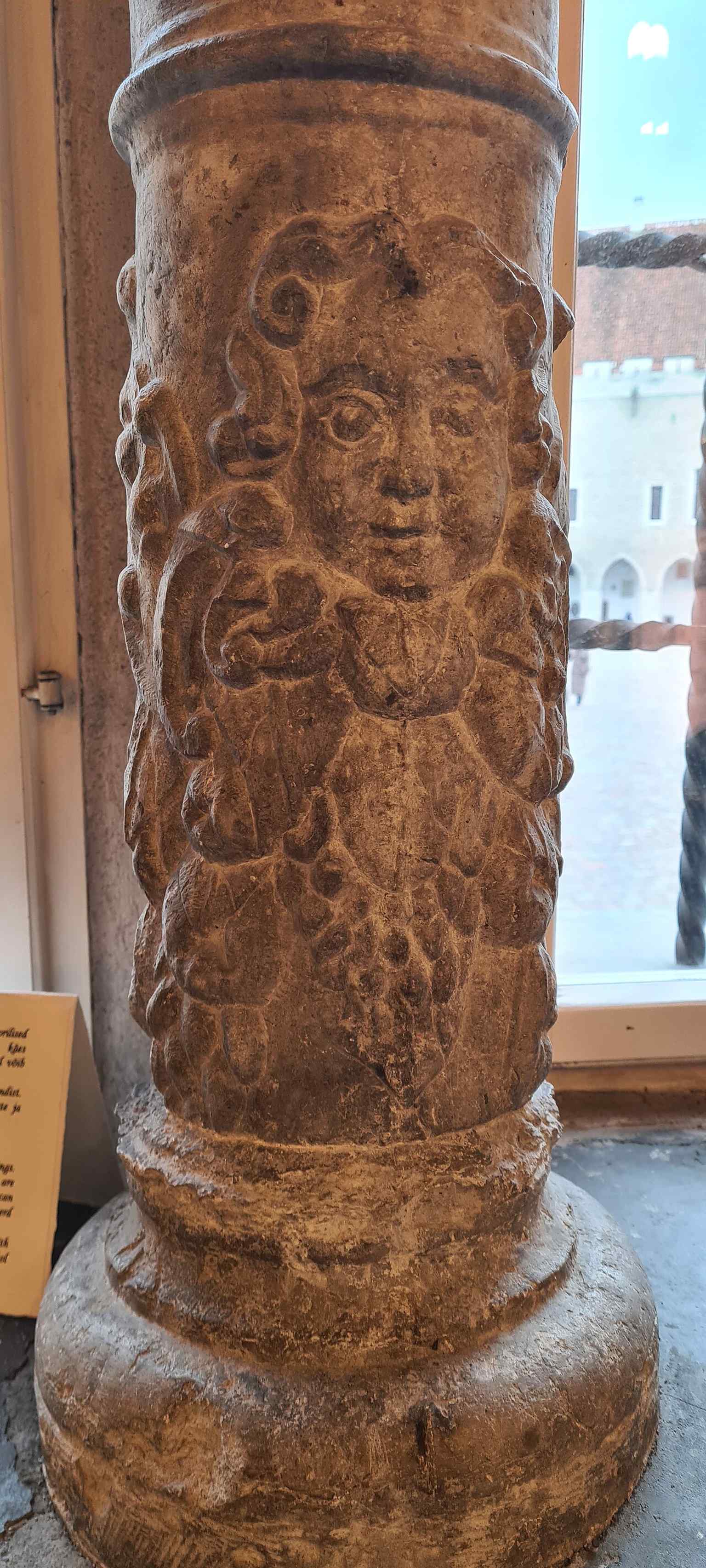
An interior perspective that suits the restored historical rooms, where visitors can still sense the pharmacy’s long Burghart legacy.Photo: BeshevI, Wikimedia Commons, CC BY-SA 4.0. Cropped & resized. On your right, look for a dense cluster of pale limestone walls and red-tiled gabled roofs, marked by sharp church spires and the heavy line of medieval towers. This is the…Read moreShow less
Open dedicated page →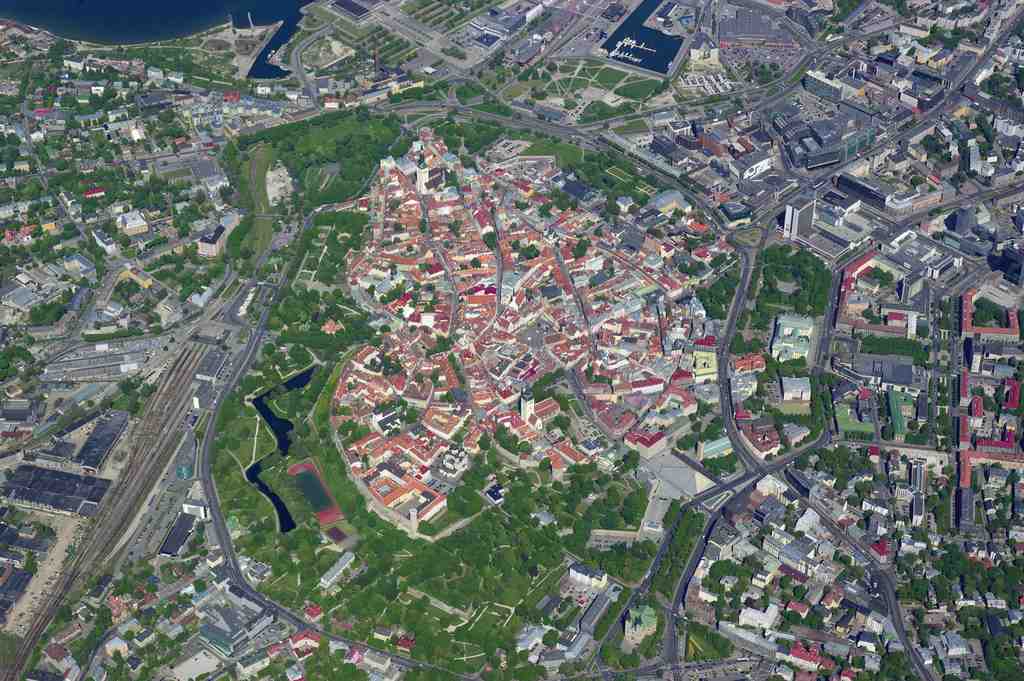
Old TownPhoto: aerofotod.ee, Wikimedia Commons, CC BY-SA 4.0. Cropped & resized. On your right, look for a dense cluster of pale limestone walls and red-tiled gabled roofs, marked by sharp church spires and the heavy line of medieval towers.
This is the oldest part of Tallinn, but it is not simply an old quarter. It is a complete urban machine, preserved with astonishing clarity. In the nineteen nineties, Estonia added the Old Town to its register of cultural monuments, and UNESCO recognised it as one of the best-preserved historic centres of a northern European trading city.
The secret of making sense of Tallinn begins here: this city has three parts. There is Toompea, the Upper Town on the hill; the Lower Town, enclosed by medieval walls; and around them, the later earth ramparts and moat, redesigned in the late nineteenth century as a green belt around the old heart. If you glance at the aerial image in the app, the whole structure reveals itself at once.
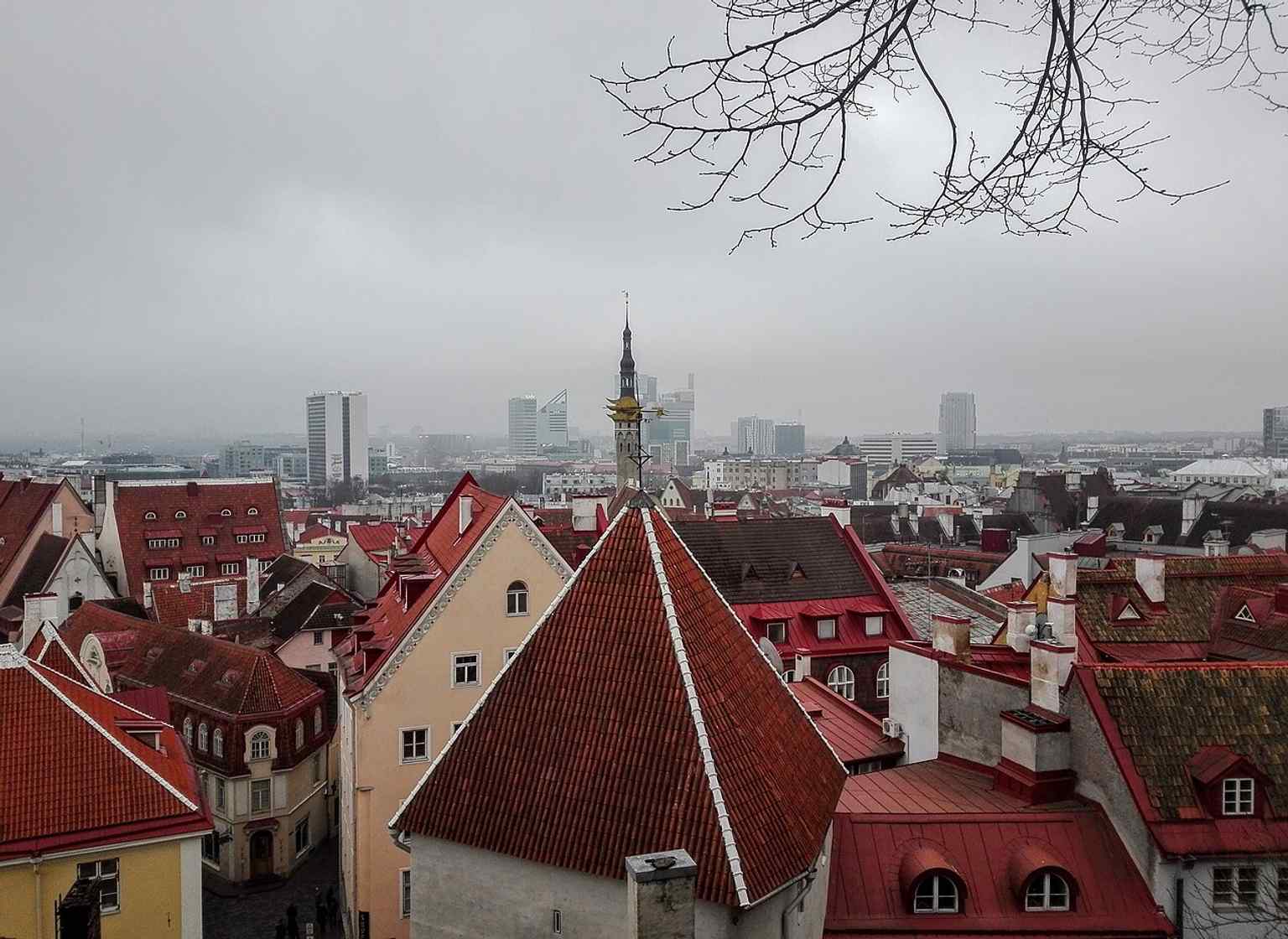
Wide aerial view of Tallinn’s Old Town, the UNESCO-listed historic center preserved since 1997.Photo: Klevhs, Wikimedia Commons, CC BY-SA 4.0. Cropped & resized. And with that structure came rivalry. Upper Town versus Lower Town was not a poetic contrast but a hard political fact. Toompea housed rulers, nobles, and authority; the Lower Town belonged to merchants, guilds, and trade. Their relations grew so tense that heavy gates between them were locked at night. Tallinn even earned a joking nickname, “the limping city,” because its two main links uphill, Pikk Jalg, or Long Leg, and Lühike Jalg, or Short Leg, differ so much in length and steepness that the city seems to walk with a limp. You can see that awkward climb beautifully in the app’s image of Pikk Jalg.
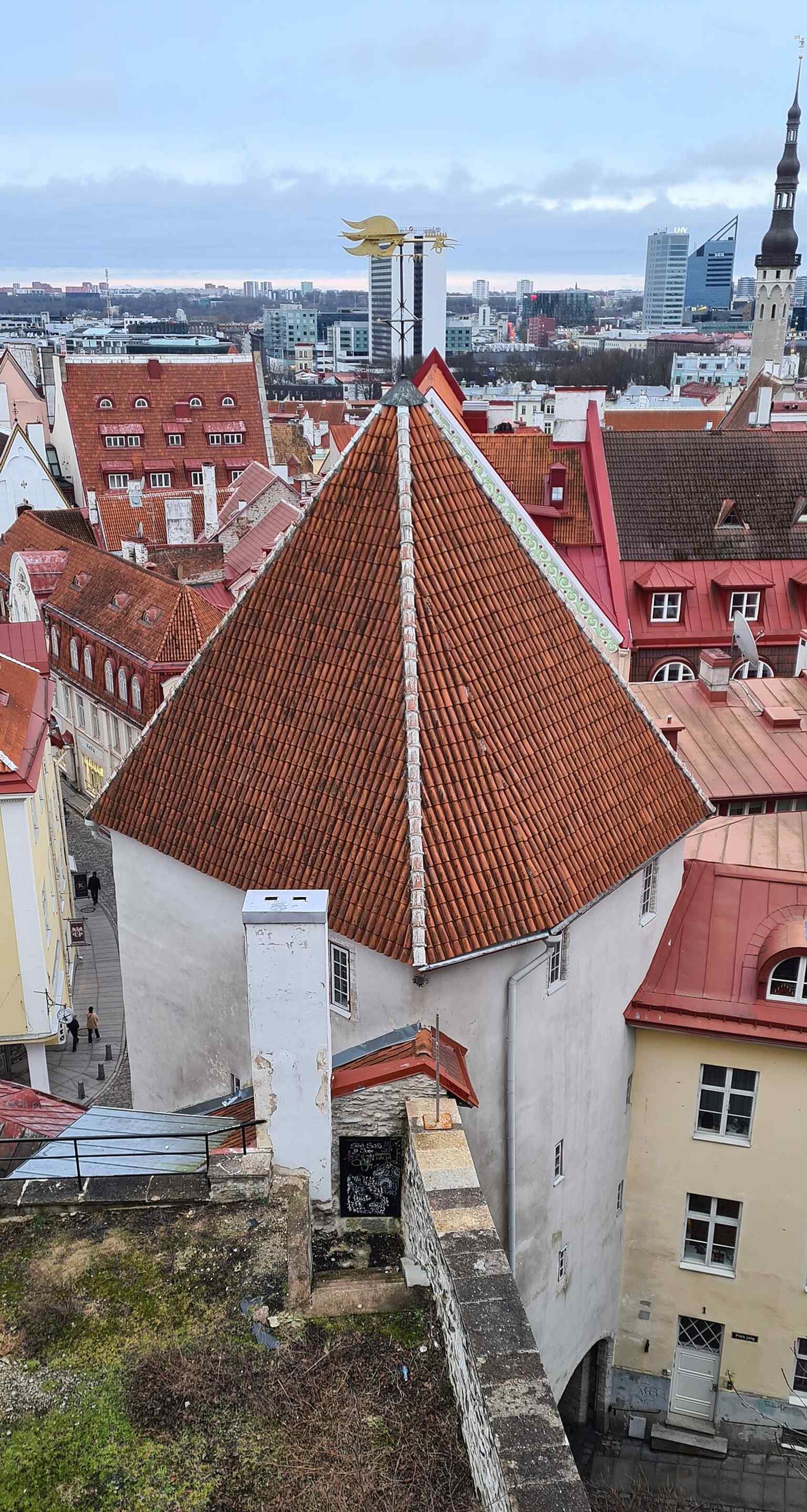
Pikk Jalg gate tower, one of the steep routes linking Upper and Lower Town in the city’s famous “limping” layout.Photo: BeshevI, Wikimedia Commons, CC BY-SA 4.0. Cropped & resized. Pause for a moment and notice how the streets around you compress, bend, and then climb. You can feel the logic of the place in your body: commerce spread and negotiated below; power withdrew and watched from above.
That, I think, is the twist in Tallinn. What appears at first to be a charming medieval scene is really a record of conflict, adaptation, and survival. Much of the street plan still follows the thirteenth-century layout. Many buildings along those lines date from the fourteenth to the sixteenth centuries. The walls still keep close to their historic scale, in places rising more than fifteen metres, and an extraordinary stretch survives: one point eight five kilometres, with twenty-six towers still standing.
Yet this place never froze into a museum. People still live here, trade here, worship here. Foreign rulers renamed it Reval after the Danish conquest in twelve nineteen. Toompea later became a castle, then a palace, and now houses Estonia’s parliament. After the catastrophic fire of sixteen eighty-four, the Upper Town rebuilt itself in stone. After the bombing of the ninth of March, nineteen forty-four, Harju Street lay in ruins for decades before the city inserted a green open space into the old fabric. Tallinn keeps changing costume, but it refuses to leave the stage.
A visitor named Alexander Bestuzhev-Marlinsky captured that sensation in eighteen twenty-one, writing that the streets “spin, intertwine, and emerge from one another.” He had understood the place exactly: this is not disorder, but memory arranged as a city.
And among all these voices, one building speaks most confidently for the Lower Town: the Town Hall, where merchant government announced itself in stone. We are only about a minute away from it now. If you linger here later, the Old Town remains open and lively every day from ten in the morning until late, usually eleven at night, and until midnight on Fridays and Saturdays.
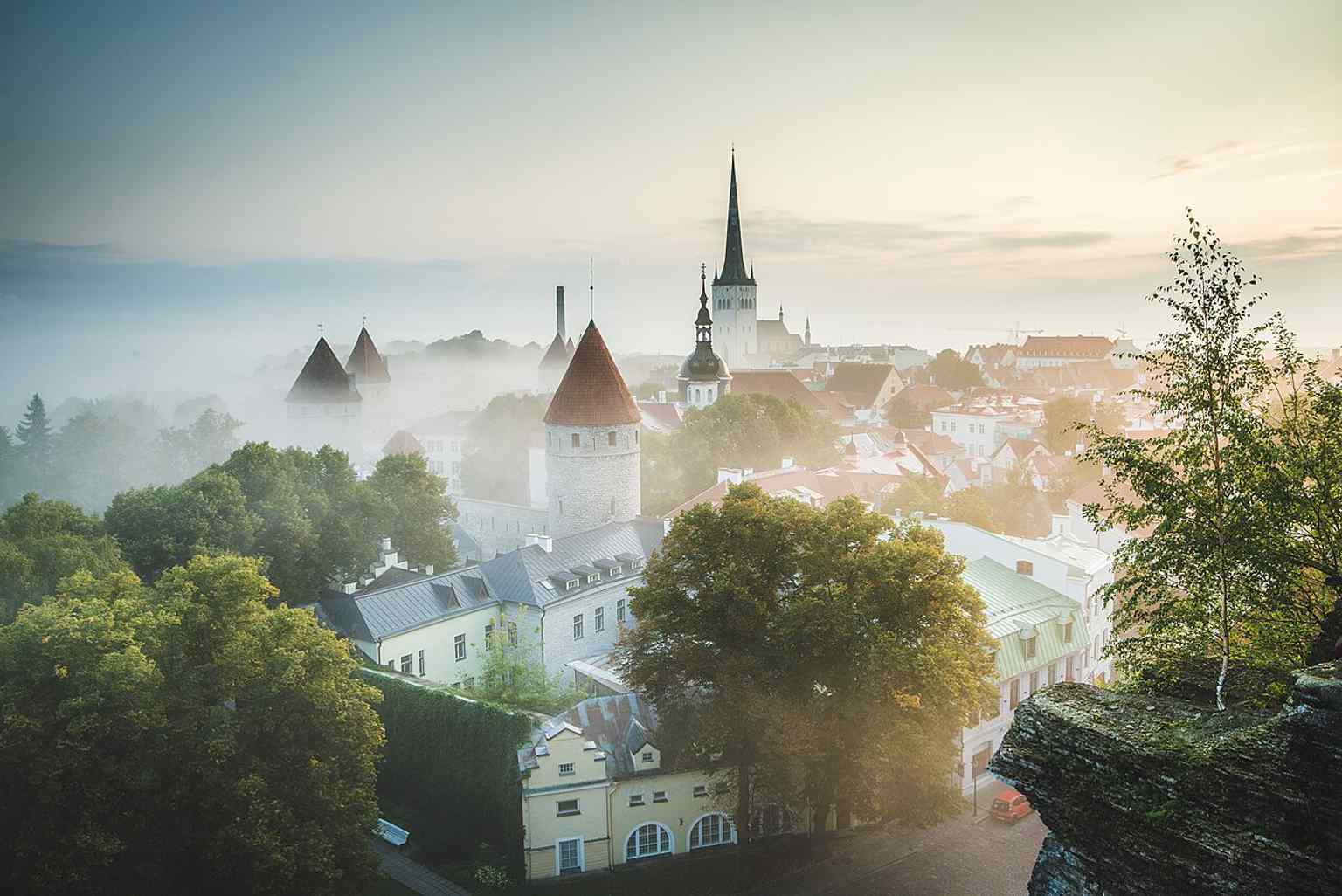
Sunrise over the Old Town from Patkul viewing platform, showing the dense medieval roofscape and tower skyline.Photo: Hendrik Mändla, Wikimedia Commons, CC BY-SA 4.0. Cropped & resized. 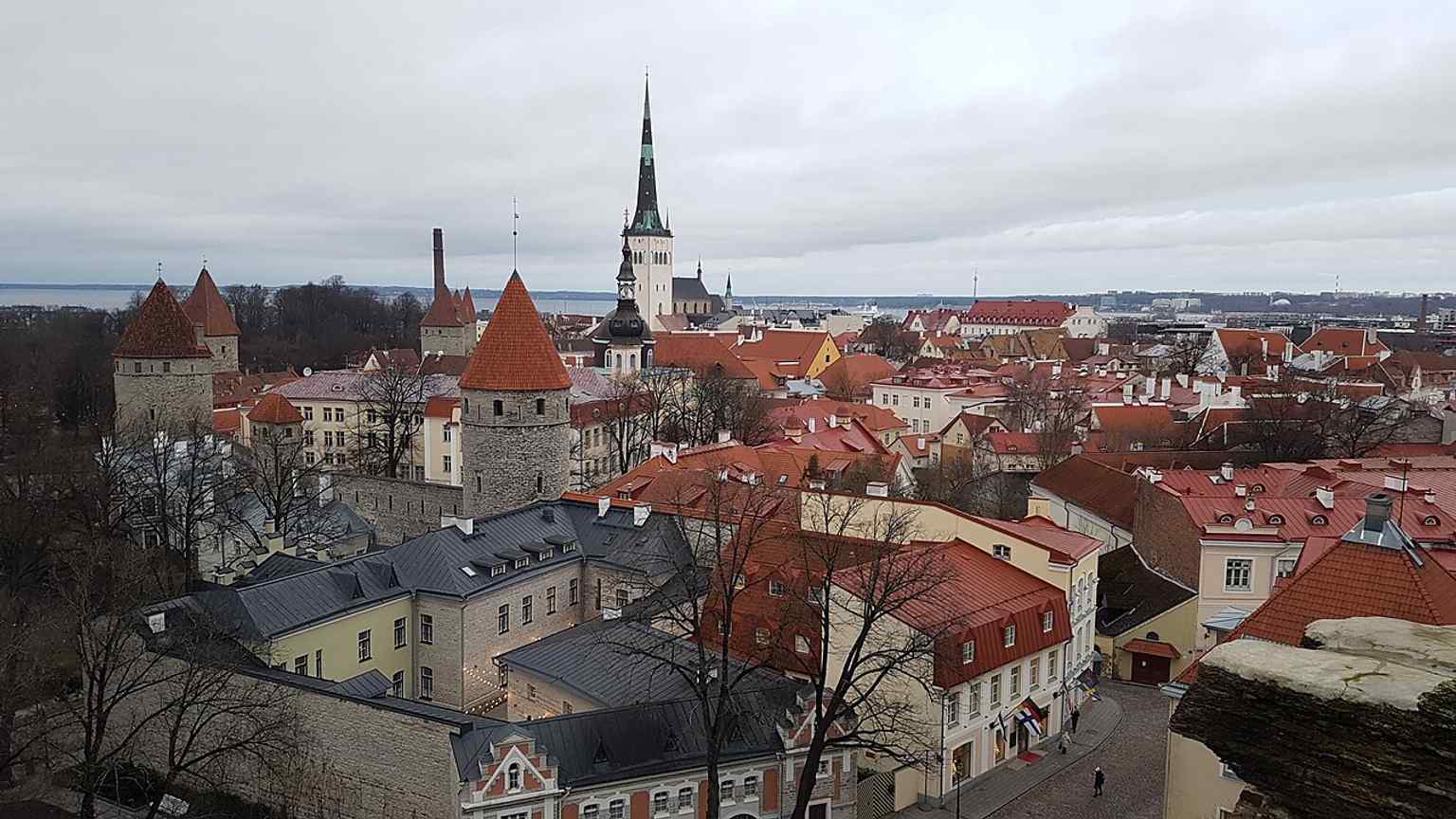
A broad elevated panorama over the medieval core, useful for showing how the Old Town sits within the modern city.Photo: BeshevI, Wikimedia Commons, CC BY-SA 4.0. Cropped & resized. 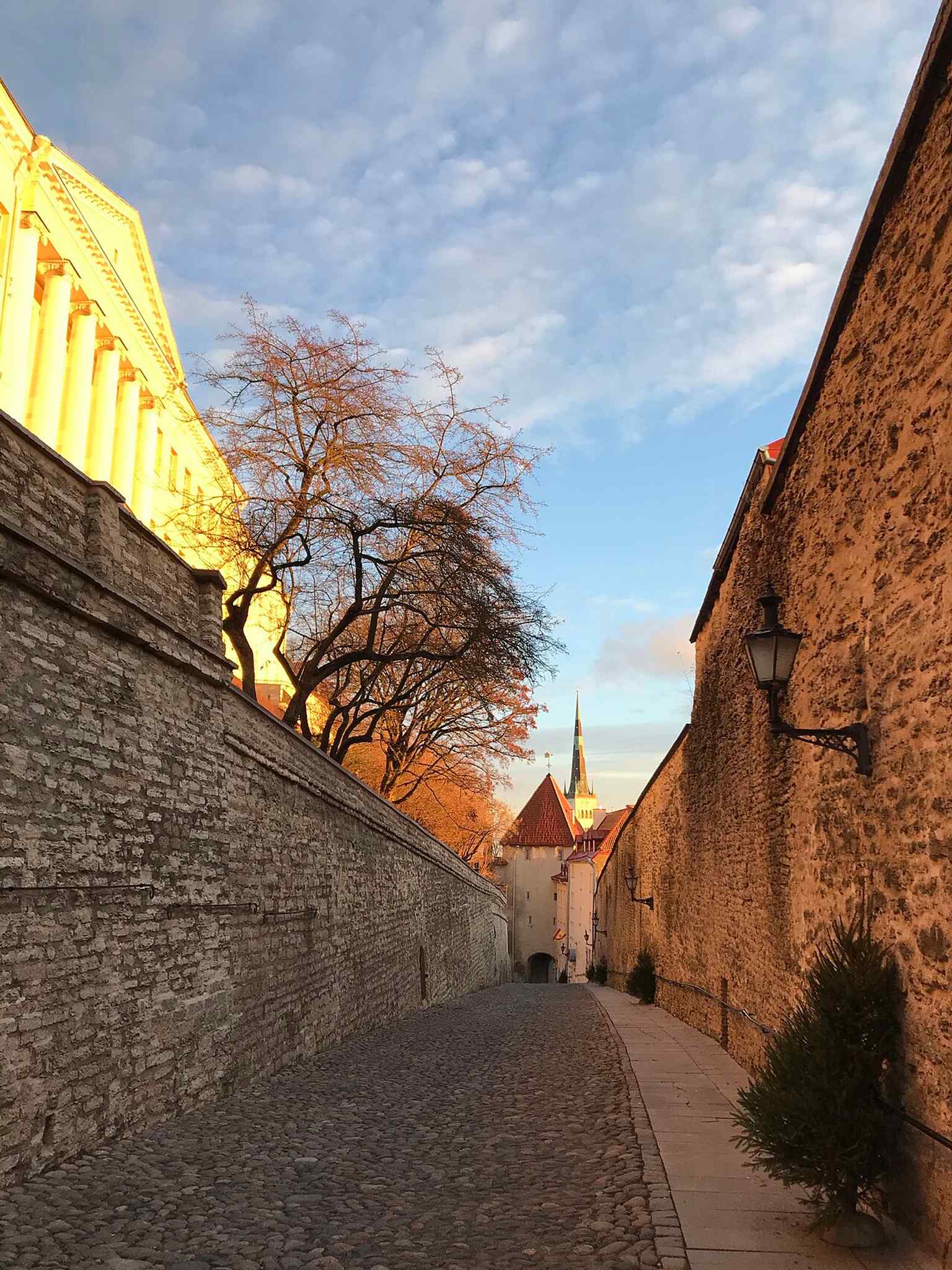
Pikk Jalg street in autumn, evoking the steep climb between Toompea and the Lower Town.Photo: Roman Rozbroj, Wikimedia Commons, CC BY-SA 4.0. Cropped & resized. 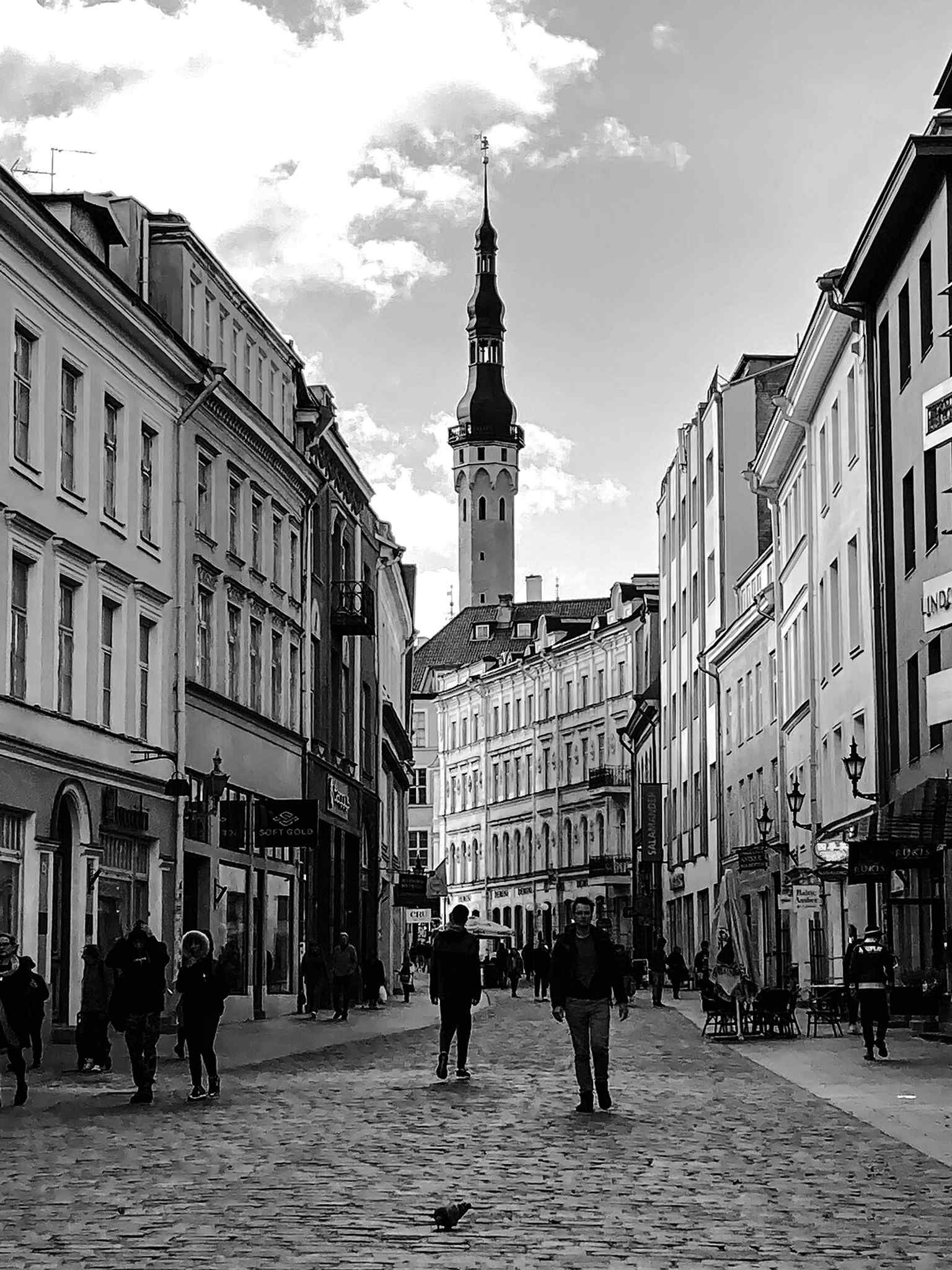
Viru Street looking toward the Town Hall, a lively Lower Town street still shaped by the medieval street plan.Photo: Kakskeelnetuvi, Wikimedia Commons, CC BY-SA 4.0. Cropped & resized. 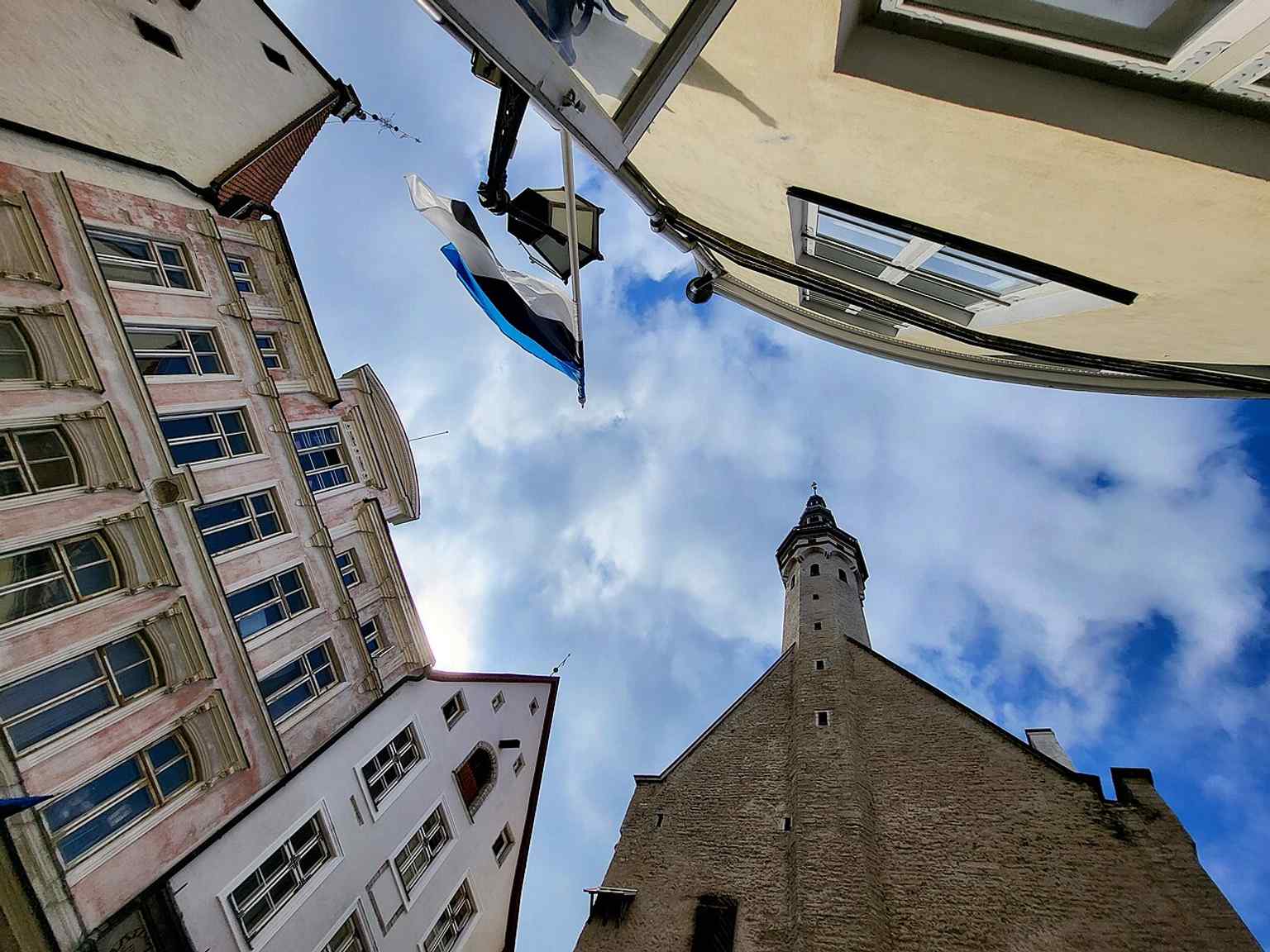
Vanaturu Kael in the heart of Old Town, a compact medieval street lined with the preserved UNESCO city fabric.Photo: Hei1972, Wikimedia Commons, CC BY-SA 4.0. Cropped & resized. 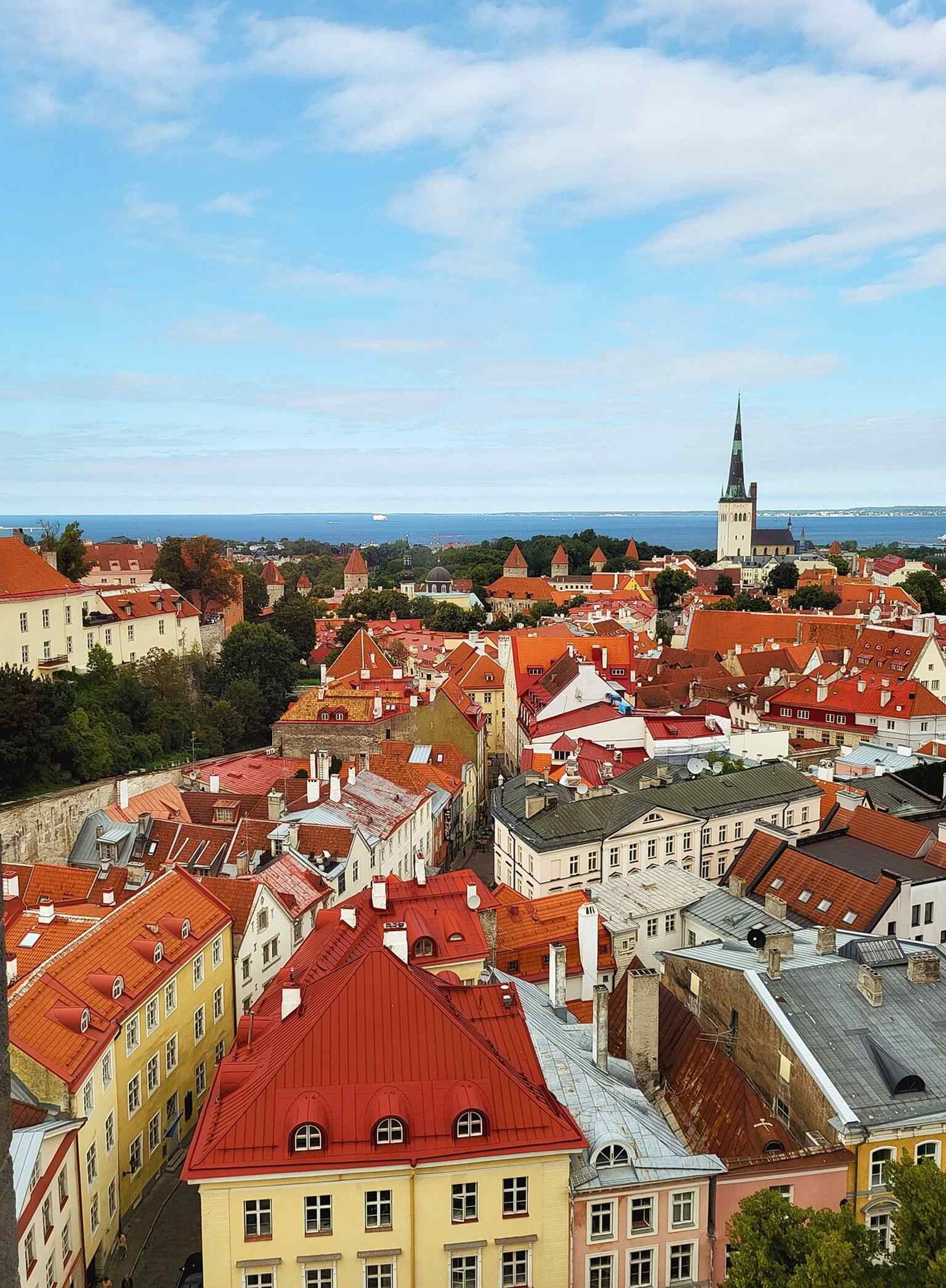
A classic view of Tallinn Old Town framed by its surviving walls, highlighting the intact 13th-century layout.Photo: Hei1972, Wikimedia Commons, CC BY-SA 4.0. Cropped & resized. 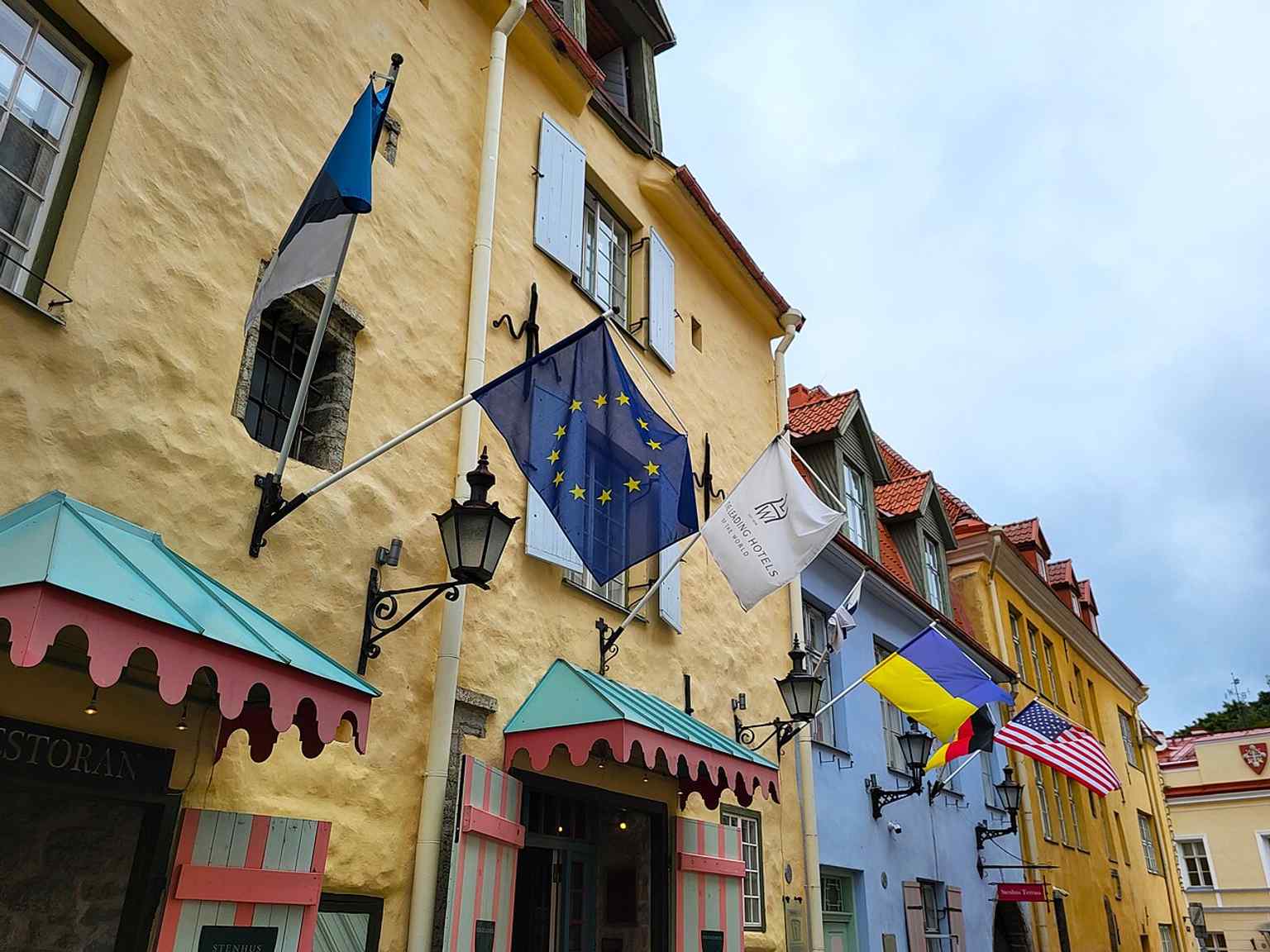
Pühavaimu Street, where narrow lanes and historic façades capture the layered medieval character of the Lower Town.Photo: Hei1972, Wikimedia Commons, CC BY-SA 4.0. Cropped & resized. 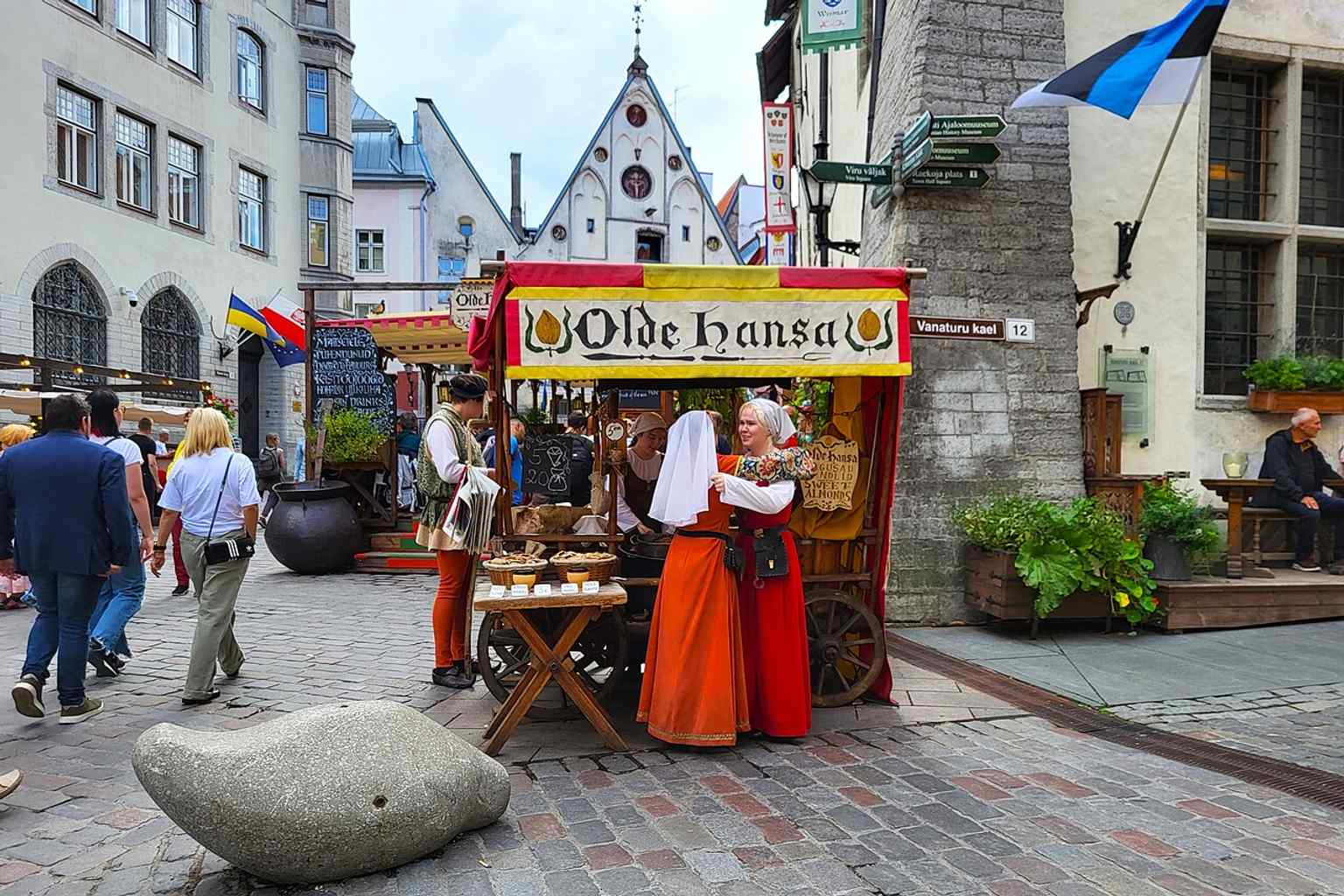
A medieval-looking corner near Olde Hansa and Vana Turg, echoing the Old Town’s role as a living market district.Photo: Hei1972, Wikimedia Commons, CC BY-SA 4.0. Cropped & resized. 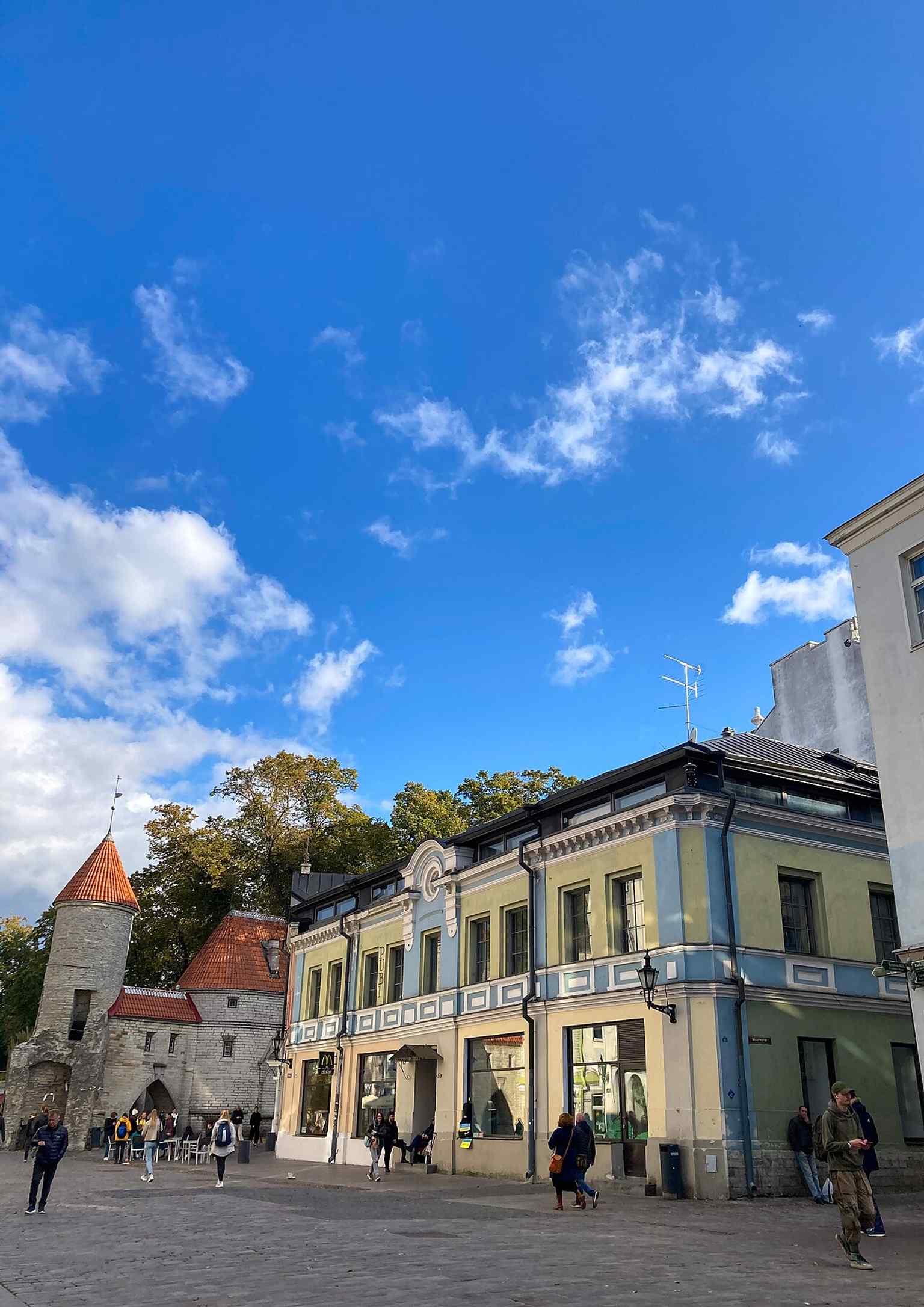
Viru Street with the Viru Gate in the background, a reminder of Tallinn’s defensive walls and old entry points.Photo: Kakskeelnetuvi, Wikimedia Commons, CC BY-SA 4.0. Cropped & resized. 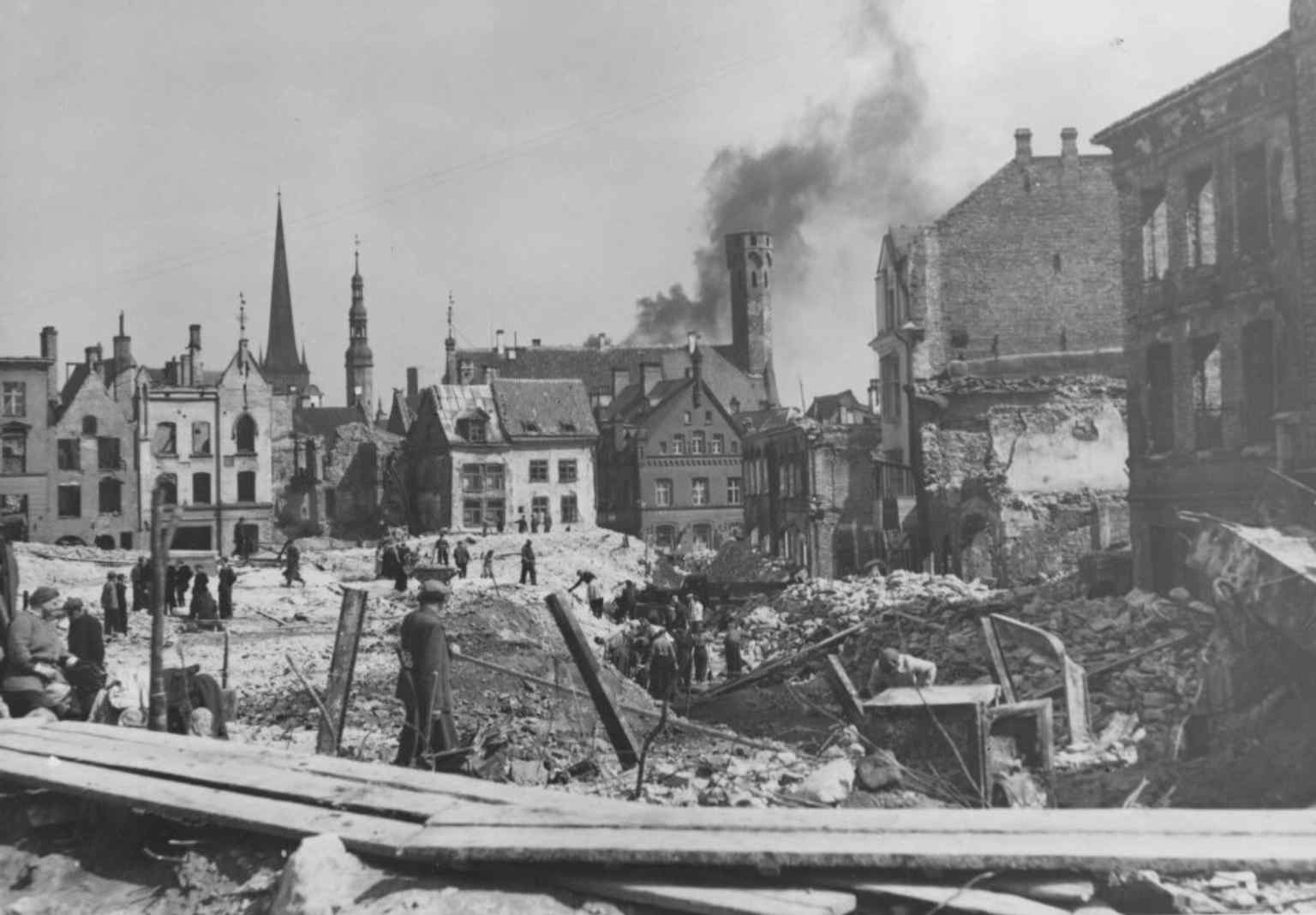
The Old Town after the 1944 Soviet bombing, showing the wartime damage that scarred the historic center.Photo: Unknown authorUnknown author, Wikimedia Commons, Public domain. Cropped & resized. 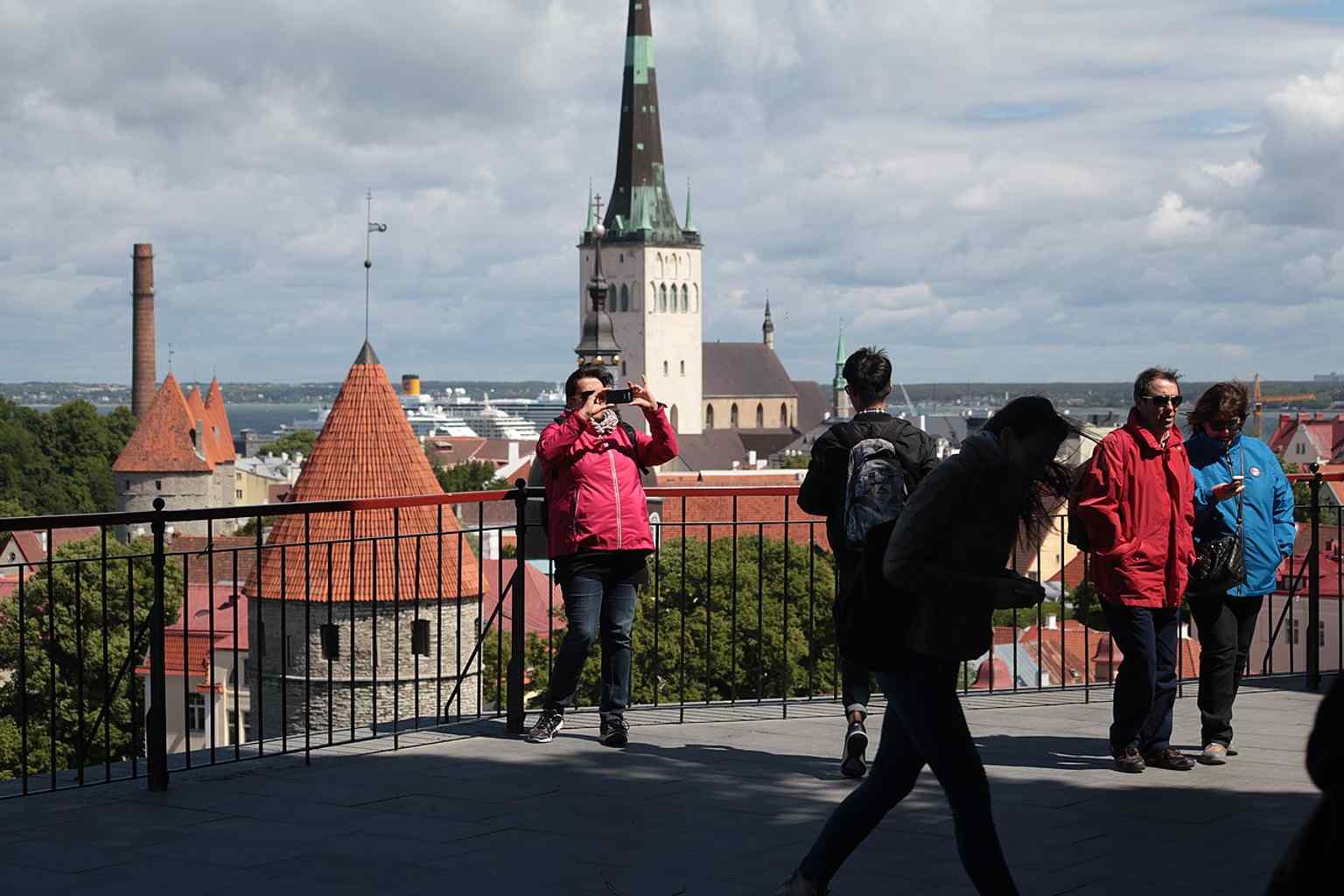
A busy tourist viewpoint over Old Town, reflecting its modern life as a popular heritage district as well as a neighborhood.Photo: Sillerkiil, Wikimedia Commons, CC BY-SA 4.0. Cropped & resized. 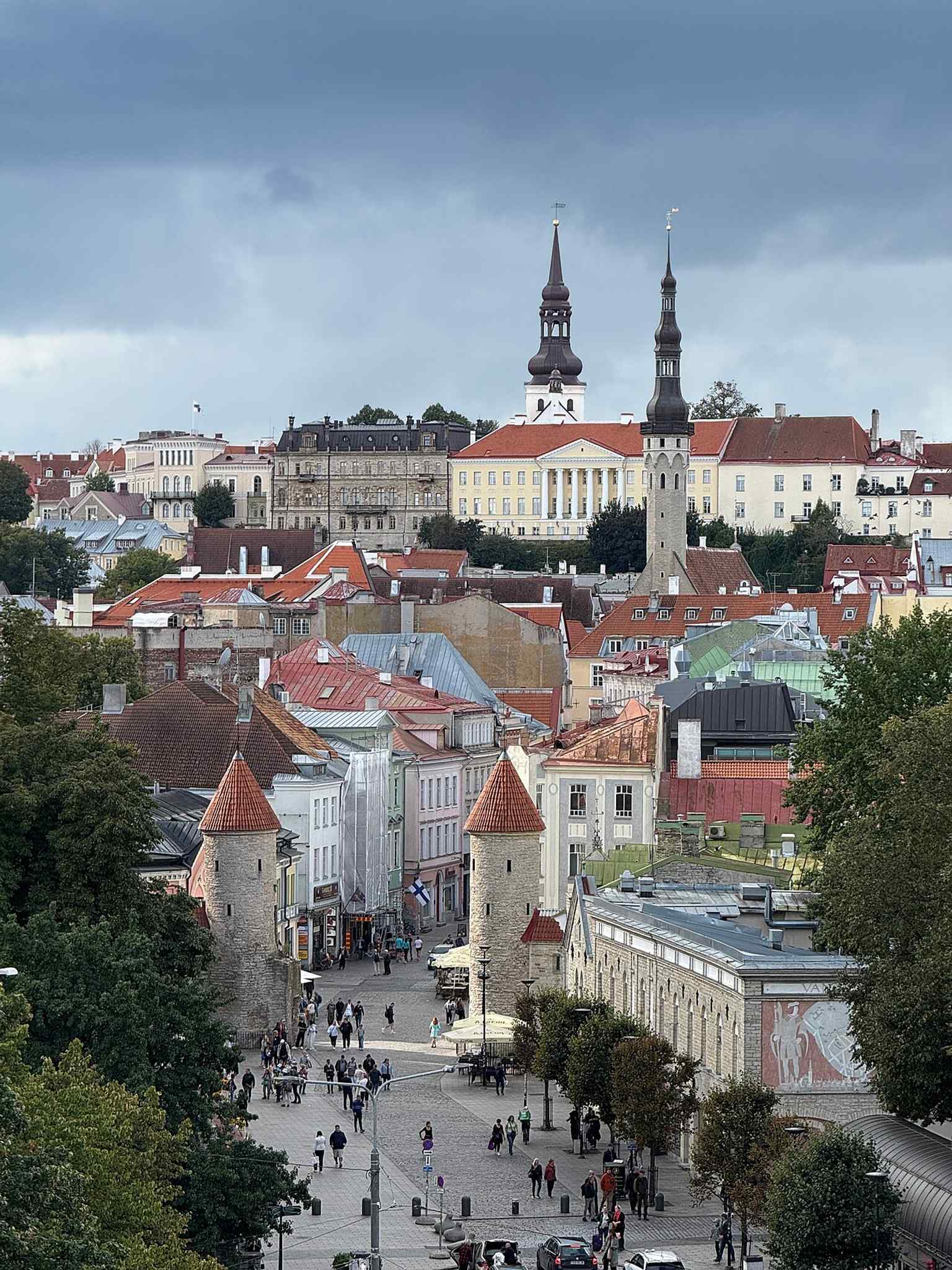
Another broad view over Tallinn’s Old City, suitable for introducing the UNESCO-protected historic core.Photo: CedarGlen86, Wikimedia Commons, CC BY 4.0. Cropped & resized. On your left, look for the long pale limestone hall with its row of pointed arches and tall Gothic tower, crowned by the small weather-vane watchman called Old Thomas. This is…Read moreShow less
Open dedicated page →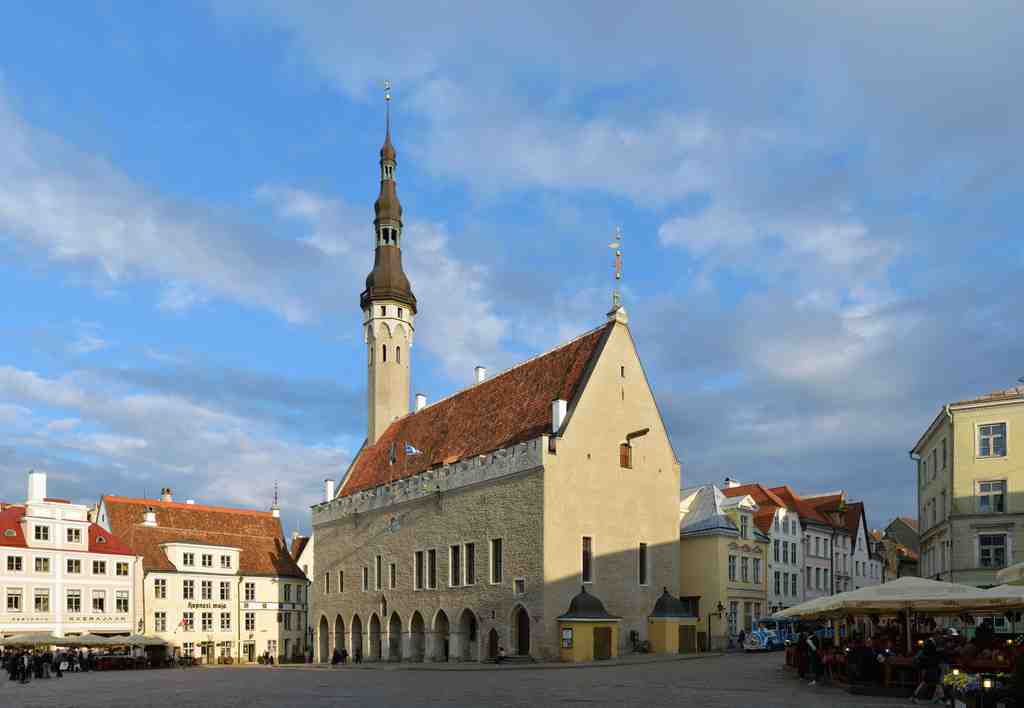
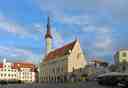
Tallinn Town HallPhoto: Ivar Leidus, Wikimedia Commons, CC BY-SA 3.0 EE. Cropped & resized. On your left, look for the long pale limestone hall with its row of pointed arches and tall Gothic tower, crowned by the small weather-vane watchman called Old Thomas.
This is Tallinn Town Hall, one of the best-preserved medieval town halls in Northern Europe, and among the few surviving Gothic ones in this part of the continent. The city first mentioned it in thirteen twenty-two, when it was a modest one-storey limestone building. Then trade enriched Reval, the Hanseatic port below the noble heights of Upper Town, and the merchants enlarged their own seat of power. Between fourteen oh two and fourteen oh four they gave it the elegant arcade, the grand upper halls, and the tower that still commands the square.
It looks dignified, but do not mistake dignity for gentleness. Beneath the arcade - that covered line of arches at ground level - traders once sheltered their goods, and the city displayed its authority at arm’s length. Let your eyes travel along the columns. On one of them there is still an iron neck ring. Swindlers and quarrelsome townsfolk were fastened there for public humiliation, not flogged, just exhibited. It is one of those details locals quietly keep an eye on, because it tells you what this building really was: market shelter, courtroom, treasury, and theatre of shame.
Above it all stands Old Thomas. If you open the image on your screen, you can see his jaunty silhouette more clearly. The weather vane arrived in fifteen thirty, and Tallinn adopted him as its watchman. Legend says a peasant boy named Toomas stunned the German nobles by shooting a wooden parrot from a pole when none of them could. A commoner could not claim the noble prize, so the city rewarded him with a post as a town guard instead. He spent his life watching the square and handing sweets to children. Whether every detail is true hardly matters; the city chose a human hero to perch above its power.
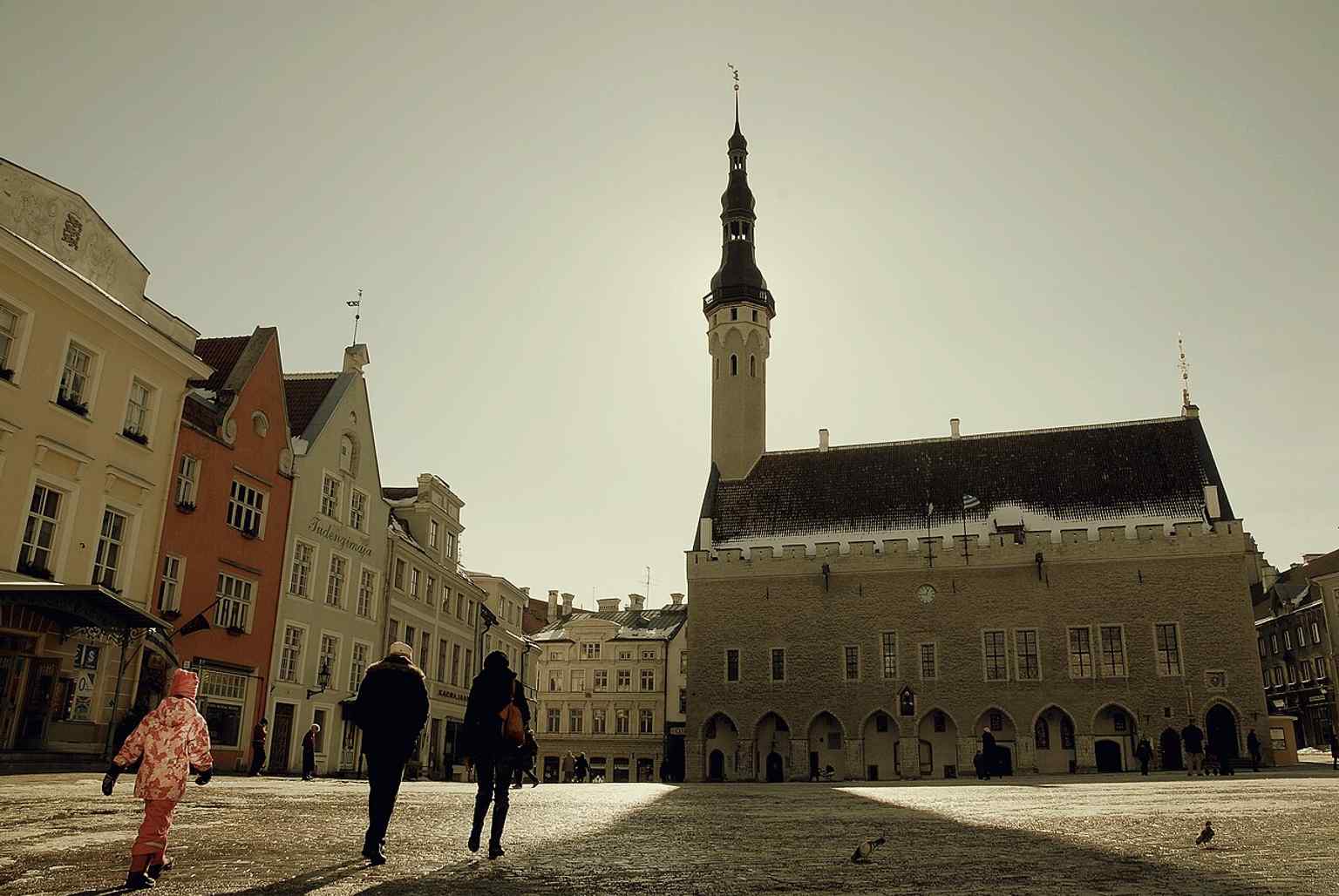
Old Thomas, the famous weather vane installed in 1530, has become Tallinn’s enduring city guardian.Photo: Zentsik, Wikimedia Commons, CC BY-SA 3.0 ee. Cropped & resized. Inside, the magistrate - the city council - ruled with astonishing reach. It judged court cases, levied taxes, controlled wine sales, and even decided who might wear which ornaments and fabrics. If you glance at the chamber on your phone, it appears almost ceremonial. In fact, those rooms hosted feasts, hearings, and hard decisions. One inscription told each councillor to leave anger, friendship, flattery, and private worries outside, and to devote himself to the common good.
Yet justice here could turn alarmingly swift. In sixteen ninety-five, a pastor named Panike flew into a rage over a bad omelette - some said warm beer - and killed an inn servant with a mug. The magistrate judged him at once and had him beheaded right here on the square, not at the usual execution ground beyond the walls. In the cobbles near the hall, an L-shaped stone still marks the spot. Suddenly this handsome façade feels less like scenery and more like machinery.
And the building kept changing role. City authorities worked here until nineteen seventy. In the March bombing of nineteen forty-four, an incendiary bomb struck the spire and the tower burned, but the hall survived. Builders restored the spire in nineteen fifty-two, and in the nineteen sixties they reopened the ground-floor arcade after nineteenth-century alterations had sealed it up. So what you see now is not a frozen relic, but a carefully recovered one.
Take one last look at the arches, the tower, the watchman, and that hidden iron collar. Pride, trade, vigilance, punishment, ceremony - all of it gathers under one roof. In about two minutes, at Writers' House, you will see how the old city kept being rewritten after war and rupture.
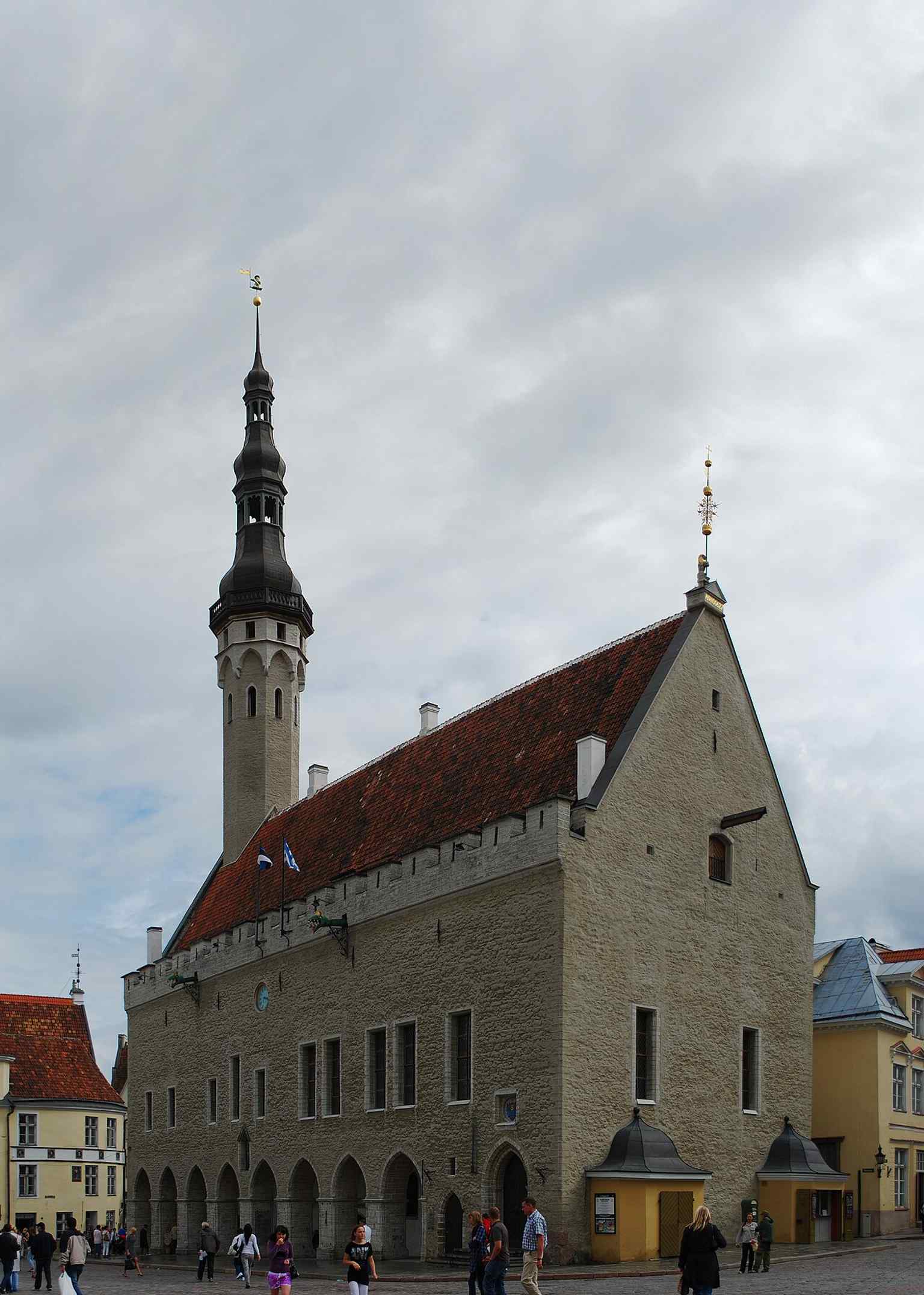
A classic view of Tallinn Town Hall on Town Hall Square, the best-preserved medieval town hall in Northern Europe.Photo: Andrei Stroe, Wikimedia Commons, CC BY-SA 3.0 ee. Cropped & resized. On your left, look for a long five-storey facade in terracotta plaster, lined with orderly rows of windows and capped by a sharp gabled roof, with a broad glass corner that feels…Read moreShow less
Open dedicated page →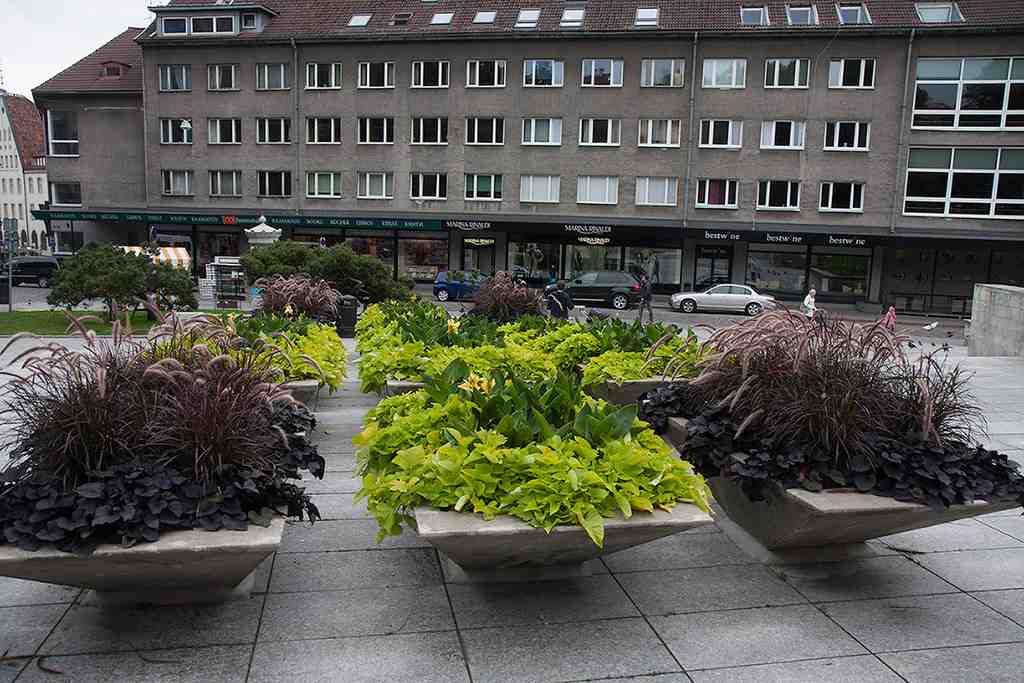
Writers' HousePhoto: Vadim Zhivotovsky, Wikimedia Commons, CC BY 3.0. Cropped & resized. On your left, look for a long five-storey facade in terracotta plaster, lined with orderly rows of windows and capped by a sharp gabled roof, with a broad glass corner that feels unmistakably more modern than the medieval buildings beside it.
The Writers’ House is one of those places where Tallinn stops pretending to be seamless. Harju Street suffered terrible destruction in the March bombing of nineteen forty-four, and this building rose directly into that wound. Architects Mart Port and Heili Volberg finished it on the fifth of December, nineteen sixty-two, choosing a Scandinavian modernist style: natural materials, clean lines, and an attempt to answer the old city without imitating it. So you get that steep roof, a courteous bow to the Old Town, and then those large glass surfaces and shopfront windows, which refuse to play medieval dress-up.
That tension mattered. Earlier on this walk, power wore merchant robes, guild chains, and civic fur. Here, after fire and ruin, cultural authority arrived in a different costume. This house gathered apartments, the Estonian Soviet Socialist Republic Writers’ Union, the editorial offices of Looming, the journal whose name means “Creativity,” the Literary Fund, a major bookshop, and the famous Pegasus café. In other words, this was not simply a residence. It was a machine for deciding whose words would circulate in Tallinn.
Architecture historian Mart Kalm argued that the building’s real force lay less outside than within. Interior designer Vello Asi shaped the Writers’ Union rooms, and the original chairs by Väino Tamm became legends of Tallinn modernist design. The conference hall seated two hundred and fifty people and used simple, bold contrasts: a black ceiling, white walls, red furniture. Between nineteen sixty-three and nineteen eighty, the hall hosted about four hundred literary events. Director Voldemar Panso even staged intimate theatre there, helping to push Estonian performance in a fresh direction.
Then there was Pegasus, the café that turned this building into a social current. Writer Lelo Tungal remembered it as Tallinn’s outpost for Tartu bohemia: writers, musicians, critics, and students mixing without ceremony. She also preserved a deliciously human scene. The poet Juhan Viiding, forever in a rush, once came here at night, walked straight into a newly glazed glass door, shattered it, and then complained that the glass had been too clean to notice. That is this house in miniature: stylish, intellectual, slightly dangerous, and never entirely solemn.
Yet the building carries a harder argument too. On its side facade hangs a relief of Juhan Smuul, who led the Writers’ Union from nineteen fifty-three to nineteen seventy-one. In recent years, Estonians reopened the question of his role in the March deportations of nineteen forty-nine. In February twenty twenty-four, the union did not remove the relief. Instead, it added an explanatory plaque with a QR code directing visitors to information about his “dark side.” So the wall now holds praise and indictment together. Very Tallinn, really: memory seldom leaves the stage quietly.
When you are ready, continue toward the Church of St. Nicholas, about three minutes away. There, you’ll meet a much older building where prayer and commerce lived side by side, and the sacred never kept entirely clear of the marketplace.
On your right rises a pale stone church with a long, steep-roofed Gothic body and a towering dark spire, its broad, fortress-like mass making Niguliste easy to recognise. This is…Read moreShow less
Open dedicated page →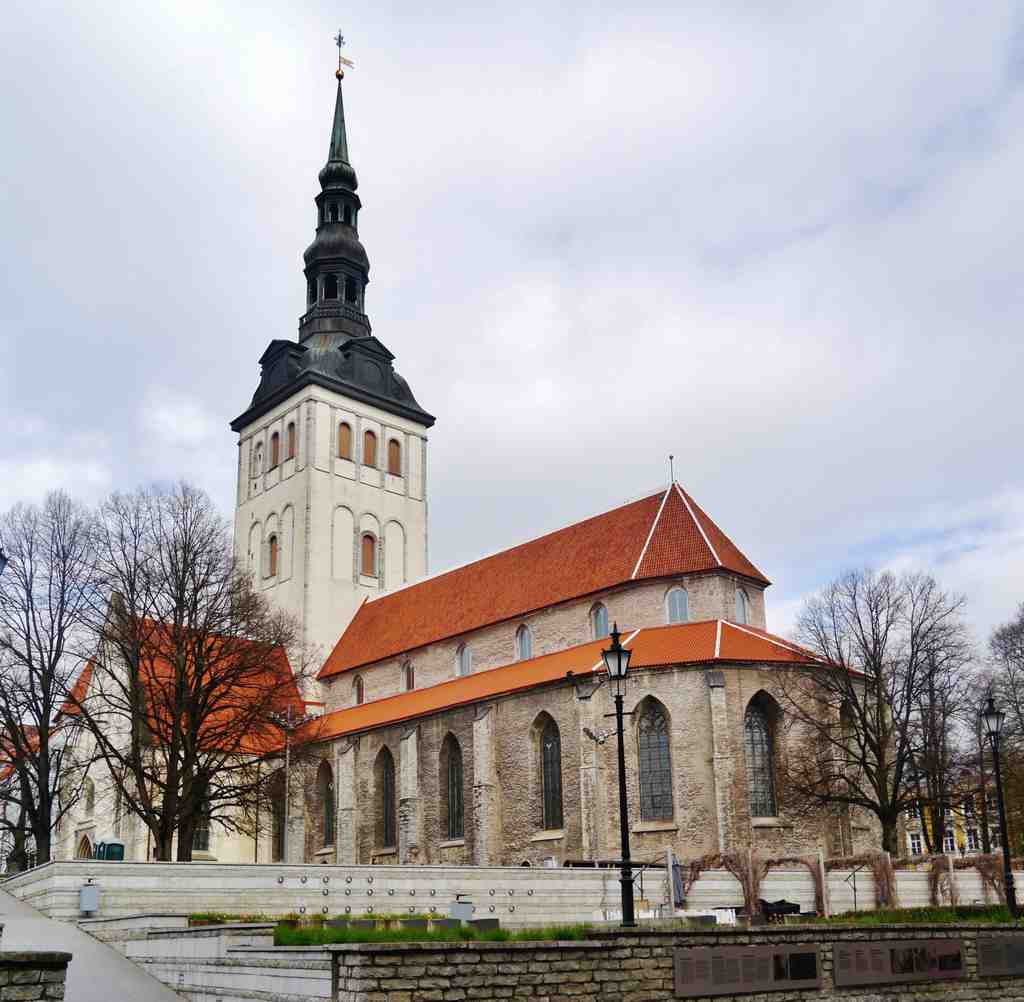
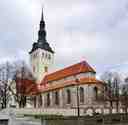
Church of St. NicholasPhoto: Zairon, Wikimedia Commons, CC BY-SA 4.0. Cropped & resized. On your right rises a pale stone church with a long, steep-roofed Gothic body and a towering dark spire, its broad, fortress-like mass making Niguliste easy to recognise.
This is the Church of St. Nicholas, founded in the middle of the thirteenth century by merchants from Gotland, men of Westphalian origin who settled here in the Lower Town and dedicated their church to the patron saint of sailors. And that already tells you something essential: this was never only a place of prayer. Niguliste belonged to the merchant world as much as to the sacred one. It served as a parish church, certainly, and one of the richest in Tallinn, but it also stored goods. Business could be done here. Around the Baltic, travelling traders often built fortified churches that could protect both worshippers and wares, and Niguliste was one of the clearest examples.
By the end of the thirteenth century, the builders had given it three aisles, a large square altar end, and a thick western tower shaped for defence. Later generations kept enlarging it. Chapels clustered around it from the fourteenth century onward. In the early fifteenth century, they raised the central hall above the side aisles so light could enter through high windows, and between fourteen oh five and fourteen twenty they created much of the building before you now. Then the master builder Andreas Mor crowned the tower with a Gothic spire by fifteen fifteen; seventeenth-century builders later added a baroque upper finish, bringing it to its present height of one hundred and five metres.
Take a moment and really study the bulk of it. The walls do not simply invite devotion; they seem to guard something. That is the secret of this place.
If you glance at your screen, one of the great artworks inside shows St. Nicholas saving a Baltic trading ship from disaster. It is almost a manifesto in paint: commerce and salvation bound together in one image.
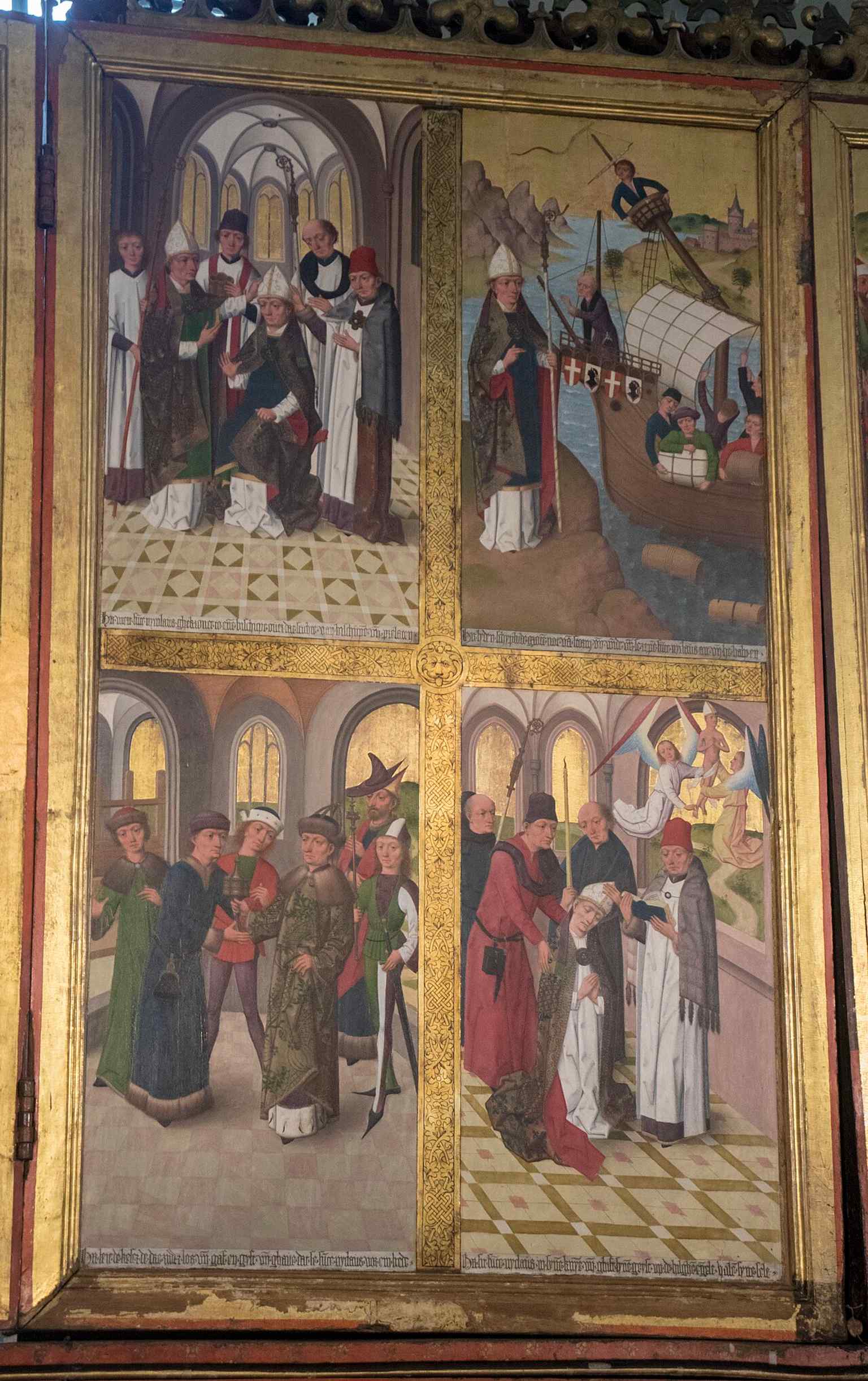
Another altarpiece detail showing St. Nicholas saving a shipwrecked Hanseatic vessel, linking the church to Tallinn’s merchant history.Photo: WanderingTrad, Wikimedia Commons, CC BY-SA 4.0. Cropped & resized. When the Reformation turned violent, Niguliste revealed just how precarious that world could be. On the night of the fourteenth of September, fifteen twenty-four, crowds smashed their way through other churches in the Lower Town. Local legend says Niguliste survived because someone sealed its door locks with molten lead. Whether that tale is literally true or not, the result mattered: this became one of the few Lower Town churches whose interior escaped that wave of destruction. The church turned Lutheran, but its treasures remained.
You may remember the Brotherhood of the Blackheads. Their great altarpiece of the Virgin Mary, paid for together with the Great Guild before fourteen ninety-three, was carried out and hidden in the House of the Blackheads during that anti-image violence, and it stayed there until nineteen forty-three. In Tallinn, belief, status, trade, and fear were never far apart.
Then came the Soviet air raid of the ninth of March, nineteen forty-four. Fire tore through the church. A carved sixteenth-century pulpit vanished, and much of the art still inside perished. For Estonia, Niguliste became a wound in stone. Restorers began in nineteen fifty-three and worked for nearly thirty years. The spire rose again in the nineteen seventies, collapsed again after a fire in nineteen eighty-two, and rose once more. Since nineteen eighty-four, the building has lived yet another life as a museum and concert hall. Inside, it shelters medieval art from across Estonia, including the surviving fragment of Bernt Notke’s Dance of Death. And through the organist Andres Uibo, who has served here since nineteen eighty-one, it also became a living musical space, not merely a rescued shell.
So Niguliste refuses simple labels. It is sanctuary, warehouse, stronghold, ruin, museum, and concert hall all at once, which makes it one of the most honest buildings in the Lower Town.
In about three minutes, we leave this great survivor for the Tallinn Museum of Orders of Knighthood, where a much smaller museum preserves surprisingly global stories about honour, status, and who gets to claim legitimacy. If you want to return inside Niguliste later, it is generally open every day from ten in the morning until six in the evening.
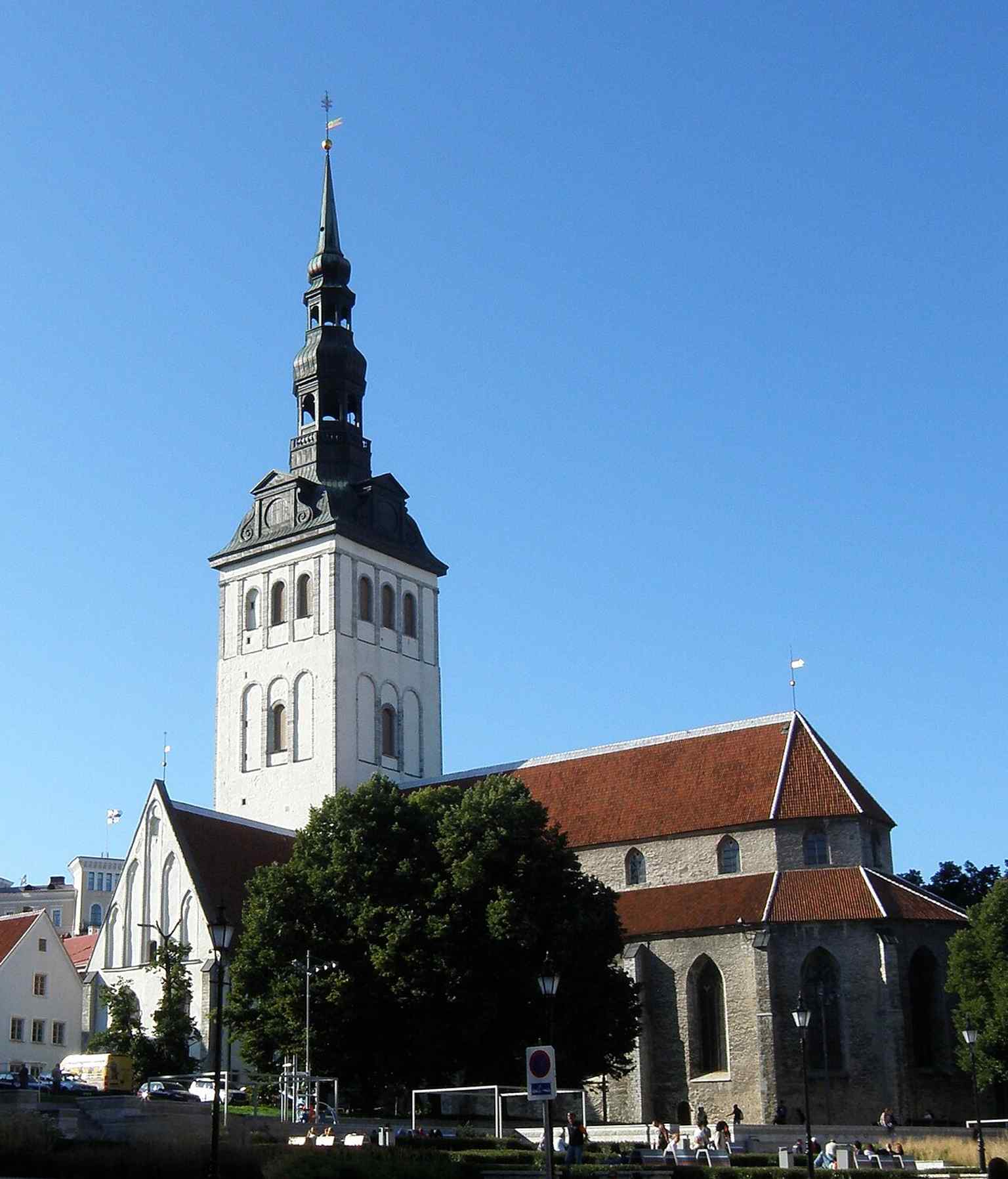
A clear view of Niguliste Church in Tallinn, the medieval landmark that once dominated the western skyline of the Old Town.Photo: Epp, Wikimedia Commons, CC BY-SA 3.0. Cropped & resized. 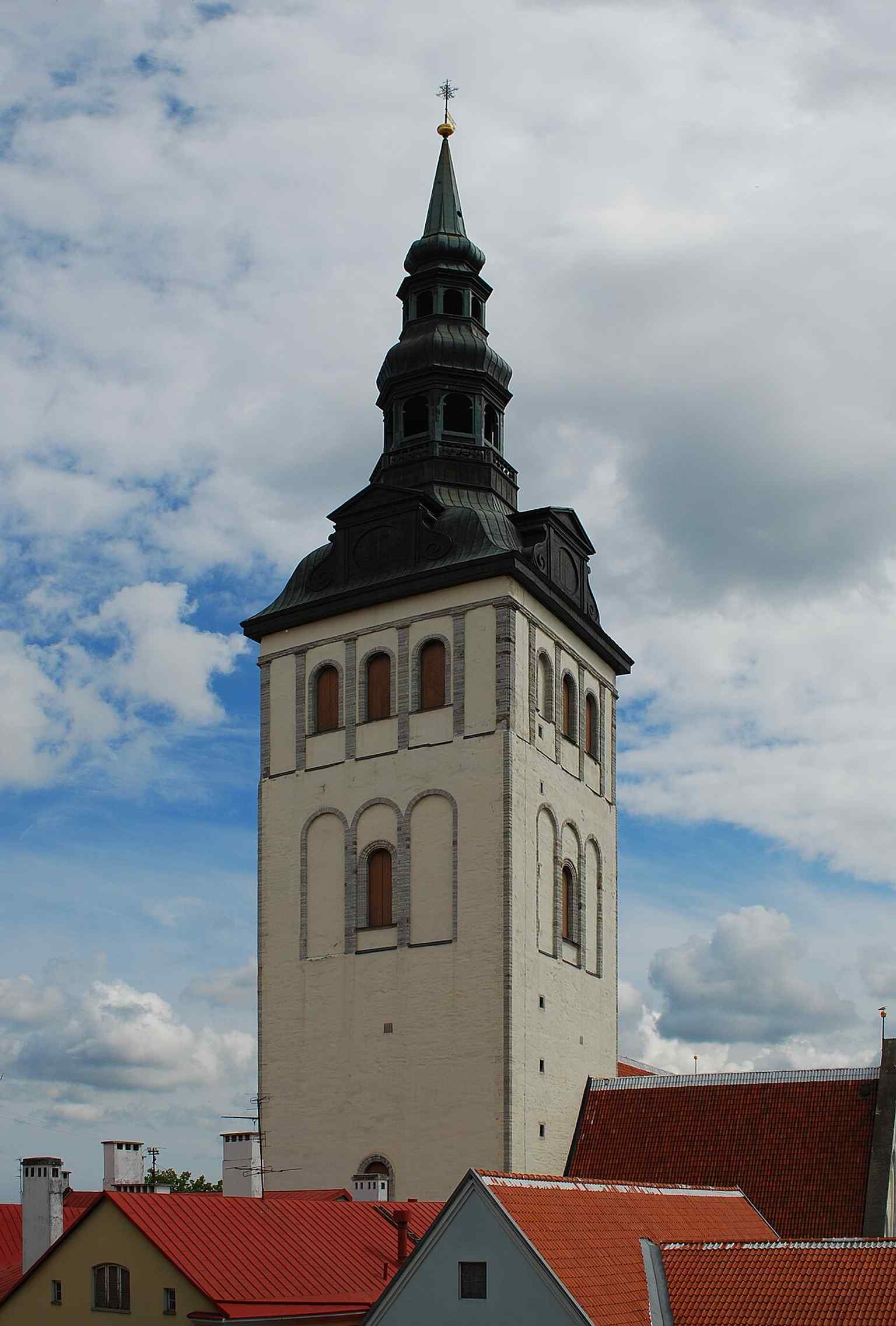
The soaring tower and spire — the church’s most recognizable feature, rebuilt after wartime damage and later fire.Photo: Andrei Stroe, Wikimedia Commons, CC BY-SA 3.0 ee. Cropped & resized. 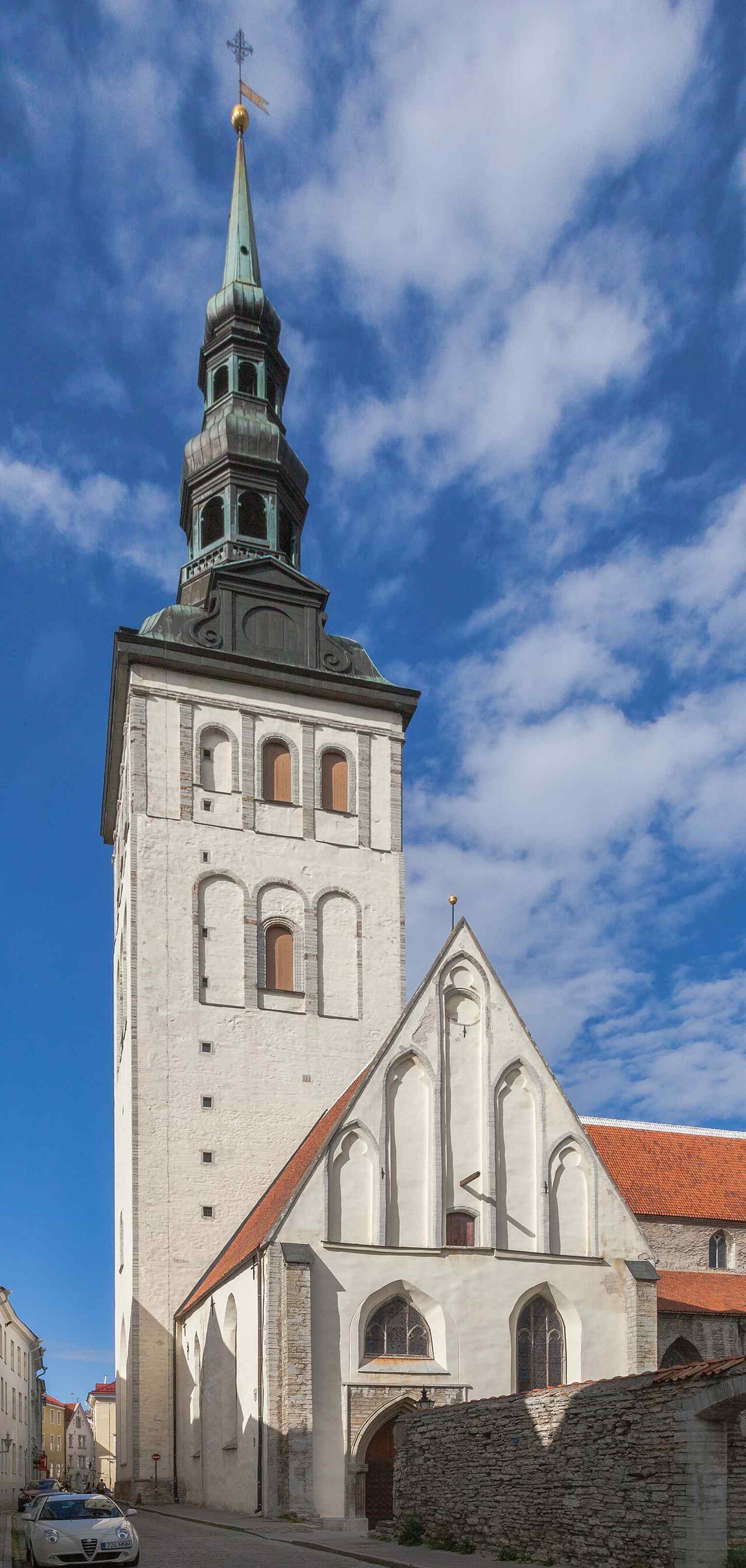
A close exterior view that helps show the church’s Gothic massing and tall brick tower above the old city streets.Photo: Diego Delso, Wikimedia Commons, CC BY-SA 3.0. Cropped & resized. 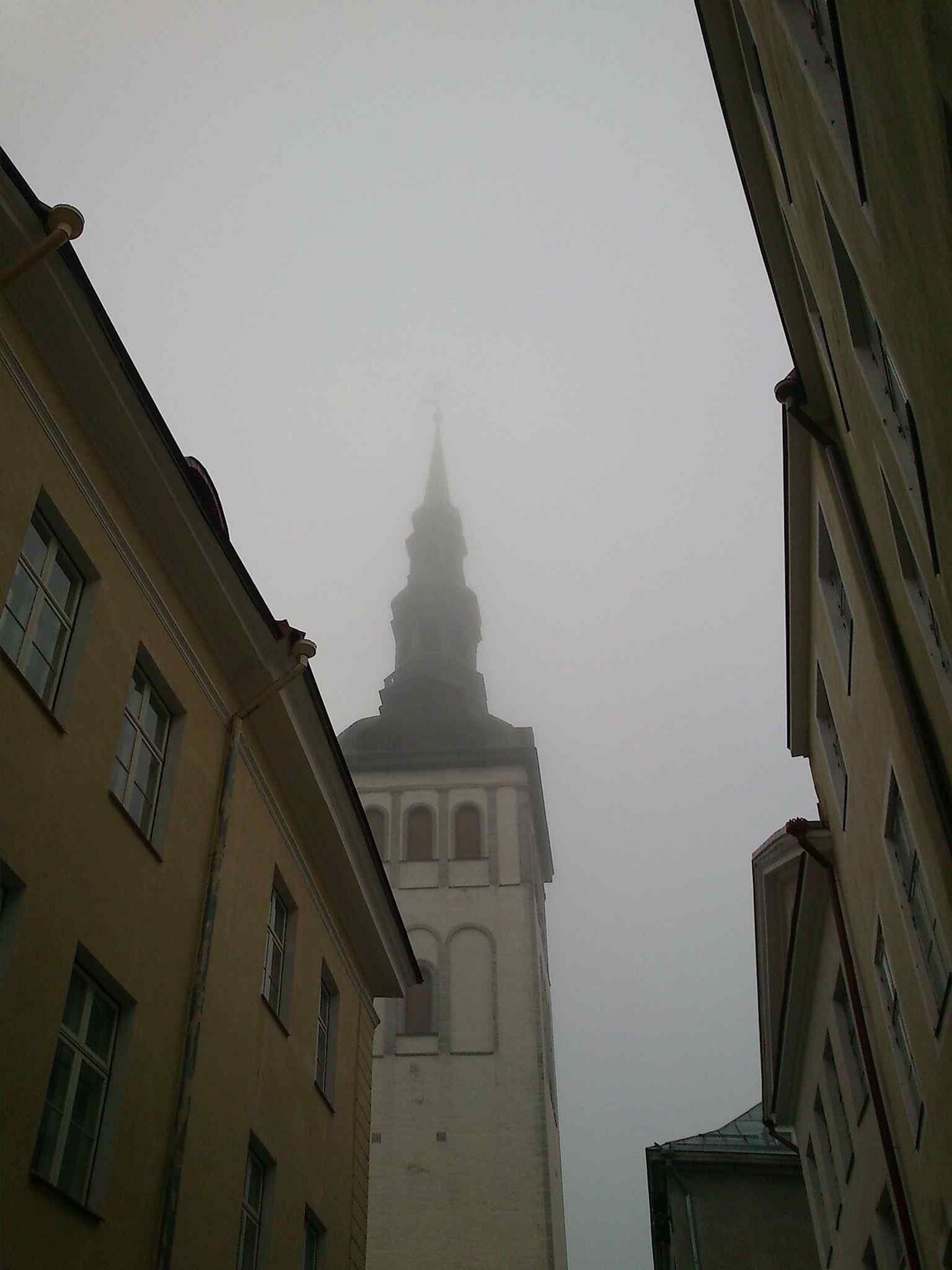
Niguliste shrouded in mist in 2013, a moody reminder of the long restoration history after wartime destruction.Photo: Monika Reppo, Wikimedia Commons, CC BY-SA 3.0 ee. Cropped & resized. 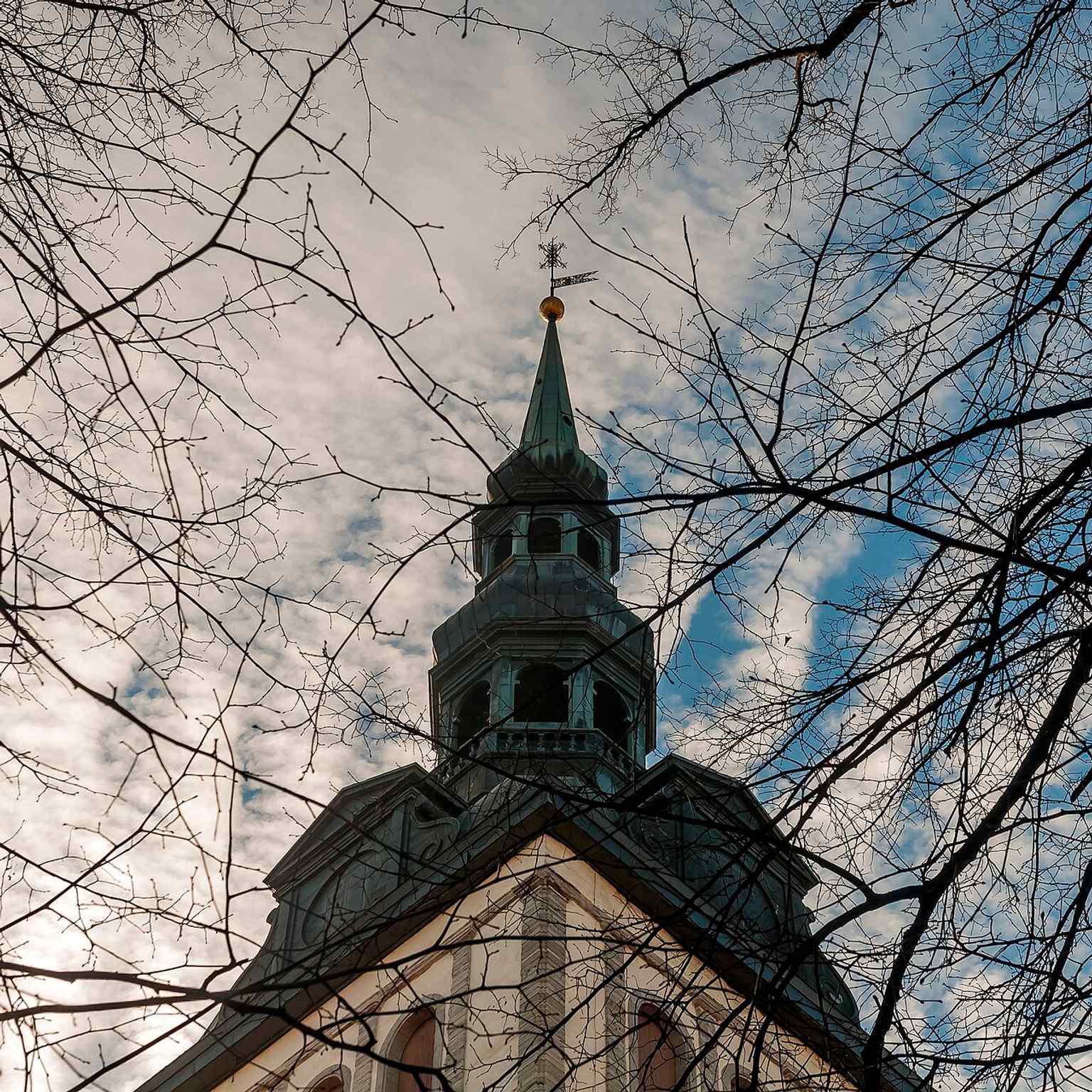
A frontal view of the church on Niguliste street, useful for showing its presence as a major monument in the Lower Town.Photo: Aleksandr Abrosimov, Wikimedia Commons, CC BY-SA 4.0. Cropped & resized. 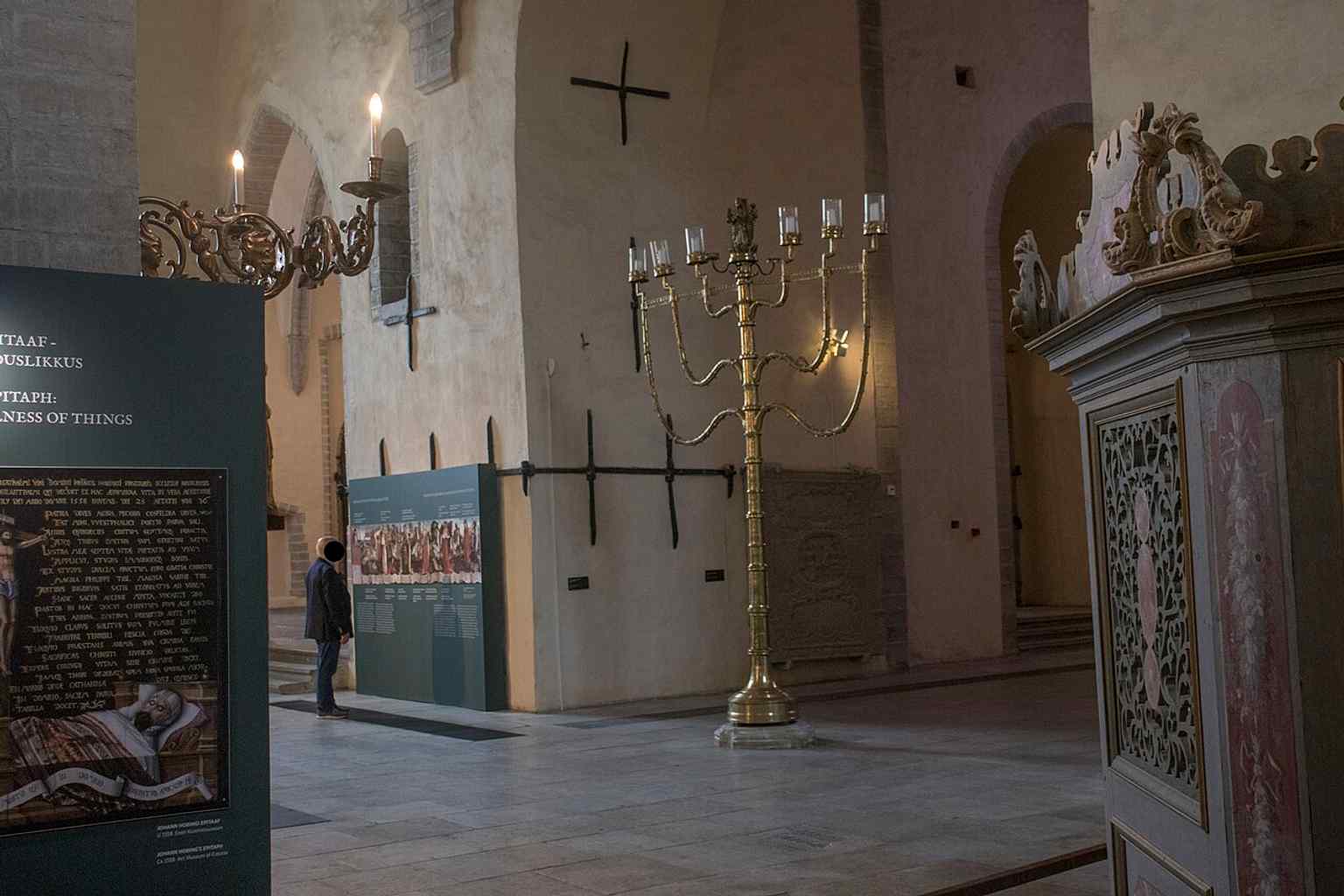
A church candelabrum inside Niguliste, part of the museum setting that replaced the old parish function.Photo: WanderingTrad, Wikimedia Commons, CC BY-SA 4.0. Cropped & resized. 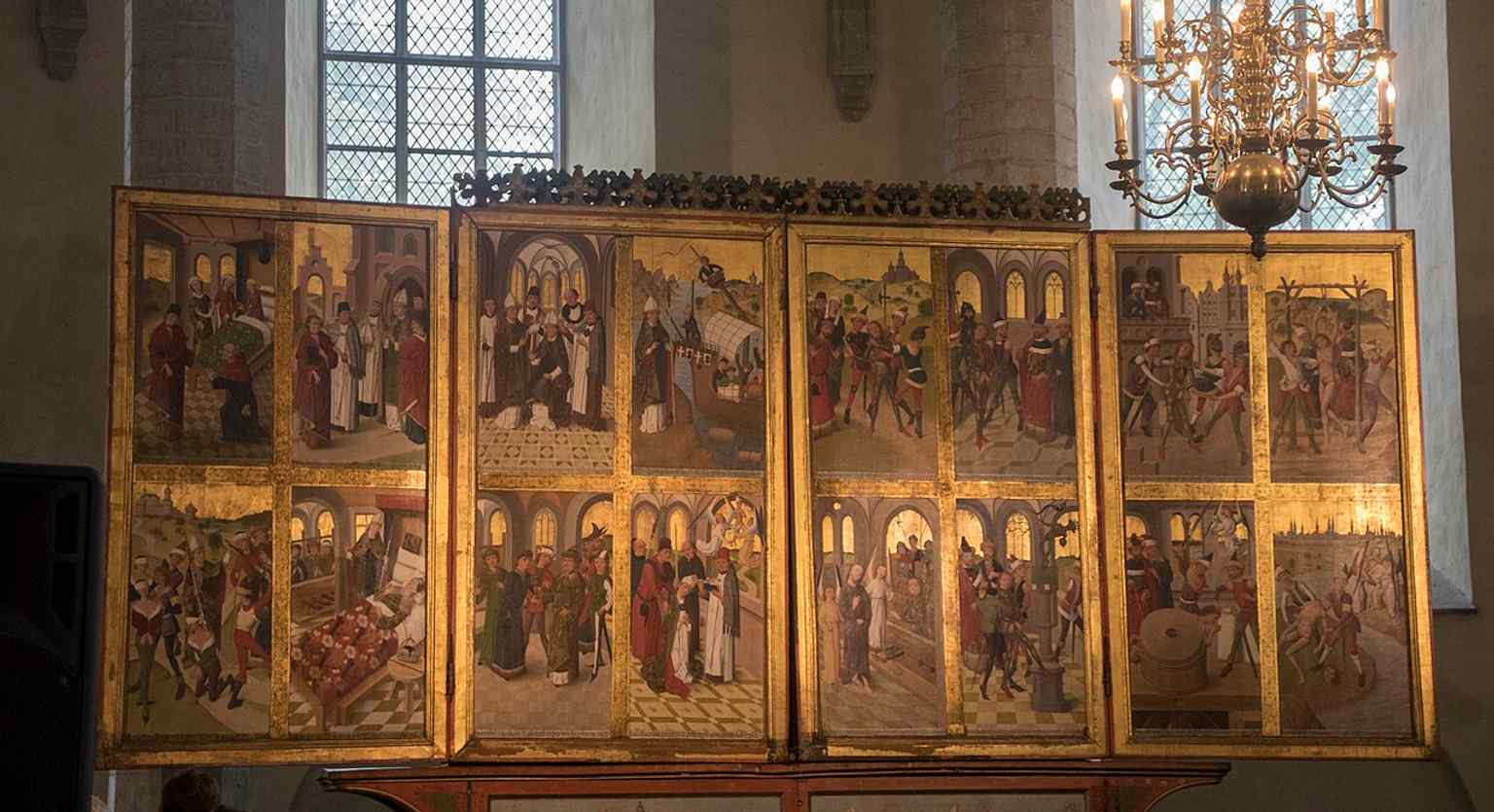
The famous Hermen Rode high altarpiece, one of the museum’s greatest treasures and a key surviving work of medieval art.Photo: WanderingTrad, Wikimedia Commons, CC BY-SA 4.0. Cropped & resized. 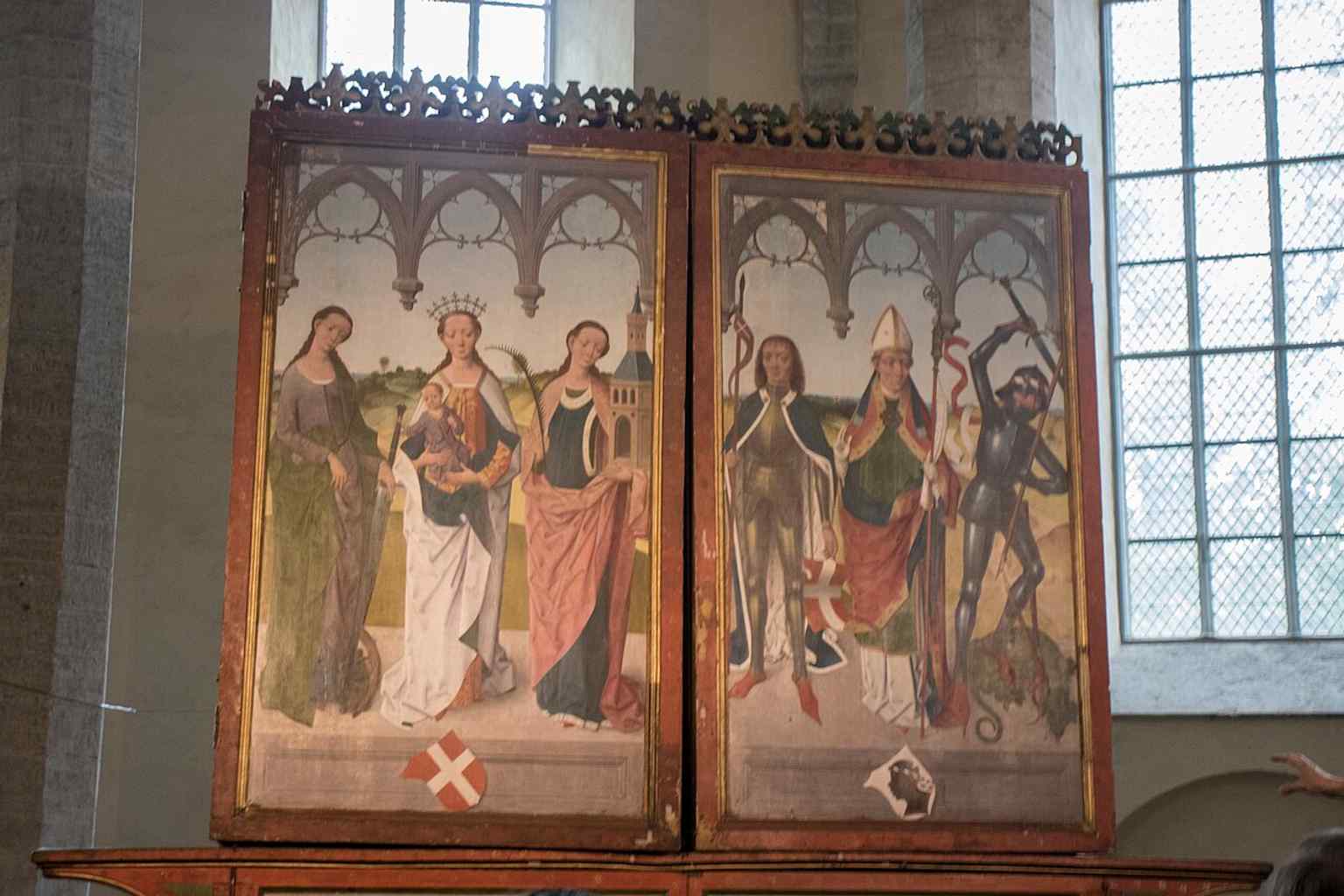
The closed altarpiece view, useful for showing how the museum preserves and presents this medieval masterpiece.Photo: WanderingTrad, Wikimedia Commons, CC BY-SA 4.0. Cropped & resized. 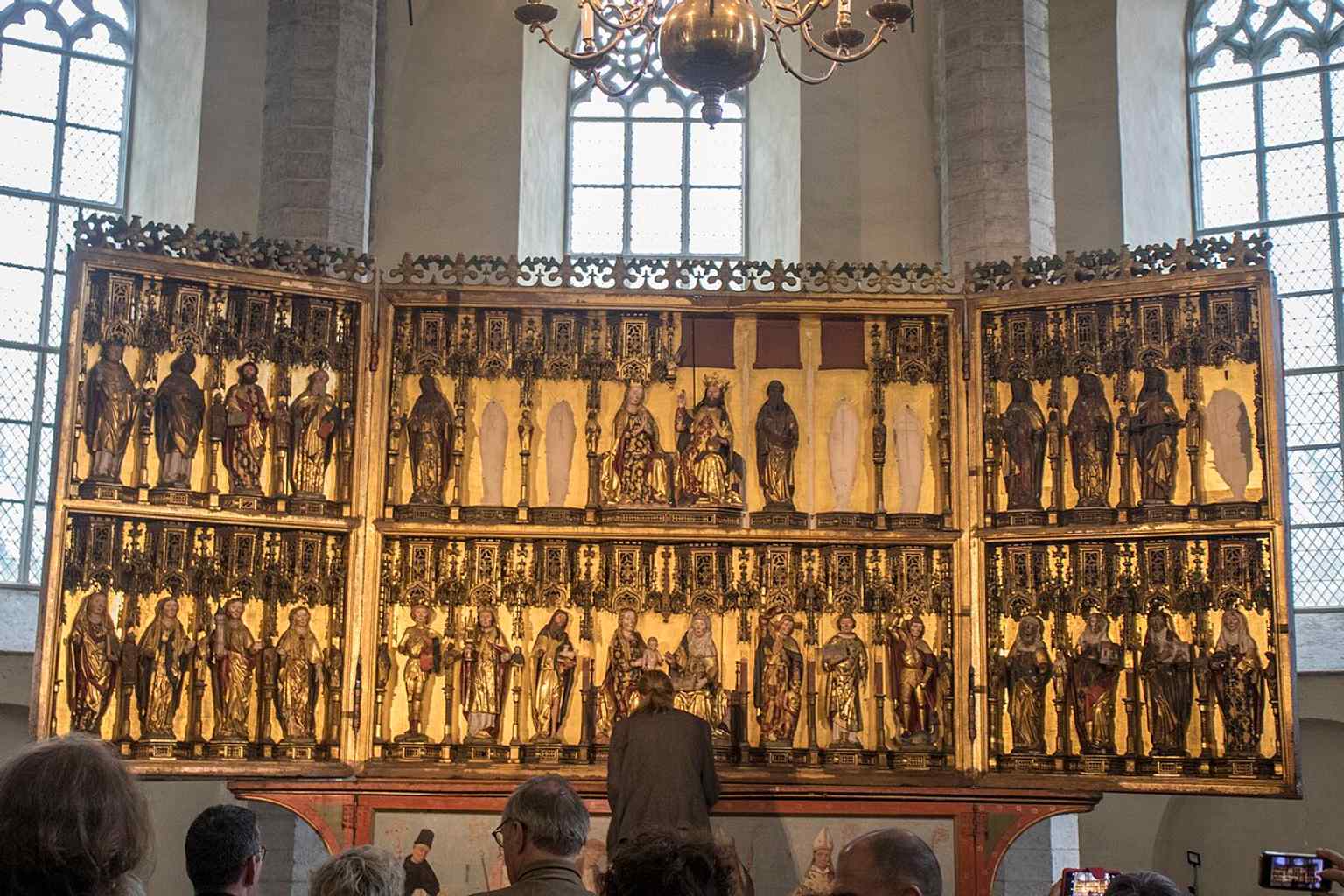
The open altarpiece view, revealing the full painted and carved ensemble that visitors see during special displays.Photo: WanderingTrad, Wikimedia Commons, CC BY-SA 4.0. Cropped & resized. 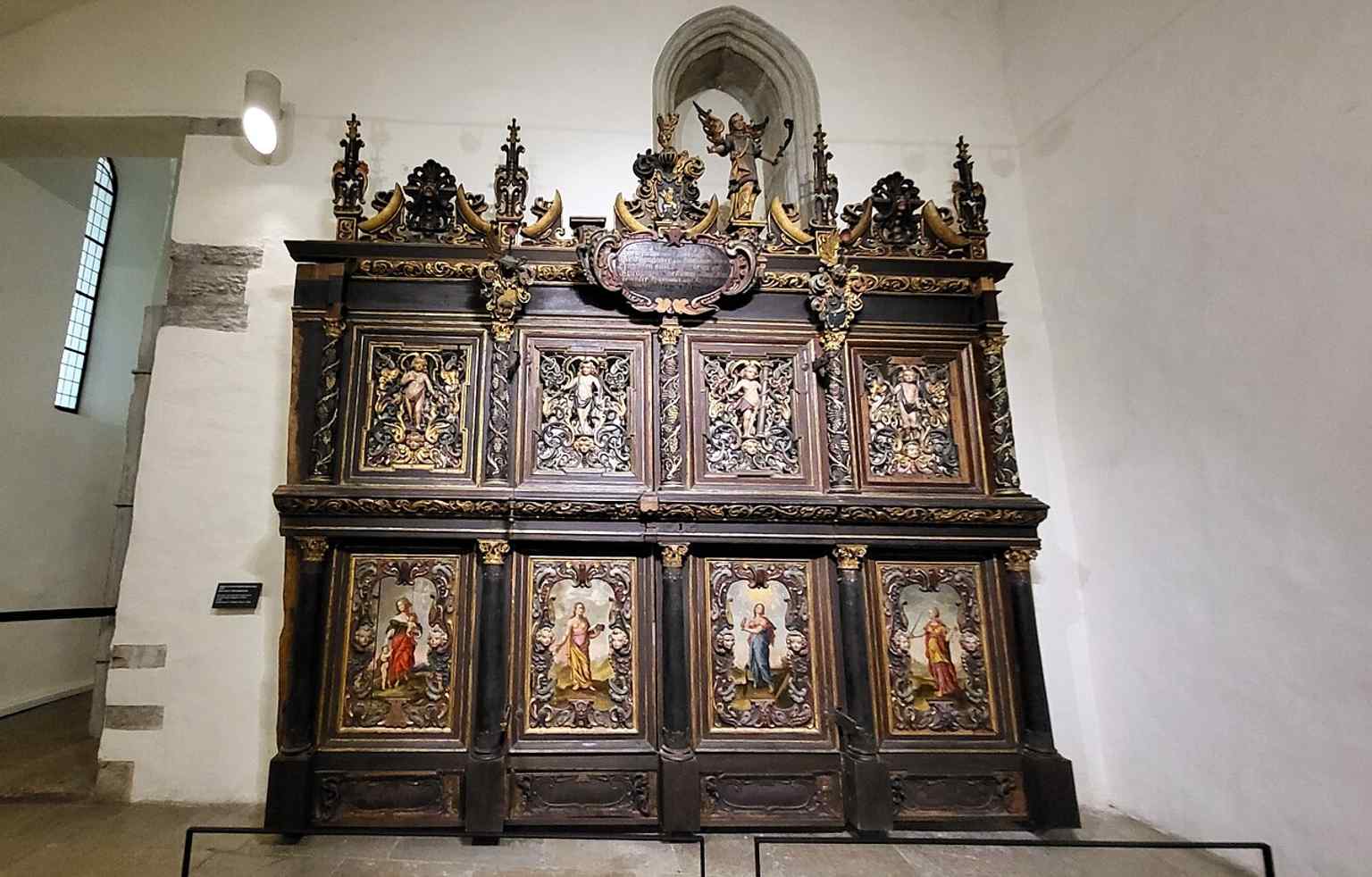
The decorative screen of the Bogislaus von Rosen chapel, part of the richly preserved interior now used as a museum and concert hall.Photo: Hei1972, Wikimedia Commons, CC BY-SA 4.0. Cropped & resized. Look for the pale plaster-and-stone medieval house with its narrow upright façade, steep gable, and dark doorway set into a building that seems to have kept its posture for…Read moreShow less
Open dedicated page →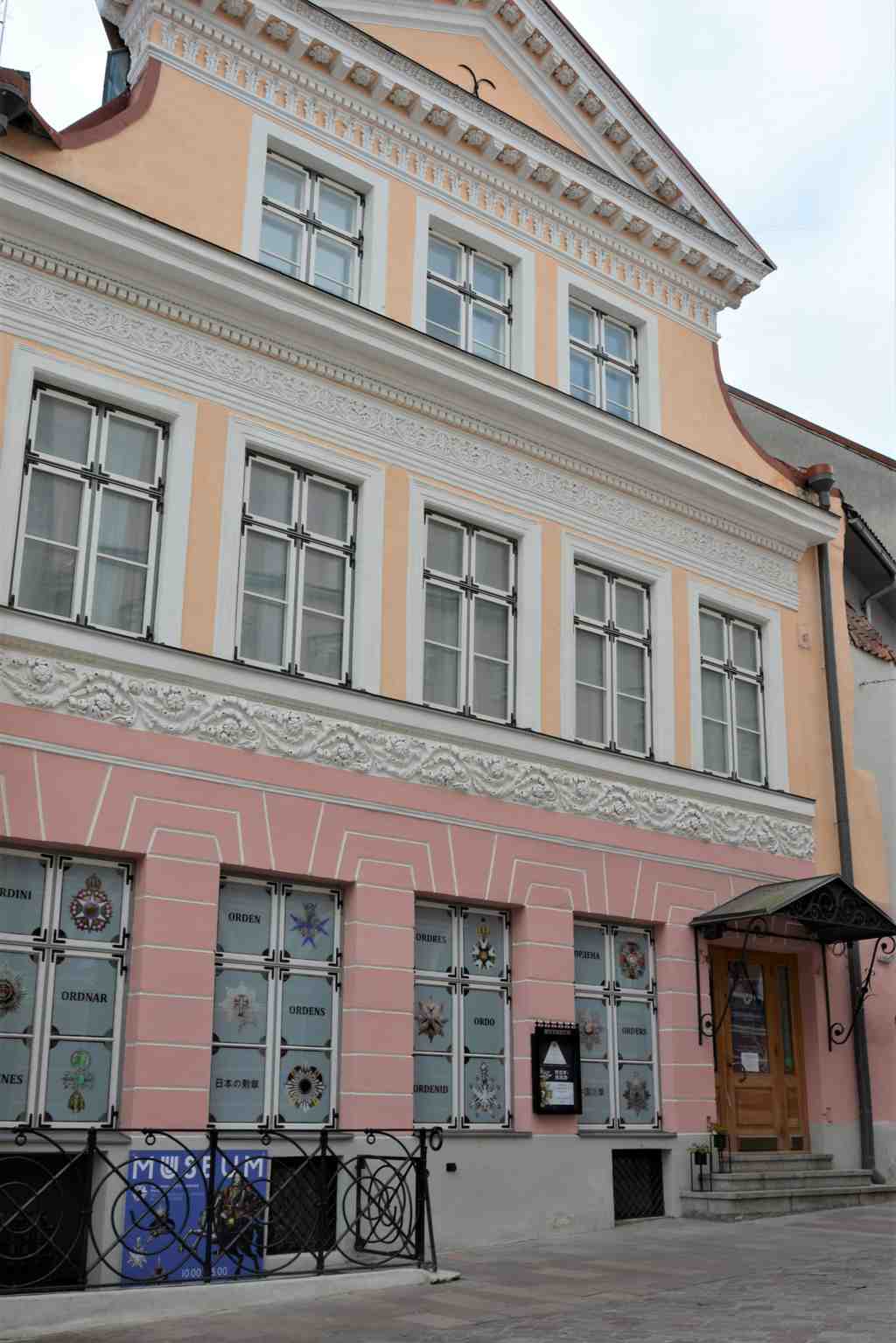
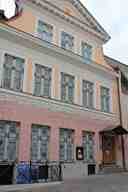
Tallinn Museum of Orders of KnighthoodPhoto: Kattiks, Wikimedia Commons, CC BY-SA 4.0. Cropped & resized. Look for the pale plaster-and-stone medieval house with its narrow upright façade, steep gable, and dark doorway set into a building that seems to have kept its posture for centuries.
This is the Tallinn Museum of Orders of Knighthood, a private museum opened in January of twenty seventeen, and it sits here on Kuninga Street for a reason deeper than convenience. The museum likes to remind you that this house rose in the very era when men of a military order governed the Old Town. So the setting is not a neutral box for display. These walls belong to the argument. You stand outside a medieval house and inside it wait the glittering signs of rank, favour, loyalty, ambition, and, sometimes, invention.
The collection holds around one thousand original mantles, chains, stars, badges, and cases linked to knightly orders and decorations from Europe, the Americas, Africa, and the Far East. Some pieces go back to the early eighteenth century. In twenty twenty-one, the main display was completely reworked, so visitors could see more clearly how single-grade orders differ from multi-grade merit orders, and how awards for battlefield courage, civil service, science, art, women, and the Red Cross evolved over time. That sounds tidy. The objects themselves are not. They carry bruised histories.
The museum’s favourite little detective story centres on the Order of the White Eagle. For years, people believed one badge here had belonged to King Stanisław August and had passed to Catherine the Second. Then the researcher Lyudmila Gavrilova looked more closely. She compared a photograph in the museum booklet with archive descriptions and felt the story did not quite fit. That instinct sent the object into a proper historical investigation. If you glance at your screen, you can see the piece itself: enamel, gold, silver, and diamonds, all trying to look certain of themselves. Archive work in Russia changed the case. On the reverse, specialists found the monogram of Augustus the Strong, and a document describing where the insignia was kept after the deaths of Peter the Great and his wife matched the Tallinn object almost word for word. Kremlin experts then spotted two diamond inserts added later, tiny clues that helped stitch its earlier life back together. After the revolution, the badge and an early star of the same order were sold off, and the star even kept traces of precious-metal testing, as if someone had tried to rub away its origin. That is what honour becomes once regimes collapse: not nothing, but evidence.
Other treasures here sparkle with equally oversized memory. Nicholas the Second gave a diamond-set Order of Saint Alexander Nevsky, with eight hundred and forty diamonds, to the future French president Paul Deschanel in Paris in eighteen ninety-six. Charlotte, Empress of Mexico, owned a diamond badge of the Austrian Order of the Starry Cross. Paul the First treasured a Maltese cross given to him in Saint Petersburg and wore it so constantly that it appears on portrait after portrait. On your phone, the Saint Alexander Nevsky star shows how close prestige comes to jewellery. Most tourists notice the shine. Locals notice the setting: a medieval house holding decorations that outlived kings, emperors, and their official stories. In Tallinn, symbols rarely die when power does; they simply change custodians. Here, collectors and researchers become the next guardians.
From here, we leave decorated honour and walk toward an older, sterner world of vows and discipline at the Dominican Monastery, about three minutes away. If you plan to come inside later, the museum is usually open from ten in the morning to five in the afternoon, and closed on Sundays.
On your right, look for pale limestone walls, broken Gothic arches, and the surviving west portals of Saint Catherine’s Church, a medieval fragment tucked into the fabric of the…Read moreShow less
Open dedicated page →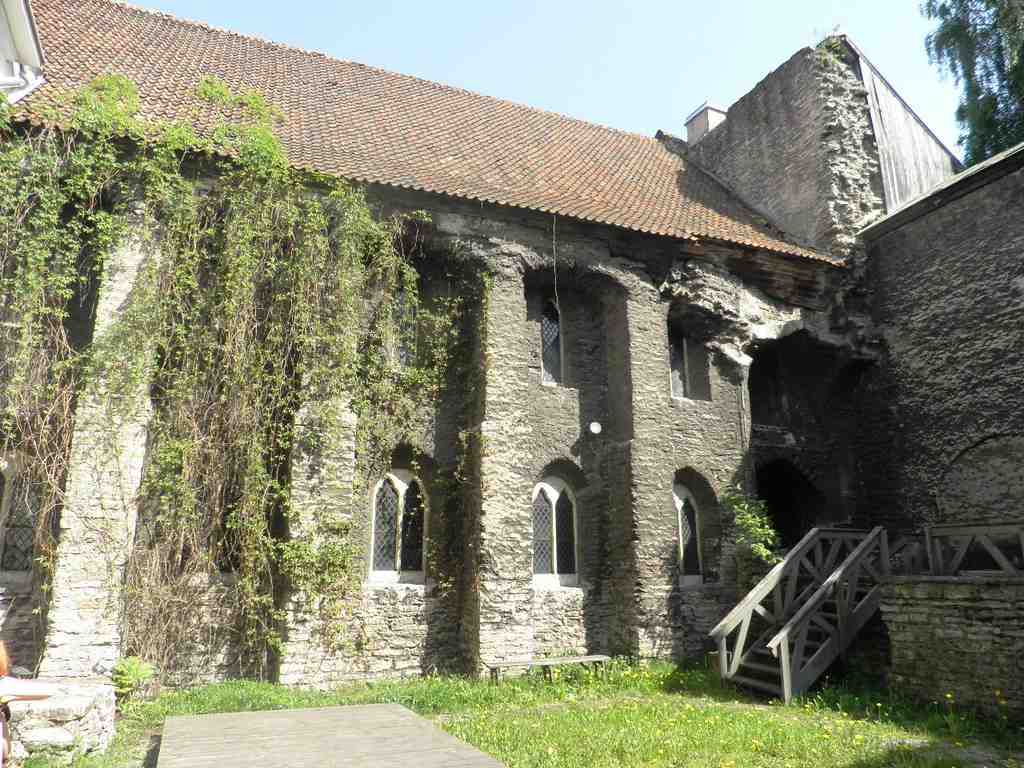
Dominican MonasteryPhoto: Flying Saucer, Wikimedia Commons, CC BY-SA 3.0. Cropped & resized. On your right, look for pale limestone walls, broken Gothic arches, and the surviving west portals of Saint Catherine’s Church, a medieval fragment tucked into the fabric of the street.
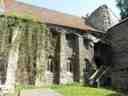
This is the Dominican Monastery of Saint Catherine, the oldest Catholic monastery in Estonia, and one of those places where Tallinn keeps its oldest heartbeat under stone. The Dominicans first arrived in Reval in the early thirteenth century, not here but up on Toompea. Quarrels between Danish and German knights made that first home impossible, so the brothers withdrew, returned, and by the year twelve sixty settled down here in the Lower Town, where merchants, craftsmen, and daily city life pressed close around them.
What they built was not only a church, but a whole enclosed world. The main rooms formed a neat rectangle around an inner court, with a covered walk running round it: church to the south, dining hall to the north, sleeping quarters to the west, chapter room to the east, where the brothers gathered to govern their life together. If you glance at the image on your screen, you can see that inward-looking shape still lingering in the courtyard. Even in ruin, it keeps the discipline of a mind arranged for prayer, study, and silence.
And yet the Dominicans were never meant to hide from the city entirely. They preached, taught, learned Estonian, and gradually drew local men into the order. Their school became so important that it sparked a real dispute with the cathedral over who held the right to teach, a quarrel settled only when the pope himself intervened. They traded fish as well, and ran a brewery with four kinds of beer. Monks, certainly; but also practical men with one foot in the marketplace.
There is an old emblem most visitors miss, and it is the tiny key to the whole place: the Dominican dog with a torch. Legend says Saint Dominic’s mother dreamed of a dog running out with a flaming torch in its mouth, setting the world alight. That image lingered in Dominican memory as a sign of preaching light into darkness. Once you know it, these ruins feel different. They are not simply broken walls; they are the husk of a house built for carrying thought, learning, and faith through a difficult city.
The difficulty came. The Reformation drove the Dominicans out in the fifteen twenties. Then the fire of fifteen thirty-one gutted Saint Catherine’s Church and damaged much of the monastery. If you look at the portal image in the app, those surviving stone doorways are among the pieces that endured. After that, the place changed roles again and again: school, quarters for Polish soldiers, almshouse. Later, Reval’s Polish Catholics returned to the former refectory for worship, and the ruins briefly became a church once more in an unexpected form.
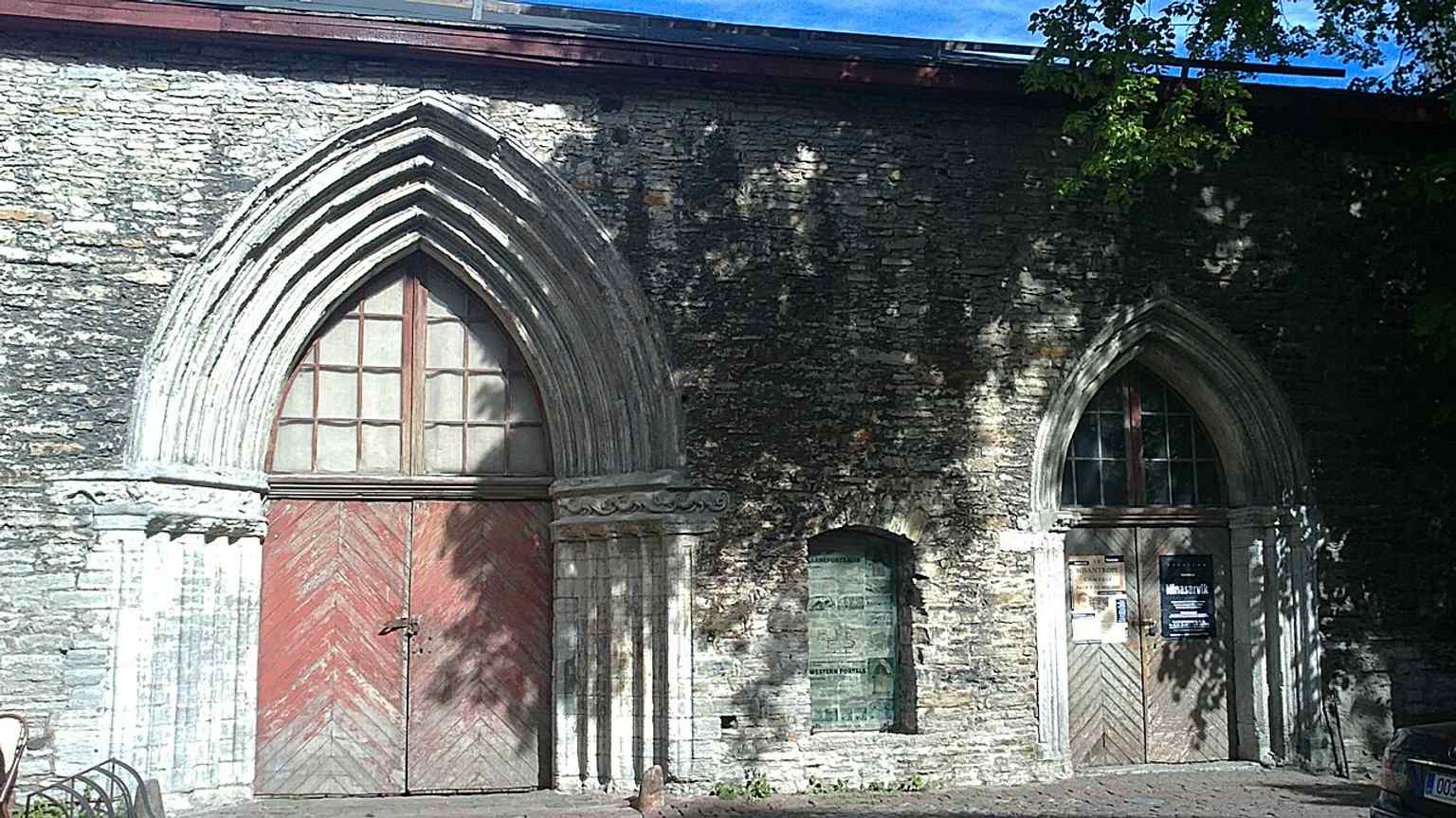
The surviving west portals of Saint Catherine’s Church — one of the key medieval fragments left after the Reformation fire.Photo: NOSSER, Wikimedia Commons, CC BY-SA 3.0. Cropped & resized. One of the most human returns came much later, with Lembit Peterson. He found only a small room here at first, while an old granary stood in Soviet hands. Gradually, with the Hereditas foundation, he helped reclaim these battered buildings for study, rehearsal, and performance. So the old monastery, once enclosed, opened again as part of the Latin Quarter: prayer, then ruin, then culture, still speaking.
Tallinn never kept just one sacred language; as you head on to our final church, notice how different communities left their own chapels, altars, and loyalties across the same small streets. If you want to come back inside later, the site generally opens daily from ten in the morning until four in the afternoon.
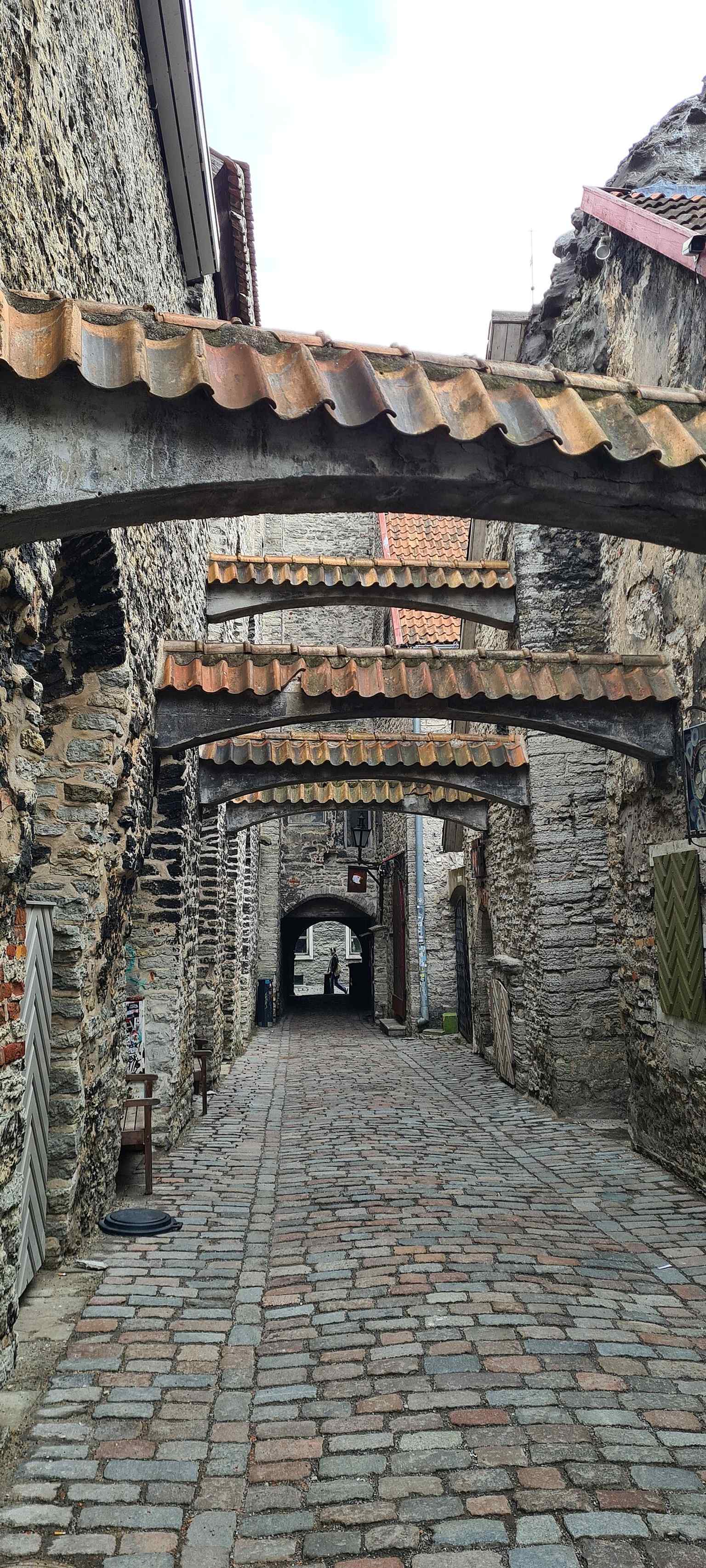
A close view of the surviving masonry and arches, reminders of the church that once stood here until the 16th-century destruction.Photo: BeshevI, Wikimedia Commons, CC BY-SA 4.0. Cropped & resized. 
A clear view into the adapted monastery buildings, part of the living Latin Quarter where heritage and daily use meet.Photo: BeshevI, Wikimedia Commons, CC BY-SA 4.0. Cropped & resized. On your right, look for a pale stone church with a rounded central dome, two square corner towers, and an Orthodox cross rising above its neoclassical front. This is the Orthodox…Read moreShow less
Open dedicated page →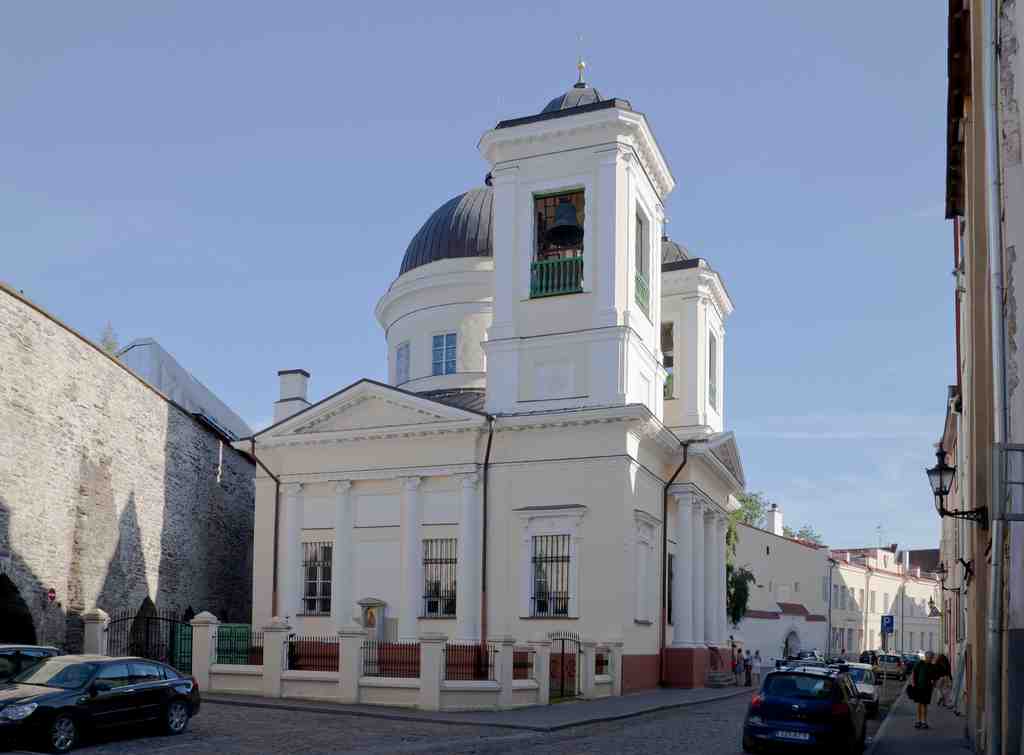
St. Nicholas ChurchPhoto: Diego Delso, Wikimedia Commons, CC BY-SA 3.0. Cropped & resized. On your right, look for a pale stone church with a rounded central dome, two square corner towers, and an Orthodox cross rising above its neoclassical front.
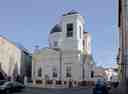
This is the Orthodox St. Nicholas Church on Vene Street, and it closes our walk with a gentle correction to any simple idea of Tallinn. The old town never belonged to one language, one rite, or one keeper of memory. Here, the city kept room for an Orthodox parish tied to the old Russian trading yard, a community whose beginnings fade back into the age of merchants from Novgorod and Pskov, and into older traditions beyond written memory.
The parish stood on this street by the fourteen twenties. In fact, the street itself later took the name Vene, meaning Russian, because the trading yard and this church marked the quarter so strongly. Yet belonging here never meant security. During the Reformation, looters likely stripped the church as they did other religious houses. In the year fifteen forty-two, the city turned it into a lazaret, a hospital for the sick. During the Livonian War it closed again. Later, in troubled years when Russian merchants were absent, the keys did not stay with a resident congregation at all; the town hall kept them. Imagine that: a church waiting in silence until trade reopened its doors.
And still it endured. Boris Godunov sent a great silver candlestick in the year fifteen ninety-nine; part of that royal gift survives, remade as a hanging lamp. The church also guarded something rarer still: an iconostasis, the tall screen of sacred images before the altar, described as the oldest surviving one in Estonia. Pskov craftsmen and masters from the Moscow Armoury made it for the young tsars Ivan and Peter. Even when buildings failed, art and devotion found ways to remain.
If you glance at the image on your screen, the frontal view makes the church’s classical balance beautifully clear. That balance came late. By the early nineteenth century, the old structure had become dangerous. Architect Luigi Rusca drew an ambitious new design in the year eighteen oh four, but money would not come. Then a young priest, Father Ioann Nedeshev, did something more useful than dreaming grandly: he found a practical plan people could actually build. Work began in the eighteen twenties, and in the year eighteen twenty-seven this new church was consecrated, the first domed church in Tallinn and a striking Orthodox presence in a city of many confessions.
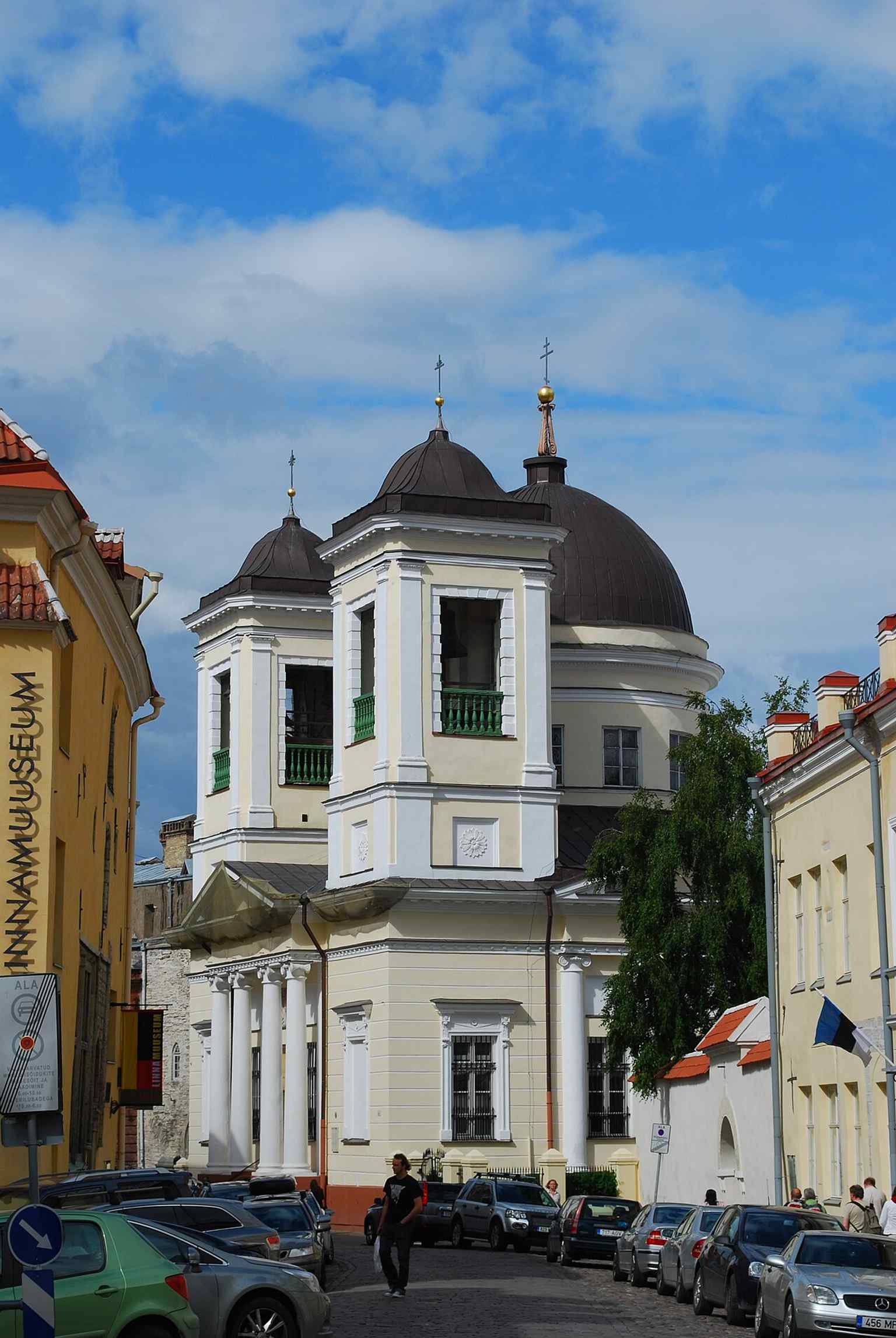
A clear frontal view of the church’s neoclassical exterior, the first domed church building in Tallinn and one of the city’s key Orthodox landmarks.Photo: Andrei Stroe, Wikimedia Commons, CC BY-SA 3.0 ee. Cropped & resized. One man gives the place its deepest hush. Arseny Matsievich, a metropolitan who defied Empress Catherine the Second over church lands, arrived here as a political exile under the false name Andrei Vral. The authorities locked him in the Harju Gate tower. He died in captivity in the year seventeen seventy-two, and the church buried him here. In the year two thousand, the Orthodox Church canonised him as a holy martyr. His grave turned this parish into more than a merchants’ church; it became a house of witness.
If you look at the tower detail in the app, you are seeing a reminder that generations kept adding their own layer of care. Merchant widow Pelageya Basargina gave the church its great nineteenth-century bell and later funded the gilded neo-Russian iconostasis that still stands inside.
And that, perhaps, is Tallinn’s truest shape: not a single story told by a single voice, but a city preserved by overlap, argument, prayer, repair, and many faithful hands. If you’d like to go inside, the church is generally open daily from ten in the morning until six in the evening.
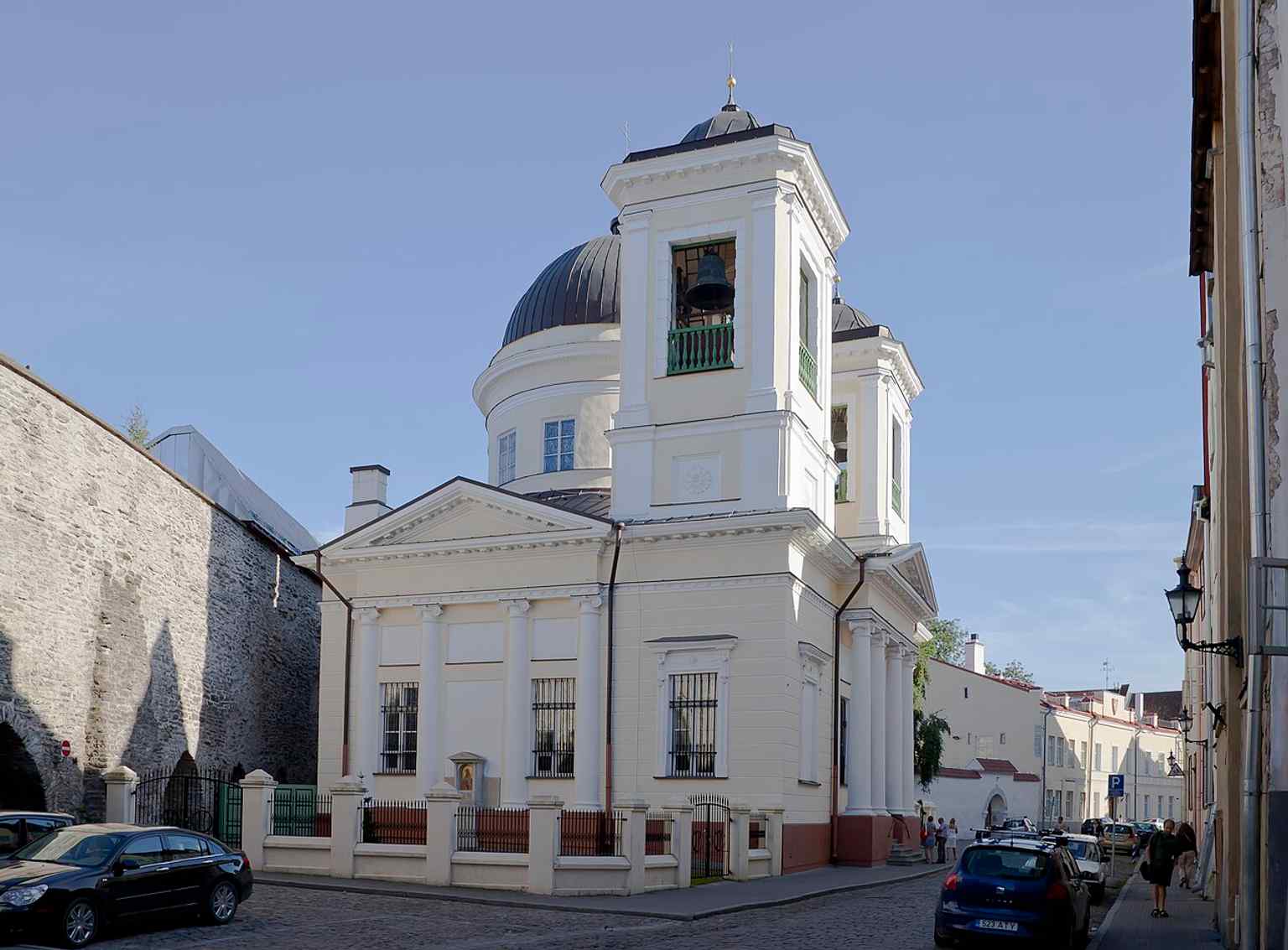
A wider exterior view showing the church’s elegant façade and towers, matching the 19th-century rebuilding that gave the parish its present classical appearance.Photo: Diego Delso, Wikimedia Commons, CC BY-SA 3.0. Cropped & resized. 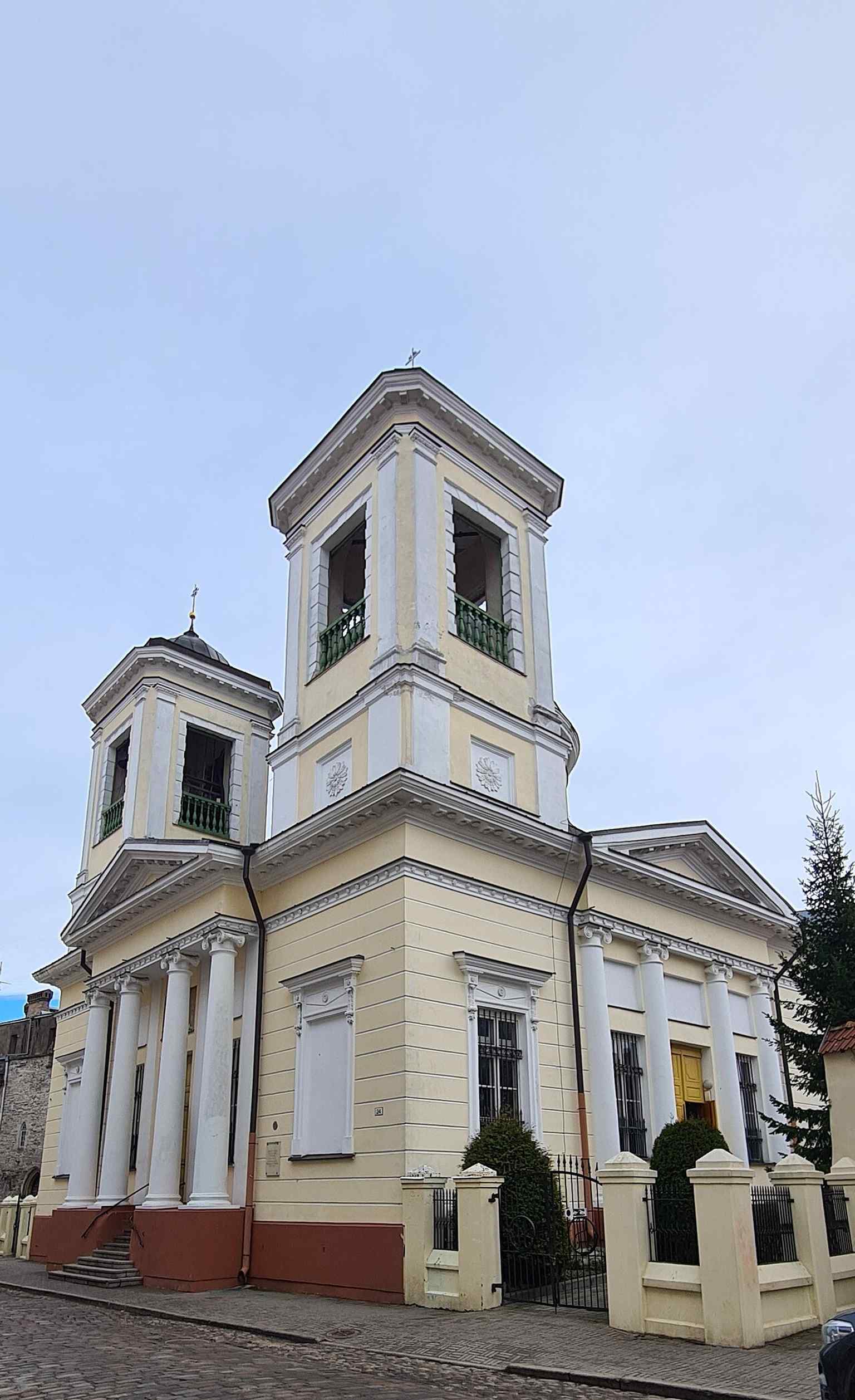
A modern street-level view of St. Nicholas Church in Tallinn’s Old Town, still an active parish church and protected cultural monument.Photo: BeshevI, Wikimedia Commons, CC BY-SA 4.0. Cropped & resized. 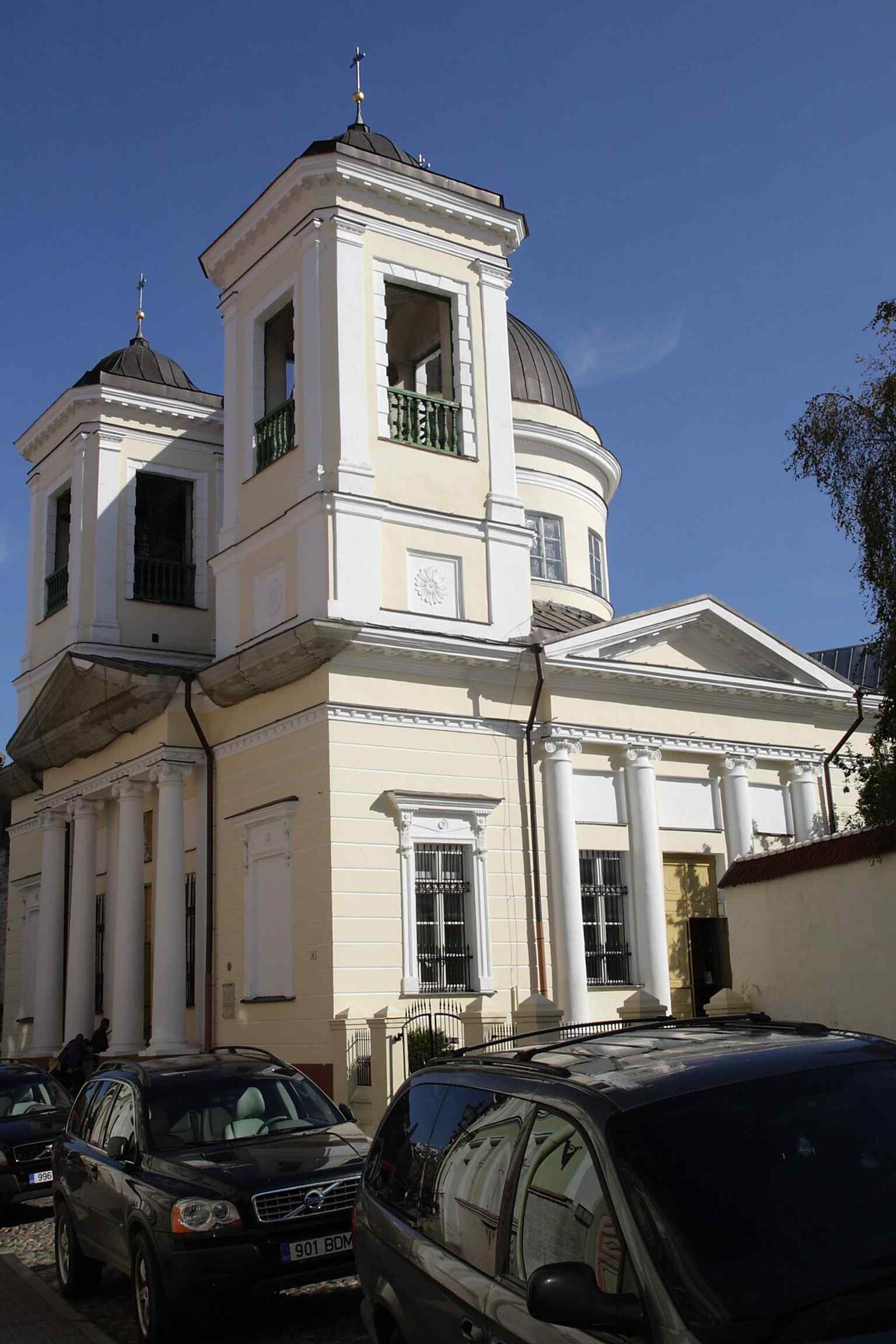
A dated historical image of St. Nicholas Church, useful for showing the long continuity of the parish and the old street setting around Vene Street.Photo: Vamps, Wikimedia Commons, CC BY-SA 3.0 ee. Cropped & resized. 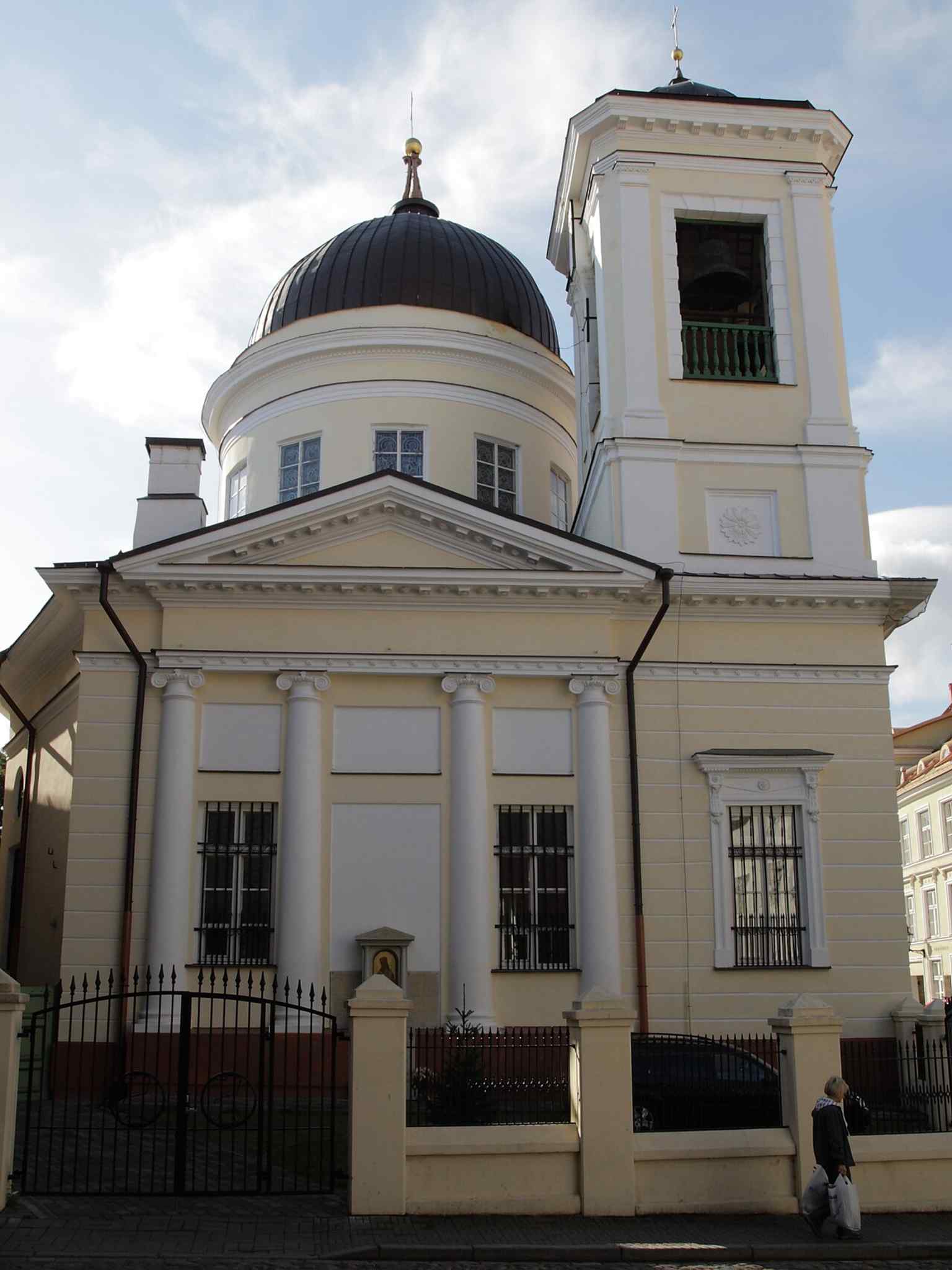
Another historical view of the church and its gate area, echoing the fortified urban setting of Tallinn’s Old Town around the parish grounds.Photo: Vamps, Wikimedia Commons, CC BY-SA 3.0 ee. Cropped & resized.
Frequently asked questions
How do I start the tour?
After purchase, download the AudaTours app and enter your redemption code. The tour will be ready to start immediately - just tap play and follow the GPS-guided route.
Do I need internet during the tour?
No! Download the tour before you start and enjoy it fully offline. Only the chat feature requires internet. We recommend downloading on WiFi to save mobile data.
Is this a guided group tour?
No - this is a self-guided audio tour. You explore independently at your own pace, with audio narration playing through your phone. No tour guide, no group, no schedule.
How long does the tour take?
Most tours take 60–90 minutes to complete, but you control the pace entirely. Pause, skip stops, or take breaks whenever you want.
What if I can't finish the tour today?
No problem! Tours have lifetime access. Pause and resume whenever you like - tomorrow, next week, or next year. Your progress is saved.
What languages are available?
All tours are available in 50+ languages. Select your preferred language when redeeming your code. Note: language cannot be changed after tour generation.
Where do I access the tour after purchase?
Download the free AudaTours app from the App Store or Google Play. Enter your redemption code (sent via email) and the tour will appear in your library, ready to download and start.
If you don't enjoy the tour, we'll refund your purchase. Contact us at [email protected]
Checkout securely with 






.jpg)


.JPG)


.jpg)


.jpg)
.jpg)